Dymphna Cusack, A window in the dark (Review)

Dymphna Cusack‘s A window in the dark has been glaring at me from my TBR pile for many years now. Not being able to stand it any longer, I decided to sneak it in before my next reading group book, Michelle de Kretser‘s Questions of travel. Posthumously published by the National Library of Australia, A window in the dark is Cusack’s chronicle of her teaching years, spanning 1922 to 1943.

For those who haven’t heard of her, Dymphna Cusack (1902-1981) is an Australian writer best known for her collaborative novel (with Florence James), Come in spinner (1951), and Caddie, the story of a barmaid (1953), which was made into a successful feature film in 1976. According to Debra Adelaide‘s comprehensive introduction, Cusack was not interested in writing her autobiography but, in the mid-1970s, three decades after she finished teaching, she decided to write about this part of her life. While much has changed since 1975/6 when she wrote it (let alone 1944 where the story ends), A window in the dark – “my job was opening a window in the dark for the minds entrusted me” – is an interesting read. It is not, though, a typical writer’s memoir; its focus really is teaching and education.

The book is well produced with an excellent introduction and explanation of its genesis by Debra Adelaide (though I would have loved an index). It was prepared from the version included with her papers held by the National Library of Australia. This version is probably the final draft, but Adelaide believes that Cusack would have done more work on it, had it found a publisher. Certainly, it does have some rough edges, but not enough to spoil the content nor to prevent our getting some sense of Cusack as a person, as a writer, and of course as a teacher.

Cusack tells the story of her years as a teacher chronologically, starting with university and her decision to accept a bonded Teachers College Scholarship. However, a number of themes run through the book and I’m going to frame the rest of this post through some of them.

Format: Photograph Notes: Dymphna Cusack (1902...“The sum total of my years of teaching in Broken Hill and Goulburn was the conviction that the high school curriculum was insane”

Cusack decided very early in her career that the curriculum she was required to teach was unsuitable for all but the minority who planned to go on to university. She rails, in particular, against the teaching of ancient languages (Latin) and against the focus on British history and English (as in from England) literature (both only to the end of the nineteenth century, what’s more). She criticises educational practice which relied heavily on examinations and argues against dependence on IQ assessment for identifying capable students. She is disgusted by corporal punishment. She does become a bit repetitive, as she moves from school to school, but that simply reinforces her passion for relevant education and humane methods. Being personally interested in local and contemporary history, she’s distressed that students weren’t taught about their own places. Students in Broken Hill were taught nothing about that city’s origins, nor its geology and botany. Students in Parkes learnt nothing about William Farrer and his pioneering work with wheat. And so on … Students learnt, well, I’ll let her tell you:

It was the same in every country town I lived in. An essential part of our history was ignored, whether massacres of whites by blacks or blacks by whites, while we got bogged down in the Hundred Years’ War or the Thirty Years’ War or the Seven Years’ War – all taught with no reference whatever to the basic economic causes underlying them.

She was happiest when, for various reasons, she was given non-examination classes to teach. Then she could teach what she thought was useful. A playwright herself, she was renowned for her drama classes, and the school plays she produced.

“I look so middle-class; it’s my nose”

Despite her ongoing frustrations (not to mention chronic health issues), she had, you can see from this quote, a sense of humour. Cusack belonged to that wonderful cohort of left-leaning writers in early to mid-twentieth century Australia, a cohort which included Miles Franklin (with whom she collaborated on books), Flora Eldershaw and Frank Dalby Davison.  She had a finely honed moral and social conscience, and was acutely aware of injustice. She was not above using her “middle-class” look to get a hearing on issues important to her. She was distressed that Australia, which, by the 1850s was

politically and socially the most advanced country in the world … should by the middle twenties be bogged down into a morass of social and sectarian bigotry and educational conservatism.

Cusack became convinced of the “wickedness of our economic system”, which could not fund milk for children of unemployed parents but could, somehow, find the “money for everything for war”. She abhorred the power those with money had over others. She became unpopular with the Department of Education for her outspokenness on social and economic justice issues, and was particularly critical of the treatment of “that much-maligned creature, the woman teacher”.

“What we want is the warmth, the humanity, the feeling for Newcastle that is inherent in everything you write about …”

So said BHP’s Newcastle manager Keith Butler to Cusack in 1943 as he offered to pay for a novel about Newcastle and the steelworks. Not surprisingly, Cusack would have none of it. She did, however, write her novel, titled Southern steel (1953), and it was, apparently, a positive portrayal. Cusack wrote throughout her teaching career – mostly plays, many of which were performed on the ABC but only some of which have ever been published. She tackled tricky-for-her-times issues such as racism, workers conditions’ and war. Her second novel, Jungfrau (1936), which explored young women, their sexuality and abortion, was runner-up in the Bulletin’s S. H. Prior memorial prize. It was shocking for its time.

“… I found in my teaching life teachers are sublime optimists – why, I never knew.”

And yet, she must have known, for she stuck to teaching through years of ill-health and poor treatment by those in power. She did it, partly of course to support herself, but partly too because she loved her students. She was still receiving thankyou letters from them in her last years. That surely says something.
Australian Women Writers ChallengeWhy, though, read a book written in the mid-1970s about education in the 1920s-40s? It is not, after all, a memoir, so there are gaps in the story of her life – particularly in terms of her significant relationships. And while she mentions some of the plays and novels she wrote during the time, she does this mostly in relation to something happening in her teaching life. Moreover, it’s not particularly interesting in terms of form. That is, she doesn’t play, as some writers do when writing non-fiction, with narrative style or voice or perspective. Yet, there are reasons for reading it. It works as social history and a history of education. It provides insight into the development of her political philosophy and social values. It shows off her skills as a writer, particularly her ability to evoke people and place. And, for all its seriousness, it contains many entertaining anecdotes.

I’m so glad I finally read what turned out to be a fascinating book about (and by) a compassionate, funny and feisty woman whose intelligence is displayed on every page. Would that every child had teachers like this.

Dymphna Cusack
A window in the dark
Canberra: National Library of Australia, 1991
175pp.
ISBN: 9780642105141
Anita Heiss, Am I black enough for you (Review)

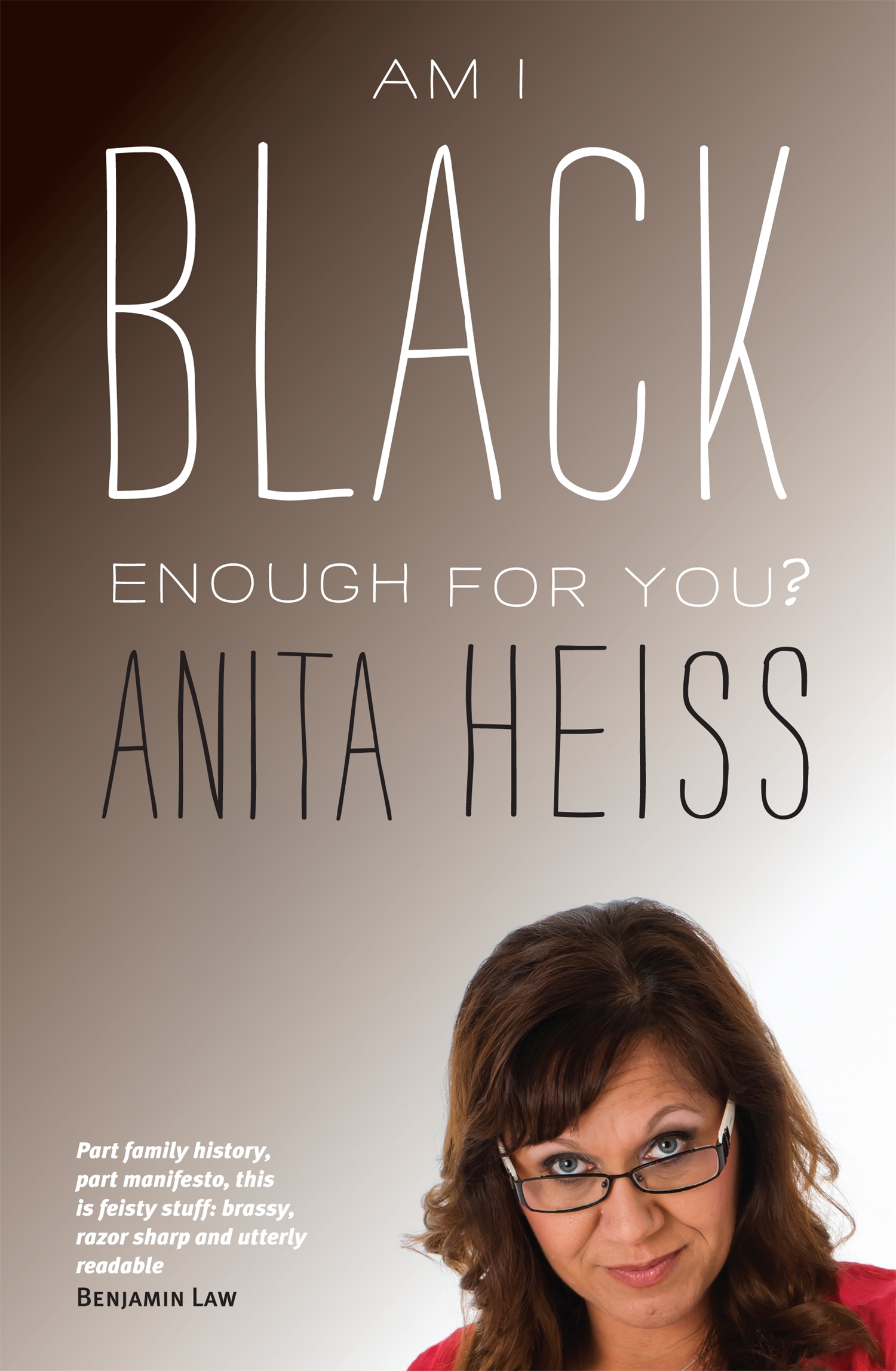
Anita Heiss, Am I black enough for you?

Courtesy: Random House

Anita Heiss‘s Am I black enough for you? is a challenge to categorise, so I’ll start with writer Benjamin Law‘s description on the cover of my edition. He calls it “part family history, part manifesto” to which I’d add “part memoir” because “family history” does not really cover the self-description aspect of the book.

For those of you who don’t know Anita Heiss, she is a Wiradjuri woman and an activist for indigenous Australians. She has a PhD in Communication and Media, focusing on Aboriginal literature and publishing, and is a writer. (I reviewed her chicklit novel, Paris dreaming, earlier this year, and reported last year on her address to the inaugural Canberra Readers’ Festival.) She co-edited the Macquarie PEN anthology of Aboriginal literature and was the guiding force behind BlackWords (the subject of this week’s Monday Musings). And this is just the start … she has been, or is currently, on many boards and committees, particularly to do with indigenous people and communications. She is an Ambassador for the Indigenous Literacy Foundation. She is, in effect, a tall poppy … which brings me to Am I black enough for you?

You see, in 2009, one of Australia’s influential shock jocks, Andrew Bolt, wrote a post titled “It’s so hip to be black” on his blog, asking readers to accept his proposition that there is “a whole new fashion in academia, the arts and professional activism to identify as Aboriginal”. He named many people, including Anita Heiss, calling them “white” or “political” Aborigines. His facts were questionable and his language emotive – such as “madness”, “trivial inflections of race”, “comic”. His argument was that these “white” Aborigines were obtaining unfair benefits from their decision to “be black”. The result was a court case brought by Anita Heiss and eight others against Bolt and his employer, The Herald and Weekly Times, for breaching the Racial Discrimination Act. Heiss and her co-defendants won the case. They did not seek damages. It was ground-breaking stuff that brought out some good discussion about the nexus between racism and free speech, about rights and responsibilities, but it also generated a lot of vituperative commentary. You can research all this pretty easily on the ‘net.

This is the background to Am I black enough for you? which, you might now have gathered, could also be described as an “identity memoir”. On the publisher’s website, Heiss writes that “I wanted to demonstrate that we as Aboriginal people have our own forms of self-identification and self-representation”. She wanted to “challenge the stereotypes” and present “alternative realities of being Aboriginal today”. This she does very well.

Heiss opens the book with her family background, Wiradjuri mother and immigrant Austrian father. She describes herself:

I’m an urban beachside Blackfella, a concrete Koori with Westfield Dreaming, and I apologise to no-one.

This is my story: it is a story about not being from the desert, not speaking my traditional language and not wearing ochre …

In the first four chapters of the book, she tells of her background – her grandmother and mother and their experiences as indigenous women, her father and his values, and her school days. Having laid that foundation, she presents in the fifth chapter, the current working definition of an Aboriginal or Torres Strait Islander person used by the Federal Government:

An Aboriginal or Torres Strait Islander is a person of Aboriginal or Torres Strait Islander descent who identifies as an Aboriginal or Torres Strait Islander and is accepted as such by the community in which he “or she” lives.

That seems pretty tight to me, though no definition is perfect. It’s better than using “a caste system defined by blood quantum (half-caste … quadroon)”.

There are a lot of “ah-so” moments for me in the book – some confirming things I’d already believed and some raising my consciousness about how easy it is to say the wrong thing without being aware of it. Heiss chronicles many instances where (mostly, I think) well-meaning whitefellas seem to get it wrong, such as the non-indigenous academics who proclaim themselves experts in “everything Aboriginal” or the critic who argued that Aboriginal literature “must” be in traditional language otherwise it’s Australian literature. It’s good to have these ideas aired publicly. It helps us test our own conceptions.

Am I black enough for you? has, like most of Heiss’s writing, a strong political and educational purpose. She is on a mission to encourage both indigenous and non-indigenous Australians to think about indigenous identity and, further, about how we relate to each other. She therefore writes in a bright, breezy, accessible style. She’s acutely aware of the power of words and language to define and to obfuscate (though she wouldn’t use such an obfuscatory word!), and frequently discusses language in the book. She makes a particular point about this in the chapter on her academic life, “Epista-what?”, when she says that using academic language, particularly to discuss indigenous issues, served “largely to alienate the very people it was talking about.”

There is much more in this book, and I hope many Australians read it. It’s well-structured, more or less chronologically but in a way that aligns with various themes – academia, the role of literature, her writing, gender – all of which link back to affirming indigenous people’s identity. She comes across as a generous woman – in her relationships with indigenous and non-indigenous people alike. She believes that optimism, rather than negativity and anger, is more likely to get results. It is possibly this optimism which underlies my small frustration with the book: several times she hints at dark times and stresses but, being the optimist, she focuses more on her strategies for overcoming them than on how they have informed her being. I’d like to understand more of that. However, Am I black enough for you? is not a misery memoir, and that’s probably a good thing!

Australian Women Writers ChallengeRead for the Australian Women Writers’ Challenge 2013ANZLitLovers Indigenous Writers Week, and Global Women of Color. Lisa (ANZLitLovers) and Marilyn (Me, You and Books) both enjoyed the book.

Anita Heiss
Am I black enough for you?
Sydney: Bantam, 2012
346pp.
ISBN: 9781742751924

Melissa Lucashenko, How green is my valley (Review)

Almost a year ago I reviewed a short story, “The silent majority”, by Melissa Lucashenko. It was published in the Griffith Review of November 2009. I enjoyed the story and so, in honour of NAIDOC Week and ANZLitLovers Indigenous Literature Week, I thought I’d review another of her Griffith Review contributions. This one, “How green is my valley”, is described as a memoir, and was published in Winter 2006.

I love how Lucashenko, with her dual Aboriginal and European heritage, traverses both in her writing. She commences “The silent majority” with the famous opening words of Pride and prejudice – “”It is a truth universally acknowledged”. The title of this piece immediately brings to mind Richard Llewellyn‘s classic novel How green was my valley, and clues us into her themes: beauty under threat, complicated relationships with land, and the precarious balances involved in maintaining it.

Lucashenko starts her memoir – though, really, I’d call it a personal essay – with a Mark Twain quote, which has a prescience now that he could not have guessed:

Everybody talks about the weather/but nobody does anything about it.

She then describes the experience of torrential rain in Bundjalung country, the coastal regions of north-east New South Wales/southeast Queensland. She’s moved, she says, to “one of Australia’s wettest shires”. The first half of the essay describes how residents manage – or don’t – the rain. She talks of students being let off school, of the weather not distinguishing between rich and poor, and of how community is fostered as people with 4WDs deliver food to the stranded who don’t. “The information we receive from land”, she says, “is tightly nuanced”. Farmers watch closely and know how the days will pan out once the rain sets in:

We who live on Bundjalung land know that eventually the rain will stop, the mould will retreat and the mud will dry. Whatever climate change is going to mean for our kids, in the short term life for us will return to normal.

Then, halfway through the essay, comes the sting in the tail: she reminds us that the inhabitants of Tuvalu will lose their home in the next few decades as their island is submerged, and the semi-traditional hunting lifestyle of the Inuit of the Arctic Circle “will be shattered by global warming even sooner”. She wonders whether indigenous people like the Inuit will be able to translate “the clan, the traditions of egalitarianism, stoicism and intensely valued community, to life in suburbs and towns.”

Lucashenko’s thesis is that it can be done, that it is possible to be “bicultural”, to span the chasm “between industrial and indigenous views of the ‘good life’ and what constitutes a proper society”. She argues that the egalitarian ethic espoused by Henry Lawson and Banjo Paterson

the traditions of mateship that faithfully mimic the brotherhood of initiated Aboriginal men and the myriad skills of surviving from and maintaining the land – were learned by some colonial whites from Aboriginal people.

Hmm … I haven’t heard that before. I suspect Australia’s mateship tradition has rather multi-pronged origins but this could certainly be part of it.

Lucashenko’s point though is to draw a parallel between white Australians’ love of land and indigenous people’s. She says that any Australian who has holidayed at the same beach every summer, or “diligently looked after” their own little patch, has “walked in Aboriginal footsteps” whether they know it or not. Hmmm … again I think this is a little bit of a long bow, in the sense that there are people all over the world who love their bit of land. But it doesn’t spoil her argument that it would have been good had the influence of Aboriginal knowledge and practice been greater, because then

More Australians might have learned not just to love the place (as some indisputably do) but to listen to the land more seriously. Had more Aboriginal philosophers been valued rather than shot or packed off to missions, all Australians might have learned the careful and intense attention to detail that many of us in the valley are still forced to practise as a matter of course.

With climate change breathing down our necks, will we all “be rooned”, she asks (alluding to one of my favourite old ballads “Said Hanrahan“). Will our “valley” be destroyed by our inability to tame our capitalistic consumerist urges, or will we learn in time how to be true custodians of our land?

Melissa Lucashenko
“How green is my valley”
Published in the Griffith Review, Edition 12, Winter 2006
Available: Online at the Griffith Review

Rachel Hennessy, The heaven I swallowed (Review)

Rachel Hennessy, The heaven I swallowed

Cover: Courtesy Wakefield Press

It feels strange to be reviewing a Vogel Literary Award runner up, which Rachel Hennessy’s The heaven I swallowed was in 2008, in a year when the judges decided not to award the prize because they didn’t find ‘that special quality that a winning entry has’. C’est la vie I suppose, but what a shame for this year’s entrants. I hope it doesn’t discourage them. Rejections can be good for you – or so I’ve been told.

The heaven I swallowed is Hennessy’s second novel, though I hadn’t heard of her before. Her first, The Quakers, won the Adelaide Festival Award for an Unfinished Manuscript. She has also had many short stories published, a short play performed, and a short film, Not Waving, Drowning, screened at several festivals. She’s clearly been around.

According to Wakefield Press’s Media Release, The heaven I swallowed was inspired by Hennessy’s grandmother who was a member of the Stolen Generations, and by her paternal great-aunt whose husband fought in the second world war. The novel is set in the 1950s, with flashbacks to the past. It tells the story of Grace (Gracie to her husband Fred) and opens around 1950 when Grace is 40. She’s alone, having lost her husband, Fred, to the war, and childless, having had a miscarriage after Fred enlisted. She decides to take in 12-year-old Aboriginal girl, Mary, who, we later realise, is a stolen child. Grace, though, has been told that Mary’s an orphan. Caring for her, Grace says, represents “the epitome of my goodness”. The novel is divided into two parts, with the second part set 5 years after the first.

My problem is how to talk about it without giving too much away. Telling you what separates the two parts would rather spoil the tale. It’s not a heavily plot-driven story, but there are some significant events that mark its progress, so instead I’ll focus on character and style. And, I’ll start by saying the novel reminded me of Anita Brookner. Grace could have stepped right out of a Brookner novel. She’s an outsider, she’s isolated, she’s lonely. She was an orphan, brought up by nuns – and that seems to have set her off on a path from which she finds it hard to deviate.

This orphan business leads to one of the main themes of the novel – secrets, lies and deception. Grace identifies with orphans. She often reads about them. Jane Eyre, David Copperfield and Tom Jones all make appearances in the novel. Consequently, Grace feels an affinity with Mary – though Mary says she has a mother. When Grace discovers, via her parish priest who had organised Mary’s placement, that Mary’s mother is looking for her, she accepts the priest’s advice and hides this fact from Mary. After all, as Father Benjamin says, “the girl’s much better off with you”. Yep, that’s true! She’s learning a lot about housework! Such was usually the lot of stolen generation girls.

This, though, is not the only lie in Grace’s life. There’s another big one that shadows her – to do with her role as a widow – and there are innumerable small ones. Many are those “little white lies” people tell, but in Grace’s case they are a way of life and serve to isolate her from those people who do reach out to her. Meanwhile, she is doing her best to raise Mary, albeit relying a little too much on the nuns’ methods she experienced, methods that were short on love and high on rules. One of the rules concerns lying: “Don’t lie to me again Mary”, she says. The irony, the hypocrisy, is not lost on the reader.

The heaven I swallowed is a well-plotted novel with lovely links that unite the plot, characters and themes. For example, the opening scene is a flashback to an experience Grace has when she was 12 – a visitation at night from what she believes is the Virgin Mary. Twenty-eight years later, 12-year-old Mary comes to stay with her. She feels Mary as a “presence”, but she also comes to love her, in her own way. Visits, visiting, presence, shadows run through the novel – some physical, some imagined, some spiritual. They provide much of the novel’s tension.

The story is told first person, by Grace. I found her a sympathetic character, but Murray Waldren on the back cover of my edition calls her “a memorable monster”. That’s a little harsh, I think. Grace makes many, many mistakes, but she’s a person in pain, describing herself at one point as “alone and untethered”. She’s not intentionally cruel, she’s not vicious, but she’s defensive and self-centred. In trying to protect herself she hurts both others and herself. It’s a credit to Hennessy that she can write about a “perpetrator” of the Stolen Generations with such compassion – she enables us to empathise with Grace without at all condoning her behaviour.

It would be hard for any book to follow Hilary Mantel‘s Bring up the bodies, and I must say that for the first few pages of this novel I was a little disengaged. Here we go, I was thinking, another girl damaged by her religious upbringing, but Hennessy soon got me in. She has captured the era – the 1950s with its small-mindedness, its gossipy church communities, its racism and sexism – convincingly. She seems to have listened to her family’s stories well!

As for Mary? Well, you’ll have to read the book to find out what happens to her. I recommend you do, because this is a quiet but fierce little book about real people and real situations. It’s not always pretty, but it has a heart.

Rachel Hennessy
The heaven I followed
Kent Town: Wakefield Press, 2013
182pp.
ISBN: 9781862549487

(Review copy courtesy Wakefield Press)

Australian Women Writers 2013 Challenge completed – and Miles Franklin Award Winner 2013

Australian Women Writers ChallengeAs regular readers here know by now, last year I broke my non-challenge rule to take part in the Australian Women Writer’s Challenge. It was so satisfying, I decided to do it again this year. After all, it’s really the challenge I’d do when I’m not doing a challenge.

Like last year, I signed up for the top level: Franklin-fantastic. This required me to read 10 books and review at least 6. I have now exceeded this – and will continue to add to the challenge, as I did last year – but one of the requirements of completing the challenge is to provide a link to a complete challenge post. Here is that post.

I have, in fact, contributed 13 reviews to the challenge to date, but decided to wait to write my completion post until I’d read 10 books. I have now done that – with the other three being individual short stories or essays.

Johnston, House at Number 10 bookcover

Courtesy: Wakefield Press

Here’s my list in alphabetical order, with the links on the titles being to my reviews:

Except for the Baynton, Astley and Johnston reviews, they are all for very recent publications. I would like in the second half of the year to read some more backlist, more classics. Will I do it? Watch this space!

Miles Franklin Award winner for 2013 …

has been announced and it is Michelle de Kretser‘s Questions of travel. I’m pretty thrilled as this is the book my reading group decided to do in July (from the shortlist). As much as I enjoyed Carrie Tiffany’s Mateship with birds, it has won two significant awards this year already, and I don’t think it serves literature well for one book to have a stranglehold on a year’s awards – unless there really is only one great book published in a year but that would really be a worry wouldn’t it?!

You can read about the announcement on the Miles Franklin Literary Award site.

Krissy Kneen, Steeplechase (Review)

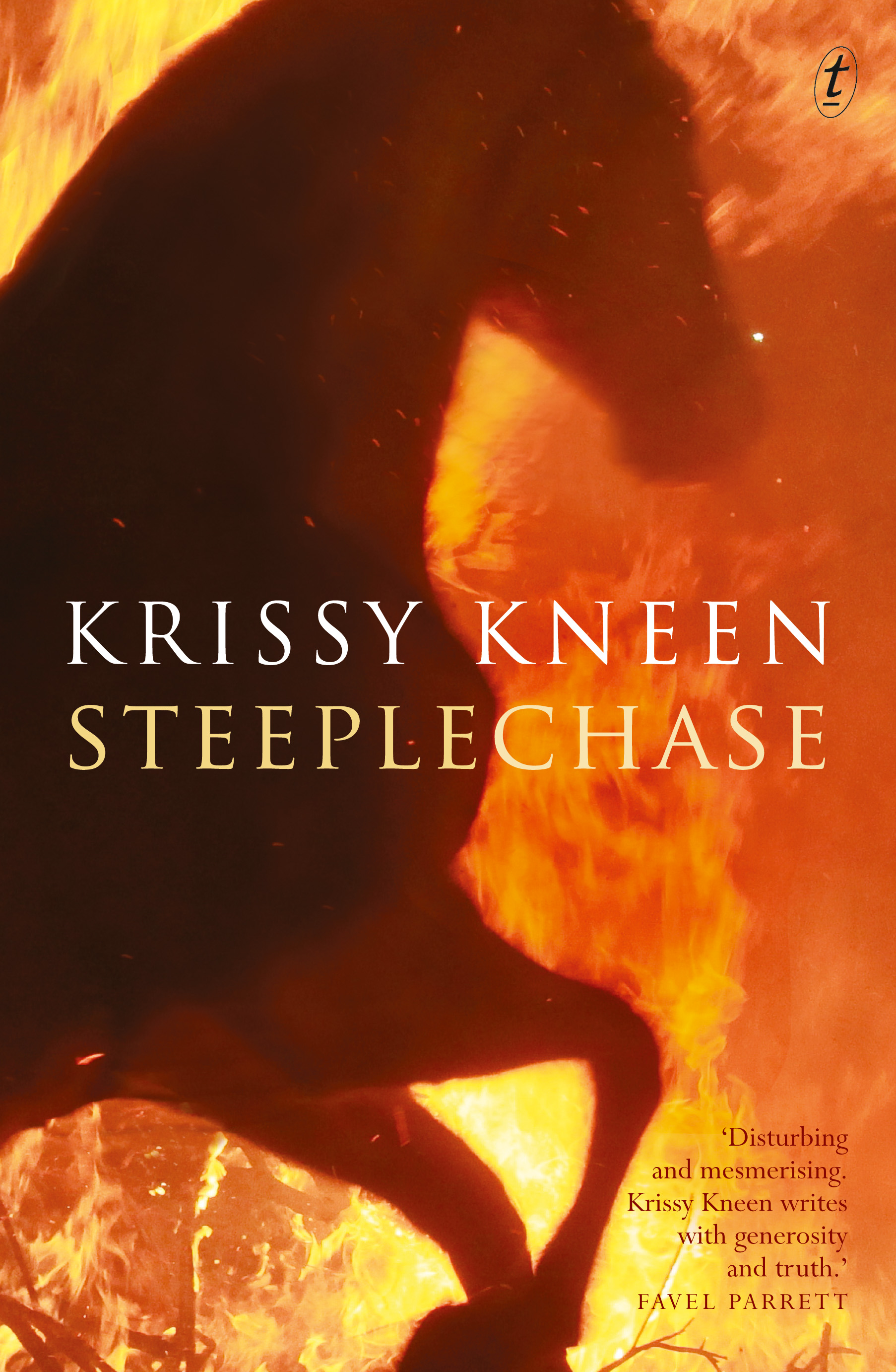
Krissy Kneen, Steeplechase

Cover: WH Chong (Courtesy: Text Publishing)

Darn that Australian Women Writers  Challenge! It has introduced me to a bunch of Aussie women writers I hadn’t heard of previously, one of whom is today’s author, Krissy Kneen. I may not have read her quite as soon as I have – there are so many I want to read – if it hadn’t been for Text Publishing sending me Steeplechase. It’s Kneen’s third book but first novel. She has also written Affection: An intimate memoir, which was shortlisted in 2010 for the non-fiction prize in the (now-defunct) Queensland Premier’s Literary Awards, and Triptych a work of literary erotica. Steeplechase, the frontmatter tells us, is Kneen’s first non-erotic work.

It is a contemporary novel about two sisters, told in first person by the younger, Bec. Both are artists, but while Bec is an art teacher who also paints and exhibits, her sister Emily is a wildly successful artist whose works have been sold for astronomical prices by Sotheby’s. Bec, 40, lives in Australia, and Emily in China. They hadn’t seen or spoken to each other for 23 years when, out of the blue, at the beginning of the novel, Emily calls Bec and invites her to Beijing, telling her she has already bought the plane ticket. So the novel begins, and gradually the cause of their separation, “the terrible thing”, is revealed. It involves madness … Madness and art. An irresistible subject.

Kneen plots the story well, interspersing the present chronology with flashbacks. The sisters’ mother, we’re told, was mentally ill, and the three of them – mother and daughters – lived in the country with their grandmother Oma, an art conservator. She’s a strong woman, a matriarch, is Oma. The steeplechase metaphor is introduced in the first chapter, through imaginative play directed by Emily in which the girls pretend to be horses galloping and jumping through a course designed by, yes, Emily. “The steeplechase is dangerous”, Emily explains to Bec.

At first it seems that Emily is the typical bossy big sister, who likes to control and scare her little sister. And Bec is the typical younger sister, adoring and long-suffering. Gradually though it becomes clear that something is not quite right with Emily, that she is going the way of her mother. Around this time we “meet” Raphael who may, or may not, be Emily’s lover and who, on one dramatic night, seems to also become 15 year-old Bec’s lover. But, is he real? (According to the 16th century art historian and biographer, Vasari, the artist Raphael died prematurely due to a fever brought on by a night of excessive sex! I suspect the choice of name isn’t a coincidence.) Kneen teases us throughout with questions of reality and fantasy, drawing us into a world where it’s hard to know where “madness” may start and end.

Meanwhile, in the present, the novel starts with Bec recovering from gall-bladder surgery. She returns to work where we meet, among her students, 23-year-old John who is her lover. Bec, “the good girl”, feels guilty about this, recognising the ethical dilemma it creates.

But, that’s enough of the plot … It’s certainly more than I usually provide in my reviews but this is, largely, a plot-driven book. How is Emily now? Will Bec go visit her? What was “the terrible thing”? Why is Bec signing paintings in Emily’s name? Does John really love Bec? Is Bec a good artist? And, even, is Bec herself sane? These are some of the questions that arise as the novel progresses.

Australian Women Writers ChallengeSteeplechase is compelling. It’s well-written and surely structured, with the shifting between present/life and past/memory all but coalescing at the climax. Kneen draws clearly but not slavishy on the traditions of the Gothic and mad-women. She teases us with paradox – Emily’s calm ordered room versus Bec’s messy chaotic one – and irony. Are they really “safe, protected, locked up tight” when Oma closes up the house at night?

I enjoyed her sensitive depiction of sisterly relationships, of the rivalry that runs parallel to unconditional love. She explores what happens when two sisters end up in the same career, one successful and the other not obviously so, and the lack of confidence that can ensue. We believe Bec’s self-assessment that she’s lesser, though there is a hint partway through the novel that she may be better than she thinks. Kneen weaves this though a story that explores madness, art, and memory that threatens to derail. My only reservation is that for a book which ponders the complexity of love (sibling and romantic), the nexus between madness-sanity and art, and the role of memory in constructing self, the resolution is just a little too neat. But that may just be me! It is, for all that, a darn good read.

Lisa (ANZLitLovers) also enjoyed the book.

Krissy Kneen
Steeplchase
Melbourne: Text Publishing, 2013
224pp
ISBN: 9781922079879

(Review copy courtesy Text Publishing)

Susan Hawthorne, Limen (Review)

Susan Hawthorne, Limen, book cover

Cover: Courtesy Spinifex Press

Limen is a lovely word, isn’t it? It’s the title of Susan Hawthorne’s recently published verse novel. You probably know what it means, but just in case you’d forgotten like I had, it means threshold or doorway. This Limen though is a verse novel!

If you are uncertain about novels in verse, this would be a great one to try. The story is easy to follow; the language spare and beautiful, but accessible. It has a chronological structure with nine parts (titled Day 1 to Day 9) bookended by a Prologue and an Epilogue. The plot is straightforward. It’s about two women (Woman 1 and Woman 2) who go on a camping trip to the river – a favourite spot – with their young dog (Dog) . They arrive, full of anticipation for a good time, but “thunderclouds gather/on the horizon”. Overnight it rains and by Day 6, the longest section in the novel, they are trapped by the rising river. The story is told through the eyes of these three characters, each having a clearly defined role and personality.

Woman 1 is the driver and, perhaps because of this, is the more anxious one. She can’t sleep at night (“sleep avoids me/my head pops up”, “river rises by stealth/night terror”). Woman 2 is initially less worried, reporting on their activities (“we make lunch/talk in the dampness”) and on how Woman 1 is going, but as the waters rise she too becomes concerned:

she tells me her fears
only now do I understand
her wakefulness
her restless checking of the river at night
(Day 6)

The dog remains calm, caring only for physical comforts (“my ever-filling bowl/gone”), stick-chasing games, and the presence of its owners (“I sleep/curled paws/your body warm next to mine”).

Two men they had met in the local town appear, tow their bogged car out, and leave, telling them “you’ll be right mate” (in the italics Hawthorne effectively uses for dialogue). However, the river defeats them once again so they decide to “stay with the car”. Two young indigenous men, brothers and miners, appear, offer help, then set off to walk to the mine when the river can’t be crossed. The women, worried about the young men’s safety despite “their bush knowledge/carried on down the generations”, wait. Finally, other cars appear and they face the river crossings in convoy…

Limen is a beautiful read. It has its tensions but it’s not a thriller. The strangers they meet are not sinister, but just other people trying to manage the flooding river. The lack of names for any of the characters gives it a mythic tone. Hawthorne describes the joys of camping – the physical beauty, the spiritual peace, the time for talk and reflection – and the disappointments and fears – the pig-hunting that destroys the tranquility, the floods that threaten their safety. The writing is spare. There’s lovely imagery referencing female lives (“the river is a necklace of pools”, “paperbark/ruffled as a frilled ballgown” and “clouds are crocheted close/threatening”) but when the tension is highest the language becomes terse and plain. The story’s momentum is carried by changes in rhythm – from the more lyrical descriptive sections to those pared down to the basics:

start
rev
release

nothing
(Day 6)

The text is supported by simple, stylish, irregularly interspersed, black and white illustrations – a lizard, tire tracks, patterns in the mud.

Now, back to the title. Clearly the women find themselves at a threshold. Do they wait, staying with the car, or do they go? There is no conflict between them, but there are gentle hints of other things amiss – a “black spirit dog … sniffing the Styx”, the pig hunting that destroys the peace, the white policeman who shows no concern about whether the two young indigenous men who set off on foot have made it through (“it’s their/problem if they’re/out there“). These aren’t laboured, but they suggest other thresholds and are there I’m sure for us to notice and consider. For the women

this tiny crack
in our lives
wind and rain strewn
stranded on the limen
[ …]
where we could
be on both sides of time
span beingness
like an unfinished arc
of a bridge
is closing
(Epilogue)

until, perhaps, next time …

Do read this novel, if you can, and see what you think.

Susan Hawthorne
illus. by Jeanné Brown
Limen
North Melbourne: Spinifex Press, 2013
166pp.
ISBN: 9781742198606

(Review copy courtesy Spinifex Press)

Anna Krien, Night games: Sex, power and sport (Review)

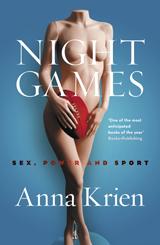
Anna Krien, Night Games

Night Games (Courtesy: Black Inc)

Towards the end of her most recent non-fiction work, Night games, Anna Krien writes:

I wish I’d chosen to follow an ‘easier’ rape trial.

She’s concerned that what she’s written, what she’s finding, won’t “sit well with feminists or footballers”. She might be right, but that would be a shame, because what she’s produced is a rational and, yes, provocative analysis of football culture and the way society enables it. It’s about power, entitlement, complicity – and, of course, sex.

“… despite the verdict, I still don’t know who is guilty and who is innocent”

Like Helen Garner (The first stone and Joe Cinque’s consolation) and Chloe Hooper (Tall man), Anna Krien, whose Into the forest and Us and them I’ve previously reviewed, writes in the narrative non-fiction genre. It uses literary techniques to create a narrative about a real issue or event, and can involve the author putting herself (in this case) in the story. I like the style. If well done, it feels honest because the author is clear from page one about the facts (and their limits) she’s presenting, the ideas she’s exploring and, significantly, the challenges she personally faces during her exploration. Krien doesn’t shy away from confronting her feelings, but neither does she let them overshadow her ability to reason.

And so to Night games. The book tracks the rape trial of an AFL footballer. This has implications for the narrative. The name of the complainant must be suppressed, so Krien decides to suppress the defendant’s name too. The complainant’s testimony was given in closed court, so cannot be reported. This could seriously skew Krien’s story, except that she structures the book in such a way that, although the connecting narrative is the trial, the main game (ha!) is the surrounding culture. Also, Krien reverses traditional trial narrative (fictional and factual) and reports the verdict in her Prologue. This de-emphasises the trial drama, and focuses us on the issues she wants to explore. It’s intelligently done – and once again convinced me that Krien is a writer I want to watch.

The book has six parts – the Prologue, an Epilogue, and four parts in between in which Krein tackles what she sees as the critical issues. These are football culture, particularly regarding male bonding rituals, and attitudes to women and minorities such as black and gay players; rape and what she describes as the grey area surrounding consent; and the broader role of women in football, in various guises, including management and media. These parts could almost be read as separate essays, except that they are connected by the trial narrative, and by their thematic connections to each other.

“an abnormal society…”

Some of my family and friends looked a bit askance when I told them what I was reading. After all, rape is an unpleasant subject and I’m not a football follower – but, I am interested in gender and power, social relationships, and ethical behaviour, which are the book’s real subjects. The picture Krien paints of football culture is not pretty, but neither is it particularly new. Who hasn’t seen and heard, in recent years, news stories about drunken parties and sexual assaults involving footballers? Krien teases out what’s behind these behaviours, and it’s mostly to do with male bonding, a bonding that is characterised by bullying and by a “macho culture of humiliation” in which women become the objects through which the men (try to) prove themselves. It’s not quite that simple of course – and women can try to play the game too, can want footballer notches on their belts – but the pervading attitude, until recent moves to change it, has been one of male power and entitlement.

“… a moral quagmire”

More interesting to me was Krien’s discussion of “the grey area, the gulf of uncertainty between consent and rape”. She quotes academic Catherine Lumby, Rugby League’s advisor on gender and cultural change:

Yes, there are many instances of behaviour that we found in our research into players’ experiences that did not equate to sexual assault but are definitely extremely unethical behaviour – such as after having sex with a girl, throwing her out of your hotel room naked without her clothes for a joke. Or suddenly asking, ‘Do you mind if I invite my mate back?’

How easy, Krien asks, is it for women to say “no” in many of the, usually powerless, situations they find themselves in – and if they don’t say no, have they consented? Is acquiescence consent? If not, what is it? The issue of consent was the critical issue in the rape trial Krien follows in the book – and hence her wish for an ‘easier’ rape trial. I’m aware that, except for that stereotypical violent, sociopathic rapist we all think of, consent is the critical issue in many rape cases. But, what I liked about Krien’s discussion was her analysis of the consent issue within this particular culture and her questions concerning how it might be better negotiated and understood at the time the sex occurs and how it might be better handled legally. Underlying this, though, is the idea that there would be less need to worry about grey areas surrounding “consent” if the culture itself fostered respect and equality, not to mention ethical or moral behaviour.

I’ll leave my discussion of Krien’s arguments and thesis here, otherwise I’ll end up writing an essay myself. I’ll simply add that I like Krien’s self-questioning and analytical, rather than emotional, approach. There’s no list of sources at the end, which I missed, but she clearly identifies her extensive research as she goes, naming the people and works she consulted. I also like her writing. It’s accessible and logical, but has fresh turns of phrase that lift it out of dry reportage.

If you weren’t inclined to read this book, think again, because I found Night games to be illuminating beyond its specific focus on football culture. It is also an excellent read.

Anna Krien
Night games: Sex, power and sport
Collingwood: Black Inc, 2013
268pp.
ISBN: 9781863956017

(Review copy courtesy Black Inc)

Irma Gold and Craig Phillips, Megumi and the bear (Review)

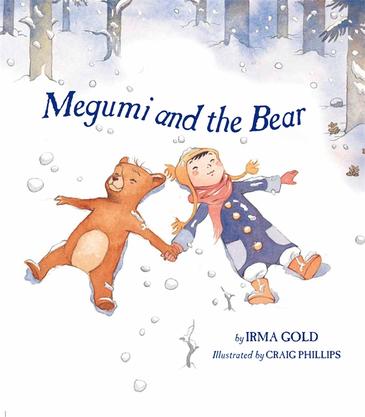
Irma Gold Craig Phillips Megumi and the bear book cover

Courtesy: Walker Books Australia

Now here’s something different at the Gums! I don’t, as you’d know, make a practice of reviewing children’s literature, though I have done a few cross-over adult-young adult novels. So, when Irma Gold and Craig Phillips’ children’s picture book, Megumi and the bear, landed in my letterbox a week or so ago I was challenged. Not only is it a picture book, but its cover – featuring a child and a bear making snow angels – suggest that it has little to do with Australia. Why should Whispering Gums make an exception for this book?

Well, the reasons are twofold. Firstly, I’ve reviewed two works by Irma Gold before (her short story collection, Two steps forward, and the anthology she edited, The invisible thread) and so was intrigued to read something different again by her. She’s one hard-working, versatile author, which I think you have to be if you want to make writing your career. Secondly, while it’s not set in Australia – usually something has to be Australian for me to make an exception – it is set in Japan. At least, Craig Phillips’ illustrations were inspired by his observing a little girl playing in the snow in Hokkaido. I love Japan – and have been to Hokkaido. Exception made!

Now, with two mid-late twenty-something children, I’ve not read a picture book for a long time but, as I picked this up and read it, a whole pile of memories of loved books came back, but first, the story. Like most picture books, its narrative line is simple – a young girl, Megumi, meets a young bear in a forest and they become good friends, playing together again and again until one day the bear doesn’t appear. Megumi is sad, and goes into the forest every day, to wait … until eventually she starts to forget and goes into the forest with her friends … It’s a lovely story about friendship, loss, time and memory.

Craig Phillips’ water colour illustrations are delightful – clear, uncluttered and colourful within a restrained palette. The bear and Megumi’s feelings are nicely conveyed through their facial expression and movement. Irma Gold’s text is also clear and simple, but not simplistic, with a nice use of repetition, “But the bear doesn’t come”, in the central section. The narrative is well-paced, keeping the story moving while providing time to consider (and feel) what is happening. The text is visually appealing. The topic sentence on each double-page spread is presented as a wavy line using an italicised font, with the following sentences in straight-lined plain text. This adds a lovely touch of whimsy to the presentation – and, I suspect, could help the out-loud reader get into a rhythm.

All this made it an enjoyable read – but what I enjoyed most was how it reminded me of other childhood loves, my own or ones made with my kids. The idea of a child playing with a bear brings to mind, of course, Winnie the Pooh. This is not at all a Christopher Robin and Pooh-like story but it plays into that notion of a friendship between children and bears. Going into the forest to play with a wild creature recalls Sendak’s Where the wild things are. Our bear here is not a wild thing – he’s sweet and small – and Megumi and the bear may not engage in wild rumpus, but they do have fun in the forest away from adults. And, this next probably sounds even less likely, but I was also reminded of the song “Puff, the Magic Dragon“. Again a completely different story and theme – and in fact quite the reverse in that here it’s the animal which goes missing – but both explore a friendship with “other” that is made and then lost. Hmm, now I think about it, these connections are pretty loose, but isn’t this partly what reading is about? Enjoying, remembering, connecting, making our own paths through literature and its meanings for us?

The thing is, whatever you make of it, Megumi and the bear is a gorgeous book that I can imagine loving to share with a grandchild, if I had one!

Irma Gold and Craig Phillips (illus)
Megumi and the bear
Newtown: Walker Books Australia, 2013
ISBN: 9781921977909

(Review copy courtesy Walker Books Australia)

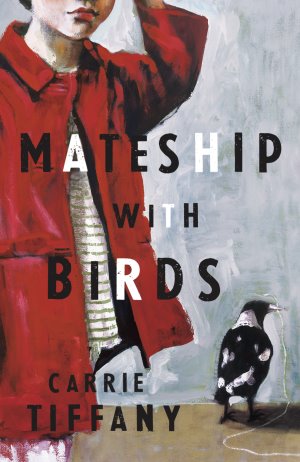
Carrie Tiffany, Mateship with birds (Review)

Mateship with Birds (Courtesy: Pan MacMillan)

Book Cover (Courtesy: Pan MacMillan)

Carrie Tiffany is on a roll. Last month her second novel, Mateship with birds, won the inaugural Stella Prize, and this month it won the Christina Stead Prize for Fiction at the New South Wales Premier’s Literary Awards. It has also been shortlisted for the Miles Franklin award. Many bloggers* have already read and reviewed it so, once again, I’m the last kid on the block, but I have finally got there.

Like her gorgeous first novel, Everyman’s rules for scientific living, Mateship with birds is set in rural Victoria in the past, this time, the early 1950s. Its central characters are the lonely, gentle dairy farmer, Harry, whose wife has left him, and his also lonely neighbour, Betty, who has brought her fatherless children to the country and who works in the local aged care home. The novel takes place over a year, a year that is paced by the life-cycle of a kookaburra family which Harry watches and documents in the spare righthand column of his old milk ledger. These notes, which are interspersed throughout the novel, are delightful and poetic, albeit brutal at times:

They work in pairs
against a fairy wren.
Dad buzzes the nest,
the wren throws herself on the ground
to draw him away.
She pluckily performs her decoy
– holding out her wing as if it is broken.
A small bird on the ground
is easy picking.
Club-Toe finishes her off.

They also provide commentary on the main story which is, as you’ve probably guessed, a love story. It is, however, no traditional romance. The boy and girl, Harry and Betty, are well past their youth and are cautious, given their previous experiences of love and relationships. They reminded me a little of Kate Grenville‘s rather dowdy protagonists in The idea of perfection. They care for each other in all sorts of practical ways: Betty cooks meals for Harry and tends his health, and Harry looks out for Betty and her children, fixing things when he can. A sexual tension underlies all their interactions – over many years – but it’s not openly expressed.  (“When he’s invited to tea he leaves immediately the meal is finished, as if unsure of what happens next”). Harry gradually takes on the role of “father figure” for Michael. However, when Michael becomes interested in a girl and Harry decides to pass on some “father-son” knowledge (“an explanation of things – of things with girls? Of … details of the workings”), including some rather specific physical advice regarding women, Betty is not impressed.

It sounds pretty straightforward, doesn’t it, but there’s something about Tiffany’s writing that makes it feel fresh, original. Part of it stems from her particular background as a scientist and agricultural journalist. Again, like her first novel, she grounds the story in her knowledge of farming life, but not in so much detail as to be boring. Rather, her descriptions give the novel its underlying rhythm – the landscape and the creatures inhabiting it (the kookaburras, owls, magpies, and so on); the milking; the driving into town; the way country neighbours help each other out; the sense of life going on regardless of the little dramas, the kindnesses and the cruelties, that occur. The writing is evocative but has a resigned and rather laconic tone that fits the rural setting.

Although a short book – a novella, really – it’s richly textured. There’s the main narrative drive which flips between Harry and Betty and includes flashbacks to their past, occasional dialogue, gorgeous descriptions (“The eucalypts’ thin leaves are painterly on the background of mauve sky – like black lace on pale skin”), and lists of plants, animals, medications, and so on. Interspersed with this main narrative are Harry’s kookaburra log, Betty’s notebook, Little Hazel’s nature diary, and Harry’s letters to Michael. And all this is layered with imagery involving mating, mateship, birds and humans. You can imagine the possibilities that Tiffany teases out from these. It’s all carefully constructed but doesn’t feel forced. It just flows.

In other words, this is a clever book, but not inaccessibly so. It’s generous, not judgemental. It’s also pretty earthy, with regular allusions to and descriptions of sex. If I have any criticism, it’s  in the persistent references to sexuality. At times, I wanted to say, “ok, I get it, sex – in its beauty, carnality, and sometimes cruelty and brutality – is integral to life” but I kept on reading because … of the writing. I love Tiffany’s writing. I mean, how can you not like writing like this description in which Harry compares Betty to Michael’s girlfriend Dora:

Not like Betty. His Betty is heavier, more complicated. Betty meanders within herself; she’s full of quiet pockets. The girl Dora might be water, but his Betty is oil. You can’t take oil lightly. It seeps into your skin. It marks you.

Australian Women Writers ChallengeI also kept reading because I wanted to know what it was all about. Why was Tiffany writing this particular story, I kept thinking. For some reviewers (see the links at the end), it is primarily about family, for others it is about the relationship between men and women, but for Tiffany it’s about desire. I can see that it is about all these things, but here’s the thing, the book starts with the description of four attacks by birds on humans followed by a description of cockatoos damaging crops. This, together with the sexual imagery, the frequent references to animal behaviour and to humans’ relationships with animals, suggests to me another theme to do with the nature of life, with the nature of our relationships with animals, and with how we accommodate the animal versus the human within ourselves. I’ll give the final word to the birds:

Mum, Dad, Club-Toe
break off their
preening,
squabbling,
loafing,
to attack.
They lose themselves in the doing.
I struggle to tell them apart.
Knife-beaked,
cruel-eyed,
vicious;
there is no question
they would die for the family
– that violence is a family act.

This book packs a punch!

* You may like to read the reviews written by Lisa (ANZLitLovers), John (Musings of a Literary Dilettante), Matt (A Novel Approach) and Kim (Reading Matters).

Carrie Tiffany
Mateship with birds
Sydney: Picador, 2012
208pp.
ISBN: 9781742610764