Four time winner: Tim Winton wins 2009 Miles Franklin

Photo by Denise Fitch, Australia Council for the Arts

Photo by Denise Fitch, Australia Council for the Arts

Well, it’s finally happened as I knew it must. Someone has equalled Thea Astley’s record number of four Miles Franklin Award wins as tonight Tim Winton was announced the 2009 winner with Breath. I was seriously considering making Thea Astley my third favourite writers post – I think this means that I will now have to.

Winton has won the award for Shallows (1984), Cloudstreet (1991), Dirt Music (2001) and now Breath (2009); and Astley for The Well Dressed Explorer (1962), The Slow Natives (1965), The Acolyte (1972) and Drylands (1999). Both writers are great stylists who use metaphor well, both tend to explore strong connections between character and landscape, and both are indubitably Australian! I think, however, that Astley’s pen ranged wider than Winton’s and she took more risks. That’s not to say that Winton doesn’t deserve his wins but I do think that Astley (she died in 2004) was and continues to be undervalued.

Breath

Anyhow, here is a brief recap of my thoughts on Breath which I read long before I started writing this blog. I’ll start with a quick plot summary just in case there’s someone out there who doesn’t know it! It is a first person, coming of age story told by Bruce “Pikelet” Pike. It starts with his boyhood friendship with Ivan “Loonie” Loon. As young boys, they dare each other to perform dangerous stunts in the local river, and then as teenagers, they take up surfing where they are encouraged into new levels of recklessness by a former professional surfer named Sando. As time passes, Pikelet’s friendship with Sando and Loonie disintegrates and is replaced by a rather equally scary relationship with Sando’s American wife Eva, an injured and therefore ex-skier.

Southwest Western Australia, by soulsurfer 3 @ flickr

Southwest Western Australia, by soulsurfer 3 @ flickr

I like the book. I like the way he sustains the “breath” metaphor throughout to represent various facets of life and life-giving (or life-taking) forces. Despite not being a surfer, I love his wonderfully visceral descriptions of surfing. I also like his exploration of the imperative to take risks that is so common in young men and that is often accompanied by a drive to “be someone”.

Related I suppose to the coming-of-age issue is the theme of learning to accept being ordinary.  After Sando and Loonie leave the first time, Pikelet goes out and surfs Old Smoky: the first time he does it he’s so successful he feels he’s not ordinary, but then in his overconfidence he does it again and nearly does himself in…this is the beginning of his changing point of view. As he says a little later when he reviews his relationship with Eva, “No, Eva was not ordinary. And neither was the form of consolation she preferred. Given my time over I would not do it all again”. In other words, while he had originally equated not being ordinary with doing big risky things, with courting fear, by the end of the novel he realises that life is “a tough gig” and is about more than courting fear and taking big risks. This doesn’t mean that he can’t do and enjoy a job that provides an andrenalin rush (paramedic/ambulance driver) but it does mean that he no longer seeks to be anything other than himself and that he now goes for an adrenaline rush in “safer” more acceptable ways.

Before he gets to this point, though, he has to come to terms with his Eva experience and with the fact that he spent a big part of his life blaming her for his problems. He eventually comes to the conclusion that “people are fools, not monsters”. This closely resembles my own world-view: that is, that mostly (there are obvious exceptions) when people do the wrong thing they do it, at best, from the best of intentions, or, at worst, for reasons of laziness, selfishness or just plain obliviousness.

There’s no neat ending or pat conclusion: Pikelet recognises that he has been damaged by his life experiences and that he needs to manage himself – but he still loves to surf, that is, to do something “pointless and beautiful”. In this sense it is very much a book of its post-modern age: the lesson almost is that there is no lesson, that each of us has to find our own way. Pikelet says to Sando “maybe ordinary’s not so bad”. As one who is rather ordinary herself, I concur!

Favourite writers: 2, Elizabeth Jolley

Not , unfortunately, being a time-traveller, I haven’t managed to see or hear Jane Austen in person. I am, however, far more fortunate in this regard when it comes to the subject of my next favourite writers post – Elizabeth Jolley. I did get to see and hear her at a literary lunch at the height of her career. My reaction was the same as many others – her “little old lady” appearance and voice belied her sharp wit and earthy worldliness.

Elizabeth Jolley (Photo: Courtesy Fremantle Arts Centre Press)

Elizabeth Jolley (Photo: Courtesy Fremantle Press)

It’s not surprising that she is one of my favourite writers: I call her my antipodean Jane Austen. She is witty and ironic, she is wicked (though blacker than Austen), and she tends to write about a small number of people in a confined, often domestic, situation. But here the similarity ends. While the “character” of Austen’s characters play a role in what happens to them – there’s a reason why Elizabeth not someone like Lydia “gets” Mr Darcy – Austen’s main interest is in the social and economic constraints on her characters. Jolley on the other hand focuses more on the interior. She explores loneliness and alienation. She looks at the disturbing or unsettling sides of relationships, the ‘feelings’ people have but often don’t admit to such as those for a person of the same sex or for a person for whom they should not have feelings for (due, for example, to age differences, power differences, or infidelity). She shows how difficult it is to maintain a long-term intimate or deep relationship that is equal on all levels (physical, intellectual, social, material, etc).

In the Australian and New Zealand Journal of Psychiatry (Vol. 25, No. 1, 1991), Jolley writes:

In my own writing I have been interested in the exploration of survival (perhaps emotional survival), resilience and responsibility. (I only know this now after several books are written).

How very Jolleyesque that aside is – humble but a bit sly at the same time. She continues a little later to say:

…for the most part my characters are perplexed, anxious, often frightened with perhaps one redeeming aspect in their personalities – that of optimism which might for a time, until it gets out of hand, keep them from the specialist’s doorstep.

Photo: Courtesy Fremantle Press

Photo: Courtesy Fremantle Press

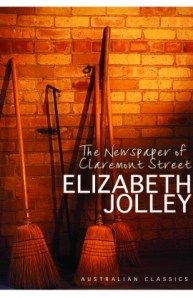
The first Jolley I read was the short story, “Night runner”, in an anthology titled Room to move. It introduced me to her concept of alienation and rather black notion of survival, her particular brand of irony, her portrayal of characters who more often than not suffer from some level of self-delusion, and her dark humour. I went on to read Miss Peabody’s inheritance, The newspaper of Claremont Street, The well, The sugar mother, and An innocent gentleman, among others, and have never really been disappointed. I enjoy her use of repetition and self-referencing, the motifs and the characters, even, that reappear in different works.  She gets me in the pit of my stomach with her vulnerable but often unkind or downright cruel characters, but makes me laugh at the same time with her depictions of their attempts at survival. You just have to see Ruth Cracknell playing The woman in a lampshade to know what I mean!

I have not yet read all of Jolley’s works. Just as for a long time I kept back one Jane Austen novel because once I’d read it I’d have read them all, I am now doing the same with Jolley. Her books are so delicious they need to be savoured. I’m sure this is not the last post I’ll be writing about her.

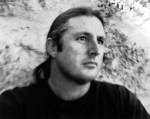
Steve Toltz, A fraction of the whole

I reckon the voters for the NSW Premier’s Literary Awards inaugural People’s Choice Award got it right when they chose Toltz’s A fraction of the whole as the first winner. Not necessarily because it is the best book of the year, because I’m not sure that it is, but because it is such a life-writ-large book. It is funny – belly-laugh, sometimes, and quiet chuckle, other times – but serious at the same time. Just when you think you have grasped what it is about, it dives off on another tangent and your brain has to start working all over again.

I’m not sure how to describe it. It’s basically a father-son story, told in first person by the son, Jasper. However, Jasper inserts into his story three long sections in his father’s voice: Martin’s life-story (to the age of 22) as he tells it to Jasper in a seventeen hour stint, entries from Martin’s journal describing his relationship with Jasper’s mother, and Martin’s unfinished autobiography. These add some texture to the novel and allow us to know things that Jasper couldn’t know.

Created by Tinette, Wikipedia, under GNU Free Documentation Licence

Created by Tinette for Wikipedia under GNU Free Documentation Licence

The characters are intriguing, with Martin being centre-stage. At my bookgroup’s discussion of the book one of the members wondered whether there could be a bit of yin-yang between Martin and his brother Terry, and she could have a point. Jasper quotes the following from his father’s journal:

No symbolic journey can take place in an apartment. There’s nothing metaphorical about a trip to the kitchen. There’s nothing to ascend! Nothing to descend! No space! No verticality! No cosmicity! … The essential important idea that will shift me from Thinking Man to Doing Man is impossible to apply here. … I am a halfway man …

But, while he tries, Martin never really does move from a Thinking Man, while his brother remains the Doing Man. Jasper seems caught in the middle. Martin’s trouble is that he has “thought himself into a corner”, one where he is so distrustful  of humanity, and so fearful of death, that he can’t trust the ideas that could get him out. As Martin says: “If men are constantly manufacturing meaning in order to deny death, then how can I know I didn’t manufacture that experience myself?”. This corner, this distrust, is to bring tragedy to his life near the end of the novel.

It’s a very funny book, with the comedy being both verbal and situational. It is at different times absurd, ironic or satiric. The satire is aimed at pretty much anything you could imagine – education, politics, media (journalists in particular), philosophy, death and, indeed, humanity. Almost any page you open will provide either a laugh or a description that makes you go “aha” – on many pages you will find both.

So what is it actually about? It is about father-son relationships, and about sons who don’t want to replicate their fathers. It is about Australia (“our demented country”) and Australians – and is not too complimentary about our willingness to put others down, our lack of compassion for those who need our help. It is about the paradoxes that make up our lives and thus humanity and much of the book is expressed in terms of these paradoxes – the good and bad, life and death, pessimism (Martin) versus optimism (Jasper), sanity and insanity, forgiveness and unforgiveness, and so on.

There is so much to write about this book that I think it’s best I end here with, fittingly, a paradoxical statement made by Martin two-thirds through the novel. “Fiction”, he says in his unfinished autobiography, “has a habit of making the real world seem made-up”. Toltz has produced in his novel a world that seems both real and made-up. It is up to us to decide which is which…and act accordingly!

The Voss Journey

Apparently many of the attendees at the various Voss Journey events this weekend confess to having read “parts of Voss“. I am intrigued by this because as an 18 year old in my last year of high school, nearly 40 years ago, I absolutely fell in love with Voss. Over the years I have put this down to the fact that it was the perfect novel for romantic, idealistic adolescent girls. The idea of a passion and communion that transcends space and time seemed the epitome of romance. Oh, how I yearned for such a passion – back then!

Barry Jones and Andrew Ford

Barry Jones and Andrew Ford

For a number of reasons I will not be getting to much of the Voss Journey and so we  made an effort to go to the live broadcast of ABC Radio National’s Music Show at the National Film and Sound Archive at 10am this morning. It focussed, naturally, on Voss, starting with the ubiquitous but wonderful Barry Jones talking about Ludwig Leichhardt and the inspirations behind the character of Voss. He suggested that Voss is an amalgam of three people – Leichhardt, another explorer with a somewhat tragic life, Edward John Eyre, and Patrick White himself. Jones said that White was attracted to the idea of doomed characters trying to find their place in the world (reflecting, he said, Leichhardt, who, in his journals, referred to Goethe’s belief that Providence picks out someone for a task and then abandons them).

Andrew Ford, the Music Show’s presenter, then played an interview he’d recorded with David Malouf who wrote the libretto for the Voss opera. Malouf talked about the challenges of “converting” Voss to opera. He described the language as “very peculiar” and as belonging to the “high point of expressionist modernism”. He, along with others interviewed during the show, suggested that the fact that much of Voss is told through the interior communication between Voss and Laura has made it hard to translate into film. Music, he said, like text, can overcome the boundaries of space and more easily handle the interior communication.

Kate Fitzpatrick, Geoffrey Chard, Marilyn Richardson

Kate Fitzpatrick, Geoffrey Chard, Marilyn Richardson

The opera Voss was first performed at the Adelaide Festival in 1986. The performers were baritone Geoffrey Chard as Voss and soprano Marilyn Richardson as Laura. Andrew Ford next interviewed these two singers. Geoffrey Chard laughed that Patrick White was reported as saying that he gave Chard his “most hated character” and was “sure he’d do it very well”. Chard wondered whether to take that as a compliment or not. Anyhow, after talking a little about the opera, Chard and Richardson read an excerpt from one of the never-produced Voss screenplays (written by David Mercer for Joseph Losey). Actress Kate Fitzpatrick read the screen directions. What a treat it was to see and hear these professionals.

For the rest of the program Ford interviewed Australian Opera’s Artistic Director at the time of the production, Moffat Oxenbould, the opera’s director, Jim Sharman, and then the Voss Journey curators, Vincent Plush from the National Film and Sound Archive, and Robyn Holmes from the National Library of Australia. In addition to talking about the opera, Sharman talked about White’s achievement in taking Australia from an “English colonial mentality” by “creating an imaginative landscape out of Australia”. He also suggested that trying to visualise Voss in a film “could be reductive”. Plush and Holmes talked a little about Richard Meale, composer of the opera, and suggested that plans were afoot for more Patrick White celebrations in 2012, Patrick White’s centenary and Richard Meale’s 80th birthday. Ford played an excerpt of an interview Holmes did with Meale in which Meale told her “We can’t do without our Vosses”. Hmmm…did he mean our doomed characters?

Interspersing the interviews was some wonderful live and recorded music – including music from the opera and music contemporaneous with Leichhardt’s time. The live music was performed by the RMC Duntroon Band, Jaina Kruege (harp), and Louise Page (vocals) and Marie-Cecile Darme (also harp).

Australians may have, as Sharman said, filed Patrick White “under ‘c’ for curmudgeon” but after this morning I feel more inspired than ever to read Voss again.

Christos Tsiolkas, The slap (Review)

You could easily give yourself away when reviewing Christos Tsiolkas’ latest novel, The slap. For example, do you align yourself with the uncompromising, emotional earth mother Rosie or the rational, cool and collected but somewhat more willing to compromise Aisha? Do you rail against the liberal use of expletives, the relaxed attitude to recreational drug use, and the focus on carnal appetites more often in their ugly or elemental than their loving guise? Do you engage in the private versus public school argument? These are the sorts of things that confront Tsiolkas’ readers.

Courtesy: Allen & Unwin

Courtesy: Allen & Unwin

In simple terms, The slap explores the fallout that occurs after a young child is slapped by an unrelated adult at a family-and-friends barbecue. This slap occurs in the first “chapter”, reminding me of Ian McEwan’s books which also tend to start with an event that triggers a set of actions and reactions. However, unlike McEwan, Tsiolkas does not build up a strong sense of suspense about “what will happen next”. In fact, the actual slap storyline is resolved about two-thirds of the way through the novel.

Rather, the book is about its characters and their relationships as spouse, parent, child, sibling, friend. At face level, most are not particularly appealing. They are often intolerant, narrow-minded and/or confrontational – just as you begin to like, or at least understand, them they do something that changes your mind.  And yet, in all their imperfections, they do engage.

The book has an interesting though not unique structure. Like Elliot Perlman’s Seven types of ambiguity, the story is progressed through a sequence of different, third person, points of view covering three generations. This shifting of perspectives and stories has the effect of moving our focus from the plot to the content.  And the content ranges broadly across the things that confront families and marriages – love and hate, family versus friends, anger, loyalty, compassion and forgiveness. It has moments of real venom, but also of real tenderness.

Not surprisingly, violence features heavily in the book. Tsiolkas shows how pervasive violence is in western middle class society. Through the various characters’ stories we see a wide range of violent behaviour from domestic violence through consensual but aggressive sex to those seemingly casual expressions of violence such as “I wanted to kill her” about a person who annoys. We also see how deeply ingrained prejudice against “other” is, whether that other be racial, religious, cultural, sexual orientation or socioeconomic. In Tsiolkas’ world it feels as though only a thin veneer of civility covers our more primitive selves and the reader is never quite sure when or whether these selves will break through and wreak havoc. It is to the credit of the characters, and by extension us, that they rarely do, but we are left in no illusion that they could.

A critical aspect of the structure is whose perspective starts and ends the novel. Interestingly, again perhaps emphasising the minimal importance of plot, these are neither the slapper nor the “slappee”. In fact, the final voice is given to someone who starts out on the edge of the main action but is gradually drawn in. As an involved outsider, with issues of his own, he is able to resolve (as much as they can be resolved) the secondary plot lines and, as a person on the brink of adulthood, he can offer a sense of hope to what has been a pretty gritty story.

Wallace Stegner, the great American writer, wrote in his book, Angle of repose, that “Civilizations grow by agreements and accommodations and accretions, not by repudiations”.  This, taken at a more personal level, seems to be the point of the novel for as Aisha says in the second last chapter, “This finally was love … Love, at its core, was negotiation, the surrender of two individuals to the messy, banal, domestic realities of sharing a life together. In this way, in love, she could secure a familiar happiness”.

POSTSCRIPT: In 2011 The slap was adapted for television, for the ABC, and closely followed the novel’s narrative style with each episode being viewed through the eyes of a different character. The scriptwriters are, I think, a quality bunch:  Emily Ballou, Alice Bell, Brendan Cowell, Kris Mrksa, Cate Shortland. Interestingly, Tsiolkas is not among them.

Joan London, The good parents (Spoilers, sort of)

I was looking forward to reading Joan London’s most recent novel, The good parents, because I loved her Gilgamesh, not only for its engrossing story but also for its evocation of place and period and its spare writing. The plot of The good parents is a simple one. Maya, Jacob and Toni’s 18 year-old daughter, disappears just before they arrive in Melbourne to visit her, and the book chronicles the way they go about locating her and bringing her home. It is not, however, a mystery or detective novel but an exploration of “family” and particularly of parents and parenting.

London looks at these subjects through her various characters and their stories: Jacob and his mother Arlene, Toni and her parents Beryl and Nig, Maya’s housemate Cecile and her adoptive parents, Toni’s previous husband Cy and his mother, and so on. And from these she uses parallels in their stories to tease out similarities and differences. For example, both Toni and Maya run away with “unsuitable” men, Jacob and Cy are both products, essentially, of single mother families. It is, in fact, a cleverly constructed book, with links and refrains criss-crossing the narrative.

The book also seems to be about the life you choose for yourself and about how to find meaning in that life: Jacob has “the fear of dying without ever having been able to give expression to what it meant to live”; Toni is concerned that she and Jacob “opted for the small life”. I’m not sure that London quite marries these two themes together – and perhaps she doesn’t need to. I did find it hard to get a grip on Maya’s story – it’s an age-old story and yet it felt a little forced. But, Jacob’s and Toni’s stories are well told and she sensitively portrays a wide range of parents and parenting and the accommodations people do and do not make in their lives regarding their families. The book is called The good parents. By the end, I wasn’t quite sure whether we are supposed to read this somewhat ironically (as in “you call that good?”), or straight, implying that parents in general do their best, even if the end result may not be exactly what they might have wanted. I suspect it’s a bit of both, showing London’s capacity to be wry and compassionate together.

It’s a very open book, with no neat conclusion and no apparent authorial judgment. Cy is not brought to book for his behaviour, nor is Maynard for his. Other characters will survive their affairs and misdemeanours. And so on. It is a book about the mistakes of youth and the messiness of life.

I like books that are generous or forgiving of their characters. This is not to say that I don’t like gritty, hard-hitting books too, but I also like generosity and this book is generous. London allows us to look at her characters, warts and all, and to draw our own conclusions. I guess, in the end, it is a “slice of life” novel … but a tightly controlled one for all that.

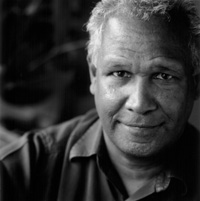
Boori (Monty) Pryor, Maybe tomorrow

Boori Pryor
Boori Pryor

I wonder why I didn’t read this book when it was published about 10 years ago? In the 1960s, when I was in my teens, I read poems like Kath Walker’s (later Oodgeroo Noonuccal) We are going; in the 1970s when I was at university it was more academic works such as the white anthropologist CD Rowley’s The destruction of Aboriginal society; and in the 1980s it was Sally Morgan’s My place. Later, in the 2000s it was Leah Purcell’s Black chicks talking. These and other books have both moved and educated me with their portrayals of the richness of indigenous culture in Australia and of the dispossession of its people. And yet, in the 1990s, I missed this treasure (written in collaboration with Meme McDonald).

It is a treasure because, although Boori Pryor and his family have experienced huge tragedy and significant intimidation, he is able to preach reconciliation and mutual respect. Classed as a biography and often promoted as a book for young adults – indeed it was shortlisted in the Children’s Book Council of Australia awards – the book has a much wider ambit. While we learn a lot about Boori’s life, that is not his purpose in writing the book. His purpose is to encourage white society to understand – really understand – where Aboriginal people are coming from, and particularly the far-reaching implications for them of Invasion Day, and to encourage Aboriginal people to trust in their roots and to recognise the importance of their stories, their cultural tradition, to their individual survival as well as to the survival of their people.

Much of the book deals with his work in schools where he aims to encourage students to develop an understanding of and respect for Aboriginal people and for the land. He believes that all people need to have and know their “place”: the first chapter is subtitled “To be happy about yourself you have to be happy about the place you live in”. He talks about the thoughtless and insulting things young people say to him and how he handles it. He says

You have to be the water that puts out the fire. If you fight fire with fire, everything burns.

He seems to be able to “maintain the rage” regarding what has been done to his people while at the same time working wisely and calmly to make things better.

Boori says in the book that storytelling is part of who his people are. After reading this book – with its mix of anecdote, metaphor, analogy and humour – I, for one, would not argue with him.

Boori Monty Pryor with Meme McDonald
Maybe tomorrow (1998)

Eve Langley, The pea-pickers

It  is hard to classify Langley’s most famous novel, The pea-pickers, which was first published in 1942. In some ways it fits into the coming-of-age genre but it is different from the more usual offerings in that genre, if only because there is no real sense at the end that the protagonist has come of age! It also has elements of the picaresque. Again, it’s not typical. The two sisters don’t travel far and wide, they don’t have many “big” adventures”, and it’s heavier in tone than the usual picaresque, but it is about two young women who set out to adventure partly to recover some of their lost history.  A modern interpretation of the picaresque perhaps?

The novel is semi-autobiographical, and is told in first-person. Given that there’s not a very strong plot nor a strong sense of character development, it’s interesting that Langley chose the novel form for it rather than autobiography. She wrote it in the early 1940s, but based it on the journals and poetry she wrote during the time period in which the novel is set, the 1920s.

So what exactly is it about?  The plot is pretty thin: two sisters dress as men and take men’s names, Steve and Blue, in order to work as agricultural labourers in Gippsland, the place their mother has told them about throughout their childhood and with which they feel they have a connection.  The book chronicles their life and work over a few seasons, and particularly describes the people they meet along the way, including a couple of “loves” for Steve, the narrator.

Stylistically it is interesting. Her language is very poetic, and there is also a lot of specific poetry in it. It is quietly humorous. It is also quite declamatory – in an old-fashioned poetic sort of way. There are a lot of allusions, particularly to things classical. There is no real plot, no sense of growth for the main characters from the beginning to the end. All this makes it quite odd – a strange mix of old-fashioned (declamatory style, classical allusions, etc) with post-modern (disregard for traditional elements of the novel such as plot and character development).

Two lovely pieces of writing early in the book are:

Down I fell, in love. And what happened? In feeling, incidents pure beyond pens, anguished beyond all telling. In fact, incidents to the point of idiocy.

and

Then the elderly party with the severe yet insane look took the violin from Blue’s hand and stood beside the door with it, looking as though he were meditating on a dry spell that had brought crows flying around the sheep and mortgages flying around the mailbox, and on that violin he played, with an absent-minded hand, such tunes as Ulysses should have retorted to the harpies.

It’s interesting in terms of social history – the cross dressing, the racism (anti Italians in particular), the depiction of agricultural life of the time. It beautifully evokes 1920s rural Victoria, portraying both the characters who populated it and the sort of small-scale agriculture that was going on.

Cross-dressing or women dressing “mannishly” was a bit of a common thread in nineteenth and early twentieth century Australia. Louisa Atkinson, back in the mid to late 1800s, was a botanist, illustrator, writer who wore trousers (particularly when she was out collecting her specimens) and shocked the locals in the Southern Highlands of NSW (Berrima/Bowral area), even though she conformed in terms of religiosity. Marie Bjelke Petersen (late 19th to mid 20th century) was described as mannish in dress when she was young – and I believe she wore pants. In addition, Marie Bjelke Petersen wrote the story “Jewelled Nights” which was turned into a film starring Louise Lovely in 1925. It is about a woman who dressed as a man. The film didn’t do wonderfully well at the box office. And then Edna Walling in Melbourne in the early 20s wore comfortable jodhpurs when she undertook the gardening and landscaping for which she was famous, leading local residents to call her ‘Trousers.”

So it seems that women did find pants more comfortable and wore them mainly for that reason. But, in this book there is also the issue of assuming a man’s guise to help them to find work. They didn’t try to completely hide their womanhood but they didn’t want to advertise it either. They used their male names in their application letter to get a hop-picking job. They also felt safer if they didn’t look obviously female when they were out and about.

In addition to the coming-of-age theme, the book also has other themes, such as love of land and dispossession from it:

Yes, I am from Gippsland, too. My family have been graziers here for many years. I should be the mother of sons who would be the princes of this province, in thought and action … But what am I? Well, you can see, A wandering pea-picker, living in a galvanised iron hut. But my forefathers were the pioneers here. And that is what is really hurting more than anything. I am nothing to Gippsland; I just wander through her, being hurt by her and used by her in menial toil.

The pea-pickers is a challenge. It seems fresh and innovative, thumbing its nose at many traditions of the time, but it also seems to go nowhere and can be self-consciously self-important. It is, nonetheless, an important part of Australia’s literary heritage and deserves wider reading.