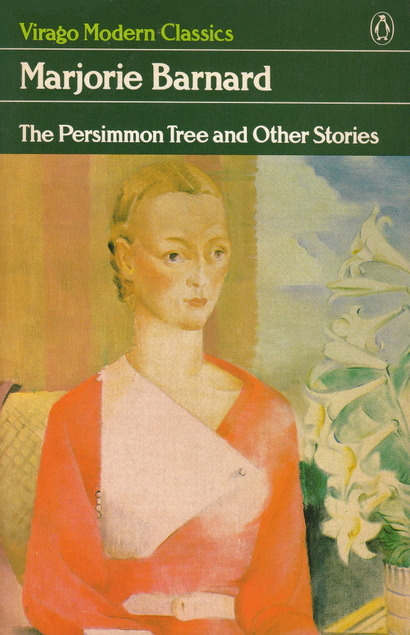
Shankari Chandran, Chai time at Cinnamon Gardens (#BookReview)

Shankari Chandran’s Miles Franklin Award winning novel, Chai time at Cinnamon Gardens, was my reading group’s March book. Unfortunately I was out of town at the time of the meeting, but of course I wanted to read it – and I did, finally!

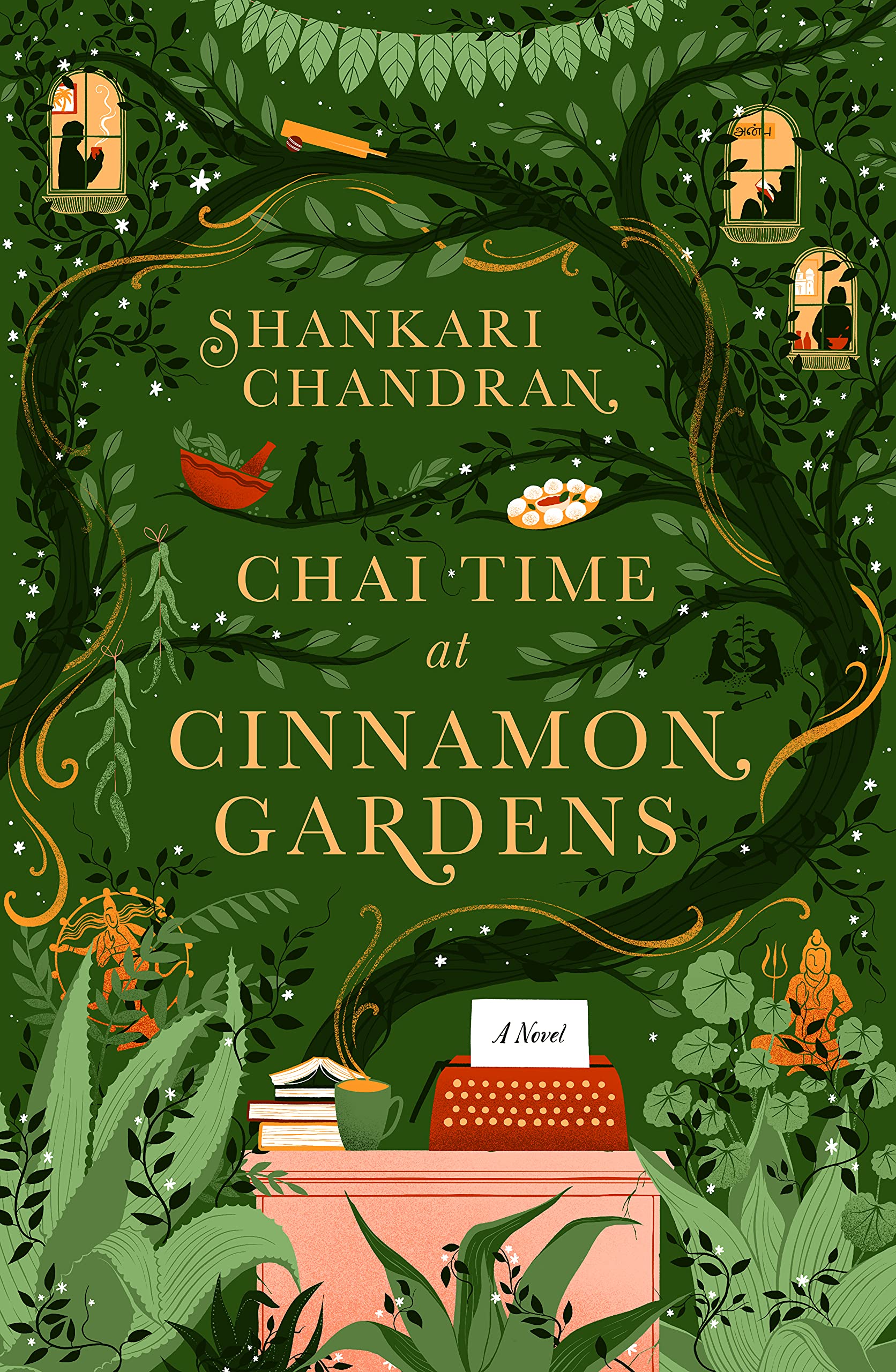
Like many people, I think, when I first saw the book, I assumed it was one of those cosy crime novels set in a nursing home or retirement village. The title and the pretty cover certainly suggest that. Only a fraction of this first impression was right, though. It is set in a nursing home, and crimes do occur, but it is not a crime novel and nor is it cosy. Instead, it is a serious, thoughtful and immersive novel that covers many issues confronting modern multicultural Australia, but that also has one main driving idea – which I’ll get to soon.

First, though, I want to clear up another assumption I had, which was that Chandran is a Sri Lankan-Australian writer. Wikipedia told me otherwise. It describes her as a British-Australian writer, who was born in London to Tamil refugees from Sri Lanka. She grew up in Canberra, and studied law at the University of New South Wales, before working as a human rights lawyer in London for a decade. She now lives in Sydney. Chai time at Cinnamon Gardens is her third novel. GoodReads describes her first novel, Song of the Sun God (2017), as being “about three generations of Australian Tamil women and the choices they make to survive Sri Lanka’s civil war“. I don’t know what that novel’s overarching idea is, but Chai time at Cinnamon Gardens also draws from its main characters’ experiences during that civil war, and I do have a view on what drives it, so let’s get to the novel.

It is set in the Cinnamon Gardens Nursing Home in a fictional Sydney suburb called Westgrove, which situates it in Sydney’s multicultural western suburbs. The home is taken over in the early 1980s by Sri Lankan migrants, Cedric, Zakhir, and his wife Maya who wants to transform it to a place “where people will be valued”. The novel is told through multiple alternating voices, but starts with a Prologue which describes the home and which, if you read carefully, also prepares us for what’s to come:

Arabian jasmine climbs the wooden trellises staked in the garden beds. They are bold travellers, dark vines carrying white stars up the two-storey walls and around the windows of the residence. The plant grows obediently in the quiet suburb of Westgrove, Sydney, but its tropical ancestors are a wild breed, a vine that grows rampant in the villages of Sri Lanka, a home more familiar to many of the residents.

“Bold travellers”, “dark vines”, and “white stars” together with words like “obediently” and “wild” suggest a tension that we are going to explore.

We then start the narrative proper. It’s 2020, and Maya is now old and living as a resident in the home – albeit one who still holds many strings. Ruben is attending her, and we become aware that he bears fresh and old scars on his body. As the narrative progresses, we learn that the fresh scars come from recent racist attacks on him in the vicinity of the home, while the old scars relate to his experiences in Sri Lanka during the war. These scars more literally embody the tensions that pervade the novel.

From here, the rest of our narrators, all third person, are gradually introduced – Ruben; Maya’s daughter Anjali (Anji), who now manages the home; Anji’s old schoolfriend Nikki, who is the home’s geriatrician; and Nikki’s husband Gareth, who is white-Australian and a local councillor. There are other characters, including, most significantly, Anji’s also white-Australian husband, Nathan, and Maya’s aforementioned husband, Zakhir who disappeared, now presumed dead, ten years before the novel’s opening.

A strength of the novel is the way these characters inveigle their way into our hearts and minds so that we care about them, even the unappealing Gareth who, blinded by self-pity, rashly but unintentionally unleashes the dreadful drama that unfolds. It all hinges on racism. Chandran exposes the awful truth of how endemic racism is in Australian society and how, as a result, things can so quickly get out of hand. Interspersed with this present-day storyline are Maya’s, Ruben’s and Zakhir’s backstories, which explain why they had come to Australia – personally, in terms of what they had experienced during the civil war, and politically, in terms of their Tamil heritage and what that civil war was about.

I said at the beginning that the novel covers many issues which confront modern Australia, but that it also has one main driving idea. The issues include racism, colonialism, and multiculturalism; trauma, loss and grief; friendship, family and community; and the role played by the media, including social media, in fuelling emotions rather than encouraging reason. Underpinning these issues is the idea that drives the narrative – storytelling, and “the most powerful” of all stories, history. By framing her story within the Sri Lankan civil war and its battle over contested histories, Chandran makes her novel relevant to all cultures and societies where history has been used to oppress minorities resulting in violence, disempowerment and oppression, where distortion produces misinformation and confusion that can be manipulated to serve personal and political ends.

As grim and confronting as much of it is, Chai time at Cinnamon Gardens is not without hope. Alongside Chandran’s exploration of the misuse of history is a commitment to the positive value of story. To this end Maya, from the beginning, interviews all residents of the home, capturing their lives and their dreams in order to properly know and care for them. This provides the book with another underlying tension, that between histories that erase and stories that “must not be erased”.

Does it all work? Chandran holds a lot of balls in the air. Early on I felt caught in an awkward amalgam of a contemporary novel about middle class angst (husband versus wife, daughter versus mother, and so on) and one exploring critical political ideas. Also, there’s constant moving backwards and forwards in place and time, the plot felt a little contrived in places, and the main themes are hammered home. However, Chandran balances the tone well, mixing light humour and satire with sadness and tragedy, and the characters are vividly and sympathetically drawn. The end result is a book that reveals our essence, and asks us to consider how we might live together in respectful community. Consequently, despite some unevenness, I greatly enjoyed the read.

Shankari Chandran
Chai time at Cinnamon Gardens
Ultimo: Ultimo Press, 2022
360pp.
ISBN: 9781761151408

Monday musings on Australian literature: Vale Yasmine Gooneratne (1935-2024)

It was through the Jane Austen Society of Australia’s (JASA) newsletter, Practicalities, that I learned of the death of Yasmine Gooneratne, a woman with whom I have crossed paths – one way or another – three times. She was an academic at Macquarie University, where I did my undergraduate degree; she wrote a novel, A change of skies (1991), which my reading group discussed back in 1996; and, she was the patron of JASA (and you know how I love Jane).

You can find quite a lot about Yasmine Gooneratne on the Internet, if you are interested, so I’m just going to focus on a few points that struck me, and I hope will interest you.

“No nonsense”

A site called The Modern Novel provides a useful potted biography, so I will start with that. It says that she was born in Sri Lanka (then Ceylon) in 1935 as Yasmine Bandaranaike, which means she was “a member of the well-to-do Ceylonese family which included Sirimavo Bandaranaike, the first woman prime minister in the world”. She studied at the University of Ceylon and Cambridge University, and in 1962, she married the doctor and environmentalist Dr Brendan Gooneratne (who died in 2021). They emigrated to Australia in 1972, where she lived for 35 years, according to Wikipedia, before returning to Sri Lanka. It was here, in her home country, that she died on 18 February this year.

AustLit provides more detail, which includes that she was founding Director of Macquarie University’s Post-Colonial Literatures and Language Research Centre from 1989-1993, and that she was awarded an AO (Order of Australia) in 1990 “for her distinguished contribution to Sri Lankan and Australian literature”. She won (or was listed for) a number of awards in Australia and elsewhere.

Gooneratne wrote over twenty books, including novels, some poetry and short story collections, as well as many works of non-fiction, but she seems little known outside academic circles (and JASA). Indeed, my initial – and general – search for this post brought up many references to her but no news items on her death. I had to search a little more specifically for that. This was interesting given that, on the several internet sites I found, she is described as widely known. DBpedia* calls her a “Sri Lankan poet, short story writer, university professor and essayist” and says that “she is recognised in Sri Lanka, Australia and throughout Europe and the U.S.A., due to her substantial creative and critical publications in the field of English and post-colonial literature”.

When I did find something about her death, I was delighted to find an obituary written by her daughter Devika Brendon. Initially posted in the Sunday Times on 18 February 2024, it has been shared on many other sites including the blog I am quoting from. It provides a loving and personal tribute to her mother, but one which I suspect also rings true to the person Gooneratne was. Devika Brendon tells us that:

Yasmine Gooneratne as a private individual left clear instructions about what she wished regarding her funeral. Her directives show a great deal about her character and her values. ‘No public notices. No public viewing. No public funeral. No memorial lectures. No fuss. No feathers. No posturing. No performativeness. No photographers. No selfies. No celebrities. No nonsense.’

I have mentioned Gooneratne a few times on this blog, including in a brief Monday Musings post I wrote in 2013 on Migrant literature. It had been a long time since I’d read A change of skies (and it’s even longer now), but I wrote that the novel was about “educated middle class migrants – like herself I presume – who work to find a balance between fitting into the new culture while at the same time preserving their Sri Lankan identity”. If you want a better flavour of this work, check out this post written in 2012 by someone called Elen on a blog called the southasiabookblog. Elen says that Gooneratne’s “portrayal of the immigrant experience is as funny and poignantly ironic as Jhumpa Lahiri’s work on a similar topic is earnest”. I wish I could remember it that well, but I read it when I was immersed in parenting and my memory is general. This description of Gooneratne’s tone, however, sounds like the writing of an Austen-lover!

I will end with another paragraph written by her daughter because, not only does it tell us a lot about Gooneratne but, if you are an Austen fan, you will love the final line:

She had great contempt for hypocrisy and cruelty. She had a great sense of humour and a lively sense of fun. As she was a person of moral integrity, the repulsive conduct of people who prey upon the vulnerable saddened her, especially as she grew older. While always choosing to believe the best in people, she found herself unable to accept the lies that are spun by opportunists and predators on a daily basis. Her good opinion, once lost, was lost forever.

* DBpedia describes itself as “a crowd-sourced community effort to extract structured content from the information created in various Wikimedia projects”

Carmel Bird and Jace Rogers, Arabella (#BookReview)

If you have read Carmel Bird, and particularly if you have read her bibliomemoir Telltale (my review), you will know that she has a whimsical turn of mind. You will also know that she can turn her hand to most forms of writing, including children’s picture books. Her latest outing, Arabella, proves the point.

Arabella tells the story of two cats, and it starts like this:

Once in a cupboard
full of coats and old hats
lived the prettiest, sweetest
and littlest of cats.

The accompanying illustration shows the inside of a cupboard, with hats on a high shelf, coats hanging below them, and, spying from behind the boots at the bottom, a little cat. The illustrations are minimalist pen and black ink drawings with restrained, delightful touches of watercolour – just like you see on the cover.

On the next page we learn that this cat, who sleeps behind an umbrella, is named Miss Arabella. She is small, quiet and shy. Unfortunately, not only is she shy, she’s also a bit of a scaredy-cat – well, a frightened cat anyhow. She seems to be managing her life well until into it comes another cat named George. He’s confident, and he knows there’s another cat there – somewhere. How will Arabella cope? Will she cope? Well, I’m not going to tell you, but let’s just say that this is a perfect book to read to children who love animals, particularly those who love cats, and to children who are frightened or lonely, and who need a little encouragement to come out of their shell to explore the big wide world – especially with a friend.

Arabella is one of my favourite sorts of picture books, by which I mean, it’s a rhyming one. It flows along beautifully, with words that soothe and please, and with little shifts in rhyme and rhythm that alter the pace just when they ought, so that the reader is jolted out of that sing-song tone that is so easy to fall into with rhyming books. The story is charming, and the gentle, whimsical illustrations encourage engagement. The book has an old-world air but with a timelessness that speaks to now as much as to any time. It has, I believe, been successfully tested on Carmel Bird’s own grandchildren, to whom the book is dedicated.

But don’t take my word for it, see what you think. I’m sure you’ll be delighted, particularly if you have grandchildren.

About the creators:

If you read my blog regularly you will know Carmel Bird (my posts). Born in lutruwita/Tasmania, she has been a fixture on the Australian literary scene since the 1980s when her first novel, Cherry Ripe, was published. She has written over ten novels, multiple short story collections, and much more besides. In 2016, she was awarded the Patrick White Award.

You may not, however, have heard of Jace Rogers. He is an artist who lives in Castlemaine, Victoria, where Bird now resides. His Facebook Page told me more, and gave me a sense of why he would have worked well with Carmel Bird. His intro is “My work salutes the anti hero. Fragments of brain clutter drawn out, cut up and cemented in binder medium” and his email address is given as jaceartyfarty@gmail.com. Love it.

Carmel Bird (text) and Jace Rogers (illustrations)
Arabella
Castlemaine: Treasure Street Press, 2023
33pp.
ISBN: 9780646883601

(Review copy courtesy the author. This book is published by Carmel Bird’s own – new – publishing company, which might make it self-published, but then again, might not. The book is available in bookstores, like Readings, but also direct from the author: carmel@carmelbird.com, $25 plus $6 postage)

Karen Viggers, Sidelines (#BookReview)

I don’t usually start a book review by relating its content to my own experience, but local author Karen Viggers’ latest novel Sidelines invites exactly this. Sidelines is about children’s sport and what happens when the competitiveness gets out of hand. It was largely inspired by Viggers’ own experience as the mother of sporty children, and by an ugly parental brawl at a children’s football match that happened during those years.

My children’s sport experience was blissfully different. Our son played cricket, and his coach’s last name was McPhun – I kid you not. He was the perfect children’s sport coach. His focus was on “phun” and teamwork. He encouraged those kids, was fair about opportunity, did not favour his own son, and we parents had the best time. I loved seeing the enthusiasm with which the kids played, and their resilience when they were out for a duck, despite having gone in to bat with dreams of sixes and high scores. You won’t be surprised, perhaps, to hear that our kids were not in the elite division, but this should not make any difference. Unfortunately, however, it probably does.

So, Sidelines. As Viggers explained at the meet-the-author event I attended – and as is obvious if you read it – her novel has a structure rather like Christos Tsiolkas’ The slap*. This means that the novel’s story or plot is progressed through a sequence of different, third person, points of view encompassing the parents and children involved in the sport. Sidelines is a little different though because in Tsiolkas’ book, the slap occurs in the first chapter and we then watch the fall-out from that action. Viggers’ novel commences with a prologue describing an ambulance arriving at a sports ground where a badly injured child is lying far from the goal-posts. “What the hell happened here?” We then flash back to nine months earlier and, through those sequential voices, we work our way towards what had happened and why.

“It’s not meant to be fun” (a football father)

The novel focuses on two families – the well-to-do Jonica, Ben, and their 13-year-old twins, Alex and Audrey; and the Greek-Australian working class family of Carmen, Ilya, and their daughter Katerina. Into this mix comes Griffin and his single-parent Dad, Lang. Griffin is a natural, and his appearance upsets the team’s sporting and interpersonal dynamics. The characters telling the story are Jonica, Carmen, Audrey, Katerina, Ben, and finally, Griffin. For each voice, there is a thematic word or phrase that provides insight into, and commentary on, that character.

The first voice, Jonica’s, initially made me feel I was reading one of those stories about a dysfunctional family. You know, the well-to-do family with the successful, professional, and controlling husband, the privileged children, and the wife and mother caught somewhere in the middle. And there is some of this aspect in the novel, because, as becomes clear, part of the story Viggers is telling is one of class. So, in Jonica’s story we see the tropes of her class. Everything is laid on in a material sense, but the two females, in particular, aren’t happy. Jonica, like her husband, is a lawyer, but she is frustrated about not working. Ben, you see, “likes having her at home”, and insists she is needed to look after the children. He will “support her” (and the family) while she supports the children. There’s an irony in this word, “support”, which is Jonica’s theme, because, as Viggers said during the author talk, there’s a fine line between “support” and “pressure”. Audrey certainly feels more pressure than support.

The next voice is that of the other mother, Carmen, whose daughter, Katerina, like Audrey, is trying out for a place in the boy’s team where, as Ben had told Jonica, girls will learn “speed and aggression”. While Jonica tries, unsuccessfully, to resist her husband’s pressure to push the children, Carmen is more like Ben. She wants her daughter to achieve where she had failed, and she will manipulate and kowtow as much as is necessary to ensure this happens. Her theme or motif is “goal poacher”, the one who “attempts to shoot goals from loose balls … and uses other non-traditional ways of scoring”. Perfect for the resourceful Carmen.

And so the novel progresses through to Audrey’s and Katerina’s voices, where we see the pressures that their parents don’t. These girls do want to play well, but they also want other things in their lives. They are teens, for heaven’s sake! And Viggers’ rendition of them convinced me.

The penultimate voice is Ben’s, and here, in particular, is where Viggers’ choice of a multi-voice structure shines, because, while he’s still unlikable, we also see his point of view. Ben is the alpha male, no doubt about it, but he loves his family and he’s not so tuned out that he doesn’t sense something is wrong with Audrey in time to take critical action. This is the value of reading, being able to see a situation from another point of view. We don’t have to agree with Ben – I’m sure few of us do – but we can see where he’s coming from and that he’s human. This awareness can be achieved with third person voices, of course, but Viggers has effectively used first person voice here to directly confront readers with her protagonists’ thoughts.

By the end of the novel I was impressed by the careful and sophisticated way in which Viggers had developed and explored her main idea, which is to encourage us to think about our attitudes to and behaviour around competitive children’s sport. She offers no easy solutions. This is not a didactic book. There are many points left open for readers to think about. Can you play for fun, for example, and what does that look like?

In the above-linked interview with Viggers, she said she has realised that she is an issues-based writer. This is exactly what I thought as I started reading Sidelines. On the surface, it departs from her previous, environment-themed novels but, in fact, like those novels, it takes an issue Viggers cares about and explores it through characters who are real on the page. I enjoyed the read, but more than that, I hope it gets read and talked about in places where it matters.

* Interestingly, another Tsiolkas book, Barracuda (my post), starts with elite children’s sport, but while class is also an element, it takes a long view of what happens when things don’t go to plan.

Karen Viggers
Sidelines
Crows Nest: Allen & Unwin, 2024
343pp.
ISBN: 9781761470714

Richard Flanagan, Question 7 (#BookReview)

Question 7 is the fifth book by Richard Flanagan that my reading group has done, making him our most read author. That surprised me a little, but he has produced an impressive body of work that is hard to ignore – and, clearly, we haven’t.

We always start our meetings with sharing our first impressions. For this book they ranged from those who were somewhat bemused because of its disjointed nature to those who loved it, one calling it “extraordinary”. My first impression was that it’s a book full of paradoxes, and that these started with my experience of reading it. By this I meant that it was both easy and hard to read, easy because it was so engrossing and moving I was compelled on, but hard because the paradoxical nature of the ideas being explored kept pulling me up to ponder what he meant. What I didn’t add, because I feared overstaying my “first impressions” time, was that Question 7 felt like a humane book, a book about who we are and how we are, about what we do to each other and why. 

“The words of a book are never the book, the soul of it is everything”

I can see how Question 7 can feel a bit disjointed – an effect of its stream of consciousness style – but there is a clear structure underpinning it, one provided by three interwoven threads. The first comprises the Hiroshima story, the role of Wells’ novel The world set free, in which he imagined “a new weapon of hitherto unimaginable power”, and the scientist Szilard. Flanagan uses novelistic techniques to link Wells, his lovers, Rebecca West and Little e (aka Elizabeth von Arnim), and Szilard, whose reading of Wells’ novel set him thinking about an atom bomb, and conceiving the idea of a “nuclear chain reaction”. The idea of a chain reaction becomes one of the novel’s connecting motifs or metaphors. One things leads to another, and, as Szilard was to find out to his horror, once started chain reactions are very hard to stop.

The second concerns the colonisation of Tasmania and, bringing in Wells again, his statement that his novel, The war of the worlds, was inspired by the cataclysmic effect of European colonisation on Aboriginal Tasmanians. Wells’ invading Martians become the novel’s second metaphor, Flanagan equating them with the colonising British. In a neat additional link, we learn that Szilard and some of his Hungarian Jewish scientist peers called themselves the Martians.

The third thread encompasses the story of Flanagan’s Tasmanian-based family, particularly his father’s life and his own. The way these threads, and their linking metaphors, coalesce to explore and expose life’s unanswerable questions makes for involving reading, as Brona and Lisa also found.

And yet, there’s more… There is another less visible connecting thread which provides the novel’s backbone and guide to meaning. It comes from Flanagan’s understanding of an essay by a young Yolnju woman, Siena Stubs, in which she discusses “a fourth tense” in Yolnju thinking. As I understand it, this encompasses the idea – in my words – that all time can coexist. For the Yolnju, for example, this means the ancestors were here, are here, will be here. Flanagan uses this concept as a refrain throughout his book, but in different contexts so that we can see its relevance. Thinking about his near-death experience on the Franklin, for example, he writes that “though it happened then it’s still happening now and won’t ever stop happening”. Or, to universalise it, “life is always happening and has happened and will happen” (p. 99). 

A little later on, reflecting on the Hiroshima atrocity, he says:

what if vengeance and atonement both are simply the lie that time can be reversed, and thereby some equality, some equilibrium, some justice had? Is it simply truer to say Hiroshima happened, Hiroshima is still happening, and Hiroshima will always happen? (p. 140)

Further on again, he delves into the horrors of Tasmania’s colonial past and uses the refrain, “we were, we are, we will” to encompass not only the continuation of First Nations culture but the fallout from “the System” that the Martians had created. He concludes this section with another of his paradoxes:

And thereafter it was we who bore the inescapable, ineradicable shame that was not ours and which would always be ours. (p. 230)

Question 7, then, explores some of the toughest imponderables of our existence. It reminds us that once something happens, it doesn’t go away, but is part of the past, present and future, is part of the fabric of our being.

And so, we get to a related idea of memory, which also recurs throughout the novel. Writing about his childhood in Rosebery, Flanagan eschews checking some facts, saying,

This is an account of memory, not fact, and facts are not how we know ourselves, while memory – its tricks, its invasions, its silences, its inventions, its inevitable questions – is who we become as we shuffle around in a circle …. (p. 151)

There’s that circle – or non-linear time – again, because, in Flanagan’s mind “only fools have answers”. It is far better to keep questioning. This might be the appropriate place to share Flanagan’s two perfect epigraphs, as they provide a guide to how to read this book:

The author has not given his effort here the benefit of knowing whether it is history, autobiography, gazetteer, tragedy, romance, almanac, melodrama, or fantasy. It maybe myriad, it may not. The question is put, but where is the answer? 
Hobart Town Mercury reviewing Moby Dick 1851

and

No, this is not piano. This is dreaming.
– Duke Ellington.

It might also be the time to share book’s framing question, which comes from a short story by Chekhov, “Question posed by a mad mathematician”, in which he parodies a school test problem:

Wednesday, June 17, 1881, a train had to leave station A at 3am in order to reach station B at 11pm; just as the train was about to depart, however, an order came that the train had to reach station B by 7pm. Who loves longer, a man or a woman?

Ha! This unanswerable non-sequitur of a question, “who loves longer, a man or a woman”, is another of the novel’s framing motifs, alongside the (almost) throwaway line he uses at the end of particularly tragic or egregious situations, “that’s life”.

So, where does this all leave us, the reader? With a challenge, I think, to reckon with our personal histories and the wider histories we are part of – and to do so with a sceptical attitude to logic and rationality, because “the world  from which we presume to derive meaning and purpose is not the true world. It is a surface world … beneath which an entirely different world surges.”

Near the end of the book, Flanagan shares some of the rather bizarre responses he received to his first novel, Death of a river guide, and writes,

After that I knew that the truth wasn’t the truth even when it was.

Here, then, another paradox, one that quietly snuck up on me but that embodies the book. Truths, of one sort or another, come thick and fast as you read, but always there are questions. We cannot, in other words, measure Hiroshima or the impact of colonialism. We cannot pretend

… there is some moral calculus to death. There is no equation of horrors … Who do we remember and who do we forget?

Ultimately, as Flanagan wrote part way through his book, the words are not the book, its soul is everything. In Question 7, we see into Flanagan’s soul and, inevitably, have a light shone on our own. Where to from here?

Richard Flanagan
Question 7
Knopf, 2023
280pp
ISBN: 9781761343452

Karen Viggers in conversation with Alex Sloan

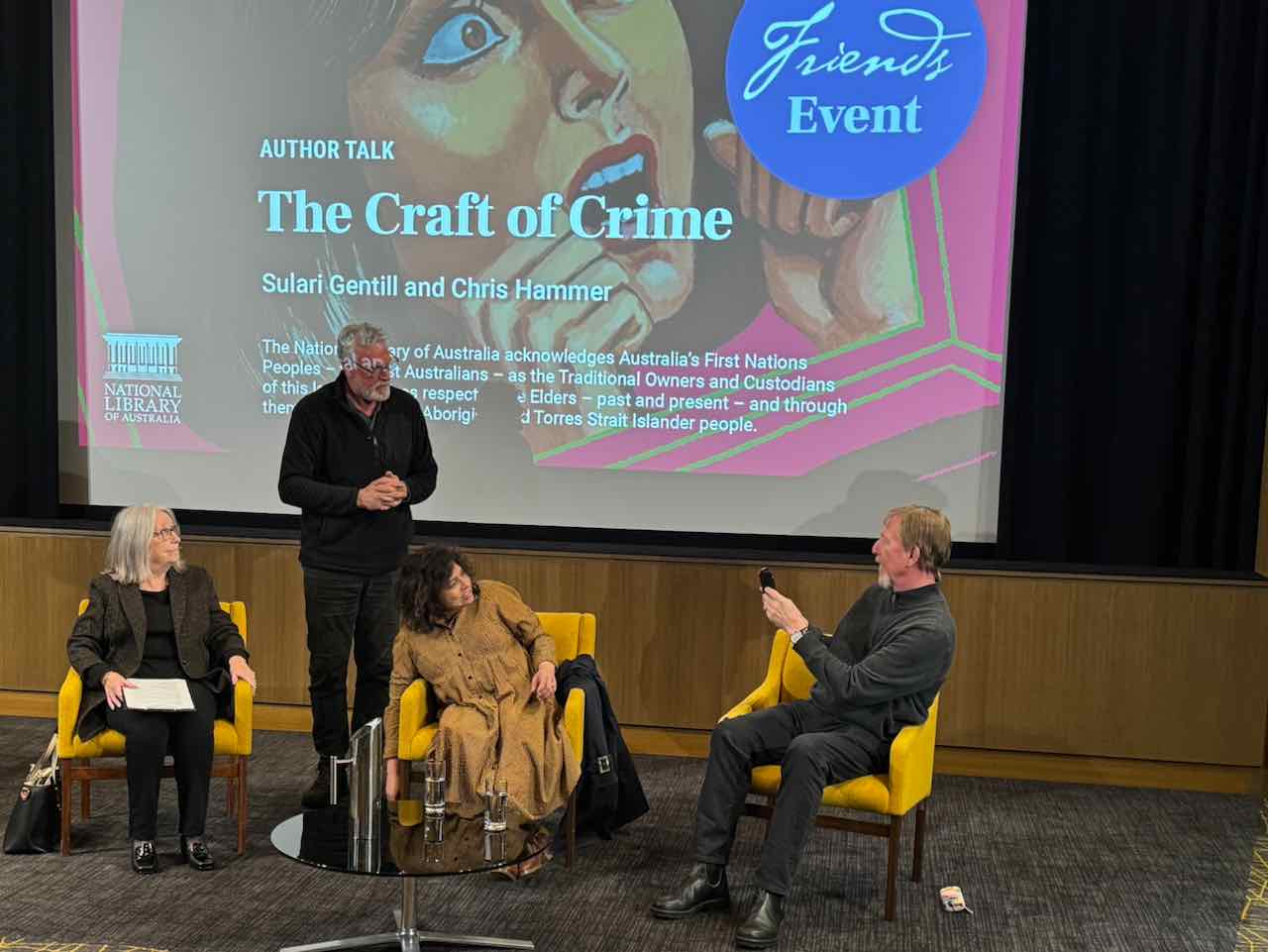
When Colin Steele emailed out the schedule, to date, for this year’s Meet the Author series, I immediately marked in my calendar those events I could attend. There weren’t many, as life is busy with yoga, tai chi, reading group and concert subscriptions, but the first I could attend was local author Karen Viggers (who has appeared several times on my blog) in conversation with Alex Sloan about her latest novel, Sidelines.

The conversation

MC Colin Steele, who was so deservedly made a Member of the Order of Australia in this year’s Australia Day Honours, opened proceedings by acknowledging country and introducing the speakers. He then paid tribute to Marion Halligan who had died this week, and who had planned to attend this event. There was an audible sigh in the audience because she really was much loved here. But, moving on, as we must … Colin introduced the conversation, describing Sidelines as “social commentary on modern society”, before passing us over to another local luminary, Alex Sloan.

Alex opened with a point I had planned to make in my post on the book, which is that it’s quite a departure from Viggers’ previous environment/landscape-based novels. Sidelines is set in the suburbs, whereas her previous four novels are set in “wild, rugged places”. But then, on reflection, she added, suburban Sidelines is “rugged” too. It “has teeth”.

However, before asking Karen about her novel, she too paid tribute to Marion Halligan. How could she not, given this week, this place, and this interviewee? Karen responded by saying what a “terrible loss” Marion’s death is. She had been a “huge supporter” and friend, and had lived life right to the end. Isn’t that how we’d all like to go?

Karen then shared a statement made by Marion, in an interview with Gillian Dooley, about what novels are about:

It seems to me that novels are very much about this question of how shall we live, not answering it but asking it, and what novelists do is look at people who live different sorts of lives, and often people who live rather badly are a good way of asking the question.

This is so Marion! Karen suggested that Sidelines looks at people living badly … but not at bad people. There’s a difference – one that people don’t always make, I think.

She also said – and this is the other thing I was planning to raise in my (coming-soon) post on the book – that she realised she is an “issues-based writer“. She can only write what is inside her. This book grew partly out of her thinking of her own behaviour but was also inspired by an Under-12 Canberra football game in 2014, which had ended in parents brawling on the field. Were these, she wondered, really bad parents or parents who had got carried away?

There is a line between support and pressure, and she wanted to use fiction to consider the issue – not just in sport, but in society overall. Where is the line drawn?

Alex asked about the fact that she has said that her first draft was written in anger. Karen explained that she had seen her son, a volunteer referee, cop a lot of abuse which has resulted in his giving up refereeing. This and other injustices she’d seen had made her angry.

Alex then moved to the characters, asking Karen to talk about them and their role in the novel – the well-to-do Jonica and Ben who start the book, and the succeeding characters who include the working-class Greek-Australian family, Carmen and Ilya, and the young talented player Griffin. Alex, as became clear through the rest of the interview, disliked Ben and loved Griffin.

Karen teased out her characters a little. Ben is one of those fathers who have to win at everything. For him winning at sport is all, and it gives social currency. However, Karen wants people to think about what success really is. Sport brings very different people together, people who may not otherwise ever meet each other. Choosing this subject-matter gave her an opportunity to explore class.

Turning to Griffin, Karen talked about how sport can also be a way out of poverty. She wanted to include all the different elements of sport – class, cultural, economic, and so on. She said if a child shows an ounce of talent, parents are sold the idea that their child can play for Australia, but only a tiny percentage do. Later in the conversation, Karen said that the lovely Griffin had been inspired by a particular young player she knew. He provides one of the novel’s epigraphs.

Karen said she had started this novel thinking she was writing about sport, but soon realised that, in fact, she was writing about modern society and parenting.

Alex mentioned the dog Honey and its importance to teen Audrey, noting that there’s always a dog in Karen’s books. Doglover Karen commented that animals are a great support to families, and that we can’t underestimate their role in our mental health. (Yes! Like her character Audrey, I found much-needed solace from my beagle when I was a teen.)

The conversation then segued to how well Karen had got into the heads of teens. We often forget the pressures of being a teen, Karen said, and how something like sport, which is meant to be fun, becomes pressure.

From here, we moved on to writing characters. Karen said she likes it when her characters start to take over and tell her who they are. Her first angry draft was too black and white. It needed more nuance. Alex, still disliking Ben, asked about the writing of badly behaving characters. Karen didn’t see the characters as all unlikable, and anyhow, she said, characters don’t have to be likeable. The structure of Sidelines is like The slap (my post). It is told chronologically but through six different characters, with each character picking up the story from the one before.

Alex mentioned the references to the arts in the novel. Had Karen specifically intended to pit the arts against sport? Audrey, said Karen, is a teenager who is interested in many things. She did want to play for Australia, but she also wanted to try other things like theatre. However, her father had told her to choose what you are best at. The arts vs sports question hadn’t been a conscious theme, but she had pared the novel back to leave gaps for people’s own thoughts. She didn’t want to be didactic.

The conversation turned to specific examples of young talented sportspeople and the role of parents in their lives – like Jelena Dokic (whom the world had watched being abused by her father), David Beckham whose parents had different ideas about their role in his success, and Ellyse Perry whose parents had never applied pressure but had always supported her. There is, said Karen, a wide range of parental behaviours and she wanted to leave space for readers to think about all this, particularly in terms of expectations and ambitions.

Regarding writing about the actual playing of sport, Karen said that watching someone who is really good is a form of beauty, like experiencing poetry or music. Alex suggested that beauty is usually revealed in her novels through nature, but in Sidelines we see it through Griffin.

Given how well Karen had captured teens, Alex wondered whether this novel would be suitable for schools. Karen felt that it could work for, say, Year 10, but is more interested in seeing it discussed in book and sports clubs. She’d like people to think about about how to be better parents, how to be better sports parents, and, more broadly, about our society and its attitude to competitiveness. She shared the story of a child being asked about the best thing about playing sport, and answering that it was the time with her friends before and after their games. If we want children to keep playing sport through childhood and into adulthood – something that is good for people’s health – we need to tap into how to make it enjoyable.

Q & A

On her professional versus writing life, and how the former helps the latter: Karen said her work as a vet keeps her in touch with the real world, and enables her to meet people from all walks of life.

On what talented athletes need besides their natural talent: Karen felt it was all those obvious things, like grit, the inner desire to play, support from others, persistence, willingness to take risks, knowing what to do afterwards (which Audrey points out to Griffin in the novel). In particular, she said, it’s the ability to be a team player, and being able to make the team look great as well as oneself.

On (referencing the Adam Goodes booing affair) being a good watcher: Karen talked about the importance of adults role-modelling good behaviour. When parents and coaches abuse referees, so will children. She hopes her novel will stimulate discussion about these sorts of issues.

On her popularity in France and how she thinks this book will go: The novel is currently being translated. The French love her “big landscapes”, but they also like philosophical questions so she hopes this novel will appeal to them for that.

On whether parents and children have different wants, different attitudes to winning and losing: After some sharing of quotes about winning and losing, Karen said that “how” you win or lose is more important than “whether” you win or lose.

Vote of thanks

Emma Pocock, wife of Federal independent senator David Pocock, gave the vote of thanks. (Pleasingly, it was Emma, not the organisers, who referred to her husband. She was introduced in her own right, as the founder of FrontRunners and an emerging writer). She shared a poem she had written at the end of her husband’s sporting career. It concludes with a reference to all those winning trophies/cups. They are, she wrote, all hollow, and must now be filled with something tangible, something that was really him.

Sidelines isn’t, she said, about neatly sorting characters into good and bad – as she’d initially tried to do – but about our behaviour individually and collectively. It asked her, she concluded, to think.

This was a lively but warm-hearted evening at which the local literary community came out in numbers to hear and talk about Karen’s timely book, to think about its intent, and to share in some camaraderie in a sad week.

ANU/The Canberra Times Meet the Author
MC: Colin Steele
Australian National University
22 February 2024

Vale Marion Halligan (1940-2024)

Such sad news. I have just heard that Marion Halligan, one of Australia’s literary treasures, died yesterday. She has been frail for some time, but the last time I saw, and spoke briefly to, her was at the 2023 ACT Book Awards in December. She was her usual engaged self, though also frustrated with the limitations her health was placing on her life. Getting old, as many of us know, isn’t a heap of fun.

Before I share a few thoughts of my own, here is how I heard the news. It was from Karen Viggers, via Facebook. I hope she’s OK with my sharing this:

It is with infinite sadness that I share the sad news with you today that the wonderful literary champion, Marion Halligan, died peacefully last night.

Marion was just the most amazing, beautiful, graceful, wise and generous person. She always had time to talk to and support other writers and was always generous in her friendships. She had a sparkling wit and personality, was always astute and sharp in conversation and she enjoyed books and literature to the end.

She has had an incredible life and will be very sadly missed.

Marion Halligan Valley of grace

It is so hard to know where to start. I do not want to write an obituary, as there will be plenty of those in the coming days and weeks. Rather, I’d like to share my experience of her, which started in the 1980s when I decided to focus my reading on women writers, and particularly on Australian women writers. I read three of her novels with my reading group, Lover’s knots, The golden dress and Valley of Grace. For this last discussion, Marion attended our meeting. What an absolute treat that was.

Outside of the reading group, I have read more of her books, including The fog garden and The point, and I have around five others waiting on my TBR. It was through Marion, too, that I met Carmel Bird when she approached me about posting the speech she was making to launch Marion’s novel Goodbye sweetheart.

Carmel Bird and Marion Halligan
Halligan launching Bird’s Family skeleton

Marion lived her writing life in Canberra, and was a member of the “Canberra Seven” or “Seven Writers” group about which I have written. I have seen her at award events, festivals and conversations, sometimes the interviewer and sometimes the interviewee. One memorable occasion was when she interviewed Margaret Atwood back in the early 2000s. Atwood was not easy to interview, but Marion held her ground with grace and humour. I will never forget it. (I was glad it was she and not me in that seat!)

Marion is loved here as our grand dame of literature, and her presence will be greatly missed. Not only did she support local writers generously, as Karen Viggers says above, but she was for many years patron of the ACT Writers Centre (now named Marion partly in her honour), was at one time the chairperson of the Literature Board of the Australia Council and also an organiser of Canberra’s previous writers festival, the Australian National Word Festival.

She was a versatile writer. She wrote eleven novels, several of which won and/or were shortlisted for some of Australia’s best literary awards, and which included a little foray into crime fiction. She was a big supporter of the short story form, ruing their unpopularity with publishers, and she also wrote non-fiction books, as well as journalism, including articles on food. Wikipedia lists her books and awards. Searching her in your browser will retrieve several interviews with her, and she was interviewed by Irma Gold and Karen Viggers for their Secrets from the Green Room podcasts I posted on recently. You can see most of my posts involving Marion on this tag. (There are few reviews here, though, because most of my reading of her books was before blogging.)

I could go on, but this is enough for now. I will close with a quote I’ve shared before on this blog. It comes from one of my favourite books of hers, a work of autofiction, The fog garden. I just loved this book, her cheeky, wry way of telling us that it was fiction not biography. It’s a lesson, in fact, in how to read fiction, and it also has one of my favourite statements about the value of reading. It goes like this:

Read a wise book and lay its balm on your soul.

All I can say is, thanks Marion for your intelligent wit, your warmth and your wisdom – and for the balm you laid on our souls. We will miss you muchly.

Monday musings on Australian literature: Forgotten writers 3, Marion Simons

Back in 2021, I started a Monday Musings sub-series on forgotten Australian writers, but to date have only written on two – Helen Simpson and Eliza Hamilton Dunlop. I have been intending to get back to it and with this year’s slight revamp of Elizabeth Lhuede’s and my contributions to the Australian Women Writers blog, now is the time. In the revamp, Elizabeth and I are going to focus on sharing public domain works published in 1924 – or written by writers who died in 1924. My first contribution was by Marion Simons.

This post expands on that blog post – but doesn’t include the piece written by Simons, a short column titled “To the old gumtree”, that I included there. To see that, please go to AWW. It is a short piece and worth reading!

The more we research Australia’s earlier women writers, the more we become aware of just how many used pseudonyms – sometimes more than one. Marion Simons was one such. Using pseudonyms was, as we know, not uncommon for women. Often it was to hide their gender, so they would be published and/or read, or to protect themselves from criticism for stepping outside the expectations of their gender and daring to write in the public domain. Sometimes, though, writers used pseudonyms – still do, in fact – to keep their different styles of writing separate. Unfortunately, we don’t know a lot about Marion Simons, so we can’t be sure of her motivation. However, she did use several pseudonyms, and some at least seem to have been used to differentiate different writing personas.

Marion Simons

So, who was Marion Simons? Most of what I’ve found has come from the (partly paywalled) AustLit database, and from Trove, mostly from pieces by her and but I did also find the occasional brief reference to her. The fourth of seven children, Simons was born in 1883 in Crystal Brook, South Australia, and spent her childhood years there and in Port Germein and Port Pirie. She never married, and when she died in 1952, she was living with one of her brothers in Mile End, a suburb of Adelaide.

It’s difficult to know exactly when or how her writing career started. AustLit, which describes her as a freelance radio script writer and journalist, says that she wrote radio plays for school broadcasts for the ABC between 1939 and 1949, including adaptations of classics. For these, AustLit says, she used her birth name, “Marion Simons”, but they add that she also wrote short stories and articles under the pseudonym “Stella Hope” and radio talks as “Lady Tulliver” (a reference, it seems, to George Eliot’s Milll on the Floss character, Maggie Tulliver). She used other pseudonyms too, including Quilp, Robin Adair and Nardoo. These were difficult to research, “Quilp” and “Nardoo”, for example, being used by more than one writer.

Book cover

Simons was clearly versatile – she probably had to be to make a living as a writer – as she also wrote plays for the theatre, including  “Casablanca”, which won the 1932 Repertory Prize, and a small 1941-published book, The Innkeeper’s wife, that was based on the Thomas Hardy poem “The oxen”Adelaide’s News (22 November 1941), reported that this story, then unpublished, won first prize in a short story competition conducted by the South Australian branch of the Fellowship of Australian Writers. (Read it online at the State Library of Victoria). It’s not clear exactly when she moved to Adelaide, but from Trove, I’d day she was there by the early 1930s, if not in the 1920s. Simons was active in Adelaide’s literary society, with various Trove articles dated from the 1930s to the 1950s reporting her being on the Poetry Society’s Council, the last librarian of the University Shakespeare Society (before it folded), Vice-President of the Adelaide Dickens Fellowship, and President of the Y.M.C.A. Dinner Club which would feature speakers at their dinners.

In addition to revealing her involvement in the above organisations, Trove also told me that she was cousin to one J.J. Simons. She may not appear in Wikipedia, but he does. He was born in Clare, South Australia, in 1882, and, says Wikipedia, “was an Australian businessman and politician, best known for establishing the Young Australia League” (in 1905), which started as a football league but, says Wikipedia, “diversified to include literature, debating, band music, sport and theatrical performances, as well as outdoor pursuits such as hiking and camping”. It still exists. He was also active in publishing, but all this was in Western Australia where he moved in 1896, and I am digressing a bit too much now, so back to Marion. (You can read about him at ADB, if you are interested.)

Given Simons’ use of pseudonyms, it’s difficult to identify her earliest writings. However, Port Pirie’s Recorder (10 November 1934) says that she wrote as “Quilp” while living in Port Pirie, and I found a “Quilp” writing the “Comment and Criticism” columns in the Port Pirie Recorder and North Western Mail of 1906. I believe this is Simons because this “Quilp” mentions not having been long out of school. (I found some earlier columns by a “Quilp” in a Port Augusta paper but they were dated 1902 when Simons was 19 and they seem to have been by an older man.) In late 1907, “Quilp” seemed to be also writing a column “Odds and Ends from the Oracle” in the Quorn Mercury and the Petersburg Times. A letter to the editor, referencing one of “Quilp’s” columns, describes “Quilp” as “your comic writer”. Certainly “Quilp” used a humorous tone used for reporting local events and activities, much as you find in modern columnists. Take for example this from her “Comment and Criticism” column in the Port Pirie Recorder and North Western Mail (of 5 December 1906):

I went to a garden fete the other day and helped to damage a very nice garden…

“Quilp” was also referenced in another (1907) report as delivering a paper on David Copperfield to Port Pirie’s St Barnabas Literary Society.

The “Stella Hope” by-line appeared in South Australian newspapers in the early 1920s. These pieces included general interest columns, also delivered with a touch of humour, and short stories. The first piece I found was “February the Fourteenth, St Valentine’s Day” in The Journal (17 February 1923).

My first in this series were novelists, which Marion Simons was not, but she was prolific enough across a number of forms to make her worth including here. I’d love to know more about her life but, despite her active involvement in Adelaide’s literary community, I have not yet located an obituary. I’ll keep looking though.

Al Campbell, The keepers (#BookReview)

Al Campbell’s debut novel, The keepers, is a complex and ambitious novel about parenting, specifically about parenting children who are deemed too difficult by society, leaving their mothers, or carers, to survive, or not, as best they can. It’s confronting but, unfortunately, all too real.

That this is its theme is obvious from the novel’s opening page, which is titled “Scrapbook #12”, and comprises a news report from abc.net.au, 23 April 2018 (original here). The lead sentence reads, “special needs group pays tribute to 11yo boy with autism killed by train after escaping from respite care”. I remember this case.

We are then launched into the main storyline, which concerns Jay, a mother and full-time carer for her twin autistic sons, Frank and Teddy, and features a cast of other characters, some real, like her unsupportive husband Jerrik, and some imaginary, mainly her childhood “friend”, Keep (short for Keeper). Alternated with this storyline, which is told chronologically through time-stamped sections (like “Monday 2:06am” and, later, “4 days till extubation”), is the story of Jay’s childhood, in which she had experienced abuse and neglect at the hands of a grandfather and her dysfunctional mother. These sections are also time-stamped (such as “10 years old, autumn). Interspersed with these are scrapbook entries, like the one opening the novel. They are compiled by Jay, who clips and shares stories about the neglect and, even, murder of children with disabilities. As I said, complex and ambitious.

There is so much to like about this novel, starting with Campbell’s characterisation of Jay and her sons. It’s vivid and empathetic, which is not surprising given her own life experience. Write what you know, authors are told. These people are not her and her sons, but she knows them intimately, and the scenes featuring them shine off the page, even non-verbal Teddy who communicates via iPad, and especially patient, stuttering Frank. I’d love to share some of the interactions between Jay and her sons, because the warmth, the humour, the patience, the imagination make for some great reading and convey some of the joys in their relationship, but I’m not sure they’d work out of context, so you’ll just have to take my word for it.

Meanwhile, another strength of the novel is Campbell’s energetic, evocative writing. It starts with a bang and rarely lets up. The language is often breathtaking in its ability to capture a moment, a feeling. On the first page after the scrapbook entry, Jay refers to it as “the horror on the page a thing of thorns in my hands” and on the next page, the unsettled night outside is conveyed through a “lone plucky lamppost mooned by wanton whacks of lightning”. She’s talking in these opening pages to the mysterious and shape-shifting Keep, whose “latest incarnation” is “bald as bone and mouthless. No breath of course. Without ears … Some ancient mica, colourless and brittle? … His appearance is rarely the same”. The reader is immediately introduced to one of the meanings of the title, Jay’s “keeper”. Described later as her “poultice and protector, destroyer of others”, Keep has been with her since her difficult childhood. Another meaning is that her two sons, despite what the system might think or suggest, are “keepers” – at least until she is no longer around. What then? This question underpins all that Jay does and feels, and lies just beneath some of the uglier scrapbook items.

But, Campbell, does ask a lot of her readers. The structure is complex, which, on its own, would not be a problem, multiple storylines, after all, not being new. But, there is a lot going on. The exciting but idiosyncratic style, the switches in voice, the sudden appearances of Keep and later “the Other Things”, the shifts in storylines from mother-Jay to youthful-Jay, demand a level of attention that can sometimes get in the way of the story. I’m not convinced, in fact, that Jay’s childhood story – readable and interesting though it is – adds enough. Is it intended as another example of how the system lets children down? If so, I don’t think it’s needed, as Jay’s story with her sons, is powerful enough. Is it intended to contrast her own style of mothering with that of her mother, or to introduce the idea of child abuse? If so, these seem like different stories, and ones that potentially weaken what seems to be her intention to highlight the desperate situation families with special needs children find themselves in.

In other words, Campbell’s main story, as I see it, is a mother’s “warrior” style love for her “different” children, and the system that lets them – the children and the parent/carer – down, again and again. She tells of doctors who refuse to listen or heed, of the social welfare bureaucracy (through the NDIS) with its irrational rules, of schools which can be inflexible, of people in parks and shops who would rather not see her children – and so on. If it’s infuriating for the reader, imagine what it’s like for the parents.

Overall, The keepers is a powerful story that wants us all to understand the life of the carer, the very difficult questions confronting them as they and their children age, and the way the system all too often treats them as lesser or as too hard or as “types” to be slotted into rules and regulations. For Campbell, the personal is the political, and vice versa in fact. She would like to believe there is real truth and commitment to the idea that it takes a village to raise a child, but “some village we turned out to be”, she says to Keep at one point. And right there it occurred to me that this book, despite its flaws, is the sort of thing that should be selected for the Prime Minister’s Summer reading list.

Al Campbell
The keepers
St Lucia: UQP, 2022
336pp.
ISBN: 9780702265488

Holly Throsby, Clarke (#BookReview)

My reading group’s last book of the year, Holly Throsby’s third novel, Clarke, was a popular end-of-year choice. It’s a straightforward but compelling read that was inspired by a story we were all across, the Lynette Dawson story. Inspired, though, is the operative word, as Clarke is not Lynette Dawson’s story.

For a start, while Clarke’s missing woman disappears in the same decade as Lynette, the 1980s, Throsby’s story is set in a different location (a regional town not a capital city) with a different sort of husband (a physiotherapist, not a teacher). Further, there is some sort of resolution a few years, not forty years, later. This was a wise choice by Throsby. It decouples the story from Lynette Dawson, which encourages us to see it as part of a bigger story. And, setting it in a smaller environment lets Throsby explore regional town life. This latter is one of the strengths of the book.

The novel opens with fifty-something Barney being visited by the police at the house he is renting. They have a warrant to excavate the backyard as the result of their having received new information concerning the disappearance of Ginny Lawson five years previously. Clarke tracks this new police investigation through the eyes of the neighbourhood, primarily Barney, his next-door neighbour Leonie, and Dorrie and Clive across the road. Leonie, Dorrie and Clive all knew Ginny and believe her husband Lou, now living in Queensland, is implicated. They have wanted this investigation ever since Ginny disappeared, but the police at the time weren’t much interested in missing women.

The main joy in reading the novel comes from Throsby’s handling of the relationships between her characters, and the way she conveys how neighbours and communities chat or gossip about and try to second-guess situations like these. They phone each other, visit each other, talk over the fence, and discuss it with their workmates. It’s so realistic, you can hear yourself doing the same over similar scenarios.

It’s a fundamentally tough story – a disappeared wife with its hints of domestic abuse, among other griefs – but Throsby handles it with a light touch, including occasional black humour. Here, for example is Leonie talking to her workmates about some concrete in Barney’s backyard that the police are now excavating. It’s clear that it had been a topic of conversation at the time of the disappearance:

The suspicious concrete’, said Varden.
‘Yes, because that’s what you do when your wife and the mother of your child has just disappeared’, said Leonie. ‘You landscape.’

There is also some subtle wordplay. For example, Ginny’s husband Lou’s “disturbing the dirt and who knows what else” in his back yard after his wife’s disappearance mirrors the disturbance felt by the neighbours. And there are some wonderful descriptions, like Leonie’s on her tricky relationship with her mother: “Leonie remembered the warmth of her mother as a heady storm that blew in fast but never stayed long”. Or on sad Barney: “His skin was kind of grey and rough and reminded Leonie of an egg carton”.

“It would be fantastic to be able to choose one’s memories. It would make life so much more bearable.” (Barney)

There are, as I hinted above, other layers to the the narrative besides the disappeared-Ginny plot line. Barney is no longer living with his wife Deb (but why?) and Leonie has her four-year-old nephew Joe living with her (why too?). Both people, it’s clear, are dealing with some sort of grief. Throsby drip-feeds us their backstories as we get to know them, and as they get to know each other. Dorrie, across the road, provides a voice of reason for Leonie, while also engaging in the neighbourhood speculations about Ginny.

I’ll leave the narrative there, and move onto the form. Clarke is fundamentally a crime story or mystery, but it doesn’t fit those genre expectations. It’s a cold case, but the criminal investigation occurs in the background. There is no protagonist detective, and we only meet the police through their interactions with the main characters. There is, admittedly, an element of the amateur-sleuth cosy-mystery going on. Our main characters do a little of their own “amateur surveillance”, as Barney calls it, and we would, of course, like to know what happened to Ginny. But, the main focus is on what is going on for Barney and Leonie, personally, and whether they will resolve the griefs in their lives that are holding them back. It reminded me of that idea that if you scratch just beneath the surface of most people’s lives you will find a sadness or tragedy.

So, my overall assessment? I thoroughly enjoyed the read. Throsby’s language, excellent characterisation, and authentic evocation of suburban 80s-90s Australia made it a compelling read. However, the twist near the end felt a bit forced, and the ending is a bit neat, albeit there was some restraint. Generally, I prefer edgier books, books that keep me thinking about where they are going. With Clarke, I wondered about what happened to Ginny, whether we’d find out, and whether a relationship would develop between Leonie and Barney, but it didn’t, for example, delve deeply into the fundamental issues that brought about the situation in the first place. As a result, it called more on my emotions than my mind, and I do like both.

Nonetheless, Clarke is an enjoyable read – and I’d happily recommend it to readers looking for generous stories about real people grappling with life’s challenges.

Holly Throsby
Clarke
Crows Nest: Allen & Unwin, 2022
346pp.
eISBN: 9781761185540