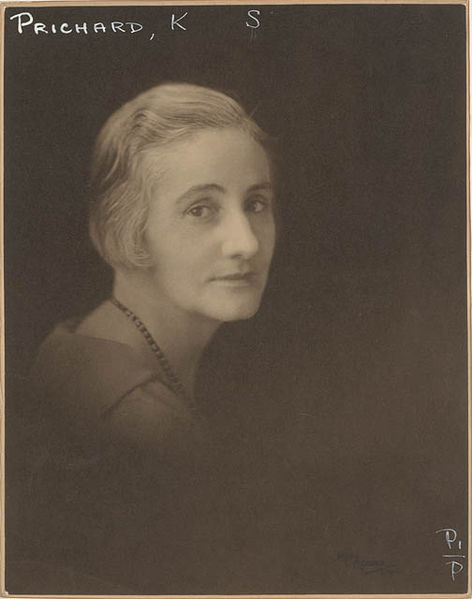
Katharine Susannah Prichard, The pioneers


Katharine Susannah Prichard

Prichard, 1927/8, by May Moore (Courtesy: State Library of NSW, via Wikimedia Commons)

Katharine Susannah Prichard (1883-1969) is probably not as well-known in Australia, let alone internationally, as she should be. She was born in Fiji, but grew up in Tasmania and Melbourne, travelled overseas and in other parts of Australia, before settling in Western Australia in 1919. She was a founding member of the Australian Communist Party (1920) and also of the Western Australian branch of the Fellowship of Australian Writers. Politics and literature, then, were the twin passions of her life. Her most famous novel and the only one I’d read until now, Coonardoo (1929), was remarkable in its time for its exploration of the relationship between white men and black women.

I don’t usually commence a review with a biography, but it felt appropriate in this case – partly because she is so little known despite her significance and partly because her politics were an intrinsic part of her literature. In the foreword to my new edition of the book, her granddaughter describes Prichard’s values as:

a huge love of and respect for the bush; the importance of living your life with integrity; of caring and fighting for the underdog; of holding strong principles and remaining true to them; and of embracing life with passion.

These values are evident in The pioneers, her first novel which won the Hodder and Stoughton All Empire Literature Prize for Australasia in 1915. She went on to write over thirty works, including novels, plays, short stories and poetry. But, perhaps that’s enough prelude for now – on with the book.

It’s a simple tale really, plot-wise. It starts with a couple, Donald and Mary Cameron, arriving by wagon in an unsettled area of Gippsland (in eastern Victoria) in the early-mid nineteenth century. They clear the land, build a home and establish a successful farm. Very early in the story, while Donald is away getting supplies, Mary is “visited” by two desperate men, Dan Farrell and Steve. A tricky situation for a woman on her own but she manages to win them over and they leave her, unharmed. The novel tells the story of these people – and the others who move into the district – over the next two decades or so, as they work to make lives for themselves, some honestly and some not so.  There are archetypal characters here – the hard-working, tough, taciturn farmer; the loving, but wise and stoical wife; the loyal but unappreciated-by-his-father son; and more. There are escaped convicts, cattle rustlers, and a thoroughly bad man.

This may all make it sound rather typical and a bit melodramatic. And, in fact, it does have its melodrama. But the book is more than this. Its overriding style, or approach, is social realism, as Prichard explores the hopes and wishes of a new country struggling to come to terms with its origins and forge a more positive future. Her style is not particularly innovative and, while the combination of social realism and melodrama is appropriate for a novel set in the nineteenth century, the melodrama was a little discordant to my modern ears.  Take this, for example:

It was as if that encounter in the valley of shadows had brushed all misunderstandings from the love that was like the sun between them. Deirdre had wrestled with death for possession of him.

A contemporary review suggested that the romance – which drives most of the melodrama – was included primarily to attract readers who may not be interested in the history. This could very well be so.

Despite not being particularly innovative, Prichard’s writing is sure and shows that while this was her first novel she’d been honing her craft for some time. I particularly loved her language. It is gorgeously descriptive. She perfectly captures the paradox of a place that is both beautiful and harsh – and effectively conveys the physical and emotional impact of the landscape:

The bright hours were rent by the momentary screeching and chatter of parroquets, as they flew, spreading the red, green and yellow of their breasts against the blue sky. At sunset and dawn there were merry melodious flutings, long, sweet, mating-calls, carollings and bursts of husky, gnomish laughter. Yet the silence remained, hovering and swallowing insatiably every sound.

The plot, as I’ve suggested, is a little melodramatic and fairly predictable but it’s a well-told tale, nonetheless, of good forces fighting bad, of compromises that are sometimes made, and of bad judgement calls that come back to bite you. The characters, while tending to archetype, are nonetheless real so that you believe them and their various plights. There is, I think, something reminiscent of Dickens here.

The themes reflect very much the values identified by her granddaughter in the foreword. The main characters are imbued with a strong sense of principles that they try to live by. When Mary meets the convicts early in the novel, she says:

But if you will believe the truth it is this: My heart is with you and all like you.

In her twenties, Prichard apparently met the Austrian sociologist, Rudolph Broda, who introduced her to the ideas of socialism and suggested that, as a new country, Australia was leading the world in social legislation. This idea is reflected in the novel. Early on, Mary says to Donald:

It’s a new country and a new people we’re making, they said at home, and I’m realising what they meant now.

Little did she know, then, what this “making” would really involve but defining “a new country” is clearly the goal Prichard set for herself. The novel concludes by suggesting that the new generation will

be a pioneer of paths that will make the world a better, happier place for everyone to live in.

Corny? Or aspirational? Take your pick … but whichever way you see it, this novel makes a significant contribution to the development of the Australian psyche, to our transition from colonial convict-fearing past to an independent self-realised future. I am glad it has been re-released and hope that more people read it.

Katharine Susannah Prichard
The pioneers
Singapore: Monsoon Books, 2010 [first ed. 1915]
272pp.
ISBN: 9789810848804

NOTE: An ebook version of the novel is available at Project Gutenberg.

Garry Disher, Wyatt (Guest post)

Some time ago I found in my mailbox a bundle of books from my lovely contacts at Text Publishing. Unfortunately, there were more books in the bundle than I could read at the time, and a couple were in genres I don’t generally read (though that’s not to say I wouldn’t read them if I had the time). So, like Lisa at ANZLitLovers and as I did for my last LibraryThing Early Reviewers copy of That Paris Year, I decided to use the Guest Post idea. For the LibraryThing guest post, the reviewer was my daughter, Hannah of Wayfaring Chocolate. This time, it’s my son, Evan. The book is Garry Disher‘s latest crime novel Wyatt, which won the 2010 Ned Kelly Award for Best Crime Fiction.

Evan read the novel while he was with us for Christmas. He has since returned to Melbourne (his home and the setting of the novel) and, while busy preparing for his flight to the USA tomorrow, made the time to please his mum by writing his review. I must say, it looks like the sort of crime novel I could enjoy. Thanks Evan …

Evan’s review of Wyatt, by Garry Disher

Gary Disher, Wyatt

Wyatt (Courtesy: Text Publishing)

Less a cops and robbers story than a robbers and robbers story, Wyatt is a new crime novel from the Australian author, Garry Disher. We are introduced to the protagonist and title character, Wyatt, as he is attempting to rob an extortionist. As one would expect in a good crime novel, it doesn’t go according to plan. Disher’s prose is terse and to the point, much like Wyatt himself, and the narrative races along, following a jewel heist and its aftermath. Set in Melbourne, which suddenly becomes dirtier and more sinister under Disher’s pen, Wyatt features many of the trappings of classic noir-ish, hard-boiled novels. This world is populated by seductive femme fatales, tough, if old-fashioned, men, and it will get the better of you if you don’t have your guard up. Wyatt is an aging, professional criminal, who is treated with reverence as a master within his field. He is cold, intelligent and calculating, yet sympathetic.

Surrounded by a host of characters, all dangerous in their own ways, Wyatt is pitted, almost indirectly over the course of the novel, against a French criminal much like him, and much his equal. However, to discuss more of the plot would be to spoil most of the fun. The pace rarely slows down, and the writing is taut and spare. The characters are archetypes, almost larger than life, but not overwritten. Disher has an invigorating, simple style. The violence, when it erupts, is abrupt and surprising and, without a hint of an overdrawn epilogue, the ending simply ends.  Wyatt is apparently the seventh book in a series featuring the title character. Despite having never read any of the others, and having a perhaps irrational bias against series in general, I am now eager to check out the others.

Garry Disher
Wyatt
Melbourne: Text Publishing, 2010
274pp.
ISBN:  9781921656811

(Review copy courtesy Text Publishing)

Peter Carey, Parrot and Olivier in America

Alexis de Tocqueville.

Alexis de Tocqueville (Presumed Public Domain, via Wikipedia)

It’s not surprising, really, that after living in America for two decades Peter Carey should turn his pen to it. Having lived in the US twice myself, I well understand the fascination of trying to understand that large and paradoxical country. In Parrot and Olivier in America, then, Carey sets out to explore America through the eyes of two men from early nineteenth century Europe: Olivier Jean-Baptiste de Clarel de Barfleur de Garmont, a French aristocrat whose parents had barely survived the French Revolution, and John ‘Parrot’ Larrit, a poor Englishman who had been brought to France as a boy by another French aristocrat.

Olivier was born in 1805, the same year that French writer and historian Alexis de Tocqueville was born. This is not a coincidence as the novel is Carey’s loose re-imagining of Tocqueville’s trip to America, with a friend, to study American prisons. Like Tocqueville, Olivier undertakes his trip with the support of the July monarchy, but Oliver’s companion is not an equal. Rather it is Parrot, servant-class and twice Olivier’s age. An unlikely pair, really, but perfect for Carey’s purposes …

… which are to pry into, poke at, and peer under that great American experiment, Democracy. Through having two protagonists of such diverse backgrounds and perspectives, Carey is able to explore the issues from different angles, that of master and servant. And through choosing the picaresque as his form (or style), he is able to do so without being ponderous. In other words, the tone is comic, as befits a picaresque novel, and the narrative comprises a series of adventures in which our “heroes”, Parrot and Olivier, meet a range of characters along the way who test them and their ideas. The novel is told in alternating, and well-differentiated, first person voices – starting with Olivier and ending, very even-handedly, with Parrot. It is basically chronological, but there are flashbacks to fill in gaps and frequent overlaps caused by one telling a story followed by the other giving his version.

That’s the nuts and bolts of it, but how does it come across? Well, in a word, exuberantly. That’s not to say it doesn’t have its serious side, but just that it’s rather fun to read. At least, it was for me, though that could be because of my personal history with America. Here, for example, are some of the observations which caught my attention:

On not needing government (Parrot talking with a tradesman):

‘When there is enough for all,’ the nail-maker said, ‘there is no need for government.’
‘But what of the poor.’
‘No man who will work can be poor.’

A little myopic methinks – but an idea that seems to be still entrenched in America?

On the focus on money and trade (Olivier):

No matter how strong their religious sentiments, or their passion about the reform of criminals, the Americans quickly revealed themselves to be obsessed with trade and money … They had got their hands on a mighty continent from which the least of them could, by dint of some effort, extract unlimited wealth. There being so much to be extracted it scarcely mattered how they were governed, because there is no need to argue when there is plenty for all.

For all, that is, if you are able to work, are not black and not indigenous! Even aristocratic Olivier noticed some of these contradictions.

On the ability to be self-made (Peek, the banker, to Olivier):

‘Experiment,’ he cried, laughing too violently for my taste. ‘There is no experiment. We make this transformation every day. It is called rags-to-riches …’

And on the possibility of art and culture in a democracy (Olivier):

… They [paintings in Philadelphia] made me think that the taste for ideal beauty – and the pleasure of seeing it depicted – can never be as intense or widespread among a democratic as an aristocratic people.

Hmm…Peter Carey is on record as expressing concern for the survival of culture. He said in his closing address at this year’s Sydney Writers’ Festival that ‘We have yet to grasp the fact that consuming cultural junk … is completely destructive of democracy’. In other words, Olivier/Carey question whether “high” art and “total” democracy are mutually exclusive? Somewhat related to this is Carey’s ongoing interest (see My life as a fake, and Theft: a love story) in authenticity in art. He explores it here through Olivier’s love of art, and the artistic endeavours of several characters, including Parrot and his mistress.

As for the story itself, there is a lot to enjoy. Olivier and Parrot have a complex relationship that develops from mutual disdain to a cautious friendship as the novel progresses. For all his attempts to be open-minded, Olivier never totally accepts the notion of equality between “men”, but Parrot, from both his early training and a generous nature, manages to tolerate and even accommodate this. Besides these two, there are characters from all strata of society: aristocrats, printers, bankers, land-owners, artists, actors, and so on. And, of course, there are romances, with Olivier’s playing out to a rather ironic conclusion.

One little demur, though. The book did not really engage me emotionally – something I tend to expect in longer novels – and I wonder whether this is partly due to the picaresque genre whose episodic and comic nature can have a distancing effect. Is this a failing? I think not, but it was noticeable, and means that the writing and ideas have to be powerful enough to carry the reader along. And mostly they do here, largely due to the novel’s pacing.

So, what is Carey’s conclusion? Well, it’s pretty even-handed, with both the aristocrat and the servant summing up their experience of America. But, in a twist on Tocqueville, the last words are Parrot’s. As a reader who always looks to see if structure informs the meaning, I wonder if this tells us something. Then again, there could be an element of irony in it. However you read it, there is no real answer to the question in the epigraph:

Can it be believed that the democracy which had overthrown the feudal system and vanquished kings will retreat before tradesmen and capitalists? (Alexis de Tocqueville)

Prophetic words, eh.

Peter Carey
Parrot and Olivier in America
London: Faber and Faber, 2010
578pp
ISBN: 9780571253319

Toni Jordan, Fall girl

Jordan Fall Girl

Fall girl cover (Courtesy: Text Publishing)

It’s just as well I’m not one of those readers who likes to draw conclusions about writers’ lives from their writing, because if I were I’d be seriously concerned about Toni Jordan. You see, her latest novel, Fall girl, is about a con-artist, a very experienced one in fact. And Jordan writes so convincingly you’d almost think … ah, but we’re not going there, are we!

Now, Toni Jordan writes chick lit, but it’s chick lit with a difference. The heroine of her first novel, Addition (which I reviewed earlier in this blog’s history) has obsessive compulsive disorder and at the start of the novel is almost a recluse. She is not, in other words, your typical chick lit heroine.  And so it also is with Fall girl‘s heroine, Della. She too is a little off-the chick-lit-beaten track. She is:

  • not in normal employment;
  • not really upwardly mobile (as her family lives in a dilapidated mansion, and tends to spend up big “wins” rather than using the money to improve their lifestyle);
  • not focused on fashion and appearance (though she does prefer to dress well); and
  • not looking for a husband (though of course this being chick lit, romance does rear its head).

The hero, Daniel Metcalf, however, is somewhat more typical: “he looks like a model from an adventure store catalogue”. He is tanned, strong, big and muscled, and there is a little nod, I think, to Jane Austen’s Mr Darcy in him. But there is also a bit of a mystery about him that our heroine needs to resolve if she is to succeed in this, her biggest “sting” by far.

What can I say about it? It’s a fun read. The plotting and characterisation are good. It’s told first person, in a mostly light tone, but there is light and dark, as not everything runs smoothly (of course). There are some lovely comic scenes – particularly during the scientific expedition on which Della (aka Dr Ella Canfield) takes her mark, Daniel, to demonstrate how professionally his grant money will be spent. Without giving anything away, the resolution is in keeping with chick lit without being completely, neatly tied up.

Is there anything else to it? The writing is good – in a traditional, straightforward way – and the structure is generally chronological, with the odd flashback to fill in Della’s family background. It drips with irony, but in a light-hearted, rather tongue-in-cheek way. Jordan knows that we know the conventions of the genres – of both chick lit and the con – and plays them to effect. We read, and we smile, not grimace. But, there is something else here too, something besides the chick lit and the con story, and that is a coming-of-age story. Not the traditional adolescent story, but we discover as the novel wears on that twenty-something Della has not really achieved self-determination. Everything she does is in accord with her training and her father’s “rules”. Towards the end of the book, her stepmother Ruby talks to her about her upbringing in the family and her inculcation into its “business”, and says:

What you choose to believe is up to you, Della. You don’t have to listen to anybody. You have to make up your own mind.

But, of course, being a Jordan novel, it’s not typical “coming-of-age” either and what Della decides is part of the fun of the ending.

This is a light, entertaining read – and yet it’s not lacking in things for readers to think about. In fact, it’s just the right sort of read for the Christmas holidays. Lisa at ANZLitLovers would probably agree – but go check her review for yourself.

Toni Jordan
Fall girl
Melbourne: Text Publishing, 2010
234pp.
ISBN: 9781921656651

(Review copy supplied by Text Publishing)

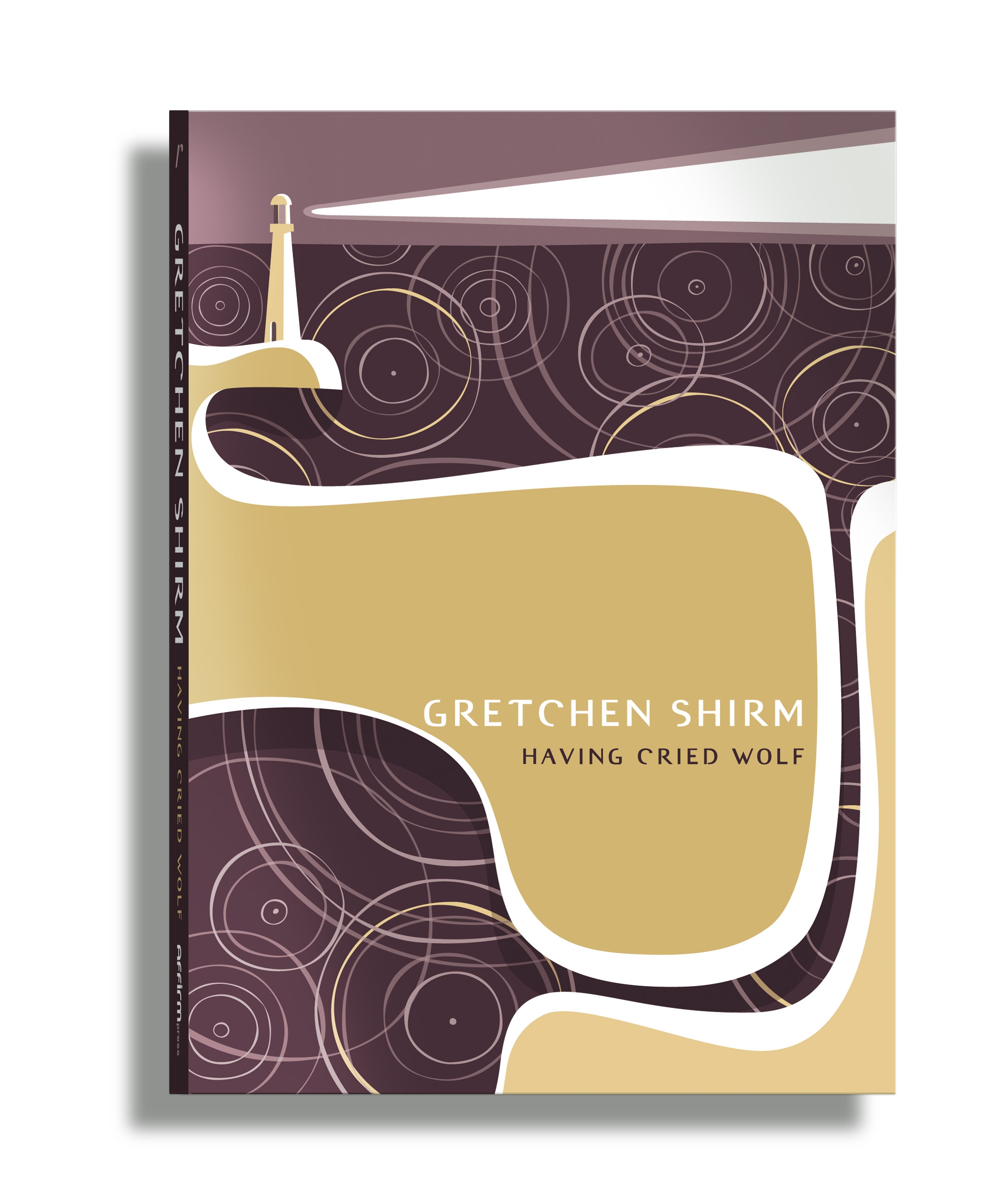
Gretchen Shirm, Having cried wolf

Having cried wolf, book cover

Book cover (Image from Affirm Press)

I have come to the conclusion that short stories are the best holiday reading for me. After a day’s sightseeing followed by reading up on sights for the next day, I usually find I have little time left for my reading. Novels are hard to read under such circumstances, but short stories? Well, they are just the thing. And so, on our recent trip to Hong Kong, I took Gretchen Shirm’s first collection of short stories, Having cried wolf.

Gretchen Shirm is a new Australian writer who was awarded the D.J. O’Hearn Memorial Fellowship for Emergent Writers in 2009. The blurb on the back of the collection likens her to Olga Masters, Helen Garner and Beverley Farmer, and I can see that, but as I was reading the stories I kept thinking of Tim Winton‘s The turning. The obvious reason is because, like The turning, Having cried wolf comprises short stories that are connected by character and place. The fifteen short stories are set in (or deal in some way with) the fictional New South Wales coastal town of Kinsale, and several characters reappear throughout, sometimes in their own stories and sometimes in others. It is rather fun, actually, identifying these and picking up the thread of a story as you progress through the book. Despite this, though, the stories do, I think, also stand well alone.

While Shirm doesn’t focus quite so much as Winton does on the description of place, beyond, that is, conveying the sense of small-town life, her themes are similar: the challenges of small-town living and, particularly, of maintaining meaningful relationships. These themes, however – particularly regarding maintaining relationships – are also those of the aforesaid Masters, Garner and Farmer.

And so to the stories. I must say I enjoyed them – though they are not a particularly cheery bunch. Shirm’s writing is tight and sure, with none of the over-writing often found in first-timers. She writes in first and third person, in female and the occasional male, voices. The characters range from early teens to middle-aged and she captures them all well. Her subject matter includes coming-of-age, marriage and separation, sexuality, suicide and some uncomfortable morality. While many of the stories are interlinked, they are not organised in a totally chronological manner. For example, we learn in the first story, “Breakfast friends”, that Alice is separated from her husband, but in a couple of stories later, “The shallows”, we meet her with the boyfriend who later becomes her husband. This nicely replicates I think the random way we often find out about people in real life.

I’m not going to do a blow-by-blow discussion of the stories but just mention a couple to exemplify some features of her writing. “Small indulgences” for example is a first person story by a rather down-trodden wife. It perfectly encapsulates a woman who has almost, but not quite (as she refuses to colour her hair), subsumed herself to her husband’s needs – and it ends on a delicious if rather sad ironic note. Several of the stories end effectively on metaphors that are subtle but gorgeously appropriate. “Duplicity”, which is about the son of the woman in “Small indulgences”, ends with “There were still no lights on in the house, but by then Daniel was used to the darkness”. And “Breakfast friends” ends with:

The cicada shell is empty now, but inside it was once soft, malleable and not yet formed.

The meaning of that is clear when we read it, but gains added poignancy as we learn more about its characters in later stories. There are many other lovely expressions throughout the stories, such as

… she wants to pour the memory into a mould and leave it there to set.

Why can’t I think like that!

Shirm uses foreshadowing in many of the stories to convey suspense and move the plot along, but she’s not heavy-handed about it. It does mean though that the stories are similar in tone. In other words, this is not a collection of great tonal range but I don’t think that matters, because there’s enough variety and interest elsewhere. There are however a few grammatical oddities that jarred. In a first person voice they can I suppose be forgiven, but there were a couple in third person stories that did bother me. “Peter’s friends swum in the pool” just isn’t right. Is it okay if the voice is third person subjective and that’s how the character might speak? I’m not sure. I’m being pedantic though because overall this is fine confident writing with lovely insights into human behaviour. It does not read like a first collection – and I hope we see more of Gretchen Shirm.

Gretchen Shirm
Having cried wolf
(Series: Long Story Shorts, 4)
Mulgrave: Affirm Press, 2010
ISBN: 9780980637892
221pp.

(Review copy supplied by Affirm Press)

Ruth Park, Missus

Missus was the last written in Ruth Park‘s Harp in the South trilogy, but is the first in terms of chronology. The first two novels, Harp in the South and Poor man’s orange, were published in 1948 and 1949 respectively, while Missus was not published until 1985.

These first novels, which met with some controversy on publication, are set in early post-war Sydney, the tenements of Surry Hills, and deal with the lives of Mumma and Hughie Darcy and their daughters. Missus is set in the 1920s, in country New South Wales, and relates Mumma and Hughie’s youth and courting days. I have only just read Missus, partly because I read the first two in my teens which was, I have to admit, before Missus appeared on the scene.

You can tell that the writer of Missus is the writer of Swords and crowns and rings (1977). The latter is larger scale – and deals more consciously with its historical time-frame. That is, it more specifically addresses the wars and the Depression, and their impact on the main characters. However, the First World War and the coming Depression do provide the backdrop to Missus. Both books depict rural life and characters with convincing realism.

WARNING: SPOILER, IF YOU’VE NOT READ HARP IN THE SOUTH

Now, the plot. For those who’ve read the first two novels, the interest here is not whether Mumma (Margaret Kilker) and Hughie get together but how they get together and who they are. The first chapter – after a brief introduction to the town of Trafalgar including how the early settlers cruelly despatched the Indigenous inhabitants – introduces us to Hughie and his family. We meet his brother Jer (Jeremiah), who is born with “his feet back to front”, and we learn of the failure of his parents marriage, his mother’s early death and his being turfed out by his father when he was around 14 years old. Jer goes with him, and becomes both millstone and support from then on.

In Chapter 2, we are properly introduced to Margaret (who makes a brief appearance in the first chapter) and her family. Unlike Hughie, she grew up in a large, loving family, though not one without its stresses and losses. Margaret, we learn, has taken a shine to Hughie, much to her mother’s concern, because she sees Hughie for what he is, “a wild goose of a boy … [who’s] got flighty feet”, a “shifty article”. This mother (Rowena) is, in fact, a powerful presence. I love this description of Rowena after she decided to give up on (“on” being the operative word) her first true love:

Her chest ached as if it had a skewer stuck in it, but she tossed her head more often than she hung it.

From here on the story progresses chronologically as Hughie moves around the countryside obtaining and losing or leaving jobs, while Margaret stays at home waiting for Hughie’s occasional visits. The characters of our characters, if you know what I mean, are illuminated by the actions of, or their interactions with, other characters. Margaret’s younger sister, the jealous Josie, provides an interesting foil for Margaret as well as an opportunity for Park to explore women’s lack of rights. Josie marries young – for the wrong reason to the wrong man – and the marriage fails. She’s intelligent and manages to obtain accountant qualifications, but her attempt to set herself up as an accountant in the town fails because no-one will use a woman accountant. Other characters include Alf, Margaret’s long-suffering but sensible aunt who works as a housekeeper for the local priest and who, at different times, provides shelter and monetary support for Josie and Jer; the Biddles (the mustard-gas damaged Joe and his common law wife) who take in Hughie and then Jer at one time in their lives; and the redoubtable Bids Tookey who … but that might give away what little plot there is.

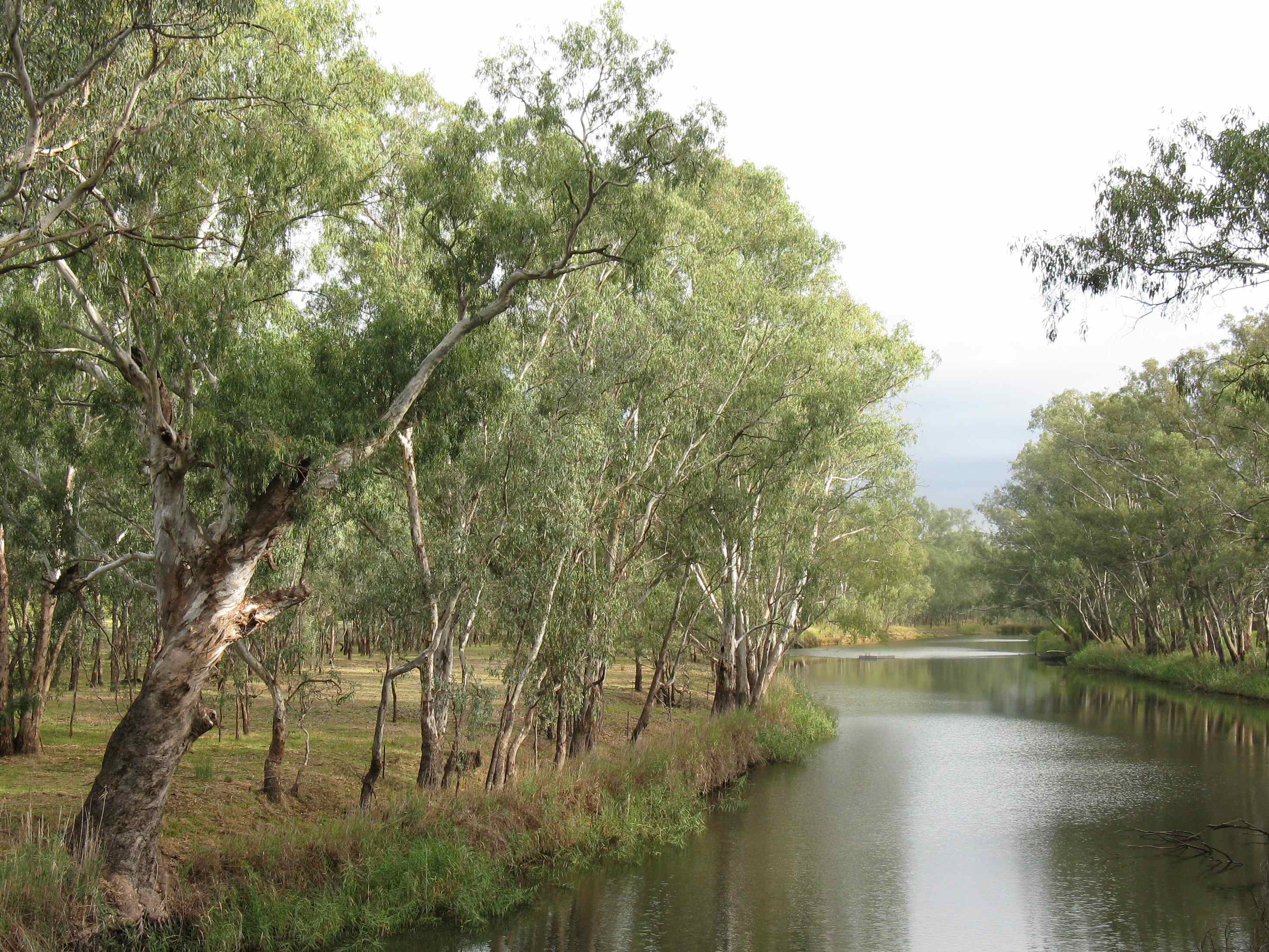
Sunday Creek, near Rutherglen

Australian country creek, lined by eucalypts

In just 250 pages Park paints a rich picture of 1920s life in rural Australia while at the same time developing Hughie and Margaret’s characters. Her characters are all flawed, some more than others, but she draws them with a clear-eyed warmth. She sees them for who they are but she respects them nonetheless. There’s no sentimentality here, but neither is it cynical or bitter. Her themes are universal ones: innocence and experience, familial and romantic love, deception and loyalty, most of it overlaid with that pragmatism that is necessary for survival in a hard place in hard times. As I wrote in this week’s Monday Musings, it’s not surprising that these books still resonate.

Finally, the language is lovely – simple, direct and evocative. Read this from the last few pages of the novel:

In the unkempt garden bloomed freesias and grape hyacinths. The eucalypt twig flushed red, the four creeks overflowed, lambs appeared on the hills, white as mushrooms and as sudden.

‘Them two had better wed quick,’ said Eny ominously, ‘or I won’t answer for Margaret’.

Ha! I think I’ll leave it there – pregnant with possibility …

Ruth Park
Missus
Ringwood: Penguin Books, 1985
247pp.
ISBN: 0140089438

Monday musings on Australian literature: Ruth Park

The muddle-headed wombat, book cover

Wombat book cover (Courtesy: HarperCollins Australia)

For a New Zealander, Ruth Park is a very popular Australian! Not only did she write the much-loved (and studied) Harp in the south trilogy, but she also wrote the hugely popular (in its time) radio serial The muddle-headed wombat, was married to the Australian D’Arcy Niland (now deceased) who wrote The shiralee, and is mother to children’s author-illustrators Deborah and Kilmeny (now deceased) Niland. Ruth Park also won the Miles Franklin Award with her Swords and crowns and rings, and wrote two very popular autobiographies, Fence around the cuckoo and Fishing in the Styx. And this is not all – or even all of the best – that she’s produced in her long career.

Park was born in New Zealand in the early 1920s and first came to Australia in 1940 when she met D’Arcy Niland. She writes that Australian writer Eve Langley*, with whom she had a longstanding friendship, said of Niland:

‘That’s a good face … Do you know what it is saying?’
‘No, what?’
‘It says “Take me or leave me.” I like that.’

So apparently did Park. She returned to Australia in 1942 to work as a journalist, and married Niland. They worked at various jobs in rural New South Wales for some years before Park’s stories gained the attention of the Australian Broadcasting Commission (ABC) resulting in their decision to try to make a living from free-lance writing. They wrote, and wrote, and wrote – anything that would earn money. They wrote, for example, short stories, genre stories (such as romances and westerns), radio talks and radio plays, scripts for radio comics, all the while honing their skills for their more serious writing goals. And they lived during these early years in Sydney’s inner city slum, Surry Hills.

These experiences of living in rural areas and city slums are clearly evident in Swords and crowns and rings (the story of the dwarf Jackie, and his love Cushie Moy) and the Harp in the south trilogy (the story of the Darcy – ha! – family). The thing I love about these books – both of which span the first 4-5 decades of the twentieth century – is the way Park explores gritty issues like poverty, abortion, religious bigotry, unemployment and illness with a psychological and social realism that also encompasses warmth and humour. Her main characters tend to be the quintessential Aussie battlers, but their concerns transcend time and place. It’s not surprising, really, that these works keep being read, re-published, set for study, and adapted for television and film.

Realism though is not the only string to Park’s fictional bow. She wrote in several “genres” for a range of audiences, including fantasy for children. Her Muddle-headed wombat stories ran on the ABC Children’s Session from 1957 to 1971. I have to say that I never have really been one for anthropomorphism, and have read few children’s classics featuring animals (no, not even The wind in the willows) but even I would tune in for the wombat! Park also wrote a children’s time-travel fantasy Playing Beatie Bow, which is taught in schools and has been made into a film.

And yet, for all this, I’m sure she is little known outside Australia … if I am wrong, please let me know!

In the meantime, I will conclude with her description in her first autobiography, Fence around the cuckoo, of her first sighting of Australia as she arrived by boat:

What I saw were endless sandstone cliffs reflecting the sunrise. A chill ran over my skin, my ears buzzed as they had once done when I was about to experience uncertainty about something as yet unknown. The sea fled south, its malachite green changing to beaming blue; the sky was sumptuous with a sun hotter than I had ever known.

This was my first glimpse of Australia Felix, the ancient, indifferent, nonpareil continent that was to become the love of my life.

Ruth Park is not one of those ground-breaking writers who makes you go, wow!, but  she is an excellent story-teller who has an enviable ability to create and develop memorable characters who confront the real “stuff” of life. You could do far worse than read her if you want an introduction to Australian literature. If I haven’t convinced you, read Lisa at ANZLitLovers and Tony of Tony’s Bookworld on Harp in the South, and kimbofo at Reading Matters on her “Top 10 novels about Australia”.

*Park mentions Langley (whom I reviewed early in this blog) several times in Fence around the cuckoo. One concerns Park’s decision to stay with Eve to escape a Peeping Tom uncle but, when she arrived at the windmill in which she believed Eve to be living, she found no Eve but another woman who had heard of Eve but not for some years. “What had happened to that weird girl?”, the new windmill resident wondered. Poor Eve. She was indeed a bit weird and had a rather sad life, but that is another story.

Anna Krien, Into the woods

How can so many people all be looking at the same thing and see it so differently? The man moseying around in front of me looks at a 300-year old tree and sees a nursing home, while an activist twenty minutes down the road sees a block of flats for furry and feathered creatures.

Vive la différence? Or not! Anna Krien’s Into the woods is an exposé of the decades long battle in Tasmania for its forests, particularly its old-growth native forests. For those who don’t know, Tasmania is Australia’s southern island state. It is famous for its beauty and its wilderness but also, it seems, for its Vs, that is, vitriol, violence and vigilantism. You see, being a small island state, with only 500,000 people, it’s a challenge to keep its economy in the black. Sawmilling and, more recently and more controversially, woodchipping have played an important role in maintaining its economy. It is this controversy – particularly surrounding woodchips – that Krien explores in her book.

Anna Krien, Into the woods

Cover image (Courtesy: Black Inc

On the cover is a “blurb” by Chloe Hooper who wrote The tall man about the death in custody of an indigenous man on Palm Island. This provides a clue to the book’s style, and that is that the author, like Hooper, engages personally in the situation, meeting with parties on all sides of the conflict. In Krien’s case this meant meeting ferals, environmentalists, politicians, loggers, whistleblowers, craftsmen and businessmen.

Krien has organised the book into five thematic sections:

  • Ratbags: the new generation protesters, or ferals, who live pretty primitively on/near the site  they are protecting and who are often in conflict with older activists
  • Loggers: the logging industry workers who range across a wide range of jobs in the industry and are also often conflict with each other
  • The company: Gunns Ltd, the main player in the Tasmanian logging industry, meddler (if so benign a term can be used) in politics, and initiator of the Gunns 20 lawsuit
  • Groundswell: change agents such as whistle blowers, proponents of the “rights” of nature, and shareholders wanting ethical investments
  • The mill: Gunns pulp mill saga, the beginning of the an end?

The story is a complex one, delving into competing interests within the logging industry itself – sawlogs versus woodchips, old-growth versus regrowth native forests versus plantations, public versus private forests – not to mention dissension amongst environmentalists and some very dirty politics. It is a story about jobs versus the environment and the “rights” of nature, of different value systems that set “unmanned” pristine forests against “manned” ones. It is a story of blaming and buck passing. And it is a story of half-truths and distorted truths, all in the name of defending one’s own patch. “I am on a journey through selective truths”, she writes at one point in the book.

This issue of “truths” is beautifully conveyed in her discussion of the timber industry’s language:

I find myself constantly having to decipher new words. Nature needs “disturbance”, logging is “harvesting”, deforestation is “afforestation”, burning woodchips for electricity is a form of “bio-fuel” or “renewable energy”. Woodchips are “feedstock”, while the non-commercial attributes of a forest are “non-wood values”.

The word-games though work on both sides. As she says, “evoking napalm, Hiroshima and the holocaust to describe logging is manipulative”.

A major argument presented by the logging workers is the economic one – jobs – but Krien estimates from the information given her that forestry “accounts for no more than 3% of the workforce”. In fact, she suggests that machines may be a bigger threat to timber jobs than “any greenie”. The more cynical amongst us might think that it is not so much about “jobs” but about “big business”. Sometimes, of course, big business means jobs, but that’s not always necessarily so, not if much of the work can be automated (or, sometimes, though not necessarily here, moved off-shore).

I can’t begin to convey all the information she presents in this book – the history, the statistics, the science, the criss-crossing relationships, not to mention the people, the overt and covert deals, and the truly horrifying violence (both actual and threatened). There are times when I started to feel bogged down in the complexity of it all, but I was reassured when I realised she was feeling it too. She is, in fact, like Hooper, taking us on a journey – but it is a journey that, despite her very real efforts to explore the whole story, does lean to one side, that of those who wish to protect not destroy. As she says in the last chapter:

I’ve tried to balance my seesaw heart, carefully weighing up each argument. But there is something about this island that wants you to choose sides.

I can understand that – it is, in many ways, a magical place. However, I do have one complaint about the book – my ongoing one for books of this ilk – and that is its lack of an index. It is jam-packed with people, events, places, philosophies and theories but how can the casual reader or researcher find them?

And so, is there a resolution to it all? Well no, but there is, she says, a universal story:

… in the greater scheme of things, the island is nothing but a drop in the ocean. But the story is universal – and what goes on in Tasmania goes on in the Pacific islands, in other continents, until it all comes back over the ice to Tasmania again. … Deep down in our bones we must know – we must know that nothing we do is done in isolation. Cause and effect: how did it get so noisy in between?

How indeed? Read this thoughtful, throughly researched book, and you will, unfortunately, find out.

Anna Krien
Into the woods: The battle for Tasmania’s forests
Melbourne: Black Inc, 2010
302pp.
ISBN: 9781863954877

(Review copy supplied by Black Inc)

Kate Jennings, Snake

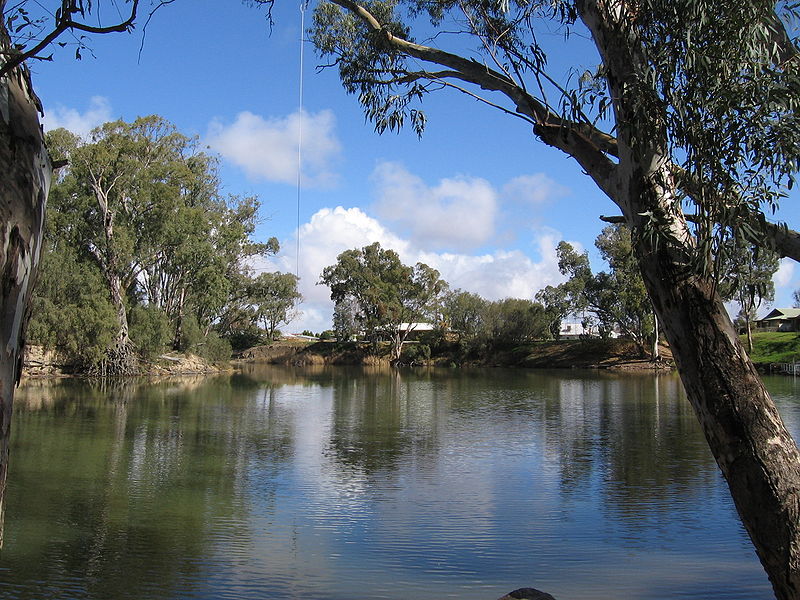
Murrumbidgee River

Murrumbidgee River in the Riverina (Courtesy: Mattinbgn, via Wikipedia, using CC-BY-SA 3.0)

In her “fragmented autobiography”, Trouble, Kate Jennings used excerpts from her first novel, Snake, to convey her childhood experience of growing up on a farm in the Riverina region of New South Wales. She had, she wrote, an “unhappy mother, diffident father”. Snake is the story of such a mother and father. While the novel is not totally “true” to her life in the factual sense, I have read enough novels and memoirs (such as Jill Ker Conway‘s The road from Coorain) about rural Australian life to know that it is “true” to the sort of experience it describes.

The blurbs on the back of my edition include the following descriptions: “a string of prose poems” (Times Literary Supplement) and a “domestic dystopia” (Sydney Morning Herald). The novel – novella in fact – is intriguingly structured. It has 4 parts. Parts 1 and 4 are short bookends, told in second person: the first part is addressed to the father and the last to the mother. The middle two parts are told in the more traditional third person voice and chronicle the life of the family: Rex the ironically named father, Irene the mother, and Girlie and Boy, the children who are caught in the middle. The chapters are short, some being only a paragraph or two long, and present vignettes of the family’s life rather than a simple this-then-that chronology. Dystopian is, unfortunately, an accurate description of their life. As Daphne, Irene’s sister, guesses on the wedding day,

Rex was a nice enough chap but about as interesting as a month of rainy Sundays. Irene will be bored with him before they arrive at the Blue Mountains guesthouse for their honeymoon.

While we never hear from Daphne again, she was not wrong. Rex is a “good man”, “decent”, a farmer of simple needs, while Irene, as her father realises, “dances to a tune no one else hears”. Not a likely recipe for success.

I thoroughly enjoyed this novel. Despite its unusual mix of voice and rather episodic form, it has a strong narrative that drives us on to its inevitable (but no spoiler here) conclusion. The snake motif runs through the book. Snakes are a fact of rural Australian life and so are a natural, real presence in the book, but their symbolic allusion to temptation, deceit and danger lurks behind every reference. Early in the novel, we are told of Irene’s youthful romantic tendencies – her love of

… smoky-voiced singers and innuendo-laced lyrics. Tommy Dorsey and Benny Goodman, Frank Sinatra and Peggy Lee, they were the snake charmers and Irene the snake.

Later, Girlie looks at snakes in a book on Australian fauna: they are “fanged, flickering, unblinking”.

Kate Jennings is a poet – as well as novelist and essayist – and it shows. The language is accessible but full of imagery. This is particularly apparent in the chapter titles, most of which are obvious in meaning, though some are more cryptic: “Home is the first and final poem”, “Send my roots rain” and “My mother has grown to an enormous height”. They are fun to think about as you read. There are some beautifully apposite descriptions. Here for example is Rex experiencing misgivings about his new wife:

The sight of her caused his nature – practical, honourable – to assert itself … What was done was done. Without being conscious of it, he coughed importantly – I am a man, I have a wife – and squirmed inside the jacket of his uniform until it sat better on his shoulders.

And here is Girlie reading:

Girlie read books like a caterpillar eating its way through the leaves on a tree.

Their town is, ironically, called Progress. However, very little “progress” occurs in the book. Rex struggles to keep the farm going in the face of mice and locust plagues, hail and dust storms. Irene tries to make a life that suits her romantic, imaginative spirit – she creates a garden, seeks friendships with interesting people, looks for work – but in the end nothing works:

Rex and Irene had given up arguing. He no longer bothered to tell her that he wasn’t asking much – harvest his crops, care for his animals, share it all with a good woman, tra-la – and Irene didn’t reply that far from not asking much, he was asking everything.

Such is the life of a mismatched couple. We’ve read of such couples before, and we will again, but for a clear-eyed, finely balanced, while also touching, portrayal, this one by Kate Jennings is hard to beat.

Kate Jennings
Snake
Sydney: Picador, 2003 (first pub. 1996)
153pp.
ISBN: 9780330364003

Monday musings on Australian literature: For the love of ballads

Gum tree trunks, Rutherglen

Crisscrossing gum tree trunks at Rutherglen

I was first introduced to Australian ballads by my father who loved to read the works of AB (Banjo) Paterson to us. I loved it – my father’s reading and the poems themselves. This love was reinforced in my first year of high school, through my poetry textbook, The call of the gums: An anthology of Australian verse. I treasured this book – and still have it today. It’s organised by subjects/themes, with the first two sections being “Bush songs and ballads” and “Not very serious”.

First though, the introduction. The anthology was selected by one Ian V Hansen, and he starts his brief introduction by saying that:

The world knows Australia; she produces brilliant cricketers and formidable soldiers, athletes and tennis players. But this is not all. She also exports (mostly to Britain) painters, opera principals, concert musicians, scientists … and keeps her poets at home. Which is a pity. This book is an attempt to give some Australian poets the wider school public they deserve.

I don’t know much about Ian V. Hansen, the anthologist, but his introduction gives me a little pause. I wonder how much has changed in the last five decades regarding how the rest of the world sees Australia and its (we don’t use “her” anymore, do we) achievements? Methinks not quite as much as we’d like!

Anyhow, back to the book. It seems that I started my marginalia practice quite young. In the front of the book I have written the following, clearly based on what the teacher taught us:

Ballads

  1. Passed on from one man’s lips to another
  2. They varied because people could not remember all the words
  3. Easy rhythm that can be sung (Folk songs)
  4. A lot are anonymous
  5. A complete story about a happening or story
  6. A lot have a chorus
  7. Narrative (spoken by story-teller)

Well, a few of the ballads in the book are anonymous, they do tell stories, and I’m sure it was my love of ballads that led to my enthusiasm for folk music. While my interest in folk music now ranges widely, a good singer-songwriter telling a moving or funny story will always win me over.

Australia’s best known ballad has to be Banjo Paterson’s “Waltzing Matilda” which tells of the swagman who drowns himself in the billabong rather than be captured for stealing a sheep. It says something rather endearing I think about the Australian character that many would be happy to have this as our national anthem! It is, of course, in this anthology along with many others, including Paterson’s “Clancy of the Overflow”, Adam Lindsay Gordon’s poignant “The sick stockrider”, and Henry Lawson‘s “Andy’s gone with the cattle now”. I’m sure I don’t need to tell you their subject matter: droving was almost the universal theme of the nineteenth century Australian ballad.

Some of the ballads are tragic, and some wistful, but my favourites in this collection tend to be the funny ones, because humour in the face of adversity is often seen as an Australian trait. They celebrate ingenuity, such as Thomas E Spencer’s “How Macdougall topped the score”, or the determination of the bush to prove itself over the city, as in Banjo Paterson’s “The Geebung Polo Club”, or simply explore personality. One such is “Holy Dan” (anonymous), the story of a devout drover who, as he loses his cattle one by one to drought, continues to pray trustingly to God, until only one remains:

‘That’s nineteen thou hast taken, Lord
And now You’ll plainly see
You’d better take the bloody lot,
One’s no damn good to me.’
The other riders laughed so much
They shook the sky around;
The lightning flashed, the thunder roared,
And Holy Dan was drowned.

Another is John O’Brien’s “Said Hanrahan” who is the opposite of optimistic Dan. Hanrahan always expects the worst – and again the theme is the weather. It starts:

‘We’ll all be rooned,’ said Hanrahan
In accents most forlorn
Outside the church ere Mass began
One frosty Sunday morn.

And continues…

‘We’ll all be rooned,’ said Hanrahan,
‘If rain don’t come this week.’

Well, the rain does come but Hanrahan is still not satisfied. Rain, you see, means growth and knee-deep grass, and that means the risk of bushfires. As Hanrahan says, “We’ll all be rooned”!

“Said Hanrahan” also appears in a recent anthology, 100 Australian poems you need to know. The anthologist of this collection, Jamie Grant, writes

…it is significant that a large proportion of the poems I have chosen are distinctly funny … The most striking achievement of our culture, and the distinctive element of our national character, lies in the Australian sense of humour. That sense of humour is often described as “dry”, like the Australian landscape, but it also includes an element of cheerful exaggeration, and a liking for the reversal of expectations. It amuses Australians that our most iconic military adventure was a failure, but it also amuses us that we have produced triumphs where none was anticipated, whether through a stroke of ingenuity such as a winged keel or by winning a race by being the last left standing…

(If you don’t know what Grant is referring to in these examples, just ask the next Australian you meet. S/he is sure to know.) Meanwhile, I’ll be posting more on Australian poetry, but I wanted to start with the ones that first captured my attention… Do you have poems that you remember from childhood?

The call of the gums
(The world of English poetry)
Selected by Ian V Hansen
London: Edward Arnold (Publishers), 1962
180pp.