Delicious descriptions: Louise Mack’s dialogue and satire

Over Christmas, during one of my conversations with Son Gums, he commented how he tires of meaningless conversations, conversations, for example, in which people discuss a television series they’ve seen but say nothing of note. He mimicked the sort of conversation he meant … well, imagine my surprise when, in one of those surprising synchronicities, I came across exactly that sort of conversation a few days later in Louise Mack’s The world is round (my review). Here is part of it – the two speakers are at a social gathering, and published author Musgrave is eavesdropping:

It was the girl who pushed the ball this time. ‘Have you ever read a book called Lost in the Zodiac?’
‘No, never read it. Who’s it bai?’
‘I don’t know. I never look who a book’s by. Do you?’
‘No. Tell you an awfully naice book. Read it on board coming out, Miss Nobody of Nowhere.’
‘I haven’t read it. Is it good?’
‘Very good. Very er–er–interestin’.’
‘Is it? I must get to that. Do you know who it’s by?’
‘One of those French fellows, I think. Sounds like  a Frenchman. One of those detective plots, you know.’
‘Oh yes, I know. Like that book everyone was reading the other day, I forget the name of it.’
‘Yes. Sort of detective yarn you know. Very good.’
‘There’s a book called A Painted Polyanthus’ – Musgrave gave a sigh for a man he knew who would have revelled in this with a joy as keen as his own. ‘They say it’s very good. I haven’t read it yet.’
‘Neither have I.’
Musgrave was disappointed.
‘Have you read Speech in Passing?’
‘Oh yes, I read that. I cried over it.’
‘No? Did you? Bai Jove!’ leering sentimentally.
‘Yes, I couldn’t help it.’
‘The “sulky man” – he was a rum cove, wasn’t he? He was funny wasn’t he.’
‘I don’t think he was a sulky man at all.’
‘Neither do I. The only called him that,’ boldly.
Her voice changed.
‘”And Ida died,”‘ she quoted, in tones that suggested to you that she was just going to burst into tears.
Musgrave turned his head to see how she was looking. Just as he thought. Her head was a little on one side, her eyes were staring sadly straight back in front of her, and her mouth was doing its best to look pensive and full of feeling.
‘”And Ida died,”‘ she said again.
That was evidently the one point about the story that had struck her most impressively. Unfortunately hers was not the face to express the feeling she would fain have conveyed …

You can see why those early critics praised her dialogue and satire, can’t you? It’s quite delicious.

Note: The strange spellings, like “bai”, are attempts to phonetically capture the Australian accent – and is clearly being satirised.

Louise Mack, The world is round (Review)

Louise Mack, The world is roundI’ve had Louise Mack’s debut novel, The world is round, on my TBR for about 20 years. Published in 1896, when she was 26 years old, it’s a fairly straightforward tragicomedy about a young well-to-do 21-year-old girl, Jean, who aspires to be a writer, and the two men who love her, the 30-plus-year-old self-confident, successful lawyer-and-writer Musgrave, and the around-25-year-old, shy and financially struggling Harrison. It’s a short work, a novella really, being just 93 pages in my edition.

Now, when I was searching Trove for information about Mack for this week’s Monday Musings, I found a couple of articles about her writing, amongst a myriad about her lecture tours. One was written in 1895, before this novel was published but after some of her verse and short prose pieces started appearing in journals like the Bulletin. The article quotes Mrs Bright, editor of Cosmos:

In these early days it is not possible to predict the place that Miss Mack is destined to fill in Australian literature. At present she shines chiefly in dialogue and a quaint, satirical style; peculiarly noticeable in sketches like “A study in Invitations.” In time she may develope [sic] a faculty for descriptive writing, which will supply the only quality now lacking to ensure her high rank among the popular novelists of the day.

The other was written in 1896, soon after the publication of her novel. The writer says:

Miss Mack has a particularly taking satirical style, but her descriptive writing is hardly up to her ability in the other department. Were she to but slightly improve in that qualification it would enhance the already strong position she has attained in the ranks of popular writers.

So, the praise is qualified. Her niece, the writer Nancy Phelan who wrote the introduction to my edition, discusses her not living up to this early potential. She notes that a common view is that she was “praised too soon, told she was good and encouraged to rush into print” when she needed time to sit back and think, and “be disappointed”. Phelan writes:

She wrote instinctively … but without proper guidance and criticism her work too often became facile. Facility, with a fertile imagination and love of inventing stories, made her a successful romantic novelist but it eroded her talent, and years of formula writing elbowed aside the poet. She never lost her poetic awareness but had little occasion to use it. Haste, lack of reflection, putting words on paper before they were ready robbed them of their true value; it was quicker and easier to write of trivial events than to try to address deep, difficult thoughts and emotions.

Yet in all Louise’s books there are glimpses of the writer she might have been. Even in her most idiotic novels there are occasional patches of true feeling or sensitive descriptions …

Why have I written all this? Well, partly because it might explain why this particular writer from the past has sunk from view. However, I’d argue that The world is round is worth reading – for a couple of reasons. One is that it is a good read, in which you can see why she received early praise. As our 1895 and 1896 writers above say, her dialogue is good and she has a lovely, light, satirical eye. (I’m going to share an excerpt which shows both of these in a Delicious Descriptions next week.) The other is that it is a good example of why “classics” (or older works) are worth reading. I’m going to focus my post on these two points.

a “brilliant little study”

The 1896 writer notes that “the reader’s report” for this novel described it as a “brilliant little study of two men and two women, sparkling and witty, and told in a graphic style”. It is a fun read, still today. It has a light touch, never wallowing in the issues it raises, and not weighed down with long explication or too many adjectives that you sometimes find in debut novelists. There are moments of sadness or pathos – obviously at least one of the would-be lovers is going to be disappointed, for a start – but Mack never becomes sentimental. (You can see this skill in those columns I referred to in my Monday Musings.)

The story is told third person, chronologically, in named chapters – “Musgrave”, “Jean”, “In which a friend is brutal” – and takes place in various interiors, such as James Musgrave’s chambers, Harrison’s classroom, and Jean’s home. Mack draws on the life she knows, presenting a picture of a small group of characters moving around each other in a small environment. This is very reminiscent of Jane Austen, to whom there is a tongue-in-cheek allusion in this conversation between Jean and Musgrave:

“I don’t suppose I will ever be a George Eliot, or a Thackeray, but perhaps I may be a–”
“Miss Austen.”
Miss Austen! oh, surely I’ll be something b–I mean surely I won’t be like her.”
“She did some good work.”

I mean to say! Anyhow, Mack’s descriptions of her small group of people and their interactions ring true, while also drawing on standard literary tropes, like the well-to-do heroine and her poor friend, the experienced confident suitor and the awkward poor one. The plot plays out, perhaps more through little vignettes than a flowing narrative, but it is enjoyable to read, largely because these vignettes are well-drawn, and confidently mix a light tone with the occasional darker one. I’ll leave the story there.

on reading “classics”

As I was reading this old book or forgotten “classic” (let’s not get into the definitions of “classic” here now), I started thinking about why we read such books. It’s easy to explain those classics that belong to the canon: they address the big universal themes or ideas, their writing is skilled and timeless, and, often, they have innovated or contributed something to literary culture. But, what about what we might call the second rung, books like Mack’s The world is round? Are they really worth reading over contemporary writers? I’d say yes, and one of the justifications is in the first line of Mack’s novel. It starts:

Sydney was revelling in the clear, cold weather of June, the most delicious month of the Australian seasons.

Now, that is not an attitude most Australians would have today, but is clearly how the colonials, those transplants from mild temperate Britain, felt about Australia’s climate. In other words, books written in a different time can provide a fascinating insight into the attitudes and values of that time. They might be fiction, but they can’t help also betraying their era. For students of colonial Australia, Mack’s novella offers some delightful insights into “the life and times”.

I don’t want to bore you with details, but will just share one more example. It concerns the poor friend who tells Jean that she “can’t write about Australia, it doesn’t appeal” to her. She admits she’s a “Colonial” but she knows nothing of bush life. She says, “I’ve never taken my country into my soul, and never will until I get away from it”. However, she’s poor, and is offered a job governessing in the bush on a cattle station. She learns to love the Bushies and to prefer them over “the posturing, pseudo-intellectual Sydney set”. She writes several pages to Jean on the subject. Now, this friend plays a role in the plot in terms of providing a counter assessment of Jean’s literary skills and there’s a plot reason for sending her away, but I can’t see much reason for this little outburst, except for Mack to make some point about colonial society and its values.

So, there you have it. This is less review, more wandering reflections, but I hope I’ve convinced you that Louise Mack is a worthy addition to the list of past writers who should be kept alive.

aww2017-badgeLouise Mack
The world is round
Pymble: Angus & Robertson, 1993 (orig. pub. 1896)
93pp.
ISBN: 9780207180163

Monday musings on Australian literature: Louise Mack

I promised in my Reading Highlights post that my first review of the year would be for a book from my TBR pile, and so it will be – hopefully in a couple of days. However, I suspect that the book, and maybe even the author, will be unknown to most of my readers here so I’ve decided to use my first Monday Musings of the year to introduce the author, Louise Mack.

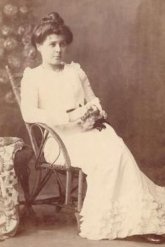
Louise Mack, 1890s

Louise Mack, by Kerry & Co, 1890s (Photo:
National Library of Australia, nla.pic-an23474744, via ADB)

I’ve had Mack’s first novel, The world is round, on my TBR since the mid 1990s when I found it on a remainder table. It had been published under Imprint Classics by Angus & Robertson in 1993, and although it’s only 93 pages, I somehow didn’t read it then, and kept not reading it – until now. But, more on it later this week.

Louise Mack was born in Tasmania in 1870, the seventh child and first daughter of a family which ended up numbering 13! Her father was a Wesleyan minister, and they moved around, ending up in Sydney by the time Mack was in high school. She went to Sydney Girls’ High where she met and became friendly with Ethel Turner (who was also born in 1870). I wrote in my post on Ethel Turner’s juvenilia that Ethel and her sister, Lilian, established a magazine Iris when the school’s newspaper, Gazette, which was edited by Louise Mack, rejected Ethel’s contributions! However, I understand that they were very good friends and, in fact, Turner apparently met her husband at the Mack family home.

Australian author Nancy Phelan, who was Mack’s niece, wrote the entry about her in the Australian Dictionary of Biography (ADB), and also the introduction to the novel I’ve read. I don’t want to reiterate what you can read in the ADB, but here’s a potted history. After school she worked as a governess before being becoming “a regular contributor to the Bulletin in the late 1880s”, with the encouragement of owner-editor J. F. Archibald and editor A. G. Stephens. Phelan suggests that Mack perhaps received too much attention and praise, implying that it impacted the development of her talent. She married, but it failed and she went to England, around 1900, where she wrote novels and serials, travelled, and worked as a journalist, including as a war correspondent. She returned to Australia in 1915 and became a touring speaker or lecturer, something she did right through to the 1930s. During this time back in Australis, she wrote more novels and married a second time (more happily), before dying in 1935, “possessionless”.

“little lady”

They’re the dry facts. She was quite a colourful character, with Phelan describing her as “fair, pretty, extroverted, audacious, unpredictable, a genuine Bohemian who chose a life of adventure and insecurity”. Phelan writes in my novel’s introduction that Mack “grew up in a series of large, shabby, untidy parsonages, with no luxuries but plenty of books … books, as necessary as bread, were constantly discussed”. I found an article in Trove which announces her as a rising literary star. It suggests that:

Miss Mack owes much of her development to her mother’s literary tastes, and the varied training that an intellectual father can bestow on his children. (The Methodist, 23 Nov 1895)

My Trove search retrieved pages and pages of hits on her name, many of them from newspapers all around Australia – from Dubbo to Perth – announcing her lecture tour on her war experience, which included experiencing German occupation and bombardment in Belgium and going behind German lines. In her mid to late 40s at the time of the tour, she is, patronisingly to our modern ears, described in these announcements/reports, as “this charming little lady” or “the pretty and charming little lady”. This is the woman who, one of these articles says, was asked by Scotland Yard to report on a meeting of spies with Germans in Antwerp to which she’d been an eye-witness. This article’s writer also calls her a “little lady” but a bit later describes her more appropriately as “this daring and travelled lady”. S/he reports on an interview with Mack:

“I just love lecturing,” Miss Mack said; “it is the most fascinating work I have ever taken up. Indeed, I may say that I just live for the moment when 8 o’clock strikes, and I and my pictures begin to tell the story of a Woman’s Experience in the Greatest War this world has ever known.” (Western Mail, 17 September 1915)

Mack, you see, went the whole hog and illustrated her talks with moving pictures. Reports suggest that she was an excellent and engaging speaker. Some of these talks were given under the auspices of, and raised money for, the Red Cross. Her book, A woman’s experiences in the Great War, was published in 1915

I’m not going to discuss her writing in any detail here, because I’ll do that in my review post. Instead I’ll share a couple of columns that she wrote in the 1930s in the Australian Womens Weekly, for whom I’m guessing she must have been a columnist. These columns –  Louise Mack’s Diary and Louise Mack Advises – provide some insight into her values and sense of humour.

In a Diary column I found this on Mrs Bradfield, wife of Australian engineer and designer of the Sydney Harbour Bridge, John Bradfield:

I’VE always been wondering what would happen if Dr. Bradfield got his title, and dear Mrs. Bradfield became Lady Bradfield, and somehow, between myself and my diary, I must confess I’m glad that Mrs. Bradfield is still there. Dozens of times coming back from hospital, getting out of the train at Gordon, I would find my suitcase seized, or my parcels grabbed, and there’d be Mrs. Bradfield trotting along besides me, coming out of her way so that she could help carry someone’s burdens.

Could Lady Bradfield have done that? Ah, yes! Title or no title, this little simple, pale, absolutely natural woman, all kindness, with a quite remarkable craze for carrying other people’s parcels, would always have been Mrs. Bradfield. That’s her real title, her many friends think.

I like her focus on kindness, on the unimportance of “titles”, and her light humorous touch.

And, one of the advice columns. It’s called “The gentle art of giving” and asks “Do you give? Or Do you grab? The commonest way of giving is to give what you can spare. But that’s not giving at all, ethically speaking”. Fascinating. It made me think of Australian ethicist Peter Singer and his views on giving. However, let’s not get sidetracked by that now. Mack goes on to suggest that giving is good for your looks! She suggests getting on a tram and looking around:

Can’t you tell at a glance who hoards and who gives? It is written on their faces. It is graven around their lips. It is mirrored in their eyes, giving, or grabbing. The face that gives has a better complexion because the blood flows happily through capillaries kept open by the light-heartedness of generous doings. The face that gives has brighter eyes and sweeter lips. Oh, particularly about the lips does the will to give reveal itself in its full beauty.

She then gives examples of women who give and don’t give, ending with Myrtle who has almost no food left, when in comes her brother. Mack writes:

And there before my eyes took place a metamorphosis. Ovid wasn’t in it. One moment Myrtle was a grey woman with a quarter of a loaf of bread and a cold chop, and now she turned into a gracious creature, all wealth and possessions, that she was handing away to Tom. She whisked a bit of tea into one parcel, a quarter loaf into another, two potatoes and an onion into another, a cold chop out of her safe, two apples for the children, then pressed threepence into poor old Tom’s hand, with, “It’s pouring; take a tram.”

That was giving, indeed.

Giving is when you press your thumb down, down on the indicator of your heart—and, pressing still, and yet again pressing, send your will to give up, up, up, to the very highest storey of your soul.

Louise Mack sounds like a woman worth knowing … and yet is, I believe, unknown to most Australians. Such is life!

Georgia Blain: Births deaths marriages: True tales (Review)

Georgia Blain, Births deaths marriagesPoignant is a word I actively avoid in my review posts, as it’s such a review cliché, but sometimes a book really does call for it, and the late Georgia Blain’s essay-collection-cum-memoir, Births deaths marriages, is such a book. In the last essay, she talks of her mother, broadcaster, activist and non-fiction writer, Anne Deveson, trying her hand at fiction just as she, Blain, was trying non-fiction. She writes:

We had switched places, my mother and I. And we looked at each other. Both mothers. Both writers. Both trying on each other’s shoes, taking a few steps back, eyes on our feet, before we glanced across once again, curious as to how this had happened (“A room of one’s own (2)”)

The poignant thing, of course, is that these two who were so closely entwined in life, not just as mother-and-daughter but as writers, died within a few days of each other – with the sadly ironic twist that the daughter died first. It makes my heart break a little, something I wouldn’t have felt had I read it before these deaths. Such is the impact of context on our reading, eh?

Anyhow, onto the book. Births deaths marriages (the title has no separating commas) is the second memoir-in-essay-form that I’ve read this year, the first being Fiona Wright’s Small acts of disappearance. Both books follow a general chronological arc but the essay form makes it easy for this not to be strict, allowing the writers to follow tangential yet relevant threads. From here, though, the two “memoirs” depart, because the respective writers’ lives are very different. Wright, the younger writer, was writing primarily about her twenties and focused particularly on her experience of an eating disorder, while Blain was in her mid forties when writing hers. She was a published novelist and, significantly, had experienced a much more public life, not only because both her parents were public figures but also because of her mother’s own memoir, Tell me I’m here, about life with her schizophrenic son.

This book – with its intensely personal subject matter and its unusual form – offers rich opportunity for discussion. To do it justice, I’m going to have to narrow it, so I’m going to focus on form and style, but some content will push through along the way. The way I see it, there are two broad types of memoir, those which tell about lives most of us know little or nothing about (such as Frank McCourt’s Angela’s ashes, or, more obviously, celebrity memoirs) and those which are about lives much like ours. Georgia Blain’s falls into this latter category. For these ones to engage readers, they need to offer something illuminating about the lives we lead.

“the truth was a little more complex” (from “Getting in the boat”)

The first essay in Blain’s memoir is titled “A room of one’s own”. In it she reflects on her childhood, on how her mother would write about their family for newspaper columns and how reading these columns later, with their bland pictures that “did not accurately reflect who we were”, brought back the child she was, the child who wanted her family to be like the one in the columns, who thought all other families were like that and not like the messy reality she was experiencing. These bland columns are the antithesis of what Blain shares in her essays (and indeed of what Deveson herself shared in her memoir). It’s all about purpose I suppose. Newspaper columns tend to be more about entertainment – with perhaps some subtle messages about life – whilst memoirs, good ones anyhow, are about “truth”. If we don’t feel the memoirist is sharing the “truth” of her (or his) experience we are going to lose interest pretty quickly.

Blain convinces me that she is sharing her truths when, for example, she describes, in “The story my mother tells me” and “The outside country”, her fears about childbirth and her struggle to cope with the demands of motherhood. She exposes herself with soul-baring honesty when she shares her sense of disconnect, of being alone, of being “shattered” when her baby is born. She writes that she wanted to give her daughter “the place in my life that she needed and deserved, one that was without my terror and anxiety about loss of self” but it took several months for this to happen. She writes with similar honesty about her relationship with her husband Andrew. It takes some guts to write what she does.

In “Close to the bone”, Blain addresses more directly her writing life, and the difference between writing fiction, which she’d done until this book, and writing about herself, which she was now doing. Reflecting on her brother’s death, she says:

The complexity and rawness of an immediate response to pain is not easy to understand and recognise, let alone pin down in writing, in a photograph or in a film. The very act of capturing distorts. Once neatly contained, all that we felt is no longer unruly, unreasoned, immediate and wild. Perhaps this is why we hold these moments as truth. They cannot be replicated. Each time we try, we dilute their intensity, we confuse, holding up false images of this so-called truth that leave us reeling as we try to reconcile what we see encapsulated with what we have experienced.

Even her “truth”, the one she is writing, she sees, is not easy to grasp. She goes on:

I believed, and still do, that if I wrote about my own life and the lives of those I love, I had to tell the truth. But foolishly, I believed the truth lay only in the immediate…

These two excerpts reminded me of that David Hockney comment about happiness being a retrospective thing I wrote about recently, because I read them as her recognition that there are different truths – those immediate reactions and feelings, and those that come later. It’s this sort of reflection on “how” we live and interpret our lives which makes Births deaths marriages such a meaningful read.

I said that this memoir exemplifies the second type of my two simple categories, but I meant it when I defined them as being about “lives much like ours” because no life is the same. And so, Blain, like all of us, had her own set of challenges, including her control-freak, sometimes-violent father, and the tragic loss of her schizophrenic brother. One of the joys of her book lies in watching her explore and expose her own development, her learning not only to come to terms with these experiences in her life, but to use them to come to a more open, flexible way of understanding. She writes of “chasing absolutes”, of believing that “there was one truthful answer to every question” which she had to pin down, when in fact, as she learns, the truth lies in the “layers”.

In the end, there are no resolutions, she realises, but there are momentary happy endings along the way. She also realises that “writing about oneself” can “amount to more than a purely personal exercise”. It sure can, as she has proven here. This memoir is special – and not just because of the context in which I am reading it – but because it’s honest, because it doesn’t pretend to have it all sorted, because, in fact, it’s true – to her life and experience, and also to ours.

AWW Logo 2016Georgia Blain
Births deaths marriages: True tales
North Sydney: Vintage Books, 2008
ISBN: 9781742743981 (eBook)

Monday musings on Australian literature: Spotlight on Georgia Blain

Courtesy: Annette Marfording

Courtesy: Annette Marfording

This is the fifth in my occasional series of Spotlight posts inspired by Annette Marfording’s Celebrating Australian Writing: Conversations with Australian Authors, and this time I’m featuring Georgia Blain who died just over a week ago, three days before her mother Anne Deveson also died. In a comment on my Vale post, Annette Marfording reminded me that she’d interviewed Georgia Blain for her book and so, with her support, I decided to make Blain the subject of this week’s Monday Musings.

Marfording’s interview took place in 2010, at which time Blain had published 4 novels, one of which had been shortlisted for the NSW Premier’s Literary Award; plus a memoir, which was shortlisted for the Nita B Kibble Life Writing Award, and a young adult novel. She had also been named in 1998 as one of the Sydney Morning Herald’s Best Young Novelists. At the time of her death, her eighth novel, Between a wolf and a dog had won the Queensland Literary Award for Fiction and been shortlisted for the Victorian Premier’s Literary Award. In addition, her first novel, Closed for winter, had been made into a film, and her second novel, Candelo, had been optioned for a film. Not a bad record for a writer who wasn’t, really, on everyone’s lips!

Marfording asked her, as she asked many writers, what awards meant to her. Blain simply said it “was incredibly pleasing” to be shortlisted and also to have one’s work made into a film, although on the latter she commented on the work required from others and that she “applauded” them more than herself for that. Sounds pretty humble to me. Later in the interview, when asked about her role as a judge, she comments on the degree of serendipity involved.

Anyhow, Marfording then moved on to talk about her most recent book, the young adult novel Darkwater which was published in 2010. She asked the question that I often want to ask writers who set novels in the recent past, which is why she’d set her novel in the 1970s rather than the present. This question is particularly pertinent when you are talking about a young adult novel because, as Marfording commented, “the young adults for whom the book is written weren’t alive then”. The simple – and probably obvious – answer which Blain gave is that it was the time of her own youth. She was writing what she knew, in other words. However, she also said she wanted the challenge of writing about a time when there was no technological communications – no mobile phones or texting or emailing, etc. And it was also a fascinating time she said that encompassed both “great conservatism and great liberation”.

Marfording then notes that her adult novels were also set in this period, and wondered, given Blain was only a child then, how she’d managed to evoke the mood so well. Blain replied that, being the period she grew up in, it “soaked” into her.

Moving onto subject matter, Marfording asked Blain about her focus on darkness, on pain and the loss of a major character. Blain responds not only that loss and pain are part of life but that they can lead to positive things.  I wonder whether she remembered this when six years later she wrote in The Saturday Paper about her initial hope that there’d been a mistake, followed by attempts to rationalise and intellectualise her prognosis, and finally her realisation that she needed to try

to live alongside this unwelcome guest, a guest whose presence cannot be ignored, and must be accommodated in the best way I am able.

Can we see this realisation – and her later understanding of what it means “to truly love” – as some of those positive things? It’s a hard – tragic – way to learn these lessons, isn’t it?

Interestingly, particularly given their deaths, Marfording comments on what she saw as “the autobiographical base” to Blain’s novels and whether there was “an element” of her trying to understand her mother and their relationship. Blain said that she didn’t see it this way, and that she didn’t believe in writing for catharsis. In fact, she said, that this can be self-indulgent and that she writes when she has some measure of resolution. But she followed this up with

of course I constantly draw on my life when I write and I think any writer who says to you that they don’t is lying to you.

I like her calm reason, I must say. Later in the interview, Marfording returns to her relationship with her mother, from a different angle, that of being the child of writers. Blain’s response is interesting, and perhaps a little guarded, when she says she “thought Why bother hiding it? It’s part of who I am and it doesn’t bother me that much”. My understanding, I should add here, is that Blain had a good relationship with her mother but that the family did suffer under a physically violent father, Ellis Blain.

Here is an excerpt from her autobiographical essays, Births, deaths, marriages:

Detailing his extreme physical outbursts was also an easy way of making people understand why I had so little love for him. But there was so much I could not describe in neat episodes. His presence alone created tension; it was the threat of what he might do that kept us tiptoeing, scared, around him. Each night we ate dinner in silence, knowing that the wrong word, a dropped piece of cutlery, even the scrape of a chair could set him off. He would slam his fist down…

I’m not going to summarise the whole interview, of course, but I do want to share a few more things. One of these is in relation to researching her various settings. Blain responded that

I’m quite a lazy researcher [laughs] but I write about places that have had a strong impact on me, and I work from memory … “Candelo” was set in a town where we had holidays when we were young, and again, I did not go back and research there. I actually got the geography of the town completely wrong – I did a reading in Candelo once and readers almost chased me out of town – but that actually doesn’t matter to me because what I’m doing is drawing on the impact that the place had on me.

I hear you, Georgia! I am one of those readers who doesn’t care about this sort of factual detail in a novel. I care about emotional truths, about whether they make sense to and move me, not about whether that hill is really here or over there. But, I often feel I’m in the minority. Anyhow, I wouldn’t have driven her out of town!

Marfording asked her about the impact of bad reviews, commenting on her reference to self-doubts, but once again Blain responds with a calm reason. She admits they can “knock you for a six” but then says that her main concerns are commercial. Will the bad review affect sales and/or the ability to find a publisher for the next book?

Finally, Marfording asked her about her favourite writers. Like Annette, like me, I’m guessing you’re interested in the answer? Well, they are Alice Munro and Richard Ford (his short stories specifically). In a 2008 article in The Australian, she also mentions Alice Munro, but this time alongside WG Sebald. Interesting choices don’t you think?

It’s an interesting interview. Blain says at one stage that maths was her best subject at school. I think you can see the clear, logical, mathematical brain at work here, a brain that, given what we know of the challenges she faced in her life, probably stood her in good stead – or, am I generalising too much?

Previous Spotlight posts:

Annette Marfording
Celebrating Australian Writing: Conversations with Australian Authors
Self published, 2015
273pp.
ISBN: 9781329142473

Note: All profits from the sale go to the Indigenous Literacy Foundation. To find out where you can purchase this book, please check Marfording’s website.


Elizabeth Jolley, An innocent gentleman (Mini-Review)

Elizabeth Jolley, An innocent gentlemanNote: this is a mini-review compiled from the notes I made when I read Elizabeth Jolley’s An innocent gentleman before blogging. I found them on some scrappy pieces of paper while decluttering and figured my blog is the best place to keep them … not floating in some drawer somewhere!

Most if not all of Elizabeth Jolley’s books that I’ve read deal with the difficulties in forming and maintaining meaningful human relationships. Of course, a lot of writers do this – after all people and their relationships are the stuff of life. But Elizabeth Jolley tends to deal with the disturbing or unsettling sides of our relationships. She explores the ‘feelings’ people have but often don’t admit to, such as feelings for a person of the same sex or for a person for whom they should not have feelings. This might be because of age or power differences or infidelity. She shows how difficult it is – though we desire it so – to maintain a long-term intimate or deep relationship that is equal on all levels (physical, intellectual, social, material, etc). And she usually does it with a deep sense of irony. In this, she is, to me, a contemporary Jane Austen.

And so, in An innocent gentleman, Jolley’s last novel, we have three main characters – Henry, Muriel and Mr Hawthorne – who have a complicated set of relationships with each other based on wishes and desires for something deeper, happier. The setting is World War 2, and the woman, Muriel, has married ‘down’ according to her mother. Henry is her husband, and Mr Hawthorne is the ‘classy’ man they meet. If you suspect the “eternal triangle” you’d be right, sort of, but in Jolley’s hands it doesn’t play out to script. The relationships that develop are complex … and play, for one thing, on the notion of innocence.

There is an autobiographical element to this too. In her essay collection, Central Mischief, Jolley writes about her mother’s long-running adulterous relationship, which her husband, Jolley writes, “grudgingly accepted”. He was an older, more well-off man. It’s not surprising, really, that Jolley explored complex, odd-to-many-of-us relationships.

Anyhow, besides these three, there are some secondary characters – Muriel’s mother, their neighbours the Tonkinsons, the two little daughters, and Victor and Miss Morton – who circle around these characters, being affected by or affecting the central relationships. This is very Jane Austenish too, in fact, this focus on a small range of characters operating in a small sphere, which comprises, in this case, a town in the midlands and a trip to London. In Jolley’s hands, though, there’s often a suffocating sense of lives too well controlled, too small, and of a desire, sometimes, to break out.

Jolley quotes Wordsworth: ‘…There is a dark/Invisible workmanship that reconciles/Discordant elements, and makes them move/In one society’. And so, as in most of her books, there is not a final resolution where the characters find their place, resolve their issues. There is just a point in time where they have learnt something about themselves and resolve to keep on going, doing the best they can ‘in one society’, but what that best entails is another thing.

Lisa at ANZLitLovers is also an Elizabeth Jolley fan, and has reviewed this book.

AWW Logo 2016Elizabeth Jolley
An innocent gentleman
Ringwood: Viking, 2001
258pp.
ISBN: 9780670912155

Christina Stead, Ocean of story, Pt 1: The early years – Australia (Review)

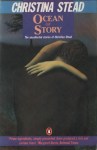
Christina Stead, Ocean of storyContribution no. 2 for Lisa’s Christina Stead Week from Ocean of story: the uncollected stories of Christina Stead.

My first post was on the titular story, “Ocean of story”, which is also used as the collection’s Introduction. After this Introduction, the stories have been organised into 7 sections by editor RG Geering. These sections are presented chronologically, Geering says, reflecting Stead’s timeline, not when they were written. The first is, therefore, logically titled “The Early Years – Australia”. It contains three stories – “The old school”, “The milk run” and “A little demon” – all of which have children as their central subject, which is, perhaps, interesting given Stead had none of her own.

Now, if you ever went to primary (or elementary) school, and that’s all of you I presume, you will enjoy “The old school”. If you were a girl, you’ll probably enjoy it even more. “The old school” was, Geering says, one of the few things Stead worked on in the last years of her life. It was published in Southerly in 1984. It’s like a little slice of life, and like the other two stories, starts with a fairly detailed setting of the scene before she gets to her main subject matter.

So, “The old school” starts with a description of the school, followed by a description of what happens at the school, or, more precisely of what the rumours say happens. But, we are told, in spite of this, “cause and effect” are clearer at school than at home, and “mostly concerned the boys”. Boys who are bad – who truant for example – will go to “the reformatory”. And if you go to the reformatory, your next stop will be prison. And who knows all this? Why “the informants” of course. And who are these “informants”, these “small sages”? Well, Stead writes, they are the “natural moralists, two or three to a class and as far as I knew, all little girls”. From here we are regaled with stories about these informants’ moral pronouncements by this “I”, this “I” who appears in two of the stories and who is an observer, rather than a participant, from within. In “The old school” then, the “I” is a student at the school.

The rest of the story explores the “moral questions” debated by these “informants”, whom Stead describes in more detail:

The informants, our moralists, had clean dresses, pink, blue or sprigged, patent leather shoes and white socks, and curls natural or rag. They did clean school work too, even when we got pen and ink. Goodness alone knows how, with their pink cheeks and shiny curls and neatly dressed brink little mothers, they got all this news about jails, reformatories, judges and sentences, lashings, canings, bread and water.

They are, of course, often little tyrants, deciding which child will be approved and which won’t. The rest of the story chronicles some of their pronouncements and their impacts on their peers. Whenever anything happened in the school “they knotted together, a town moot: they discussed, debated and delivered an opinion.” What the teachers said was to them only “hearsay”. Our “I” character doesn’t have an opinion. She “thought then that cruelty and injustice were natural and inevitable during all of a poor creature’s life”. (The use of “then” would be worth exploring.)

The main story concerns poor little Maidie Dickon who is, literally, “poor” and thus ostracised by our “natural moralists”. She didn’t have the right shoes, didn’t bring the right notes from her mother, and didn’t have her own pen and paper and so would be given some from the school supply. “It isn’t fair” cry the well-provided “informants” who also prove, mystifyingly to our “I”, to be excellent “newsgatherers”. They somehow know about Maidie’s roadworker father, who is (illegally, in those days) striking, and washerwoman mother.

You are getting the drift I’m sure of the story and will be realising that Stead’s focus is on the “natural” justice delivered by these “sages” or “moralists” to those less able to defend for themselves, while the “I”, Stead’s young self, tries to make sense of it all, of how the world works. The ending is gorgeously sharp. The story could take up a whole post – I loved its vivid picture and its passion – but I’ll move on.

“The milk run” was published in The New Yorker in 1972 (and later appeared in a Penguin anthology, The Penguin book of the road, published in 2008). It is set in the same area of southern Sydney as “The old school”, but it tells the story of a family and a little boy whose job it is to get the family’s milk from the grandfather’s dairy a mile away. Stead takes some time setting the physical scene, and describing the family and the boy, Matthew, who worships his father.

It is a beautifully detailed story of a particular place and time. Stead captures ordinary family life and tensions with such precision – a comment here, a brief conversation there, convey all we need to know about the various relationships. It conveys a child’s eye view of the world, the child’s incomprehension of adult behaviour. Things happen. Sometimes they make sense to Matthew, sometimes they don’t. Sometimes the father he worships supports him, sometimes he doesn’t. But, after a lucky find, Matthew gathers to himself a warming thought, something that offers him comfort when all else is uncertain.

And finally, “A little demon”, which was published, Geering says, in “an almost identical version” in the Harvard Advocate in 1973. It’s a satire, which again starts with setting a wider scene by describing a large and successful but rather insular family, the Masons. On the surface, they seem to be perfect, but asides and hints suggest that the surface is just that. There’s something a little claustrophobic and inward-looking about them with their “same notions” and suspicion of travel.

Into this family is born Stevie, the titular “little demon”. We hear a lot about him – the horror of his behaviour and what a trial he is to his mother, though, strangely, not to his teacher who finds him “very good” – but we don’t meet him until the last couple of pages. We are told what an “adorable” person his mother is, and how much she loves her two dogs, Duff and Rags. And here come some hints about who this adorable Mariana really is because, you see, she loved Duff and didn’t want her to ever have puppies. Why would you, after all, “spoil” that beautiful dog by letting her have puppies? Hmm, does this tell us something about Mariana’s attitude to motherhood? Ironically though, she falls in love with Rags, one of Duff’s unwanted puppies, the irony doubled because she doesn’t love her own offspring.

It all starts to go bad for Stevie when the cat that he found upset the dogs. He took the cat’s part, “just for a day or two; and then he saw which way the wind was blowing and lost interest”. And here the rot sets in. Stevie is depicted as having no feelings for animals, and as doing everything he can “to be disagreeable, to annoy, to tease”. How old is this Stevie that everyone – except perhaps his grandmother who defends him – hates? About 5!

It’s a satirical story in which Stead skewers shallowness and self-centredness, not to mention lack of maternal feeling. The language here is more heightened, using exaggeration and exclamation, than the more natural language of the previous two stories. It also has a somewhat stronger plot: we are set up to want to meet this Stevie, and there is a delicious little twist or sting in the tail, which the other two stories don’t have.

I’ve enjoyed reading these stories for Christina Stead Week. I’ll try to read more down the track, but in the meantime they have given me added insight into Stead, into the variety in her writing and into some of her broader themes. Thanks Lisa for the little push to read at least a bit of Ocean of story!
AWW Logo 2016

Christina Stead
“The old school”, “The milk run” and “A little demon”
in Ocean of story: The uncollected stories of Christina Stead
Ringwood: Penguin Books, 1986
552pp.
ISBN: 9780140100211

Christina Stead, Introduction: Ocean of story (Review, possibly)

Christina Stead, Ocean of storyI am so glad Lisa (ANZLitLovers) has given me an excuse, her Christina Stead Week, to finally pick up Ocean of story: The uncollected stories of Christina Stead. I bought this book, in 1991, from a sale table for all of 98 (Australian) cents! What a bargain. I then popped it on my Australian literature TBR shelves, where it has sat, and sat, and sat – until now.

Before I get to it, though, I must confess that this post’s title is a bit of a lie. Christina Stead just called this story “Ocean of story”, but RG Geering, the editor of this “uncollected” collection, made it the Introduction to the book. I decided that I could use this to differentiate in my post title that the post is just about this introductory story. Fair enough?

Now to the overall collection. I am on record as stating that I don’t read introductions to books before I read the book itself. I would in fact prefer these “introductions” to be called “afterwords” and placed at the end. And that’s what Geering has done here except, being perverse, I’d rather that for such a “curated” collection it had been at the beginning! Consequently, I didn’t see it until I’d read the first story and, finding it a little unusual, wondered why there wasn’t some sort of editor’s introduction. So, I went looking. And there, at the end, was his Afterword!

Geering writes that the book

brings together for the first time most of the short prose writings that appeared in various places (journals, magazines and newspapers) outside the thirteen volumes of fiction published during her own life, along with other unpublished pieces found among her personal papers after her death.

And then he says that he has grouped the pieces “according to their settings and contents rather than chronologically”. In this way, they will “follow the contours of [her] somewhat wandering life.” Then, right towards the end of his Afterward, he finally describes the opening piece: it’s

a contribution to ‘The International Symposium on the Short Story’ in Kenyan Review, 1968 … [and] is a highly personal essay, rather than a conventional article.

And that is exactly what it is, a “highly personal essay”, one that, by its end, has given us a “highly personal” understanding of what stories, and particularly short stories, meant to Stead. It starts:

I love Ocean of Story, the name of an Indian treasury of story; that is the way I think of the short story and what is part of it, the sketch, anecdote, jokes cunning, philosophical, and biting, legends and fragments. Where do they come from? Who invents them? Everyone perhaps. Who remembers them so that they pass endlessly across city life? I know some of those marvellous rememberers who pass on their daily earnings in story; and then they are forgotten to become fragments, mysterious indications. Any treasury of story is a residue of the past and a record of the day.

I love the open-endedness of her conception. It’s a free-flowing one that allows stories to take all forms. She goes on to say that “what is unique about the short story is that we all can tell one, live one, even write one down.”

Then she turns autobiographical, starting with her childhood with her father. She was, she says, “born into the ocean of story, or on its shores”, the daughter of a “lively young scientist”. He

told his tales. He meant to talk me asleep. He talked me awake.

Ha, the impact of stories on an imaginative child, which Stead clearly was. He told her stories drawn from his zoological work, and “stories of the outback…and even a few historic events.” But then comes the important thing – the thing that is important to all who read – that is, what stories do for us. She writes that the thousand stories she heard between two and four and a half

formed my views – an interest in men and nature, a feeling that all were equal, the extinct monster, the coral insect, the black man and us; and another curious feeling in me, of terrestrial eternity, a sun that never set.

This feeling came via her father’s nature-related stories which taught her that while death was necessary, there was always “a frail print” left. However, the storytelling – these times that allowed her “to see the unseen” – ended when she was four and a half and her father remarried. The magic was imprinted by then though!

“the million drops of water”

Indeed, she sees stories as “magical”. You only need for someone to say, she says, “Here’s a story; it happened to me” and all will listen. We seek stories – even those “twisted, inferior, cramped, and sterile stories on TV” – because we hope to recognise and “have explained our own existence”. She’s right – on both superficial (what am I doing) and deeper, more psychological (who am I) levels – don’t you think? She continues:

It isn’t necessary that these stories should be artistic or follow formula or be like Chekhov or the last metropolitan fad, or anything. The virtue of the story is its reality and its meaning for any one person: that is its pungency.

She argues that while the “masterpiece” might be appropriate for professionals, “the essential for us is integrity and what is genuine.” She then, interestingly given she wrote this in 1968, harks back to stories of the 1930s:

not all are memorable (some are) but all record the realities of the days when America was suffering and looking for a way out and thinking about its fate; and – look at those same today – they are a vivid and irreplaceable memento. That is what is best about the short story: it is real life for everyone; and everyone can tell one.

In other words, “the story has a magic necessary to our happiness”! We seek “the powerful story rooted in all things which will explain life to us”. I love all this. It is such an argument for the importance and value of the arts.

Stead concludes by telling a story about a group near London that she once joined. All were asked to stand up and tell a story, and

everyone, those stuffy and snug people came to life, became mouths out of which bubbled stories poor and ordinary or before unheard of.

There it was, she says, “the ocean of story”. And this happens everywhere, anytime. So,

The short story can’t wither and, living, can’t be tied to a plan. It is only when the short story is written to a rigid plan, or done as an imitation, that it dies. It dies when it is pinned down, but not elsewhere. It is the million drops of water that are the looking-glasses of all our lives.

I classed this post as “(Review, possibly)” because I haven’t really written a review. Rather, I’ve described/shared Stead’s attitude to stories – and to story-making and storytellers. I love her egalitarianism, even when describing stories that are “poor and ordinary”; I love her flexible idea of what makes a story; I love her chatty, idiosyncratic style; and most of all I love her passion for the importance of stories (particularly short stories) to our lives. I look forward to reading at least some of those in this book.

AWW Logo 2016Christina Stead
“Introduction: Ocean of story”
in Ocean of story: The uncollected stories of Christina Stead
Ringwood: Penguin Books, 1986
552pp.
ISBN: 9780140100211

Susan Varga, Heddy and me (Review)

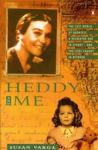
Susan Varga, Heddy and me Book cover

Penguin edition

Susan Varga’s biography-cum-memoir, Heddy and me, was first published back in 1994, so why am I reading it now? By a rather circuitous route, as it happens. Lesley Lebkowicz, whose The Petrov poems I’ve reviewed, read my post on Anna Rosner Blay’s Sister, sister, and suggested to Susan Varga that she might like to send me her book to review. Varga apparently liked the idea and consequently I received an email from her personal assistant offering it to me. I had heard of it, and am interested in the subject matter, so I said yes. That was, embarrassingly, over four months ago, for which I apologise, but eventually its time came and here, finally, is my review.

I’ll start with the judges’ comment when they chose the book to win the 1994 Christina Stead Award for Biography, Autobiography or Memoir*. They described it as “the front rank of autobiographical writing in this country”. That’s a big call but, having read it, I agree, because it is an engrossing book which intelligently negotiates two usually opposing forms, biography and autobiography/memoir. In it, Varga tells the story of her Hungarian Jewish mother Heddy – her life in Hungary, her experience of World War 2, and her subsequent emigration with her extended family to Australia. But, in telling this story, Varga, as the title conveys, also tells her own. She was born, mid-war, in 1943 and was just 5 when the family migrated. Hers was a complicated growing up in which she struggled to find self. She finally realised, late in her research, that she straddles two generations: the first (those who migrated) and the second (the children of those migrants).

Now, I can see why Lebkowicz thought I might be interested in this book, because both books involve a daughter not only telling the Holocaust-survival-and-migration story of a mother, but also working through her understanding of and relationship with that mother. Like Blay after her, Varga captured much of her mother’s story via tape recorder:

… the room itself is imposing, with its long oak table and chairs covered in embossed velvet. Imposing but not unfriendly, which is very much Mother’s style.

I switch on the tape-recorder. She talks, I listen. She [unlike Blay’s mother] doesn’t need much prompting; she’s telling me her life story, which she knows will be raw material for a book. In the past when people have said to her, ‘Heddy, you should tell your life story,’ she has said, ‘I’m waiting for Susan.’

I’ve told her it won’t be her life story, not properly. It will be filtered through my reactions and thoughts, my second generation eyes.

And Varga’s eyes are complicated, sometimes testy ones, as she strives to comprehend her strong-willed mother. So, like Blay’s book, Heddy and me is an amalgam of biography and autobiography, thereby neatly sidestepping David Marr’s injunction for biographers to get out of their story! Like Blay’s book, too, Heddy and me is a story of survival – of a peculiar combination of luck, resourcefulness and judgment – and it’s a story of the lasting impacts of the war. For both families, one of those impacts is an ongoing sense of fear:

… the fear of impermanence, the readiness to flee, takes the form, among others, of a deep conservatism running through the older generation, as if any change at all could result in their lives being uprooted again. They are over-protective, still prone to buy their children a diamond, something portable, just in case.

And we children feel a pervasive fear that we do not know how to express. Impermanence and insecurity lurk in the shadows behind this all-Australian red-brick security.

I found this analysis, this explanation of conservatism, enlightening – and helpful.

However, despite similarities with Blay’s book, Varga’s is different. For a start there are the obvious departures. Varga’s family is Hungarian to Blay’s Polish one, and Varga’s mother was married with a young child when the war started while Blay’s mother was still a teenager. Moreover, Varga’s mother managed to avoid, through various subterfuges, being sent to a concentration camp. She didn’t suffer the ghetto and concentration camp terrors and depredations of Blay’s mother, but Heddy and her colourful mother Kató, whose story is also told here, did suffer, including being raped multiple times by their Russian liberators. There are deeper differences too, speaking to the different psychologies of the two families, their individual wartime experiences, and how these subsequently played out in their post-war lives. And there’s the structure. Varga interweaves her own story and her reactions to her mother’s story within the one narrative flow, while Blay carefully differentiates her voice from her mother’s and aunt’s.

A particularly fascinating part of Varga’s book is the picture she paints of Hungarian society before, during and after the war. I learnt a lot, for example, about Budapest – its vibrant pre-war culture and life, albeit a life that, for its Jewish inhabitants, had its paradoxes. They lived, writes Varga, an outwardly normal life, “clinging to continuity while awaiting upheaval”. Varga chronicles the trajectory of anti-Semitism, from pre-war to the out-of-the-frying-pan-into-the-fire situation in which Hungary’s Jews found themselves post-war, when Nazism was replaced by Communism. Indeed, having survived the war, Heddy, Kató and family were prepared to stay in Budapest until it became clear to Heddy “that the noose was tightening again, like Hitler, except then it was against the Jews, now against everyone.” So, Heddy, ever attuned it seems to the political nuances around her, worked on her family until they agreed to move to “the New World”. Later, as part of research for her book, Varga returns to Hungary with her mother, and becomes aware of the increasing (or, really, continuing) anti-Semitism:

As I begin to grasp the subtleties of political life in the post-Communist world, I find it awful that the Jews should once again need friends and protectors, I think of 1943, when Hungary’s Jews still thought themselves safe because Kállay, or some other prominent politician, was their friend.

Once again, I am astonished, though I suppose by now I shouldn’t be, at how deeply anti-Semitism seems to run, particularly in Europe.

And here, I’m going to insert some personal connections with Varga’s story. I mentioned in my review of Sister, sister that I’d spent some time in my Sydney youth with Jewish people – eastern European Jews – who were business friends of my father’s. Blay’s and now Varga’s books consequently ring true for me, Varga’s particularly, because her parents did exactly what many of these people did – they set up business in the rag trade, and then handbags. I still have some handbags to prove it! But, my connections with Varga are more than this, because I went to the same high school she did, albeit a decade later. Unfortunately, Varga’s experience was not as positive as mine, partly due to her increasing sense of disconnection with her family and partly to the fact that by my time in the mid-to-late 1960s society was becoming less rigid (even in strict government girls’ schools). It was at that school that my understanding of civil rights – particularly, then, relating to racism and anti-Semitism – was honed. This is rather ironic given Varga found it “a school of endless strictures and platitudes”.

Anyhow, enough about me, and back to the book. Heddy and me was, I suspect, groundbreaking when it was first published, not so much for its portrayal of personal experience of the Holocaust, because such stories started appearing soon after the war, but for Varga’s intensely personal exploration of women’s experience and identity across three generations, before, during and after the war. Since then, similar stories have been written – Blay’s, for example, and another I’ve reviewed, Halina Rubin’s Journeys with my mother. However, these later books don’t minimise the power of Heddy and me, which not only illuminates the personal and familial costs of the Holocaust, but also provides an historical perspective on that mysterious thing we call human behaviour. This book deserves a continued life.

AWW Logo 2016Susan Varga
Heddy and me
Abbotsford: Bruce Sims Books, 2000 (2nd ed.; Orig. ed. Penguin, 1994)
304pp.
ISBN: 9780957780033

(Source: Susan Varga)

* Unfortunately FAW’s awards website only goes back to 1999. This comment is on the front cover of my edition, and is credited to “Christina Stead Award”.

Josephine Rowe, A loving, faithful animal (Review)

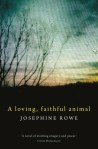
Josephine Rowe, A loving faithful animal

How many novels have you read featuring the Vietnam War? I’ve not read many I must say, but last year I did review Charles Hall’s Summer’s gone, and now this year I’ve read Josephine Rowe’s A loving, faithful animal. It’s a debut novel but, from its form, you can tell that Rowe is an accomplished short story writer. I have in fact read one of her short stories – from her collection, Tarcutta Wake. Unusually for me, I didn’t review it at the time. I think this is because I planned to read the whole collection, but that hasn’t happened (yet, anyhow), which is clearly my loss.

So, before I discuss the content of this novel, I should explain what I mean by my comment regarding short stories and its form. For a start, it’s a multi-voice novel. On its own, this is not unusual, but here the voices are also in different persons, which is not unheard of either, really. However, added to this is the fact that the chapters (or “stories”), particularly “Breakwall”, could be read as stand-alone pieces. To make the novel out of these pieces, they are linked via character, and there’s an overall chronological narrative arc to them, but they also remain little jewels in themselves. There’s real skill here, in the way Rowe juggles her voices, perspectives, stories to create a very satisfying whole.

Now, to discuss the novel itself. It comprises six stories, starting in second person with Ruby, whom we come to realise is the younger daughter of the book’s central family. It then progresses through four stories told from different third person limited perspectives – Ruby’s mother Evelyn, her father Jack, her uncle and father’s brother Les or Tetch, and her sister Lani – before returning to Ruby’s second person voice to conclude. The story is one of a family broken by the father’s ongoing trauma (PTSD) following his Vietnam War experience. It’s a devastating story showing how such trauma can play out, resulting in domestic violence, dividing loyalties and causing splits in families.

… she did not drive away …

The novel opens on New Year’s Eve, around 1990. The family has struggled on for some time. Jack has been unable to retain good employment, going in and out of rehab, with Evelyn always drawing him back, wanting their relationship and the family to work. But, every time she takes him back, she loses something too, particularly in terms of the respect of her elder daughter. As the novel opens, it’s New Year’s Eve, and Jack has gone, for good this time it seems, after something unspeakably brutal – the full details are never, fortunately, given – has happened to the family’s pet dog, Belle, the titular “loving faithful animal”. Except, as you’d expect, there’s more to the title than this. Evelyn, too, is “a loving faithful animal”, as in her way is Ruby and, perhaps we could also argue, Jack’s half-brother, Les/Tetch. He had escaped the war by “getting rid of his own fingers” and now hovers on the edge of the family, wanting to keep an eye on them, wanting his brother to be okay, but wanting too some family for himself.

What I enjoyed most about this book, besides its tackling this important subject, is its empathetic but unsentimental portrayal of its characters. Evelyn’s loyalty (her faithfulness) is shown to be both admirable and stupid. We see the catch-22, damned-if-you-do-damned-if-you-don’t nature of her situation, with the added element of a young girl having made her bed, that is, having married against her parents’ advice, and now having to lie in it:

But she could never quite bring herself to. Run out on him like that. And it was never as simple as money. It was never as simple as pride, because she’s not sure she’s never had much of that either. Or if she does, it hasn’t turned out to be worth much, not when it comes right down to it. (II “The Coastal Years”)

Life is cruel, particularly when stubbornness and lack of forgiveness face off against each other. Anyhow, we also ache for Jack who can’t escape his past, and nor “get a handle on” the future, so leaves rather than inflict more cruelty. We see and understand Lani’s decision to reject it all and escape into a future on her own, while Ruby stays determinedly loyal. Every decision though comes at a cost.

It’s not an easy book to read, and not just because of the subject matter. Rowe is not the sort of writer who wants to tell a simple narrative. She wants to convey emotions, psychology, motivations, not just actions, because these are the stuff of life. And this requires a particular sort of writing which, for Rowe here, is a sort of minimalist, sometimes disjointed, sometimes lyrical style:

This is Exhibit A in the Museum of Possible Futures, the life that might have rolled out smooth as a bolt of satin, if she had just swung her slender legs up into that beautiful car and driven as fast as she could in the opposite direction, leaving the man with the camera far behind. Your father, he could keep the photograph.

But she did not drive away. Instead she sold the car and spent every night of her life trying to lead your father out of the jungle, out of the mud, away from the cracks of invisible rifles, strange lights through the trees. (I “A Loving, Faithful Animal”)

There’s more of course – isn’t there always? – including little running motifs involving cicadas and panthers, and Tetch whom I’ve barely mentioned, but I’ll close here. This is the sort of book that I’d love to see in next year’s awards shortlists, for its writing and for its fierce, authentic evocation of the lasting effects of war. I wonder if I will.

Lisa (ANZLitLovers) was also impressed by the book.

AWW Logo 2016

Josephine Rowe
A loving, faithful animal
St Lucia: UQP, 2016
200pp.
ISBN: 9780702253966