Phil Day, A chink in a daisy-chain (#BookReview)

Phil Day, a chink in a daisy chain

You’ve “met” Phil Day, author of A chink in a daisy-chain, here before. He illustrated co-publisher Julian Davies’ Crow mellow (my review) and Hartmann Wallis’ Who said what, exactly, which I reviewed very recently. This time, though, Day is author as well as illustrator.

It’s a fun, mind-bending book – with the fun starting on the cover page in which the illustration, as befits a story inspired by Alice I suppose, is upside down. On the back cover is a simple statement: “If there is a perfect book, Alice is it”. This is the question – oops, statement, really – to which Day returns regularly throughout his short book. But, before I talk more about that, I’ll share publisher Julian Davies’ description of the book in his covering letter:

The book is a creative essay, cum personal reflection, on the relationship between Lewis Carroll’s Alice books, personal identity and argumentative opinion. It is the first in a three-book series Phil plans to write on the embattled nature of individual intellectual and creative autonomy.

So, now, are you any the wiser? Perhaps not? And I’m not sure that I can enlighten you, but I’ll try.

The essay could also – perhaps – be described as a memoir, except that I would be hard-pressed to say hand-on-heart which of what Day tells us really happened, if any of it did? Or perhaps all of it did, just not quite the way Day tells it!

The essay starts with Day and his wife sitting on the minimal furniture left in the lounge-room of the Shillams (look at that name upside down and see what you get!) who are moving to Grafton (as you do!) They had been invited for farewell dinner and drinks and, over a mocktail called Clancy of the Overflow and Gin-and-Tonics served in teacups from the piano-doubling-as-a-bar, Day makes his pronouncement concerning Alice. “Can’t see why, Mr S said” – and we’re off, following Day’s weird and wonderful mind just as Alice followed weird and wonderful creatures down the rabbit-hole.

What makes Alice so good, poses Day’s foil, Mr S? Well, besides the fact that Day didn’t say it was “good” but that it was “perfect”, he doesn’t want to get into discussions of “the meaning of good”. And then Mr S asks him to “look at the man”, but, quite rightly, Day isn’t interested in the man either:

I didn’t want to look at the man. I don’t care about the man. I wasn’t drawn to the man, it was the book itself that made me say–If there is a perfect book, Alice is it.

You are probably following this ok right now – the ideas and the language – and it does make sense. It continues to make sense as Day embarks on a critique of teaching, of

the state government syllabus–a deformed thing that devalued the one-off self-directed realisations that a student might naturally become conscious of through their own curiosity. But because the state government syllabus was created by teachers it had no chance of being anything more than an approved state government syllabus, and because of the approved state government syllabus, I instructed my students not to be curious …

And of course curiosity is why Alice is so special. Not that Day says this specifically, but we know this is what he means.

From here, though, the connections and word associations become increasingly bizarre or absurd, just like in Alice. They are not the sorts of associations that make sense in the telling. You have to read it yourself. You have to follow Hobbes the cat, and the peppered oysters, the trees and the warrens, not to mention red-painted bedrooms and nursery rhymes, to find your own meaning … Beyond that my lips are sealed.

I wonder what Phil Day will come up with next in his personal odyssey into curiosity and creativity. Whatever it is, it will be original, probably absurd, definitely cheeky, and very likely a cri-de-coeur for the freedom to think unbound by rules and approved state government syllabi.

Lisa at ANZLitLovers also enjoyed the book.

Phil Day (author and illustrator)
A chink in a daisy-chain
Braidwood: Finlay Lloyd, 2017
61pp.
ISBN: 9780994516527

(Review copy courtesy Finlay Lloyd)

Canberra Writers Festival, 2017, Day 2, Pt 2: Two book launches

At last year’s festival, I attended a few excellent book launches, and so decided to do so again. Authors need all the support they can get after all.

Book launch: Ian Burnet: Where Australia collides with Asia

Burnet and Burdon

Burnet and Burdon

The first of today’s two launches was for a book with a very long title, by geologist Ian Burnet. It’s Where Australia collides with Asia: The epic voyages of Joseph Banks, Charles Darwin, Alfred Russel Wallace and the origin of the Origin of species. I haven’t heard of Burnet before, though he’s written a few books, and nor have I heard of the publisher, Rosenburg Publishing who produce “a small non-fiction list, concentrating mainly on history and natural history.”

So, that was interesting for a start. The book was launched by Sally Burdon of the Asia Bookroom here in Canberra.

I couldn’t possibly share all the information Burnet imparted to us about the four voyages he covers in the book. A lot of it is well-known, so well-known in fact that Burnet had been wanting to write about Alfred Russel Wallace, his hero, for a long time, but he couldn’t find an angle to make it worthwhile. The thing is that I didn’t know who this Wallace was.

The publisher’s website explains his importance. Wallace

realized that the Lombok Strait in Indonesia represents the biogeographical boundary between the fauna of Asia and those of Australasia. On the Asian side are elephants, tigers, primates and specific birds. On the Australasian side are marsupials such as the possum-like cuscus and the Aru wallaby, as well as birds specific to Australia such as white cockatoos, brush turkeys and the spectacular Birds of Paradise. It was tectonic plate movement that brought these disparate worlds together and it was Alfred Russel Wallace’s ‘Letter from Ternate’ that forced Charles Darwin to finally publish his landmark work On the Origin of Species.

This strait is apparently well-known in certain circles as The Wallace Line.

Burnet explained that the aha moment came when he was sailing in the strait and saw melaleucas, one of the unique species that supports Wallace and Darwin’s theory. He realised that this Australian connection was the story he could tell. (He found some other Australian connections, too, including Darwin’s contemplating his ideas about the origin of the species on the banks of Cox River, and the role of ornithologist John Gould in identifying adaptation in finches.)

An interesting point he made – one relevant to my write-up of the historical fiction session yesterday, even though this is non-fiction – is that it was the easiest book to research. Essentially all the critical documents he needed – letters, diaries etc by the main players – are digitised and available online. Way to go librarians and curators!

It was a lovely launch, and I learnt some things I hadn’t known before, which is always a plus.

Book launch: Stephanie Buckle: Habits of silence

I had identified this launch as one I wanted to attend, partly because the book is by a local author but even more because publisher Finlay Lloyd has sent me a copy of the book to review. Julian Davies, Finlay Lloyd publisher, introduced John Clanchy, whose gorgeous short story collection, Six, I’ve reviewed and who works with Finlay Lloyd as a manuscript assessor and editor.

Clanchy did a grand job of launching Buckle’s debut short story collection, Habits of silence. He explained that he met Buckle 10 years ago in a writers’ group, and talked about her achievements: some of the fourteen stories in this collection have been published before, have won prizes, and/or have been in editions of Best Australian stories. In other words, he said, she’s a writer with some cred (though he didn’t use that word.) She has worked at her craft, he said, even rewriting some prizewinning stories for this publication. (Interestingly, in a throwaway line, he mentioned that she has written a novel about the Canberra fires, From the ashes, but I don’t believe it’s been published as this is her debut book.)

Anyhow, Clanchy then discussed the book itself. He talked about the relevance of the low-light, empty urban streetscape on the cover, and said that it and the recurrence of words like “silence” and “wordless” provide a clue to the content. And this, he suggested, revolves around communication, about how it can break down, about the positive and negative impacts of silence. Silence, he said, can be positive, but with Buckle, things don’t stay the same, and smooth waters can turn turbulent.

Silence can be voluntary or involuntary. Two stories are about a stroke, which forces involuntary silence. He read an excerpt from one of these stroke stories. And then read from the second story in the book, “sex and money”, which is about voluntary silence, about silence being used aggressively by a wife who is not receiving the love and attention she desires. Both readings showed a gorgeous insight into human nature, and an ability to present it economically, as you’d expect in a short story.

Davies then returned to introduce Buckle. He reiterated her willingness to work on stories, suggesting this is partly a salute to being older, to the associated ability and willingness to produce stories of psychological subtlety. He then introduced Buckle to the podium.

Buckle said that the book was a long time coming, and that she never thought her first book would be a short story collection, given their general unpopularity. (Thank goodness for small publishers like Finlay Lloyd who take risks on unusual or less popular forms.) However, she loves short stories she said, particularly those of 2,500 to 3,000 words. You can’t hide in short story, and you can tease out a single idea. But, addressing the comment about her working on her stories, she said the hard thing is to know when to stop! I guess most writers – even bloggers – understand that!

She then read from two of her stories, from “us and them” which is set in a 1970s psychiatric hospital, and “the man on a path” which is about an older woman, widowed and lonely, going on holiday to a place she used to go with her husband. As she walks, all she sees are couples, until she sees a man alone walking towards her. The excerpt she read about what happens next was tantalising.

I so look forward to reading this book – but it will be a little while before it reaches the top of the pile.

Canberra Writers Festival 2017, Day 2, Pt 1: A conversation with Tony Jones

Choices, choices. Such a surfeit of riches across such dispersed venues made today a difficult one. In the end I had to make the tough decision to not see Jane Rawson, whose session was across the lake, though it broke my heart. My decision was made harder by the fact that as I was drafting this intro over my lunch break, a tweet came through promoting the event. Wah, but I’m trying to keep a cold at bay so being sensible about rushing around was the way to go.

But now, I’m going to have to try to emulate those historical fiction writers who need to leave out much of their research, otherwise I’ll be here all night – and I have things to do, books to read. Even so, I’m going to break this post into three parts.

Crime: Tony Jones with Krysia Kitch

Kitch and Jones

Kitch and Jones

Writers can’t always avoid controversy, particularly if they are political journalists, and so it was for Tony Jones who was attending the festival to discuss his new book, Twentieth man. Outside the venue was a small group of protesters holding a placard that said “Phony Tony, Propaganda through Plagiarism”. They believe the book is anti-Croatian, and that it plagiarises, writes Ina Vukic on her blog, “a Yugoslav era work of Propaganda titled Dvadeseti čovjek (the Twentieth Man) written by Đorđe Ličina”. I can’t comment on the propaganda aspect, because I haven’t read the book, but in his talk Jones mentioned that there has been speculation that there was a twelfth man in the Bugojno group which carried out an attack in Yugoslavia in 1972. So he decided to create a fictional twelfth man who survived the attack. And that’s all I’ll say about the protest, which Jones referred to a couple of times during the conversation.

Twentieth man is Jones fictional debut, and the first question turned on a favourite topic of mine, genre. Well it’s not that I love “genre” per se but I do enjoy discussions about definitions because they can help us tease out expectations. The question was, is this crime (as it was described for the Festival) or political thriller? Jones skirted answering this decisively by saying that it’s thrilling, it has crimes and it’s about politics! Fair enough. As the conversation progressed, I decided a third genre (or, perhaps, sub-genre) could be considered, historical crime! (Though again that raises the spectre from yesterday’s session about when is “history”.)

We’ll return to history later, but first something about the plot. It starts with the bombing of two Yugoslav Travel Agencies in Sydney in 1972 and ends with an assassination attempt on the Yugoslav prime minister. (Jones told us this so I don’t think it’s a spoiler!) Jones spent some time talking about the inspiration for the novel, at the same time giving us a refresher on fairly recent Australian political history.

Convenor Kitch from the National Portrait Gallery then referred to the Festival’s theme of Power, Politics, Passion and asked Jones what he thought about the power of the past over the present. Jones responded by referring to a quote often attributed to Mark Twain that:

“History doesn’t repeat itself but it often rhymes.”

He then talked more about the historical background to the novel, and about subsequent reporting and actions through the 1980s, 1990s and into the present, which prove that “history resonates again and again, it rhymes”.

Kitch mentioned how the shift of power between individuals is a major part of book. She said she loved his visceral descriptions of fear, and asked how he did it. Jones flippantly responded that he works at the ABC, but then, more seriously, said that he used his imagination … and that he could draw on some tricky situations he’d been in as a journalist.

This led to more conversation about the process of writing, such as his decision to mix “real” people with fictional ones. After all, he said, Tolstoy did it! He said he likes novels which deal with real history and fictional characters, and named James Ellroy’s novel on the Kennedy assassination, American tabloid, and Marlon James’ Booker prize-winning A brief history of seven killings exploring the assassination attempt on Bob Marley.

He also talked about researching and using documentary evidence to support his story, saying that the novel is fictional (of course) “but as close to real” as he could get. He’s not claiming it’s history but hopes it will encourage its readers to “reflect on the past”.

Kitch asked him about pacing – including the role of the moments of solitude for the characters – and also about his use of landscape to support his themes and characterisation.

Jones also mentioned the role of respected Australian publisher and editor Richard Walsh who offered to look over his manuscript. He told Jones there were two or more books there. So, folks, there will be a sequel!

There was so much more but this is getting long and I’ve covered the main issues I wanted to. There was discussion about the passion part of the Festival’s theme. First, Jones is clearly passionate about the topic. But, also, there’s a Romeo and Juliet style love story between the young Jewish journalist and the Croation hero/antihero.

Finally, Jones talked about the role of Canberra in the book, saying the city is “the star of this novel”. He thinks it provides a good picture of Canberra and its inhabitants at the time it is set. This was a blatant pitch to the locals as, he admitted, he’d been told to do!

There were some intelligent questions, but really, I must finish here, and will do so on Jones’ final words that Twentieth man is “a novel, largely a work of imagination but based on real events”.

Canberra Writers Festival 2017, Day 1: A panel and a conversation

It’s on again – the newly revamped Canberra Writers Festival, I mean. Due to a family commitment in Melbourne, from which I only returned at midday today, I didn’t get to some of the first day’s prime events. I missed, for example, a conversation with Graeme Simsion. I also missed a wonderful sounding panel titled Women in the Media, featuring Kathy Lette, Katherine Murphy, Virginia Haussegger.

The Festival’s theme – fitting for the nation’s capital – is Power, Politics, Passion, but my sessions today were more traditional writers festival fare.

Grasping the past: Tracy Chevalier, Amy Gottlieb and Rachel Seiffert in conversation with Gillian Polack

CWF, Polcak, Gottleib, Chevalier, Seiffert

From left: Polack, Gottleib, Chevalier, Seiffert

I chose this session because these writers interest me, as did the topic, historical fiction, which was one of the themes running through last year’s festival.

For those of you who don’t know the panelists, they were:

  • Gillian Polack (convenor): an historian and speculative fiction writer.
  • Amy Gottlieb: novelist and poet, whose debut novel, The beautiful possible, was published in February 2016.
  • Tracy Chevalier: novelist, most famous for The girl with the pearl earring but who has written 9 novels including Remarkable creatures which I’ve reviewed.
  • Rachel Seiffert: novelist, the daughter of an Australian-born father and German mother. She’s published three novels, of which the first, The dark room, was shortlisted for the Booker Prize.

What was excellent about this session is that it didn’t traverse the common issue of plausibility and authenticity. Instead, our jetlagged convenor wanted them to talk about how they transform their research into fiction. She was interested more in the process. It took a little while to get there but the discussion along the way was enjoyable anyhow!

A couple of issues were toyed with as the panelists grappled with the question. One of these related to the label itself. Gottleib, for example, said she didn’t see herself as an historical fiction novelist. It was the marketing people who labelled her book as such – because of its historical setting. Chevalier raised the issue of definition. When is a setting historical, she asked? Is her novel set in the mid 1970s historical? Seiffert agreed with Gottleib regarding the marketers applying the label, and suggested that historical fiction is seen as “more serious”. That intrigued my friend and me – and was immediately picked up by Chevalier who said that in England historical fiction tends to be seen as genre, and in opposition to serious literary fiction!

What came though strongly throughout the discussion is that these writers do not necessarily see themselves as historical fiction writers but simply as writers!

Meanwhile, Polack returned to her question regarding transforming historical research to fiction, by asking a more specific question regarding how they get their food research into their novels. This resulted in a detailed response from Chevalier who talked about her research process. She said that she can’t write about a period until she knows what people eat, how they eat, when they eat, what they sat on to eat, and so on. In other words, she needs to know what her characters would do on a day-to-day basis. And, here’s the challenge! She has to know this detail to create her period but she can’t tell it all in her novel. This is, as she clearly knows, one of the major criticisms levelled at historical fiction writers, i.e., that they can’t resist including their research, whether or not it’s not critical to the story.

Gottleib, though, starts with character. She knows the story – for example her character was going to leave Nazi Germany, travel to India, and then move to America. Once she knows this, she has to apply the scaffolding – to find out how he made this journey. This requires research. Seiffert, on the other hand, starts with the story first, being inspired, for example, by case studies and essays of people who resisted the Nazis.

Polack then asked the panel how they can do that thing that historians can’t, namely they can bring back erased people from past (such as women or servants), they can right wrongs or address flaws in past. How do they do this she asked?

Gottleib reiterated her interest in character, in their motivations, dreams, and longings. The history for her comes later. Chevalier referred to the book she made her name on – The girl with a pearl earring. She said she likes making things up, so she goes for the gaps – in the “real” story – and tries to fill them in. She likes to give voice to others, to their interior or emotional life. She is not about truth and facts, she said but about the emotional truth of the times. Seiffert referred to Kate Grenville’s The secret river and her feeling the need to write Searching for The secret river. It was as though she’d felt she’d “committed the sin of writing historical fiction” which is clearly something Seiffert felt she didn’t need to do.

Chevalier commented at this point that she has a huge respect for historians; she relies on them.

Polack then moved onto the thorny issue of avoiding cultural and historical bias when writing about a time different from their own. Chevalier said she was always on the look out for 21st century attitudes in her characters. She had to remember in Girl that a 17th century maid would have no feelings of social or economic empowerment.

Seiffert, who has written two books about the Third Reich, took this a bit further explaining that her character in A boy in winter doesn’t know the Holocaust is proceeding but the readers do. She had to fight that, showing that he had to make choices not knowing the full story, while the readers do know. You need, in other words, not to give characters foreknowledge.

Gottleib said that she handles this issue by having a narrator. She said that Latin-American fiction and Gabriel Garcia Marquez  got her into writing fiction, because she loved his multiple layering of stories. The narrator is her “out” of this mire.

This led Polack to raise the issue of their narratorial choices – past versus present tense, and 1st, 2nd or 3rd person. These are the most important things a writer must choose, said Chevalier. If they get it right, readers don’t notice. She started writing in first person, because she found it easier, but she said that the ability to handle third person is the sign of a more mature writer!

Seiffert said she wrote two historical novels using the present tense, because she wanted to situate reader in the time of the novel. The most interesting thing, she said, is that even when you don’t act there is a consequence.

Polack asked then about how fiction writers set up a conversation with history. Gottleib said her novel revealed a conversation, and that it turned out to be different to the one she thought she was having. Chevalier said that writing historical fiction can set up “an alchemy or magic that is hard to explain”.

Q&A

There were a couple of questions from the audience but I’ll just share the one concerning whether they have start with ideas they want to explore or whether the themes appear more serendipitously. Gottleib said that yes, hers is a novel of ideas but that she had to work to ensure the ideas didn’t overwhelm the characters. Seiffert said she has done this, as has Chevalier, but she said you have to avoid preaching.

Overall, this was an interesting discussion which explored historical fiction more from the practitioner’s end than from the reader’s response aspect, as I’ve often seen.

COMMENT: My friend and I did discuss the “cultural and historical bias” issue a little. We believe that there have always been iconoclastic thinkers. The challenge for the author, when creating these, is to know they are doing so and be able to justify it.

Authors and agents: Linda Tate and Valerie Parv
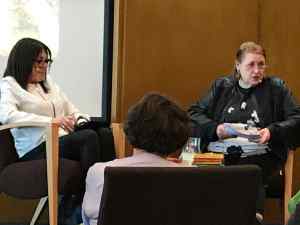
Linda Tate and Valerie Parv

From left: Linda Tate and Valerie Parv

I’m not a professional writer, and so don’t plan to employ an agent, but I chose this session – a conversation between author Valerie Parv and her agent Linda Tate – because I am interested in the business of writing, in how writers manage the bigger picture.

It was a very nicely presented session. Tate and Parv clearly know each other well and work well together, but beyond that, it was clear that they’d work-shopped their session so it flowed easily, and informatively without feeling artificial.

I’m not going to summarise it in depth, but will say that they focused on the role of an agent, arguing that the point is not how you publish – indie or traditional, through apps like Radish, or by repackaging older works, and so on  – but that you publish. Agents can help with the publishing aspect of writing. They can help with other business aspects too, such as managing the writer’s diary, ensuring s/he isn’t taken advantage of. They can also free up the writer’s time to do what writers do best – which is write.

One thing writers do need to do, though, they argued is to have a social media presence, and to have such a presence BEFORE they offer a manuscript for publication. Publishers want to know what the writer can offer, above the actual work, because it is these extras which can often sway a publisher. A writer needs a brand, needs to know what s/he wants to be known for, what his or her niche is.

They also warned about contracts, including the importance of IP. Their advice regarding contracts was always consider the worst case, and not to sign anything they can’t live with in the worst case.

This was all teased out with examples, but in the end this was the message – the writer writes, the manager handles the business. As was the point that, no matter how well agent and writer get on, it is a business relationship. The agent can only work for a writer if it’s commercially worthwhile for the agent (obviously!)

Oh, and they gave a lovely plug to the ACT Writers Centre which they described as one of the most pro-active in the country! Nice eh.

A worthwhile session – even for amateur me – although I did notice that there was no discussion of the payment aspect of the relationship.
Karenlee Thompson, Flame tip: Short fictions (#BookReview)

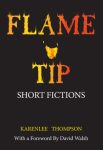
Karenlee Thompson, Flame tipShort story anthologies usually have some sort of organising principle – a theme, perhaps, such as Australian love stories, or a prize, such as the Margaret River Short Story Competition – but single author collections tend to be looser. Not so Karenlee Thompson’s Flame tip which she describes as containing “creative writing pieces that weave in and around the Tasmanian bushfires of 1967”. These fires, she writes, “left 62 people dead, 900 injured and over 7,000 homeless in a single day”.

With subject matter like this, you might think Flame tip would be distressing to read – and there is that. But Thompson manages to vary the tone enough, by injecting the occasional bit of humour and satire for example, to lighten the melancholy of the heavier stories. This humour, in fact, starts with David Walsh’s idiosyncratic (we would expect no less) introduction. He tells us he remembers the day – 7 February – because it was his first day of school, and his Mum forgot to pick him up. She “forgot” because she was fighting a fire on their back fence, but Walsh wonders whether this was a “viable excuse” or whether she chose to “triage the back fence over her weird and difficult son”. Whatever the reason, Walsh’s family lost neither home nor persons – unlike some of the characters in Thompson’s book.

So now, the book. Karenlee says in her introduction that it’s a collection to be “dipped into at random” and that her aim is “to present the truth ‘under the mask of fiction’ (to borrow from Gao Xingjian), revealing nuances of character and place, as well as repercussions that are often difficult to expose through nonfiction”. This is exactly what she achieves. Some of the stories are told from the point of view of people who experienced the day – who lost loved ones or property – and some are told by later generations. Sometimes the impact of the fires is direct and obvious, such as the wife who lost the love of her life (“Like a wall”), while elsewhere it is far less direct, such as the fickle lover in “Love, what is thy name?” whose grandparents lost their home in the fires.

Many of the stories of loss – the loss of a husband, parent or friend – are the sorts of stories you’d expect. I don’t mean by that, however, that they’re clichéd or uninteresting, but just that in such a collection you’d expect such stories of loss. Thompson ensures her stories are interesting by personalising the loss, and by creating “real” characters rather than the heroes and saints you tend to get in the media. An example is the betrayed wife in “A bird in the oven” who was 12 years old when she lost her mother in the fire and who took “a long time growing up”. Another is “The keeper of the satchel”, a man more damaged by his mother’s lack of love than by her death.

There are positive stories too, such as the young girl in “Jack Frost” who finds love. And there are surprising stories. One is “Medusa One Snake”, about how a family of birds manipulates fire to locate prey (the fleeing animals, “a mobile smorgasbord”). Another is “Degustation” about a woman on a date with the perfectly-named Augustus from a family which “had bought up all the available charred and rubble-ridden farms in the district, after the fire had rendered the singed locals almost comatose with shock”. There’s always someone ready to make a buck out of other people’s pain!

The issue of form … short fictions

The book is subtitled “short fictions”, and Thompson describes it as a collection of “creative writing pieces”. In other words, the term “short stories” isn’t used. There are “traditional” short stories here, but the collection also includes other “pieces”. There’s the shape poem “Flame”, an epistolary story (“Love, what is thy name”), and the piece titled “Lost” which riffs on lost-and-found ads. In it Margaret Groombell writes:

Lost

A life

Including: four-bedroom weatherboard home with indoor amenities, a much loved border collie answering to the name of Richie, a sense of security, linen and cutlery, a priceless hand-painted jardinière, stamp collection gathered and assembled over three generations, pink shower cap studded with daisies, deck of hand-painted burlesque playing cards, a position of some standing in the community, 2 striped deck chairs …

And so on. The random ordering of “items” here – “a sense of security” next to “linen and cutlery” – beautifully conveys the dislocation, the disorder, that such loss generates.

Another piece, “Annabelle, just looking”, plays with the idea of personal ads, but it’s an extended ad in which 72-year-old Annabelle explains her needs and why she’s where she is. She describes herself. She’s “never considered Botox or any of that other rubbish”, she says:

My forehead, therefore, is less like a flat screen TV and more like a topographical map. Life has surprised me, frightened me, delighted me – it’s all there in plain sight, writ large for the world to see.

Her demands aren’t many, but she hates “open fires”.

My final example is the short two-pager, “Cross stitch”, about Nettie who’s lost everything, but is surrounded by the macrame and aprons

made with altruistic fervour, no doubt, by women and girls who wanted to give her something to help her settle into a tiny house that had nothing from her life before.

I love the way Thompson, in piece after piece, breaks down popular notions about fires and their aftermath, and shows us the more likely reality.

So far, I’ve focused on the bushfire theme, but one of the lovely things about this collection is how Thompson interweaves other ideas into it. In “Like a wall” and “Jack Frost” she tackles racism and community prejudices. And in “Degustation” she satirises fine dining – degustation menus in particular – as well as the arrogance and sense of entitlement of the wealthy. It’s a delightful, funny story. Indeed, Thompson’s writing overall has a light touch, with a keen eye for the absurd.

Flame tip is a serious collection about a serious subject, and it could so easily have become heavy. However, by varying form, voice and tone, Thompson has produced a book that not only sustains our interest but that, despite its subject matter, is enjoyable to read. And that’s no mean feat.

Lisa (ANZLitLovers) also enjoyed the book

aww2017 badgeKarenlee Thompson
Flame tip: Short fictions
Melbourne: Hybrid Publishers, 2017
166pp.
ISBN: 978 1 925272 73 4

(Review copy courtesy Hybrid Publishers)

Monday musings on Australian literature: Australian writers and Hollywood

This will be my last Monday Musings posted from the USA, so I figure I should do at least one post inspired by where we’ve been. I’ve put it together pretty quickly though, as time for blogging is pretty limited, so please forgive all the gaps!

Since this is a litblog, my focus here is the relationship between Australian writers and Hollywood, and I’m narrowing it to the last couple of decades. (This connection, in fact, goes back to the silent movie days, but that would make for an essay rather than the brief post I have time for here.) I should also explain that I am using “Hollywood” to stand for America (a common synechdoche for which I should perhaps apologise, but it suits my California-holiday-post purpose, and is probably pretty accurate anyhow.)

I guess there are political issues that could be discussed here – brain drain, and all that – but I’m not going there. And, anyhow, besides the fact that obtaining enough work can be difficult in Australia, many Australians do seem to keep their feet in both hemispheres.

There are two angles from which this topic can be tackled – Aussie scriptwriters in Hollywood, and Australian writers whose stories have been optioned for film adaptation by Hollywood – and I plan to briefly do them both.

Aussie scriptwriters & Hollywood

Many scriptwriters well-known in Australia have also written for American productions – usually having been identified because of their Australian success. Laura Jones and Andrew Bovell are two such. Laura Jones, for example, worked on Portrait of lady (1996) and Possession (2002). She also wrote for Oscar and Lucinda (a 1997 British-American production of an, admittedly, Australian novel, directed by an Australian, so this is not particularly surprising!). These are all adaptations of novels, in fact, but only one is Australian.

Andrew Bovell, known in Australia for films like Strictly Ballroom (1992) and Lantana (2001), was also scriptwriter on the more recent American-British-German co-production of A Most Wanted Man (2014). Bovell said he was approached for about six or seven projects, via his American agent, after the American release of Lantana. He chose one, set to star Benicio de Toro, but, like many film projects, it doesn’t seem to have eventuated.

Less surprising in this group, perhaps, is Craig Pearce who has worked on many Baz Luhrmann films, including the recent Australian-American co-production, The Great Gatsby (2013). It is worth mentioning, nonetheless, because the film (obviously!) is an adaptation of a major American classic.

One of the most recent Australian writers to make his name as a scriptwriter in Hollywood is poet, novelist, scriptwriter Luke Davies. He was scriptwriter on the co-production, Life (2015), about a Life Magazine photographer and James Dean. He has really established himself, though, for his work on last year’s, Lion, for which he received an Oscar nomination for Best Adapted Screenplay. (He won the BAFTA.) Sure, it’s a British-Australian-American co-production and is an Indian-Australian story, but this must put him on the map in Hollywood. And, in fact, he is now working on an American production, Beautiful boy, which is another adaptation of a memoir (two, in fact, one by a father and one by his son).

Another Australian making his mark in Hollywood – as an actor, director and writer – is Joel Edgerton who wrote and directed the critically-well-regarded film, The Gift (2015). He is now working on another film – as director and writer. It’s titled Boy Erased, and is due for release in 2018. His path is clearly different to that of the preceding names here, with his coming via his acting career rather than a writing background.

While researching this, I discovered an organisation called Australians in Film, which describes itself as “The Industry Association for Australian Filmmakers and Performers in the U.S.” It was founded in 2001, and says that it “supports and promotes Australian screen talent and culture in the United States.” One of its several programs is Gateway LA Script Development which was created in 2015 by its President. The aim is to give Australian screenwriters “the chance to have their script seen by top industry professionals” and it has apparently been successful in achieving that. There were 8 finalists this year, with the winners being a duo, Penelope Chai and Matteo R. Bernardini, whose script explores the Cinderalla myth/fantasy.

Australian novelists & Hollywood

I was going to head this section “Australian stories”, but decided that that’s not quite right, as you’ll see. Of course, Australian novels have been adapted for films in America for the longest time – like, to pick a quick obvious example, British-born Australian novelist Nevil Shute’s On the beach (1959) which was produced and directed by Stanley Kramer.

Hannah Kent, Burial Rites bookcover

Courtesy: Picador

Recently though, it seems that books by Aussie novelists are attracting a lot of attention. I’ll name just a few, which were discussed in The Australian:

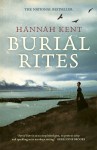
  • Hannah Kent’s Burial rites, a debut novel (my review) which is currently “in development” with Jennifer Lawrence signed on to star. It’s set in Iceland, hence my qualification regarding “Australian stories”.
  • Liane Moriarty’s Truly, madly, guilty and The husband’s secret have been announced or are in pre-production. Her Big little lies has already been made into a mini-series in the USA (2017), starring, among others, Nicole Kidman and Reese Witherspoon. A Los Angeles literary agent, quoted in The Australian (link above), says that “People are just so enamoured of the worlds she creates — she’s captured the zeitgeist of suburbia”.
  • Anna Snoekstra’s Only daughter, a debut novel just published last year and set in my home-city, has been optioned by Working Title, a partner of Universal Pictures.
  • ML Stedman’s The light between oceans was released in cinemas in 2016 (as British-New Zealand-American co-production).
  • Marcus Zusak’s The book thief (my review) was released in 2013 (as a German-American co-production).

Not a particularly original post, I’m afraid, but I didn’t want to miss a Monday Musings. I hope it’s been of some value, even if not particularly edifying.

I’d love to hear from readers here who can add names to this brief discussion!

Ali Cobby Eckermann, Too afraid to cry (#BookReview)

ANZ Lit Lovers Indigenous Literature Week bannerHaving reviewed Yankunytjatjara/Kokatha woman Ali Cobby Eckermann’s poetry collection, Inside my mother (my review) for Lisa’s ANZlitLovers Indigenous Literature Week, 2017, I decided to also read her 2012 memoir, Too afraid to cry. It filled in a lot of gaps, which is not necessary to appreciate or comprehend the poetry but which does deepen the understanding.

The memoir’s dedication starts with the lines:

this is a poetic memoir
a story of healing
not burdened by blame

And that is pretty well what it is. It’s not an angry book, so much as a sorrowful one. Sorrow about the abuses and losses that affected her childhood and early adulthood, in particular. The sorrow starts early, when she’s young, and abused. She writes of her uncle rubbing her leg inappropriately, and progressing to assault, though she doesn’t say that because she’s only 7 years old. However, while she may not have the language to analyse what was happening to her, she does have the language to describe the feelings:

I felt the icy wind inside my head begin to blow. I could not move. The icy wind is very dangerous.

This “icy wind” becomes a metaphor throughout the book for the abuse, for her memory of it, and for its impact on her psyche until she can no longer cry – “the ice block had turned to stone, and now there was no moisture left inside me”. Hence the title of the memoir.

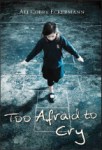
So, to summarise the book before I delve any further, Too afraid to cry is the story of a young indigenous baby adopted by a non-indigenous family. It’s a good loving family, with parents who, unable to have children, adopted four – two from the mission – and fostered another. But this family, as loving as it is, is a deeply religious one which does not understand the pain experienced by children from a different culture to its own. The result is that Eckermann is left to contend with racism and abuse that she, too, does not initially understand. Here, for example, is a schoolyard experience:

[I] didn’t notice that they had begun to form a circle around me, but I did notice that the icy wind was blowing inside my head and was starting to freeze my guts. Someone held me while other hands pulled my underpants down. There was a strange noise in my ears, like a faraway scream, but I could still hear the sounds of those doing the laughing and teasing. They said they wanted to know if I was the same as other girls. Someone laughed, saying they didn’t know if ‘boongs’ were different. I was frozen with the icy wind roaring through my body. I didn’t want to know what a ‘boong’ was.

Note the “icy wind” again. As childhood turns to adolescence, Eckermann, who had been an excellent student, begins to withdraw from her family and turns instead to alcohol and drugs to cope with the pain and sense of disconnect. It’s not a surprising story, but it’s a useful one for those who don’t understand what disconnection from one’s own culture can do, particularly in a society where difference is not tolerated. Eckermann learns much later, apparently, of the ridicule her adoptive mother had faced for having aboriginal children.

Anyhow, gradually, after many experiences, painful ones, risky ones and some more positive, Eckermann finds her way to her own culture, and healing begins:

Slowly the stone inside me turned to ice and then the ice began to melt. I felt real tears on my face for the first time in my adult life.

What’s remarkable about the memoir – something you may have guessed from what I’ve written – is her ability to get into her head at the time, to write from the point of view of the age and person she was when the things she describes happened, rather writing them as memory that she is now reflecting and commenting on. Of course the telling of the experience, the choosing of which experiences to tell, is a form of commentary, but I’m sure you get my point.

The memoir is remarkable for other reasons too. It’s told in 92 short anecdotal chapters, which are divided into four parts. The style is spare, with short, simple sentences. This is a book which shows rather than tells. Much of the commentary is conveyed through poems inserted between some of the chapters, such as “Heroin” between Chapters 45 and 46. It’s a short poem, like most of hers, and uses repetition and powerful wordplay on the word “arms”, to invoke prostitution, loving and heroin. The last stanza reads:

in their arms
they survive
a modern world.

Some of the poems appear again – the same or sometimes changed* – in Inside my mother.

Another aspect of the memoir, which adds to its sense of almost mythic universality, though is probably also done to protect individuals, is her minimal use of actual names. Her siblings, for example, include Big brother, Foster brother, and some relations are Aunty and Uncle. She does though name her mothers.

Too afraid to cry is an innovative and evocative memoir, which manages to convey hurt and pain, truthfully, but with a generosity that is humbling.

aww2017 badgeAli Cobby Eckermann
Too afraid to cry
Elsternwick: Ilura Press, 2012
224pp.
ISSN: 978-1-921325-29-8 (eBook)

* Changed, I think. I’m writing this in California, and my copy of Inside my mother is back in Australia.

Monday musings on Australian literature: Guest post from Bill of The Australian Legend

It’s been two years since I last published a Guest Post, for no any other reason than that the idea slipped off the radar as other busy-ness took over. However, during a recent email correspondence with (relatively new) blogger Bill, the idea re-popped into my head, and so I asked him, as he explains below.

First though, a quick intro. Bill appeared on the Australian lit-blog scene just over two years ago with quite a bang. Well, that’s a bit overly dramatic perhaps. What I mean is that he launched himself as a serious player in the lit-blogosphere, and one with a very particular agenda – to write about independent women, particularly independent women writers. Well, of course, I was interested in that and have enjoyed some good discussions here and on his blog ever since. If you’re likewise interested, I suggest you start with his About page and move on from there.  Meanwhile, let’s give the floor to Bill …

*****

Apart from my friend Michelle at Adventures in Biography who got me started on Lit.Blogging, Sue here at Whispering Gums was the first blogger I followed and who followed me. So I owe her a great debt, and feel guilty each time I think of the imaginary detective story where the private eye’s principal informant is the toothless derelict … Whispering Gums. (The real, and much nicer, origin of her name is here.)

It is a matter of great pride to me to be invited to do a guest post, and I’m only sorry that it is under false pretences. I was discussing (by email) with Sue some reviews I had put up on the Australian Women Writers Challenge site and I asked her in passing what she thought of biographies of women writers by men. My intended question was did she think the AWWC site should list them. Sue however thought I was asking her opinion of the biographies themselves, and promptly put it back onto me!

Do you remember the old BBC Radio show Just A Minute which was often used as a filler on Radio National? Well I feel like (the late) Derek Nimmo leaning in to the microphone to speak for 60 seconds on the life cycle of newts. But here goes, 1000 words on Biographies of Women Writers by Men, starting now.

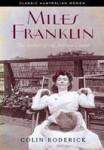
Colin Roderick, Miles FranklinI have reviewed two such biographies, Brian Mathews on Louisa Lawson and Colin Roderick on Miles Franklin. The former is a good example of a man being able to write sympathetically and insightfully about a woman, and the latter is not.

Walking up and down my own shelves I see I have numerous biographies by women. Three – Roe, Barnard and Coleman – on Miles Franklin, Barbara Baynton by Penne Hackforth Jones, Christina Stead by Chris Williams, two by Sylvia Martin – Aileen Palmer and Passionate Friends, ‘collected’ lives by Drusilla Modjeska, and by Dale Spender, Tomalin’s Jane Austen and Gaskell’s Charlotte Bronte; and I also have two more by men, Brian Dibble on Elizabeth Jolley (Doing Life which I really ought to have reviewed by now) and Ric Throssell on his mother, Katharine Susannah Prichard.

Of course, as you may know, I am an old white guy and so I am probably the very last person to be attempting to answer the implied question: does it matter? Well, in the case of Colin Roderick (1911-2000), one of the most influential figures in the Aust.Lit industry in the middle of the last century, his gender matters a great deal. He runs Franklin down both as a writer and as a woman:

[her] unshakeable conviction of physical inferiority and lack of physical attraction… converted her into a skittish coquette stringing two or three men along simultaneously and a synthetic man-hater… It forced her to become a defensively bellicose propagandist for feminist causes.

He routinely misstates her commitment to feminism, and writes that a determined suitor might have cured her flirtatiousness with a spanking. In the comments to my piece on Roderick, author Jess White, taking comfort from my description of him, describes Roderick’s biography of Rosa Praed, In Mortal Bondage, as “bizarre & bordering on fiction in places.”

The Roe biography of Franklin I would describe as asexual, but the earlier (in fact the first) biography, by Marjorie Barnard, which I haven’t read for a long time, does seem to me to reflect the fact that it is written by a woman. It starts (stereotypically!) by describing how Franklin dressed and how she looked: “her smile. Radiant, quick and gay, it transformed her. It was irresistible and in her old age still charming and youthful.” And ends with an analysis of love: “[Miles] held in her heart an impossible ideal of human relationships and when she found it unrealizable, not so much for herself as in the lives of others, she was bitterly hurt and disappointed”, which I have never been able to express half so well.

Unlike Roderick, Matthews takes Lawson’s feminism seriously and gives a good account of it. In fact, he takes Lawson seriously as poet, businesswoman, leading figure in the women’s movement at the turn of the century, and as a mother (with four difficult adult children!) Whether he adequately emphasizes with her, perhaps only a woman could tell. Unfortunately for Matthews there was very little evidence to say how Louisa spent her private life after leaving her husband – although we’re pretty sure she didn’t want to get pregnant again.

Marianne van Velzen in her account of Ernestine Hill turned to fiction to round out those areas where evidence was lacking, an approach which Matthews discusses and dismisses, and which I think detracts greatly from the usefulness of those autobiographies which resort to it.

At this point in my writing I went away for a couple of days, and by sitting, driving, with the radio off, was able to refine my ideas. We have seen that biographies may be ‘factual’ or ‘fictionalized’. Then, from a ‘gender studies’ point of view we may also categorise them as: Neutral, Masculinist, and Feminist. The problem of course with ‘Neutral’ is that old, conservative, white men regard their own point of view as neutral and all others as radical. But let us say for argument’s sake that ‘neutral’ is the gathering and presentation of historical material without (much) gender analysis, and that Jill Roe’s Stella Miles Franklin is an example of this. Colin Roderick’s biographies of Franklin and Praed are clearly ‘masculinist’, in that he devalues the opinions of the women he is writing about and ascribes to them motives which he wouldn’t ascribe to men. An example of a ‘feminist’ biographer might be Sylvia Martin who is exploring the space between spinsterism and lesbianism by looking into the lives of single women writers like Mary Fullerton.

A further division is suggested by Nathan Hobby who is both a blogger and PhD student writing a biography of Katharine Susannah Prichard. At the end of 2015 he wrote, “The best biographies, in my opinion, are generally written by biographers who care about biography as a genre rather than biographers who are simply passionate about their subject.”  So then we also have ‘serious’ biographers and the ‘simply passionates’. The latter definition clearly captures rellos such as Ric Throssell and journalists like Marrianne van Velzen.

If you are thinking I have drifted a bit far from the topic, I guess the questions I am trying to get to are: How many Australian women writers have been the subject of biographies by ‘serious’ men? And, assuming only Roderick actually attacks his subjects, how many of those biographies were sympathetic, and how many missed the point?

Now, all you Whispering Gum-nuts out there, it’s down to you. I’ve listed the four that I have. How many have I missed?

Thanks Bill for taking up my invitation – and for presenting some different angles for us all to think about regarding biographers and their biographies.

Ali Cobby Eckermann, Inside my mother (#BookReview)

ANZ Lit Lovers Indigenous Literature Week banner

Ali Cobby Eckermann, a Yankunytjatjara/Kokatha woman, has featured a few times on this blog, including in my review of her verse novel, Ruby Moonlight, and my Monday Musings post on her winning the valuable Windham-Campbell Prize this year. She is now appearing again as I review her poetry collection, Inside my mother, for Lisa’s ANZlitLovers Indigenous Literature Week, 2017.

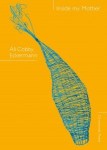
Ali Cobby Eckermann, Inside my mother

Inside my mother is a challenging read, particularly if you are an occasional reader of poetry like I am, but it’s well worth the effort – for the insights it offers, and for the pure pleasure of reading a skilled wordsmith. As the title suggests, the collection’s focus is mothers – and there’s a reason for this, one all too familiar to First Nations Australians. Cobby Eckermann’s family has a history of children being taken from their mothers – her mother was taken from her mother, Cobby Eckermann was taken from hers, and then Cobby Eckermann had to give up her son for adoption. You can hear and feel the pain of these losses in the collection, but you can hear more too, because while these losses frame the collection, Eckermann doesn’t confine herself to them.

The collection is divided into four parts, which build up in intensity until we reach the last part in which the focus is squarely on grandmothers, mothers and children – and the attendant losses.

The poems, though, are not all grim in tone, they vary in form, and they are held together by recurring motifs or ideas, specifically, mothers (of course), sky, earth and birds, all of which make perfect sense given the author, her culture and themes. The first poem is one of a small number of shape poems. Shaped like a bird’s wing, and titled “Bird song”, it references the power of Indigenous spirituality, and ironically comments on how it was so often co-opted by the church. It gets the collection off to a good start. Part 3 starts with another poem about birds, “Tjulpu”. It comprises two-line stanzas, with a separate final last line, and attests to the power of birds for the speaker. “Life is extinct/without bird song”, it starts.

The first First Nations Australian poet I ever read, probably like most Australians around my age, was Oodgeroo Noonuccal (or Kath Walker, as my still loved edition had her). When I started reading Inside my mother, I wasn’t immediately reminded of Noonuccal, but when I got to the devastating poem written in the voice of a woman who drinks too much, “I tell you true”, I immediately thought of Noonuccal’s poems and their effective blend of the personal and the political. The poem is a plea for people to not rush to judge when they see someone “drunk and loud and cursing/Don’t judge too hard ‘cos you don’t know/What sorrows we are nursing”.

This poem looks simple. It uses those traditional rhetorical tools of rhyme and repetition to produce a singsong rhythm which satirically mocks the seriousness of the story it is telling. The effect is mesmerising. The second verse starts:

I can’t stop drinking I tell you true
Since I found my sister dead
She hung herself to stop the rapes
I found her in the shed

Other poems deal with traditional culture (“Vengeance”), political issues (“Hindmarsh Island”, “Kulila”, “Oombulgarri“), love (“Love 22/06/10”), stolen generations (“Severance”, “First born”, “The letter”), to name just a few. The meaning of some of these, particularly those I’ve listed under political issues, depend on knowledge of the politics they reflect. I needed, for example, to look up Oombulgarri.

Some poems are more personal (or, personally political!), such as “Eyes”, to give just one example. “Which eyes will she need today”, the speaker asks? Those of terror, or submission, or of “wonder or contempt”. I won’t tell you which ones she chooses, but they’re appropriate for the overall tone of this collection, reflecting its sorrow and its grit.

And then some, as usually happens with poetry collections, I found a little obscure, although, as I reread many for this review, more of them fell into place. You can’t rush poetry.

While it’s not my favourite poem in the collection, the last poem in Part 1 is appropriate to end on because it addresses the theme of this year’s NAIDOC Week. It’s called “Lament”, and is another poem featuring two-line stanzas, and repetition. Of the six stanzas, three are the same: “I can not stop/must sing my song”. And why can’t he stop? Because he’s the “last speaker/of my mother tongue.” Language. So important.

aww2017 badge

Ali Cobby Eckermann
Inside my mother
Artarmon: Giramondo, 2015
90pp.
ISBN: 9781922146885


Kim Mahood, Position doubtful (#BookReview)

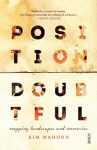
Kim Mahood, Position doubtfulKim Mahood’s memoir Position doubtful is a such a stimulating read. That might sound weird for a book whose subtitle is Mapping, landscapes and memories, but the thing is that it hits the spot in so many ways that are central to the issues confronting Australians right now. In other words, it’s about our relationship to place. Specifically, it’s about how kartiya* (non-indigenous Australians) comprehend our love for place, how we reconcile that vis-à-vis that of indigenous Australians, and how we go about respecting each other’s relationship with our land. Mahood may not explicitly generalise it like this, as for her it’s a personal journey – one exploring her experience of place and her reckoning of that with the indigenous owners – but I believe we can extrapolate her thinking to encompass something more universally Australian.

So, let me describe this personal aspect of the journey first, because this is, essentially, a memoir. It primarily covers the twenty years or so, from the mid 1990s, during which Mahood, chasing “unfinished business”, made annual trips back, from her Canberra region base, to the Tanami Desert region where she’d spent her childhood on a cattle station run by her parents, but which is now owned by the local Warlpiri people. She chronicles her desert art trips with Pam Lofts, the mapmaking she does to document country and stories, her various itinerant jobs, and most of all her relationships in the communities in which she stays, particularly Mulan (a Walmajarri community) and Balgo (where she works early on in the art centre).

Maps underpin her way of viewing and understanding place, and have become, also, the basis of her art practice. Early in the book, she writes:

In recent years I have made a number of maps with Aboriginal people, designed to reveal common ground between white and Aboriginal ways of representing and understanding country … The information marked on them is a mixture of Aboriginal knowledge – traditional camp sites, the birthplaces of individuals, the tracks of ancestors – scientific information about ancient shorelines and archaeological investigations, and the template of bores and paddocks and tracks and boundaries that represent the cattle stations and stock routes of white settlement. They serve different purposes – aboriginal, scientific, testimonial, environmental – depending on when and where they are used. Often there is a mismatch between my interpretation and the Aboriginal interpretation of their purpose.

So, this is a story about communication and negotiation, about sharing knowledge and understanding, about layers and multiple meanings, and above all, about respect for other while standing one’s own ground. The way Mahood navigates all this – the accommodations and understandings she works through, socially, personally, intellectually, scientifically, artistically and philosophically – is, really, what the book’s about. And it’s what makes it such a relevant read.

Now it’s my turn, I’m going to tell my side of the story

But of course, to write this story, she had to confront that issue I’ve raised here several times before of kartiya speaking for and/or about indigenous people. She addresses this in the last chapter (without specifically discussing the issue itself), when she describes visiting Mulan in September 2015 to tell them about her book. She organises several meetings, and reads “everything” that she thinks “might offend or upset people”. She is particularly anxious about her suggestion that the “popular version” of a massacre story she’s been told could be “a compilation of several distinct events” but she needn’t have worried. Her listeners nodded in agreement and pointed her to other people she could talk to.

This massacre “story” reminded me of another ongoing thread of mine – that one about “fact” versus “truth”. The truth is that massacres occurred – that’s not denied – but the evidence is now so murky that the various “facts” presented don’t always align. Does this mean the history, the recording of massacres, is wrong? I don’t think so.

a template of country infused with multiple meanings

The book is structured more or less chronologically following her trips, but she does move backwards and forwards occasionally – to finish an experience or flesh out a story. In between the more chronological, narrative chapters, are specifically reflective ones where she pauses to explore an idea. One is titled “Mapping Common Ground”. In it she articulates her ideas about language, maps, and being human. She says that “mapmaking was the common ground” on which she and her “Aboriginal companions put together our different conceptions of country”. She describes how maps “captured the imagination of the local mob”. They provided

concrete evidence of the knowledge that existed in the country, and they represented country in a way that everyone could understand, including the kartiya upon whom so much of the negotiations about land depended. … But the maps also aggravated the simmering arguments about who came from where, who owned which place.

And there, you see, is the politics. Politics is not Mahood’s focus but it is there, and the more you know about indigenous history, past and present, in Australia, the more you see it in the book. It’s there in the implications of changing a word from “custodians” to “ownership”, in the absence of middle-aged men resulting in matriarchies, in the “unintended consequences” of the 1968 equal wages bill, in the high prevalence of disease like diabetes, in who has or controls the money, and so on. It’s rather a mess, but “fixing” is not Mahood’s aim here, so she notes and moves on.

The title itself subtly references the underlying politics. Literally it means “of uncertain position” and is often used, for example, to indicate shipwrecks. However, when her father used the term, while navigating in the Tanami Desert, Mahood writes:

The term lodged in my mind as a metaphor for the way in which white Australians move through and occupy the country, especially the less accessible parts of it. And while the advent of satellite technology has given us the tools to find and map geographic locations with great accuracy, it seems to me that our position in relation to the remote parts of the country is more doubtful than it ever has been.

Metaphor, in fact, underpins much of how Mahood sees and explains the world, and I enjoyed that aspect of her writing, the way she finds some term or experience or object to reference bigger meanings.

Position doubtful is not exactly an easy read, but it’s a thoroughly engaging one. As memoirs go, it’s a strange hybrid, combining wonderfully warm and sometimes funny anecdotes about the people she meets and travels with, oral histories, indigenous creation stories, poetic insets, travel writing containing beautiful descriptions of landscapes, and of course her introspective reflections on who she is and what she’s doing. She allows herself to be vulnerable, and yet there’s a strong sense of self there too.

Kim Mahood, Gia Metherell

Bessie’s map, from the book and shown at CBR Writers Festival, 2016

I’ll close with some comments she makes regarding a trip to Lake Gregory with local owners and kartiya, including the palaeontologist Jim Bowler. It’s aim was to create “a cross-cultural document” showing “the interplay between  Aboriginal knowledge and western scientific knowledge in a form … easily accessible to both Walmajarri and kartiya“. She writes:

To have the ancient geography interpreted simultaneously through modern science and the Waljirri or dreaming, lays down a template of country infused with multiple meanings. While I don’t believe the creation stories in a literal way, they breathe animate life into the landscape in a form as potent and awe-provoking as the deep-time story Jim’s science tells. They complement rather than contradict each other.

And then, she talks of a discussion with Bessie, premier traditional owner for the area, in which they look at Bessie’s painting (see my image above) and the big painted map created during the project. As they talk, Mahood writes:

In putting together these two ways of conceptualising the same place, I experience a cognitive shift from which I will never entirely cover.

It’s a cognitive shift that is gradually happening throughout Australia – I hope – as we all come to terms with our different ways of seeing our history and our relationship to place and each other. This book makes an excellent contribution to this process.

Lisa (ANZLitLovers) appreciated this book too. Her write-up fills in some of the gaps I couldn’t cover without writing a tome.

aww2017 badgeKim Mahood
Position doubtful: Mapping, landscapes and memories
Brunswick: Scribe, 2016
320pp.
ISBN: 9781925321685

* Kartiya: white people (there is no one indigenous word for white people)