Sue Williams, Live and let fry (#BookReview)

Sue Williams, Live and let fryWell, 2018 is clearly “the year of the Mallee” here at Whispering Gums, with Sue Williams’ Rusty Bore Mystery, Live and let fry, being my third Mallee-set book so far this year. The others are Jenny Ackland’s Little gods (my review) and Charlie Archbold’s Mallee boys (my review). By the time I visit the Mallee – next year I hope – I should know it well, though I might stay away from Rusty Bore. Fortunately, that won’t be hard as Rusty Bore is fictional. I say fortunately, because who wants to visit a place known for murders? It would be like choosing to visit Midsomer!

Seriously though, on with the book, starting with the fact that it’s the third in the Rusty Bore Mystery series. I haven’t read the first two, but I’d say this one stands alone well. There’s enough recap for the new reader to quickly pick up the main characters and their relationship with the protagonist, Cass Tuplin, who’s an unlicensed private investigator as well as the owner-operator of the Rusty Bore Takeaway. I’m not a big reader of crime fiction, but I do watch a bit on TV, and I can say that Cass fits the mould of many TV detectives – private or not, licensed or not – in that she has a messy personal life. She’s clearly had a fling with Vern, the owner of the town’s only other shop, but is now with Leo, who’s doing good works in Bolivia but is staying away significantly longer than he’d told her he would. Cass also has two sons – Dean, a not-very-successful policeman in Mildura (a real place), and the-not-very-sensible Brad who’s waiting his court case for “disseminating false information to the market.” There’s affection between mother and sons, but it’s not without tensions – either because Dean is fussing over his mother’s safety, not to mention her unlicensed detecting, or because Cass is too focused on this detecting to listen to Brad well enough to hear what’s happening in his life.

None of this need be taken too seriously, though. As the back cover blurb says, Williams is “Australia’s answer to New Jersey’s Janet Evanovich.” I haven’t, I admit, read Evanovich – shock! horror! – but Daughter Gums has, so I know enough to realise that her crime novels are bright, breezy affairs. And so, certainly, is Live and let fry.

Now, what to say? This is rural crime, and it starts with the disappearance of the aforesaid Vern’s new lady friend, Joanne, from the neighbouring town of Sheep Dip. (There’s nothing subtle in the town names here – Rusty Bore, Sheep Dip, Muddy Soak, Hustle.) Cass, like any self-respecting unlicensed private detective, is reluctant to become involved but, of course, you know she will – and she does. Pretty soon, a murder occurs – not Joanne’s though – and the plot rapidly thickens as we move into the murky world of developers and environmental protection. This has our intrepid Cass driving backwards and forwards across the Mallee in her “little Corolla”, getting into more and more serious scrapes, worrying her sons, irritating the police, and not always making the right calls – as you’d expect.

All this gives Williams the opportunity to provide us with a picture of the Mallee and its inhabitants, which she does in language somewhat different from that we’ve seen in those other Mallee books I’ve read. Here is the Mallee, for example:

As I got closer to Mildura the eucalypt-and-orange desolation gave way to irrigation green, the dark green of orange groves, the brighter, flamboyant green of grapevines, the camouflage khaki of olive trees. I drink it in – green’s not a colour we get that much of in Rusty Bore.

And here is one of its inhabitants:

Nola’s eighty-two and usually quite mentally robust, with opinions carefully cryo-preserved since 1953.

The writing is peppered with gentle, affectionate mocking like this, along with broad satire of various contemporary issues and preoccupations, such as “coffee condescension” from city-siders, and Cass’s own “artisanal” food. We’re also told that

Leo’s import-export business in Muddy Soak folded after the African knick-knack trade fell victim to the decluttering trend.

And there are digs at politics and politicians, such as:

I stood at the desk and waited. A TV flickering behind Taylah showed a surging crowd of middle-aged people in suits. Mostly men, looked like politicians. Another leadership spill? A new Royal Commission? There’d been a lot of debate lately about whether air exists. “If you can’t see it, can’t smell it, it can’t be there.” The slogan of one of the newer political parties.

It’s not subtle, but then Williams’ goal is less social or political commentary than maintaining a light breezy tone and conveying character.

Now, though, back to Cass. Does she get her man (or, not to be sexist, woman)? Well, this is what I’d call “cheery crime”, so yes, one way or another, she does. In other words, without spoiling anything, it all comes out right(ish) in the end and Cass lives to fight (or not, as she chooses) another day. I’m not sure I’ll read another Rusty Bore mystery as I feel I’ve got its measure now, but for those who love light-hearted crime, particularly with an Australian flavour, then Rusty Bore could be just the ticket.

AWW Badge 2018Sue Williams
Live and let fry
Melbourne: Text Publishing, 2018
295pp.
ISBN: 9781925603514

(Review copy courtesy Text Publishing)

HC Gildfind, The worry front (#BookReview)

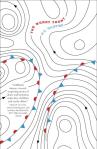
HC Gildfind, The worry frontThe first thing to note about HC Gildfind’s short story collection, The worry front, is its striking, inspired cover. Designed by Susan Miller, it features a weather map which captures the central motif of the title story, but it also suggests the unsettled lives which characterise the book. Gildfind, however, writing a post on the publisher’s blog ascribes another meaning too, noting the link between maps and stories. She says that both “guide us: they locate us in the present by showing us where we have been and where we might go in the future.” Both can also represent the abstract and concrete domains in which we live and operate – and where they might intersect.

But now, the book. It contains ten short stories and a novella, titled “Quarry”. All but one of the stories have been published before – in respected literary journals like Meanjin, Griffith Review, Westerly and Southerly. “Quarry” in fact appeared in the Griffith Review’s novella edition back in 2015. Gildfind then is an accomplished writer, and yet I hadn’t been aware of her. I am now, though, and I’m impressed.

I wasn’t completely sure that I would be, however, when I started the collection. “Ferryman” is a grim, gritty story about an angry man. I wasn’t sure that I was ready for such anger, albeit understandable in the circumstances – but the writing, particularly the rhythm and poetry of it, appealed, so I kept on reading. I’m glad I did, because the next story, the title story – “The worry front” – got me in completely. While the first story is told third person through a man’s eyes, this one is first person in the voice of an eighty-year-old woman. Like “Ferryman”, it’s a powerful story – but this time about a widowed woman who, all her life, has been dogged by “the worry front” but who, when confronted with the realisation that she has cancer, takes matters into her own hand with a breathtakingly original plan. It’s one of those stories where, at the start, you think, “is what I think is happening, what is really happening?” Well yes, it is.

And so the stories continue – varied in gender and voice, but often about something a little out of the ordinary or from a slightly offbeat point of view. The third story, “Gently, gently” is, for example, told second person. It’s a woman speaking about herself, but the second person voice engages us intimately in her life and feelings, drawing us in. It’s about a couple and the three hens they acquire. A chook goes missing – and the couple’s reactions highlight the tension in their relationship. Violence ensues. Like other stories in the book, it treads familiar ground but then turns a corner that forces us to see it from different angles. The relationship dynamic is not as simple as it might have first seemed. The next story, “Eat. Shit. Die” is told in two alternating voices – Leo’s in first person, and Nina’s in second. Both are lonely, and both have – hmm – gut troubles. Nina can’t stop eating, and Leo is having trouble with his s******g, but these are, as you might expect, also symptomatic of something else.

The birds and other animals, and food and eating, that appear in these two stories, recur in many of the book’s stories. Sometimes they reflect emotional states and other times they provide conduits for resolution. In the novella, “Quarry”, a stray black dog kickstarts our damaged protagonist Luke’s return from his agonising loneliness.

These recurring motifs underpin, as you’d expect, recurring themes. One is the interrogation, sometimes explicit, sometimes not, of what is normal. And another is that universal human one of longing for meaningful connection. Some characters eschew it because it hasn’t proven positive (“The wished for”), some are resigned to not having it because they feel unloved or unlovable (“Quarry”), and some actively seek ways of achieving it (“Solomon Jeremy Rupert Jones”). In most cases, this meaningful connection means a relationship with someone of the opposite sex, which, not surprisingly, raises the spectre of gender differences – which issue does run through many of the stories. There’s violence, direct or indirect, in several – but there’s nuance here rather than reliance on standard tropes or simple explanations.

Margaret River Press has produced Book Club Notes for the book. I’m not usually interested in such notes, because they don’t usually address my reading interests, but these are good. There are thoughtful questions for each story, ones that ask for the meaning or significance of events, symbols, actions, and/or characters, rather than the more simple “what would you do” sort of question that you often see.

There are also some general questions for the overall collection. One of these is: “Do you think it is important to ‘like’ a character when reading fiction?” This is a good question because it confronts this problematic issue head on. The worry front does not have many immediately likeable characters – but most characters ring true, and that’s the critical thing for me. We may not, for example, decide to do what the woman in “The worry front” does, but her feelings of dismay, and her resignation to and acceptance of things she can’t change, are true.

Another general question asks “which stories – or characters – provoked the strongest thoughts and feelings in you?” What a good question! I love that it doesn’t ask which one/s you like the best. For me, three stories in particular stand out – “Ferryman” because its anger was so viscerally shocking, “The worry front” because its protagonist’s plan is so surprising while her feelings are so comprehensible, and “The quarry” because Luke’s predicament engaged my heart from the start.

Not all stories grabbed me equally, but there are other memorable ones, including “What there is”. I related to its narrator’s searching for “the body-jolt of recognition” in books. Ironically, a significant jolt that she receives comes from another character, not a book:

You can never change the past. But you can always change how you feel about it.

However, it did come from a book, for me!

It’s hard to do a collection like this justice, but I liked it. I liked its surprising situations. I liked having my expectations unsettled. I also liked its design, and its careful order. It starts and ends with angry men, both of whose anger is caused by the actions of others, by, as Luke sees it, “f*****g men and f*****g women f*****g everything up for everyone forever” (“The quarry”). While it’s uncertain whether our first man will recover, Gildfind does leave us with a sense of hope at the end. I like that too.

AWW Badge 2018HC Gildfind
The worry front
Margaret River Press, 2018
288pp.
ISBN: 9780648027577

(Review copy courtesy Margaret River Press)

Robyn Cadwallader, Book of colours (#BookReview)

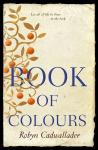
Robyn Cadwallader, The book of coloursWhat makes historical fiction worth reading for me is the exploration of universal ”truths”. Fortunately, Robyn Cadwallader’s second novel, Book of colours, does this, albeit I wish that some of the universals – gender inequity, class (meaning social and economic inequity), and fear of foreigners – were no longer universal! The book explores other more general universals, too, such as love, friendship, loyalty, courage, suspicion, fear. However, historical fiction needs something more of course. It needs to authentically evoke an historical time and place, preferably through engaging characters. Cadwallader does this too.

Book of colours is set in mediaeval England, specifically between 1320 and 1322, and concerns an illuminated book of hours. The narrative is structured into two main chronological threads – the story of the book’s creation and the people creating it, from late 1320 to 1322, and that of the noblewoman who commissioned it, Lady Mathilda Fitzjohn, after she has it in her hands, from May to September 1322. She lives in Hertfordshire, while the limners’ atelier is located in London, so we also see city and country life during this period. As the limner Gemma writes:

…let all of life be there in the book, from high to low, animal and monster, story and joke, devotion and dance … (from The art of illumination)

Now, I particularly like it when historical fiction writers provide some historical context to their story, preferably in an afterword, along with some references or sources. This Cadwallader does, with a four-page Author’s Note and two-plus pages of Further Reading. She explains the historical background, including that the period she chose encompasses the Great Famine and the Dispenser War, and she discusses where the facts are less well documented. The meaning of those bawdy or confronting marginal images in books of hours, for example, is little understood. Also, says Cadwallader, no women limners are listed in this period, but there is evidence that women did, in fact, undertake illumination. These notes support the novel’s political, socioeconomic and sociocultural context.

The story is told third person through three main perspectives: Mathilda’s and those of two of the atelier workers, journeyman-near-master Will Asshe and master-in-work-if-not-in-name Gemma Dancaster. The atelier is owned by Gemma and her husband John – well, actually, given the times, it is “owned” by her husband, but he inherited it from her father. Prefacing the atelier-based chapters are sections from the book The art of illumination which Gemma secretly writes for her apprentice son Nick.

“both beauty and chaos”

Towards the end of the novel, the widowed Mathilda – her rebel Marcher husband having been killed while fighting the Dispensers – realises that life is not “ordered” as she had thought but is, like the “delicate, bawdy and capering creatures” in her book, “both beauty and chaos.” It is this “beauty and chaos” that Cadwallader captures through her vivid characters. The atelier thread starts with the arrival in London of Will, a limner who is escaping something that happened in Cambridge where he had lived and done his training. As the story progresses we discover, of course, what that was, but all I’ll say here is that he’d been associating with a student named Simon who had filled his head with ideas about equality. These ideas make Will angry about “the rich and their ambitions” and resentful about “the marks of privilege” requested for the book of hours. He’s a bit fiery, our Will, and gets himself into several scrapes, all the while watched over by an animated gargoyle who represents, I’d say, Will’s conscience.

Meanwhile, Gemma, the would-be master limner, is frustrated about the inequalities she faces as a woman – particularly a woman having to cover for her husband who is, we soon discover, no longer able to draw and paint. Gemma, too, is aware of economic inequities. Southflete, the stationer and middleman who handles the commission, tells them that

the calendar pages must be beautiful scenes of life on the demesne, you understand … Chubby infants, well-fed peasants, colour, beauty …

Gemma is not impressed:

Beautiful. How, in a village farmer’s wife, would January be beautiful? Snow if the weather was kind, ice if it was not. And this past year, colder than ever. Frost that rarely lifted, and then only to snow or rain. London had clenched its teeth, frozen to the marrow, too cold to move. At least the cramped lanes and houses blocked some of the wind; what it was like in the country, she couldn’t bear to think.

She, like Will, makes her assumptions about their patron Mathilda’s life and values, but as is often the case, assumptions aren’t always completely right – and these too Cadwallader teases out as the book progresses.

There are other characters – including Gemma’s gentle husband, their quietly wise apprentice Benedict, and their son and beginning apprentice Nick. These, plus other residents of London’s book trade area, Paternoster Row, flesh out the story, adding depth to the narrative and to the history of this fledgling industry struggling to establish itself as a guild.

So, there’s beauty and chaos in life, but it is through their drawings that the limners convey their feelings and ideas. As the world changes around them – for reasons I can’t fully divulge – the limners draw and paint their reflections and reactions, their messages even, into the book. Both Gemma and Will remind Mathilda of who she is and of her responsibilities to herself and others, responsibilities that become more nuanced and more personal than their original simplistic view of the world at the start of the novel. The interplay between the artists’ ideas as they paint and Mathilda’s reflections as she considers their paintings is one of the joys of the book. It is as much through these, dare I say, “virtual communications” as anything, that our three main characters grow in understanding. It is through them, for example, that Gemma shares her feelings – feelings Mathilda doesn’t recognise as coming from any sermon she knows – about women’s need to stand strong in the face of men’s power.

Book of colours, in other words, is a delicious read, imbued with the life of a long-ago time but filled with people whose emotions, hopes and frustrations are very much our own. Latish in the novel, Mathilda realises that Will’s friend “Simon’s simple borders of right and wrong won’t hold. They leave no space to breathe.” This is the book’s message: to grow and change we need to expand beyond simple conceptions of right and wrong. We need to let each other breathe and be. Only then can true selves, true relationships and, hopefully, a true understanding of equity develop.

Note: Lisa (ANZLitLovers) loved this book, and Angharad Lodwick (one of last year’s Litbloggers) was also impressed. I also reported, back in April, on a Conversation with Robyn Cadwallader about this book.

AWW Badge 2018Robyn Cadwallader
Book of colours
Sydney: Fourth Estate, 2018
360pp.
ISBN: 9781460752210

(Review copy courtesy HarperCollins)

Vance Palmer, Battle (#Review)

Meanjin AnthologyVance Palmer’s short piece “Battle” is the first piece in this special Meanjin anthology. Meanjin is one of Australia’s longest lasting literary journals. It was founded by Clem Christesen in 1940. As publisher Melbourne University Press says, it has, since then, “documented both the changing concerns of Australians and the achievements of many of the nation’s writers, thinkers and poets.” This anthology contains, they say, “a broad sweep of essays, fiction and poetry published in Meanjin since the magazine began” which will give its readers “a sense of the debates waged in print over those seven decades and the growing confidence of the Australian written voice.”

I read Vance Palmer’s piece when I bought this anthology a few years ago, but planned then to review the anthology as a whole. Now, though, I think that some of the writers are worth featuring here on their own – just like those writers I choose to read from the Library of America offerings – so here is Vance Palmer!

I was first introduced to Palmer in my first year of high school when I read and enjoyed his best known novel, The passage. I have not, however, reviewed Palmer’s writing here (except in a Monday Musings), but he has appeared in this blog many times because of the significant contribution he (and wife Nettie) made to Australian literature in the first half of the twentieth century. They vigorously supported and defended the development of an Australian literature. They were also political – egalitarian, anti-Fascist. There’s a good introduction to him in the Australian Dictionary of Bibliography (ADB), which describes him as “a liberal socialist of the broad left.”

So, “Battle”. ADB’s biographer describes “Battle” as “a noble statement of war aims”. It is interesting to look at “Battle” now, from today’s perspective. Published in 1942, at the height of World War 2, its main point is to define what makes Australia and to argue that it is worth fighting for – all of which ties in with his interest in encouraging and promoting Australian literature.

However, despite his documented interest in and awareness of indigenous Australians, he falls into the trap of many of his time of thinking that Australia is a “young” country:

We have no monuments to speak of, no dreams in stone, no Guernicas, no sacred places. We could vanish and leave singularly few signs that, for some generations, there had lived a people who had made a homeland of this Australian Earth. A homeland? To how many people was it primarily that? How many penetrated the soil with their love and imagination? We have had no peasant population to cling passionately to their few acres, throw down tenacious roots, and weave a natural poetry into their lives by invoking the little gods of creek and mountain. The land has been something to exploit, to tear out a living from and then sell at a profit. Our settlements have always had a fugitive look, with their tin roofs and rubbish-heaps. Even our towns . . . the main street cluttered with shops, the million-dollar town hall, the droves of men and women intent on nothing but buying or selling, the suburban retreats of rich drapers! Very little to show the presence of a people with a common purpose or a rich sense of life.

“We have had no peasant population to cling passionately to their few acres, throw down tenacious roots…” No, we don’t but we have something more … we have indigenous people who have clung passionately to, and tended, this land for 60,000 plus years. (This is something that a young non-Indigenous Aussie school girl stood up for last week by refusing to stand for the Australian national anthem with its lines “for we are young and free.”)

It would have been good if Palmer had recognised this point too, but … that was then, I suppose.

Anyhow, he goes on to describe what makes Australia and Australians. There is, he says,

an Australia of the spirit, submerged and not very articulate, that is quite different from these bubbles of old-world imperialism. … And it has something to contribute to the world. Not emphatically in the arts as yet, but in arenas of action, and in ideas for the creation of that egalitarian democracy that will have to be the basis of all civilised societies in the future.

And here’s the other point I want to make – his faith in Australia as an example of “that egalitarian democracy that will have to be the basis of all civilised societies in the future.” That caught my eye, because it is something I believed of Australia, something that I thought, back in the 1970s and 1980s, we were actively working towards and achieving. Not so anymore, it seems.

Palmer concludes that he believes Australia will survive the war,

that we will come out of this struggle battered, stripped to the bone, but spiritually sounder than we went in, surer of our essential character, adults in a wider world than the one we lived in hitherto.

I wonder what he would think now? Perhaps he would remember that in the penultimate paragraph he admitted that we have “a share of the decadent that have proved a deadly weakness in other countries – whisperers, fainthearts, near-fascists, people who have grown rotten through easy living.” Some of these “have had power in the past and now feel it falling away from them.” However, “we will survive,” he believes, “according to our swiftness in pushing them into the background and liberating the people of will, purpose, and intensity.” Who are those people “of will, purpose, and intensity” now?

Vance Pamer
“Battle”
in Meanjin Anthology
Melbourne University Press, 2012
ISBN: 9780522861563 (eBook)

Laurie Steed, You belong here (#BookReview)

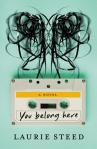
Laurie Steed, You belong hereMy first reaction as I started reading Laurie Steed’s debut novel, You belong here, was, “oh dear, another novel about a dysfunctional family”, but I was quickly disabused of that prejudice because while that is indeed the book’s “genre”, Steed writes it in such a fresh and engaging way, albeit seriously so, that I was soon engrossed in his Slater Family.

You belong here is an ambitious novel, spanning over four decades from 1972, when Jen and Steven are 16 years old, to 2015 when their grandchild turns 13. This is the span you’d normally find in a family saga of 400 pages or so, but Steed does it in under 250 pages. How does he do it?

First, though, the basic plot. It concerns the marriage and its subsequent breakdown, of the above-named Jen and Steven, and the impact on their three children, Alex, Emily and Jay. Australian author Melanie Cheng, whom I’m yet to read, says on the back cover that the family has “all the dysfunction of an Anne Tyler novel, but with a distinctly Australian feel.” Having read and loved Tyler’s novels (before my blogging days), I’d say this is a good call. Steed, like Tyler, deals with a very particular family – its idiosyncrasies, and shifting individual relationships – while also speaking to universals like love and loyalty, betrayal and breakdown, closeness and distance.

Now, back to the time span. The book is organised by chronological parts: 1972-1984; 1985-1995; 1996-1999; 2000-2002; and, 2015. To cover this ground it is, necessarily, episodic*. Each part comprises short, evocatively titled chapters, which contain scenes from a life, switching the point-of-view between the five main characters. These time-shifts (which aren’t all clearly signposted within the parts) and changing perspectives demand a level of concentration from us readers, but I didn’t find they slowed me down significantly. On the contrary, they kept me engaged and focused on the matter at hand – that is, on whose story I was reading now, what was happening to them and why.

A hairline crack. Small, but spreading.

So, the early parts of the book focus on Jen and Steven’s relationship, their falling in love and the subsequent stresses – three children in quick succession for Jen, and failure at work for Steven – which drive a wedge between them. Steed’s writing is evocative and tight – it has to be really – and I enjoyed it immensely. Take this description of Steven’s commute to his job at the airport:

Steven had lost track of time. Moments, hours, left scattered along the Great Eastern Highway while driving to and from work. Seconds entered in the till by an underpaid, overworked cashier. A day maybe two, left hanging in the change room at the airport. (Before a fall)

Or this of Jen, in the bedroom with Steven, after we discover she’s been having an affair:

She stared past him at the wall, beneath the windowsill. She’d seen it before, maybe weeks, months earlier. A hairline crack. Small, but spreading. (Wallpaper)

The staccato rhythm here is perfect. And Jen’s sadness is palpable.

As the novel progresses, the children grow up and we shift to their lives, with Jen and Steven receding somewhat from the narrative focus. Each child struggles in his or her own way to navigate the family and their place in the world. We are frequently devastated for them, while also applauding their will to survive. There are some lovely vignettes, such as a cricket innings played by Alex and his friend Walker. The whole is underpinned by pop-culture references to music and video games that were only vaguely familiar to me as a baby-boomer parent of late Gen-X early Gen-Y children. Knowing these better might have added to my appreciation of the novel, but I didn’t feel my lack greatly. That is, the novel seemed to work well for me anyhow.

The jerky, episodic structure may have grown out of the original short story concept, and for some it could result in frustration at not “knowing” the characters as fully as they’d like. But I thought it effectively mirrored both the family’s fractured relationships and the way they stick together despite it all. Over time, allegiances switch as particular stresses develop for one person or another, but the love between them, while it falters at times, comes through.

But then, Alex couldn’t make head or tail of any of it. He felt sad and sorry for his sister, his brother, and the fraught, familiar way that the family closed ranks when one began to sink. It felt tender if he touched upon it, like he’d picked up a peach and felt the bruise. (Skin I’m in)

Lest this sound a bit corny, let me say that this is a serious book. The impact on the children of their parents’ separation is unflinchingly exposed, particularly through mental health issues and the difficulties they face in forming long-lasting relationships. It isn’t a pretty picture, but the end, without giving too much away, suggests that with love, perseverance and loyalty, families can and do muddle through.

And so, a book that I thought at the beginning was just another novel about a dysfunctional family surprised me with its insights, warmth, relevance to us all, and above all, its writing pizzazz. Well-worth reading.

* WA writer-blogger Nathan Hobby’s review tells me that the book started as a short story collection, which makes sense. Lisa (ANZLitlovers) featured Laurie Steed in her occasional series on Debut authors.

Laurie Steed
You belong here
Margaret River Press, 2018
250pp.
ISBN: 9780648203902

(Review copy courtesy Margaret River Press)

Canberra Writers Festival 2018, Day 1, Pt 4: Indigenous Australians (2)

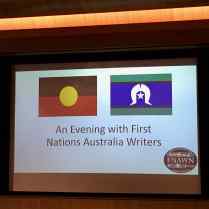
FNAWN screenMy first day of the Canberra Writers Festival ended with a bang – two hours with several of Australia’s top indigenous writers, organised by FNAWN (First Nations Australia Writers Network). It was a not-to-be-missed event, and was divided into two parts:

  • “Because of her I can”: poetry readings with Ellen van Neerven, Yvette Holt, Jeanine Leane and Charmaine Papertalk Green
  • Sovereign People – Sovereign Stories: a panel discussion with Kim Scott, Melissa Lucashenko, Alexis Wright, and moderated by Cathy Craigie

I liked this structure: the poets provided a emotive introduction to panel’s intellectually-focused discussion (not that the poems weren’t underpinned by intellect, mind you.)

“Because of her I can”

I’m just going to list the poets and their poems, as well as I can, as I did for the Canberra poets session earlier in the day. You may like to research them, though I’ve provided some links …

Jeanine Leane

Leane, whose unforgettable novel Purple threads I’ve reviewed here, started off – after acknowledging “the land never ceded” – with four poems:

  • Lady Mungo speaks“: first person poem about the egregious removal in a suitcase of Lady Mungo’s bones: “They spread me out like a jigsaw –/each piece an important part of their/puzzle of landscape and history.” Their puzzle!
  • “Evening of the day”
  • “River memory”: clever poem inspired by Gundagai’s Prince Alfred Bridge representing the idea of Australia’s “longest bridge, shortest history”, and subverting that to an indigenous perspective of “short bridge and long history”
  • “Canberra 100 years on”

Yvette Holt

Holt, a David Unaipon Award winning poet and academic, also read four poems:

  • “Progenitor”, an unpublished poem for her mother
  • “Through my eyes” (from Anonymous premonition), suits this year’s NAIDOC theme
  • ‘My mother’s tongue”, an unpublished poem about her mother who has dementia, exploring the issue of passing language between generations. I loved the line, “mother begins to scribble in her tongue in a language I do not understand”
  • “Motherhood”, a poem dedicated to her daughter Cheyenne Holt, when she was 7

Ellen Van Neerven

Van Neerven is a younger writer who has appeared several times in my blog. She dedicated her poems to black women in her life whom “she loves”:

  • “Orange crush”, for her mother: a found poem using lines from an inflight mag. (That got a laugh.)
  • “Bold and beautiful”, for her nanna: a humorous poem playing on her nanna’s love of the soap opera
  • “Home”, for her girlfriend Tia: a gorgeous love poem
  • “Queens”, for “the black women here tonight”

Charmaine Papertalk Green

New-writer-for-me Green hails from Western Australia. She read published and unpublished poems to honour women in her family:

  • “To the women of the land understand”: encouraging women to “remember your ancestors, remember your elders”
  • “My mother belonged to me”: included lines in language.
  • “Mothers letters”: I love writing letters, so loved this poem about her mother’s letters and the idea of “papertalking” but also that it’s “not just letters on paper”
  • “Grandmothers”: about mining ruining country
  • “Honey lips to bottlebrush”: about intergenerational cultural teaching.

You can hear her on ABC’s The Hub.

Jeanine Leane then returned to the podium, with the other poets, to pay tribute to Kerry Reed-Gilbert for her work with FNAWN, the Us Mob Writing Group, and in organising the Workshop coinciding with this Festival. She then read Oodgeroo Noonuccal’s poem “Song of hope.”

Sovereign People – Sovereign Stories

How lucky we were to have the above highly-respected poets, followed by, as moderator Cathy Craigie said, “three of Australia’s most dynamic writers”, Melissa Lucashenko, Kim Scott, and Alexis Wright (on the screen). The auditorium, which seats 300, must have been around three-quarters full, comprising indigenous and non-indigenous people from a range of ages. I hope they were pleased with the turnout. It certainly felt good to be part of it, which brings me to an important issue that came up in the Q&A and was also on my lips. It concerns what “white allies” can do. We can, of course, attend and support events like this, we can listen and learn from these events, and we can read the authors. It’s a challenge, though, I find to do this with the right tone – to not sound condescending, for example, when we try to “help” or empathise; to not assume we know or understand things we really don’t; to know how to communicate what we do know. It’s a fraught (though I recognise privileged) space to be in … but the important thing is to keep trying, isn’t it?

Anyhow, Cathy Craigie introduced the session, explaining that its focus was FNAWN’s theme for the week, intellectual sovereignty. She reminded us of the long history of Aboriginal and Torres Strait Islander writing in Australia – dating back to Bennelong’s letter to the Governor, and Maria Lock in the 1820s – and talked about the négritude movement in 1930s France, which promoted pride in racial identity.

The discussion then to-and-fro’d, with Craigie injecting questions regularly. I loved, again, the calm respect with which ideas were shared. There seemed to be a strong bond of “knowing” between the writers.

Melissa Lucashenko started by sharing some motivational quotes: “we are the authors of our lives” and James Baldwin’s statement that “freedom is not given, you take it.” She said Baldwin’s statement expressed an existential position – don’t wait, take power, and use it wisely.
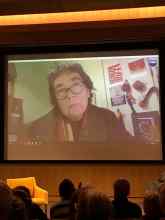
Alexis Wright

Alexis Wright

Alexis Wright spoke about Tracker (the subject of her Stella-prize-winning book Tracker) and his focus on sovereignty. He was a visionary, she said, who wanted a stable Aboriginal economy, to ensure a secure culture, a secure future. She, like Lucashenko, emphasised the “sovereignty of the mind.”

She then talked about writing Tracker, which she calls a “collective biography”. She couldn’t do a conventional biography, she said, because he was a community man, because “his archive, his filing cabinet was in the minds of other people”.

There was much discussion about Tracker, who was clearly powerful, and significant in the indigenous community, albeit not everyone always agreed with him. Wright said he was a complicated person, with a sharp mind, which he was happy to express. He said, for example, that Native Title was “not big black stallion but a donkey”.

“Stories, songs, language are sovereign” (Scott)

Scott then talked a little about his latest novel Taboo. He said he tries hard not to think about politics and Aboriginal discourse when he writes his fiction, but he is interested in reclaiming older Noongar narratives and bringing in deeper resonance of place. “Stories, songs, language are sovereign” he said, and communities need to keep them strong so they’ll survive. There has been a long attempt to destroy stories and songs but we are moving from “denigration to celebration”.

Lucashenko raised the issue, currently being nutted out, regarding cultural restrictions on writing about other people’s country. I pricked up my ears of course at this, because it’s related to the cultural appropriation issue concerning white people writing black stories. Lucashenko said when she writes her own country she’s writing with rich knowledge. Writing about anywhere else would be superficial.

Wright was more circumspect about this restriction/limitation. Carpentaria, which is based in her country, was the book she wanted to write, but she is still learning about what she wants to write. Her 26 January story could, she said, be set anywhere.

Scott said he wrote Taboo in the “language of the default country”. He feels accountable to the past, to the fragile massacre area he comes from. He wants to build it up, strengthen its heritage. (He spoke about this in last year’s Ray Mathew lecture.) Perhaps we should all deepen our regions he said.

It was interesting here, because Scott clearly feels the need to strengthen Noongar culture, particularly his own area of it, while Lucashenko believes the culture in her country in northern NSW is strong. She lives in a progressive region, and they have “good white allies”. (See “white allies” discussion in the Q&A.)

Wright said that her country, her people, are strong, making it hard to encourage people into militant fighting for rights.

“Pay attention, tell the truth, write towards power” (Lucashenko)

At this point, Lucashenko teased out more about her notion of sovereignty – which she also expressed in the GR 60 session I attended: it doesn’t have to be politics but “can grow inside our heads.” She then said the job of the writer in these times is to pay attention, tell the truth, write towards power.

Scott suggested that sovereignty of mind involved (included) being accountable to ancestors and descendants. He talked about Australian Renaissance being “not digging up shards of pottery but texts buried in the landscape.”

The writers discussed language, words, and meanings – the importance of unpacking language – around this point.  Lucashenko said that the Bundjalung word for river is also the word for story, making the river, in her novel Too much lip a powerful metaphor for stories. Wright said that river means many things in her country too.

Craigie asked whether there was a change in how people are seeing intellectual and cultural sovereignty. Lucashenko seemed positive about young people’s sense of sovereignty within themselves and in their relationship to country, but said the young need to be nurtured with vigilance. She believes the thing is to avoid being reactive, because reaction puts you in a powerless position. She also said it was important not to become distracted by people who “don’t understand us.” Focus, instead, she said, on learning your own civilisation.

Survival

In a way, the whole session was about survival, but around here it came into sharper focus. Wright agreed that young people understand sovereignty and can teach older people about being gutsy. She emphasised the importance of nourishing story, of making story and of keeping it straight. Indigenous people are going to need strong storytellers. We’ve been an oral culture, she said, and need to learn from how the ancestors survived.

Scott agreed that indigenous people need to look after themselves, to “learn the game” (at which point Craigie quoted an African writer on learning to assimilate without assimilating.)

Lucashenko argued that indigenous culture is a knowledge-seeking culture, which is how they have survived. Indigenous people have done what they needed, learnt what they needed – such as learning English – to survive. (This reminded me of my recent Arnhem Land trip, during which we learnt about interactions between indigenous Australians and the Macassans for a few centuries. Indigenous people learnt skills, such as making dugout canoes, and incorporated Macassan words into their languages.)

Lucashenko concluded that indigenous people need to cultivate confidence.

Q & A

One questioner asked an excellent question regarding being good white allies: How best do we consume indigenous stories while preserving their integrity:

  • This is the nub, said Scott. There’s no easy answer, but: be conscious, and have a desire to listen. There is a real issue for Scott in getting the balance right to ensure indigenous people aren’t disempowered by non-indigenous people becoming more knowledgeable about culture than indigenous owners.
  • Lucashenko said there’s a simple test: Who benefits? If the answer is not the indigenous person, then go away and think again.

There were more questions, but I’ll leave it here – with the reminder to myself to always ask:

Who benefits?

Canberra Writers Festival 2018, Day 1, Pt 3: Indigenous Australians (1)

I planned to write a combined post for my last two events of Day 1, given both focussed on Indigenous Australians, but there was so much that I wanted to document (for myself, at least) that I decided to devote a post to each. There was, though, some overlap in terms of issues discussed, albeit from different perspectives. One of these was the fraught issue of “sovereignty.”

GR60: First things first

Sandra Phillips, Paul Daley, Shireen Morris, and Melissa Lucashenko

Sandra Phillips, Paul Daley, Shireen Morris, and Melissa Lucashenko

This event drew from Griffith Review’s 60th issue, titled First things first, which I referenced in my recent introductory post on this year’s festival. The event was advertised to be a panel: Dr. Sana Nakata, Shireen Morris, Paul Daley and Melissa Lucashenko moderated by Dr Sandra Phillips, but, as happened with most panels I attended, one person – here, Dr. Sana Nakata – didn’t appear. It was, however, an excellent session, albeit one which reminded us of the challenges still ahead for Australia. Given the session’s topic, the panel clarified who was (Phillips and Lucashenko) and was not (Daley and Morris) indigenous.

The Voice

Moderator Dr Sandra Phillips was also the co-editor of First things first. She introduced the participants, and briefly described the edition’s genesis in the Uluru Statement from the Heart, and the implications of then PM Turnbull’s rejection of the Voice. She then asked the participants to explain why were taking part in the panel. From there the conversation flowed somewhat organically, with Phillips injecting the odd question as needed …

Melissa Lucashenko said that when it comes to the issue of sovereignty, she’s somewhere in the middle, because she can’t claim to speak on behalf of anyone, beyond her family, until there is an elected model.

Constitutional lawyer and advisor to the Cape York Institute, Shireen Morris, described the Uluru Statement from the Heart, which resulted from an extensive consultative process, as historic. There were only 7 dissenters out of 250 delegates, albeit some dissent is good she said. The delegates coalesced around the idea of a Voice, so Turnbull’s outright rejection has been devastating.

Lucashenko was not as positive as Morris, feeling that the process had been rushed. She wasn’t convinced that the delegates had a mandate to represent all indigenous people. Here, political journalist Paul Daley, responding to her question, confirmed that our original Constitution was developed over 10 years. Phillips, however, felt that the consultation had been thorough and, further, had built on significant work preceding it (and on “the back of continuous failure to resolve things”.)

So, there was a difference of opinion about the Uluru Statement but the discussion remained completely respectful and focused on facts, on exploring ideas, and on sharing information. Lucashenko reiterated several times that she is very interested in the Voice but is concerned about what it would look like, how it would be made representative. Meanwhile, she said, she exerts her own sovereignty everyday.

Morris’ focus is constitutional reform. She strongly believes that getting something significant into the constitution is important because it’s harder to change, harder to get rid of (than something legislated, like ATSIC!) But, of course, this means that change is hard to get into the constitution too! So, the Voice needs to be in the constitution. Morris argued that the idea of a Voice can be enshrined in the constitution (via a referendum of course) with the details worked out and legislated afterwards. This is not an unusual process – but, of course, it requires trust, doesn’t it? Morris said the government should be working on the details now!

Later in the session, Morris said she’d argue that First Nations sovereignty was never ceded, and that the constitution is “squashing down” their sovereignty. Substantial constitutional reform is need to allow First Nations sovereignty to shine through, to express itself in a permanent way.

Daley commented that the Uluru Statement asks Australians to walk together “for a better future” for all, but that the immediate response of the then Deputy Prime Minister was that “that’s not gonna happen” and, of course, Turnbull dismissed the request for a Voice to considered a few months later in a press release. There was general agreement that the “whitefella political position is dire.” There was fury that ATSIC was killed off because of concerns about corruption, but the same thing doesn’t see whitefella institutions pulled down.

Truth-telling

The other important issue coming out of the Uluru statement is the need for truth-telling. The panel discussed Daley’s contribution to GR60, his truthtelling essay “Enduring traditions of Aboriginal protest” about the two indigenous men, Jimmy Clements and John Noble, who “turned up for the royal opening of the new Commonwealth Parliament building in Canberra” on 9 May 1927. Their story has never been properly told, and indeed in most reports and stories, the two men have been conflated into one. Daley sees their attendance as their assertion of Aboriginal sovereignty and as part of ongoing indigenous protest and resistance. Daley said that we have a responsibility to educate ourselves, and that the story of the frontier is there in Trove (yes!), if you want it.

Phillips added that contemporary Australian history is so short, there is no excuse for our not knowing the full story of our country. She argued that literature (meaning, I think, forms like fiction and poetry) plays a role in the truth-telling process.

At this point there was discussion of Lucashenko’s latest novel Too much lip, which Phillips said was about Aboriginal family relationships, about history and how “what happened in the past is with us today.” Lucashenko added that her characters are living in an age of depression and anxiety, but “don’t be depressed,” she said, “be angry.” She talked about the challenge of making these “hard” stories funny. For her next project, she’d like to write about colonial Brisbane. Trove – and archives in general – abound, she said, with “stories of resistance.”

Phillips added, cynically, that despite all these stories we end with lead characters in films that are Red Dogs! (Oh dear, my Red Dog post is still in my top ten posts.)

Daley talked about the novel he is writing. It’s inspired by the 1948 American-Australian Scientific Expedition to Arnhem Land, and in it he explores how the expedition was seen by indigenous and non-indigenous people. He realises it’s a cultural fraught thing to do, but he will, he assured Lucashenko, get indigenous assessment of what he’s written.

Phillips noted that there’d been millennia of successful governance in this country, and 230 years of destruction and oppression. Repairing this needs time, but we all need to be part of the dialogue. Meanwhile, she hoped, the panel had provided some illumination of the issues we are all facing. Yes, it did, I’d say.

Q&A

This is getting long, and there were quite a few questions, so I’m just going to summarise some of the main points that arose:

  • ATSIC represented a minimum model of what indigenous people want/need but she, Lucashenko, has good memories of it. It was killed off because, she said, white people don’t like indigenous people managing resources.
  • The Constitution issue is currently at a complete impasse, because our current (white) politicians appear to have no will to engage with the Uluru Statement.
  • Indigenous groups don’t need to wait for the Federal Government to act and are in fact working at local, regional and state levels to forge agreements.
  • Representation models for the Voice to Parliament could vary across the country depending on the needs and desires of different indigenous groups.

Canberra Writers Festival 2018, Day 1, Pt 2: Two panels

My next two festival sessions were panels – firstly at the National Museum of Australia, and then after a quick jaunt over the lake, chauffeured very kindly by Mr Gums, at the National Library of Australia. This Festival is spread too widely, geographically speaking – but I’ve said that before …

The power, politics and passion of poets: John Foulcher, Melinda Smith & Lesley Lebkowicz, moderated by Geoff Page

Moderator and local poet Geoff Page (whose verse novel The scarring I’ve reviewed) introduced the session. Noting the theme, he said that despite recent events (which I explained in my first post) poets tend not to be driven by transient events. He then briefly reminded us of the depth Canberra’s poetic tradition, with the likes of AD Hope, David Campbell, Judith Wright, Rosemary Dobson, among others.

Canberra Poets

Lebkowicz, Foulcher, Page, and obscured by the curtain, Smith

To get us in the mood for the theme, he shared a few ideas about poetry: Shelley’s comment that poets are the “legislators of the world”; Auden’s statement that “poetry makes nothing happen”; and Brecht’s poem “The solution” in which he suggests it might be easier for “the government/To dissolve the people!”

Finally, he kicked off the session with an appropriate political poem of his own, one I’ve read and enjoyed before, “Call yourself a socialist.”

The session comprised three local poets reading a selection of their poems – some published, some not (yet) – that relate in some way to the alliterative theme of the three Ps! It was a well-moderated session – that is it flowed well and finished on time. I liked that the poets often explained the form of their poems, as well as why they’d chosen them. I will list the poems they read as best I can, from the notes I took while trying to hear the poems. I do enjoy hearing poets read their poems.

Lesley Lebkowicz

Lebkowicz is, Page introduced, a poet, ceramicist, reviewer, and essayist, whose work is informed by her Buddhist practice. Her next book is Mountain lion. I have reviewed her Petrov poems here.

Lebkowicz started by commenting that it was nice reading to “different people”. She then read her poems, some  humorous and most drawing on women’s experiences:

  • “Butter”: a humorous poem satirising British snobbery about “the colonials”, by positing dairy-farming kangaroos.
  • Suite of poems relating to Mary Alice Evatt, artist and the wife of HV Evatt (Australian politician and judge). Lebkowicz had initially wanted to write her Petrov poems from the point of view of women, but Vladimir Petrov’s voice proved too strong, so she developed this suite of poems separately. The poems reference either paintings by Evatt or information Lebkowicz gleaned from her research, and included “Mt Solitary”, “Portraits 1930s Various sizes”, “Notes for a picture jam/flood”, “Woman seated on grass”, and the delightful “Notes for a picture, falling towards earth” (which you can read here, including its inspiration – do click on the link, you won’t be disappointed.)

Melinda Smith

Smith has a long, impressive CV, including winning the Prime Minister’s Literary Prize for Poetry in 2014 with her collection, Drag down to unlock or place an emergency call.

She started by saying she didn’t normally write political poems so her first poem would be about passion! Smith is, I’ve discovered before, pretty cheeky (in the best way.) She said that traditionally she’s not been interested in poems about recent issues because, by definition, they don’t last, but she feels that our current times calls for such poems. Her poems were:

  • “Splinter”: a very cheeky poem equating a splinter in the hand with a love gone wrong.
  • “Baby Joy”: a found poem, using Barnaby Joyce’s words to frame an apology to the gay community that they’ll never get otherwise from him.
  • “Sweetheart”: a found poem using misogynistic statements from the Ernie Awards, mostly from the 1990s, but they are strangely still applicable – she said.
  • “Newcastle reckoning”: a personal and political poem about the shock of seeing yourself as you are. It has a powerful refrain – “Having neither sought nor received permission” – referring to being on indigenous land without permission.
  • “No bed”: ending again on passion. A poem I’ve read – and in fact quoted from – before.

John Foulcher

Foulcher has published eleven books of poetry, the last being 101 Poems. He has also been a teacher for 40 years – a microcosm of politics and power!

His poems were:

  • “Fits and starts”: a very entertaining poem comprising the first words said by teachers to classes, from Grade 7 to 12. It garnered many knowing laughs from the audience.
  • “Why Ryan is on detention”: written around 2000 and unfortunately still relevant in these “Me Too” days.
  • “A revolutionary calendar”, his poetic biography of the French Revolution’s Robespierre. Architect of “the terror”, he had none of the obvious vices, but succumbed to power, and he too ended up at the guillotine. All dictators know, Foulcher said, that eventually the terror turns on you. The poems follow a calendar, and Foulcher read three: “Ventos” (month of wind), “Floreale” (month of flowers), and “Thermidor” (month of heat).
  • “The woman who danced with Stephen Hawking”: a monologue about a different power, one of mind, passion and body.

Before I end on the Q&A, I’ll share a line from Lebkowicz’s “Notes for a picture, falling towards earth”:

 Art, she knows, makes all things better.

If only our politicians knew, eh?

Q&A

A questioner asked what advice – that you might not find in books – would the poets give to a poetry workshop. They said:

  • Foulcher said that there are two types of poems – the ones where you know what you want to say at the start (bad), and the ones where you work out what you want to say as you write (good)
  • Smith suggested that attendees be asked to find a feeling they can tap into.
  • Lebkowicz said be true to yourself, know what you feel and believe, be patient and write with integrity.

Another questioner asked about separating one’s own emotions from those of a character. Foulcher said it’s impossible, that you are always writing from within, and Lebkowicz admitted that for all her research into the Petrovs, the poems ended up revealing much of herself. Smith made the political point that you need to be careful about “whose microphone you are taking.” She has written in the voice of a dead 10th century Iranian, she said, and that was okay, because “my ancestors haven’t repressed her.”

The Prime Ministers 2017 Literary Award Recipients

Whiting, Lawrence, Orr and Cochrane

Whiting, Lawrence, Orr and Cochrane

The intended line-up for this session was Ryan O’Neill, Anthony Lawrence, Wendy Orr and Peter Cochrane, with  Sue Whiting as moderator. One of the main reasons I chose this session was to hear Ryan O’Neill, author of Their brilliant careers, but unfortunately his father had died necessitating his going to Scotland. I’m very sorry for him – but fortunately the session was very enjoyable, anyhow.

Whiting, the moderator, commenced by explaining the session’s aims, and then gave a brief history of the awards, which were 10 years old in 2017. They are among the best remunerated ($80K for the winner, at present) and are, uniquely, tax-free. She then asked the panelists to speak briefly about their prize-winning works:

  • Lawrence described his poetry collection, Headwaters, as a miscellany comprising various forms, and not having a particular thematic arrangement, but all represented a visceral reaction to the natural world. It’s eco poetry, though this is a new term for an old form! The poems are about the natural world, a place where animals, birds, trees and humans interact, and all explore the same problem, a physical reaction to the natural world, which his body and mind then work through.
  • Orr said that Dragonfly song, which is partly written in free verse, is the book she’s been writing all her life. It’s about an outcast, and has the standard hero tale trajectory. She realised later that it had come from her own sense of exclusion and despair after she’d broken her neck in a car accident.
  • Cochrane explained that his book, Colonial ambition: Foundations of Australian democracy had been commissioned for NSW’s Sesquicentenary. He talked about the challenge of finding drama, because there was “no mud and blood” as other countries have experienced. (I question that, given what we know about indigenous massacres.) Anyhow, he said he realised there was a great human drama, and there were rich biographical records for a few characters, including WC Wentworth, to tell it. To attract readers, he said, you need to include personal lives. Wentworth had the “driving theme of vengeance”, which of course got a laugh given last week’s political events.

Whiting then asked them to share how they felt when their names were read out as winners:

  • Orr was in a daze, not thinking it would be her. The neighbours gave her a party, she said, which hadn’t happened when she’d won CBC Awards.
  • Lawrence had forgotten the advice to have a speech prepared. He was ribbed by his mates because he’d been their maverick. The money was wonderful, he said, because poets don’t make money – they never expect royalties. But it is a “bit of a chook raffle.”
  • Cochrane, who won in 2007, has vivid memories because he was sitting at a table next to John Howard, and opposite Julie Bishop with her eyes. He was relieved to escape them when his name was called.

Whiting then asked about what the prize money, which is significant, meant to them. It was clear that it was meaningful for them all, but none, really, expressed that absolute depth of need that Luke Davies did when asked that question after winning in 2012, the first year poetry was included.

Whiting followed this by asking whether the prize had other benefits:

  • Orr said you need two forms of energy needed to write – physical (money) and emotional (including confidence). The award gave her confidence, largely because, although she’s lived in Australia all her adult life and although all her books have been written here, journalists are continually told they cannot call her an Australian writer. (What the?) This award took all that hurt away.
  • Cochrane said it brings your book to greater attention – both public and academic. He said the feedback from peers was surprisingly important. One reviewer said that it read like a fast-paced novel, which, in fact, encouraged him to write fiction, as he has now done.
  • Poet Lawrence was more circumspect, saying that “you would like to think a gold sticker would increase book sales, but sadly not.” It was, though, wonderful for his confidence, and awards like this do raise the profile of poetry, he said. Poetry is on the rise, he feels.

Q&A

One questioner asked about the fact that, of all the prizes, this is the only one that has had political interference controversies. The panel explained that it’s due to the terms of the award: the judging panel makes a recommendation to the PM. Those recommendations have normally been accepted, with three exceptions to date, the most egregious being Frank Bongiorno’s “red-carding.”  (Feudal behaviour, said Cochrane.) In the other two cases, the PM intervened to force a joint winner. The terms of reference need to be changed, the panel agreed.

Whiting followed this up by asking whether judging literary merit was fundamentally flawed, but this was not really explored – at least from the philosophical point of view. Lawrence did talk about the value of blind judging, and Orr said that awards are important because they increase sales, promote literature, and get the public talking. 

Another interesting session. More analysis would have been good – how diverse have these awards been, for example – but time is always an issue.

Canberra Writers Festival 2018, Day 1, Pt 1: A memoirist in conversation

It’s the last weekend August which means it’s the Canberra Writers Festival. This could become a habit. Wouldn’t that be nice – to have a regular writers’ festival here again, I mean. The Festival’s ongoing theme is Power, Politics, Passion, which is particularly appropriate this year, given last week’s shenanigans in Australian politics. (For those of you from elsewhere, we – though I use the term generally – managed to ditch yet another Prime Minister mid-term … but let’s not go into that now. The Festival is far more interesting.)

Do oysters get bored: A curious life: Rozanna Lilley in Conversation with Karen Middleton

Karen Middleton and Rosanna Lilley

Karen Middleton and Rozanna Lilley (against a bright background)

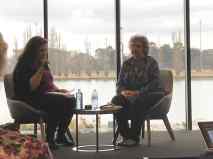
My first session was a conversation with Rozanna Lilley about her memoir Do oysters get bored: A curious life. The interviewer, political journalist Karen Middleton, has appeared here before when she was the “participating chair” of a panel at the Festival Muse in 2017. It was good to see her again.

Now, this was an interesting session because Lilley’s book caused quite a flurry in the media when it was published. I haven’t read the book – and unfortunately the National Library had sold out of copies – but I understand that it was intended primarily to be about her autistic son Oscar. An interesting topic, and one very much to the moment I’d say given the increased awareness of autism in our time. But, the thing is that Rozanna Lilley was also the daughter of writers Dorothy Hewett and Merv Lilley, who just so happened to live a determinedly libertarian bohemian life, one in which their two daughters, Rozanna and older sister Kate, were actively included. And by actively included, I mean they were “encouraged”, in this pro-free-love household to have sex from a very young age. Given the literary reputation of her parents, and the current awareness of sexual abuse of children and women, this issue captured the interest of commentators and reviewers. The “gutter press”, Lilley said, started talking about pedophile rings, but worse, I think, is that she also became the butt of trolling.

Fortunately, Middleton took a more measured approach to her conversation, and explored the breadth of the book’s subject matter, but she did start by asking whether there was a therapeutic element to writing the book. Lilley said that it wasn’t a “therapy” book, but that she was seeing a psychiatrist at the time she wrote the book, and that that had “opened up the past as a space for reflection”. However, she laughed, she had initially conceived of the book as a gently humorous take on her eccentric family – à la David Sedaris – but that a friend had suggested it was more Augusten Burroughs’ Running with scissors! It did, she admitted, become darker in spots than she’d initially planned.

Middleton also asked whether she felt any pressure to live up to her literary heritage. Lilly agreed there was an element of that, but, she said, it was also an advantage growing up in a literary household. It gave her “good cultural capital.”

Then we got to the original inspiration for the book, her son’s autism. Lilley, who is a social anthropologist and autism researcher, talked about her son’s diagnosis, and her response to this; about the value of diagnosis (saying that clinicians will usually only diagnose autism if they see distress and dysfunction); about mainstreaming; and about the impact of (adjustments you make) living with an autistic person. There was some discussion about the whole labelling issue, particularly given Lilley’s academic work is about “exclusion and stigma.” As she apparently tells in the book, she has sometimes explained her son’s autism when he has behaved inappropriately, which results in a positive change in people’s attitudes to him. The pluses and minuses of labelling!

The conversation then returned to Lilley’s parents and her experience as an exploited young child and teenager. She laughed about going from being a “serially exploited young teen… to a perimenopausal mother … doling out unwanted sexual advice to my son.” Middleton suggested that Lilley doesn’t really describe her feelings in the book about what had happened to her as a young girl. Lilley responded that it was “just the times”, but admitted that “men benefited” from the “strange sexual competition” between the mother and her daughters. She said that she has always stressed her agency, not liking to be seen as victim, but that in working through it with her psychiatrist she’s come to see it a little differently. But, she said, she is perhaps more generous about it all “on the page” than she is in real life.

At this point, Middleton asked her to read a poem, “Coming of age”, from the book. It ends, pointedly, on the line ”tangled in my billowing broken girlhood.” During the Q&A, Lilley said the voice of the book’s memoir pieces is more humorous, while the poetry comes more from pain and reflection.

Middleton asked more about Lilley’s parents and their impact on her. Her parents had, Lilley said, “enormous personalities”. She described her autodidact father as having “an unusual perspective on life”. In other words, he could be enormously kind but he could also be hard and cruel. However, she doesn’t like to see people as heroes or villains. Life is more complex, she said.

There was more, including in the Q&A, about

  • her son’s attitude to the memoir (she had discussed it with him);
  • the writing process (it took 7 years, she grew up in a family looking to for stories in their experiences, and she had kept diaries having being trained, as an anthropologist, in taking field notes);
  • the increase in diagnosis of autism (partly because the definition has been expanded, and partly because past mental retardation diagnoses are now diagnosed as autism, but definitely not because of vaccination, as the questioner wondered.)

She explained that some of the pieces in the book had been published before – including in Best Australian essays – but that these were all pieces about her father, not about her son. Publishers shy away from mothers writing about autistic children, fearing sentimentality – the-autistic-child-is-a gift-that-taught-me-a-lot trope. There’s some of that in her book she said, but she doesn’t believe she’s sentimental!

Finally, explaining why she had written the story of her childhood experience now, she said that she didn’t feel free to talk until her parents had died. Now, I know this is a touchy issue for some. It is of course the stuff of many memoirs, but is it fair or right to “air” such stories about one’s family or friends? I think it can be (with certain provisos), but what do you think?

All in all, a well-moderated, warm-hearted but thoughtful session that got my Festival weekend off to a good start.

Note: One of my blogger mentees attended this session too, and plans to explore another aspect of this “story”. When her post is published, I’ll share it with you.

Jenny Ackland, Little gods (#BookReview)

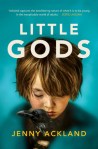
Jenny Ackland, Little godsThe universe is telling me something. Jenny Ackland’s Little gods is the second novel I’ve read in a few months that is set in the Mallee region of northwestern Victoria, the other being Charlie Archbold’s Mallee boys (my review). Interestingly, both are coming-of-age novels, both involve farms, and both have a death at the centre. However, this is where the similarity ends, because Ackland’s protagonist, Olive, is female – and younger than Archbold’s – and Ackland’s death is a mystery to Olive, whereas in Archbold’s novel it’s the mother’s death which precipitates the narrative.

There’s another difference too, and it’s that Mallee boys slots into YA fiction*, albeit also a good read for adults, whereas Ackland’s book, while seen primarily through Olive’s point of view, is adult fiction. This is because although it’s about Olive’s journey, the main focus is on the way children see adults and the way adults completely miss what is going on in children’s minds, on the decisions adults make about what to tell children and how children respond to what they sense isn’t being told.

So, the story. Set in the 1980s, it’s about Olive and her extended family in which two of the sisters, Audra and Rue, had married two brothers, Bruce and William, with a third sister and brother on each side left over. Thistle, the oldest (and left-over sister), lives with Rue and William and their three children, Sebastian, Archie and Mandy, on the sisters’ family farm. Audra and Bruce, with Olive, live close by in town. The action is split between the farm, which Olive’s family visits regularly, and Olive’s home in the neighbouring town.

The novel starts with a little un-named “prologue” which tells us that the book is about the year Olive turned 12, when she was “trapped in the savage act of growing up”. It’s about a time when, uncertain about what was going on, she reached back into her memory, only to find that memory can be deceptive. It all could have ended up far worse than it did. (We know it didn’t because here she is at the beginning, alive, apparently well, but contemplative!)

She is fierce

Anyhow, from this point, the novel proper starts with Olive knowing that the local community thinks her family – the whole family, I mean – “odd”, which entrenches her sense of outsiderness but also fires her sense of agency. The novel starts slowly, with the plot not picking up until we are well in. Before that, Olivia’s character and the family’s complicated relationships, particularly between the sisters, are carefully developed. Olive, we soon learn, is independent and, outwardly at least, sure of herself. She’s “fierce”, as the epigraph from Shakespeare warns us, and bosses her best friend, Peter, and her cousins around. But she is needy too. And for this there is Grace, a wild raven who provides her with the affection that she doesn’t get from her stylish but withdrawn mother. For all her faults, we like her.

And so, here’s Olive, on the cusp of adulthood, wanting to understand the world. She knows which adults in her life will nurture her, mainly Rue, and which are likely to answer her questions, and that’s mostly Thistle. However, Thistle has her own issues and sees life through a particular prism which is not always useful to Olive. It all starts to unravel when Olive finds pictures of her parents and Thistle all holding a baby which is not her. Through insistent questioning, she discovers that the baby had been her sister and had drowned. But, with no more details forthcoming, she decides the baby had been murdered and that she knows who is responsible. She determines on revenge, but needs help. Meanwhile, Thistle is working through her own lost baby problem … You could see this novel as a modern take on the Aussie “lost child” motif.

At times, as the narrative plays out, we are called on to suspend disbelief, but never quite beyond the point of no return. Some shocking things happen but others are diverted, so that by the end Olive has found some answers and also learnt some valuable lessons.

There are several joys in reading this book, one of which is the writing. Ackland’s descriptions of the Mallee, though brief, are evocative:

Sunday morning and the sun rose on the bleached Mallee landscape and lit the distressed greens and greys.

Even lovelier are the ways she captures people, their thoughts and relationships, particularly Olive’s of course:

Olive crept back to the bathroom. It was a startling thing to know that Cleg could be tender with Thistle the sister he seemed to like the least. Standing in front of the mirror it was as if there was an opening inside her mind. A plant, a tall one, with a green stem that was thick all the way around. At the top of it, a tightly bunched bloom, an enormous head of closed, wrapped petals. She didn’t know the colour of the flower yet but it was bright as if illuminated by special lights, and inside the heard of the flower was a quavering, shimmering sensation of coming movement and understanding.

Perfect.

Water also features throughout the novel, which is appropriate given the drowning, but it is also presented as a positive thing. For Olive, water provides respite. At the pool, “her body feels real in the water”, and, submerging herself in the dam she stays “under just to be in that cool distant place for a while longer.” The novel, in fact, opens and closes with references to Olive jumping off the high board – an effective image for the gutsy way she approached life, though the suggestion in the prologue is that having grown up she “was no longer a girl bombing off the high board.”

So, the book is about the challenges of growing up. Olive, the child, sees the world simplistically. People are “little gods” who “have power to do things, like make baddies pay”. She is shocked when lawyer Cleg sees it a little differently, is not so categorical about “bad people”. Ackland explores the clash between child and adult world views by teasing out responses to a family tragedy. As the secret comes out, as the truth is told, some family wounds heal and some lessons are learnt – but at what cost? I thoroughly enjoyed this book.

Oh, and as for what the universe is telling me … it’s that I need to make good my plan of some years’ standing to visit the Mallee!

Lisa (ANZLitLovers) also enjoyed this book.

AWW Badge 2018Jenny Ackland
Little gods
Sydney: Allen & Unwin, 2018
345pp.
ISBN: 9781760297114

(Review copy courtesy Allen & Unwin)

* Mallee boys has just been commended as an Honour Book in the Children’s Book Council of Australia Book of the Year for Older Readers Award