Marilynne Robinson, Gilead (#BookReview)

Marilynne Robinson, GileadOnce again I have reason to start a book post with a discussion of the title, this time Marilynne Robinson’s 2005 Pulitzer Prize winning novel, Gilead. Gilead, in the context of this novel, has a literal and metaphorical meaning, literal because it takes place in the fictional Iowan town of Gilead, and metaphorical because “gilead” may also connote “hill of testimony”. This novel is, in fact, dying minister John Ames’ testimony of his life and values, something he is writing for his 7-year-old son to read when he is older.

Given Gilead was published in 2004,  many of you may already have read it, as well as her next two books, Home and Lila, which form a trilogy and which, I understand, cover the same people but from different perspectives. I read Gilead with my reading group. Responses were mixed, but many of us were interested enough to want to read Lila, at least, to see her perspective.

I was, though, one of those who liked the book unconditionally. I agree that it’s slow to get into, which is not helped by the fact that it has no chapters, excepting one “break” heralding a slight change of pace towards the end. This break occurs when a certain piece of information comes out about John Ames’ namesake, Jack (John Ames Boughton). It is around here that the book picks up in interest significantly because there’s a suggestion that there might even be a plot! However, given I’m a reader who doesn’t seek a strong plot and that I rather like spare writing in a melancholic tone, I was engaged from the beginning. It is melancholic, naturally, because the narrator knows his life is running out, but it’s more resigned than sad.

So, what is this essentially plot-less book about? That depends a bit, I’d say, on each reader’s perspective. For some the book is very much about theology and religion. John Ames speaks a lot about the Bible, about biblical characters and stories, and about death and heaven. Some in my group found his religion old-fashioned. And it is to some extent – partly because of its era. Ames was born in 1880 and the book is set in 1956 when he is 76 years old. John Ames also talks a lot about his family – his father and grandfather, in particular, who were both ministers. Now, Ames’ being born in 1880 means his father, and grandfather, were alive during the Civil War. We learn quite a bit about the history of the abolitionists in Iowa and Kansas. Ames’ grandfather was a John Brown follower, which meant that he was not above using violence to achieve the goal. His father on the other hand, having seen what his father did and thought, was a pacifist. Most of my reading group enjoyed this historical-cultural aspect of the novel.

But, what interested me most about the book was what I saw as one of its main themes, which concerns how to live a good life. In the opening paragraph Ames refers to a conversation with his young son. He writes

I told you that you might have a very different life from mine, and from the life you’ve had with me, and that would be a wonderful thing, there are may ways to live a good life.

Late in the novel, he says something much simpler than this, though. He says

There are a thousand thousand reasons to live this life, every one of them sufficient.

Is he departing from the idea of living a good life, to just living your life? I’m not sure. Pretty much at the novel’s central point he refers a statement by theologian John Calvin that we are actors on a stage with God being the audience. Ames interprets this as suggesting that we are “the artists of our own behaviour”, and, further, that God as audience implies an aesthetic rather than (as well as?) a moral aspect to God’s reaction to us. He explores the implications of this role of God’s a little further but, while it was interesting, it’s not where I want to take this post. I have other ideas to share!

One of the main threads – or themes – in the novel concerns fathers and sons. This is pretty obvious, really, given the whole book is framed as a letter from a father to a son in which Ames discusses his wishes for his son, but it is amplified through his discussion of the relationship between his grandfather and father, and between his father and himself. The relationships are complex, as I’ve already suggested. But, his thoughts on these relationships are intensified by his relationship with and attitudes to his namesake, the aforementioned Jack, to whom he is a “second father”. It is Jack who forces Ames to reassess his values and attitudes, not to mention his understanding of his worth as a Christian minister.

The problem is that Jack has been a bad boy. He became involved with a young girl, and a child ensued – after which he scarpered, leaving his family to work out what to do. Ames struggles with his attitude to Jack – particularly when Jack reappears 20 or more years later, as Ames is writing this letter. He says of Jack’s behaviour:

It was something no honourable man would have done … And here is a prejudice of mine, confirmed by my lights through many years of observation. Sinners are not all dishonourable people. But those who are dishonourable never really repent and never really reform … in my experience, dishonour is recalcitrant.

This is his own view, he admits, because “no such distinction occurs in Scripture”. Again, we are turned to formal theology, but again, I am going to turn away. The point for me is, regardless of what is “scriptural” or not, that Ames struggles with the idea of forgiveness, of acting with grace towards Jack. This forms his inner conflict as he considers father-son relationships, his preaching to his flock, and his relationship with his old friend and Jack’s father, Boughton. It is through this conflict, through finally opening himself to really listen to Jack, that he comes to a deeper more all-encompassing idea of what “grace” and, within that, forgiveness, really mean.

And that’s why I liked this book. It’s quiet but it deals with the essence of what confronts each of us every day in our relationships with each other. It deals with the disquietude that we all confront when people don’t behave in the ways we think they ought. Ames describes it as “that old weight in the chest, telling me there is something I must dwell on, because I know more than I know and must learn it from myself.” You don’t have to be a minister or a Christian to have the same hope that John Ames does, which is “to die with a quiet heart”. Gilead is, to me, a lovely book about what it means to be human and to live with humanity.

Marilynne Robinson
Gilead
London: Virago, 2006
282pp.
ISBN: 9781844081486

Deborah Hopkinson, Ordinary, extraordinary Jane Austen (#BookReview)

Deborah Hopkinson, Ordinary, extraordinary Jane AustenWriting biographies for young children – like, for example, Deborah Hopkinson and Qin Leng’s Ordinary, extraordinary Jane Austen – is an interesting concept. Interesting, but not new. So, when I was given this gorgeous Jane Austen one for Christmas, I decided to research the topic – and what I discovered is that the picture book biography is a well-recognised genre. I shouldn’t have been surprised, I suppose, given the number I bought for the young Gums way back when.

Still, it got me thinking. A quick search of the ‘net retrieved a few interesting articles (mostly including lists of recommended books). In 2016, The Guardian writer Amy Coles wrote how “picture book biographies peel back history and bring to life the true stories of iconic figures for a younger generation of readers”. An obvious aim, I suppose, but there’s more to it than just knowing these people’s stories, as Coles continues:

there is a lot to be learnt from the trailblazing achievements of history’s most renowned and respected figures. But how did these inspirational figures reach their goals and what prompted them to act the ways they did?

Coles provides a list of ten books that cross “nationalities, careers and cultures”, books about well-known people like the inspiring young Malala Yousafzai and Nelson Mandela, and lesser-known ones (to me, anyhow) like Wangari Maathai, who is “credited with planting over 30 million trees in Kenya”.

I love the idea of these non-fiction picture books, but how popular are they, really? Well, it just so happens that they have quite a wide readership.

Writers Rumpus is the website and blog of a group of children’s book writers and illustrators from the Boston area. Their blog began with “a lively, opinionated, humongous rumpus of a critique group” that (still I gather) meets monthly in a library. Back in May last year, they wrote this (as an introduction to a list of new releases from the previous year):

We live in a most exciting time, one of abundant picture book biographies! At my library, patrons of all ages check out these books. One adult recently told me he found it an excellent way to learn about famous people—past and present—without spending precious time reading a full biography on each person. With their lavish illustrations and informative back matter, this is no surprise. Authors and illustrators of picture book biographies put in a lot of research time to make sure their facts are correct, recorded, and shared in an entertaining manner.

The list is appealing – and includes books about the composer Bach, the “father of children’s literature” John Newbery whose name now graces a significant American children’s literature award, the black woman ex-slave-cum-anti-slavery-activist Harriet Tubman, the Mexican artist Frida Kahlo, not to mention a whole raft of scientists, sports people and creators of all sorts.

Julie Just, writing in The New York Times last November, also praised picture-book biographies, stating that modern publishers are producing

beautifully illustrated and closely researched nonfiction books about unsung heroes as well as heroes we can’t read enough about. Best of all, if you like true stories, they include superbly detailed endnotes and suggestions for further reading.

And this brings me to the Ordinary, extraordinary Jane Austen, which is just such a book. The front cover flap describes the book as a “gorgeous tribute to an independent thinker who turned ordinary life into extraordinary stories”.

The book’s epigraph from Pride and prejudice – “For what do we live but to make sport for our neighbours and laugh at them in return” – will probably not make sense to its 4 to 8-year-old intended audience, but should give its adult readers a wry laugh. The book proper opens – not totally originally (!) – with

It is a truth universally acknowledged
that Jane Austen is one of our greatest writers.
But it might surprise you to know that
Jane lived a simple life.
She wasn’t rich
or even very famous in her time.

This would, I think, push the young reader a bit. How many would even have heard of Jane Austen to wonder whether she was rich or famous? Still, from the opening page they learn some basic facts about her. This first-page text is accompanied by a lovely sketch-illustration of our Jane writing at her famous little round writing table. The book goes on to provide the important facts of her biography. It gives a sense of Austen’s personality, including her love of humour, particularly at the “foolish things people sometimes did and said”. It tells us about the life of her times, including how people entertained themselves, which of course would interest children. It also explains how Austen wanted to write more realistic stories about the ordinary world, representing a significant break from the popular novels of the time – adventures and romances. Its conclusion, suggesting that Austen may have stood in her father’s library one day and thought to herself, “I can do this”, is nicely aspirational (as Coles suggests these books can be.)

The book concludes, as Julie Just notes many such books do, with some useful end matter: a basic but detailed enough timeline; a description of each of her novels including when it was published, and some “famous quotes”; some Internet sources to research; and a few books about Austen that the author used in her research.

You won’t be surprised to learn that this book didn’t teach me anything new, but as the friends who gave it to me know, I love adding to my Jane Austen collection of books, videos, CDs and other merch!

Do you have any favourite picture book biographies?

PS I should note that the annual Children’s Book Council of Australia Awards includes the Eve Pownall Award for Information Books, which would include picture-book biographies in its purview.

Deborah Hopkinson
illus. Qin Leng
Ordinary, extraordinary Jane Austen: The story of six novels, three notebooks, a writing box and one clever girl
New York: Balzer + Bray, 2018
ISBN: 9780062373304

Rebecca Skloot, The immortal life of Henrietta Lacks (#BookReview)

Rebecca Skloot, The immortal life of Henrietta LacksIn her extensive acknowledgements at the end of her book, The immortal life of Henrietta Lacks, Rebecca Skloot thanks “Heather at The Book Store, who tracked down every good novel she could find with a disjointed structure, all of which I devoured while trying to figure out the structure of this book.” Interesting that she looked at novels, particularly given our recent discussion regarding non-fiction that reads like fiction, but more on that later …

Many of you will have heard of the book, or, if not, of Henrietta Lacks, or of her HeLa cells? It’s a sort of hybrid biography-cum-science book about an African-American woman named Henrietta Lacks who died in 1951, and the immortal HeLa cell line that was and continues to be cultured from her cervical cancer cells. As Skloot writes, “these cells have transformed modern medicine.” The book was published in the USA in 2010. It won multiple awards, including, says Wikipedia, the National Academies Communication Award for “best creative work that helps the public understanding of topics in science, engineering or medicine”. In addition, the paperback edition was on the New York Times Bestseller List for 75 weeks.

I’ve described the book as hybrid, because the story (or biography) of Henrietta Lacks is just one of its threads. It also interrogates the complex intersection between race, class and ethics in medical research as well as broader ethical ramifications of issues like “informed consent” and the commercialisation of human tissue. Skloot, herself, says early in the book,

The Lackses challenged everything I thought I knew about faith, science, journalism, and race. Ultimately, this book is the result. It’s not only the story of HeLa cells and Henrietta Lacks, but of Henrietta’s family—particularly Deborah—and their lifelong struggle to make peace with the existence of those cells, and the science that made them possible.

If you haven’t guessed it by now, then, this book is another example of those non-fiction books that I like so much in which authors author takes us on their journey of discovery, in this case to understand the people and the science, the ethics and the law, behind this astonishing story. Skloot wasn’t the first so tell it, however – something she makes clear during our journey. Earlier stories include Michael Rogers’ 1976 article in Rolling Stone, and the 1997 BBC documentary, The way of all flesh, which you can watch on YouTube. I’m not going to spend a lot of time on the story of the cells, so if you want to know about them – read the book and/or watch this video.

Skloot explains her own fascination with Henrietta, from being introduced to her cells in high school, through those HeLa cells being “omnipresent” throughout her biology degree, to when she was in graduate school studying writing “and became fixated on the idea of someday telling Henrietta’s story”. It’s not surprising then that this book has been extensively researched – as evidenced by the Notes and Acknowledgements. (These two chapters make great reading in themselves.) It took around 10 years to write, not just because of this extensive research. A major issue which Skloot had to confront was the understandable suspicion and anger of the Lacks’ family, whose help she needed if she were to tell this story properly and with integrity. Their story is bound up in a long invidious history of research carried out on African-Americans, which is also detailed in the book.

“What do you mean, ‘everybody else’?!”

So, the structure. The book is divided into three parts – Life, Death, Immortality. In the first two parts, the story is told in two roughly alternating, chronological threads – one telling the story of Henrietta Lacks, her cells, and her family, from 1920 to 1973; the other tracking the early days of Skloot’s research from 1999 to 2000. In the third part, the two tracks coalesce into one chronological thread, starting from 1973 when the late Henrietta’s daughter-in-law, Bobbette, discovers quite accidentally via a friend’s brother-in-law, that Henrietta’s cells were being used in scientific research and had been since 1951. Until that point, no-one in the family had known that Henrietta’s cells were still “alive” and being used in research all over the world:

“What?!” Bobbette yelled, jumping up from her chair. “What you mean you got her cells in your lab?”

He held his hands up, like Whoa, wait a minute. “I ordered them from a supplier just like everybody else.”

“What do you mean, ‘everybody else’?!” Bobbette snapped. “What supplier? Who’s got cells from my mother-in-law?”

She is, to put it mildly, horrified – and rushes to tell her husband and thence the family.

Here, though, I’m going to return to the issue of writing non-fiction like fiction. There’s the use of narrative structure, of plot lines, to create some sort of tension for the reader – in this case it largely revolves around the lives and reactions of the family, particularly Deborah – while we are also learning drier “stuff” about the history and ethics of cell culture and medical research. The dialogue I’ve just shared is part of the main plot line concerning the family’s discovery of what had been happening to Henrietta’s cells.

Then there’s the use of evocative, descriptive language. Skloot doesn’t overdo this, staying, in the main, direct and focused – but there are enough little flourishes to keep the writing interesting, like “HeLa grew like crabgrass” or “tufts of hair like overgrown cotton sprouted from his head”. The imagery draws from the area in which it is set. And, there’s the use of dialogue. Skloot did carry out a lot of interviews over her decade-long research and often makes clear when she’s quoting from those – but not all dialogue comes from that research. Some is imagined – or what critics call “representative”. No-one, for example, would have recorded Henrietta’s exact words when she visited her gynecologist, but Skloot writes:

“I got a knot on my womb,” she told the receptionist. “The doctor need to have a look”.

How much more interesting that is to read than, say, “Henrietta visited her gynaecologist, telling the receptionist that she had pain in her womb that needed to be investigated.” I know what I’d rather read. Not only is dialogue more engaging, but if the writer gets the voice right it enhances our understanding of the character. One of the delights of this book, in fact, is our getting to “know” members of Henrietta’s family, and the dialogue plays a significant role in this. Not non-fiction readers, however, approve of this approach.

As I’ve already said, I’m not going to write a lot about the content of this book, fascinating though it is. It has been written about extensively; there are interviews with Skloot on the web; and for background there’s that BBC documentary. The book is now nearly a decade old. Cell research has moved on, but the story of the intersection of race and class with science and ethics is still relevant. Moreover, this is a book of history – the history of medicine. Close to home for me, for example, was learning that HeLa cells were involved in identifying the connection between the HPV virus and cervical cancer, and thence the development of the vaccine with which my reading group’s daughters were among the first in the world to be vaccinated.

All this makes the book well worth reading. There were, admittedly, times when the cell science got the better of me (and other non-scientific members of my reading group) but not enough to turn us off. Skloot’s courage, warmth and empathy with people out of her ken, the trust those initially fearful, angry people came to place in her, and her ability to tread the fine line between judgement and analysis when discussing actions of the past make this a special read. No-one in my reading group regretted this choice for our schedule. A fine way to end the year.

Rebecca Skloot
The immortal life of Henrietta Lacks
Sydney: Picador, 2010
ISBN: 9781742626260 (ePub)

Kate Chopin, Her letters (#Review)

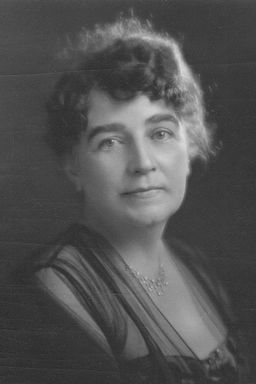
Kate Chopin

Kate Chopin (Public domain, via Wikipedia)

There are a few American authors who, when they pop up as a Library of America (LOA) Story of the Week, I try to read. These include Edith Wharton, Willa Cather and Kate Chopin. I don’t always manage to read them, but I have read the latest Kate Chopin story they’ve published, “Her letters”. And my, what a powerful one it is. Yes, I know, most of her stories are powerful, but this is certainly up there.

The story is pretty simple, plot-wise, though I shall avoid spoiling it as you may wish to read it from the link below. It starts with a woman, sitting by a “generous wood fire … in an ample fireplace” though outside is “a leaden sky in which there was no gleam, so rift, no promise”. She’s decided that she needs to destroy some letters that, we soon realise, relate to an adulterous affair. She’s been meaning to do this for four years in fact, but they’ve “sustained her … kept her spirit from perishing utterly”. However, she believes her days are numbered and, like many diary-writers and letter-owners, she fears their impact on those left behind, particularly on one “near to her, and whose tenderness and years of devotion had made him, in a manner, dear to her.” Her husband, in other words. The “in a manner” here is telling, isn’t it?

But, she can’t do it. Chopin’s description of her pain at the idea of losing them is visceral. What should she do? She lights on a solution, which is to leave them “in charge of the very one who, above all, should be spared knowledge of their contents.” So, she ties them back up, and leaves them with this note:

“I leave this package to the care of my husband. With perfect faith in his loyalty and his love, I ask him to destroy it unopened.”

Of course, she does die first, and he finds the bundle of letters with the note. (On a day much like that day we’d met her: “The day was much like that day a year ago when the leaves were falling and rain pouring steadily from a leaden sky which held no gleam, no promise.”) What do you think he does?

It’s another powerful story from Chopin, about love, passion, adultery – and also honour and trust. It is a story of its time, but there’s a universality to it too. What is so good about it, though, is the controlled way Chopin unravels the plot, and her language. It’s a little full-blown to our ears, perhaps, but she sustains melancholic tones so well, while at the same time conveying character and emotion.

Without spoiling the ending, I’ll share another excerpt. When the husband finds the bundle of letters, he guesses, of course, that they contain a secret, one that may unlock to him something about this wife whom he’d known “to have been cold and passionless, but true, and watchful of his comfort and his happiness.” He’s affected, but he ponders:

… she had embodied herself with terrible significance in an intangible wish, uttered when life still coursed through her veins; knowing that it would reach him when the annihilation of death was between them, but uttered with all confidence in its power and potency. He was moved by the splendid daring of the act, which at the same time exalted him and lifted him above the head of common mortals.

The conclusion is predictable when you get there, but Chopin leads you carefully along with the husband as he works through the problem. The story has no simple answer, and certainly no condemnation, which is Chopin’s way. She doesn’t judge or pontificate. Rather, she leaves it open for (or, forces!) the reader to consider the ways in which our actions affect others, not to mention the issue of love, passion and marriage, and the accommodations we do or don’t make.

As with other stories by her – including “Fedora”, the last one I reviewed – Chopin didn’t immediately find a publisher for “Her letters”. LOA says:

When she finished the story in December 1894, Chopin sent it off to The Century, which had published several of her previous submissions. By this time Chopin was a well-known and respected writer, but the story was rejected—almost surely because it dealt with a woman’s adulterous affair. The magazine’s editor, Richard Watson Gilder, “felt that fiction should be pleasant and avoid the horrifying, the indelicate, or the immoral,” as Chopin scholar Per Seyersted puts it.

Vogue, though, had no such compunctions – and published it as they had other previously rejected stories of hers. One day I’ll read a biography of her …

Let me know what you think, if you read it (just 8 pages) at the link below.

Note: My other Kate Chopin reviews are A pair of silk stockings, After the winterA respectable womanDésirée’s baby, Morning walk and Fedora.

Kate Chopin
“Her letters”
First published: Vogue, April 11 and 18, 1895
Available: Online at the Library of America

Carson McCullers, Home for Christmas (#Review)

Carson McCullers, 1959

Carson McCullers, 1959 (photo by Carl Van Vechten, Public domain, via Wikimedia Commons)

As you will guess from the title of this Library of America (LOA) Story of the Week, I meant to post on it closer to Christmas Day than I have in fact achieved. I chose it for two reasons – firstly the obvious seasonal one, and secondly because my first Carson McCullers post was an unusual piece and perhaps not completely reflective of the writer she was. Her story “Home before Christmas”, while nothing like her best-known novels, does get us a bit closer to them.

First, though, some background. LOA’s notes tell us that the story, written in 1949, was the first of a few essays McCullers wrote for magazines like Mademoiselle and Redbook. McCullers’ biographer, Virginia Spencer Carr, says, according to LOA, that “even as a preschooler Carson would be asked what she wanted and the answer was, ‘I want book—lots of books, Mama’.” I suspect many of you reading this will say the same about yourselves. I know I would!

LOA shares a couple of other stories about the adult Carson and gift-giving – including one that resulted in such a kerfuffle that someone was written out of a will, and another involving Truman Capote. However, they take us further away from the point of THIS story.

“Home for Christmas” was apparently commissioned by Mademoiselle for its 1949 Christmas issue, and was published alongside pieces by food writer MFK Fisher and novelist Jessamyn West (whom I plan to cover here one day via the Library of America). LOA chose to share McCullers’ piece this last Christmas because 2017 was the centenary of McCullers birth.

Now I said in my opening paragraph that this story, although nothing like her best-known novels, does connect us a little with them. Firstly, an autobiographical piece, it describes life in a southern family, but more significantly, like The member of the wedding, it is seen through a child’s eye. It is not like her novels in the sense that it is not Gothic, and nor does it deal in any major way with the loneliness or “outsiderness” that I remember from her oeuvre – though there is a touch of melancholy in it, all the same.

In some ways, it’s a traditional story about childhood yearning for Christmas. It begins in August with our young first person narrator, that is, Carson, pondering Christmas, and it concludes, just after Christmas, with her yearning for the next Christmas. In between, we hear about the buying of Christmas presents, the cooking of Christmas food, and how Christmas day itself was spent. But, there is also a little unifying theme running through this – the “mystery of Time”.

In the second paragraph, it is August and our narrator is up a tree thinking:

I did not want to talk with my brother. I was experiencing the first wonder about the mystery of Time. Here I was, on this August afternoon, in the tree-house, in the burnt, jaded yard, sick and tired of all our summer ways. (I had read Little Women for the second time, Hans Brinker and the Silver SkatesLittle Men, and Twenty Thousand Leagues under the Sea. I had read movie magazines and even tried to read love stories in the Woman’s Home Companion—I was so sick of everything.) How could it be that I was I and now was now when in four months it would be Christmas, wintertime, cold weather, twilight and the glory of the Christmas tree? I puzzled about the now and later and rubbed the inside of my elbow until there was a little roll of dirt between my forefinger and thumb. Would the now I of the tree-house and the August afternoon be the same I of winter, firelight and the Christmas tree? I wondered.

You can see biographer Carr’s point about books can’t you? Anyhow, again, I suspect many of us have pondered Time in this way. McCullers doesn’t labour the point but it pops up a few more times in the article,  including the notion of time behaving differently for different people. “How”, she writes, “could it be that when she [her sister] opened her eyes it would be Christmas while I lay awake in the dark for hours and hours? The time was the same for both of us, and yet not at all the same.” There’s also a delightful little – almost throwaway – line about how her father would manipulate the clocks to enable them to get up early on Christmas morning but not too early for the parents.

“Home before Christmas” is not a particularly deep story/article, but then as an article for a Christmas edition of a magazine, it probably wasn’t meant to be. It is, however, an enjoyable read and, while presumably part of that bread-and-butter work that writers do to survive, it also provides some insight into a significant writer of, and from, America’s south.

Carson McCullers
“Home for Christmas”
First published: Mademoiselle, December 1949
Available: Online at the Library of America

Viet Thanh Nguyen, The sympathizer (#BookReview)

Viet Thanh Nguyen, The sympathizerA cover blurb on my edition of Viet Thanh Nguyen’s Pulitzer Prize winning novel, The Sympathizer, captures the novel perfectly when it calls it “intelligent, relentlessly paced, and savagely funny” (Wall Street Journal). I loved reading it. It’s quite coincidental that I read this straight after Hoa Pham’s Lady of the realm (my review) but they make an interesting pairing because both deal with the Vietnam (or American) War and its aftermath, both are written in first person from a Vietnamese character’s point of view, and both question what happens when revolutions win. But, their approaches couldn’t be more different.

The sympathizer starts with an in-your-face statement by a never-named narrator: “I am a spy, a sleeper, a spook, a man of two faces.” It is April 1975 and the war has ended with the capture of Saigon by the North Vietnamese Army, but in the second paragraph we discover something else about our narrator. He is not talking to us but to a “Commandant”. So, where is he, and why is he talking to a Commandant? We don’t fully find out until near the end, although we soon discover that he is being held captive and is writing his “confession”. The story he tells, the story we read, is his confession. And what he confesses to is his life as a North Vietnamese mole in the close employ of a South Vietnamese General.

In this role, he leaves Saigon in the chaotic evacuation and ends up in Southern California, still working (now unpaid) for the General, while at the same time sending covert reports back to his “aunt” in Paris. In other words, in the USA, he maintains his life as a man of “two faces”, a man who is “able to see any issues from both sides”. He can do this, not only because of his role as a mole, but also because he is a bastard, the son of a Vietnamese woman and a French priest who had seduced her and had never acknowledged his son. With feet in both camps – the Orient and the Occident – he is well-placed to comment on their respective cultures and actions while, at the same time, symbolising their conflicts, confusions and misunderstandings. Near the end he says:

I was always ever divided, although it was only partially my fault. While I chose to live two lives and be a man of two minds, it was hard not to, given how people had always called me a bastard. Our country itself was cursed, bastardised, partitioned into north and south, and if it could be said of us that we chose division and death in our uncivil war, that was also only partially true. We had not chosen to be debased by the French, to be divided by them into an unholy trinity of north, centre and south, to be turned over to the great powers of capitalism and communism for further bisection …

What makes this book such a great read – besides its heart and themes – is its writing. Nguyen migrated to the USA with his parents when he was 4 years old. In the notes at the back of my edition, he describes growing up in a Vietnamese enclave in California, and how he’d decided that he couldn’t live life well with two languages, so decided to “master one and ignore the other. But in mastering that language and its culture, I learned too well how Americans viewed Vietnamese”. This seems to the main driver for this book – to tell a story about the Vietnam War from a Vietnamese perspective – but his aim is wider than that too. It is to comment on war, on its futility, and on the way American culture seems to thrive on it.

The first chapter introduces us to the central feature of Nguyen’s writing, satire, and my, it shows how well he mastered his adopted language. If the pace is relentless, as the Wall Street Journal says, so is the satire. Its targets are broad, and non-discriminatory, though, admittedly, American life and culture bear the major brunt. In Chapter 3, he discusses prostitution:

I am merely noting that the creation of native prostitutes to service foreign privates is an inevitable outcome of a war of occupation, one of those nasty little side effects of defending freedom that all the wives, sisters, girlfriends, mothers, pastors, and politicians in Smallville, USA, pretend to ignore behind waxed and buffed wall of teeth as they welcome their soldiers home, ready to treat any unmentionable afflictions with the penicillin of American goodness.

The language is sly and wry, as our narrator of the divided-soul teases us – provokes us – again and again with dualities and paradoxes. Literally, he is a communist sympathiser, but his true sympathies are broader. “Although it’s not correct, politically speaking”, he says, he feels “sympathy” for the South Vietnamese poor who were attacked by their own soldiers. “No one asks poor people if they want war”, he writes.

And so the book continues. There are comic set-pieces such as his role as a Vietnamese expert on the making of a film that reads very much like Apocalypse Now. The experience teaches him that not controlling the way you are represented results in “a kind of death”. There are also awful scenes of torture and violence, including those where he is ordered by the General, even in the USA, to eliminate apparent opponents. He says of the General’s plans:

The General’s men, by preparing themselves to invade our communist homeland, were in fact turning themselves into new Americans. After all, nothing was more American than wielding a gun and committing oneself to die for freedom and independence, unless it was wielding that gun to take away someone else’s freedom and independence.

This idea of “freedom and independence” is the complex conundrum that underpins the fundamental irony of the book, from its opening chapters when Ho Chi Minh is quoted as saying “Nothing is more important than independence and freedom”. What these mean, what people do in their name, and why so often they are taken away by the very people who called for them, are scrutinised by Nguyen via his narrator.

The sympathizer is, in many ways, a bitter novel, because it sees clearly into the human heart, and its messy, divided nature, its “moth-eaten moral covers” – but the bitterness is offset by a sense of resilience and a belief that it need not be like this. A big thanks to my Californian friend Carolyn for sending me this.

Lisa (ANZLitLovers) was also impressed by this novel.

Viet Thanh Nguyen,
The sympathizer
New York: Grove Press, 2015
382pp.
ISBN: 9780802124944

William T Hornaday, The bird tragedy of Laysan Island (Review)

William Temple Hornaday (1854-1937), whose article “The bird tragedy of Laysan Island” was a recent Library of America (LOA) Story of the Week offering, is a tricky man to write about. Originally a taxidermist, he became one of the pioneers of the wildlife conservation movement in America after he realised, around the 1880s, the dire situation regarding the country’s bison population. In this LOA article,  published in 1913, he chronicles the bird massacre on Laysan Island and the role played by President Theodore Roosevelt in helping to end the plumage trade. But he wasn’t without controversy, of which I’ll write more a little further on.

Laysan Island

Laysan Island. By Robert J. Shallenberger, U.S. Fish and Wildlife Service (http://www.doi.gov/photos/06152006_photos.html) [Public domain], via Wikimedia Commons)

“The bird tragedy” is a powerful piece which starts by describing the island as “sandy, poorly planted by nature, and barren of all things likely to enlist the attention of predatory man” but as the home of many varieties of birds, including the “Laysan albatross, black-footed albatross, sooty tern, gray-backed tern, noddy tern, Hawaiian tern, white tern, Bonin petrel, two shearwaters, the red-tailed tropic bird, two boobies and the man-of-war bird.” It was a “secure haven” for them, and, since 1891, had been viewed as “one of the wonders of the bird world”.

But, along came “man, the ever-greedy” looking for ways to make money, first via guano and egg collecting, then feathers for the plumage trade. The culprit was Max Schlemmer, who also introduced rabbits and guinea-pigs which multiplied and started to destroy the vegetation. Hornaday describes the horrendous massacre in 1909 of 300,000 birds for their wings. According to LOA, Hornaday is somewhat wrong in ascribing the massacre to Schlemmer. The say a biography of Schlemmer argues that he was ‘”cash-strapped” and sold the rights to the island to a Japanese entrepreneur. Whatever the situation, the destruction of the birdlife was massive in number and horrific in cruelty. Fortunately, it was stopped before complete destruction by a Zoology Professor who called the Government who in turn sent in the Navy – as you do!

Hornaday’s language makes clear his disapprobation of what happened and of the people who carried it out. His description of the massacre is horrifying, some of it quoted from a report by a 1911 scientific expedition to the island. This report notes that their “first impression” was that the island had been stripped of its birdlife:

Only the shearwaters moaning in their burrows, the little wingless rail skulking from one grass tussock to another, and the saucy finch remained. It is an excellent example of what Prof. Nutting calls the survival of the inconspicuous.

Hornaday says that if the Government had not intervened

it is reasonably certain that every bird on Laysan would have been killed to satisfy the wolfish rapacity of one money-grubbing white man.

Fortunately – albeit a little after the horse had bolted – Roosevelt, in 1909, created “the Hawaiian Islands Reservation for Birds” which includes Laysan and which, Hornaday writes, will ensure that

for the future the birds of Laysan and neighboring islets are secure from further attacks by the bloody-handed agents of the vain women who still insist upon wearing the wings and feathers of wild birds.

However, as Bill McKibben, the environmentalist whose memoir Oil and honey I’ve reviewed, writes in the headnote to the article, Hornaday had his own controversy. He became, in the late 1890s, the head of the New York Zoological Park (the Bronx Zoo), but, as McKibben writes,

a rough sense of the reasons why the social justice and environmental movements have often parted ways may be garnered from the fact that he saw nothing wrong with exhibiting a live African pygmy, named Ota Benga, in the zoo’s monkey house, later remarking that it was the “most amusing passage” in the institution’s history. His 1913 book Our Vanishing Wild Life … has a strongly nativist edge: immigrants and negroes are singled out as villains for their hunting of indigenous fauna.

According to Wikipedia, he was criticised, including by African-American clergymen James Gordon, who said that “Our race … is depressed enough, without exhibiting one of us with the apes … We think we are worthy of being considered human beings, with souls.” With the controversy, Benga was released to roam the zoo, even though Hornaday did not see anything wrong with what he’d done. Benga was later released to Gordon’s custody, but eventually committed suicide at the age of 33 when the start of World War 1 prevented his return to Africa.

Another wonderful LOA offering in a genre I always enjoy reading – nature or environmental writing.

William T Hornaday
“The bird tragedy of Laysan Island”
First published: Our vanishing wild life, 1913
Available: Online at the Library of America

Ellen N. La Motte, Alone (Review)

I decided to read Ellen N La Motte’s story “Alone” from recent Library of America (LOA) Story of the Week offerings because it was a war story, but as I read LOA’s notes I became more and more intrigued. I hadn’t heard of La Motte (1873-1961) before, but she was an American nurse. Two years before the US formally joined the First World War in 1917, she offered to work at the American Hospital of Paris.

She wasn’t pleased by what she saw. Rather than a serious “warzone” she found a bunch of “alleged do-gooders crowding out the recuperating soldiers”. In an essay written at the time, “An American Nurse in Paris,” she described the workers, as follows:

nearly all are dressed in the becoming white gowns of the French Red Cross and a few are pearled and jeweled, rouged and scented till they are quite adorable. . . . This system floods the institution with a mass of unskilled labor, some of which is useful, much superfluous, and some a positive menace to the patients themselves.

Not surprisingly, La Motte decided to move on, and worked for a year in a military hospital in Rousbrugge outside Dunkirk. She was little prepared, LOA writes, for the horror she witnessed. She herself described it as “beyond and outside and apart from the accumulated experience of a lifetime.”

Ellen N LaMotte, The backwash of warWhile working at the hospital, she wrote of her experiences, and upon her return in 1916 published a dozen or so sketches in The backwash of war: The human wreckage of the battlefield as witnessed by an American hospital nurse. However, it was withdrawn in 1918 by her publisher, due to government pressure. It was too “unpalatable”, and wasn’t published again until 1934!

“Alone” is one of the sketches in the book. It tells the story of injured soldier, Rochard, who has gas gangrene. It’s a straightforward story – story-wise, anyhow. Rochard is brought into the hospital within six hours of being injured, but his wounds are inoperable and all know he will die. All they can do is offer pain relief and nursing care to keep him as comfortable as possible. What impressed me about the piece was La Motte’s insight, her humanity, and her ability to write, all of which turn this sad story into something more powerful.

La Motte describes the doctors in the hospital as comprising, primarily, young recent graduates from medical schools, and old doctors who had graduated long ago. She writes that

all those young men who did not know much, and all those old men who had never known much, and had forgotten most of that, were up here at this field hospital, learning. … there were not enough good doctors to go round, so in order to care for the wounded at all, it was necessary to furbish up the immature and the senile.

Oh dear. She describes the initial treatment given to Rochard in rather gruesome detail – which I won’t share here – and then describes his dying. He is given morphia, which “gives a little relief, at times, from the pain of life, but it is only death that brings absolute relief”. She never mentions euthanasia but, from her description of Rochard’s horrendous pain, you sense she’d support it. His death is a long and painful one. She writes, after one trying night:

So when the day nurse came on in the morning, there was Rochard strong after a night of agony, strong after many picqures of strychnia, which kept his heart beating and his lungs breathing, strong after many picqures of morphia which did not relieve his pain. Thus the science of healing stood baffled before the science of destroying.

As Rochard nears death, the screams of pain reduce and he becomes quiet. She writes that:

he had been decorated with the Médaille Militaire, conferred upon him, in extremis, by the General of the region. Upon one side of the medal, which was pinned to the wall at the head of the bed, were the words: Valeur et Discipline. Discipline had triumphed. He was very good and quiet now, very obedient and disciplined, and no longer disturbed the ward with his moanings.

Bitter, eh. The piece moves to its inevitable end – Rochard’s death – but the language La Motte uses to describe it and the way she controls the narrative to deliver a punch at the end, is impressive. This woman could have been a writer – well I suppose she was! – but her passion lay elsewhere, nursing and public health.

After the war La Motte, who wrote many books and articles on her nursing experiences, travelled in Asia and saw the devastation caused by opium addiction. According to the Johns Hopkins Medical Institutions, where her papers are stored, she became an authority on opium trafficking, and reported to the League of Nations. She was awarded the Lin Tse Hsu Memorial Medal by the Chinese government in 1930 and received the Order of Merit from the Japanese Red Cross.

But, she did more, too, so I’m going to conclude with the final paragraph from the American National Biography Online:

Ellen La Motte’s professional life was devoted to causes she analyzed through the lens of public health advocacy. Her efforts on behalf of the antituberculosis campaign, woman suffrage, and the anti-opium crusade emerged from a firm belief that promoting ways to improve the health of the larger community could create a more equal and just society for all.

Someone well worth knowing about … I’m glad I decided to read this LOA story.

Note: The backwash of war is available in entirety at Project Gutenberg.

Ellen L. La Motte
“Alone”
First published: The backwash of war: The human wreckage of the Battlefield as witnessed by an American hospital nurse (1916)
Available: Online at the Library of America

Noah Webster, On the absurdity of a Bill of Rights (Review)

Noah Webster

By James Herring (1794 – 1867) [Public domain], via Wikimedia Commons

If you’ve read my last post you may have guessed from the title why I’ve chosen Noah Webster’s “On the absurdity of a Bill of Rights” as my next Library of America (LOA) Story of the Week to discuss. For those of you who haven’t read that post, or who, like me, have a memory like a sieve, I discussed the play adaptation of Frank Moorehouse’s Cold light, and protagonist Edith Campbell Berry’s desire for government (or, those governing) to act according to the Universal Declaration of Human Rights.

Now, before I briefly share Webster’s arguments, a little background to this clearly very tricksy man! I’ll start by admitting that my main knowledge of Noah Webster was as the creator of America’s best known dictionary, Webster’s of course. It wasn’t initially, or even in his lifetime, called that, though. He published his first dictionary in 1806 under the title, A compendious dictionary of the English language, but his first big, comprehensive dictionary, An American Dictionary of the English Language, wasn’t published until 1828.

All this, though, came after the writing I’m talking about here, but it is related because it was through his writing and publishing work that he became interested in federation, and thus the Bill of Rights issue. You see, as LOA’s notes tell us, in 1783, when he was a twenty-five-year-old schoolteacher, Webster “began publishing his Grammatical Institute of the English Language, the first part of which became The American Spelling Book”. A spelling book leading to the Bill of Rights? How, you might wonder? Well, here’s LOA again:

Less familiar to many readers is the pivotal role Webster played in the founding of the American republic and the adoption of its new constitution—and his advocacy was very much related to the success of his publications. The difficulty of securing copyrights from thirteen separate state governments for each subsequent edition of his spelling book convinced him of the need for an effective national government, and he became an advocate for the Federalist cause.

He started campaigning for the federalist cause in 1785, and here comes the particularly “tricksy” bit because when the new constitution was proposed in 1787, he wrote articles supporting its ratification under various pseudonyms! One of these was Giles Hickory under which he wrote the article I’m discussing here. As LOA writes,

One of the main objections to the new constitution was that it did not include a bill of rights, an argument Webster dismisses in his first Hickory letter by responding that such documents are only needed as protection against tyrants and would become unnecessary in a government elected by the people.

This is one of the main arguments he puts in “On the absurdity of a Bill of Rights”. He argues that a Bill of Rights [like the “Magna Charta”] against “the encroachment of Kings and Barons, or against any power independent of the people, is perfectly intelligible” but that a Bill of Rights in a democracy would essentially be the people guarding against the people. In other words, in an elected legislature “the rulers have the same interest in the laws, as the subjects have” so, he argues, “the rights of the people will be perfectly secure without any declaration in their favour”. Hmm, that sounds perfectly good in theory, but in practice, well, it doesn’t always seem to quite work out that way does it?

Anyhow, as it turned out, those in favour of a Bill of Rights won the argument, as Massachusetts, for example, only agreed to ratify the Constitution with the addition of “ten amendments”. These became known as the “Bill of Rights“, and were adopted in 1791.

Webster’s second argument, which he calls his “principal point”,  is also, given how the Bill of Rights has played out in the US, very interesting:

I undertake to prove that a standing Bill of Rights is absurd, because no constitutions, in a free government, can be unalterable. The present generation have indeed a right to declare what they deem a privilege; but they have no right to say what the next generation shall deem a privilege.

He argues, in other words, that times change, and what one generation might see as a right may not be appropriate to another generation, and that it is therefore inappropriate to set such rights in stone. He uses, as an example, “trial by jury”:

The right of Jury-trial, which we deem invaluable, may in future cease to be a privilege; or other modes of trial more satisfactory to the people, may be devised. Such an event is neither impossible nor improbable. Have we then a right to say that our posterity shall not be judges of their own circumstances? The very attempt to make perpetual constitutions, is the assumption of a right to control the opinions of future generations; and to legislate for those over whom we have as little authority as we have over a nation in Asia.

Would the US be different now, if, for example, they did not have the “perpetual”, enshrined right to “bear arms”?

Webster suggests that:

There are perhaps many laws and regulations, which from their consonance to the eternal rules of justice, will always be good and conformable to the sense of a nation. But most institutions in society, by reason of an unceasing change of circumstances, either become altogether improper or require amendment …

He makes some excellent points, but I’d like to believe there are some rights which stem from “the eternal rules of justice”. However, I can also see how temporal and cultural it all is. Australia, rare for a western democracy, does not have a federal bill of rights – the issue arises occasionally – but my state (well, territory) did pass one in 2004, and was followed by Victoria in 2006.

What do you think?

Noah Webster (as Giles Hickory)
“On the absurdity of a Bill of Rights”
First published: American Magazine, December 1787
Available: Online at the Library of America

Carson McCullers, The great eaters of Georgia (Review)

Carson McCullers, 1959

Carson McCullers, 1959 (photographed by Carl Van Vechten, Public domain, via Wikimedia Commons

Regular readers of my Library of America (LOA) Story of the Week posts will probably guess why I’ve chosen to write about this story: it’s by an appealing American writer and it’s about food. However, it’s quite different from the other food stories. Firstly, while it’s called “the great eaters” it’s more of a little memoir essay albeit structured around food, and secondly, it was published posthumously in 2005. McCullers was born in 1917 (on Feb 19 in fact, so this month in the centenary of her birth) and died in 1967. “The great eaters of Georgia” was written, LOA’s notes say, in 1954 but was not published, because …

It’s a complex situation, which the Wikipedia article section on her personal life fills in, but the significant thing for us is that she had returned (fled) to the US from Paris in 1953, because her husband had tried to encourage her to commit suicide with him. Soon after her return, he succeeded in taking his life. Now, this is relevant because LOA tells us that McCullers had been offered money by Holiday magazine for a piece on Georgia, but, according to McCullers’ biographer Josyane Savigneau, the magazine rejected the article because they were “looking for a lighter, more descriptive, less personal piece.”

I guess that’s fair enough for a holiday-oriented magazine, but for readers more interested in McCullers than in Georgia – sorry, Georgia – it’s great that the piece didn’t disappear. Like many people, I’ve read and/or seen The heart is a lonely hunter and The member of the wedding – but in my case so long ago that my main memory is not of the plots but of melancholy and loneliness, the sorts of emotions that appealed to my teenage self!

But now, “The great eaters of Georgia”. It’s an intriguing piece that doesn’t perhaps quite cohere – certainly as a piece for a holiday magazine. For example, she mentions visiting various people. First is the controversial writer Lillian Smith, who openly confronted such issues as race and gender equality. McCullers writes:

Lill, like other Southerners, feels passionately about the problems of the Negro. Most Georgians do not agree with her, and often when her name is mentioned there is that strange area of silence.

This may not have been what Holiday was looking for, particularly when she adds that during her visit they “discussed Georgia politics”. Then she visits psychiatrist Dr Hervey Cleckley. She doesn’t share her discussions with him about her husband’s suicide – this I learnt from LOA – but they did talk

of the improvement in the understanding of racial problems and the migration from the rural cotton areas to the cities and towns.

Again perhaps not Holiday content? She says they also talked about Dr Crawford Long, a Georgian who was the first to use ether in an operation. You may wonder why this came up, but it resulted from their discussion of “ether parties”:

These odd-sounding affairs must have been like marijuana parties to the modern teenager but there was no social stigma attached, and my grandmother told me that, as a young lady, she often held ether parties for her young friends after they had ridden home from church and gathered for Sunday dinner.

Fascinating eh? Dr Long apparently noticed the numbing effect of ether (!) and thought it might work in surgery! I found this interesting because I have reviewed Sawako Ariyoshi’s The doctor’s wife, which fictionalises the story of Hanaoka Seishū who is believed to have been the first to use general anaesthesia in surgery – in 1804. Long carried out his first surgery in 1842.

Anyhow, I guess McCullers included this story of Long as an example of Georgian ingenuity? Again it may not have been what Holiday was looking for.

She was probably on firmer ground in her description of eating practices and food, because yes, she does talk about those too as the title suggests! I enjoyed little tidbits such as that in her mother’s day:

a child wore an asafetida bag around his neck to ward off colds and contagious diseases. Asafetida is the foulest-smelling substance. I suppose it makes good medical sense because one was not apt to go very near a person wearing an asafetida bag.

Hmmm, that’s not a food story though asafetida is used in cooking – and, anyhow, it’s adds a touch of humour.

She also talks about what great eaters (hence the title) Georgians are – at every meal:

Georgians eat big meals three times a day. I have never gotten over this orange-juice-and-coffee breakfast they have up North. A respectable Georgia breakfast means fish roe and grits or at least eggs or maybe country sausage.

She remembers chewing sugarcane as a child, and the historic cultivation of chinaberry trees “to counteract miasma”. She mentions the razing of the home she was born in, and sneaks in a comment about the reduction in (though not removal of) poverty in her home-town, before returning to the subject of breakfasts. She talks of the Yankee vulgarity of referring to children as “kids”. And she tells us that fried chicken is probably Georgia’s best-known dish, closely followed by “field peas”. She surprised me by mentioning a dish I have in my recipe folders from my early recipe-gathering days, Country Captain. It’s a sort of curried chicken dish, and I didn’t realise it came from the American south.

She also tells us that “any discussion of Georgian food is incomplete without the mention of watermelon” and provides a loving description of the “special operation and procedure” it demands. Fruitcake, tupelo honey, and the smells of Savannah are also shared with us, before she comes to a little anecdote about a “town character”, a bachelor who prefers to eat alone. This is very “un-Georgian”, and she concludes her piece by saying that

Although we have our share of eccentrics, I know very few Georgians who do not love fellowship, good hunting, food, and laughter—who do not enjoy life.

All in all, it’s a fascinating article – for what it tells us about Georgian life and food but more, for the little insights we glean of her interests and her emotional state. A good read for anyone interested in McCullers.

Pam (Travellin’ Penguin) has also written a response to this story.

Note: My other LOA food stories are by John Duncan (“A Virginia barbecue“), Ana Menéndez (“Celebrations of Thanksgiving: Cuban offerings“), George G. Foster (“The eating-houses“) and George Augustus Sala (“The tyranny of pie“).

Carson McCullers
“The great eaters of Georgia”
First published: Oxford American, Spring 2005
Available: Online at the Library of America