Monday musings on Australian literature: Writers in the news (1)

Australian writers have been capturing attention – here and overseas – in the last few months. I’ve been noting these stories as they’ve popped up, and kept planning to post on them, but somehow, time just slipped by and more stories kept coming. Consequently, most Aussie readers here will know most of these news items by now, but there might be a surprise, and, anyhow, I’m hoping they might interest non-Aussie readers of my blog. (I am numbering this post because I just might be inspired to write another one sometime.)

Alexis Wright’s multiple awards
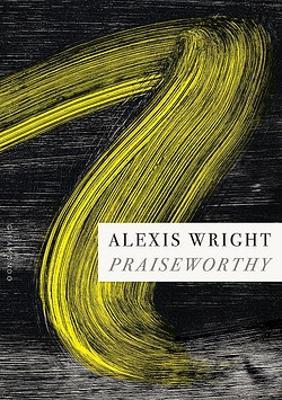
This year, Alexis Wright has won several significant literary awards. She was awarded the Stella Prize in March and the Miles Franklin Prize in August for Praiseworthy, making her the first author to win these two prizes in one year. (Each of these is worth $60,000). In May, it was also announced that she’d won the UK’s James Tait Black Prize for Fiction (worth 10,000 British pounds or $19,000), also for Praiseworthy. Then, this month, she was awarded the triennial Melbourne Prize for Literature which is a body-of-work prize to a writer who has made an “outstanding contribution to Australian literature and to cultural and intellectual life”. It too is worth $60,000.

Melissa Lucashenko’s multiple awards
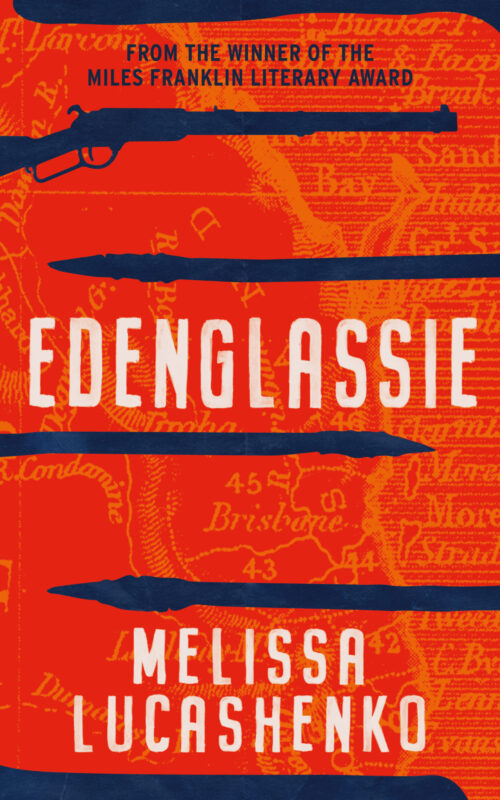
Lucashenko, like Wright, is no stranger to literary awards, but this year, she too has taken out several significant awards, all of them for her first work of historical fiction, Edenglassie (my review): the $100,000 ARA Historical Novel Prize, the $50,000 Margaret and Colin Roderick Literary award; the $30,000 Queensland Premier’s Award for a Work of State Significance, and the $25,000  Premier’s Prize for Fiction. She also won the Fiction award in this year’s Indie Book Awards.

Richard Flanagan’s prize and ethical stand
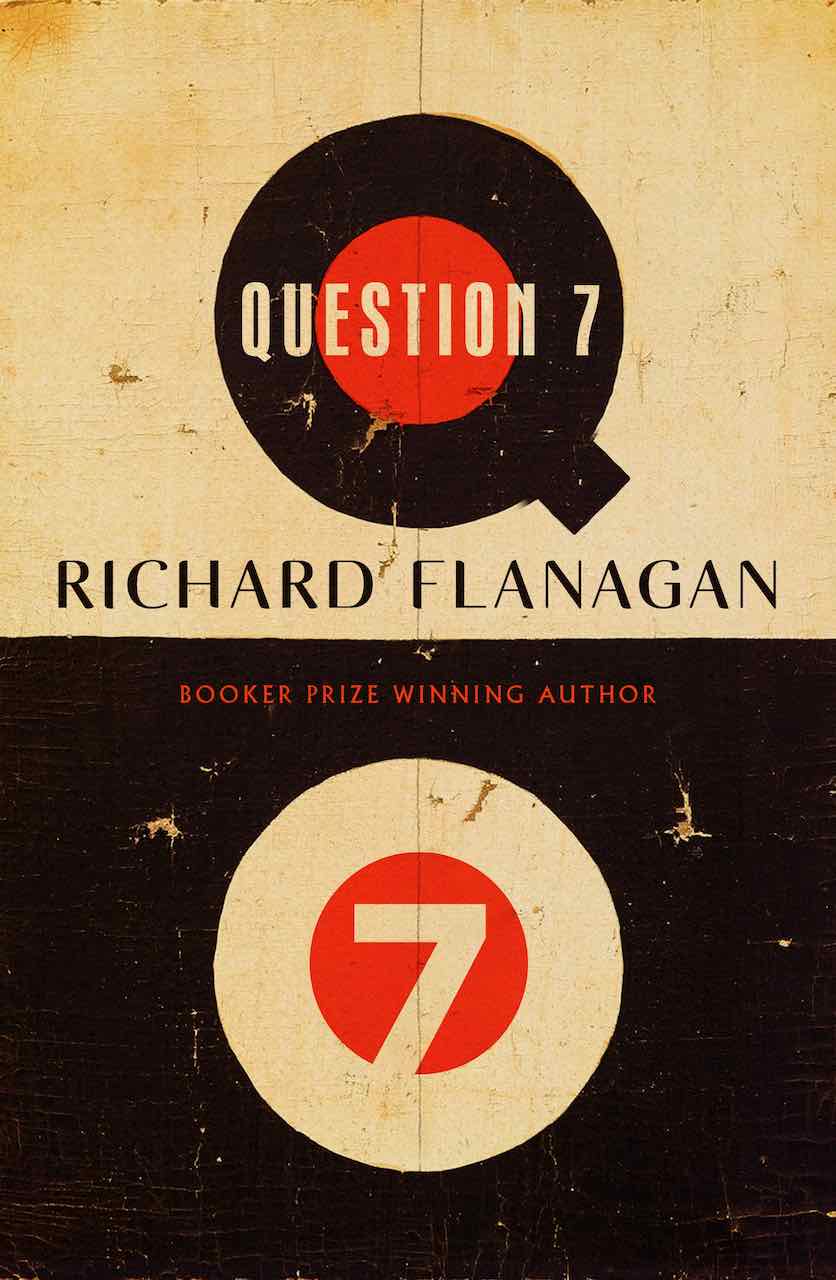
Another recently announced award is Richard Flanagan winning UK’s 2024 Baillie Gifford Prize for Nonfiction for his most recent book Question 7 (my review). This prize is worth £50,000 (or, AUD97,000). If you’ve heard this news, you will also know, as the ABC reported, that Flanagan had pre-recorded his acceptance speech because he was trekking in the Tasmanian wilderness at the time. In this speech, he said he had “delayed” accepting the prize money until sponsor Baillie Gifford put forward a plan to reduce its investment in fossil fuels and increase investment in renewable energy. Flanagan said that “on that day, I will be grateful not only for this generous gift, but for the knowledge that by coming together in good faith, with respect and goodwill, it remains possible yet to make this world better.”

Flanagan is not a rose-coloured glasses idealist. He is not asking for the world, but simply for a plan. The ABC quotes him further:

“… were I not to speak of the terrifying impact fossil fuels are having on my island home, that same vanishing world that spurred me to write Question 7, I would be untrue to the spirit of my book.

[BUT]

“The world is complex. These matters are difficult. None of us are clean. All of us are complicit. Major booksellers that sell my books are owned by oil companies, major publishers that publish my friends are owned by fascists and authoritarians … As each of us is guilty, each of us too bears a responsibility to act.”

I like this honesty and realism. Let’s see what happens next. Will a writer’s stand – which compounds what I believe is already increasing criticism of Baillie Gifford – see a company decide it too can make a stand?

Jessica Au’s novella to be filmed
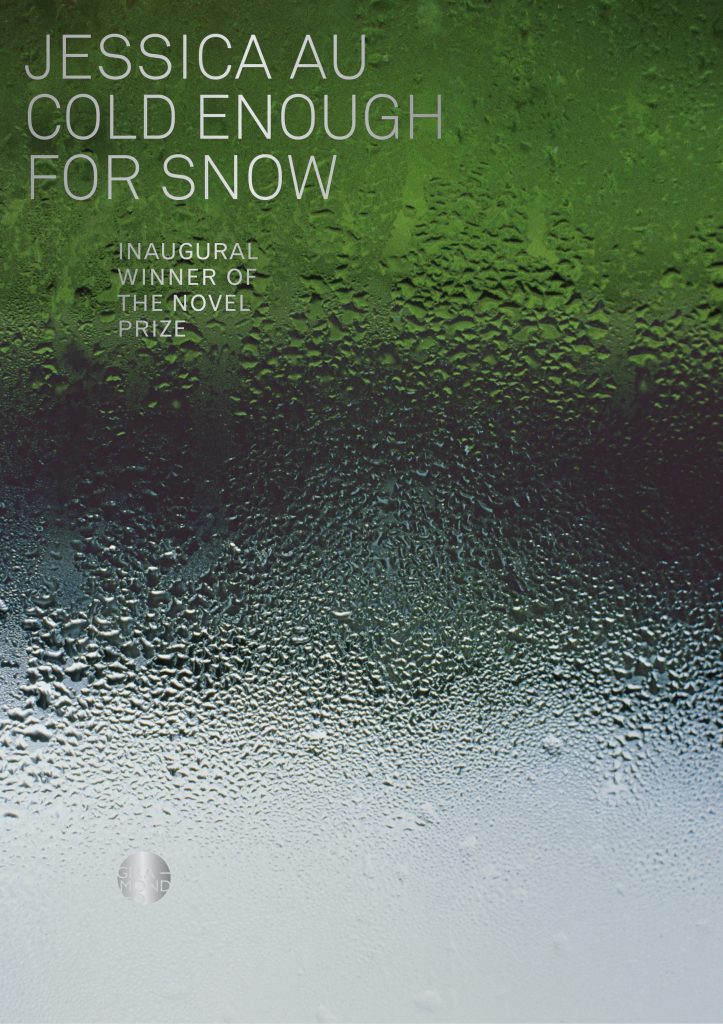
Meanwhile, in non-award news, Jessica Au’s award-wining (ha!) novella, Cold enough for snow (my review), is to be made into a film. According to Variety it will be a U.K.-Japan-Australia-Hong Kong co-production and filming will begin “in fall 2025” (which presumably means next September to December). I first read about it on publisher Giramondo’s Instagram account. They quoted theatre veteran-debut director Jemima James,

I hope the film, like the book, creates space for audiences to think and feel deeply about the important people in their lives, about the relationships that are central to them …I hope it provokes shifts of perspective, new understanding, new compassion for the people they love, however complex or complicated that love might be!

Gail Jones’ Lifetime Achievement Award

I also saw on Instagram – this time Text Publishing’s account – that Gail Jones had received Creative Australia’s Award for Lifetime Achievement in Literature. In other words I’m bookending, more or less, this news post with body-of-work awards. As Text writes, the award “recognises her impressive body of work, and her ongoing mentoring of young writers”.

Creative Australia’s website tells me that Jones was one of “eleven leading artists to receive 2024 Creative Australia Awards”.  They quote their CEO, Adrian Collette AM:

‘It is our immense honour to celebrate these remarkable artists whose work is making an impact in communities across the nation. Each of the recipients contributes their unique voice to our cultural story.’

I recently reviewed Jones’ novel Salonika burning (my review) but I have more on my TBR.

Any comments on these news items? Or, indeed, do you have any to add? (Not that my aim here is to be comprehensive. That would be impossible!)

ALS Gold Medal for 2024 announced

It is some time since I wrote about the ALS Gold Medal. This is not because I don’t think it’s interesting or worthwhile, but because there are so many awards, and I just don’t have the time to write up announcements for every award made each year. So, I pick and choose a bit, and this year’s ALS Gold Medal winner is – well, you’ll see … but first, a quick recap on the award.

As I wrote in my first post on the medal, it was established in 1928 by the Australian Literary Society (ALS) – hence its name – but this society was incorporated in 1982 into the Association for the Study of Australian Literature (ASAL), and it is this organisation that now makes the award. The Gold Medal is awarded to “an outstanding literary work in the preceding calendar year”. Note that it is for a “literary work”, which means it can be fiction, poetry, memoir, biography, and so on.  It is Australia’s longest-standing literary award, but there is no money attached to it, just a gold medal. This is a shame for the writers, but it is nonetheless an award that is well worth having.

The shortlist for this year’s award was:

  • Jordie Albiston, Frank (documentary poetry)
  • Stuart Barnes, Like to the lark (poetry)
  • Katherine Brabon, Body friend (novel)
  • J. M. Coetzee, The Pole and other stories (short story collection)
  • Omar Sakr, Non-essential work (poetry)
  • Sara M. Saleh, The flirtation of girls/Ghazal el-Banat (poetry)
  • Alexis Wright, Praiseworthy (novel)

And the winner, announced on July 8, is

Alexis Wright’s Praiseworthy 

How apposite for Wright’s win to be announced in NAIDOC Week. This is the third time that Wright has won the medal. Books+Publishing, announcing this award, says that over the life of the award only two other writers have won it three times, and they are Patrick White and David Malouf. Those of you who read my Monday Musings post this week may remember that I observed that Alexis Wright and Melissa Lucashenko are the only writers who have won the Stella Prize three times. This woman, this First Nations writer, really is something, and I need to catch up my reading of her.

For the record, Praiseworthy has, so far, won the ALS Gold Medal (2024), the Stella Prize (2024), the Queensland Literary Award for fiction (2023), and the James Tait Black Memorial Prize (2023). It has also been shortlisted for the Miles Franklin Literary Award (2024).

This year’s judges for the medal were Elizabeth McMahon (academic and literary critic), Ali Alizadeh (literary writer and theorist), and Ann Vickery (poet and feminist scholar). According to Books+Publishing, the judges described Praiseworthy as “a novel for and of our time… hilarious, furious, poetical and painful”.

(BTW I haven’t read any of this year’s shortlist, but I have read two of last year’s including the winner, Debra Dank’s We come with this place).

Monday musings on Australian literature: Stella Prize 2024 Winner

The 2024 Stella Prize winner was announced last Thursday, the 2nd of May, but that was the also the day my blog turned 15, and I didn’t want to flood cyberspace with too many posts. Then this weekend was the SixDegrees meme which meant another post coming at you. So, I decided to do my Stella 2024 post, this year, as a Monday Musings. It makes sense to do so, in fact, because it’s an historic win. First though, the winner, for those of you who haven’t heard yet:

Alexis Wright’s Praiseworthy

Why historic? Again, some of you will already know this, but Alexis Wright, one of our leading First Nations writers, is the first writer to win the Stella twice in its 12 year history. An impressive achievement by any measure. I am embarrassed to say, however, that of the now four Stella winners I haven’t read, Wright’s two are among them. This is not because I don’t want to read them, but because they are big tomes, and my life doesn’t seem to lend itself these days to chunksters. I read and loved her multi-award winning novel Carpentaria (my post), which was big enough – at over 500 pages – but that was before blogging when time pressures felt different! Clearly, though, I should make time for this because, from what I can tell, its subject matter is something I care about and it has the wit and playfulness, passion and imagination, that I loved in Carpentaria.

Praiseworthy has already been recognised by the literary establishment. Last year it won the Fiction Book Award in the Queensland Literary Awards. Further, as publisher Giramondo shares, it has been shortlisted for many other awards: The Dublin Literary Award 2024; the People’s Choice Award, the Christine Stead Prize for Fiction and the Indigenous Writers Prize in the 2024 New South Wales Premier’s Literary Award; The James Tait Black Prize for Fiction 2024; and the Queensland Premier’s Award for a Work of State Significance in the 2023 Queensland Literary Awards.

The chair of the judging panel said this about the book:

Praiseworthy is mighty in every conceivable way: mighty of scope, mighty of fury, mighty of craft, mighty of humour, mighty of language, mighty of heart. Praiseworthy is not only a great Australian novel – perhaps the great Australian novel – it is also a great Waanyi novel. And it is written in the wild hope that, one day, all Australian readers might understand just what that means. I do not understand. Not yet. But I can feel history calling to me in these pages. Calling to all of us. Imagine if we listened.

Giramondo’s (above-linked) page for the book, includes excerpts from other critics and reviewers. Samuel Rutter of the New York Times Book Review describes it as “the most ambitious and accomplished Australian novel of this century”, while Jane Gleeson-White wrote in The Conversation that “Praiseworthy is Alexis Wright’s most formidable act of imaginative synthesis yet…a hero’s journey for an age of global warming, a devastating story of young love caught between two laws, and an extended elegy and ode to Aboriginal law and sovereignty”. More than one references Ulysses, such as Ruth Padel, who describes it in The Spectator as “an impassioned environmental Ulysses of the Northern Territory… Playful, formally innovative, multi-storied, allegorical, protean and dizzyingly exhilarating, it is long, lyrical and enraged”. Several, in fact, praise the language; and many comment on its satirical aspect, its lyricism, its comedy. Lynda Ng, in Meanjin, calls it:

The finest distillation yet of Wright’s themes – a bold assertion of Aboriginal sovereignty that successfully encompasses all areas of life: culture, economy, and jurisprudence.

Of course, Giramondo has selected excerpts that praise, but the sources of that praise are impressive.

There are those who think that she should/may/will be Australia’s next Nobel Laureate for Literature.

Returning to the Stella, you can read more on the Stella website, including a link to Alexis Wright’s acceptance speech, and an expressive video performance of a brief scene from the novel by Boonwurrung actor Tasma Walton.

Just to remind you, this year’s Stella judges were writer, literary critic, Artistic Director of the Canberra Writers Festival and this year’s chair, BeeJay Silcox; Filipino-Australian poet, performer, arts producer, and advocate, Eleanor Jackson; First Nations award-winning poet and arts board member, Cheryl Leavy; novelist, occasional critic and full-time dad, Bram Presser; and writer and historian, Dr Yves Rees.

Wikipedia offers a well-presented complete list of the winners and all the short and longlisted books.

Thoughts anyone?

Stella Prize 2018 Winner – and how the Stella is tracking (pun alert!)

I don’t always write announcement posts here – even when I write short and or longlist posts, because the news is usually so immediately known. What can I add? However, I’ve decided to post on last night’s Stella Prize announcement for a couple of reasons, one being the significance of the winner and the other being a statement released by Aviva Tuffield, the Prize’s Executive Director.

First, the winner. If you haven’t already heard, it’s Alexis Wright’s Tracker. This is the second time a non-fiction work has won since the award started in 2013. The first non-fiction winner was Clare Wright’s wonderful The forgotten rebels of Eureka (my review). For a full report of the announcement, check Stella’s page which contains Wright’s acceptance speech, the judge’s comments and an introduction to the book itself. I’ll just share a few highlights.

Alexis Wright, TrackerIn her speech, Wright commented on the diversity in this year’s shortlist:

The great celebration today is that we have many exciting, diverse voices in the world of Australian letters. We encompass the world right here in our literature. And even in this shortlist that has been judged as being some of the very best of women’s literature published in the past year, we demonstrate our remarkable diversity, internationalism, and maturity as people of many backgrounds, and here including Indonesia, Iran and Sri Lanka, as well as two Aboriginal writers. A literary dialogue that allows us to have greater knowledge and understanding of each other, and acceptance of difference, and respect for each other in our diversity, is what will make Australian literature truly marvelous, relevant, and far stronger than it has ever been.

Well said … I have so far read the book set in Indonesia (Riwoe’s The fish girl), and one of the two Aboriginal writers (Coleman’s Terra nullius). I plan to read more, because it’s an exciting list.

One of the things that interests me about this book, besides its being indigenous literature, is that Wright – not surprisingly once you know her work – plays with form, in this case what I’d call the biography-memoir (or vice versa) or what is formally being called “a collective memoir”. Wright said this in her speech, after explaining the significance of her subject, Tracker Tilmouth:

I thought very deeply about how to develop this book about him by using our own storytelling principle of consensus. I was not always sure that my approach would work as I continued on a long journey of six years from conception to finish, and gathering a mountain of material, but I was sure collaborative storytelling was the right way, and that it did work in the end is what matters. I am grateful for the storytelling skills of our culture and carried them into the book, which allowed, as Tracker himself wanted, everyone to speak for themselves, to tell their own part in the story.

I love this description, not only because it articulates what she was trying to do, but because she alludes specifically to “the storytelling skills of our culture” which is something I have mentioned in posts in the past, but a little hesitantly for fear of sounding like I was “exoticising” indigenous people. The thing is that when I read indigenous Australian stories, or hear indigenous Australians tell stories, I am frequently conscious of a very specific, and lively, storytelling culture.

In her statement announcing the winner (out of 170 submissions), judges’ chair, Fiona Stager said:

The winning book is unique in the history of Australian letters and it artfully fulfils all the Stella Prize’s criteria: it is excellent, engaging and original. We invite all readers to immerse themselves in a history, a landscape, a time and a story that is heartbreaking, poignant and humorous. […]

… the judges wish to acknowledge the craft of the author and pay tribute to the richness of the memories shared by the many people she interviewed. This book will enrich and change the understanding of readers. A man like Tracker Tilmouth could change our world. It takes a writer like Alexis Wright to change the world of Australian letters.

Stella Prize’s page on the book provides more information, including the judges report, an interview with Wright and a book extract.

In her speech, Stager also paid tribute to Aviva Tuffield. It was largely Tuffield’s statement about the Prize, released the day before the announcement, that committed me to this post. In it, Tuffield articulates what the Prize has achieved since its inception in 2012.  She reiterates why the Prize was established in the first place: “hard data had proved that women writers were underrepresented in three key areas:

  • as winners of the major literary prizes;
  • as authors of the books that received the most review and media coverage; and
  • as authors of the books on the school curriculum.”

She said those founding the prize appreciated that “much of this inequality arose from unconscious bias”, as evidenced by data showing that “‘blind’ orchestra auditions and CV assessments yield such different results to what happens when faces and names are attached.” However, whether conscious or unconscious, the impact is the same, and it’s serious because it “sends clear messages about whose voices, whose stories and whose experiences are most important.” Hence, the prize …

And, six years on, she says, the effects are clear (for the details, please check her statement at the link above):

  • women are now winning more prizes generally, and being increasingly shortlisted, across all major prizes.
  • more women writers are being added to school curricula. Victoria’s English curriculum now has gender parity in terms of authors listed, as opposed to being just over 30% of the list in 2014.
  • the ‘kinds’ of books that are now being considered of the ‘highest literary merit’ has shifted, with “novels focusing on contemporary family life or relationships – using those as microcosms for society at large – and often with female and even child protagonists” now being recognised.
  • general awareness of the breadth and quality of Australian women writers has increased. She says that “When Stella started many people told me that they didn’t realise there were so many good women writers in Australia – and especially writers of nonfiction (as Stella is for fiction and nonfiction books)”. She argues that Stella’s longlists and shortlists have raised awareness of the breadth of women’s writing, and that this awareness has spread beyond these lists to other writers who have said their work is being taken more seriously.
  • the ripple effect created when people see more women writers being recognised. “The landscape”, she writes, “changes: role models are provided, unconscious bias is dismantled, stereotype threats are banished.”

Now, some of this is more anecdotal than “proven” and not all of it is only due to the Stella, but the Stella Prize is, I’d say, making a significant contribution. And it will continue to do so because Stella’s job is not done. More is needed, she says, “in terms of diversity and extending Stella’s benefits to all women writers” and more also, as the #metoo movement has proved, “to shift the power structures of our patriarchal society” to ensure that women are heard. Finally, as we’ve seen before – and as is evidenced in other spheres like the gender pay gap – “things can slip back very quickly.”

So, I say thanks to Aviva Tuffield and the Stella Team. I am proud to count myself as a Stella Spark.

Alexis Wright, Carpentaria

Alexis Wright‘s Carpentaria won the Miles Franklin Award in 2007 and I read it back around then but it’s a book that keeps coming back to me so I thought it was time I shared why. This won’t be my usual review, but rather random comments on the ideas that float around my head.

First though, you do need a bit of an idea of what it’s about. It’s a wild novel and the plot is complex with its interwoven stories of the inhabitants of a fictional town called Desperance (great name!) in northwest Queensland. The local Indigenous people, the Pricklebush mob, are engaged in a number of disputes – amongst themselves (the Westend and Eastend groups) and with various non-Indigenous people and groups including local police, government officials, and the large multinational mining company operating on their sacred land. But it’s also about personal soul-searching as some of the main characters work to resolve their place in the world. There’s a large array of colourful characters, including Normal Phantom (the ruler of the family), Mozzie Fishman (religious zealot), Will Phantom (activist and Norm’s son, who undertakes a spiritual journey with Fishman), Elias Smith (mysterious outcast saviour), Bruiser (by-name-and-nature town mayor), to name just a few.

It is fundamentally, but not only, about black-white relations in a small town. It doesn’t polarise the issue the way books dealing with this topic often do. The whites are presented pretty negatively, but the Indigenous people are not painted as saints either. They are flawed, and have conflicts within their own community as well as with the white occupants of the town. I like the honesty of this. Some of the problems within the Indigenous population are due to the European invasion and the impact of dispossession, but some are clearly just because they are human with all the normal arguments, jealousies, power plays etc that are found in any family or community. Wright is most interested in conveying the complexity of black culture: its struggles to cope with the colonisation, and the conflict within black communities about how to respond. Consequently, the novel touches on many contemporary issues – land rights, deaths in custody, mining rights, boat people, petrol sniffing to name just a few. It could almost be seen as the contemporary corollary of Kim Scott‘s That deadman dance.

Towards the end of the novel comes this:

Old stories circulating around the Pricklebush were full of the utmost intrigues concerning the world. Legends of the sea were told in instalments every time you walked in the door of some old person’s house. Stories lasted months on end, and if you did not visit often, you would never know how the story ended.

It’s from Will who is sitting on top of the pub, waiting for the cyclone to do its damage. I like it because it rather describes the way the novel is told – circularly more than linearly, and certainly rather disconnectedly. I am always interested in structure, and structure is one of the main challenges of the book. I suspect the structure has something to do with the Aboriginal world view and way of seeing stories – and that understanding this structure better might help better understand the book. It’s both circular and multilayered.

The centre or heart of the novel comprises Elias’ burial at sea and Norm’s being tested. The notion of ‘trespass’ is introduced specifically here. It’s a critical notion in Christian religion. It also alludes to European civilisation trespassing on Indigenous land and culture. And, of course, Indigenous people have their own sense of trespass. In some (many?) ways, trespass is a core theme of the book:

Pausing momentarily, he [Norm] tried again to recite the prayer, before stopping to linger once more on the perplexing word trespass. Trespass had been a big word in his life. It protected black men’s Law and it protected white men. It breathed life for fighters; it sequestered people. The word was weightless, but had caused enough jealousies, fights, injuries, killings, the cost could never be weighed. It maintained untold wars over untold centuries – trespass.

What makes the book special is its language, which is often playful. I chuckled many times as I read it: the wordplay, and the comic set pieces in particular were well done. The set pieces include Angel Day’s retrieval of a Virgin Mary statue from the town dump, and Elias Smith’s emergence from the sea. Popular culture and language (such as clichés) are incorporated, both through allusions and simply as part of the rather colloquial text. Added to this, is the mix of biblical (parting of the waters/mist, big flood, feeding with fish) and traditional imagery and symbolism. I don’t completely understand the meaning of the traditional imagery/symbolism, but it’s there, and can be felt even if it can’t be fully articulated by us who are not part of the culture: water (sea, lagoons, rivers), fire, fish, birds (seagulls, pelicans and others), serpents, land, music, and so on. It’s interesting how many of these images work in both cultures. The novel teems with imagery, most of it worthy of further exploration.

And while I’m talking of language, the names are highly evocative: Desperance, Uptown and Pricklebush, Normal Phantom, Angel Day (Agnus Dei?), Truthful (the cop), Bruiser (the town mayor), Mozzie Fishman, Joseph Midnight, Will (a very wilful young man), and Hope.

There is also surrealism (or is it magical realism?) mixed with the real, which adds to the challenge and fun of reading this book: it is sometimes hard to tell what is ‘real’ and what is ‘dream’ or ‘myth’ or ‘imaginings’. Much of this aspect of the novel explores connections between Indigenous and Christian religions and cultures, which makes sense given the strong role missionaries played in the first century or more of contact.

This is one of those novels that begs comparison with others and yet it is so itself that any comparison does neither it nor the other book justice. However, I’m going to throw a couple of ideas out there anyhow: Tim Winton‘s Cloudstreet, and Gabriel Garcia Marquez’s One hundred years of solitude. All three deal with family on an epic scale and with a level of inventiveness that can make you high.

Without giving the conclusion away, I will say it ends on a positive image for Indigenous people, on the idea of “singing the country afresh”. There is no simple solution, and many unanswered questions are left hanging, but there is hope – which is just about how a book like this should end.

Alexis Wright
Carpentaria
Melbourne: Giramodo, 2006
519pp.
ISBN: 9781920882174