 I didn’t think I’d get to this session, but when my regular Thursday evening commitment was cancelled, I knew exactly what to do …
Navigating our future (Thursday 13 August 6-7pm)
This intriguingly titled session was described as follows:
Australian literature provides a means through which we might better understand ourselves, and our relationships with our region and the world. Larissa McLean Davies, Associate Professor in Language and Literacy at Melbourne Graduate School of Education, is joined by Professor Ken Gelder from the Faculty of Arts to explore the crucial role of literature and reading in this time of climate and social crisis, and the vital importance of teaching diverse Australian literature in schools. With an introduction from Alexis Wright, Boisbouvier Chair in Australian Literature. (Supported by University of Melbourne, Faculty of Arts)
Alexis Wright introduced it, explaining that it was the Boisbouvier Oration, but here’s the thing, it wasn’t an oration, but a conversation. Hmm … just as well I like conversations. Wright, herself, gave the Boisbouvier Oration in 2018, which was reported by The Sydney Morning Herald:
It was Alexis Wright who threw out the challenge. Australia must create great expectations of building a visionary literature for our times, she said. We should put some money into buying rocket fuel rather than just topping up the gas barbie bottle.
Richard Flanagan gave the inaugural “lecture” as The Monthly reported it in 2016. His and Wright’s focused in some way on the value or power or role of writing, and this is how the 2020 oration-cum-conversation was framed too, though it didn’t quite go where I expected it to. Instead, it focused more on the practice of teaching Australian literature in Australian schools today – in what’s being taught, in the challenges of teaching our literature, and in how things might be improved. It felt like the advertised topic – exploring “the crucial role of literature and reading in this time of climate and social crisis, and the vital importance of teaching diverse Australian literature in schools” – was a given rather than a topic to be discussed. And, that’s ok.
So, the session … it did work as a conversation, though Ken Gelder was primarily in the interviewer role, and Larissa McLean Davies in the interviewee one.
Role of Australian literature in Australian schools
Gelder commenced by saying that the things covered would include how literature can assist young people to navigate their futures, strategies for teachers, and the urgent need to prioritise the teaching of Australian literature in these challenging times. He noted that our current challenges include bushfires, COVID-19, and the Black Lives Matter movement which, in Australia, has focused on the failure of government to end institutionalised discrimination, including the ongoing Aboriginal deaths in custody issue. It is a time of climate and social crisis.
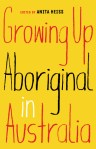 McLean Davies exemplifed the importance of literature by saying that the recent Black Lives Matter protests brought attention to the need for indigenous stories to be heard. She said that it resulted in books by indiengous authors, like Anita Heiss’ Growing up Aboriginal in Australia (my review), and books about racism being sold out. Wow, that really says something, doesn’t it, about the value of awareness and consciousness-raising to book sales. People do want to know these stories!
These stories, she argued, help us negotiate the crises we face. The stories become part of our own subjectivity and help us negotiate our own place in the world. This was one of the most powerful things she said in the session.
Status of Australian literature in the schools
The conversation then turned to the current situation regarding the place of Australian literature in schools. McLean Davies explained that the creation of the national curriculum in 2007/8 made the teaching of Australian literature mandatory in the curriculum, requiring teachers to select and teach an Australian text (at least one) at every year level. It’s rare for such compulsion to be in school curriculums internationally, she said, which suggests the fragility of our national literature.
However, we don’t know how these texts are being taught, nor what texts are being taught (except for year 12 which has set texts). We don’t, she said, know how many Australian texts are taken up and how many are written on in the exam. In other words, there is no mechanism for assessing this mandatory teaching of Australian literature. This is the research she is doing. (How fascinating. I hope we get to see the results of her team’s research.)
The selection of texts
There are text setting panels, often setting them for 2 years, though for the obvious practical reasons – teacher familiarity, the development of resources, and the economics of availability – they will usually stay on the list for 3 to 4 years. We don’t know, however, whether these books are treated as marginal or main texts for study. The texts student will write on in exam will get the most attention – of course.
Diversity in Australian literature school texts
Gelder talked about the importance of setting suitable texts at times of crises, and diversity in literary studies. Do works by writers like Alexis Wright, Tony Birch, Tara June Winch, Lionel Fogarty, Charmaine Papertalk Green, and Ellen van Neerven have visibility, he asked?
McLean Davies said they did, because, for example, in Victoria, there are set texts for year 12, but in other years, teachers have choice, within guidelines. However, their choice depends on teachers’ personal reading diets, the professional learning they are undertaking, and the time they have to engage in new reading (given the increasing administrative work pressure teachers are under.) So, there’s opportunity but …
 She talked about the issue of “engagement” and that in trying to achieve this for diverse classes, teachers will often resort to more standard “white”, often neo-colonial texts. But young people are interested in indigenous issues, climate, etc, she said. Teachers would do well to turn to, for example, Claire G Coleman (Terra nullius) and Alexis Wright to bring these issues into the classroom. We need to think about what engagement means for Australian school students.
On being nimble in text selection
Gelder noted that quite often texts on school lists look like they’ve been there forever, but syllabi need to be nimble if they are to reflect the now. He’s found that some of his overseas students have read more Australian literature than local students have. We need to “sell our literature” he suggested.
McLean Davies said there is the issue that teachers often rely on their own reading experiences and learning. A multi-pronged approach is needed to support teachers, including looking at undergraduate degrees, and supporting teachers to develop new intertextual understandings of literature. Teachers need to learn how they can use literature to contest their own views. They need to develop new intertextual networks that enable new Australian writing to be accessed in the classroom. She quoted a colleague who said that “you don’t read a text, but a text reads you”. It is fundamental that teachers have the confidence to sell a text. They need packaged resources, and need knowledge about literature that they may not have in their own background.
Cultural cringe?
Gelder made the lovely statement that students need to be swept away by literature but teachers provide the broom, but is there cultural cringe? Australian literature tends to be characterised as white and inward-looking. Are we still resistant to, or defensive about, diversifying our understanding of our literature?
 McLean Davies concurred to a degree, but gave a nicely nuanced response, evoking a complex understanding of culture cringe:
- There is resistance from teachers because Australian literature is seen as too white, as buying into the Right’s rhetoric about nationalism. Teachers fear buying into the colonial monolith, into notions of nation. There’s some mismatch between what teachers want to do re diversity and the Right’s leaders wanting to focus on “nation”. That homage to Australian colonial origins is still there in the discourse, and this makes teachers anxious.
- Cultural cringe is evident in text selection. A recent survey, 2017/8, her team did of texts being taught brought responses from 700 teachers. Only one Australian text, Craig Silvey’s Jasper Jones, appeared in the top 10 (at 8). The others included Macbeth, Romeo and Juliet, To kill a mockingbird, Animal farm, Hamlet, Outsiders (SE Hinton), 1984, and Othello. This gave us a “cause for pause” she suggested!
A place for colonial writing?
Gelder wondered if there was a place for colonial writing, particularly given it can contain its own critiques. He talked quite a bit about colonial writing, which has been his interest for ten years, but I want to move on … However, he did say, and has a point of course, that quite a lot of indigenous writing “works over” our colonial heritage, refiguring and remapping the colonial period. Is there goodwill towards colonial literature, he asked?
McLean Davies said there’s not a lot of colonial literature on syllabi in more senior years, but agreed there is potential for rethinking colonial ideas through colonial texts. She referenced the wonderful To be Continued database of short stories published in Australian newspapers, which provides access to colonial texts. Publicly available resources like this represent a wonderful potential for engaging students in literary enquiry. Teachers could use geospatial modelling to find stories set in places where students live, providing an opportunity to think about stories about those places and about the implication of those stories for their current lives. She commented that pedagogy – how we teach – is as important as what is taught. In this period of lockdown, teachers need access to digital content, but education hasn’t fully mobilised these tools in literature.
On the value of local, versus global?
Gelder talked about the conflict between the local (particularly obvious in these lockdown times) and the push for a more global/cosmopolitan outlook. (He cited Alexis Wright’s interview with expatriate Australian writer Peter Carey, and his novel Amnesia).
McLean Davies agreed, and suggested now is a good time to think about the place we are occupying and our relationship to it. She talked about the value of speculative fiction, like Coleman’s Terra nullius and what happens if you don’t take notice of place. She also suggested that the problem is that we are continually reaching for the global, but the role of the local is very important. She mentioned Growing up Asian in Australia and Alice Pung’s wanting to read people who were like her, proving again that the local and the personal are important. It’s not one or the other. Teachers need to thing about the breadth of what they are selecting, need to look at global and local, because students need to read all those stories.
Supporting teachers
The session ended on the important issue of supporting teachers. Their challenge is to find time to develop new understandings of Australian literature. She’s involved in a project – partnership with the Stella Prize – which involves asking teachers to select a text from the longlist and then think about the text and their students, about that text re other books, and re other cultural artefacts. It’s a good opportunity to bring past and present texts together. But, the fundamental issue is that teachers need time and professional learning. They need more professional development that recognises them as intellectually interested and able to develop own new knowledge about text. Yes!
So, this is not quite the session I was expecting but, as I’m interested in both education and the teaching of literature, it ended up suiting me perfectly.
 In many cases, authors refer to libraries or librarians positively, often to establish a character as thoughtful, considered, intelligent, open-minded. Craig Silvey’s Charlie in Jasper Jones (my review), for example, visits the local library early in the novel, when he is at loose ends. He’s comfortable there – like “visiting an elderly aunt” – and he knows how to use it, from genre books to newspapers.
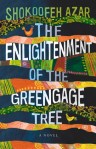 In the opening chapter of Shokoofeh Azar’s The enlightenment of the greengage tree (my review), our narrator’s brother dies in a fire started by revolutionaries in the father’s library. Here the point is that our narrator’s family comprises educated progressive thinkers, just the sort of people abhorred by the leaders of Iran’s 1979 Revolution. A more famous personal library occurs in Markus Zusak’s The book thief (my review) in which young Liesel steals books from the local mayor’s wife’s library. For Leisel, the library evokes a calm, safe place, as well as a place of words whose power, she understands, can do ill and good.
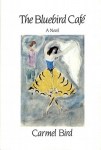 Jolley talks about library-book tickets, prerequisites for borrowing library books. Carmel Bird’s The Bluebird Cafe features another library based on a private collection – The Charles Dickens Library, which is classified as a “national treasure” – but there’s also reference to a library-book reading barmaid who gets “so bored” on her days off “when there’s nothing to read”. I haven’t read this novel, but the excerpts on Google Books show me it’s another delightful, cheeky Bird. Commenting on Angela’s request for this post, Carmel also mentioned her novel The white garden. GoodReads describes it as follows:
 Dymphna Cusack also mentions a library building in her debut novel Jungfrau (my review), when her young university student character passes one in a distressed state:
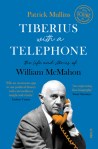 The overall winner, announced last night, 28 August, is Patrick Mullins’ Tiberius with a telephone: The life and stories of William McMahon. I attended and
 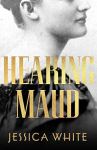 The winner of the Michael Crouch Award for a Debut Work was Jessica White’s Hearing Maud, which I have reviewed here (see link above). In her acceptance speech, White talked about how no-one listened to Maud (daughter of Australian novelist Rosa Praed) while she was alive, and that in paralleling Maud’s experience of profound deafness with her own, a century later, she wanted to show that little had changed in terms of discrimination and “the expectations that we hide our deafness.” I attended and
 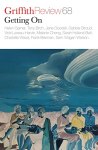 I love reading the Griffith Review, though have mostly only reviewed individual articles on this blog. It’s a meaty quarterly, with each edition being devoted to a particular theme. Edition 68’s theme, Getting on, seemed apposite for my reading group and so was our August selection. Although it was confronting at times, it was a universally approved choice, and our discussion was lively and engaged.
 Griffith Review 68: Getting on
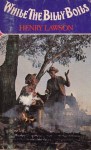 By all accounts, Louisa Lawson was quite a force. A poet, writer and publisher, as well as a suffragist and feminist, she was fully engaged in the country’s literary and political life, but is most remembered now for the latter, particularly her feminist causes.
 Both Olga and her son Chris Masters were journralists. Chris still is. Olga commenced work as a journalist when she was only 15 years old, but through her relatively short career, she also wrote novels, short stories and drama. Her career as a published writer of fiction was very brief, with The home girls short story collection being published in 1982 and Loving daughters, her wonderful first novel, published in 1984. It is Australian literature’s loss that she died just as her fiction career was taking off.
 Multi-award-winning author Thomas (Tom) Keneally has published over 40 novels, from his 1964 debut novel, The place at Whitton, to his most recent 2020 novel, The Dickens boy. He is best known for his Booker prize-winning novel, Schindler’s ark, which was adapted to the Academy Award winning film, Schindler’s list.
 Set in the satirically named town of Allbut, whose nearest large town is the equally satirically named Mainchance, Thea Astley’s An item from the late news is framed by the story of a man who comes to the town, fearful of “the atom bomb”, and wanting to live a quiet – sheltered, you might say – life.
 Thea Astley
 I read
  When historian Desley Deacon offered me her biography of Dame Judith Anderson for review, I was a little reticent because my review copies were getting out of hand. Little did I know then what was in store for me, and just how much more behind I would become. However, finally, its turn came, and here I am with my review.
 Desley Deacon

 Take Drylands, for example. It covers a lot of the things important to Astley. Two major ones are words and their importance/their power, and people’s cruelty to each other. Subsumed in this latter one are some recurrent issues for her – gender, race, and other power imbalances. She has several targets in this book: she’s not too fussed on computers, television, or our sports-mad society; she’s also critical about how women are treated, not to mention indigenous people and ‘oddballs’. She’s a writer with a strong social conscience – and, for example, tackled race issues head on in books like the ironically titled A kindness cup (1974) and the gorgeously titled The multiple effects of rainshadow (1996).
 Whispering Gums