Monday musings on Australian literature: Prizes for Humour Writing

There are not, apparently, many prizes for humour writing around the world, but we have two here in Australia, the Russell Prize and the John Clarke Prize. Those from other countries include the Bollinger Everyman Wodehouse Prize (UK), the Thurber Prize for American Humour, and the Leacock Memorial Medal for Canadian Humour. Do you know them? I’d be interested to know of your experience with them, but meanwhile, I’ll move on to the two Australian ones I’m featuring today.

Russel Prize for Humour Writing

According to the Prize website, this prize was established through a bequest from farmer and businessman Peter Wentworth Russell. Its aim is to “to celebrate, recognise and encourage humorous writing, and to promote public interest in this genre”. Established in 2014, it was the first award to recognise the art of humour writing in Australia and, argues the website, makes “a long overdue acknowledgment of the genre” here. They believe it will “promote public interest in humour writing just as its prestigious international counterparts have done”.

The prize is awarded biennially by the State Library of New South Wales, and the winner receives $10,000.

Associated with this award is a second prize, a Humour Writing for Young People Award for “a work promoting humour and championing laughter”. It is aimed at primary school level readers (5-12 years) and “recognises the role of humour in encouraging children to read”. The winner of this award receives $5,000. I love the spirit behind this.

Past winners

A full list of the winners and shortlists can be found at Wikipedia, but here are the winners to date:

  • 2015: Bernard Cohen, The antibiography of Robert F. Menzies (Fourth Estate)
  • 2017: Steve Toltz, Quicksand (Simon and Schuster) (my review)
  • 2019: David Cohen, The hunter and other stories of men (Transit Lounge)
  • 2021: Nakkiah Lui, Black is the new white (Allen and Unwin)
  • 2023: Martin McKenzie-Murray, The speechwriter (Scribe)
  • 2025: Madeleine Gray, The green dot (Henry Holt) (Theresa’s review) : “brings a new complexity to the genre sometimes called ‘rom-com’. It’s sweet but also sour. It’s terrifically funny as well as Anna Karenina sad … hilarious about the tedious realities of the modern workplace” (excerpted from the judges’ comments)

Writers shortlisted for this award over the years include some I have read and posted on, such as Trent Dalton for Boy swallows universe (my review), Chris Flynn’s Mammoth (my review) and Sun Jung, My name is Gucci (my review). They also include other writers I know or have reviewed or mentioned, just not their shortlisted books, like Annabel Crabb, Tracey Sorenson, Ryan O’Neill and Siang Lu. And, of course, there are new writers that I’m really pleased to hear about.

John Clarke Prize for Humour Writing

The second award is very new one. Titled the John Clarke Prize for Humour Writing, it is named for Australia’s much loved satirist and writer, John Clarke (1948–2017). It has been added to the suite of Victorian Premier’s Literary Awards, so will presumably be made annually. The award, which was established by the Victorian Government and the Clarke family, was open in its first year to books of comedic fiction, nonfiction and poetry published in 2023 and 2024. It offers a cash prize of $25,000.

The first award was made this year, 2025, and it went to Robert Skinner’s I’d rather not say. I gave this to Son Gums for his birthday this year, but I’m not sure he’s read it. I certainly haven’t, though I’d like to. However, kimbofo has (her review). She comments that Skinner “knows how to craft a compelling narrative using jeopardy, self-deprecating humour and a deft turn of phrase”. This just makes me more keen. She also says that it was shortlisted for the Small Publishers’ Adult Book of the Year (in the 2024 ABIAs) and that The Guardian named it one of the Best Australian Books of 2023.

This award, as both the Clarke family and the Wheeler Centre’s CEO have been quoted as saying, is “a fitting tribute” to one of our greatest satirists. They hope it will help the careers of future humour writers. It will certainly help Skinner, whom the ABC reports as saying:

“When you’re writing in Australia, in the back of your mind, the question is always, How long can I keep affording to do this?” he says.

“And now the answer is: slightly longer.”

Echoing, in other words, what many authors say about awards with a decent cash prize. It buys them time.

I enjoy humorous writing, particularly at the satirical end of the spectrum, so I love that there are some awards aimed at supporting this sort of writing. I fear there’s almost a natural tendency in readers to equate better with serious, but that is not necessarily the case.

So now, my question to you is: Do you know of any other awards for Humour Writing, and, regardless, do you like Humour Writing? I’d love to hear anything you’d like to share about this.

Andrea Goldsmith, The buried life (#BookReview)

Titles are intriguing things, and we don’t always pay them the attention they deserve, but the title of Australian writer Andrea Goldsmith’s ninth novel, The buried life, is worth thinking about. It is the third novel I’ve read by Goldsmith, and, like the others, is a contemporary story focusing on relationships and the stresses her characters confront, stresses that we will know ourselves or recognise in those around us, stresses that make her characters relatable. The title, however, hints at the direction this novel will take, which is to look at the way these stresses can often be hidden for years. But they will out, one way or another.

This is a confidently written novel, using techniques I love. First, Goldsmith calls on music, art and literature to illuminate her ideas. What reader doesn’t enjoy that? And then, she uses a formal structure, comprising four named parts, each of which contains named chapters that open with a revealing epigraph. Part 3, for example, is titled “The buried life” and its first chapter’s epigraph comes from Matthew Arnold’s same titled poem:

But often, in the world’s most crowded streets,
But often, in the din of strife,
There rises an unspeakable desire
After the knowledge of our buried life

If we hadn’t realised it by this time, the point is clear. This novel, which explores big themes encompassing friendship, love and death, is also about the thoughts and feelings we bury inside – hidden from others, and sometimes also from ourselves. We have three people – 43-year-old Adrian, an academic specialising in Death Studies, his 28-year-old neighbour Kezi, an artist who makes paper by hand, and 57-year-old Laura, a social scientist who works in town planning. At the beginning of the novel, Adrian and Kezi are friends, and do not know Laura. However, a chance meeting between Adrian and Laura in a Melbourne city cheese shop brings her into the fold, and our trio is complete.

the “carefully constructed life”

Each of these characters has things that are buried, just waiting to resurface. For the “temperate” Adrian, suffering the break-up of a 10-year relationship, it’s his parents. They had died when he was very young and he was brought up by loving grandparents – so lovingly, in fact, that he had denied for decades the impact on his life, including his chosen career, of his parents’ early deaths. For the outwardly confident lesbian, Kezi, it is also parent-related. Rejected in her late teens by her highly religious – read fundamentalist – parents for her sexuality, she craves their love and acceptance. And then there’s Laura, a successful career woman who seems to have the perfect marriage. “Seems”, however, is the operative word because very quickly the reader realises that her narcissistic husband is dismantling her, “piece by piece”. But Laura cannot see that her constant modifications to keep Tony happy is self-destructive. It’s worth it, she feels, for what she believes he gives her.

Goldsmith slowly unfolds her characters’ stories in such a way that we, like others in their circles, understand their buried lives long before they do. Adrian’s academic colleague, Mahindra, not to mention his ex-lover, Irene, sees what Adrian doesn’t about his choice of a career in Death Studies, but Adrian continues to insist that his childhood was simply his “normal” and had nothing to do with it. Laura’s sister Hannah and friend Jules constantly point out to her the way her husband undermines her, and the harm it is doing, but, despite knowing she tiptoes around him, she is convinced “she had become a better person with Tony”. He is her “normal”. The younger Kezi is more in touch with her inner self. Her pain and desires are not so much buried as kept at bay. She “wanted her parents’ love … she wanted them to love her as she was, and not as they wanted to her to be”. This want is threatening to sweep away “her carefully constructed life”.

So, three characters, all waiting – in our minds at least – for the trigger that will reveal their inner selves in a way that can no longer be ignored, that will force them to “shed their old skins”. In Part 3, Adrian, thinking that whatever relationship he’d been building with Laura was over, walks to the cemetery, listening to Mahler, whom he has recently discovered. As he sits on a fallen log, the “past rushes in”. Memories of his father and the loss he’d endured come to the fore, and he finds himself “crying for the little boy, crying for the grown-up man … mourning the buried life”. Back home, he picks up Arnold’s poem and recognises that for him

it was not desire, as in Arnold’s poem, that had pulled up the past from ‘the soul’s subterranean depth’, rather he had been ambushed by what insisted on at last being acknowledged.

As the novel progresses from here, Laura and Kezi are also forced to acknowledge the truths they had been resisting. It’s a powerful novel about how hard we work to deny the truths right in front of us, and it works well because it does this through characters that are so utterly believable. We will them to work it out.

However, the novel is also about death. It is never far away, given Adrian’s research and the deaths that surround our characters. Indeed, the final epigraph, which comes from Philip Roth, tells us that “Life’s most disturbing intensity is death”. Those of you who know Goldsmith will know that she lost her beloved partner, the poet Dorothy Porter, back in 2008. Porter’s last poetry collection, The bee hut (my review) ends with a poem written just a couple of weeks before her death from cancer. It concludes with “Something in me / despite everything / can’t believe my luck”. Death is sad, but some writers can write about it with such beauty, as Porter does in this poem. Penelope Lively also does it at the end of Moon tiger. And Goldsmith does it at the end of this novel, because you won’t be surprised to know that in a book with this title and subject matter, someone does die. It brought me to tears, not so much the death, terribly sad though it is, but the writing of it. It is inspired.

The buried life is a moving read, one made even more so if, as you read it, you play some of those Mahler pieces Adrian loves. I dare you to be disappointed.

Andrea Goldsmith
The buried life
Transit Lounge, 2025
321pp.
ISBN: 9781923023253

(Review copy courtesy Transit Lounge via Scott Eathorne, Quikmark Media)

Monday musings on Australian literature: Collaborative story-telling between First Nations Australian and white writers

National NAIDOC Logo (2025)

NAIDOC Week 2025 started yesterday, and as I have done for many years now, I am devoting my NAIDOC Week Monday Musings to celebrating First Nations writers in some way.

This year is a particularly special year because it marks NAIDOC Week’s 50th anniversary, 50 years it says, “of honoring and elevating Indigenous voices, culture, and resilience”. The 2025 theme is “The Next Generation: Strength, Vision & Legacy,” and is intended to celebrate not only past achievements achievements, “but the bright future ahead, empowered by the strength of our young leaders, the vision of our communities, and the legacy of our ancestors”. 

.Now, over the years, I have written posts on a wide range of First Nations writing and storytelling, was wondering what to write about this year, when a couple of weeks ago this idea of collaborative writing projects popped into my head because I’ve come across a few in the last few years. Then, at the ACT Literary Awards last Thursday night, another such collaboration was not only shortlisted but won the Nonfiction award. The book is Warra Warra Wai: How Indigenous Australians discovered Captain Cook & what they tell about the coming of the Ghost People, and is by Darren Rix and Craig Cormick. That sealed the deal!

In the introduction to this book, Darren and Craig, the names they use to sign off the Introduction, say that:

This book has been a blackfella-whitefella collaboration, because too much of our history has been written by one voice only, and we need to find more collaborative ways to tell our past, present and future.

I would love to discuss all the collaborations I’m going to share in this post – including researching how the collaborations worked, who did what, and how differences (if any) were resolved – but that would be a big project. I have, however, met some of the writers involved, and have followed some of the projects on social media, so I am aware of some of the processes the writers followed. For now, though, I will share what Darren and Craig say in their Introduction:

In this collaboration, we each worked to our strengths. Craig did most of the work in the archives, and Darren did most of the oral interviews – and the people we talked to got the final say on the text. The stories we gathered belong to the individuals and communities we visited. This is their book.

Selected list of collaborative books

This list is presented in alphabetical order by the name of the first author listed on the title. I did think about dividing it into two lists – one fiction, one nonfiction – but decided that all these books aim to share truths about our society and culture, whether told within a factual or imaginative framework, so one list it is. (Links on authors’ names are to my posts on that author.)

There has been a lot collaborative publishing in the children’s literature sphere, over a significant period of time, but I’ve been less aware, until relatively recently, of similar activity in the adult sphere.

Wayne Bergmann and Madelaine Dickie, Some people want to shoot me (memoir, Fremantle Press, 2024, on my TBR): shortlisted for Nonfiction Book of the Year in the Western Australian Premier’s Book Awards.

Craig Cormick and Harold Ludwick, On a barbarous coast (historical fiction, Allen & Unwin, 2020, my review): a re-imagining of what happened when Captain Cook’s Endeavour was wrecked off the coast of Far North Queensland.

Aaron Fa’Aoso with Michelle Scott Tucker, So far, so good: On connection, loss, laughter and the Torres Strait (memoir, Pantera Press, 2022, Bill’s review): apparently the first memoir by a Torres Strait Islander to be commercially published, which means it addresses “the under-representation of Torres Strait Islander perspectives in Australian life”. You can read more about it on Tucker’s website.

Aaron Fa’Aoso and Michelle Scott Tucker with Lyn White, Spirit of the crocodile (YA fiction, Allen & Unwin, 2025, on my TBR, Bill’s review): a coming-of-age novel set against the challenges to the Saibai island community of climate change.

Carl Merrison and Hakea Hustler, with Dub Leffler (illus.), Black cockatoo (YA fiction, Magabala Books, 2018, my review): pleasingly, this book was in my Top 10 visited posts last year, and is in the Top 20 this year to date.

Boori Monty Pryor and Meme McDonald, Maybe tomorrow (memoir, 1998, my review): one of the first books I reviewed on this blog. Pryor has focused much of his life’s work on helping young people feel strong in their culture.

Boori Monty Pryor and Jan Ormerod, Shake a leg (Children’s picture book, Allen & Unwin, 2010): one of several children’s book collaborations involving Boori Monty Pryor.

Darren Rix and Craig Cormick, Warra Warra Wai: How Indigenous Australians discovered Captain Cook & what they tell about the coming of the Ghost People (history, Scribner, 2024, on my TBR): follows Cook’s journey up “Australia’s” east coast, visiting the places he renamed and gathering the local people’s stories.

Nicolas Rothwell and Alison Nampitjinpa Anderson, Yilkari: A desert suite (“unclassifiable” but fiction, Text Publishing, July 2025, on my TBR)

As the word “selected” conveys, this is not intended to be a comprehensive list, but an introduction to the range of collaborative writing that’s been happening. However, I (and readers of this blog I’m sure) would love to hear of other First Nations-settler collaborations, including from other parts of the world.

Click here for my previous NAIDOC Week-related Monday Musings.

Have you read any First Nations-white writer collaborations? And if so, care to recommend any?

Six degrees of separation, FROM Theory & practice TO …

Well, I am back down south, experiencing a colder than average start to the winter, which I do NOT like. However, I do like the Six Degrees meme, so let’s get straight to it. If you don’t know how this #SixDegrees meme works, please check Kate’s blog – booksaremyfavouriteandbest.

The first rule is that Kate sets our starting book. This month, for the first time this year, it’s one I’ve read, Michelle de Kretser’s Theory & practice (my review). It won the 2025 Stella Prize, and has been shortlisted for this year’s Miles Franklin Award, which are both significant literary awards in Australia. Fundamentally about “the messiness of life, it also challenges us with its form, which mixes fiction, essay and memoir in a way that also nods a little to autofiction.

Another novel with an interesting, though not quite so innovative, form, and which could also be said to deal with the messiness of life is Elizabeth Strout’s Olive Kitteridge (my review). Here, the form is connected short stories. In some stories, protagonist Olive is front and centre, but in others she makes a cameo appearance or is only briefly referenced, which makes the novel almost as much about place and community as it is about Olive.

My next link is is to a novel that is also named for its protagonist, and that happens to be about some very messy lives too, Douglas Stuart’s Shuggie Bain (my review), although the focus is a dysfunctional family rather than a wide community.

Book cover

All the books I’ve named to date have been award-winners – de Kretser won the Stella, Strout the Pulitzer and Stuart the Booker. So, perhaps my next link should also be to a prize-winner, but of a different prize again. How about Japan’s best known prize, the Akutagawa Prize? The winner I am choosing is also named for its protagonist, but not by her name. I’m talking Sayaka Murata’s Convenience store woman (my review). It explores a sort of dysfunction but one that stems from society’s expectations of what is “normal” behaviour.

So, let’s look at normality. In my post on Damon Galgut’s The promise, I referenced its epigraph in which Fellini reports being asked, “‘Why is it that in your movies, there is not even one normal person?’”, and I suggest that this challenges us to consider what is normal. I believe Galgut, with his motley cast of characters wants readers to understand “normality” as a broad church. But, of course, the novel, set in post-Apartheid South Africa, is about much more than that. (Oh and The promise is a Booker Prizewinner.)

So now I’m going to leave award-winners but stay in post-Apartheid South Africa with Karen Jennings’ novel Crooked seeds (my review). It is about a challenging, self-pitying white character who can’t see beyond her own miseries, but who also seems to represent white, privileged South Africans who see themselves as victims in the post-Apartheid world. I described the novel as “a personal story with a political heart”. Crooked seeds is not an awardwinner, but it was longlisted for The Women’s Prize.

And now, to conclude, I’m going to remain in post-apartheid South Africa, but with a book written by an Australian, Irma Gold’s Shift (my review). I could also call this “a personal story with a political heart”. However, here, while our protagonist is a white Australian male, the setting is in the black South African community of Kliptown in Soweto. Shift explores how this community is surviving, or not, in a political environment in which the post-Apartheid promises of freedom have not eventuated – at least not yet. Will they ever? Shift has not won any awards, but was only published this year. I hope to see it on next year’s award lists.

So, all of this month’s books have contemporary (or near future) settings, but around the world – Australia, Scotland, Japan and South Africa. Four of the authors are women. I’m not sure I can link back to the opening book except that both authors are Australian writers, and both do explore in some way the relationship between art and life.

Have you read Theory & practice and, regardless, what would you link to?

ACT Literary Awards 2025

Last night, I attended the presentation of the ACT Literary Awards (which I have attended for the last couple of years). These awards are made by Marion (previously, the ACT Writers Centre), and this year’s event was MC’d again by Katy Mutton and Board Chair, Emma Batchelor. These awards were also framed as kicking off Marion’s 30th birthday celebrations, which is perhaps why the dress code was marked as “Smart Casual – With Flair”! For a bit of flair, I wore my gold-coloured sneakers!

This year the awards were held, not in the Canberra Contemporary Art Space where it had been held for the last couple of years, but in one of Canberra’s iconic buildings, the Shine Dome (which houses the Australian Academy of Sciences). (The Academy was one of the sponsors. Others included the Anderson Pender Foundation, Harry Hartog Bookseller, She Shapes History, Pulp Book Cafe, and the much appreciated Big River Distilling which provided gin for the evening!)

As last year, the event had a lovely relaxed informality, but the main aim of celebrating local authors and the writing community was still front and centre.

Also, as last year, the evening opened with a “rite of passage” offered by local Ngunawal elder, Wally Bell. At the end of the rite, which involves asking for permission to be on another’s country and to use that country whilst there, he told us that the spirit of the land would look after us, but that we have the reciprocal responsibility to respect and care for the land and for other people.

Following this, Michael Petterrsson, MLA, who is, among other things, Minister for Business, Arts and Creative Industries, addressed the gathering on behalf of the ACT Government.

But now, the awards…

Marion offers and/or administers a number of awards, including their own in the four major areas of Poetry, Nonfiction, Children’s and Fiction. Winners in these four categories receive $500 each. As I noted last year, they accept both self-published and traditionally published works.

The judges were:

  • Poetry: Paul Hetherington, Maya Hodge
  • Nonfiction: Katrina Marson, Shannyn Palmer
  • Children’s literature: Jacqueline de Rose-Ahern, Will Kostakis
  • Fiction: Adrian Caesar, Ayesha Inoon

More information on the awards can be found on Marion’s website (linked above).

As I didn’t share the shortlists for these awards, I am listing them, highlighting the winners in bold.

Poetry

  • Barrina South, Makarra (Recent Work Press) (WINNER)
  • Lucy Alexander, Equations of Breath (Recent WorkPress)
  • Jen Webb, The Daily News (Recent Work Press)
  • Elfie Shiosaki, Refugia (Magabala Books) (HIGHLY COMMENDED)

Nonfiction

  • Melissa Bray, Australian Carillonists: HIGHLY COMMENDED (Self-published)
  • Hilary Caldwell, Slutdom (UQP)
  • Vesna Cvjetićanin, An unexpected life: WINNER (Self-published)
  • Theodore Ell, Lebanon Days (Allen & Unwin)
  • Helen Ennis, Max Dupain: A portrait (HarperCollins Australia)
  • Darren Rix and Craig Cormick, Warra Warra Wai (Scribner Australia): WINNER (Traditionally published)
  • Ben Wadham and James Connor, Warrior soldier brigand (MUP)

Children’s literature

Children’s literature is big in Canberra, with many excellent writers working in this sphere, so again we had two shortlists, one for Younger and one for Older readers.

Shortlist, Younger readers:

  • Lisa Fuller and Samantha Campbell (ill.), Big, big love (Magabala Books): WINNER
  • Tania McCartney, Flora, (NLA Publishing): HIGHLY COMMENDED
  • Maura Pierlot and Jorge Garcia Redondo (ill.), Alphabetter (Affirm Kids)
  • Stephanie Owen Reeder and Cher Hart (ill.), Sensational Australian animals (CSIROPublishing): HIGHLY COMMENDED
  • Sarah Watts and Aleksandra Szmidt (ill.), Marvellous Miles (Little Steps Publishing)
  • Rhiân Williams, Heather Potter, and Mark Jackson (ill.) One little dung beetle, (WildDog Books)

Shortlist, Older readers:

  • Sandra Bennett, Tracks in the Mist: the Adamson Adventures 4
  • David Conley, That book about life before dinosaurs
  • Jackie French, Tigg and the Bandicoot Bushranger (HarperCollins Australia): WINNER (Middle Grade)
  • James Knight, Spirit of the warriors
  • Gary Lonesborough, I’m not really here (Allen & Unwin)
  • Gabrielle Tozer, The unexpected mess of it all (HarperCollins Australia): WINNER (YA fiction)

Fiction

  • Jackie French, The sea captain’s wife (HarperCollins Australia): HIGHLY COMMENDED
  • Emma Grey, Pictures of you (Penguin Books Australia)
  • Julie Janson, Compassion (Magabala Books): WINNER
  • Inga Simpson, The thinning (Hachette Australia)

Other awards

Other awards were made during the evening, most of them in the first half of the evening, before the above-listed book awards. These other awards are mostly administered by Marion but are made in partnership with other trusts or organisations.

Anne Edgeworth Emerging Writers Award

Provided annually by the Anne Edgeworth Trust, this award is for emerging writers. This year’s was shared between three writers – Elisa Cristallo, Matthew Crowe, Deborah Huff-Horwood. It provides some funding to help recipients progress their work, through, for example, a mentorship, a writer’s retreat, or the services of an editor.

June Shenfield National Poetry Award

This is the only national award made by Marion. It was established in memory of the poet June Shenfield, and “aims to encourage the writing, publishing, and reading of poetry, specifically among emerging Australian poets”.

  • Michael Cunliffe , “Chrome [Ampeybegan Part II]” (QLD)
  • Krystle Herdy, “a metabolism of self” by (VIC): WINNER
  • Hugh Leitwell, “Synemon selene (Victorian form)”: (VIC)
  • Hannah McCann, “Funambulist” (VIC)
  • Josephine Shevchenko, “Building” (ACT): 3rd PLACE
  • Josephine Shevchenko, “Advice” (ACT)
  • Elizabeth Walton, “This is a recipe” (NSW): 2nd PLACE

Finding Beauty Poetry Prize

This new prize for emerging poets was established in memory of Roger Green. An environmental advocate, writer and editor, lover of poetry, and thinker, he believed that beauty had the power to alleviate fear and hardship, and to provide hope and inspiration. The theme this year was “Finding Beauty in Nature”. The winner received $5000, and the runner-up $2000.

  • Alisha Brown, “As a matter of great importance”: WINNER
  • Cate Furey, “Rosalie”: HIGHLY COMMENDED
  • Annie O’Connell, “;
  • Sara Pronger, “Still Green”

Canberra Airport Recognition Award for Literacy Inclusion

This new award (worth $2000) is sponsored by the Canberra Airport and “celebrates individuals, organisations, or initiatives that have made a significant contribution to advancing literacy and inclusion in the ACT region”. It is open to educators, writers, community leaders, publishers, librarians, or grassroots programs whose work demonstrates a deep commitment to inclusive literacy and social impact.

The inaugural winner – a popular one – was Danny Corvini who is behind the new-ish (it is now up to its 8th edition) queer magazine, Stun. You can read more about the magazine, its makers and their work at Stun‘s website.

The Marion Halligan Award

The Marion Halligan Award honours the life and work of the late Marion Halligan, and aims to recognise “works that demonstrate uniqueness, literary excellence, and/or surpass genre boundaries”.

This year’s award was announced by Marion’s young grandson, Edgar, and it went to Tania McCartney for her book Flora: Australia’s most unusual plants. She was clearly surprised and deeply moved by receiving this award in the name of Canberra’s beloved Marion! Tania has a large body of gorgeous work for children behind her and well-deserves this award.

Lifetime Membership Awards

These awards were made to our local heroes who have made longterm contributions to and support for writing and literary culture in the ACT. Recipients were the authors, Nigel Featherstone (my posts) and Irma Gold (my posts), and booksellers/book industry people (plus retiring Marion board members), Katarina Pearson and Deb Stevens (who is also in my reading group. Go Deb).

Canberra (the ACT) is a small jurisdiction, but, as I wrote last year, it has an active, engaged and warm literary community, encompassing writers across all forms and genres, of course, but also publishers, booksellers, sponsors, arts administrators, academics, journalists, and more. All were well in evidence despite the chilly july evening. We were also treated during the evening to a reading of the winning Finding Beauty poem by the poet Alisha Brown, a short performance by local slam poet Andrew Cox, and a video greeting complete with entertaining poem from the travelling-Craig Cormick (my posts) who was one of the originators of Marion 30 years ago.

Another joyful evening spent amongst people who love our literary culture.

Monday musings on Australian literature: on 1925: 1, Literary societies

As I’ve done in recent years, I decided to start a little Monday Musings sub-series drawing on researching Trove to get a picture of Australian literature a century ago, that is, in 1925. One of the things that popped up as I started this year’s Trove trawl was the existence of an active community of people enjoying literary activities in the company of others, including through various literary and arts societies. I’m going to focus on two such societies.

Australian Literature Society

The most serious was probably the Australian Literature Society. I wrote a little about this society in one of my 1922 posts, so won’t spend a lot of time on it here. Essentially, it was formed in Melbourne in 1899, aimed at encouraging the study of both Australian literature and Australian authors. It still exists today, as a result of its merging in 1982 into the Association for the Study of Australian Literature. It is a scholarly organisation.

In the 1920s, it held meetings that were open to the public and were reported publicly in the newspapers. They presented lectures, held “review” nights, dramatic nights, a “woman’s night” (which I have researched for the Australian Women Writers blog), and more. So, for example, in 1925, they held a review night in May at which papers were presented reviewing Australian works. One work reviewed was Myra Morris’ Us five, a children’s book published in 1922. The Age (May 12) reports that J. McKellar’s paper (read by someone else) “said Miss Morris had woven a garland perfumed with the delicate flowers of fancy and imagination” but her book had been neglected. The question was how “to galvanise the Australian reading public into a realisation of the good work Australians were doing”. Other writers reviewed included Dowell O’Reilly, Bancroft Boake, and Conrad Sayce, mostly little known now.

At their dramatic meeting in September, they presented four “playlets” by Australian writers, three of them women, including Mary Simpson (whom we have featured on the Australian Women Writers blog). In other words their events focused very much, as per their aims, on Australian writing.

Australian Institute of Arts and Literature

This society is referred to by variations of its names in the papers, including the Australian Institute of the Arts and Literature and the Australian Institution of Arts and Literature. Minor differences perhaps, but why is there such sloppiness about getting the names of organisations right? It still happens!

Anyhow, this Institute was quite different from the ALS – and a big distinction is there in its name. It’s not about “Australian” literature, but is an Australian organisation interested in “arts and literature”. Like the ALS, it has a Wikipedia article, but unlike the ALS, it was short-lived. It seems to have been founded in Melbourne in 1921 and it folded around 1930. According to Wikipedia, the club gained significantly in status and membership numbers when lawyer and respected public servant, Sir Robert Garran, became president. However, 1927, he was transferred to Canberra and, again according to Wikipedia, “the Institute felt his loss keenly, and never recovered”.

Louis Lavater, c 1917, Public Domain from the State Library of Victoria

However, during its heyday, it was highly active, meeting weekly during some of this time, and providing much entertainment and cultural nourishment for its members/attendees. Many of the meetings were reported in the papers. As Melbourne’s Table Talk (4 June) wrote, “music played an important part” in the pleasure of the meetings. And, while there was some music composed by Australians – specifically Louis Lavater whom Wikipedia describes as “a gifted leader of music in rural Victoria” – most of the music performed were the standards (Handel, Beethoven, and Mozart for example). However, there was one event devoted to Russian music, with songs by Gretchaninoff, Kveneman, Tchaikowsky; violin pieces by Wieniawski and Rimsky-Korsakov; and piano works by Rachmaninoff, Rebikoff and Liadow*. The report in Melbourne’s The Age (27 June) describes it “as altogether a programme out of the beaten track”. The music was followed by the clearly all-round Lavatar giving a lecture on “The Sonnet” which, the report said, dealt “sympathetically and appreciatively” with the work of “many of our sonnet writers during the past century”. I don’t know how long these meetings were, but it seems like they packed a lot in.

I’ll give one more example, this one reported by The Argus (31 August), which called it a varied program, “covering literature, music, and the drama”. So, ‘Louis Lavater, poet and composer, read a short paper supplementary to one previously given on “The Sonnet,” and dealing this time specially with some of the more important written in Australasia’. In addition, Vera Buck gave “an enjoyable piano and song recital” including two songs she’d composed (sung by Mary Killey); and Marie Tuck played piano pieces by Schumann (six delightful “Scenes from Childhood”), Beethoven, Chopin, and Schubert. Also, Frank Goddard, from the Melbourne Repertory Society, “gave two capital recitations”, and Don Mather and Pauline Abrahams acted the “Helen and Modus” scene from Sheridan Knowles’ drama, The Hunchback. Phew!

I think you get the gist. While it lasted, this was an active organisation and must have brought so much pleasure to Melbourne’s “culture vultures” (can I say that?).

Are you aware of any literary organisations from the past, where you abide?

* These are the spellings used in the report.

Elizabeth Strout, Olive Kitteridge (#BookReview)

Elizabeth Strout’s Pulitzer prize winning novel Olive Kitteridge has been around for 17 years, but it’s only now that I have managed to read it. And that’s because my reading group scheduled it as our June read. It’s not that I didn’t want to read it – I really did – but other books kept getting in the way. I realise now that I should not have let that happen because Olive Kitteridge is a wonderful read.

Now, how to describe it? The first thing is its form. It’s more like a collection of linked stories, or what its Wikipedia article calls a short story cycle. Although I’ve read many linked short story collections, I haven’t come across this term before. I’d like to explore it some time, but not now, because I’m keen to talk about the book. I will say, though, that some in my reading group found the episodic form somewhat disconcerting at first. However, despite this, almost all of us thoroughly enjoyed the book. Why? Well, as it turned out, the form is partly what makes it such a strong and moving read.

As most of you will know, the novel is set mostly in the late 20th and very early 21st centuries in the fictional small-town of Crosby, in coastal Maine. It comprises 13 chapters – or stories – that explore the life of retired schoolteacher Olive Kitteridge and her relationships with family and friends. In some of the chapters Olive is front and centre, but in others she makes a cameo appearance, sometimes just as a passing reference. The end result is as much a picture of a small town as it is of Olive, though Olive is our lynchpin. As one of my reading group members said, her question as she read each story was, “Where’s Olive?”

everyone thinks they know everything and no one knows a damn thing. (“River”)

So, while my reading group talked about the form and the gorgeous writing, we mostly focused on the picture painted of a small town – which, said one, provides an antidote to the “apple-pie” image we typically get of small-town America – and on the character of Olive. She is complex and not easy for readers to like, but we found her real, and most of us did like her. The opening story, “Pharmacy”, doesn’t pull any punches in its depiction of Olive. She comes across as curmudgeonly, uncompromising. She is cutting about her husband Henry’s new young pharmacy assistant and unwilling empathise with her. She is prickly and vengeful with her son’s new bride, Suzanne (“A Little Burst”), while Bob in “Winter Concert” wonders how Henry can “stand” her.

However, there are many occasions where Olive is kind and compassionate, where she sees need in others and helps or offers to help, where, as Henry describes it, “all her outer Olive-ness” is stripped away. For example, ex-student Julie remembers Olive telling a class

“Don’t be scared of your hunger. If you’re scared of your hunger, you’ll just be one more ninny like everyone else.” (“Ship in a bottle”)

And Rebecca recollects Olive saying to her at school, “if you ever want to talk to me about anything you can” (“Criminal”). Olive also quietly talks a young man, an ex-student, down from suicide (“Incoming tide”) and she and the truly “nice” Daisy try hard to help the young anorexic Nina (“Starving”).

Olive, too, can be insightful. In “Security”, for example, we read that sometimes she had “a sense of just how desperately hard everyone in the world was working to get what they needed”. And she suffers, especially from a “rupture” with her beloved son, and from grief over husband Henry’s massive stroke.

So, what we have is a character who can be tough and acerbic – even engage in a little schadenfreude – but also be sensitive and empathetic. This led me to see the book as being about more than a picture of a small town, much as that is a central and engaging part of it. The form – the interconnected short stories about life in the town – supports this view of the novel. However, this form also supports another way of looking at it, one encompassing something fundamental about our humanity.

In each story, we see characters confronting some crisis or challenge in their lives – some big ones, some quieter ones. We never see these stories fully through. They are vignettes, even those featuring Olive. This made me think about how little we know others, and perhaps even ourselves? We never fully know what others think of us, or what impact we have on others, but in this book – largely because of its form – we do see, for example, how Olive is, or has been, viewed or remembered, both positively and negatively. No one perspective is right, but each contributes to a picture of a person. This is how life goes. We see little parts of people’s lives, and sometimes we are little or big parts of people’s lives, but what do we truly know?

A bleak interpretation of this could be that it exposes our essential aloneness, but a more positive perspective is that it reminds us that we are all “real” people with good and bad, hard and soft selves. Books like Olive Kitteridge encourage us to look around corners, to not take one aspect of a person at face value, to be generous to others and ourselves. It also reminds us that we never stop learning about ourselves (or others). Certainly, at the end of this book, Olive, in her early 70s, is still discovering things about herself and her feelings. She isn’t giving up, no matter how tough things have become.

In my group’s opening discussion, I said that I thought the novel offered many truths, albeit often uncomfortable ones. For example, in “Tulips”, which is a story about things going terribly wrong, Olive reflects, “There was no understanding any of it”. But, my favourite occurs in “Security”, when some rapprochement is being made with her son, and Olive thinks

whatever rupture had occurred… It could be healed. It would be leaving its scars but one accumulated these scars.

One surely does!

There’s so much more to talk about in this book – the spot-on descriptions, the quiet humour, the many beautifully wrought characters and their trials, and the political references such as to 9/11 and George W Bush which provide context. But the main story is the human, the personal. The novel closes with Olive reflecting deeply on her life and her choices, on how much had been “unconsciously squandered”. She realises that, while

It baffled her, the world. She did not want to leave it yet.

I love getting inside the heads of characters like Olive, and so I loved Olive Kitteridge. I’ll be reading more Strout I’m sure.

Brona and Kate both read and enjoyed this long before I did!

Elizabeth Strout
Olive Kitteridge
London: Simon & Schuster, 2008
270pp.
ISBN: 9781849831550

Miles Franklin Award 2025 shortlist

For some reason, I haven’t posted on the Miles Franklin Award shortlist for a few years, probably partly due to timing because I often travel in the southern hemisphere winter. However, I have time to post on this year’s shortlist that has just been announced, and, what’s more, I have read or will read more of this list than I have for some time. I find the list exciting, mainly because all have caught my attention – though I’ve not read them – before they were listed. That hasn’t always been the case recently.

The shortlist

  • Brian Castro, Chinese postman (Giramondo) (on my reading group’s 2025 schedule) (Lisa’s review): Castro has been shortlisted before
  • Michelle de Kretser, Theory & practice (Text Publishing) (my review): de Kretser has won twice before, and this book recently won the Stella
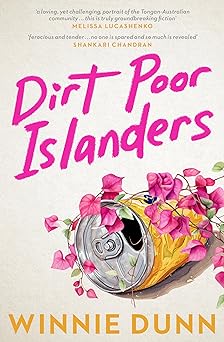
  • Winnie Dunn, Dirt poor islanders (Hachette Australia) (on my reading group’s 2025 schedule): debut novel by a Tongan Australian writer
  • Julie Janson, Compassion (Magabala Books): sequel to Benevolence (my review); this author’s first listing
  • Siang Lu, Ghost cities (UQP): Lu’s first shortlisting for the MF
  • Fiona McFarlane, Highway 13 (Allen and Unwin) (kimbofo’s review): McFarlane has been shortlisted before; but this book straddles the short story/novel divide. I’m keen to read it.

Some random observations:

  • Five of the six shortlisted writers are writers of colour, reflecting the increasing diversity in Australian publishing.
  • Two of the shortlisted writers – Castro and Lu – are male, but a male writer has not won since 2016 (AS Patrić’s, Black rock white city – my review).
  • “Each of the six books investigates race, class and gender in contemporary Australia but in different ways. It’s very hard to compare books like Ghost Cities and Dirt Poor Islanders because they’re written in such distinct ways, but they both encourage us to think about narrative and who owns stories” (from Sarah L’Estrange of the ABC).
  • One of the books, Highway 13, is more like a short story collection, and others are “quite formless”, says Declan Fry (of the ABC) who approves the trend.
  • There’s a wide spread of publishers, including a few independent Australian ones, which is always good to see as these small publishers do the hard yards with our literary writers

For more discussion by the ABC RN’s book people – on the shortlist and on each of the books – check out this page.

For posterity’s sake, here was the longlist

  • Brian Castro, Chinese postman
  • Melanie Cheng, The Burrow (my review)
  • Michelle de Kretser, Theory & practice
  • Winnie Dunn, Dirt Poor Islanders
  • Julie Janson, Compassion
  • Yumna Kassa, Politica (on my TBR)
  • Siang Lu, Ghost Cities
  • Fiona McFarlane, Highway 13
  • Raeden Richardson, The degenerates (Lisa’s review)
  • Tim Winton, Juice (kimbofo’s review

Each of the shortlisted writers will receive $5000 from the Copyright Agency’s Cultural Fund, with the winner receiving $60,000 prize.

This year’s judging panel comprises Richard Neville (Mitchell Librarian of the State Library of NSW and Chair), Associate Professor Jumana Bayeh (literary scholar), Dr Mridula Nath Chakraborty (literary scholar and translator), Professor Tony Hughes-d’Aeth (literary scholar and author) and Professor Hsu-Ming Teo (author and literary scholar).

ArtsHub, from which I drew the names on the judging panel, quotes the judges as saying:

“The shortlist for the 2025 Miles Franklin Literary Award celebrates writing that refuses to compromise. Each of these works vitalises the form of the novel and invents new languages for the Australian experience.”  

“Vitalises the form of the novel” and “invents new languages for the Australian experience” sound positive to me. Finding language for our experience is the issue, many of you will recognise, that I’ve found constantly in my Trove searches about Australian literature. It’s something that should never stop. As our society changes (its makeup for a start), so does our culture, and so also should the language we use to explore and reflect that.

The winner will be announced on 24 July

What do you think of the shortlist?

Monday musings on Australian literature: Forgotten writers 12, Catherine Gaskin

Of all my Forgotten Writers posts, this one is the most questionable because I’m not sure she is completely forgotten. For baby-boomer and I think some Gen X readers, Catherine Gaskin was a household name. Just ask Brona who reviewed her 1962 novel I know my love, and said in her post that she’d read her mother’s whole bookshelf of Gaskins. But, Gaskin has, I believe, now slipped from view and is worth a little post. Her big, breakout novel was her sixth, Sara Dane (see Wikipedia), which was published in 1954. It remained popular through the 1960s to 1980s, when it was adapted to a miniseries in 1982. So, who was this writer …

Catherine Gaskin

Catherine Gaskin (1929-2009) was, says Wikipedia, a romance novelist – but I seem to remember her books as being historical fiction so I’d say her genre was mostly historical romance. She also included mystery and crime in her stories, at times. The youngest of six children, she was born the same year as my mother, but in County Louth, Ireland. She was not there long, however, as when she was only three months old, her parents moved to Australia, settling in the Sydney beach suburb of Coogee. She wrote her first novel, This other Eden, when she was 15 and it was published by Collins two years later, while she was still a schoolgirl. It sold 50,000 copies, and she never returned to school.

After her second novel, With every year, was published, she moved to London with her mother and a sick sister, Moira (who also published two novels). Three best-sellers followed, Dust in sunlight (1950), All else is Folly (1951), and Daughter of the house (1952). Wikipedia lists 21 novels to her name. In his obituary, Stephens tells that as a child she had loved reading, and read such authors as Ernest Hemingway, Graham Greene and Scott Fitzgerald. 

According to Wikipedia, she completed her best-known work, Sara Dane, on her 25th birthday in 1954, and it was published in 1955. It sold more than 2 million copies, was translated into a number of other languages, and was made, as I’ve said above, into a television mini-series in 1982. It is loosely based on the life of the Australian convict businesswoman Mary Reibey. Stephens writes that ‘a Herald critic described the novel as “most readable”‘ although the critic also suggested “that Gaskin’s understanding of history was not deep”. He says that “after Sara Dane, many of her books were overlooked by critics, although welcomed by readers”.

At least three of her novels – Sara Dane, I know my love, and The Tilsit inheritance – were adapted for radio, by Australia’s Grace Gibson Radio Productions, and many others besides Sara Dane, were translated into other languages.

Gaskin met the man who became her husband in London, and they married in 1955. He was a TV executive and 19 years her senior. They lived in various places together, including the USA, the Virgin Islands, and Ireland. However, she returned to Sydney at the end of her life, and died there in September 2009.

I was inspired to write this post by some research I did for the #1970 Year Club last year. Journalist Rita Grosvenor visited her in Ireland around the time of the publication of her novel, Fiona. Grosvenor writes that:

She is among the elite of the world’s women novelists, with such a faithful following of readers she can be sure that every time she produces a new book it will sell 50,000 copies in hard-cover – and that’s more than most authors sell with a handful of books. With paperback sales she often passes a million.

Grosvenor’s article was for the Australian Women’s Weekly, so there’s much about her living arrangements and house, but towards the end, she shares Gaskin’s thoughts about her writing. Despite her success, Gaskin is depressed every time she starts a book, fearing that “this time it is not going to work out, but somehow it does”. However, she says:

“I know I can never be a Graham Greene, but I always want to improve within my limitations. I’m a perfectionist.”

As Stephens writes, “she knew her limitations but didn’t like being regarded as a romantic writer”. She saw herself as “an entertainer and good craftswoman who married romance with history and studies of such subjects as trades and places”. 

According to Stephens, Gaskin retired after her last novel, The charmed circle, was published in 1988. She wanted to travel with her husband, without publishers’ deadlines. So, they did travel, apparently, until his death in 1999. She then moved to Mosman, in Sydney, and spent the rest of her life there. Stephens quoted her as saying, ”I am not an Australian by birth but I think like one”.

Have any of you heard of or read Catherine Gaskin?

Sources

Charles W. Chestnutt, Uncle Wellington’s wives (#Review)

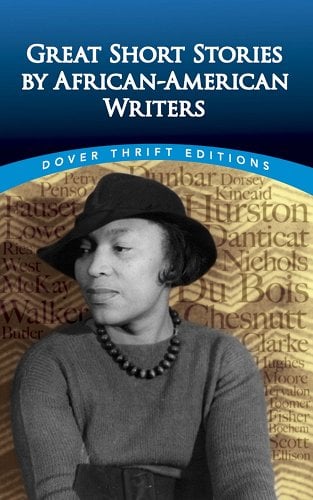
Charles W. Chestnutt’s long short story is the second in the anthology Great short stories by African-American writers sent to me by my American friend Carolyn. I have come across Chestnutt before, in the Library of America’s Story of the Week program, but they haven’t published this one and I haven’t written about him before.

Charles W. Chestnutt

The biographical notes at the end of the anthology provide a brief introduction to Charles Waddell Chestnutt (1858–1932), whom they describe as the “first commercially successful African-American writer of fiction”. Born in Cleveland, Ohio, and growing up in North Carolina, he “became a teacher, married, and moved to New York City, before returning to Cleveland, where he studied law”.

Wikipedia, of course, provides more. They describe him as “an American author, essayist, political activist, and lawyer, best known for his novels and short stories exploring complex issues of racial and social identity in the post-Civil War South”. His racial background is interesting, and I will quote Wikipedia here (without the references/links which cite sources for descriptors we no longer use):

His paternal grandfather was known to be a white slaveholder. He identified as African-American but noted that he was seven-eighths white. Given his majority-European ancestry, Chesnutt could “pass” as a white man, but he never chose to do so. In many southern states at the time of his birth, Chesnutt would have been considered legally white if he had chosen to identify so. By contrast, under the one drop rule later adopted into law by the 1920s in most of the South, he would have been classified as legally black because of some known African ancestry, even in spite of only being one-eighths black.

The anthology says that some of his best-known – and popular-at-the-time – stories, reproduced the dialect of uneducated storytellers, and Uncle Wellington is one such. Like this anthology’s first author Alice Ruth Moore, Chestnutt wrote about the color line, oppression, and themes of racism.

“Uncle Wellington’s wives”

I was rather tickled when I started reading “Uncle Wellington’s wives” because it delightfully pairs with the novel I had just read, Percival Everett’s James (my review). It is set post Civil War and satirically deals with the lure of the freedom of the North. The anthology describes it as ‘one of his fine and wry stories about “the Color Line”, a line that had consequential legal and social repercussions’. It tells of Uncle Wellington who, “living in a small town in North Carolina … yearns for something beyond his comfortable home with his impatient, hard-working wife”.

According to Wikipedia, the collection from which this story has been taken, includes many themes explored by 20th-century black writers. One of these, “the pitfalls of urban life and intermarriage in the North”, underpins “Uncle Wellington’s wives”. The story is built around the trope of a disgruntled, and somewhat lazy, husband – the titular uncle Wellington – of a hardworking, practical woman who keeps the show on the road. It opens with uncle Wellington Braboy returning home from a lecture at a meeting of the Union League (see Wikipedia) on the topic of “The Mental, Moral, Physical, Political, Social and Financial Improvement of the Negro Race in America”. It’s a topic, says the narrator, that is common in “colored orators” because “to this struggling people, then as now, the problem of their uncertain present and their doubtful future was the chief concern of life”. But, there was hope, and this speaker had “pictured in eloquent language the state of ideal equality and happiness enjoyed by coloured people at the North”. Indeed, the “mulatto” speaker had “espoused a white woman”.

Chestnutt tells of how the now inspired uncle Wellington goes about getting to the North to experience this land of milk and honey, this seemingly “ideal state of social equality”. He goes to a local lawyer to find out whether his wife’s money is his to control. It is, and it isn’t, he learns in a wonderful discussion of the finer points of law. Later, this issue of law’s finer points comes into play again when, now up North, he wants to get out of a marriage. The satire on the law is delicious.

Indeed, the satire throughout this story is delicious as uncle Wellington comes to appreciate the truth of that adage that “life is not always greener”. There might be more legal equality in the North, but that doesn’t mean people are equal. People don’t change overnight. White people don’t suddenly all treat coloured people as “equal”, regardless of what the law says. Coloured people can’t immediately achieve “equal” jobs, because they don’t have the skills and/or the education and/or the contacts. This is not all spelt out in the story, but it’s apparent nonetheless through what happens to uncle Wellington.

I mentioned at the start that an underlying trope for this story is the disgruntled, lazy, husband of a hardworking, practical woman. However, there are other tropes, including the prodigal son story. There are also other themes, besides racial equality, including that of the problems of illiteracy and poor education. Uncle Wellington’s not being able to read, for example, lays him open to not understanding his rights, or the law, and so on. It doesn’t play out badly here but we see the pitfalls and the risks he faces.

In the end, this story – without spoiling it too much – is not a tragedy. Chestnutt is generous to his protagonist, and so uncle Wellington learns a lesson without suffering too much. We see the truth in his wife aunt Milly’s response to him early on

“I dunno nuffin’ ’bout de Norf,” replied aunt Milly. “It’s hard ’nuff ter git erlong heah, whar we knows all erbout it.”

For aunt Milly, life with the people you know in the place you know is hard enough. This truth is repeated, in a different way, by the coloured Northern lawyer:

“Well, Mr. Braboy, it’s what you might have expected when you turned your back on your own people and married a white woman. You weren’t content with being a slave to the white folks once, but you must try it again. Some people never know when they’ve got enough. I don’t see there’s any help for you; unless,” he added suggestively, “you had a good deal of money.”

For Chestnutt, I understand, there’s the issue of loyalty to your race or people, or, to look at it the opposite way, of racial treason. The point is that there are no simple answers. Life and living are complex. Equality is the goal, but it doesn’t come easily, and it doesn’t come by denying your own. It comes with mutual respect and equal opportunity. These don’t change overnight. The Chestnutt Archive writes that:

As a young educator in Fayetteville, Chesnutt had remarked on the “subtle feeling of repulsion toward the Negro common to most Americans”; and yet he concluded that “the Negro’s part is to prepare himself for recognition and equality.” 

These ideas quietly, without didacticism, underpin “Uncle Wellington’s lives”.

Charles W. Chestnutt
“Uncle Wellington’s wives” (first published in The Atlantic Monthly, 1898)
in Christine Rudisel and Bob Blaisdell (ed.), Great short stories by African-American writers
Garden City: Dover Publications, 2015
pp. 5-35
ISBN: 9780486471396
Available online at ClevelandStateUniversityPressbooks