Stella Prize 2021 Winner announced

Unfortunately – though not really – I was not able to “attend” the online announcement as I did last year, as I’m spending a few days in the Snowy Mountains with Mr Gums and two friends.

Before I announce the winner, which most of you will have heard by now anyhow, here is a quick recap:

  • the longlist was announced on 4 March; and
  • the shortlist was announced on 25 March: Rebecca Giggs’ Fathoms: The world in the whale (non-fiction); SL Lim’s Revenge (fiction); Laura Jean McKay’s The animals in that country (fiction); Louise Milligan’s Witness (non-fiction); Mirandi Riwoe’s Stone sky gold mountain (fiction); Evie Wyld’s The bass rock (fiction)

And the winner, from 160 entries, is British-Australian author Evie Wyld’s The bass rock. Jaclyn Booth, Stella Prize’s Executive Director, called it “a gripping novel that is unlike anything I’ve read before”, and judging panel chair, Zoya Patel, says that it “forces the reader to think and engage with the unique narrative structure, but in a way that feels effortless, so engaged are you by the story.” It deals with the legacy, and trauma, of male violence, so is very much a “zeitgeist book”, which is to say, it’s relevant to our times. I must read it, as I have the previous fiction winners …

It is the fifth work of fiction to win in nine years. The previous four were Heather Rose’s The museum of modern love (2017, my review), Charlotte Wood’s The natural way of things (2016, my review), Emily Bitto’s The strays (2015, my review), and Carrie Tiffany’s Mateship with birds (2013, my review).

You can read more about the book on the Stella website.

The winner receives $50,000, and each long and shortlisted author also receive monetary prizes.

If you have any comments on the winner, please share them with us.

Monday musings on Australian literature: Writing about the war between the wars

By accident, really, I came across an article from the 1930s in Trove about war novels. However, with Anzac Day coming up here in Australia next weekend, it seemed apposite to follow up. So, I did – and was somewhat surprised by what I found.

Not surprisingly, World War 1 was still fresh in people’s minds in the 1930s, and there were many opinions on how war should be written about. Erich Maria Remarque’s now classic All quiet on the Western Front was particularly controversial at the time and discussions about it provide some insight into those opinions. First published in 1928, it appeared in English in 1929 (translated, in fact, by an Australian, Arthur Wesley Wheen, himself a World War 1 soldier.)

“the most graphic picture I have had of the war” (Woman reader)

All quiet on the Western Front was a big hit, particularly with women readers. An article in the Port Adelaide News (14 March 1930) reports that “the popularity of the war novel is still maintained in England, where every girl typist seems to have read All quiet“. Apparently one Council Library system had bought a record number of 126 copies of the book, but they had 553 people on their waiting list. Unfortunately, the article said, “borrowers, strong in that possession which is nine ‘points of the law are lending All quiet to relatives and friends before returning it”. (Love it!)

Here in Australia All quiet was also popular with women, as The Herald (14 February 1930) reported in its article, “VC attacks war novels”. Captain W.D. Joynt V.C., speaking at a Legacy Club luncheon, denounced “recent war books” including All quiet. At the luncheon, Captain Peters, of booksellers, Robertson and Mullen’s, said that women “had been the largest buyers and readers of the book”. It had “achieved such success that it was affecting the sale of wholesome [my emph] English novels”. He continued that the boom of interest in war novels “had brought out some good war books, but not many, and unless the protest was made the women and young people would get a wrong impression of the soldiers”. A motion had been put “to deplore” such books, but it failed, not because attendees disagreed but because they feared the motion would increase interest in the book!

So, what was the problem? Wikipedia summarises the controversies in its article, but I’ll share some of what I found in Australian newspapers. The main concern seemed to be that its presentation of war denigrated the heroism of the soldiers. It had too much “muck”. One speaker at the luncheon said that “the book showed contempt for the men who served at the war, and brought grief to dependents of men who fell at the war” while another said that the phrase “give ’em muck” was applicable to the book. He said he had “read one or two chapters and refused to go further. It is full of Continental grossness. The coarse language is superfluous. This type of book should be banned.”

Interesting that women were reading this “muck”.

The writer in Freeman’s Journal (10 April 1930) comments on the new fashion for war novels, saying that for some time people had had their fill of war news but

Now it has come into its own again, and, perhaps under the influence of the peace movement, it concentrates on the most repulsive aspect of war, sometimes deliberately trucking to the appetite of so many readers for word-pictures of the evil aspects’ of human life. Many of these novels are as wide of the truth and as repulsive as Zola’s La Debacle, which professed to give a realist picture of the war of 1870, but was a horrible libel on the people of France, representing her young soldiers as mostly imbecile fools or blackguards. 

He goes on to describe another novel – not Remarque’s – that has, as its central figure, an utterly incapable Anglican chaplain. He says:

It was by self-sacrifice and earnest efforts to be helpful that they [Anglican and Non-conformist chaplains] won the respect of the men. It is an insult to their memory to write of them as this novelist does, as if they were either hopeless failures or self-seeking idlers.

Similarly, the Singleton Argus (28 April 1930) reports on one Rev. C. J. Macaulay, who was the principal speaker at the West Maitland Anzac Day service. Macauley made “a scathing attack … on salacious war novels”. He doesn’t name any, but said they “paint vile pictures, not so much of war, as of the men themselves”.

Interesting that women were apparently reading these “vile pictures”.

Were women seeing something different? Were women, like Lady Kitty’s woman reader, appreciative of “the grim reality” that its opponents wanted to hide? Lady Kitty writes that “it is remarkable what a vogue war novels are having now, especially among women. The type of immediate postwar sentimental romance has given way to simple narratives which reveal the common soldier’s point of view.”

Writing about war

JP McKinney, Crucible

Meanwhile, in 1934, Australia’s RSL instituted a war novel competition. It was “open to all men and women who served abroad during the war as members of the Australian army, navy or nursing services”. The novel had to “depict the life of an Australian soldier during the war, and his reactions to the various conditions and environment through which he passed. The sequence of the story and descriptive matter must be historically and geographically correct”. It was won by JP McKinney (who, alert readers among you may know, was Judith Wright’s husband, though much later.) His novel was published as The crucible, in 1935.

During my research, I came across a letter to the editor written by McKinney concerning his novel, and writing about war. He was responding to reviewers who seemed to criticise his novel for being “largely recollections cast in the form of fiction” or “more or less autobiographical”. (Helen Garner knows the feeling!) McKinney wanted to correct these misconceptions. He writes:

A writer of fiction is permitted, by the canons of his art, to draw for his material upon both his own and other peoples’ experience and upon his imagination, the only demand made of him being, if his work is to be judged as literature, that he keep within the bounds of probability. His accepted function is to illuminate life— or at least that aspect of it which he treats —from all angles. The greater the fidelity to life and actuality the greater his achievement. 

But, he says, people seem to see war fiction differently:

In the case of the war novelist, however, it appears to have become unconsciously assumed that he shall write only of what he knows from his own actual, personal experience; and he is either denied, or assumed not to have availed himself of, the privilege of his fellow craftsmen of ranging into the realm of what may be called created fact. 

So, he writes, “I granted myself the fiction writer’s full privilege, the only restriction I placed upon myself being that I make no sacrifice of truth to dramatic effect”. The characters are all created he said; they’re “types” not “persons”.

J.P. McKinney did go to war, but, some readers here may be interested to hear the words of T.C. Squire, editor of London Mercury (reported in Tasmania’s Advocate, 10 January 1930). He was critical of the current crop of war novels, like Remarque’s, suggesting that they came out of “hysteria” rather than from thinking, compassionate, “religious” men. He concluded his comments with

And it may be that the novel of this war (there is precedent for it) may come from some Tolstoi or Hardy of the future, who never saw a bullet fired and never looked in the face of the unnecessary dead.

And here, I’ll conclude with Henry Savage from The Port Adelaide Gazette (10 January 1930). He was, I think, a local businessman and religious official. He wrote about war novels:

There is a great difference between the horrors of war and reading of its horrors; between reality, that is to say, and the interpretation of reality in terms of art. Will the story of Eden ever stop simple Adam from being lured to his hurt by curious Eve? Will Hamlet make a man of action out of a dreamer and give him faith and resoluteness? Can it be done?

Ignoring Adam-and-Eve, I pass his question on to you!

Arthur Gask, The passion years (#Review, #1936Club)

A couple of weeks ago, I posted a Monday Musings in support of Karen (Kaggsy’s Bookish Rambling) and Simon (Stuck in a Book) #1936 Club, which involves participants reading, posting and sharing books from the chosen year.The #1936 Club has been running, 12-18 April, which means it is about to finish.

In my post I listed a number of potential books for me – or others – to read (and noted those from the year that I’ve read in the past.) Unfortunately, I did not find the ones I wanted to read, so I decided to do something different, read a short story! The first short story I considered was Ernest Hemingway’s The snows of Kilimanjaro, which was first published in Esquire in 1936, but, I really wanted to do an Australian story – so, back to the drawing board. And, at Project Gutenberg Australia I found a short story published on Boxing Day (26 December) 1936 in, wait for it, The Australian Women’s Weekly! Nothing ventured, nothing gained I thought so in I dived. It’s called of course, “The passion years”.

Published in a women’s magazine on Boxing Day, it is, as you would guess, a romance. It’s past midnight and two women – “all pink and white in their robes-de-nuit” and looking “pretty enough to eat” – are chatting, one of them telling the other about her brother’s romance:

It seems just like a tale one reads and, of course, it’s a very sentimental one, too. Oh, no dear, you take it from me sentiment is not all sickly, and only those say it is who are getting old and sickly themselves. Sentiment’s the most beautiful thing in all the world, and when you’re first in love, well, the sentiment there is just too holy and too sacred to understand.

As the story goes, her brother had lost all his money in a horse race and at the same time a wealthy young woman falls for him, but, being a proud and responsible man, he withdraws when he realises she is showing interest in him because he doesn’t want to be a fortune hunter. You can guess how it works out, but what adds to the story is the perspective and world view offered by the narrator. Our teller asserts that “a baby’s only what every girl who’s really in love looks forward to”. The story is very much of its time and place, highly gendered, but it is nicely written.

However, of more interest is the writer, Arthur Gask. The Australian dictionary of biography (ADB) describes him as a dentist and novelist. Born in England in 1869, he came to Adelaide, Australia, with his second wife, in 1920. He was particularly a crime writer, and was prolific as Wikipedia and the Project Gutenberg Australia show. His first novel, The secret of the sandhills, was published to immediate success in 1921, partly he believes due to the reviews by S. Talbot Smith. Wikipedia says he wrote it while waiting for his patients!

Gask went on to write over thirty books, as well as countless short stories. He gave up dentistry in 1933, and bought a farming property, which he names Gilrose, after his detective, Gilbert Larose. However, apparently most of his stories were set in England. ADB’s Michael Tolley described his writing as pacy and sometimes titillating, and says that his works were translated into several European languages, were serialised in newspapers, and broadcast on radio.

For interest, I tracked down a local review of his posthumously published novel, Crime upon crime. The review was written by AR McElwain in Adelaide’s The Mail on 4 October 1952. I was interested in his comment on the writing

Prolific Mr. Arthur Gask of Adelaide (SA) has a remarkable facility for blending sordid crime with old world charm So much so that I am usually more fascinated by his prose style than by the actual cases …

He also provides insight into Gask’s detective:

Our old friend, Gilbert Larose introduces some unorthodox sleuthing. But there’s a Gaskian explanation for it all, never fear. Larose is simply “acting up to his reputation as a man who always places justice above law.”

McElwain’s comment on Gask’s writing points to why he most drew my attention. His writing was also admired by novelist, HG Wells, who called Gask’s 1939 novel, The vengeance of Larose as his “best piece of story-telling…It kept me up till half-past one.” In addition, philosopher Bertrand Russell also loved his books. Russell corresponded with Gask, and visited him in Adelaide in 1950, when Gask was 81 and Russell 78.

According to Wikipedia, Gask was still writing two 80,000-word novels a year when he was nearly 80. Prolific indeed.

So, my contribution to the #1936club is small, but I’m thrilled to have finally taken part and to have discovered another Aussie writer.

Did you take part in the 1936 Club?

Trevor Shearston, Hare’s fur (#BookReview)

While I want to, I often don’t manage to follow up books recommended by Lisa but Trevor Shearston’s Hare’s fur particularly caught my attention. He was an Australian author I didn’t know; the novel is set in the Blue Mountains; and the protagonist is a potter, which sounded intriguing. So, I bought it – over a year ago, in fact, when I had a bookshop gift voucher to spend – but have only just managed to squeeze it into my schedule.

It’s a lovely read. However, I was surprised to discover that Shearston has published several novels, and a short story collection. His 2013 novel Game, about bushranger Ben Hall, was longlisted for the Miles Franklin Award, and shortlisted for the Christina Stead and Colin Roderick awards. Hare’s fur is quite a different book – at least, ostensibly, as I haven’t read Game to know its style or underlying concerns!

So, Hare’s fur. It tells the story of Russell Bass, a recently widowed 70-something potter living in the beautiful Blackheath area of the Blue Mountains. Unlike his potter son-in-law, Hugh, Russell sources the rock for his glazes in the canyons below his home. On one of his forays – to a remote creek that he thinks only he visits – he hears voices, and, on further investigation, discovers three children living in a cave, teen Jade who is looking after her younger sister Emma and little brother Todd. They are, he discovers, hiding from child welfare (DoCS) and the police. What would you do? The novel – novella, really, I’d say – tells the story of the relationship that develops between these four, and how Russell navigates this tricky human, legal and moral territory.

Now, before I go further, I was interested to see in Trevor Shearston’s GoodReads author page a book called The impact of society on the child: Proceedings of the inaugural annual meeting. I can’t find what his role was. It doesn’t seem he was editor or assistant editor, but, assuming he was involved, it suggests a formal interest in children’s well-being. Certainly, that is the essential theme of this novel. It’s about deciding what’s responsible and being generous, in the face of justifiable fear and lack of trust.

From Govett’s Leap, Blackheath

What’s lovely about this novel is that the adults involved – not just Russell, but, peripherally, his daughter and son-in-law who live 30-minutes walk away, and his neighbour – are open to solving this problem. They recognise the very real risks and challenges of Russell’s desire to protect the children, but they don’t resort to black-and-white solutions. I will leave what happens there, because one of the joys of the novel is following the various characters’ decisions and actions as they navigate this tricky situation.

Other joys of the novel include the writing, and particularly the descriptions of the landscape. Here is part of Russell’s walk down to his creek:

Tea-tree and lomandra had grown across the opening of the abandoned lookout. He pushed through the clumps of blades to the apron of lichened concrete and found the faint pad that only his feet maintained, skirting to the right of the platform through wind-sculpted casuarinas and hakea and more tea-tree to the cliff edge. There he stopped and removed his beanie and took the sun on his face and scalp. It was the last direct sunlight he would know until he stood again on this spot. …

He describes the birds and flowers, the colours and the misty coldness of the mountains, so beautifully.

The characterisation is good too. Told third person but from Russell’s perspective, we are privy to the feelings of this man who is still grieving his wife but is getting on with it. His daughter and son-in-law, and his neighbour, invite him over for dinner or drop meals on his doorstep, but he’s not helpless. He’s sad and a bit lonely, but he has his work. His relationship with the children is gentle, thoughtful and respectful. His response to Jade is wise,

She lacks education, he told himself, not intelligence. Don’t talk down to her.

Then there’s the title – hare’s fur. Hands up, if you know what it means? I didn’t, but it’s a special kind of brown glaze. Jade asks him how he turns the rocks into glaze. He tells her

… when it’s heated to a high enough temperature it’ll melt again. And, having lots of iron in it, that gives a black glaze. If I’m lucky, with streaks of dark blue, or red, or sometimes little brown flecks that look like animal fur.

One of Russell’s most treasured possessions is a valuable, 900-year-old hare’s fur tea bowl bequeathed him by a collector. Why the novel is titled for this is not obvious, but presumably part of it relates to the fact that this glaze is precious and rare, and needs to be nurtured like the children he has found. There’s a point where he shows Jade this bowl and lets her hold it. He tells her she can go look at it in his room any time, but asks her not to pick it up. Trusting her like this, with an object precious to him, is significant – but not laboured in the novel.

Hare’s fur is a positive book about the importance of trust and respect, and of being open to others. It’s also about how lives can be remade. Russell is as lucky as the children that they found each other.

Trevor Shearston
Hare’s fur
Melbourne: Scribe, 2019
194pp.
ISBN: 9781925713473

Monday musings on Australian literature: Forgotten writers 1, Helen Simpson

Do you often wonder how many of the writers we love now will still be read a few decades on? How good are we at identifying those who will continue to be read? So-so, I think you’ll agree if you’ve noticed the many unfamiliar, but well-regarded-at-the time, names amongst the authors mentioned in my various historical posts. It is this that has inspired me to start a new, occasional, Monday Musings sub-series on forgotten Australian writers.

Helen de Guerry Simpson, ca 1935, photographer unknown. (Public Domain, via Wikipedia)

First up, I’ve chosen an interesting one because of her complex relationship with Australia. She’s Helen Simpson, or, more fully, Helen de Guerry Simpson, who was born in Sydney, Australia, in 1897 and died in Worcestershire, England, in 1940.

I’ll start with a brief bio. Simpson was born in Australia and lived here until 1914, when, at 16 years old, she went to England to join her mother who had separated from Simpson’s father several years previously. After that, Simpson spent very little time in Australia, as far as I can tell from the Australian Dictionary of Biography. She returned in 1921 for her brother’s wedding, but was back in England by February 1924. She was in Australia again briefly in 1927, but was back in England that year, as she married there in 1927. Her husband was Australian-born Denis Browne, interesting to us because his uncle was Thomas Alexander Browne (aka Rolf Boldrewood). However, he was significant in his own right as the Father of Pediatric Surgery. Simpson came back to Australia in 1937, to give a series of lectures for the ABC, but was gone again by 1938. Sadly, she died of cancer in 1940.

So, she was Australian, even though Arnold Haskell wrote in 1944 that Katharine Susannah Prichard, Helen Simpson and Henry Handel Richardson “are so well known in England that they are accepted as English writers”! Colin Roderick included her in his 1947 book Twenty Australian novelists, and Zora Cross includes Simpson in her list of writers who started here but then moved abroad.

Starting here is a bit of a moot point. The ADB says that she published several short plays and founded the Oxford Women’s Dramatic Society before her 1921 Australian visit. However, in 1921, Angus and Robertson did publish her Philosophies in little, “a collection of her own verse with her translations from French, Italian and Spanish”. In 1922, ADB also says, she entered a play about Benvenuto Cellini, A man of his time, in the Daily Telegraph literary competition. It was staged the next year by Australian theatrical producer Gregan McMahon. ADB says he only produced four Australian plays between 1920 and 1927, so that’s surely a feather in her cap.

Novels

Simpson wrote 13 novels between 1925 (Acquittal) and 1940 (Maid no more). A few were collaborative works, including a couple of detective novels written with Clémence Dane. She also wrote verse, plays, short stories and non-fiction works.

The Oxford companion to Australian literature (2nd ed.) devotes almost a full column to her. It says that two of her novels had Australian content – Boomerang (1932) and Under Capricorn (1937) – and that her “trio of fantastic novellas”, The woman on the beast (1933), includes one set in Australia in 1999! (Links are to Project Gutenberg Australia.) Two of her novels, one being Under Capricorn, were filmed by Alfred Hitchcock.

So, how good was her writing? Let’s start with Miles Franklin who mentions her in her diaries. She writes in August 1936:

Helen Simpson: one of the giants. Perhaps she would have wiped Brent [of Bin Bin, or Miles herself] out of his field had she not relinquished it. The lively vitality and inherent understanding of the Australian scene in Boomerang show what we lost, what England has gained. Again, in the third division of The woman on the beast in a sketchy, impressionistic effort, she indicates what she could have done to take Australia by the back of the collar and shake her to a sense of her asininity, her pathetic enslavement to an old sectarian controversy–a worse importation than the foxes and other noxious weeds. But H.S. left her country for her own great literary success.

Australian writer Coralie Clarke Rees, in an extensive article in The Sydney Morning Herald (1 June 1937), agrees, calling this “third division”

an imaginative “tour de force,” showing Australia, as the last stronghold of the old order of religion and politics, being invaded by a woman evangelist of the new totalitarian order, whose character seems an ingenious compound of that of Aimee Semple MacPherson and Mary Baker Eddy.

However, Miles Franklin later (around March 1940) modified her view of Boomerang, noting its “melodrama and disjointedness”, and Katharine Susannah Prichard, writing to Miles Franklin on 1 July 1932, says that

HM Green [see my recent Monday Musings post], of Sydney, writing to me the other day, said he liked it [Back to Bool-Bool] much better than Boomerang

Now, here I’m going to share the opening of Boomerang, which won the 1932 James Tait Black Memorial Prize:

Life can afford extravagance, books cannot; for this reason nobody will dream of believing in my two grandfathers. They are too true to be good–good fiction, at any rate; if I try to give some kind of picture of them, it is because they frame between them a vision of a golden age, which could only have existed in brand-new countries, among brand-new circumstances and laws. It was not a golden age for everybody, wives or servants for instance, but for these two it was; they were, to use a word which is almost dead, characters.

I am sorry to think what would happen to these two old gentlemen if they had the misfortune to live now; it would be something legal, that is certain, falling heavily to crush their magnificent egotism and eccentricity. Their wives, who in the ‘seventies put up with them with the uncomprehending patience accorded by Insurance Companies to Acts of God, would nowadays divorce them. Servants would bring, and win, actions against them for assault. As for their families, these would scatter immediately after the first row or two, and go forth to earn their livings with all the horrid freedom that the post-war period accords …

I love this cheeky tone, and her reference here (and in the Foreword) to the fact that fiction cannot be as “extravagant” as life! The Oxford companion says that Boomerang and Under Capricorn “have involved, highly coloured plots, lightly sketched but credible characters, and a lively, humorous and sophisticated narrative style”. This, in fact, summarises what I found in Trove.

So, for example, The Sydney Morning Herald reviewing (16 February 1932) Boomerang describes its rather wild episodic plot and thinks its characters are not particularly well-drawn, but argues that:

It can safely be said that no Australian novelist for many years has provided such an exciting tale, or handled separate scenes and episodes with such liveliness and wit.

I particularly enjoyed respected academic of the time T. Inglis Moore who wrote that:

it is in the romances, Boomerang and The woman on the beast in particular, that Helen Simpson has found her metier. In them she stands out amongst Australian writers as a witty romantic, a teller of vivid tales spiced with satire, tinged with wit.

His article (linked on his name above) in the Sydney Morning Herald (7 August 1937) offers a thoughtful, even-handed analysis of her, and is well worth reading. He recognises that she can be “romantically theatrical, artificial, escapist”, but, assessing her place in Australian literature, he says:

Amongst the contemporary novel-writers one stands supreme. No other Australian comes within cooee of Henry Handel Richardson. Then comes, well, Katharine Prichard, shall we say, along with Brent of Bin Bin? And here, somewhere, must come Helen Simpson.

He concludes with:

Taking her all in all, she is perhaps the most “intelligent” of contemporary Australian novelists in the sophisticated sense, and, along with Christina Stead, the wittiest.

This is strong praise. So what happened? Where did she go? Was her style not strong enough overall to overcome her plots and characters? Or, is it just a matter of fashion? Whatever, I have greatly enjoyed reading about this woman, and may very well share a bit more about her in the future because she was quite a character.

Printed sources

Brunton, Paul (ed.) The diaries of Miles Franklin (2004)

Ferrier, Carole (ed.) As good as a yarn with you (1992)

The Oxford companion to Australian literature, 2nd ed. (1994)

Margaret Hickey, Rural dreams (#BookReview)

Rural dreams is another collection of short stories from small independent publisher MidnightSun, and it’s another good one. I hadn’t heard of Margaret Hickey before, but her website says that she’s won a number of awards and is a performed playwright. Relevant to this book is that Hickey grew up in small country towns in Victoria and currently lives in that state’s northeast. In other words, in this book about rural lives, she knows whereof she speaks.

Like most short story collections, Rural dreams comprises stories told in different voices and points-of-view. The narrators, male and female, range from teens to the middle-aged, and the stories are told in first person and third person voices, with one told second person. The tone varies from funny to sad, from reflective to scary, and the subject matter represents a wide gamut of rural lives, from those who have left to those who want to leave, from those who are farmers to those who are sea-changers. And, of course, it encompasses a range of rural issues, to do with farming, dying land and dying towns, for example, as well as those more universal human issues involving love and loss, joy and fear.

I greatly enjoyed most of the stories – there’s usually one or two in a collection that doesn’t quite connect. The opening story, “Saturday morning”, fired the perfect opening salvo. Told third person, it’s about a young engineering student named Simon who now lives in a share house in Melbourne but who gets up early every Saturday morning, through winter, to drive about three hours home to play football. Even he wonders why he does it, given the way it disrupts his weekend, but, as he hits “the shire boundaries”

… there it comes, that big ball of a sun, that big ball of orange rising up over the horizon. It jolts him every time. Rays light up the stone fences, hit the trees and illuminates the paddocks. The old gums shimmer green and grey in the early morning light and world appears golden quiet. It’s like it is every Saturday, a new era.

They might have a chance today.

He’s home.

“This place, it gets to you”, says the old coach, in “Coach”. And place, of course, underpins most of these stories, whether it’s the Wimmera or Mallee or Ninety Mile Beach in Gippsland.

Counterpointing our narrator in “Saturday morning” is the young Year 12 student in the next story, “Glory days”. Living in the dry Wimmera, he is sweating his ATAR score, dreaming of escape to the city where there’ll be “no more discussions about rain and cows, it will be all about novels and films and experience”.

And so the stories continue, wending across the state, and further afield. “A bit of scrapbooking” promotes the joys of living in the oft-maligned Surfers Paradise in southeast Queensland. Reminiscent a little of Kath and Kim, this story contrasts our narrator’s life in Surfers with her son’s and his partner’s in Melbourne. She just can’t understand his move there for, he told her, “a bit of culture”:

Well, I’ve never understood that. We’ve got culture all around us up here.

Take Jupiter’s Casino–it’s full of all sorts! You’ve got your Sheiks, your Maoris, your South Australians. And you can buy your sushi, your ravioli and your chicken schnitzel in every dining establishment. Every kweezeen you like.

A first person voice is the perfect choice for this story. It made me laugh. Its humour combined with a warm touch at the end makes it just the right antidote – can an antidote come first? – to the darker story, “Desolate”, which follows. This story, and the longest one in the collection “The Precipice”, are the darkest stories here. In “Desolate” our sea-changing narrator from St Kilda, whose “barely disguised air of yuppiedom did little to hide the threat of violence that lurked beneath”, finds that beautiful deserted beaches harbour their own issues. The opening to this story is deliberate:

It’s one of those days that almost kills you; it’s that beautiful.

In “The precipice” and “The Renovation” the titles are pointedly metaphorical, with the former being about domestic violence which is clearly not confined to cities. This story builds up slowly from a therapeutic bushwalk to one of horror for the three women involved. The end, though, is perfect. Hickey, who clearly loves rural living, is realistic rather than rosy about it. She references violence, drought, and issues like the potentially damaging health impact of chemicals, without being didactic or polemical. She know the characters too, like the middle-aged man still living at home who just “likes birds” of the feathered variety (“Twitcher”) or “town weirdo” Joe who cares about the land regardless of the locals (“Overcoat Joe”) or the single-mum who stands up for her scholarship-winning son at his hoity-toity private school (“Mind your language”).

As many contemporary Australian writers are increasingly doing, Hickey also incorporates references to Indigenous Australian lives and culture. She doesn’t attempt to speak for them, but these references suggest an awareness that’s important. Anna, in “The precipice”, remembers a place called “the Leap for the stories of Aboriginal families herded there by whites in the early days of settlement”; Ruby in “The renovation” is told about the middens in the community she’s moved to; Peter remembers the scar trees in “Binky”.

Finally, while the stories are stand-alone, a few are subtly linked. Kate Brunt, a netball player from the town mentioned by Simon (“Saturday morning”), is one of the young travellers in “The wanderer”. The coach (“Coach”) briefly mentions Simon. These links have no overall narrative significance, but they have a nice grounding effect.

Rural dreams is a love letter to rural Australia, one that recognises the tensions and challenges, as well as the warmth and community. Hickey gently mocks Australia’s ongoing romance with the bush, giving us instead an image that is real and human. A truly engaging read.

Challenge logo

Margaret Hickey
Rural dreams
Adelaide: MidnightSun, 2020
232pp.
ISBN: 9781925227680

(Review copy courtesy MidnightSun)

Bernadine Evaristo, Girl, woman, other (#BookReview)

If ever there was a “zeitgeist” book, Bernadine Evaristo’s 2019 Booker Prize winning novel, Girl, woman, other is it. It might be an English-set novel about black British women, “the embodiment of Otherness”, but its concerns, ranging from ingrained inequality, racism and sexism to newer issues such as globalisation, are contemporary – and relevant far beyond its setting.

Take, for example, sexual violence. One young woman, after being raped, is not sure exactly what happened:

    wondering if he’d done anything wrong or was it her fault
    she should have stayed and talked to him about it
    he might have said he hadn’t heard her saying no

(Chapter 2: LaTisha)

This could have been set in Australia, given discussions happening here right now. It is truly troubling how many young women apparently feel uncertain about what they’ve experienced, and turn it back on themselves. But now, having leapt in to make my “zeitgeist” point, I’ll start again, properly!

Girl, woman, other is an astonishing book, as most of my reading group agreed. It’s fresh and exuberant, but oh so biting too. As much poetry as prose, it has minimal punctuation and yet it just flows. It’s a risky book – what great art isn’t? – because, in addition to its idiosyncratic style, it comprises multiple points-of-view that move back-and-forth in time. There are four main chapters, each divided into three parts with each part in the voice of a different character. This makes 12 voices in all! The voices within each chapter are closely related in some way – mothers, daughters, friends – but the links between the four chapters are more subtle. This demands much of the reader.

Fortunately, the voices are captivating. Spanning over a century, they range from the ultra-confident 19-year-old Yazz, daughter of a lesbian mother, to 93-year-old Hattie, a strong-minded farmer and great-grandmother. All are women, and all have some genetic links with African or Caribbean cultures, some from a few generations back, others being themselves migrants. Through them, Evaristo interrogates a diversity of experiences and responses to colour, in particular, in contemporary England. Hattie’s mother, for example, had an Abyssinian father, and she herself had married an African-American GI. However, with the colour fading amongst her descendants, the family is less than happy when it is reintroduced by Julie who “saw not the darkness of his skin but the lightness of his spirit”. Hattie reflects

    none of them identifies as black and she suspects they pass as white, which would sadden Slim if he was still around 
    she doesn’t mind, whatever works for them and if they can get away with it, good luck to them, why wear the burden of colour to hold you back?
    the only thing she objects to is when they objected to Chimango when he arrived on the scene, a fellow nurse at the hospital where Julie worked, from Malawi
    Hattie was sickened by their behaviour, they should’ve been more enlightened 
    but the family was becoming whiter with every generation 
    and they didn’t want any backsliding

(Chapter 4: Hattie)

You can see how well the language flows, and how accessible it is. It’s experimental but unforced. You can also see the author’s approach to her subject matter, which is to show, through her characters, different behaviours, values and attitudes. With 12 characters telling of their interactions with even more people, the breadth of humanity Evaristo encompasses is breathtaking – and it is all done without judgement. Some characters might, and do, judge each other, but Evaristo doesn’t. She lets them speak for themselves, which requires us to read attentively.

So, when Dominique’s female lover increasingly restricts her life, we see abusive control long before she does. And, when 93-year-old Hattie’s mother, Grace, experiences postpartum depression in the early 20th century, it is not named. Who talked about that then? But we recognise it immediately.

Issues come and go in this novel, whether they are up-to-the-minute topics, such as Brexit or transgender rights, or ongoing issues in women’s lives such as violence or ageing. Underpinning it all, however, is race and inequality. Being “othered” is common to Evaristo’s characters, and they all deal with it differently, but we see very clearly its debilitating, devastating impact.

    oh to be one of the privileged of this world who take it for granted that it’s their right to surf the globe unhindered, unsuspected, respected

(Chapter 2: Carole)

By now you might be thinking a few things – that the novel is heavy-going, perhaps, or that it’s chaotic. But nothing doing. For all its seriousness – and there are definitely grim moments – the novel has a light touch, frequently bitingly satiric, sometimes simply funny, always human. Nineteen-year-old Yazz, for example, is a hoot with her teenage know-it-all confidence. Many recognise their failings, as they grow older, such as Amma appreciating her father too late or Carole realising her supportive teacher had feelings. Transgender Morgan, the epitome of the modern activist, speaks many truths:

    Megan was part Ethiopian, part African-American, part Malawian, and part English
    which felt weird when you broke it down like that because essentially she was just a complete human being

Chapter 4: Megan/Morgan

And, although the novel may sound chaotic, it does have an overarching structure. It starts hours before Amma’s play – the one she hopes will finally make her name – is to premiere at the National Theatre, and it ends with the After Party and an Epilogue, which, combined, bring most of the characters together. The ending, in fact, is clever. The After Party is political, drawing together the threads and reminding us that there’s a long way to go before black people in white societies are not defined by their colour. The Epilogue, on the other hand, is personal, showing us that there’s always human connection and that that, really, is the stuff of life – if only we could all see it.

Girl, woman, other is such a read. Uncompromising in its politics, but also warm and cheeky, it offers heart and intelligence in equal measure.

Bernadine Evaristo
Girl, woman, other
Hamish Hamilton, 2019
453pp.
ISBN: 9780241985007 (ebook)

Monday musings on Australian literature: 1936 in fiction

As some of you will know Karen (Kaggsy’s Bookish Rambling) and Simon (Stuck in a Book) have been running for some time “reading weeks, which involves their choosing, somewhat randomly, a year from which “everyone reads, enjoys, posts and shares wonderful books and discoveries from the year in question”. The next one is 1936, and happens from 12-18 April.

Despite my best intentions, I’ve not yet managed to take part, though I know several of my blogging friends have. I might this time – we’ll see – but, regardless, I’ve decided to focus on that year in my Monday Musings, a week in advance, to provide some inspiration perhaps?

1936 was a pretty tumultuous time in Europe with, for example, the Spanish Civil War, the 1936 Summer Olympics and Hitler’s aggressive display, not to mention the Nazis amping up their power and control. Things were generally quieter in Australia, with Joseph Lyons our Prime Minister.

Dymphna Cusack, Jungfrau

However, it was a busy time in literature, with several writers we know publishing novels (and other works but my focus here is novels). Here is a selection – links on names go to my posts on that writer:

There weren’t so many literary prizes then, as now, but Miles Franklin’s All that swagger won the 1936 SH Prior Memorial Prize for Australian Literature, and Eleanor Dark’s Return to Coolami won the ALS Gold Medal.

Several authors were born this year, including Marian Eldridge (one of the Canberra Seven), Robin Klein, Kate Llewellyn and Alex Miller.

The state of the art

Of course, I checked Trove to see what newspapers of the time were saying about Australian literature, and it’s pretty much as I’ve written in my other Monday Musings posts on the era – the ongoing concern about lack of recognition of Australian writing, of Australian writers having to go overseas to make a living, of most publishing of Australian authors happening overseas.

Perth’s Western Mail, announcing the publication of the Australian writers annual, starts with:

Too long have the Australian public been kept in ignorance of the wealth of literary work that is and has been done by Australian writers, the ranks of whom are increasing every year. Perhaps the fault lies with the reader, perhaps the reason can be found in a lack of publicity. 

Rockhampton’s Morning Bulletin focuses on the the quality of what is being produced, arguing that Australian literature, while naturally looking to England, “is gradually tending towards a measure of independence”. Indeed, citing Henry Lawson and CJ Dennis (admitting “he may not touch greatness”), this writer says that “brief as is our history, it has developed its own romanticism”.

The Hebrew Standard of Australasia also argues that things are improving, but names women writers. It says:

It is not so many years ago since the prefix ‘Australian’ when applied to anything literary, artistic, or cultural, provoked the ire of editors and the sneers at would-be highbrows. Yet, even then, much, had been done by writers here in our midst to put Australia into a very appreciable place on the literary map. 

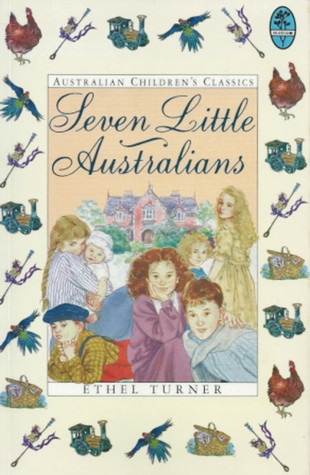
It then names Ethel Turner (whose writing for children avoided “the stilted and moral” stories common at the time). It continues to say that, what Turner did for children’s literature, others are “endeavouring to do for literature in general”. Unfortunately, though, confirming my opening paragraph, it says that “many of our best have had to go abroad to achieve fame, such as Henry Handel Richardson and Helen Simpson”. However, confirming Western Mail’s supposition, it suggests that “we still have many people with us whose work, given proper publicity [my stress], would make the term ‘Australian’ respected in any part of the world”. One of these is Eleanor Dark.

Apparently, someone was listening to all these woes, and it was a politician! Many newspapers around the country wrote about the Budget statement made in Parliament by then ex-PM, James Scullin. Melbourne’s The Herald starts its report with:

It is doubtful whether “the life austere that waits upon the man of letters here” can be given more than a suggestion of comfort by the helping hand of Government. Yet the generous speech for which Mr Scullin caught the Federal Speaker’s eye yesterday will be approved and possibly have influence. 

It describes Scullin as a “book-lover … who earnestly desires the advancement of his country in things of the mind and spirit.” Scullin identified the minimal support the government had given to literature, and then, as Melbourne’s The Age and Hobart’s Mercury outline, he named various ways in which the government could help, such as:

  • increased payments to struggling authors (rather than the minimal pension currently offered);
  • the establishment of a literary prize for the best Australian works;
  • supporting/undertaking/providing grants for the publication of nationally significant books now out of print, of works of national value, and of new works struggling to find a publisher.

Interestingly, the Mercury reports that he suggested that “wealthy people in Australia might follow if a lead were given by the national Parliament”, while The Age shared that Scullin believed that with more time for leisure available “in the machine age”,

Literature offered the best scope to utilise this added leisure with profit to Australian culture. 

The Sydney Morning Herald’s report is also worth reading.

I’m not sure that much happened immediately, but Wikipedia (linked on his name above) says that, with the Fellowship of Australian Writers, Scullin was responsible for a dramatic boost to the Commonwealth Literary Fund‘s budget in 1939. A start!

And, of course, it was another Labor politician, Kevin Rudd, who created the Prime Minister’s Literary Awards, in 2007.

Additional sources:

Meanwhile, do you plan to take part in the 1936 Club?

Six degrees of separation, FROM Shuggie Bain TO …

It is now autumn here Down Under, and, like our summer, it’s a strange one – cooler and wetter than “normal”. Oops, we need to get used to the fact that in this world of change, there is no “normal” anymore, “new” or otherwise. Anyhow, ’nuff said. Let’s get onto our Six Degrees of Separation meme. If you don’t know how it works, please check out meme host Kate’s blog – booksaremyfavouriteandbest.

The first rule is that Kate sets our starting book – and after a two-book run, we are back to normal (did I say that!) by which I mean to a starting book I haven’t read, Douglas Stuart’s Shuggie Bain. It won several awards, including the 2020 Booker Prize. I’d like to read it.

Now, I considered many links for this – subject, titled for main character, Scottish setting, but in the end I’ve gone with the obvious, another Booker Prize winner. I used to read them all, but since blogging I’ve only read a handful, but I did have a choice, and the one I’ve chosen doesn’t really have any other obvious links with Shuggie Bain besides both being winners, but I’m sticking with it, New Zealander Eleanor Catton’s The luminaries (my review).

Book cover

It’s an historical novel set on the goldfields of New Zealand’s West Coast, and is grand and ambitious in its conception. Somewhat less grand, but nonetheless, also an historical novel set in a mining community is South African writer Karen Jennings’ Upturned earth (my review). Inspired by a real character, it’s primarily about corrupt powerful men destroying the lives of the powerless men in their employ, and the challenge of standing up to them.

Another novel about corrupt men – in this case police and justice officials – destroying the lives of powerless others is the crime novel I read in March for Kim’s (Reading Matters) Southern Cross Crime Month, Garry Disher’s Bitter Wash Road (my review). It is set in a tiny, poor community in rural South Australia and is about a demoted police officer’s struggles to solve a crime in a situation where he doesn’t know which colleagues he can trust.

My next book is also titled for the name of a road, but it is set in one of the world’s busiest capital cities, Helene Hanff’s delightful book, 84 Charing Cross Road (my review). Now a classic, you probably know it, but if not, it comprises the charming letters between American writer and bibliophile Helene Hanff and bookseller Frank Doel of Marks & Co, a London bookshop which specialised in secondhand and antiquarian books.

Maria Edgeworth, Leonora

For my next link, we are staying in England, and sticking with letters, this time with a classic epistolary novel, Maria Edgeworth’s Leonora (my review). Published in 1806, it lacks the subtlety of Austen’s novels, the first of which was published in 1811, but it’s interesting for Edgeworth’s exploration of English and French “sensibilities” during Napoleonic times.

And so, I’m going to stay with this time period and conclude with Caroline Moorhead’s Dancing to the precipice (my review) which is a biography of French aristocrat Henriette-Lucy, Marquise de La Tour-du-Pin-Gouvernet, from her birth in 1770 to her death in 1853. It’s a wild ride, but a fascinating story about survival in tricky political times.

So, again we’ve roamed around a bit, from Scotland to New Zealand to South Africa, over to Australia before returned to Europe where we stayed for the last three books. We time travelled a bit covering many time periods between the late 1700s to contemporary times. Five of my links were written by women.

Now, the usual: Have you read Shuggie Bain? And, regardless, what would you link to?

Jane Austen, Juvenilia, Volume the second (#Review)

Last November, my Jane Austen group read the first volume (my review) of Jane Austen’s Juvenilia, with a plan to read the next two volumes during 2021. This month, we read the second volume, which contains pieces written, it is believed, between 1790 and 1793, when Austen was 14 to 17 years old. As with the other volumes, the pieces were later transcribed by her into three notebooks, with the original manuscripts now being lost (as far as we know). Interestingly, the notebook contents are not presented in perfect chronological order of her writing the pieces, so did she “curate” them in some way? Or did she just transcribe them, randomly, picking up pieces as she felt like it?

Anyhow, volume 2 includes three longer works – Love and freindshipLesley Castle and The history of England – plus other pieces. The contents are:

  • Love and freindship (13 June 1790, dated by Austen) (my separate post)
  • Lesley Castle (3 Jan to 13 April 1792)
  • The history of England (26 November 1791, dated by Austen) (my separate post)
  • A collection of letters (dedicated to a childhood friend, Miss Cooper, who was married on 11 December 1792)
  • Scraps (dedicated to niece Fanny Austen, who was born in Jan 1793)

For more intro, including why read the Juvenilia, please check my first post, linked above.

Thoughts

This volume contains fewer – but some longer – pieces than the first volume. As I’ve written separately on two of them (as linked above), I won’t focus on them here. Those two and, in fact, Lesley Castle, have been published in separate volumes and/or in other combinations, so they tend to be better known by Austen fans.

Austen scholar Brian Southam suggests that Austen transcribed these pieces (which, evidence suggests, she was still doing in 1809) in order to “keep” them? Why? One reason is that they were read aloud in family circles as a form of entertainment. We know this because her brother Henry said so in the biographical notice he (most probably, it was he) wrote for the posthumous edition of Northanger Abbey:

She read aloud with very great taste and effect. Her own works, probably, were never heard so much to advantage as from her own mouth; for she partook largely in all the best gifts of the comic muse. 

This is supported, say those who have seen them, by the fact that the notebooks look well used.

I’d like to ponder an additional reason for her wanting to “keep” them, the reason used by many novelists – Helen Garner, for example – which is for possible use in future works. This seems to me to be particularly relevant to the section called A collection of letters. These letters could be seen as character studies, she could turn to. The letters are:

  • From a mother to her friend: in this letter the mother writes of bringing “out” both her daughters at the same time, which reminds me of all the Bennet girls being out at once in Pride and prejudice (and Lady Catherine’s horror at such an idea!)
  • From a young lady crossed in love to her freind: this young lady suffers from acute “melancholy” after being disappointed in love, so much so that her friends are alarmed for her: “They fear my declining health; they lament my want of spirits; they dread the effects of both”. This is closely reminiscent of Sense and sensibility’s Marianne Dashwood and her falling apart after being rebuffed my Willoughy, and, interestingly, the names Willoughby and Dashwood appear in this letter.
  • From a young lady in distress’d circumstances to her freind: This young girl is treated with supercilious kindness by the local lady, which of course, calls to mind Lady Catherine in Pride and prejudice.
  • From a young lady rather impertinent to her freind: This young lady brazenly admits in a letter to her friend that “I am not wanting for impudence when I have any end in view”. She recounts being very nosy about a new acquaintance’s life “and what had befallen her”. I can’t bring to mind a direct match in the novels but authors don’t reuse all ideas they jot down, do they? And, there are plenty of impudent young women in Austen, including Lucy Steele in Sense and sensibility.
  • From a young lady very much in love to her freind: Again, Sense and sensibility comes to mind – and Marianne – with the young lady Henrietta’s comment on instant attraction “… for that is the only kind of love I would give a farthing for–There is some sense in being in being in love at first sight”. The romance, however, is impacted by the love object’s estate not being enough for “Henrietta who has had an offer from a Colonel and been toasted by a Baronet”!

Following this collection of letters is the final group in the volume, just labelled Scraps. It comprises a Dedication to her young niece, Fanny, in which she describes the pieces as comprising her “opinions and admonitions on the conduct of young women”. These are delightful pieces of absurdity and nonsense. I wonder if they are the young Austen’s response to the stuffy conduct books for women that were popular at the time, like Reverend James Fordyce’s conduct book, Sermons to young women (1777) from which Pride and prejudice‘s earnest but stuffy and unempathetic Mr Collins reads to his young cousins.

More themes/concerns

In my last post, I focused particularly on themes and styles in the first volume, and most of what I said there also applies to the second volume. However, I thought I’d mention here some of the issues that I picked up in the second volume that reminded me of her first three novels, in particular. So, in the second volume, she parodies:

  • Gothic (seen in Northanger Abbey); 
  • overactive imagination and sensibility (found particularly in Northanger Abbey and Sense and sensibility); 
  • snobbishness (pointing particularly to Pride and prejudice)
  • self-centredness (found in all the novels, really)

It seems petty clear that in these early writings she was making fun of Gothic and 18th century literature’s favouring of sensibility over sense. I’d argue that she took up these ideas again in the first novels she wrote, Northanger Abbey and Sense and sensibility (though the former was published much later), but, as I wrote in my previous post, her tone in the Juvenilia is one of exuberant exaggeration and parody rather than the more sophisticated wit and irony we have in her adult novels.

I’ll finish here, but will be back with more Juvenilia later, including, perhaps, a separate post on Lesley Castle!

Jane Austen
“Juvenilia. Volume the second” (ed. R.W. Chapman & Brian Southam)
in The Oxford illustrated Jane Austen. Vol VI, Minor works
London: Oxford University Press, 1969 (revision)
pp. 76-178
ISBN: 19 254706 2