Monday musings on Australian literature: Magabala Books

2022 National NAIDOC logo

Lisa’s (ANZLitLovers) 2022 First Nations Reading Week and this year’s NAIDOC Week officially ended yesterday. However, as I’ve done before, I’m bookending those events with Monday Musings posts – with this week’s topic being the pioneering publisher, Magabala Books.

Magabala Books have been operating for over 40 years – as they share on their website. (I do love it when organisations make space for telling their history on their websites, and am really frustrated when they don’t. Do you feel the same?)

Origins

I’ve linked to their About us page above, but in a nutshell, their origin can be found in 1984 when “more than 500 Aboriginal Elders and leaders met at a cultural festival in Ngumpan” in Western Australia’s Kimberley region, to discuss how they could keep culture strong and protect cultural and intellectual property”. The result was the establishment of the Kimberley Aboriginal Law and Culture Centre (KALACC), which laid the ground for Magabala Books. 

“Magabala’s beginnings”, they say, “were part of the wider movement of Aboriginal self-determination occurring in the 80s”, a time when Australia was “just beginning to reveal its interest in Aboriginal and Torres Strait Islander culture”.

Magabala’s first book, Mayi: Some Bush Fruits of the West Kimberley by Merrilee Lands, was published in 1987, and this was soon followed by Glenyse Ward’s highly-acclaimed autobiography, Wandering girl. In March 1990, Magabala Books became an independent registered Indigenous Corporation. It is governed by a Board comprising Kimberley Aboriginal educators, business professionals and creative practitioners.

Their Vision and Purpose is:

To inspire and empower Indigenous people to share their stories. To celebrate the talent and diversity of Australian Indigenous voices through the publication of quality literature. (website)

They achieve this not only by publishing books on and by First Nations Australians, but they also create and deliver a wide range of cultural projects geared at ensuring stories of value continue to be available into the future, and they offer a number of awards and scholarships which support their commitment to nurturing and celebrating First Nations talent.

Recognition

On their website, they describe themselves as “Australia’s leading Indigenous publisher”, and they list some of their achievements. Here’s a selection, from that and my own search of Trove and the web:

  • 1993: Magabala Books publication Tjarany Roughtail won the Children’s Book Council of Australia’s inaugural Eve Pownall Award for Information Books (and other awards including the NSW Premier’s Literary Awards Book of the Year) 
  • 2017 and 2019: shortlisted for Small Publisher of the Year (Australian Book Industry Awards)
  • 2019: the fastest growing independent small publisher in Australia
  • 2020: awarded the Small Publisher of the Year (Australian Book Industry Awards)
  • 2020 and 2021: listed as a candidate for the Astrid Lindgren Memorial Award, a prestigious international children’s literary award

I’m not sure whether Tjarany Roughtail, by Gracie Greene, Joe Tramacchi and Lucille Gill, is their first award-winner, but it will have been one of the first. Since then many of their books have been shortlisted for or won significant Australian literary awards, proving that Magabala truly is a force in Australian publishing. If you’d like to check out some of the books that have been recognised by the literary awards circuit, click on their Award Winning and Notable page.

Their books

On their About Us page, they say that since beginning they have published “more than 250 titles by Aboriginal and Torres Strait Islander authors, artists and illustrators from across Australia”, of which I’ve read several. Their authors include Bruce Pascoe, Alexis Wright, Ali Cobby-Eckermann and Alison Whittaker. Currently, they publish around “15 new titles annually across a range of genres: children’s picture books, memoir, fiction (junior, YA and adult), non-fiction, graphic novels, social history and poetry” and I’ve read several over the years. They are also committed to maintaining “a substantial backlist in print” which is great to see. (And, it’s clearly true because that 1993 award-winning book, Tjarany Roughtail is still listed on their inventory).

Anyhow, I thought I’d delve a little into Trove to see what I could find about early responses to them and their work – recognising of course that the post-1987 period is still in copyright so most newspapers have not yet been digitised.

I was interested to find their existence was noted early on. Moya Costello started her review in Sydney’s Tribune wrote in 1988 with:

Some books turn your head around. For me, two such books have been by Aborigines. Only two because I am just beginning to read Aboriginal writing, and because we’re just at the beginning of a great swell of Aboriginal writing being published in Australia.

And then, she writes, comes a third book, Glenyse Ward’s Wandering girl. She wishes “books like this had been around when I was at school. I have missed this history of my own country. (My own country?)” She is not the only reviewer to recognise the history we have missed. Anyhow, she then identifies the publisher:

You haven’t heard of Magabala Books? Let me introduce you. Based in Broome, WA, Magabala books publishes writings by Aboriginal people. It’s been funded by Bicentennial money — but if you’ve heard the publishers speak, and if you’ve read Magabala publications, would you quibble?

In 1989, Canberra-based author Marian Eldridge reviewed in The Canberra Times two First Nations books, one being Magabala’s Raparapa: Stories from the Fitzroy River drovers by Eric Lawford, Jock Shandley, Jimmy Bird, Ivan Watson, Peter Clancy, John Watson, Lochy Green, Harry Watson and Barney Barnes. They are important, she writes, because both are “told by Aborigines from an Aboriginal point of view” and “what they have to say is part of Australia’s history that has been far too long neglected”. Again, we we see in a mainstream newspaper, recognition of history we’ve missed. Interestingly, a new edition of Raparapa was published by Magabala in 2011.

Eldridge goes on to say about Raparapa that:

Until now, books about the cattle industry in northern Australia have been written by white people. Raparapa, instigated by John Watson, formerly Fitzroy River stockman and later chairman of the Kimberley Land Council, helps to right the balance.

Jess Walker also reviewed this book in 1989 in Tribune, and concurs, saying the book

is much more than just a collection of interesting anecdotes. It’s a very rich and stimulating book which fulfills the objectives John Watson set for it – to communicate to other Australians the full extent of Aboriginal involvement in one of Australia’s most important primary industries, and to help explain Aborigines’ relationship to land. Raparapa also preserves the stories of an older generation of men for the benefit of the younger Aboriginal people. 

I found quite a bit more, but I will close with a report by Robert Hefner in The Canberra Times in 1990. He quotes Pat Torres, a First Nations writer and artist (among other things), who was on Magabala’s management committee. She described their basic aim as being

to foster the oral history and stories of the Kimberley and put it into a form which is accessible to a lot of people. We encourage the training of Aboriginal people in the area of publishing, and we encourage local artists to contribute their drawings to illustrate the stories. But basically our aim is to foster and maintain Aboriginal culture and history . 

As Magabala Books say on their current website, they want “to ensure Indigenous people control their own stories [my emph], and that the benefits flow back to the right people”. It seems that they are not only achieving that, but are also getting those stories out to the wider Australian public. Finally, we are learning the history so many of us missed.

For Lisa’s 2022 First Nations Reading Week

Click here here for previous ILW/FNRW/NAIDOC Week-related Monday Musings.

Evelyn Araluen, Dropbear (#BookReview)

The final line of “Gather”, the opening poem in Evelyn Araluen’s collection Dropbear, announces her intention – “got something for you to swallow”. Well, I can tell you now, if you haven’t already read the book, she sure has.

Dropbear, self-described by Araluen as a “strange little book”, won this year’s Stella Prize, the first year, in fact, that poetry was included as an eligible form for the prize. It has also been highly commended or shortlisted for several other significant Australian literary awards. I can see why. It is a fiercely intelligent, confronting and discomforting read that tells truths we all need to hear – and feel. It is also, however, a literary feast, replete with allusions to Australian literature from May Gibbs to Kate Grenville, from Banjo Paterson to Peter Carey, and more. There is a reason for this as Araluen explains in her Notes at the end. Dropbear should, she writes,

be read with the understanding that the material and political reality of the colonial past which Indigenous peoples inherit is also a literary one. Our resistance, therefore, must also be literary.

In other words, you fight fire with fire! What this means is that in this collection, Araluen, from her Notes again, “riff[s] off and respond[s] to popular tropes, icons and texts of Australian national culture”. In doing so, she upends prevailing attitudes, challenging the colonial project and making it very clear that it’s still in play. This all starts with the title which comprehends the myths and dishonesties at the core of Australia’s settler culture.

In the collection’s second piece, “The ghost gum sequence”, she revisits Australia’s early colonial history, concluding with

Tench’s gaze is still there – but so is ours staring back.

Simply said, powerful in impact. Araluen, and her peers, are no shrinking violets.

However, she also recognises (as does Larissa Behrendt in After story), that she too was brought up on these same texts she uses in her resistance. Hence

the entanglement: none of this is innocent and while I seek to rupture I usually just rearrange. I arrange the colonial complexes and impulses which structure these texts but it doesn’t change the fact that I was raised on these books too. (“To the parents”)

“To the parents” is one of the more autobiographical pieces in the collection. In it she reconciles her younger self’s frustration. She had seen her “parents as easy victims of the colonial condition, and not agential selves who had sacrificed everything” for their children, whereas in fact:

While my siblings and I consumed those stories, we were never taught to settle for them. My parents never pretended these books could truly know country or culture or me – but they had both come from circumstances in which literacy and the access it affords was never a given. They just wanted me to be able to read.

The resourcefulness of First Nations people is palpable in experiences like this. For Araluen, there is challenge in teasing out the “entanglement” of her own “black and convict ancestors” (“The Ghost Gum Sequence”). This includes that hard “yakker” of connecting with black heritage lost through generations of dispossession: “It is hard to unlearn a language / to unspeak the empire” (“Learning Bundjalung on Tharawal”).

Another autobiographical piece is “Breath” in which she writes of being overseas with J when the 2019-2020 bushfires hit and the pandemic starts. She is confronted by her personal dreams in dystopian times:

We came to talk about temporality, about literature, about the necessity of art in the time of crisis … We spent our youths imagining this kind of life, dreaming of ourselves as writers and thinkers who travel the world to tell stories. Being here tastes sour and hollow – it feels like relic-making. What use is a poem in a museum of extinct things, where the Anthopocene display is half-finished? … What use is witness at the end of worlds.

And yet, she doesn’t give up. In poem after poem she witnesses and shares what she sees. It’s exhilarating to read, if that’s not too positive a spin on tough content. “The trope speaks” addresses the many ways in which settler literature has usurped place, ignorantly and arrogantly:

The trope feels a ghostly spectre haunting the land, but smothers it with fence and field and church

The trope thinks every tree is a ghost gum

Later, in “Appendix Australia”, which comprises bitingly funny footnotes, this latter point is referenced again in “37. sic: not a fucking ghost gum, ibid”, reminding us yet again how little we settlers really do know country, as we muddle, if not stomp, our way around it.

The collection is divided into three parts – Gather, Spectre and Debris – which reflect a thematic and narrative trajectory that takes us from historical imperatives in Gather, through more personal reflections in Spectre, to marrying present and past in Debris, though I am making this sound more clear-cut than it really is, because the connections are more organic than formal.

The pieces vary significantly in form and style, and include prose poems, upper-case poems, a redacted poem, and memoir, but there is a coherence that transcends this difference. This coherence lies in the book’s overall unrelenting exposé of the workings of a colonial-settler society that still avoids the truth, and it is supported by recurring ideas and multilayered images, like banksia men and gumnut babies, ghosts/spectres, smoke/ash, and haunting/hunting. Each of these contain opposing ideas that jolt the reader into stopping to consider the meaning and argument being presented. It’s not easy reading, but it is worth persevering.

The final piece in Gather is “The Last Endeavour”, which tells the Cook story. It’s a prose poem that makes no bones about what these “ghosts” were doing: “we have the promise of history, the order to bring light to the dark”. It’s dramatic, ironic and, like most of the collection, satiric.

Immediately preceding this is the telling “Dropbear Poetics” which concludes with:

you do wrong        you get wrong
you get
gobbled up

Can’t say plainer than that.

The book, then, conveys ongoing loss, and critiques how deeply settler-driven history and literature is implicated in that, but it is also a hymn to country. Araluen is Bundjalung-born and raised in Dharug country, and her descriptions of the birds, trees and rivers of these coastal-riverine places are paradoxically beautiful when set against the overall narrative.

Dropbear is an impossible book to review, because every time I pick it up to consider how to end this post, I see something else I want to share. I must finish it, but I must also mention the irony and wit to be found in the collection. Poems like “Acknowledgement of cuntery” and “Appendix Australis”, for example, are breathtaking in their use of humour to skewer settler hypocrisy and obliviousness.

In a final act of deconstruction and, perhaps, reconstruction, Araluen ends her book with the defiant poem, “THE LAST BUSH BALLAD”, that sees the Banksia Men, the Bunyip, and the Dropbear defeated. It concludes on a reminder of the opening poem:

I told you I was prepared to swallow.

Araluen’s Dropbear might be a “strange” book, but it is certainly not little. It’s audacious, erudite and unsettling (pun intended), and warrants every bit of the time and attention I gave it – and more. Recommended.

Brona (Brona’s Books) has also posted on this book. However, I don’t think she will be offended if I say that Jeanine Leane’s First Nations analysis in the Sydney Review of Books comprehends and explains this work far better than we ever could.

Evelyn Araluen
Dropbear
St Lucia: University of Queensland Press, 2021
104pp.
ISBN: 9780702263187

Written for Lisa’s First Nations Reading Week

Monday musings on Australian literature: First Nations Australian poets

2022 National NAIDOC logo

Yesterday was the start of Lisa’s (ANZLitLovers) 2022 First Nations Reading Week which coincides of course with NAIDOC Week. As has become my practice, I’m devoting this week’s Monday Musings to the cause.

NAIDOC Week’s theme this year is Get Up! Stand Up! Show Up! Its focus is encouraging First Nations people to continue “getting up, standing up, and showing up” to achieve “systemic change” and to “narrow the gap between aspiration and reality, good intent and outcome”. They also say,

The relationship between Aboriginal and Torres Strait Islander peoples and non‑Indigenous Australians needs to be based on justice, equity, and the proper recognition of Aboriginal and Torres Strait Islander peoples’ rights.

I would like to think that our blogs help in some way by sharing our engagement with First Nations Australian writing, and hopefully inspiring others to engage too. There is a lot of truth-telling in First Nations writing and I greatly appreciate what I am learning. Although it can be confronting at times, it is exciting to feel my understanding expanding and deepening.

Book cover

And this brings me to this post, because my introduction to First Nations Australians’ experience and thinking came through poetry. It was in my teens in the late 1960s. I had become interested in racial inequality, and discovered the work of Kath Walker, as she was known then.

Kath Walker was, of course, Oodgeroo Noonuccal (1920-1993). According to the Macquarie Pen anthology of Aboriginal literature, edited by Anita Heiss and Peter Minter, Walker “readopted her tribal name” in 1988 “as a protest against Australia’s Bicentenary celebrations and a symbol of her Aboriginal pride”. Heiss and Minter say that her 1964-published collection, We are going, “was the first book of poetry by an Aboriginal writer and the first book by an Aboriginal woman”.

Book cover

For Poetry Month last year, you may remember that I asked people to share their favourite poem (or poems). One of mine was Oodgeroo Noonuccal’s “We are going”, and I see that it is one of the eight that Heiss and Minter selected for their anthology. As they say in their introduction to her, “Oodgeroo was politically active from the late 1940s and became one of the most prominent Aboriginal voices”. Her poetry reflected her politics, as is common among poets from marginalised, disempowered people. Poetry, after all, is a powerful tool. It can make points succinctly, and do so in ways that you want to repeat. Listen to the end of “We are going” – the repetition, the rhythm and tone it creates, and the final line. Wham!

We are nature and the past, all the old ways 
Gone now and scattered. 
The scrubs are gone, the hunting and the laughter. 
The eagle is gone, the emu and the kangaroo are gone from this place. 
The bora ring is gone. 
The corroboree is gone. 
And we are going.

Oodgeroo varied her style, and often used rhyme, but here she uses free verse to such rhetorical effect.

I’m embarrassed to say that I didn’t read much First Nations poetry again for a few decades, until I read contemporary poets like Ellen Van Neerven, Ali Cobby Eckermann and, right now, Evelyn Araluen. However, First Nations people were writing poetry right through, and Heiss and Minter include many in their anthology. These writers include Jack Davis (1917-2000), who wrote a poem titled “Walker (For Kath)”. It starts, “Fight on, Sister, fight on/Stir them with your ice”.

Then, there’s Kevin Gilbert (1933-1993) and his daughter Kerry Reed-Gilbert (1956-2019), and Lionel Fogarty (b. 1958), who also wrote a poem for Oodgeroo titled “Kath Walker”. It starts, allusively, with “We are coming, even going”. There’s Tony Birch (b. 1957), some of whose prose I’ve reviewed, and Sam Wagan Watson (b. 1972), son of novelist Sam Watson (1952-2019).

There are writers I don’t know so well, like Lisa Bellear (1961-2006), who, say Heiss and Minter, was a “notably political poet”. (But, then, how many weren’t and aren’t.) Her poem, “Women’s liberation”, speaks to that issue of the movement being largely for and by white middle-class women. It’s witty and pointed. You can read it at Poetry International.

“got something for you to swallow”

(from “Gather”, by Evelyn Araluen)

I have, though, written on First Nations poetry in this blog. My post on the digital publication, Writing black, that was edited by Ellen Van Neerven, includes references to several of the poets I’ve named above, including Kerry Reed-Gilbert and Lionel Fogarty. I enjoyed Writing black especially because it introduced me to some of these voices I’d heard of but had not yet read.

Book cover

Ellen van Neerven is a well-recognised First Nations poet. Indeed, she was caught up in a controversy when her poem, “Mango”, unbeknownst to her I believe, was included in an HSC exam a few years ago. You know you have arrived on the Australian literary scene when you’ve been embroiled in a controversy. Anyhow, her second poetry collection, Throat, was shortlisted for several literary awards. Jonathan Shaw (Me fail? I fly) has reviewed it, describing it as “a rich, accessible, many-faceted collection from a strong, challenging and self-questioning voice”.

Another collection I haven’t read is Alison Whittaker’s BlakWork, which won the 2019 Judith Wright Calanthe Award. Bill (The Australian Legend) and Brona (Brona’s Books) have both reviewed it. Brona, in particular, connected with it.

Ali Cobby Eckermann, Inside my mother

However, I have read some contemporary First Nations poetry, including Ali Cobby Eckermann’s historical fiction verse novel Ruby Moonlight (my review) and her collection Inside my mother (my review). I’m currently reading Evelyn Araluen’s 2022 Stella Prize winning Drop Bear, which Brona has reviewed. Like much First Nations poetry it’s political and powerful, but is also witty.

This has been a brief and selective survey. There are many First Nations poets I haven’t mentioned, but if you are interested to hear what First Nations people are thinking, you won’t go wrong if you check out some of their poetry. I hope this post offers those interested some ways in.

Do you have any favourite First Nations poets – or, even, poems?

Written for Lisa’s First Nations Reading Week

Click here here for my previous ILW/FNRW/NAIDOC Week-related Monday Musings.

Six degrees of separation, FROM Wintering TO …

Why do I always start these posts with the weather or the seasons? This time I’ll break with tradition and start with the fact that I’ve just got back from a lovely trip to Melbourne where we enjoyed some good family times, albeit interrupted in the middle by COVID isolation. How our lives have changed over the last two to three years, as we take these things, not quite in our stride but, at least, as sort of normal or to be expected? What hasn’t changed, however, is our Six Degrees meme. If you don’t know how this meme works, please check meme host Kate’s blog – booksaremyfavouriteandbest.

The first rule is that Kate sets our starting book, and for July we are back to a book I’ve not read, Katherine May’s Wintering: The power of rest and retreat in difficult times. It’s a memoir, and I think the subtitle speaks for itself. I like the concept of “wintering” or lying fallow as you heal.

I thought a lot more than usual about my first link this month, toying with several ideas. In the end I decided to go with a title using a present participle that refers to an action that’s the subject of the book. Jim Crace’s Being dead (my review) is about a couple found dead among the dunes on a beach. As well as being the story of a crime, this novel also details what happens to dead bodies. It’s pretty visceral, but I learnt things I’ve not forgotten! I love it when fiction does that.

Bianca Nogrady, The end book cover

My next link was easy, because I went for the obvious, science writer Bianca Nogrady’s book The end: The human experience of death (my review). As you might have guessed from the title, it’s a nonfiction work that explores death and dying from multiple angles, including physical, psychological, scientific, and legal. I found it so interesting.

Bianca Nogrady, The best Australian science writing 2015

My next link is also pretty obvious, as it’s on the author Bianca Nogrady, except that for this book she’s the editor not the author. It’s The best Australian science writing 2015 (my review). I’ve come to love these volumes for their varied content ranging across all sorts of science from climate to AI, from how the brain works to research into disease, and so on.

Trent Dalton, Boy swallows universe

And now, unusually for me, I’m sticking with creator for yet another link. It’s interesting how many writers of fiction are also journalists and essayists. Trent Dalton, to whose book Boy swallows universe (my review) I’m linking, is an example. He had a piece in Bianca Nogrady’s anthology called “Beating the odds” about a driven Australian man who developed an artificial heart.

Rabih Alameddine, An unnecessary woman

But now its time to branch out, and I’m going personal this time. Trent Dalton’s book was my reading group’s first book in 2019. Our first book the year before, 2018, was Lebanese American writer Rabih Alameddine’s An unnecessary woman (my review). This was a great read on many levels, including the fact that the main character, a 72-year-old woman is a great reader who comments frequently on the books she reads, including Australian authors like Patrick White and Helen Garner.

Valeria Luiselli, Faces in the crowd

I nearly linked on one of those authors, but we’ve spent a bit of time in Australia this post, so I’m linking on something different. Alameddine’s protagonist Aaliya spends her time translating books, even though they will never be published. It’s an exercise for her. Another novel that features a translator – though in this case it is her job for a while – is Valeria Luiselli’s Faces in the crowd (my review).

I don’t see any obvious link back to the starting novel. The meme doesn’t require there to be, but it’s fun if there is one. As is common for me, four of my books are by female writers (or editors) and two by male. While we’ve spent quite a bit of time in English-speaking countries, we have also been to Beirut and Mexico City, which are places I rarely take us to.

Now, the usual: Have you read Wintering? And, regardless, what would you link to?

Monday musings on Australian literature: Frank Moorhouse (1938-2022)

Frank Moorhouse was one of the grand old men of Australian literature, so when I learned that he’d died yesterday, I knew I had to change my plan for this week’s Monday Musings to feature him. Wikipedia’s introduction to him gives you a sense why I’ve described him as I have: “He won major Australian national prizes for the short story, the novel, the essay, and for script writing. His work has been published in the United Kingdom, France, and the United States and also translated into German, Spanish, Chinese, Japanese, Serbian, and Swedish”. Today, he is best known for his Edith trilogy – Grand days, Dark palace and Cold light – the middle of which earned him a Miles Franklin award, but his legacy extends deeper than that.

A major legacy

I first became aware of Moorhouse back in 1975 when I was beginning my librarianship career. It was due to a court case known as University of New South Wales v Moorhouse which concerned the use of photocopying machines to photocopy “infringing portions” of a work in copyright. Wikijuris summarises it nicely if you are interested. The High Court unanimously found that, although the copying was done by a student, the Unviersity was liable for “authorising” infringement. It was a groundbreaking case whose legacy continues today.

The Copyright Agency also tells the story. They explain that Moorhouse was determined to achieve “respect and financial recognition for Australian creators”. He gave permission for his book, The Americans’ Baby, “to be used in a copyright test case” which, the Agency says, has ensured that, today, nearly 50 years later, “creators are fairly remunerated for their work in a digital environment that provides millions of students with access to high quality educational material”. Moreover, the case also resulted in a recognition that “an agency would be needed to collect the royalties generated by the copying of materials to distribute payments to creators”. That agency was the Copyright Agency, which was established in May 1974 for this purpose.

You can imagine that this was exciting stuff for a new, philosophically engaged librarian – we wanted to support creators but we also believed in the importance of libraries being able to provide access to the material students needed. Good copyright law should achieve both and here a fair (acceptable) balance has probably been struck – though I’m sure both sides will have arguments for more.

But of course …

For most readers, Moorhouse’s legacy is in his writing. He was born in Nowra, New South Wales, a beautiful spot less than three hours’ drive from where I live. On leaving school, he began work in 1955 with newspapers, first as a copy boy, and then as reporter and editor. His first short story, “The young girl and the American sailor”, was published in Southerly magazine when he was 18 years old, and he went on to be published in some of Australia’s best literary magazines after that.

In the 1970s he became a full-time fiction writer but he also wrote essays, short stories, journalism and film, radio and TV scripts. He was also, with Clive James, Germaine Greer and Robert Hughes, part of the “Sydney Push” (about which I wrote in my review of Richard Appleton’s memoir, Appo.) It was a bohemian, libertarian movement with a strong anti-right wing underpinning. He has led or been heavily involved in many of Australia’s significant writerly organisations, including the Australian Copyright Agency, the Australian Society of Authors and the Australian Journalists’ Association. In 1985, he was appointed a Member of the Order of Australia for service to Australian literature.

Writing about his death in The Guardian, Sian Cain says this about his work:

Moorhouse wrote prolifically and with irreverence and humour of his passions – food, drink, travel, sex and gender. Early in his fiction, and later in his 2005 memoir, Martini, he wrote frankly about his own bisexuality and androgyny. In his writing, he said, he wanted to explore “the idea of intimacy without family – now that procreation is not the only thing that gives sex meaning”.

Tim Barlass wrote something similar in The Sydney Morning Herald:

Moorhouse lived and wrote about the good life – in both senses of the phrase, sometimes paradoxically. With a passion for fine food, cocktails and justice, he fearlessly wrote about the things essential to him.

Frank Moorhouse, Cold Light

If didn’t know all that about Frank Moorhouse, I have only to think back to Edith (particularly to Cold Light which I read after I started blogging) to see how it could be true! Edith, Ambrose and their friends knew how to work and play hard. My review of the novel was a little measured, but it is also one of those books that has remained with me. You never know, when you finish a novel, which ones will hang around in the mind for the long run.

I understand that a biography by Catharine Lumby is coming very soon. Barlass quotes her response to his death:

 “Frank Moorhouse was a literary legend. It was an incredible privilege to have a friendship with him and be his biographer. As always, Frank had to have the last word. I started writing the conclusion to his biography this morning and learnt that he had died.”

I can’t think of a better place to end, except to add that I look forward to her biography of this colourful but serious man. Vale Frank Moorhouse.

W.E.B. Du Bois, “Strivings of the Negro People” (#Review)

W.E.B. Du Bois by James E. Purdy, 1907, gelatin silver print, National Portrait Gallery, which has released this digital image under the CC0 license

While I knew of W.E.B. Du Bois (1868-1963), it wasn’t until I read Nella Larsen’s Passing earlier this year that I was inspired to read something by him. Americans will probably know him well, but Wikipedia (linked on his name) describes him as a “sociologist, socialist, historian and Pan-Africanist civil rights activist”.

He grew up, continues Wikipedia, in “a relatively tolerant and integrated community” in Massachusetts, and from quite early on was involved in the equal rights movement for African Americans. In 1909, he was one of the founders of the National Association for the Advancement of Colored People (NAACP). Wikipedia writes that:

Du Bois insisted on full civil rights and increased political representation, which he believed would be brought about by the African-American intellectual elite. He referred to this group as the Talented Tenth, a concept under the umbrella of racial uplift, and believed that African Americans needed the chances for advanced education to develop its leadership.

Du Bois and Larsen were both involved in the Harlem Renaissance of the 1920s. Du Bois, says Wikipedia, wrote that “a black artist is first of all a black artist.” While I love art with meaning, I don’t necessarily like prescription in the arts. However, when a group is so powerless, I completely understand the desire to expect all who can to put their shoulder to the wheel. We are certainly seeing a lot of it here in First Nations writing, and I’m loving (and learning from) the truths being told.

I am still in Melbourne so don’t have my copy of Passing, with its excellent introduction, but the idea of “racial uplift” underpins much of the novel. It is supported by its main female protagonist Irene who belongs to the new Black bourgeoisie and is committed to the “uplifting the brother” project. But Larsen also explores through this novel, Du Bois’ theory concerning “double consciousness”, which, originally, says Wikipedia, referred to the

psychological challenge African Americans experienced of “always looking at one’s self through the eyes” of a racist white society and “measuring oneself by the means of a nation that looked back in contempt”. The term also referred to Du Bois’s experiences of reconciling his African heritage with an upbringing in a European-dominated society.

In other words, he’s saying that African-Americans have this two-ness or split whereby they are always conscious of how they view themselves and of how others view them. I don’t think things have changed much for people of colour. It must be exhausting, this being conscious, whether you like it or not, of how others view you (and then worrying about what behaviour that might bring).

Strivings of the Negro People

So, now Du Bois’ piece. The Atlantic published “Strivings of the Negro People” in August 1897. It is still available via their site. They introduce the article with a quote from within it:

“It dawned upon me with a certain suddenness that I was different from the others; or like, mayhap, in heart and life and longing, but shut out from their world by a vast veil.”

This refers to the moment when, still a young boy, Du Bois realises that although he is just like everyone else (“like … in heart and life and longing”), he is excluded from the white world by “a vast veil”. The piece explores what this means. It’s a plea and a treatise on the treatment of African-Americans, a reasoned argument on the value to both “races” of recognising and appreciating each other. It’s also an analysis of the failure of the hope and promise of emancipation over the three decades between 1865 and the writing of the article in 1897.

I found the analysis telling. He explores the trajectory of hope and action decade by decade, pinpointing the failures. But, he starts with the observation that no matter how hard a black person might study and work, might even do better than their white peers, “he” always faced a wall that was “relentlessly narrow, tall and unscalable to sons of night”.

Then, comes the plea:

He does not wish to Africanize America, for America has too much to teach the world and Africa; he does not wish to bleach his Negro blood in a flood of white Americanism, for he believes—foolishly, perhaps, but fervently—that Negro blood has yet a message for the world. He simply wishes to make it possible for a man to be both a Negro and an American without being cursed and spit upon by his fellows, without losing the opportunity of self-development.

Then he turns to emancipation which had taken place thirty years before, and observes that “the freedman has not yet found freedom in his promised land”. In the first decade there was “merely a prolongation of the vain search for freedom”, but as the second decade dawned there was an awareness of another possibility, the ballot. With enthusiasm, black men “started with renewed zeal to vote themselves into the kingdom” but “the decade fled away” bringing nothing but “suppressed votes, stuffed ballot-boxes, and election outrages that nullified his vaunted right of suffrage”. (You get the gist, I’m sure, given recent history.)

However, another idea also raised its head in this second decade, ‘the ideal of “book-learning”’ (education). Again, he resorts to biblical language (though apparently he was agnostic, if not atheist):

Here at last seemed to have been discovered the mountain path to Canaan; longer than the highway of emancipation and law, steep and rugged, but straight, leading to heights high enough to overlook life.

It might take longer, but … and so, he writes,

Up the new path the advance guard toiled, slowly, heavily, doggedly; only those who have watched and guided the faltering feet, the misty minds, the dull understandings, of the dark pupils of these schools know how faithfully, how piteously, this people strove to learn. It was weary work.

It didn’t achieve the desired goal, but it did something, “it changed the child of emancipation to the youth with dawning self-consciousness, self-realization, self-respect”. People started to understand and analyse their burden. And what did they find? Poverty, yes – “to be a poor man is hard, but to be a poor race in a land of dollars is the very bottom of hardships”. And ignorance. But also “the red stain of bastardy, which two centuries of systematic legal defilement of Negro women had stamped upon his race”. This meant, he writes, “not only the loss of ancient African chastity, but also the hereditary weight of a mass of filth from white whoremongers and adulterers, threatening almost the obliteration of the Negro home”. A social and moral degradation.

At this point, Du Bois turns to discuss the “shadow of a vast despair”, the shadow being “prejudice”. It’s interesting, because he suggests that prejudice is ‘the natural defense of culture against barbarism, learning against ignorance, purity against crime, the “higher” against the “lower” races’. “The Negro” would support, he continues, “this strange prejudice as is founded on just homage to civilization, culture, righteousness, and progress”. BUT, the black man is

helpless, dismayed, and well-nigh speechless; before that personal disrespect and mockery, the ridicule and systematic humiliation, the distortion of fact and wanton license of fancy … the all-pervading desire to inculcated disdain for everything black.

Still, they press on with hope – not for “nauseating patronage” but for ‘a higher synthesis of civilization and humanity, a true progress, with … the chorus “Peace, good will to men.”’

So, he gets to the third decade suggesting the attempts and strivings of the first two were of “a credulous race childhood”. The ballot, education and freedom (“of life and limb”… “to work and think”) are still needed, but through “work, culture and liberty” must be fostered the “traits and talents of the Negro, not in opposition to, but in conformity with, the greater ideals of the American republic, in order that some day, on American soil, two world races may give each to each those characteristics which both so sadly lack”. His arguments become somewhat idealised but his point is valid – that African Americans had much to offer the nation.

Interestingly, his Wikipedia article tells how his 1935 history of Reconstruction which argued for the active and constructive role played by black people in this period ran counter to the “orthodox interpretation” of white historians (surprised?). It was virtually ignored until the late 1960s when it ‘ignited a “revisionist” trend’ in Reconstruction historiography. By the 21st century, his book had become a foundational text in these studies!

A very interesting man, whose legacy continues for his forward, clear thinking about the social and psychological mechanisms of race.

Miles Franklin Award 2022 shortlist

I didn’t post this year’s longlist when it came out last month, and if any of you have been following the award you will know that controversy has, once again, hit it, with one of the longlisted books, John Hughes’ The dogs, being withdrawn on the grounds of plagiarism. That’s a shame for me, as it was the only one on the longlist that I had read, although I will be reading another longlisted book next month.

The shortlist

  • Michael Mohammed Ahmed’s The other half of you, is, writes The Guardian*, “the third instalment of an auto-fictional series exploring the life of a young Muslim boy in western Sydney named Bani Adam”. It follows The Lebs which was also shortlisted for the Award.
  • Michelle de Kretser’s Scary monsters (Lisa’s review, not her favourite de Kretser, and kimbofo’s, also mixed), which, the judges described, as “a witty, meticulously witnessed and boldly imaginative work that rages against racism, ageism and misogyny”. De Kretser has won the award twice before.
  • Jennifer Down’s Bodies of light which deals with the state child care system and is told, say the judges, in an “astonishing voice that reinvents itself from age six to sixty”.
  • Alice Pung’s One hundred days (kimbofo’s review) is about a pregnant 16-year-old girl who is “locked into her housing commission flat by her Philippines-born Chinese mother for 100 days before the birth”. Among other things, the judges commented on the book’s “making visible the stories of those deemed powerless”.
  • Michael Winkler’s Grimmish is the first self-published novel to be shortlisted. It was also one of Jock Serong’s recommendations in the Warm Winter Read program I recently posted about. Publishers apparently found it “wearisome” and “repellant”, but it has been praised by some writers, whom I would call bold and fearless, like Helen Garner, Murray Bail and JM Coetzee. That tells us something (perhaps!) The judges called it “a uniquely witty and original contribution to Australian literature.”

Some random observations:

  • There are only five books this year, as against last year’s six. Did they only think five were worth it, or was The dogs going to be the sixth? I guess we’ll never know.
  • It is a nicely diverse list with more than half being by, to use modern terminology, people of colour. (I hate labelling but what to do?)
  • It looks like, for want of a better word, an “edgy” list, with little of the tried-and-true in terms of style, form and content. Excellent to see.

For posterity’s sake, here was the longlist

  • Michael Mohammed Ahmed’s The other half of you
  • Larissa Behrendt’s After story
  • Michelle de Kretser’s Scary monsters
  • Jennifer Down’s Bodies of light
  • Briohny Doyle’s Echolalia
  • Max Easton’s The magpie wing
  • Joh Hughes’ The dogs (withdrawn)
  • Jennifer Mills’ The airways
  • Alice Pung’s One hundred days
  • Claire Thomas’ The performance
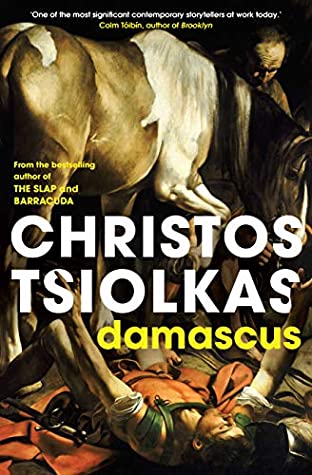
  • Christos Tsiolkas’ 7 1/2
  • Michael Winkler’s Grimmish

A note on The dogs

I am not going to buy into the plagiarism debate, as I can’t know what Hughes did or didn’t know he was doing. However, I would like to comment on the publisher of this book, Upswell Publishing. This is an exciting new venture by Terri-ann White who did such a wonderful job at the University of Western Australia Press for many many years. The Guardian’s report (first link above) on the issue quoted White as saying that she “stands steadfast alongside the author, despite the appropriations now evident in this text”.

However, as more examples of parts of the text being identical or similar to various other works have been identified, White has realised the situation is not as she originally felt able to support. She has made a statement on her website, that:

I have published many writers who use collage and bricolage and other approaches to weaving in other voices and materials to their own work. All of them have acknowledged their sources within the book, usually in a listing of precisely where these borrowings come from. I should have pushed John Hughes harder on his lack of the standard mode of book acknowledgements where any credits to other writers (with permissions or otherwise), and the thanks to those nearest and dearest, are held. I regret that now, as you might expect. To have provided a note in this book with attribution would have been the only way to treat it.  I now recognise this as a breach of my trust.

The point I’d like to make is that we should not let this upsetting situation affect our support of Upswell. I subscribed to their list last year, and have again this year. The books are beautifully designed, the list is wonderfully varied in content, and White has a reputable track record. She and her stable deserve to be supported and encouraged.

Now, back to the Award

The chair of the judging panel, Richard Neville, praised the shortlist for its

range of dynamic and diverse voices that address the experience of pain, intergenerational trauma and intergenerational dialogue with compassion, exceptional craft and rigorous unsentimentality.

Each of the shortlisted writers will receive $5000 from the Copyright Agency’s Cultural Fund, with the winner receiving $60,000 prize.

This year’s judges comprise, as always, continuing judges and new ones, providing I think a good mix of experience and fresh ideas: Richard Neville (State Library of NSW), critics Bernadette Brennan and James Ley (both also on last year’s panel), and new members, scholar Mridula Nath Chakraborty, and writer and editor Elfie Shiosaki.

The winner will be announced on 20 July.

What do you think of the shortlist?

* All other quotes in the Shortlist section come from the same The Guardian article.

Monday musings on Australian literature: Warm Winter Read

For several years now, Cathy of 746 books has been running a 20 Books of Summer challenge, which many Southern Hemisphere bloggers re-frame as “of Winter”. It’s a great initiative, and this year has over 120 participants. You go, Cathy! However, for something closer to home that’s geared to this winter, I thought I’d share with you Warm Winter Read. It is an initiative of Public Libraries Victoria, and I read about it on Angela Savage’s blog. Well-known as an author, Angela is also the CEO of Public Libraries Victoria.

As a retired librarian, I love checking out what libraries are doing – and when they encourage reading AND Australian authors and books, then I’m on side.

The program’s aim, Angela says, is “to encourage readers to develop a daily reading habit by tracking the days they read over June and July 2022”. It has been taken up by most of Victoria’s library services, and involves an app – the Beanstack app (here) – through which participants can log daily reading, take part in optional challenges and share book reviews. Apparently the optional challenges include things like, Angela writes, “read outside your home; read aloud to a pet, person or plant; and talk about what you’re reading in person or online”.

This is all great, but I’m mainly sharing it with you because the campaign has eight ambassadors, who are all “high-profile” Victorian authors. Each of these was asked to recommend four books to get readers started (although people can read any books). There are apparently bookmarks for each author, containing their recommendations.

The ambassadors are a diverse bunch (links on their names are to my posts on them) and so are their recommended books, which range across a wide variety of forms and genres, fiction and non-fiction. Their recommendations are:

  • Maxine Beneba Clarke: Maria Takolander’s Trigger warning; Claire G. Coleman’s Lies, damned lies; Alice Pung’s One hundred days; Ennis Cehić’s Sadvertising
  • Claire G Coleman: Omar Sakr’s Son of sin; Maxine Beneba Clarke’s How decent folk behave; Ellen van Neerven and Rafeif Ismail’s (ed), Unlimited futures; Evelyn Araluen’s Drop bear
  • Helen Garner: Sean O’Beirne’s A couple of things before the end; David Owen Kelly’s State of origin; Larissa Behrendt’s After story; Gabbie Stroud’s Teacher
  • Jane Harper: Sally Hepworth’s The younger wife; Karina Kilmore’s Where the truth lies; Kate Mildenhall’s The mother fault; Benjamin Stevenson’s Everyone in my family has killed someone
  • Toni Jordan: Genevieve Novak’s No hard feelings; Emily Spurr’s A million things; R.W.R. McDonald’s The Nancys; Paddy O’Reilly’s Other people’s houses
  • Rebecca Lim: Amani Haydar’s The mother wound; Trent Jamieson’s Day boy; Cixin Liu’s The three-body problem; Emma Viskic’s Resurrection Bay
  • Jock Serong: Emma Viskic’s Those who perish; Robert Gott’s The orchard thieves; Emily Brugman’s The islands; Michael Winkler’s Grimmish
  • Christos Tsiolkas: Emily Bitto’s Wild abandon; Angela Savage’s Mother of Pearl; Andy Jackson’s Music our bodies can’t hold; Judith Brett’s The enigmatic Mr Deakin

I have not heard of all these books, let alone read them, but I can see that the list offers something for most readers and should kickstart some thinking about what to read.

Different library services are promoting the program in different ways. Here are some: Goldfields Libraries; Hume Libraries; and Yarra Plenty Regional Library. BUT as I pottered around some of the sites, I also picked up other things that libraries are doing. For example, the Warrnambool Library advertises that it can help members access their vaccination certificates. What a great service for the less technologically proficient in our communities. I love how modern public libraries are comprehending and expressing their role as community information centres.

Also, in some communities, the local newspaper has got behind the program too. What about this one from the Shepparton News:

Come into your local library to check out a Warm Winter Read. You’ll find hot romances, spicy thrillers and toasty tales of fun and adventure. You can register and log your participation via the Beanstack website at www.plv.beanstack.orgor by downloading the Beanstack Tracker app from the Google Play Store or Apple App Store.

For readers who prefer ‘old-school’, pick up a tracking sheet from your local library. Lots of challenges to keep the next few months interesting.

And here I will leave you. This is a pretty short and simple Monday Musings, partly because I have joined the growing number of bloggers who have contracted COVID-19. So, while I’m not very sick, thanks to being fully vaccinated, I’m also not wonderfully chipper and need now to go take a nap!

Meanwhile, here’s a job for you: what would you have recommended if you’d been asked to suggest four books for a program like this? (And if you’re not Aussie, you can choose non-Aussie books!)

Stephen Orr, Sincerely, Ethel Malley (#bookreview)

Like Lisa, I’m a Stephen Orr fan, but for some reason it took me forever to finish his latest book, Sincerely, Ethel Malley, partly I think because while its characters are engaging, it’s a novel that deserves concentration which I seem to have in shorter supply this year. This is not meant to discourage readers, because it’s a fascinating, and wryly humorous read that explores a range of issues, to do with art and society, against a backdrop of war-time 1940s Australia.

As those who know the story will have guessed, Orr’s novel takes as its starting point the infamous Ern Malley literary hoax. To summarise Wikipedia, this hoax was perpetrated by two conservative writers, James McAuley and Harold Stewart, who created modernist-style poetry in the name of a fictitious poet, Ern Malley. They wrote the poems using random words from various reference books and rhyming dictionaries, and, in 1943 sent them, in the name of Ern’s sister Ethel, to Max Harris, editor of Angry Penguins, the journal of a modernist art and literary movement. This movement included some of the leading lights of the Heide art group, which was the inspiration for Emilly Bitto’s novel, The strays (my review). They were modern, confident, and prepared to tackle head on conservative Australia. It wasn’t long before the hoax was exposed, but that wasn’t the end of it, because Max Harris was then tried for publishing the poems, on the grounds of obscene content.

I have written about literary hoaxes earlier in this blog, and made some points about what hoaxes tell us. Among these are that they raise some fundamental issues for readers and critics about the nature of literature, about what we mean by authenticity and how we define quality. Is a work, for example, somehow less “authentic” and of less literary quality because the author isn’t who we believe s/he is? In other words, is the work the thing? These are some of the issues Orr explores in Sincerely, Ethel Malley.

The novel’s intent is also suggested by the four epigraphs, the first of which – with its own in-joke – is “ascribed” to Aeschylus. It suggests that Prometheus is the source of “every art possessed by man”, so, perhaps, why worry about anything but the art? Then there’s Frederick R. Ewing’s suggestion that the problem occurs from a misunderstanding over where “the truth left off and imagination began” – which, in a way, is the idea underpinning this book. The third comes from Max Harris arguing, essentially, against “playing god”. And finally, there’s Donald Crowhurst’s “it is the mercy”. I’ve never heard of Crowhurst but, according to Wikipedia, he was an amateur sailor who disappeared during a race. Wikipedia says that this statement, which he left behind “is obscure, [but] most commentators have accepted that it signifies his relief that, at last, he is leaving an unbearable situation”.

All this will tell you that Stephen Orr has big ideas in his sights. Fortunately for us, they are wrapped up in the engaging character of Ethel. She carries the novel. It starts in 1981, with her death, and then flashes back to 1943, which begins the main body of the novel and tells the story of Ern and his poems from Ethel’s (first-person) point-of-view. The novel’s last chapter returns to 1981, with Max hearing about Ethel’s death. Ethel (and Ern) are Sydney-based – which is where McAuley and Stewart were based – but most of the action takes place in Adelaide, where Max Harris was based.

In the 1970s, Adelaide was a beacon of progressive thought in Australia, but back in the 1940s it was a very different place. Orr is South Australian and captures the ambience of the place and time beautifully, as our Sydney-suburban housewife, Ethel, makes her way between the iconoclastic Max, the lively bookseller Mary Martin, and Adelaide’s conservative establishment.

I thoroughly enjoyed the explorations – many of them done with wit if not downright cheek – about truth and authenticity, about poetry not being meant to be understood but to be “interpreted”, and about the art versus the artist. It’s subversive in self-consciously confronting some of the things we say and think about art and literature. It tackles conservatism, our resistance to innovation – “Originality. If your writing’s worthwhile, most people will hate it”, Max tells Ethel. Early in the novel is a discussion within Harris’ theatre group about what play they will perform, one by Shaw or one by Cocteau. Most of the players argue that people won’t come to Cocteau, because they “want a story”. For boundary-pushing Max, “that’s their problem”. He wants to do something “modern” (hence, also, his interest in Ern). This dilemma is not confined to 1940s Adelaide, but is one arts communities grapple with constantly. What will audiences tolerate?

Orr’s skill is in presenting his “big” issues through “authentic”, engaging characters and strong narratives which draw us into their reality. Orr’s characters are always warm and authentic (even when fictionalising an already made-up person like Ethel) and his dialogue is so natural. The story of Ethel as she struggles to prove that Ern is real, and his poetry not obscene, is entertaining – particularly when people start questioning her existence too. It can get mind-bending some times, and quite rollicking other times, as Ethel flips between present and past, but it works.

All of this is in the service of issues Orr thinks are worth thinking about, but it’s the thinking and the questions that are, in the end, more important than the answers, with Ethel, of course, being our guide. Early on, she’s never heard of Sid Nolan, but by the end she can hold her own with the best of them as she struggles to defend herself, Ern and his art against those who question. It’s both heartfelt and funny.

There is a lot to this book, but fundamentally, I see it as being about conservatism. In addition to the whole modernist poetry debate, Orr makes pointed comments along the way about the press and academia, not to mention Australians themselves. Ethel tells Sid Nolan, she’s learnt that “Australians hate anyone who claims to be creative”. In Sincerely, Ethel Malley, Orr is teasing us, goading us even, into being open to new ways of seeing, just as Max Harris wanted to do in the 1940s – and he has done so with his usual skill combined with a good dose of fun.

Lisa (ANZLitLovers) loved this book and covered its essence very well.

Stephen Orr
Sincerely, Ethel Malley
Mile End: Wakefield Press, 2021
441pp.
ISBN: 9781743058084

Review copy courtesy Wakefield Press.

Monday musings on Australian literature: on 1922: 4, Adventure novels

Continuing my 1922-themed posts, it became clear as I delved into Trove that certain genres or forms kept recurring in the reviews and articles I was reading about Australian literature. I plan to share them over the next few 1922 posts, starting with adventure in this post.

You might remember that my first 1922-themed post was on the N.S.W. Bookstall Co. Adventure novels, it seems, were among their popular fare. A brief article in The Australian Worker (22 February) discusses a couple such novels, but starts by saying that the N.S.W. Bookstall Co.

continues to deliver the goods, and as the goods, in the shape of vigorous yarns by Australian writers, appear to be selling well enough to make a further continuation certain, the company can be congratulated in believing years ago that local talent would make good if it were given the chance hitherto denied it.

Adventure novels

Some of you might remember a recent Monday Musings I did on Australia’s favourite genres, in which I reported that a Swiss-based study had determined that Adventure and Classics were our favourites. I won’t revisit that now, as you can read the post and its source information yourself if you’d like, but I was surprised that Adventure seemed so popular now. I am not so surprised, however, given the still relative newness of the Australian settler colony in 1922, that adventure was popular then. What did surprise me, however, was that, despite the longstanding strength of the bush myth, the bush was not the main setting I found – but I did find a few.

One was titled The black opal. I don’t know how many novels have been titled The black opal, but they abound, including Katharine Susannah Prichard’s of 1921. In 1922, however, there was one by journalist-cum-novelist Jack North. The Northern Territory Times and Gazette (16 September) writes that it is sub-titled “A story of Australian love and adventure”, but that

it is more than that. Notwithstanding the melodramatic incident which Percy Lindsay selected for his cover design, The black opal is a wholesome, well-written novel in which the lure of the bush triumphs over the glamor of the city.

I think “Jack North” might be a pseudonym. He had written, at that time, two other popular novels, Harry Dale’s Grand National and The son of the bush, plus, apparently, scenarios for the “movies”. (The article writer used those quotation marks for this clearly still strange new medium.)

A more traditional-sounding bush-adventure novel is Roy Bridges’ historical fiction, The cards of fortune, which the writer in the Kandina and Wallaroo Times (20 December), says is set in “the stirring days of the first settlement in Tasmania”. (Not sure all would call those days “stirring”, at least with a positive connotation!) It is, says the writer, “an appealing love story which is developed with the aid of stirring adventure”. (There’s “stirring” again”.) The novel, about a bushranger hunt, is described as a “bright little story of the early days”. Adventure novels are, I guess, escapist!

Island adventure novels

The most common adventure novels I found, however, were island adventures, which I think could qualify as a sub-genre?

The Australian Worker article I mentioned in this post’s opening briefly discusses two novels, S.W. Powell’s Hermit Island and Jack McLaren’s Feathers of heaven. The reviewer clearly admires the publisher, but not necessarily these books. They are both set to the northeast of Australia, and, s/he says,

are big-bulged with thrilling adventures in those places where the codes of life, to put it mildly, are not exactly of the parlor or the Sunday school variety.

They hope “this island type of yarn won’t be overdone”, because, they say

There’s plenty of love, and adventure, and goodness, and badness in Australia without going north-east in a boat to look for these elements of a readable story.

I will digress briefly here to say a little about Jack McLaren (1884-1954), because he was quite a prolific and popular writer. According to Wikipedia, he wrote novels based on his own experiences and was renowned for his “authenticity of background”. The son of a minister, he apparently ran away from school when he was 16, and worked as a cabin boy and seaman before landing in North Queensland in 1902. For the next 10 years he worked and travelled around the islands north and northeast of Australia, like Fiji, Java, New Guinea, Malaya and the Solomon Islands. He wrote for The Bulletin before turning to novels in 1919. Feathers in heaven was around his 7th novel.

The writer in the Kadina and Wallaroo Times (8 March) says that McLaren was one of Australia’s most popular authors. Feathers in heaven, this writer says, “is a novel of stirring adventure written round the illegal hunting of New Guinea’s beautiful birds-of-paradise … [and] … of course there is a girl in the story”. For this writer, the novel offers “wholesome adventure”.

Our Kadina and Wallaroo Times writer also discusses Powell’s Hermit Island, identifying it as being “of the Islands adventure class”, and set “off the beaten track” in Tahiti. It involves suspicion of piracy, for which there is “circumstantial evidence” and “develops rapidly to a wholly unexpected climax”. Sydney’s Sun (12 February), reviewing the same novel, makes a strong point about its Australian quality, starting the review with:

For a fine adventure story, neatly told, it is not always necessary to go overseas. Here is an Australian author, S. W. Powell, who knows the knack. Hermit Island is excellent value … The yarn is as capably done and as well imagined as any that comes out of California, and it has the advantage of speaking our own Australian language. 

S.W. Powell had, at the time, written four popular island-adventure novels. The genre was clearly a goer back in the 1920s.

Another reviewer, this time in the Northern Territory Times and Gazette (18 July), discusses Powell’s The pearls of Cheong Tah. Like the previous reviewers, this one comments on Powell’s inclusion of humour in his novels – along with tragedy and romance.

Some random concluding observations

Did you notice the focus on “wholesome”? “Little” things like this provide such insight into their times.

Also, I struggled to find cover images. These books may have been popular, but most were cheap paperbacks and have not, apparently, survived well. Neither have the literary reputations of most of their authors. As always, it’s interesting to see how popular authors of a time fare over the long term. Could it be argued that the more popular a work, the greater the likelihood of appealing to more ephemeral interests and tastes and therefore of dating?

Previous 1922 posts: 1. Bookstall Co; 2. Reviewers on Australianness; 3. ALS Women’s night