Monday musings on Australian literature: World Poetry Day

Well, folks, Trove has let me down, which is a very rare occurrence when I’m doing historical research. I looked for the phrase “world poetry day” and I looked for all the words “world”, “poetry” and “day”, but nothing apparently relevant appeared. Hmmm, because …

Interestingly, a Google search did retrieve a photograph on flickr of a World Poetry Day function held in 1963 Australia. The photograph says “all rights reserved” so I can’t reproduce it here, but you can see it online. Clearly World Poetry Day has been known about here for some time, but, oh dear, it’s only poetry so why write about it in the newspapers, eh?

I did find a few more recent references to the day via Google (using “world poetry day Australia”, without the double quotes), such as:

  • an Australia Council for the Arts news item on World Poetry Day in 2013. The item says, among other the things, that the day is for us “to acknowledge the role of poets around the world who are unable to speak openly and freely and who strive to build a better world.” Amen to that.
  • a news item from the United Nations Information Centre in Canberra on World Poetry Day in 2014 stating that “One of the main objectives of the Day is to support linguistic diversity through poetic expression and to offer endangered languages the opportunity to be heard within their communities” but it doesn’t list any activities planned to achieve this in 2014 Australia.
  • an article in the Sydney Morning Herald titled “World Poetry Day 2015: a chance for children to embrace the power of words” but it doesn’t mention any events encouraging children to do just that.
  • a World Poetry Day program (Eureka!) for the 2015 World Poetry Day, fun by the Queensland Poetry Festival. The web page starts with a William Hazlitt quote: “Poetry is the universal language which the heart holds with nature and itself. He who has a contempt for poetry, cannot have much respect for himself, or for anything else.” I don’t see anything for the 2016 day.

That’s pretty much it for the first page of results on my Google search. I guess these results tell me that Trove let me down for a reason. There really doesn’t seem to be much interest in the day here. Most of those links about seem more lip service than commitment, don’t they?

Before I continue, a brief explanation of World Poetry Day. According to Wikipedia (and some of the links above), it was designated as 21 March by UNESCO in 1999. The day, though, has been celebrated for much much longer, often in October to align with the birthday of the birth of the Roman poet Virgil. The UK, says Wikipedia, still celebrates it in October. There is a Facebook Page for World Poetry Day, but I can see nothing on it for Australia in 2016.

And yet, Australia – like many countries – has a rich poetic tradition. We have, to name a very very few, the bush balladists of the 19th century, early twentieth century poets like CJ Dennis and Dame Mary Gilmore, indigenous poets like Oodgeroo Noonuccal, later poets such as Judith Wright, Dorothy Porter and our grand old man Les Murray, and new poets-cum-rappers like Omar Musa*. We have poetry events and slams, poetry prizes, poetry websites, poetry magazines and poetry in literary magazines, and publishers specialising in poetry. I’ve written about many of these over the life of this blog. (See my poetry tag which tags all my poetry-related posts, not just Australian.)
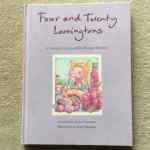
Cover, Four and twenty lamingtonsAmong the first works I read to my children when they were babies were poetry books – AA Milne (of course), Dr Seuss, TS Eliot’s Old Possum’s Book of Practical Cats, and poetry anthologies, of which I bought many. A favourite Australian one was Four and twenty lamingtons. And picture books too, many of which are told in verse. Poetry is such an easy way to introduce children to the fun of language and words and to reading together. Poetry like music is something you can introduce to babies from the beginning.

I’m going to keep this post short – give you an early mark this Monday! And, anyhow, I’m sure you’ve got my meaning.

But, just for a straw poll, no matter where you live, can you tell me whether you’ve heard of any World Poetry Day events in your neck of the woods?

* I hate naming names here, really, because there are so many wonderful Aussie poets I’d love to mention.

POSTSCRIPT: After I drafted this post, the UK-based International Business Time published, for this year’s World Poetry Day, a list of “Famous non-English poets you should read”. Not Australian, but of interest to us all. Check it out.

Delicious descriptions: Fiona Wright on writing and hunger

Fiona Wright, Small acts of disappearanceIn my recent review of Fiona Wright’s Small acts of disappearance, I focused on her analysis and her experience of anorexia, but, as I mentioned in the review, she was, already, a published writer. An award-winning poet for a start: her poetry collection, Knuckled, won the Dame Mary Gilmore Award for a first collection. Her poetry and essays have been published in several literary journals. Consequently, it’s not surprising that writing makes an appearance in Small acts …

In her essay, “In Hospital”, she writes:

I know now that the impulse I have to starve comes from exactly the same place as my impulse to write: hunger, like writing, is a mediator. It stand between me and the world, between my self and the things that might cause it harm. Hunger is addictive, and it is intensely sensual, pulling the body between extremes of hyper-alertness and a foggy trance-like dream state. And like writing, it lets me stand clear, separate and intact; it lets me stand on the outside. I spent years determined to stay on the outside.

Is this a common experience of writers, that it separates them from the world, I mean? I guess so, in a way, because writers tend to be observers – and it is hard to observe and be part of something at the same time, isn’t it?

In “In Miniatures”, she discusses how the enjoyment of miniatures involves narrowing one’s focus and attending to detail. However, “detail-oriented thinking” is psychologically related to hunger because the malnourished brain becomes intensely focused: the world shrinks, and becomes small enough to handle, to not be a threat. The trouble is, she writes:

detail has for so long been the stuff and substance of my poetry, my craft: the accrual of small, odd things, contradictory things, the things that undercut or illuminate the social world. It has always been detail that I’ve thought makes the worlds we write specific, poignant and, in essence, poetic. And it’s hard to contemplate that my writing, the thing I feel has kept me sane, may very well have been based on nothing more than cognitive pathology.

Hmmm … That “nothing more” is perhaps her being harsh on herself. I suspect that even if “detail-oriented thinking” is part of the anorexic pathology, Wright’s writing comes from a bigger part of herself too. But her fear that in losing hunger she may also lose her writing is palpable.

And then, in “In Group” she writes at length about John Berryman’s Recovery/Delusions, two books in one – his unfinished novel, Recovery, and a collection of poems, Delusions. Recovery is an autobiographical novel about an alcoholic man in a psychiatric hospital. Wright writes at length about Berryman’s character’s experience of group therapy and her own, and in so doing also discusses writing, its impulses and sources. I won’t share any more of this: it’s better that you read her book, rather than my ramblings on it!

Instead, I’ll conclude on one little point. Recovery is unfinished because John Berryman committed suicide while writing it. Wright comments:

the novel simply stops, in a suspension … Part of me thinks this is exactly as it should be: an unintentional but radical inconclusiveness, a denial of the three-act structure that biography is often made to fit …

Novel, biography, the same thing in the context of narrative, I suppose. Anyhow, this reminded me once again of EM Forster’s wish (in Aspects of the novel) for novels to be able to end when the novelist gets “muddled or bored”. Instead, he says, “most novels do fail here – there is this disastrous standstill while logic takes over the command from flesh and blood.”

Wright concludes her essay with her own intriguing idea about “logical and fixed conclusions” versus “the unfixed and uncontainable”, but I’m leaving it here. If you’re interested, you know what to do.

Fiona Wright, Small acts of disappearance (Review)

Fiona Wright, Small acts of disappearanceIt would be a rare person these days, from Western cultures anyhow, who didn’t have some brush with an eating disorder, whether through a friend, a family member, or personal experience. And yet it is one of our most misunderstood afflictions, which is where Fiona Wright’s Small acts of disappearance: Essays on hunger comes in. Wright, born in 1983, is a published poet. However, in her mid twenties, in her first hospital day program for her seriously low weight, she had to admit to herself that she was, indeed, one of “those women”, one of those women, that is, whom she’d always thought were “vain and selfish, shallow and somehow stupid”.

Now, many of you know that I am interested in form. Well, Small acts of disappearance is interesting in this regard. On the surface, it is what it says it is, a collection of essays, but it is also, in effect, a memoir of Wright’s experience of one of medicine’s most mystifying conditions, anorexia nervosa. There are ten essays, the title of each commencing with “in” as “In Colombo”, “In Hospital” and “In Hindsight”. This word “in” has a literal meaning, but its repetition also accentuates that she really is “in” something that she cannot, must not, distance herself from. While there is a loose sort of chronological drive to the essays, the first one, “In Colombo”, does not start at the beginning, not that there is, in these things, a clear beginning. She goes to Colombo as a newly graduated journalist in her early twenties, around three years after what she defines as the formal onset of her condition, but years before she commences any dedicated sort of treatment. It is in Colombo, however, when she thinks “things changed” and her “illness grew more complicated”, and so it is from here that she launches her set of essays exploring this “illness”.

There is, then, an idiosyncratic sort of chronology or narrative arc, which provides a structure for what is essentially a set of thematic essays. Linking them are some recurring threads, in addition to the condition itself of course. One of these relates to the paradoxical and perverse nature of the condition, and another to language. I’m going to be perverse and start with the second of these, language. Wright, being a writer, loves language, so as well as writing the book in her own gloriously clear and evocative language, she also shares the “new” language she learns. There’s the language of treatment (“In Increments”), for example, which she describes as “a jargon, that language that speaks only to the initiated, that carries with it its own definition of inclusion”, and the language of group therapy and recovery (“In Group”). She considers the implications of the language, of how it normalises the way the initiates communicate. Group language and behaviours, she explains, mean sufferers can identify each other, like it or not, outside treatment.

In my opening paragraph I suggested that anorexia nervosa is a misunderstood condition. Wright herself had believed that “those women” were vain and stupid. However, through years of treatment she comes to realise that the very opposite is true, that anorectics (her label) tend to be people (men and women) “who think too much and feel too keenly, who give too much to other people”. She says of the women she met in treatment that they were “some of the bravest but also most vulnerable that I had ever met”. The awful thing, the challenge for treatment, is the condition’s perverse and paradoxical nature. No matter which way you look at it, there’s likely to be a contradiction. Sufferers “fear death” and yet let their bodies destroy themselves; their desire for control often triggers the illness, but the illness, the hunger, wrests control from them and takes over; they want anonymity while their emaciated bodies draw attention to themselves; the pain of hunger numbs other pain; and, so on. Hunger, she writes, is addictive, heightening the senses, creating a feeling of “hyper-alertness”. It “feels so good” that “even now” on the road to recovery, she can miss it. Wright’s analysis of the psychology and pathology of eating disorders is clear and authentic.

While much of the book chronicles her personal experiences, Wright supports her impressions/findings with knowledge gleaned from reading and research. This gives the book a gravitas not usually found in the “sick-lit” (sub-)genre, to which this book may or may not belong, depending on the breadth of your definition. She describes the Minnesota Hunger Experiment, which was conducted during World War 2 on conscientious objectors to ascertain the physiological and psychological impacts of extended periods of starvation or malnutrition. She analyses fictional characters who exhibit disordered eating in novels by Christina Stead (For love alone), Tim Winton (Cloudstreet) and Carmel Bird (The Bluebird Cafe).

She also devotes an essay (“In miniature”) to miniatures, which themselves have a contradictory nature. They unsettle our perception, she writes, while also attracting us. So, she interrogates her love of miniatures from childhood, teasing out of this a pathology that desires to be small and that likes clear boundaries. She writes:

To be miniature, then, is to occupy space differently, and especially, pointedly, to have a different occupation of public space. We disturb it with our discrepancy, even as our smallness means that we occupy less of it. I think sometimes that the drive to hunger, the drive towards smallness, is about precisely this: we feel so uncertain, so anxious about our rightful place in the world, that we try to take up as little of it as possible. It is a drive to disappear that can only ever succeed in making us more prominent, more visible, because it makes us as different and offensive on the outside as we so often feel we are at heart.

And then, scarily, she describes how the crafting of miniatures takes “real skill, exceptional care, and time”. Oh dear. Hunger, she says, “narrows the world so minutely and completely” that it brings the world “back under our command”. But, “it is a false and contradictory kind of command … We possess the world, perhaps, but in the process we are dispossessed of our own selves.” It is a long way back, and as she makes clear in her book, she hasn’t yet quite worked out how to live “a full-sized life”.

I’ll close, logically, with her last essay “In Hindsight” which, in another structure, could have been the opening essay because in it she looks back, back, back to origins. In hindsight, she sees aspects of her childhood and adolescence that contained hints of what was to come. All along she’s told us that her disorder had a particular physical trigger when she was 19 years old, but here, in the last essay, she writes:

I’ve resisted telling this other story, I think, because I don’t want to hear it myself.

And then she exposes all those early signs, with such heart-breaking, self-exposing honesty. I’m not surprised Small acts of disappearance has made it to the Stella Prize shortlist. Wright offers us a clear-eyed, analytical but moving insider’s view of a devastating and still mystifying condition. It’s a gift of a book.

awwchallenge2016Fiona Wright
Small acts of disappearance: Essays on hunger
Artarmon: Giramondo, 2015
193pp.
ISBN: 9781922146939

Monday musings on Australian literature: Save Trove

I don’t make a practice of discussing politics in my blog, though regular readers are sure to have picked up my pro-social-justice values (which is why I love writers like, say, Thea Astley). My reason for being politics-lite here is that politics is a divisive game, and my aim here is to be inclusive. However, I do want to write briefly today about a very specific political issue likely to affect Australian, and in fact international, researchers. I’m talking about the significant cuts being made to Australia’s major national cultural institutions like the National Library of Australia, the National Museum of Australia and the National Film and Sound Archive.

Trove Search PageThose of you who read my Monday Musings series will know that one of the resources I use regularly – particularly for the more historical posts – is the National Library of Australia’s Trove service. Trove provides access to a wide variety of collections from libraries, museums, archives and other research institutions around Australia. It combines traditional book catalogue information with digital content, including digitised Australian newspapers dating back to the early 1800s.

Search on a name or topic – like say, Miles Franklin – and if you don’t filter the search in advance, it will return resources in any form for which material is held, including books, photos, newspapers, diaries, music, maps, websites, government gazette announcements. And it’s free – well, the search is, and around a third of the content is freely available. According to Mike Jones and Deb Verhoeven in The Conversation, Trove contained, at the end of February,

information on over 374,419,217* books, articles, images, historic newspapers, maps, music, archives, datasets and more, expressing the extraordinarily rich history of Australian culture.

Trove can be used by anyone, anywhere – academics, authors, local and family historians, and so on. A recent Sydney Morning Herald article looked at the Twitter hashtag #fundtrove, and quoted some of the tweets, such as this from author Kaz Cooke

Without Trove I couldn’t be writing this novel about the imagined lives of real 19th Century Australian vaudevillians#fundtrove.

Academics similarly tweeted the importance of Trove to their research projects. One, Evan Smith, wrote he couldn’t have done his research project on “public order policing in the ACT” without it, and historian Alicia Cerreto posted that “@TroveAustralia changed the ways that we historians can tell the stories of Australia. It is a critical resource”. At a time when interest in history appears to be booming – just look at all the history-focused TV shows and non-fiction books proliferating at present – reducing this service seems like madness.

In 2011, Trove was awarded the Excellence in eGovernment and the Service Delivery Category awards at the Australian Government’s ICT Awards. It has also been recognised internationally as a leader “in facilitating public access to documentary heritage”.  The Canberra Times recently reported that

Australian Research Council laureate fellow and professor of history at Griffith University, Mark Finnane, said Trove brought Australia “great credit” internationally and no other service compared.

“It’s really a world-leading innovation, in the way it ties collections together,” he said. “[We] can’t afford to be without this tool.”

As a free-discovery-cum-content-aggregation service, Trove, says The Conversation (cited above), simplifies the work of researchers by reducing the time they need to spend tracking down relevant information. It improves their efficiency in other words. It’s all the more ironic, then, that it’s the current Federal government’s decision to apply their so-called “efficiency dividend” to cultural institutions which threatens Trove’s continuation. How silly is that!

PS: For more on the #fundtrove campaign, check out discontents.com.au. Blogger Tim Sherratt lists what we can do, and is updating his post as more information appears.

* Trove itself claimed on 14 March to have over 474,674,488 resources. On this link, you can also see a list of all the organisations whose resources are included in the service.

Tony Birch, Ghost River (Review)

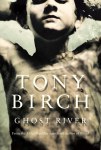
Tony Birch, Ghost river“Some people believe in religion. Well, I believe in stories.” So says Ren to his friend Sonny late in Tony Birch’s third novel Ghost River. Ren and Sonny are two young adolescent boys who live in Melbourne’s old inner-city suburb of Collingwood. It is the late 1960s, when Collingwood was a largely blue-collar neighbourhood. Ghost River is a novel about the power of stories – it’s also about the power of friendship, and the importance of community.

Last year I reviewed a short story by Tony BirchSpirit in the night – but this is my first novel by him. While I can’t, therefore, speak authoritatively on his fiction, I’ve noticed some recurring themes or ideas in these two works. Both have young men as their protagonists, both deal with disadvantage, and both set fundamentalist style Christianity against a more humanist view of the world. Interesting. Relevant here too is that Birch is an indigenous Australian writer*. Indigeneity is an overt issue in Spirit in the night, but in Ghost River it’s present, underpinning the respect for place in particular, but is by no means in your face. It is important, sometimes, to put indigenous issues front and centre, but it is equally important for it to be a given, rather than always identified, teased out, featured.

Now, the plot, because this is a book with a strong plot, a story in other words! The novel starts with Sonny moving into Ren’s neighbourhood, Sonny being around 13 years old and Ren a year younger. Sonny lives with a drunken, abusive father. He’s tough, and wiser than Ren in the ways of the street. Ren lives in a stable, loving home with his mother and stepfather. He’s a dreamer, draws birds in particular, and soaks up stories. Early in the book, Sonny rescues Ren from a bully attack at school and from then on “it became the two of them, for better and worse”. The novel chronicles their friendship, as they explore their world and face its challenges – of which, you won’t be surprised to hear, there are many more for Sonny.

Their world is dominated by the river, a place Ren loves and knows “as good as anyone and better than most”, and to which he soon introduces Sonny. The river becomes their playground – a place to which they escape and where they test their skills. It also introduces them to another community, “the river men”, a small group of homeless men led by Tex. Through these colourfully named men – Tex, Tallboy, Big Tiny, Cold Can, and of course the Doc (there’s always a Doc isn’t there!) – Ren and Sonny learn much. They learn practical survival skills, but mostly they learn about loyalty, leadership and the value of mutual support. And they hear stories,

prison stories, drinking stories, lost dog stories, and tales of their years on the road. … Other stories were sacred, recited in hushed tones and observed in silence, except for the crack and groan of the fire.

Partway through the book, a fundamentalist Christian family moves next door to Ren, comprising Reverend Beck, his wife and their daughter Della. We soon realise that Father Beck’s relationship with his daughter has a dark side (if you take my meaning).

Meanwhile, Sonny struggles at school and is eventually pushed too far by a vindictive, cruel teacher. He leaves and gets a job at the local newsagent. Brixey, the newsagent, is one of those men who can look beneath the surface to see potential and, rightly, sees potential in Sonny. It’s not long before Sonny is working hard – using his nous to work some deals, and subcontracting Ren to help out before and after school. Ren, you see, is saving for a camera so he can photograph, as well as draw, his beloved birds.

And then, completing this cast of characters, are the bad guys. There’s Foy the corrupt policeman, gangster Vincent and his henchman, and Chris the illegal SP bookmaker. Through no fault of his own, Sonny, with Ren tagging along as support, gets caught in Vincent’s net, and things become seriously nasty.

Have you noticed how much I’ve focused on the story in my discussion? It’s rare for me to spend so much time in a review on what happens, but it is hard not to here, given the importance of plot. However, there are other aspects worth talking about, particularly the river. It is the main motif – physical but also spiritual and metaphorical – that runs through the book. Unfortunately the river is threatened by plans to build a freeway. For the boys and the river men this spells disaster, the river being important to their wellbeing:

Walking home from their excursions upriver Ren would feel a little different. He couldn’t make sense of it. He knew it was a feeling he craved, but one in danger of slipping away from him. Even Sonny would be calmer. He would look up at the sky as if he was trying to unravel a mystery.

Tallboy tells the boys stories of the river, of how it had changed over time and of the “ghost river” beneath the existing one. He draws “a swirling snake” in the dirt and says:

‘This is her. And when a body dies on the river, it goes on down, down, to the ghost river. Waiting. If the spirit of the dead one is true, the ghost river, she holds the body to her heart. If the spirit is no good, or weak, she spews it back. Body come up. Simple as that.

And so it comes to pass – but you’ll have to read the book to find out more. Tallboy tells the boys, after hearing the freeway plans, “The river. Now, she needs you most of all.”

This is, essentially, a coming-of-age story. There is humour here, particularly in some of the early descriptions of the characters; the pacing is good; the dialogue believable; and the main characters are well drawn. But does it all work? It might just be me, because I’m more interested in character and ideas than plot, but I did find the plot a bit loose, primarily due to having multiple storylines. I’m not sure whether we really needed the Reverend Beck story, and I didn’t love the gangster-bookmaker-corrupt policemen story either though I suppose (says she, the comfortable middle-class white female reader) young boys can get caught up in nasty business. These seemed to me to get in the way of, dilute even, the save-the-river story. However, these plotlines certainly reinforce the idea that life is tough, and that it often requires difficult decisions. Tough, but not impossible. It’s not a spoiler, I think, to say that the novel’s resolution is cautiously hopeful.

“Books”, Ren’s stepfather Archie tells him, “can take you places”. While Ghost River didn’t work for me on all levels, it did take me to a very interesting place and time. I’m not at all sorry that I went there.

Lisa also reviewed this book, from the perspective of someone who knows Melbourne, the river and the freeway (which was, in the end, built. Of course)!

Tony Birch
Ghost river
St Lucia: UQP, 2015
294pp.
ISBN: 9780702253775

(Review copy courtesy UQP)

* As for many people, his origins are mixed, Irish Catholic on his mother’s side, and Jamaican-Indigenous Australian on his father’s.

Stella Prize 2016 Shortlist

Around a month ago, I announced this year’s longlist for Stella Prize … and now I bring you the short list. It must have been such a difficult choice and I’m sure all the books longlisted deserved to be shortlisted – but there can only be 6, and here they are:

  • Fiona Wright, Small acts of disappearanceSix bedrooms by Tegan Bennett Daylight (Random House)
  • Hope Farm by Peggy Frew (Scribe)
  • A few days in the country: And other stories by Elizabeth Harrower (Text) (on my TBR – now definitely higher in my priority list)
  • The world without us by Mireille Juchau (Bloomsbury)
  • The natural way of things by Charlotte Wood (Allen & Unwin)
  • Small acts of disappearance: Essays on hunger by Fiona Wright (Giramondo) (my next read, after my current one)

These represent three novels (by Peggy Frew, Mireille Juchau and Charlotte Wood), two short story collections (by Tegan Bennett Daylight and Elizabeth Harrower), and a set of essays (by Fiona Wright). Varied as usual, but with, also as usual, an emphasis on fiction.

Brenda Walker, one of the judges, says:

A common thread I see – it doesn’t apply to every title – is some kind of vital expansion of Australian women’s literature,” she said. “You can say that Fiona Wright connects her book to Christina Stead – she writes quite a bit about Stead – and you immediately think about Barbara Baynton when looking at a few of the titles. Elizabeth Harrower is part of that literary history and there she is vivid and present. So I see this as a burgeoning of women’s literary tradition, which has often been a little bit oblique to the mainstream, canonical stuff.

Christina Stead, Barbara Baynton – both significant, and strong Australian women writers. I like the sound of this, this sense of a tradition, of writers building on those who came before – the building on, being the important thing of course.

The winner will be announced on April 19. The prize is $50,000. However, each of the shortlisted authors will now receive $2,000, and apparently a three-week writing retreat at a house in Point Addis, Victoria. Sounds like a wonderful “consolation” prize to me – and, as I reported David Malouf as saying just this week, being shortlisted is a significant achievement in terms of recognition.

The judges as I advised in my previous post are: writer Emily Maguire, memoirist/essayist Alice Pung, author/academic Brenda Walker, literary critic/author Geordie Williamson, and bookseller/founder of the Indigenous Literacy Foundation Suzy Wilson.

PS I won’t be doing long and short lists for every award that comes along, but because of my commitment to the Australian Women Writers’ Challenge, I do like to promote the Stella Prize.

Monday musings on Australian literature: Spotlight on David Malouf

Courtesy: Annette Marfording

Courtesy: Annette Marfording

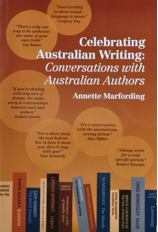
A couple of weeks ago I published the first of a number of posts which I’m planning to write using Annette Marfording’s Celebrating Australian Writing: Conversations with Australian Authors as starting point. That post was on the first interview in the book, Robert Dessaix. I decided that my second post would be on one of my favourite Aussie writers – you could call him one of our grand men of letters – David Malouf. And then last week I heard that Malouf had won the 2016 Australia Council Award for Lifetime Achievement in Literature – for his 55 years (55 years!) in literature. A most apposite coincidence!

The impressive thing about Malouf is that he has written in multiple forms – novels, short stories, poetry, essays, memoir and even libretti – and he has been critically acclaimed in all. Most of his work that I’ve read, I read before I started blogging, though I did review his latest novel, Ransom, here. It was published in 2009. Since then he has primarily published poetry, essays and short stories.

I haven’t read all of Malouf’s novels, but I’ve read a good number, starting with his first autobiographical novel, Johnno. It’s set in Brisbane where he grew up (and where my Mum spent her youth after moving there when she was 5, and where I spent 6 years of my childhood!), though his youth – incorporating World War II – is well before mine. To say that I enjoyed the book would be an understatement.

However, my favourite two of his are Fly away Peter (which I often buy for or recommend to people asking about Australian literature) and The conversations at Curlow Creek. This latter, for some reason, gets less press than most of his other novels. I’ve also read An imaginary lifeRemembering Babylon and, of course, Ransom. In other words, I’ve read his first three novels and his last three (to date), but not the three in the middle!

Now Marfording’s interview. She starts by asking him about awards, of which he has won many. I liked his response that

it’s more important to be on the shortlist in some ways because who then comes out of the shortlist as the winner is a bit of a lottery.

Of course, the money attached to prizes is very useful – it often means the ability to keep on writing – but in terms of what awards mean, Malouf makes an important point.

She then talks about translation, because Malouf’s books have been well-received overseas and many have been translated into multiple languages. Malouf’s response gets to the heart, really, of my concern about reading books in translation:

And really, what the translator is doing is not just carrying the book over from one language to another, but recreating that book in another language.

Re-creating, yes. Still, it’s better than his books not being available to others at all.

She asks him about Patrick White. I found his answers again spot on in terms of my understanding of White’s place in our literary culture. He says that White achieved two things that have paved the way for writers after him. One is that White showed that “an Australian life could be of significance” and not just in Australia but more generally. The other is that

he made it possible for you to write a novel in which the major interest was the interior, not really on action, but on what was going on in people’s heads.

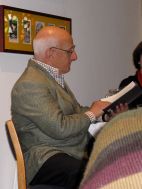
David Malouf reading Ransom

Malouf reading Ransom, National Library of Australia, August 2009

And this is exactly how much of Malouf’s fiction reads. The conversations … for example is about the conversations that occur between a military officer and an arrested bushranger who is to be executed in the morning. It’s about the connections made between the captor’s reflections on his own life and the condemned man’s concerns about death, God and forgiveness. It is such a quiet, mesmerising and deeply humane book.

Marfording and Malouf talk about Ransom, his latest book at the time of the interview, and his writing style and practice. They also talk about his main themes. Marfording suggests that “being an outsider – a foreigner or someone in exile” is one, and that family is another. Malouf says that

family is the first little society, a little mirror of society … but family is also reflective of the larger society we live in, and then families are – as far as I have observed – the greatest repository of secrets, and secrets are always what writers are interested in.

Secrets. Yes, I can see what he means.

A theme that I see in his work relates to travel and transition – again, like outsiders and secrets, not unusual for a writer! He starts his essay “The traveller’s tale” (originally published in 1992) with “One of the first stories we tell is the story about leaving home”, and argues that:

The story moves us so deeply because it touches our lives at the two extremes of our experience, the moment when we leave our mother’s body and the moment when we must leave our own, but it speaks as well for the daily business of going out into the world – to hunt or on a war party or simply to see what is there – and then the return to the homeland or hearth.

Our two men – the policeman and the bushranger – in The conversations … travelled to Australia from Ireland, then find themselves, in the 1820s, at a critical point in both their lives. Priam travels with Somax to Achilles’ camp in Ransom on an inspired errand. The characters in Fly away Peter go overseas to take part in World War 1, and one doesn’t return. In Remembering Babylon, a young British cabin boy lands in the far north of Australia and is taken in by Aboriginal people, and doesn’t return to the European world until 16 years later. In Malouf’s very first novel Johnno, the narrator returns home to bury his father, and in the process remembers, and reconsiders, his youth and his childhood friend Johnno. And so on … Malouf himself has lived overseas for large “chunks” of his life. He is clearly very familiar with what it means to move to-and-fro between “home” and new places – physically, spiritually and psychologically.

Whenever I think of Malouf, I feel a sense of well-being, because I know I can trust that whatever he says or writes will be considered, humane, and well-worth giving time to.

Annette Marfording
Celebrating Australian Writing: Conversations with Australian Authors
Self published, 2015
273pp.
ISBN: 9781329142473

Note: All profits from the sale go to the Indigenous Literacy Foundation. You can purchase the book from its distributor, lulu.com.


Helen Macdonald, The human flock (Commentary)

I know, I know, I sound like I’m obsessed with Helen Macdonald. I’m not, but I am interested in nature and landscape, and she has thought and researched at length about the topic. I’ve called this post a commentary, because it’s not a review. Rather, I’m going to draw on both an On Nature column she wrote for The New York Times Magazine and her book H is for hawk (my review) – and look at a political issue she raised in both writings.

I’ll start with a comment that occurs near the beginning of H is for hawk. Early in her hawk training sessions, she takes Mabel out walking in the streets of her town, but almost no-one speaks to her. They all saw her, she says, how could they not, but “they just pretended they hadn’t”. Except for those who did. A man from Kazakhstan saw her. They discuss Kazakh falconers, and he tells her “I miss my country”. A Mexican cyclist “skids to a halt” and admires Mabel, saying he’s never seen a hawk so close, only high in the sky where they are “free”. And then she realises

that in all my days of walking with Mabel the only people who have come up and spoken to us have been outsiders: children, teenage goths, homeless people, overseas students, travellers, drunks, people on holiday … I feel ashamed of my nation’s reticence. Its desire to keep walking, to move on, not to comment, not to interrogate, not to take any interest in something peculiar, unusual, in anything that isn’t entirely normal.

I thought, interesting, but moved on, with her, to the next part of her story.

Then, late in the book, she’s out walking with Mabel again, and runs into a retired couple she knows. They exchange pleasantries, including discussing the beauty of a herd of deer they’d all seen. Their conversation concludes with:

“Doesn’t it give you hope?” he says suddenly.
“Hope?”
“Yes,” he says. “Isn’t it a relief that there’re things still like that, a real bit of Old England still left, despite all these immigrants coming in.”

Helen is horrified, but says nothing. However, as she walks home she thinks

… I should have said something. But embarrassment had stopped my tongue. Stomping along, I start pulling on the thread of darkness they’d handed me.

She thinks of why and how people and creatures move between countries, of Göring’s desire to move Jews from Germany, of Finnish goshawks in England, of a Lithuanian mushroom gatherer in England who couldn’t understand why English people didn’t know which mushrooms in their woods were and weren’t edible. She says:

I think of all the complicated histories that landscapes have, and how easy it is to wipe them away, put easier, safer histories in their place.

Today’s “Old England”, for example, is not, actually, the England of 100 years ago, let alone 400 hundred years ago, given the impact of settlement and agriculture on the land and its “natural” inhabitants. And those deer? Well, they and the hare are “legacies of trade and invasion”, albeit back to Roman times. Immigrants in their day, in fact. She suggests that instead of fighting “for landscapes that remind us of who we think we are”, we should “fight, instead, for landscapes buzzing and glowing with life in all its variousness”.

Starling murmuration

Starling murmuration, by Walter Baxter, using CC BY-SA 2.0, via Wikimedia Commons

This brings me to the article, “Human flock”, she wrote for The New York Times Magazine. It’s about waiting and watching at a lake in Hungary for a flock of Eurasian cranes on their southward migration. Are you catching my (her) drift now? She talks of various migrating birds, sandhill cranes, snow geese, and starlings. She describes a murmuration, the collective noun for a flock of starlings. She discusses why these birds flock. The reasons include for protection (out of fear), to signpost where they are to other starlings, and for warmth. These flocks, though, are also made up of “thousands of beating hearts and eyes”, of individual birds in other words..

As she watches and thinks, her mind turns to “more human matters”, to the “razor-wire fence” built by the Hungarian government to keep Syrian refugees out. She writes:

Watching the flock has brought home to me how easy it is to react to the idea of masses of refugees with the same visceral apprehension with which we greet a cloud of moving starlings or tumbling geese, to view it as a singular entity, strange and uncontrol­lable and chaotic. But the crowds coming over the border are people just like us — perhaps too much like us.

The flock made her realise that “in the face of fear, we are all starlings, a group, a flock made of a million souls seeking safety”. But flocks can also be transformed into “individuals and small family groups wanting the simplest things: freedom from fear, food, a place to safely sleep”. It’s a powerful statement for humanity. And I like the way it picks up ideas she touched on but didn’t explore at depth in H is for hawk.

Nature, or, more accurately, exploring its meaning for us and our relationship to it, is clearly an ongoing project for her. I’ll be interested to see how her ideas develop – but for now, you may be pleased to know, I’m moving on to other books and ideas!

PS Helen Macdonald gave the closing address at the 2015 Sydney Writers’ Festival on “On looking at nature”. She gets into nature, history, culture and diversity. It runs for around 38 minutes, and makes for great listening.

Helen Macdonald
“On Nature: The human flock” in The New York Times Magazine, December 6, 2015.
Available: Online

Delicious descriptions: Helen Macdonald on nature

Before I share the couple of quotes I saved for this post, from my review of Helen Macdonald’s H is for hawk, I want to mention one more idea that I considered including in my ever-lengthening review, and that’s the idea of a journey. I’m mentioning it now because Claire (of Word by Word) mentioned it in her comment on my post and because it was also mentioned in my reading group discussion. I sort of covered it when I said that the book could also be seen as a quest story, but I had planned to point to a specific reference Macdonald makes: “for years,” she says, “I’d scoffed at White’s notion of hawk training as a rite of passage”. She realises that there’s truth in his statement and that she too was trying to rebuild something. This, this “passage” from one mode of being to another is, in effect, a journey – and it is, in the end, the fundamental thing that the book chronicles.

(This is a good point to note the value of rereading! Macdonald, in the light of her current experience, reads White’s Goshawk very differently from the way she’d read it when she was a child with a child’s view of the world. I love it.)

Northern Goshawk

Northern Goshawk (Photo: Norbert Kenntner, Berlin, via Wikipedia using CC-BY-SA 3.0)

But now, Macdonald’s nature writing. The book abounds with descriptions of the nature – of the landscape, of the creatures within it. It’s intensely evocative, and sometimes confrontingly visceral. The first chapter, as well as the title itself, tells us that nature will be a significant aspect of the book. “Forty-five minutes northeast of Cambridge is a landscape I’ve come to love very much indeed” is the opening sentence. The last line (the postscript), too, is a natural description, albeit a more symbolic one worthy of the last line of a grief memoir! Nature, in other words, plays a complicated role in the book. It has a literal role, that is, it exists for its own sake. She clearly loves the natural world around her, has her “magical places”. But it has other roles too: complex, psychological ones, political ones*, as well as the more expected symbolic ones (like, you know, “the world itself started to grieve. The skies broke and it rained and rained”).

I touched on the psychology in my review when I referred to her starting to think and see like a hawk, seeing this as a way to escape her grief. But that’s just one aspect of her exploration of the relationship between psychology and nature. There’s TH White and what she calls his “moral magic trick”. It relates to his determination not to give in to his cruel urges – he never beat his students at Stowe school, for example. She says that animals played a “curious role” in his keeping this goal:

For White it was a moral magic trick, a way out of his conundrum. By skilfully training a hunting animal, by closely associating with it, by identifying with it, you might be allowed to experience all your vital, sincere desires, even your most bloodthirsty ones, in total innocence. You could be true to yourself.

In other words, you could shed, perhaps, your “perpetual disguise”.

Often though, she describes nature for its own sake – how it looks, how it feels, her experience of it. It’s a lived and earthy beauty:

It’s turned cold: cold so that saucers of ice lie in the mud, blank and crazed as antique porcelain. Cold so the hedges are alive with Baltic blackbirds; so cold that each breath hangs like parcelled seafog in the air. The blue sky rings with it, and the bell on Mabel’s tail leg is dimmed with condensation. Cold, cold, cold. My feet cracks the ice in the mud as I trudge uphill. And because the squeaks and grinding harmonics of fracturing ice sound to Mabel like a wounded animal, every step I take is met with a convulsive clench of her toes. Where the world isn’t white with frost, it’s striped green and brown in strong sunlight, so the land is parti-coloured and snapping backwards to dawn and forwards to dusk. The days, now, are a bare six hours long.

And here is Mabel in this season:

… Mabel has eaten nothing but quail for a week, and it’s made her a hot-tempered, choleric, Hotspur-on-coke, revenge-tragedy-protagonist goshawk. She is full of giddy nowhere-to-go desire. She foots her perch. She gets cross. She jumps in the bath and out again, and then in again. She glares …

So evocative, so drawn from experience – and such an inspiring command of language.

Macdonald’s England is pretty wild – full of brambles and thorns, of predators and prey – something I didn’t quite expect given my image of green pastures and tamed hedgerows! Towards the end she shares the lesson of her experience, which stems from the idea that we should not imbue nature with meanings from our human experience of the world, and then use that to “shore up our own views of the world”:

And I have learned, too, the danger that comes in mistaking the wildness we give a thing for the wildness that animates it. Goshawks are things of death and blood and gore, but they are not excuses for atrocities. Their inhumanity is to be treasured because what they do has nothing to do with us at all.

Nature is to be valued, respected – and preserved – for itself.

You won’t be surprised to hear that Helen Macdonald is “a writer, poet, illustrator, historian and affiliate at the Department of History and Philosophy of Science at the University of Cambridge”.

* I may address this one in another post – if I can maintain the energy!

Helen Macdonald, H is for hawk (Review)

Helen Macdonald, H is for hawkMy reading really has been rather odd lately. I’ve read a memoir about horse-racing (Gerald Murnane’s Something for the pain), a novel about hedge-funds and investment banking (Kate Jenning’s Moral hazard), and now a grief memoir focused on falconry (Helen Macdonald’s H is for hawk). None of these are topics I would naturally pick up, but in each case I’ve enjoyed being presented these very different worlds. H is for hawk, this post’s subject, is additionally interesting because it combines three different forms of writing – memoir, biography and nature writing.

T. H. White lecturing on his Arthurian fiction (Courtesy John J. Burns Library, Boston College, via Wikipedia CC BY 2.0).

TH White (Courtesy John J. Burns Library, Boston College, via Wikipedia CC BY 2.0).

As I don’t read reviews before I read books, I really didn’t know what I was getting in for, except that I understood it was about a woman managing her grief through raising a hawk. It is about this, but it is about so much more too, including being a sort of mini-biography of novelist TH White. You probably know White through his most famous works, The once and future king and The sword in the stone, but you may not know that he also wrote a book called Goshawk about the training of his goshawk called Gos. Imaginative name that! Macdonald was far more creative. She named hers Mabel! (She does explain this surprising tame-sounding name).

Many people have written about falconry over the years so why does Macdonald light on TH White? Well, it’s complicated. She had read Goshawk when she was a young girl, and hadn’t much liked it. However, she read it again and

saw more in it than bad falconry … White made it a metaphysical battle. Like Moby-Dick or The old man and the sea, The goshawk was a literary encounter between animal and man that reached back to Puritan traditions of spiritual contest …

White, you see, wrote it after he’d left his teaching post in 1936 to live in a workman’s cottage. He was fleeing a world in which he, a homosexual, didn’t fit, a world in which he had to live “in perpetual disguise”. Macdonald suddenly recognises a fellow-feeling, writing that

I felt, for the first time, that my urge to train a hawk was for reasons that weren’t entirely my own. Partly they were his.

Because MacDonald was training her hawk to escape her grief following the sudden death of her beloved father. She was, she writes, “running” like White. Both, we gradually learn, experience a sort of madness that they need to resolve and recover from.

And so the book progresses in fits and starts, but chronologically so, as Macdonald parallels the awful and sad story of White and Gos with hers and Mabel’s. It makes fascinating reading.

Now, this book has been out for well over a year. It won the Samuel Johnson Prize for Non-fiction (which our very own Anna Funder won for Stasiland) among other awards and shortlistings. It’s been comprehensively reviewed, I believe, so I fear reiterating what others have said before. Consequently, I’m just going to give a broad brush overview of my response to it (and follow up with a Delicious Descriptions post of some of its truly gorgeous nature writing).

To start with, I enjoyed it immensely. It fits into what we call literary or creative non-fiction. That is, it uses some novelistic techniques such as dialogue, poetic imagery and a narrative arc, but it is very definitely non-fiction. It contains a lot of fact about her life, and much research about falconry and TH White. And there are several pages of end-notes identifying sources of quotes, though these notes are not flagged in the text.

I was fascinated by her stories of falconry – her own and from the past – and I am always interested in the lives of writers. Macdonald is an historian by profession, and weaves history through the telling of her own experiences. Although as a child she had agreed with the general censure of White’s training of Gos, as an adult she is more sympathetic, empathising with White’s loneliness and understanding his lack of knowledge and experience. I must say that while I was intellectually interested in the falconry, I would be among those of her friends who find the idea “morally suspect”. It seems a cruel activity to me – and, in fact, cruelty is one of the many threads running through the book. White, who had been physically and emotionally abused as a child, was, apparently, a “sadomasochist”, though Macdonald argues that he consciously worked to keep that part of himself at bay.

This brings me to another aspect of the book I enjoyed – the way she weaves multiple ideas or themes through it. Freedom is one. Macdonald seeks it through her hawk:

The hawk was everything I wanted to be: solitary, self-possessed, free from grief, and numb to the hurts of human life.

Hawks seek it too, sometimes. Macdonald describes “bating”, in which a bird tries to fly from a fist or perch while still attached, as a “wild bid for freedom”. And White definitely seeks freedom. Macdonald frequently refers to his desire for it. She quotes his own writing:

A longing came to my mind, then, that I should be able to do this also. The word ‘feral’ had a kind of magical potency which allied itself with two other words, ‘ferocious’ and ‘free’ … To revert to a feral state I took a farm-labourer’s cottage …

Feral. This word conjures another theme, that of wildness. Both White and Macdonald revert to wildness in their own way – by training wild birds, and by withdrawing from society. Macdonald describes how she becomes, essentially, one with her hawk. She starts to think and see like a hawk, and is taken, she writes, “to the very edge of being human”. Eventually though, sense returns. She comes to understand that falconry is “a balancing act between wild and tame” – and not just for the hawk! She rejects American naturalist John Muir’s “earth hath no sorrows that earth cannot heal”, arguing instead that “the wild is not a panacea for the human soul.” All this makes me think that there’s a fourth form of writing that this book could fit into – the quest story – because it is, fundamentally, a quest for sanity and peace, for both Macdonald and White.

There are other ideas and themes, but I fear that my broad brush is starting to become a fine pen. I will write a little about nature and the environment in my Delicious Descriptions post, so will end my main analysis here.

I read this with my reading group. Some found Macdonald a little too self-obsessed for their liking. Why did the death of her father create such a schism in her soul? Why was she not able to see that her mother’s need, as the bereaved spouse, was surely greater? I wondered a little about this too, though it didn’t affect my appreciation of the book. The answer is, I suppose, that we are all different. For whatever reason – timing, perhaps, the quality of the father-daughter relationship, definitely – Macdonald’s father’s death knocked her for a six. Having accepted that as a given, I found H is for hawk a thoughtful, complex book that engaged me from the start.

This is a long post, I know, but I want to share one more thing. It occurs two-thirds of the way through the book, and, to me at least, shares one of life’s important lessons:

There is a time in life when you expect the world to be always full of new things. And then comes a day when you realise that is not how it will be at all. You see that life will become a thing made of holes. Absences. Losses. Things that were there and are no longer. And you realise, too, that you have to grow around and between the gaps, though you can put your hand out to where things were and feel that tense, shining dullness of the space where the memories are.

Helen Macdonald
H is for hawk
London: Vintage Books, 2014
300 pp.
ISBN: 9780099575450