William Lane, The salamanders (Review)

William Lane, The salamandersWilliam Lane’s latest novel, The salamanders, is a book that keeps you thinking from beginning to end. As I started it, I was thinking of it as a cross between Julian Davies’ Crow mellow (my review), a satirical novel about a house party for artists and their patrons, and Emily Bitto’s The strays (my review) about an artist colony, focusing particularly on the founding family. A few comparisons could be drawn, but I soon discovered that this is its own book.

I hadn’t heard of this* William Lane before, but The salamanders is his third novel. In a different version, with a different title, it was apparently shortlisted for the Vogel Prize. The book’s author bio also told me that Lane did his doctorate on Christina Stead. So, he’s been about the place – just not the places I’ve been haunting, clearly!

But now to the book. It starts during a beach holiday on the New South Wales coast. There’s the obsessed artist Peregrine, his ex-wife Naomi, their daughter Julia, his sons, David, Arthur, and George, from his previous relationship – and the adopted Rosie. There are also some visitors, including friend Elizabeth and her husband Johnno. The children range in age down from the 14-year-old David. Arthur, aged around 11, has a crush on the slightly older Rosie, and George and Julia form a happy play unit. Lane sets up the idyll – Naomi says they are “enjoying one another’s company far more than when we were married” – and then gradually pulls it apart, exposing past and present cracks. By the end of the first chapter – the book is told in 5 chapters – the idyll has broken, mostly due to Peregrine’s arrogant and self-involved behaviour, and Naomi departs with the two girls. Chapter 2 jumps 15 years or so. Arthur is around 27 years old, and is back at the beach-house living alone. Rosie comes to visit.

The rest of the book focuses primarily on Arthur and Rosie as they circle each other, coming together, separating, all the while trying to come to terms with their lives, their pasts and their desires for the future. Lane doesn’t over-explain, preferring to show not tell, so we are left to guess exactly what had happened on that holiday and just after, which resulted in changes to the family units. All we know is that the fallout has had long-lasting impact and that Rosie is coming from England, to which she’d run away. She refuses to eat with Arthur. This eating behaviour of hers is one of the motifs running through the novel, and represents an inner discordance, despite the refrain that what happened wasn’t their fault.

Other motifs run through the book. One is the indigenous rock art image, in a cliff near the house, of a falling man. It mesmerises Arthur, and represents his emotional state. The other main motif relates of course to salamanders – and various members of the somewhat-related lizard and snake families. These creatures occur both literally and metaphorically. Rosie, in Chapter 2, says to Arthur:

‘Skinks, salamanders, geckos, frill-necked lizards, water dragons,’ laughed Rosie in her burred and husky way, ‘this is the land of the lizard. When I see a lizard, I think of this country. I never realised that its surface is so lizard-like. That’s what I saw from the plane.

This motif is complex, conveying a range of ideas, many of them unsettling:

… Peregrine glittered, and his eyes grew milky. He might be covered in scales, with discreetly expanding gills. With an absolute, self-preserving, inward rush of energy, Elizabeth removed herself from him.

Lizards also represent the antiquity of the continent – “the young lizard … considered them from some million years ago”. And in this, they also represent resilience. “Lizards are tough”, says Rosie, and toughness, the ability to grow and move beyond their youth, is what Rosie and Arthur are working to achieve.

There’s an underlying Gothic sense to the novel which imbues it with an overall eeriness. Peregrine creates strange paintings in caves. There are mysterious shapes or shadows which appear out of the blue – “Something scurried outside the glass. He looked up, but did not catch its form” or “A liquid slithering passed along the glass of the house …” or “Then that scrabbling again. Something ancient was trying to get in”. There’s Arthur and Rosie’s roadtrip into Australia’s interior, and their uncertain relationship with each other. Not blood-related but brought up as brother and sister, they mystify and concern others.

So, where does all this go? I’m not sure it’s a book you can easily comprehend in one reading. The road trip to the interior and Peregrine’s bizarre painting projects in caves within caves suggest some sort of psyche-seeking but it isn’t completely resolved in my mind. Need it be?

Overall, then, it’s one of those mesmerising books that can be read in different ways, making it a little disconcerting. The first chapter felt a little over-written at times and I feared a clichéd story about dysfunctional artists’ colonies, but it then shifted into something more mysterious, less-defined, slippery, something incorporating a broad, abstract story about our relationship to art, place and nature, and a more personal story about identity and family.

According to myth, salamanders are born of and resistant to fire. Rosie says during her road-trip with Arthur that “we’re salamanders – we don’t feel the fire”. And that, in a way, is the point of the novel, surviving the fires that confront us.

William Lane
The salamanders
Melbourne: Transit Lounge, 2016
255pp.
ISBN: 9780994395849

(Review copy courtesy Transit Lounge)

* I allude to the late nineteenth-early twentieth century Utopian of the same name, whose The workingman’s paradise I’ve reviewed.

Monday musings on Australian literature: Memory of the World and Dorothea Mackellar

Memory of the World Logo

By UN [Public domain], via Wikimedia Commons

If you’re an Australian, did you know that last week seven new entries were added to the UNESCO Memory of the World Australian Register?

If not, let me start at the beginning … with UNESCO’s Memory of the World programme. Established in 1992, it’s the documentary heritage equivalent of the World Heritage Site programme which protects physical sites of natural and cultural significance. It’s a significant programme, particularly for those of us who support libraries and archives.

Briefly, it’s a multi-pronged programme aimed at saving and preserving the world’s documentary heritage, but the most visible activity is its international register of “documents, manuscripts, oral traditions, audio-visual materials, library and archival holdings of universal value”. You can find out more on the official website.  To date, there are five “works” from Australia on the register. The first two added were the Mabo Case Documents and Captain Cook’s Endeavour Journal.

However, there are, of course, more “documents” that countries like Australia would like to register. Some of these might eventually make it to the international list, but some might only ever be of national, not universal, interest. For both these types of documents we luckily have the Australian Memory of the World committee which manages an Australian register – in addition to proposing nominations to the international register. The current chair of the Australian committee is Ros Russell, whose novel Maria returns I’ve reviewed here and who was on one of last year’s Canberra Writers Festival panels that I wrote up.

There are now 57 items on the Australian register, the last seven inscribed at a ceremony in Canberra last week. Knowing of my blog and interest in promoting Australian literature, Ros emailed me last week asking if I’d be interested in publicising one of these latest additions. Would I? Did she even need to ask? Of course I would … and so here goes …

Wide Brown Land sculpture

Wide Brown Land (National Arboretum)

Many of you – particularly my Australian readers – will have guessed from this post’s title what this particular addition is, and they’d be right, Dorothea Mackellar’s poem “Core of my heart (My country)”. This poem starts:

The love of field and coppice
Of green and shaded lanes,
Of ordered woods and gardens
Is running in your veins.
Strong love of grey-blue distance,
Brown streams and soft, dim skies
I know, but cannot share it,
My love is otherwise.

But, the verse which most Australians know by heart is the second one:

I love a sunburnt country,
A land of sweeping plains,
Of ragged mountain ranges,
Of droughts and flooding rains.
I love her far horizons,
I love her jewel-sea,
Her beauty and her terror
The wide brown land for me!

According to the notes accompanying the inscription, Mackellar, who was born in Australia in 1885, wrote the first draft sometime between 1904 and 1908 during a trip to England, and finalised it for publication in 1908. These notes conclude with this assessment:

Regarded by many as Australia’s quintessential poet, Dorothea Mackellar’s most iconic works offer powerful statements of fervent patriotism and connection to the land, captured as Australia was coming of age as a nation and on the brink of participation in global warfare. In the century since its creation, ‘My Country’ has had an almost immeasurable impact on the collective consciousness of Australians, especially within the sphere of literary culture and, for many, remains the ultimate expression of the centrality of the land to Australian identity. A wonderful poet of light and colour, commenting towards the end of her life, Mackellar made her own assessment of the significance of her poetry: ‘I did say more or less what I wanted to say, and that’s the satisfaction.’

Not only is this a worthwhile addition to the Australian list for the reasons given above but, as Ros pointed out, it’s the first literary work on the Australian register and it’s by a woman! Woo hoo! Not that I’m competitive or anything, but it is always encouraging to see a woman’s achievement recognised.

Now, I did a little search of Trove – of course – and found an article on Dorothea Mackellar by critic Bertram Stevens whose Golden treasury of Australian verse I featured in a Monday Musings last year. The article, written in 1919, came from his series, Some Australian Writers. He says of “Core of my heart” that ‘love of country has seldom been expressed more beautifully, or in language more simple and sincere’ and he comments particularly on her love of and ability to describe colour. He writes that in her poems about the Australian landscape she ‘helps many of us to realise the value of the gift of colour in Australia, which was so often considered sombre and melancholy — a “haggard continent,”* in fact.’

To conclude, I’ll share some of Canberra writer Adrian Caesar’s inscription ceremony address, which Ros sent me. He started by acknowledging the important work done by cultural institutions in ‘collecting, preserving and exhibiting documents of historical, political and cultural significance’. He noted the ‘repeated budgetary attacks’ on these institutions and said

it is more imperative that ever to stridently insist upon the lasting relevance of the documentary record. It is unfortunate, too, that the incursions of post-modern relativism by tending to suggest that all history is fiction has played into the hands of those who seek to benefit from what we have heard recently referred to as ‘alternative facts’. In the increasingly Orwellian world of political doublespeak, the preservation of documents to which empirical method might be applied, and from which ‘facts’ may be adduced, seems more vital than ever to our ability to understand our past and chart our future.

Yes!

He then discussed the poem. He talked of the value of having access to original manuscripts, discussed the poem’s cultural relevance and importance to Australian life, analysed its meaning including addressing the problematic issues of “patriotism and nationalism”, and explained his preference for the original title “Core of my heart”.

He concluded that the inscription of this poem’s manuscript to the Register:

leads us both to a contemplation of the circumstances of its composition and to the power of its potential ongoing contribution. For surely in this its first completed form, it might lead us and students of the future to think about our relationship to land and landscape, and not only to use that to assert our independence from England, but also to seek an empathetic understanding of Aboriginal notions of country. Instead of ‘us’ and ‘them’, it seems to me that love of landscape, love of country as it is articulated in Mackellar’s poem might provide a bridge towards healing rather than a chasm between colonisers and colonised.

Nicely done, eh? And thanks to Ros for the heads up.

NOTE: The original manuscript draft of the poem has been digitised and can be viewed online.

* Referencing, I presume, the poem “Written in Australia” by New Zealand-born Arthur H Adams.

Maria Katsonis and Lee Kofman (eds), Rebellious daughters (Review)

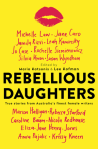
Maria Katsonis and Lee Kofman, Rebellious daughtersTo rebel or not to rebel, that is the question. At least, it’s the question that interested memoirists Maria Katsonis and Lee Kofman who, having written their own stories about “conservative upbringings and subsequent rebellions”, wanted to discover what other women could reveal about that “universal life experience”, the rebellion against parents. This book, Rebellious daughters, is, obviously, the end result – and it makes for fascinating reading.

In their Introduction, Katsonis and Kofman quote American author Gordon Lish’s statement that the  best thing writers can do is to get themselves “in trouble”, to “make it hot” for themselves. This is what they wanted from their contributors, they wanted them to take risks – and it’s what they got.

Like most anthologies, Rebellious daughters has been carefully ordered. It starts with one of the grand-dames of Australian literature, Marion Halligan (“The daughters of debate”) who describes herself as “well-behaved”, as the “good girl” that so many of the later contributors rebelled against. But this is not to say that she didn’t engage in her own little subversions, such as reading forbidden books. They didn’t do her any harm, she writes, “the delicate ones were my parents.” I related to Halligan’s story because, like her, I was the eldest, “the one who came before, who paved the way” and didn’t rebel dramatically. But, enough of that, I’m talking order, structure, here.

The book ends with author-journalist Jane Caro (“Where mothers stop and daughters start”) who shares her daughters’ rebellions, the loud in-your-face one and the withdraw-and-don’t-engage one. Her motherly perspective provides a satisfying, logical conclusion to the anthology. And then, right in the middle, the ninth story of seventeen, is author-publisher Rebecca Starford’s “Who owns my story”. Drawing on her own life and memoir, Starford grapples with the form, with the ethics and practice of memoir writing. I was intrigued by the placement of this contribution, but it’s clever. Having read eight already, I was ready to think about the issues Starford posed, and then, as I read the final eight, I had them in mind.

So, what are the issues? Starford starts by quoting author JP Dunleavy, who said that “The purpose of writing is to make your mother and father drop dead with shame”. Starford likes this quote because

it reveals, simply and with a degree of sharp comedy, the risky nature of memoir writing.

She touches on several issues. One is the idea of shame, and whether it is “an emotion women memoirists suffer from more acutely than our male counterparts.” She thinks it is, and wonders if this is due to girls being taught that they should never speak out. She also explores “a nagging moral quandary”, that is, “the right” to tell stories that involve others. It is, she admits, “the biggest ethical question a memoirist faces” particularly when the memoir portrays these others “in an unflattering light”. She discusses the option of writing the story as fiction. (But we all know cases where people “see” through that – or think they do – don’t we!) Anyhow, she says that she couldn’t choose the fiction option:

For me, the act of writing a memoir was important to the process. If I’d written my experiences as fiction, I would have been hiding behind the genre, and that would have been self-defeating, less courageous, and less honest.

This makes sense to me – and implies that many memoirs are a form of catharsis or, at least, of resolving one’s past. This seems to be the case for Starford who concludes that her memoir has resulted in improved communications with her father. And, she says, while her memoir might have seemed like rebellion to him, for her it was about “seeking to understand him and my mother” and how her experiences as a child had shaped her.

Starford’s analysis of the personal and ethical implications of writing memoirs provides a wonderful grounding for understanding of the other “stories”. There’s a lot of pain here, but there’s also humour, occasionally laugh-out-loud, more often wry. Lee Kofman’s story (“Me, mother and Sexpo”) about taking her conservative Hassidic mother to the Sexpo exhibition is hilarious, but is also a lesson in the assumptions we make – particularly about our parents. Michelle Law’s (“Joyride”), on the other hand, perfectly captures her pain of rebelling only to discover that she’d misread the feelings of the boy in question.

Not surprisingly many of the stories are about tension over boys and sex. Krissy Kneen (“Wundermärchen: A retelling of my grandmother”), whose Steeplechase I’ve reviewed, comes to realise in the end that instead of being the rebellious granddaughter she thought she was, she had taken on her grandmother’s mantle, she’d become a storyteller who likes to shock the innocent. It’s just that her grandmother used death, where she uses sex.  In “Resisting the nipple”, Rochelle Siemienowicz, whose memoir Fallen I’ve reviewed, tells of her struggle against the “good girl” expectations of her strict Seventh-day Adventist family and then of her complicated feelings, particularly regarding her mother, when becoming a mother herself.

In many of the stories, the youthful rebels are shocked to discover things aren’t as they thought they were or would be. Jamila Rizvi (“The good girl”) is confused when she realises that a girl (like her baby sister for example) could be not-good but liked. Jo Case (“Rebelling to conform”), in her desperation to be popular, starts to do poorly at school only to realise, later, that some of those popular girls she was trying to emulate got good grades. And Amra Pajalic (“Nervous breakdowns”) is frustrated by her out-of-touch migrant mother’s nervous breakdowns until she realises the cause is a mental illness.

Not all the rebellions in the book are against mothers – some are against fathers and grandmothers – and not all are resolved but, in most of the stories, age and experience eventually bring rapprochement. That doesn’t mean of course that the daughters capitulate. Rather, they come to understand their mothers (or whomever) a little more and their mothers likewise learn to accept the daughter they have. As Susan Wyndham (“A man of one’s own”) concludes

life is a long lesson and from this distance I prefer to look back with tenderness on those riotous years … And for both of us I say, no regrets.

And that seems the perfect point on which to end my post on this engaging, sometimes shocking, but thoroughly generous and warm-hearted book.

Note: A percentage from the book’s sales is going to the Women’s Legal Service Victoria.

aww2017-badgeMaria Katsonis and Lee Kofman (eds)
Rebellious daughters: True stories from Australia’s finest female writers
Edgecliff: Ventura Press, 2016
322pp.
ISBN: 9781925183528

(Review copy courtesy Ventura Press)

Stella Prize 2017 Longlist

“I feel like we’re at the Oscars for nerds” tweeted Tracey Spicer, ABC Journalist, at tonight’s announcement of the 2017 Stella Prize Longlist. Love it. Nerds of the world unite!

When the longlist (of 12) was announced last year, I had read and reviewed only one of the books. By the end of the year, I had read 6 which I’m satisfied with given how much I read last year overall. This year I haven’t read any (yet)! Really? Where have I been?

The judges are different again to last year’s, with just the chair continuing. They are writer Delia Falconer, bookseller Diana Johnston, writer/memoirist Benjamin Law, academic/Chair of First Nations Australia Writers’ Network Inc. Sandra Phillips, and writer/chair Brenda Walker.

Anyhow, here is the longlist, including, sadly, two posthumous nominations:

  • Victoria: the queen by Julia Baird (HarperCollins/Biography)
  • Between a wolf and a dog by Georgia Blain (Scribe/Novel) (Posthumous)
  • The hate race by Maxine Beneba Clarke (Hachette/Memoir)
  • Poum and Alexandre by Catherine de Sainte Phalle (Transit Lounge/Novel)
  • Offshore: Behind the wire at Manus and Nauru by Madeline Gleeson (NewSouth/Non-fiction)
  • Avalanche by Julia Leigh (WW Norton/Memoir)
  • An isolated incident by Emily Maguire (Picador/Novel) (Lisa named this as her book of the year last year, so I really should make this a priority)
  • The high places: Stories by Fiona McFarlane (Farrar, Straus and Giroux/Short stories)
  • Wasted: A story of alcohol, grief and a death in Brisbane by Elspeth Muir (Text/Biography-Memoir)
  • The museum of modern love by Heather Rose (Allen & Unwin/Novel)
  • Dying: A memoir by Cory Taylor (Text/Memoir) (Posthumous)
  • The media and the massacre: Port Arthur 1996-2016 by Sonya Voumard (Transit Lounge/Nonfiction)

As usual a mixed lot, but a different mix to last year’s. There’s significantly more non-fiction (more than half in fact), including a few memoirs – and fewer short stories. I suppose it’s purely coincidental, but I was surprised at the number of memoirs/autobiographies/biographies I read last year. Are memoirs making a come-back? I note that the list seems to be rather low on “diversity”, but two of the judges could be seen to represent diverse backgrounds, so presumably that issue was canvassed.

I have read and liked all the Stella Prize winners to date: Carrie Tiffany’s Mateship with birds, Clare Wright’s The forgotten rebels of Eureka, Emily Bitto’s The strays and Charlotte Wood’s The natural way of things. I look forward to seeing which of the above books wins this year …

The shortlist will be announced on March 8, and the winner on April 18.

Monday musings on Australian literature: Arnold Haskell on the Arts (2)

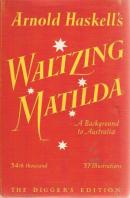
Arnold Haskell, Waltzing MatildaBack in November, I wrote a post on the Arts chapter in dance critic Arnold Haskell’s book Waltzing Matilda and focused on theatre and literature. In this post, I’ll look at his discussion of the press.

“compares … favourably”

Haskell starts by saying that Australia’s press started in a “thoroughly unprincipled and worthless manner”, though he doesn’t explain what he means by this. However, by the time he is writing, he says it “compares, as a whole, favourably with the English and American”, adding that its style is “English and not American”. He describes the press’s treatment of “the abdication” (Edward VIII) and “the September crisis” as “dignified and free from deliberately fostered sensation”.

There were, he admitted, sensational papers, such as Truth and Smith’s Weekly, which “at first glance are not a good advertisement for Australia”. At times their humour is raw and undergraduate, but he comes to admire their humour, even when they targeted him. He praises their writers as “excellent”, and writes:

These papers greatly upset me at first, but I can now appreciate their value as an antidote to wowsing. For all their presentation and methods they are usually on the side of the angels.

Wow, no faint praise here – and rather a long way from today’s “fake news”! Anyhow, he shows himself to be an open-minded traveller.

And then, of course, there’s “Grannie” or The Sydney Morning Herald, which he describes as “the dean of papers” and

the organ of conservative views and amazing respectability. Its very make-up clears it of any suspicion of frivolity. It is a power in the land and it knows it.

Next he discusses the Sydney Daily Telegraph suggesting it might become a rival. It’s owned he writes

by a young man, Frank Packer, a colossus with the figure of a prize-fighter and the flair to do great things. It is brilliant, erratic, out for scoops at all costs, technically well presented.

Packer sold it in 1972 to Rupert Murdoch. And this brings me to Melbourne, which my Melbourne readers will be relieved to read that Haskell doesn’t ignore! He writes:

In Melbourne, probably in Australia, the greatest power in journalism is Sir Keith Murdoch; he has been called ‘Lord Southcliffe’ and also ‘the maker of Prime Ministers’. He looks the part.

Haha … I enjoy Haskell’s references to physical appearances. Haskell praises several Melbourne papers, Murdoch’s Melbourne Herald, as well as The Age and Argus. He’s surprised that they didn’t take sides in Victoria’s “drink referendum”. Of papers in smaller cities, he is similarly positive, saying they “are also of a high standard, and are surprisingly free from parochialism.”

And then he – remember he was an arts critic – says something even more interesting:

The Australian press as a whole gives considerable space to art criticism and treats the artist with far greater respect than our own popular press, though its criticism of local artists tend to be too benevolent to be of the greatest value.

This is interesting on two fronts. One is his praise of the commitment to arts criticism, which suggests too that there was a readership for it. The other is his belief that criticism of the arts can have value – that it is important – but that to have value it needs to be willing to be a bit tougher than it is.

He says Keith Murdoch is interested in art, and that he has “an admirable critic” in Basil Burdett. Haskell describes Burdett as “a man with an artistic background that would be exceptional in any country”. Now, I hadn’t heard of Burdett, so I decided to check him out in Trove. The first hits I got were about his death in an air crash Singapore in 1942. He was Assistant Australian Red Cross Commissioner in Malaya. The Sydney Morning Herald, reporting his death, quoted Australian artist, and President of the Society of Artists, Sydney Ure Smith:

He had taste, knowledge, and that rare quality — enthusiasm … As a writer on art, he was well-informed and progressive without being narrow. He was a valuable art critic.

Anyhow, Haskell mentions two other critics, and I’ll share his description of those too. There’s The Sydney Morning Herald’s “well-informed art critic”, Kenneth Wilkinson, whose field, Haskell writes, “is made to cover painting, music, the drama and the films; probably too much for any one man”. Fair point, don’t you think? And there’s “J.S. McDonald, now curator of the Melbourne Museum”. He “was formerly an art critic” and “whether one agrees with him or not” he “is one of the most entertaining and forceful writers on art”. Has anyone heard of these?

Haskell then turns to the social pages, which occupies much space in all papers and which Australia’s intelligentsia describes as “provincial”. However, Haskell again shows his independence of mind when he suggests it probably is, but why “very lengthy accounts of the doings of that small clique known as cafe society in the London and New York press should be worthier of attention I cannot understand”. Why indeed! Further, he comments that Australian gossip columns are “not snobbish”. They are, and this must clearly be a dig at the British equivalents, “written by journalists about people and not by titled amateurs about their friends”! He writes that

Miss Brown of Wagga, Miss Jones of Gundagai, will both find a space when they come to Sydney or Melbourne, and, what is more, their dresses will be described as minutely as the Governor’s Lady’s.

Perhaps this is a good time to remind you of my first post on Haskell in which I quoted his being (initially) “aggressively uninterested” in visiting Australia.

Haskell also talks about “the paper that has represented Australia the most and that has a place in the history of Australian literature … the famous Sydney Bulletin.” He admits it’s “a little tamed today” but still represents “a national way of thinking”. Its goals, which were to encourage Australians to love their own country, have resulted in “the formation of an Australian manner of expression” which is “often crude, never ‘literary’ from the English point of view”, but is “vigorous and creative”.

I love that an English visitor was able to assess Australia, as a place in its own right and not a little England.

Jane Fletcher Geniesse, Passionate nomad: The life of Freya Stark (Review)

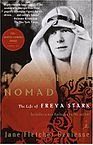
Jane Fletcher Geniesse, Passionate nomad, book coverMy reading group came to read Jane Fletcher Geniesse’s biography, Passionate nomad: The life of Freya Stark, by a somewhat circuitous route – and it started with my blog. One of our members had read my Monday Musings post on 19th century travellers, and suggested that we read a 19th century travel writer. Somehow, as the discussion developed, this morphed into reading a biography of a twentieth century travel writer. As young people say today, whatever!

Some of you probably know of Stark, but to clarify, she was a British-Italian travel writer, explorer/adventurer and historian, who was one of her time’s “most respected experts on the Arab world”. She lived and travelled in the Arabic states from the late 1920s to the mid 1940s, in particular, and was one of the first non-Arabians to travel through the southern Arabian deserts. Amazingly – well, it seems amazing when you’ve read the book and see what she experienced and endured – she lived until she was 100 years old, dying in 1993. Geniesse tells us that her parents both “placed a strong emphasis on stoicism”. She clearly learnt that lesson well!

Stark, Geniesse also tells us, moved among her era’s movers and shakers, including politicians, diplomats and a wide range of intellectuals. Geniesse shows her to be a strong, spirited, canny, resourceful and hard-working woman who took significant risks in order to achieve some remarkable, if not astonishing, feats. This is particularly impressive, given those highly gendered times when women had to fight for independence and recognition. She was, for example, one of very women to be accepted and recognised by the august Royal Geographical Society.

Geniesse traces in excellent, and well-documented detail Stark’s exploration of the Middle East, including, for example, her journeys into remote regions of Yemen which had seen few Europeans before. Unfortunately, the maps in my e-version are impossible to read and I didn’t have time to research every place she visited, so my comprehension of the detail is a little superficial. This excerpt, though, will give you a sense of Stark’s style and approach:

She reentered Luristan on a donkey, draped in native clothing, three Lurs at her side as guides. She bluffed her way past the border guards. (“The great and almost only comfort about being a woman,” she said, “is that one can always pretend to be more stupid than one is and no one is surprised”). (Ch. 8)

She spoke multiple languages, and was prepared to eat and drink what the locals did, sleep where they slept, and respect their beliefs, all of which facilitated her travel into remote, rarely visited lands.

Given the Middle East’s subsequent history, I was more interested in her theory about how the region should be “handled”. It was a theory she started developing when she was quite young, but further expanded over time. She promulgated it to the British and, in 1944 on a bruising British-government-suported lecture tour of the mostly pro-Zionist America. Stark wrote during this trip:

I have been thinking with more and more certitude on the wrongness of all our ways on becoming utilitarian at the expense of human relationships … the human relationship is what counts: and now that I have had time to think it all over, this has come to me so clearly that I feel I can lay hold on it as a definite philosophy and guide.

Respecting people’s sovereignty was a critical point for her, and she believed that any decisions had to be made with the Arabs’ consent. “We musn’t impose solutions,” was her mantra. That view, as we all know now, didn’t prevail.

Concluding the biography, Geniesse argues that while Stark

had not been able to affect British policy in a direct way, she had kept the flag aloft for decency, civility, and compassionate understanding.

Yet, Stark, like most people really, was a complicated person. She achieved a lot, but she also had her moments. One of the strengths of this biography is its even-handed portrayal of its subject. Geniesse shows Stark in all her glory – charming and petulant, wise and imperious, intelligent and petty – and does it with warmth, recognising Stark’s achievement and attraction for others, but also seeing her failings and sorrowing for their impact on her.

Geniesse argues that much of Stark’s paradoxical behaviour stemmed from growing up within an unhappy marriage that had broken up by the time she was 10 years old. She adored her self-centred mother, Flora, and yearned for her approval, but by the time she got it, with her successes in adulthood, the die was cast. She felt insecure about her appearance, and yearned throughout her life to be beautiful. She was also naive about some things, seemingly unaware for example, of the gay men in her midst and, disastrously accepting, later in life, a marriage proposal from one of them.

Stark made long-standing friends, and yet would also use people (and her health) to get what she wanted. She was surprisingly anti-feminist, like some other high achieving women before her, including (predecessor and self-imposed rival) Gertrude Bell. She preferred male company, and was keen to have male bosses (in preference even to being the boss herself, though she still fought for, and won, equal pay for herself from the British government). She was competitive and could be venomous, which her long-suffering but supportive publisher, in particular, tried to tone down.

Geniesse uses primary evidence – Stark’s letters, the writings of others, and interviews with people who knew her – to create her own psychological portrait of the sort of person she thinks Stark was, and why. As readers, we need to be aware that there could be other interpretations, but we can be comfortable, because the end-noting is there, that Geniesse’s picture is thoroughly researched and well-considered.

Geniesse also takes care in structuring her narrative. She starts with a Prologue summarising Stark’s significance, and then in Chapter 1 takes us to 1927/28 Lebanon when Stark was in her mid 30s and on her first trip to the Middle East. Having captured our attention by introducing Stark on the cusp of the grand adventure that became her life, Geniesse returns to her birth and childhood in Chapter 2 and thence tells the story chronologically. She uses foreshadowing, but not over-done, to make links between times and events “(“If Freya could only have known how close she now was to a fascinating life she might have been less depressed by the family responsibilities that again crashed down upon her”) or to focus the narrative (“but this was still a few years off”). Geniesse also finishes some “stories” even though Stark had left the picture, such as what happened post-war to the “ikwan” Stark had established in war-time Egypt to encourage local support for the British, and what happened to her husband after they separated.

In her philosophical book, Perseus in the wind, Stark wrote that:

the art of learning fundamental common values is perhaps the greatest gain of travel to those who wish to live at ease among their fellows.

I’ve really only touched on Stark’s life, and on Geniesse’s biography, but that’s all I can – or should – do. I’d certainly recommend it if you are interested in Freya Stark in particular, or in the Middle East, or in pioneer women travellers.

Jane Fletcher Geniesse
Passionate nomad: The life of Freya Stark
Random House, 1999
ISBN: 9781407053394 (eBook)

Six degrees of separation, FROM Fates and furies TO The Buddha of suburbia

grofffatesYou probably all know the Six Degrees of Separation monthly “meme” by now, but here’s the info for those of you who haven’t caught up with it yet. It’s currently hosted by Kate (booksaremyfavouriteandbest). Each month, she nominates a book, from which “players” create a chain of six more books, linking one from the other as the spirit moves. Unfortunately, for the third time in a row, I haven’t read the starting book, Lauren Groff’s Fates and furies, but …

Arielle Van Luyn, Treading airDaughter Gums has, so I asked her choose my first link. Her first suggestions were books I haven’t read – and that’s no good because my commitment is to having read all the books I choose for the chain. So then, after some to-ing and fro-ing, she came up with a book I lent her, Ariella Van Luyn’s Treading air (my review). There’s a problem, however, because the best linking point apparently relates to a “reveal” part way through Fates and furies, so I can’t use that. The other link is that both books, writes Daughter Gums, “track a couple’s relationship history from early on (particularly when the woman was quite young) through to the demise (in different forms, though …), both track the relationship through up and down …”. I liked this suggestion not only because it enabled me to highlight a debut Aussie author, but because it lets me link to …

Thea Astley, The multiple effects of rainshadowOne of my favourite Aussie authors, Thea Astley. Treading air is set in Brisbane and Townsville, and Thea Astley was born in Brisbane, moving to Townsville for a teaching job in her early twenties. Her first novel, Girl with a monkey, is set there, but I’m linking to The multiple effects of rainshadow (my review) which explores the longterm effects of a tragic event which occurred in 1930 on Palm Island, just north of Townsville. This island was where the Australian government “sent” problematic (from the “white” point of view) indigenous Australians, but the tragedy was enacted by the “crazed” white superintendent. It did, however, involve indigenous people in the ensuing “resolution” of the superintendent’s actions, and resulted in a surprisingly just court decision.

Chloe Hooper. The tall manMy next link is probably obvious, Chloe Hooper’s The tall man (my mini-review), which is about another tragedy on Palm Island. Hooper’s book, though, is a true crime non-fiction work. It chronicles the 2004 death in custody of an indigenous man, Cameron Doomadgee, and the subsequent riot and ongoing unrest concerning the official response through criminal courts, appeals and coronial investigations. Here, though, is not the place to unravel, if we could, the truth of this situation, but Hooper’s book is an excellent read both for her coverage of the subject and as an example of a genre which we, in Australia, see as being championed by Helen Garner.

Kim Scott That Deadman Dance

And now, you probably think that I’ll link to Helen Garner, but that would be poor form I think because, having linked to two books by white (non-indigenous) writers exploring black-white relations in some way, I should (and would like) to link to an indigenous author. So, I’m going to go back, back, way before 1930, to the early nineteenth century settlement by the British of Western Australian – that is, to Kim Scott’s wonderful That deadman dance (my review). In it Scott tells the story of first contact from the local people’s, the Noongar’s, point of view.  His thesis, supported, apparently, by historical evidence, is that the Noongar were willing to work with the newcomers, but of course they were the losers in the end.

Marie Munkara, Every secret thingI’m going stay with this idea of contact, and link to another indigenous author’s book, Marie Munkara’s Every secret thing (my review). This book, which is more a collection of interconnected stories than a novel, is set in northern Australia and explores the relationship between indigenous people (the “bush mob”) and white people (the “mission mob”). The “bush mob” think they can keep the upper hand, or, at least, maintain their pride and independence. This is a very funny book, but its humour has serious bite. In the end, of course, it’s not the “bush mob” who have the power.

Hanif Kureishi, The buddha of suburbiaAnd now, partly because I really should include at least one non-Australian book, I’m going to link to another comic-satire, Hanif Kureishi’s The Buddha of suburbia (my review). It’s a more than appropriate link, in fact, because not only does it have over-the-top humour, like Munkara’s book, it is, also, partly about “other”, in this case about immigrants trying to make their way in England. As narrator Karim says, “to the English we were always wogs and nigs and Pakis and the rest of it”. However, unlike Munkara’s “bush mob”, Karim and his friends do manage to make some self-determining way in the world they find themselves in.

And so, this time I’ve linked mostly on content, with a nod along the way to setting and style. Not knowing Fates and furies, I can’t say whether we’ve ended up anywhere near where we started. Can anyone enlighten me?

And, if not, there’s always my usual question for this meme: where would Fate and furies take you – your first step at least?

Delicious descriptions: Freya Stark on a studied absence of curiosity

Jane Fletcher Geniesse, Passionate nomad, book coverUsually I post a Delicious Description after my main post on the book in question, but I’m reversing my practice this time, for no other reason than time. I haven’t quite finished my main post but am going to be out of town for a few days, so I thought I’d whet your appetite while I’m away.

The description comes from Jane Fletcher Geniesse’s biography, Passionate nomad: the life of Freya Stark. For those of you who don’t know, Stark was, among other things, a travel writer. She lived for 100 years, from 1893 to 1993, and was, a respected Middle East expert. Geniesse, here, quotes from Stark’s second, and highly regarded book, The valleys of the Assassins, about her travels in western Iran where few or no outsiders had been. She is commenting on how the ordinary villagers are fascinated by her, asking her multiple times to stand of the roof so everyone can see her, while the Elders withdraw, not wanting “to show interest in so negligible an object”. She draws the following conclusion:

It is a remarkable thing, when one comes to consider it, that indifference should be so generally considered a sign of superiority the world over; dignity or age, it is implied, so fill the mind with matter that other people’s indiscriminate affairs glide unperceived off that profound abstraction: that at any rate is the impression given not only by village mullahs, but by ministers, bishops, dowagers and well-bred people all over the world, and the village of Shahristan was no exception, except that the assembled dignitaries found it more difficult to conceal the strain which a total absence of curiosity entails.

This is one of the best types of travel writing, I think, that which sees the particular and then draws out the general or universal, showing us that regardless of our “exotic” locations and dress and customs, we are all much the same. Don’t you agree?

Monday musings on Australian literature: The cost of literary awards

Queensland Literary Awards LogoI must get better at noting who posts links on social media that I later take up and use on my blog. Today’s post was inspired by an article posted on Twitter (I think) early last December last (and I now thank whoever it was who posted it!) The article is by The Sydney Morning Herald’s literary editor, Susan Wyndham, and was itself inspired by an announcement by the University of Western Australia’s publishing arm to not enter books for awards in 2017.

Terri-ann White, the director of UWA Publishing, said that the “expense (of entry fees, books, and postage) and the time involved in entering books for literary awards and prizes” exceeded their resources in 2016. Wyndham explains that there are at least 60 annual awards in Australia, and this is growing. Most require an entry fee of $50-100 plus the provision of up to six copies for each book entered. In addition, as one publisher noted, there’s the rather substantial cost of attending awards ceremonies. Do you or don’t you, she said.

But, don’t awards result in more sales?

Well, not necessarily, apparently. White said that short listings and wins do not, in their experience, automatically translate into increased sales. For example, when Geoffrey Lehmann’s Poems 1957-2013 won the Prime Minister’s Literary Award for poetry in 2015, Lehmann received $80,000 but UWA “saw no results whatsoever [in sales].” My immediate response was that this is probably not surprising with less “popular” literary forms. However, White’s argument regarding sales is confirmed by other publishers. Donna Ward of Inkerman and Blunt told Wyndham that “literary prizes are expensive and don’t add to the bottom line of a boutique press trying to build its business.” Giramondo’s Ivor Indyk essentially agrees too, saying that “you don’t do it for sales, you do it for your authors, and for the reputation of the publishing house”.

Allen & Unwin, by contrast, said that sales tripled for Charlotte Wood’s The natural way of things after its Stella Prize win. And another big publisher, HarperCollins, said that sales of Stephen Carroll’s novel The time we have taken went from 3000 to 26,000 after winning the 2008 Miles Franklin Award, and Stephen Conte’s debut novel The zookeeper’s war went from 3000 to 13,000 after winning the first Prime Minister’s Literary Award for fiction.

So, here’s the rub: although over 60 literary awards are offered now, publishers told Wyndham that only the Miles Franklin, the Stella and the Children’s Book Council of Australia awards significantly affect sales. I’m guessing other awards might, like the above mentioned Prime Minister’s Literary Award, but on a more case-by-case basis?

Wyndham interviewed several publishers and found that while most plan to continue to support their authors by entering their books, there is a move, particularly among the smaller presses, towards being more careful, more targeted. Ventura Press, for example, said they are “highly selective”.

What to do?

Wyndham asked publishers how things could be improved. They suggested

lowering the fees, or removing them for small presses; reducing the number of categories to focus attention and cut fees; accepting digital copies, possibly without the author’s or publisher’s name to reduce a perceived bias towards big publishers; announcing shortlists and winners earlier so books are still in shops, and promoting those lists better.

Some good ideas here. I’d be interested to hear what authors say, particularly regarding the “blind” submission of their works; what the awards managers say about the fee/cost issue; and what booksellers say, particularly about the timing issue.

The timing issue seems tricky because books can be eligible for awards up to a year, and sometimes two years with biennial awards, after publication. I can’t see how timing can suit all books eligible for a particular award. However, it is certainly the case that some awards close their entries long before the process of long and short listing, and then awarding of the prize, takes place. Take the 2016 Prime Minister of Australia Literary Awards as an example. To be eligible books had to be published in the 2015 calendar year. Entries closed in May 2016, but the shortlist wasn’t announced until October and the winners, finally, in early November, making it nearly 2 years after the earliest eligible books could have been published. You can see their point can’t you?

The promotion issue is an interesting one – because it’s something that we bloggers can help with. I must say that I have felt a bit silly just reiterating long and short lists as they’ve been announced, figuring those interested in books will have seen them anyhow. I tend just to do a select few. But perhaps I should rethink this? Of course, my blog is small bickies in the scheme of things, but maybe it all contributes to a useful critical mass.

It sounds like, whatever we do, we need to do something, because, as the above-named Donna Ward told Wyndham:

publishers are very selective and many small and micro publishers don’t even bother. And thus, Australia misses out on hearing about its most extraordinary, vibrant writers.

And that’s a sad thing.

I’d love, of course, to hear what you have to say on this issue (and I do recognise that some readers here would rather there be no awards at all.)

Louisa Atkinson, A voice from the country: January (Review)

Louisa Atkinson, as I wrote in a post a few years ago, was a pioneer Australian writer. She was a significant botanist, our first Australian-born woman novelist, and the first Australian woman to have a long-running column in a major newspaper. It was a natural history series titled A Voice from the Country which ran in The Sydney Morning Herald for 10 years from 1860. I’ve shared here a few natural history articles/essays written by Americans, such as John Muir, but never an Aussie one. That’s going to change here, now – for a couple of reasons. Firstly, because I can, given the articles are findable through Trove, and secondly because the Australian Women’s Writers Challenge plans to focus this year, among other things, on classic Australian women writers. You can’t be a more classic Aussie writer than our Louisa!

But, which of Louisa Atkinson’s many columns should I do? I read a few and decided on one from her first year. In fact, I think it might have been the very first in the series. It’s titled “January”, which makes it particularly appropriate this month. Atkinson was living in Kurrajong, on the lower slopes of the Blue Mountains, in “Fernhurst”, the house built by her mother.

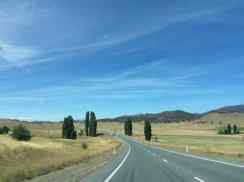
Monaro region, in January

January in the Monaro, 2010s not 1860s

So, the piece is about what it says, January. She describes the birds and plants in particular that you see in January in her region. Here is the opening sentence:

A WARM drowsy month, without the opening promise of Spring or maturing riches of Autumn.

Beautiful don’t you think, and it perfectly catches the middle of the Australian summer, particularly when you read the next couple of sentences:

In dry seasons the grass is scorched and white, the dust flies along the road before the least puff of wind, much to the annoyance of the traveller. The observer of nature finds his field of observation limited, yet not altogether barren.

In other words, it is dry, more yellow I’d say than white, and there’s nothing much happening, nature-wise. “Much” though is the operative word, because it’s “not altogether barren”, as she goes on to show by describing, for example, the activity of various birds such as the “waterwagtail or dishwasher”, laughing jackasses, lowries. Now, here’s another reason I chose this piece – her language. There’s the obvious fact that Atkinson has an engaging way of writing about nature, but what I want to explore here is its unfamiliarity.

By this I mean unfamiliar expressions and names. Regarding the former, I often find in articles I locate through Trove, language that is more erudite than we see in today’s newspapers. It suggests a higher level of literacy in readers. Take, for example, Atkinson’s use of “ferruginous” to describe the colour of a fungus. We might find that word in a novel these days, but not, I expect, in a general interest newspaper column. Of course, it may also suggest that newspapers were geared more to the elite than to the general populace? I don’t know enough about newspaper history to say any more on this. Sometimes, it’s more that word usage has changed. For example, Atkinson writes that some young birds “essay flight”. We rarely see “essay” used in that sense these days. I love that reading these older articles can give us insight into other times beyond the subject matter of the writing.

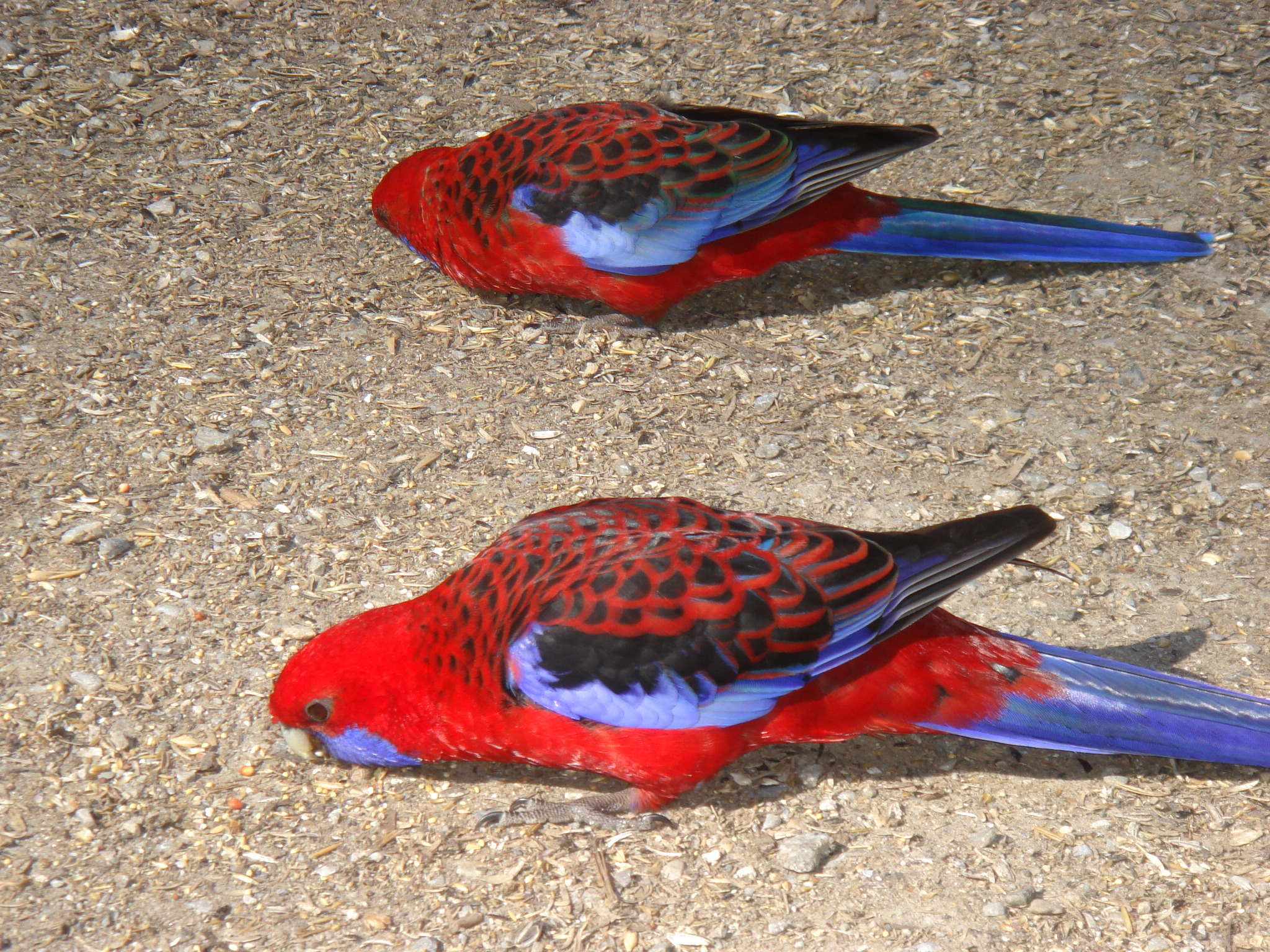
The other unfamiliarity relates to her naming of things. I know what laughing jackasses and lowries are – kookaburras and crimson rosellas*, respectively – but these names aren’t commonly used now. However, I have no idea what a “waterwagtail or dishwasher” is. Is it the willie wagtail and nicknamed dishwasher because its tail swishing back and forth reminded people of a dish mop? So, I did a Google search, and found an article titled “21 Facts about Pied Wagtails” from UK’s Living with Birds website. Facts 6 and 7 are:

6. Few birds have as many country names as the pied wagtail. They range from Polly washdish and dishwasher to the more familiar Penny wagtail, Willy wagtail and water wagtail.

7. The origin of the washer names is a mystery, but it may be because women once washed clothes, as well as pot and pans, by a stream or village pump, the sort of place that pied wagtails also frequent.

So, not the action of their tail perhaps but the places they frequent? I’m not a bird expert, but my understanding is that this White or Pied Wagtail is a “vagrant” in Australia, and that what we call the willie wagtail is from a different family. Which one – if either of these – is Atkinson talking about? Regardless, my point is that reading past writing can trip us up when the writers described plants, animals or objects using terms or names we don’t use now. We have to be careful – particularly those of us not expert in subjects – about drawing wrong conclusions from our reading.

POSTSCRIPT, 31 Jan 2017: Pam (Travellin’ Penguin) checked out “dishwasher” through her bird contacts, and was pointed to the book Austral English, which says that it’s “an old English bird-name for the Water-wagtail; applied in Australia to the Seisura inquieta … the Restless Flycatcher”. It quotes from the 1827 Transactions of the Linnæan Society, that the bird “is very curious in its actions. In alighting on the stump of a tree, it makes several semi-circular motions, spreading out its tail …”.

Crimson Rosellas

Crimson Rosellas by Kevin Tostado, using CC BY 2.0, via Wikimedia Commons

Enough of that, though. Let’s get back to Atkinson and her description of the lowries (i.e. crimson rosellas).  They are common to my garden – and her writing captures them perfectly:

A flock of lowries, young and old, frequent the fields, whence the oaten hay was gathered, nor confine their depredations there, assisting themselves liberally to the ripening peas and beans, which the gardener intended for seed, and even pursuing these favourite morsels into a verandah where they are spread to dry. The flock presents a brilliant appearance ; the full plumaged birds are vivid crimson, blue, partially pied with black, whilst the nestlings are variegated with green.

And now to conclude I’m going to jump five years to a report in the The Sydney Morning Herald in January 1865 of a meeting of the Horticultural Society of Sydney. It reports on various attendees bringing all sorts of plant specimens to the meeting, most of them exotic, and then, towards the end, there’s this:

Miss Atkinson, of the Kurrajong, sent a jar of jam, of the Lisanthe sapida, with the following remarks –

“LISANTHE SAPIDA – A small shrub of the Epacris family, bearing a crimson fruit, enveloping a single stone; good bearer, crop lasts about two months or more, coming in in November. To make jelly—boil the drupes, adding a few spoonfuls of water; when soft strain the juice off, add one pound white sugar to a pint, and boil to jelly. The fruit makes a pleasant tart—the Lisanthe Sapida grows in poor sandstone ranges. If any member of the societv would like to cultivate the shrub, and cannot procure the fruits in their locality, it is to be met with in the Kurrajong.”

A vote of thanks was given to the exhibitors, and more especially to Miss Atkinson, who it was remarked had made herself most remarkable for her endeavours to bring colonial productions into notice.

The lisanthe (or lissanthe) sapida, aka native cranberry, is, as you might have guessed, a plant native to Australia. Lovely to see recognition, by her peers, of a woman, and one who clearly loved and promoted the natural environment in which she lived.

* Mountain lowry is an alternative name for the Crimson rosella but is not, I believe, the most common one, particularly in New South Wales, but readers can correct me if I’m wrong.

aww2017-badgeLouisa Atkinson
“A voice in the country: January”
in: The Sydney Morning Herald, 1 March 1860
Available: Online