Tracy Chevalier, Remarkable creatures

Bookcover

Cover image courtesy HarperCollins Australia

Most readers experience, I think, periods of reading synchronicity when we read books in close succession that are related in some way. I am experiencing such a period now as Tracy Chevalier‘s Remarkable creatures is the third book I’ve read recently to deal in some way with the first decades of the 19th century. The others are David Mitchell’s The thousand autumns of Jacob de Zoet and Peter Carey’s Parrot and Olivier in America.

Tracy Chevalier would not normally be high priority for me, but this book intrigued me because of its period and setting. You see, it is set in Lyme Regis in the early 1800s, and that rings a special bell for me! Yes, it’s to do with Jane Austen. Not only did she visit Lyme Regis, but she set a significant scene in Persuasion there*. So, my appetite was whetted.

But, I must say, I was somewhat disappointed. It’s not that I expected a lot, really, but I did expect a little more than I got. In other words, I didn’t expect exciting or innovative prose, but I did expect writing that wouldn’t bother me. However, it did, and this was mostly due to a lack of subtlety. The best writing shows, not tells, but there was way too much telling in this book, and it falls into two main types:

  • Giving “facts” that we should know. Here is Elizabeth over-explaining Mary’s calling her “Ma’am”, when she’d previously called her “Miss”:

And she was calling me “ma-am” now. Spinster or not, I had outgrown “miss”. Ladies were called “miss” while they still had a chance of marrying.

  • Describing something, such as a character’s emotions, when it should be (and usually is) apparent. Here is a bit of petulance that sounds rather silly in the first person voice of a supposedly mature Elizabeth:

As angry as I sounded, I was also secretly pleased that Colonel Birch had discovered the value of my fish enough to want one for himself.

(For a humorous review of an unsubtle book, do read Kerry, aka Hungry Like the Wolf, on Ken Follett’s The pillars of the earth.)

There are also a couple of rather gratuitous references to Jane Austen and her novels, gratuitous because the main characters don’t read novels and the reference to Austen adds nothing significant in terms of plot or characterisation. It’s as if Chevalier knew Austen went there and decided to draw on Austen’s current popularity by making the connection:

One of Miss Austen’s books had even featured Lyme Regis, but I did not read fiction and could not be persuaded to try it. Life itself was far messier, and did not end so tidily, with the heroine making the right match. We Philpot sisters were the very embodiment of that frayed life. I did not need novels to remind me of what I had missed.

Enough of all that, however. Let me give a quick rundown of the plot. It tells the story of two women who were fossil hunters in Lyme Regis in the first half of the nineteenth century. They were Mary Anning (1799-1847), a poor working class woman whose fossil finds helped change the course of paleontology, and Elizabeth Philpot (1780-1857), a gentlewoman who befriended Anning and who was particularly interested in fossil fish. Using known facts and novelistic licence, Chevalier has written an engaging story that focuses not only on the fossils and their impact on scientific and religious thinking of the time but also on the difficulties faced by women, particularly those unmarried like Philpot or unmarried and uneducated like Anning. Philpot says early in the novel that

… I had to find a passion: I was twenty-five years old, unlikely ever to marry, and in need of a hobby to fill my days. It is tedious being a lady sometimes.

Chevalier shows the financial precariousness of women, their lack of power, and how easily they can be exploited. Women, for example, were unable to belong to the Geological Society of London, and Mary’s collections (in particular) were written up in scientific journals by men, often with no credit given to her contribution. This is the real story of the novel and Chevalier captures well the circumscribed lives of women, and the challenges they faced in living independently. And yet, she undermines this by fabricating a jealous falling out between Elizabeth and Mary over a man. Did Chevalier really need to do this to make the story exciting?

That said, the characterisation is effective overall. She differentiates the two main characters not only by their very different voices, but also by creating a conceit for each of them. For Elizabeth it is her describing what people “lead with”. The forthright Mary, for example, leads with her eyes, while one of the foppish male characters leads, she says, with his hair. Good one, I thought! Mary’s conceit is being the “lightning girl”. The book begins with her being struck, but not killed, by lightning when she was a young girl. Lightning thereafter becomes a motif in her life for surprising or lucky events and for strong feelings.

Chevalier also writes some lovely descriptions – of people and landscapes:

While I accommodated her absence, a dull ache in my heart remained, like a fracture that, though healed, ever flares up during damp weather.

and

Lyme Regis is a town that has submitted to its geography rather than forced the land to submit to it …It is not planned, like Bath or Cheltenham or Brighton, but wriggles this way and that, as if trying to escape the hills and sea, and failing.

This is an enjoyable book for the glimpse it gives into the lives of two interesting and little known women, but the writing, for me, doesn’t quite do the story justice. For a more positive review, you may like to read Lisa’s at ANZLitLovers.

Tracy Chevalier
Remarkable creatures
London, HarperCollins, 2010
352pp.
ISBN: 9780007178384

*It is also the setting, of course, of John FowlesThe French lieutenant’s woman.

Joanna Biggar, That Paris year (Guest post)

When I received That Paris year via the LibraryThing Early Reviewers Program, I got the sudden attack of the guilts! How was I to review this book alongside all the other books I wanted to read? And then the thought struck me! My daughter, Hannah (aka Wayfaring Chocolate), is a reader, was an exchange student (albeit in the USA), and had recently been to and fallen in love with Paris. Perhaps she might like to read and review it  – and, yes, she would (with not too much arm-twisting). I posted a version of that review, as required, on LibraryThing, and then suggested we post it here too. She did some small revisions and … here it is … Thanks, Hannah!

Wayfaring Chocolate’s review of That Paris year, by Joanna Biggar

That Paris year, book cover
Book cover (Image: Courtesy: Alan Squire Publishing)

That Paris year weaves together the story of five American female college students on exchange at the Sorbonne in Paris in 1962. There is something dream-like about the narration of the girls’ lives as it is J.J., one of the five, who recounts the story of each, through her own memories, tales the others have told her and, at times, her own surmising about what may or may not have happened in their lives. It is not that J.J. is an unreliable narrator, but that the novel reads in the same way that life is experienced – as a sometimes clear, sometimes hazy pinning together of what we ourselves remember and feel, what others have told us of their own lives, and the threads we create in our minds to tie the two together. Moreover, this novel shows how sometimes, in pulling together our own and others’ stories, we have the potential to blur the boundaries of our selves:

Still, I wondered at it, wondered where she had disappeared when she recited Eve’s thoughts as if they were her own.

Each of the five girls followed in this novel is initially set out as markedly different. Yet for all their varied degrees of attractiveness, confidence, studiousness and self-awareness, ultimately each girl seems focused on one thing above all else: the quest for love, sex, and a life partner. It is this that weakened the novel a little for me as, while I myself am a female university student in my early twenties with a deep love of Paris who wouldn’t mind not being single, I felt suffocated by the constant idea thrumming through this novel that a man is what will, ultimately, define me as a young woman.

The novel certainly deals with other aspects of women’s coming-of-age, such as coping with parents’ divorce, class dichotomies, living in a foreign country, and navigating the limits – or limitlessness, it seems at times – of friendship. I only wish some of these narrative threads had been fleshed out in more detail. Such issues are as relevant today as they were during the novel’s 1962 setting, and the evocative writing of Joanna Biggar ensures that the reader is cognisant of this. The political tension between America and France at this point in history, the insecurities one character (Gracie) faces when comparing her homeliness with the long-legged grace of her statuesque friends, even the novelty of putting on an American Thanksgiving dinner in Paris – these are concepts that Biggar tackles with humour, grace, and a fair degree of sympathy.

For example, even when Gracie’s dogged belief that her intelligence is a curse preventing men from liking her made me want to reach into the book and shake her by the shoulders, I couldn’t help but feel both sympathy and understanding for her in the following:

By trusting me, by believing there was a place of revelation – Paris – where possession of all womanly secrets was obtained, she had simply been delivered into another of Dante’s circle. In only a few short weeks, she already felt doomed … by being short, ill-dressed, and homely in the world capital of style.

One thing I did particularly enjoy was that there were times during the reading when I felt that all I had to do was close my eyes to believe myself back in a smoky Parisian cafe, or perhaps on a beach in Avignon with the wind rising, or sitting by the Seine watching stylish Parisian women strut past me. Biggar has a talent for evoking a Paris, and a France, that is both familiar yet not clichéd, and this was something I particularly took pleasure in. There were also moments when particular lines jumped out at me as if they were my own, such as when one character tells another that:

Maybe it’s just that you have a way of listening like you’re hearing more than I even know I’m saying […] Jocelyn listens too, so much so that sometimes I think she can play back to me what I’ve said. Maybe she doesn’t hear in quite the same way.

Haven’t we all had people in our lives who, we know, implicitly “get” us, and others with whom conversations only ever take place on the surface? I think Biggar captures the way in which both types of friends are valuable in different ways. In fact, you could read her novel as a study of different types of friendship (and, as I’ve mentioned above, how for some women friendships are apparently mediated through and in reference to men).

Yet despite my slight reservations with the novel, I would still recommend it for anyone who has had, or wants, a Paris Year of their own. This novel brought back memories of my own time in the City of Lights and, for that, I am grateful.

Joanna Biggar
That Paris year
Bethesda: Alan Squire Publishing, 2010
469pp
ISBN: 9780982625101

(Review copy courtesy Alan Squire Publishing, via LibraryThing Early Reviewers Program)

Toni Jordan, Fall girl

Jordan Fall Girl

Fall girl cover (Courtesy: Text Publishing)

It’s just as well I’m not one of those readers who likes to draw conclusions about writers’ lives from their writing, because if I were I’d be seriously concerned about Toni Jordan. You see, her latest novel, Fall girl, is about a con-artist, a very experienced one in fact. And Jordan writes so convincingly you’d almost think … ah, but we’re not going there, are we!

Now, Toni Jordan writes chick lit, but it’s chick lit with a difference. The heroine of her first novel, Addition (which I reviewed earlier in this blog’s history) has obsessive compulsive disorder and at the start of the novel is almost a recluse. She is not, in other words, your typical chick lit heroine.  And so it also is with Fall girl‘s heroine, Della. She too is a little off-the chick-lit-beaten track. She is:

  • not in normal employment;
  • not really upwardly mobile (as her family lives in a dilapidated mansion, and tends to spend up big “wins” rather than using the money to improve their lifestyle);
  • not focused on fashion and appearance (though she does prefer to dress well); and
  • not looking for a husband (though of course this being chick lit, romance does rear its head).

The hero, Daniel Metcalf, however, is somewhat more typical: “he looks like a model from an adventure store catalogue”. He is tanned, strong, big and muscled, and there is a little nod, I think, to Jane Austen’s Mr Darcy in him. But there is also a bit of a mystery about him that our heroine needs to resolve if she is to succeed in this, her biggest “sting” by far.

What can I say about it? It’s a fun read. The plotting and characterisation are good. It’s told first person, in a mostly light tone, but there is light and dark, as not everything runs smoothly (of course). There are some lovely comic scenes – particularly during the scientific expedition on which Della (aka Dr Ella Canfield) takes her mark, Daniel, to demonstrate how professionally his grant money will be spent. Without giving anything away, the resolution is in keeping with chick lit without being completely, neatly tied up.

Is there anything else to it? The writing is good – in a traditional, straightforward way – and the structure is generally chronological, with the odd flashback to fill in Della’s family background. It drips with irony, but in a light-hearted, rather tongue-in-cheek way. Jordan knows that we know the conventions of the genres – of both chick lit and the con – and plays them to effect. We read, and we smile, not grimace. But, there is something else here too, something besides the chick lit and the con story, and that is a coming-of-age story. Not the traditional adolescent story, but we discover as the novel wears on that twenty-something Della has not really achieved self-determination. Everything she does is in accord with her training and her father’s “rules”. Towards the end of the book, her stepmother Ruby talks to her about her upbringing in the family and her inculcation into its “business”, and says:

What you choose to believe is up to you, Della. You don’t have to listen to anybody. You have to make up your own mind.

But, of course, being a Jordan novel, it’s not typical “coming-of-age” either and what Della decides is part of the fun of the ending.

This is a light, entertaining read – and yet it’s not lacking in things for readers to think about. In fact, it’s just the right sort of read for the Christmas holidays. Lisa at ANZLitLovers would probably agree – but go check her review for yourself.

Toni Jordan
Fall girl
Melbourne: Text Publishing, 2010
234pp.
ISBN: 9781921656651

(Review copy supplied by Text Publishing)

Edith Wharton, A journey

According to Keirsey, Edith Wharton may have b...

Edith Wharton (Presumed Public Domain via Wikipedia)

I am a fan of Edith Wharton and have read around seven of her novels, some of which are part of my personal canon. However, I have only read a couple of her short stories, and she wrote quite a few of those too. In fact, she was a prolific writer. And so, when last week’s Library of America story turned out to be one of hers, I decided to read it.

“A journey” was written, according the brief introductory notes, in the 1890s when Wharton was in her late 20s to early 30s. It was written during the time when she was married – unhappily – to Edward Wharton, from whom she was eventually divorced in 1913. The notes say that three of the stories written during the 1890s explore marital misery, and that the journey in this story “becomes a metaphor for an unhappy marriage”.

That could be so, but let’s get to the story. It describes a train journey in which a young woman is accompanying her terminally ill husband back to their home in the East after having spent some time, under doctor’s orders, in Colorado. The story starts with:

As she lay in her berth, staring at the shadows overhead, the  rush of wheels was in her brain, driving her deeper and deeper into circles of wakeful lucidity. The sleeping car had sunk into its night silence. Through the wet window-pane she watched the sudden lights, the long stretches of hurrying blackness …

The next paragraph briefly chronicles their short marriage and the sudden disparity between them as his health collapses:

a year ago their pulses had beat to one robust measure; both had the same prodigal confidence in an exhaustless future. Now their energies no longer kept step …

And then here is the entire third paragraph:

When they married, she had such arrears of living to make up: her days had been as bare as the white-washed school-room where she forced innutritious facts upon reluctant children. His coming had broken in on the slumber of circumstance, widening the present till it became the encloser of remotest chances. But imperceptibly the horizon narrowed. Life had a grudge against her: she was never to be allowed to spread her wings.

Oh dear … methinks the note-makers at the Library of America are right. It’s not what is said so much as what is not said and how what is said is said. What is not said is anything about true love and empathy (though we are told in the fourth paragraph that “she still loved him of course”). In other words, there is no sense of the looming tragedy of the loss of a soul-mate. As for how it is all said, the language is heavy and gloomy. It’s clearly raining, and there are “shadows” and the “hurrying blackness” (a metaphor, presumably, for his coming death, as well as being a literal description of night). The paragraph describing his appearance in her life and their marriage is not exactly joyful either. The focus here is more on where she’d been, so the language is negative (“arrears”, “slumber”). And even the description of the possibilities opening up to her through marriage – “the encloser of remotest chances” – is not what you’d call expansive. No wonder she thinks life has a “grudge against her”. I would too.

The rest of the story is about a rather self-focused young woman. She goes through the motions of caring for her husband – and occasionally “warm gushes of pity [not “sympathy” or “love”, note!] swept away her instinctive resentment of his condition” – but her thoughts are all for herself. Here is her reaction to being in Colorado:

Nobody knew about her, or cared about her; there was no one to wonder at the good match she had made, or to envy the new dresses  …

This is early Wharton. The hallmarks of her writing style are here – the careful choice of words to convey meaning that may be opposite to what’s expected, the development of character through those words, the build up of atmosphere and tension through a well-sustained tone – but it doesn’t quite have the tightness and singularity of purpose of her later works. We don’t get to understand the young woman well enough to be able to respond to her on anything more than a superficial level. I suspect that Wharton would want us to extend her some sympathy but I think we are more likely to see her as a little pathetic, and we really know almost nothing about the husband (except that he had been “strong, active, gently masterful”) so our reaction to his predicament is more intellectual than emotional.

As the journey proceeds, our heroine is faced with a moral dilemma, but she doesn’t take full responsibility for what is happening: “it seemed to be life that was sweeping her on with headlong inexorable force – sweeping her into darkness and terror”. The story, in fact, takes on some elements of horror fiction but that is not its intent and it doesn’t develop along those lines.

I particularly like Wharton when she tackles the intersection between societal expectations and character. This story has glimmers of that – but it’s not really elaborated. Nonetheless, it’s a good story that grabs you from the start with its oppressive atmosphere and foreboding tone. Even early Wharton, I’ve found, has much to offer her readers.

Edith Wharton
“A journey”
The Library of America
Originally published in a collection in 1899?
Available: Online

Note: Stef at So many books has recently reviewed Hermione Lee‘s biography of Wharton, and Kevin at Interpolations has extensively reviewed some of her novels.

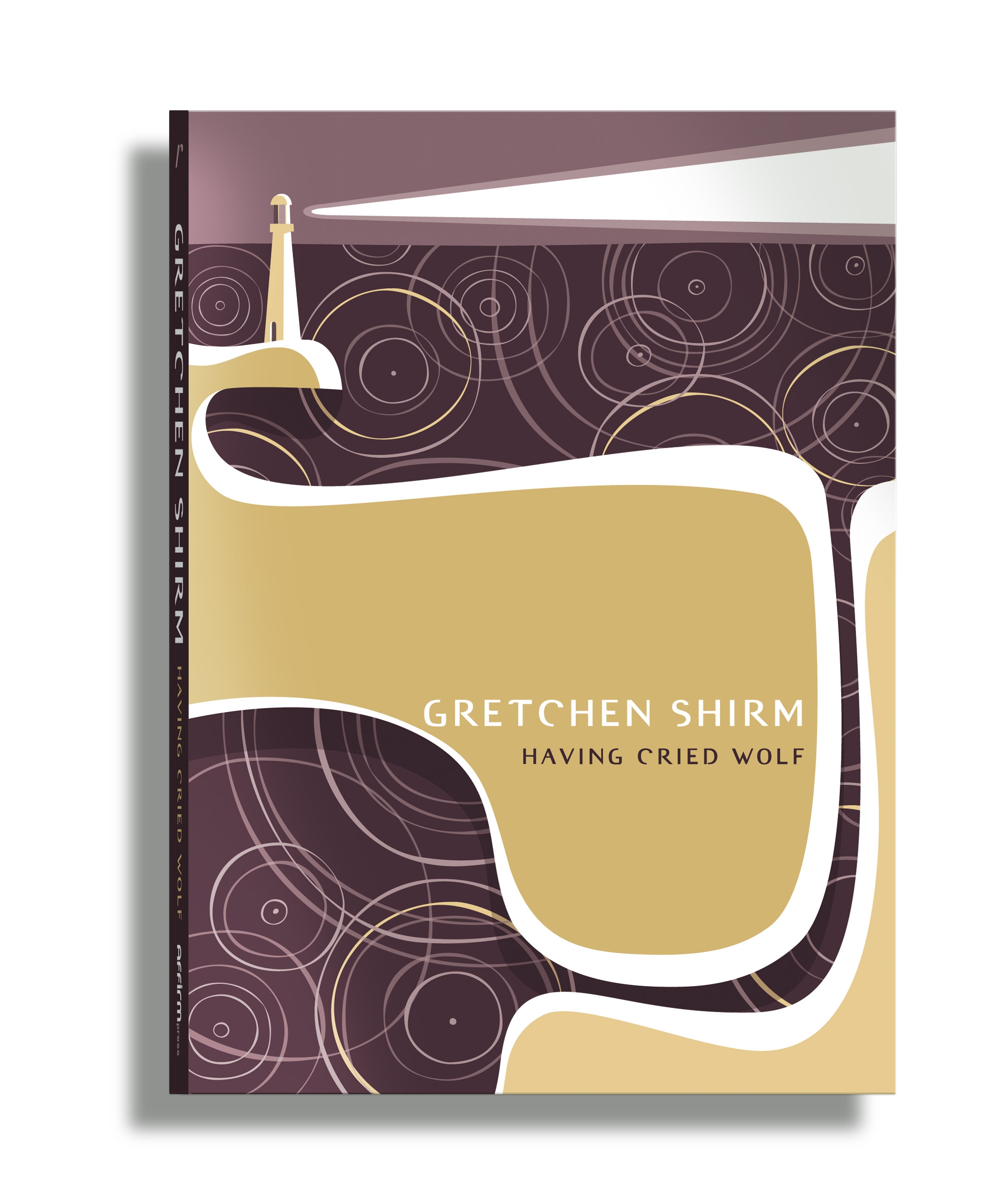
Gretchen Shirm, Having cried wolf

Having cried wolf, book cover

Book cover (Image from Affirm Press)

I have come to the conclusion that short stories are the best holiday reading for me. After a day’s sightseeing followed by reading up on sights for the next day, I usually find I have little time left for my reading. Novels are hard to read under such circumstances, but short stories? Well, they are just the thing. And so, on our recent trip to Hong Kong, I took Gretchen Shirm’s first collection of short stories, Having cried wolf.

Gretchen Shirm is a new Australian writer who was awarded the D.J. O’Hearn Memorial Fellowship for Emergent Writers in 2009. The blurb on the back of the collection likens her to Olga Masters, Helen Garner and Beverley Farmer, and I can see that, but as I was reading the stories I kept thinking of Tim Winton‘s The turning. The obvious reason is because, like The turning, Having cried wolf comprises short stories that are connected by character and place. The fifteen short stories are set in (or deal in some way with) the fictional New South Wales coastal town of Kinsale, and several characters reappear throughout, sometimes in their own stories and sometimes in others. It is rather fun, actually, identifying these and picking up the thread of a story as you progress through the book. Despite this, though, the stories do, I think, also stand well alone.

While Shirm doesn’t focus quite so much as Winton does on the description of place, beyond, that is, conveying the sense of small-town life, her themes are similar: the challenges of small-town living and, particularly, of maintaining meaningful relationships. These themes, however – particularly regarding maintaining relationships – are also those of the aforesaid Masters, Garner and Farmer.

And so to the stories. I must say I enjoyed them – though they are not a particularly cheery bunch. Shirm’s writing is tight and sure, with none of the over-writing often found in first-timers. She writes in first and third person, in female and the occasional male, voices. The characters range from early teens to middle-aged and she captures them all well. Her subject matter includes coming-of-age, marriage and separation, sexuality, suicide and some uncomfortable morality. While many of the stories are interlinked, they are not organised in a totally chronological manner. For example, we learn in the first story, “Breakfast friends”, that Alice is separated from her husband, but in a couple of stories later, “The shallows”, we meet her with the boyfriend who later becomes her husband. This nicely replicates I think the random way we often find out about people in real life.

I’m not going to do a blow-by-blow discussion of the stories but just mention a couple to exemplify some features of her writing. “Small indulgences” for example is a first person story by a rather down-trodden wife. It perfectly encapsulates a woman who has almost, but not quite (as she refuses to colour her hair), subsumed herself to her husband’s needs – and it ends on a delicious if rather sad ironic note. Several of the stories end effectively on metaphors that are subtle but gorgeously appropriate. “Duplicity”, which is about the son of the woman in “Small indulgences”, ends with “There were still no lights on in the house, but by then Daniel was used to the darkness”. And “Breakfast friends” ends with:

The cicada shell is empty now, but inside it was once soft, malleable and not yet formed.

The meaning of that is clear when we read it, but gains added poignancy as we learn more about its characters in later stories. There are many other lovely expressions throughout the stories, such as

… she wants to pour the memory into a mould and leave it there to set.

Why can’t I think like that!

Shirm uses foreshadowing in many of the stories to convey suspense and move the plot along, but she’s not heavy-handed about it. It does mean though that the stories are similar in tone. In other words, this is not a collection of great tonal range but I don’t think that matters, because there’s enough variety and interest elsewhere. There are however a few grammatical oddities that jarred. In a first person voice they can I suppose be forgiven, but there were a couple in third person stories that did bother me. “Peter’s friends swum in the pool” just isn’t right. Is it okay if the voice is third person subjective and that’s how the character might speak? I’m not sure. I’m being pedantic though because overall this is fine confident writing with lovely insights into human behaviour. It does not read like a first collection – and I hope we see more of Gretchen Shirm.

Gretchen Shirm
Having cried wolf
(Series: Long Story Shorts, 4)
Mulgrave: Affirm Press, 2010
ISBN: 9780980637892
221pp.

(Review copy supplied by Affirm Press)

Nicole Krauss, The young painters

In her work, the writer is free of laws. But in her life, Your Honour, she is not free.

Nicole Krauss‘s short story, “The young painters”, is a sly, clever little piece. I have not read Krauss’s novels so came to this short story with no preconceptions, other than that I’d heard of her. The story starts with:

Four or five years after we got married, Your Honor, S. and I …

Ah, I thought, so the narrator is defending herself in a court for some crime she’s committed. And so it turned out – more or less – because this is not about the usual sort of crime nor the usual sort of court. It is about the crime of art, that is the crime of stealing the lives of others for art’s sake. In this case, the artist is a writer and she has “stolen” a tragic story from a dinner host about “the young painters” of the title. She has also written a novel using her father’s last days, telling stories about him (particularly regarding his loss of control of his bodily functions) that she knows he would have seen as a betrayal. She does it nonetheless, justifying herself in two ways: one is that she doesn’t write the novel until after his death and the other is that the story reflects

less on him than on the universal plight of growing old and facing one’s death – I did not stop there, but instead I took his illness and suffering with all its pungent detail, and finally even his death, as an opportunity to write about his life and, more specifically, about his failings, as both a person and a father, failings whose precise and abundant detail could be ascribed to him alone. I paraded his failings and my misgivings […] even if the final notes of the book were of triumphant love and grief at the loss of him, in the weeks and months leading up to its publication a sickening feelings sometimes took hold of me  […] In the publicity interviews I gave, I emphasized that the book was fiction and professed my frustration with journalists and readers alike who insist on reading novels as the autobiographies of their authors, as if there were not such thing as the writer’s imagination …

Later in story she runs into the dinner party host and senses, rightly or wrongly (the point is not what others think but her own conscience), his displeasure at her use of the story. She defends herself, to his Honor, by saying the story had not been told in confidence, that she had not discovered it surreptitiously by sneaking around his diaries and journals (which of course begs the question of those writers who do!).

And so, here we have laid before us various writerly defences:

  • I’m universalising from the particular;
  • I’m not writing autobiography but fiction;
  • the story was “given” to me (and, presumably, you knew I was a writer when you told me).

But, for this writer, it all starts to play on her conscience … and here I will end so you can read the story yourself. It’s very short – just 4 pages if you print it out from the link below – and I’ve only touched the surface. The ending is effective.

If this story is a guide to Krauss’s ability as a novelist, and the way she thinks about her “art”, then I’d like to read more, as I found it a cleverly – and dare I say it, poignantly – conceived and executed story.

Nicole Krauss
“The young painters” (from “20 under 40”)
The New Yorker, 28 June 2010
Available: Online

Note: As with several of The New Yorker short stories, this is apparently an excerpt from her novel Great house.

Ruth Park, Missus

Missus was the last written in Ruth Park‘s Harp in the South trilogy, but is the first in terms of chronology. The first two novels, Harp in the South and Poor man’s orange, were published in 1948 and 1949 respectively, while Missus was not published until 1985.

These first novels, which met with some controversy on publication, are set in early post-war Sydney, the tenements of Surry Hills, and deal with the lives of Mumma and Hughie Darcy and their daughters. Missus is set in the 1920s, in country New South Wales, and relates Mumma and Hughie’s youth and courting days. I have only just read Missus, partly because I read the first two in my teens which was, I have to admit, before Missus appeared on the scene.

You can tell that the writer of Missus is the writer of Swords and crowns and rings (1977). The latter is larger scale – and deals more consciously with its historical time-frame. That is, it more specifically addresses the wars and the Depression, and their impact on the main characters. However, the First World War and the coming Depression do provide the backdrop to Missus. Both books depict rural life and characters with convincing realism.

WARNING: SPOILER, IF YOU’VE NOT READ HARP IN THE SOUTH

Now, the plot. For those who’ve read the first two novels, the interest here is not whether Mumma (Margaret Kilker) and Hughie get together but how they get together and who they are. The first chapter – after a brief introduction to the town of Trafalgar including how the early settlers cruelly despatched the Indigenous inhabitants – introduces us to Hughie and his family. We meet his brother Jer (Jeremiah), who is born with “his feet back to front”, and we learn of the failure of his parents marriage, his mother’s early death and his being turfed out by his father when he was around 14 years old. Jer goes with him, and becomes both millstone and support from then on.

In Chapter 2, we are properly introduced to Margaret (who makes a brief appearance in the first chapter) and her family. Unlike Hughie, she grew up in a large, loving family, though not one without its stresses and losses. Margaret, we learn, has taken a shine to Hughie, much to her mother’s concern, because she sees Hughie for what he is, “a wild goose of a boy … [who’s] got flighty feet”, a “shifty article”. This mother (Rowena) is, in fact, a powerful presence. I love this description of Rowena after she decided to give up on (“on” being the operative word) her first true love:

Her chest ached as if it had a skewer stuck in it, but she tossed her head more often than she hung it.

From here on the story progresses chronologically as Hughie moves around the countryside obtaining and losing or leaving jobs, while Margaret stays at home waiting for Hughie’s occasional visits. The characters of our characters, if you know what I mean, are illuminated by the actions of, or their interactions with, other characters. Margaret’s younger sister, the jealous Josie, provides an interesting foil for Margaret as well as an opportunity for Park to explore women’s lack of rights. Josie marries young – for the wrong reason to the wrong man – and the marriage fails. She’s intelligent and manages to obtain accountant qualifications, but her attempt to set herself up as an accountant in the town fails because no-one will use a woman accountant. Other characters include Alf, Margaret’s long-suffering but sensible aunt who works as a housekeeper for the local priest and who, at different times, provides shelter and monetary support for Josie and Jer; the Biddles (the mustard-gas damaged Joe and his common law wife) who take in Hughie and then Jer at one time in their lives; and the redoubtable Bids Tookey who … but that might give away what little plot there is.

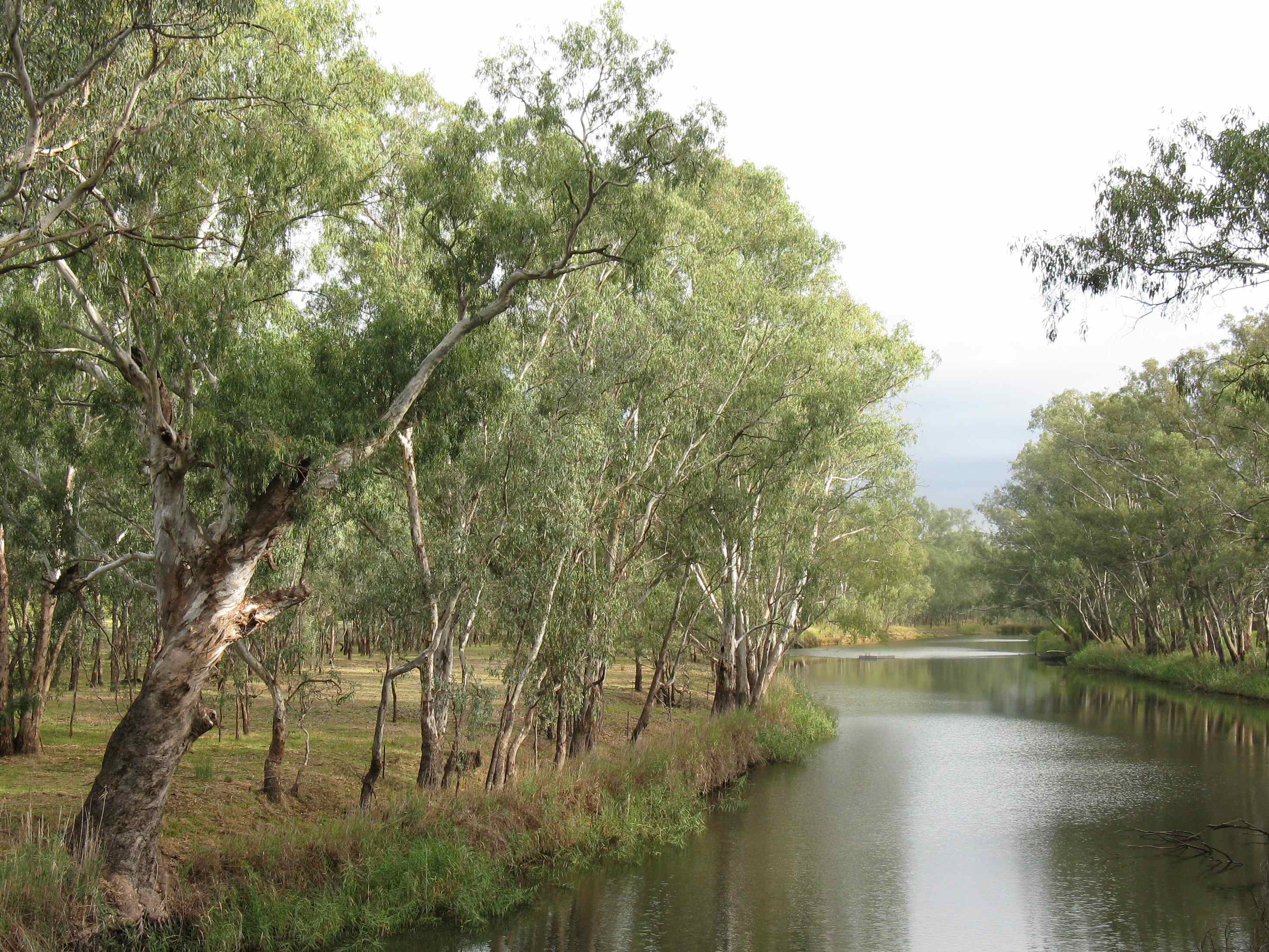
Sunday Creek, near Rutherglen

Australian country creek, lined by eucalypts

In just 250 pages Park paints a rich picture of 1920s life in rural Australia while at the same time developing Hughie and Margaret’s characters. Her characters are all flawed, some more than others, but she draws them with a clear-eyed warmth. She sees them for who they are but she respects them nonetheless. There’s no sentimentality here, but neither is it cynical or bitter. Her themes are universal ones: innocence and experience, familial and romantic love, deception and loyalty, most of it overlaid with that pragmatism that is necessary for survival in a hard place in hard times. As I wrote in this week’s Monday Musings, it’s not surprising that these books still resonate.

Finally, the language is lovely – simple, direct and evocative. Read this from the last few pages of the novel:

In the unkempt garden bloomed freesias and grape hyacinths. The eucalypt twig flushed red, the four creeks overflowed, lambs appeared on the hills, white as mushrooms and as sudden.

‘Them two had better wed quick,’ said Eny ominously, ‘or I won’t answer for Margaret’.

Ha! I think I’ll leave it there – pregnant with possibility …

Ruth Park
Missus
Ringwood: Penguin Books, 1985
247pp.
ISBN: 0140089438

Ruth Reichl, Not becoming my mother

Ruth Reichl, Not becoming my mother
Book cover (Courtesy: Allen& Unwin)

Ruth Reichl and Kate Jennings were both born in 1948, the former in the USA and the latter in Australia. Both had problematic relationships with their mothers and have written about those relationships, Reichl in memoirs and Jennings in her autobiographical novel, Snake. In her first memoir, Tender at the bone (1998), Reichl tells a few (many of them funny) stories against her mother, and describes her urgent need to escape home. Some 20 years later in Not becoming my mother, she revisits her mother – but with the wisdom that time brings. Similarly, in Snake, Jennings’ major focus is “Girlie” and her mother, and particularly Girlie’s desperation to be loved by a woman who was fundamentally unhappy and unable to provide that love.

The thing is that these mothers* were born in the first two or three decades of the twentieth century. They experienced war, depression and, worse still, the awful restrictions imposed on women of that era. Not only were education and work not encouraged, but they were told that marriage was the only life for them. This is the story Reichl tells in Not becoming my mother, and in doing so explores who her mother really was and finally recognises (and appreciates) why her mother behaved the way she did. Here she is on her mother and her mother’s friends:

I have never seen so many unhappy people. They were smart, they were educated and they were bored. Some of them did charitable work, but it wasn’t fulfilling. Their misery was an ugly thing, and it was hard on their families. It was a terrible waste of talent and energy, and watching them I knew that I was never going to be like them.

The mother in Jennings’ novel tells her daughter:

‘She’ll be married at eighteen, a hag by the time she’s thirty’, continues Irene. ‘Don’t let it happen to you’.

Ruth’s mother, on hearing of Ruth’s engagement:

‘Isn’t this very old-fashioned?’ she asked, coolly … ‘I thought that these days people your age just lived together.’

I was certain that Mom would eventually warm to the idea. She did not …

She had introduced me to her friends, shown me the drawbacks of a traditional marriage and offered me what she herself had wanted – permission not to marry.

Both mothers – Ruth’s real one and Kate’s (semi)fictional one – seek meaningful things to do with their lives and to them this primarily meant (preferably paid) work. Both manage it in fits and starts but society was not enamoured of working women and did not make it easy for them. Both mothers experienced some degree of mental illness – which reflects that well documented fact that married women were (and still are, I believe) the highest risk group for mental illness.

These are not pretty stories but they need to be told. Interestingly, Reichl’s story has a positive ending. Late in her life, her mother does find meaning and spends her last years actively involved in her community. Jennings’ fictional story, on the other hand, ends far more equivocally. Despite these differences, both books are powerful reminders of what life was like for a whole generation of women. And they remind us why we need to keep working to ensure self-actualisation for everyone, regardless of gender or other socially imposed limitations.

By the time she wrote Not becoming my mother, Reichl had made her peace with her mother’s memory, had finally realised that much of her mother’s seemingly bizarre or erratic behaviour was borne of the frustration in her life and her desire that her daughter not follow her footsteps. Luckily for me, my mother, also born in the first third of the century, managed to convey similar messages about education, work and marriage, while also providing the love and support that all children need and deserve.

Ruth Reichl
Not becoming my mother, and other things she taught me along the way
Crows Nest: Allen & Unwin, 2009
112pp
ISBN: 9781741757538

* These are just two examples of sad, difficult mothers from those decades. There are many more, such as Jill Ker Conway‘s mother in The road from Coorain.

Anna Krien, Into the woods

How can so many people all be looking at the same thing and see it so differently? The man moseying around in front of me looks at a 300-year old tree and sees a nursing home, while an activist twenty minutes down the road sees a block of flats for furry and feathered creatures.

Vive la différence? Or not! Anna Krien’s Into the woods is an exposé of the decades long battle in Tasmania for its forests, particularly its old-growth native forests. For those who don’t know, Tasmania is Australia’s southern island state. It is famous for its beauty and its wilderness but also, it seems, for its Vs, that is, vitriol, violence and vigilantism. You see, being a small island state, with only 500,000 people, it’s a challenge to keep its economy in the black. Sawmilling and, more recently and more controversially, woodchipping have played an important role in maintaining its economy. It is this controversy – particularly surrounding woodchips – that Krien explores in her book.

Anna Krien, Into the woods

Cover image (Courtesy: Black Inc

On the cover is a “blurb” by Chloe Hooper who wrote The tall man about the death in custody of an indigenous man on Palm Island. This provides a clue to the book’s style, and that is that the author, like Hooper, engages personally in the situation, meeting with parties on all sides of the conflict. In Krien’s case this meant meeting ferals, environmentalists, politicians, loggers, whistleblowers, craftsmen and businessmen.

Krien has organised the book into five thematic sections:

  • Ratbags: the new generation protesters, or ferals, who live pretty primitively on/near the site  they are protecting and who are often in conflict with older activists
  • Loggers: the logging industry workers who range across a wide range of jobs in the industry and are also often conflict with each other
  • The company: Gunns Ltd, the main player in the Tasmanian logging industry, meddler (if so benign a term can be used) in politics, and initiator of the Gunns 20 lawsuit
  • Groundswell: change agents such as whistle blowers, proponents of the “rights” of nature, and shareholders wanting ethical investments
  • The mill: Gunns pulp mill saga, the beginning of the an end?

The story is a complex one, delving into competing interests within the logging industry itself – sawlogs versus woodchips, old-growth versus regrowth native forests versus plantations, public versus private forests – not to mention dissension amongst environmentalists and some very dirty politics. It is a story about jobs versus the environment and the “rights” of nature, of different value systems that set “unmanned” pristine forests against “manned” ones. It is a story of blaming and buck passing. And it is a story of half-truths and distorted truths, all in the name of defending one’s own patch. “I am on a journey through selective truths”, she writes at one point in the book.

This issue of “truths” is beautifully conveyed in her discussion of the timber industry’s language:

I find myself constantly having to decipher new words. Nature needs “disturbance”, logging is “harvesting”, deforestation is “afforestation”, burning woodchips for electricity is a form of “bio-fuel” or “renewable energy”. Woodchips are “feedstock”, while the non-commercial attributes of a forest are “non-wood values”.

The word-games though work on both sides. As she says, “evoking napalm, Hiroshima and the holocaust to describe logging is manipulative”.

A major argument presented by the logging workers is the economic one – jobs – but Krien estimates from the information given her that forestry “accounts for no more than 3% of the workforce”. In fact, she suggests that machines may be a bigger threat to timber jobs than “any greenie”. The more cynical amongst us might think that it is not so much about “jobs” but about “big business”. Sometimes, of course, big business means jobs, but that’s not always necessarily so, not if much of the work can be automated (or, sometimes, though not necessarily here, moved off-shore).

I can’t begin to convey all the information she presents in this book – the history, the statistics, the science, the criss-crossing relationships, not to mention the people, the overt and covert deals, and the truly horrifying violence (both actual and threatened). There are times when I started to feel bogged down in the complexity of it all, but I was reassured when I realised she was feeling it too. She is, in fact, like Hooper, taking us on a journey – but it is a journey that, despite her very real efforts to explore the whole story, does lean to one side, that of those who wish to protect not destroy. As she says in the last chapter:

I’ve tried to balance my seesaw heart, carefully weighing up each argument. But there is something about this island that wants you to choose sides.

I can understand that – it is, in many ways, a magical place. However, I do have one complaint about the book – my ongoing one for books of this ilk – and that is its lack of an index. It is jam-packed with people, events, places, philosophies and theories but how can the casual reader or researcher find them?

And so, is there a resolution to it all? Well no, but there is, she says, a universal story:

… in the greater scheme of things, the island is nothing but a drop in the ocean. But the story is universal – and what goes on in Tasmania goes on in the Pacific islands, in other continents, until it all comes back over the ice to Tasmania again. … Deep down in our bones we must know – we must know that nothing we do is done in isolation. Cause and effect: how did it get so noisy in between?

How indeed? Read this thoughtful, throughly researched book, and you will, unfortunately, find out.

Anna Krien
Into the woods: The battle for Tasmania’s forests
Melbourne: Black Inc, 2010
302pp.
ISBN: 9781863954877

(Review copy supplied by Black Inc)

Kate Chopin, Désireé’s baby

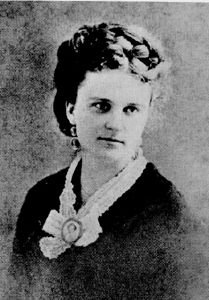
Kate Chopin

Chopin (Public domain, via Wikipedia)

I read Kate Chopin‘s short story “Désireé’s baby” (1893) back in March when Kirsty mentioned it in her comment on my last Chopin post, but I didn’t blog it then. However, when it appeared a couple of weeks ago as a Library of America selection, I felt its time had come. But, what to say? It is, in a word, gut-wrenching.

The first short story to create a lasting impression on me was Guy de Maupassant‘s “The necklace” (1884). It was that short story, really, that launched my enjoyment of short stories. I found them particularly appropriate for my student days when I couldn’t justify reading a novel but wanted some escape from set texts. I was consequently interested to read in the Library of America’s introductory notes to “Désireé’s baby” that Chopin has been compared to such writers as Maupassant and Flaubert. I can see the connection.

“Désireé’s baby” starts off gently – and, more to the point, innocuously:

As the day was pleasant, Madame Valmondé drove over to L’Abri to see Désireé and the baby.

It made her laugh to think of Désireé with a baby. Why, it seemed but yesterday that Désireé was little more than a baby herself…

We then discover that Désireé had been an abandoned baby and brought up by the childless Madame Valmondé and her husband, hence I suppose her name. As this (very) short story unfolds, subtle hints of something not quite idyllic are introduced. A young man of an old wealthy family, Armand Aubigny, falls in love with and insists on marrying the nameless, but now 18-year-old Désireé. He fell in love “the way all the Augibgnys fell in love, as if struck by a pistol shot”. What an odd image to use for love eh?

Then we hear that Aubigny is a strict master of his estate. The home is “sad-looking” with its roof “black like a cowl” and “solemn oaks” growing near it. And, more telling, under his rule “his negroes had forgotten to be gay, as they had been during the old master’s easy-going and indulgent lifetime”. Set against this is Désireé in her “soft white muslins and laces”, so we are not surprised when we read that

Marriage, and the birth of his son, had softened Armand Aubigny’s imperious and exacting nature greatly. This was what made the gentle Désireé so happy, for she loved him desperately. When he frowned she trembled, but loved him. When he smiled, she asked no greater blessing of God. But Armand’s dark, handsome face had not often been disfigured by frowns since the day he fell in love with her.

Now, there is a clue to the dénouement in this excerpt, but if you don’t know the plot I’m not giving it away. All I’ll say is that Chopin’s writing is superb in the way she uses imagery and irony to subtly set the scene and leave the clues so that the conclusion, though shocking, meets Amanda Lohrey’s criteria for endings.

In less than 6 pages, Chopin explores a complex set of themes, including the psychological and social ramifications of young love, old wealth, race and gender, with a clarity that is breath-taking. I’m not surprised that it is a much-anthologised and studied story.