Monday musings on Australian literature: Women of letters

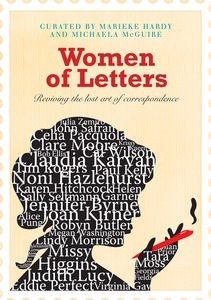
Women of Letters, edited by Marieke Hardy and Michaela McGuire

Women of letters (Courtesy: Penguin Books Australia)

Letter-writing has a long literary tradition – both fictional and non-fictional. Epistolary novels, according to Wikipedia, go back to the 1400s, and I’m sure if you’re a reader you’ve read at least a few. My favourite Australian example is a gut-wrenching young adult novel Letters from the inside by John Marsden. But these are not my topic today. The other sort of letters are the “real” letters written to “real” people. If the letters are good enough and/or the people significant enough these also have a long publishing tradition. I’ve reviewed some here – by Jane Austen (of course)! Collections of published letters can be found for some of Australia’s famous women writers, including Christina Stead, Henry Handel Richardson and Miles Franklin. But these aren’t today’s subject either.

My subject is a specific book of letters compiled by two Australian women, Marieke Hardy and Michaela McGuire, from an initiative of theirs in which they asked Australian women (initially) to “‘pen’ letters to a theme and read them aloud”. Their aim was to raise funds for Edgar’s Mission, “a not-for-profit sanctuary for neglected, discarded and abused farmed animals” in Victoria. Their project commenced in March 2010, and has involved live “shows” in several Australian cities – and now, this book.

The letters have been organised under 16 “recipients”, such as “To the night I’d rather forget”, “To my first boss”, and “To the photo I wish had never been taken”, which gives you a sense of where this collection is going. They are written by 69 well-known (though not quite all so to me) Australian women (mostly!) writers, performers, politicians and so on. I will admit that I have not read the whole 400+ pages book yet, but with Christmas around the corner and a good cause, now seemed to be a good time to write about it. (No, I am not under a retainer for Penguin!). Three of the contributors are writers I’ve reviewed in my blog, so I reckon they’d be a good place to start:

  • Anna Krien “to my first pin-up”. Trouble was Anna Krien was a tomboy and not like other little girls. When they wanted “love”, she wanted friends, so she turned to her cat, Tiger. It’s a light-hearted letter with a serious core about the damage that little girls can do to little girls (“the twisted best-friend bully dichotomy”), something Margaret Atwood explored to great effect in Cat’s eye.
  • Alice Pung “to the moment it all fell apart”. It contains anecdotes from her latest book, Her father’s daughter, presented as a letter to her father. She leads us on about an online relationship only to … but I won’t tell what, except to say it’s to something typically reflective of her and her father’s experiences.
  • Helen Garner “to the letter I wish I’d written”. That sounds like an apposite recipient for a writer who has never shied from controversy – but in fact, being Garner, her contribution isn’t the expected. Rather, it’s a series of letters to her “gazombies”, to people who’ve died, friends who’ve suddenly disappeared from her life, and people who crossed her path but became missed connections. They’re “fragments” that add up to a disjointed but very Garner-ish whole. She thanks the science teacher who taught her that “hot air rises”, she’s sorry that she lost contact with her “nanna” because “my adolescence extended right into my thirties”, she tells a man she regrets not accepting his offer to dance because blokes who can dance “are very thin on the ground”, and she writes to her three ex-husbands thanking them for what they gave her and telling them “there is nothing to forgive”.

There are a few contributions from men, mostly “To the woman who changed my life”. There are light-hearted letters such as actor Jane Clifton’s to her “1991 Nissan Pintara with only 20 000km on the clock” that she calls “the Nissan Piñata, because no matter how many times you get hit, you are the gift that keeps on giving”, and singer Georgia Fields’ to Mariah Carey telling her that “next time I’m at a party and your name comes up, I’m not going to sit quietly and pretend I don’t know you …”. But, I’ll conclude with actor Claudia Karvan’s letter to love, itself, in the “A love letter” section. It’s a cheeky little number telling love she is “eternally grateful for your landing on my shores” but suggesting:

You have a strange habit of departing, and departing quite swiftly. So quick your footsteps aren’t heard. No doorbell sounding the arrival of your cab, just bang, you’re gone […] You really are quite the magician.

This is, as you’ve probably worked out, a book for dipping into. The letters might be artificially created but there’s a lot of art in them – of letter writing, of life. Just the thing, really, for a post-Christmas read.

Do letters play a role in your life? Do you like to read them? Do you write them?

Marieke Hardy and Michaela McGuire (curated)
Women of letters: Reviving the lost art of correspondence
Camberwell: Viking, 2011
413pp
ISBN: 9780670076093

(Review copy supplied by Penguin Books Australia)

Meanjin’s Tournament of Books 2011, Zombie Rounds

Just one round of Meanjin‘s tournament of books to go … after this one, that is.

The Zombie round comprises the winners of Semifinals 1 and 2 being pitted against the books returned to the fray by reader vote in the Zombie poll (on which I reported at the end of the Semifinals post).

Zombie Round 1: Joan London’s Gilgamesh defeated Alexis Wright’s Carpentaria

Well, hmmm … I don’t have a particular problem with the winner here as they are both very fine books. I love Gilgamesh and would not be sorry to see it win, though I did have a slight preference for Carpentaria because of the “bigness” (to use my best litcrit terminology) of its idea/s and language. It is a larger than life novel that takes you on a very wild ride. And it explores some of the conflicts and challenges faced by contemporary Indigenous Australians, something we need to see more of in our contemporary literature. But, this judging was odd. Firstly, the judge was First Dog on the Moon, the pseudonym of Andrew Marlton, the cartoonist for the independent electronic magazine Crikey. This is fair enough, but he got his facts wrong. He described the two books he was judging as “zombie” books. However, only one is. And then, the judging took the form of a cartoon. It was just a little too light-hearted, a little too minimal … but perhaps, really, he took just the right tack. We’ll get a winner in the end but we all know, don’t we, that all the books are winners!

Zombie Round 2: Helen Garner’s The children’s Bach defeated Miles Franklin’s My brilliant career

Ah well, the grand old dame of Australian literature, the bequeather of our (arguably) most important literary prize, has been toppled off her perch by the zombie! Just shows it’s never over till it’s over, eh? Lorelei Vashti, the judge, uses some rather odd criteria to make her decision – she likes the old-fashioned (or, is that, oldfashioned) way Garner’s book used “ear-rings” for “earrings”; she believes (and gives examples) that men called Harry always get the girl but Franklin’s Sybylla rejects her Harry for a career! In the end, being (semi-) serious, she gives it to Garner because, and I’ll quote:

So, in conclusion: near the end of The Children’s Bach, Philip instructs a girl who is trying to write pop song lyrics: ‘Make gaps. Don’t chew on it. Don’t explain everything. Leave holes,’ and that there is a Garner masterclass; it’s precisely what her book does. You never find her doing something so obvious as, for example, rhyming Harry with marry; this book is all about the gaps and holes.

I do think Garner is a very fine writer, so I won’t argue – though I probably wouldn’t have argued with the alternative either. It’s that sort of tournament after all.

Next …

The Final. Who will win? Gilgamesh or The children’s Bach? Which would you vote for?

Alice Pung, Her father’s daughter

Pung Her Fathers Daughter Black Inc

Bookcover for Pung's Her father's daughter (Courtesy: Black Inc)

Her father’s daughter (2011) is Alice Pung‘s second memoir – if you can quite call this book a memoir. Unpolished gem (2006), her first, established Pung in the eyes of both critics and readers as a writer to watch. I agreed with them, but with some minor reservations. She certainly demonstrated the ability to write and tell stories – plenty well enough for me to be happy to read more of her – but, it was a young person’s memoir about a family that had experienced things (such as the Pol Pot regime) that most of us couldn’t imagine. And Pung, born in Australia, didn’t seem to quite have the maturity then to fully appreciate this fact in the way she wrote of her family. Five years, though, have made the difference and I would happily apply my favourite Marion Halligan quote to this book:

Read a wise book, and lay its balm on your soul.

Because, this book is the whole package.

The first thing that stands out is the voice. The book is, in a way, a hybrid, a memoir-cum-biography, and Pung has chosen to write it in third person. This decision reminded me of Kate Holden’s The romantic: Italian nights and days in which she too chose third person to tell her story. But, these are very different stories, and the reason for using third person reflects the difference rather than suggesting a similarity. The difference is that this is not just Alice’s story as Unpolished gem was, but also her father’s story. It is Alice’s attempt to understand the things that clearly frustrated her in Unpolished gem, such as the over-protectiveness of her parents. In this book, her father has a voice. In fact, the book’s chapters see-saw between those labelled “Father” and “Daughter”, so that it reads almost like a conversation.

This conversation style is one part of the narrative structure. Another is the movement in geographic setting from Alice’s time in China, to her return to Melbourne, to her father’s life in Cambodia and then her much later visit to Cambodia with her father, and finally back in Melbourne again. This geographic movement is overlaid with the third significant aspect of the structure, its chronology. The book moves back in time from the present, from when Pung’s family is well-established in Australia with a successful business, with, that is, the life Pung wrote about in her first memoir. At the beginning of this book, Pung, in her late 20s, goes overseas for the first time and her father, as is his wont, is fearful:

It panics him whenever any of his children are far away.

He can’t understand why she must go away to write. After all, she can see these other places on Google Maps, so

why couldn’t she just see the world through these satellite pictures. It was safer.

Alice, being Australian-born, doesn’t understand the full extent of his fears but, as she writes the book, she learns why her father believes that

To live a happy life … you need a healthy short-term memory, a slate that can be wiped clean every morning.

We’ve all read and/or seen about the killing fields of Cambodia so I’m not going to detail here her father’s story of survival through one of the world’s terrible genocides. I will say, though, that for someone looking from the outside (me, the reader), Pung seems to have captured her father’s story authentically and conveys it in a way that we can understand why he expresses his love for his family in the fearful and sometimes controlling way he does. The result is a greater understanding from daughter to father, and, if Pung has got it right, from father to daughter too.

There are some lovely touches in the book about the business of writing memoir. Pung refers briefly to her parents’ reactions to Unpolished gem. Her father is proud but says that if he’d seen it pre-publication “there would have been parts we wouldn’t have let her include”. Pung continues:

She waited for more reproaches, even excoriation. It seemed impossible that this would be the extent of it, but it was. She started to see her mother and father in a new light. They had a sense of humour! They knew their private lives were completely separate from the world their daughter had described in another language.

Then, on different tack, comes this one, late in the book, on the writing of Her father’s daughter:

‘Do you think [says her dad] there’s too much suffering in the Cambodian part? Maybe white people don’t want to read about too much suffering. It depresses them.’

Ouch! There are a few ways to think about this one. Anyhow, Pung’s reaction is:

She didn’t know what to say about that. She knew exactly what he meant though. Her first book had been filled with the sort of sardonic wit that came easily to a person whose sole purpose in life was to finish university and find her first graduate position, knowing she was well on the way to becoming comfortably middle-class …

She decides that the time has come to look back and confront this part of her/their identity that her father had wanted to hide but that had heavily affected his parenting … In fact, it was around this point that I started to realise that my uncertainty about Unpolished gem might be more due to her father’s desire for “dismemory”, that is, to deliberately forget, than to her youthfulness. And the astonishing thing is, through all the description of people who did unimaginable things to other people, of people who suffered horrendously, of people who’d “lost their minds and did not bother to retrieve them”, the overriding emotion she conveys is that of love:

There’s no vocabulary
For love within a family, love that’s lived in
But not looked at …
(Epilogue, quoted from TS Eliot‘s “The elder statesman”)

 This is a fine, fine book and I’d recommend it to anyone – for its story, its writing and its humanity.

Alice Pung
Her father’s daughter
Collingwood: Black Inc, 2011
238pp.
ISBN: 9781863955423

(Review copy supplied by Black Inc)

Meanjin’s Tournament of Books 2011, Semi-finals

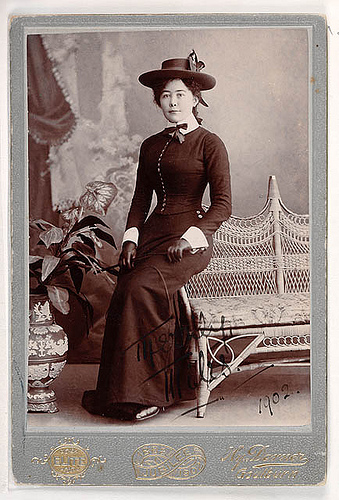
Miles Franklin, 1902

Miles Franklin, 1902, by H.Y. Dorner (Presumed Public Domain)

So now we are getting to the business end of Meanjin‘s tournament of books … and it’s getting exciting. Since I’ve been posting a little more frequently lately, I’ll keep this one short and, hopefully, sweet … after all, there’s still more to come.

Semifinal 1: Joan London’s Gilgamesh defeated Kate Grenville’s The secret river

It is at this point in the tournament that you start to feel really sorry for the losing book (and author). These are both contemporary authors, and both deserving of accolades, but if we are talking specific book and not body of work (as indeed we are) then I agree with the judge. The secret river is a brave book, and a well-written one. Kate Grenville is an excellent writer. But, London’s Gilgamesh has something special – a tone, a conception, a je ne sais quoi – that gives it the edge in this pairing. This seems to be what the judge, Robyn Annear, thinks too:

If Joan London sketches with a few bent lines and the suggestion of shade, Kate Grenville colours-in right to the edge of the page. Coming to The Secret River after Gilgamesh’s shrugged conclusion is startling, like plunging from sepia into vivid 3-D technicolour.

Semifinal 2: Miles Franklin’s My brilliant career defeated Henry Handel Richardson’s The fortunes of Richard Mahony

Well, if Semifinal 1 was a battle between two living writers, the second semifinal was between two dead ones! I’m a little surprised by the result, mainly because Career is generally regarded as the less “polished” of the two, but it was judged by none other than Hilary McPhee so who am I to argue? McPhee recognises Richardson’s achievement and, like the judges before her, finds the judging hard, but in the end she goes for the visceral. And I see no reason to argue against a reader judging on the basis of passion and feeling!

As always, the critical and the visceral response to powerful writing are in play — the tournament is located in my head. Right now, I’m with Sybylla, full of life, bouncing along in her boots made for sparring, outrageous, curmudgeonly, railing against fate. Fortunes is a masterpiece which has had its day and will have it again and again. My Brilliant Career might just be having it now. Go Miles.

Next up … the Zombie Round

I discovered, too late (why wasn’t I told?!), there’d been a poll on the Meanjin Facebook page for the two books to be returned in the Zombie round. They are Helen Garner‘s The children’s Bach and Alexis Wright‘s Carpentaria – but which book will be pitted against which semifinal winner we still don’t know. Keep watching this space …
Meanwhile, I could comment on which books did and didn’t make it to the final four … but I won’t, as I did say I’d keep this short! However, I’d love to hear what you think on the matter …

Kyung-Sook Shin, Please look after mother (Shadow Man Asian Literary Prize 2011)

location of South Korea

Locator Map of South Korea (Courtesy: Seb az86556, using CC-BY-3.0, via Wikipedia)

Two of the Man Asian Literary Prize team have cheated! They read and reviewed Please Look After Mother by Kyung-Sook Shin before our team was formed, and are showing me up big-time. I bear no grudge though and happily point you to their reviews. We are, as they say, on our way!

Shin Kyung-sook was born in South Korea in 1963. She has written several novels though few have been translated into English – and has won major literary awards in her country.

It’s exciting, in fact, that our first reviews represent a country – South Korea – that many of us (speaking for myself at least) are not well read in. This diversity – with books from such places as Iran, South Korea, and Bangladesh as well as from the bigger countries like China, India and Japan – has to be one of the best things about the Man Asian Literary Prize.

PS Apologies for the unusual rapid fire of posts this week. I promise I won’t keep filling up your inboxes/readers/feeds like this – I couldn’t keep it up anyhow!

Meanjin’s Tournament of Books 2011, Round 2

For those interested in the continuing story of Meanjin‘s Tournament of Books, which I introduced in late October, Round 2 has now been played. Here are the results … with a little additional commentary by me.

Match 1, Joan London’s Gilgamesh defeated Helen Garner’s The children’s Bach

Oh, such a hard one. I feel for judge Michaela McGuire, a self-0uted Helen Garner fan who gave the match to Joan London. That takes bravery. I’m sure she had her heart in her mouth when she put those fingers to her keyboard. Anyhow, in the end, she gave it to London for the lovely single sentences (she’s right there) and, as I understand her, the expansiveness of the conception. She admires Garner’s “characteristic elegance and wryness” but “was left wanting”. She decides not to give it to Garner based on her love for the body of Garner’s work but to London based on this work. Fair enough. It would have been a hard call for me, too, and I would like to see London’s beautiful, mesmerising book receive wider exposure.

Match 2, Kate Grenville’s The secret river defeated Christina Stead’s The man who loved children

This may be the shock of the round, methinks. Admittedly the judge, Michael Williams, like McGuire above, bemoaned his lot. He calls them both masterpieces. He argues that both writers have a significant body of quality work. He says literary comparisons are b******t. And so, in a sense, he cops out. He tells us that in 1967 The man who lived childrenwas declared ineligible for the Britannica Australia Award because Stead had “ceased to be Australian”, though he also admits that it took only 70 years for it to assume a strong place in the Australian canon. But, he concludes, “Canonisation is for the dead. Tournaments are for the living. I’m giving this to Grenville“, and then declares his conflict of interest as having been involved in promoting The secret river at Text Publishing on its publication. Not having read Man yet and being a big defender of The secret river as excellent and valid historical fiction, I must, in fairness, stand on the sidelines, but I find this outcome an interesting one.

Match 3, Miles Franklin’s My brilliant career defeated Melina Marchetta’s Looking for Alibrandi

Sorry, Melina, I did love your book but I feel this is the right and proper decision. Judge Sarah L’estrange discusses the similarities in subject matter between these two books – “strong willed and independent” teenage girls fighting to find their own life against a background of familial and societal expectations. However, she gives the match to Franklin because Looking for Alibrandi is “just too straight-forward in the telling, there isn’t the dazzling dance of words across the page that My Brilliant Career has in spades”. I think she’s right. Alibrandi is locked pretty firmly into the Young Adult genre while Career has a more universal appeal, largely because of its writing and conception.

Match 4, Henry Handel Richardson’s The fortunes of Richard Mahoney defeated Cate Kennedy’s The world beneath

Another judge complaining about comparing literature! Makes me wonder why they signed up for the job! Anson Cameron makes me laugh though. Of Richardson‘s big book he says “Fat books, like fat people, die young unless they have huge hearts” and concludes that “only very good books age this well. Only very good books have the architecture to withstand great changes in the world. Of Kennedy‘s book he writes that it is “a Garnerish, (Garneresque? Garnery? Garnerly?) type novel in that it is imbued with a the kind of everyday insufferable domestic pressure Helen Garner excels in and it’s rendered in a spare, accurate prose reminiscent of her”. Not that he says it, but perhaps that’s a good enough reason for it to lose, perhaps it is too “Garner” rather than something original. I’m afraid I wouldn’t know as this one’s still in my TBR pile. Richardson would, I think, have the body of opinion behind her so Cameron has probably chosen well … and anyhow, if Garner was going to win, I’d rather it be Garner (if you know what I mean).

Now onto the Semi-finals …

In three of the four matches in this round, a classic was pitted against a contemporary, and the classic won two of them. I’m surprised the third one didn’t win too. Does this mean I’m a reactionary, old fuddy-duddy of a reader? Or does it simply mean that the classics have proven themselves as stayers over time? I prefer to think the latter … which suggests that if a contemporary novel wins the tournament, it will surely move one step higher on its climb to classic status.

I will be reporting again …

PS: I planned to list the semi-final matches here, but the numbering of the matches above does not accord with the numbering on the initial tournament plan, so I’m not sure which book will be pitted against which. Has some match-fixing been going on? Surely not!

Monday musings on Australian literature: Christina Stead

I have mentioned Christina Stead several times on this blog – and yet she remains the guilty gap in my reading. I thought 2011 would be Stead year, but things have conspired to restrain the rate of my reading this year. Maybe 2012! I have also written several posts inspired by articles in The ABC Weekly, and I’m returning to this paper for today’s Monday Musings, this time to an article by novelist-journalist Florence James. It’s titled “Young Australian Wins Fame Abroad” and was published on 7 December 1940, at which time Stead would have been 38. This was the year her most famous book, The man who loved children, was published, but James does not mention it by name in her article. (She does though refer to Stead “correcting the galley proofs of a new book”).

James commences her article with a telling comment:

A Sydney girl [girl?] whose name and work are much more widely known and appreciated in England and the United States than in her native Australia is the writer Christina Stead.

I can’t help thinking that little has changed 7 decades on, at least in terms of her recognition here. She is certainly known, but she is not on the tip of everyone’s tongues the way I suspect she ought to be.

James then documents some of this acclaim:

  • English critic John Squire who, on reading her short stories The Salzburg tales (1934), said he’d discovered a “second Sappho”;
  • Poet, and publisher’s reader, T. S. Eliot, who wrote that The Salzburg tales was “a work of genius – but doubtful as a popular success”; and
  • New Yorker critic, Clifton Fadiman, on reading House of all nations, claimed Stead and Virginia Woolf were “the two most important women writing in the English language”.

James, who shared “digs” with Stead for a time in London while she was writing Seven poor men of Sydney, outlines how Stead supported herself in the late 1920s and early 1930s. She started as a private secretary for a firm of grain-brokers. She then worked in a private bank in Paris rising to an important confidential position, and she did “some special financial work in London [which] was regarded with astonishment by conservative London financiers”. A young colonial, and a woman, no less! That would probably never do! Her third novel, House of all nations (1938), is about high finance and has been described by Kate Jennings as one of the best novels ever written about banking.

James describes Stead as follows:

At first shy and reserved, with her friends she is wonderful company. Her talk is as witty as her writings, and although she has a masculine [masculine?] grasp of business and is a scholar and linguist, her simplicity of manner and directness of approach immediately put people at their ease.

I do like reading contemporary articles (or reviews) like this … not only do we learn about the subject but we learn, unintentionally on the part of the writer we are reading, so much about the thinking of the time. Thank goodness for libraries and archives, eh?

Monday musings on Australian literature: Meanjin’s Tournament of Books

Henry Handel Richardson in 1945, a year before...

Henry Handel Richardson, 1945 (Presumed Public Domain. Courtesy: Wikipedia)

Many Monday musings ago I wrote about the reduced visibility of women writers in Australia. I wasn’t the only one concerned and things have been afoot to up the ante for women writers. For example, a new award targeting women writers, the Stella Prize, was announced earlier this year. And now Meanjin, a longstanding literary magazine, is emulating the Morning News’ Tournament of Books (to which a favourite blogger, Hungry like the Woolf, introduced me a couple of years ago) by conducting a tournament comprising books by Australian women writers.

Meanjin describes the tournament as follows:

The way it works is this: 16 books are chosen … and then divided into pairs. A judge is given a pair, reads them both, writes up their decision process and announces which of the pair they deem the better book. That book then progresses into the next match to go up against a winner from a previous round. It’s a sporting tournament for people who don’t like sport.

This year, in light of the discussion around women’s writing and literary prizes, we’ve selected a short list of novels exclusively by Australian women. The list has been chosen by us, and is incomplete, capricious and arbitrary. That’s ok. There’s no way you could do Australian women authors justice in 16 books…

Fair enough … and being this upfront about their selection makes it hard for us to complain, doesn’t it? And really, I wouldn’t want to, because I can’t imagine we’d ever get universal agreement on 16 books, anyhow.

The tournament schedule can be viewed at the Meanjin site so I won’t detail it here, but I will list* the 16 books, partly because it’s a useful list, despite its arbitrariness, for those interested in Aussie women’s lit:

Regular readers of my blog will recognise some of my favourite and oft-mentioned authors here. Interestingly, a couple of young adult/children’s novels (those by Carmody and Marchetta) have been included – one of their “capricious” decisions, perhaps! Not that I have anything against such novels – I thoroughly enjoyed Marchetta’s Looking for Alibrandi – but I wonder whether they have the weight to beat a Stead or an Astley, a Wright or a Jolley, for example. Well, keep reading …

Round 1 results

  • Match 1, Gilgamesh beat The lost dog. Both are interesting books but Gilgamesh is a beautiful one. I would have chosen it too.
  • Match 2, The children’s Bach beat Mr Scobie’s riddle. This is harder. I love The children’s Bach but have not read Mr Scobie’s riddle. I’m not sure it’s the Jolley I’d have chosen … but, oops, I said I wasn’t going to go there, so let me just say that this match is a tricky one – the judge thought so too – and I’m glad I wasn’t asked to call it!
  • Match 3, My brilliant career beat Tirra lirra by the river. Another hard one, but My brilliant career would have to be the sentimental favourite in this pairing. And, anyhow, how could I not agree with a book the judge called “chick-lit amongst the gums” and “Austen in an Akubra with a broad Australian twang and some permanent sun damage”?
  • Match 4, Looking for Alibrandi beat Harp in the south. Interesting decision. A main criterion for the judge seemed to be the ability to stand the test of time … but, but, I argue, Looking for Alibrandi is only 20 years old while Harp in the south has already stood the test of time. And, I’m not sure that Alibrandi reaches adult audiences in the same way that Harp does. Still, perhaps I should read Alibrandi again to be sure.
  • Match 5, The secret river beat A kindness cup. Both good books, and a very hard choice … one the judge clearly found hard too. It seems as though it was Astley’s more dystopian view that was the deciding factor. That seems a bit of a cop out to me!
  • Match 6, The man who loved children beat Obernewtyn. Now this must surely have been a no-brainer and the judge agrees, explaining why they were (mis)matched in the first place. I’ll say no more.
  • Match 7, The fortunes of Richard Mahony beat Of a boy. Another pretty obvious choice, really. While I do think a short novel or novella can beat a hefty tome, this is probably not the hefty tome to be up against!
  • Match 8, The world beneath beat Carpentaria. Now this does surprise me. The latter won the Miles Franklin award while The world beneath was not shortlisted. I don’t think we should give excessive credence to awards but it seems the judge gave the match to The world beneath because he found Carpentaria “difficult”. Is this fair or right, I cry into cyberspace? No, but at least the judge admits to being “covered in the stench of subjectivity”, so all one can do is vote Carpentaria back in the zombie round.

Plot, humour  and readability seemed high on the various judges’ agendas. They would not be my top criteria but, as this tournament is mainly about promotion of women writers and having some fun, I’ll say no more, except that I’ll report again on the tournament after the second round has been played …

* The two linked titles are to reviews on this blog. I’ve read many of the books listed, but mostly long before I started this blog.

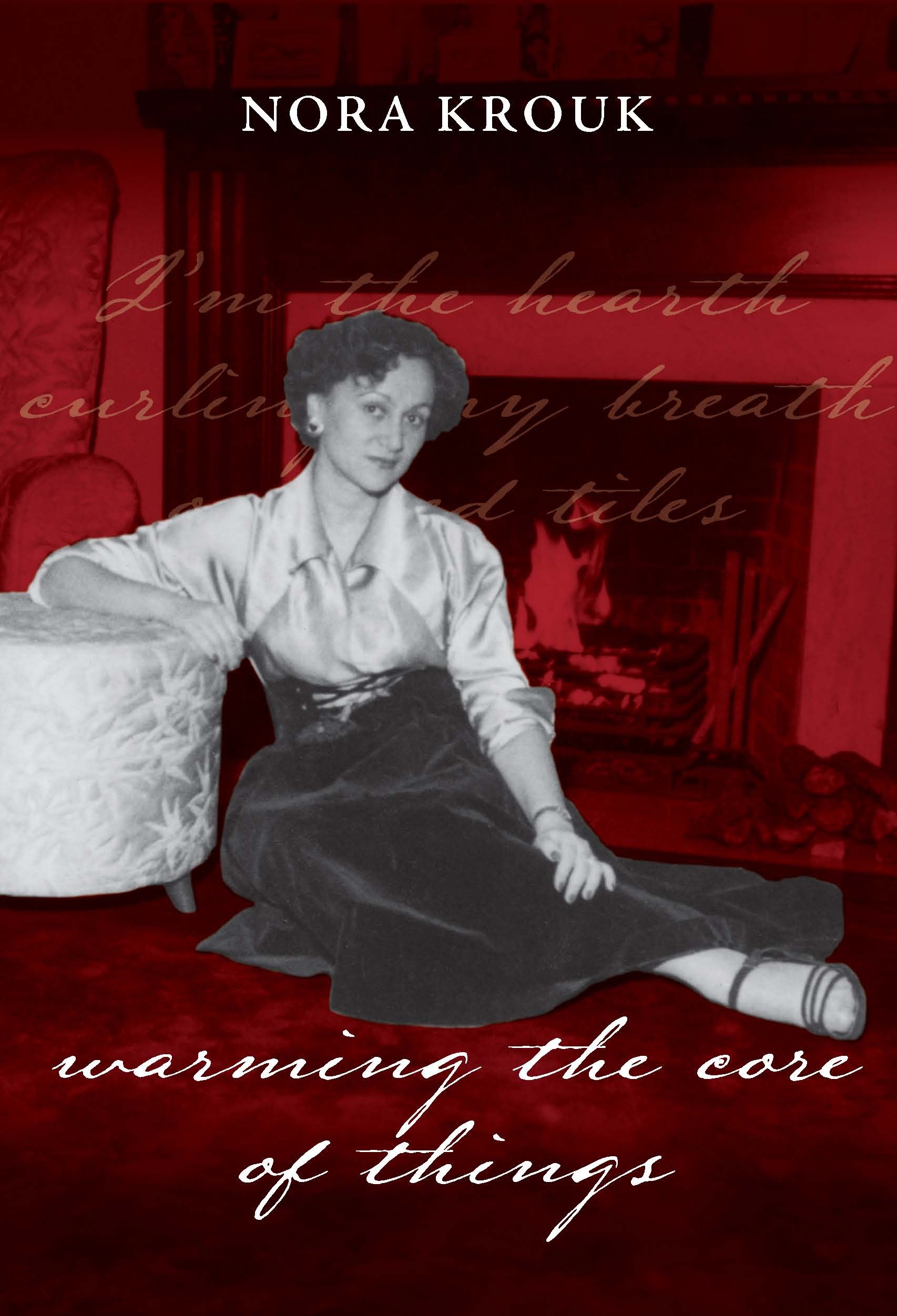
Nora Krouk, Warming the core of things

Nora Krouk, Warming the core of things, book cover

Nora Krouk, Warming the core of things (Image courtesy Hybrid Publishers)

life wrapped in bundles
of painful joy
(from “Skies will be luminous”)

The reason I like to read poetry is the obvious one – the way poets can capture a feeling or idea in just a few carefully chosen words that are presented through a controlled rhythm. Nora Krouk fills this bill nicely!

I hadn’t heard of Krouk before this book came to my attention … but she’s been around for a while. In fact, she’s 90 years old and has been in Australia since 1975. She is the daughter of a Polish Catholic father and a Jewish mother. She was born in China, married in Shanghai and lived in Hong Kong before emigrating to Sydney. She was educated in Russian schools and has written poetry in Russian and English. She has been published internationally, and has won several awards. Phew! I don’t usually provide such detail about authors, but it seems appropriate to do so here.

The collection is organised into three sections, and the order of these sections is interesting: In memoriam, Renewals, Transitions. I like the way it moves from death, through awakenings and rebirths, to change accompanied by uncertainty. This order keeps us on our toes. It offers no easy conclusions to the challenges posed in the first section but neither does it suggest hopelessness as the reverse order might have.

The poems are, for the most part, very accessible. Elizabeth Webby is quoted on the back of the book as saying that the poems “will appeal to both those who usually read poetry and those who don’t”. I’m in the middle ground here – I like to read poetry but don’t read it often enough – and I think Webby is right. Many of the poems have stories – seemingly about people Krouk knows – and those stories speak to the ordinary things of life which, for someone of Krouk’s age, include memory, aging, loss and death. These things are explored with a sense of enquiry and some resignation, rather than with a railing and ranting. The poems move between her daily life and historical events (some of which she or her family experienced), particularly the horrors that occurred under Hitler and Stalin.

I commenced this review with two lines from a poem in the Renewals section because they encapsulate what seems to be Krouk’s philosophy: Life is not easy, she’s saying, but there is much to enjoy and wonder at. The first poem in the book is a widow’s poem. It speaks of grief, but it also introduced me to something interesting about her poetry, what Anna Kerdijk Nicholson describes on the back of the book as her “idiosyncratic rhythm and lineation”:

I don’t weep much.     I read
and write     even cook     then
catch myself and return to you
(from “Fima (1914-2008)”)

These spaces in her lines control, force even, the rhythm for the reader. They allow us to breath, to feel the sense of the words and, in a way, they provide a more intimate, conversational tone to the work. They slow us down and prevent us from rushing through the poems.

Aging and memory, as I’ve already mentioned, are recurrent themes in the collection.  Memory, though, is a pretty broad church, and Krouk explores it in its various guises – from loss of memory to remembering the (often painful) past:

They chase a name
a thought     an event
(“The couple”)

It’s different for us
we have no grave
He was last seen
in the prison yard
(from “For Leon K” who died under Stalin’s regime)

But not all the poems are about challenge. There are lighter poems, and there is humour. I loved her short poem about a young smiling woman:

A smile is hovering over our street
a light funny quizzical smile
It slipped off her lips
brushed past the creamy cheek

dripped over a sunny wattle and stayed.
(from “A young woman”)

Much of her imagery is domestic, everyday. There are family dinners and bridge afternoons with friends. Jacarandas and gums, camellias and lavender feature, grounding her poetry in her Australian life. But, there are also allusions to things literary (such as Shakespeare and Tolstoy) and political/historical (as mentioned earlier), which confirm her as a poet of universal concerns.  Some of her poems combine the Australian and the political – such the example below, which demonstrates that she is capable of more than a little irony:

Where do we turn Matilda     Lead the dance
As promised in the anthem     we advance
(from “Sorry”)

There are also a few specifically religious poems, but I found some of these (“Widowed a hundred times”, and “I am not envious Lord”) a little too melodramatic for my liking, while others, such as her meditation on snakes (“Snakes are much maligned”), engaged me. Poetry, as I’ve said before, is such a personal thing.

Krouk has lived long and experienced much. There are many more poems I’d love to excerpt – and maybe I will in a future post. Meanwhile, I can’t think of a better way to summarise this book than through her own words:

Under the skies     luminous
things drop
(from “Skies will be luminous”)

Nora Krouk
Warming the core of things
Melbourne: Hybrid Publishers, 2011
126pp.
ISBN: 9781921665431

(Review copy supplied by Hybrid Publishers)

Monday musings on Australian literature: Ada Cambridge

Photograph of Ada Cambridge by Spencer Shier c...

Ada Cambridge, c. 1920, by Spencer Shier (Public domain, from National Library of Australia, via Wikipedia)

It’s time, methinks, for another Monday Musings post highlighting a specific writer – and this time I’ve chosen Ada Cambridge. I discovered Cambridge back in the late 1980s when there was a resurgence (in Australia anyhow) in recognition of women writers. What was great about this resurgence was that it not only saw increased publication of contemporary women writers, but also the republication of past writers. I sussed out and read quite a few of these older, oft-forgotten writers, including, obviously, Ada Cambridge (1844-1926) who was, in fact, one of Australia’s best-known writers in her time.

She was a fascinating woman. Born in England, she married the Reverend George Cross in 1870 and a few weeks later emigrated with him to Australia for his work. They lived in several towns in Victoria until 1913 when they returned to England. Cambridge came back to Australia in 1917, on Cross’s death, and remained here for the rest of her life. Like many clergymen’s wives she worked hard supporting her husband. She suffered her share of sadness, including losing children to illness, and shocked her husband by writing of her experience of religious doubt and marital trials.

Cambridge was a prolific writer but, as is the common lot of women writers, her role as wife and mother came first. She wrote in her memoir*, Thirty years in Australia, that “housework has all along been the business of life; novels have been squeezed into the odd times” and in those days housework was far more onerous than it is today. She must have been a wonderful time manager! I have read only two of her novels: A woman’s friendship (1889), which was published as part of the Colonial Texts series edited by, surprisingly, the Australian Defence Force Academy, and Sisters (1904), which was published by Penguin in their Penguin Australian Women’s Library series.

While Cambridge’s first writings were religious in nature, she moved on to tackle more controversial subjects, particularly relating to women and their relationships. It’s many years since I read these two books but I remember my surprise at their content. These are not traditional women’s romantic novels. They confront, instead, the dual constraints women faced in terms of class and gender, particularly regarding the desire for independence and the physical and intellectual impositions of marriage.

A woman’s friendship explores the friendship that develops between two women (both married, one to a journalist and the other to a squatter) and a man through The Reform Club, of which they are the only members. It toys with the fine balance between marital responsibility, sexual attraction and the desire for intellectual companionship – and Cambridge is pretty up-front about the sexual tensions and jealousies that can lie just below the surface of friendships like this. Pretty interesting stuff for that time – and it makes me think a little of Edith Wharton. However, I think Wharton focused more on the notion of entrapment and was rather bitter, whereas Cambridge was more pragmatic about human nature and consequently less tragic.

In Sisters, according to the notes on the back of my edition, Ada Cambridge “dispenses with conventional romantic notions about marriage”. And this, as I recollect, is pretty right. She explores the marriage fortunes (or misfortunes) of four well-to-do sisters – what they decide (do they marry for love, for money, or not at all) and the implications of their decisions. Cambridge is unsentimental (cynical even) about the idea of “happily ever after” showing rather that “I do” is just the beginning. Indeed, as Cambridge writes of one lover who doesn’t win his girl:

He did not know what a highly favoured mortal he really was, in that his beautiful love story was never to be spoiled by a happy ending.

I couldn’t resist quoting that, but it doesn’t represent the totality of Cambridge’s attitude to marriage. A review from The Argus, in 1907, of a later novel, A happy marriage, suggests:

Mrs Cross [aka Ada Cambridge] apparently is no idealist in the matter of marriage. She looks for disillusionment and expects differences of opinion. But she recognises the possibility of ultimate happiness in spite of some incompatibility. Perhaps after all, this is the wisest view and it is more wholesome not to glorify what is not infrequently inglorious. It is, besides, the highest optimism to be able to forecast a happy future from an unhappy present. In any case our authoress is quite impartial in her distribution of blame and very sane in her judgments of men and women.

Cambridge was, for me, a wonderful find … and one day I’ll read more of her work. Meanwhile, if you’d like to read her, you can access some of her work (particularly Sisters) at the following websites:

* As reported in The Sydney Morning Herald, 31 July 1926.