PD James, Death comes to Pemberley (Review, sorta)

How do you review or evaluate a Jane Austen “sequel”*? Do we expect, want even, the author to channel Austen? I suspect the answer is as varied as are the readers of sequels, and it probably depends on why we read Austen. Those who are mostly interested in the stories and what happens to the characters are likely to have a completely different perspective from those who love Austen’s language and her very particular wry, sly eye on humanity. I fall into the latter group and this is why I am not drawn to sequels. I want to read Austen for Austen, and other writers for their style and worldview.

I have just read PD JamesDeath comes to Pemberley. I’d describe it as a traditional sequel, with a difference. That is, it picks up the story of Elizabeth and Darcy some six years after their wedding, but it is a crime novel, which adds an extra complication for the reviewer, because not only is there the issue of Jane Austen’s story and characters to consider, but there’s a shift in genre. This, I’ll admit right now, puts me at a double disadvantage: I don’t read Jane Austen sequels and I don’t read crime novels. So why did I read this book? Two reasons really. It was given to me by a friend and my local Jane Austen group decided to discuss it as part of this year’s focus on Pride and prejudice.

I’m glad I read it, mainly because I’ve been wanting to try a “sequel” for some time to understand what they are all about – and a sequel by a writer of PD James’ reputation seemed like a good one to try. However, I can’t say I really enjoyed it. It was, however a quick read – and I did find it intriguing to ponder what sequel readers look for.

Before I discuss that, I’d better say something about the plot, though that’s hard without giving too much away. The story proper starts on the night before a big annual ball. Elizabeth, Darcy, Colonel Fitzwilliam (now Viscount Hartlep), Georgiana and the Bingleys are all at Pemberley getting ready, when a carriage careens into view carrying, we soon discover, an hysterical Lydia claiming that her husband, Wickham, has been shot. Darcy, Colonel Fitzwilliam and a new character and suitor to Georgiana, Alveston, set off into the woods to find out if indeed this has been the case. The novel then, as crime novels tend to do, follows the story of a murder through inquest, trial and resolution. It’s an interesting enough plot, and one whose resolution I didn’t guess. But then, as I’ve already said, I’m not a crime reader.

But now, rather than review the book in my usual way, I’m going to talk about it specifically in terms of its “sequelness”. (Is that an ok neologism?). So here goes…

Characterisation

If there’s one thing a sequel should do, I think, it’s to be true to the characters. No matter what new situation they are placed in, they need to still be them. Unfortunately, in this novel, Elizabeth and Darcy do not come across as Jane Austen’s creations. Darcy spends most of the novel – which, remember, occurs six years after the wedding – bothering about his decision to marry Elizabeth and how it returned Wickham to his world. He’s not sorry about marrying Elizabeth but he mulls and mulls and mulls yet again about the implications feeling, for example, “that he had lost some respect in his cousin’s [Col Fitzwilliam] eyes because he had placed his desire for a woman above the responsibilities of family and class”. That’s not our Darcy!

Similarly, it’s a rather subdued Elizabeth we see. Sure, she’s older but she is still in her 20s. And sure, she’s now the mistress of Pemberley, but that doesn’t mean the young woman who stood up to Lady Catherine, unlike “sensible” girls who recognise their need of a husband, now has to be quiet and, yes, dull. Why doesn’t she tell Darcy of some clues and suspicions that may be relevant to the murder?

Would Charlotte Lucas really harbour resentment towards Elizabeth? James suggests she does:

… but it was unlikely that Charlotte had either forgotten or forgiven her friend’s first response to the news [that she’d accepted Mr Collins].

Style

I’m not sure that a sequel must ape Austen’s style … which is just as well because James doesn’t really. The problem is that I think she tried. She’s clearly a good writer, but it probably would have been better for her to stick to what she does best. There were moments of wit and humour, but much was ponderous. Here is Georgiana’s suitor speaking to Darcy:

Forgive me, sir, but I feel I must speak. You discuss what Miss Darcy should do as if she were a child. We have entered the nineteenth century; we do not need to be a disciple of Mrs Wollstonecraft to feel that women should not be denied a voice in matters that concern them. It is some centuries since we accepted that a woman has a soul. Is it not time that we accepted that she also has a mind?

This is way too didactic and preachy for Austen, particularly for a non-Mr-Collins-like character. The dialogue, overall, lacks Austen’s light touch – and is often stilted without capturing the formality of the period.

There were times too when I felt she was more Dickens than Austen. Some of her characters’ names are pure Dickens, such as Hardcastle, Pegworthy and Belcher.

However, I understand that James is known for her settings – something that Austen did not focus much on – and her descriptions of place are generally evocative and effective.

Observations

Along with her style, it’s the way Austen hones in on human behaviour and describes it with brevity and wit  that keeps me coming back to her. James was clearly keen to match Austen in this area and occasionally made me smile, as with this description:

… had exacerbated a disagreement common in marriages wherein an older husband believes that money should be used to make more of it, and a young and pretty wife is firmly of the view that it exists to be spent; how otherwise, as she frequently pointed out, would anyone know that you had it?

And this comment by the imperious Lady Catherine:

I have never approved of protracted dying. It is an affectation in the aristocracy; in the lower classes it is merely an excuse for avoiding work.

These little commentaries were like beacons in the forest … and showed me that, despite the misses in the novel, James does “get” Austen.

Genre

Then there’s the genre shifting. This is both a crime novel and historical fiction. I can’t speak much for the crime aspect except to say I thought it was well plotted and kept me guessing. I didn’t work out whodunnit, but when it came, the clues generally made sense. James also incorporated some Gothic elements – nature awry, dark woods and possible ghosts – something that Austen didn’t write, though she did spoof readers of Gothic fiction in her Northanger Abbey.

The historical fiction aspect was mixed for me. James had clearly researched the period thoroughly and I enjoyed learning about the practice of law, in particular. However, there were times when it felt that she just had to impart some information, whether or not it was essential to the story. Interesting enough, but it got in the way of her story.

Unlike Austen, who is often criticised for not writing about current events, James makes regular references to the Napoleonic war – and to English nationalism. This is fine. I don’t think a sequel has to limit itself to Austen’s subject matter.

I’d love to write more, but have already taken up way too much of your precious reading time. I’ve probably panned the novel more than I originally intended to. This is because it’s not the book for me – but it’s by no means a “bad” book. If you like Austen sequels, you’ll probably like it. If you like crime novels or are a fan of PD James, you could very well like it. But if you like Austen for her Austen-ness, then, like me, you’d probably rather read Pride and prejudice  – again. Horses for courses, as they say.

Death comes to Pemberley
London: Faber and Faber, 2011
310pp
ISBN: 9780571283583

*  Sequel in this Jane Austen context are books written by other writers based in some way on Austen’s novels. They can be “real” sequels (or prequels) in that they take an existing novel and tell us what happened next (or before); they can be retellings of a particular novel; or they can take another approach, such as tell the story of, or from the point of view of, another character.
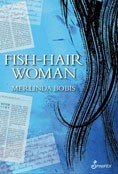
Merlinda Bobis, Fish-hair woman (Review)

Merlinda Bobis Fish-hair woman

Courtesy: Spinifex Press

How do you classify a book like Fish-hair woman by Filipino-Australian writer, Merlinda Bobis? Darned if I know, but I’ll have a go. It’s part war story, murder mystery, political thriller, romance, and historical epic. It draws on the magical realist tradition of writers like Isabel Allende, but overarching all this, it is a book about stories – about the stories we cleave to ourselves and the stories we tell others, the stories that convey the truth and the ones that hide it, the stories that change with time and those that never change.

But enough preamble, let’s get to the action. The book is set in the Philippines, with the core story taking place in a village called Iraya in 1987. It is a time of civil unrest: government soldiers fight communist insurgents (the historical New People’s Army), with privately-controlled armies added to the mix. The villagers are caught in the middle, struggling to survive under

violence dressed as salvation. What hopeful word, the sibilants a gentle hush: salvacion. The soldiers and the rebels spoke of this same cause, even as they remained in opposite camps and our village festered in between.

The central characters are Estrella, the fish-hair woman who uses her 12-metres-long hair like a net to retrieve the dead from the river (“trawl another victim of our senseless war”); her older “sister”, Pilar, who joins the communist insurgents; and Tony, the Australian journalist whom both had loved. These relationships are complicated by the fact that Estrella, whose mother died at the birth, is the illegitimate daughter of the most powerful man in the village, Mayor Kiko Estraderos (aka Doctor Alvarado), the man who runs the private army.

While the main action occurs in 1987, the time-frame moves between 1977, 1987 and 1997, with the story being mostly told from the perspective of 1997. By this time Pilar and Tony are among the dead or disappeared and Tony’s 19-year-old son Luke has been lured to the Philippines, on the pretext that his father is alive, by Kiko who wishes to “sanitise history and facilitate his return to politics”.

It’s a multi-layered story of political unrest, complicated village loyalties, and familial and romantic love. It is told in first person and third person, with changing points of view.  Sometimes we see through Estrella’s eyes, sometimes Luke’s, sometimes an omnipotent narrator’s or another character’s, and occasionally through newspaper clippings. Woven through it are recurring images and smells – the sweet lemongrass tainted by the corpse-laden river, the fireflies that light the dead so they can be found, and Estrella’s long hair that magically grows each time she senses violence and pain.

Australian Women Writers Challenge 2012 Badge

Australian Women Writers Challenge (Design: Book’dout – Shelleyrae)

This is one of those books that requires you to go with the flow. Its structure mimics the way we layer stories, the way we weave history and myth, stories and memories, so that at any one time we may or may not know where we are or who we are. Estrella, the fish-hair woman, and Stella, Doctor Kiko’s daughter, for example, are different facets of the same person, each with different stories.

There are simpler characters, too. One is Pay Inyo, the village gravedigger. He reminded me a little of the grandfather in Lianke’s Dream of Ding Village. He’s the peaceful man, the wise one who urges a humane path, who says it’s about perspective, “about how and from where you look … how far … and what you will to see”. But even he is unsure about the story:

But who is the hero in this story? Pay Inyo is not sure anymore, nor is he sure about what the story is in the first place. There are too many stories weaving into each other, only to unweave themselves at each telling, so that each story can claim prominence. Stories are such jealous things. The past and the present, ay, what wayward strands.

There were times, as I read, when I thought that Bobis may have created a few too many “wayward strands”. Some stories may not have been critical to tell, but her voice is so compelling and the language so expressive that I didn’t really begrudge her these, because by then I was well and truly along for the ride.

This is a novel set during war and yet it is not really about war. It is about people, “those whom we love and hate”, about how we use and manipulate stories to “save” or ” kill”, and, as Pay Inyo would like us to see, about collective grieving, collective responsibility:

This is the wake of the world: each of us standing around a pool that we have collected for centuries. We are looking in with our little pails … We try to find only what is ours. We wring our hands. Ay, how to go home with only my undiluted pail of grief? To wash my rice with or my babies, to drink? But the water is my dead kin, an enemy, a beloved, a stranger, a friend, someone who loved me or broke my heart. How to tell them apart? How to cleave water from water?

For all the sadness and brutality in this book, it has a big heart. And its message is clear. We are all in this together. How much better if we see it sooner rather than later.

Merlinda Bobis
Fish-hair woman
North Melbourne: Spinifex Press, 2011
303pp
ISBN: 1876756977

(Review copy supplied by Spinifex Press)

Virginia Woolf, The mark on the wall (Review)

Back in November I wrote a post titled Nettie Palmer on short stories which resulted in Stefanie (of So Many Books) recommending one of her favourite short stories, Virginia Woolf‘s “The mark on the wall”. I told her I’d read it and, finally, I have.

This is the sort of story I like. It doesn’t have a strong plot but is the meditation of a lively, creative mind. This meditation is inspired by a mark on the wall which leads the first person narrator to wonder what the mark is, and what it might signify. She doesn’t want to get up to investigate, preferring to let her mind wander, as it will, on the possibilities:

How readily our thoughts swarm upon a new object, lifting it a little way, as ants carry a blade of straw to feverishly, and then leave it …

The story does progress, albeit in an organic, stream-of-consciousness way, rather than according to any clear logic. She wonders if the mark is a hole, then thinks it could be a stain, or even, perhaps, something more three-dimensional like a nail head that has broken through the paint. At the end, we do discover what the mark is, but that’s not the point of the story. The point is what she thinks about as she considers the mark …

And the things she thinks about are wide-ranging as we have come to expect in stream-of-consciousness, a technique of which Woolf was one of the early pioneers. The thing about stream-of-consciousness is not only that it tends to roam over a wide range of ideas and topics, but that these ideas and topics are very loosely connected. Sometimes the thread between them is barely visible, usually because the connection is idiosyncratic to the thought processes of the narrator.

This is the case with “The mark on the wall”. The first paragraph uses strong imagery – based around the colours of red and black – which encouraged me to expect something more dramatic than what did, in fact, follow. In the third paragraph she exclaims:

Oh! dear me, the mystery of life. The inaccuracy of thought! The ignorance of humanity!  To show how very little control of our possessions we have — what an accidental affair this living is after all our civilisation …

Nothing, though, is accidental in Woolf’s story, no matter how much the stream-of-consciousness form may lull us into thinking it is. This is the story of a woman concerned about the meaning or import of reality. She ponders the shallowness of “things” (including, even, knowledge). In the second paragraph she suggests the mark may have been made by a nail holding up a miniature that would have been

a fraud of course, for the people who had this house before us would have chosen pictures in this way — an old picture for an old room.

She writes of how we like to construct positive images of ourselves but how fragile this is, of how superficial reality is. Interestingly, while the story flits from idea to idea, there’s one motif (besides the mark) that recurs, Whitaker’s Table of Precedency. Whitaker’s exemplifies “the masculine point of view which governs our lives”. She uses it to represent the faith we have in rules, and the way we let rules and reality prevent our seeing the “sudden gleams of light”.

There’s a funny sequence in which she imagines a Colonel pontificating with other men on the history of objects like ancient arrowheads. The  Colonel, she imagines, might suffer a stroke and his last thought would be, not his wife and family, but the arrowhead which, she suggests in her stream-of-consciousness way,

is now in the case at the local museum, together with the foot of a Chinese murderess, a handful of Elizabethan nails, a great many Tudor pipes, a piece of Roman pottery, and the wine-glass that Nelson drank out of — proving I really don’t know what.

That made me, a librarian-archivist, laugh!

And so, what is it about? Well, the mark seems to represent the unwelcome intrusion of reality into her life – it gets in the way of her thinking (of her desire “to catch hold of the first idea that passes”) while also, paradoxically, offering inspiration to her thoughts. An intriguing story. And, like Stefanie did to me, I recommend it to you.

Virginia Woolf
“The mark on the wall”
Originally published: 1919
Available online at The Internet Archive 

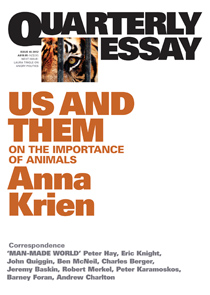
Anna Krien, Us and them: On the importance of animals (Review)

Krien Us and them

Quarterly essay cover (Courtesy: Black Inc)

I’ll admit it right up front, I am not a vegetarian or a vegan. I like to eat meat. I wear leather shoes. I like to think, though, that the source of these products has had a comfortable life and a quick, stress-free death. But I’m kidding myself, I know. And Anna Krien’s essay, Us and them, about the relationship between humans and animals, doesn’t reassure me.

In roughly 25,000 words, Krien, whose Into the woods I reviewed a couple of years ago, explores the complex relationship we humans have with our living, breathing co-inhabitants on this earth of ours. She exposes the underbelly of this relationship but resists simplistically declaiming the abuses and proclaiming that there is an easy solution. We all know there isn’t. As she says in the first section:

I’m not weighing up whether our treatment of animals is just, because it isn’t. That age-old debate is a farce – deep down we all know it.

The real question is, just how much of this injustice are we prepared to live with.

To try to answer this question she confronts the tension that exists in our relationship with “them” which is, as she puts it, the tension between seeing them as “beings” versus “objects”. She asks:

How to ensure that the butcher, the scientist, the farmer recognise that the creature in their care is a being, even as all the while they [and, I would say, by extension we] continue to use it as an object?

This is a well-structured essay. After an introductory section in which she sets the scene and poses her question, Krien explores the issues thematically, through the sorts of “encounters we have with animals”: Killing; Testing; Hunting,

These are, obviously, the encounters which are the most problematic. She spends little time on our positive and generally more mutually beneficial* encounters, such as in their roles as pets, guide dogs, and companion animals. That’s fair enough, given the serious questions she wanted to confront, but it’s a bit of a shame, nonetheless.

I like Krien’s writing. It’s well-researched, informative, and presents unpleasant facts with a light touch. She’s neither didactic nor conclusive but rather writes as one going on a journey with us. And she asks hard questions, such as these ones in the killing section:

  • Should Australia remain in the live animal trade and by so doing help other countries improve their animal welfare practices?
  • What does it say about our priorities when we have a World Society for the Protection of Animals but not one to protect women?
  • How do we explain the fact that more Australians empathised with the cows (being sent to Indonesia) than with people (such as those Indonesians for whom the cattle trade  means work and food, let alone the asylum-seekers plying the same seas as the cows)?

She explores the complexities of testing and here again disabused me of my head-in-the-sand hopes. I was surprised to read that the number of animals being used in research and teaching is increasing not decreasing. And again, the difficult questions. Is some testing acceptable, necessary even, and others not? And if so, on what basis do we decide? Why is there a disjunction between what scientists do in animal testing and believe is ethical, and what laypeople think?

Australian Women Writers Challenge 2012 Badge

Australian Women Writers Challenge (Design: Book'dout - Shelleyrae)

In her section on hunting, the focus is not so much on recreational hunting but on the hunting of animal pests – some native, such as dingoes, and some feral. She talks about apex predators, and the environmental impact of removing them. When the top predator goes, the ecological balance is severely disturbed. The loss of dingoes, for example, can be directly related to the extinction of small mammals. One solution to protecting farm animals that doesn’t involve killing dingoes is to use guardian animals like maremmas and alpacas. Hmm, methinks, introduced species aren’t always a good option – think camels, think cane toads – but so far so good it seems.

Late in the essay, Anna Krien writes that many scientists describe our current geological era as the Anthropocene, recognising the significant (negative) impact human activities are having on the earth. She follows this with biologist Edward O. Wilson‘s suggestion that what comes next will be “the Age of Loneliness” typified by “a planet with us and not much else”. I don’t want to think about what that would be like. There’s no easy answer to all this but, as Krien says, we must “acknowledge the questions” and continue the discussion. To do anything else is to deny that not only are animals are “important” in themselves but, to put it selfishly, they are important in multitudinous ways to us.

Anna Krien
“Us and them: On the importance of animals”
in Quarterly Essay, No. 45
Collingwood: Black Inc, March 2012
125pp.
ISBN: 9781863955607

(Review copy supplied by Black Inc.)

* Though I’m aware I’m making a human-centric assumption here!

Monday musings on Australian literature: Women writers and politics in the 1930s

I have written before about the fact that there’s been two periods in Australian literature when women writers seem to have flourished. One was around the 1920s to 1930s and the other around the 1970s to 1980s. Today I want to write a little about this first period because, from the perspective of 80 plus years later, it was an exciting period for women writers – that wasn’t sustained.

Australian academic Maryanne Dever says that “women represented a significant section of the writing community” in the interwar years and that this concentration “could be said to be one of the major distinguishing features of the then Australian literary landscape”.* Women were significant in the reviewing community, held office in major literary societies, judged literary competitions and edited anthologies. Many were also active politically. So, who were these women? I’m going to list just a few here.

Marjorie Barnard (1897-1987) and Flora Eldershaw (1897-1956)

Barnard and Eldershaw were major players in the Australian literary scene. They met at university and in 1929 won the Bulletin literary prize with their collaborative novel A house is built. Like all their collaborative works, they tackled in this book social issues, including gender stereotyping. Both held strong viewpoints regarding social justice and both were active in the Fellowship of Australian Writers, with Eldershaw becoming its first woman president in 1935. In their late thirties they shared a flat together and held what can best be described as “salons” at which a range of literary and political issues were explored with many of the intellectual luminaries of the time. Eldershaw was, not unusually for writers of the period, pro-Soviet. And she negotiated hard for writers to be supported, particularly in their old age.

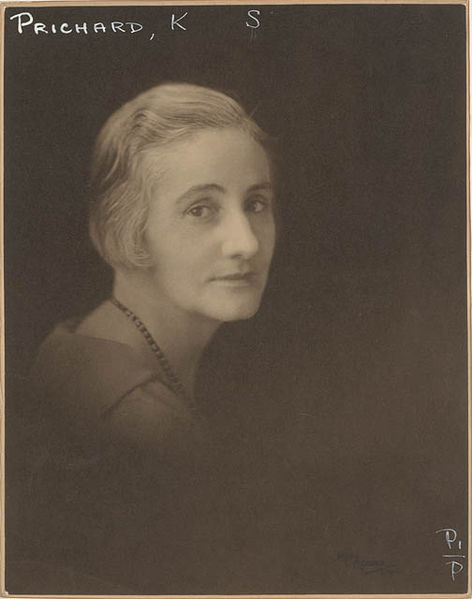
Katharine Susannah Prichard (1883-1969)

Katharine Susannah Prichard

Prichard, 1927/8 (Courtesy: State Library of NSW, via Wikimedia Commons)

Prichard, whose book The pioneers I’ve reviewed here, shared the 1929 Bulletin prize with M. Barnard Eldershaw, for her book Coonardoo (which I have also read, but many years ago). Coonardoo is one of the first Australian books to deal with a relationship between a white and an indigenous Australian. Prichard was a founding member of the Communist Party of Australia. Her novels documented people’s struggles, in work and relationships with each other. Her son, Ric Throssell, became an Australian diplomat and writer.

Miles Franklin (1879-1954)

Franklin’s career started long before the period I’m writing about here – My brilliant career was published in 1901 – but she was still active during this period and in fact won a prize in 1936 for her novel All that swagger**. I can’t resist sharing this excerpt which describes the hero, Danny, chopping down gum trees:

Guarding the illusive land were throngs of giants–the stateliest trees on the globe. Delacy was like an ant in the aisles of box trees and towering river gums, but he attacked them as an army, grunting with effort, sweat dripping from him. His slight form grew as wiry as steel; his hands were corneous and scarred with the work of felling and grubbing. (All that swagger, Ch. 3)

A contemporary reviewer described it as “probably the finest Australian novel ever written”. It deals with an Irish immigrant and his family’s history in Australia over 100 years, up to 1933. The Bulletin ‘s reviewer suggests that the hero, Danny, “seems certain to take a lasting place in Australian literary tradition.” The reviewer, I think, got that wrong, but Miles Franklin herself has achieved this through the eponymous prize she bequested. What is less well-known is that Franklin was politically active much of her life, and in fact spent around 9 years working for the National Women’s Trade Union League in Chicago from 1906 to 1915. On her return to Australia she worked hard to promote Australian literature, supporting, for example, the creation of fellowships for writers.

Other writers

Other politically active writers at the time included Jean Devanny, who was a Communist and who used her writing to promote her ideology; Eleanor Dark, who was active in the Labor left; and Nettie Palmer, who actively mentored younger writers like Marjorie Barnard and Flora Eldershaw and who, with her husband Vance, was anti-Fascist and a proponent of egalitarianism.

Literary histories about the period rarely mention any of these writers in isolation, which tells us something about the richness of the literary life of the time and of their collaborative approach to promoting not only Australian literature but also the values they thought should underpin Australian life. I never tire of reading about them, but I still have a way to go before I can feel well-read in their writings.

*From my research for Wikipedia. The citation is: Dever, Maryanne (1994) “Conventional women of ability: M. Barnard Eldershaw and the question of women’s cultural authority” in Dever, Maryanne (ed) Wildflowers and Witches: Women and Culture in Australia 1910-1945, St Lucia, University of Queensland Press, pp. 133–146

** Accessible online at Project Gutenberg Australia

DISCLAIMER: I have read works by most of these writers, but mostly long ago. I hope, in future months and years, to (re)read their works, and review them here.

Monday musings on Australian literature: Australian Living Treasures

English: Kate Grenville, Australian author.

Grenville, 2011 (Courtesy: Kathleen Smith, via Wikipedia, using CC-BY-SA 3.0)

Over the weekend, the list of Australian Living Treasures was updated. This has to happen every now then because, you know, our living treasures have a habit of dying eventually, which rather disqualifies them from the list!

I’ve chosen to write this post this week for two reasons. The most obvious one is the updating of the list over the weekend, but the other reason is that this week that contains International Women’s Day, which is a good week to highlight the place of women in our culture. And for me a good place to start is our women writers.

Well, now, how many Australian women writers – and by writers I mean novelists and poets, those people who use their imagination to hold a mirror up to humanity – do you think appear in the current list? ONE*! Yep, Colleen McCullough is the ONLY female novelist included in the list. FOUR men are included, novelists Thomas Keneally, David Malouf and Tim Winton, and poet Les Murray. (I won’t discuss here the other significant fact, that only around 30 of the 100 treasures are women.)

I have no problems, of course, with the inclusion of Keneally, Malouf and Winton. Good writers all, who have excellent track records not only with their writing but with their wider contribution to public thought on significant political, ethical and environmental issues. But, only one woman? And that, a woman who, though popular, would not be the first to spring to our lips when we think of significant Australian women novelists. Moreover, she’s had her share of controversy that may suggest her contribution to our society is not of the ilk of Keneally et al. But that’s something you can check out yourselves to make up your own minds. She is though, to use a word commonly applied to women, feisty, and that is not a bad thing.

Australian Women Writers Challenge 2012 Badge

Australian Women Writers Challenge (Design: Book'dout - Shelleyrae)

But where, for example, is Helen Garner? Her body of fiction and non-fiction has, from the time she first hit the bookstands a few decades ago, made us think and argue about literature, values and ethics. And what about Kate Grenville? Or, Marion Halligan? Or … well there are many other Australian women writers with significant bodies of work but they are JUST NOT WELL KNOWN and there’s the rub … because this list is a popularly voted list coordinated by the National Trust of Australia. And so the story continues … if you don’t get the airplay, you don’t get well-known and if you don’t get well-known, you don’t get the airplay …

This is, I know, a simplistic post on a complex issue … but sometimes simple does the job.

* Two excellent women writers have been removed from the list due to their deaths, Elizabeth Jolley and Judith Wright. Thea Astley, though, has not been removed – because she was never there. Why!

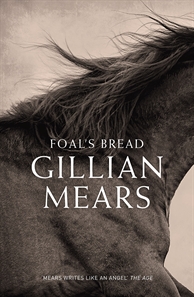
Gillian Mears, Foal’s bread (Review)

Gillian Mears' Foal's bread

Foal's bread cover (Courtesy: Allen & Unwin)

Foal’s bread is Gillian Mears’ first novel in around 16 years, though she has published short stories in the interim. This is a shame because she is a beautiful writer, particularly when she writes about the place she knows best, the farms of the New South Wales north coast.

Foal’s bread is about the Nancarrow family. Most of it takes place between 1926 and around 1950, as it follows the fortunes of Noah (Noey/Noh), her husband Roley (Rowley), and the extended family with which they live. Their main business is dairying, but their passion is the sport of horse high jumping. At the beginning of the novel, Roley is an Australian high jump champion and Noey a young 14 year-old girl with promise. They meet, marry (early in the novel, so no spoilers here) and start working hard to achieve their dream of having their own high jumping team. Hope on, Hope ever, is their motto. That’s the broad plot; the story is far more complex.

This is an archetypal story of strong country people coping (or not) with “luckiness and unluckiness” in life. In its depiction of hardship, stoicism and the will to survive in rural families, it reminded me – in tone if not in story – of Geoff Page’s The scarringThe hardship may come from different quarters, but in both there is a sense of forces out of one’s control combining with things of the characters’ own making. That mix – of characters’ judgement or behaviour clashing with luck (usually bad) – tends to make for a good story, in the right hands. It’s a bit Shakespearean in a way, the clash of character with “the elements”.

Australian Women Writers Challenge 2012 Badge

Australian Women Writers Challenge (Design: Book'dout - Shelleyrae)

In Foal’s bread, the “bad luck” has many sources, some human and some natural, such as incest, lightning strikes, giving birth to a disabled child, war and drought. How the characters cope with the trials confronting them is the core of the novel. Unfortunately, more often than not, they don’t cope very well. Why? Mainly due to their very human failings. Noey and Roley, whose marriage commences with great love and big dreams, don’t know how to communicate when calamity hits. Noey’s mother-in-law, Minna, lets her jealousy (“of the happiness she’d never seen before”) get the better of her and prefers to increase the tension between her son and his wife rather than to ameliorate it.

By now you’ll be thinking this sounds like a miserable story, and in some ways it is. But it’s not all darkness. While the novel has an almost elegiac tone, its movement is towards light. It has a three-part structure. There’s a very short Preamble which sets a tone of harshness and brutality with its references to incest, bushfires, floods, and animal cruelty.”Watch out you don’t cry” we are warned. Then there is the bulk of the novel in which the story of Noey and Roley is played out. This is followed by a Coda, set some 50 years later, in which we learn that “the old voices remain … funny, flinty, relentless”. These voices are carried into the future by Lainey, the strong, resourceful daughter of Roley and Noey, “her mother’s daughter through and through”.

A strong story, but what gives this novel its real power is the writing. Mears mixes the rough, ungrammatical country-speak of the era with glorious, rhythmical language describing the magpies, butcherbirds, trees, creeks and hills of One Tree Farm. The “one tree” is a jacaranda, and it features throughout the novel. It could almost be, dare I say it, a character. Early in the novel, when all is full of hope, it quivers “to create the feeling of a big bosomed woman wanting to waltz”. Later, as things start to collapse, it loses its leaves, but at the end “the old tree lives on … like a huge purple cloud hiding the rooflines”.

And then, of course, there are the horses. Reading this book reminded me a little of reading Tim Winton’s Breath. Mears does for horse high-jumping what Winton did for surfing. She made me feel the joy and beauty of the jump, of pushing oneself to achieve just that little bit more in a risky sport, of having a dream that keeps you going, of doing “the impossible”. Mears, like Winton, knows her subject inside out, and you feel it in her writing.

I fear I haven’t done the book justice. I’ve not really described its complex plot. I’ve named only a few of its large cast of colourful characters. It’s an ambitious book with big themes and a big style. Not everyone loves it. Some find the dialogue tricky or some descriptions overdone; some think the ending is disappointing; some think it’s stereotypical in places. I think none of these things. I’d love to know what you – if you’ve read it – think!

Gillian Mears
Foal’s bread
Sydney: Allen & Unwin, 2011
370pp.
ISBN: 9781742376295

(Uncorrected proof copy received from Lisa of ANZLitLovers in a blog giveaway)

Monday musings on Australian literature: Guest post from Tony of Tony’s Book World

As with most of my guest posters to date, I came across Tony (of Tony’s Book World) not long after I commenced blogging. He stood out like a beacon because he was a non-Aussie blogger who had read a significant amount of Australian literature, including Patrick White no less. If you check his blog, you will find that he even has a page listing his favourite Australian fiction. He (so far, anyhow) doesn’t have any other nationally focused pages. How could I not ask him to write a guest post here! Thanks Tony, it’s been great getting to know you through blogging. Not only have I enjoyed getting to know my own literature through other eyes but you’ve introduced me to some writers – like Dawn Powell – that I know will be up my alley.

Tony has chosen for his topic one of the grand dames of Australian literature …

Henry Handel Richardson and The Fortunes of Richard Mahony

English:

Henry Handel Richardson, 1945, by Coster (Presumed Public Domain, via Wikipedia)

It is terrific and I am grateful to Sue for having this opportunity to guest write in “Whispering Gums”. It took me long enough to figure out that a Whispering Gum is a tree, an Australian (eucalyptus?) tree.

I have never been to Australia. In fact I live about as far on Earth from Australia as you can get in Minneapolis, Minnesota, US, where most of our trees are either oaks or pine trees. Yet over the years I’ve developed a passion for Australian literature starting with Christina Stead and Patrick White (whom I consider probably the greatest novelist ever, just to give you an idea where I’m coming from). My appreciation of Australian literature has continued through the years with many writers including such recent writers as Tim Winton, M. J. Hyland, and Joan London.

Today I want to write about the “The Fortunes of Richard Mahony” trilogy by Henry Handel Richardson which I consider the high point of Australian literature along with Patrick White’s novels. Henry Handel Richardson was the male pseudonym of woman writer Ethel Florence Lindesay Richardson who lived from 1870 to 1946. I read this entire trilogy back in 1991 and 1992, and it was one of my most moving reading experiences.

Each of her (Henry Handel Richardson’s) novels is an effort to understand and to make us understand the complexities of a human situation, and this is in itself an invigorating and sometimes subversive exercise in following truth along unexpected paths. — Karen MacLeod, Henry Handel Richardson (1985)

Richardson later wrote that the character of Richard Mahony was based on her own physician father. What makes this trilogy so moving is the complexity and unsparing honesty that Richardson brings to the character of Richard Mahony. Just as perceptive parents know their own children, faults and all, better than anyone else in the world, children as they grow up observe their parents closely. Most children love their parents, but that does not mean they aren’t aware of their faults. From your own children, you can run but you can’t hide. Richardson gives the reader the full portrait of Richard Mahony entirely free of sentimentality. In fact Richardson said that so much had been written about the great successes among the Australian people, she wanted to give a picture of one of the many failures, and so we have this story of the slow decline of Richard Mahony.

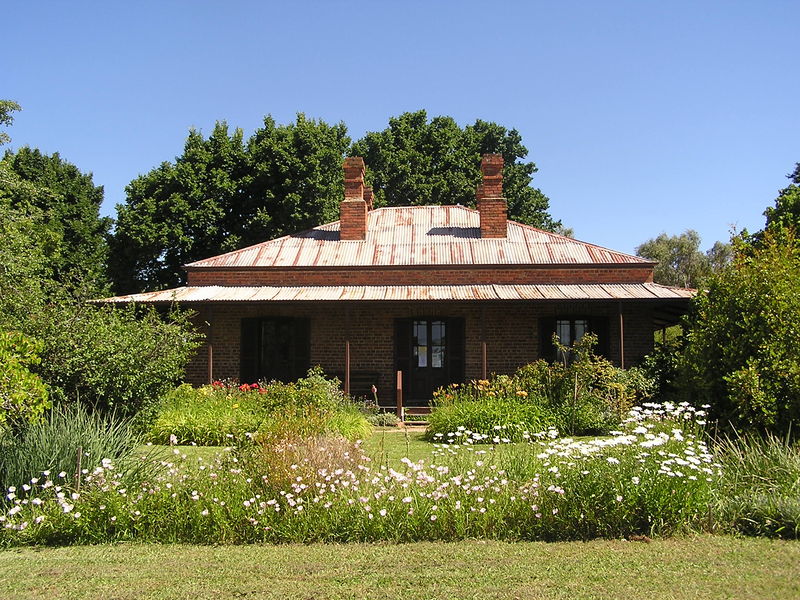
Lake View House, Chiltern

Lake View House, Chiltern, where Richardson lived when young (By Golden Wattle, via Wikipedia, using CC-BY-SA 2.5)

The first volume of the trilogy, “Australia Felix” begins at the goldfields near Melbourne in 1852. Richard is a young man just arrived from Dublin, Ireland and he is running the Diggers Emporium on the goldfields. He is more interested in reading philosophy than drinking and socializing, and most of his neighbors dislike him, thinking he is arrogant. He does meet fifteen year-old Polly whom he marries. Polly, later known as Mary, becomes a strong female figure in the trilogy. After losing his store due to accidentally selling spoiled flour, Richard takes up his original profession as a doctor

In the second volume, “The Way Home” Richard and Mary go back to the British Isles, this time to Glasgow, but soon Richard decides they can never be successful there and the couple returns to Australia and locate in the goldfields in Ballarat where he establishes a practice as a doctor. Here they finally have a daughter.

When the first two volumes of The Fortunes of Richard Mahony were originally published, there was little fanfare and few sales. All that changed when the third volume, “Ultima Thule”, was published in 1929. It was greeted with a chorus of praise from the critics, had good sales, and overnight Richardson became famous. Readers finally latched on to the tragedy of Richard Mahony and his family.

As the story in the trilogy continues, a strange thing happens. As I mentioned before, Richardson’s portrayal of Richard Mahony is honest and unsparing. Yet the reader is sympathetic and cares more about what happens to this man because of his faults and failures, not in spite of them. Richardson presents a total human being defects and all, and this complete blunt account gives the trilogy its power. Richardson applies these same forthright techniques to the wife Mary and the daughter.

Another distinctive feature of the trilogy is the style of the writing. Richardson’s writing has a visceral natural quality that puts you in to whatever scene she is depicting. I still remember some of the intense goldfield scenes vividly. There are similarities in her style to that of Patrick White, and I can’t help but think that White had read The Fortunes of Richard Mahony carefully sometime before writing his own novels.

One of Richardson’s literary heroes was Leo Tolstoy. “This is not a novel, it is a world”, wrote W. D. Howells of Tolstoy’s War and Peace, and the same line applies to The Fortunes of Richard Mahony. All of life is in these pages. As an unknown English critic said of The Fortunes of Richard Mahony, it is “one of the great inexorable books of the world’’.

The book Henry Handel Richardson – A Study by Nettie Palmer (1950) was very helpful to me in writing this article.

Jahnavi Barua, Rebirth (Review for the Shadow Man Asian Literary Prize, 2011)

Shadow Man Asian Literary Prize 2011 Badge

Image by Matt Todd of A Novel Approach

What a shame Jahnavi Barua‘s novel, Rebirth, is, to the best of my knowledge, available “for sale in the Indian Subcontinent only” (backcover). Our Shadow Man Asian team had real problems tracking this one down, but I’m very glad we did manage to obtain some copies, eventually, because this is a beautiful book.

The title, Rebirth, might give you a sense of its subject matter – but, then again, it mightn’t! The novel – novella really – is a first person monologue by a mother to her unborn child. The child is waiting to be born – not reborn – but there is a sense that for the mother, Kaberi, a rebirth might be in the offing as she explores the state of her shaky arranged marriage, and of some tricky or unresolved relationships with family and friends.

While set in India – in Bangalore and Guwahati (in the troubled province of Assam) – this novel does not have the noise and energy that often accompanies stories from the subcontinent. It’s quiet and contemplative. Moreover, while it is imbued with gorgeous descriptions of the plants and landscapes of India, and while it refers to the ongoing political unrest in Assam, it is not specifically Indian in theme. Its story is universal, that of the desire for love between husband and wife, and of the love of a mother for her child. And here is the difficult part, because it is hard to describe this largely plotless novel without making it sound twee or mawkish, but somehow it is not that at all. Barua manages to find a voice for Kaberi that is tender but matter of fact, that is tentative but also confident. The progression is chronological, commencing with her husband leaving her for another woman at the beginning of the novel just as she discovers she is pregnant (after many years of trying). She doesn’t tell him – or her family and friends – for some long time as she considers her life. In the opening paragraphs we are given a picture of her as somewhat passive and inward-looking. Before her husband left, she says she

had been partial to the large soft sofa in front of the television, from where I had a good view of the screen, but from where I also looked inwards, into the heart of the house. I did not see much of the sky or buildings clustered around our own, but all that, anyway, did not cross my mind very often, so focused was I on your father and myself and the home we had fashioned together.

Ah, we think … a person ripe for “rebirth”. And yes she is, but it is slow and undramatic as she gradually, by meeting friends, remembering her old childhood friend who’d died in a bombed bus in Assam, and reflecting on her marriage past and present, comes to a better understanding of who she is. Early in the novel she, a keen reader, says:

I will not buy a book today. I will try and live in my life instead.

As the novel progresses, we find that she is, in fact, stronger and more directed than we (and, more to the point, even she) had realised. She has, for example, written a book and organised for her friend Preetha to illustrate it. This is no simple thing, but her husband, “whose public manners were always nice”, knows nothing of this. Ah, we wonder, what is she saying about his private manners, the way he treats her? We learn, through more stories in the next few pages, that what she hasn’t received from him is tenderness and love. But we also receive a clear sense of strength growing in her:

I demand love. Now, especially now, at least now.

This comes about a quarter of the way through the novel … the rest explores, in the same quiet tone, how things fall out for Kaberi, how she confronts her fears and insecurities. Things do happen – her father dies and she returns home to Guwahati, she eventually tells her husband, family and friends about her pregnancy. You can’t hide that forever after all! In other words, there is a plot of sorts, but the story is mostly an internal one and the ending is appropriately open albeit also with some sense of things resolved.

A little over halfway though the novel Kaberi says:

Birds wheel around slowly in the cloudless sky. Seemingly aimless, but I know better; little happens in nature accidentally.

And, I’d say, little happens accidentally in the writing of this book. It has been carefully and subtly structured to lay the foundations for Kaberi’s growth, and this makes it an absolute pleasure to read.

For other reviews by the Shadow Man Asian team, please click on my Man Asian Literary Prize page.

Jahnavi Barua
Rebirth
New Delhi: Penguin Books, 2010
203pp.
ISBN: 9780143414551

(Review copy supplied by Penguin Books via Lisa of ANZLitLovers)

Monday musings on Australian literature: Jessica Anderson

Every now and then I feature a specific writer in my Monday Musings – and they’ve usually been women because they tend to be overlooked. Take Jessica Anderson (1916-2010), for example. Most keen AusLit readers will know her because her novel Tirra lirra by the river made quite a splash when it was published in 1978, but my sense is that her “fame” doesn’t go much past this.

She is, however, one of our great writers:

  • She won the Miles Franklin Award award, twice: Tirra lirra by the river in 1978, and The impersonators in 1980.
  • The impersonators also won the New South Wales Premier’s Literary Award in 1981.
  • Her book of short stories, Stories from the warm zone and Sydney stories, won The Age Book of the Year in 1987.
  • Tirra lirra by the river was included in Australian classics: 50 great writers and their celebrated works, by Jane Gleeson-White.
  • Tirra lirra by the river was also included in the admittedly eclectic, but international, The modern library: The 200 best novels in English since 1950, by Carmen Callil and Colm Tóibín
  • She is taught in many university (and, I believe, high school) literature courses.
  • She’s a good example of a late bloomer, with her first novel, An ordinary lunacy, being published when she was 47.

An ordinary lunacy was, in fact, published in England, having been rejected by Australian publisher, Angus and Robertson. Gleeson-White quotes Anderson saying that she didn’t think Australian publishers in the 1960s would like her novel about “how a utilitarian society treats those with unserviceable gifts”. Ouch!

Of course, like most late bloomers, Anderson had been writing long before she was first published. It was probably the increased focus on women stemming from the second wave of feminism in the 1970s which resulted in authors like her getting their chance. There’s that fashion thing again, eh? But this doesn’t mean that she didn’t deserve it. Beatrice Davis, one of the Miles Franklin judges, said that Tirra lirra by the river “has an unpretentious elegance, an individual quality so different from the realistic documentary that still dominates the field in Australian novels”. Here is the opening sentence:

I arrive at the house wearing a suit – greyish, it doesn’t matter. It is wool because even in these sub-tropical places spring afternoons can be cold. I am wearing a plain felt hat with a brim, and my bi-focal spectacles with the chain attached. I am not wearing the gloves Fred gave me because I have left them behind in the car, but I don’t know that yet.

I love this opening, which introduces us to the narrator, Nora Porteous, late in her life, as she returns “home” after many decades away. It’s so precise, and yet with tantalising hints of uncertainty. Oh dear, as I pick it up, I feel I want to read it all over again and follow Nora as she reviews her life, and the decisions she made in search of “her place”, only to end up back where she started, thinking, processing and wondering.

Most of Anderson’s work was contemporary, but she did write one historical novel, The commandant (1975), which she calls her favourite. I reviewed it as part of Sydney University Press’s Australian Classics Library. Like Nora in Tirra lirra, the main character here, Frances, is not in her “place”. She’s with family, but her views, her aspirations, are different to those around her. She must navigate this family, this society, to develop her self.

According to Gleeson-White, Anderson greatly admired the novelist, Henry Green (recently featured by Stu at Winston’s Dad) for his “poetic brevity”. I think this brevity is partly what draws me to Anderson. Stories of women feeling at odds with their lot are not, after all, unusual, but it takes some skill to cover several decades in less than 150 pages, as Anderson does in Tirra lirra. Anderson was also, says Gleeson-White, inspired by Christina Stead for showing her “there was an Australian background I could use: the urban background of For love alone“. I’d love to understand this a little more … what was it about Stead’s urban background that differed from that of other Australian writers?

Near the end of Tirra Lirra, Nora says:

I find myself thinking that we were all great story-tellers at number six. Yes, all of us, meeting in passages or assembling in each other’s quarters or in the square, were busily collating, and presenting to ourselves and the other three, the truthful fictions of our lives.

“Truthful fictions”. An intriguing concept that we can read several ways … but that is for another day. In the meantime, I commend Jessica Anderson to those of you who haven’t read her. Meanwhile, I must read her One of the wattle birds which has been languishing on my TBR for far too long.

Note: This post is not a review for the Australian Women Writers 2012 challenge, but I plan this year to write a number of posts supporting the challenge’s promotion of Australian women writers … which is not a hard ask given my reading priorities!