Suzanne Edgar, The love procession (Review)

Amongst the madness of last year’s silly season was a little oasis, namely the launch of local poet Suzanne Edgar‘s latest collection, The love procession. It was an oasis not only because the launch was for a book of poetry, but also because it took place in the peace of a garden. Poetry and gardens – a match made in heaven don’t you think?

And in fact, there are gardens in this collection of poems, but before I write about the poems, I’d like to mention the title and cover. As Edgar explained at the launch, the title comes from a painting she loved in the Renaissance Exhibition held at the National Gallery of Australia a year ago. The painting, “Love procession”, is attributed to Marco del Buono and Giovanni di Apollonio, from the 1440s. Apparently it took many months for Edgar and the publishers to negotiate the rights to use the painting, but it was worth it because the end result is a simple, yet rich and stylish cover.

It’s a good title because the collection is about love – romantic and other – and about procession. About the procession of our lives – about love, life and death, about work and the things that keep us going, about friends and family, about nature that travels with us. The subject matter reflects the poet’s stage of life, someone who’s lived more than a few decades, who’s travelled, worked, lost friends and family, managed homes, experienced passion and peace. Well, you know what I mean. I could mention for example a poem about clutter, which conveys the melancholy of time passing:

Wilting hats from our salad days
match skirts too small at the waist.
(from “Silt”)

Or one about the real ravages of age:

A patch of muddy clay could well betray
unwary folk who have a metal hip
and hope to play again another day.
(from “Winter Sports”)

The collection’s first poem is – as you might expect – titled “‘Corteo d’amore’ (Love procession)” and is Edgar’s response to the painting. She imagines the groom waiting at the other end of the procession, reflecting. It’s a cheeky poem that contains both a sense of excitement and uncertainty, setting just the right tone for the rest of the collection:

To bed the girl had always been his goal
but laughing in the square, she’d seemed less grand.

I particularly like the way Edgar varies her tone throughout the collection. There are wry poems, and downright funny ones, and there are the passionate, the sorrowing, and the resigned ones. The style varies too. There are poems that rhyme and poems that don’t. There are three-line poems, a four-page poem, and even a bunch of sonnets. There are story poems and there are ones I’d describe as reflections. The imagery is generally accessible – at least it is to those of us who have lived (are living) similar lives in similar places. She invests the places and objects of our lives with meaning. There’s the woman, for example, who upsizes –

She tries a sea change, a tree change,
an elevated view change
(from “The Leavings”)

– losing, in the process, “her ghosts/ghosts of her children’s cries”. The doggerel-like rhyme and rhythm here are perfect for what Edgar clearly sees as the woman’s silly decision. Other poems speak of chairs that know our lives (“The Life of Chairs”), roll-top desks that trace a family’s history (“A Family Servant”), and of course the gardens that provide “refuge from summer’s sultry hours” (“Two Gardens”).

The poems are unmistakeably Australian with their references to the bush and of course gums, to wattlebirds and magpies, to drought and the pleasures of rain that only dry places know.

My favourite poems, though, are those scattered throughout that chronicle her relationship, at least they feel autobiographical, with her husband/lover/partner/significant other. They are often addressed to “you”. These poems speak of a long and deep love, but one also peppered, as real love is, with differences and squabbles. These poems made me smile, even where they spoke of loss, because they are honest.

Nearly halfway through the collection is a poem that starts:

I wonder where the poems went,
I used to think them heaven-sent.
Life is cluttered with noise and news
(from “Turn Off the Noise”)

Well, the poems are still here and I’d happily recommend Edgar’s collection as the perfect one to dip into whenever you want a respite from “noise and news”. These aren’t difficult poems, but that doesn’t mean they are trivial. Try them, if you can, and you’ll see what I mean.

Suzanne Edgar
The love procession
Port Adelaide: Ginninderra Press, 2012
107pp.
ISBN: 9781740277754

Barbara Baynton, A dreamer (Review)

Finally, having reviewed three stories in Barbara Baynton’s collection Bush studies, I start at the beginning with the story “A dreamer”.

This story is a little different to the three* I’ve reviewed to date, primarily because men do not play a significant role in the action or denouement of the plot. The plot is a simple one: a young pregnant woman arrives at a remote railway station, at night, expecting to be met by someone with a buggy. When that proves not to be the case, she decides to walk “the three bush miles” despite the windy, rainy night because it was “the home of her girlhood, and she knew every inch of the way”. Except …

… as it turns out, on a dark rainy night, she doesn’t. Baynton recounts the drama of the young woman’s walk – a wrong choice at a fork, near drowning on a creek crossing – and in the process idealises the mother-child relationship against hostile nature:

Her mother had planted these willows, and she herself had watched them grow. How could they be so hostile to her?

How indeed? This story is another example of Baynton’s gothic, of her non-romantic view of the Australian bush which is, for her, alienating and forbidding, particularly for women. If the language of the opening paragraph is unsettling – “night-hidden trees”, “closed doors”, “blear-eyed lantern” – it only gets worse as nature seems to conspire against the woman. The wind fights her “malignantly” and the water is “athletic furious”, but the woman sees “atonement in these difficulties and dangers”. Atonement for what is not made quite clear but it might simply be that the young woman has been away for some time: “Long ago she should have come to her old mother”. Visions of her mother and memories of her childhood keep her going: “soft, strong arms carried her on”. To avoid spoilers, I’ll leave the plot here. You can read the story at the link below.

In my last post on Baynton, I wrote briefly on reading short story collections in the order they are presented, rather than in the ad hoc way I’ve done with this collection. Mostly, I do read collections from beginning to end. Had I done so with this collection, I would have had, with this story, an effective introduction to Baynton’s style and themes without being confronted with her full fury. In other words, “A dreamer” is the perfect first story in a collection which ends with “The chosen vessel”*.

Barbara Baynton
“A dreamer”
in Bush studies
Sydney University Press, 2009
ISBN: 9781820898953

Available online: in Bush studies at Project Gutenberg.

This review will count towards my Australian Women Writers Challenge 2013.

*For my first three reviews of stories in this book, click the appropriate title: Scrammy ‘and, Squeaker’s mate, The chosen vessel.

Monday musings on Australian literature: Capital women poets

Since Australia’s capital, Canberra, is celebrating its centenary in 2013, it seems timely to devote a few Monday Musings posts – scattered throughout the year – to its literature. Comparatively speaking, Canberra is a small city, but it is rich in poets, past and present, female and male, so I’ve decided to make my first topic Canberra’s women poets. I’ll write, as I usually do in these sorts of posts, about a representative few. They all appear in The invisible thread, Canberra’s centenary anthology about which I’ve written before.

Judith Wright (1915-2000)

Australian high country (Mt Stilwell)

Australian high country (Mt Stilwell)

Wright spent the last 28 years of her life in the wider Canberra region, and is arguably Canberra’s best known woman poet. She was a prolific writer, and a committed environmentalist and Aboriginal rights activist. Her poetry ranges over a huge range of subjects from the bush, birds and nature, through life and relationships, to all sorts of social justice and political issues. Like her contemporary Patrick White, she was not afraid to speak out about the issues that concerned her. As pretty well every biography reports, she took part in an Aboriginal Reconciliation March in Canberra not long before she died at the age of 85.  Several of her poems, including “Bullocky”, “Woman to man”, and “South of my days”,  are anthology standards. A self-confessed lover of our bush, I adore this from “South of my days”:

low trees, blue-leaved and olive, outcropping granite-
clean, lean, hungry country. …

I also like the lesser known (to me, anyhow) poem selected for The invisible thread, “Counting in sevens”, in which she counts off her years in, yes, sevens:

Seven threes are twenty-one.
I was sailing my own sea,
first in love, the knots undone.

Rosemary Dobson (1920-2012)

Another grand dame of Australian poetry, and also a prolific one, Dobson moved to Canberra in 1971 with her husband Alec Bolton. I’ve written about them before in my Literary Couples post. Like Wright, she turned her hand to many forms of writing and also worked as an editor. Both women knew that to make a career out of writing, you wrote … but in Dobson’s case she also translated – Russian poetry! I quoted a couple of her poems in the post I wrote after her death, including the one she wrote to/for Christina Stead. The poem from which I’ll quote here, though, is the intriguing “Child with a Cockatoo” in which a child, sitting for a painting by Simon Verelst in a time before the discovery of Australia, is given a sulphur-crested cockatoo, presaging Europe’s future contact with the southern land:

That sulphur-crested bird with great white wings,
The wise, harsh bird – as old and wise as Time
Whose well-dark eyes the wonder kept and closed.

Susan Hampton (b. 1949)

I must say I know Susan Hampton more as the editor, with Kate Llewellyn, of The Penguin book of Australian women poets, than as a Canberra-based poet, but I’ve discovered that she’s lived in Canberra since 1993. Her poems, from what I’ve seen, tend to be personal with a witty, whimsical or poignant edge, such as this one about “Hands” which starts

for some reason are battered and speckled,
the claws of an old hen poke through the skin.
I stare at my hands the way Escher
makes you stare at his …

I know the feeling … and isn’t that partly what poetry is about?

Melinda Smith

Now Smith, who has been in Canberra, on and off apparently, since 1989, is new to me, but I do love her cheeky poem in The invisible thread. It’s titled “No bed” and here is its beginning:

When love is on the wrong side of the sheets
romance must give way to expedience
and, short of coupling in the public streets,
all places serve at love’s convenience.

Kerry Cue at Poem Pig quotes another of Smith’s poems, “Mother love”. It’s a beautifully structured poem but you’ll have to go to Poem Pig to see that, as I’m just going to quote a verse:

Heaving itself onto an empty beach,
the sea still finds the energy to give.
I start a task whose end I’ll never reach.
I give you life, not knowing how you’ll live.

And here are the first two lines of a poem called “Virginia Woolf” from Smith’s own blog, Mull and Fiddle:

Veiled in muslin,
intellect like a steel ribbon.

“Intellect like a steel ribbon”. Love the combination of strength and fragility, masculinity and femininity, solidity and fluidity, in that image.

Penelope Layland (b. 1962)

My last poet – but there are many more in Canberra, including one I’ll review soon – has spent pretty much all her life in Canberra. I’m most aware of her through her work as a journalist and columnist but she is also a poet. I’m rather tickled that the poem of hers included in The invisible thread speaks to an earlier Monday Musings, that about the “lost child” theme in Australian literature. The poem was published in 2005 and doesn’t feel dated. The “myth” clearly resonates still. The poem starts:

They search the stock dams first –
neighbours, solid men feigning nonchalance,
the self-righteous, the busy-bodies, the merely excited
and somewhere the father, whose looks keep going
to the bush beyond, gathering itself.

And there you have it … an all too brief introduction to some of our capital women poets.

Who are your favourite women poets?

Barbara Baynton, Scrammy ‘and (Review)

Barbara Baynton.

Presumed Public Domain: via Wikipedia

Back in November, Trevor at Mookse and the Gripes, decided that rather than write a single review of Alice Munro’s latest collection of short stories, Dear life, he would, over a period of time, read and review the individual stories.  Now, there’s something to be said for reviewing a collection of short stories as a collection because authors do put a lot of effort into the order of those stories. Reading them over a long period of time or, worse, out-of-order, could disrespect the author’s art. However, reviewing each story individually, enables us to give each one real recognition, and that has its value too methinks. Anyhow, this is what I’ve decided to do with Barbara Baynton‘s collection, Bush studies. I have, so far, reviewed the second story, “Squeaker’s mate”, and the sixth and last story, “The chosen vessel”. Today I’m going to review the third story, “Scrammy ‘and”, partly because Debbie of ExUrbanis likes it. Next, maybe, I’ll start at the beginning! I hope Baynton isn’t turning in her grave.

In her post on Australian classics for the Australian Women Writers Challenge 2012, Australian novelist Jennifer Mills wrote of discovering Barbara Baynton, saying that reading her was “an absolute pleasure”. She wrote:

Her work is distinguished by her rural character studies and a poignancy which verges on despair, and her stories are prototypes for the proliferation of outback gothic in our literature now. Baynton is part Henry Lawson, part Eudora Welty, and a master of the tension and texture of the short story form.

I couldn’t say it better myself! Mills’ comment that Baynton’s a master of “tension and texture” in the short story form is particularly true for “Scammy ‘and” because this story commences, quite deceptively as it turns out, with a fair dose of humour. It concerns an old shepherd and his dog Waderloo (Waterloo). The story starts with a flashback to a few weeks previously when the old man’s neighbours had headed into the nearest town to await the birth of their first baby (which, the old man thinks, “will be a gal too, sure to be! Women are orlways ‘avin’ gals. It’ll be a gal sure enough”.) The story then jumps forward to when the old man, having notched up the passing weeks, expects the young couple, who clearly provide some sense of security, to be back.

The humour in the first part of the story derives from Baynton’s description of the relationship between the man and his mate Waderloo as they go about their business. Here for example is the man talking to the dog about fixing a hat:

‘It’s all wrong, see!’ The dog said he did. ”Twon’t do!’ he shouted with the emphasis of deafness. The dog admitted it would not …

… and so on. The man and his dog resemble a Darby and Joan pair, dependent on each other, loyal to each other, but also having their little tiffs. However, underlying what seems like a light-hearted character study are intimations of something darker. First there’s the misogyny which features regularly in Baynton’s work. The old man is critical of the young woman despite her apparent attempts to help him, including fixing the hat. “‘The’re no good'” he says of women. This misogyny becomes more pointed in the parallel story of the man’s irritation with the ewe whose “blanky blind udder” means she can’t feed her “blanky bastard” of a lamb, and that he must feed it. Later on though the ewe is shown to be perfectly capable of teaching her lamb to drink.

But, there are intimations of other menace too.  Things are awry at the farm – including a tomahawk and an axe gone missing. Scrammy is mentioned in the second paragraph. The old man says:

”twarn’t Scrammy.’ But the gloom of fear settled on his wizened face as he shuffled stiffly towards the sheepyard.

As the story progresses, our disquiet increases, though for a while we are not quite sure where the problem is – is it an external threat or is it internal? The old man suspects “ther blacks”, “not poor ole Scrammy, ‘cos Scrammy wouldn’t ‘urt no-one”.  Baynton builds the tension slowly, but gradually, inexorably, it becomes clear – and halfway through the story the perspective shifts from the old man to the vagrant one-handed Scrammy, who’s seen the old man counting out his money. The menace grows. It’s melodramatic and almost a comedy of errors as Scrammy misreads clues … but I’ll leave the plot here.

Again, there’s none of Lawson’s pioneer romanticism here. Rather, this is a powerful story about refusing to see the truth –  or perhaps being scared of the truth. It’s not only the old man’s aloneness that makes him vulnerable but his prejudices. In the end, we see that wisdom is, in fact, more likely to be found in the ewe and the mother.

Barbara Baynton
“Scrammy ‘and”
in Bush studies
Sydney University Press, 2009
ISBN: 9781820898953

Available online: in Bush studies at Project Gutenberg

This review will count towards my Australian Women Writers Challenge 2013.

Thea Astley, Hunting the wild pineapple (Review)

Thea Astley‘s “Hunting the wild pineapple” is both a short story and the title of a collection of connected short stories (that includes, of course, the title story). Today I am going to write on the short story as it’s one of the 16 included in the current Meanjin Tournament of Books – and it has made it through to the second round.

“Hunting the wild pineapple” is the third story of eight, which are all narrated by a man called Leverson. It is set in far North Queensland in a place called Mango, which she writes about again in her 1987 novel, It’s raining in Mango. In this story, Leverson, accompanied by the American Mrs Crystal Bellamy who is “impossibly researching the human geography of the north for a nonsense thesis”, is visiting a pineapple farmer called Pasmore. Pasmore, while waiting for a lobster to thaw for dinner, takes his guests on a somewhat alcohol-fuelled car-ride, first to hunt for wild pineapples and then to visit his two migrant farm workers, “the two”.

It is pretty vintage Astley, at least mid-career Astley as I know her, with its lush, evocative, “imagistic” (as she once described it) language and its focus on inequitable human relationships in which one group, usually white men, wield power over another – women, migrants, and (though not in this particular story) indigenous people.

The story is set in the 1970s, and is characterised by satire and irony. Leverson describes Pasmore as

a well-intentioned buddy who wanted to prove we’re not all grubbing away at soil up here, that we’re smooth, polished, and have swung quite nicely, ta ever so, into the sophisticated seventies.

So smooth that outside the house we are left gawking at a whopping heart-shaped swimming-pool filled with blue tears that blinked as a woman (his wife?) plunged from sight.

See what I mean about the language? It’s packed with images and ideas that rub somewhat uncomfortably against each other. In Astley, discomforting language is de rigueur; it, more than plot or characterisation, is the tool she uses to unsettle us, to shock us out of our comfort zone and force us to confront the unkindness, the viciousness, if not the downright violence that she sees lurking beneath the surface of human interactions. (I admit now that I don’t always get it on a rational level, but it rarely fails to move me.) In this story, the relationships she spears with her pineapples are those between husband and wife (Mr Pasmore and Tubs), employer and worker (Mr Pasmore and migrant workers, Tom and Georgy), and even between colleagues (Tom and Georgy).

And yet, it’s Astley’s language that has got her most into trouble, because it is heavily imagistic (not at all spare, until perhaps her very last works which were a little sparer, comparatively speaking) and some readers and critics don’t like it. Here, for example, is Leverson on Pasmore presenting his hunted down, “huge humped” pineapple to Mrs Bellamy:

… he tattooed her arms with spikes; the head spears stabbed her skin. He lit, post-coitally I think nastily, a cigarette.

Not very subtle, eh, but effective in its hints of sex, power and violence. Similarly, here is Pasmore knocking on the door of “the two”, he

drummed a neat riff on the wall beside the open front door, the over-familiar, paternalistic-presumptuous tat-a-tat, tat-tat, and emitted hearty cries of boss-lure …

Writer and critic Kerryn Goldsworthy, like me, likes Astley. She says*:

I love Thea Astley’s writing and always have. I love its densely woven grammar, its ingrained humour, its uncompromising politics, its demented metaphors, and its undimmed outrage at human folly, stupidity and greed. I love the way that even at its most savage and despairing, it has always had a suggestion of redemptive energy working away somewhere in the plot, no matter how subterranean, outmaneuvered or comprehensively beaten down….

This story is a good example of the Astley that Goldsworthy and I like. There’s a savage bite to it, but there’s also the slightest hint of the opposite. I wonder how far it will get in Meanjin’s tournament.

Thea Astley
“Hunting the wild pineapple”
in Hunting the wild pineapple and other related stories
Ringwood: Penguin Books, 1979, pp. 63-76
175pp.
ISBN: 9780140058437

* from “Undimmed Outrage”, Australian Book Review, Sept 1999, Issue no 214.

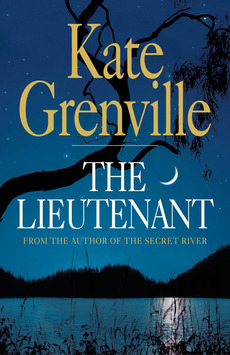
Kate Grenville, The lieutenant (Review)

Kate Grenville, The lieutenant book cover

Bookcover (Courtesy: Text Publishing)

I first came across William Dawes, the inspiration for Kate Grenville’s The lieutenant, in Inga Clendinnen’s award-winning history, Dancing with strangers (2003). But this is not the only book that Grenville’s novel brought to mind, as it also reminded me of Kim Scott’s That deadman dance. (Intriguing that both these books use a dance motif, but it’s an historically valid one).

However, before I talk more about these connections and their relevance, I should briefly describe the plot. The novel is set during the first years of the white settlement of Australia. (The very fact that I write the “white” settlement says something about how far we have come in the last two centuries, though we still have some way to go). Daniel Rooke, the protagonist, is a young astronomer. He has been chosen for the First Fleet on the recommendation of the Astronomer Royal who believes that a significant comet will appear in the southern hemisphere in late 1788-early 1789. With this role in mind, Rooke manages to largely separate himself from the day-to-day hurly burly of the first year or two of settlement by creating an observatory, of sorts, for himself, on a hill (now called Dawes Point) overlooking Sydney Cove. Here, in his isolation, he is visited by a group of indigenous people, mostly women and children, and develops a particular relationship with the young 12-13 year old girl, Tagaran. They learn each other’s language, which Rooke chronicles in his journals. All this generally reflects the story of William Dawes whose journals Grenville (and Clendinnen) read, but, as Grenville writes in her author’s note:

Although I made use of historical sources, I departed from them in various ways. This is a novel; it should not be mistaken for history.

Meanwhile, back in 2003, Clendinnen wrote of Dawes, bemoaning his earlier-than-wished-for departure from the colony:

His departure cost us access to the local language as it was spoken at the time of contact. It possibly also cost us a brilliant ethnography, although his tender conscience  might not have allowed him to open the people to easier communication, and to more disruptive exploitation.

Grenville does a good job of imagining the Dawes described by Clendinnen as an “introspective, scholarly type” in her characterisation of Daniel Rooke. She introduces him as a socially awkward but sensitive and thoughtful young man who joined the military not for love of war but because it provided the best chance for a poor young man to make a life for himself. From this supposition she develops a credible character whose final actions in the book pretty closely mirror what we know of Dawes.

I will leave Rooke here for a moment, though, to talk a little more about the conjunction between the three books I mentioned in my introductory paragraph. The significant point they all make is what Clendinnen calls “acts of kindness” by the indigenous Australians in the early days of settlement (in the east, in the case of Grenville and Clendinnen, and the west in the case of Scott). All three writers describe a willingness to be generous that was not recognised or accepted by the colonial invaders. Now, I know that here I am speaking of history and fiction in the one breath and I know that, as Grenville wrote, novels should not be mistaken for history. However, modern readers can, I think, glean the truths, regardless of form or genre, if the writers provide the appopriate signposts.

Take The lieutenant. In it, Grenville is still smarting I think from the criticism she received from historians regarding her claims about the historical value of The secret river. The book contains many rather sly allusions to facts, reality and truths. I particularly liked Rooke’s contemplation about the value of his journals in which, as well as documenting the language he was learning, he described his interactions with indigenous Australians, telling stories that actually happened but whose meaning, he discovered, could be distorted. He considers omitting all but the dry documenting of language, but then realises:

Making an expurgated version of the notebooks would kill them. Like a stuffed parrot, they would be real, but not true.

With a little sleight of hand, Grenville uses a fictional character and his fictional journal to talk about the use of historical sources and the telling of stories from them. Do you simply present the “facts” or do you tell a story –  either factual as in history or fictional as in novels – from those facts in which you aim to draw out the truths as best you see them. Am I drawing too long a bow? I don’t think I am.

And so, as you can probably tell, I enjoyed the novel. It suffers from a little earnestness in tone but that doesn’t get too much in the way of a good story about how first contact in the first settlement played out. It’s not the only story about first contact but it is a valid one – and it helps us understand how an all too human inability to walk in the shoes of the other resulted in a catastrophe of major proportions that we are still working through today.

Kate Grenville
The lieutenant
Melbourne: Text Publishing, 2008
307pp.
ISBN: 9781921656767

(Review copy supplied by Text Publishing. An unsolicited review copy received in 2010 so I’m afraid I’ve taken my time to get to it.)

What did Jane Austen look for in a novel?

There are those who don’t get Jane Austen. Some think her novels are silly romances while others think that she writes stories about the well-to-do who, they feel, aren’t relevant or worthy subjects.

Nothing, really, could be further from the truth. Her novels may be romantic but they are more than simple romances. Jane Austen loved to satirise human foibles (as she did Mr Collins’ pomposity in Pride and prejudice). She cared deeply about the lot of women who had little financial support (such as Jane Fairfax in Emma). With the exception of Emma, in fact, her heroines are not rich, and some are in quite precarious financial situations. However, she wanted them to be able to choose partners they love and respect (as Elizabeth Bennet does in Pride and prejudice) … though she knew that this wasn’t easy or straightforward in Regency times.

But don’t take my word for it. Listen to the author herself – in a letter to her niece Fanny – written only months before she died:

He and I should not in the least agree, of course, in our ideas of novels and heroines. Pictures of perfection make me sick and wicked.

What better manifesto or clearer indication of her novelistic imperative could she have left for us? Life and people weren’t perfect, and nor would her novels be.

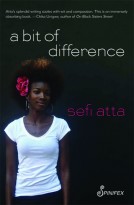
Sefi Atta, A bit of difference (Review)

Sefi Atta, A bit of difference

Book cover (Courtesy: Spinifex Press)

Nigerian writer Sefi Atta was once an accountant. Interesting switch that, accountant to writer, but Atta seems to have made it with great success. Her first novel, Everything good will come, won the Wole Soyinka Prize for Literature in Africa, and received an Honourable Mention in the Aidoo-Snyder Book Prize. Her short story collection, News from home, won the Noma Award for Publishing. I don’t usually itemise awards but it seemed appropriate to do so for a writer who is probably little known to most of my readers. It provides some context to her standing.

However, I mentioned her previous profession for another reason. The main character in her most recent novel, A bit of difference, is a Nigerian accountant. I’m not sure how autobiographical the novel is but Atta clearly understands something about the world of accountants!

The novel is set in the early-mid 2000s, just post the war in Iraq, and takes place over a few months in the life of its protagonist, Deola (pronounced, we are told in the first chapter, “day-ola”). Aged 39, Deola is the director of internal audit for an international charitable foundation. Her role is to audit organisations that receive its grants. The novel starts with her travelling to the Atlanta, USA, office and sets the tone for her dissatisfaction regarding where she is in her life, that is, an unmarried, childless Nigerian expat living in London.

Deola and I have little in common, but I have lived the expat life twice, once in my early 30s and again in my late 30s-early 40s and I understood her desire to be with people who have a “shared history”. The trouble of course is that having gone to boarding school and then worked in England for many years, her “shared history” is a little muddy. However, she starts to feel it’s back in Nigeria, despite her own misgivings and those of her English and Nigerian friends in London.

This is not a book with a page-turning plot. It simply follows several months in the life of an unsettled woman who’s trying to make a decision. It’s told 3rd person, but from Deola’s point of view, and is chronological, with flashbacks to explain to us how she’s got to where she is. Despite the potential, given its setting, it’s not a grim novel. There’s humour – in some funny scenes, entertaining dialogue, effective use of irony. And there’s a wide cast of well-diffferentiated and rather colourful but very real characters – from the thirty-something sister in Nigeria who still likes hip-hop to the not-yet successful Coetzee-enthusiast Nigerian novelist friend in London.

What is most interesting in the novel is its multiple, intertwining themes: the often lonely life of the middle-class expat, race relations in England, African identity and politics, and the way even the enlightened or educated people in both cultures don’t always meet eye-to-eye. I was reminded, as I was reading the book, of Anita Heiss’s talk at the Readers Festival I attended last month. She said she wanted to write novels about young, professional, urban indigenous women to show that their concerns are much the same as their anglo-Australian contemporaries, with the added issue of racial identity and politics to contend with.

And so, as I believe Heiss’s “chicklit” novels do, Atta’s novel explores those universal concerns of belonging and identity, but set against a particular environment where ethnic distrust and/or racial and class hierarchies threaten the self, both at home and in the “adopted country”. Deola feels somewhat of an outsider. In England, she feels her views or experience are not respected by her employing organisation and she is conscious always of being black in a white country. Back home in Nigeria, she’s aware of corruption, and of the way Nigerians rank and distrust each other on a whole range of grounds. England may be characterised by “phony egalitarianism” but Nigeria doesn’t seem much better. Through a character like Deola, Atta can tease out the misunderstandings – or arrogance even – of western organisations trying to “do good” for developing countries while also showing the lack of cohesion in those very countries receiving the help. Fortunately for Deola, at least on a personal level, help might be on the way in the form a man she meets on a business trip to Lagos. But, like most modern novels, nothing is quite as simple as it seems …

Two motifs run through the novel – the fear of HIV/AIDS and the threat of “armed robbers”. These are the “bogies” of contemporary Africa, and serve as a constant reminder that for all the universalities, this novel is also particularised to Africa. A bit of difference is an interesting and satisfying book primarily for this very reason, for, that is, the fact that it so beautifully integrates an engaging personal story with one having a wider political resonance.

Sefi Atta
A bit of difference
North Melbourne: Spinifex Press, 2012
219pp.
ISBN: 9781876756994

(Review copy supplied by Spinifex Press)

Paddy O’Reilly, The salesman (Review)

I’ve been wanting to read Paddy O’Reilly for the longest time but somehow haven’t managed to get to her so, as is my wont, I decided to read a short story of hers in the Griffith Review. She made her name, I think, with her short stories, but has also written novels/novellas and a screenplay, and is a regular contributor to Australia’s best literary magazines.

I know you wouldn’t expect this of me, but I’ve just told a lie – just a white one, your honour – because I have read a couple of articles by Paddy O’Reilly, and I did read her opening story in Scribe’s New Australian Stories 2, published in 2010. The story was titled “How to write a short story”. It’s a very short piece, just over a page, but it was my first, albeit very short, introduction to O’Reilly. The piece is presented as a recipe, with a list of steps, such as:

Test whether the story is done by inserting a reader. If the reader comes out clean, the story is done. If the reader comes out sticky, place the story back into the situation for another 500 words.

This story suggested to me that O’Reilly is not afraid to let women’s experience underpin her writing. But, this doesn’t mean that she wants her writing to be labelled “women’s fiction”. As she asks in her recent post for the Australian Women Writers Challenge 2012, what is women’s fiction? Writing for women? About women? By women? I’m inclined to agree with her that it’s not a useful distinction. What after all is “men’s fiction”? Categorising works as “women’s fiction” has the potential to (and in fact does already) marginalise, trivialise even, women writers and readers. So, like Paddy O’Reilly, I tend not to think in terms of “women’s fiction”. I do, however, and I’d argue this is quite different, like to focus on “women writers”.  Hence, here I am, reading (more) Paddy O’Reilly …

“The salesman” is set in a working class suburb of Melbourne where there’s 80% unemployment. It features a salesman (obviously), a young woman named Marly, and her boyfriend and his mate. The story opens with the young woman alone at home. It’s hot and life is clearly not much fun. Her boyfriend Shaun and his mate, Azza, spend their days working on cars, their heads “under the bonnet like stupid long-necked emus”. And, the fridge is “moaning”. Such language in the first paragraph makes it pretty clear that Marly is not a happy woman. In fact, we learn a little later on that she has lost part of a leg, creating an effective metaphor for a life that is missing something critical. Pran, the salesman, appears in the fourth paragraph. He’s a Hindu from Delhi but Marly, and later Shaun and Azza, persist in calling him a Paki.

Pran insists he’s not selling anything, but after Shaun and Azza return, we finally learn that what he is “selling” is a free offer! Shaun and Azza, as (stereotypically) men often do in these situations, lead Pran on while Marly is conflicted. Shaun is an “attentive” boyfriend. “She would not do better than this”, not better, she thinks, than a man “who had not once in eleven months raised a hand to her”. But, she’s attracted to Pran, to his “rich burnt-toffee” coloured skin and his “runny dark brown” eyes. It’s not just the physical though.  She senses through him, through her questions about his beliefs, that there could be more to life than hanging around waiting for the men to bring home beer and pizza. She does not want his visit to end in violence as, we are told, has happened before.

I’ll say no more about the plot. This is a story about the underside of modern Australia. It’s about poverty and deprivation and how these result in an arid, goal-less life in which there is little empathy for other. It’s about racism, about how, if you are the wrong colour, years of study can lead you to peddling “free offers” to people who can’t afford them. The ending is clever. While we are told the general outcome, we have to guess what really went down. What we do know, though, is that no-one ended up a winner. This is just the sort of story I like – it’s accessible, it has a clear vision with a tight focus, and it raises more questions than it answers. You can read it online at the link below.

Paddy O’Reilly
“The salesman”
Published in the Griffith Review, Edition 29, August 2010
Availability: Online at the Griffith Review

Monday musings on Australian literature: Australian women’s non-fiction writing

Today’s Monday Musings was inspired by a post last month in Overland literary journal’s blog. The topic – Women and non-fiction writing – is a big one, bigger really than I have time for now, but I figured it wouldn’t hurt to make a start.

In the Overland post, which comprised an interview with writer, Rebecca Giggs, Giggs discusses the issue of authority in non-fiction and the notion that “nonfiction writing is supposed to have a fidelity to the real world. Disgrace comes to the author who adds too much of the unreal to their mix”. She talks of how it is believed that “things must be stated, accounted for, and settled. Declared. The unknown turned into the known” and sees this view very much as a gendered thing. As male, in other words. And then she continues

But of course, this is not how the world actually is. Inner and outer worlds are not so easily divided! And permitting that fact – allowing such things as the corporeal, the uncertainty, the experiential in – doesn’t just make clear that falsity, it also lets in other modes of authority. It questions the role of women’s interior lives in our political discourse.

So much to unpack here that I fear getting bogged down, so will just keep to the surface (more or less). I have always been intrigued by the subjective in history, ever since I read EH Carr‘s What is history in which he argued, convincingly for me, the interpretive basis of history, that the role of the historian is significant in terms of what we come to know as “history”, as “fact”. I have no idea how Carr is viewed now as I’m not an historian but it would take a good argument to shake my belief in Carr’s basic premise.

And so, I like the changes I’m starting to see in non-fiction writing. I like the fact that the role of the historian – or, let’s broaden this to non-fiction writer – is becoming more transparent in the (in some anyhow) writing. And it seems that a lot of this is being driven (championed, even) by women writers (although my impression could be skewed by the fact that I’ve read more non-fiction by women over the last decade or so. I would love to hear whether you agree). In the rest of this post I’ll discuss a few of the writers who have come to my attention, in roughly the order I’ve read them.

Helen Garner

Garner was the first to confront me with a new personal way of writing non-fiction. She put herself in the picture and told us exactly what she thought about the subjects she was writing about: college master-student harassment in The first stone, murder/manslaughter and duty of care in Joe Cinque’s consolation. Garner caused quite a furore with these books, particularly the former, but I’m not going to go into that here. Google if you are interested. My point is that she was fearless in putting herself in the frame, and in documenting her process. It’s exciting writing – and it’s honest. I like that, whether or not I agree with her views and conclusions. I like the fact that she allows us to see her thinking and to engage in the discussion – and engage we surely did.

Chloe Hooper

Chloe Hooper.

Chloe Hooper (Public Domain, via Wikipedia)

In a way, Chloe Hooper in her Tall man did for Cameron Doomadgee‘s death-in-custody what Garner did for Joe Cinque. Chloe Hooper is less emotional, less heart-on-sleeve, than Garner but she does also put herself into the story, taking us with her as she researches the situation, and admitting her sympathies. She specifically raises at one point the issue of “historical relativities” which I read as meaning that the facts can be seen from different angles depending on where you are in the spectrum – in many often overlapping spectrums in fact, the historical one, the black-white one, the power one, to name a few.

Anna Krien

Krien’s book Into the woods and essay Us and them work very much like Hooper’s book. She’s there in the story she is investigating. She researches all sides as best as she can. She makes her sympathies clear as they become clear to her, taking us, like Hooper, on her journey.

Francesca Rendle-Short

The Garner, Hooper and Krien books I’ve mentioned above are all pretty straightforward. They put the “I” in their nonfiction writing, something that was once a no-no. But they still focus on the “facts”, albeit recognising the subjective and/or interpretive aspect to them. Francesca Rendle-Short’s memoir-cum-fiction, Bite your tongue, though, is quite a different matter. And it is, I think, a good example of what Giggs is talking about when she talks about “letting the experiential in”. Rendle-Short’s story is powerful and no less valid or true because she has chosen to write most of it through a fictional voice. It’s a clever book. Most of it is told in the voice of the fictional Glory because “some stories are hard to tell, they bite back … [so] I’ve had to come at it obliquely, give myself over to the writing with my face half-turned” but the “real” Francesca has the odd chapter which comments on, validates, Glory’s experiences. The truths in this book are palpable.

Anna Funder

Funder has said that she initially planned to write Stasiland as fiction but for several reasons turned it into non-fiction. One was that she wanted to honour the people whose stories she was telling, that in fact “it didn’t feel right” to turn those stories to another purpose. But, another reason was that she felt the stories were so far-fetched at times (such as the story of the “smell samples”) that they would not be believed in fiction. And so Funder wrote Stasiland as non-fiction and she, too, put herself in the book. When she interviews her subjects we don’t get a dry reportage of the results of the interviews, nor do we get a simple interviewer-interviewee style presentation. What we get is her in the room – reacting to the person as a human being while also reacting to, and reporting on, the facts being presented. The result is something rich in which the particulars lead to a complex universality (or truth) that encompasses both sympathy and horror.

Oh dear, I have gone on haven’t I … so I will close here on Giggs’ point about these new approaches letting in “other modes of authority”. I’m not 100% sure what she means by that, but what I take from it is a recognition that this new “authority” can encompass something beyond the mere “declaration” of facts, something that encourages us to empathise, something that might force us to confront the moral dimension to the stories being told. And this is, to me, a good thing. What’s more, in the right hands, it can make for darned good reads.

I’d love to know whether you read non-fiction and what you look for in it, particularly in terms of “authority” or, dare I say it, “truths” …