Christina Stead, For love alone (Review)

In a recent communication with local author Nigel Featherstone about reviewing, he reminded me of Peter Rose’s advice for new reviewers for the ABR. One of the points Rose makes is:

with major books, ones that have been reviewed extensively in the newspapers, submit reviews that add to our understanding of the book, not just repetitious codas to or echoes of earlier reviews.

This stands also, I think, for classics, for books that have become part of the “canon”. Stead’s For love alone is such a book. My problem then is how to say something about this book that isn’t same-old, same-old. I could be lucky here though, because while Christina Stead is part of the Australian literary canon she’s probably not as well read or as well-known as she should be.

To gain some idea of her reputation amongst the literati, just look at these comments … Patrick White described this book as ‘A remarkable book. I feel elated to know it is there’. Now that is really something isn’t it? Helen Garner has said ‘I could die of envy of her hard eye’, David Malouf wrote that ‘Christina Stead has the scope, the imagination, the objectivity of the greatest novelists’, while American critic Clifton Fadiman called her ‘the most extraordinary woman novelist produced by the English-speaking race since Virginia Woolf‘. He has qualified his praise with ‘woman’, but nonetheless, you see what I mean. What can I add to a discussion of a writer of this ilk?

Enough introduction. Those of you who don’t know the novel are probably wondering by now what it’s about. The title sounds a bit melodramatic, and the basic plot-line could suggest it, but in fact the book is low on drama. You don’t read Stead for page-turning excitement. The novel is set in Sydney and London, from 1933 to 1937. It concerns Teresa Hawkins, the 19-year-old daughter of an unloving, self-involved father. Neither she nor her three siblings are happy at home but seem tied to it, mostly for economic reasons. The novel opens with Teresa and her sister Kitty attending the wedding of their cousin Malfi, setting the scene for Teresa’s quest for love – for a real love, though, not for “some schoolfellow gone into long trousers”. Unfortunately, while she is an intelligent and resourceful young girl, she is also naive. She sets her sights on her Latin teacher, the 23-year-old Jonathan Crow*. Consider the name, and you might gain some insight into his nature!

“She believed firmly in the power of the will to alter things and force things to an end”

It’s hard when reading the novel not to think of Thomas Hardy’s Tess of the d’Urbervilles (surely it’s relevant that Teresa is also called Tessa?) and, even more, of Edith Wharton‘s heroines. However, while society’s rules and conventions underpin the plot, Stead is more interested in her characters’, particularly Teresa’s, psychology. What does Teresa mean by love, what is its impact on her, and how far will she go for it? Very far, we soon discover. She denies herself sustenance almost to the point of death, not once but twice, in the novel. Why?

Well, let’s look at Teresa/Tessa. Early in the novel, she’s idealistic. She will not, she says, compromise her life. “I’ll never give in” (p. 33) she says to her aunts, and a little later says to her cousin, “I’d work my fingers to the bone to keep my lover” (p. 127). As she becomes immersed in her love for Jonathan Crow, she enacts these vows: “I am killing myself for a man” (p. 314), she realises. “Love is hard” (p. 357). And yet, she continues for many more chapters, to believe in her idea of love (in which women can’t expect happiness) and in Jonathan. This, to her, is how love is. It’s an intriguing portrait of a woman who is strong and intelligent, and yet unable to let go of something that is patently going nowhere. When the inimical Crow describes her as “a true example of masochism and also a perfect example of mythomania”, it’s hard not to agree.

Teresa, then, is not a simple character. Her commitment to Jonathan is complicated: when opportunities arise for greater intimacy, she in fact pulls back. It’s significant that several times through the novel she mentions Ulysses:

she could sail the seas like any free soul, from Ulysses to the latest skipper of a sixteen-footer rounding the world.

Eventually, though, she discovers “true love … the love without crime and sorrow” but, as ABR editor Peter Rose also says “never give away the denouement”, I will leave it here. I’ll simply say that the ending is satisfyingly open and true to Teresa’s character.

“The world was hers and she had no doubt of the future”

The novel is, essentially, a bildungsroman. It’s Teresa’s coming of age, intellectually, psychologically and physically. Her youthful confidence takes quite a battering as she confronts the realities – presented by society and by Jonathan. She realises that society’s rules are counter-human:

Why the false lore of society? To prevent happiness. If human beings really expected happiness, they would put up with no tyrannies and no baseness; each would fight for his right for happiness. (p. 532)

This is not a social history. Despite the descriptions of poverty, the analysis of societal marriage conventions, the discussions about money and power, Stead is not writing a Dickensian novel. Rather, it’s about Teresa’s struggle to know herself as a mature loving women, something that is stunted for some time by her relationship with the slippery Jonathan: “In one speech he would be sardonic and naive, cruel and gay, tender and cold” (p. 380) And yet, Teresa cares for this man, and forgives, and forgives, and forgives again his erratic, careless, misogynistic treatment of her. In fact, she appears to be so in his thrall that her employer James Quick begins to wonder whether she is as intelligent as he’d believed:

What can she be, to tolerate such a contemptible, calculating worm […] this intellectual scarecrow (p. 477, 480).

However, she is, of course, intelligent and in true bildungsroman-style does experience “true” love. But this is Stead and it’s not simple. At one point her new love tells her:

he will send her to university – make a woman of her, make a brilliant woman of her … He would take her to Paris, and elsewhere, no-one who knew her now, would know her then; he would make her over entirely.

Oh dear …
Australian Women Writers Challenge

This is a delicious book – rich in ideas, gorgeous in writing, passionate in conception, and complex in psychology. The more I delve into it, the more I want to say. Perhaps, I will another day.

Postscript: By coincidence, I finished For love alone just as the ABC’s Australian Story broadcast the strange story of revered Australian writer Elizabeth Jolley, her librarian husband and his daughter by his first marriage, Susan Swingler, whom he left in England without telling her the truth. The first thing that crossed my mind as the story – I have Swingler’s book, unread, on my shelves – unfolded was “the things people do for love”. Jolley’s novels, like this one of Stead’s, are emotionally intense and explore some of the darker sides of familial and romantic relationships.

Christina Stead
For love alone
Carlton, The Miegunyah Press, 2011 (orig. pub 1945)
575pp.
ISBN: 9780522853704

* The novel is autobiographical, but by no means autobiography. Here is an article on Keith Duncan who inspired Jonathan Crow.
Delicious descriptions from Down under: Jane Austen on politics

I was going to label this post “Jane Austen and plus ça change” but then decided to be provocative, because Austen is regularly criticised for not discussing politics, what was happening in her time, in her novels. Of course, I disagree that novelists have to specifically write about the political background to their stories. Those living in her time would have known, for example, about the Napoleonic Wars and their impact on society, about ongoing discussions regarding slavery, parliamentary power, free trade, and so on. Austen didn’t need to explain that background, and those issues weren’t the matters that she wanted to write about. She had something bigger in mind – human nature.

Nonetheless, I was tickled when reading one of her juvenilia pieces, Catharine, or the bower*, the other day, to come across the following**:

the Conversation turning on the state of Affairs in the political World, Mrs Percival, who was firmly of opinion that the whole race of Mankind were degenerating, said that for her part, Everything she believed was going to rack and ruin, all order was destroyed over the face of the World, the house of Commons she heard did not break up sometimes till five in the Morning, and Depravity was never so general before; concluding with a wish that she might live to see the Manners of the People in Queen Elizabeth’s reign, restored again. “Well, Ma’am,” said her Neice [Catharine aka Kitty], “but I hope you do not mean with the times to restore Queen Elizabeth herself.”

“Queen Elizabeth,” said Mrs Stanley, who never hazarded a remark on History that was not well founded, “lived to a good old age, and was a very Clever Woman.” “True, Ma’am,” said Kitty; “but I do not consider either of those Circumstances as meritorious in herself, and they are very far from making me wish her return, for if she were to come again with the same Abilities and the same good Constitution She might do as much Mischeif and last as long as she did before-.”

Of course, this doesn’t address specific political events or situations, but it suggests (to me anyhow) that politics and history were topics of conversation in Austen’s neighbourhood, and that she was well able to satirise the quality of that discussion. It also demonstrates Austen’s ability to describe and satirise her characters through their own mouths!

Oh, and despite – or in addition to – my comments above, I would argue that Austen’s novels can have a political reading, can show how political debate and events were shaping her world, but that’s a topic for a different post.

*Written in 1792, her 17th year
**This rather idiosyncratic-looking text is based on the original manuscript in the British Library from the Oxford World’s Classics edition published by Oxford University Press (on my Kindle)

Dorothy Johnston, Eight pieces on prostitution (Review)

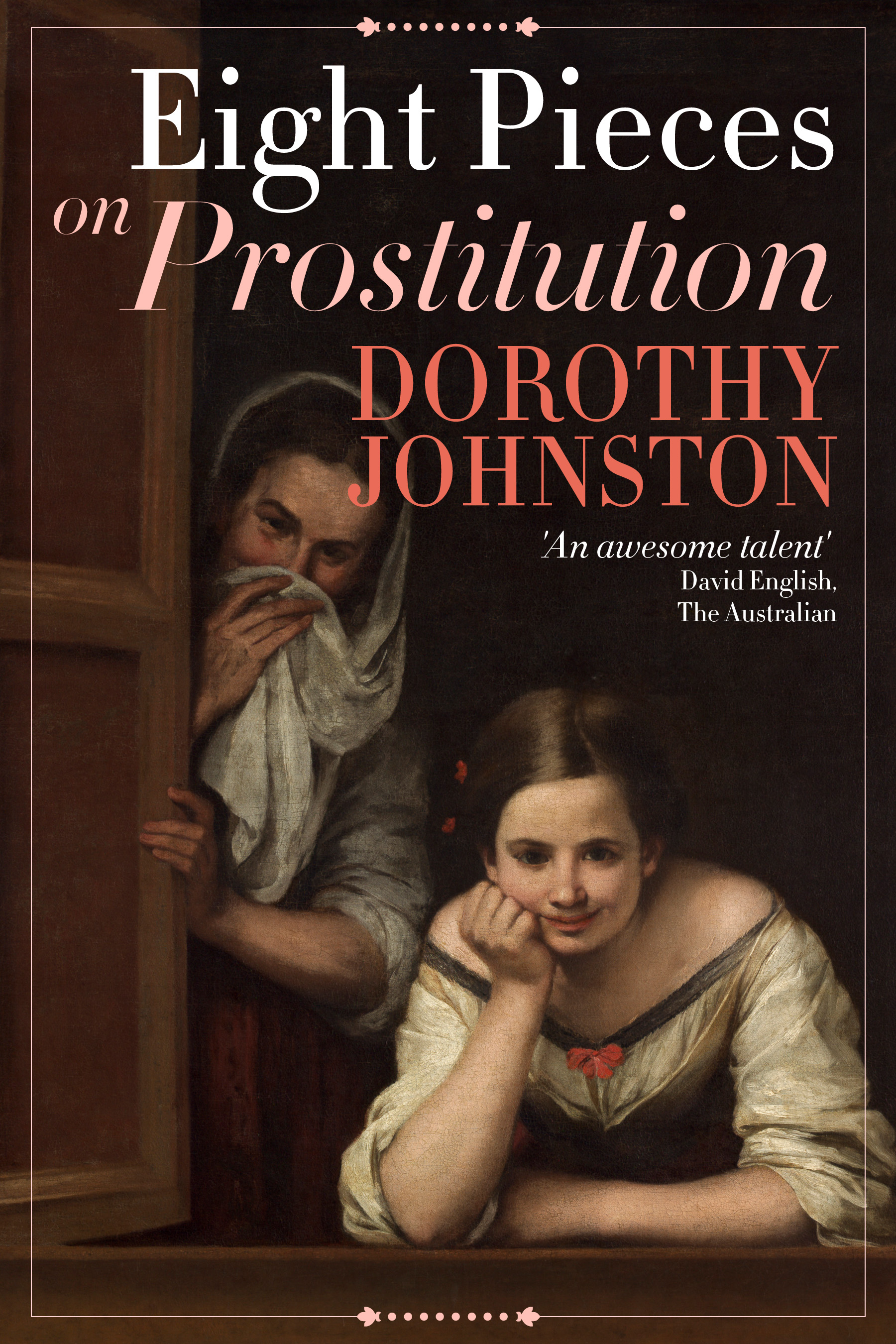
Dorothy Johnston, Eight pieces on prostitution book cover

Lifted, with approval I hope, from Johnston’s website

A few months ago I wrote a Monday Musings on the Australian Society of Authors’ digital publishing initiative, Authors Unlimited e_Book portal. At the time I decided to try it out and bought Dorothy Johnston‘s collection of short stories, Eight pieces on prostitution.

The collection comprises 7 short stories and a long story or novella. One of the stories, ‘Mrs B’, I read earlier this year in Meanjin‘s Canberra edition. Some of the other stories have been published before too: ‘The Man Who Liked To Come With The News’ (The State of the Art, 1983), ‘Commuting’ (Island, issue 52, Spring 1992, and elsewhere), and ‘The Studio’ (Southerly, Winter 1996).

The first thing I should say about this collection is that it is not salacious reading. That is, it’s not erotica. Johnston’s interest is the lives, the experience, of prostitutes as people. Who are they? Why are they doing what they are doing? How do they negotiate their relationships, professional and personal? How do they live the life they’ve chosen and are they happy?

Johnston’s prostitutes are neither glamorous nor tarty, and most work for themselves or in small establishments. They are not the prostitutes of popular imagination. That is, they tend not to work in fancy parlours under control of a madam nor in that sleazy underworld borderland managed by pimps. They are, instead, either ordinary employees or small businesswomen. Some are career prostitutes, others are university students or single mothers who need to support themselves, while still others, like Eve in ‘The Studio’, are a little more mysterious:

She lives in a small flat. She chose the national capital because she imagined it to be a city where she could fade into the background, where she could hide.
Johnston’s characters are often wistful or even a little sad, but they are never pathetic. They are intelligent, and Johnston respects not judges them. They are not powerless, either, though sometimes the power they have is limited to their domain and can be tenuous. They can be a little lost, or perhaps just at a cross-roads in their lives. Maria in ‘The Cod-piece and the Diary Entry’ is uncertain about the world and her place in it. She thinks, when she moves and loses a client:
Looking back, she could not shake the feeling that she’s been on the point of understanding something important while in Harry’s company, that understanding had been no more than a breath away.
Sandy in ‘Names’ admires university student Gail’s strength and resilience:

She never let herself fall into a chair like I did when she came back from a client, slumping my stomach and letting the smile drop off my face.

There is a continuity between these characters and the three women in her novel The house at number 10 which I reviewed earlier this year. Like Elizabeth Jolley, Johnston is not afraid to re-use or develop characters across her oeuvre. I rather like that.

The pieces are set in places known to Johnston – Canberra and Melbourne. We get a clear sense of those cities, but even more we are let into the rooms the prostitutes inhabit – the ones they work in, the ones they relax in between clients. We learn about the things that are part of their daily routine. Sophie, for example, in ‘Commuting’, finds that when she steps outside work
petrol fumes are a relief after hours of perfumed towels and bubble bath.
The final piece is the novella ‘Where the Ladders Start’. The title comes from Yeats’ poem, ‘The Circus Animals’ Desertion’:
I must lie down where all the ladders start
In the foul rag-and-bone shop of the heart.

It concerns a three-woman brothel established by Sue, who’d been dreaming for years of a “better system”. It’s “a co-operative … Tough that word, but they’d risen to its challenges”. Now though, the dream is being severely tested as they cope with the death of a client, on the first page, from erotic asphyxiation, “the choking game”.  The story explores the “one for all, all for one” ideal. Are there limits to trust, and how far should you take loyalty, particularly when it starts to be to your own detriment? Johnston sets the story at the beginning of the new millennium adding an ironic overlay to the situation confronting the women. What sort of millennium are they setting up for themselves by their response to the death?

As in all her stories, Johnston’s view of human nature here is warm but realistic, clear-eyed. She pits the “never let a chance go by” attitude against the desire to protect, care and trust, and then tests that against the need for self-preservation.

Johnston’s language is a delight to read. She’s precise but expressive, using imagery with a light touch:

The freedom to ask each other questions danced and shimmied in the air.

She can be quietly ironic:

Laura went on sitting in the kitchen like a Buddha, or more accurately a simpleton, a girl who’d left her mind someplace and forgotten to go back for it.

Is Laura simple or not is the question we ponder through most of the story.

In dealing with a mysterious death, “Where the Ladders Start” introduces us to that other string on Johnston’s writing bow, the crime novel. It’s a clever story, well-plotted, nicely maintaining a tension between mystery and clarity. Like most of the stories, there’s no simple resolution. Life, Johnston shows, is a messy business.

You’ve probably gathered by now that I thoroughly enjoyed this collection. While there is a commonality between the women, giving the collection a lovely coherence, there is also difference. Each character is unique, each story engaging. If there’s an overall theme, it is one of survival, or perhaps more accurately, resilience. Her women get on with life. They make decisions, some good, some bad, some we are not sure about, but, and here’s the important thing, they don’t stand still. Do read it. At $9.95, I reckon this is a steal.

Dorothy Johnston
Eight pieces on prostitution
Australian Society of Authors, 2013
202pp.
Availability: Online download for $9.95 from the ASA site

Ella Berthoud and Susan Elderkin, The novel cure: An A-Z of literary remedies (Review)

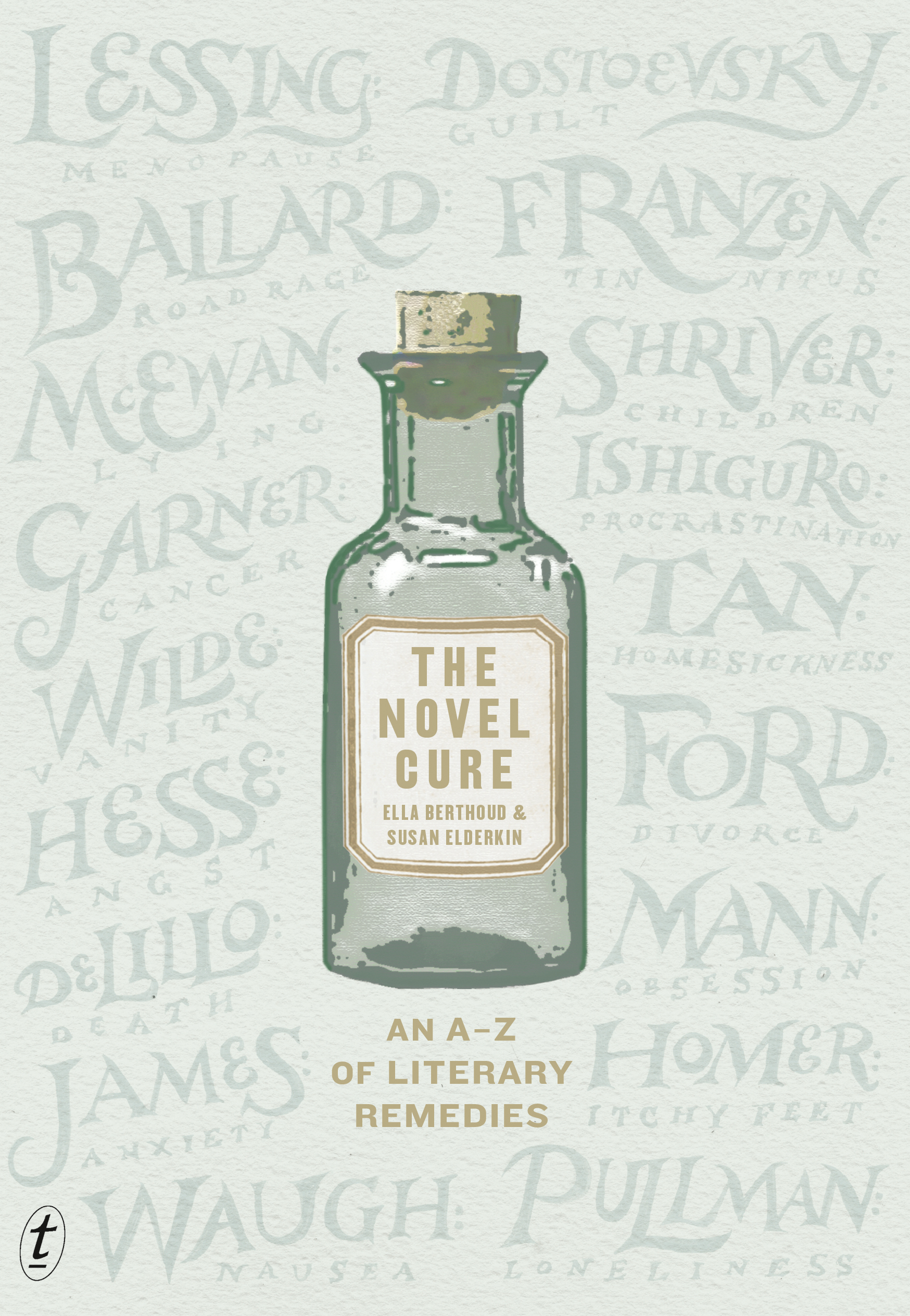
Novel Cure bookcover

Novel Cure (Courtesy: Text Publishing)

I don’t usually blog about books before I’ve read them cover to cover, but I’m making an exception for Ella Berthoud and Susan Elderkin‘s The novel cure because it’s one of those books that’s best read in small doses (no pun intended). You see, it is a book of bibliotherapy, a book that recommends novels to read to cure almost any ailment you can think of.

Bibliotherapy is described in Wikipedia, but I’ll give you Berthoud and Elderkin’s definition:

the prescribing of fiction for life’s ailments.

I don’t want to give away too many treatments. After all, the authors need to eat. But, to give you a taste, here is a sample of ailments and their prescribed treatments:

  • Daddy’s girl, being a: Can you guess the treatment? It’s Jane Austen’s Emma! You didn’t expect me not to start with Jane Austen did you? Emma, Berthoud and Elderkin say, “has been sent out into the world with an overly high opinion of herself and a self-centredness that can only bring her grief”. They suggest Emma should be seen as a cautionary tale and that girls at risk need to “stop playing the game and show him [their father] what a bad girl you can be”. “See: rails, going off the, for inspiration.” Are you getting the idea?
  • Control freak, being a: The authors suggest two Australian books. Is there something these two Englishwomen are trying to tell we colonials? Both are books I’ve reviewed here, Elizabeth Harrower’s dark The watch tower (my review) and Graeme Simsion‘s comic The Rosie project (my review).
  • Nose, hating your: What else could they suggest for this but Patrick Süskind‘s chilling Perfume. That’s a novel that’s not easy to forget. For all the horror of this novel, the authors manage to turn it to a positive purpose, one determined to help the self-esteem of those self-conscious about their noses!

As lighthearted as all this might sound, the authors do believe in the efficacy of literature to help ease (if not cure) both emotional and physical pain. They apparently hold highly successful bibliotherapy sessions and retreats in the UK. Among the ailments in the book is “Eating Disorder” and the two recommended books, Deborah Hautzig‘s Second star to the right and Jenefer Shute’s Life-size, are serious offerings for sufferers and their carers.

Like the good reference book it is, The novel cure includes see references (such as “Control, out of: See adolescence, alcoholism …”) and see also references (such as “Old age, horror of: See also amnesia, reading associated ….”). These helpful pointers warmed the cockles of my little librarian heart.

Scattered through the book are “Ten Best” lists, for which there is an index at the back so you can find them easily. One that made me laugh is “The Ten Best Novels For When You’ve Got A Cold”. As all Australians know, the best remedy for a cold is eucalyptus. It’s fitting then that Murray Bail‘s gorgeous novel Eucalyptus is top of the list.

There are two other indexes at the back of the book. One is the Index of Reading Ailments (for such life-threatening conditions as “Holiday, not knowing what novels to take on” and “Household chores, distracted by”). And the other is, of course, the Index of Novels and Authors. This makes the book useful for those of you who don’t have any ailments needing cure. You can  see if your favourite novels are cures for others.

You will also see, if you look at this index, the breadth and depth of authors and their works covered in this book. I was thrilled to see many Australian authors represented, covering more than a century of Australian literature. As far as I can tell, every continent is covered. The authors include, for example, South African Lauren Beukes, Indian Rahul Bhattacharya, French Albert Camus, Mexican Laura Esquivel, Japanese Haruki Murakami, Russian Leo Tolstoy, and so on. This index comprises eight two-column pages.

To conclude, I’ll offer my own ailment and cure: Reading slump, being in a: Read The novel cure. You’re sure to find a book or two to cure you and, if you don’t, well, you’ll be reading anyhow!

Ella Berthoud and Susan Elderkin
The novel cure: An A-Z of literary remedies
Melbourne: Text Publishing, 2013
Cover design: WH Chong
456pp.
ISBN: 9781922079350

(Review copy courtesy Text Publishing)

Ann Patchett, The bookshop strikes back (Review)

I’m not normally an impulse buyer except, it seems, when I visit the bookshop at the National Library of Australia! I tell myself I’m not interested in little books – you know, the sort bookshops put on their sales counters – but somehow the National Library of Australia regularly manages to break down my resolution. Last year I reviewed Dorothy Porter‘s On passion which I bought from their counter. Today, I’m going to write about Ann Patchett‘s essay “The bookshop strikes back”.

My purchase went like this. I was standing at the counter a few days ago making my purchases when this tiny little 20-page off-white booklet caught my eye. I picked it up, and said to the bookseller, “This looks interesting”. “Oh yes”, she said, “we had them in for National Bookshop Day?” Well, I knew then what I had to do …

I’ve been trying to remember when I first heard that the book was dead, but I think it was back in the 1970s when it was argued that the easy availability of video would spell the end of reading. I wouldn’t be surprised if the same was said when movies appeared, when radio came on the scene, and so on. Surprisingly, though, books seem to survive! Except, it’s not surprising to us readers is it?

Books are facing a new challenge in our digital world – but, so far, the main issue seems to be more about the form of the book (as in print vs digital) than the survival of reading. However, bookshops do seem to be at risk. Ann Patchett suddenly found one day that her town, Nashville, Tennessee, no less, had no bookshops (other than a used bookshop and stores like Target). Apparently the last one to go – an independent that had been bought out by a chain – had been profitable “but not profitable enough”. Patchett’s discovery, albeit on a smaller scale, replicates the situation at my local mall, which is one of my city’s main shopping centres. Fortunately, though, we do have some great bookshops in other parts of the city.

Patchett doesn’t spend a lot of time discussing the whys, though the prevailing view seems to be that the combination of online bookselling giants like Amazon and the rise of e-books are causing the demise of bookshops – both chain stores and the independents. But, Ann Patchett believes things may be changing. She writes:

… all things happen in a cycle, I explained – the little bookstore had succeeded and grown into a bigger bookstore.  Seeing the potential for profit, chains rose up and crushed the independents, then Amazon rose up and crushed the superstore chains. Now that we could order any book at any hour without having to leave the screen in front of us, we realised what we had lost: the community center, the human interaction, the recommendation of a smart reader than a computer algorithm telling us what other shoppers had purchased.

This may be a little simplistic but history does have a habit of repeating itself doesn’t it! So Patchett, who was later “dizzied by the blitheness that stood in place of any business sense”, established, with two other women,  a new independent bookshop in Nashville … and found that on book tours for her most recent book, State of wonder, interviewers were more interested in asking her about her bookshop plans than about her book. She laughs that on the day the bookshop opened in November 2011, the New York Times ran a story with a picture of her on page A1, something that her agent and publisher would never expect to achieve on the basis of her role as a literary novelist.

This is not a highly analytical essay, but it’s a lovely read about the love of books and bookshops. It provides a nice contrast to the fascinating but ultimately sad story of a bookshop I read a few years ago – Annette Freeman’s semi-self-published Tea in the library. Freeman, like many booklovers, dreamed of having a bookshop – one in which readers could come, buy books, stay for a cuppa, and meet authors. She had a lovely vision, but it failed after a couple of years, something she explores openly and honestly in her book.

For Patchett though, so far so good. She’s not sure why they’ve been successful but she says

my luck has made me believe that changing the course of the corporate world is possible.

I hope she’s right – but I guess for her to be so, we need more brave (or blithe) booksellers and more readers who want the personal touch, because, after all, we are in this together.

Ann Patchett
“The bookshop strikes back”
London: Bloomsbury, 2013
20pp
ISBN: 9781408847497
Originally published in Atlantic Monthly, November 2012
To appear in This is the story of a happy marriage (Bloomsbury, later 2013)
Available: Online at Atlantic Monthly

Romy Ash, The basin (Review)

Romy Ash has made quite a splash with her debut novel, Floundering. It was shortlisted for the Stella Prize and the Miles Franklin Literary Award, among others. I  haven’t read it yet, but I have read a couple of her short stories that have appeared in the Griffth Review, one of which is “The basin”.

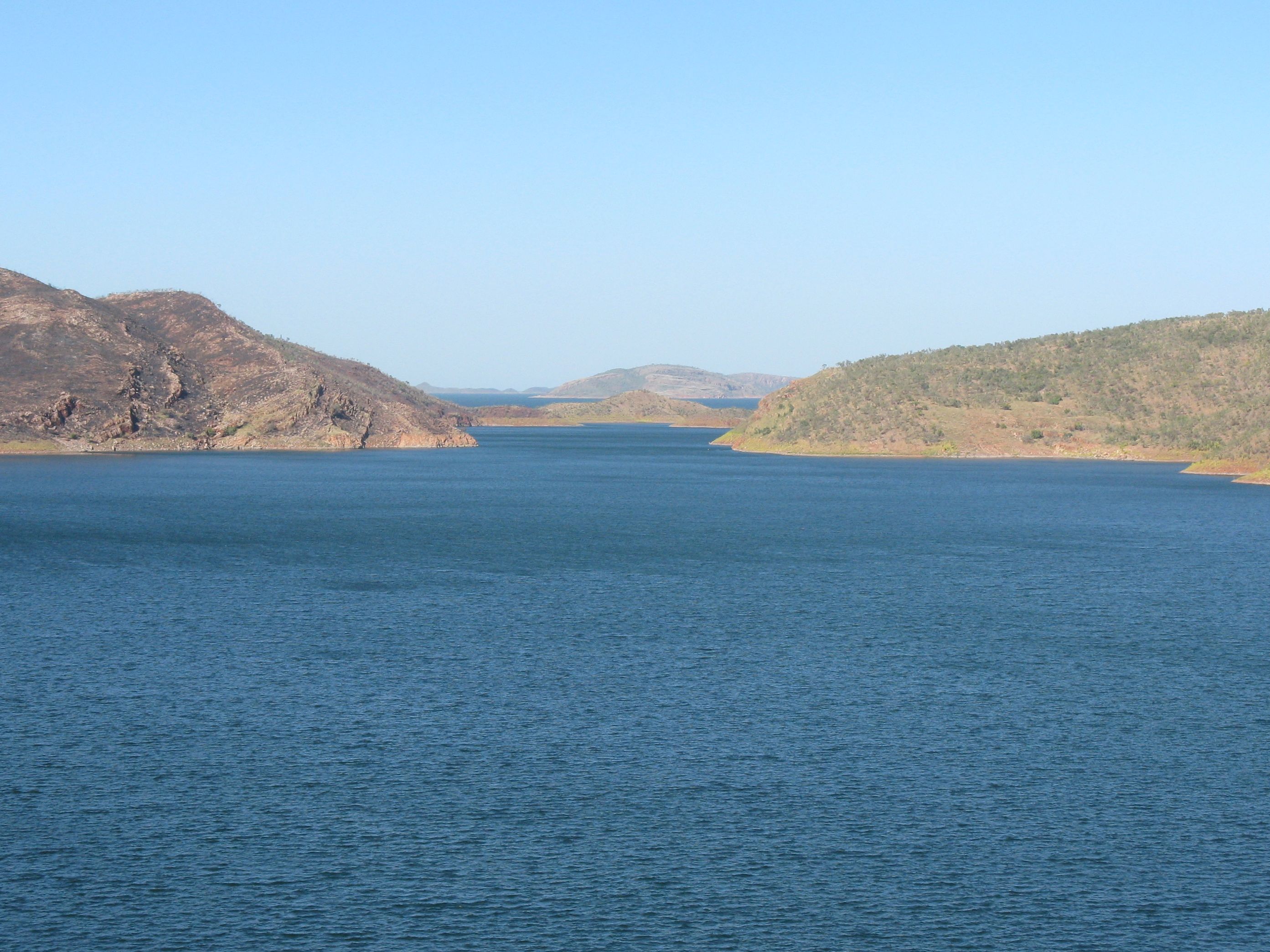
Lake Argyle

A tiny section of Lake Argyle

For those who don’t know, the Griffith Review is published quarterly, with each issue focusing on a particular theme. The issue “The basin” appears in is titled “What is Australia” which is rather apposite given my Monday Musings post this week on Writing the Australian landscape. Ash doesn’t identify the “place” in which the story is set, beyond telling us that there’s a dam which is described in a pamphlet as “the biggest inland body of water in Australia”. Well, that gives it away. It is clearly inspired by Lake Argyle in the Kimberley region of northern Australia. The lake – an artificial one created by damming the Ord River – is huge. I’ve never seen a lake (in Australia anyhow) quite like it.

Ash’s story is about Jess who has come to the region with her husband, Max, and their daughter, Frankie. Jess is not happy, something that is physically represented by her increasing weight: “every bit of her wobbled”, “Sitting there Jess felt fatter”, “her thighs rubbed together”, and so on. “You were skinny, before”, an old farmer tells her.

Max, however, is happy. “We’ve never done so well”, he tells her. But all is not well in this man-made Eden (there are sly references to “apples”) and not all men are happy. It’s not normal for this “dry country” to have so much water. A farmer tells them:

The most beautiful country you’ve ever seen, gone. Them gums, they’re drowned under there. Ever heard a gum drown?  They creak. All the animals. It’s not like fire – them animals can’t sense it coming – they was drowned, sure enough. The surface of the water was just insects. Snakes curled and died. They washed up at the sides. It didn’t look like it does now. It was putrid.

Putrid perhaps, but natural is the implication. I have written about the drowning of this landscape before in my post on Mary Durack’s poem “Lament for a drowned country”. The Duracks’ own homestead was drowned to create Lake Argyle.

Australian Women Writers ChallengeAsh uses feminising imagery to tell her story – with many references to the colour “pink” (galahs, inside of mouths, sunrise, hams) and to the “basin” of the title. Water, often a literary device associated with life, is a complex image in Ash’s story. People are told not to swim in the dam because it’s the town water. Jess and Frankie do, but then Jess will only drink bottled water, refusing to drink the town water. Understandably! A different sort of water features in the story’s resolution.

Although Ash doesn’t explore it, she reminds us of indigenous people’s association with the land when she says that “after the flooding the town had been renamed Burrngburrng-nga, an Indigenous name. Every time she heard someone say it they pronounced it differently and quietly, unsure.” Google tells me that it means “The water boiled” in the Wagiman language (from Katherine in the Northern Territory).

This is a story about the costs – personal and environmental – of mankind’s belief in its ability to control nature. It’s about values, and whether making money is enough to sustain happiness. It’s about the unhappiness that can result when people are dislocated from their roots – either because they move or because their place has been changed beyond recognition. Place – it has such a complex relationship with our physical, emotional and/or spiritual well-being, doesn’t it?

It’s not a particularly dramatic story, but it is a quietly effective one that I can see fitting nicely into a volume intended to encourage us to think about “What is Australia”.

Romy Ash
“The basin”
Published in the Griffith Review, Edition 36, Winter 2012
Available: Online at the Griffith Review

Michelle de Kretser, Questions of travel (Review)

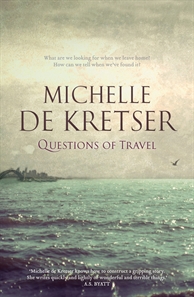
Hardback cover (Courtesy: Allen & Unwin)

Hardback cover (Courtesy: Allen & Unwin)

Every now and then a book comes along that is so sweeping in its conception, that it almost defies review. Such a book is this year’s Miles Franklin Award winner, Questions of travel by Michelle de Kretser. Consequently, I’m going to focus on one aspect that particularly spoke to me – and that is her exploration of place and its meaning/s in contemporary society.

“Soon everyone will be a tourist”

As the title suggests, the novel is about travel – but travel in its widest sense. In fact, without being too corny, it is, really, about the journey of life. As our heroine Laura, thinking about her married lover Paul, ponders:

Perhaps she was an item on the checklist: the wild oats of Europe, the career back home, marriage, mortgage, fatherhood, adultery, the mandatory stopping places on the Ordinary Aussie Grand Tour, with renos*, divorce and a coronary to follow.

That made me splutter in my coffee …

First, though, a brief overview of the plot. The story is told chronologically, alternating between the Australian Laura and Sri Lankan Ravi. Both were born in the 1960s, and the novel chronicles their lives until 2004 when they’d be around 40. Laura, under-appreciated by her family (cruelly described by her father as “the runt of the bunch”) and aimless, travels the world before returning to Sydney in her mid-30s, still rather directionless, but now an experienced freelance travel-writer. Ravi grows up in Sri Lanka, marries and has a son, but a shocking event results in his coming to Australia in 2000 as an asylum-seeker, the same year that Laura returns. You might think at this point that you know where the novel is heading, but you’ll be getting no spoilers from me!

And so we have two significant types of traveller – the tourist (with some business travel thrown in) and the refugee/emigrant. De Kretser explores these comprehensively, and with, I must say, thrilling insight. Thrilling is an unusual word in this context, I suppose, but I can’t think of a better one to describe my reaction to the way de Kretser, point-by-point, unpicks the world of travel, skewering all sorts of assumptions, expectations and pretensions as she goes. I almost got to the point of cancelling my next overseas trip! After all, as Laura discovers, “to be a tourist was always too arrive too late”. How many times have you been told that x place was better in the 80s, only to remember that in the 80s you were told it was better in the 60s!

“Geography is destiny”

So Ravi is told by his teacher Brother Ignatius. This, for all the serious and satirical exploration of travel and tourism, is what the book means most to me. Brother Ignatius tells his students that “History is only a byproduct of geography”. While we could all have fun exploring a chicken-and-the-egg argument, I’d find it hard to deny its fundamental truth.

Laura spends most of the book travelling, or thinking and writing about travel. She’s the quintessential modern person, believing:

What was the modern age if not movement, travel, change?

Living in England she sees the long-standing connections people have to their place, while

Her own people struck Laura, by comparison, as a vigorous, shallow-rooted plant still adapting itself to alien soil.

She returns to Australia, following the death of the gay man she’d loved, hoping for meaning, connection. Geography, place, home had asserted itself … as it usually does. But life doesn’t prove to be much easier. Struggling to find her place, she finds once again that “noone was asking her to stay”.

Meanwhile, Ravi struggles to adjust to his circumstances. Grieving for what he’s lost, he (with his “eyes that had peered into hell”) goes through the motions of living and working. People such as his landlady and her family, and his work colleagues, are kind – enough – but de Kretser shows how skin-deep, how superficial, our practice of diversity and, worse, our humanity is. We do not easily accept people from “other” places. “Otherness”, de Kretser proves, “is readily opaque”. Australians, for example, ask Ravi which detention centre he’d been in because, of course, as an asylum-seeker that’s where he’d been! And, if he hadn’t, was he a “real” refugee. (One of the book’s many other themes, in fact, is “authenticity”.) Ravi, it has to be said, doesn’t help himself. He doesn’t share his history (should he have to?) and, fearing obligations, he resists any help that isn’t essential.

“Place had come undone”

While Laura and Ravi struggle with where they are, they also confront the fact that by the late twentieth century place isn’t only physical. Ravi had discovered, back in Sri Lanka, the world of “disembodied travel”, though his wife Malini had proclaimed “Bodies are always local”. This imagery, seemingly light at the time, carries a heavy weight. Later, finding settling into his new geographical location difficult, Ravi starts to find escape and even solace in virtual places, including visiting people’s homes via real estate sites. De Kretser doesn’t miss any opportunity to explore the ways we “travel” and it never feels forced. It all fits, emulating the way travel fits into our lives.

For Laura, the virtual intrudes mostly through work where she is a commissioning editor for Ramsays, a travel guide company. As the 21st century takes hold, the e-zone division of her company starts to increase in importance. Some of the novel’s best satire is found in the portrayal of corporate culture at Ramsays. It’s laugh-out-loud, sometimes excruciatingly so.

“Time was a magician, it always had something improbable up its sleeve …”

While the novel’s subject matter is travel, in all its guises and in what it says about how we relate to place and each other, the overriding theme is that literal and existential question, What Am I Doing Here? It tackles the big issues that confront us all every day – Time, Truth, Memory, Death and, of course, the most fraught of all, Other People.

Towards the end of the novel, Laura realises that:

… the moment that mattered on each journey resisted explanation … because it addressed only the individual heart.

We could say the same about a great book … and so I apologise for my paltry attempt here to explain de Kretser’s witty, warm and powerful novel. If you have any interest in contemporary literature and its take on modern living, this is the book for you.

For an equally positive perspective, check out Lisa’s (ANZLitLovers) excellent review.

Michelle de Kretser
Questions of travel
Sydney: Allen & Unwin, 2012
517pp
ISBN: 9781743317334

* Aussies commonly abbreviate words with “o” or “ie” endings. “Renos” therefore refers to “renovations”.

Dymphna Cusack, A window in the dark (Review)

Dymphna Cusack‘s A window in the dark has been glaring at me from my TBR pile for many years now. Not being able to stand it any longer, I decided to sneak it in before my next reading group book, Michelle de Kretser‘s Questions of travel. Posthumously published by the National Library of Australia, A window in the dark is Cusack’s chronicle of her teaching years, spanning 1922 to 1943.

For those who haven’t heard of her, Dymphna Cusack (1902-1981) is an Australian writer best known for her collaborative novel (with Florence James), Come in spinner (1951), and Caddie, the story of a barmaid (1953), which was made into a successful feature film in 1976. According to Debra Adelaide‘s comprehensive introduction, Cusack was not interested in writing her autobiography but, in the mid-1970s, three decades after she finished teaching, she decided to write about this part of her life. While much has changed since 1975/6 when she wrote it (let alone 1944 where the story ends), A window in the dark – “my job was opening a window in the dark for the minds entrusted me” – is an interesting read. It is not, though, a typical writer’s memoir; its focus really is teaching and education.

The book is well produced with an excellent introduction and explanation of its genesis by Debra Adelaide (though I would have loved an index). It was prepared from the version included with her papers held by the National Library of Australia. This version is probably the final draft, but Adelaide believes that Cusack would have done more work on it, had it found a publisher. Certainly, it does have some rough edges, but not enough to spoil the content nor to prevent our getting some sense of Cusack as a person, as a writer, and of course as a teacher.

Cusack tells the story of her years as a teacher chronologically, starting with university and her decision to accept a bonded Teachers College Scholarship. However, a number of themes run through the book and I’m going to frame the rest of this post through some of them.

Format: Photograph Notes: Dymphna Cusack (1902...“The sum total of my years of teaching in Broken Hill and Goulburn was the conviction that the high school curriculum was insane”

Cusack decided very early in her career that the curriculum she was required to teach was unsuitable for all but the minority who planned to go on to university. She rails, in particular, against the teaching of ancient languages (Latin) and against the focus on British history and English (as in from England) literature (both only to the end of the nineteenth century, what’s more). She criticises educational practice which relied heavily on examinations and argues against dependence on IQ assessment for identifying capable students. She is disgusted by corporal punishment. She does become a bit repetitive, as she moves from school to school, but that simply reinforces her passion for relevant education and humane methods. Being personally interested in local and contemporary history, she’s distressed that students weren’t taught about their own places. Students in Broken Hill were taught nothing about that city’s origins, nor its geology and botany. Students in Parkes learnt nothing about William Farrer and his pioneering work with wheat. And so on … Students learnt, well, I’ll let her tell you:

It was the same in every country town I lived in. An essential part of our history was ignored, whether massacres of whites by blacks or blacks by whites, while we got bogged down in the Hundred Years’ War or the Thirty Years’ War or the Seven Years’ War – all taught with no reference whatever to the basic economic causes underlying them.

She was happiest when, for various reasons, she was given non-examination classes to teach. Then she could teach what she thought was useful. A playwright herself, she was renowned for her drama classes, and the school plays she produced.

“I look so middle-class; it’s my nose”

Despite her ongoing frustrations (not to mention chronic health issues), she had, you can see from this quote, a sense of humour. Cusack belonged to that wonderful cohort of left-leaning writers in early to mid-twentieth century Australia, a cohort which included Miles Franklin (with whom she collaborated on books), Flora Eldershaw and Frank Dalby Davison.  She had a finely honed moral and social conscience, and was acutely aware of injustice. She was not above using her “middle-class” look to get a hearing on issues important to her. She was distressed that Australia, which, by the 1850s was

politically and socially the most advanced country in the world … should by the middle twenties be bogged down into a morass of social and sectarian bigotry and educational conservatism.

Cusack became convinced of the “wickedness of our economic system”, which could not fund milk for children of unemployed parents but could, somehow, find the “money for everything for war”. She abhorred the power those with money had over others. She became unpopular with the Department of Education for her outspokenness on social and economic justice issues, and was particularly critical of the treatment of “that much-maligned creature, the woman teacher”.

“What we want is the warmth, the humanity, the feeling for Newcastle that is inherent in everything you write about …”

So said BHP’s Newcastle manager Keith Butler to Cusack in 1943 as he offered to pay for a novel about Newcastle and the steelworks. Not surprisingly, Cusack would have none of it. She did, however, write her novel, titled Southern steel (1953), and it was, apparently, a positive portrayal. Cusack wrote throughout her teaching career – mostly plays, many of which were performed on the ABC but only some of which have ever been published. She tackled tricky-for-her-times issues such as racism, workers conditions’ and war. Her second novel, Jungfrau (1936), which explored young women, their sexuality and abortion, was runner-up in the Bulletin’s S. H. Prior memorial prize. It was shocking for its time.

“… I found in my teaching life teachers are sublime optimists – why, I never knew.”

And yet, she must have known, for she stuck to teaching through years of ill-health and poor treatment by those in power. She did it, partly of course to support herself, but partly too because she loved her students. She was still receiving thankyou letters from them in her last years. That surely says something.

Australian Women Writers ChallengeWhy, though, read a book written in the mid-1970s about education in the 1920s-40s? It is not, after all, a memoir, so there are gaps in the story of her life – particularly in terms of her significant relationships. And while she mentions some of the plays and novels she wrote during the time, she does this mostly in relation to something happening in her teaching life. Moreover, it’s not particularly interesting in terms of form. That is, she doesn’t play, as some writers do when writing non-fiction, with narrative style or voice or perspective. Yet, there are reasons for reading it. It works as social history and a history of education. It provides insight into the development of her political philosophy and social values. It shows off her skills as a writer, particularly her ability to evoke people and place. And, for all its seriousness, it contains many entertaining anecdotes.

I’m so glad I finally read what turned out to be a fascinating book about (and by) a compassionate, funny and feisty woman whose intelligence is displayed on every page. Would that every child had teachers like this.

Dymphna Cusack
A window in the dark
Canberra: National Library of Australia, 1991
175pp.
ISBN: 9780642105141

Anita Heiss, Am I black enough for you (Review)

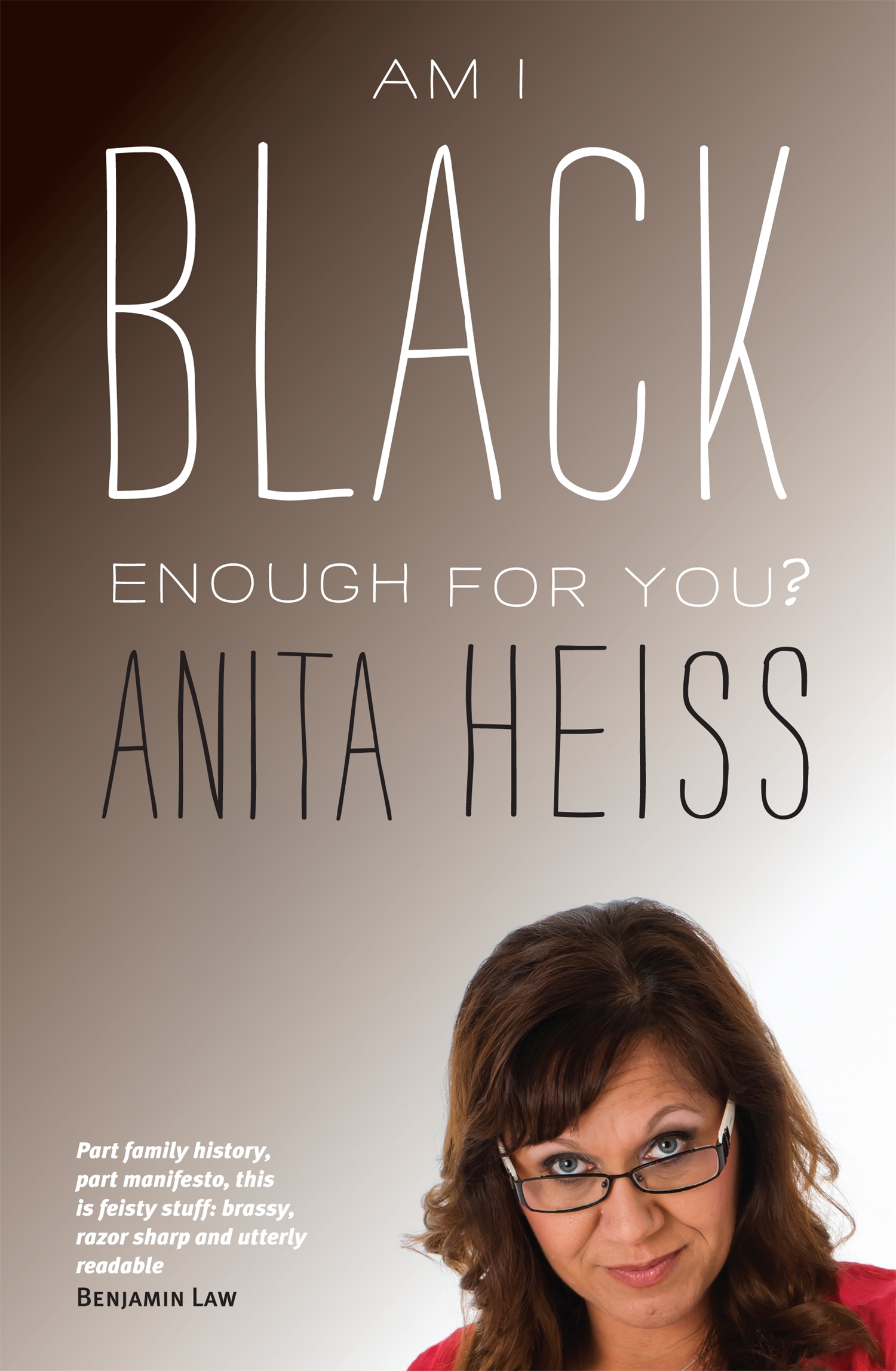
Anita Heiss, Am I black enough for you?

Courtesy: Random House

Anita Heiss‘s Am I black enough for you? is a challenge to categorise, so I’ll start with writer Benjamin Law‘s description on the cover of my edition. He calls it “part family history, part manifesto” to which I’d add “part memoir” because “family history” does not really cover the self-description aspect of the book.

For those of you who don’t know Anita Heiss, she is a Wiradjuri woman and an activist for indigenous Australians. She has a PhD in Communication and Media, focusing on Aboriginal literature and publishing, and is a writer. (I reviewed her chicklit novel, Paris dreaming, earlier this year, and reported last year on her address to the inaugural Canberra Readers’ Festival.) She co-edited the Macquarie PEN anthology of Aboriginal literature and was the guiding force behind BlackWords (the subject of this week’s Monday Musings). And this is just the start … she has been, or is currently, on many boards and committees, particularly to do with indigenous people and communications. She is an Ambassador for the Indigenous Literacy Foundation. She is, in effect, a tall poppy … which brings me to Am I black enough for you?

You see, in 2009, one of Australia’s influential shock jocks, Andrew Bolt, wrote a post titled “It’s so hip to be black” on his blog, asking readers to accept his proposition that there is “a whole new fashion in academia, the arts and professional activism to identify as Aboriginal”. He named many people, including Anita Heiss, calling them “white” or “political” Aborigines. His facts were questionable and his language emotive – such as “madness”, “trivial inflections of race”, “comic”. His argument was that these “white” Aborigines were obtaining unfair benefits from their decision to “be black”. The result was a court case brought by Anita Heiss and eight others against Bolt and his employer, The Herald and Weekly Times, for breaching the Racial Discrimination Act. Heiss and her co-defendants won the case. They did not seek damages. It was ground-breaking stuff that brought out some good discussion about the nexus between racism and free speech, about rights and responsibilities, but it also generated a lot of vituperative commentary. You can research all this pretty easily on the ‘net.

This is the background to Am I black enough for you? which, you might now have gathered, could also be described as an “identity memoir”. On the publisher’s website, Heiss writes that “I wanted to demonstrate that we as Aboriginal people have our own forms of self-identification and self-representation”. She wanted to “challenge the stereotypes” and present “alternative realities of being Aboriginal today”. This she does very well.

Heiss opens the book with her family background, Wiradjuri mother and immigrant Austrian father. She describes herself:

I’m an urban beachside Blackfella, a concrete Koori with Westfield Dreaming, and I apologise to no-one.

This is my story: it is a story about not being from the desert, not speaking my traditional language and not wearing ochre …

In the first four chapters of the book, she tells of her background – her grandmother and mother and their experiences as indigenous women, her father and his values, and her school days. Having laid that foundation, she presents in the fifth chapter, the current working definition of an Aboriginal or Torres Strait Islander person used by the Federal Government:

An Aboriginal or Torres Strait Islander is a person of Aboriginal or Torres Strait Islander descent who identifies as an Aboriginal or Torres Strait Islander and is accepted as such by the community in which he “or she” lives.

That seems pretty tight to me, though no definition is perfect. It’s better than using “a caste system defined by blood quantum (half-caste … quadroon)”.

There are a lot of “ah-so” moments for me in the book – some confirming things I’d already believed and some raising my consciousness about how easy it is to say the wrong thing without being aware of it. Heiss chronicles many instances where (mostly, I think) well-meaning whitefellas seem to get it wrong, such as the non-indigenous academics who proclaim themselves experts in “everything Aboriginal” or the critic who argued that Aboriginal literature “must” be in traditional language otherwise it’s Australian literature. It’s good to have these ideas aired publicly. It helps us test our own conceptions.

Am I black enough for you? has, like most of Heiss’s writing, a strong political and educational purpose. She is on a mission to encourage both indigenous and non-indigenous Australians to think about indigenous identity and, further, about how we relate to each other. She therefore writes in a bright, breezy, accessible style. She’s acutely aware of the power of words and language to define and to obfuscate (though she wouldn’t use such an obfuscatory word!), and frequently discusses language in the book. She makes a particular point about this in the chapter on her academic life, “Epista-what?”, when she says that using academic language, particularly to discuss indigenous issues, served “largely to alienate the very people it was talking about.”

There is much more in this book, and I hope many Australians read it. It’s well-structured, more or less chronologically but in a way that aligns with various themes – academia, the role of literature, her writing, gender – all of which link back to affirming indigenous people’s identity. She comes across as a generous woman – in her relationships with indigenous and non-indigenous people alike. She believes that optimism, rather than negativity and anger, is more likely to get results. It is possibly this optimism which underlies my small frustration with the book: several times she hints at dark times and stresses but, being the optimist, she focuses more on her strategies for overcoming them than on how they have informed her being. I’d like to understand more of that. However, Am I black enough for you? is not a misery memoir, and that’s probably a good thing!

Australian Women Writers ChallengeRead for the Australian Women Writers’ Challenge 2013ANZLitLovers Indigenous Writers Week, and Global Women of Color. Lisa (ANZLitLovers) and Marilyn (Me, You and Books) both enjoyed the book.

Anita Heiss
Am I black enough for you?
Sydney: Bantam, 2012
346pp.
ISBN: 9781742751924

Melissa Lucashenko, How green is my valley (Review)

Almost a year ago I reviewed a short story, “The silent majority”, by Melissa Lucashenko. It was published in the Griffith Review of November 2009. I enjoyed the story and so, in honour of NAIDOC Week and ANZLitLovers Indigenous Literature Week, I thought I’d review another of her Griffith Review contributions. This one, “How green is my valley”, is described as a memoir, and was published in Winter 2006.

I love how Lucashenko, with her dual Aboriginal and European heritage, traverses both in her writing. She commences “The silent majority” with the famous opening words of Pride and prejudice – “”It is a truth universally acknowledged”. The title of this piece immediately brings to mind Richard Llewellyn‘s classic novel How green was my valley, and clues us into her themes: beauty under threat, complicated relationships with land, and the precarious balances involved in maintaining it.

Lucashenko starts her memoir – though, really, I’d call it a personal essay – with a Mark Twain quote, which has a prescience now that he could not have guessed:

Everybody talks about the weather/but nobody does anything about it.

She then describes the experience of torrential rain in Bundjalung country, the coastal regions of north-east New South Wales/southeast Queensland. She’s moved, she says, to “one of Australia’s wettest shires”. The first half of the essay describes how residents manage – or don’t – the rain. She talks of students being let off school, of the weather not distinguishing between rich and poor, and of how community is fostered as people with 4WDs deliver food to the stranded who don’t. “The information we receive from land”, she says, “is tightly nuanced”. Farmers watch closely and know how the days will pan out once the rain sets in:

We who live on Bundjalung land know that eventually the rain will stop, the mould will retreat and the mud will dry. Whatever climate change is going to mean for our kids, in the short term life for us will return to normal.

Then, halfway through the essay, comes the sting in the tail: she reminds us that the inhabitants of Tuvalu will lose their home in the next few decades as their island is submerged, and the semi-traditional hunting lifestyle of the Inuit of the Arctic Circle “will be shattered by global warming even sooner”. She wonders whether indigenous people like the Inuit will be able to translate “the clan, the traditions of egalitarianism, stoicism and intensely valued community, to life in suburbs and towns.”

Lucashenko’s thesis is that it can be done, that it is possible to be “bicultural”, to span the chasm “between industrial and indigenous views of the ‘good life’ and what constitutes a proper society”. She argues that the egalitarian ethic espoused by Henry Lawson and Banjo Paterson

the traditions of mateship that faithfully mimic the brotherhood of initiated Aboriginal men and the myriad skills of surviving from and maintaining the land – were learned by some colonial whites from Aboriginal people.

Hmm … I haven’t heard that before. I suspect Australia’s mateship tradition has rather multi-pronged origins but this could certainly be part of it.

Lucashenko’s point though is to draw a parallel between white Australians’ love of land and indigenous people’s. She says that any Australian who has holidayed at the same beach every summer, or “diligently looked after” their own little patch, has “walked in Aboriginal footsteps” whether they know it or not. Hmmm … again I think this is a little bit of a long bow, in the sense that there are people all over the world who love their bit of land. But it doesn’t spoil her argument that it would have been good had the influence of Aboriginal knowledge and practice been greater, because then

More Australians might have learned not just to love the place (as some indisputably do) but to listen to the land more seriously. Had more Aboriginal philosophers been valued rather than shot or packed off to missions, all Australians might have learned the careful and intense attention to detail that many of us in the valley are still forced to practise as a matter of course.

With climate change breathing down our necks, will we all “be rooned”, she asks (alluding to one of my favourite old ballads “Said Hanrahan“). Will our “valley” be destroyed by our inability to tame our capitalistic consumerist urges, or will we learn in time how to be true custodians of our land?

Melissa Lucashenko
“How green is my valley”
Published in the Griffith Review, Edition 12, Winter 2006
Available: Online at the Griffith Review