Do you often wonder how many of the writers we love now will still be read a few decades on? How good are we at identifying those who will continue to be read? So-so, I think you’ll agree if you’ve noticed the many unfamiliar, but well-regarded-at-the time, names amongst the authors mentioned in my various historical posts. It is this that has inspired me to start a new, occasional, Monday Musings sub-series on forgotten Australian writers.
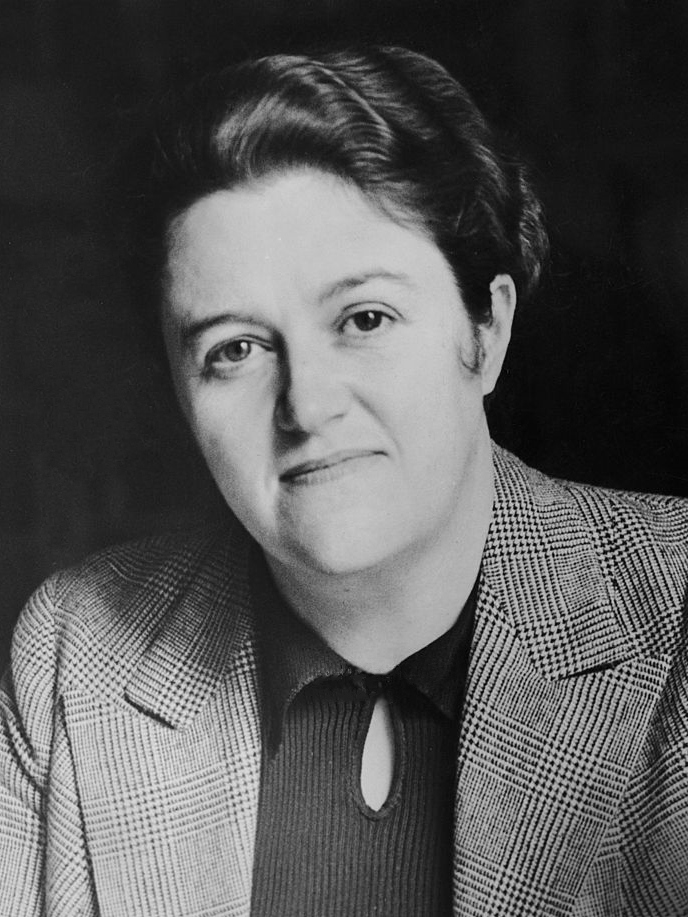
First up, I’ve chosen an interesting one because of her complex relationship with Australia. She’s Helen Simpson, or, more fully, Helen de Guerry Simpson, who was born in Sydney, Australia, in 1897 and died in Worcestershire, England, in 1940.
I’ll start with a brief bio. Simpson was born in Australia and lived here until 1914, when, at 16 years old, she went to England to join her mother who had separated from Simpson’s father several years previously. After that, Simpson spent very little time in Australia, as far as I can tell from the Australian Dictionary of Biography. She returned in 1921 for her brother’s wedding, but was back in England by February 1924. She was in Australia again briefly in 1927, but was back in England that year, as she married there in 1927. Her husband was Australian-born Denis Browne, interesting to us because his uncle was Thomas Alexander Browne (aka Rolf Boldrewood). However, he was significant in his own right as the Father of Pediatric Surgery. Simpson came back to Australia in 1937, to give a series of lectures for the ABC, but was gone again by 1938. Sadly, she died of cancer in 1940.
So, she was Australian, even though Arnold Haskell wrote in 1944 that Katharine Susannah Prichard, Helen Simpson and Henry Handel Richardson “are so well known in England that they are accepted as English writers”! Colin Roderick included her in his 1947 book Twenty Australian novelists, and Zora Cross includes Simpson in her list of writers who started here but then moved abroad.
Starting here is a bit of a moot point. The ADB says that she published several short plays and founded the Oxford Women’s Dramatic Society before her 1921 Australian visit. However, in 1921, Angus and Robertson did publish her Philosophies in little, “a collection of her own verse with her translations from French, Italian and Spanish”. In 1922, ADB also says, she entered a play about Benvenuto Cellini, A man of his time, in the Daily Telegraph literary competition. It was staged the next year by Australian theatrical producer Gregan McMahon. ADB says he only produced four Australian plays between 1920 and 1927, so that’s surely a feather in her cap.
Novels
Simpson wrote 13 novels between 1925 (Acquittal) and 1940 (Maid no more). A few were collaborative works, including a couple of detective novels written with Clémence Dane. She also wrote verse, plays, short stories and non-fiction works.

The Oxford companion to Australian literature (2nd ed.) devotes almost a full column to her. It says that two of her novels had Australian content – Boomerang (1932) and Under Capricorn (1937) – and that her “trio of fantastic novellas”, The woman on the beast (1933), includes one set in Australia in 1999! (Links are to Project Gutenberg Australia.) Two of her novels, one being Under Capricorn, were filmed by Alfred Hitchcock.
So, how good was her writing? Let’s start with Miles Franklin who mentions her in her diaries. She writes in August 1936:
Helen Simpson: one of the giants. Perhaps she would have wiped Brent [of Bin Bin, or Miles herself] out of his field had she not relinquished it. The lively vitality and inherent understanding of the Australian scene in Boomerang show what we lost, what England has gained. Again, in the third division of The woman on the beast in a sketchy, impressionistic effort, she indicates what she could have done to take Australia by the back of the collar and shake her to a sense of her asininity, her pathetic enslavement to an old sectarian controversy–a worse importation than the foxes and other noxious weeds. But H.S. left her country for her own great literary success.
Australian writer Coralie Clarke Rees, in an extensive article in The Sydney Morning Herald (1 June 1937), agrees, calling this “third division”
an imaginative “tour de force,” showing Australia, as the last stronghold of the old order of religion and politics, being invaded by a woman evangelist of the new totalitarian order, whose character seems an ingenious compound of that of Aimee Semple MacPherson and Mary Baker Eddy.
However, Miles Franklin later (around March 1940) modified her view of Boomerang, noting its “melodrama and disjointedness”, and Katharine Susannah Prichard, writing to Miles Franklin on 1 July 1932, says that
HM Green [see my recent Monday Musings post], of Sydney, writing to me the other day, said he liked it [Back to Bool-Bool] much better than Boomerang …
Now, here I’m going to share the opening of Boomerang, which won the 1932 James Tait Black Memorial Prize:
Life can afford extravagance, books cannot; for this reason nobody will dream of believing in my two grandfathers. They are too true to be good–good fiction, at any rate; if I try to give some kind of picture of them, it is because they frame between them a vision of a golden age, which could only have existed in brand-new countries, among brand-new circumstances and laws. It was not a golden age for everybody, wives or servants for instance, but for these two it was; they were, to use a word which is almost dead, characters.
I am sorry to think what would happen to these two old gentlemen if they had the misfortune to live now; it would be something legal, that is certain, falling heavily to crush their magnificent egotism and eccentricity. Their wives, who in the ‘seventies put up with them with the uncomprehending patience accorded by Insurance Companies to Acts of God, would nowadays divorce them. Servants would bring, and win, actions against them for assault. As for their families, these would scatter immediately after the first row or two, and go forth to earn their livings with all the horrid freedom that the post-war period accords …
I love this cheeky tone, and her reference here (and in the Foreword) to the fact that fiction cannot be as “extravagant” as life! The Oxford companion says that Boomerang and Under Capricorn “have involved, highly coloured plots, lightly sketched but credible characters, and a lively, humorous and sophisticated narrative style”. This, in fact, summarises what I found in Trove.
So, for example, The Sydney Morning Herald reviewing (16 February 1932) Boomerang describes its rather wild episodic plot and thinks its characters are not particularly well-drawn, but argues that:
It can safely be said that no Australian novelist for many years has provided such an exciting tale, or handled separate scenes and episodes with such liveliness and wit.
I particularly enjoyed respected academic of the time T. Inglis Moore who wrote that:
it is in the romances, Boomerang and The woman on the beast in particular, that Helen Simpson has found her metier. In them she stands out amongst Australian writers as a witty romantic, a teller of vivid tales spiced with satire, tinged with wit.
His article (linked on his name above) in the Sydney Morning Herald (7 August 1937) offers a thoughtful, even-handed analysis of her, and is well worth reading. He recognises that she can be “romantically theatrical, artificial, escapist”, but, assessing her place in Australian literature, he says:
Amongst the contemporary novel-writers one stands supreme. No other Australian comes within cooee of Henry Handel Richardson. Then comes, well, Katharine Prichard, shall we say, along with Brent of Bin Bin? And here, somewhere, must come Helen Simpson.
He concludes with:
Taking her all in all, she is perhaps the most “intelligent” of contemporary Australian novelists in the sophisticated sense, and, along with Christina Stead, the wittiest.
This is strong praise. So what happened? Where did she go? Was her style not strong enough overall to overcome her plots and characters? Or, is it just a matter of fashion? Whatever, I have greatly enjoyed reading about this woman, and may very well share a bit more about her in the future because she was quite a character.
Printed sources
Brunton, Paul (ed.) The diaries of Miles Franklin (2004)
Ferrier, Carole (ed.) As good as a yarn with you (1992)
The Oxford companion to Australian literature, 2nd ed. (1994)

 Whispering Gums
