Bill curates: Best Young Australian Novelists

Bill Curates is an occasional series where I delve into Sue’s vast archive, stretching back to May 2009, and choose a post for us to revisit. Today, what I’d like to know is where do all the Best Young Novelists go? Emily Maguire, who’s featured in this post from 2013, wrote one about Gundagai a few years back that was well received (Ok, I criticised some of her truckie stuff), and Romy Ash – I know the name, but where are the others? 

______________________________

My original post titled: Monday musings on Australian literature: Best Young Australian Novelists

Back in May, the Sydney Morning Herald (SMH) announced its Best Young Australian Novelists awards. They have been doing this for 17 years, though I only became aware of them a few years ago. They are usually announced at or to coincide with the Sydney Writers Festival.

The judges this year were Marc McEvoy, SMH Literary Editor Susan Wyndham, and Melbourne author Kristin Krauth whom I’ve only become aware of through the Australian Women Writers Challenge. To be eligible, writers have to be “35 years or younger when their book is published”. So, the award is called “Best Young Australian Novelists” but it is apparently granted on the basis of a specific book.

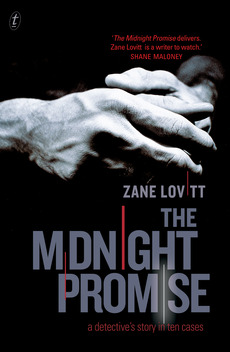
Zane Lovitt, Midnight Promise

This year’s winners are:

  • Romy Ash whose Floundering was short-listed for this year’s Stella Prize, Dobbie Literary Award, and Miles Franklin Literary Award, among others. An impressive achievement for her debut novel. She has also written short stories, and I’ve read one, “Damming”, which was published in Griffith Review Edition 39. I have not, though, read Floundering. It apparently explores “the menace of a hostile landscape”. I’m fascinated by the fact that the outback continues to be a significant presence or theme in Australian literature. Ash argues that while writing about the outback may seem a cliche, the point is that much of Australia is “not benign”. That surely is the point, and is what makes it so rich with dramatic possibility.
  • Paul D Carter for Eleven Seasons which won the 2012 Vogel Literary Award and was shortlisted for the UTS Glenda Adams Award for New Writing in the 2013 New South Wales Premier’s Literary Awards. The novel is apparently about “boys obsessed with football and the men who live by its rules”. Sounds like one that would be interesting ro read in the context of Anna Krien’s Night Games which I reviewed last month. Interestingly Carter’s day-job is teaching English in a Melbourne girls’ school.
  • Zane Lovitt whose Midnight promise I have – woo hoo – read and reviewed here. It’s more a collection of interconnected short stories, but there is a loose narrative thread running through it following the career of its  private detective protagonist.
  • Emily Maguire for Fishing for tigers. Maguire, unlike most of the winners, has quite a few books, including three other novels, to her name, and has won the Best Young Australian Novelist award before. She teaches creative writing, and it sounds like she’s well qualified to do so, doesn’t it? Fishing with tigers was inspired by Grahame Greene’s The quiet American, and is about “divorcee Mischa Reeve, 35, whose affair with Vietnamese-Australian Cal, 18, upsets her friends, including Cal’s father, Matthew”.
  • Ruby J. Murray whose Running dogs was, like Carter’s Eleven seasons, also shortlisted for the UTS Glenda Adams Award for New Writing in the 2013 New South Wales Premier’s Literary Awards. I hadn’t heard of Murray, I must admit, but this book sounds interesting. It’s set in Indonesia, which is a significant country for Australia, and like Maguire’s Vietnam-located Fishing for tigers, it is about an expat Australian aid worker. Murray, who worked in Indonesia in 2009, was horrified at how little Australians knew (know!) about Indonesia despite its importance to us economically and politically, not to mention being a major holiday destination for Australians.
  • Majok Tulba for Beneath the darkening sky. It, like Maguire and Murray’s books, is set outside Australia, in this case, in Sudan. And, like Romy Ash’s Floundering, it was shortlisted for the Commonwealth Book Prize. It’s narrated by an 11-year-old village boy and is “about child soldiers in Africa”. It’s fiction. Tulba says he used some experiences he and his brother had, but he was not himself a child soldier. Apparently Sudanese rebels tried to recruit him but he “failed the test – he was shorter than an AK-47 assault rifle“! Lucky him, eh?

They sound like an interesting bunch of authors and books, don’t they? And, I’m rather intrigued that half of them are not set in Australia, which reflects our increasingly multicultural society. It’s good to see our literature recognising this.In 2012, only three awards were made – Melanie Joosten for Berlin Syndrome, Jennifer Mills for Gone (which is waiting patiently in my shelves to be read), and Rohan Wilson for The Roving Party. Past winners have included Nam Le, Christos Tsiolkas, Chloe Hooper and Markus Zusak.

___________________________

Bill is right about Emily Maguire. In fact I have read and reviewed the book he mentions, An isolated incident (my review), as has Bill (his review) as you might have guessed from his comment. Moreover, she has a new book coming out this year, Love objects. I also wrote a second post about this award in 2020. But now, over to you …

Have you read any of these authors? If so, we’d love to hear what you’ve read and think.

Stella Prize 2021 Winner announced

Unfortunately – though not really – I was not able to “attend” the online announcement as I did last year, as I’m spending a few days in the Snowy Mountains with Mr Gums and two friends.

Before I announce the winner, which most of you will have heard by now anyhow, here is a quick recap:

  • the longlist was announced on 4 March; and
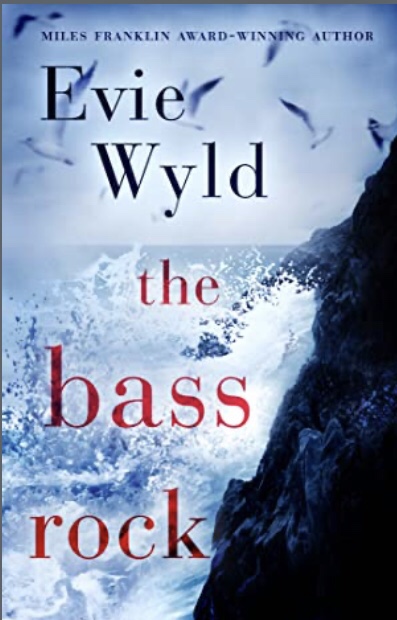
  • the shortlist was announced on 25 March: Rebecca Giggs’ Fathoms: The world in the whale (non-fiction); SL Lim’s Revenge (fiction); Laura Jean McKay’s The animals in that country (fiction); Louise Milligan’s Witness (non-fiction); Mirandi Riwoe’s Stone sky gold mountain (fiction); Evie Wyld’s The bass rock (fiction)

And the winner, from 160 entries, is British-Australian author Evie Wyld’s The bass rock. Jaclyn Booth, Stella Prize’s Executive Director, called it “a gripping novel that is unlike anything I’ve read before”, and judging panel chair, Zoya Patel, says that it “forces the reader to think and engage with the unique narrative structure, but in a way that feels effortless, so engaged are you by the story.” It deals with the legacy, and trauma, of male violence, so is very much a “zeitgeist book”, which is to say, it’s relevant to our times. I must read it, as I have the previous fiction winners …

It is the fifth work of fiction to win in nine years. The previous four were Heather Rose’s The museum of modern love (2017, my review), Charlotte Wood’s The natural way of things (2016, my review), Emily Bitto’s The strays (2015, my review), and Carrie Tiffany’s Mateship with birds (2013, my review).

You can read more about the book on the Stella website.

The winner receives $50,000, and each long and shortlisted author also receive monetary prizes.

If you have any comments on the winner, please share them with us.

Monday musings on Australian literature: Forgotten writers 1, Helen Simpson

Do you often wonder how many of the writers we love now will still be read a few decades on? How good are we at identifying those who will continue to be read? So-so, I think you’ll agree if you’ve noticed the many unfamiliar, but well-regarded-at-the time, names amongst the authors mentioned in my various historical posts. It is this that has inspired me to start a new, occasional, Monday Musings sub-series on forgotten Australian writers.

Helen de Guerry Simpson, ca 1935, photographer unknown. (Public Domain, via Wikipedia)

First up, I’ve chosen an interesting one because of her complex relationship with Australia. She’s Helen Simpson, or, more fully, Helen de Guerry Simpson, who was born in Sydney, Australia, in 1897 and died in Worcestershire, England, in 1940.

I’ll start with a brief bio. Simpson was born in Australia and lived here until 1914, when, at 16 years old, she went to England to join her mother who had separated from Simpson’s father several years previously. After that, Simpson spent very little time in Australia, as far as I can tell from the Australian Dictionary of Biography. She returned in 1921 for her brother’s wedding, but was back in England by February 1924. She was in Australia again briefly in 1927, but was back in England that year, as she married there in 1927. Her husband was Australian-born Denis Browne, interesting to us because his uncle was Thomas Alexander Browne (aka Rolf Boldrewood). However, he was significant in his own right as the Father of Pediatric Surgery. Simpson came back to Australia in 1937, to give a series of lectures for the ABC, but was gone again by 1938. Sadly, she died of cancer in 1940.

So, she was Australian, even though Arnold Haskell wrote in 1944 that Katharine Susannah Prichard, Helen Simpson and Henry Handel Richardson “are so well known in England that they are accepted as English writers”! Colin Roderick included her in his 1947 book Twenty Australian novelists, and Zora Cross includes Simpson in her list of writers who started here but then moved abroad.

Starting here is a bit of a moot point. The ADB says that she published several short plays and founded the Oxford Women’s Dramatic Society before her 1921 Australian visit. However, in 1921, Angus and Robertson did publish her Philosophies in little, “a collection of her own verse with her translations from French, Italian and Spanish”. In 1922, ADB also says, she entered a play about Benvenuto Cellini, A man of his time, in the Daily Telegraph literary competition. It was staged the next year by Australian theatrical producer Gregan McMahon. ADB says he only produced four Australian plays between 1920 and 1927, so that’s surely a feather in her cap.

Novels

Simpson wrote 13 novels between 1925 (Acquittal) and 1940 (Maid no more). A few were collaborative works, including a couple of detective novels written with Clémence Dane. She also wrote verse, plays, short stories and non-fiction works.

The Oxford companion to Australian literature (2nd ed.) devotes almost a full column to her. It says that two of her novels had Australian content – Boomerang (1932) and Under Capricorn (1937) – and that her “trio of fantastic novellas”, The woman on the beast (1933), includes one set in Australia in 1999! (Links are to Project Gutenberg Australia.) Two of her novels, one being Under Capricorn, were filmed by Alfred Hitchcock.

So, how good was her writing? Let’s start with Miles Franklin who mentions her in her diaries. She writes in August 1936:

Helen Simpson: one of the giants. Perhaps she would have wiped Brent [of Bin Bin, or Miles herself] out of his field had she not relinquished it. The lively vitality and inherent understanding of the Australian scene in Boomerang show what we lost, what England has gained. Again, in the third division of The woman on the beast in a sketchy, impressionistic effort, she indicates what she could have done to take Australia by the back of the collar and shake her to a sense of her asininity, her pathetic enslavement to an old sectarian controversy–a worse importation than the foxes and other noxious weeds. But H.S. left her country for her own great literary success.

Australian writer Coralie Clarke Rees, in an extensive article in The Sydney Morning Herald (1 June 1937), agrees, calling this “third division”

an imaginative “tour de force,” showing Australia, as the last stronghold of the old order of religion and politics, being invaded by a woman evangelist of the new totalitarian order, whose character seems an ingenious compound of that of Aimee Semple MacPherson and Mary Baker Eddy.

However, Miles Franklin later (around March 1940) modified her view of Boomerang, noting its “melodrama and disjointedness”, and Katharine Susannah Prichard, writing to Miles Franklin on 1 July 1932, says that

HM Green [see my recent Monday Musings post], of Sydney, writing to me the other day, said he liked it [Back to Bool-Bool] much better than Boomerang

Now, here I’m going to share the opening of Boomerang, which won the 1932 James Tait Black Memorial Prize:

Life can afford extravagance, books cannot; for this reason nobody will dream of believing in my two grandfathers. They are too true to be good–good fiction, at any rate; if I try to give some kind of picture of them, it is because they frame between them a vision of a golden age, which could only have existed in brand-new countries, among brand-new circumstances and laws. It was not a golden age for everybody, wives or servants for instance, but for these two it was; they were, to use a word which is almost dead, characters.

I am sorry to think what would happen to these two old gentlemen if they had the misfortune to live now; it would be something legal, that is certain, falling heavily to crush their magnificent egotism and eccentricity. Their wives, who in the ‘seventies put up with them with the uncomprehending patience accorded by Insurance Companies to Acts of God, would nowadays divorce them. Servants would bring, and win, actions against them for assault. As for their families, these would scatter immediately after the first row or two, and go forth to earn their livings with all the horrid freedom that the post-war period accords …

I love this cheeky tone, and her reference here (and in the Foreword) to the fact that fiction cannot be as “extravagant” as life! The Oxford companion says that Boomerang and Under Capricorn “have involved, highly coloured plots, lightly sketched but credible characters, and a lively, humorous and sophisticated narrative style”. This, in fact, summarises what I found in Trove.

So, for example, The Sydney Morning Herald reviewing (16 February 1932) Boomerang describes its rather wild episodic plot and thinks its characters are not particularly well-drawn, but argues that:

It can safely be said that no Australian novelist for many years has provided such an exciting tale, or handled separate scenes and episodes with such liveliness and wit.

I particularly enjoyed respected academic of the time T. Inglis Moore who wrote that:

it is in the romances, Boomerang and The woman on the beast in particular, that Helen Simpson has found her metier. In them she stands out amongst Australian writers as a witty romantic, a teller of vivid tales spiced with satire, tinged with wit.

His article (linked on his name above) in the Sydney Morning Herald (7 August 1937) offers a thoughtful, even-handed analysis of her, and is well worth reading. He recognises that she can be “romantically theatrical, artificial, escapist”, but, assessing her place in Australian literature, he says:

Amongst the contemporary novel-writers one stands supreme. No other Australian comes within cooee of Henry Handel Richardson. Then comes, well, Katharine Prichard, shall we say, along with Brent of Bin Bin? And here, somewhere, must come Helen Simpson.

He concludes with:

Taking her all in all, she is perhaps the most “intelligent” of contemporary Australian novelists in the sophisticated sense, and, along with Christina Stead, the wittiest.

This is strong praise. So what happened? Where did she go? Was her style not strong enough overall to overcome her plots and characters? Or, is it just a matter of fashion? Whatever, I have greatly enjoyed reading about this woman, and may very well share a bit more about her in the future because she was quite a character.

Printed sources

Brunton, Paul (ed.) The diaries of Miles Franklin (2004)

Ferrier, Carole (ed.) As good as a yarn with you (1992)

The Oxford companion to Australian literature, 2nd ed. (1994)

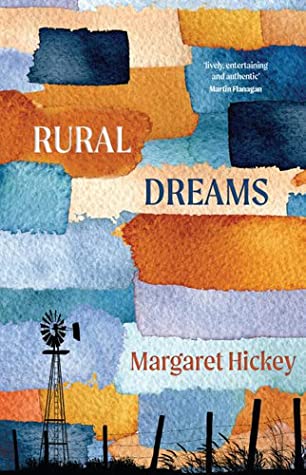
Margaret Hickey, Rural dreams (#BookReview)

Rural dreams is another collection of short stories from small independent publisher MidnightSun, and it’s another good one. I hadn’t heard of Margaret Hickey before, but her website says that she’s won a number of awards and is a performed playwright. Relevant to this book is that Hickey grew up in small country towns in Victoria and currently lives in that state’s northeast. In other words, in this book about rural lives, she knows whereof she speaks.

Like most short story collections, Rural dreams comprises stories told in different voices and points-of-view. The narrators, male and female, range from teens to the middle-aged, and the stories are told in first person and third person voices, with one told second person. The tone varies from funny to sad, from reflective to scary, and the subject matter represents a wide gamut of rural lives, from those who have left to those who want to leave, from those who are farmers to those who are sea-changers. And, of course, it encompasses a range of rural issues, to do with farming, dying land and dying towns, for example, as well as those more universal human issues involving love and loss, joy and fear.

I greatly enjoyed most of the stories – there’s usually one or two in a collection that doesn’t quite connect. The opening story, “Saturday morning”, fired the perfect opening salvo. Told third person, it’s about a young engineering student named Simon who now lives in a share house in Melbourne but who gets up early every Saturday morning, through winter, to drive about three hours home to play football. Even he wonders why he does it, given the way it disrupts his weekend, but, as he hits “the shire boundaries”

… there it comes, that big ball of a sun, that big ball of orange rising up over the horizon. It jolts him every time. Rays light up the stone fences, hit the trees and illuminates the paddocks. The old gums shimmer green and grey in the early morning light and world appears golden quiet. It’s like it is every Saturday, a new era.

They might have a chance today.

He’s home.

“This place, it gets to you”, says the old coach, in “Coach”. And place, of course, underpins most of these stories, whether it’s the Wimmera or Mallee or Ninety Mile Beach in Gippsland.

Counterpointing our narrator in “Saturday morning” is the young Year 12 student in the next story, “Glory days”. Living in the dry Wimmera, he is sweating his ATAR score, dreaming of escape to the city where there’ll be “no more discussions about rain and cows, it will be all about novels and films and experience”.

And so the stories continue, wending across the state, and further afield. “A bit of scrapbooking” promotes the joys of living in the oft-maligned Surfers Paradise in southeast Queensland. Reminiscent a little of Kath and Kim, this story contrasts our narrator’s life in Surfers with her son’s and his partner’s in Melbourne. She just can’t understand his move there for, he told her, “a bit of culture”:

Well, I’ve never understood that. We’ve got culture all around us up here.

Take Jupiter’s Casino–it’s full of all sorts! You’ve got your Sheiks, your Maoris, your South Australians. And you can buy your sushi, your ravioli and your chicken schnitzel in every dining establishment. Every kweezeen you like.

A first person voice is the perfect choice for this story. It made me laugh. Its humour combined with a warm touch at the end makes it just the right antidote – can an antidote come first? – to the darker story, “Desolate”, which follows. This story, and the longest one in the collection “The Precipice”, are the darkest stories here. In “Desolate” our sea-changing narrator from St Kilda, whose “barely disguised air of yuppiedom did little to hide the threat of violence that lurked beneath”, finds that beautiful deserted beaches harbour their own issues. The opening to this story is deliberate:

It’s one of those days that almost kills you; it’s that beautiful.

In “The precipice” and “The Renovation” the titles are pointedly metaphorical, with the former being about domestic violence which is clearly not confined to cities. This story builds up slowly from a therapeutic bushwalk to one of horror for the three women involved. The end, though, is perfect. Hickey, who clearly loves rural living, is realistic rather than rosy about it. She references violence, drought, and issues like the potentially damaging health impact of chemicals, without being didactic or polemical. She know the characters too, like the middle-aged man still living at home who just “likes birds” of the feathered variety (“Twitcher”) or “town weirdo” Joe who cares about the land regardless of the locals (“Overcoat Joe”) or the single-mum who stands up for her scholarship-winning son at his hoity-toity private school (“Mind your language”).

As many contemporary Australian writers are increasingly doing, Hickey also incorporates references to Indigenous Australian lives and culture. She doesn’t attempt to speak for them, but these references suggest an awareness that’s important. Anna, in “The precipice”, remembers a place called “the Leap for the stories of Aboriginal families herded there by whites in the early days of settlement”; Ruby in “The renovation” is told about the middens in the community she’s moved to; Peter remembers the scar trees in “Binky”.

Finally, while the stories are stand-alone, a few are subtly linked. Kate Brunt, a netball player from the town mentioned by Simon (“Saturday morning”), is one of the young travellers in “The wanderer”. The coach (“Coach”) briefly mentions Simon. These links have no overall narrative significance, but they have a nice grounding effect.

Rural dreams is a love letter to rural Australia, one that recognises the tensions and challenges, as well as the warmth and community. Hickey gently mocks Australia’s ongoing romance with the bush, giving us instead an image that is real and human. A truly engaging read.

Challenge logo

Margaret Hickey
Rural dreams
Adelaide: MidnightSun, 2020
232pp.
ISBN: 9781925227680

(Review copy courtesy MidnightSun)

Bernadine Evaristo, Girl, woman, other (#BookReview)

If ever there was a “zeitgeist” book, Bernadine Evaristo’s 2019 Booker Prize winning novel, Girl, woman, other is it. It might be an English-set novel about black British women, “the embodiment of Otherness”, but its concerns, ranging from ingrained inequality, racism and sexism to newer issues such as globalisation, are contemporary – and relevant far beyond its setting.

Take, for example, sexual violence. One young woman, after being raped, is not sure exactly what happened:

    wondering if he’d done anything wrong or was it her fault
    she should have stayed and talked to him about it
    he might have said he hadn’t heard her saying no

(Chapter 2: LaTisha)

This could have been set in Australia, given discussions happening here right now. It is truly troubling how many young women apparently feel uncertain about what they’ve experienced, and turn it back on themselves. But now, having leapt in to make my “zeitgeist” point, I’ll start again, properly!

Girl, woman, other is an astonishing book, as most of my reading group agreed. It’s fresh and exuberant, but oh so biting too. As much poetry as prose, it has minimal punctuation and yet it just flows. It’s a risky book – what great art isn’t? – because, in addition to its idiosyncratic style, it comprises multiple points-of-view that move back-and-forth in time. There are four main chapters, each divided into three parts with each part in the voice of a different character. This makes 12 voices in all! The voices within each chapter are closely related in some way – mothers, daughters, friends – but the links between the four chapters are more subtle. This demands much of the reader.

Fortunately, the voices are captivating. Spanning over a century, they range from the ultra-confident 19-year-old Yazz, daughter of a lesbian mother, to 93-year-old Hattie, a strong-minded farmer and great-grandmother. All are women, and all have some genetic links with African or Caribbean cultures, some from a few generations back, others being themselves migrants. Through them, Evaristo interrogates a diversity of experiences and responses to colour, in particular, in contemporary England. Hattie’s mother, for example, had an Abyssinian father, and she herself had married an African-American GI. However, with the colour fading amongst her descendants, the family is less than happy when it is reintroduced by Julie who “saw not the darkness of his skin but the lightness of his spirit”. Hattie reflects

    none of them identifies as black and she suspects they pass as white, which would sadden Slim if he was still around 
    she doesn’t mind, whatever works for them and if they can get away with it, good luck to them, why wear the burden of colour to hold you back?
    the only thing she objects to is when they objected to Chimango when he arrived on the scene, a fellow nurse at the hospital where Julie worked, from Malawi
    Hattie was sickened by their behaviour, they should’ve been more enlightened 
    but the family was becoming whiter with every generation 
    and they didn’t want any backsliding

(Chapter 4: Hattie)

You can see how well the language flows, and how accessible it is. It’s experimental but unforced. You can also see the author’s approach to her subject matter, which is to show, through her characters, different behaviours, values and attitudes. With 12 characters telling of their interactions with even more people, the breadth of humanity Evaristo encompasses is breathtaking – and it is all done without judgement. Some characters might, and do, judge each other, but Evaristo doesn’t. She lets them speak for themselves, which requires us to read attentively.

So, when Dominique’s female lover increasingly restricts her life, we see abusive control long before she does. And, when 93-year-old Hattie’s mother, Grace, experiences postpartum depression in the early 20th century, it is not named. Who talked about that then? But we recognise it immediately.

Issues come and go in this novel, whether they are up-to-the-minute topics, such as Brexit or transgender rights, or ongoing issues in women’s lives such as violence or ageing. Underpinning it all, however, is race and inequality. Being “othered” is common to Evaristo’s characters, and they all deal with it differently, but we see very clearly its debilitating, devastating impact.

    oh to be one of the privileged of this world who take it for granted that it’s their right to surf the globe unhindered, unsuspected, respected

(Chapter 2: Carole)

By now you might be thinking a few things – that the novel is heavy-going, perhaps, or that it’s chaotic. But nothing doing. For all its seriousness – and there are definitely grim moments – the novel has a light touch, frequently bitingly satiric, sometimes simply funny, always human. Nineteen-year-old Yazz, for example, is a hoot with her teenage know-it-all confidence. Many recognise their failings, as they grow older, such as Amma appreciating her father too late or Carole realising her supportive teacher had feelings. Transgender Morgan, the epitome of the modern activist, speaks many truths:

    Megan was part Ethiopian, part African-American, part Malawian, and part English
    which felt weird when you broke it down like that because essentially she was just a complete human being

Chapter 4: Megan/Morgan

And, although the novel may sound chaotic, it does have an overarching structure. It starts hours before Amma’s play – the one she hopes will finally make her name – is to premiere at the National Theatre, and it ends with the After Party and an Epilogue, which, combined, bring most of the characters together. The ending, in fact, is clever. The After Party is political, drawing together the threads and reminding us that there’s a long way to go before black people in white societies are not defined by their colour. The Epilogue, on the other hand, is personal, showing us that there’s always human connection and that that, really, is the stuff of life – if only we could all see it.

Girl, woman, other is such a read. Uncompromising in its politics, but also warm and cheeky, it offers heart and intelligence in equal measure.

Bernadine Evaristo
Girl, woman, other
Hamish Hamilton, 2019
453pp.
ISBN: 9780241985007 (ebook)

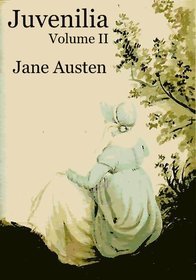
Jane Austen, Juvenilia, Volume the second (#Review)

Last November, my Jane Austen group read the first volume (my review) of Jane Austen’s Juvenilia, with a plan to read the next two volumes during 2021. This month, we read the second volume, which contains pieces written, it is believed, between 1790 and 1793, when Austen was 14 to 17 years old. As with the other volumes, the pieces were later transcribed by her into three notebooks, with the original manuscripts now being lost (as far as we know). Interestingly, the notebook contents are not presented in perfect chronological order of her writing the pieces, so did she “curate” them in some way? Or did she just transcribe them, randomly, picking up pieces as she felt like it?

Anyhow, volume 2 includes three longer works – Love and freindshipLesley Castle and The history of England – plus other pieces. The contents are:

  • Love and freindship (13 June 1790, dated by Austen) (my separate post)
  • Lesley Castle (3 Jan to 13 April 1792)
  • The history of England (26 November 1791, dated by Austen) (my separate post)
  • A collection of letters (dedicated to a childhood friend, Miss Cooper, who was married on 11 December 1792)
  • Scraps (dedicated to niece Fanny Austen, who was born in Jan 1793)

For more intro, including why read the Juvenilia, please check my first post, linked above.

Thoughts

This volume contains fewer – but some longer – pieces than the first volume. As I’ve written separately on two of them (as linked above), I won’t focus on them here. Those two and, in fact, Lesley Castle, have been published in separate volumes and/or in other combinations, so they tend to be better known by Austen fans.

Austen scholar Brian Southam suggests that Austen transcribed these pieces (which, evidence suggests, she was still doing in 1809) in order to “keep” them? Why? One reason is that they were read aloud in family circles as a form of entertainment. We know this because her brother Henry said so in the biographical notice he (most probably, it was he) wrote for the posthumous edition of Northanger Abbey:

She read aloud with very great taste and effect. Her own works, probably, were never heard so much to advantage as from her own mouth; for she partook largely in all the best gifts of the comic muse. 

This is supported, say those who have seen them, by the fact that the notebooks look well used.

I’d like to ponder an additional reason for her wanting to “keep” them, the reason used by many novelists – Helen Garner, for example – which is for possible use in future works. This seems to me to be particularly relevant to the section called A collection of letters. These letters could be seen as character studies, she could turn to. The letters are:

  • From a mother to her friend: in this letter the mother writes of bringing “out” both her daughters at the same time, which reminds me of all the Bennet girls being out at once in Pride and prejudice (and Lady Catherine’s horror at such an idea!)
  • From a young lady crossed in love to her freind: this young lady suffers from acute “melancholy” after being disappointed in love, so much so that her friends are alarmed for her: “They fear my declining health; they lament my want of spirits; they dread the effects of both”. This is closely reminiscent of Sense and sensibility’s Marianne Dashwood and her falling apart after being rebuffed my Willoughy, and, interestingly, the names Willoughby and Dashwood appear in this letter.
  • From a young lady in distress’d circumstances to her freind: This young girl is treated with supercilious kindness by the local lady, which of course, calls to mind Lady Catherine in Pride and prejudice.
  • From a young lady rather impertinent to her freind: This young lady brazenly admits in a letter to her friend that “I am not wanting for impudence when I have any end in view”. She recounts being very nosy about a new acquaintance’s life “and what had befallen her”. I can’t bring to mind a direct match in the novels but authors don’t reuse all ideas they jot down, do they? And, there are plenty of impudent young women in Austen, including Lucy Steele in Sense and sensibility.
  • From a young lady very much in love to her freind: Again, Sense and sensibility comes to mind – and Marianne – with the young lady Henrietta’s comment on instant attraction “… for that is the only kind of love I would give a farthing for–There is some sense in being in being in love at first sight”. The romance, however, is impacted by the love object’s estate not being enough for “Henrietta who has had an offer from a Colonel and been toasted by a Baronet”!

Following this collection of letters is the final group in the volume, just labelled Scraps. It comprises a Dedication to her young niece, Fanny, in which she describes the pieces as comprising her “opinions and admonitions on the conduct of young women”. These are delightful pieces of absurdity and nonsense. I wonder if they are the young Austen’s response to the stuffy conduct books for women that were popular at the time, like Reverend James Fordyce’s conduct book, Sermons to young women (1777) from which Pride and prejudice‘s earnest but stuffy and unempathetic Mr Collins reads to his young cousins.

More themes/concerns

In my last post, I focused particularly on themes and styles in the first volume, and most of what I said there also applies to the second volume. However, I thought I’d mention here some of the issues that I picked up in the second volume that reminded me of her first three novels, in particular. So, in the second volume, she parodies:

  • Gothic (seen in Northanger Abbey); 
  • overactive imagination and sensibility (found particularly in Northanger Abbey and Sense and sensibility); 
  • snobbishness (pointing particularly to Pride and prejudice)
  • self-centredness (found in all the novels, really)

It seems petty clear that in these early writings she was making fun of Gothic and 18th century literature’s favouring of sensibility over sense. I’d argue that she took up these ideas again in the first novels she wrote, Northanger Abbey and Sense and sensibility (though the former was published much later), but, as I wrote in my previous post, her tone in the Juvenilia is one of exuberant exaggeration and parody rather than the more sophisticated wit and irony we have in her adult novels.

I’ll finish here, but will be back with more Juvenilia later, including, perhaps, a separate post on Lesley Castle!

Jane Austen
“Juvenilia. Volume the second” (ed. R.W. Chapman & Brian Southam)
in The Oxford illustrated Jane Austen. Vol VI, Minor works
London: Oxford University Press, 1969 (revision)
pp. 76-178
ISBN: 19 254706 2

Leah Swann, Sheerwater (#BookReview)

Book cover

I’ve been wanting to read Leah Swann’s Sheerwater, having read and enjoyed, a few years ago, her short story collection, Bearings (my review). However, I didn’t get around to buying a copy, so was pleased to see it available as an audio book when I was looking for listening matter for our recent Melbourne trip. I thought we’d finish it on the trip but, in the end, the sightseeing was so interesting that we listened less than we thought we would. We’ve finished it now!

But, how to write about a crime book in which the main mystery – the disappearance of two boys – is resolved for us early on. At least, resolved in the sense that we discover what has happened to them and who was involved. As it turns out, though – and we learn this quickly – there’s another story to tell, and it’s a powerful, terrifying and unfortunately only too relevant one, a story of domestic violence, of power and control that isolates those who are vulnerable.

Interestingly, the novel’s opening reminded me strongly of the unforgettable opening to Ian McEwan’s Enduring love, which, as it happens, is also about dysfunctional love, albeit a different sort. There is also an ironic allusion to Australian literature’s “lost child” motif, when Ava thinks “this was a Continent where you could still get lost”, because these children aren’t “lost” – per se!

Anyhow, the story takes place over three days, and is told in alternating 3rd person voices, primarily those of the mother Ava, father Laurence, and 9-year-old Max who is the older of the two sons. Swann does an impressive job of getting into the heads of these disparate characters. Each one feels psychologically real, and their stories are compelling – well, most of their stories. Laurence is way too chilling to be compelling, but he is scarily real.

Now, I’m not going to write my usual sort of review, because listening to a novel (particularly while driving) doesn’t provide the same opportunity for reflection (and note-taking) that reading does, and certainly not for recording quotes, though I did jot down a few when I wasn’t the driver. The novel falls into the literary crime category, I’d say, for several reasons: it’s not a traditional crime novel; it’s told from multiple points of view; and the language is highly descriptive, if not poetic.

The title Sheerwater, for example, has multiple meanings. There’s the literal one, it being the name of the town that Ava is escaping to, and a literal and metaphorical one in that shearwaters (or, mutton birds), at the time the book is set, are doing their big migration south. They start the novel and each of the three days (if I remember correctly). There’s a sense that their impressive endurance mirrors that of women like Ava, and their arduous journey that of the boys. If we push it, there could also be a play on the words “sheer water” given the multiple meanings of “sheer” (pure, perfect, precipitous) and the role of water and the sea in the novel.

“We become evil when we hide the truth from ourselves” (Mother)

Swann creates a melancholic tone early on with phrases like “no pity under its wings”, and “sea of shipwrecks and stolen lives”. The no-nonsense but ultimately supportive policewoman Ballard is described by Ava as having a face like the “impermeable slap of seawashed stone”. It’s not all completely grim though. There is a lot of love, and Ava’s comment on one person’s kindness being enough to sustain a whole childhood is beautiful albeit, in a sense, prophetic.

So, was this book good to listen to? Yes, and no. Katherine Tonkin reads it well, including bursting into little verses of song when required. I didn’t find her voice intrusive, which can be a problem with audiobooks. However, for me, such highly descriptive books are better read than listened to. Somehow, when listening, there’s a greater sense of wanting to get on with the story. The descriptions and internal ruminations got in the way of that, whereas reading it would have allowed me to better absorb the language and descriptions, to feel and consider them, so I’m sorry about that.

Still, the narrative is strong, and it grabbed our attention, forcing us to think hard about each character, their truthfulness, their motivations, and the soundness of their actions. Who would you believe, and what would you do (if you were any of the characters involved), are the questions you confront as you read. The ending is also strong, emotional – and, dare I say it, appropriate.

In Sheerwater, Swann uses fiction to put flesh on the media stories we hear about domestic violence, encouraging us to see behind the stories to feel the confusion, roller-coaster emotions, helplessness and terror that those involved experience. Sheerwater is a book that says something.

Read for Reading Matters Southern Cross Crime Month

Challenge logo

Leah Swann
Sheerwater
(Read by Katherine Tonkin)
Bolinda/HarperCollins Audio, 2020
8hrs 44min (Unabridged)
ISBN: 9781460782354

Bill curates: Ruth Park

Bill curates is an occasional series where I delve into Sue’s vast archive, stretching back to May 2009, and choose a post for us to revisit. This is a most enjoyable project as I read every post and usually the comments too. Which is why I’m still only up to Oct. 2010. Today, because I can, I’ve chosen an AWW Gen 3 post on Ruth Park which I had previously overlooked.

______________________________

My original post titled: Monday musings on Australian literature: Ruth Park

The muddle-headed wombat by Ruth Park, book cover

For a New Zealander, Ruth Park is a very popular Australian! Not only did she write the much-loved (and studied) Harp in the south trilogy, but she also wrote the hugely popular (in its time) radio serial The muddle-headed wombat, was married to the Australian D’Arcy Niland (now deceased) who wrote The shiralee, and is mother to children’s author-illustrators Deborah and Kilmeny (now deceased) Niland. Ruth Park also won the Miles Franklin Award with her Swords and crowns and rings, and wrote two very popular autobiographies, Fence around the cuckoo and Fishing in the Styx. And this is not all – or even all of the best – that she’s produced in her long career.

Park was born in New Zealand in the early 1920s and first came to Australia in 1940 when she met D’Arcy Niland. She writes that Australian writer Eve Langley*, with whom she had a longstanding friendship, said of Niland:

‘That’s a good face … Do you know what it is saying?’
‘No, what?’
‘It says “Take me or leave me.” I like that.’

So apparently did Park. She returned to Australia in 1942 to work as a journalist, and married Niland. They worked at various jobs in rural New South Wales for some years before Park’s stories gained the attention of the Australian Broadcasting Commission (ABC) resulting in their decision to try to make a living from free-lance writing. They wrote, and wrote, and wrote – anything that would earn money. They wrote, for example, short stories, genre stories (such as romances and westerns), radio talks and radio plays, scripts for radio comics, all the while honing their skills for their more serious writing goals. And they lived during these early years in Sydney’s inner city slum, Surry Hills.

These experiences of living in rural areas and city slums are clearly evident in Swords and crowns and rings (the story of the dwarf Jackie, and his love Cushie Moy) and the Harp in the south trilogy (the story of the Darcy – ha! – family). The thing I love about these books – both of which span the first 4-5 decades of the twentieth century – is the way Park explores gritty issues like poverty, abortion, religious bigotry, unemployment and illness with a psychological and social realism that also encompasses warmth and humour. Her main characters tend to be the quintessential Aussie battlers, but their concerns transcend time and place. It’s not surprising, really, that these works keep being read, re-published, set for study, and adapted for television and film.

Realism though is not the only string to Park’s fictional bow. She wrote in several “genres” for a range of audiences, including fantasy for children. Her Muddle-headed wombat stories ran on the ABC Children’s Session from 1957 to 1971. I have to say that I never have really been one for anthropomorphism, and have read few children’s classics featuring animals (no, not even The wind in the willows) but even I would tune in for the wombat! Park also wrote a children’s time-travel fantasy Playing Beatie Bow, which is taught in schools and has been made into a film.

And yet, for all this, I’m sure she is little known outside Australia … if I am wrong, please let me know!

In the meantime, I will conclude with her description in her first autobiography, Fence around the cuckoo, of her first sighting of Australia as she arrived by boat:

What I saw were endless sandstone cliffs reflecting the sunrise. A chill ran over my skin, my ears buzzed as they had once done when I was about to experience uncertainty about something as yet unknown. The sea fled south, its malachite green changing to beaming blue; the sky was sumptuous with a sun hotter than I had ever known.

This was my first glimpse of Australia Felix, the ancient, indifferent, nonpareil continent that was to become the love of my life.

Ruth Park is not one of those ground-breaking writers who makes you go, wow!, but  she is an excellent story-teller who has an enviable ability to create and develop memorable characters who confront the real “stuff” of life. You could do far worse than read her if you want an introduction to Australian literature. If I haven’t convinced you, read Lisa at ANZLitLovers and Tony of Tony’s Bookworld on Harp in the South, and kimbofo at Reading Matters on her “Top 10 novels about Australia”.

*Park mentions Langley (whom I reviewed early in this blog) several times in Fence around the cuckoo. One concerns Park’s decision to stay with Eve to escape a Peeping Tom uncle but, when she arrived at the windmill in which she believed Eve to be living, she found no Eve but another woman who had heard of Eve but not for some years. “What had happened to that weird girl?”, the new windmill resident wondered. Poor Eve. She was indeed a bit weird and had a rather sad life, but that is another story.

___________________________

Book cover

It’s interesting for me to re-read these old posts of mine, and think about how I’d write them now! Regarding Park, my admiration has only grown for her warmth, humour and abiding sense of fairness. Check my Park posts here.

But, back to Bill. He says he’s not a fan of Park’s autobiographies but he does recommend, whenever he can, the Park/Niland memoir The Drums Go Bang, which we have both reviewed (Bill’s review) (my review). I enjoyed her autobiographies, but The drums go bang is very special.

Are you are Park fan? If so (or if not), we’d love to hear your thoughts.
Tsitsi Dangarembga, This mournable body (#BookReview)

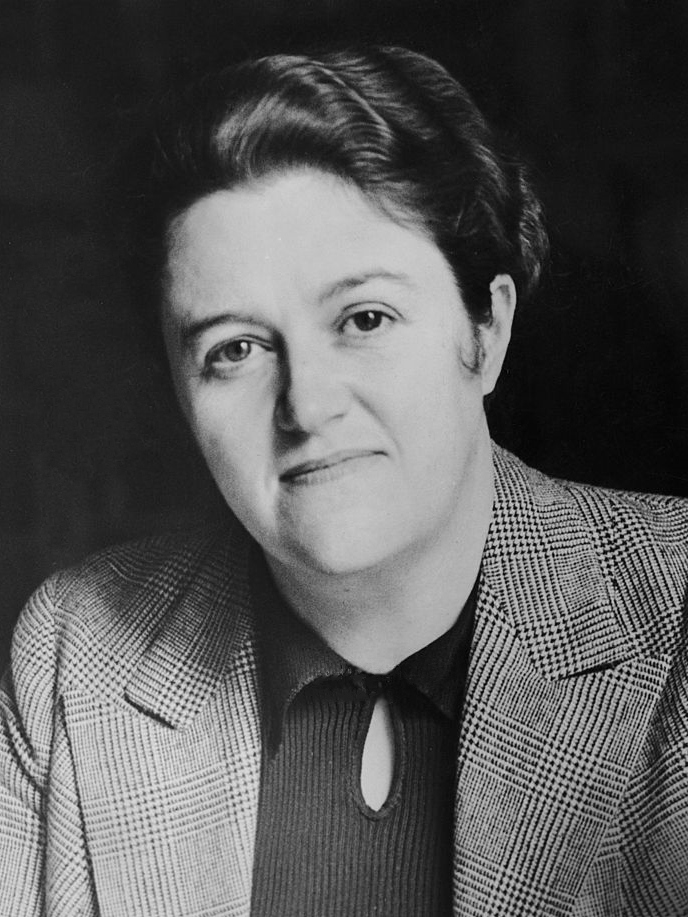
Zimbabwean author Tsitsi Dangarembga’s This mournable body was my reading group’s February book. Shortlisted for the Booker Prize, it is Dangarembga’s third novel, and is a sequel to Nervous conditions (1988) and The book of not (2006), neither of which I’ve read. These novels are written in English, the language of Dangarembga’s schooling, though she also speaks Shona.

It is a remarkable book, for its subject matter, vivid writing and the complexity of its protagonist, Tambu (Tambudzai). Wikipedia’s article on Nervous conditions describes Tambu’s character, saying “her desire for an education and to improve herself seem strong enough to overcome just about anything. She is very hard on herself, and always strives to do her best and make the correct decisions”. This perfectly describes the character I met in This mournable body, except that by now Tambu is around 40 years old and disappointed that life has not worked out as she had hoped. Indeed, she is out of work and living in a boarding house, eking out her savings from her previous copy-writing job in order to survive. A sense of failure and an air of desperation surrounds her.

Interestingly, Dangarembga chose a second person voice to tell Tambu’s story. There are various reasons for choosing this voice. Madeleine Dickie chose it for her novel Red can origami (my review) to involve if not implicate the reader in the world she was describing. I don’t know why Dangarembga chose it, but my guess is to convey Tambu’s apparent dissociation from her self. Second person avoids both the objective insight that an omniscient third person voice can provide and the confessional immersion in a life that first person offers. Tambu is struggling; she is caught between her Western-education with its Western-style aspirations and her Zimbabwean family and culture. We see her pain, but second person keeps her and us a little remote from it, as if she and we are watching it, not fully comprehending what is happening.

The novel is set in troubled late 1990s Harare, on the cusp of the millennium. It has a three-part structure – Ebbing, Suspended, and Arriving – which chronicles the trajectory of this period in Tambu’s life. In Ebbing, we see Tambu’s hopes for a successful, secure life, ebb:

Fear, your recurrent dread that you have not made enough progress toward security and a decent living, prickles like pins and needles at the mention of “village.” You have dodged this fear for too long—all your conscious life.

We also learn some of the reasons for the state she’s in, despite having been plucked from her village by her uncle and given a good “white” education. These reasons include the fact that although having gained Independence, Zimbabwe remains a racist place where black Zimbabweans still suffer under the colonialism they “thought” they’d thrown off. Tambu had had a good job as a copywriter in an advertising agency:

you have no one but yourself to blame for leaving your copywriting position. You should have endured the white men who put their names to your taglines and rhyming couplets. You spend much time regretting digging your own grave over a matter of mere principle.

Late in Ebbing, Tambu manages to obtain a decent job as a teacher, but it doesn’t last long, largely because her insecurity – her jealousies and fears – result in her self-destructing.

Suspended starts with her having been suspended from this job and admitted to a psychiatric hospital where her life is effectively “suspended” as she struggles to regain her mental health and equanimity. This she does, with the help of her family, including cousin Nyasha who takes her in. Incomprehensibly to Western-focused Tambu, Nyasha had returned, with her German husband and two children, from an apparently successful life in Europe, to work for the community, and specifically to improve things for Zimbabwean youth.

In the final part, Arriving, Tambu finds herself working for Tracey, her white Zimbabwean nemesis who had been a schoolmate at the prestigious Young Ladies’ College of the Sacred Heart and then her boss at the copywriting agency. Tracey is setting up an eco-tourism business, Green Jacaranda, and sees potential in Tambu – and indeed, Tambu seems to start to find herself, both personally and professionally, but I will leave the plot here …

This mournable body, however, is more than just a story about Tambu. Dangarembga weaves Zimbabwean social and political history into her narrative. While Tambu hadn’t been involved in pre- and post-Independence violence, many in her family had. The impact of war – particularly on women – provides one of the running commentaries throughout the novel. One refrain concerns her sister Netsai’s loss of a leg, which works as a visible reminder of personal and national losses:

Sometimes I ask if people forgot that many people went to war. Because if they have not forgotten, these people in this country, what is going on with them? Why are they so foolish? Do they think we went for this? … This is not what we went for and stayed for without food and blankets, even clothes, without our parents or relatives. Some of us without legs. Yet now we are helpless and there is nothing we can do to remove the things we see that we didn’t go to fight for.

Independence, in other words, is not working out the way they expected. The interplay of race, gender and colonialism continues to impede the country’s growth. Through her characters, Dangarembga powerfully conveys that old mantra “the personal is the political” – even though Tambu, ironically, tries to avoid talking politics with Tracey. “I don’t believe in politics”, she naively tells Tracey.

This mournable body is a serious and often heartbreaking novel, but there is also humour, much of it in the form of irony and satire. Here’s Tracey on her new business, echoing, for different reasons, Tambu’s dislike of “village”:

Everything’s Green Jacaranda eco! And you can’t say village. … That kind of promise doesn’t work these days either. It’s got to sound like fun, not under-development, soil erosion and microfinance.”

Tracey is either oblivious to – or chooses to ignore – the truths of Zimbabwean culture, preferring to exoticise a generalised notion of “Africa” for her business. In one excruciating scene she asks Tambu to organise village women to dance bare-breasted for their tourists.

At the other end of the spectrum is Tambu’s landlady’s now late husband, a black Zimbabwean who had profited from Independence. He had experienced an horrific accident, but

His biggest blow was what happened to his BMW and his temporary relegation to a lowly Datsun Sunny. People admired the stoicism with which Manyanga put up with this.

Dangarembga’s Zimbabwe is a complex society that has been riven by internal and external conflicts over decades, conflicts that are, in part, personified in Tambu’s difficulty in separating out her own goals from the “white” ones she had been educated into. While Dangarembga provides no easy answers, she suggests there are paths of hope, paths that rest with individual people who have a firm grip on what they want for themselves and for their country. This mournable body is an excruciating read at times, but the insights and perspectives it offers, particularly to Westerners whose assumptions it questions, are worth the pain and challenge.

Lisa (ANZLitLovers) was also impressed by this book.

Tsitsi Dangarembga
This mournable body
London: Faber & Faber, 2020 (orig. ed. 2018)
288pp.
ISBN: 9780571355532 (Kindle ed.)

Bill curates: Charles Dickens and Australia

Bill curates is an occasional series where I delve into Sue’s vast archive, stretching back to May 2009, and choose a post for us to revisit.

I’m such a fan of Monday Musings – I guess we wouldn’t be here if we didn’t all enjoy talking about books, and writing, and authors, and translators, and publishers – that all the posts that jump out at me, seem to be MMs. From Sept 2010 Sue discusses the Australianness of an author who was never in Australia. As Hannah Gwendoline D’Orsay Tennyson Bulwer [Last Name] wrote in Comments “I had no idea Dickens had such a connection with Australia.”

______________________________

My original post titled: Monday musings on Australian literature: Charles Dickens and Australia

Charles Dickens, c1860

Here’s something completely different for my Monday musings! Not an Australian author, not even a foreign born author who came to Australia (though, being the great traveller he was, he did consider a lecture tour), but Charles Dickens does have a couple of interesting “connections” with Australia. These connections are supported by the existence of some letters written by him at the National Library of Australia.

On convicts and migration in general

Transportation of convicts to Australia – actual, implied or threatened – features in several of his novels. These include John Edmunds in Pickwick Papers (1836-37), the Artful Dodger in Oliver Twist (1837-1839), Mr Squeers in NicholasNickleby (1838-39), Alice Marwood in Dombey and Son (1846-48), and Magwitch (probably the most famous of all) in Great expectations (1861)not to mention Jenny Wren who threatens her father with transportation in Our mutual friend (1864-65). Dickens apparently learnt quite a lot about convict life, and particularly the penal settlement on Norfolk Island, from his friend Alexander Maconochie (to whom I refer in my review of Price Warung’s Tales of the early days).

Clearly, it was this knowledge which inspired the letter he wrote to the 2nd Marquess of Normanby (George Augustus Constantine Phipps), who was Secretary of State for the Home Office . He suggests

a strong and vivid description of the terrors of Norfolk Island and such-like-places, told in a homely narrative with a great appearance of truth and reality, and circulated in some very cheap and easy form (if with the direct authority of the Government, so much the better) would have a very powerful effect on the minds of those badly disposed … I would have it on the pillow of every prisoner in England. (3 July 1840, Original in the National Library of Australia, Ms 6809)

He offers to write this narrative, gratis. As far as I know, although Dickens and the Marquess were friends, nothing ever came of this offer.

While Dickens deplored the treatment of convicts in the penal settlements, he also saw Australia as a land of opportunity. The transported Magwitch, as we know, made his fortune in Australia. Mr Micawber, debt-ridden at the end of David Copperfield, emigrates to Australia and becomes a sheepfarmer and magistrate. But, perhaps the strongest evidence of Dickens’ belief in Australia as a place where people could get ahead, is the emigation of his sons.

On his sons

Two of Dickens’ sons – Alfred D’Orsay Tennyson Dickens and Edward Bulwer Lytton Dickens* (nicknamed Plorn) – emigrated to Australia, both with their father’s encouragement.

Alfred (1845-1912) migrated to Australia in 1865. He worked on several stations/properties in Victoria and New South Wales and as a stock and station agent, before partnering with his brother in their own stock and station agency, EBL Dickens and Partners. He died in the United States in 1912, having left Australia on a lecture tour in 1910. Dickens’  youngest son, Edward (1852-1902), went to Australia in 1869. He also worked on stations before opening the stock and station agency with his brother. He later worked as a civil servant and represented Wilcannia in the New South Wales Legislative Assembly in 1889-94, but he died, debt-ridden, in 1902 at Moree. Australia did not quite turn out to be the land of opportunity for these two that Dickens had hoped, but fortunately he was not around to see it!

A couple of Dickens’ letters to his sons are held at the National Library of Australia. One was written in 1868, not long before Plorn left England, and includes some fatherly advice:

Never take a mean advantage of anyone in any transaction, and never be hard on people who are in your power …

The more we are in earnest as to feeling religion, the less we are disposed to hold forth on it. (26? September 1868, Original in National Library of Australia, Ms 2563)

One does rather wish that Dickens had taken his own advice regarding not being “hard on people who are in your power” in his treatment of his poor wife Catherine.

Eighteen days before he died in 1870, he wrote this to Alfred:

I am doubtful whether Plorn is taking to Australia. Can you find out his real mind? I note that he always writes as if his present life were the be-all and end-all of his emigration and as if I had no idea of you two becoming proprietors and aspiring to the first positions in the colony without casting off the old connexion (1870, Original in National Library of Australia, Ms 6420).

These are just two of the many letters that he wrote to (and about) his sons in Australia. More can be found in published editions of his letters. I have chosen these particular ones purely because we have them here in Canberra. It’s rather a treat to be able to see Dickens’ hand so far away from his home.

Do you enjoy close literary encounters of the handwritten kind?

Image: Dickens, c. 1860 (Presumed Public Domain, via Wikipedia)

___________________________

What an interesting choice of Bill’s but I am glad to be reminded of this post as I have been wanting to read more of Dickens’ journalistic writings. Whether I will is another thing but, you never know.

Are you a Dickens fan?