Miles Franklin Award 2022 winner announced

While once again I haven’t read (yet, anyhow) any of the Miles Franklin shortlist, I do try each year to announce the winner of this significant Australian literary award.

You may remember that this year’s shortlist was:

  • Michael Mohammed Ahmed’s The other half of you
  • Michelle de Kretser’s Scary monsters (Lisa’s review)
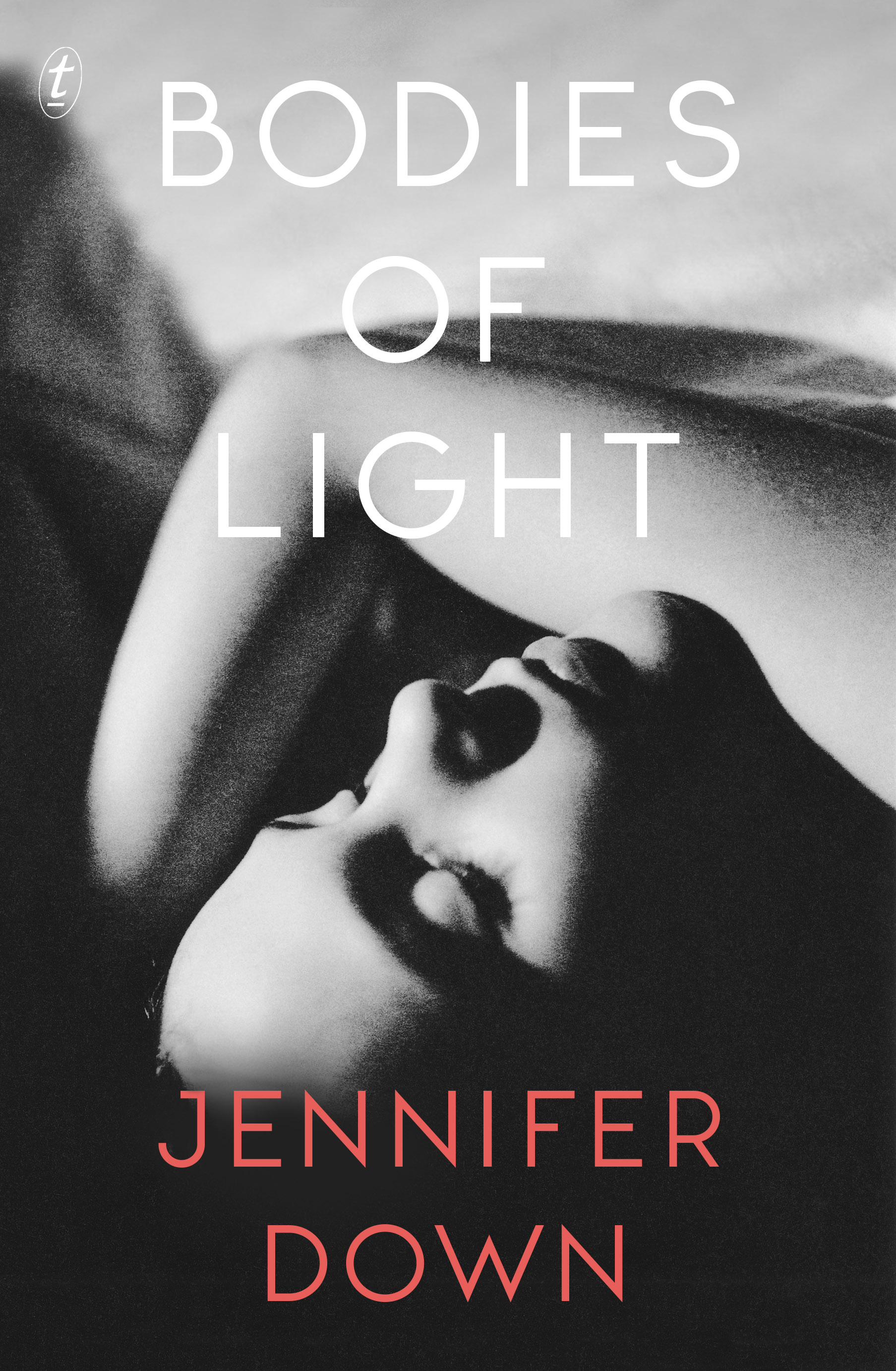
  • Jennifer Down’s Bodies of light 
  • Alice Pung’s One hundred days (kimbofo’s review)
  • Michael Winkler’s Grimmish

And the winner is: Jennifer Down’s Bodies of light

Each of the shortlisted writers received $5000 from the Copyright Agency’s Cultural Fund, with the winner receiving $60,000 prize. This year’s judges comprise, as always, continuing judges and new ones: Richard Neville (State Library of NSW), critics Bernadette Brennan and James Ley (both also on last year’s panel), and new members, scholar Mridula Nath Chakraborty, and writer and editor Elfie Shiosaki. 

So, more on the winner …

The book was published by Text Publishing, and in their email announcing the winner they shared the thoughts of Michael Heyward, Text’s publisher:

Bodies of Light  is a transformative novel that gives epic scope to the life of a single soul. To read it is to be immersed in it. All of us at Text are thrilled at the news of Jennifer Down’s Miles Franklin win, and offer her our heartfelt congratulations.’

And of senior editor Alaina Gougoulis:

‘What an incredible recognition of Jennifer Down and all she has achieved with Bodies of Light. The abundant talent on display in her debut novel, Our Magic Hour, has been fully realised in this book, an intimate story of one life told on an epic scale: heartbreaking, and yet brimming with hope and beauty. That she is still so early in her career should fill us with optimism about the future of Australian writing. I am beyond thrilled for her, as her editor and as her friend. Warmest congratulations to Jenn, from all at Text.’

The announcement has already been reported by the usual sources, like the ABC, The Guardian, The Conversation, and so on. Canberra’s Jen Webb wrote The Conversation’s article. As she says, Down already has some runs on the board: she won the Sydney Morning Herald Young Novelist of the Year award for her debut novel, Our magic hour in 2017, and again in 2018 for her short story collection Pulse points.

Webb shares that the judges commended the book as “a novel of affirmation, resilience and survival, told through an astonishing voice that reinvents itself from six to 60”, and she describes it herself as follows:

Under interrogation-level lighting, it confronts the institutional “care” offered to the most vulnerable of people: little children, labile adolescents, and traumatised youth. Any society that routinely fails to provide children with the care they need to grow into secure adulthood is a society that needs a critical light shone on it. In the most lyrical, gentle language, this is precisely what Bodies of light does.

It’s a book that interests me. Indeed, Down has interested me since Pulse points appeared (and for which there is a guest post on my blog).

(BTW: In last year’s winner post, I provided a link to an article by Pallavi Singhal in The Sydney Morning Herald published an article on How to win the Miles Franklin: Analysing 64 years of data. You might like to revisit that in the light of today’s win!)

Do you have any thoughts on this year’s winner?

Jane Austen, Sense and sensibility (Vol. 3, redux)

Jane Austen, Sense and sensibility

I’ve called this post “Vol. 3, redux”, although it is my first post on volume 3. The reason is that for my Jane Austen group’s 2011 slow read of Sense and sensibility, I wrote posts on volumes 1 and 2, but not on volume 3 as I missed the meeting, and never did write up my own thoughts. This slow read, I have written up volume 1 (as “redux”), but I missed volume 2’s discussion, and again didn’t write up my thoughts. However, I did get to the volume 3 meeting and am naming my thoughts “redux” to match them up with the right re-read!

Now, a quick recap … In my recent volume 1 post, I discussed various ideas that had captured my attention, such as the novel’s autobiographical aspects, “fond” mothers, and appearance. Most of these had fallen away for me by the time I got to volume 3, but one idea that I mentioned – goodness, compassion and kindness – did not…

Triumph of kindness and generosity

From the novel’s beginning, the virtues of kindness, benevolence, generosity, charity are pitted against greed and self-interest. It starts with the sisters’ brother, John Dashwood, doing essentially nothing for his sisters while a distant cousin, Sir John Middleton, offers them a home at a good rental and supports them in any way he can. The theme continues through volumes 2 and into volume 3 where even characters who had been seen, initially, as somewhat silly if not vulgar, like Mrs Jennings and Charlotte Palmer, show kindness and compassion. They show up favourably against the greed and self-interest of Fanny and John Dashwood, Lucy Steele, and Willoughby.

Colonel Brandon is one of the characters whose kindness is evident from the start. Indeed, Elinor says to her mother near the end, that “his character does not rest … on one act of kindness”. A telling moment occurs when, in volume 3, he offers Edward Ferrars “a living”, after Edward’s own mother had disinherited him. The aforementioned John Dashwood finds this behaviour “improvident” and “astonishing” – and wonders why. Elinor responds, simply, that Colonel Brandon wanted “to be of use to Mr Ferrars”. That phrase, “to be of use”, conveys a sense of humility, of not wanting anything back, in his generosity.

It’s surely ironic when a page later, John Dashwood accuses sister Elinor of “ignorance of human nature”.

Mrs Jennings, too, who is described in the opening volume as “rather vulgar”, proves herself to be thoughtful and generous to Elinor and Marianne during their stay in her home in London. And when, in volume 3, Marianne falls seriously ill en-route home, Mrs Jennings

with a kindness of heart which made Elinor really love her, declared her resolution of not during from Cleveland as long as Marianne remained ill, and of endeavouring by her own attentive care, to supply to her the place of the mother she had taken her from.

Money is the root of …?

Money is another idea that threads through the novel from beginning to end: it is the death of Mr Dashwood which results in Mrs Dashwood and her daughters finding themselves homeless and impecunious. As the novel progresses, characters are defined by their attitude to money. There are well-off characters who are avaricious, like the aforementioned John Dashwoods and Mrs Ferrars, and well-off characters who are generous, like Sir John Middleton, Colonel Brandon and Mrs Jennings.

There are many in the novel, in fact, for whom money is so important they will sacrifice values like integrity and sincerity. Willoughby, in his confession to Elinor in Volume 3, admits

My affection for Marianne, my thorough conviction of her attachment to me–it was all insufficient to outweigh that dread of poverty, or get the better of those false ideas of the necessity of riches …

Of his rich fiancee, he says, “her money was necessary to me”.

Lucy Steele is, of course, the epitome of someone who schemes and manipulates for money, with little regard for the feelings of others. In the end, despite all her protestations of love, she is not willing to settle for the secure, if not rich, life that Elinor eventually has.

But what is it really all about?

As with all of Austen’s novels, what Sense and sensibility is about has been discussed and analysed and critiqued from literary, socioeconomic, feminist, historical, you-name-it perspectives. And, really, there is no one thing it is about. That is the joy and value of Austen. What she writes about, fundamentally, is people, and how we read her changes with our own experiences of life.

So here is where I am today. When I first read Sense and sensibility in my teens, I loved it. It was so romantic. Elinor gets her man, and is happy to live the life of an honest but not particularly well-off minister’s wife. Her sweet but overly romantic, emotional sister, gets the rich man. While that never seemed quite fair to me, as happily-ever-after stories go, I accepted it because it just showed what a person of integrity Elinor truly was. Love and esteem for an honest man were what made her happy.

And yet … what is Austen saying to us? Why do some of her heroines end up with less than dashing heroes? Well, I think it is partly because she was an early, if not the first, great novelist of realism. From this, her very first novel, she provides us with a microcosm of humanity. Like her later novels, Sense and sensibility is populated with flawed characters who represent complex humanity, unlike her Gothic and Sentimental novelist predecessors who tended to present the world in more morally absolutist, black-and-white terms. Not so Austen. Mrs Jennings might be “rather vulgar”, and a bit of an interfering gossip, but her heart is large and she’s generous. Mr Palmer, who seems cold and distant when first met away from home, shows himself to be kind and generous when a crisis occurs. And so on. Even Willoughby, despite his “selfish vanity”, is redeemed a little by his confession, and Austen allows him a reasonable life after all. I now see this confession as not being “clunky” as I’d once thought, but as important to Austen’s mission of portraying life.

But, back to Marianne. There was something that I noticed on this read that I’d never noticed before, and that concerned Marianne and her marriage to Colonel Brandon. One of the reasons I have always loved Sense and sensibility is for this quote:

Marianne Dashwood was born to an extraordinary fate. She was born to discover the falsehood of her own opinions, and to counteract, by her conduct, her most favourite maxims.

I so related to this – to the idea of proclaiming opinions before experience teaches us otherwise – that I hadn’t really seen the preceding paragraph, which concerns Marianne’s mother explicitly matchmaking Marianne with Colonel Brandon:

It was now her darling object. Precious as was the company of her daughter to her, she desired nothing so much as to give up its constant enjoyment to her valued friend; and to see Marianne settled at the mansion-house was equally the wish of Edward and Elinor. They each felt his sorrows, and their own obligations, and Marianne, by general consent, was to be the reward of all.

“The reward of all”. This sounds a bit suss! Austen continues …

With such a confederacy against her–with a knowledge so intimate of his goodness–with a conviction of his fond attachment to herself, which at last, though long after it was observable to everybody else–burst on her–what could she do?

And so, Marianne does come around to loving this good, kind man as Austen makes clearer a couple of paragraphs further on:

Marianne could never love by halves; and her whole heart became, in time, as much devoted to her husband, as it had once been to Willoughby.

The point, then, is that Sense and sensibility is not Romance with a capital-R, but a story about love – Elinor’s, from the start, and Marianne’s, eventually – that is based on genuine feeling combined with appreciation of the personal values that make a person worth loving.

There is so much more to this book but I’ll leave it here because I feel that, for now, I understand what it really is about!

Monday musings on Australian literature: on 1922: 3, ALS Women’s Night

Continuing my 1922-themed posts, I was intrigued that, in 1922, the Australian Literature Society held a Women’s Night. This Society was formed in Melbourne in 1899, with the aim of encouraging both the study of Australian literature and Australian authors.

According to the National Library the Society:

  • held regular meetings which included talks, recitations, readings of unpublished works, musical items and reviews
  • established a general library of first editions and important Australian works which it maintained for nearly eighty years.
  • published a journal Corroboree from 1921 to 23

In 1928, it established the ALS Gold Medal to be awarded to the author of the best novel published in the previous year. The first winner was Martin Boyd’s The Montforts, but that, obviously, came after 1922! What also came later was that this society merged in 1982 with the Association for the Study of Australian Literature, which continues to award the ALS Gold Medal.

Now, back to 1922, and the Society’s Women’s Night. I’ve had a little look at Trove for 1920 and 1921, and while there are references to women’s topics being discussed at ALS meetings, it seems that 1922 may have been the first time they devoted a night to Women’s writing.

As far as I’ve been able to ascertain, there were just two papers presented: Australian Women Prose Writers, by Mrs Vernon Williams, and Australian Women Poets, by Elsie Cole. Before I share the idea that inspired this post, I did find mentions of Women’s Nights in 1927 and 1929. In 1927, The Age (July 12) reports that there was a paper on Stella Miles Franklin, followed by some readings and recitations of works by women, while in 1929, The Age (July 15), again, reported that the night would ‘take the form of a debate, the subject, being “Australia is Lacking in a Back Ground to Inspire Romantic Writing”‘.

And now, back to 1922 again. The report in Table Talk (August 3) reported that Elsie Cole’s paper on the poets said that “We had reason to be proud, if critical, of our present output of women’s work” and that “the prospect for the immediate future was encouraging”. Unfortunately, none of the reports I read gave any details about the content of the papers, so what, for example, were the criticisms?

As for Mrs. Vernon Williams’* paper on the prose writers, they reported her saying that “one outstanding feature of the Australian novel is its purity” but they didn’t elaborate. Williams also apparently said that the Australian novel was full of sincerity and the glamour of romance.

The report shared one other idea from the talk, which was that:

In the early days of Australian literature the output of women writers was more prolific than that of men writers, because the opening of a new continent did not give men opportunity to concentrate their activities in that direction.

I haven’t seen this specifically articulated before, and would love to know exactly what she was talking about. The first “Australian-made novel” novel, Henry Savery’s Quintus Servinton (my post), was published in 1830, with the first novel by a woman published in Australia, Anna Maria Bunn’s The guardian, appearing in 1838. But, “the output of women writers” did start before this. Dale Spender writes, in Writing a New World: Two centuries of Australian women writers (see Bill’s post), that from very early on women wrote letters and

women’s ‘world of letters’ provides an alternative and rich resource of information. Women’s thoughts and feelings find expression in a literature which stands as a repository for women’s consciousness and a record of their endurance in the strange land. So the letters of Elizabeth Macarthur and Rachel Henning, for example, tell a story of settlement, create heroines of stature who experience a series of adventures which could readily and reassuringly be recounted ‘back home’; but at the same time these letters plot personal struggles with independence and identity. Miles Franklin begins My Brilliant Career at the point at which Elizabeth Macarthur and Rachel Henning leave off …

Women’s letters and journals, as Spender shows, provided a rich and important literature, but novels by women did start appearing by the middle of the century with Catherine Helen Spence’s Clara Morison in 1854, and Louisa Atkinson’s Gertrude the Emigrant in 1857. Ellen Davitt followed with a crime novel in 1864, and then, in the 1880s, novels by Ada Cambridge, Rosa Praed, Tasma, and others were published.

Presumably it’s to these novelists that Williams refers, but, to suggest that, somehow, men had less opportunity to write in the colony’s first century feels like a backhanded compliment – as if women’s lives were easy, and men’s not. However, her recognition of the depth of women’s writing tradition is notable. It’s a recognition that got lost by the middle of the 20th century and that we are still trying to recover now. I must try to access Williams’ paper.

* AustLit explains that Mrs Vernon Williams is the writing name for Elvie Williams, the wife of Vernon Williams, who was “a member of the Australian Literature Society, Melbourne”. She had two articles, “Australian Women Novelists, Parts 1 and 2”, published in two consecutive issues of Corroboree : The Journal of the Australian Literature Society, vol. 1 nos. 10-11, July-August 1922, but they aren’t available online.

Previous 1922 posts: 1. Bookstall Co; 2. Reviewers on Australianness

Jane Austen, Sense and sensibility (Vol. 1, redux)

Jane Austen, Sense and sensibility

In 2011, my Jane Austen group started a slow read of her novels in chronological order of publication, which meant that we started with the 1811-published Sense and sensibility. By slow read, we meant that each month we’d read a volume of the chosen novel, given most novels in those times were published in three volumes, and discuss just that volume to see what new ideas or insights we might have. We finished the project in 2017. Having spent the last five years looking at other works by Austen (like her Juvenilia) and exploring other topics relevant to her, we decided last year that it was time to “do” the novels again. So, once again, we’ve started with the first one.

For some of you, this will seem very dry, but for those of us who love Austen, there is much to be gained from these slow reads. If you are interested in what I wrote last time on volume one, check out the post, but here I’m sharing what thoughts popped up for me this time.

First though, I’ll repeat the caveats from 2011. I’m assuming that most readers who come to this post will know the plot. (If you don’t, Wikipedia provides a good summary.) Also, this is not a formal review but simply a sharing of some of the ideas that struck me during this slow reading.

Slow reading of Volume 1

I have always liked Sense and sensibility, while my dear Mum thought it one of her weakest. (There’s no accounting for tastes! In my group there are many who will never forget that Mum loved Northanger Abbey, which some of them don’t like much at all.)

Anyhow, here goes. It’s fascinating how each read of an Austen book focuses the mind on something different. That’s the richness of Austen, and what makes her a true classic. In my last slow read, my first-volume thoughts focused particularly on the idea of judgement, and money and income. This time, other ideas came to the fore for me, some partly affected, I think, by current concerns.

Autobiographical first novel?

But first, an idea I hadn’t fully thought through before was that it could be seen as a “typical” first novel, by which I mean, it has strong autobiographical elements. Anyone who knows Austen always think of this novel’s basic set-up of in terms of her life: the fact that Austen, her mother and sister, lost their home on the death of their husband/father, and had to wait for the kindness of relations to come to their aid, just as happens to the Dashwoods. However, on this reading, I realised there were other autobiographical elements. Others in the group had come to the same conclusion, and yet none of us had discussed this last time. Curious.

So, for example, our two sisters, the younger musical Marianne and the older artistic Elinor mirror musical Jane and her artist sister Cassandra. Moreover, Jane, we believe, was lively, like Marianne, compared with her more sober older sister. If Austen did draw on herself for Marianne, however, she’s gorgeously self-deprecating – though she does present Marianne as over-enthusiastic and excitable but fundamentally sound. There are several other elements we could point to from Austen’s biography, including her flirtation with Tom Lefroy being reflected in Marianne’s with Willoughby. They are very different men, but both men are whisked away by relations from the attractive but unsuitable, ie not-rich-enough, girl.

Appearances deceive?

Perhaps partly because I’ve been listening to ABC RN’s Face Value series, I seemed to be particularly alert to the many references to appearance. Admittedly, Austen describes appearance in all her novels, but it felt pointed here in a way that I don’t recollect seeing in later novels.

So, Edward Ferrars and Colonel Brandon are both described as not handsome, but both are appealing for their good understanding and interested attention in others. Willoughby, on the other hand, is described differently. When he appears on the scene, having rescued Marianne from her fall in the rain, Austen says that Mrs Dashwood would have would have been grateful had he been ”old, ugly, and vulgar”, but his “youth, beauty, and elegance” gave him added interest.

As for the women, Sir John Middleton and Charlotte Palmer talk of Elinor and Marianne as being pretty and therefore marriageable, while Lucy Steele is seen by the perceptive Elinor to have “beauty” but to “want … real elegance and artlessness”. And then there’s Mr Palmer who, just like Pride and prejudice’s Mr Bennet, had chosen his wife Charlotte for her beauty not her sense. Beauty, Austen seems to be saying, is something we should not give undue credit to.

Fond mothers?

Another issue which caught my attention this time around concerned mothers and mothering. Mothering (poor or lack of) features in many of Austen’s novels. Lizzie Bennet’s mother (Pride and prejudice) is silly; Emma (Emma) and Anne (Persuasion) don’t have a mother; Fanny’s (Mansfield Park) is too busy; and Catherine’s (Northanger Abbey) is away from her at a critical time. By contrast, Sense and sensibility has several active and involved, though not necessarily great, mothers, from the loving, hands-off Mrs Dashwood to the ultimate controller in Mrs Ferrars.

Very early on Mrs Dashwood’s style of mothering is described and Mrs Ferrars’ is hinted at, in relation to the apparent growing attraction between Elinor and Edward.

Some mothers might have encouraged intimacy from motives of interest, for Edward Ferrars was the eldest son of a man who died very rich; and some might have repressed it from motives of prudence, for, except for a trifling sum, the whole of his fortune depended on the will of his mother. But Mrs. Dashwood was alike uninfluenced by either consideration. It was enough for her that he appeared to be amiable, that he loved her daughter, and that Elinor returned the partiality.

Mrs Dashwood, who is probably the most present mother in Austen, is loving but not always wise. When Marianne falls into excessive despair at Willoughby’s sudden, unexplained departure, Elinor suggests she ask Marianne directly about her relationship with Willoughby. Mrs Dashwood replies that she “would not ask such a question for the world … I should never deserve her confidence again … I would not attempt to force the confidence of any one”. Elinor disagrees, seeing “this generosity overstrained, considering her sister’s youth … [but] … common sense, common care, common prudence, were all sunk in Mrs Dashwood’s romantic delicacy”.

However, Mrs Dashwood does provide good “maternal” advice to Edward, suggesting that finding some useful employment would help him be “a happier man”. She then mentions his mother:

Your mother will secure to you, in time, that independence you are so anxious for; it is her duty, and it will, it must, ere long become her happiness to prevent your whole youth from being wasted in discontent.

We haven’t met Mrs Ferrars at this point in the novel, but earlier references to her have not suggested a particularly loving or even dutiful mother. If Mrs Ferrars is one matriarch in the the novel, Mrs Jennings is another. Austen tells us that “She had only two daughters, both of whom she had lived to see respectably married, and she had now therefore nothing to do but to marry all the rest of the world”. She comes across in Volume 1, as gossipy, “vulgar”, but good-natured. Without second-guessing the next volume, let’s say that I think she warms as a motherly character then!

Her younger daughter, Charlotte Palmer is pregnant, but the older one, Lady Middleton, is the mother of three young children. She is the “fond mother” who “will swallow anything”. Her very existence depends on her role – she only comes to life when her children are around – and the shrewd Steele girls take advantage of this.

For Austen readers, the issue of mothers in Austen’s novels is a loaded one. Why are there so few sensible mothers in her novels? There is much we don’t know about Austen’s life, and one of the mysteries concerns her relationship with her mother. Some Austen researchers believe it was prickly. We’ll never know, but great mothers are rare in her novels – which may or may not tell us something .

And …

Other issues that grabbed my attention included the many references to goodness, compassion and kindness, and, not surprisingly, to sense and sensibility (which I briefly discussed in my previous volume 1 post).

Goodness appears on page 1, when we are told that Mr and Mrs Dashwood had shown “goodness of heart” to the uncle from whom they had inherited Norland, the estate that Mrs Dashwood must leave after her husband dies. As the volume progresses, Marianne talks of Edward’s “goodness and sense”; Sir John Middleton is described as being of “good heart”; and Colonel Brandon as having a “good nature”. These are not just words. Sir John’s “good heart” translates into real and practical kindness to the Dashwoods, and Edward values the “kindness” of the Dashwood family “beyond anything”.

I won’t continue because we’ll have to see how or whether these issues remain to the fore as I read on, or whether others will raise their heads. Instead, I’ll close one one of those insights that I love reading Austen for. It’s on Mrs Dashwood not being prepared to consider the tough possibilities (in this case concerning Marianne and Willoughby):

But Mrs Dashwood could find explanations whenever she wanted them, which at least satisfied herself.

How often do we justify things to ourselves that we’d be better not to? Mrs Dashwood isn’t alone I think. (Or, do I speak only for myself?)

Roll on volume 2.

Shelley Burr, Wake (#BookReview)

Regular readers here will know a few things about me. One is that I don’t regularly read crime, and another is that for three years, before the pandemic struck, I was the litblogging mentor for an ACT Writers Centre program. One of the last two participants in that program was Shelley Burr, author of the just-published crime novel Wake.

In my post on that 2019 program, I introduced Shelley as follows:

Shelley Burr is working on a novel, and took part in the ACT Writers Centre’s well-regarded Hard Copy program last year … She is particularly interested in what she calls “drought noir”, which term sounds perfect for some of the crime coming out of Australia at present. Shelley has had her writing place well in the Stockholm Writers Festival First Pages program.

That novel she was writing was Wake. It won the CWA Debut Dagger in 2019. It was also shortlisted for the 2019 Kill Your Darlings Unpublished Manuscript Award, which gave her a Varuna fellowship, and the 2020 Bath Novel Awards, which is an international award for emerging writers. Judge for the Bath award, literary agent Jenny Savill, wrote of Wake:

With forensic attention to detail, the reader is effortlessly drawn into the small town, rural Australian setting and a community in mourning. Immersive and riveting.

Savill was right on all fronts. Burr’s attention to detail is forensic, and readers (even non-crime readers like me) are “effortlessly drawn in”. I was thoroughly engaged from the opening pages, and this is because, besides being a crime novel, it’s a novel about character, and what happens to people when terrible things happen to them. How do people respond, and why do different people respond differently? It confronts readers to think about our own responses. How would we respond if it happened to us? And, how would, or do, we respond when it happens to others?

Wake is about a cold-case that took place on a remote farm some twenty years before the novel opens. Nine-year-old Evelyn (Evie) McCreery disappeared from her bed one night, never to be seen again. This means the novel alludes to a longstanding Australian writing tradition, that concerning the lost child. However, this motif has layers of cultural complexity that are not central to this novel, so I’m just mentioning it and moving on.

Now, the plot … as the book’s promotion says, “no forced entry, no fingerprints, no footprints, no tyre tracks”. Evie’s twin sister, Mina, has grown up in the wake (pun intended!) of that disappearance. She has never fully recovered and is quietly trying to solve the mystery on her own. The novel opens with the clearly fragile Mina doing her shopping under the kindly eye of a local shopkeeper. A stranger, who turns out to be private investigator Lane Holland, approaches her, but she is not interested. The novel progresses from this point with the twists and turns typical of the genre until its inevitable – though not completely expected – resolution.

Wake is carefully plotted, with, for example, hints concerning Lane Holland and why he has chased this particular case being gradually shared. Wake is also well-paced, starting slowly, and gradually building intrigue until near the end when the pace hots up. Suddenly, the chapters become shorter, causing the alternating perspectives, which characterise the narrative, to become more urgent.

As I mentioned above, the characters are a major strength of the novel. Mina and Lane are sensitively developed. Both are driven by past trauma, and can be tough and prickly, but both also exhibit moments of vulnerability and tenderness which help us care about them. There are a few other characters, the main ones being Mina’s more together friend Alanna whose sister had also disappeared around the same time as Mina’s, and Lane’s much younger sister Lynnie. Though minor, they too have flesh.

The narrative is chronological, with occasional flashbacks filling in some gaps. Other gaps are cleverly filled in by entries on a social media forum, MyMurder, which open some of the chapters. They add a thoughtful layer to the story, by conveying how such mysterious cases catch the public attention and how obsession with them can play out. They show how crime aficionados, conspiracy theorists, and others, can spear wildly away from the truth and potentially, if not actually, cause mental harm to those most touched by the crime.

So, yes, I was impressed. The writing and plotting is so sure, and Burr’s exploration of the crime is considered, sympathetic, and grounded in reality. There is drama – of course – but it properly serves the story and the complexity of the emotions, reactions and consequences that Burr is exploring. This made for engrossing reading for a non-crime reader like me, but Wake is also, if the awards tell us anything, great crime reading. It’s a page turner, with depth.

Now, I’d better at least mention the setting, given I’ve referenced Burr’s interest in “drought noir”. Wake is set in rural central New South Wales. Burr, herself, grew up in regional New South Wales, and her grandparents had a farm in regional Victoria, so her writing of place and country life felt authentic. The setting adds tension because Mina and her father Liam’s property is remote, remote enough that they have installed alarms on the gates to announce the arrival of visitors. You can’t be too careful when you live so far away from help.

However, the property also neatly reflect the challenges being faced by Australian farmers in climate-change-affected times. It was a working farm, but the disappearance of Evie consumed the family’s energy so much that viable farming fell by the wayside. In a nice political touch that speaks to our times, Burr has Mina and her father moving into working it as a conservation project.

Wake earned Shelley a two-book deal with Hachette, and is about to be published in the USA. Having now read it, I’m not surprised. I recommend it.

Shelley Burr
Wake
Hachette Australia: Gadigal Country/Sydney, 2022
360pp.
ISBN: 9780733647826

(Uncorrected proof courtesy Hachette Australia)

Monday musings on Australian literature: Best Young Australian Novelists (4)

The current winners of this year’s Best Young Australian Novelists were announced recently. I haven’t seen much publicity, so given I’ve reported on this award for the last two years, I thought I’d do it again this year. It’s a worthwhile award, and one that has seen writers go on to develop good careers.

Just to recap, the award was established in 1997 by The Sydney Morning Herald‘s then literary editor, Susan Wyndham. It’s an emerging writers’ award, open to “writers aged 35 and younger” at the time their book (novel or short story collection) is published. They don’t have to be debut novels, though they often are – like this year’s three winners.

The winners, as announced by Robert Moran, a culture reporter for The Age and The Sydney Morning Herald, are:

  • Diana Reid’s Love and virtue (winner, $8,000) (see Brona’s review)
  • Ella Baxter’s New animal (runner-up, $1,000; also shortlisted for the 2022 UTS Glenda Adams Award for New Writing, and the 2021 Readings Prize ) (see Kim’s review)
  • Michael Burrows’ Where the line breaks (runner-up, $1,000; also shortlisted for the 2021 Fogarty Literary Award) (see Lisa’s review)

The judging panel comprised the Sydney Morning Herald’s Spectrum editor, Melanie Kembrey; critic and poet Thuy On; and a 2011 SMH Best Young Australian Novelist Gretchen Shirm (whom I’ve reviewed). The number of awards used to vary, but in recent years they seem to have settled on three. The prize money comes from the Copyright Agency Cultural Fund.

The Herald‘s Melanie Kembrey, writing in the emailed newsletter I receive, said of the candidate books:

There were clear recurring thematic interests, including consent, cultural identity and the environment; many were coming-of-age tales; and others experimented with different forms and styles. It was tough selecting the winners and many of the entrants have bright futures.

She also commented on the importance of prizes like this:

It’s tough being a novelist, let alone an emerging one. There are the occasional unicorn stories: novel selected for Oprah’s book club gets adapted into a Hollywood blockbuster and sets author up for life. But these stories are rare. The reality of life as a writer, even more so a new one, is writing around day jobs, trying to flog your manuscript, being at the mercy of publishers, and then releasing your novel and watching this thing that has consumed you disappear into the depths without leaving a ripple.

This is why, she says, this award was created all those years ago.

The winners, briefly

You can find interviews with the three authors in the Robert Moran article linked above.

Diana Reid (26)

According to Kembrey, Love and virtue is “a piercing examination of university campus culture” or, as Brona puts it, “a campus novel about sex, power and consent”. Very today themes, eh? This novel has been making quite a splash amongst bloggers and readers, including Daughter Gums to whom I gave it for Christmas.

Brona said that “It’s an easy, quick read, but layered with oodles of moral grey areas and nuanced, contemporary issues”. She appreciated the way the novel deals with the complexity of consent, and said that Reid “does not shy away from contradictory behaviours or the realities of modern life as seen through the eyes of young adults”, although she did feel it was more a novel for the age-group it’s about than for older readers. Reid wrote this when she was 24, just after she left university.

Ella Baxter (36)

Of New animal, Kembrey says its “caustic tone … will crack you up”. Kim would agree. She loved this book, describing it as “a blackly comic tale about what it is to be alive when everyone around you is dead — literally”. Literally, because the protagonist works in a funeral parlour. Kim suggests that the novel is part of the new genre of “Millennial angst” but, she says, it’s not “as navel-gazing as most of those” and is “highly original”. I am tempted.

Michael Burrows (33)

Kembrey describes metafictional Where the line breaks as “a playful take on academia and history”. Lisa found it an absorbing, unconventional novel that “interrogates the mythmaking that surrounds the Anzac Legend”.  It has, apparently, three narrative threads, which include one focusing on PhD student Matt, and another on his WW1 hero, Alan Lewis. The playful take on academia comes partly through the footnotes which, I’m told, readers should not ignore. It sounds like my sort of book.

These three books appeal to me, as being meaty but not overly earnest. I can’t help noticing, though, that it doesn’t look like a particularly diverse list.

Have you read any of these books?

Stella Prize 2022 Winner announced

The 2022 Stella Prize winner was announced tonight and it’s not a surprise, as several of us in the blogosphere rather thought that

Evelyn Araluen’s Dropbear

would be the winner. Indeed, I was so confident I took it with me to Melbourne this month, fully intending to read it. But, there was not much reading time, and it took most of my time there to finally finish 2020’s winner, Jess Hill’s See what you made me do (my review). I only read a couple of pages of Dropbear before I realised that I’d better read my reading group book for this week’s meeting. (It’s the next review you’ll see!) So, Dropbear is still languishing on the TBR, but you may remember from my shortlist announcement that Brona has reviewed it. Jonathan Shaw at Me fail? I fly has also reviewed it.

The book is a combination of prose and poetry, and the judges described it as:

a breathtaking collection of poetry and short prose which arrests key icons of mainstream Australian culture and turns them inside out, with malice aforethought. Araluen’s brilliance sizzles when she goes on the attack against the kitsch and the cuddly: against Australia’s fantasy of its own racial and environmental innocence.

The panel chair, Melissa Lucashenko, said that it will take you “on a wild ride” that is “simultaneously comical and dangerous”. All this confirms my desire to read it, because I enjoy writers who play with traditions, conventions and myths to encourage us to look again at who we are and what we do.

The quotes above, plus one by Stella’s Executive Director, Jaclyn Booton, can be found on the Stella website (linked below). There is also a quote from Evelyn Araluen’s acceptance. She commented that she’d been following the Stella for the length of her writing aspirations, and had hoped one day to write a novel that would win it. She never dreamed Dropbear would be that winner. She also said:

I’m deeply interested in the lives, histories, and dreams of women and gender diverse writers in Australian publishing, and it’s an honour to be recognised by a prize designed to champion those stories. There aren’t words to explain how thrilled I am to win.

Just to remind you, the judges were author Melissa Lucashenko, as chair, with her co-judges being writer, poet, essayist Declan Fry; author-across-all-forms Cate Kennedy; memoirist and activist Sisonke Msimang; and essayist and screenwriter Oliver Reeson

There’s more on the anouncement on the Stella website.

Any comments?

Jess Hill, See what you made me do (#BookReview)

Jess Hill See What You Made Me Do

I took me a long time to read Jess Hill’s 2020 Stella award-winning See what you make me do, partly because I bought the e-book version which I read in fits and starts and partly because of its content. As the Aussies among you will know, Hill’s book is an intense, thorough discussion of domestic abuse. It’s not an easy topic but it is a critical one because if statistics tell us anything it’s that the situation in Australia is not improving.

There’s no way I can share the wealth of information or fully convey the impressive depth of research Hill has done. However, I’ll do my best to give a sense of what this book does, and how Hill does it. She starts on definition, explaining that wherever possible, she replaced the term “domestic violence” with “domestic abuse” because “in some of the worse abusive relationships, physical violence is rare, minor or barely present”. “Domestic abuse” is the term now used by UK police because it undercuts the assumption that abuse is only serious if it’s physical.

Those of you versed in trauma will appreciate a fundamental challenge Hill faced, which, as she describes it, is that “power imbalance built into the journalist–source relationship: the journalist usually has ultimate power over what gets published”. For survivors of abuse, who have suffered at the hands of power, this could effectively mean abusing them all over again. So, Hill “wanted to flip that and give the power back to them. If this process was not a positive experience for them, there was no point in doing it”. So, she gave “them the chance, wherever possible, to review their story, suggest revisions or ask for things to be deleted – especially if there were safety concerns”.

In her Introduction she lays out the road map:

In the chapters that follow, we will travel through an extraordinary landscape, from the confounding psychology of perpetrators and victims to the Kafkaesque absurdity of the family law system.

And so, in eleven chapters, Hill traverses domestic abuse from multiple angles, grounding it in case studies – usually with names changed – which force us to put a face on the accompanying theories and statistics.

Hill starts by establishing coercive control as a fundamental aspect of domestic abuse. Our understanding of its techniques, she writes, come from the Cold War and US Air Force social scientist Albert Biderman’s recognition of how the tools of coercive control had been used on American POWs in North Korean camps. From here she analyses how the same techniques are used by intimate partners – almost always male, though there is a chapter on women who abuse – to create a threatening atmosphere that will convince the victim of the perpetrator’s omnipotence, the futility of resistance, and the necessity of compliance. The aim is total dominion (which is exactly what Wemyss’ wanted over Lucy in the prescient Vera). Hill describes the techniques in detail, and it’s chilling.

The best word for this book is forensic, because Hill burrows deep. She confronts us with our uncertainties – why did she stay, for example – and makes us see just how deep the degradation goes. She explains how a concussed women can look drunk and so be missed by the police as the victim. She shows how a traumatised woman can come across as irrational and erratic in court versus her cool, calm, well-presented abuser. She interrogates the role of patriarchy, and how it damages men, as well as women. Feminists, as many of us know, were the first to recognise this.

She looks at disabled women. She looks at children and the way they are used and treated by abusers in power plays. Indeed, her chapter on children and the courts is horrifying. She details the gradual weakening of the Gough-Whitlam-established family court system through successive, mostly conservative, governments. She shows how some of this weakening has been underpinned by a particularly egregious theory called Parent Alienation Syndrome. She reveals the perfect storm created for children caught up in a family court softened by law and bolstered by such spurious theory.

And, she devotes a chapter to First Nations women, who are at significantly greater risk of abuse than their non-Indigenous peers. The stories just keep on piling up as you read, stories that you can barely countenance, except that anyone with any semblance of awareness will know they are true.

It’s tough going but it’s valuable reading, because for all I thought I knew, there were details I didn’t know or appreciate. Hill asks some pertinent questions, like:

In the years I’ve spent writing this book, I’ve found that it’s the questions we don’t ask that are the most confounding: Why does he stay? Why do these men, who seem to have so much hatred for their partners, not only stay, but do everything they can to stop their partner from leaving? Why do they even do it in the first place? It’s not enough to say that perpetrators abuse because they want power and control. Why do they want that?

Or, as “Survivor Queensland” put it, ‘I want people to stop asking “Why does she stay?” and start asking “Why does he do that?”‘

Some of the answers lie in “traditional notions of masculinity – particularly male entitlement” which are at “the core of men’s violence against women”. But Hill identifies more questions, such as “what are the different reasons men have for needing to dominate their partners?” and what is going on in their minds that makes them “sabotage the lives of their partners and children – to the point where they destroy even their own lives?” These are “critical parts of the puzzle” that are “missing from our public conversations about domestic abuse”. 

Hill titles her final chapter “Fixing it”. She notes Australia’s excellent record in tackling public health problems. “From thwarting the tobacco industry to criminalising drink-driving, Australian governments have shown they are willing to burn political capital to save lives”, she says, and have achieved results. She then shares some of the actions currently being taken – but, of course, this was just before the pandemic so I suspect some of them have fallen by the roadside.

In 2017, she writes, a KPMG report concluded that although “significant progress” had been made against the “National Outcomes”, not only was there no evidence of reduction in “domestic violence”, in fact, the evidence suggested that “the incidence and severity of domestic and family violence” was increasing. However, lest we close the book feeling completely hopeless, Hill concludes with examples of two recent programs that have worked. We just need government will and support to back more such targeted programs. It can be done.

Janine (Resident Judge) also reviewed it.

Jess Hill
See what you made me do: Power, control and domestic abuse
Carlton, Vic.: Black Inc, 2019
416pp.
ISBN: 9781743820865 (eBook)

Margaret Atwood, Dearly (#BookReview)

Earlier this year, I decided to try audiobooks more regularly – and thought short stories would be a good way to go. Julie Koh’s Portable curiosities was my choice. It was, overall, a positive experience. Then I thought poetry might be worth trying given it’s such an aural form. I chose Margaret Atwood’s latest collection Dearly for my first foray into audio poetry since, although I’ve been an Atwood fan, I’ve only reviewed her once on my blog. Also, Atwood was a poet before she was a novelist. An added benefit was that the audio version was read by her. 

It worked really well – as a reading experience. For blogging, it was tricky. I found it difficult to capture the details I like to have for a review, much harder than remembering the plot, characters and themes of a novel experienced in audio form. Short stories fall somewhere in the middle. Anyhow, all this is to say that this post will share my overall thoughts, and a little about a few poems that I managed to jot down notes about or find online.

Overall, the collection came across as melancholic in tone, which is not to say the poems are uniformly grim, as there’s also plenty of Atwood’s cheeky humour. The worldview tends to the dystopian, reflecting Atwood’s concerns, but it felt realistic rather than hopeless. The subject matter is both political, dealing with issues like climate change and war, and personal, exploring ageing, grief and mortality. All of these speak to me.

Many of the poems draw on nature for their imagery, if not their subject matter. There’s a sense that nature is bearing the brunt of our wilfulness, that it shows evidence of our wilfulness, and, conversely, that it may also provide the answer. But, there are other poems which explore her themes through worlds I know nothing about, like zombies, aliens and werewolves.

And, of course, there’s Atwood’s love of language. The poems are accessible rather than obscure, but they’re not simple, because Atwood understands the weight of words and loves to play with them. This comes across really well in the audio version.

The collection is broken into five parts, starting, perhaps counter-intuitively, with “Late poems”. Many of the ideas here appealed to me, such as the idea in “Salt” that we don’t recognise the past was good until later. But, the poem that most touched me in this part was “Blizzard” in which Atwood talks about her nearly centenarian mother, asking “why can’t I let her go”? I could tell her why.

I enjoyed poems in Part 2, like “Health class (1953)” and “A genre painting”, but in Part 3, we find many poems inspired by nature. “September mushrooms” talks of fungi bringing “cryptic news of what goes on down there”. Halloween is the ostensible subject of “Carving the jacks”, which concludes with such a great line, “After we’re gone, the work of our knives survive us”. Atwood can do last lines.

In “Update on werewolves” (read it online), Atwood riffs on the masculine threat inherent in werewolves, then expands it to explore the empowerment of women. “Zombie” is prefaced by a lovely epigraph by Rilke, that “poetry is the past that breaks out in our hearts”. In “The aliens arrive”, Atwood runs through various movie aliens and their actions:

We like the part where we get saved.
We like the part where we get destroyed.
Why do those feel so similar? 

I love these pointed, paradoxical lines.

“At the translation conference” toys with language and culture, and how different cultures have words (or don’t) for different things. Some languages have “no word for him her … have no future tense”. There’s a wry reference to women and the word “no”, and, more scarily, to translation as a dangerous activity where punishment can result if the translation is “wrong”.

Part 4 also contains many nature-inspired poems. It continues the concerns and questions about where we are going, particularly regarding the environment. Finding a “Feather” causes Atwood to think of the “calligraphy of wrecked wings” and of the feather’s owner being “a high flyer once as we all were”. (This is one of many references to birds, which are a particular passion of Atwood’s.) “Improvisation on a first line by Yeats” continues the exploration of our rapacious attitude to land, as does “Plasticine Suite” with its word play on ages – the Pleistocene, the Myocene, now the Plasticine, “evidence of our cleverness, our thoughtlessness”. It addresses the arrogance of proselytising developed nations disregarding the needs of the less rich. “Oh children” ends with “Oh children … will you grow up in a world without ice … will you grow up?”

The collection concludes on the personal, with Part 5 devoted to ageing and loss, largely inspired by the death of Atwood’s husband in 2019 from dementia. There are some really lovely meditations here. In “Sad utensils” she writes of “the word reft/ who says that anymore?” despite its being honed over years and used by many. As words pass, so do our own lives, and the people we love. In “Silver slippers” she reflects on ageing and the things we give up along the way, “no dancing anymore … all my wishes used up … where did you go and when/ it wasn’t to Kansas”.

The second last poem is the titular poem, and it speaks directly to her loss of her husband, starting with the loss of the word “dearly”:

It’s an old word, fading now:
Dearly did I wish.
Dearly did I long for:
I loved him dearly.

Moving, and to the point – as is the final line of the book, from the poem “Blackberries”: “the best ones grow in shadow”. More paradox. I will leave my thoughts there and pass you over to Margaret Atwood herself in her essay for The Guardian on this collection. She says it all far more eloquently than I ever could.

Margaret Atwood
Dearly
(Read by Margaret Atwood)
Bolinda Audio, 2020 (Orig. pub. 2020)
1hr 48mins (Unabridged)
ISBN: 9781867504009

Elizabeth von Arnim, Vera (#BookReview)

After a run of tough reads in 2021, my reading group wanted something gentler, so I suggested that for our “classic” we do a novel by Elizabeth von Arnim, whose works I’ve loved for their pointed wit, delightful humour, and astute commentary on marriage and the relationship between men and women. As is my wont, I nominated one from my TBR shelves, Vera. To my delight, they agreed.

Then, before reading it, I decided to remind myself of von Arnim’s life, so I read Gabrielle Carey’s Only happiness here: In search of Elizabeth von Arnim (my review). Imagine my horror when, two-thirds through, Carey wrote that Vera was her “darkest” novel, “a haunting portrait of psychological tyranny”. What? Too late by then, but I did hope my reading group would, one, forgive me, and, two, not be turned off von Arnim. As it turned out, all those who attended the meeting liked the book and pronounced it “not too dark”. Was I pleased!

Nonetheless, Vera is a dark novel, one that reminded me of a book written four decades later by Elizabeth Harrower, The watch tower (my review). Both novels are about narcissism and coercive control, about older men who marry and tyrannise vulnerable and inexperienced much younger women.

Wuthering Heights by Jane Austen”

When Vera was published, readers and reviewers were, says Carey, confused. How did “playful, witty Elizabeth von Arnim, author of light social comedies” become “a gothic writer of macabre tragedy”? Von Arnim was distressed but cousin Katherine Mansfield’s husband, John Middleton Murry, is reported to have said to her, on the appearance of a negative review in The Times Literary Supplement, “Of course my dear, when the critics are faced with Wuthering Heights by Jane Austen, they don’t know what to say.”

This is an apposite comment for a few reasons – besides its intention to reassure. Firstly, von Arnim pointedly has Lucy, our young wife, read Wuthering Heights even though husband Everard calls it “morbid”. It’s an effective allusion, given the darkness of Brontë’s novel and its focus on obsessive love. However, Murry’s comment also conveys something about the experience of reading this novel, because, while it is dark and distressing, it still bears von Arnim’s Austen-like light touch, and that, I think, is what my reading group appreciated.

By now, if you haven’t read it yourself, you may be wondering why this novel is called Vera when the two protagonists I’ve named are Lucy and Everard? So, let me do a quick plot summary.

The novel begins with 22-year-old Lucy Entwhistle leaning on the front gate of the house in Cornwall that she and her father had taken for the late summer. Her father has just died suddenly and Lucy is in shock. Into view comes another – apparently – grieving person, the mid-forties Everard Wemyss, whose wife Vera had died a week or so ago. Things, though, are not quite as they seem. A shadow hangs over Vera’s death, with a suggestion that it may not have been accidental but a suicide. Lucy, unfortunately, is naive and vulnerable, and despite the best efforts of her wise Aunt Dot, she is swept into marriage, with socially unacceptable haste. After the honeymoon, Everard takes her to his county mansion, “The Willows”, where Vera had died. He makes no attempt to change anything – expecting Lucy to sleep in the same bed Vera did, to occupy Vera’s sitting room, to have breakfast overlooking the flagstones onto which Vera had fallen (or jumped). Kind, head-over-heels-in-love Lucy does her best to justify Everard’s increasingly controlling behaviour but it dawns all too quickly that he expects nothing less than utter servitude . 

And so, Lucy, whose usual state had been one “of affection and confidence”, learns that the “scenes” that she hated could not be avoided “for no care, no caution would for ever be able to watch what she said, or did, or look, or equally important, what she didn’t say, or didn’t do, or didn’t look”. It leaves her “afraid with the most dismal foreboding, that someday after one of them, or in the middle of one of them, her nerve would give out and she would collapse. Collapse deplorably; into just something that howled and whimpered.”

Lucy starts to think kindly of this Vera she’d never met.

“It’s wonderful, wonderful … what love will do” (The doctor)

It’s grim, certainly, but this is Elizabeth von Arnim, so there’s humour – black comedy – here too. There are some truly funny scenes, particularly involving the poor servants for whom Everard has not one ounce of humanity. These servants only stay at “The Willows” because he is in town all week. They can manage his cruelly imperious ways from Friday night to Monday morning, because the wages were higher than any they’d heard of. (They probably had to be!)

So, here is a scene in which Everard confronts the parlourmaid about a missing button on a piano leg cover:

“What do you see?” he asked.
The parlourmaid was reluctant to say. What she saw was piano legs, but she felt that wasn’t the right answer.
“What do you not see?” Wemyss asked, louder.
This was much more difficult, because there were so many things she didn’t see; her parents, for example.
“Are you deaf, woman?” he enquired.
She knew the answer to that, and said it quickly.
“No sir,” she said.

And so it continues, but you get the gist. The scene is indicative of Wemyss’ extreme bullying behaviour, but you can’t help laughing while feeling for the poor parlourmaid.

This black humour is one of the things that kept me reading. Another was von Arnim’s writing. She has wonderful turns of phrase, such as this of Lucy reining in some disturbing thoughts: “Lucy made a violent lunge after her thoughts, and strangled them”.

Von Arnim is also an excellent satirist and ironist. Just look at the doctor’s statement above. He’s surprised and unsure about the marriage to Lucy but, well, look what love can do! Already, however, we are aware that his initial uncertainty is more than valid. One of the points Carey makes in her book is von Arnim’s disappointment in love and marriage. In her experience – including the marriage to Francis Russell which inspired this novel – men change as soon as they are married or, as the heady days of love wane. Vera is at the extreme, but not unbelievable, end of this disappointment.

Finally, there’s Jane Austen. Elizabeth von Arnim – and I’m not the first to say this – owes much to Austen. From my first Von Arnim, Austen’s wit and astute observation of human nature shone through. She nails the way humans think and behave with, sometimes, excruciating accuracy. But von Arnim’s style in Vera is not Austen’s. We don’t have Austen’s omniscient third person voice. Vera is told third person, but von Arnim uses that technique more common to modernists, the interior monologue, with the narrative perspective shifting between the main characters – Lucy, Everard and Lucy’s wonderful Aunt Dot. In fact, a few of the last chapters are with Aunt Dot as she comes head-to-head with Everard and learns just how right she had been to be concerned – but, well, look “what love will do”.

There’s more to discuss in this book. There’s Wemyss’ deeply creepy infantalisation of his 22-year-old wife, calling her “a good little girl” and “my very own baby”. There’s also his insistence that everything can be simplified to one right answer. Initially, the overwhelmed, grieving Lucy finds this comforting but, having grown up in an atmosphere of intellectual enquiry, she starts to not only think that such an attitude might “cut one off from growth” and “shut one in an isolation”, but to doubt “whether it was true that there was only one way looking at a thing” or “that his way was invariably the right way”.

Too soon after her death, Elizabeth von Arnim was relegated to the realms of light romantic comedy, but that denies their value, even when you look at her lighter works. However, when you add Vera to her oeuvre, you have a writer whose work must be seen as relevant now as it ever was.

Elizabeth von Arnim
Vera
London: Virago, 1983 (orig. pub. 1921)
319pp.
ISBN: 9781844082810