David Mitchell, Earth calling Taylor

Fist full of money

Money, money, money (Courtesy: OCAL from clker.com)

And now for something a little different from novelist David Mitchell, a short story titled “Earth calling Taylor”. You can read it online at FT.com. FT.com is the online version of the Financial Times, so it’s not surprising that Ryan Taylor, the protagonist of the story, works in the finance industry. The story starts with Ryan waiting to hear whether he has received the promotion to portfolio manager that he’s expecting.

The scene then shifts to a hospital, where Ryan joins his mother and step-siblings to visit his father who is recovering from a fall. It seems to be a happy and supportive family – they are sitting around the bed, squabbling with the father, who is clearly “on the mend”, over a game of Scrabble. His brother, Jason, is (“only”, says Ryan) a speech therapist and his sister is a successful lawyer in human rights areas, while Ryan, as we know, works at the more self-centred, self-serving end of the occupation spectrum.

And, he’s edgy, so he leaves them, on a flimsy excuse, to go check for messages on his Blackberry. He’s not a very appealing character – he blatantly and unrepentantly fantasises about a nurse in the lift, he wishes for a little cocaine to settle himself down while swigging some hard liquor from his hip flask, he jumps to the wrong (read, negative) conclusions about people, he throws a tantrum when the expected message doesn’t arrive, and so on.

Running through the main narrative are intonations by his boss Calvin Hathaway on such subjects as “wanting” (in an uber-capitalist meaning of the word) and a little third person, somewhat mock-heroic, tale in which Ryan stars as himself:

The crowd went wild. King Ryan is anointed.

Rather puerile, eh? When he reads his Blackberry messages and, with only one to go, still hasn’t received the hoped-for message, he thinks “suddenly I’m down to my last life”. An appropriate pop culture allusion that mocks his intensity.

Fortunately, our Ryan is not all bad. Set against his comparatively minor concerns are some characters with real miseries in their lives, providing a nice contrast with his petulance over the “will-I-won’t-I” promotion problem. And, he shows that he can in fact evince some empathy for others, such as for an old, sick woman in hospital. “I’ll be her, one day” he thinks, and responds kindly to her. However, when she calls him “a very kind young man”, he thinks that that’s not an “accusation” he hears at his workplace.

The resolution, though formally open-ended, is somewhat predictable and yet, due to the various undercurrents Mitchell has injected into the story, you want to keep thinking after you’ve finished reading. By rounding out Ryan just a little, Mitchell encourages us to feel some sympathy for him at the end, even though we think that his values are rather skewed.

The irony is that the story takes place on New Year’s Eve – but, we wonder, will Ryan make the most of his new start (whatever that turns out to be)?

Edith Wharton, A journey

According to Keirsey, Edith Wharton may have b...

Edith Wharton (Presumed Public Domain via Wikipedia)

I am a fan of Edith Wharton and have read around seven of her novels, some of which are part of my personal canon. However, I have only read a couple of her short stories, and she wrote quite a few of those too. In fact, she was a prolific writer. And so, when last week’s Library of America story turned out to be one of hers, I decided to read it.

“A journey” was written, according the brief introductory notes, in the 1890s when Wharton was in her late 20s to early 30s. It was written during the time when she was married – unhappily – to Edward Wharton, from whom she was eventually divorced in 1913. The notes say that three of the stories written during the 1890s explore marital misery, and that the journey in this story “becomes a metaphor for an unhappy marriage”.

That could be so, but let’s get to the story. It describes a train journey in which a young woman is accompanying her terminally ill husband back to their home in the East after having spent some time, under doctor’s orders, in Colorado. The story starts with:

As she lay in her berth, staring at the shadows overhead, the  rush of wheels was in her brain, driving her deeper and deeper into circles of wakeful lucidity. The sleeping car had sunk into its night silence. Through the wet window-pane she watched the sudden lights, the long stretches of hurrying blackness …

The next paragraph briefly chronicles their short marriage and the sudden disparity between them as his health collapses:

a year ago their pulses had beat to one robust measure; both had the same prodigal confidence in an exhaustless future. Now their energies no longer kept step …

And then here is the entire third paragraph:

When they married, she had such arrears of living to make up: her days had been as bare as the white-washed school-room where she forced innutritious facts upon reluctant children. His coming had broken in on the slumber of circumstance, widening the present till it became the encloser of remotest chances. But imperceptibly the horizon narrowed. Life had a grudge against her: she was never to be allowed to spread her wings.

Oh dear … methinks the note-makers at the Library of America are right. It’s not what is said so much as what is not said and how what is said is said. What is not said is anything about true love and empathy (though we are told in the fourth paragraph that “she still loved him of course”). In other words, there is no sense of the looming tragedy of the loss of a soul-mate. As for how it is all said, the language is heavy and gloomy. It’s clearly raining, and there are “shadows” and the “hurrying blackness” (a metaphor, presumably, for his coming death, as well as being a literal description of night). The paragraph describing his appearance in her life and their marriage is not exactly joyful either. The focus here is more on where she’d been, so the language is negative (“arrears”, “slumber”). And even the description of the possibilities opening up to her through marriage – “the encloser of remotest chances” – is not what you’d call expansive. No wonder she thinks life has a “grudge against her”. I would too.

The rest of the story is about a rather self-focused young woman. She goes through the motions of caring for her husband – and occasionally “warm gushes of pity [not “sympathy” or “love”, note!] swept away her instinctive resentment of his condition” – but her thoughts are all for herself. Here is her reaction to being in Colorado:

Nobody knew about her, or cared about her; there was no one to wonder at the good match she had made, or to envy the new dresses  …

This is early Wharton. The hallmarks of her writing style are here – the careful choice of words to convey meaning that may be opposite to what’s expected, the development of character through those words, the build up of atmosphere and tension through a well-sustained tone – but it doesn’t quite have the tightness and singularity of purpose of her later works. We don’t get to understand the young woman well enough to be able to respond to her on anything more than a superficial level. I suspect that Wharton would want us to extend her some sympathy but I think we are more likely to see her as a little pathetic, and we really know almost nothing about the husband (except that he had been “strong, active, gently masterful”) so our reaction to his predicament is more intellectual than emotional.

As the journey proceeds, our heroine is faced with a moral dilemma, but she doesn’t take full responsibility for what is happening: “it seemed to be life that was sweeping her on with headlong inexorable force – sweeping her into darkness and terror”. The story, in fact, takes on some elements of horror fiction but that is not its intent and it doesn’t develop along those lines.

I particularly like Wharton when she tackles the intersection between societal expectations and character. This story has glimmers of that – but it’s not really elaborated. Nonetheless, it’s a good story that grabs you from the start with its oppressive atmosphere and foreboding tone. Even early Wharton, I’ve found, has much to offer her readers.

Edith Wharton
“A journey”
The Library of America
Originally published in a collection in 1899?
Available: Online

Note: Stef at So many books has recently reviewed Hermione Lee‘s biography of Wharton, and Kevin at Interpolations has extensively reviewed some of her novels.

Gretchen Shirm, Having cried wolf

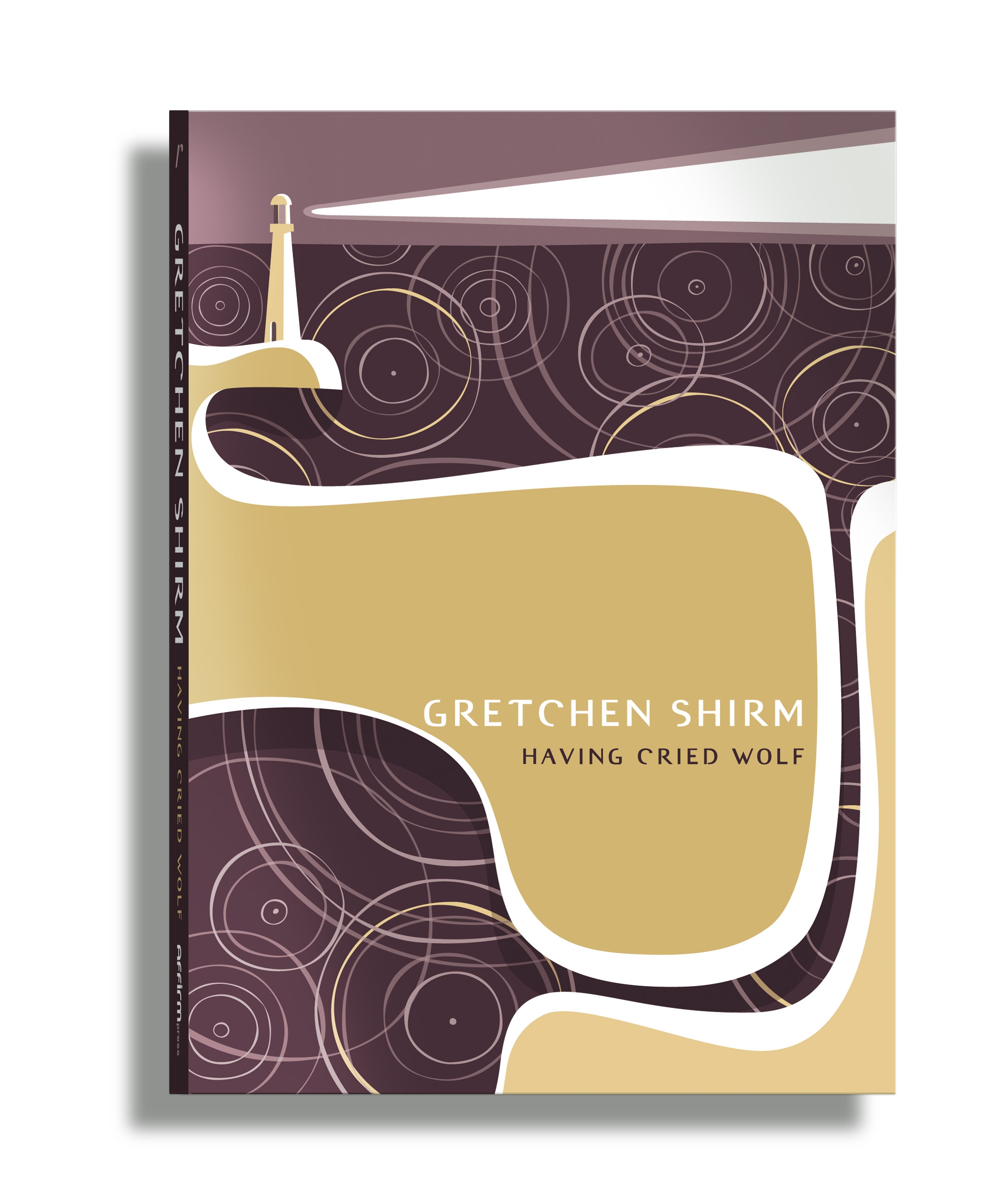
Having cried wolf, book cover

Book cover (Image from Affirm Press)

I have come to the conclusion that short stories are the best holiday reading for me. After a day’s sightseeing followed by reading up on sights for the next day, I usually find I have little time left for my reading. Novels are hard to read under such circumstances, but short stories? Well, they are just the thing. And so, on our recent trip to Hong Kong, I took Gretchen Shirm’s first collection of short stories, Having cried wolf.

Gretchen Shirm is a new Australian writer who was awarded the D.J. O’Hearn Memorial Fellowship for Emergent Writers in 2009. The blurb on the back of the collection likens her to Olga Masters, Helen Garner and Beverley Farmer, and I can see that, but as I was reading the stories I kept thinking of Tim Winton‘s The turning. The obvious reason is because, like The turning, Having cried wolf comprises short stories that are connected by character and place. The fifteen short stories are set in (or deal in some way with) the fictional New South Wales coastal town of Kinsale, and several characters reappear throughout, sometimes in their own stories and sometimes in others. It is rather fun, actually, identifying these and picking up the thread of a story as you progress through the book. Despite this, though, the stories do, I think, also stand well alone.

While Shirm doesn’t focus quite so much as Winton does on the description of place, beyond, that is, conveying the sense of small-town life, her themes are similar: the challenges of small-town living and, particularly, of maintaining meaningful relationships. These themes, however – particularly regarding maintaining relationships – are also those of the aforesaid Masters, Garner and Farmer.

And so to the stories. I must say I enjoyed them – though they are not a particularly cheery bunch. Shirm’s writing is tight and sure, with none of the over-writing often found in first-timers. She writes in first and third person, in female and the occasional male, voices. The characters range from early teens to middle-aged and she captures them all well. Her subject matter includes coming-of-age, marriage and separation, sexuality, suicide and some uncomfortable morality. While many of the stories are interlinked, they are not organised in a totally chronological manner. For example, we learn in the first story, “Breakfast friends”, that Alice is separated from her husband, but in a couple of stories later, “The shallows”, we meet her with the boyfriend who later becomes her husband. This nicely replicates I think the random way we often find out about people in real life.

I’m not going to do a blow-by-blow discussion of the stories but just mention a couple to exemplify some features of her writing. “Small indulgences” for example is a first person story by a rather down-trodden wife. It perfectly encapsulates a woman who has almost, but not quite (as she refuses to colour her hair), subsumed herself to her husband’s needs – and it ends on a delicious if rather sad ironic note. Several of the stories end effectively on metaphors that are subtle but gorgeously appropriate. “Duplicity”, which is about the son of the woman in “Small indulgences”, ends with “There were still no lights on in the house, but by then Daniel was used to the darkness”. And “Breakfast friends” ends with:

The cicada shell is empty now, but inside it was once soft, malleable and not yet formed.

The meaning of that is clear when we read it, but gains added poignancy as we learn more about its characters in later stories. There are many other lovely expressions throughout the stories, such as

… she wants to pour the memory into a mould and leave it there to set.

Why can’t I think like that!

Shirm uses foreshadowing in many of the stories to convey suspense and move the plot along, but she’s not heavy-handed about it. It does mean though that the stories are similar in tone. In other words, this is not a collection of great tonal range but I don’t think that matters, because there’s enough variety and interest elsewhere. There are however a few grammatical oddities that jarred. In a first person voice they can I suppose be forgiven, but there were a couple in third person stories that did bother me. “Peter’s friends swum in the pool” just isn’t right. Is it okay if the voice is third person subjective and that’s how the character might speak? I’m not sure. I’m being pedantic though because overall this is fine confident writing with lovely insights into human behaviour. It does not read like a first collection – and I hope we see more of Gretchen Shirm.

Gretchen Shirm
Having cried wolf
(Series: Long Story Shorts, 4)
Mulgrave: Affirm Press, 2010
ISBN: 9780980637892
221pp.

(Review copy supplied by Affirm Press)

Nicole Krauss, The young painters

In her work, the writer is free of laws. But in her life, Your Honour, she is not free.

Nicole Krauss‘s short story, “The young painters”, is a sly, clever little piece. I have not read Krauss’s novels so came to this short story with no preconceptions, other than that I’d heard of her. The story starts with:

Four or five years after we got married, Your Honor, S. and I …

Ah, I thought, so the narrator is defending herself in a court for some crime she’s committed. And so it turned out – more or less – because this is not about the usual sort of crime nor the usual sort of court. It is about the crime of art, that is the crime of stealing the lives of others for art’s sake. In this case, the artist is a writer and she has “stolen” a tragic story from a dinner host about “the young painters” of the title. She has also written a novel using her father’s last days, telling stories about him (particularly regarding his loss of control of his bodily functions) that she knows he would have seen as a betrayal. She does it nonetheless, justifying herself in two ways: one is that she doesn’t write the novel until after his death and the other is that the story reflects

less on him than on the universal plight of growing old and facing one’s death – I did not stop there, but instead I took his illness and suffering with all its pungent detail, and finally even his death, as an opportunity to write about his life and, more specifically, about his failings, as both a person and a father, failings whose precise and abundant detail could be ascribed to him alone. I paraded his failings and my misgivings […] even if the final notes of the book were of triumphant love and grief at the loss of him, in the weeks and months leading up to its publication a sickening feelings sometimes took hold of me  […] In the publicity interviews I gave, I emphasized that the book was fiction and professed my frustration with journalists and readers alike who insist on reading novels as the autobiographies of their authors, as if there were not such thing as the writer’s imagination …

Later in story she runs into the dinner party host and senses, rightly or wrongly (the point is not what others think but her own conscience), his displeasure at her use of the story. She defends herself, to his Honor, by saying the story had not been told in confidence, that she had not discovered it surreptitiously by sneaking around his diaries and journals (which of course begs the question of those writers who do!).

And so, here we have laid before us various writerly defences:

  • I’m universalising from the particular;
  • I’m not writing autobiography but fiction;
  • the story was “given” to me (and, presumably, you knew I was a writer when you told me).

But, for this writer, it all starts to play on her conscience … and here I will end so you can read the story yourself. It’s very short – just 4 pages if you print it out from the link below – and I’ve only touched the surface. The ending is effective.

If this story is a guide to Krauss’s ability as a novelist, and the way she thinks about her “art”, then I’d like to read more, as I found it a cleverly – and dare I say it, poignantly – conceived and executed story.

Nicole Krauss
“The young painters” (from “20 under 40”)
The New Yorker, 28 June 2010
Available: Online

Note: As with several of The New Yorker short stories, this is apparently an excerpt from her novel Great house.

Kate Chopin, Désireé’s baby

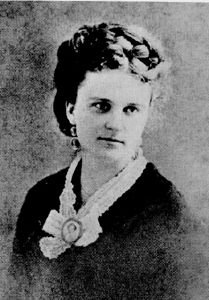
Kate Chopin

Chopin (Public domain, via Wikipedia)

I read Kate Chopin‘s short story “Désireé’s baby” (1893) back in March when Kirsty mentioned it in her comment on my last Chopin post, but I didn’t blog it then. However, when it appeared a couple of weeks ago as a Library of America selection, I felt its time had come. But, what to say? It is, in a word, gut-wrenching.

The first short story to create a lasting impression on me was Guy de Maupassant‘s “The necklace” (1884). It was that short story, really, that launched my enjoyment of short stories. I found them particularly appropriate for my student days when I couldn’t justify reading a novel but wanted some escape from set texts. I was consequently interested to read in the Library of America’s introductory notes to “Désireé’s baby” that Chopin has been compared to such writers as Maupassant and Flaubert. I can see the connection.

“Désireé’s baby” starts off gently – and, more to the point, innocuously:

As the day was pleasant, Madame Valmondé drove over to L’Abri to see Désireé and the baby.

It made her laugh to think of Désireé with a baby. Why, it seemed but yesterday that Désireé was little more than a baby herself…

We then discover that Désireé had been an abandoned baby and brought up by the childless Madame Valmondé and her husband, hence I suppose her name. As this (very) short story unfolds, subtle hints of something not quite idyllic are introduced. A young man of an old wealthy family, Armand Aubigny, falls in love with and insists on marrying the nameless, but now 18-year-old Désireé. He fell in love “the way all the Augibgnys fell in love, as if struck by a pistol shot”. What an odd image to use for love eh?

Then we hear that Aubigny is a strict master of his estate. The home is “sad-looking” with its roof “black like a cowl” and “solemn oaks” growing near it. And, more telling, under his rule “his negroes had forgotten to be gay, as they had been during the old master’s easy-going and indulgent lifetime”. Set against this is Désireé in her “soft white muslins and laces”, so we are not surprised when we read that

Marriage, and the birth of his son, had softened Armand Aubigny’s imperious and exacting nature greatly. This was what made the gentle Désireé so happy, for she loved him desperately. When he frowned she trembled, but loved him. When he smiled, she asked no greater blessing of God. But Armand’s dark, handsome face had not often been disfigured by frowns since the day he fell in love with her.

Now, there is a clue to the dénouement in this excerpt, but if you don’t know the plot I’m not giving it away. All I’ll say is that Chopin’s writing is superb in the way she uses imagery and irony to subtly set the scene and leave the clues so that the conclusion, though shocking, meets Amanda Lohrey’s criteria for endings.

In less than 6 pages, Chopin explores a complex set of themes, including the psychological and social ramifications of young love, old wealth, race and gender, with a clarity that is breath-taking. I’m not surprised that it is a much-anthologised and studied story.

Dinaw Mengestu, An honest exit

There are, I suppose, two exits in Dinaw Mengestu’s short story “An honest exit”, which you can read at The New Yorker. One is the exit the father in the story made, when a young man, from his home in Ethiopia and the other is his final exit from life. (No spoiler here: we are told he dies in the first line of the story.) Mengestu is an Ethiopian-born American writer. According to Wikipedia, this short story is an excerpt from his coming novel, How to read the air, and clearly belongs to that growing body of work, Immigrant Literature.

As it turns out it was rather an apposite read for me, given all the “Stop the boats” calls we Aussies have just heard during our recent election. I wish more people would read stories like this. They might then realise that boat people (let’s forget the people smugglers for a moment) are not opportunists gaily leaving their homes to sail to a “better” place. They are leaving their home, their culture, their life – and they do not usually do it lightly or with ease.

Anyhow, this particular story starts with the father’s death and the son, a college teacher in Early American literature, deciding to tell his father’s story to his students.  However, as is only too common, he doesn’t know the full story:

I needed a history more complete than the strangled bits that he had owned and passed on to me – a short, brutal tale of having been trapped as a stowaway on a ship. So I continued with my father’s story, knowing I would have to make up the missing details as I went.

And so, over the course of a few lessons, he tells a story to his students, about how his father managed to get to Sudan, and from there, through the help of a man called Abrahim (“like the prophet”), onto a ship bound for Europe. As we hear the story – which is believable even if not necessarily factual – we also learn a little about the son. He says, for example, that he calls his place of work “the Academy”, a name he has stolen from a Kafka story about a monkey who’s been trained to give a speech to an academy:

I used to wonder if that was how my students and the other teachers, even with all their  liberal, cultured learning, saw me – as a monkey trying to teach their language back to them.

We see how disconnected he feels from both his father and his life. However, as he tells his story he seems to start to (re)connect a little:

They [his students] had always been just bodies to me … For a few seconds though I saw them clearly …They were still in the making, each and every one of them. Somehow I had missed that … As I walked home that night I was aware of a growing vortex of e-mails and text messages being passed among my students. Millions of bits of data were being transmitted … and I was their sole subject of concern. I don’t know why I found so much comfort in that thought, but it nearly lifted me off the ground, and suddenly, everywhere, I felt embraced.

A little further on, we learn that his father’s story is being spread around the “Academy”, albeit distorted as these things go. He hears various versions involving the Congo, Rwanda and Darfur! He is at one point called into the dean’s office:

“… How much of what they’re [students] saying is true?”

“Almost none of it,” I told him …

“Well, regardless of that,” he said, “it’s good to see them talking about important things. So much of what I hear from them is shallow, silly rumours. They can sort out what’s true for themselves later.”

The narrator is a little disconcerted by this, by the idea that “whether what they heard from me had any relationship to reality hardly mattered; real or not, it was all imaginary to them”. And yet, he himself is making a lot of it up as he goes! He continues his story with the students, ending at the point his father leaves Sudan as a stowaway. He says:

My students, for all their considerable wealth and privilege, were still at an age where they believed that the world was a fascinating, remarkable place, worthy of curious inquiry and close scrutiny, and I’d like to think I reminded them of that. Soon enough they would grow out of that and concern themselves with the things that were most immediately relevant to their own lives.

What he doesn’t do is tell the real truth of his father’s escape. Rather, when he gets to this point in his father’s story, he says “I knew that it was the last thing I was going to say to my class”. We don’t actually know what he does next because the rest of the story concerns his father, but it seems that there is a third exit in the story, his from teaching. It probably is “an honest exit”. All in all, this is an intriguingly layered story about migration, dreams and trust, stories and truth, teachers and students, and privilege.

To end, I might just return to Kafka’s “Report to the Academy” in which the ape says, “There is an excellent German expression: to beat one’s way through the bushes. That I have done. I have beaten my way through the bushes. I had no other way, always assuming that freedom was not a choice”. It rather suggests to me that there’s more than one reason our narrator alludes to Kafka’s monkey…

Edgar Allan Poe, Hop-Frog

Edgar Allan poe

Edgar Allan Poe (Presumed Public Domain, via Wikipedia)

I am loving the way Library of America is encouraging me to finally read authors I’ve been meaning to read for a long time. Yes, they are short works, but at least I am getting a sense of these authors – and that’s a start. This week’s offering is Edgar Allan Poe’s “Hop-Frog”. Like the other works I’ve blogged about, you can read it online at the Library of America.

I must admit I only knew of Poe as primarily a writer of Gothic and horror stories, so I was a little surprised to discover that “Hop-Frog” is a satire. It starts with:

I never knew anyone so keenly alive to a joke as the king was. He seemed to live only for joking…

I rather wondered if this was going to be a fairy story, but I quickly realised that it was something quite different. We discover in the first paragraph that the surest road to the king’s favour was to tell jokes, and that the king had 7 ministers who were all accomplished jokers. The king’s jokes, however, do not rely on wit. Rather

He had a special admiration for breadth in a jest, and would often put up with length, for the sake of it. Over niceties wearied him … upon the whole, practical jokes suited his taste far better than verbal ones.

Do you sense the likelihood that a trick is to be played? If so, you’d be right. Without giving too much away, I will say that there are two more characters in this story, the king’s fool, because every king should have one, and a young dancer. Now, the fool is the Hop-Frog of the title. He is a crippled dwarf. Here is Poe’s description of Hop-Frog:

…Hop-Frog [the name given to him by the seven ministers] could only get along by a sort of interjectional gait – something between a leap and a wiggle – a movement that afforded illimitable amusement, and of course consolation, to the king, for (notwithstanding the protuberance of his stomach and a constitutional swelling of his head) the king, by his whole court, was considered a capital figure.

Surprising that, eh? The young dancer is Trippetta, also a dwarf but a well-proportioned one. As the story goes, Hop-Frog is asked by the king to come up with an idea for a costume for him and his ministers to wear to a Masquerade Ball. Before obtaining Hop-Frog’s ideas, however, they torment him by making him drink alcohol, something they knew did not agree with him:

But the king loved practical jokes, and took pleasure in forcing Hop-Frog to drink and (as the king called it) “to be merry”.

As you have probably guessed, the resolution involves a practical joke that rather turns on the king – but, other than telling you that, my lips are sealed. To this extent the story is pretty predictable. What makes it a good story, despite this, is not only the way Poe plots it (because it is perfectly set up), but the satirical language in which it is told. I particularly loved this:

“…Characters, my fine fellow; we need characters – all of us – ha! ha! ” and as this was seriously meant for a joke, his laugh was chorused by the seven.

Not knowing much about Poe, I read this as a satire of power, of the way the powerful can have no qualms about humiliating and belittling those less powerful. And, indeed, the story works very well on this level. However, there is, apparently, the possibility of something else also going on. According to LOA’s brief introductory notes, scholars note the parallel between Hop-Frog and his tormenters, and Poe and his critics. The notes also suggest other parallels with Poe’s life such as his being an orphan, and his problems with alcohol. There is more discussion of these parallels in the Wikipedia article on the story.

All that said, it is, in the end, a revenge story – and a pretty fine one at that. I should read more Poe.

Helen Garner, Cosmo cosmolino

When I returned to seriously reading Australian writers back in the 1980s, there were four women writers who caught my attention, and I have loved them ever since. They were Elizabeth Jolley (1923-2007), Thea Astley (1925-2004), Olga Masters (1919-1986) and Helen Garner (b. 1942). Garner, the youngest by a couple of decades, is the only one still here, still writing novels, short stories, non-fiction and journal articles. I say I love her, but I can’t say I always agree with her. In fact, sometimes she makes me mad – but I admire her honesty and love her writing.

Cosmo cosmolino is not her most recent work. It was published in 1992 and has been on my TBR pile since my brother gave it to me in 1995. How embarrassing! But it finally managed to scramble to the top and I’m glad it did. It’s an intriguing book: it looks like two short stories (“Recording angel” and “Vigil”) and a novella (“Cosmo cosmolino”), but nowhere on the cover or the title page does it say “a collection of short stories”. This means, I think, that we are meant to see it as a novel.

So, how does it work as a novel? Each story would, I’m sure, stand perfectly well alone, but the two short stories also work as back stories to the novella. The tricky thing though is that the connections between these three are only obvious if you are an attentive reader – or, if you re-read it. For me it was a bit of both. I got some of the connections first time around, and others when I flicked through it to prepare this review. This is not a big problem but there is more depth if you have “got” the back stories when you read the final story.

And so, what are the three stories?

  • “Recording angel”. A recently separated woman (who is clearly Janet in the final story) visits an old friend and his wife in Sydney. This friend is seriously ill with brain cancer. He has not only been an important support and rescuer for her but the one who has “recorded” her life. And, he is never backward about telling her his view of what that is. She doesn’t always like or agree with this view, but she nonetheless fears the possibility that in sickness he will “forget everything” and that she will thereby lose an important connection with herself. There is a brief mention in this story of Ursula, who is the mother of the girl in the second story.
  • “Vigil”. A young woman, who is clearly “out of it” and waiting for her father to rescue her, has a boyfriend Ray(mond), who appears to be there more for the “good times” than for a mutually supportive relationship. When things go wrong, he’s not there for the count. This, we discover in the final story, is something he’s been trying to rectify ever since.
  • “Cosmo Cosmolino”. Three rather lonely people – the aforementioned Janet and Ray plus the rather fey artist, Maxine – find themselves sharing Janet’s house. It’s an uneasy grouping.  Ray is waiting for his big brother Alby (who once lived in Janet’s house) to arrive and take him away; Maxine would like a baby but is running out of time; and Janet is recovering from a broken marriage and doesn’t really know what she wants.

These are not strongly plot-driven stories. However, quite a bit happens on the emotional front, and this is Garner’s real subject.

Which brings us to the themes

Taken together, these stories are about the muddles people get into, particularly regarding their relationships with each other. Poor decisions, missed opportunities and the never-ending seeking for meaningful connection are the stuff of her fiction. But there is a departure in this book: the introduction of a spiritual (and at times magical) element, often involving some sense of “visitation”.

Angel Wings

Angel wings(Courtesy: OCAL via clker.com)

In the first story, the distraught woman is visited at the end by “a small, serious, stone-eyed angel of mercy”. In the second story Ray is dragged into a rather ghoulish underworld-like scene, after which he is told “You’ll be right … Things’ll be different now”. And in the final story there are all sorts of hints of spiritual happenings, including the “dark column” that shadows Janet, and Maxine’s “magical realist” flight “into the blinding upper sky” where “nameless souls and sacraments outrageously disport themselves”.

It all feels very un-Garner-like. She is usually firmly grounded in the real world of messy relationships where people struggle to connect and find meaning. But I should have been prepared: the novel’s epigraph from Rilke reads “Every angel is terrible”. “Terrible”, of course, has two meanings, and I suspect Garner is playing on both here – on the fear angels engender and the awe. As this paradox implies, there is no suggestion here of easy answers but more of possibilities. Here is Janet at the end:

Our minds are not hopeful, thought Janet; but our nerves are made of optimistic stuff.

I was intrigued by the use of “nerves” rather than “souls” or “spirits” given what had gone before, but I rather like her use of that word. It’s effectively ambiguous.

Finally, the style

The thing that marks Garner out for me is her expressive language. Her books are rarely long. This isn’t because she doesn’t have much to say but because she doesn’t waste words. Read this:

… The heart of the house was broken. It ought to have been blown up and scraped off the surface of the earth.

But houses as well as their owners must soldier on …

and this:

… and the architraves had lost their grip on the walls, and slouched this way and that …

and, finally, this:

The room contracted around Ray again, fitting itself tightly to the shape of him, squeezing …

I love the atmosphere and emotion conveyed by language like this.  Garner uses a lot of imagery and symbolism – but never simply. Birds, for example, can augur wonder and hope, or, particularly when “the failure bird” appears, something completely different. There are also biblical allusions, such as when Ray denies three times that he knew his girlfriend. No wonder he’s dragged into the underworld for a bit of shock therapy! From beginning to tend, the language never sways from conveying a sense of things being awry because the characters’ lives are so.

Cosmo Cosmolino is one of those books that is both accessible and challenging – and that is just the sort of book I like to read.

Helen Garner
Cosmo cosmolino
Ringwood, Vic: McPhee Gribble, 1992
221pp.
ISBN: 0869142844

Haruki Murakami, Blind willow, sleeping woman

Murakami, Blind willow, sleeping woman

Bookcover, used by permission of the Random House Group Ltd

Granted, my fiction contains more than its share of invention, but when I’m not writing fiction I don’t go out of my way to make up meaningless stories. (from “Chance traveller”, 2005)

This is as good a way as any to commence my review of Haruki Murakami’s recent short story collection, Blind willow, sleeping woman, because it clues you in immediately to the games Murakami plays with his reader. In “Chance traveller”, we are told that the “I” “means me, Haruki Murakami, the author of the story” and that most of the story is “third-person narrative”. In fact, this short story, like several in the book, comprises a story-within-a-story, a story told to a narrator who is present in the story himself.

It may sound odd to say this about a short story collection but I found it a bit of a page-turner. It comprises 24 stories written between 1980 and 2005. There are a lot of similarities between the stories  – the “disconnected” tone, the frequent use of first-person narrator, the story-within-a-story technique, and the regular use of flashbacks – but Murakami’s inventions are so varied and odd that you are compelled on.

What I love about Murakami is the matter-of-fact rather detached tone he uses to tell stories that often start off being quite ordinary but usually end up taking us to the strangest places. By focussing on the ordinariness of people, by including seemingly unimportant everyday and often pedantic-sounding details, Murakami lulls us into believing in his world so that when the bizarre happens – as it often does – we accept it with barely a blink.

Those of you who know about Murakami know that he is enamoured, if that’s not too strong a word, with the West – and his stories are peppered with allusions to Western culture from Elvis to Richard Strauss, from John Ford to Balzac. His cultural knowledge is quite prodigious. It is this “westenisation” that has, historically, put him at odds with the Japanese literary establishment. He explores this amusingly but pointedly in his story “The rise and fall of Sharpie Cakes” (1981/82) which satirises the drive to conformity and tradition. The final words of this story are:

From now on I would make and eat the food that I wanted to eat. The damned Sharpie Crows could peck each other to death for all I cared.

Like Murakami’s novels, these stories tend to be about alienation and loneliness. Most of his characters have trouble connecting with others, and when they do it often doesn’t go as well as they hope. Murakami  seems to see being alone as the essential condition of life:

He found it natural to be by himself:  it was a kind of premise for living. (“Tony Takitani”, 1990).

In  “The Ice Man” (1991) the couple go to the South Pole which “turned out to be lonelier than anything I could have imagined”. “The year of spaghetti”  (1981/82) concludes with the narrator alone, cooking spaghetti and suggesting that, in exporting durum, the Italians had exported “loneliness”. And so on, from story to story. Somewhat related to this focus on loneliness is a sort of fatalism, a view that life is not to be understood but just is:

Life: I’ll never understand it. (says Tony Takitani, in “Tony Takitani”, 1990)

Life is pretty damn hard. (says a girl to the narrator in “A ‘Poor Aunt’s’ story”, 1980/81)

That’s life. (says the young man, about something pretty trivial, in “A perfect day for kangaroos”,  1981/82)

He had to be as true to his homosexuality as he was to his music. That’s music, and that’s life. (“Chance traveller”, 2005)

Get all the fun out of life while you’re still able. They’ll serve you the bill soon enough. (“Hanalei Bay”, 2005)

And alongside all this, Murakami explores the fine line between reality and unreality or illusion. His characters tend to either escape reality when they can or find it slipping away from them – or, conversely, find it intruding when they don’t want it. The young couple in “A folklore for my generation” (1989) find “reality … invisibly starting to worm its way between them”. The first-person narrator in “Man-eating cats” (1991) writes that “for a second or two my consciousness strayed on the border between reality and the unreal … I couldn’t get a purchase on the situation” and a little later says “From time to time I was sure that I could make out the cat’s eyes, sparkling between the branches. But it was just an illusion”. And in one of my favourite stories, “A ‘Poor Aunt’ story” (1980/81), the fictional aunt becomes “real”, “stuck” to the narrator’s back, and disconcerts his friends:

‘Gives me the creeps’, said one friend.
‘Don’t let her bother you. She minds her own business. She’s harmless enough.’
‘I know, I know.  But, I don’t know why, she’s depressing.’
‘So try not to look.’
‘OK, I suppose’. Then a sigh. ‘Where’d you have to go to get something like that on your back?’
‘It’s not that I went anywhere. I just kept thinking about some things. That’s all.’

Not only do I like this for its idea – the making concrete of the thing you are thinking about – but it’s a good example of Murakami’s facility with dialogue.  “A ‘Poor Aunt’ story” has to be a bit of a writer’s manifesto – about the power and the limits to that power of words (and perhaps more generally of art). In fact, the idea of art as salvation appears a couple of times in the book. Earlier in this story it is suggested that writing about something, like a poor aunt, means “offering it salvation” and in “A seventh man” (1996) there’s a sense that art may offer “some kind of salvation … some sort of recovery”.

I could write much more on this book – tease out delicious story after delicious story, and give lots of examples of his expressive imagery, such as “I was beginning to feel like a dentist’s chair – hated by noone but avoided by everyone” (“A ‘Poor Aunt’ story”). However, that might spoil the pleasure for you (if you haven’t already read it), so I will finish with Murakami’s own words from his introduction:

My short stories are like soft shadows I have set out in the world, faint footprints I have left behind. I remember exactly where I set down each and every one of them, and how I felt when I did. Short stories are the guideposts to my heart, and it makes me happy as a writer to be able to share these intimate feelings with my readers.

All I can say to this is, what a fascinating heart to know…

Haruki Murakami
(Trans: Philip Gabriel and Jay Rubin)
Blind willow, sleeping woman
London: Vintage Books, 2007
436pp.
ISBN: 9780099488668

Jeffrey Eugenides, Extreme solitude

I’ve only read one work by Jeffrey Eugenides, and that was his grand saga of an immigrant family in America, Middlesex. I enjoyed its sweep and the insight it provided into the social history of twentieth century America from an immigrant point of view, and I liked the way he mixed light and dark in his story-telling. “Extreme solitude” is, though, a short story, and was published this month in The New Yorker. It is a rather tongue-in-cheek take on young love viewed through the changing literary theory scene in early 1990s (I think) academia.

The story opens with Madeleine and her realisation that she loves Leonard, whom she’d met in an “upper-level semiotics seminar”. This class is taught by a lecturer who had changed from his long-standing allegiance to New Criticism (and its focus on text) to Semiotics and the ideas of theoreticians like Roland Barthes. Semiotics was only just reaching academia – at least in my neck of the woods – in the very early 1970s and so the tensions between these two approaches to literary criticism somewhat passed me by.

Madeleine, as I’m sure I would have in her place, initially found Semiotics mystifying and unhelpful. After a few seminars she goes to the library to find a nice nineteenth century novel:

to restore herself to sanity. How wonderful it was when one sentence followed logically from the sentence before! What exquisite guilt she felt, wickedly enjoying narrative! Madeleine felt safe with a nineteenth-century novel. There were going to be people in it. Something was going to happen to them in a place resembling the world.

But then, “for reasons that were entirely extracurricular, semiotics began making sense” and it all, of course, has to do with love! She’s reading Roland Barthes’ A lover’s discourse and comes across his description of “a lover’s discourse” as being “extreme solitude”. She connects – because it describes her feelings for the somewhat self-sufficient Leonard. From then on, the story plays in a lovely tongue-in-cheek way with love and particularly with the “signs” or “signifiers” of love (as Semiotics would have it), with the language one uses (as in the loaded “I’d love to” come out with you), and with all those early relationship behaviours that you try to “deconstruct” to find out whether he does or doesn’t.

It’s a pretty straight-forwardly structured short story, and the ending is a little pat. But made its point clearly. I read “Extreme solitude” as a clever and playful take on the limits of theory … and I thought it was fun.