Lynette Washington (ed), Breaking beauty (Review)

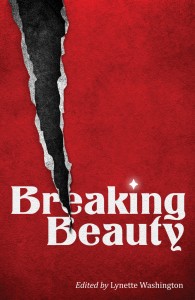
Lynette Washington, Breaking Beauty

Courtesy: MidnightSun

As I’ve said before, I usually don’t read book introductions until the end. In the case of Breaking beauty, an anthology of short stories edited by Lynette Washington, it wouldn’t have mattered if I had read it first because Brian Castro’s intro gave nothing away while at the same time saying a lot. He starts by noting that the short story is making a come-back, “and wondering why it ever went away, perhaps because we were too imbued with the great whatever novel in the Borealis of canons or by the glossy fits of fashionable shades of grey”. Love the bite in that!

It’s a great introduction. It’s erudite, pithy, and often tongue-in-cheek. Castro says, reading my mind, “what good is an intro-duction if you haven’t been in-ducted, or even read the stories”. What indeed? And yet, his “intro-duction” manages to craftily incorporate the stories and their contexts, the ideas that drive them, without over-explaining or giving anything away. It is one of the most delicious introductions I’ve read in a very long time – unlike my introduction, so let’s move on!

Breaking beauty is a collection of stories by graduates of the University of Adelaide’s Creative Writing course. As Castro hints through a reference to Rousseau and as Washington states more directly, the stories explore the “complementary forces” and “dualities” encompassed by the idea of beauty, the notion that “there is no beauty without ugliness”. There are 28 stories, of which 22 are by women. They range in length from three or four pages to ten or so. Five of the stories have been published elsewhere, including Melanie Kinsman’s heart-rending “A paper woman” which was published in the Margaret River Press’s The trouble with flying (my review).

As you would expect, the stories look at beauty from all sorts of angles, physical, emotional, spiritual, even intellectual, but they rarely tell it straight. In Matthew Gabriel’s “To my son”, for example, an ugly father presents, to his apparently similarly ugly son, his solution for “neutralising physical appearance” which, he believes, will “not only rid the world of ugly’s plague but also its inextricable and toxic inverse”. Jo Lennan’s “A real looker” explores an extra-marital passion that resulted in a daughter who struggles to understand the adult world of passion, and a father transfers this passion to a boat called Marilyn. Sean Williams’ “The beholders” is a speculative fiction piece which cleverly twists the idea that beauty is in the eye of the beholder.

In other stories, beauty is more abstract . The second story, Corrie Hosking’s “A well strained fence”, is told first person by a young man for whom beauty is neatness and order. It’s a nicely sustained story that epitomises what a complicated notion or concept beauty is. It also neatly provides me with an opportunity to talk about voice. Just over half the stories are told first person, and two are told second person. One of these, Mary Lynn Mather’s mother-and-child story, “Whatever happened to the fairy-tale ending”, uses second person effectively to convey an emotion that is almost beyond bearing.

But of course voice is about more than which “person” is used; it’s about the persona used to tell the story, that is, about how the narrator of that story sounds to us. In short story collections – particularly anthologies – we usually find a great variety in voice (and, related to this, tone). Lynette Washington, in “Lia and Amos”, uses a matter-of-fact, reporter-like third person voice to tell a story with an unusual twist. The voice keeps us on our toes, divulging only what is going on in the moment, with no backstory or additional information, so that the end, when it comes, surprises and yet seems natural at the same time, because nothing has been sensationalised. By contrast, Rosemary Jackson’s narrator, Athina in “Athina and the sixty-nine calorie burn”, exudes the distressing (in this case), naive confidence of the young while the reader knows exactly what’s going on.

Several stories, including some already mentioned, tackle contemporary society’s (over-)emphasis on beauty. Others look at a broader notion of aesthetics from some interesting angles. Rebekah Clarkson uses an argument about aesthetics – a finial, in fact – in “A simple matter of aesthetics” to expose male arrogance, while in Katherine Arguile’s “Wabi-Sabi” a man’s commitment to aesthetics puts his family’s health, indeed survival, at risk. Meanwhile, Stefan Laszczuk’s narrator in “The window winder” finds beauty in a very gruesome place.

There’s no way, of course, that I can mention all twenty-eight stories. The ones I’ve mentioned here aren’t the only ones I enjoyed. There are moving – and often painful – stories about love, about sons and mothers, nieces and aunts, husbands and wives, mothers and children. There are stories about ageing, and the losses that usually attend, in one form or another. And there’s Lilian Rose’s cheeky story about a very unusual “Ladies Tea Party”.

Castro writes in his introduction of “the fleeting and the fleeing before one’s eyes, as a good short story is wont to do, not allowing its meaning to fully emerge because that would kill it, but letting it flit mothlike into memory”. This definition of good short stories could also define “true” beauty – as I’m sure the writers in this diverse and enjoyable collection would agree.

awwchallenge2015Lynette Washington (ed)
Breaking Beauty
Rundle Mall: MidnightSun Publishing, 2014
228pp
ISBN: 978192522700

(Review copy supplied by Midnight Sun)

John Clanchy, Six: New tales (Review)

ClanchySixFinlayLloydJohn Clanchy, like Julian Davies whose Crow mellow I recently reviewed, is another Australian writer I’d heard of but not read until his piece in the Canberra centenary anthology, The invisible thread. What a treasure trove that has turned out to be! Anyhow, titled “The gunmen”, Clanchy’s contribution was an excerpt from his first novel, The life of the land, published in 1985. He’s a versatile writer, it seems, crossing genres (such as crime and mystery) and form (novels, short stories, and non-fiction). Six, the book I’ve just read, is a collection of six short stories – long short stories, in fact. An earlier collection of his, Vincenzo’s Garden, won the 2005 Queensland Premier’s Literary Award for Short Stories and the 2006 ACT Book of the Year. If it’s anything like Six, I can see why.

But, before I get onto the book itself, a little about the publisher. Finlay Lloyd describes itself as a

a non profit publisher dedicated to encouraging imaginative and challenging writing, to subtly innovative design and to celebrating the pleasures of print on paper in an electronic age. Without the commercial imperative of most publishers, we are able to champion ideas and authors for their intrinsic interest and quality. We support independent bookshops as local outlets for these ideas and authors. Our books are printed in Australia to support the local industry (by Griffin Press and Ligare Book Printing).

It’s the “subtly innovative design” I particularly want to mention here (while also appreciating the rest of their philosophy). I’ve handled now about four of their books and they are beautiful. The shape varies, with some, such as Six, being long and thin. Subtly different (just like all planes!), and nice to hold. Six has an additional special touch – the first page of each of the stories is on slightly whiter, finer paper. There’s no table of contents, but you can quickly locate each of the stories by flicking the book through to these pages. These are simple things, but they make you feel that the book in your hand has been produced with love and care.

Anyhow, onto the book itself. I found all six stories completely engaging, imaginative, and one, surprisingly, laugh-out-loud funny. I say surprisingly because it’s rare that I’d read a truly funny short story, although there’s often one or two in a collection that make me smile. This story, “Slow burn”, is, I suppose, a “mere male” story, and, while I don’t really approve of “mere male” stories – they can be somewhat condescending – this one is too funny, too beautifully controlled, not to make me laugh. It’s all about Daryl Turtle who is “ill. Dangerously, perhaps fatally ill” and his wish to make himself a comforting piece of toast to go with the thermos coffee his thoughtful wife has left for him.

The other five stories – “Slow burn” is the third in the collection – are more serious. They deal with contemporary situations, a father who turns out to be gay and another who is discovered to have had a second family in another country. There’s a husband whose affair with an indigenous woman exposes an ugliness that shocks him. And there’s a powerful story about a couple whose daughter was killed overseas in a Bali-style bombing. These are the sorts of situations you read or hear about and wonder how the people at the centre of them cope. Clanchy explores just this, with sensitivity and authenticity, teasing out the underlying humanity of his characters. Whether they are a philandering husband, or rebellious daughter, a grieving father or lonely postman, we empathise and are encouraged to see the extent of human capacity to accommodate the unexpected. To put it another way, Clanchy’s characters tend to be confronted with seemingly black-and-white situations but find themselves capable of recognising the greys and responding, in most cases, generously and/or with growth.

The stories are not tricksy. In other words, they are not the sorts of short stories that you get to the end and wonder, “what was that about?” This may come from Clanchy’s experience in writing genre – two collaborative crime thrillers with another Canberra writer, Mark Henshaw. It may also relate to the fact that these are long-form short stories. (My rough calculation is that they are around 15,000 words, some shorter, some longer, whereas short stories are typically half that or less.) You may have noticed that, with the exception of “Slow burn”, I haven’t named the stories I’ve referred to. This is to avoid spoilers implicit in my comments. That said, while each story has a strong narrative arc with clear plot points, the focus is not really the plot. It’s the characters – which is where my interest lies and why I enjoyed the book so much.

I also enjoyed Clanchy’s writing. It’s clear and direct, and abounds with sharp observation. There’s humour, even in the serious stories, and fun wordplay. Here’s a description I loved:

Dot runs the general store and post office in town. She hates the sound of ‘Dot’ and you won’t get the time out of day if you call her that. ‘Dot is what a pen does to an eye,’ she says to anyone who doesn’t know, ‘and I’m an optometrist’s daughter, so call me May.’ And since she’s in charge of the town mail, that’s exactly what people do, though most people think that Dotty would suit her better. (from “True glue”)

As I neared the end of the last story, I was reminded of one of my favourite quotes, Wallace Stegner’s “Civilisations grow by agreements and accommodations and accretions, not by repudiations” in Angle of repose. In Six, as in most fiction of course, the characters are challenged by some event or situation and need to decide how they will respond. Stegner’s quote can, I believe, be applied not just to civilisations but to relationships and, indeed, character. Six evokes this perfectly. I really don’t know why Clanchy is not better known.

John Clanchy
Six: New tales
Braidwood: Finlay Lloyd, 2014
245pp.
ISBN: 9780987592934

(Review copy courtesy Finlay Lloyd)

Julie Twohig, Full circle (Review)

When I review individual stories, I tend to choose ones that are available on-line. Is that fair, I wonder? It means the author receives no payment for the story I review, but it does mean readers can enjoy a story that they may not otherwise easily access and, I suppose, that the author receives some exposure. Does that make sense? Whatever! This is what I do!

So, to Julie Twohig. She came to my attention when she commented on one of my posts. As most of us do when people who have blogs themselves comment on our blogs, I checked out her blog. It turned out that Twohig is a short story writer, and has had some success, winning or being shortlisted for various awards/competitions, and being included in a few published anthologies. She’s a good example – I hope she doesn’t mind being held up as an example – of the hard work short story writers put into getting their stories known and published.

She provides the text for a few of her stories on her blog, but I chose to read “Full circle” because it is, she writes, her “first winning story and first short fiction to be published”. It won the Leader (Leader being a newspaper group) Darebin (being a community in Victoria) Short Story Competition and was also Commended by The Society of Women Writers Victoria Inc. I enjoyed the story. It’s not one of those tricky short stories that leaves you wondering at the end, but it’s a story from the heart about a middle-aged woman, Jean, returning to the Luang Prabang area of Laos, alone, thirty-two years after her previous visit with Peter, the man who was to become her husband. Peter isn’t with her because, we soon realise, he has died (not because of divorce). Early in the story Jean remembers him saying “I’ll rest when I’m dead”. The tone, here, is sad, nostalgic, not angry or bitter.

The story starts like a typical travel story. Our protagonist is on a bus in an unfamiliar environment, trying to work out how to navigate a different culture. It’s nicely done:

After freeing her backpack from an overhead rack Jean tries to dodge the spillage while scrambling past passengers packed tightly along the aisle. ‘Sorry, sorry … excuse me.’ She had thought it might be rude to thump her fist on the ceiling the way the locals do to make the driver stop. She wishes now she had.

All travellers are, I’m sure, familiar with this uncertainty about how to act. Anyhow, we are not sure what Jean is doing except that it is something she feels she must do – “this trip is for her. For Peter. Full circle”. Aha, there it is, the title, half way through the story.

I’d love to discuss what she is doing because it rang true to me – not that I have experienced exactly the same thing (my spouse is still alive), but I’ve experienced enough for it to have that lovely sense of “ah yes, this makes sense”. The story is well structured. There are a few flashbacks to give us a sense of where Jean is in her life, but only as is needed to convey who Jean is and why she might be doing this trip. The imagery isn’t particularly original, but it is effective, and not overdone, which suggests that Twohig has taken care to hone her story.

At the end of the story on her website, Twohig tells us that poor handling of the publication of the anthology resulted in a furore, which led to the competition not being repeated. Interestingly, the very same Leader newspaper group ran an article in February last year announcing the inaugural Mayor’s Writing Awards in Darebin, with two prizes – for Adult and Children’s short fiction. The winners of these prizes were announced in June on the Darebin Arts website. The winning and highly commended stories earned a cash prize and the “option to be published in n-SCRIBE issue 9″, the City of Darwin’s community arts magazine, which is published annually. It remains to be seen whether this competition will be run again in 2015. Full circle?

awwchallenge2015Julie Twohig
“Full circle” in Around the block: Our Darebin Community
Greensborough, Vic: Flat Chat Press, 2007
Available online at the author’s website

Anna Funder, Everything precious (Review)

Anna Funder, Everything preciousI must thank John aka Musings of a Literary Dilettante for introducing me to this intriguing little e-work by Miles Franklin award-winner, Anna Funder. When John read it, back in October, it was in daily instalments, but when I clicked the link in his post I was offered several e-book versions, including for the Kindle and iPad, or for an audiobook which I believe is read by Funder. It’s free.

So, what is it? Here’s the description at the start of the story:

This story is a unique collaboration between Paspaley, acclaimed author Anna Funder, photographer Derek Henderson and award-winning actress Teresa Palmer. It’s an original story of love, self and all things precious, featuring the most beautiful pearls in the world.

Paspaley, for those who don’t know, is an Australian-based company founded in the pearling industry of northwestern Australia. Although it has now diversified into other businesses, it is probably still best known for its pearling arm. As you might assume from the title of Funder’s story, “Everything precious”, it is the pearling arm that sponsored Funder. John wrote his post before he finished reading the story, and said he feared finding some product placement at the end. However, in a postscript added later, he advised there was no such thing. He’s right – in a sense – as there’s no reference to pearls or Paspaley in the text. But, in my e-book version, between chapters 4 and 5, there is a series of five photographs taken presumably by Derek Henderson and featuring, again presumably, actor Teresa Palmer. They are tasteful in that high-class-magazine way … no text, just beautiful images of a lovely woman wearing gorgeous pearls.

I researched a little more, and discovered that the story is part of a “multi-channel campaign” to launch Paspaley’s new Touchstone collection. The “campaign uses storytelling to engage a new, younger, more fashion conscious audience and make pearls relevant and appealing to them”. Intriguing eh! I wonder how successful it’s been?

What, besides presumably money, did it all mean for Anna Funder? Here’s what she says:

Working with Paspaley has been one of the most exciting writing experiences I’ve had. To have total creative freedom, a time limit and an audience turn out to be the perfect conditions for writing a short story. And the idea that a company, which makes things of great beauty and value from nature, values literature, which (on a good day) is also something of beauty and value that reflects the world around us, was inspiring. Writing this story has been a joy and a privilege, and was some of the most fun I’ve ever had writing.

Now, let’s talk about the story, which the promoter’s website I’ve linked to above describes as “a short story of desire, need, love and all that is precious”. The plot is pretty simple. It’s about Tess, who works in online legal publishing, and would be in her mid thirties. She has a husband, Dan, head of epidemiology in the State Health Department and a lovely SNAG if ever there was one, and three children, Charlotte who is 13, and the twins, Tom and Lorna, who are 6. She also has a father, Howard, a retired judge who is in Assisted Living because he has dementia. This is, then, an upper middle class, professional family. Tess and Dan have been together for 17 years and she’s feeling a little trapped and restless. A bit of a midlife crisis, in other words, or, as Funder writes in the story, Tess is:

at a hinge moment: between youth and age, between the life you thought you wanted and the one you feel might, now, suit you better.

So, Tess decides to consider that other life she might have had, but … well, I won’t give the ending away because it’s easy for you to access at Paspaley.

It’s interesting to look at this story in terms of the campaign because I’m presuming that although Funder had “total creative freedom” there must have been a brief – one that at the very least identified a target market, oops audience, for the story. This audience would, I’m sure, identify pretty easily with the character and set up, with the restlessness attended by guilt that she should be so restless. The brief must surely have identified a tone too. You wouldn’t sell pearls with a grim story – or did they assume Funder would have the nous to make the story appropriately positive? Regardless, the story would clearly suit what I assume was Paspaley’s target market – upwardly mobile or already there professional thirty-to-forty-something women who have the disposable income but who may see pearls as the province of their Baby Boomer mothers.

This all sounds pretty cynical, and to some degree it surely must be. I would describe the story as “chicklit” for the well-to-do married woman. It’s not challenging reading. The resolution is easy to comprehend and reassuring. However, it is written by Funder. This means that the writing is good, there’s intelligence at play (including an allusion to Chekhov!), and the insights into the pressures of early 21st century professional family life are authentic even if not explored in any depth.

awwchallenge2015Overall, then, it’s an enjoyable read and an interesting concept to ponder. I certainly wouldn’t criticise Funder for taking up the opportunity offered to her. Writers, like all of us, have to live – and if a company like Paspaley is prepared to pay, and offer “complete freedom”, why would you say no?

Anna Funder
Everything precious
Sydney: Paspaley, 2014
Smashwords Edition
Available: Gratis at Paspaley

Annie Parker, Passages in the life of a slave woman (Review)

I have, this year, reviewed a couple of Library of America‘s (LOA) stories about slavery in the USA, one being Harriet Ann Jacobs’ “The lover”, and the other William Wells Brown’s, Madison Washington. I’ve always been interested in slavery in the US, so when Annie Parker’s “Passages in the life of a slave woman” appeared in my inbox, I of course wanted to read it – and discovered yet another intriguing story.

When I say I discovered “another intriguing story”, I don’t just mean Parker’s story but the story of Parker herself. Let me explain. Parker’s story, “Passages in the life of a slave woman”, was published, according to LOA’s always illuminating notes, in Autographs for freedom. This was an annual anthology of antislavery literature published as a fundraising venture by the Rochester Ladies Antislavery Society. (Only two were apparently produced). The anthologies included “original works by such dignitaries as Ralph Waldo Emerson, Harriet Beecher Stowe, Theodore Parker, William Wells Brown, Catherine M. Sedgwick, William H. Seward, and Horace Greeley”, as well as Frederick Douglass’ novella, The heroic slave, about Madison Washington. They also included two pieces by Annie Parker – a poem, Story telling”, and the story I’m discussing here. But, here’s the thing – no-one, says LOA, apparently knows who this Annie Parker is (or was).

So, like any good blogger, I did an internet search – just a little one – and found a guest post on the blog of the IAHI, aka, the IUPUI (Indiana University-Purdue University Indianapolis) Arts and Humanities Institute. The guest post, published in September 2014, is titled “In Search of Annie Parker by Professor Jack Kaufman-McKivigan”. Kaufman-McKivigan’s post concerns a symposium that was coming up in October at which experts were “to examine the historical and literary significance of Douglass’s novella, The Heroic Slave.” In preparation for this event, staff members were engaging, he said, in some “literary detective work” – and one of these projects was trying to identify Annie Parker.

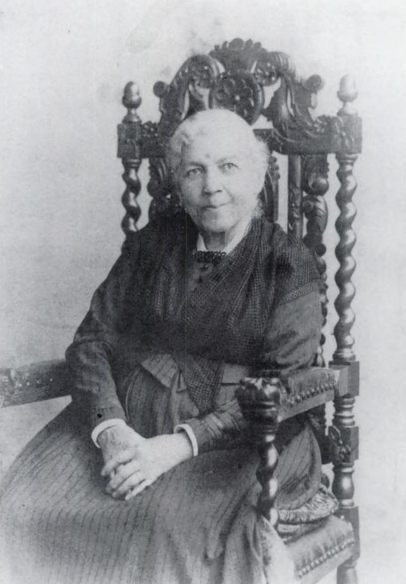
Harriet Ann Jacobs, 1894 (Presumed Public Domain, via Wikipedia)

Harriet Ann Jacobs, 1894 (Presumed Public Domain, via Wikipedia)

Kaufman-McKivigan writes in the post that in recent decades her story “has been anthologized several times as one of the earliest works of fiction by an African-American author”. That’s interesting in itself, because it means they (whoever “they” are) have assumed she was an African-American contributor. It could be so, and the story could be autobiographical, but I also wondered, given the lack of information about her, whether “Annie Parker” was a pseudonym. Anyhow, our professor says they found a couple more articles by an Annie Parker in a temperance journal from Geneva, New York, but then the trail went “cold, very cold”. Genealogical research, he says, turned up “a few possible ‘Annie Parkers’ in the upstate New York region” but none had “any known connection to the antislavery movement and all were white”. He then posits that Annie Parker may not have been a runaway slave as others have speculated, but might have been “a pen-name”. The question then is whose? One possible idea is the above-mentioned Harriet Jacobs. There are some valid reasons for making this connection, as he explains in the post – so do read it at the link above if you are interested. Why Jacobs might have wanted to use a pseudonym is a question the literary detectives are now working on. All very interesting – and one of the reasons I do enjoy these LOA offerings.

Now, though, the story – which is told first person in the voice of a slave, after the opening paragraph is told third person. I was, I must say, quite flummoxed by this. The paragraph has some odd punctuation, in that there are opening quotation marks but no closing ones. LOA’s notes suggest this is to indicate that the rest of the story is composed entirely of her narrative. Fair enough, though I don’t quite understand why Parker needed to start with the third person, except that it does make for an easy way of telling us who the narrator is.

The story is told by the slave, Phillis, sister of another slave, Elsie, who had died giving birth to her second child. Both Elsie’s children – the first, a son, and the newborn, a girl – were fathered by “the young master”. The son, who looks too much like his father is sold off before the young master brings a wife home, thus preventing any awkward questions being asked. Meanwhile, Phillis cares for the daughter, Zilpha, as she grows up to young womanhood. I won’t give away the story here but simply tell you that LOA introduces it as a “tale, charged with incest and gothic intrigue”. You can read it at the link, below. It’s only 6 pages.

This is not a story about beatings and cruel physical treatment. Indeed the new mistress:

proved a kind and gentle mistress. All the slaves loved her, as well they might, for she did everything in her power to make them comfortable and happy.

But, we never forget that slaves are powerless – and, as we know only too well, when anything happens that threatens an owner’s happiness or security, little thought, even on the kindest plantations, is given to the “feelings” of the slaves. They are possessions and can be moved around at will. Their emotional or psychological needs, let alone their physical safety, are not relevant. And so, in this story, as certain truths come to light, the owner takes actions to protect his security and happiness. The irony is that he, like his mistress, is generally (perhaps “superficially” is the better word) kind and fair, but there are limits – and it is the impact of those limits that we are left with, confirming once again what a destructive institution slavery was, indeed is.

Annie Parker
“Passages in the life of a slave woman”
First published: In Autobiography for freedom, 1853.
Available: Online at the Library of America

Cate Kennedy (ed), Australian love stories (Review)

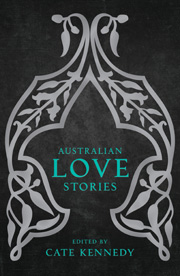
Cate Kennedy, Australian Love Stories cover

(Courtesy: Inkerman & Blunt)

Four hundred and forty-five stories! She read four hundred and forty-five of them! I’m talking about Cate Kennedy, the editor of Australian love stories. These stories were the response to Inkerman & Blunt’s call for Australian writers “to share their love stories, fictional or true”. Having no experience in these things, I don’t know what they expected, but 445 sounds like a good response to me! The final anthology contains just 29, and they are all, not surprisingly, good reads. This is not to say that I loved them all equally, but certainly none jarred for being ordinary or clichéd. Not only is the writing high quality, but Kennedy’s selection has produced a collection that is diverse in subject matter and style. It wasn’t hard to read four or five in a sitting.

If you’ve read my previous reviews of short story collections, you’d know that I’m always interested in the order of the stories. Well, this anthology has been overtly structured, with “like” stories grouped under headings. Each heading, cutely I suppose but nonetheless effectively, draws from a story within the group. So, for example, the heading “A sweetly alien creature” comes from the second story in its group, Susan Midalia’s “A blast of a poem”. I’m easily amused, I know, but I did look forward to spotting the heading-title as I read each group. There are seven of these groups, each containing four stories, with one exception that had five. In her Introduction, Kennedy, herself an award-winning short story writer, says that “Donna Ward [the publisher] and I arranged the stories into a kind of narrative arc of the way love comes, creates its own disorders, then transforms itself and us [in] the process.” This arc, though, isn’t an obvious one, like, you know, young love, broken love, old love. It’s more fluid than that.

And so, the first story, Bruce Pascoe’s “Dawn”, is about an older couple who have been together for a long time. The narrator, the man, clearly still adores his wife, and watches her, caresses her, in the early hours of the morning. While the birds come to life and sing in the day, she sleeps on. He knows her well, knows what he can do, how far he can go, before he will irritate her and break the spell:

So I don’t touch that bone. It would be over. She presses in closer to me and her breasts slide heavily against me and a thigh rises over mine and she squirms again, adjusting, moulding herself to me, fidgeting this limb and that, this foot against that, settling. It is not yet over.

This is a beautifully observed piece. It thrilled and inspired me – and gave me confidence that if the collection started like this, I was going to be in good hands.

What I particularly enjoy about an anthology like this is that it can give me a taste of writers I’ve been wanting to read for a long time (such as Bruce Pascoe, Tony Birch and Lisa Jacobson), or reacquaint me with writers I have read before and enjoyed (such as Irma Gold, Leah Swan, and Carmel Bird), or, perhaps most excitingly, introduce me to writers I don’t know at all (such as  J Anne DeStaic, Sally-Ann Jones and Sharon Kernot). But, here’s the thing. How to write about a collection in which pretty well every story moved me? I don’t want to simply generalise and tell you that they covered the whole gamut of love – from straight to same-sex, from romantic love to parental, from lasting to broken love, from supportive love to betrayal and revenge, from love across nations to love at home – though the anthology does do all these. And I can’t really describe every story in the book. So, I’ll just choose one from each section to give a flavour.

I’ve already mentioned Bruce Pascoe’s “Dawn” so will leave it at that for opening group titled “A sensuous weight”. The second group, “Why cupid is painted blind”, includes stories about love that can be passionate, obsessive, overwhelming. J Anne deStaic’s “Lover like a tree” is a devastating story about a woman in love with a man in love with his drugs (and yes, also with her). DeStaic conveys this two-edged love, his need for the drug as strong as her need for him, with sensitivity and without judgement. It is what it is.

The next four stories, in “Adrift in shards and splattered fruit”, explore same-sex love. They are not the only stories to touch on this issue, which was pleasing to see. Confining them all to one section would have insulted today’s reality. Debi Hamilton’s “The edge of the known world” is about missed opportunities, about the one who loves and the other who doesn’t see it:

Carmelita. Carmelita. There. I like to think her name. If you want to hear a love story I can write you one. If you want a story in which someone breaks someone else’s heart, this is the story for you.

We are warned early in the story, and yet the end still saddens.

From this group we move to “There are tears, there is hubris, there is a damnation and regret”. These stories are about difficult loves, sometimes past loves. It’s a powerful and varied group, but I’ll choose Sally-Ann Jones’ “Hammer orchid” to represent it. It spans thirty odd years in the lives of a young woman and an indigenous man. It starts “when she was eight and he was sixteen” and ends when they are fifty and fifty-eight. Set in Western Australia, it tells the story of a young girl’s crush and a young man’s recognition of the boundaries that need to be maintained. It gently encompasses issues like the patronising “naming” of indigenous workers (“Bill” is called “Biscuits” by his employers), knowing country, and environmental protest, all tied together by Levis and a silver belt buckle – but, beyond that, my lips are sealed.

“A sweetly alien creature”, as you might guess from this group’s title, explores parental love. Of course, like all love, this doesn’t run smooth. There’s a story about a false pregnancy (Rafael SW’s “Small expectations”), and another in which Lola promises to marry Henry and give him a baby if he’ll let her have a cat (Caroline Petit’s clever “The contract”). There’s Irma Gold’s only-too-believable story about “The little things” that can bring it all asunder, and Natasha Lester’s succinct piece about losing the language of adult love, postpartum (“It used to be his eyes”).  And then there’s Susan Midalia’s “A blast of a poem”, a bittersweet story about what happens when conception doesn’t happen on demand. What then?

I hope I’m not boring you, but we are nearly there! The penultimate group, “Firm as anchors, wet as fishes”, looks at how health issues can challenge or get in the way of love. There’s cancer of course, and I had to laugh at Sharon Kernot’s resourceful wife in “Love and antibiotics” when she tells her husband she has chlamydia. Allison Browning’s “These bones” is, we learn from the biographies, an excerpt from her current novel-in-progress. It’s about Enzo, a gay man with dementia. He’s in a care facility and misses waking up next to Nev. He might have dementia, but he still manages to escape the facility, despite its security-coded doors:

Today is a gardening day, the kind where no gloves are needed because the earth is warm and kind to the skin and the dirt feels soothing on the flesh.

We do meet Nev at the end, and he is as tolerant and loving as Enzo remembers and deserves. I’m intrigued now about the novel.

The last section, “The unbroken trajectory of falling” is – and you’ve probably been waiting for this – about love gone very wrong. There’s adultery of course, and breakups. There’s even a murder. Kennedy clearly decided that there would be no whimpering at the end of her anthology. No, we would go out with a bang. And so, if Pascoe opened the collection with a lyrical evocation of mature love, then Carmel Bird’s “Where the honey meets the air” brings it to a close with a breathless piece that barely stops for a comma, let alone a full-stop. Here, Sugar-Sam, in a stream-of-consciousness featuring word-play galore and “mincing metaphors”, chronicles his relationship with Honey-Hannah. It’s wickedly funny, with allusions high and low, little digs at our modern ways of communicating (“the merrymedia, social and anti-social”), and pointed references to contemporary issues. It is surely not a coincidence that Tasmanian-born Bird’s character marries into a family called Gunn. He describes the family’s taking over their wedding:

when Her Family swept in and tied us up in knots, ribbons, bows and a certain amount of barbed wire, and whirled us up the aisle …

Lurking in the language, behind its breezy tone, are, as you can see here, hints of something else. “I should have warned you”, he says at one point, “about how this narrative will tie itself in the knots of several metaphors and coincidences and things”. It certainly does that. By the end we are left fearing that Sugar-Sam has indeed tied us up in knots. A clever, satisfying, not definitively resolved story. What a way to finish.

All in all, a wonderful read. If you don’t want to take my word for it, do check out reviews by John at Musings of a Literary Dilettante and Karen Lee Thompson.

awwchallenge2014Cate Kennedy (ed)
Australian love stories
Carlton South: Inkerman & Blunt, 2014
275pp.
ISBN: 9780987540164

(Review copy supplied by Inkerman & Blunt)

Toshio Mori, Japanese Hamlet (Review)

Toshio Mori (Courtesy: Nancy Wong, via Wikipedia, using CC-BY-SA 3.0)

Toshio Mori (Courtesy: Nancy Wong, via Wikipedia, using CC-BY-SA 3.0)

What I love about the Library of America is the variety of works it features in its Story of the Week program. Because of my interest in Japan and Japanese writers, I was particularly attracted to Toshio Mori’s story, “Japanese Hamlet”, that they published a couple of weeks ago. Toshio Mori was one of the first Japanese-American writers to be published in America – and he was best known for short stories. Two things that make him interesting to me.

According to Wikipedia, Mori was born in Oakland, California in 1910. Like many Japanese-Americans, he was interned in a camp (for him, the Topaz War Relocation Centre in Utah) during World War 2. According to LOA, the story “Japanese Hamlet” was written in 1939, but wasn’t published until 1946 – in a magazine called the Pacific Citizen which was apparently the “leading magazine of the Pacific Asian American community”. It was then titled “The School Boy Hamlet”. It appeared later, as “Japanese Hamlet”, in his collection The Chauvinist and other stories, published in 1979, the year before his death.

The story is told by an unnamed first person narrator. He talks of a man, Tom Fukunaga, who “was a schoolboy in a Piedmont home. He had been one since his freshman days in high school. When he was thirty-one he was still a schoolboy”. This Tom, who “did not want anything in the world but to be a Shakespearean actor”,  visits the narrator regularly to recite Shakespeare to him. He’s a schoolboy because he still lives at the school, and has not got a job because he is perfecting his acting skills. Our narrator is happy to hear the recitation because “there was little for me to do in the evenings”.

Tom’s family is not happy with his decision, calling him “a good-for-nothing loafer” who “ought to be ashamed of himself for being a schoolboy at his age”. He tells his relatives that he’s “not loafing” but “studying very hard”. We learn that an uncle visits him regularly trying “to persuade him to quit stage hopes and schoolboy attitude”. His parents have disowned him, his uncle says, and “pretty soon your relatives will drop you”. But Tom is unmoved. He has his goal and will not be swayed from it. He lives on five dollars a week, plus room and board, presumably covered by his family. He feels no guilt about this.

So, what do we have here? We have the would-be artist persisting with his dream. We also have the suggestion of Japanese culture not understanding the pursuit of an individual goal over one’s responsibility to family and community. Then we add the fact that Tom’s favourite role is Hamlet, the quintessential dreamer and procrastinator. I like the complexity of this criss-crossing themes and ideas. Life, we know and Mori shows, is not a simple this-then-that but a complex web of interacting influences.

In all this it’s not clear who the narrator is – a friend, old teacher, neighbour? Is he American or Japanese? Interesting that Mori has chosen to tell the story through a first person narrator, and yet has told us nothing about this narrator. What is the narrator’s role? He (presumably “he”) mediates between us and Tom’s story but he is also an actor in the story. This complicates our response to Tom, I think, because we see him through the eyes of another, but we don’t know who that other is. Regardless of who the narrator is, he starts to be “afraid that Tom’s energy and time were wasted and I helped along to waste it.” He tries to encourage Tom to contact some theatre people, fearing “we are wasting our lives”. Interesting, here, that the narrator is not only worried about enabling Tom to waste his life but about wasting his own. Eventually, the narrator starts to dread Tom’s presence “as if his figure reminded me of my part in the mock play that his life was”. One night he suggests Tom give it up for a while because it is “destroying” him. Tom simply ceases to come.

The narrator feels “bad” because he knew Tom would “never abandon his ambition”. And, while he knew Tom would never become a great Shakespearean actor, he admired “his simple persistence”. The story ends quietly, with no clear resolution – though we do see Tom once again.

LOA’s introductory notes quote a literary scholar, David Palumbo-Liu, who says that while the story seems to offer a simple message, ‘it masks an underlying tension from “a faith in the power of Art to transcend race, ethnicity, and history.””  Ethnicity is not mentioned in the story, except in the title under which it was eventually published – and it is of course  implied in Tom’s name. However, LOA continues, Palumbo-Liu expands his argument: “In a world of racial difference, to be Hamlet, Tom cannot be Japanese; to be Japanese, Tom cannot be Hamlet. Yet the myth of universal art denies that there is any contradiction since, in being an artist, Tom can do both.” LOA suggests that Tom is much like Mori himself who also persevered with his writing, hoping to reach “a wide American audience”.

Not knowing Mori’s oeuvre, I don’t know whether he intended this story to be what Palumbo-Lui sees. I don’t know, either, whether he intended it to be about Japanese culture’s emphasis on duty over individuality, since many Western families would also look askance at a young person not getting a job. What I do know is that although its “simple” message is about the perseverance of a passionate artist, it’s not a simple story. I’m glad to have been introduced to Toshio Mori.

Toshio Mori
“Japanese Hamlet”
First published: in Pacific Citizen, August 17, 1946
Available: Online at the Library of America

Richard Rossiter (ed), The trouble with flying and other stories (Review)

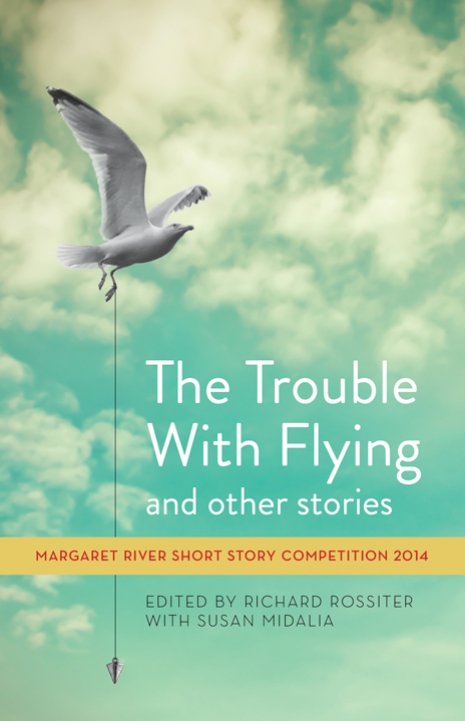
The trouble with flying book cover

Courtesy: Margaret River Press

The trouble with flying and other stories is the second collection I’ve read from the Margaret River Short Story Competition. I greatly enjoyed last year’s collection, Knitting and other stories, so was very happy to read this one. I’m pleased to see Margaret Press maintain its commitment to publishing stories from the competition, and hope that annual publication will help both the competition and the press, itself.

There were apparently 218 entries for the 2014 competition, which is somewhat fewer than last year’s 260 entries. Stories came from every state in Australia, as well as one from New Zealand. They include both new and experienced writers, many of whom have won awards and/or been published in some of Australia’s best literary journals. I was pleased to see that four of the 24 writers included in this volume, appeared in last year’s collection.

Last year, 20 of the 24 stories were by women, and the trend continues this year with 21 being by women. Presumably this roughly reflects the gender ratio of the overall entries. I wonder why this is? Is writing short stories something women who want to write feel they can juggle more easily with other responsibilities? Or? I’d love to know whether this is a common pattern, and why it might be.

Finally, before I get to the stories, I should say that of course the collection includes the winner, runner-up, and five highly commendeds, as well as the winner and two highly commendeds in the special award for writers from the South West (where Margaret River is located). They didn’t all accord with my favourites, but that’s the subjectivity of reading isn’t it?

Like last year’s collection, the title comes from winning story, Ruth Wyer’s “The trouble with flying”. In the bios, we are told that Wyer is “a fledgling writer from south-west Sydney”. Fledgling she may be, but she has a delightful way with words. It’s a story about transitions, about Rita, an unconfident young girl, moving from high school to TAFE. Intriguingly, Rita doesn’t appear until a few paragraphs in, which disconcerts the reader somewhat as to who this story is about. It is in fact quite an unsettling story, combining humour with pathos and a sense at the end that Rita may not break free of “the loosely bound fog” that she feels envelops her. Flying, in other words, is not easy. It’s a bit cute to say, I suppose, but in many of the stories the characters struggle to fly, to escape the concerns that mire them – and, in fact, some don’t.

One who doesn’t is the immigrant mother in Linda Brucesmith’s “A bedtime story”. Ridiculed by her husband one too many times, she leaves the house after midnight. Another mother in trouble is Annika in Cassie Hamer’s “A life in her hands”. Overwhelmed by a colicky baby – and oh, how I related to that – she decides that “escaping together would make them both much happier”. So, like the mother in “A bedtime story”, she heads to the sea. There, the kindness of one young man and the near tragedy of another shocks her to her senses and she feels “the euphoria of a lucky escape, a second chance”. Life for some, we realise, can often hang on little chances that determine the decisions we make.

A mother of a different kind is Tara in Lauren Foley’s entertainingly titled “Squiggly arse crack”. This is a bright, breezy story about an older single mother enjoying her “staycation”, that is, a brief shopping expedition away from her beloved child, Squig. To ensure she doesn’t change her mind about leaving him with her friend, she “sashays” out the front door without looking back, “pretending her neck is in an Elizabethan collar or pet lampshade”.

This is just one of the stories that departs from the resigned or melancholic tone that seems to be more common in short stories. Another upbeat story is Chinese-born Australian writer Isabelle Li’s “Red Saffron” about a feisty woman prepared to go after love. No shrinking violet, she. Announcing at the beginning of the story that

If poetry is language making love, then cooking must be food making love

she tells us that she’s cooking for Walter. She’s a poet and editor of a poetry magazine, and her aim is to seduce fellow poet Walter while her current lover, Richard, is away. This is a woman in charge of her destiny:

I know how sweet I am, in men’s eyes that follow my movements. I look younger than my age, with my dense hair and lustrous skin. I know they want to taste me on their tongue. But they are wrong: I’m no honeysuckle.

Glen Hunting’s Martha in “Martha and the Lesters” is spirited too. The story is told by Martha’s lodger, who is – no, not Lester. The Lesters are the spiders which proliferate in elderly Martha’s rather untidy home. Our narrator Roland, for that’s his name, describes the Lesters going about the business of life – reproducing, eating, sometimes other insects, sometimes each other. They play a complex role in the story. Martha feels blessed by their presence, and yet, as we see, their lives represent “gluttony and violence writ small”. Perhaps that’s the point. Unlike Martha’s children, they accept her, don’t judge her, and don’t pretend to be other than they are!

Continuing in the vein of positive stories is Kate Rotterham’s “Potholes” about a rather curmudgeonly, recently retired husband and father, Les, “who was surprisingly confident in diagnosing a range of mental disorders” in those around him, but who, delightfully, does a complete about-face at the end.

There are, though, some devastating stories such as Bindy Pritchard’s second-prize winner “Dying” about a rural mother with terminal cancer, and Leslie Thiele’s portrait of a man with dementia in “Catching trains to Frankston”. The challenge of ageing, in fact, appears several times in the collection. I enjoyed Kathy George’s story, “Walking the dog”, about a lonely old widower who, like Martha in Hunting’s story, is confronting the limits of his independence.

Not surprisingly, the collection encompasses many concerns currently facing Australians, with issues like ageing, cancer and fire appearing in several stories. Indigenous issues and our multicultural make-up also appear, albeit way less frequently, reflecting I’m guessing the backgrounds of the writers. It would be good to see more diversity here – but that is another discussion methinks.

And now for the apology. I would love to comment on every story in this collection, not only because each has something to offer but because I know writers (like all of us) love feedback. I can imagine, if I were a writer, coming to a review like this wondering whether my story would be featured. All I can say is that many of the stories, besides those I’ve chosen to write about here, touched me. I’m sorry I couldn’t mention them all.

“Practise senseless acts of beauty” is one of the instructions Harry (“Potholes”) reads in Ten Ways to a Happier Life. I’m so glad the writers in this volume had a go at their own “acts of beauty”. They’ve given me much to ponder.

Richard Rossiter, with Susan Midalia (Eds)
The trouble with flying and other stories: Margaret River Short Story Competition 2014
Witchcliffe: Margaret River Press, 2014
348pp.
ISBN: 9780987561527

(Review copy supplied by Margaret River Press)

Barbara Baynton, Bush church (Review)

awwchallenge2014“Bush church” is my sixth and last* story from Barbara Baynton’s Bush studies, and it presented a rather pleasant change in tone from most of the others in the book. I’m sorry in a way that I read these stories quite out-of-order. “Bush church” is the fifth story in the collection, appearing after “Billy Skywonkie” and before the very grim “The chosen vessel”. It would work well in this position I think.

Like “Billy Skywonkie”, “Bush Church” contains a lot of dialogue in the vernacular of that particular place and time, making it somewhat of a challenge to read. However, I didn’t find it off-puttingly so. This may be because I’ve developed a bit of an ear for it (and you do have to use your ear when reading it) or perhaps because there is less dialogue. The story concerns a motley group of graziers and selectors gathered together at a grazier’s property to attend a church service delivered by a travelling parson. It becomes clear early on that attending a church service is a very rare occurrence in this neck of the woods. There are couples not married, children not christened, and people, indeed, who have never been to a church service.

It is, in many ways, a comic piece. But, here’s where I should take back that word “pleasant” in my first sentence because, while it doesn’t have the violence that several of the other stories have, the comedy is bitter. Baynton’s people here, as in her other stories, are not the noble sufferers we meet in Henry Lawson’s “The drover’s wife” or those two stories by Mary Grant Bruce that I recently reviewed. They are, with few exceptions, jealous, self-centred and/or mean-spirited.

The story, divided into two parts, starts with the parson on a horse en route to the grazier’s property. It’s not a good horse. The story opens:

The hospitality of the bush never extends to the loan of a good horse to an inexperienced rider.

The implication, of course, is that the bush is hospitable. You know, country hospitality and all that! However, as the story progresses we see little if any evidence of bush hospitality. Early in the story, our unnamed parson, is joined by “flash” Ned, who is desperate for a smoke, but gets none from the non-smoking parson, nor from “hairy Paddy Woods of eighteen withering summers” whom they meet along the way.

Perhaps because of this or just because he’s who he is, Ned decides, mischievously, that the parson is there as an Inspector, and spreads this news to all and sundry, so that they start hunting for:

land receipts, marriage lines, letters from Government Departments, registered cattle brands, sheep ear-marks, and every other equipment that protects the poor cockey from a spiteful and revengeful Government, whose sole aim was “ter ketch ’em winkin'” and then forfeit the selection. All of these documents Ned inspected upside down or otherwise, and pronounced with unlegal directness that “a squint et them ‘ud fix ‘im if thet’s wot ‘e’s smellin’ after”. He told them to bring them next day. Those of the men who had swapped horses with passing drovers, without the exchange of receipts, were busy all afternoon trumping up witnesses.

No wonder Ned, who, we also discover, is a wife-beater, “was no favourite” among his neighbours!

This is where the first part ends. The second part comprises the church service which takes place on the grazier’s verandah. The attendees, we are told, are “ten adults and eighteen children”. Baynton provides us with colourful descriptions of these people as they arrive, and then the service starts:

For a few minutes the adults listened and watched intently, but the gentle voice of the parson, and his nervous manner, soon convinced them that they had nothing to fear from him. Ned had been “poking’ borak” at them again; they added it to the long score they owed him.

Not surprisingly, with a couple of exceptions, they all gradually lose interest. The adults bicker, while the children find the food the hostess had prepared for a post-service lunch for the parson, herself and her husband. Her hospitality was not extending any further, but she’s one-upped by the children and one of the mothers! When the service is over, she has a problem to solve!

This is not a story with a strong plot, but is, rather, a slice of life, presented with a good deal of humour peppered with bite and irony. Susan Sheridan, in her introduction to my edition, suggests that Baynton’s writing belongs to the naturalist tradition of writers like Zola and Gorky. Naturalism, she says, is a style that “was crafted to express the view that the uncontrollable forces of the natural world had their equivalents in human nature, and that the values of civilisation were a mere crust over an underlying struggle to death among various life forms”. In this style, she suggests, violence and cruelty are expressed in a detached way. That doesn’t mean, I think, that we readers react in a detached way. Rather, the detached tone adds to our feeling of horror.

Barbara Baynton, I’ve decided, was a very interesting woman. I plan to do a Monday Musing on her soon to share a little more about who she was.

Barbara Baynton
“Bush church” in Bush studies
Sydney University Press, 2009
ISBN: 9781820898953
Available online: in Bush studies at Project Gutenberg.

*For my previous reviews of stories in this book, click the appropriate title: A dreamerScrammy ‘and, Squeaker’s mate, The chosen vessel, and Billy Skywonkie.

Deborah Sheldon, 300 degree days & other stories (Review)

Sheldon, 300 Degree Days, book cover

Courtesy Ginninderra Press

What I found particularly interesting about Deborah Sheldon’s short story collection, 300 degree days & other stories, is that the stories deal almost exclusively with a particular type of family relationship, the one to do with children, parents and, sometimes, grandparents. I’m not sure I’ve read a short story collection before that has been quite so tightly focused, but that’s not to say that it is boring. Far from it, because Sheldon explores these relationships from multiple, and sometimes surprising, angles.

There are eleven stories in the collection, most told from a third person point of view. They vary in length from two or three pages to eight or so. This produces an effective change in pace which nicely counteracts the impact of a similarity in tone across the stories, a tone which tends to be on the melancholic end of the mood meter. This tone is not unusual in short stories about families and relationships because writers are, not surprisingly, most often drawn to the challenges people face. Sheldon certainly was. Many of her stories deal with fractured relationships in which resolution seems unlikely or with relationships in which there is a sadness – such as childlessness in “Closed for Renovations”, or the after-effects of illness in “Bull Rider”, or ageing in “Thy Way, O God, is in the Sanctuary” – that tests deeply loving relationships.

Sheldon has the ability to make you sit up with her insight. “First and Last Words” is a devastating, tight little vignette about a single mother giving birth. And the other tiny story, “Little Yellow Hat”, contains a shocking – almost unbelievable – display of lack of compassion from those who should know better, leaving the young people gasping for air. The title story, “300 Degree Days”, is the longest, and explores a first-time pregnant woman’s fears, her lack of confidence in facing the change coming, even though she knew “she was a good worker and a good wife”. There’s nothing to suggest that she won’t be a good mother, but emotions run high in late pregnancy and Sheldon captures this nicely through a very Australian image, a plague of blowflies!

Sheldon’s language is clear and direct. She has, I understand from her website, written scripts and plays, which suggests that she’s not likely to over-indulge in description – and she doesn’t, but neither does she overdo the dialogue. It’s just that there’s little that’s wasted here. She uses imagery sparsely, but effectively. I’ll give just one example of her writing. It comes from her story, “The Birthday Present”, in which a mother takes her son to visit his cranky, unwelcoming grandfather on the grandfather’s birthday:

‘Josh, go on, he won’t hurt you,’ she said.

But the kid didn’t look too sure. He advanced across the rug, brandishing the present as if it were a shovel and Don was a tiger coiled in the shade. Don flung out an arm and gestured hurry up, hurry up, hurry up, but the kid faltered and stalled in the middle of the rug.

Not all the stories are hopeless, as I may have implied, and this is where order in the collection plays an important role. In “Bull Rider”, the opening story, the love and care are palpable as the son puts himself out for his frail mother. He finds her relaxed attitude to risk mystifying, given the risk-averse way she’d raised him. It’s not for nothing that his job involves “contributing to the financial security of the country”. The already mentioned “300 Degree Days” occurs in the middle of the collection, and then couple of stories later is “Closed for Renovations” about a couple forced to accept childlessness. Their sadness, particularly the wife’s, pervades the story. Their love is strong but will the husband cope with her grief? And then there is the last story which departs dramatically from the preceding ten, in that parents and children don’t feature, although a grown-up brother does. It is about a sixty-something gay man facing life after prostate cancer. It is a warm story about uncertainty and fear of loneliness, but ends on a note of hope, which makes it a perfect conclusion for the collection.

I enjoyed 300 degree days for its authentic portrayal of how people behave and respond to challenges in their relationships. It’s not always pretty, but it’s real, and that made it a winner for me.

awwchallenge2014Deborah Sheldon
300 degree days & other stories
Port Adelaide: Ginninderra Press, 2014
74pp.
ISBN: 9781740278577

(Review copy supplied by Ginninderra Press)