Gail Jones, Salonika burning (#BookReview)

Australian author Gail Jones’ ninth novel, Salonika burning, is a curious but beautiful novel, curious because she fictionalises four real people for whom she has no evidence that they met or knew each other, and beautiful because of her writing and the themes she explores. The novel is set during World War 1, but its focus is firmly on the interior rather than the grand stage of battle.

It opens dramatically with the burning of the city of Salonika (Thessaloniki). This is another curious thing, because this destructive event was caused not by an act of war but an accidental kitchen fire. Also, the novel is not set in Salonika but some 90 miles off, in and around “the field of tents that comprised the Scottish Women’s Hospital”, on the shores of Lake Ostrovo in Macedonia. It is 1917, and the novel’s narrative centre is this hospital and those working in and around it. Here, not Salonika, is where our four main characters are based — Stella, an assistant cook/hospital orderly; Olive, an ambulance driver; surgeon Grace; and Stanley, an orderly with the Royal Army Medical Corps. They are based on the Australians, writer Miles Franklin and adventurer Olive King, and the British painters, Grace Pailthorpe and Stanley Spencer. In her Author’s Note, Jones makes clear that she has fictionalised these characters, and that while all are known to have worked in the vicinity, there is no evidence that they met or even knew each other. It is “a novel which takes many liberties and is not intended to be read as a history”. This is fine with me. After all, a novel, by definition, is not history. The novel follows these characters over a few months after the burning of Salonika.

“everything was coming apart”

So, why Salonika? I see a few reasons. For a start, its burning sets the novel’s tone. On the first page we are presented with opposing ideas. The sight of the burning city is described as “strangely beautiful” but, on the other hand, “alarm, instant fear, the sufferings of others … were no match for excitement at a safe distance”. As the fire died, “excitement left and in its place was a murky lugging of spirit”. Throughout the novel, Salonika represents these contradictions, this tension between what is ugly, what is beautiful; between what is random, what is not; and in how to respond to, or feel about, what is being experienced.

The Salonika fire also encompasses the idea of witness and representation. In the opening scene, Jones describes a painting made of the fire by William T. Wood. It is a “morning-after scene, brightly calm, with a floaty view from the heavens” done in his “signature pastels, remote as a child’s dream and thinly decorative”. Those who saw this painting later, she writes, “saw the pretty lies of art”, whereas “former residents and soldiers said, No, it wasn’t like that”. This tension too is played out in the characters as they think about how they might represent their experience.

The burning of Salonika, then, embodies several ideas that are followed through in the novel. But, Salonika is also relevant to the plot. The novel’s narrative arc lies mainly in the characters and their emotional reactions to what is happening as the months wear on. Not only is there the war with its injured and dying soldiers, but malaria is rife, and the privations they experience, professionally and personally, are exacerbated by the burning of Salonika and the attendant shortage of essential provisions – food, petrol, medical supplies. However, a plot also unfolds, and it is something that happens on the way to Salonika, well into the story, which sets the novel’s final drama in motion.

Salonika burning traverses themes that are the stuff of the best war literature – themes that expose the “idiocy of this war, of all wars” and its impact on those caught up in it – but it offers its own take. The telling feels disjointed, particularly at the start, with its constant switching between the perspectives of the four characters who interact very little with each other until well into the novel – and even then it’s often uneasy, as befits their temperaments. And yet, the novel is compelling to read, primarily because of these characters. They are beautifully individuated, so flawed, so human, so real.

Olive, who is the first character we meet, and the one who closes the novel, is confident, tough and practical. Grace, too, is tough, doing her “duty” with a “dull vacancy”. Stella, at 38, the oldest of the four, is “cranky and wanting more”, more excitement to write about, but she believes in “chin-up and perseverance”, while the youngest, 26-year-old Stanley, is “ill-fitted … to this life of rough cynical men”.

These are “intolerable” times, and we are privy to their struggle to maintain their sanity. Olive resorts to her German grammar to escape the emotional load, while Stanley has his mules and favourite painters, his “Holy Rhymers”. Stella, “writing jolly accounts in her diary”, thinks about what stories she will tell, while Grace has her favourite brother to think about and write to. The disjointed structure mirrors, I think, their sense of isolation. Contact and the potential for friendship is there, but Matron discourages emotional engagement. There’s “no room for emotion”, she says, just “duty”. Olive, who seems to represent the novel’s moral centre, thinks otherwise:

It seemed another kind of duty, not to forget. Olive wanted to speak of what she had seen and known, though she suffered too much remembrance.

This could neatly segue to that issue of representation, and the post-war work done by Stella, Grace and Stanley, but instead, I want to conclude with another idea. On a supply trip to Salonika, Olive, “driving in her safe foreign aura”, had been indulging in a dose of self-pity, but is suddenly confronted by the loss Salonika’s burning represented for its residents, “and only now understood that it was the woe of others that claimed importance”. Likewise, Stanley, Grace and Stella are confronted with the woes of others through the novel’s closing drama, and must decide where their humanity lies.

I started this post noting some curious things about Jones’ approach to her story, but these didn’t spoil the read. Rather, they added to my interest as I read it. Ultimately, Salonika burning is a true and tenderly written novel that captures the essence of war’s inhumanity, and then goes about extracting the humanity out of it. A worthy winner of the 2023 ARA Historical Novel Prize.

Lisa and Brona also read and enjoyed this book.

Further reading

Gail Jones
Salonika Burning
Melbourne: Text Publishing, 2022
249pp.
ISBN: 9781922458834

Michael Fitzgerald, Late (#BookReview)

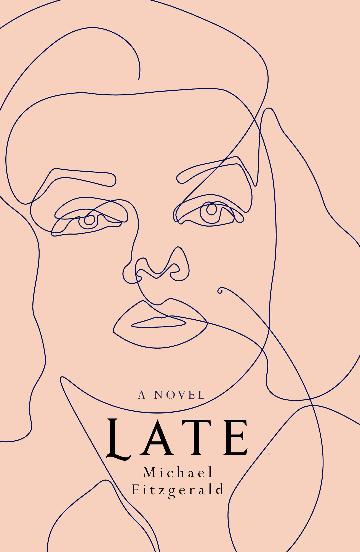
Australian author Michael Fitzgerald’s novel Late owes something to what is known as the alternate (alternative) history genre, or what I call “what if” novels. Here, the underlying story is, what if Marilyn Monroe had not died in 1962 but, instead, had instead escaped Hollywood’s oppressive celebrity culture and moved to Sydney, Australia?

It’s hard to imagine any celebrity who has inspired more books, films, songs – you name it – than Marilyn Monroe. Just check out Wikipedia’s page listing them. There are over twenty works of literature, of which I’ve only read one, Andrew O’Hagan’s The life and opinions of Maf the dog and of his friend Marilyn Monroe (my review).

Now though, I should ‘fess up that nowhere in Fitzgerald’s book does he name Marilyn Monroe. His narrator is unnamed. However, she tells us she is also known as Zelda Zonk, a name once used by Marilyn Monroe, and the biography she gives us is that of Monroe down to her birth and death dates, the details of her marriages, and much more. So, given our narrator is intended to be Marilyn, the question is why? Why write a(nother) story using Marilyn, rather than start from scratch? And why do it using another of her personas, Zelda Zonk? I don’t know, but I’ll have a go at thinking about it.

So, let’s start with the setting. We are in 1980s Sydney, so Marilyn has been in Sydney for a couple of decades. She is living in a modernist (Harry Seidler-designed) building in Vaucluse, not far from some of the cliffs in Sydney which, in the 1980s, were also the site of gay-hate crimes known as the “Sydney cliff murders”. Notwithstanding that darkness, Sydney is beautifully evoked.

Early in the novel, our narrator meets a young man Daniel, who turns out to be gay and who is locked out of the apartment he is house-sitting. The relationship that ensues brought to mind Sigrid Nunez’s The invulnerables (my review) in which an older woman develops a friendship with a young man, but they are different books, so let’s move on. Our narrator and Daniel discover points on which they connect – from something as simple as their mothers’ names (Gladys and Gladyne) to something more fundamental like both having experienced adoption and a sense of being outsiders. Trust and tenderness develop between them, as they walk, ride on a ferry together, and cook a meal for Shabbat.

Now, a little aside: I’m not sure how to refer to the narrator because, as she writes in the opening paragraph of Scene (aka Chapter) 2, “I am not always Zelda, and Zelda is not always me”. Indeed, she writes, “Zelda is everything that I’m not […] She is the me who goes on living”, and later again, she is “the protectress of my spirit, of the shattered sense of me”. If I name her Zelda in my post, I am ignoring the distinction, and I don’t to do that. So, I am going to stick with the term “narrator”.

“What I have to say is important and personal” (Zelda)

Our narrator’s voice is variously wise, funny, erudite, and also at times self-deprecating. She is out to set the record straight in terms of her reputation as the “dumb blonde”, the “beautiful child”, the difficult actress who was always “late”:

You see, I wasn’t late: they were in a God-awful American hurry. Yes, let it be said for the record, being late wasn’t a problem: they were in this crazy rush to the moon. In any case, who aspires to be on time when, for my Art, readiness is all?

And when it really counted, let’s face it, my timing was perfect.

Drop-dead perfect.

So much in those few sentences.

She makes us see her life from a different perspective, such as the time she wore the see-through rhinestone dress to sing Happy Birthday to JFK. I don’t know what Monroe really thought or intended but that is perhaps not the point. Michael Fitzgerald gives her a voice that reflects on her experience, on how the culture manipulated her, on the hurts of being commodified and ignored as a person. Marilyn is a wonderful vehicle for interrogating celebrity, and Zelda for exploring how an escapee might see the experience and move on from it.

There are several questions to ask about this book, besides why Marilyn. Another is, why is she speaking now, a couple of decades after her arrival in Sydney? This one she answers – it’s because “the cliffs have been warning me, for months now, that evil dwells here”. And this is where Daniel as a young gay man comes in. He is the vehicle for exploring the homophobia of the time, the gay-hate crimes and cliff-murders. He is a gentle person with his own crisis, and is drawn to Zelda “like an old person or wounded animal is”. Our narrator empathises with him, and the other young men who have disappeared, and wants to help him. Their cliff-top nemesis is, pointedly, blond.

I won’t say more about the plot, because the novel’s main interest lies in the narrator’s musings. They are what I most enjoyed – her clever allusions to movies, books, poetry, and songs, her witty footnotes, her humanity, and the entertaining wordplay (starting with the multiple meanings of the title itself).

I don’t know if I understood the novel the way Fitzgerald intended, but I enjoyed the voice. It is confident, witty, in-your-face. “Without a sense of humour, we are animals, we are lost,” she says. It is also intelligent and thoughtful. This Marilyn – if I can call her that at this point – has come through and is living life the way she wants to live it, but she has heart too, and cares about the young men. It’s a surprising thing that Fitzgerald has done to put the two ideas together, but I think he has made it work. After all, why not have a gay icon care about saving young gay men?

So, I found it an absorbing to read, one that encourages us to think about who Marilyn might have been had she been allowed to be herself. And who Daniel might be if allowed to be himself!

Right near the end, our narrator comments,

Don’t you think it’s funny? How we still haven’t explored these shadows of the human heart?

Maybe we never will, fully, but books like this encourage us to keep trying.

Lisa also enjoyed and reviewed this book.

Michael Fitzgerald
Late: A novel
Melbourne: Transit Lounge, 2023
208pp.
ISBN: 9781923023024 

(Review copy courtesy Transit Lounge via publicist Scott Eathorne)

Jane Austen, Mansfield Park (Vol. 2)

Mansfield Park book covers

As I wrote last month, my Jane Austen group is doing a slow read of Mansfield Park this year, meaning we are reading and discussing the novel, one volume at a time, over three months. This month was Volume 2 (that is, chapters 19 to 31). It starts with the return of the patriarch, Sir Thomas Bertram, from his plantation in Antigua, and ends with Fanny rejecting Henry Crawford’s proposal.

Last month, I said that the thing that struck me most in volume 1 was the selfishness, or self-centredness, of most of the characters. I wondered whether Austen was writing a commentary on the selfishness/self-centredness of the well-to-do, and how this results in poor behaviour, carelessness of the needs of others, and for some, in immorality (however we define that). Having now read volume 2, I’m still on this path – together with a couple of other, somewhat related ideas, education, which I also mentioned last month, and parenting.

But first, the selfishness and self-centredness continues. In this volume, Maria marries and she and Julia leave Mansfield Park, leaving Fanny the only young woman at the Park. Mary Crawford, over in the parsonage, no longer has a young female friend to entertain her, so her sister Mrs Grant thinks Fanny would suffice:

Mrs. Grant, really eager to get any change for her sister, could, by the easiest self-deceit, persuade herself that she was doing the kindest thing by Fanny, and giving her the most important opportunities of improvement in pressing her frequent calls. 

Here is one of the reasons I love Austen. She knows exactly how we justify our actions to ourselves.

Anyhow, as a result, Fanny spends more time with Mary, as a favour to others, resulting in, Austen writes,

an intimacy resulting principally from Miss Crawford’s desire of something new, and which had little reality in Fanny’s feelings.

Examples like this pepper the volume. Lady Bertram doesn’t want Fanny to accept a dinner invitation because it would affect her “evening’s comfort”. After all, as Austen writes, “Lady Bertram never thought of being useful to anybody”. Late in the volume, Lady Bertram rises to the occasion, or thinks she does. She sends her maid to help Fanny dress for her first ball, and says so during the ball when Fanny’s appearance is complimented. “Chapman helped her to dress. I sent Chapman to her.” Yes, she did, but only after she was dressed and too late to help Fanny who was already dressed! Austen adds:

Not but that she was really pleased to have Fanny admired; but she was so much more struck with her own kindness in sending Chapman to her, that she could not get it out of her head.

Mrs Grant, Mary and Lady Bertram aren’t the only selfish, self-centred people in this volume. There’s the egregious Henry Crawford who had played, in volume 1, with the feelings of Maria and Julia, and then leaves Mansfield, in volume 2, with nary a word to either of them:

Henry Crawford was gone, gone from the house, and within two hours afterwards from the parish; and so ended all the hopes his selfish vanity had raised in Maria and Julia Bertram.

That’s not the end of Henry, though, because he’s soon back, telling his sister Mary, “my plan is to make Fanny Price in love with me”. In my Jane Austen group, we discussed that as his frivolous flirtation moved to something more serious – as he started to truly see, we believe, Fanny’s value – he gives no thought to whether Fanny will love him. That’s a given! He’s a catch!

There’s more I could say on this theme – I haven’t even mentioned Mrs Norris – but there are other ideas to talk about. I started to see in volume 2 that Mansfield Park is also about parenting, and, relating to this, I’d argue that in this volume we see the beginning of the education of Sir Thomas.

However, Sir Thomas is a controversial character in my group. Some detest him, rather like Mr Yates who had never seen a father so “unintelligibly moral, so infamously tyrannical” as Sir Thomas. But, along with some others, I see Sir Thomas differently.  Sure, he’s formal, but he loves his children – and he has no support in that wife of his. When he realises how silly Maria’s fiancé is, he wants to give her an out. Unfortunately, Maria wants to escape home and its restraints, so doesn’t take it. Sir Thomas is – admittedly – relieved because it suits his wish “to secure a marriage which would bring him such an addition of respectability and influence”. An example of new money, he’s a product of his times, and a “good” marriage can only help! However, as the volume progresses, Sir Thomas looks out for Fanny, wanting to give her opportunities, despite Mrs Norris’ attempts to keep puttng Fanny down.

For me, a recurring theme in Austen’s novels, in fact, is parenting. Lady Bertram is completely hands-off, letting Mrs Norris (as I mentioned in volume 1) have too big a hand in her daughters’ upbringing, to their detriment. Sir Thomas, on the other hand, is strict and – well, let’s talk about how it all plays out in volume 3. Here, though, he is kind to Fanny and wants well for her.

I have more to say on this, but I’ll leave it here as there are two ideas I’d like to share from my group’s discussion.

One of our members talked about the Australian critic John Wiltshire’s discussion of the disempowerment of women in his book Jane Austen and the body. He argues that caring for servants and the working class is a traditional role for genteel but otherwise disempowered woman, but that “this benevolence has a Janus face” because it replicates the inferior-superior social relationships that characterise the wider society. Mrs Norris, Wiltshire argues, “punishes others for her own dependency and frustration, whilst being able to hide this from herself in the guise of generosity to the recipients and loyal service to the system”.

Similarly, all at Mansfield Park have, through their adoption of poor Fanny Price “basked in the pleasure of benevolence”. But this has let Fanny become Mrs Norris’ victim. Both Fanny and Mrs Norris, says Wiltshire, are outsiders, “fringe-dwellers”; both are single, defenceless females who are “not part of the family except by courtesy. The one lives in the small White House, on the edge of the estate, the other in the little white attic at the top of the house”. Wiltshire argues that Fanny becomes the scapegoat upon whom Mrs Norris can “exercise her frustrations and baffled energies”. By scolding and punishing Fanny, she can “appease her own sense of functionless dependency and reaffirm the strictness of the social hierarchy which gives meaning to her life”. An interesting idea which I plan to think more about. It doesn’t excuse Mrs Norris, but it might explain her!

The other idea I want to share came from a young American visitor to our meeting. While she had read Austen and other classic authors, she said that her main reading, currently, is romance and general fiction. So, as she was reading Mansfield Park, she looked for tropes common to the romance genre. And, she found two significant ones, which could cement Austen’s reputation as the mother of the romance genre! The first trope is the idea of friends (or, here, cousins) becoming lovers, and the other is the romantic heroine’s belief that she’s “not like other girls”. She’s not as pretty, not as outgoing, and so on, as her rivals. Fanny makes this sort of observation in a discussion with Edmund about how she likes hearing Sir Thomas talk about the West Indies. She says she is “graver than other people” and concludes:

… but then I am unlike other people, I dare say.

I loved this insight from a first-time reader of the novel.

So much more to say … but there will be more opportunities to talk Austen, I dare say! Meanwhile, thoughts?

Rachel Matthews, Never look desperate (#BookReview)

One of the most appealing things about Rachel Matthews’ third novel, Never look desperate, is that it features some decent men. In this #metoo era, which differs little from what came before, there’s plenty of fiction which shows men in less than stellar light. And that’s fair enough. One of the reasons I read fiction is to expand my understanding of the issues I care about. I can feel along with the so-called sad girl stories, and applaud the angry feminist ones. However, most men I know, like most women I know, are decent human beings trying to live good, fulfilled lives. And this, essentially, is the subject matter of Matthews’ novel.

Never look desperate follows three main characters, in alternating, third-person chapters. These characters are 49-year-old Bernard, 54-year-old Minh, and Bernard’s recently widowed 70-year-old mother Goldie. It is set in Melbourne, immediately post-pandemic. People are starting to get out and about again, but the pandemic’s shadow lingers in the background. Bernard and Minh are single, lonely, and seeking connection.

Bernard, a photographer who works at Officeworks, dearly misses his father Marvin, who had died 12 months ago. He also wears a locket encasing some of his dead-ex-wife’s ashes around his neck. He had loved his wife, and the fact that they were divorced when she died, does not lessen his grief. With both gone, he feels that from now, “the world would keep taking pieces of him”, but he’s surviving – just. The last time he’d had sex, on a Tinder date, “it was all over in one minute and 10 seconds – the same time it took him to microwave porridge”.

Vietnamese-born Minh, who came to Australia by boat when she was seven, works at the Kino cinema complex. She has never married, though has had her share of boyfriends. She loves her mother, but rarely sees her because her evangelical step-father had kicked her out long ago. We first meet her as she wakes, gasping, from “night terrors”, and we soon learn that she carries trauma from the loss of her father on that boat from Vietnam and from the racism she experienced as the only Vietnamese kid at school.

Goldie is more complicated. She’s “alternative”, and uncompromising. She is implicated in her husband’s death, though this is not a legal issue in the novel, because she had slowly replaced his blood pressure tablets with alternative medicines. She has a new lover, but she’s prickly – and grief and ageing are not making her any easier to be with. However, Franz is hanging in there. As she does with the other characters, Matthews nails her with sentences like this:

Goldie didn’t really have friends. Her old workmates from a community centre in Collingwood, found her difficult to work with, but we were grateful when she wrestled with management for better conditions.

She is the most difficult character for readers to identify with, but she has her own baggage, including a tough upbringing, during which her mother would lock her in a dark laundry, aka “the Thinking Room”.

“the world was different now” (Goldie)

So, we have three people who are all grieving or have suffered losses in their lives. Bernard and Minh meet early on via the dating app Tinder, and through the rest of the novel there’s a rom-com type tension regarding whether they will overcome their anxieties and get together. The novel’s other main tension concerns whether there will be a rapprochement between Goldie and Bernard, whose upbringing had been difficult with such an inflexible, “alternative” mother, and who believes that she does not grieve his beloved father. We though know better. (Marvin, whom we only know by hearsay, is one of the book’s joys.)

Now this might all sound ho-hum, but it’s definitely not, for a few reasons. One is the humour. Matthews captures the place and time, and her characters, with light satire that preserves their humanity while letting us laugh at the things they and we do in these strange times of ours. She hones in on some of the absurdities and pretensions of our times, without condemning. After all, who knows who will have the last laugh! That said, the IKEA and cruise-ship scenes are priceless.

Another reason is the characterisation. These characters are real. We know them, and, even if we are not exactly like them, we have surely suffered similar sadnesses and insecurities. This week, for example, we lunched with a recently widowed friend, and as I greeted her with a hug, she said “oh, a lovely hug”. One of the points Matthews makes so eloquently in this novel is the longing “to be touched” in those left alone – especially during the pandemic. So, there’s genuine pathos here, too, as we watch our characters struggle, hard, to beat back their justifiable fears and reconnect.

Related to the characterisation is the setting. Melburnians will love all the grounding references to places, products and businesses that carry signals for those who know, but are self-explanatory enough for those who don’t. The novel is also peppered with pop-culture references, particularly to music but also to film and TV shows, which will be more universal for the generations involved.

Then there is the quiet wisdom. Bernard’s dad had told him once that “a sad day is only a day”. This is not to minimise intense grief, of course, but it puts into perspective the little ups and downs that we can let get on top of us if we don’t take care. Matthews shows the various kindnesses people meet through life, often in unexpected places, and also that online-friendships, like Minh has with Suzy in New York, are real and sustainable.

Goldie recognises early in the novel that “the world was different now. She just had to find her way”. By novel’s end, our characters are finding their way. The future isn’t guaranteed, but they are on their way with a little more connection in their lives. What did E.M. Forster say in Howard’s End? “Only connect”. Yet again, we see his wisdom – and Matthews has given it to us in a funny, warm-hearted novel that is a real pleasure to read.

Lisa (ANZLitLovers) also enjoyed this novel.

Rachel Matthews
Never look desperate
Melbourne: Transit Lounge, 2023
297pp.
ISBN: 9780645565393

(Review copy courtesy Transit Lounge, via Scott Eathorne, Quikmark Media)

Sigrid Nunez, The vulnerables (#BookReview)

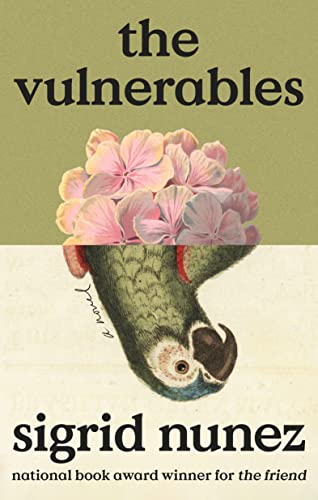
Sigrid Nunez has been on my radar for a long time. So, why now? I blame Jonathan (Me Fail? I Fly!), since it was his post on Nunez’s latest novel, The vulnerables, that captured my attention and encouraged me to make now her time. What an intriguing book! I have no idea whether it is like her other books, but it certainly captivated me.

What exactly is it, was my first question? A novel, says its subtitle. Its probably best described as autofiction, but it did feel at times like a book of essays. In fact, late in the novel, our narrator who, like Nunez herself, is a writer, refers to Virginia Woolf and her aspiration

to invent a new form. The essay-novel. Chapters of fiction alternating with nonfiction chapters, “a terrific affair” that would include, well, everything: “satire, comedy, poetry, narrative . . . And there are to be millions of ideas but no preaching—history, politics, feminism, art, literature—in short a summing up of all I know, feel, laugh at, despise, like, admire hate & so on.”

On the next page, Nunez writes of Annie Ernaux who told her diary that “Tonight, I know I have to write ‘the story of a woman’ over time and History.” And so she did, some twenty years later. Ernaux’s book, says Nunez, is “a personal narrative spanning the period between 1941 … and what was then the present day, 2006: the autobiography of a woman that was also a kind of collective autobiography of her generation”.

Both of these encapsulate, to some degree, what Nunez is doing in The vulnerables. I like essays, so I enjoyed the “essay-novel” feel of this book, including its cheeky toying with where the boundaries are in what she is doing. And, I like personal narratives, not to mention the idea of a book being “a kind of collective autobiography” of a generation.

Nunez and I are of the same broad generation, although with some significant differences given she was born in New York in 1951 to a German mother and a Chinese-Panamanian father. But, we are both women of a certain age and so were designated “vulnerable” at the start of the pandemic, which is where the novel opens – in the northern spring of 2020. It is here, early on in the pandemic, when she is “breaking the rules” by going out and about too much, that a young friend admonishes her, telling her, “You’re a vulnerable … And you need to act like one.”

There is so much to write about in this book – her exploration of our generation, and how we are seeing things in these last decades of our lives. The discussions our narrator has with her friends about gender, for example, mirror mine, as does her awareness of the changes that come with ageing. Her concern about what happened in American politics in 2016, and its ongoing implications, mirror that of many of us. As do her references to racial and social injustice, the climate crisis … and so on. All heightened, here, by the pandemic, whose uncertainties shape the book’s tone. But, I want to focus on one particular aspect, her exploration of writing.

Our narrator is, as I’ve said, of a certain age. She’s seen a lot of life, and a lot of writing, and here she ponders, though her lively stream-of-consciousness style, the role, meaning, and form of writing. She begins with the opening sentence – “It was an uncertain spring” – from Virginia Woolf’s The years. But, just a few paragraphs on we are told that one of the first rules of writing is to “never open a book with the weather”, albeit our narrator has “never understood why not”. Between the opening sentence and this statement, she admits that she remembers almost nothing about Woolf’s book, and then writes that:

Only when I was young did I believe that it was important to remember what happened in every novel I read. Now I know the truth: what matters is what you experience while reading, the states of feeling that the story evokes, the questions that rise to your mind, rather than the fictional events described.

I felt right then and there that this was going to be a book for me. I rarely remember plots, but frequently remember how books made me feel, how I reacted to them.

Why are you making things up?

The vulnerables is deceptively simple. Our narrator takes us into her confidence about what is happening to her, and what she is thinking, as she moves through those early days of spring and into lockdown stage, when she accepts the task of pet-sitting a miniature macaw named Eureka in a classy New York apartment, only to find herself sharing this role with a disaffected, but opinionated Gen Z son of friends of the apartment owner. She calls him Vetch, a prickly metaphoric contrast to the old-lady flowers, like hydrangeas, that she had previously regaled us with.

Woven through this loose plot, are our narrator’s thoughts on a range of subjects. It has a relaxed stream-of-consciousness feel, but is, nonetheless, formally stylish, using subtle repetition, metaphor, sly humour and literary allusions, to develop her ideas. It’s also erudite with frequent digressions that explore anything from the relevance (or not) of Dickens and what, say, J.M. Coetzee thinks about writing, to a discussion of My octopus teacher and of how the events of 2016 stopped speculative fiction author William Gibson in his tracks. This might feel random at the start, but the links are there, and the ideas – the questions – slowly build. It’s the sort of book that invites you to go with the flow, and if you do, you will eventually not only see the pattern, but will also have been both entertained and inspired to think.

What most inspired me was Nunez’s exploration of what sort of writing is most relevant now. She shares the thoughts and experiences of many of the great writers of the last century or so – Virginia Woolf, Annie Ernaux, Joan Didion, J.M. Coetzee, to name a few. Early in the novel she quotes Coetzee who said that what comes in late life to many writers is “an ideal of a simple, subdued, unornamented language and a concentration on questions of real import, even questions of life and death.”

Then, late in the novel, in a wry comment about the pandemic and its distinction between “essential” and other workers, she notes that of writers, the only ones deemed essential were the journalists. She seems to agree, writing that “silence all the journalists and we’d have the end of human rights”. And, more pointedly, she responds to the question of whether there is still a place for fiction, with:

Growing consensus: The traditional novel has lost its place as the major genre of our time. It may not be dead yet, but it will not long abide. No matter how well done, it seems to lack urgency. No matter how imaginative, it seems to lack originality. While still a powerful means of portraying human character and human experience, somehow, more and more, fictional storytelling is coming across as beside the point. More and more writers are having difficulty quieting a voice that says, Why are you making things up? 

There is fear about “the growing use of story as a means to distort and obscure reality”. But, in her subversive way, Nunez explores both sides. She writes of her time with Vetch, saying

… even now I sometimes find myself talking to him. But when I do he is never ‘Vetch.’ Always his real name. His sweet name.
But how could any of this have really happened? I must be making it up.

Does it matter whether she’s making it up or not?

It is a little before this, that our narrator discusses Woolf’s thoughts about creating her new form, “the essay-novel”, and then teases out what we might want now (including a funny dig at reader’s guides for book clubs). It’s not simple or straightforward – indeed, it’s paradoxical, it’s “elegy and comedy” combined – but, in the end, what she has written is a novel. A strange, or different, almost essay-novel it may be, but there, I’d say, is your answer.

Sigrid Nunez
The vulnerables: A novel
London: Virago, 2023
250pp.
ISBN: 9780349018096

Jane Austen, Mansfield Park (Vol. 1)

Mansfield Park book covers

This year my Jane Austen group is doing a slow read of Mansfield Park, which involves our reading and discussing the novel, one volume at a time, over three months. This month, we did Volume 1, which, for those of you with modern editions, encompasses chapters 1 to 18. It ends with the return of the patriarch, Sir Thomas Bertram, from his plantation in Antigua.

I’ve said this before, but I’ll say it again. Every time I re-read an Austen novel, I “see” something new, something new to me that is, because I can’t imagine there’s anything really new to discover in these much loved, much pored-over books. Sometimes my “new” thing pops up because in a slow read I see things I didn’t see before while I was focusing on plot, or character, or language, or … Other times, it might arise out of where I am in my life and what experiences have been added to my life since the previous read.

I’m not sure what is behind this read’s insights, but the thing that struck me most in the first volume this time is the selfishness, or self-centredness, of most of the characters. It’s so striking that I’m wondering whether Austen is writing a commentary on the selfishness/self-centredness of the well-to-do, and how this results in poor behaviour, carelessness of the needs of others, and for some, in immorality (however we define that.)

Mansfield Park has been analysed from so many angles. These include that it is about ordination (which Austen herself said was the subject she was going to write about); that it is a “condition of England” novel; and that it is about education. In the first chapter, in fact, Mrs Norris, the aunt we all love to hate, says

Give a girl an education, and introduce her properly into the world, and ten to one but she has the means of settling well, without farther expense to anybody.

The irony of course is that the sort of education that Mrs Norris supplies to the Bertram girls does not do them any favours. That’s not exactly where I’m going now, though we could argue that poor education – or poor upbringing – is behind much of the selfishness we see in the novel. So, maybe, I will end up talking about education by the end of the novel.

For now, however, I will share why I am thinking this way. For those of you who don’t know the plot, it centres around Fanny Price who, at the age of 10, is taken in by her wealthy relations, the Bertrams of Mansfield Park, to relieve her impoverished parents of one mouth to feed. Fanny Price is the Austen heroine people love to hate, but I’m not one of those haters. I believe that if you truly look at her character and her life, within the context of her situation and times, you will see a young girl whose good values and commonsense enable her to make the best of a very difficult situation.

That it is a difficult situation is made clear in several ways, including the fact that we are told in the opening chapter that she is to be treated as a second class citizen in the family. A “distinction” must be preserved; she is not her cousins’ equal. In the second chapter, we are told

Nobody meant to be unkind, but nobody put themselves out of their way to secure her comfort.

As the novel progresses, and the characters are introduced, they are, one by one, shown to be self-centred and/or selfish in one way or another. I won’t elucidate them all, but, for example:

  • Lady Bertram (her aunt) is, from the start, lazy and careless about the needs of others. Her own comfort, and that of her pug, supersedes all.
  • Mrs Norris (another aunt) is judgemental and parsimonious, ungenerous in mind and matter in every possible way.
  • Cousins Maria and Julia show no generosity to Fanny, unless it’s something that doesn’t materially affect them; they are “entirely deficient in … self–knowledge, generosity and humility”.
  • Cousin Tom “feels born only for expense and enjoyment”, and exudes “cheerful selfishness”.
  • Visiting neighbour, Henry Crawford, is “thoughtless and selfish from prosperity and bad example” and amuses himself by trifling with the feelings of Maria and Julia who provide “an amusement to his sated mind”.
  • Henry Crawford’s sister Mary is unapologetic about her selfishness, asking Fanny to forgive her, as “selfishness must always be forgiven…because there’s no hope of a cure”. This surely takes the cake!

And so it continues … the clergyman Dr Grant is an “indolent, selfish bon vivant”; and the self-important Mr Rushworth and the self-centred Mr Yates show no interest or awareness of the needs of others.

There are, of course, some redeeming characters. Cousin Edmund, in the first flush of love, can be thoughtless at times but it is his overall kindness that keeps Fanny going, and Mrs Grant also comes across as sensible and kind.

A couple of significant events occur in this volume – the visit to Mr Rushworth’s place at Sotherton, and preparations for staging a play, Lovers’ vows. These provide ample opportunity for the characters to parade their self-centredness. You can’t miss it. Fanny certainly doesn’t, as she watches those around her jockey for position in terms of their roles in the play:

Fanny looked on and listened, not unamused to observe the selfishness which, more or less disguised, seemed to govern them all, and wondering how it would end.

Fanny, however, also questions her own motives in refusing to take part in the play: “Was it not ill-nature, selfishness, and a fear of exposing herself?” But, in fact, she is the only one who is truly alert to the dangers within.

This “selfishness” theme is not, of course, the only issue worth discussing when thinking about Mansfield Park, as other members in my group made clear with their own discoveries. It is simply the one that stood out for me, during this re-read.

Thoughts anyone?

Karen Viggers, Sidelines (#BookReview)

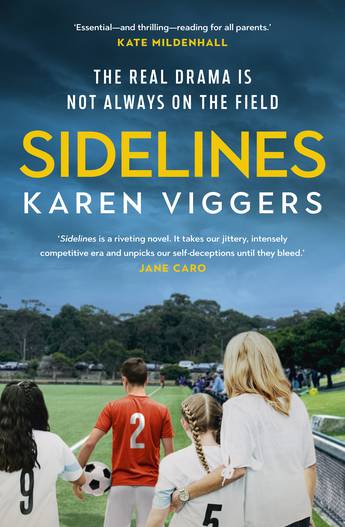
I don’t usually start a book review by relating its content to my own experience, but local author Karen Viggers’ latest novel Sidelines invites exactly this. Sidelines is about children’s sport and what happens when the competitiveness gets out of hand. It was largely inspired by Viggers’ own experience as the mother of sporty children, and by an ugly parental brawl at a children’s football match that happened during those years.

My children’s sport experience was blissfully different. Our son played cricket, and his coach’s last name was McPhun – I kid you not. He was the perfect children’s sport coach. His focus was on “phun” and teamwork. He encouraged those kids, was fair about opportunity, did not favour his own son, and we parents had the best time. I loved seeing the enthusiasm with which the kids played, and their resilience when they were out for a duck, despite having gone in to bat with dreams of sixes and high scores. You won’t be surprised, perhaps, to hear that our kids were not in the elite division, but this should not make any difference. Unfortunately, however, it probably does.

So, Sidelines. As Viggers explained at the meet-the-author event I attended – and as is obvious if you read it – her novel has a structure rather like Christos Tsiolkas’ The slap*. This means that the novel’s story or plot is progressed through a sequence of different, third person, points of view encompassing the parents and children involved in the sport. Sidelines is a little different though because in Tsiolkas’ book, the slap occurs in the first chapter and we then watch the fall-out from that action. Viggers’ novel commences with a prologue describing an ambulance arriving at a sports ground where a badly injured child is lying far from the goal-posts. “What the hell happened here?” We then flash back to nine months earlier and, through those sequential voices, we work our way towards what had happened and why.

“It’s not meant to be fun” (a football father)

The novel focuses on two families – the well-to-do Jonica, Ben, and their 13-year-old twins, Alex and Audrey; and the Greek-Australian working class family of Carmen, Ilya, and their daughter Katerina. Into this mix comes Griffin and his single-parent Dad, Lang. Griffin is a natural, and his appearance upsets the team’s sporting and interpersonal dynamics. The characters telling the story are Jonica, Carmen, Audrey, Katerina, Ben, and finally, Griffin. For each voice, there is a thematic word or phrase that provides insight into, and commentary on, that character.

The first voice, Jonica’s, initially made me feel I was reading one of those stories about a dysfunctional family. You know, the well-to-do family with the successful, professional, and controlling husband, the privileged children, and the wife and mother caught somewhere in the middle. And there is some of this aspect in the novel, because, as becomes clear, part of the story Viggers is telling is one of class. So, in Jonica’s story we see the tropes of her class. Everything is laid on in a material sense, but the two females, in particular, aren’t happy. Jonica, like her husband, is a lawyer, but she is frustrated about not working. Ben, you see, “likes having her at home”, and insists she is needed to look after the children. He will “support her” (and the family) while she supports the children. There’s an irony in this word, “support”, which is Jonica’s theme, because, as Viggers said during the author talk, there’s a fine line between “support” and “pressure”. Audrey certainly feels more pressure than support.

The next voice is that of the other mother, Carmen, whose daughter, Katerina, like Audrey, is trying out for a place in the boy’s team where, as Ben had told Jonica, girls will learn “speed and aggression”. While Jonica tries, unsuccessfully, to resist her husband’s pressure to push the children, Carmen is more like Ben. She wants her daughter to achieve where she had failed, and she will manipulate and kowtow as much as is necessary to ensure this happens. Her theme or motif is “goal poacher”, the one who “attempts to shoot goals from loose balls … and uses other non-traditional ways of scoring”. Perfect for the resourceful Carmen.

And so the novel progresses through to Audrey’s and Katerina’s voices, where we see the pressures that their parents don’t. These girls do want to play well, but they also want other things in their lives. They are teens, for heaven’s sake! And Viggers’ rendition of them convinced me.

The penultimate voice is Ben’s, and here, in particular, is where Viggers’ choice of a multi-voice structure shines, because, while he’s still unlikable, we also see his point of view. Ben is the alpha male, no doubt about it, but he loves his family and he’s not so tuned out that he doesn’t sense something is wrong with Audrey in time to take critical action. This is the value of reading, being able to see a situation from another point of view. We don’t have to agree with Ben – I’m sure few of us do – but we can see where he’s coming from and that he’s human. This awareness can be achieved with third person voices, of course, but Viggers has effectively used first person voice here to directly confront readers with her protagonists’ thoughts.

By the end of the novel I was impressed by the careful and sophisticated way in which Viggers had developed and explored her main idea, which is to encourage us to think about our attitudes to and behaviour around competitive children’s sport. She offers no easy solutions. This is not a didactic book. There are many points left open for readers to think about. Can you play for fun, for example, and what does that look like?

In the above-linked interview with Viggers, she said she has realised that she is an issues-based writer. This is exactly what I thought as I started reading Sidelines. On the surface, it departs from her previous, environment-themed novels but, in fact, like those novels, it takes an issue Viggers cares about and explores it through characters who are real on the page. I enjoyed the read, but more than that, I hope it gets read and talked about in places where it matters.

* Interestingly, another Tsiolkas book, Barracuda (my post), starts with elite children’s sport, but while class is also an element, it takes a long view of what happens when things don’t go to plan.

Karen Viggers
Sidelines
Crows Nest: Allen & Unwin, 2024
343pp.
ISBN: 9781761470714

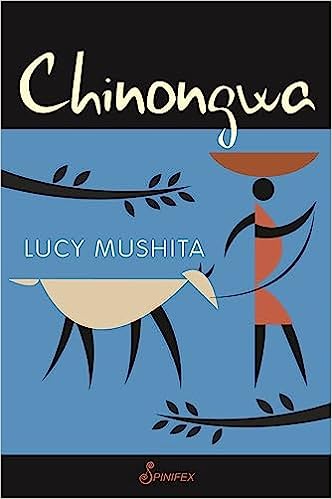
Lucy Mushita, Chinongwa (#BookReview)

Where to start with this complex, unusual and gorgeously written novel that manages to convey the horrors of child marriage, of colonialism, and of patriarchal cultures, without eulogising or demonising the characters involved? It’s quite a feat, and it made this book a deeply involving read.

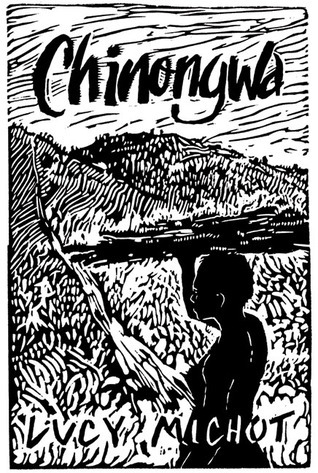
The place to start, I suppose, is the beginning, which is that Chinongwa is the debut novel of Zimbabwean author Lucy Mushita. Published most recently by Australia’s Spinifex Press in 2023, it was originally published in 2008 in South Africa, under the author name of Lucy Michot (which I discovered when searching for the book cover in GoodReads.) Its eponymous protagonist, Chinongwa, is 9 years old when the novel opens:

Chinongwa Murehwa was nine, but her age was not vital. Just her virginity. Though she was not yet washing, her fruits were already protruding. That was a relief for her family. Anyway, she was the only one they could use.

And there you have it. For a reason that soon becomes obvious, Chinongwa is to be “used”, that is, married off to save the rest of her family from starvation. The root cause of this starvation is colonialism – the arrival of the “kneeless” or vasinamabvi and the fact that Chinongwa’s family ended up with the poorest quality land in the village because her paternal grandfather had stood up to the vasinamabvi and arrived late at the place their community settled.

So, in Book 1 of the novel, 9-year-old Chinongwa is “hawked” around neighbouring villages by her father and aunt, with little success. Can you imagine it? She is starved and thin, not one of those “juicy” nubile young women men desire and are happy to pay for with cows and grain. At last, however, a childless woman, Amai Chitsva, for reasons of her own, offers to take Chinongwa as a second wife to her own husband. Not only is this husband, Baba Chitsva, thirty nine years her elder, but he does not want a second wife. Regardless, Book 1 ends with Chinongwa about to start her new life with her new family.

Now, before I get to Book 2, I should explain that this book is a novel, but one based on the life of a real person. I say this because a Chronology is provided at the beginning of the book. It tells us that Baba Chitsva was born in 1871, and Chinongwa in 1910, that Baba Chitsva died in 1935, and, finally, that “Chinongwa is telling all” in 1940. There are other dates, but these are the most relevant in terms of grounding the book.

So, Book 2. Unlike Book 1, which is told from the third person voice (albeit mostly through Chinongwa’s eyes), Book 2 is told in the first person voices of Amaiguru (Amai Chitsva) and Chinongwa, with one chapter in Baba Chitsva’s voice. This shift works because in Book 1 Chinongwa is a child, so not fully aware of the ways of the adult world, whereas in Book 2 she grows up – very rapidly. It’s a heart-breaking story of a young woman who is essentially groomed to seduce a man who doesn’t want her, a young woman who subsequently has her first baby at the age of 11.

For the first few years she and Amaiguru make it work well enough, as we hear through their individual voices. Chinongwa has no other real option, while Amaiguru tries to make work what she had started. But things turn sour when, upon her mother’s death, Chinongwa finally realises she is on her own, and that it’s time to be more independent:

I now had to take my destiny into my own hands: I would have to return to my jail and fight for my freedom from within.

And so she does with disastrous results.

What makes the novel such good reading is that Mushita is able to convey the culture, how and why it tolerates the practice of child marriage and polygamy, including the economics of it all – how cows are passed back and forth between families, for example – while simultaneously recognising the humanity of those involved. These men and women – the mothers and fathers, the child-brides, the first wives and second wives, the husbands, the aunts, the villagers – are human beings with the full range of social and emotional behaviours. Some are kind and some cruel, some are envious, some are sensible, some are weak, some are manipulative, some are scared, some are wise, and so on. Chinongwa eventually recognises this truth:

At first I refused to accept what life had dealt me. I said that my load was too heavy. But, with time, and as I look around me, I decided that one will never know the weight of one’s neighbour’s load. Maybe if I were to carry it, I might ask for mine back. Only that one who carries it knows its weight.

In other words, people will be people. They are rarely to blame for the system in which they find themselves. Some will survive and some won’t, but that’s not the point. The point is the system, and its complex historical and cultural interconnections. The point, too, is that child marriage still happens, and that patriarchies still govern much of women’s lives. In Chinongwa, Mushita conveys the economic, social and cultural imperatives that underpin these practices while also showing the personal costs. It makes compelling reading.

A little contribution to Bill’s Africa Project. Lisa also enjoyed this novel.

Lucy Mushita
Chinongwa
Little River, Vic/Mission Beach, Qld: Spinifex Press, 2023 (orig. pub. 2008)
235pp.
ISBN: 9781925950816

(Review copy courtesy Spinifex Press)

Barbara Kingsolver, Demon Copperhead (#BookReview)

Barbara Kingsolver’s latest – and multi-award winning – novel, Demon Copperhead, was inspired, as I’m sure most of you know, by Charles Dickens’ autobiographical novel, David Copperfield. Indeed, Demon Copperhead opens with an epigraph from that novel:

“It’s in vain to recall the past, unless it works some influence upon the present.”

This could be an argument for writing historical fiction, and is certainly relevant to Kingsolver’s political intent, but for the novel’s protagonist it’s far more personal. Several times through the novel Demon refers to the point at which things changed – usually for the worse – but it’s two-thirds through where he makes it clear

Where does the road to ruin start? That’s the point of getting all this down, I’m told. To get the handle on some choice you made. Or was made for you. […]

In my time I’ve learned surprising things about the powers stacked against us before we’re born. But the way of my people is to go on using the words they’ve always given us: Ignorant bastard. Shit happens.

But, I’m jumping ahead here … so let’s back up a bit. I started by referencing the fact that the novel was inspired by David Copperfield, and it was inspired by it for one very good reason, which Kingsolver explains in her Acknowledgements:

I’m grateful to Charles Dickens for writing David Copperfield, his impassioned critique of institutional poverty and its damaging effects on children in his society. Those problems are still with us. In adapting his novel to my own place and time, working for years with his outrage, inventiveness, and empathy at my elbow, I’ve come to think of him as my genius friend.

So there you have it. Kingsolver has transferred Charles Dickens’ London of the early to mid-nineteenth century to Lee County Virginia from around 1990 to 2004 or so. While Demon struggles to make something of his life against all odds, not recognising or accepting until later that those odds were stacked against him from the start, Kingsolver, like Dickens, is a reformer doing her best to ensure that we will see from that start just how stacked those odds are at every level. I was expecting the book to be primarily about the OxyContin/opioid addiction crisis but it is much broader than that. It’s about poverty and the intergenerational trauma that this engenders – and how this helps lay the foundation for something like OxyContin to take hold.

“What matters in a story is the heart of its hero” (Demon)

I admit that I was not initially keen to read this novel. Not only is it very long, but I’ve read (and, yes, enjoyed) Barbara Kingsolver before, and I have higher priority books on my TBR. However, it was my reading group’s first read of the year, so of course I read it. It’s not a perfect novel, but Demon’s voice was so engaging and the translation of Dickens to Appalachian America is so pertinent to contemporary politics, that I’m glad I read it.

I can see, though, why it’s one of those divisive novels that engenders strong feelings one way or another. For a start, translating Dickens to contemporary times is risky. Dickens’ novel, being published in serial form, is long and episodic, with a large cast of characters, a touch of melodrama, and a lot of detail. A big, baggy, monster in other words. This style does not necessarily suit contemporary readers, but this is what you get with Demon Copperhead.

Like Dickens’ novel, Demon Copperhead wears its heart on its sleeves, meaning it’s not subtle. It can be didactic at times, as in Mr Armstrong’s lessons on capitalism and coal mining companies and Tommy’s discussion of historical truths. Its large cast of characters aren’t quite stereotypes but many are clearly typified by their behaviour – the bad characters who manipulate and use others (like stepfather Stoner, foster-father Crickson, and anti-hero Fast Forward), the weak characters who are well intentioned but can do more harm than good (like Coach), the kind hearts who pick Demon up when he’s down but can’t properly guide him (like the Peggotts), and the shining lights who try to set him on the right path but know he has to decide for himself (namely June and Angus).

In other words, Demon Copperhead is an in-your-face novel, which could be alienating. However, what kept me engaged was the character of Demon himself. Born to a junkie mother and orphaned at 11 when she ODs on oxy, he has a vivacity, an openness, and a heart that you want to see survive, despite setback after setback after setback. He’s “resilient”, a survivor, which is something those around him see early on. This is not to say, though, that he will survive, because even survivors need a hand, and this is what Demon sometimes gets, sometimes doesn’t, and, distressingly, sometimes eschews because he is determined not to be helped, to make his own decisions, to be his own man.

Regardless, once Demon had me, I was in. I have lived in Virginia (albeit very middle-class northern Virginia) and I have driven through various parts of Appalachia. I am interested in the culture, and, having recently read JD Vance’s Hillbilly elegy (my review), I am interested in how it is playing out in contemporary America. Kingsolver explores the role played by big pharma in targeting poor Appalachian regions with their painkillers, at a time when the region was suffering from the callous withdrawal of coal companies*. She shows how socioeconomic factors like these, combined with systemic failures in child welfare, not to mention poor educational opportunity, and the ongoing ostracism of “hillbillies”, contribute to the rise of MAGA politics in the USA.

She also shows the opposite, because while Demon is aware of the factors that work against him, he also sees what can sustain – good people offering the right support, the best parts of rural traditions, and nature, whose benefits are both spiritual and practical. The question is, are these enough? Or, what is needed to make them enough?

You have probably noticed by now, that I am not doing my usual sort of review here. This is partly because, being a multi-award winning Barbara Kingsolver novel, Demon Copperhead has already been written about ad infinitum, and partly because I wanted to tease out my own feelings about such a polarising novel. Yes, I can see – even agree with – some of the criticisms. It’s long and detailed, is didactic in places, and is not what you’d call subtle – rather like Dickens, in fact. However, the power of the story and its accompanying messages, combined with Demon’s utterly captivating voice, got me over the line. Kingsolver, I’d say, does her epigraph proud, whichever way you read it.

* One of my reading group members share an article about this very issue in a January 28 article in The Guardian.

* For a more traditional review of the novel, do check out Brona’s.

Barbara Kingsolver
Demon Copperhead
London: Faber & Faber, 2022
644pp.
ISBN: 9780571376490 (eBook)

Al Campbell, The keepers (#BookReview)

Al Campbell’s debut novel, The keepers, is a complex and ambitious novel about parenting, specifically about parenting children who are deemed too difficult by society, leaving their mothers, or carers, to survive, or not, as best they can. It’s confronting but, unfortunately, all too real.

That this is its theme is obvious from the novel’s opening page, which is titled “Scrapbook #12”, and comprises a news report from abc.net.au, 23 April 2018 (original here). The lead sentence reads, “special needs group pays tribute to 11yo boy with autism killed by train after escaping from respite care”. I remember this case.

We are then launched into the main storyline, which concerns Jay, a mother and full-time carer for her twin autistic sons, Frank and Teddy, and features a cast of other characters, some real, like her unsupportive husband Jerrik, and some imaginary, mainly her childhood “friend”, Keep (short for Keeper). Alternated with this storyline, which is told chronologically through time-stamped sections (like “Monday 2:06am” and, later, “4 days till extubation”), is the story of Jay’s childhood, in which she had experienced abuse and neglect at the hands of a grandfather and her dysfunctional mother. These sections are also time-stamped (such as “10 years old, autumn). Interspersed with these are scrapbook entries, like the one opening the novel. They are compiled by Jay, who clips and shares stories about the neglect and, even, murder of children with disabilities. As I said, complex and ambitious.

There is so much to like about this novel, starting with Campbell’s characterisation of Jay and her sons. It’s vivid and empathetic, which is not surprising given her own life experience. Write what you know, authors are told. These people are not her and her sons, but she knows them intimately, and the scenes featuring them shine off the page, even non-verbal Teddy who communicates via iPad, and especially patient, stuttering Frank. I’d love to share some of the interactions between Jay and her sons, because the warmth, the humour, the patience, the imagination make for some great reading and convey some of the joys in their relationship, but I’m not sure they’d work out of context, so you’ll just have to take my word for it.

Meanwhile, another strength of the novel is Campbell’s energetic, evocative writing. It starts with a bang and rarely lets up. The language is often breathtaking in its ability to capture a moment, a feeling. On the first page after the scrapbook entry, Jay refers to it as “the horror on the page a thing of thorns in my hands” and on the next page, the unsettled night outside is conveyed through a “lone plucky lamppost mooned by wanton whacks of lightning”. She’s talking in these opening pages to the mysterious and shape-shifting Keep, whose “latest incarnation” is “bald as bone and mouthless. No breath of course. Without ears … Some ancient mica, colourless and brittle? … His appearance is rarely the same”. The reader is immediately introduced to one of the meanings of the title, Jay’s “keeper”. Described later as her “poultice and protector, destroyer of others”, Keep has been with her since her difficult childhood. Another meaning is that her two sons, despite what the system might think or suggest, are “keepers” – at least until she is no longer around. What then? This question underpins all that Jay does and feels, and lies just beneath some of the uglier scrapbook items.

But, Campbell, does ask a lot of her readers. The structure is complex, which, on its own, would not be a problem, multiple storylines, after all, not being new. But, there is a lot going on. The exciting but idiosyncratic style, the switches in voice, the sudden appearances of Keep and later “the Other Things”, the shifts in storylines from mother-Jay to youthful-Jay, demand a level of attention that can sometimes get in the way of the story. I’m not convinced, in fact, that Jay’s childhood story – readable and interesting though it is – adds enough. Is it intended as another example of how the system lets children down? If so, I don’t think it’s needed, as Jay’s story with her sons, is powerful enough. Is it intended to contrast her own style of mothering with that of her mother, or to introduce the idea of child abuse? If so, these seem like different stories, and ones that potentially weaken what seems to be her intention to highlight the desperate situation families with special needs children find themselves in.

In other words, Campbell’s main story, as I see it, is a mother’s “warrior” style love for her “different” children, and the system that lets them – the children and the parent/carer – down, again and again. She tells of doctors who refuse to listen or heed, of the social welfare bureaucracy (through the NDIS) with its irrational rules, of schools which can be inflexible, of people in parks and shops who would rather not see her children – and so on. If it’s infuriating for the reader, imagine what it’s like for the parents.

Overall, The keepers is a powerful story that wants us all to understand the life of the carer, the very difficult questions confronting them as they and their children age, and the way the system all too often treats them as lesser or as too hard or as “types” to be slotted into rules and regulations. For Campbell, the personal is the political, and vice versa in fact. She would like to believe there is real truth and commitment to the idea that it takes a village to raise a child, but “some village we turned out to be”, she says to Keep at one point. And right there it occurred to me that this book, despite its flaws, is the sort of thing that should be selected for the Prime Minister’s Summer reading list.

Al Campbell
The keepers
St Lucia: UQP, 2022
336pp.
ISBN: 9780702265488