Jane Austen’s Persuasion, Vol. 1

Jane Austen, Persuasion

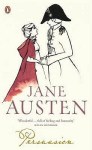
My Jane Austen group is reading Persuasion – eleven years since we last did it – because 2017 is the 200th anniversary of its publication. Of course I’ve read it several times, so, as you’ll know from my other Austen re-reads, my aim here is to focus on reflections from this read rather than to write a traditional review.

You’ll probably also know that my group often does slow reads of her novels, a volume at a time. Persuasion was published in two volumes, so last month we read Volume One. It finishes at Chapter 12, just after Louisa Musgrove has her fall at Lyme. This post is about this volume.

But first, I want to say something my relationship with Persuasion. I first read it in 1972 when the second TV miniseries was screened in Australia. I was reading it in tandem with the screening, and the night the last episode screened I sat up late to finish the last chapters. I’ll never forget my emotional response to it. I can’t remember whether the miniseries was a good one, but I sure thought the book was. Why?

Persuasion doesn’t have the sparkle of Pride and prejudice, nor the  young spoofy humour of Northanger Abbey, nor even the heroine we love to laugh at in Emma, but it is quiet, emotional and deeply felt. Its heroine Anne, at 27 years old, is Austen’s oldest. She’s caring, intelligent, but put upon by her unappreciative family – and yet we don’t feel she’s a pushover. The novel’s romance, when it comes, feels right and well-earned. No-one ever says that Austen should not have married Anne to her man the way some do about some of her other heroines such as Marianne in Sense and sensibility, and Fanny in Mansfield Park. No, when it comes to Persuasion, Austen fans are generally in agreement: it’s a lovely book in which the hero and heroine belong together. But, it’s about so much more too …

I’m not going to provide a summary, so if you need to refresh yourselves on the plot and characters please check Wikipedia.

A specific setting

I’m not sure why it is, but on this my nth (i.e. too many to count) reading of Persuasion, I suddenly noticed that it was the only book, really, that gives us a very specific date and that is set pretty much exactly contemporaneous with when Austen was writing it. It starts in “this present time, (the summer of 1814)” and ends in the first quarter of 1815. This period pretty much covers the hiatus in the Napoleonic Wars when Napoleon was exiled to Elba – and is why Naval Officers are out and about, on land and available for appearing in Persuasion! Sir Walter’s friend and advisor, Mr Shepherd tells him:

This peace will be turning all our rich Navy Officers ashore. They will all be wanting a home.

It is the appearance of the Navy and Austen’s contrasting the substance of naval officers with the superficiality of the aristocracy that gives Persuasion its particular interest – beyond its lovely story, I mean. It is very much a book about social change. (I should say, here, that Austen was partial to the Navy, having two successful Naval brothers)

Two themes

Anyhow, this idea and that relating to persuasion are developed in Volume 1 through various themes, two of which I’ll discuss here.

Appearance and Social status

That social status is a major concern is heralded on the book’s first page when we are told about Sir Walter’s favourite book: “he was a man who, for his own amusement, never took up any book but the Baronetage”. The narrator tells us soon after that:

Vanity was the beginning and the end of Sir Walter Elliot’s character; vanity of person and of situation.

However, he has not been sensible with his money, and needs to rent out his home Kellynch-hall, hence my earlier quote. But, Sir Walter doesn’t like the Navy, and his reasons convey two of the novel’s themes – the focus on status and the cult of appearance. His response to the idea of renting his home to a Naval officer is:

Yes; it is in two points offensive to me; I have two strong grounds of objection to it. First, as being the means of bringing persons of obscure birth into undue distinction, and raising men to honours which their fathers and grandfathers never dreamt of; and secondly, as it cuts up a man’s youth and vigour most horribly; a sailor grows old sooner than any other man …

This is of course ironic, because the naval officer, Admiral Croft, to whom he eventually agrees to rent the place is a thoroughly decent man (who removes Sir Walter’s myriad “looking glasses” when he takes residence). Croft also, Anne “fears”, looks after the Kellynch estate and its people far better than her family did. However, for Sir Walter, the only thing that matters is status.

As the novel progresses, the difference between the Navy and the aristocracy is further developed, but more on that anon.

Anne’s sister Mary is highly aware of her status as a Baronet’s daughter, and the “precedence” due to her. That she stands on this demonstrates her superficiality and lack of decent human feeling. She complains when she goes to her in-laws’ home that her mother-in-law does not always give her precedence. One of her sisters-in-law complains to Anne:

I wish any body could give Mary a hint that it would be a great deal better if she were not so very tenacious; especially, if she would not be always putting herself forward to take place of mamma. Nobody doubts her right to have precedence of mamma, but it would be more becoming in her not to be always insisting on it.

Later, after Louisa’s fall at Lyme, when it is suggested that calm, capable Anne remain behind to care for Louisa, Mary objects:

When the plan was made known to Mary, however, there was an end of all peace in it. She was so wretched, and so vehement, complained so much of injustice in being expected to go away, instead of Anne;—Anne, who was nothing to Louisa, while she was her sister …

Here again is Mary’s misplaced sense of “precedence”. It is also a lovely example of Austen’s plotting, because only a few chapters earlier Mary had refused to stay home from a family party to look after her own injured little boy, preferring Anne do it. Austen had set us up nicely to see the superficiality of Mary’s desire to care for her sister-in-law. The more you read Austen, as I’ve said before, the more you see how fine her plotting is.

Strength of character versus Persuasion (or the influence of others)

Another ongoing issue in the novel concerns strength of character. Captain Wentworth reflects on Anne’s lack thereof in refusing their engagement when she was 19:

He had not forgiven Anne Elliot. She had used him ill; deserted and disappointed him; and worse, she had shewn a feebleness of character in doing so, which his own decided, confident temper could not endure. She had given him up to oblige others. It had been the effect of over-persuasion. It had been weakness and timidity.

A little later, he praises Louisa Musgrove’s strength of mind, but we, the reader, realise her pronouncements are theoretical. She had not been put to the test. She says:

What!—would I be turned back from doing a thing that I had determined to do, and that I knew to be right, by the airs and interference of such a person?—or, of any person I may say. No,—I have no idea of being so easily persuaded. When I have made up my mind, I have made it.

Meanwhile, Louisa shares gossip about Anne, suggesting that Lady Russell, who had discouraged Anne from marrying Captain Wentworth, had also discouraged her from marrying Charles Musgrove (which of course reinforces for Wentworth the idea of Anne’s weakness of character).

… and papa and mamma always think it was her great friend Lady Russell’s doing, that she did not.—They think Charles might not be learned and bookish enough to please Lady Russell, and that therefore, she persuaded Anne to refuse him.

In this case, though, the decision was all the then 22-year-old Anne’s – but Wentworth only hears the gossip.

Henrietta adds to the chorus about Lady Russell’s persuasive power:

I wish Lady Russell lived at Uppercross, and were intimate with Dr. Shirley. I have always heard of Lady Russell, as a woman of the greatest influence with every body! I always look upon her as able to persuade a person to any thing!

You can see Austen building up the plot here, leading us to see Wentworth as unlikely to be interested in Anne again.

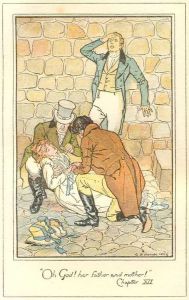
Persuasion, Lyme fall, CE Brock
Oh God! her father and mother (CE Brock, 1893?)

Anne, though, sees that firmness of character can go too far, that Louisa’s wilfulness against the advice of others had resulted in her potentially life-threatening fall. She wonders

whether it ever occurred to him now, to question the justness of his own previous opinion as to the universal felicity and advantage of firmness of character; and whether it might not strike him, that, like all other qualities of the mind, it should have its proportions and limits. She thought it could scarcely escape him to feel, that a persuadable temper might sometimes be as much in favour of happiness, as a very resolute character.

Will he see it her way? We’ll have to read Volume 2 to find out!

There’s a lot more I could say, but I think I’ve said enough. Next post I plan to take up the Navy issue a bit more …

Min Jin Lee, Pachinko (#BookReview)

Min Jin Lee, PachinkoIf you are looking for a big, engrossing read that takes you into a little-known world, then I offer you Korean-American author Min Jin Lee’s Pachinko. It tells a story about the Korean diaspora in Japan over a period of 80 years, and was my reading group’s pick for August. There wasn’t a bored person in the room.

Interestingly though, several in the group had no idea what Pachinko was, so in case that’s the same for you, let’s get that out of the way first. It’s a sort of pinball-arcade game that is hugely popular in Japan. It’s a gambling game – a bit like our poker or slot machines – except that gambling is illegal in Japan so there is a complicated system of winning “prizes” which can be sold at a separate business for money! Pachinko parlours, which are highly visible in the entertainment districts of big cities, are dominated by Koreans – that is, their management and/or ownership is – which is where the title for Min Jin Lee’s book comes in.

Lee starts her novel in a small fishing village, Yeongdo in Busan, on the South Korean peninsula. It’s 1910, and a match is being made between Hoonie the cleft-palated, club-footed only son of a fisherman and his wife, and Yangjin, the 15-year-old daughter of a struggling family. A recipe for disaster you might expect, given the way historical sagas often go, except that Hoonie is a decent, loving man and Yangjin a hardworking, appreciative and loving young woman. They produce one daughter, Sunja, and it is her story – together with that of her family and friends – which forms the basis of Lee’s novel, until it closes in 1989.

The date 1910 was specifically chosen for the start of her novel because this is the year Japan annexed Korea, changing Koreans’ lives forever. With Koreans effectively belonging to Japan, many made the physical move there, believing their economic chances would be better, but most ended up in ghettos, living in poverty, and with minimal rights. Being Korean was, essentially, a passport to a second-class life, but they survived and this book chronicles their lives and spirit.

The first thing to say about Pachinko is that it’s a ripping read, covering four generations juggling life in a hostile land. We quickly become engaged in the lives of Sunja and her husband Isak as they move to Japan to live with his brother, Yoseb, and sister-in-law Kyunghee. Two children come, Isak is arrested (for preaching Christianity), and Sunja and Kyunghee join other Korean women selling kimchi and candy in an open market to help the family survive. Lee tells her story in straightforward, matter-of-fact language, with very few descriptive flourishes, which keeps the narrative moving without holding the reader up with extensive scene-setting. This description of Sunja’s second son, Mozasu, is a perfect example of Lee’s clear no-nonsense writing:

Mozasu had grown noticeably more attractive. He had his father’s purposeful gaze and welcoming smile. He liked to laugh, and this was one of the reasons why Goro liked the boy so much. Mozasu was enthusiastic, not prone to moodiness.

The rhythm is almost staccato at times, but never stilted. On occasion though, Lee will break out with something that is more evocative, and it can leave you breathless, such as this description of yakuza Hansu’s money-collector, Kim:

Hansu preferred Kim to do the collection because Kim was effective and unfailingly polite; he was the clean wrapper for a filthy deed.

The other interesting thing about Lee’s writing is that most of the big emotional events – marriages, births, and particularly deaths of which there are some awfully tragic ones – happen off-camera, and are reported to us in the same tone as the rest of the story. This is not the sort of storytelling you usually find in big family sagas, which love to squeeze out every emotional drop they can. I’d say this is because Lee’s goal is not to engage her readers in those sorts of emotions but to demonstrate the resilience and gutsiness of the people …

…. Because Koreans in Japan have had to be gutsy to survive in the face of being ostracised as aliens, of being treated as illiterate and filthy people, of being prevented from accessing higher level jobs. We, like the Koreans, are never allowed to forget their lack of status and, as a result, their reduced choices and opportunities.

It’s not surprising then that one of the themes is parents wanting education for their children, seeing that as a passport for a better future. Sunja’s son Noa wants to go to university, and later Noa’s brother Mozasu, himself not keen on schooling, sees education as a path out, preferably to America, for his son, Solomon. It’s not easy though. Korean children are bullied and ostracised at school, and are not encouraged to go to university. Only the dedicated make it through. The rest – like Mozasu – have to find work, which Mozasu does, luckily, albeit in a Pachinko Parlour. This, to his brother Noa’s disgust, becomes his career, but he becomes a wealthy man. Wealthy perhaps, but still Korean! He says to his friend Haruki:

In Seoul, people like me get called Japanese bastards, and in Japan, I’m just another dirty Korean no matter how much money I make or how nice I am.

And this brings me to my next theme, that of home. Lee provides three epigraphs in the novel, one for each of its parts, and the first one comes from Dickens: “Home is a name, a word, it is a strong one; stronger than magician ever spoke, or spirit answered to, in strongest conjuration”. It’s clear throughout the novel that our Koreans in Japan are homeless – reviled in Japan, they also no longer belong in Korea, particularly the succeeding generations that were born in Japan. As our omniscient narrator says at one point:

There was always talk of Koreans going back home, but in a way, all of them had lost the home in their minds for good.

And so, in this book, characters need to find their own sense of “home” which is, in most cases, family. It is in this context – and I think I can say this without spoiling anything – that we might understand Solomon’s decision at the end and Noa’s tragedy.

The third theme is perhaps the most obvious one, as it relates to the title, which clearly has metaphorical as well as literal readings. I’ll let Mozasu explain it:

Mozasu believed that life was like this game where the player could adjust the dials yet also expect the uncertainty of factors he couldn’t control. He understood why his customers wanted to play something that looked fixed but which also left room for randomness and hope.

However, here’s the thing. This is such a big, baggy monster that every reader is going to come up with different themes, different emphases. Lee herself, in an interview included with my edition, talks about her themes as “forgiveness, loss, desire, aspiration, failure, duty, and faith”. And, of course, all those are there too!

So, to sum up, Pachinko is a wonderful read about an engaging cast of characters. It provides a broad historical sweep of a region many of us could know more about, and it exposes the situation faced for a century or more by alien Koreans in Japan. It is also a book about human beings, one that never quite plays to type, that doesn’t opt for the easy marks. Instead, it is suffused with a clear-eyed humanity which encompasses the best and worst in people, and lets the reader make his or her own assessment. As I said, a thoroughly engrossing read.

Min Jin Lee
Pachinko
Head of Zeus, 2017
ISBN: 9781786691347 (e-Book)

Yuri Herrera, Signs preceding the end of the world (#BookReview)

Yuri Herrera, Signs preceding the end of the worldWhile I was travelling in the USA last month, I wanted to read at least one book relating to the regions we were visiting. I started by looking for a novel set in/about the northwest, but then Yuri Herrera’s Signs preceding the end of the world, set in the southwest, popped out at me, and I knew I had my book.

When you live in the southwest, as we did in the 1990s, you can’t help but be aware of the issue of migration, “illegal” or otherwise, across the border from Mexico. I’d seen the film El Norte (about two Guatemalan youths fleeing to the US via Mexico) and read T. Coraghessan Boyle’s The tortilla curtain, but I hadn’t read a Mexican author on the subject – until now.

Signs preceding the end of the world tells the story of Makina, who is sent to “the other side” by her mother to carry a message to her brother who’d gone and not returned. To obtain the help she needs to make the crossing, she also agrees to take a message from Mexican gangster, Mr Aitch. This synopsis would suggest to most readers an adventure story – a thriller perhaps – or at least some sort of plot-driven drama, but that’s not what this is at all. Yes, it follows a traditional linear journey narrative, but the tone is more mythical, which means that it works on two levels, the literal Mexican-American border story and something more universal about crossings and transitions.

Herrera achieves this by keeping details to a minimum. Places aren’t named, but just described. Chapter titles like “The place where the hills meet” and “The place where people’s hearts are eaten” exemplify this beautifully. Most people aren’t named, either, and, where they are, the names are minimal (such as Chucho who helps her cross the border) or enigmatic (such as the alphabetical three, Mr Double-U, Mr Aitch and Mr Q!) It is in this shadowy context that Makina makes her journey.

He also achieves it by starting the novel with a surprising scene that isn’t critical to the literal plot, but which provides a thematic or symbolic link to the ending. We meet Makina walking in the street, when, suddenly, a sinkhole opens up and a man is swallowed up. Makina manages to pull herself back and survive, but we learn in the opening paragraph the tenuousness of life and, perhaps, that Makina is either lucky or has good survival instincts. Meanwhile, the sinkhole itself, while a literal geographic phenomenon, also conjures up the underworld, the murky sub-legal world that Makina must traverse to make it to, and survive in, “the other side”.

Herrera evokes the dangers of the journey vividly, but having already set up Makina as a resourceful young woman, he convinces us of her ability to survive the crossing – and she does, despite being accosted by a young thug, nearly drowning in the river, being shot at near a mountain pass. She locates her brother too, even though the information she has regarding his whereabouts is minimal.

What really makes this book, though, besides the strength and heart of Makina, is Herrera’s language (albeit in translation). It’s written in the sort of spare language I like. Here’s Makina’s experience of the city:

The city was an edgy arrangement of cement particles and yellow paint. Signs prohibiting things thronged the streets, leading citizens to see themselves as ever protected, safe, friendly, innocent, proud, and intermittently bewildered, blithe, and buoyant; salt of the only earth worth knowing. They flourished in supermarkets, cornucopias where you could have more than everyone or something different or a new brand or a loaf of bread a little bigger than everyone else’s. Makina just dented cans and sniffed bottles and thought it best to verse …

Yes, “verse”. Dillman in her translator’s note discusses the challenges of translating the book, which she says is about “bridging cultures and languages”. One way Herrera conveys this theme is to use neologisms, signifying the idea of a new language for the potentially new people forged out of migration. One of his neologisms is “jachar” which he uses to mean “to leave”. Dillman needed to create/choose an English word that would play the same role, and came up with “to verse”, because it refers to poetry and is also part of “several verbs involving motion and communication (traverse, reverse, converse) as well as the ‘end’ of uni-verse”.

As I implied earlier, this is a road novel, a journey to another place as well as to the self. Here’s Makina looking for her brother:

It had taken everything she had just to pronounce the eight tundras. To cleave her way through the cold on her own, sustained by nothing but an ember inside; to go from one street to another without seeing a difference; to encounter barricades that held people back for the benefit of cars. Or to encounter people who spoke none of the tongues she knew: whole barrios of clans from other frontiers, who questioned her with words that seemed traced in the air. The weariness she felt at the monuments of another history. The disdain. The suspicious looks. And again, the cold, getting colder, burrowing into her with insolence.

And when she arrived and saw what she’d come to find it was sheer emptiness.

Here and elsewhere, Mexican-born Herrera, who now lives in the USA, is clear about the materialistic, insular reality of “the other side”.

As I read this book, I was reminded of other journeys and crossings, specifically crossing the Styx (it’s no accident I’m sure that the first chapter is titled, simply, “The earth”), Dante’s journey to hell, and even Alice’s fall down the rabbit-hole. Herrera, though, while invoking these journeys in Signs preceding the end of the world, has created his own, one that addresses the politics of borders and boundaries (and dare I say “walls) between countries, while exposing the personal, psychological and spiritual implications of traversing these borders. Its ending is unsettling – but perfect for all that.

Yuri Herrera
Signs preceding the end of the world
(Trans. by Lisa Dillman)
London: And Other Stories, 2015 (Orig. lang. ed. 2009)
114pp.
ISBN: 9781908276421

Emily Maguire, An isolated incident (#BookReview)

Emily Maguire, An isolated incidentEmily Maguire’s novel, An isolated incident, reminded me of Charlotte Wood’s The natural way of things (my review). Sure, An isolated incident is a crime novel, albeit a genre-bending one, while The natural way of things is a dystopian novel, but both deal with the same fundamental issue, misogyny. Wood exposes the scapegoating of women for their sexuality, while Maguire tackles violence against women (and in doing so, also traverses some of the same ground regarding attitudes to women’s sexuality).

That Maguire is going to confront the issue head-on is implicit in the irony of her title. Twenty-five-year-old Bella’s murder may have happened in an isolated place, and such murders may be rare in her small country town, but as we all know in our media-fuelled times, violence against women is not isolated. Indeed, it happens with terrible frequency. Maguire makes sure that not only do we not forget this, but that we see it in its entirety.

I started by saying that An isolated incident is a genre-bending crime novel. Now, I’m no expert in crime fiction but I know enough to recognise that this book inverts our expectations. In a nod to the genre, the novel is told chronologically with the chapters named by the date, such as “Monday, 6 April”. However, it is not told from the point-of-view of the police or detectives, and it does not focus on the whodunnit aspect, though the investigation does provide an ongoing thread. Instead, the story is told through two voices – the first person voice of Chris, Bella’s grieving big sister, and the third person voice of journalist May who has come to town with her own demons regarding a married lover. This narrative approach enables Maguire to broaden her reach, to focus on things other than catching the criminal, because that is the least relevant – I almost said least important except of course we do want these perpetrators off our streets – part of the story. The most relevant is why does this violence happen, and how does it affect those involved.

Maguire does not, however, provide any answers to these questions. Who knows why it happens? But Maguire does show some of the ways misogyny plays out in everyday life, from the “all piss and wind … harmless” pest who follows women in his car, through men who won’t take no, the men in the pub who know about violent men but do nothing, the schoolboy who enacts his sexual attraction by creating ugly pictures, to actual domestic violence resulting in a wife’s death. It’s powerful because it’s all so real – and true. And, definitely not isolated.

In a telling exchange between May and Chris, May says:

‘… You don’t realise how much most men dislike women. And knowing that, most women can’t relax around men the way you do. Can’t let ourselves show that we like them even if we really do.’

‘Ah. That’s a different thing, though. I like ’em fine, but I’m never relaxed, not fully. It’s like with dogs. All the joy in the world, but once you’ve seen a labrador rip the face off a kid, you can’t ever forget what they’re capable of.’

Late in the novel, Chris ponders this whole issue of the things men do and don’t do, and, heartbreakingly, decides:

… and there are men … who are pure and good of heart and intent and who only want to be our friends and brothers and lovers but we have no way of telling those from the others until it’s too late, and that, perhaps, is the most unbearable thing of all.

Similarly powerful is the way Maguire captures bereaved sister Chris’ grief. Chris is a down-to-earth, small-town barmaid who’s not above taking the odd man home for a little necessary money on the side. Her grief, her loss, is overwhelming, threatening to upset her sanity, and Maguire captures it well, including showing the impact of requiring a relative to identify a body when that body has been horrifically disfigured. The memory of how Bella looked, and imagining how the disfigurement occurred, add significantly to Chris’s grief.

An intriguing thread in the novel concerns the role of writing. Through May being a writer, Maguire explores, initially, the exploitative behaviour of journalists. They sweep into town en masse, intrude on people’s lives, trot out their jargon-laden reports about “close-knit” communities, and when the excitement is over, breeze out again to the next drama. May is one of these, until something about this story, and about Chris, results in her quitting her job to stay.

She explains to her brother why. It’s because she wants her writing to help overcome “the fear, the injustice”, whether by helping to catch the killers or just writing about Bella in a real way rather than simply as a victim. A little later, she tries to convince Chris to talk to her, arguing that her writing may help bring justice. As she argues with Chris, we wonder how much of what she is saying is sincere and how much is desperation to get a story, now that she’s freelance. Maguire writes:

May had started speaking in desperation but as the words came she realised she had once believed all of this about the power of a well-written story. The quaver in her voice told her that maybe she still did.

Hmm, is this Maguire, too, arguing for the value of writing her novel – and for writing in general?

So, did I like the novel? I did enjoy reading it. Maguire’s writing is compelling: it was easy to engage with Chris particularly, and to be interested in journalist May. Maguire’s picture of Strathdee is convincing, and she successfully imbues the story with a complexity that offers no easy answers. If it has a failing, it’s that it’s spread a little thin across the issues – male violence, media intrusion, grief and closure – resulting in an ending that didn’t quite punch an emotional or intellectual point home.

Quite coincidentally, just as I finished this book, Mr Gums and I watched the 2008 miniseries of Sense and sensibility, whose script was written by Andrew Davies. Towards the end comes a line from Marianne, albeit not Austen’s. Having been “burnt” by the dastardly Willoughby, she asks Elinor,  “What do men want from us – perhaps they don’t see us as people but as playthings”. Fortunately, many (most, perhaps) men do see women as people, but these novels, together with books like Anna Krien’s Night games (my review), remind us that we still have a long way to go before there is true equality, true respect, between the sexes.

This book has been reviewed by several of my blogging friends, including Michelle (Adventures in Biography), Bill (The Australian Legend), Lisa (ANZLitLovers), Kate (booksaremyfavouriteandbest), and Kim (Reading Matters). Two didn’t like it much, the others were more positive!

aww2017 badgeEmily Maguire
An isolated incident
Sydney: Picador, 2016
343pp.
ISBN: 9781743538579

Rebekah Clarkson, Barking dogs (#BookReview)

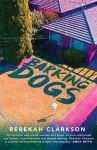
Rebekah Clarkson, Barking dogsThe best way to describe Rebekah Clarkson’s debut book, Barking dogs, is that it’s a portrait of a community undergoing social change. This community is Mount Barker on the outskirts of Adelaide. Once a farming community, it is now, says Wikipedia, “one of the fastest growing areas in the state”, the province of developers, the aspirational and the upwardly mobile, rich pickings in other words for an observant novelist. But, did you notice that I said “debut book” not “novel”? This is because, superficially, this book presents as a collection of short stories. However …

What’s in a name? It reminded me of the recent discussion about Junot Díaz’s debut book, Drown, on the ABC’s First Tuesday Bookclub. Drown is also a collection of short stories, but panel members argued that it could be defined as a novel because “the stories are too interlinked for us not to see it as a narrative whole”. Drown, though, does have the same narrator throughout, which Clarkson’s book doesn’t. Her book is probably closer to Tim Winton’s The turning. Like Barking dogs, its stories are set in the same place, and it has some recurring characters, though, from memory, I’d say recurring characters are a stronger feature of Clarkson’s book.

The question is, of course, does any of this matter? Not really, except that calling it a novel might attract more readers – you know, those who say they don’t like short stories. And, it is always relevant to consider form, even if, in the end, the actual label is irrelevant.

The form, style and structure of Barking dogs, do, in fact, give us much to consider. There are, for example, 13 stories. Are we meant to consider the “negative” implications of the number 13 in terms of this community’s future? Why does Clarkson start the collection with a troubling story (“Here we lie”) set at a later time in the book’s chronology, and end with a story set at the earliest time (“If it wasn’t this”)? The fact that this last story, although set in the seemingly idyllic rural days, ends rather bleakly on the image of a tree “alone, stark and bare” suggests that Clarkson recognises the complexity in all communities. Again, I was reminded of Pulitzer prize-winning author Paul Beatty on the First Tuesday panel talking about how he sometimes plays around with the order of the stories in Drown, and how this changes its impact.

Regardless of the overall intention, though, the stories make great reading. Whether they are told 1st, 2nd or 3rd person, and whether the narrator is male or female, young, middling or older, or struggling financially or more well-off, Clarkson is able to get inside her characters’ heads. She captures, and explores, the feelings, values and thoughts, the confusions, uncertainties, and pretensions, of her town’s inhabitants. We can “see” it all: the struggle to pay mortgages, to maintain meaningful marriages, to raise their children (or to conceive them in the first place), to get on with their neighbours, to achieve the lives to which they aspire.

A number of motifs run through the book, including the murdered girl Sophie Barlow (whose family appears in the second story, “Something special, something rare”, but whose story is never fully told), the Wheeler family which forms the main connecting thread in the collection, and of course the barking dogs of the title. These, together with the setting, contribute to the coherence of the whole.

Some stories stood out more than others. This may say more about my particular interests, rather than the quality of the stories, but it may also be that the stories that are more connected by characters are more engaging because of the story development they entail. It’s a book that would bear multiple readings, because even skimming it for this review revealed further links and connections that I missed on my first pass.

The overall theme, that of a community going through change, is beautifully encapsulated in the story “Hold me close”, in which the recently widowed Edna, a long-term resident of the town’s now rural outskirts, struggles to understand the aspirations and lifestyle of her daughter, Andrea, who has moved back to the area. Andrea lives in a “ex-display home village” and, Edna thinks, is more interested in appearance than substance. This tension between striving for success and being, hmm, more real is played out in various ways in the other stories.

The Wheelers

But, perhaps the best way to illuminate the book is to look briefly at how the Wheeler family is woven through the book. The Wheelers are 49-year-old Malcolm, a successful management professional, his confident teacher wife, Theresa, their 11-year-old son Martin who’s been diagnosed with Asperger’s, and Jasper, their barking dog. They epitomise the new families in the area – their aspirations, their values, and their problems – and at least one of them appears, or is referred to, in seven of the stories. The first references are in passing. In “Something special, something rare”, Martin has been physically bullied by Liam Barlow, but we don’t meet him specifically, and in the following story “World peace” he is again referred to, this time by one of his classmates. We gather he’s a little different, and doesn’t fit in well with the normal schoolyard cut-and-thrust.

The next four stories (4th, 7th, 9th and 11th) in which they appear are told from their perspectives, the first two from Malcolm’s, then one from Martin’s, and finally Theresa’s. I don’t want to give too much away, but we get the picture of a fairly kind, laissez-faire husband married to a more go-ahead, shall we say, proactive, wife. In the fourth story, “Raising boys”, we also meet their barking dog who is bothering his neighbour, and in the seventh, which is, structurally, the central story, Malcolm receives some terrible news which provides the book’s emotional heart. The penultimate story, “Jasper”, is shocking. It exposes the cracks in “society today”, such as unrealistic aspirations, lack of neighbourly communication, fractured marital relationships.

Interestingly, while the stories are not presented chronologically, the Wheelers’ “story” is, giving the book a clear narrative arc. The overall order, perhaps, provides its thematic one, one that warns against rose-coloured glasses about the past.

Unfortunately, I am using an uncorrected proof copy from which quotes are forbidden (though I have “quoted” one or two phrases which I hope is okay!). However, I do want to briefly mention the writing, which maintains an effective satirical tone while also conveying a level of tenderness for the characters. There’s some lovely irony too. We know for example, that poor Graham Barlow’s vision for his business, Winners, is unlikely to be realised (“Something special, something rare”), and that Gladeview Park, where many of our characters live, does not provide the “Serene and fun-filled living” environment promised on the estate’s sign (“Jasper”).

Barking dogs offers a thoughtful, intelligent look at contemporary suburban life. It explores what a pristine, homogenous white middle-class enclave might look like. Unfortunately, it looks more like a bunch of isolated individuals than a healthy community, partly because the pressures that drive them seem to prevent real engagement with each other. It doesn’t need to be this way.aww2017 badge

Rebekah Clarkson
Barking dogs (Uncorrected bound proof)
South Melbourne: Affirm Press, 2017
240pp.
ISBN: 9781925475494

(Review copy courtesy Affirm Press)

Ian McEwan, Nutshell (#bookreview)

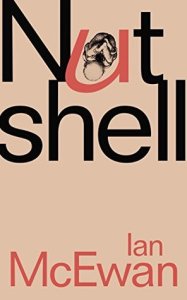
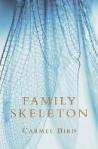
Ian McEwan, NutshellLike Carmel Bird’s Family skeleton, which I reviewed recently, Ian McEwan’s Nutshell has a narrator who won’t appeal to those who don’t like devices like skeletons in cupboards or babies in wombs. However, repeating what I said in my review of Bird’s book, it all depends on the writer’s skill, and McEwan, like Bird, is a skilful writer. Consequently, when the novel opened with “So here I am, upside down in a woman. Arms patiently crossed, waiting, waiting, waiting and wondering who I’m in, what I’m in for”, I relegated my disbelief to the pillion and set off for the ride.

As you’ll have guessed from that opening quote (if you didn’t already know), our narrator is a foetus. In my experience, McEwan writes strong, attention-grabbing first chapters, and Nutshell delivers here too. Our foetus-narrator, close to being born, is forced to be party to, or at least cognisant of, a plot concocted by his mother, Trudy, and uncle, Claude, to kill his father. Ring any bells? Yes, he (and it is a “he”) is a Hamlet in the wings. This is a clever modern riff on Hamlet, exploring many of the same issues, such as revenge, action versus inaction, corruption. It’s also a commentary on what we could grandly call the modern condition – on our world which is “too complicated and dangerous for our quarrelsome natures to manage”.

SORT OF SPOILER (so miss this paragraph if you wish)

If you know your Hamlet what I say next won’t be a spoiler, and if you don’t know your Hamlet, the part I’m giving away happens slap-bang in the middle of the book, hence is not, I’d suggest, a spoiler? So, with that fair warning, here goes. Nutshell is a tight, murder-mystery. For the first half of the book, the question is “will they do it?”, while in the second half, it’s “will they get away with it?” We are privy to most of the plotting and planning because our foetus goes, of course, wherever his mother does. However, this is as much an ideas-driven book as a plot-driven one so, I’m going to move onto some of the ideas the novel teases out.

McEwan is clear about what he sees as the “rotten state” (one of the many allusions in the novel to Hamlet) the world is in. There are references to world powers out of control. Europe  is “in existential crisis, fractious and weak”, while China, “too big for friends or counsel” is “cynically probing its neighbours’ shores”. “Muslim-majority countries” are “plagued by religious puritanism” and “foe-of-convenience” America, now “barely the hope of the world” is “guilty of torture”. There’s also the nuclear threat, climate change “driving millions from their homes”, the “urinous tsunami of the burgeoning old”, and our increasing loss of liberty in the service of security. For our foetus, though,

Pessimism is too easy, even delicious, the badge and plume of intellectuals everywhere. It absolves the thinking classes of solutions. We excite ourselves with dark thoughts in plays, poems, novels, movies. And now in commentaries. Why trust this account when humanity has never been so rich, so healthy, so long-lived.

It’s an attitude I like – and is what makes Nutshell not the bleak book it could be.

How does McEwan get away with all this?

The book, though, is not without its awkwardness. Sometimes the “rants” are a little too much, providing a virtual grab-bag of the world’s ills, from the loss of the Enlightenment’s rationality to the threat of North Korea. And sometimes our foetus-narrator is a little too knowing. Most of the time, McEwan makes clear why his narrator knows what he knows, including the limits to his knowledge, but sometimes our imaginations are stretched just a little too far. This is a very-knowing, very smart, highly articulate foetus, one who is not above giving his mother a kick:

In the middle of a long, quiet night I might give my mother a sharp kick. She’ll wake, become insomniac, reach for the radio. Cruel sport, I know, but we are better informed by the morning.

It is his “one morsel of agency” (and he uses it, giving, perhaps, Hamlet a lesson!) It is through these radio talks that our foetus learns most of what he knows about the world. Overall, McEwan maintained the conceit well, and I enjoyed the foetus-narrator’s view on the world he expects soon to join. Fortunately, my disbelief stayed on the pillion!

Besides this, the book is fun to read. There are allusions galore – not only to Hamlet but to a wide range of literary works. I would have missed many but I enjoyed spotting others, such as Jane Austen’s “two inches of ivory”, Julian Barnes’ “sense of an ending” and of course Hamlet’s “rotten state” and “a piece of work”. There is probably a bit of McEwan showing off here – flexing his literary credentials – but spotting allusions gave me little fillips of pleasure! There are also many funny scenes, including several involving descriptions of the lovemaking of the adulterous schemers:

I brace myself against the uterine walls. This turbulence would shake the wings off a Boeing. My mother goads her lover, whips him on with her fairground shrieks. Wall of Death! On each occasion, on every piston stroke, I dread that he’ll break through and shaft my soft-boned skull and seed my thoughts with his essence, with the teeming cream of his banality.

The question of course has to be asked: why choose such a narrator? I’m sure there’s more than one answer to this question. I have no idea what McEwan has said so I could be way off here, but early on our narrator describes himself as “an innocent”, “a free spirit”, a “blank slate”, albeit becoming less blank by the day. Is he the perfect naive (but certainly not unreliable) narrator, able to comment, “unburdened by allegiances and obligations” on the murky world, or is McEwan suggesting there’s no such thing as innocence? Or, is his function to answer that question of whether we should bring children into the world. In the end, I think that McEwan’s message – or one of them anyhow – is that the world is worth hanging around for. It is “Beautiful. Loving. Murderous”, like Trudy, and our foetus wants to live it, hoping he will find meaning. An engaging read.

Ian McEwan
Nutshell
London: Vintage, 2016
ISBN: 9781473547131 (ePub)

(A reading group read)

Sara Dowse, As the lonely fly (#BookReview)

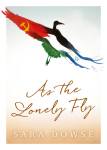
Sara Dowse, As the lonely blySome books grow out of their author’s desire to engage the reader in an issue they feel passionate about, such as Jane Rawson on climate change in A wrong turn at the Office of Unmade Lists (my review) and Charlotte Wood on the scapegoating of women in The natural way of things (my review). Sara Dowse’s latest book, As the lonely fly, falls into this category, but for Dowse the issue is the Israel-Palestine problem, the “rightness” or otherwise of establishing a Jewish state. This doesn’t mean, however, that books so inspired are boringly earnest or stridently polemical. It’s a risk, of course, but in the hands of good writers, like the three mentioned here, issues are turned into stories that engage us, while simultaneously raising our consciousness.

Unlike Rawson and Wood’s more dystopian novels, Dowse uses historical fiction, with a hint of mystery/thriller, to explore her ideas.  The novel is set in the first half of the twentieth century, and follows the lives of two Russian-Jewish sisters, Clara and Manya, and their niece, Zipporah. We start, theoretically at least, with Clara (who changes her name to Chava when she arrives in Palestine), but are immediately introduced to her younger sister Manya (who had migrated to the US with their parents and who becomes Marion).  Niece Zipporah, the committed Zionist who followed Clara to Palestine, opens Part Two.

The story is divided into 6 parts in fact, the first labelled “Clara begets Chava 1922-1925” and the last “Tikkun? 1967” (“tikkun” being, significantly, a Hebrew word for “fixing/rectification”). The narrative has an overall forwards momentum, but the chronology is not linear and the perspectives change. Following all this requires an alert reader, but it enables Dowse to fill in backstories at the relevant moment (such as Clara’s experience of the 1905 Odessa uprising) and to link various characters and ideas. Her goal is to explore the difficult situation confronting Eastern European Jews in the early 20th century and the concomitant creation of Israel. In so doing, Dowse raises bigger questions about idealism and justice, and exposes the challenges of migration, particularly of migration that is politically charged.

While Part One is labelled 1922-1925, the first chapter is headed “Marion 1967”, ensuring an important, comparative, role for the American experience. However, the bulk of this part tells of socialist Clara/Chava’s early days working to create a new Jewish state. It’s not long before the hard-working Chava starts to question what they are doing, to see the difference between the political Zionism of Herzl and the cultural (or spiritual) one of Ahad Ha’am. She starts to agree with Ha’am, as she writes to Marion,

that there shouldn’t even be a state like the one Herzl advocated, but a centre in Palestine where Jews reconnect with our culture and from there would disseminate it through the Diaspora. That the land wasn’t empty as Herzl had us believe, that it would be difficult to find land that wasn’t already cultivated, and the Arabs wouldn’t be overjoyed about the space we’d taken up in what happened to be in their land too. Or ecstatic about losing their jobs. The Marxist in me is increasingly uneasy about this … (Pt 2, Ch. 11, Uncorrected proof copy)

If you are an Australian, this idea of taking up space that’s not empty will resonate, as I’m sure Dowse intends it to do!

… too much head …

Eventually Chava finds occupying this already occupied land too difficult and, after supporting an Arab uprising, willingly returns to Russia where, unfortunately, she finds anti-semitism on the rise. Meanwhile, Zipporah provides a foil to Chava, retaining her commitment to the Zionist ideal, albeit seeing the trauma that can be caused by commitment to a political idea. The story of her student, Talli, provides this insight. Dowse, in other words, provides no easy answers, but forces us to face, through stories of real human beings with whom we fully engage, the complexity of the situation.

Chava meets in Jerusalem, a cobbler, Ha-Kohen, a spiritual rather than a political Hebrew man. He says to her:

You and your chaverim, those pals of yours, can you really believe all those things you read? It’s all from the head. And the source of all evil on this earth is too much head, my dear, and not enough heart. (Pt 2, Ch. 10, Uncorrected proof copy)

A little more empathy, in other words, is what is needed.

As the lonely fly could be described as a family saga. There are many characters besides the three women I’ve introduced here – including another sister (Zipporah’s mother) and her family, various friends and colleagues, and a love interest or two – and the novel spans six decades from 1905 to 1967. There’s also a thriller element including some espionage, and a nod to the mystery genre too. What is wrong with Talli, and what does happen to Clara? Through these Dowse explores her themes while involving us in real lives – via lovely domestic details of rooms, meals and close relationships, and vivid descriptions of place. By the end of the novel I was deeply engaged with her characters and their dilemmas, whether or not I agreed with all their decisions.

… the passion for justice …

Manya/Marion is a somewhat more shadowy character than Clara and Zipporah, and yet, as the one who migrated to America, the land of the free, she provides an important counterbalance to the lives of the other two. On the surface, her ambition to be an actor, and her oh so western focus on colouring her hair, on “the showering, the creaming, the makeup’, are as “exasperating” to us as they are to Zipporah, but she is the character who opens and closes the novel, so we need to heed her. Her idealistic, bookish husband, Sidney, dies a very American death, and leaves her with two young sons. It provides a counterpoint to the high drama that was occurring in Israel.

In the loneliness of her later years, she finds herself still struggling to understand him, but she comes to see that both his and Clara’s idealism was really “a passion for justice”. In the book’s final chapter, she and Zipporah, whom she visits in Israel, attend a Hebrew performance of a favourite play of hers, O’Neill’s The iceman cometh. Now, I don’t know this play – besides knowing of its existence – but I presumed Dowse had chosen it for a reason, so I checked Wikipedia. It told me that the play’s main themes are the self-deceptions, the pipe-dreams – the lies, in other words – that we tell ourselves to keep going. The play references, apparently, political ideals such as anarchism and socialism. Certainly, Clara discovers her socialist ideals being undermined when the factory managers in Soviet-era Moscow start employing capitalist techniques to increase production. However, I’m sure Dowse intends us to read O’Neill’s theme in terms of how we behave today – in relation to Israel/Palestine and to all the other injustices that we see around us, but try to justify away.

The past is not, in fact, the burden we thought, says Zipporah to Marion. It’s the future we need to worry about. Like all good ideas novelists, Dowse has not bombarded us with answers but, instead, has intelligently and compassionately given us plenty to think about.

aww2017 badgeSara Dowse
As the lonely fly
For Pity Sake Publishing, 2017
327pp. (Uncorrected proof edition)
ISBN: 9780994448576

To be published: June 2017

(Advanced review copy courtesy For Pity Sake Publishing)

AS Patrić, Black rock white city (Review)

AS Patric, Black rock white cityWith that extended conflict known as the Yugoslav Wars (1991-2001) now over for more than a decade, we are starting to see books written about them. I’ve reviewed two on this blog to date, Aminatta Forna’s novel The hired man (2013) (my review) on the Croatian War of Independence, and Olivera Simić’s memoir Surviving peace (2014) (my review) on the Bosnian War. AS Patrić’s Miles Franklin Award winning novel, Black rock white city, (2016), which also draws from the Bosnian War, now makes three.

Like The hired man, Black rock white city explores the aftermath of war, but unlike Forna’s book, which is set within the war-torn country, Patrić’s book is set in Australia, and tells of refugees, Jovan and his wife Suzana. The novel starts about four years after their arrival and, although both were academics in Sarajevo, they, like so many refugees, work in their new country as cleaners and carers. It soon becomes clear that they have not recovered from their war experience. Gradually, over the course of the book, Patrić reveals the horrors of their experience. We learn that, like so many who suddenly find their country at war, they had to face that awful question, “should I stay or should I go”. As it turned out, they stayed too long, and Jovan feels he failed his wife by not going early. When we meet them, their relationship is stressed, and they seem unable to provide each other the love and emotional support they so badly need. It’s excruciating to read, because it’s so real, so believable.

I found this book particularly enlightening because I worked with a woman who was damaged by this war. Like Patrić’s two protagonists, she was Bosnian Serb, but unlike them she left early. However, the impact on her of this forced loss of her country, her culture, was immense.

But, I digress … back to the book. It opens with hospital cleaner Jovan cleaning graffiti in an examination room. We soon discover that the hospital is experiencing a bout of graffiti-writing, and that Jovan is the graffiti cleaning expert. No-one knows who is creating the graffiti, which becomes increasingly bizarre. It appears on all sorts of surfaces (such as a corpse’s back, a menu blackboard, the optometrists’ charts) and comprises a variety of seemingly random, though often pointed, words and phrases (such as “The/Trojan/Flea”, “Obliteration”, “Dog Eat Dog” and “Masters of Destiny Victims of Fate”), which Jovan starts to read as messages to him. The graffiti artist is dubbed Dr Graffito. This storyline gives the book the patina of a mystery or even, perhaps, a thriller.

However, while the graffiti provides a plot-line for the novel, the main narrative concerns Jovan and Suzana, their relationship with each other and with other people, including a lover (for Jovan, because Suzana, in her pain, has withdrawn sex), work colleagues, friends and neighbours. Underpinning this narrative is the ongoing trauma of war. Jovan, for example, is frequently dogged by “the black crow”. He “feels as though he uses a rail for a pillow – always listening to the vague rumblings of oncoming annihilation”. Once, Suzana remembers, he could

turn almost anything over to a new perspective, see something deeper, redeeming, more beautiful even if painful. It was what made him such a superb poet back in Yugoslavia … He doesn’t write anymore and it’s as though he never did.

There is poetry in his head though – including a mantra that gets him through his days: “Maroochydore and Mooloolaba, Noosa and Coolum”. Language – the loss of his own, his inability (or is it refusal?) to speak proper English, not to mention the disturbing graffiti – functions as a metaphor for his sense of displacement.

Meanwhile, Suzana, notes Jovan,

is spending more of her time scribbling into her notebooks. The only place safe for her in the time since Bosnia, was somewhere buried underground. Coming to the surface isn’t going to be easy.

Patrić crafts the story skilfully. It’s a debut novel, but Patrić has published two short story collections and is a teacher of creative writing. It shows. The story is told third person, initially from Jovan’s perspective, but later Suzana’s is alternated with his, which fleshes out our understanding of Suzana, while keeping the perspective tightly focused on their experience. The plot unfolds stealthily, as we shift between two questions: will the graffiti artist be discovered, and can Jovan and Suzana pull through? By the end, the strands come together – so cleverly, so shockingly. And then there’s the sure, controlled writing. The pacing, the wordplay and touches of humour, the imagery, the dialogue, and the changing rhythms, make it delicious to read, even while the content confronts and distresses.

Late in the novel, Suzana suggests to Jovan that Dr Graffito is “putting his pain into someone else”, and that seeing his “madness in someone else might make it feel more bearable”. I don’t want to spoil the novel, but Suzana seems to be right, until the end where Dr Graffito’s actions force a confrontation that bring it all to a head.

What is Patrić’s motive for writing this? Early in the novel, Jovan finds one of the many notes Suzana loves to leave around, a quote from her favourite author, Nobel-prize winner, Ivo Andrić:

You should not be afraid of human beings. I am not, only of what is inhuman in them.

Jovan, on the other hand, says that “so much of what happens, shouldn’t happen”. These two ideas form the crux of the book. We have a cast of human beings, who are all real, all flawed in some way. They muddle on, some better than others, some needing a bit of “moral flossing”, some a bit of “ethical cleansing” (and what a clever wordplay that is, keeping war’s horrors close to our minds.) We see what happens, during and after war, when people let hate get the better of themselves and release the “inhuman” within, thereby wreaking what “shouldn’t happen” on others. This is a big book, for all its mere 250 pages, because it tackles the fundamental question of how are we imperfect humans to live alongside each other.

Fiction, Suzana says, is writing for the soul. If that is so, Black rock white city is one soul-full book – and a worthy winner of the Miles Franklin.

Lisa (ANZLitLovers) was also impressed by this book, as was Bill (the Australian Legend).

AS Patrić,
Black rock white city
Melbourne: Transit Lounge, 2015
248pp.
ISBN: 9781921924835

Carmel Bird, Family skeleton (Review)

Carmel Bird, Family skeletonI love a cheeky writer, and Carmel Bird must be the doyenne of cheeky writers, so it goes without saying, really, that I thoroughly enjoyed her latest novel Family Skeleton. The cheekiness starts with the epigraph, which, as she is wont to do, is a quote from her fictional character Carillo Mean. As Bird has said in an interview, “he always has something interesting to say”. But that’s just the start of the cheekiness. The story is narrated by “the skeleton in the wardrobe”. Now, I know many readers don’t like what they see as cute or contrived narratorial devices – like girls in heaven or dead babies – but please don’t let that put you off here, because in the hands of a skilled writer such a device can lift a story to a whole new level.

So, when I tell you that the novel’s framing idea is an obsession with family history, you might start to understand where our narrator comes in – except that the story is not really about the skeleton, whose identity is never divulged, nor is it about family history. What it’s about, really, is family secrets and betrayal, and the tipping point. It’s about the recently bereaved and well-to-do Margaret O’Day, whose family, through her husband, has been involved in the funeral business for generations. Such a setting is, of course, ripe for black comedy and that’s what we get in this novel. But, back to Margaret. Her husband Eddie, “a philistine” according to our skeleton, was also a philanderer and died in the arms of his mistress. Margaret had been betrayed – more than once, in fact – but she knew this, and even accepted this last mistress, and her children with Eddie, at the funeral.

From this set up, the story progresses, mostly chronologically but with a couple of significant time-shifts along the way. It is mainly told by our omniscient skeleton, but Margaret starts a journal, which she calls – hmm, note this – “The Book of Revelation”. Her entries in it form some of the book’s chapters. This title, “The Book of Revelation”, is another of Bird’s jokes, for the novel is about things revealed and not revealed – particularly the latter, because as the story progresses Margaret discovers an even bigger betrayal than her husband’s, and she is desperate to hide it from visiting O’Day family historian Doria Fogelsong.

The novel, then, as I said, is about secrets and betrayals. For the “virtuous” Margaret, who has put up with much throughout her marriage and who has become very good at “concealing her true feelings from people”, this lately discovered betrayal is the last straw. It takes all her resources to keep going. The family history motif compounds the tension. Will the story come out? Will Margaret be able to keep Doria (“with her iPhone on her left, iPad on her right”) from finding it out.

There’s satire here, surely, on the current obsession with family history. Our skeleton tells us

I happen to know that one of the little violinists was the son of Eddie O’Day and a gorgeous Hungarian dress-designer. Evan didn’t realise that, not that it makes any difference to anything, although it is a nice detail for a family tree. Doria missed out there.

So cheeky, these little jibes dropped in. Bird also skewers fashions in family history – such as how it is now a positive thing to uncover a convict or an Indigenous ancestor – while also exposing its underbelly, that is, the pain discovery can cause. The obvious question, of course, is whether it is better to know the truth or not.

However, it’s not only family history which catches Bird’s eye, but the pretensions and self-absorption of contemporary middle-class life, from designer clothes to electronic devices, from shallow parties to theme park cemeteries. It’s all here, providing background to the main fare.

But there’s more to the novel too, because it is also about writing and reading fiction, a storytelling masterclass in a way. The skeleton does more than narrate. S/he engages with the reader, reminding us of things we’ve already read, making sure we are keeping up with any plot hints or twists. Oh, how I loved this. I felt Bird was right there, having fun, playing games with us, while at the same time teaching us about how writers write and, more significantly, how we should read. Early on, for example, our skeleton presents us with a future auction advertisement for Margaret’s house, Bellevue, and says:

I realise that the eye of the reader can easily slide carelessly across such elements of the text. However, I suggest you take your time and study this document carefully.

The joke, though, is on us because at this stage in the story we have no idea what “secrets” are contained within. (At least, that’s my reading of what Bird is doing.) At another point, after telling us that “nothing bad ever happened at Bellevue these days”, the skeleton teases us with, “I trust you are alert enough to hear a faint bell ringing”.

Bird also plays with the archetypes of popular fiction – the betrayed wife, the philandering husband, and “the archetypal stranger who rides into town … the harbinger of fate” – but she gently subverts our expectations. The betrayal that most disturbs Margaret is not her husband’s, and it’s not Doria, the stranger, who brings the news that so distresses Margaret, albeit, given Margaret’s discovery, Doria can certainly ramp up the pain.

And then there’s the writing, with its gorgeous descriptions, pert sentences, delicious irony, entertaining word-plays and its smart, cheeky tone which leaves you in no doubt about who or what is being targeted but is good-humoured rather than bitter. Here is Margaret preparing to have Doria for lunch:

When Margaret asked for just a plain omelette, Lillian [her housekeeper] understood that the guest was someone who gave Margaret no joy, and who was to be more controlled than entertained. It was control by omelette. A sliver here, a sliver there, and a quiet soft squashing with the tongue against the palate. Desultory conversation, meaningless smiles. Plain omelette.

What more can I say? Family skeleton delights on so many levels. It is in fact quite a shocking story, but one told with a spoonful of sugar that has just the right amount of spice. I can’t help thinking that Bird chuckled and chuckled as she wrote it. I certainly did reading it.

Lisa (ANZLitLovers) also enjoyed the novel.

aww2017 badgeCarmel Bird
Family skeleton
Crawley: UWA Publishing, 2016
228pp.
ISBN: 9781742588902

Janette Turner Hospital, Orpheus lost (Mini-review)

Janette Turner Hospital, Orpheus lostLast year I did a mini-review of Elizabeth Jolley’s An innocent gentleman using some scrappy notes from when I read the book long before blogging. This post on Janette Turner Hospital’s Orpheus lost has similar origins. I’m keen to add it here because I’ve read several of her novels, but none since blogging, and I really want her represented here.

Orpheus lost commences in Boston and is about Leela, a mathematician from the South, and the Australian musician, Mishka the subway-playing violinist, whom she meets.  They become lovers, until suddenly, after a subway explosion in which terrorism is suspected, Leela is taken to an interrogation centre where an old friend Cobb tells her that Mishka isn’t who she thinks he is. Meanwhile, Mishka is looking for his missing father, and heads off to the Middle East. The scene is set for what becomes, in fact, a literary thriller.

In a conversation* with Jason Steger on The Age online book club, Hospital said she had no political agenda but was interested in how people emotionally handle the shock of being randomly caught up in political action, and in what moral decisions they make. In other words, she’s interested in the moral and emotional repercussions of what happens when people get caught up because what they do looks dangerous but actually isn’t. (This is similar, in fact, to what happens in Richard Flanagan’s The unknown terrorist). It’s nightmarish stuff. Hospital talked about the trading of civil liberties for safety in the post-9/11 world, something she sees as a dangerous response. It makes it rather relevant still today doesn’t it?

However, she also talked about Orpheus and Eurydice being one of the great love stories of all time, and suggested that it is as much about loss, grief and yearning, as it is about love. But she was tired, she said, of the women always being the rescued ones. So she decided to give it a feminist twist and invert it. Consequently, in Orpheus lost, the man’s the one snatched away, and she’s the rescuer. Now that’s surely political!

The novel is a multiple-point-of-view novel and opens with Leela’s voice. We learn that she is fascinated by maths (numbers) and on the second page she quotes a seventeenth century mathematician saying ‘Obsession….is its own heaven and hell’. This theory is played out in the novel. The three main protagonists all have obsessions: Leela is obsessed with maths (which she believes always provides an answer to things) and with Mishka; Mishka is obsessed with music and with his identity (which involves his missing ‘father’); and Cobb is obsessed with Leela. There are other obsessions in the novel, though, too – the Islamic fundamentalists, Leela’s father with his religious fundamentalism, and other obsessive musicians and mathematicians.

Into this world of obsessed people, comes terror – and alongside terror, as we all know only too well, is the desperation for safety. Safety is a constant issue throughout the book. For example Cobb describes two types of people – those who take safety for granted and those who know it’s a precious thing. He suggests that the former create risks for the latter.

Unfortunately, I seem not to have the book anymore – which is unusual for me. Perhaps I’d borrowed it! So what I want to focus on is my experience of reading Hospital, rather than on the plot. She’s one of our more structured or tightly-styled writers. This means that I read her with my head as much as with my heart because she always has a lot going on. There is, for example, her strong use of recurring motifs and metaphors, such as, in this novel, photographs. They play several roles: they represent love, connections between people, surveillance, evidence, and the idea of truth vs fiction. I enjoy teasing out these sorts of things. Music and maths are other significant motifs. For some readers, and for me on occasions, Hospital can push her metaphors too hard but I thought they worked here.

And then, alongside multiple points of view and these recurring motifs and metaphors, there are structural devices, such as her use of parallels to set up points of likeness and tension between her characters. The three main protagonists all lost a parent early (Cobb and Leela their mothers, and Mishka never knew his father); Cobb and Leela both have ‘damaged’ fathers; the main characters all have small town upbringings in ‘odd’ places (the Deep South in a town called Promised Land, and the Daintree which is described as ‘the promised land’). The whole idea of “promised lands” is rich for exploration in our modern world of nationhoods!

Anyhow, to conclude this mini-review, lessons are learnt in the novel. Cobb, who initially wants to make Leela fear, comes to regret his actions. And Leela, who has to confront the reality of fear, also learns that random events which you can’t always control do occur. Steger says the book is about redemption – but, despite what Hospital says, I can’t help thinking it is also about politics. Like most of her novels, it’s challenging to read, because she’s a writer who extends, probes and pushes – occasionally, perhaps, a little too much – but that, to me, makes her always worth reading.

Bill (The Australian Legend)‘s review will fill you in nicely on more of the details.

aww2017 badgeJanette Turner Hospital
Orpheus lost
Sydney: Fourth Estate, 2007

* I couldn’t get the actual conversation to load when I checked this old link, but I’m adding it here in case it was just a temporary gremlin.