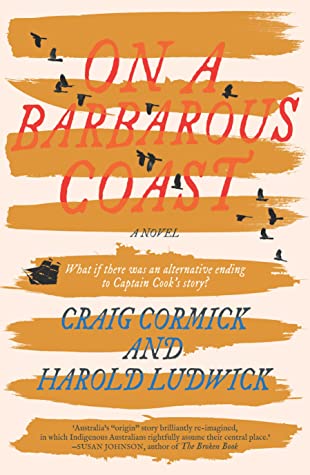
Craig Cormick and Harold Ludwick, On a barbarous coast (“BookReview)

Craig Cormick is a Canberra-based writer whom I’ve seen at various literary events around town, but not read until now, so I was especially glad when Allen & Unwin sent me this book to review. Titled On a barbarous coast, it was written collaboratively with Harold Ludwick, “a Bulgun Warra man whose traditional lands lie west of Cooktown”.

On a barbarous coast offers something a bit different for reviewers. Besides its collaborative nature, there’s its form or genre, which is that sub-genre of historical fiction called alternate (or alternative) history. In this case, it involves looking at a period of Australian history and asking “what if things had happened differently?” Those things, for Cormick and Ludwick, relate to Captain Cook’s exploration of Australia.

The story springs, then, from Captain Cook’s 1768-1771 voyage to Australia to observe the Transit of Venus. During that expedition, in late 1770, the Endeavour was seriously damaged around the Great Barrier Reef, but managed to limp on to Batavia. However, Cormick and Ludwick posit a different scenario, suggesting that the Endeavour was shipwrecked and that only a small number of the crew survived – including Cook, though he remains comatose though much of the story. The survivors make their way to land, and … the question is, as the cover states, “What if there was an alternative ending to Captain Cook’s story?” Would Australia’s history have been different, and how?

While I’ve not read many, I do quite like alternative histories. They encourage us to look at the past from different angles, which can illuminate the implications of decisions made and actions taken.

So, this is how it goes …

The story is told in two alternating first-person voices, Cormick’s being that of American Midshipman James Magra, and Ludwick’s being the young Indigenous boy, Garrgiil.

Magra chronicles the actions and fates of the shipwreck survivors, who very quickly break into two antagonistic camps, while Ludwick shares the thoughts and actions of the local Guugu Yimidhirr people. For the bulk of the narrative, the two cultures remain apart. There is quite a bit of humour in watching Garrgiil’s people trying to decide whether these strange “spirit things” are ancestors or just men. Initially, they feel they must be ancestors, but the way they stumble around, starving while “walking past food every day”, not to mention behaving incorrectly in sacred or special areas, suggests that this may not be the case.

… their presence gives our people great stories of their stupidity and clumsiness to tell around the fire at night. Like the one who stood in the river and let Gandhaar [crocodile] eat him …

Meanwhile, we watch Magra and his co-survivors bickering amongst themselves, trying to plan a solution to their predicament, and sensing the “natives” are out there but not seeing them. The stage is set for a meeting. The question is: how will it go? You will have to read the book for yourselves to find out.

So, how does it all come together?

Magra gets the lion’s share of the story, which could be seen as giving the invaders the upper-hand (yet again) in story-telling. However, I’m going to assume that this was all discussed and agreed between the two authors. Also, I think we could argue that the unequal number of physical pages doesn’t necessarily mean that the emotional impact of the two narratives is similarly unequal. Garrgiil’s voice is strong enough, and compelling enough, to be in our minds, even when he’s not centre-stage.

In the Authors’ Note at the end, Cormick says they “tried to stay as close to known history as possible, both within the known and imagined paths of the story”, which requires a bit of mind-bending but I get what they mean. They drew upon “many existing knowledges” including several journals, such as those of James Cook, Joseph Banks, Sydney Parkinson, and an anonymous journal believed to have been written by James Mario Magra, whom Cormick uses as his narrator. They also looked at the work of Indigenous and non-Indigenous historians, journalists and academics, and at historical accounts of several shipwrecked individuals who had lived with Indigenous people. Cormick notes that while their story divides easily into the two narratives, “it is not so easy to unpick how each of us influenced each other’s work”.

Ludwick adds that his aim was to pull readers into “the world of Guugu Yimidhirr language (which was first recorded in 1770 by Sydney Parkinson and Joseph Banks)”. He says that many of the practices and knowledge he describes in the book are still used by his people. He also says that he wove Dreamtime stories into his narrative to help readers understand his people’s traditional explanations of how the land became what we see today.

The end result is the sort of book I like to read, one that entertains me with its story, while also engaging my mind as I consider what the authors (plural, in this case) were trying to do, how they were trying to do it, and whether they pulled it off. It is an earnest book. Sometimes this comes a bit close to the surface when we are “told” things to make sure we get it (such as “I know the Captain controlled how the stories of our journey would be told”). This – and the strange though interesting little “magical realism” interludes where Magra talks to Gandhaar, the crocodile – creates a little unevenness in the narrative. Also, the use of parenthesis to translate the local language used by Garrgiil felt clunky. Yet, I applaud the book’s extensive use of this language. We need more of it in contemporary Australian literature. As Gandhaar tells Magra:

You create the landscape in your own words. If you don’t know the right words, you will never know the land properly.

But these are minor “picky” things. Cormick and Ludwick have attempted something significant in terms of story, intent, and process, and they pulled it off in a way that engaged me, right through to their considered ending which suggests possibilities, while being realistic about probabilities. Without irony, we could call this book “a grand endeavour”. It is certainly exciting to see such Indigenous-non-Indigenous collaborations happening in our literary sphere.

Lisa (ANZLitLovers) also found this book intriguing.

Craig Cormick and Harold Ludwick
On a barbarous coast
Crows Nest: Allen & Unwin, 2020
309pp.
ISBN: 9781760877347

(Review copy courtesy Allen & Unwin)
Julie Janson, Benevolence (#BookReview)

In a rather curious synchronicity, the last three books I’ve read have all had single word, multiple-meaning, titles, all relating to the colonial settlement of Australia – Gay Lynch’s historical fiction Unsettled (my review), John Kinsella’s memoir Displaced (my review), and now Julie Janson’s historical fiction Benevolence whose title drips with irony.

Recently, I commented that it would be good to see an Indigenous Australian novel responding to Kate Grenville’s The secret river. Well, it appears that Benevolence is that novel. In her Acknowledgements, Janson, of the Darug Nation, writes that Benevolence is “a work of fiction based on historical events of the early years [1816-1842] of the British invasion and settlement around the Hawkesbury River in Western Sydney, New South Wales”. Protagonist Muraging, renamed Mary by the colonisers, is based on the author’s ancestor, Mary Ann Thomas, just as Grenville’s novel, set around the same place and time, was inspired by, though not exactly based on, her ancestor, Solomon Wiseman. There, of course, the similarity ends, because while Grenville’s protagonist becomes a “big” man in colonial Sydney, Muraging’s experience is very different.

Benevolence starts in 1816, when the motherless Muraging is “about 12 years old” and handed over by her father to the British to be taught English at the Parramatta Native Institution. She is, says her father (naively we now know), “to be an important part of helping their people and she must learn their language and their ways”. Thus begins Muraging’s life of being caught between two cultures. Early on “she thinks she can be in two worlds and not have to choose”. However, she is never properly accepted by the British (of course) and, while accepted by her own Darug people, it is clear very early that Indigenous culture is being dismantled by dispossession, dispersal and death (through disease, murder and massacre), resulting in Indigenous people’s lives (already) becoming one of survival rather than of living fully.

And so, as the novel progresses through the years, we follow Muraging as she leaves or escapes the British settlement to find comfort, support and/or protection within Indigenous communities, only to return for one reason or another to the settlement, with the cycle starting all over again. Each time she returns to the settlement, the brutality and humiliations ratchet up. It’s a terrible story, but a credible one based on Janson’s detailed research, part of it done while she worked as a senior researcher for Professor Peter Read at the University of Sydney. This research resulted in the creation of the History of Aboriginal Sydney website.

However, this book is not history but historical fiction, so the characters are inspired by a mixture of historical fact and Janson’s imagination – and it is her imagination that brings these characters to life as authentic beings, particularly Muraging, her mixed-up friend Mercy, the weak-if-well-meaning reverend Henry Smythe, and to a lesser degree Captain Woodrow. The grotesque reverend Masters is another matter altogether.

Muraging is established from the start as a person with agency. She does not want to be a “servant” or “a fine maid”. Rather, she wants, she says, to ‘”improve my situation” … but she is ignored’. She never gives up her search for an independent life, and, though she makes poor decisions at times, she behaves courageously, loyally (sometimes at great risk to herself), and in a way determined to be true to herself and her people.

“You have no home” (Masters)

While the personal implications of colonialism and dispossession are conveyed through Muraging’s story, Janson reinforces this with historical fact, including references to documented massacres, discussions between characters about current events, and the occasional appearance of a governor (like Macquarie, like Gipps.) Janson also opens selected chapters with specific historical information. Chapter 4 (“1818: White people things”), for example, begins with an excerpt from the Sydney Gazette reporting massacres from, of course, the settler perspective. Chapter 20 (“1835: Deerubbin, The Hawkesbury River”) commences with a statement about Governor Bourke passing “the Proclamation of terra nullius”. And so on. These occasional documentary facts anchor Muraging’s story in the historical timeline.

The biggest villain of the piece is the appropriately named Reverend Masters. He represents the worst of British power, conveying or enacting British policy with little thought for the humanity of those he deals with. Like a certain world leader today, it’s all about him.

And this brings me to the writing. Janson’s descriptions are beautifully lyrical, though not always simply so. The novel opens with:

The grey-green eucalypts clatter with the sound of cicadas. Magpies and currawongs warble across the morning sky as the sun’s heat streams down. It is eaglehawk time …

Almost idyllic Australia, except “eaglehawk” time suggests the idea of violence … of hunter and prey!

There are also wry ironic touches, such as Captain Woodrow’s comment, “I have fought savages on the Indian frontier and I know that no honour exists among savages”. Hmm, who are the savages without honour here? Or, good guy ex-convict Ferdinand, with his Darug wife, defying Masters with “This is my land. My grant.” Whose land? In such ways, Janson encourages us to think behind the words of waibala people.

I also like the way Janson used local Indigenous language throughout the novel, enough to convey (and promote) local culture and language, but not so much as to impede understanding.

I was less comfortable, however, with the writing about actions and events. It can be quite cut-and-dried, with a disjointed or staccato feel that, for me, broke the flow of my reading. Maybe this was intended, as Lisa (ANZLitLovers) has suggested, to convey the violence – or, at least, the instability – of that world. I can see that, though I’m not sure it fully worked that way for me.

And finally, of course, there’s that powerful title. Who thinks they are benevolent, who pretends to be benevolent, who really is benevolent, not to mention what is benevolence anyhow, are the questions that confront us on every page of this timely novel.

“You won’t win, you know” (Masters)

Benevolence, then, is a compelling and worthwhile read. The history is good, offering First Nations readers something that more closely accords with their understanding of what happened, and non-Indigenous readers a corrective to the history we’ve been fed most of our lives. The story is engaging, with Janson treading a fine line between utter negativity and unrealistic hopefulness. I particularly liked the tone struck by the ending, but that’s for you to find out!

We need more books like this …

Challenge logo

Julie Janson
Benevolence
Broome: Magabala Books, 2020
345pp.
ISBN: 9781925936636

(Revieve copy courtesy Magabala Books)

Anna Goldsworthy, Melting moments (#BookReview)

Book cover

Melting moments is Australian writer and concert pianist Anna Goldsworthy’s debut novel, following her highly successful memoir of a decade ago, Piano lessons (my review).

Melting moments – for those not familiar with this Antipodean classic – are little shortbread-based biscuits (cookies) sandwiched together with buttercream. In titling her book by these little treats, with the added intimation of moments that melt our heart, Goldsworthy flags the tone and subject matter of her book. The tone is going to be gentle, and the subject matter domestic. The question is: does this make for an interesting book, or just a sweet one?

Overall, I’d say interesting. As a member of my reading group suggested, there is another connotation of the title, that of moments that melt away, of moments that don’t last. So, Goldsworthy’s Melting moments captures the life of a woman from the so-called “greatest generation”. Born between 1901 and 1927 (so my mother just misses it), they went though the Great Depression and World War 2. Sociologist Glen Elder suggests they came out of these experiences “with an ability to know how to survive and make do and solve problems”. This could describe Goldsworthy’s protagonist, Ruby, who marries Arthur, after a short courtship, on the eve of his heading off to the War. She might as well have the “war widow pension” he says, an idea that was, I think, behind a few marriages at the time. This social history aspect is one of the reasons for reading this book which takes us through the decades of marriage, children, empty nest, ageing parents, retirement village life, leaving us when Ruby reaches her early eighties.

This, I know, makes it sound like one of those big family sagas, but in fact it’s not, on two counts. First, it’s short, at just 230 pages, and second, it has no big dramas – just the little trials and tribulations of life.

“misplaced life”

However, this doesn’t mean the book is boring. Ruby lived in the pre-feminist world when women had few rights but many gender-prescribed responsibilities – stay-at-home, cook and house-keep, bring up the children, and keep the husband happy. Like many of her generation, she doesn’t rock boats, but knuckles down to it (using her consciously developed “resourcefulness” to help her along the way). But, she’s not blind to what all this means and, sometimes, she feels

the emptiness rush in at her, as if she were living on a road from nowhere to nowhere …

Or, occasionally wonders

whether life should be something more than a series of daily tasks, successfully dispatched.

Indeed, later in the novel, she considers a path not taken – one involving throwing it all in for the exciting man. But that way led to “briars … social condemnation; impecuniousness; the heartbreak of children”, and, anyhow, the man had removed himself. Nonetheless, she sometimes feels

as if she had missed a summons. As if she had somehow missed her life.

This situation, of course, is not unique to her generation, but it is true that making such a break in her era would have been more difficult. And, anyhow, Arthur, as Ruby recognises herself, was not a bad husband – just a “stolid” one – and their marriage was “more or less” successful.

The novel is written third person, but its focus is Ruby, meaning that the other characters are not significantly fleshed out. Most are nonetheless more than just simple stereotypes. The “stolid” but kind Arthur, for example, is more willing to accept daughter Eva’s grasping the freedom of the 1960s and 1970s than Ruby. And Eva, though frustrated with her mother’s conservatism and inability to understand the changing world, is a loving daughter who finds a balance between living her life her way and loving and supporting her mother.

Ruby’s parents have some individualised flesh on their bones too, but Arthur’s mother, Granny Jenkins who lives with them much of their married life, is rather more the stereotypical unsupportive, demanding mother-in-law. However, Ruby just gets on with that too – as most women did – organising things as much as she can to minimise the imposition .

Now, early in this post, I mentioned that this book, despite its chronological sweep, is not a saga. This begs the question of how Goldsworthy tells the story of such a long life in such few words. She does it by using an episodic structure, skilfully paced so that you always know where you are in Ruby’s life. The gaps are obvious, of course, but it’s also clear that we are getting the critical “moments” in Ruby’s life.

The end effect of all this is a quietly observed book, one unsatisfying for some, and perfectly satisfying for others, as my reading group discovered. Some of us wanted the gaps filled in. Why was Arthur released early from active service, for example. Others of us accepted that the focus was Ruby and what she thought and cared about. When the opportunity finally comes when Arthur might share his war story, she turns away and makes a cup of tea! “What’s done is done”, she says.

There is some humour in the book, and I did smile many times, but, while it felt like an Austen-ish story, it doesn’t have the sharpness of her wit. I must say that in a nicely observed story like this, I did miss that bit of bite.

Melting moments, then, did not exactly wow me, but neither did I find it trivial. Without being consciously political, it works as a reminder of those women who didn’t always identify what it was that caused their feelings of “emptiness”, but who just got on with it, and somehow managed at the same time to bring up the Evas who went on to grab the opportunities available. Goldsworthy has paid credit to them, in a warm-hearted and enjoyable book.

Challenge logo

Anna Goldsworthy
Melting moments
Carlton: Black Inc, 2020
230pp.
ISBN: 9781863959988

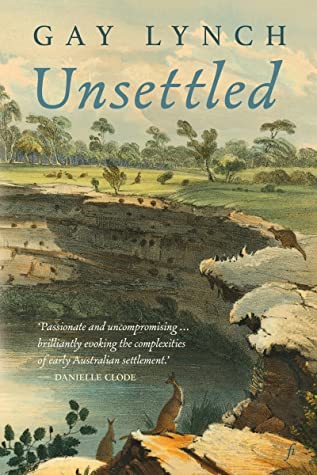
Gay Lynch, Unsettled (#BookReview)

Coincidentally, my first review after this week’s Monday Musings on historical fiction happens to be a work of historical fiction, Gay Lynch’s cleverly titled Unsettled. Consequently, I’m going to start there, that is, talking about the form.

Well, more or less, because I should at least give you a sense of its subject. It is set primarily in South Australia’s Gambierton (later Mt Gambier) from the 1859 to 1880, with most of the action taking place in the 1860s. It’s the story of an Irish family, the Lynches, who migrated to Australia in 1848. The Lynches, as you might have guessed from the author’s name, are based on her husband’s family. Unsettled explores their story primarily through two fictional characters, Rosanna and her younger brother Skelly.

… in the spirit of the story

Which brings me to the genre. In her Acknowledgements, Lynch provides some useful insights into the book. Firstly, regarding intention, she says that she specifically wanted “to materialise Lynch girls, absent from every family anecdote and official documents, church, state and school, apart from their birth documents … the girls’ lack of documentation and therefore their invisibility reflect their early settlement status on the frontier.” The challenge, of course, in “materialising” invisible characters from the past is to make them real, and avoid anachronism. This is difficult when records are few, but I think there are enough records of frontier women in general to validate Lynch’s conception here.

Lynch also addresses where she has changed Lynch family “facts”, such as their and their employers’ names. She also says that her two main characters, Rosanna and Skelly, “exist only in [her] imagination”, but “her lived experience as Lynch wife and mother, verifiable historical events, and historical Lynch antecedents” offered her “the connective tissue” needed for their fictional lives.

She goes on to say that “in the spirit of historical fiction” she has kept close to official records so that the characters drawn from life are as “true” as she can make them, but that “in the spirit of story, some events may not be verifiable”. That, of course, is historical fiction; it’s about fleshing out lives and times with story, where the facts are not known or are minimal.

Finally, she addresses her inclusion of the local Boandik people, an issue we often discuss here. She writes that they “tell their own South-East story – they still live on that once dangerous frontier, on land they never ceded – of their attempted eviction and genocide”. She says she “benefitted from knowledge shared by Boandik custodian Ken Jones”, conversed “with Boandik linguist linguist David Moon”, and was supported in addressing “important questions about voice and Indigenous historicity”. As I’ve said before, it’s really up to the Boandik people to say whether they agree with their representation, but Lynch has, it seems, done the right thing: she has included them in her narrative (in an appropriate way) and has conferred with the people she ought about doing so.

I’ve spent a bit of time on this I know, but it’s important with historical fiction to be very clear about what it is we are reading. I’m not an expert in South Australian settler history, but I feel Lynch has provided me with enough here, in addition to the knowledge I do have, to reassure me that her story is a valid one, so let’s get to that …

“now that the country is settled”

Nearly halfway through the novel, Rosanna converses with her employer, the hard, English station-owner, Mr Ashby. He is searching for some local Indigenous people who, he believes, have been “filching” from him. Rosanna, who has befriended the young local woman, Moorecke, tells him that Moorecke “belongs on this land”. She adds, hoping to throw him “off the scent”, that she rarely sees “Blacks, now that the the country is settled.”

Here, and throughout the novel, Lynch layers meanings in brief exchanges. Implied in this little scene, for example, are multiple power imbalances – between settlers and the original inhabitants, between the landowning English and the oppressed Irish, and between man and woman. And of course, overlaying this is the fraught idea of being “settled” and all its connotations, political and personal, physical and emotional. “Now that the country is settled” implies of course that it was “unsettled” before. This novel, with its title, “Unsettled”, keeps this foundational wound front and centre in our minds, which, dare I say, “unsettles” us.

This layering of meaning is one of the reasons I found the book an enjoyable read, because I enjoy such thoughtful, provocative writing, but the enjoyment here is compounded by the characters, particularly Rosanna and Skelly. Both are well individualised, with the novel’s third person perspective shifting mainly between them.

Over the course of the novel, Rosanna is our guide to what happens on the frontier. She works for the landowning Ashbys; she spends time with and learns from Moorecke of the Boandik people; she rides with the poet Adam Lindsay Gordon and confesses to Father Tenison Woods. She falls in love naively, makes many mistakes big and small, can be mean and tender, but she is a warm, courageous young woman who is determined to make her way authentically through a world which pays little attention to the dreams, let alone rights, of women. A world, in fact, in which “men are dangerous creatures if thwarted”.

Skelly, her sensitive and somewhat frail younger brother, is both foil and support to Rosanna. Their relationship contains the typical sibling tensions, but love and loyalty underpin it. It is what happens to Skelly at a school in Melbourne that propels Rosanna’s actions which provide the novel’s opening drama.

As is common in historical fiction, Lynch uses a family drama to drive the narrative forward and engage our emotions and interest. Lynch also imbues her story with references to both Australian and English literature of the times. For keen-reader Rosanna, Anthony Trollope’s Irish heroine Feemy Macdermot, from his first novel The Macdermots of Ballycloran, offers lessons to heed.

The main work that threads through the novel, however, is Edward Geoghegan’s play The Hibernian father, which was a popularly performed tragedy in mid- to late-nineteenth century Australia. It tells a tragic story of the Lynches of Galway, whence our own Lynches had come. The tragedy distresses our young Lynches, and threatens to destabilise them as they struggle to forge their lives without failing in the same catastrophic way. Rosanna’s father Garrick Lynch reassures his family that “it’s an ancient story … from bloody times”, but the irony is that “bloody times” are still with them.

In the end, all of this has one goal, to serve the real point of Lynch’s story, the complicated politics of settlement, oppression and dispossession, the injustices of colonialism. As Rosanna becomes aware, during an interaction with her employer Mrs Ashby, “living on the edge of civilisation unsettles everyone”. Gay Lynch’s book does the same – and that, I’m sure, was her intent.

Challenge logo

Gay Lynch
Unsettled
Balmain: ligatu.re, 2019
421pp.
ISBN: 9781925883237

(Review copy courtesy the author.)

Balli Kaur Jaswal, Erotic stories for Punjabi widows (#BookReview)

Book cover

Broadly speaking, Singaporean author Balli Kaur Jaswal’s third novel, Erotic stories for Punjabi widows, reminds me of Anita Heiss’ choclit books like Paris dreaming (my review). By this I mean it presents as an escapist romcom genre novel but within it is some serious intent. In this case it relates to the oppression of women, particularly widows, and, more specifically, the problem of honour killings, in Britain’s Punjabi Sikh community.

The story concerns the “still searching for her calling” Nikki, who, twenty-two-and-a-half years old with half a law degree behind her, obtains a job teaching writing to immigrant Punjabi widows in Southall, the heart of London’s Punjabi community. Except, what she finds is that these widows do not want to learn to write:

I’ve survived all this time without reading and writing; what do I need it for now?’

What they want is to tell stories – erotic ones – to each other. What they want, really, is companionship and a safe place to be themselves, away from the oppressive eyes of a traditional community dominated by the self-appointed “morality police”, the Brothers.

And here is where some darkness comes in, because within this community, several young women have died. Officially, these deaths are recorded as accidental or suicide, but it gradually becomes apparent that all may not be as it seems and that murder and honour-killing may be involved. Widow Sheena chillingly says later in the book that “in this community I’m suspicious of accidents.” The novel, therefore, is a romcom-cum-crime mystery.

Paralleling this story of the widows and their writing class is that of Nikki and her nearly 25-year-old sister, Mindi. Born in England to Punjabi immigrant parents, they represent the other side of the cultural coin – to a degree, anyhow, because Mindi, a nurse and (still) unmarried, is considering “embracing our culture” and going the traditional arranged marriage route. This shocks the freer wheeling, English-to-a-core-she-thinks, Nikki, who tells Mindi:

This is what young women do in Britain! We move out. We become independent. This is our culture.

Even so, our modern Nikki does sometimes feel “split in two parts. British, Indian.” Fortunately, Nikki meets a man the more usual way – by serendipity – and love starts to bloom. But, this is a rom-com so, as you’d expect, the course of true love doesn’t run smooth and soon enough Nikki finds herself wondering why this man is behaving a little strangely.

As with Anita Heiss’s choclit books, what lifts Erotic stories for Punjabi women out of the straight chick lit genre, is its interrogation of social issues. Besides the above-mentioned mystery concerning a young woman’s death, two other issues are reflected in the lives of these characters, one being the challenges faced by young first generation women, and how they navigate the two cultures they find themselves straddling. By having Nikki and Mindi handle this quite differently, Jaswal reveals the complexity of what this generation faces. Then we add in Nikki’s new love, Jason. I don’t want to spoil anything, but let’s just say that his experience of being a first generation Sikh man from the USA, and the expectations placed on him, adds commentary to Nikki and Mindi’s thoughts about life, love and marriage.

The other main issue is the oppression of Punjabi Sikh women, particularly but not only widows, within their own culture and in the culture of their adopted home. Our widows are invisible in their own community. Without their husbands they are seen as and feel “irrelevant”. However, these Punjabi women overall haven’t made any inroads into the English community either, feeling the English “haven’t made their country or their customs friendly” to them. “Britain”, Nikki realises, “equalled a better life and they would have clung to this knowledge even as this life confounded and remained foreign.”

There is, then, a lot going on here, but Jaswal, whose first novel, Inheritance, earned her a Sydney Morning Herald Best Young Australian Novelist Award, knows how to construct and move along a plot. She also knows how to entertain. The erotic stories are a bit of a hoot. With our widows finding creative synonyms for certain body parts, you may never look at a cucumber the same way again. It’s laugh-out-loud funny at times, which my reading group enjoyed, and there are some lovely touches of irony. For example, the earnest Kulwinder, interviewing Nikki for the writing class, starts to sense that Nikki’s idea and her own may not be aligned:

It dawned on Kulwinder that she had advertised for something she did not understand.

The joke, though, is on Nikki too, because for all her “passion to help the women”, little did she expect just how that “passion” might play out!

My favourite books are those which touch the heart and challenge the mind. Erotic stories for Punjabi widows, for all its serious intent, primarily meets the former. It ticks all the boxes: it’s fun to read, has likeable characters, and its message is valid and relevant. For me, though, it’s a little too obvious and predictable, and the resolution is too neat to give the book the sort of gritty, punchy power I love. However, I enjoyed the read and recommend it to anyone wanting an enjoyable romp of a read with a little meat on its bones.

Lisa (ANZLitLovers) also enjoyed this book.

Balli Kaur Jaswal
Erotic stories for Punjabi widows
London: HarperCollins Publishers, 2017
ISBN: 9780008209902 (eBook)
299pp.

Carol Lefevre, Murmurations (#BookReview)

Book coverMurmurations is a beautiful, evocative word, and Carol Lefevre’s latest book, titled Murmurations, does beautiful, thoughtful justice to it. It is though an unusual book. Styled by its author as a novella, it reads on the surface like a collection of short stories, except that the stories are not only connected by the various characters who pop in and out, but by an overarching mystery concerning one of them, Erris Cleary, whose funeral occurs in the first of the eight stories.

Murumuration is, you may know, the collective noun for a flock of starlings, something I discussed in my 2016 post on Helen Macdonald’s essay “The human flock”. She says starlings flock for protection (out of fear), to signpost where they are to other starlings, and for warmth. Lefevre provides, as an epigraph for her book, an image of a murmuration and the following quote from a paper on starling flocks:

The change in the behavioural state of one animal affects and is affected by that of all other animals in the group, no matter how large the group is.

These ideas are all reflected, in some way, in Lefevre’s book. But, the book also has another idea as Lefevre explains in her acknowledgements, and that is that each story was inspired by a different Edward Hopper painting. If you know his paintings – like “Automat” which inspires the first story – you will know that although they are set in real places, they have a certain paradoxical other-worldliness, which entwines bleakness with a sort of dreamy expectation. This tone also pervades Lefevre’s book.

Murmurations starts with “After the island”. Here, young doctor’s secretary Emily considers the funeral of her employer’s wife, the 53-year-old Erris Cleary. She remembers some mysterious messages that had occasionally broken through the doctor’s patient note recordings, messages that implied Erris was in danger. The book ends with “Paper Boats”, in which two neighbours, Amanda and Magda, discuss Erris’ death, with Amanda going on to write a short story about it. Erris Cleary, then, is the link that joins the stories.

The six stories that come between these opening and closing ones are all, like the two just mentioned, told third person from different characters’ perspectives. All are women except for the titular (and penultimate) story, “Murmurations”, which features a young man. His, Arthur’s, story is the only one in which we finally “meet” Erris as a living woman. Four of the remaining five stories feature women who moved in Erris’ circle – Claire, Fiona, Jeanie and Delia – with the fifth one featuring Lizbie who had a complicated and ultimately tragic relationship with two sons from this circle. She is also the daughter of the final story’s Amanda.

Each story focuses on the dark little accommodations or disturbances in its protagonist’s life. Marriage breakdown, looming dementia, suicide and other events threaten to – and usually do – destabilise the characters. There is a sense of quiet desperation in the stories, even in those that look to be alright on the surface. Claire (“Little Buddhas everywhere”) clings to the husband who has remarried. She relies on his sense of responsibility, not to mention her faith in her inherent lovability, to keep him looking after her as well as his new family, while Jeanie (“The lives we lost”) is thrown by the fact that the man she married admits years later that he hadn’t loved her then, though he did now. Delia (“This moment is your life”) is starting to lose her mind. She appreciates her second husband but seems to have married the same sort of controlling man she had the first time. And so on.

These are, mostly, the quiet little tragedies of life, the ones that never make the newspapers but that are all around us – if we only knew what questions to ask. As one character or another appears in the story of another, we see the possibilities for impacting each other – as in a murmuration. The overarching tragedy is that for all their apparent connections, no one seems to really see what is happening to the others or to have the time, or even the desire, perhaps, to genuinely care. This is beautifully illustrated in Jeanie’s story. She moves in with her cousin but they can’t connect:

Neither cousin understands what the other is saying. Though they speak the same language, words, sentences, turn opaque when they attempt to describe their lives.

The implication seems to be that this little murmuration of women is a surface one only, with little protection or warmth afforded to the individual members.

The exception is the mysterious Erris who, in the titular story, speaks to the young Arthur, working in her garden. She offers him the chance to fly:

… and a note, addressed to him, scribbled on a page torn from a blind notebook: Fly away, Arthur. Fly far, be free. Erris.

Around the edges of the paper, cloud shapes were filled with dozens of small, dark, pencilled birds.

The book is beautifully structured to suggest complex layers of links between the stories and characters, layers that would only multiply, I suspect on multiple readings.  The first story’s Emily, for example, is a young girl from the Star of Bethlehem children’s home. Then, after five stories about women linked through neighbourhood lives to Erris, we come to the aforementioned young Arthur. He also comes from the Star of Bethlehem children’s home and was a friend of Emily’s. Will these two, despite lacking the opportunities the others have presumably had, make a better fist of their lives?

The final story adds another dimension. In converting Erris’ death and the mystery surrounding it into a short story that she submits to The New Yorker, Amanda hopes to achieve her writing goal:

to hit one true note. A note that will make sense of something, perhaps of everything, a note that will crack the obliterating silence once and for all.

Can fiction, Lefevre seems to be asking, make the difference? Can we, through fiction, see the connections that we don’t always see in the real lives around us? If it’s fiction like this, written with such clarity and heart, I believe it can.

Challenge logoCarol Lefevre
Murmurations
North Geelong: Spinifex, 2020
108pp.
ISBN: 9781925950083

(Review copy courtesy Spinifex Press)

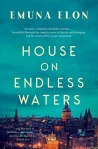
Emuna Elon, House on endless waters (#BookReview)

Book coverI’ve said before that I’m surprised by how many takes there can be on World War II, and on the Holocaust, in particular – and once again I’m here with another such story, Emuna Elon’s House on endless waters. I hadn’t heard of Elon before but, according to Wikipedia, she’s an Israeli author, journalist, and women’s rights activist. Her first novel translated into English, If you awaken love, is about life on the West Bank, where she lived for many years.

House on endless waters, however, is historical fiction – or, at least, one of those novels which flips between the present and the past. It tells the story of successful Israeli author Yoel Blum who had been told by his late mother to never go to Amsterdam, from which they’d emigrated. However, the time comes when the middle-aged and internationally successful Blum is urged to Amsterdam by his literary agent to promote his latest Dutch-translated novel. While there, he and his wife visit the Jewish Historical Museum, and here, in a little looping video, he catches an image of his mother Sonia in Amsterdam during the war. Next to her is a man holding a little girl, his sister Nettie, but the baby she is carrying is not he! Who is this baby, and where was he?

Yoel returns to Israel, but, after obtaining the incomplete information his sister is able to provide (which is not divulged to the reader), he goes back to Amsterdam, alone, to research his past and write a novel about it. The result is one of those novels within a novel, as we follow Yoel’s journey alongside reading the story he is writing as he uncovers his family’s – and his – past. How much is “true” and how much Yoel imagines is not the point. We are carried along in the horrors of war-time Amsterdam, in stories of decent hardworking people’s disbelief that life could change so horribly so quickly, of Jewish collaborators, of the hidden children, of the most difficult choices people have to make. Elon conveys viscerally the shock felt by Jewish citizenry as one by one their rights are removed and as the foundations of their lives – something they thought immutable in such a place as Holland – crumble.

Much of this story has been told before. Anne Frank comes to mind of course, and many novels have dealt with the ways in which Jewish people were gradually ostracised and betrayed by their own society (the yellow stars, the loss of jobs, the resumption of homes, the rounding up, the transporting to concentration camps, and so on). What makes this one a little different – at least in my reading to date – is its exploration of the hidden child phenomenon, within a larger story of collaboration, betrayal, resistance and difficult choices.

The important thing, however, is less this difference than that it is a deeply absorbing read. Elon’s ability to manage her two story threads, and maintain our interest in both, speaks to a practised, skilled writer. There is no rigid chapter by chapter alternating of stories. Rather, as Yoel becomes increasingly invested in the life of his mother, Elon starts to blend the two stories, with Yoel sometimes feeling himself in both stories at once. As his sense of self becomes increasingly discombobulated, the line between past and present starts to blur:

Yoel would have liked to write about the architectural significance of Amsterdam, about the implication behind the labor invested in the rows of tiny reddish bricks, about the stylized cornices above the windows and the artistic embellishments that adorn every single building. But early the next morning, Sonia is walking along the street, and across the road the police are evicting a Jewish family from their beautiful art-nouveau-design house. The members of the banished family are trying to walk proudly to the truck that has come to take them away …

For Yoel, unlike the tourists he sees blithely enjoying the sun and culture of Amsterdam, “the past is still here” and it begins to overwhelm him.

Why a story-within-a-story?

This bring me to the question of why would Elon use the story-within-a-story-device? I can think of three reasons, the most obvious being that it draws the reader into the story, engaging us in its unravelling along with the protagonist. Secondly, in this case, it also mirrors how many children of the Holocaust generation didn’t know their parents’ stories – weren’t told them – and therefore had to work out those stories piece by piece. Finally, also in this case, it enables Elon to expose the personal development of her narrator, Yoel, who is initially revealed to be decent but emotionally remote. Very early in the novel, we learn this about him:

Perhaps the day will come when he’ll even train himself to live, a day when he will walk the earth like everyone else without being overcome by the thought that in fact it’s odd , even ridiculous to be a human being …

He is, says his wife, “scared of living”. This novel, then, is partly about identity. Yoel didn’t know his past but it’s clear that the traumas of that past had unconsciously impacted him, as we now know they do. Slowly, as he comes to understand who he is, he also starts to live, to be an engaged human being.

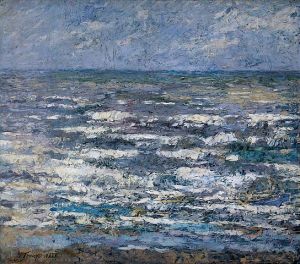
Jan Toorop, The Sea at Katwijk, 1887 (Public Domain)

There is much to this book, with Elon and her novelist Yoel drawing on art and music to reflect both Holland’s cultural achievements and its darker side. A motif running through the book is a stolen work of art – Jan Toorop’s The Sea at Katwijk – that had belonged to Sonia’s friends, Anouk and Martin, who are implicated in what happens. Martin suggests to Sonia that the painting is more about Toorop – “every painter evidently knows only how to depict himself” – than place. However, Sonia also sees herself in it: “there she is in black, there in red, there she is borne from wave to wave, moving in the infinite.” For Yoel, this sea “is a huge finite vessel containing infinite waters”. All this contributes to the novel’s message, one which Yoel finally realises Sonia was telling him:

Whatever was, was. Those waters have already flowed onward.

The trick is to know when to fight those waters, and when to let your “heart encounter the heart of the sea” and be at peace.

House on endless waters came to me out of the blue, but what a find. A Holocaust novel, it contains the horrors of that time but is also imbued with a generous, philosophical spirit that, without excusing atrocity, recognises the humanity of those who made selfish decisions and those who had to live with them. We need perspectives like this.

Emuna Elon
House on endless waters
Translated from Hebrew by Anthony Berris and Linda Yechiel
Sydney: Allen & Unwin, 2020 (Orig. ed. 2016)
309pp.
ISBN: 9781760877255

(Review copy courtesy Allen & Unwin)
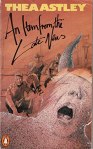
Thea Astley, An item from the late news (#BookReview)

Book coverSet in the satirically named town of Allbut, whose nearest large town is the equally satirically named Mainchance, Thea Astley’s An item from the late news is framed by the story of a man who comes to the town, fearful of “the atom bomb”, and wanting to live a quiet – sheltered, you might say – life.

Wafer is this man, and the story is narrated, from the perspective of ten years after the events, by townswoman Gabby. Introducing the story, she tells us that she was living at the coast when he arrived for “his sad little attempt at reclusion”, and goes on to say that

I reckon now, sprawled on my day-bed guilt, that … the town wasn’t really different from anyplace else except that its final actions become more redly horrible as I think about them.

This tells us much, that the story is not going to end well, that Gabby is implicated, and that Allbut is “anyplace”. It focuses our mind less on what’s going to happen, and more on how and why things go badly. This being Astley, the answers lie in small-mindedness, cowardice, brutality – and, in this story in particular, in greed. It is greed which provides the impetus for the denouement, but along the way, we see sexism, racism, and machismo running amok, all of which lay the groundwork for the behaviour that brings about the end.

Allbut is “anyplace”, one of hundreds of towns set in “landscape skinned to the bone”. It’s a “nothing” town, or, alternatively and ironically, “a clean and decent town”, “a caring town”. It has “all” the obvious things – people, farms, cemetery, pub, war memorial, police – “but” what you really need, kindness and generosity. Into this town comes the outsider, Wafer. Hippie-like in dress and behaviour, “he smiles at children, blacks, old gummy folk. He doesn’t count his change.” Indeed, Gabby tells us, he is “too friendly with the blacks. The town hates that.” He is too kind, too generous, but is also afraid. Having seen his father blown up before his eyes during the war, and having followed the Hiroshima attack, he has come to Allbut to build a bomb shelter.

Narrator Gabby, although of the town, is also an outsider, also a misfit. She has never quite fit with normal “squatting class” expectations, couldn’t be “the daughter of their Sunday social page dreams”. An artist by trade, she’d painted “the very heart of boredom”, albeit unrecognised by her buyers. After failed relationships, institutionalisation for a mental breakdown, and overseas travel, she returns to town, still bored and looking for love. She falls for Wafer, and starts painting again – well, drawing, anyhow. But, she tells us – ominously – “this whole horrible canvas will have the detail of a Brueghel and the alarm of Goya.”

Allbut is peopled with several characters: loner Moon with “the trigger-quick temper”, Sergeant Cropper, Councillor Brim, Smiler Colley and his teen daughter Emmeline, Headmaster Rider and son Timothy, the regularly mentioned but rarely seen (of course) Indigenous woman Rosie Wonga, and Doss (with “blonde hair set in jazz age waves”) and her man Stobo. Karen Lamb, in her Astley biography Inventing the weather, writes about Astley’s use of music: “A character’s mind might be full of classical music – to show an evolved intellect – but jazz was better to bring out a character’s exuberance and refusal to follow convention”. Doss, then, is one of the positive characters in the book, though she has little power to affect the outcome.

An item from the late news is a slim volume – at 200 pages in my edition – but through irony, foreshadowing, repetition, and evocative menace-laden language, Astley builds her story painstakingly but irrevocably to its conclusion. Sexual violence – first against shop dummies, then an assault on Emmeline – sets the stage, but it’s Wafer’s gemstone which captures the attention of the men in the town. It is then that the brutality really starts to build, and we know, even if we’d hoped before, that this really will not end well.

The novel is Astley’s 8th of 15, that is, it’s slap bang in the middle of her fictional oeuvre. By the time she wrote it, her broader themes were well established. These include concern about the Americanisation of Australian culture, the negative influence of television, rabid commercialisation and development (“Sunshine of the vanished sand … the high-blood pressure of the high rise”), poverty and social inequity, not to mention racism and sexism. She fears for the “nothingness” that she sees characterising people’s lives; she rails against what Wafer calls “this blinkered world”; and she exposes her ultimate truth that, as Wafer again says, “we all fail … we fail each other”.

You could also say, though, that there is a cliche at the heart of this story, that of the woman scorned, because although it’s the men of the town who are the most brutal, it’s Gabby who fails her big moment. However, she is such a complex creation that this is not how the novel reads. Instead, by having the damaged Gabby operating as both observer and actor in the events, Astley subtly subverts that trope – and encourages us to be generous.

It was in her review of An item from the late news, that Helen Garner described Astley’s writing as “heavy-handed, layered-on, inorganic, self-conscious, hectic and distracting” and wrote that “this kind of writing drives me beserk”. If you know the writing styles of these two writers, this will make sense, but I suspect Garner, who had a long relationship with Astley, came to appreciate her work. Certainly, the language could be seen as “heavy-handed, layered-on”, but I love its evocativeness and power, the richness of her allusions, the succinct yet poetic way in which Astley can convey an idea. Even the title conveys a punch. It’s thrilling to read.

An item from the late news is quintessential Astley. It offers an unflinching look into the heart of small-minded Australia, and finds much to disturb us. And that is the value of reading literature like this.

Read for ANZLL Thea Astley Week; Lisa also reviewed the book for her week.

Challenge logoThea Astley
An item from the late news
Ringwood: Viking, 1999 (Orig. ed. 1982)
200pp.
ISBN: 978014069488

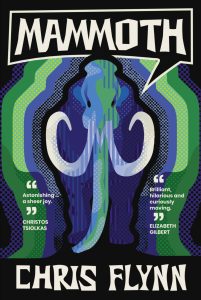
Chris Flynn, Mammoth (#BookReview)

Book cover

Mammoth, by Chris Flynn (UQP $32.99)

I am not a big fan of anthropomorphism and have read very few animal-narrated books. Animal farm is one, while Watership down, so enamoured by many of my generation, is not. However, I was intrigued by Chris Flynn’s Mammoth, which is narrated by a 13,000-year-old American Mastodon fossil, and was glad when my reading group decided to schedule it.

It is an ambitious book, encompassing the story of humanity’s destructive, often brutal march through time as seen through the eyes of those we supplanted, that is, the fossils of extinct creatures. Our narrator, Mammut, is accompanied by a number of other fossils – the skull of a Tyrannosaurus bataar, a pterodactyl, a prehistoric penguin, and the severed hand of an Egyptian mummy – who have found themselves together in 2007 Manhattan, waiting to be sold at a natural history auction. This auction did take place, and was, in fact, a major inspiration for the novel.

The story is framed by Mammut’s story of his life, death, disinterment as a fossil, and subsequent “life”. As he tells this long story, he is interrupted by the other “characters” who share their own stories, albeit far more briefly than Mammut’s. Each tends to use the voice of the time when he or she was first disinterred, meaning, for example, that Mammut’s voice is the more formal “arcane” one of the early 19th century, while T. bataar’s is the hip voice of the late 20th century.

As Mammut tells his story, he takes us to selected (representative) hot-spots of human brutality such as the Irish Rebellion of 1803, the oppression of Native Americans in the early 1800s, and Nazi Germany. He also covers theories of extinction, climate change, and the equation of big animals with power in the minds of men. The novel starts with a letter written in 1800 by Thomas Jefferson seeking mammoth bones (which he does eventually acquire for the White House), and ends with male celebrities vying for our fossils at the auction. Early on, Mammut tells T. bataar:

Let me tell you, and I say this as an original American, nothing compares to this nation’s willingness to promote patently false notions about itself in order to create a myth of American potency … Who do you imagine will buy us? You said it yourself, T.bataar. We represent power, for that’s what we were: Behemoths, Colossi, Titans. (p. 15/16)

Later, Pterodactylus tells the group about being used in training Hitler Youth:

We were presented to the eager teens as proof that Germany had once been the centre of might in Europe and the origin point for life on earth. Your mastodon friend in particular was elevated as a symbol of strength … I was referred to as the Reptilian Eagle, an apex predator who dominated the skies. It would have been a compliment, had it not come from the mouths of maniacs. (p. 159/160)

Mammoth is, then, a provocative book, confronting head on the ills of humanity. It could be deeply depressing – and in a way it is – but Flynn has taken his own advice (more on this anon) and told his story with humour, mainly through repartee between his fossil characters. I must say that I initially found this humour a bit silly, a bit obvious, and I wondered whether I was going to enjoy the book. However, the more I read, the more fascinated I became by what Flynn was trying to do. I didn’t find it as “hilarious” as some blurb writers did, but Mammoth offers such an idiosyncratic journey that I’m glad I decided to go with the flow.

One of the book’s main pleasures for me, besides its commentary on humanity’s destructiveness, is the writing master class contained within its over-riding story. This started with some digs about the writing life, such as Mammut’s “no-one gets into the writing game for money these days. No-one in their right mind, at any rate”. A sentiment that is reiterated later by French writer, Bernadin de Saint-Pierre.

However, more entertaining was the discussion of writing, or storytelling, itself. As Mammut’s tale progresses, his listeners begin to question him. Sometimes, it’s the issue of disbelief, to which Mammut responds by explaining his sources, by arguing that it’s perfectly valid for his molar to be observing action in one place while his head is elsewhere, or by allowing himself a little leeway:

I know you’re technically an elephant and all, but your recall of events is a little too precise. Not to mention the verbatim dialogue. Surely, you’re making some of this up? This is my problem with the memoir genre. There’s always more fiction in it than people let on.

I possess a remarkable memory, Palaeo, though I will admit to the occasional romanticism of the narrative. For the most part, what I am recounting is true. But, as you say, I am a storyteller who enjoys indulging in a yarn. (p. 143)

There’s also discussion of tone, regarding the degree of brutality and tragedy in Mammut’s tale:

… This entire tale has been a veritable famine of LOLs. Really, Mammut, next time you tell this story, you need to inject some humour, bro.

No too much, I think, T. bataar. No comedian ever won the Pulitzer … (p. 235)

Flynn, thus, cleverly engages with some current issues in criticism while simultaneously fending off potential criticism of his own work. He crowns this early on with the pronouncement that “No story’s gold from beginning to end” (p. 66). How can you argue with that!

There’s much more to this book. I haven’t touched on the fact that almost all its hominid characters are historical personages, many findable in Wikipedia. Mammoth offers an entertaining, accessible introduction to the history of palaeontology and 19th century natural science, and provides a springboard for further research, should you be so inspired.

For now, though, I’m going to end with a poignant statement made by Mammut early in the novel. “Our world was changing”, he says, “and there was nothing we could do about it” (p. 44). I fear this is exactly how our earth is feeling right now. Flynn, I think, would like us to take note and consider what we might do to prevent avoidable extinctions under our watch. An imaginative, engaging read.

Theresa (Theresa Smith Writes) enjoyed this book too.

Chris Flynn
Mammoth
St Lucia: UQP, 2020
254pp.
ISBN: 9780702262746

(Review copy courtesy UQP and literary agent Brendan Fredericks)

Bill curates: Imre Kertesz’s Fateless or Fatelessness

Bill curates is an occasional series where I delve into Sue’s vast archive, stretching back to May 2009, and choose a post for us to revisit.

Sue reads some striking books and writes some (many!) striking reviews, of which this is one. I’m not sure I agree with her about Holocaust fiction, but I do appreciate that people who experienced the Nazi concentration camps, or their after-effects in the case of, say, Lily Brett, must write, just as we must read to honour their tribulations, and that a fictionalised account may be the way they choose to do this. Imre Kertész is another Nobel Prize winner I was unaware of. He died in 2016.
_______________________

My original post titled: “Imre Kertesz, Fateless or Fatelessness”

[WARNING: SPOILERS, of sorts]

Let’s get the first thing clear. I like holocaust literature – not because I enjoy the subject matter but because in it I find the most elemental, universal truths about humanity. Depending on the book, this literature contains various combinations of bravery and cowardice, cruelty and kindness, love and hate, self-sacrifice, self-preservation and betrayal, resilience and resignation, and  well, all those qualities that make up humanity and its converse, inhumanity. I have by no means read all that is out there but here are some that have moved me: Anne Frank’s The diary of a young girl (of course) and Anne Holm’s I am David, from my youth, and then books like Martin Amis’ Time’s arrow, Bernhard Schlink’s The reader, Marcus Zusak’s The book thief, and Ursula Hegi’s Stones from the river. There are gaps, though, in my reading, such as Thomas Keneally’s Schindler’s ark (I did see the film), the works of Primo Levi, and Elie Wiesel’s Night. I have, however, just added Imre Kertèsz’s Fateless to my list of books read.

Kertèsz adds a new spin to the universal truths explored by these books – it’s what he describes (in my 1992 translation anyhow) as “stubbornness” which seems to me to mean “resilience” or a determination to survive, and even to have, if possible, little wins against the system.

Anyhow, first the plot. The novel takes place over the last year of the war and concerns Gyorgy Koves, a 14-year old Hungarian Jew, who, one day, is suddenly called off a bus, along with all other Jews on the bus and transported to Auschwitz, and then Buchenwald, Zeitz and back to Buchenwald, before returning home at war’s end. It chronicles his experiences, his thinking, and the impact on him of his experience. He begins as the archetypal naive narrator…but by the end, though his tone has changed little, he is no longer naive. This is rather beautifully achieved as we see his youthful application of logic being changed into something more cynical and survival focused.

Gyorgy speaks with a strange sense of detachment borne, to start with, of an apparent unawareness of what exactly washappening to him and a disbelief that anything untoward would happen. And so, in the beginning, as events unfold he describes them as “natural” because of course, when they got to Auschwitz, it was sensible to inspect each person to see who was physically fit and capable of working. He didn’t know then what would happen to those not found physically fit. The horror gradually builds as reality sets in and he goes about making it through each day – through his share of beatings, the reduced food rations, and all the other deprivations that make up concentration camp life. In the first part of the book he uses the term “naturally” to mean some sort of normal logic but by the end it comes to mean, as he explains to a journalist who asks him why he keeps using the word for things that aren’t natural, that these things were natural in a concentration camp.

Early on in his captivity he says that they approached their life (and work) “with the best of intentions” but they soon discover that these “best of intentions” do not bring about any kindness from their overseers, and so his attitude to getting on, to surviving starts to change. As he starts to physically weaken, become emaciated and develop infections, he observes that “my body was still there. I was thoroughly familiar with it, only somehow I myself no longer lived inside it”. Always dispassionate, always matter-of-fact, while describing the most heart-rending things.

Towards the end, he is placed in a hospital ward and there he is treated better and, even, with a certain amount of kindness. This in its way is as shocking to him as the cruel beatings he experienced at Zeitz. He can see no logic, “no reason for its being, nothing rational or familiar”. He can only understand kindness in terms of the giver receiving “some pleasure” from it or having some “personal need” satisfied. Never is there any sense that altruism might come into play. His view of “justice” is based very much on survival. He says, when he is spared, “everything happened according to the rules of justice … I was able to accept a situation more easily when it concerned someone else’s bad luck rather than my own … This was the lesson I learned”.

And so, in the end he returns home, and finds it hard to explain to people just what happened and how he now views life. He describes getting through his time as “taking one step after another”, focusing just on the moment. He implies that if he had known his fate he would have focused on time passing – a far more soul-destroying activity than concentrating on getting through each day “step by step”. This brings us to the fate/fateless bit. He says at the end that:

if there is a fate, there is no freedom … if, on the other hand, there is freedom, then there is no fate. That is … that is, we ourselves are fate.

I find this a little hard to grasp but he seems to be saying that we are free to make our own choices, even in a concentration camp – we are not fated but make our own fate. He was and is not prepared to accept any other approach to life. But life will not be easy:

I am here, and I know full well that I have to accept the prize of being allowed to live … I have to continue my uncontinuable life … There is no impossibility that cannot be overcome (survived?).

And yet, at the very end of the book, he says “and even back there [in the concentration camp], in the shadow of the chimneys, there was something resembling happiness”. Wow! This is an astonishing book – it charts horrors with a calmness that is quite shocking, and it is particularly shocking not because Gyorgy is unfeeling but because he can’t quite grasp what is happening to him. This is the fundamental irony of the book, and the fundamental truth of a naive narrator: we the reader know exactly how it is even as Gyorgy tries to make sense of it using logic and reason. I must read this book again – and preferably the newer more highly regarded 2004 translation by Tom Wilkinson.

Imre Kertész
Fateless
Translated by Christopher C. Wilson and Katharina M. Wilson
Northwestern University Press, 1992 (orig. ed 1975, in Hungarian)
191 pp.
ISBN: 9780810110496

____________________

I looked in my bookshelves when Bill sent through this Bill Curates post, and discovered that the edition I own is the later Tom Wilkinson one. I must have bought it with the intention of reading it, but I haven’t yet. Oh, the dreams of an everyday reader!

Bill will, I hope, explain his introductory comment regarding Holocaust fiction. We’d love to know what you think – and/or read.