Sue Ingleton, Making trouble: Tongued with fire (#BookReview)

Book coverIn my recent post on Jessica White talking about her hybrid memoir-biography Hearing Maud, I commented that I’m intrigued by the ways in which biography is being rethought in contemporary literature. When I wrote that, I not only had White’s book in mind, but Sue Ingleton’s Making trouble. You can probably guess why from its sub-sub-title: “an imagined history of Harriet Elphinstone Dick and Alice C. Moon”.

“An imagined history”? And yet, it is classified on the accompanying media release as “Non-fiction (biography, history, crime)”. What does all this mean? Making trouble is about two English women, Harriet Elphinstone Dick (1852-1902) and Alice C. Moon (1855-1894), who, in 1875, left England for Australia. As the media release says, they were champion swimmers at a time when women did not swim in the sea; they refused to wear the corsets that women had been told were necessary to hold themselves up; and they were in love at a time when – well, you know the story. The problem, however, is that there is not enough documentary evidence for a traditional, formal biography. Ingleton writes in her Prologue that there were

no letters, no direct descendants both women being childless, no personal communications, only some newspaper stories, advertisements and sections of a thesis written in 1985.

In other words, their achievements are primarily documented in newspapers (“may the gods bless TROVE”, Ingleton writes): through ads for gymnasiums and physical education lessons, articles on talks and lectures, and death notices. Ingleton also had access to a master’s thesis by Lois Young titled Feminism and the physical sex sex education, physical education and dress reform in Victoria, 1880-1930).

To flesh out their lives, to give sense to these determined, influential women, Ingleton fills in the gaps using her imagination and her understanding of the history of the time. Describing herself as a “detective in time”, she had no choice, she writes, but to call this book “an imagined history” or, what is defined elsewhere, “speculative biography.” There is, in fact, a growing awareness, perhaps even acceptance, of this speculative approach to biography, but it’s tricky. At what point does such a work tip over into historical fiction?

Writing on the Australian Women’s History Network about her imaginative book The convict’s daughter, historian Keira Lindsey shares the contradictory responses she received to her requests for endorsement. One historian said she had “fearlessly carved a new path between history and fiction,” while another was “infuriated that she had gone “beyond the historian’s remit”. Clearly then, it partly depends on the reader. Some of us have more tolerance for straying from fact than others. But the writer’s approach and style also affects how readers respond.

Lindsey, for example, did not footnote, but she referenced the sources “with an index and bibliography”. She also provided “chapter notes at the end of the book for those wanting to know which portions of the book were fact and which were not”  and she explained her approach in an Afterword.

Ingleton took a different approach. She writes a Prologue and provides endnotes. I haven’t read The convict’s daughter so can’t comment on how Lindsey’s approach worked, but I did like Ingleton’s Prologue, albeit she argues that there are three components to her work – the Fact line, the Fiction line, and the Spirit world which, she says, can result in the revelation of “hidden facts” or “invisible truths”. This takes us into somewhat strange territory for a biography, speculative or otherwise, but in fact it doesn’t intrude too disconcertingly into the narrative proper.

“a barely documented history”  (Ingleton)

So, to tell the story of her two women, Ingleton interweaves more formal writing, which conveys the facts as she knows them, with a narrative style that is much closer to historical fiction. It generally works well, by which I mean you can usually tell which is fact, or draws on fact, and which is invented or imagined. While I’m happy to accept the use of imagination to fill in gaps, I did feel some of the imagined sections went a little too far into the historical romance fiction vein. I understand why, though. Ingleton is, among other things, an actor, director and stand-up comedian, and so is drawn to dramatic action. She also wanted to convey the love and romance between these two who dared to be different. How to do that in the absence of letters, was her challenge.

Now then, to the women, and why they’re worth reading about. Have you heard of them? Probably not, which is not unusual for women’s stories. Dick and Moon were, says Ingleton,

early pioneers* of physiotherapy, healthy diet, gymnastics and swimming for women and girls, biodynamic farming, journalism, breaking the barriers of women creating their own businesses and most importantly they were lesbians living together – the final bastion against the Patriarchy.

They also fearlessly advocated for sensible women’s attire, that didn’t cripple them physically and mentally. It’s an amazing story really. We follow them from England, to Australia, back to England when Moon’s father falls ill, and back to Australia. We see them build their gymnasium business in Melbourne, develop a teaching practice in schools, and establish a farm at Beaconsfield. Then we see Moon, devastatingly for Dick, cut loose and move to Sydney where she builds a career in journalism, only to die, before she’s 40, in seemingly mysterious circumstances, circumstances for which Ingleton believes she has an answer and builds a fair case.

All this is set against the backdrop of the burgeoning women’s movement in Australia – it was the time of the New Woman and the suffrage movement. Although Dick and Moon “were never deeply connected to the suffrage movement”, they did move in some of the circles mentioned by Clare Wright in her You daughters of freedom (my review), and “certainly were outspoken in the area of women’s rights over their own bodies and minds”.

Making trouble is an unusual book, but Harriet Elphinstone Dick and Alice C. Moon are two women who played a significant role in promoting women’s rights and proving, by their achievements, that women are as capable of living independently as men. They should be better known. Ingleton has done us a service in bringing them to our attention with such passion and flair.

* Not long after, another woman, Marie Bjelke Petersen (1874-1969) also pioneered physical culture for women, and was accused of dressing mannishly.

AWW Challenge 2019 BadgeSue Ingleton
Making trouble: Tongued with fire: An imagined history of Harriet Elphinstone Dick and Alice C. Moon
North Geelong: Spinifex, 2019
276pp.
ISBN: 9781925581713

(Review copy courtesy Spinifex Press)

Deborah Hopkinson, Ordinary, extraordinary Jane Austen (#BookReview)

Deborah Hopkinson, Ordinary, extraordinary Jane AustenWriting biographies for young children – like, for example, Deborah Hopkinson and Qin Leng’s Ordinary, extraordinary Jane Austen – is an interesting concept. Interesting, but not new. So, when I was given this gorgeous Jane Austen one for Christmas, I decided to research the topic – and what I discovered is that the picture book biography is a well-recognised genre. I shouldn’t have been surprised, I suppose, given the number I bought for the young Gums way back when.

Still, it got me thinking. A quick search of the ‘net retrieved a few interesting articles (mostly including lists of recommended books). In 2016, The Guardian writer Amy Coles wrote how “picture book biographies peel back history and bring to life the true stories of iconic figures for a younger generation of readers”. An obvious aim, I suppose, but there’s more to it than just knowing these people’s stories, as Coles continues:

there is a lot to be learnt from the trailblazing achievements of history’s most renowned and respected figures. But how did these inspirational figures reach their goals and what prompted them to act the ways they did?

Coles provides a list of ten books that cross “nationalities, careers and cultures”, books about well-known people like the inspiring young Malala Yousafzai and Nelson Mandela, and lesser-known ones (to me, anyhow) like Wangari Maathai, who is “credited with planting over 30 million trees in Kenya”.

I love the idea of these non-fiction picture books, but how popular are they, really? Well, it just so happens that they have quite a wide readership.

Writers Rumpus is the website and blog of a group of children’s book writers and illustrators from the Boston area. Their blog began with “a lively, opinionated, humongous rumpus of a critique group” that (still I gather) meets monthly in a library. Back in May last year, they wrote this (as an introduction to a list of new releases from the previous year):

We live in a most exciting time, one of abundant picture book biographies! At my library, patrons of all ages check out these books. One adult recently told me he found it an excellent way to learn about famous people—past and present—without spending precious time reading a full biography on each person. With their lavish illustrations and informative back matter, this is no surprise. Authors and illustrators of picture book biographies put in a lot of research time to make sure their facts are correct, recorded, and shared in an entertaining manner.

The list is appealing – and includes books about the composer Bach, the “father of children’s literature” John Newbery whose name now graces a significant American children’s literature award, the black woman ex-slave-cum-anti-slavery-activist Harriet Tubman, the Mexican artist Frida Kahlo, not to mention a whole raft of scientists, sports people and creators of all sorts.

Julie Just, writing in The New York Times last November, also praised picture-book biographies, stating that modern publishers are producing

beautifully illustrated and closely researched nonfiction books about unsung heroes as well as heroes we can’t read enough about. Best of all, if you like true stories, they include superbly detailed endnotes and suggestions for further reading.

And this brings me to the Ordinary, extraordinary Jane Austen, which is just such a book. The front cover flap describes the book as a “gorgeous tribute to an independent thinker who turned ordinary life into extraordinary stories”.

The book’s epigraph from Pride and prejudice – “For what do we live but to make sport for our neighbours and laugh at them in return” – will probably not make sense to its 4 to 8-year-old intended audience, but should give its adult readers a wry laugh. The book proper opens – not totally originally (!) – with

It is a truth universally acknowledged
that Jane Austen is one of our greatest writers.
But it might surprise you to know that
Jane lived a simple life.
She wasn’t rich
or even very famous in her time.

This would, I think, push the young reader a bit. How many would even have heard of Jane Austen to wonder whether she was rich or famous? Still, from the opening page they learn some basic facts about her. This first-page text is accompanied by a lovely sketch-illustration of our Jane writing at her famous little round writing table. The book goes on to provide the important facts of her biography. It gives a sense of Austen’s personality, including her love of humour, particularly at the “foolish things people sometimes did and said”. It tells us about the life of her times, including how people entertained themselves, which of course would interest children. It also explains how Austen wanted to write more realistic stories about the ordinary world, representing a significant break from the popular novels of the time – adventures and romances. Its conclusion, suggesting that Austen may have stood in her father’s library one day and thought to herself, “I can do this”, is nicely aspirational (as Coles suggests these books can be.)

The book concludes, as Julie Just notes many such books do, with some useful end matter: a basic but detailed enough timeline; a description of each of her novels including when it was published, and some “famous quotes”; some Internet sources to research; and a few books about Austen that the author used in her research.

You won’t be surprised to learn that this book didn’t teach me anything new, but as the friends who gave it to me know, I love adding to my Jane Austen collection of books, videos, CDs and other merch!

Do you have any favourite picture book biographies?

PS I should note that the annual Children’s Book Council of Australia Awards includes the Eve Pownall Award for Information Books, which would include picture-book biographies in its purview.

Deborah Hopkinson
illus. Qin Leng
Ordinary, extraordinary Jane Austen: The story of six novels, three notebooks, a writing box and one clever girl
New York: Balzer + Bray, 2018
ISBN: 9780062373304

Rebecca Skloot, The immortal life of Henrietta Lacks (#BookReview)

Rebecca Skloot, The immortal life of Henrietta LacksIn her extensive acknowledgements at the end of her book, The immortal life of Henrietta Lacks, Rebecca Skloot thanks “Heather at The Book Store, who tracked down every good novel she could find with a disjointed structure, all of which I devoured while trying to figure out the structure of this book.” Interesting that she looked at novels, particularly given our recent discussion regarding non-fiction that reads like fiction, but more on that later …

Many of you will have heard of the book, or, if not, of Henrietta Lacks, or of her HeLa cells? It’s a sort of hybrid biography-cum-science book about an African-American woman named Henrietta Lacks who died in 1951, and the immortal HeLa cell line that was and continues to be cultured from her cervical cancer cells. As Skloot writes, “these cells have transformed modern medicine.” The book was published in the USA in 2010. It won multiple awards, including, says Wikipedia, the National Academies Communication Award for “best creative work that helps the public understanding of topics in science, engineering or medicine”. In addition, the paperback edition was on the New York Times Bestseller List for 75 weeks.

I’ve described the book as hybrid, because the story (or biography) of Henrietta Lacks is just one of its threads. It also interrogates the complex intersection between race, class and ethics in medical research as well as broader ethical ramifications of issues like “informed consent” and the commercialisation of human tissue. Skloot, herself, says early in the book,

The Lackses challenged everything I thought I knew about faith, science, journalism, and race. Ultimately, this book is the result. It’s not only the story of HeLa cells and Henrietta Lacks, but of Henrietta’s family—particularly Deborah—and their lifelong struggle to make peace with the existence of those cells, and the science that made them possible.

If you haven’t guessed it by now, then, this book is another example of those non-fiction books that I like so much in which authors author takes us on their journey of discovery, in this case to understand the people and the science, the ethics and the law, behind this astonishing story. Skloot wasn’t the first so tell it, however – something she makes clear during our journey. Earlier stories include Michael Rogers’ 1976 article in Rolling Stone, and the 1997 BBC documentary, The way of all flesh, which you can watch on YouTube. I’m not going to spend a lot of time on the story of the cells, so if you want to know about them – read the book and/or watch this video.

Skloot explains her own fascination with Henrietta, from being introduced to her cells in high school, through those HeLa cells being “omnipresent” throughout her biology degree, to when she was in graduate school studying writing “and became fixated on the idea of someday telling Henrietta’s story”. It’s not surprising then that this book has been extensively researched – as evidenced by the Notes and Acknowledgements. (These two chapters make great reading in themselves.) It took around 10 years to write, not just because of this extensive research. A major issue which Skloot had to confront was the understandable suspicion and anger of the Lacks’ family, whose help she needed if she were to tell this story properly and with integrity. Their story is bound up in a long invidious history of research carried out on African-Americans, which is also detailed in the book.

“What do you mean, ‘everybody else’?!”

So, the structure. The book is divided into three parts – Life, Death, Immortality. In the first two parts, the story is told in two roughly alternating, chronological threads – one telling the story of Henrietta Lacks, her cells, and her family, from 1920 to 1973; the other tracking the early days of Skloot’s research from 1999 to 2000. In the third part, the two tracks coalesce into one chronological thread, starting from 1973 when the late Henrietta’s daughter-in-law, Bobbette, discovers quite accidentally via a friend’s brother-in-law, that Henrietta’s cells were being used in scientific research and had been since 1951. Until that point, no-one in the family had known that Henrietta’s cells were still “alive” and being used in research all over the world:

“What?!” Bobbette yelled, jumping up from her chair. “What you mean you got her cells in your lab?”

He held his hands up, like Whoa, wait a minute. “I ordered them from a supplier just like everybody else.”

“What do you mean, ‘everybody else’?!” Bobbette snapped. “What supplier? Who’s got cells from my mother-in-law?”

She is, to put it mildly, horrified – and rushes to tell her husband and thence the family.

Here, though, I’m going to return to the issue of writing non-fiction like fiction. There’s the use of narrative structure, of plot lines, to create some sort of tension for the reader – in this case it largely revolves around the lives and reactions of the family, particularly Deborah – while we are also learning drier “stuff” about the history and ethics of cell culture and medical research. The dialogue I’ve just shared is part of the main plot line concerning the family’s discovery of what had been happening to Henrietta’s cells.

Then there’s the use of evocative, descriptive language. Skloot doesn’t overdo this, staying, in the main, direct and focused – but there are enough little flourishes to keep the writing interesting, like “HeLa grew like crabgrass” or “tufts of hair like overgrown cotton sprouted from his head”. The imagery draws from the area in which it is set. And, there’s the use of dialogue. Skloot did carry out a lot of interviews over her decade-long research and often makes clear when she’s quoting from those – but not all dialogue comes from that research. Some is imagined – or what critics call “representative”. No-one, for example, would have recorded Henrietta’s exact words when she visited her gynecologist, but Skloot writes:

“I got a knot on my womb,” she told the receptionist. “The doctor need to have a look”.

How much more interesting that is to read than, say, “Henrietta visited her gynaecologist, telling the receptionist that she had pain in her womb that needed to be investigated.” I know what I’d rather read. Not only is dialogue more engaging, but if the writer gets the voice right it enhances our understanding of the character. One of the delights of this book, in fact, is our getting to “know” members of Henrietta’s family, and the dialogue plays a significant role in this. Not non-fiction readers, however, approve of this approach.

As I’ve already said, I’m not going to write a lot about the content of this book, fascinating though it is. It has been written about extensively; there are interviews with Skloot on the web; and for background there’s that BBC documentary. The book is now nearly a decade old. Cell research has moved on, but the story of the intersection of race and class with science and ethics is still relevant. Moreover, this is a book of history – the history of medicine. Close to home for me, for example, was learning that HeLa cells were involved in identifying the connection between the HPV virus and cervical cancer, and thence the development of the vaccine with which my reading group’s daughters were among the first in the world to be vaccinated.

All this makes the book well worth reading. There were, admittedly, times when the cell science got the better of me (and other non-scientific members of my reading group) but not enough to turn us off. Skloot’s courage, warmth and empathy with people out of her ken, the trust those initially fearful, angry people came to place in her, and her ability to tread the fine line between judgement and analysis when discussing actions of the past make this a special read. No-one in my reading group regretted this choice for our schedule. A fine way to end the year.

Rebecca Skloot
The immortal life of Henrietta Lacks
Sydney: Picador, 2010
ISBN: 9781742626260 (ePub)

Nadia Wheatley, Her mother’s daughter: A memoir (#BookReview)

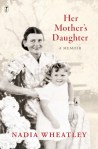
Nadia Wheatley, Her mother's daughterIn Her mother’s daughter: A memoir, Australian writer Nadia Wheatley has written the sort of hybrid biography-memoir that I’ve reviewed a few times in this blog. All of them, as I mentioned in my recent Meet the Author post, have been mother-daughter stories, Susan Varga’s Heddy and me, Anna Rosner Blay’s Sister, sister, and Halina Rubin’s Journeys with my mother. It’s this hybrid form that I’d particularly like to explore in this post.

And the hybrid I’m talking about is one where the biography is of the subject (mothers, in these cases) and the memoir is of the writer (the daughters.) This is the more common form of hybrid biography-memoir, though my research did turn up others, such as Room to dream by Kristine McKenna and David Lynch in which McKenna’s biographical chapters on Lynch are followed by Lynch’s responses to those.

The biographer’s question

There are, of course, many memoirs by people who, in order to tell their own story, need to figure out their relationships with others, particularly their parents. However, these books remain primarily about the writer. Hybrid biography-memoirs, on the other hand, tend to be as much, if not more, about the other person as the writer. The end result might be the writer understanding themselves more, but the focus tends to be the other. This was clearly Wheatley’s intention. Indeed she told us that her biographer’s question was “Why would a nice person like Neen marry an awful person like my father?”

So, her book’s main focus, then is her mother. Nina (Neen) Wheatley, nee Watkin, was born in northern New South Wales in 1906, and died in Sydney in 1958. She lost her own mother when she was five years old. She and her siblings were separated when her father remarried, with Nina and her younger sister Boo staying with their father and his new wife. It became clear that the family expected Nina to be the parents’ carer in their old age. However, Nina managed to train as a nurse, and go overseas during the war as an enlisted nurse with the 6th AGH (Australian General Hospital), where she worked in Greece and Palestine. She returned to Europe after the war to work with UNRRA and then IRO, caring for Displaced Persons. It was during this time that she met the man – English doctor, John Wheatley – she ended up marrying. It was a bad decision: he was a womaniser, possessive and controlling, and, according to Wheatley, sadistic. Indeed, it’s very likely that, had he – and the medical fraternity more broadly – taken women’s health seriously, Nina would not have died when she did. After her mother’s death when Wheatley was 9 years old, she, an only child, lived with a local family known to her (and chosen by her mother before her death.) This was, for Wheatley, a problematic situation – but this part of the story occupies just the last 20 or so pages of the book, and, while it’s important to the overall memoir, I do want to move onto other points.

So, back to the form. Unlike Wheatley, those other three biographers-cum-memoirsts, Varga, Blay and Rubin, were able, as adults, to question their mothers. They could bring an adult’s eye to their mothers, and ask the sorts of questions an adult might ask. They all tape-recorded their mothers. Wheatley’s mother, however, died when Wheatley was nine, so concocting her mother’s story was a very different challenge. Fortunately – and how prescient of her – she realised that her memories wouldn’t last so, at 10 years old, she started writing down her memories of the happy times she spent with her mother and also the stories her mother had told her about her life. At times I wondered how she could possibly have remembered as much detail as she does. However, given Wheatley was clearly a writer from the start and given what she experienced was so powerful, it wasn’t hard to trust her authenticity. It’s these stories and  memories, together with letters, journals and interviews with family members and friends, and official records, that provide the facts for her mother’s biography.

Step one, then, is the research, but next comes how to marshall it all into a narrative. Varga and Rubin, like Wheatley, take us on a journey of discovery. As Wheatley said during the conversation with Halligan, she wanted to take the reader on the quest with her. She wanted to share the detective story of her unravelling her mother’s story, and not just present the evidence. Varga and Rubin do something similar, but they tell their story first person, sharing when their mother is reticent, when they, as daughters, are challenged, and so on. Varga makes it clear to her mother – and us – that this means “it won’t be her life story, not properly” but would be “filtered” through her “reactions and thoughts”, her “second generation eyes.”

Blay, however, is more formal, presenting her mother Hela and aunt Janka’s stories in their words as transcribed from her interviews with them. She intersperses these with her own perspective in italics. The three voices are thus distinct.

Wheatley, though, uses a different approach again. She tells her mother’s story third person, but, intermittently, will suddenly switch to first person to present her own role in the research or the story, removing us from Nina’s chronology to her own time-frame. Chapter 9, which relates her mother’s life immediately postwar, is a good example. The first 10 pages read like a standard biography, describing what Nina was doing, quoting from letters and journals to support the information, then, suddenly, after a reference to Nina’s father’s death, she flashes to nine years after Nina’s own death (and over twenty years after the time we’ve been in.) Nadia is dining with her Auntie Boo, and casually asks if she knows where Nina’s wedding ring is. Her aunt bursts into tears, saying:

‘Daddy’s will was so unfair! To leave everything to Neen! Not just Glenorie, but everything in it!’ As my aunt moved on in her attack, it turned out that I too was guilty as charged: ‘All those things that Nina and you had in that house at Strathfield, you had no right to them.’

Now, Nina’s father had left “other real estate to his other children” but leaving the family home to Nina rankled so much, writes Nadia, that “some of her siblings would never get over it.” After a page on all this, we are returned to Nina’s life, and the third person voice.

This approach ensures that as well as travelling the journey with Nadia, we also see the impact on her, and her sense of guilt, as she is growing up. There are many insertions like this, including one later in the book when Nadia remembers a time with her father when she was three years old. With this approach, Nina’s story is told chronologically, but Nadia’s is disjointed until after Nadia is born when her story is gradually folded in to the main narrative. It’s a tricky approach, but Wheatley, an experienced novelist and biographer, makes it work, resulting in something that provides both a coherent biography of her mother, and the impact on her. It doesn’t necessarily work if you are expecting a detailed memoir of Wheatley’s life, but that wasn’t Wheatley’s goal.

Defining moments

Interesting as all this is, however, the main joy in reading Her mother’s daughter lies in its social history of the first half of the twentieth century. Wheatley’s story of her mother’s experience as an active participant in World War 2 is vivid, and makes a significant contribution to a less covered aspect of that war. Her story of her mother’s life in Sydney during 1950s is significant too – but terribly so.

Nina’s War “story” was fascinating. Her reports of her early experience are cheerful, full of a sense of adventure and camaraderie, but that soon changes as her real war experience starts. She sees the impact of bombing on civilians in Greece, and she nurses casualties of the Syrian campaigns including El Alamein. She already cared about social justice before going to war, but her desire to help others firmed afterwards. Her experience of forced repatriations, of seeing “Poles packed like cattle in trucks” during her work with UNRRA, was “a defining moment” writes Wheatley. Nina wrote in her journal that “This experience will have an intense influence on all my life.”

Wheatley’s description of her mother’s work with Displaced Persons is inspiring, showing Nina to be a resourceful and empathetic woman who managed to create harmony in extremely difficult circumstances. However, her marriage to Dr Wheatley saw this confident, warm woman brought undone. Her husband’s cruel, self-centred behaviour soon soured all Nina’s hopes of a happy marriage of equals. Nadia writes that he either “provoked arguments” with her mother, or set up “elaborate games in which I was the pawn he used to take the queen.” That – and his womanising – were bad enough but, when in 1956 Nina started feeling unwell, the situation became dire because Nina fell prey to a male-dominated medical system, actively supported by her doctor husband. The belief that the ills women of Nina’s now middle-age felt were all “in the mind” resulted in her eventual destruction. It’s devastating for Nina (of course) and for Nadia from whom so much, before and after, was kept secret – but, for anyone who knows or lived through the 50s, it’s only too believable.

Unfortunately, as it turns out, not all the defining moments of Nina’s life were positive ones.

Now, once again, I’ve outstayed my welcome, so I’ll conclude by saying that Her mother’s daughter is a great read for two reasons. Firstly, it provides a thoughtful, authentic – sometimes exciting, sometimes disturbing – social history of the times. And secondly, with Wheatley’s ability to write engaging narratives, it makes for engrossing, moving, provocative reading. I do recommend it.

AWW Badge 2018Nadia Wheatley
Her mother’s daughter: A memoir
Melbourne: Text Publishing, 2018
322pp.
ISBN: 9781925603491

Michelle Scott Tucker, Elizabeth Macarthur: A life at the edge of the world (#BookReview)

Michelle Scott Tucker, Elizabeth MacarthurThere’s something special about reading a good, engaging history – and this is how I’d describe debut author Michelle Scott Tucker’s biography Elizabeth Macarthur: A life at the edge of the world. There are, in fact, three prongs to my statement, namely, it is history, it is good history, and it is engaging history. I plan to tease out each of these in my post.

First though, a bit about Elizabeth Macarthur, particularly for non-Australians who may never have heard of her. She arrived in Australia on the Second Fleet in 1790, at the age of 23, with her husband John Macarthur who had an army commission with the New South Wales Corps. Their aim was for John to gain a promotion, and then return to England. However, they soon started making their mark in the new colony as farmers – including pioneering the Australian wool industry – and Elizabeth never did return to England, though John did twice. The first time (1801 to 1805) was to stand trial over a duel with Colonel Paterson, and the second (1809 to 1817) to stand trial again, this time for his role in the rebellion against Governor Bligh. Now, have you noticed those dates? Four years away and then eight years. So, who ran the famous pioneer farming enterprise? Yes, Elizabeth of course. It was partly to correct the longstanding image of Elizabeth as helpmeet to her husband that inspired Tucker to write this biography.

Now, my three prongs, starting with that it is history. This is easy to explain. In form this is a biography, but like most biographies of historical figures it also operates as history, because the reason it has been written, the reason we are interested, is the subject’s role in an historical period. This is somewhat different from literary biographies which don’t necessarily engage with wider historical issues relating to the subject, though you could argue, I suppose, that all biographies are history. I’m good, you’ve probably learnt by now, at this on-the-one-hand-but-then-again-on-the-other sort of argument! Still, the story of Elizabeth Macarthur is ingrained in the history of the early British settlement of Australia.

Next, that it is good history. Now, I readily admit that I’m not a trained historian. I did a little history at university – in fact just one subject on historiography – but I’m interested in history and like to read it when I can. So, what do I mean by “good history”? I mean that the history is, or at least appears to my lay eye, to be trustworthy. For it to appear this way, it needs to be well-researched, well-documented and well-presented. And this, Elizabeth Macarthur is. That it is well-researched is evidenced by the extensive bibliography containing significant primary and secondary sources, many of which I am aware and know to be authoritative. That it is well-documented is evidenced not only by this bibliography, but by the comprehensive, but unobtrusive end-noting. Very few facts that I wanted to check were not supported by a source. I read this book with a bookmark at the end-notes so I could easily check sources (or additional explanatory notes), which I did fairly frequently, not because I didn’t trust Tucker but because I was interested to know where she’d got her information. As for the presentation, this is also excellent with evocatively titled chapters, each headed with a quote, usually from Elizabeth or John’s own writings; the detailed index and the use of end-notes rather than foot-notes; and the sensibly selected and ordered pics.

These aren’t all that make it good history, though, because of course the “story” needs to be well-argued, and it is. Tucker marshalls the facts together clearly and logically to prove Elizabeth’s significant role in the family’s farming, but what I particularly liked was the way she handles her sources, and, in particular, the gaps, because of course there are gaps. There are, for example, letters not kept, information not documented in private journals, personal conversations not, of course, recorded. Tucker is careful to flag these, with words like “probably” and “maybe”, making it clear when she is presenting her own assessment of the situation. On one occasion when the frequently disputatious John Macarthur sends off a messenger with an inflammatory letter, that messenger is waylaid by his son Edward. Who sent the son, Tucker asks before exploring the possibilities, deciding in the end:

No. The most likely source is Elizabeth Macarthur, once more trying to mitigate her husband’s wilder misjudgements. But we have to imagine it: a hushed yet heated conversation with Edward to send him flying out after Oakes and then a vain attempt to placate and soothe John …

And finally, the last prong – that it is engaging history. It’s engaging partly because of the subject. Elizabeth Macarthur is an interesting woman, who lived long, achieved much, and left enough documentation for a story about her to be told. She was a woman of her times, as Tucker makes clear. She was aware of her social status, and wasn’t much into “good works” like some of the other leading women of the colony, but she and John were known to treat employees well. She was well-respected in the colony, and many times played conciliatory roles, but she and John were always driven, in the end, by money. And, of course, she was an excellent farm manager.

It’s also engaging history because of the writing. This story has a large cast. Elizabeth had seven children, for a start, but also, she lived in the colony for 60 years, so knew a large number of the often-revolving movers and shakers of colonial society. Tucker manages to keep the story moving despite all this, using some of the techniques more often found in fiction, including foreshadowing, clear character development, and succinct but evocative turns of phrase:

Yet for all their emphasis on the rewards of heaven, the gentlefolk of Georgian England maintained a steely gaze on the rewards of this earthly life.

AND

When the court sat at 10am the scene was more circus than circumspect.

Why, though, should we read this now? Well, there are several reasons, the main one being to re-balance the historical record to properly recognise women’s roles. There’s also the discussion about indigenous relationships in the colony, with Tucker chronicling the Macarthurs’ early good relations with local people followed by their changing attitudes as “their” land and livelihood began to be threatened. There’s John Macarthur’s mental health and the role it played in his behaviour (and thus history.) Did he suffer, for example, from bipolar disorder as Tucker and others suggest? And then, there’s the insight Tucker provides into the daily life of the early colony – the relationships in such a close community, the economic ups and downs, the communication challenges caused by distance from England, and so on. If you like social history, there’s much here for you.

I did laugh at Tucker’s concluding comments that Elizabeth Macarthur, born 9 years before Jane Austen, is “a real-life Elizabeth Bennet who married a Wickham, instead of a Darcy – albeit one who loved her as much as he was able.” I’m not sure I agree, but I applaud her for taking on the Austen fans of the world this way!

Meanwhile, for other bloggers’ reviews of this book, do check out Lisa’s (ANZLitLovers) and Bill’s (The Australian Legend).

AWW Badge 2018Michelle Scott Tucker
Elizabeth Macarthur: A life at the edge of the world
Melbourne: Text Publishing, 2018
xxxpp.
ISBN:

(Review copy courtesy Text Publishing)

Sarah Krasnostein, The trauma cleaner (#BookReview)

Sarah Krasnostein, The trauma cleanerI’m ashamed to say that I hadn’t planned to read Sarah Krasnostein’s biography The trauma cleaner. I feared it might be one of those sensationalised, voyeuristic stories, but how wrong I was. I thank Brother Gums and partner for this great birthday gift.

I was wrong because … no, let me start with why I thought what I thought. The subject of this biography, Sandra Pankhurst, is a transgender woman, now in her early-sixties. She’s been a drag queen and a sex worker, and now has a trauma cleaning business, which means she cleans houses after murders and other difficult, messy deaths. It also means that she cleans the houses of hoarders, particularly those whose hoarding has resulted in squalid living conditions. And there’s more. Pankhurst was also an abused, neglected and rejected adopted child, and she experienced the violent death of her pregnant girlfriend. You can see why I feared what I did.

But, I couldn’t have been more wrong, for two main reasons – Sarah Pankhurst is a compelling human being, and Sarah Krasnostein a wonderful writer who knows her subject well. I’m not surprised that the book is doing well on the award circuit this year, including winning the 2018 Victorian Prize for Literature.

First Pankhurst

Born apparently a boy, and adopted when 6-weeks-old by a couple to replace their son who’d died during childbirth, Pankhurst’s life was fraught from the start. He was adopted because his parents had been told they couldn’t have more biological children, but his life was upended five years later when the inevitable happened. A son was born, followed by another two years later. His parents told him they’d made a mistake, because now they had two sons, and proceeded to increasingly exclude him from the family circle. He was physically and emotionally abused and neglected. Unbelievable – except that we all know, don’t we, that human beings are capable of unbelievable cruelty.

Eventually, Pankhurst left home, married, and had children, but his gender dysphoria began to affect his ability to live the life he’d forged. He left his family, and over the next couple of decades was a drag queen and sex worker, and underwent sex reassignment surgery in its early days in Australia, to become the person now known as Sandra. She lost a pregnant partner through a vicious assault by a club bouncer, and worked in the brothels of Kalgoorlie. All this at a time when gay and transgender people were ostracised and brutalised, particularly by those in authority. Then she married an older man, George. She ran a small hardware business with him, and became a respected leader in her community. It was after this business failed that Pankhurst moved into cleaning and thence to her current speciality of trauma cleaning.

Now, popular wisdom would say that a person so neglected and abused would end up abusing others, or, at the very least, be bitter, but not so Pankhurst, which makes her an amazing being, or, as Krasnostein says, “utterly peerless”. Here is just one example of her tender but firm care of a hoarder – Janice, whom she and her team struggle to keep from going through the bags of “rubbish” being thrown out.

And then, speaking to herself [Janice this is], sharp and low, ‘Why do you do this? You know what rubbish is.’

‘Because you see yourself as rubbish,’ Sandra says. ‘Time to start seeing the good in life. You deserve it.’ The angel statue suddenly slips off the couch and bounces on the carpet; a wing snaps off.

‘Is that a bad omen?’ Janice asks, looking up at Sandra frantically.

‘You know what it’s saying?’ Sandra answers with a smile. ‘I’m broken but I’m not dead.’

And this is what she does, time and time again, building up her damaged clients, gently guiding them to make better decisions, and, above all, treating them with absolute dignity, all the while surrounded by a squalor most of us would run a mile from.

And now Krasnostein

But what makes this book so captivating is Krasnostein’s skills in telling it to reveal Pankhurst’s extraordinariness. I’ll start with the mundane, the book’s structure. It begins with an untitled preface in which Krasnostein introduces Pankhurst, and then moves into the first and unnumbered chapter titled Kim, who turns out to be one of Krasnostein’s clients. From here we move to the numbered chapter 2 which begins the chronicle of Pankhurst’s biography with her childhood. The book then progresses in alternating named and numbered chapters – switching that is, between clients and biography – until the last two chapters which are both numbered. This structure does a number of things, one of which is to show, as we go, how Pankhurst’s own experiences have made her the empathetic, but no-nonsense, trauma cleaner (no, person) she is.

This brings me to the book’s genre – a biography of a living person. To write it, Krasnostein had to traverse several mine-fields, the first being the presence of the subject. It’s clear that Krasnostein is close to her subject, which could make us question her objectivity. Fortunately, I’m not a huge believer in objectivity, but I do believe in being thoughtfully analytical, and this is what Krasnostein achieves. She doesn’t hide her admiration of Pankhurst. Indeed she addresses Pankhurst in her “preface” calling the book “my love letter to you”.

Related to this minefield is the fact-gathering one. There are gaps in Pankhurst’s memory. She is not, Krasnostein says, “a flawlessly reliable narrator”:

She is in her early sixties and simply not old enough for that to be the reason why she is so bad with the basic sequence of her life, particularly her early life. Many facts of Sandra’s past are either entirely forgotten, endlessly interchangeable, neurotically ordered, conflicting or loosely tethered to reality.

Krasnostein suggests various reasons for this lack of reliability, including drugs, trauma, and the fact that she has not spent her life surrounded by people who have always known her and with whom she’s shared life’s stories again and again, building up a personal history. Makes sense – and suggests another fallout from the ostracism and neglect experienced by people like Pankhurst.

One of these Pankhurst-memory-gaps relates to her first marriage. Whenever Krasnostein questions her about this time in her life, about the way she left her wife and children, pretty much high-and-dry and with no ongoing interest or involvement, Pankhurst, who exhibits such empathy in so much of her life, seems unable to answer. Krasnostein writes – and this is also a good example of her gorgeous style and of her attempt to get at “the truth”:

When I ask these questions, Sandra genuinely seems to be considering them for the first time and uninterested in pursing them further. We have floated across the line and here we stay, becalmed, past her outer limits. The mediaeval horizon where you simply sailed off the edge of the earth or were swallowed by the monstrous beasts that swam there.

With a biography of a non-famous living person, there are few documentary sources against which the biographer can validate what the subject says, but there are other people. And Krasnostein speaks to them, including this first wife, Linda, who was treated so poorly but who seems to bear no animosity. She’s amazing too. That’s the thing about this book: there’s such a display of basic human compassion amongst people, many of whom have so little.

And finally, if you haven’t already noticed, there’s the language. It frequently took my breath away with its clarity and freshness. Here’s a description of Sandra after she’d experienced a brutal rape while working in a Kalgoorlie brothel:

It’s not the first time she’s had crippling pain that she pushes into a tight little marble and drops down through the grates of her mind, somewhere deep below.

It may be that I loved this book so much because I had no real expectations, but I think it’s more than that. The trauma cleaner is an elegantly conceived and warmly written book about a woman who could teach us all something, I’m sure, about tolerance, acceptance, and respect. With a red-face, I recommend it.

AWW Badge 2018Sarah Krasnostein
The trauma cleaner: One woman’s extraordinary life in death, decay & disaster
Melbourne: Text Publishing, 2017
261pp.
ISBN: 9781925498523

Bernadette Brennan, A writing life: Helen Garner and her work (#BookReview)

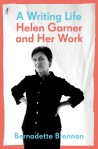
Bernadette Brennan, A writing life Helen Garner and her workEnough of the filler posts for a while! It’s time for a review, and it’s a special one because it’s for a book about one of my favourite writers, Helen Garner. The book is Bernadette Brennan’s A writing life: Helen Garner and her work. Described as a “literary portrait” rather than as a biography, it carefully and thoroughly explores her work from multiple angles, the effect of which was to confirm my overall understanding of her work while also resolving some of the gaps or misconceptions in my reading of her.

This brings me straight to the book’s fundamental assumption that knowing a writer’s life is (or can be) relevant to understanding his or her work. Brennan writes in her Introduction that she did not want to write a biography, which was just as well, as Garner did not want her to either. However, Brennan “knew” that the intersection of Garner’s “life and art made discussion of the biographical essential to understanding her work.” There are those who argue that the text is the thing – and the only thing. However, others of us believe that our reading of a text can be enhanced by other factors, that, as editor and critic Adam Kirsch has said, it is valid “to use the life to clarify the factors that shape the work — to show how life and work were both shaped by the same set of problems and drives.” What I realised while reading this book is that this can be as true for non-fiction as for fiction.

“honest, authentic” (Brennan)

I have written about Helen Garner several times on this blog, and many of those times I’ve explained that I love her writing, even though I don’t always agree with her. I love her honesty I say. Well, so do others apparently. In her Introduction, Brennan writes that:

Garner is one of the best-known and, some would say, best-loved writers in Australia. That admiration is inspired by a sense that she is honest, authentic …

And then, working chronologically, she starts the book proper with Garner’s first novel, Monkey grip. Concluding this chapter, Brennan quotes the judges who awarded Garner the National Book Council Book of the Year Award in 1978. They described her as “utterly honest in facing the dilemmas of freedom, and particularly of social and sexual freedom for women”. That was just the beginning. Garner, as we now know, continued to confront difficult issues and, as a result, to face censure, again and again, throughout her career. Brennan, to use current jargon, unpicks all this, book by book, using the texts themselves, the responses of critics, Garner’s unpublished letters and diaries, the clippings she collected, and spoken and written conversations with Garner herself and with several who know (or knew) her. It’s comprehensive.

You may be wondering at this point whether you need to have read Garner’s books to gain value from this book. Not necessarily, I’d say. I have read eight of the listed fourteen books, and found the chapters on those I haven’t read engaging despite not knowing them. However, those on the books I have read were particularly engrossing, and frequently illuminating.

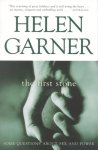
Helen Garner, The first stoneTake The first stone, for example. Subtitled “Some questions about sex and power” it explores a 1992 sexual harassment scandal at a Melbourne University college. The book was highly controversial at the time and Garner copped some ferocious criticism, particularly from feminists, for the stance she took. I was one who disagreed, strongly, with her. But, here is where my point regarding the value of knowing the author’s biography comes in. In a 50-page chapter, Brennan analyses the book in depth, exploring the circumstances of the case, Garner’s writing process, and the role played by the facts of her life in the approach she took. It was enlightening. I came away still not exactly agreeing with her, but understanding Garner’s position more. Brennan describes, among other things, Garner’s uncertainty regarding the young women, and how her own history and vulnerabilities affected her response.

Brennan starts this chapter with the statement that the “truth” surrounding the events “may never be fully known”, and follows this with the “facts” that are known. Of course, I loved this differentiation. Another significant point Brennan makes in the chapter concerns Garner’s positioning of herself in the story. The idea came from friend and publisher Hilary McPhee who, writes Brennan

suggested she insert herself as a character in into the narrative and write a book that charted the effects of each person’s statement on her own point of view. That strategy allowed her to explore the issues with which she was grappling, despite the absence of the complainant’s perspective, yet it late infuriated some commentators.

This approach would have come naturally to her, I’d say, given that all her writing has a strong autobiographical component, as she herself admits. This intrusion of her “self” has become a feature of her non-fiction writing and is part of a style of narrative non-fiction that she helped pioneer and that we now see used by younger Australian writers like Anna Krien and Chloe Hooper.

Brennan’s research into the writing of The first stone is meticulous, and is carefully documented in the end notes. Her subsequent analysis and the conclusions she draws are well-considered and make sense. She applies this technique to every chapter – to her discussions of Garner’s fiction like Monkey grip and Cosmo cosmolino, as well as to her other non-fiction works like Joe Cinque’s consolation and This house of grief. The book ends with last year’s essay collection, Everywhere I look.

“For me, particularly, it’s one book. The book of what I make of the world and my life as I have lived it.” (Garner)

Superficially, Garner’s work is diverse. She has written in almost every form you could imagine, including song lyrics, libretti, and plays as well as novels, short stories, essays and longform non-fiction. But the subject matter is much tighter – it tends to be domestic and relationship-based, but with a particular focus, because it grapples, says Brennan, with the problem of balancing “the desire for personal freedom with ethical responsibility”. Garner’s concerns are ethical and moral. She explores these values in the daily lives of ordinary people, in both her fiction and non-fiction, whether it’s a mother deserting her family (in The children’s Bach) or a father driving his car full of children into a lake (This house of grief), and she doesn’t separate herself from the issues. She shows her own failings, her own ugliness, with a breathtaking vulnerability, and brings, Brennan shows, much distress upon herself. She doesn’t, in other words, write what she writes lightly.

So, what picture does Brennan paint of Garner, the writer? It’s a complex one. It’s of a writer who has strong emotions, a fierce intellect and a commitment to seeking out the “truth”. It’s of a writer who can be hard on others, including those she knows, but who is equally hard on herself. It’s of a writer who isn’t scared to cross boundaries of form and defy expectations in order to tell the best story she can. Brennan’s approach to her topic is analytical, rather than critical. That is, she interrogates Garner’s work and mines her life for the aspects that will help us understand the work, but she doesn’t, herself, critique the work – which is probably to be expected, given the book’s title.

There is so much more that could be said about the book, so many angles from which it could be discussed, but I’ll close here by saying that this is, obviously, a book for those who want to understand Garner’s work more. But, it is also a book which makes clear the significant contribution Garner has made to Australian literature. And, in doing that, it is itself a significant book.

aww2017 badgeBernadette Brennan
A writing life: Helen Garner and her work
Melbourne: Text Publishing, 2017
334pp.
ISBN: 9781925498035

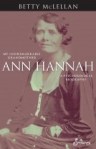
Betty McLellan, Ann Hannah, my (un)remarkable grandmother: A psychological biography (#BookReview)

BettyMcLellanAnnHannahBetty McLellan’s Ann Hannah, my (un)remarkable grandmother: A psychological biography disconcerted me at first. I’d never heard of a psychological biography (which, I presume, is the same as psychobiography) so I was intrigued by McLellan’s discussion in the Introduction of her decision to use this approach. I did feel, for a chapter or two that she was drawing a long bow, but I persevered and it was worth the effort.

McLellan commences her Introduction by telling us a little about who Ann Hannah Stickley was and why she decided to write the book. As you’ll have gathered from the title, Ann Hannah was her grandmother. Born in 1881, and emigrating to Australia with four children when she was 40, Ann Hannah was, writes McLellan, “an unremarkable woman who lived an unremarkable life and died an unremarkable death” (albeit at the, I’d say, remarkable age of 97!) However, McLellan came to realise, long after Ann Hannah had died, that this grandmother, who was already living with her family when she was born and who was still there when she left home at nineteen, was worth investigating. She sensed that her grandmother had had a “remarkable resilience” and wanted to know how she’d done it. But how was she to explore this, given her grandmother had been dead for nearly 40 years?

The problem was that she knew relatively little about this quiet, practical, hardworking woman, and that there was no one left who might have known more. So what, she questioned, “would be the best literary device to use to record her story, explore my own reactions to it and analyse it in terms of its relevance for other women?” A straight biography would not work, for the reasons already given. Consequently, she turned to this new-to-me genre of psychological biography which “seeks to discover a subject through analysis of their political pronouncements, decisions, writing, behaviour or art”. Ann Hannah, being a private, “ordinary”, person had none of those, but she did have a number of sayings – didn’t all our grandmothers? It is through these that McLellan decided to analyse Ann Hannah, “with a view to uncovering the deeper meaning behind her words” and in so doing to not only understand her grandmother more, but, among other things, “to present her as a representative of many women born in her time and circumstance”. It’s a big ask …

McLellan, a psychotherapist and feminist activist who has written other books, does this by taking each saying, explaining its meaning and how her grandmother had used it, and then exploring its wider implications or connotations. What exactly she explores is largely driven by the saying. The saying in Chapter 2, for example, is “I’m a Londoner”, and so McLellan explores – through historical and sociopolitical lenses – what life was like in the parts of London where Ann Hannah had lived until her migration to Australia in 1921.  She was uneducated, and part of “the working poor”. But, this was also the time of the women’s suffrage movement, which McLellan describes in some detail. Ann Hannah, she says, had never indicated she was aware of the “political machinations” going on around her, so in one sense we could question McLellan’s inclusion of the history here. However, McLellan concludes the chapter by saying her grandmother had lived her life as a “strong, determined woman”. It could be argued that this was in part made possible by the sociopolitical environments she found herself in.

By contrast, Chapter 4’s saying is “‘e was a wickid man” [ “wickid” being spelt that way to capture Ann Hannah’s pronunciation]. It deals with Ann Hannah’s second husband’s violence and sexual abuse of his step-daughter, as well as of Ann Hannah, herself, and one of their daughters. Here, not surprisingly, McLellan looks more at psychiatry, psychology and the law, than history and politics. She describes the lack of recourse women had during the time Ann Hannah lived, and concludes that her grandmother’s only choice, really, was to “accept her lot” and get on with it, which is exactly what she did. (Not surprisingly, Ann Hannah said it was “the ‘appiest day of my life when ‘e died”!)

These are just two of the six chapters exploring Ann Hannah’s sayings. Two others deal with the experience of migration and of the loss of a child, both of which particularly engaged my interest.

Overall, the approach makes for a somewhat disjointed book, skipping as it does around different fields of human knowledge and experience. Nonetheless, it all works reasonably well because there are unifying threads to which McLellan returns, one being Ann Hannah herself, and the other McLellan’s feminist perspective. I say “reasonably” well because there were times when, due I’m sure to lack of information, Ann Hannah seemed to slip though my fingers. I wanted, I suppose, a more traditional biography! Given that McLellan explained why she couldn’t produce that, it’s unreasonable of me to criticise the book for what it’s not, so I won’t. I’ll just say that it’s what I would have liked!

The real question is, then, does McLellan’s decision to write a psychological biography of her grandmother work? Does it provide, in other words, some useful insights into women’s lived experience, as McLellan intended? I think it does – and does so in a way that not only illuminates the past, but also contributes to our understanding of the present and why things are the way they are today. A different but interesting read.

aww2017 badgeBetty McLellan
Ann Hannah, my (un)remarkable grandmother: A psychological biography
Mission Beach: Spinifex Press, 2017
150pp.
ISBN: 9781925581287

(Review copy courtesy Spinifex Press)

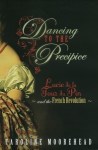
Caroline Moorehead, Dancing to the precipice (#BookReview)

Unusually, my reading group read two biographies about non-Austrian women this year, Jane Fletcher Geniesse’s book on Freya Stark (my review) in January and now, this month, Caroline Moorehead’s book Dancing to the precipice: Lucie de la Tour du Pin and the French Revolution on the French aristocrat Henriette-Lucy, Marquise de La Tour-du-Pin-Gouvernet. Interestingly, Moorehead has also written a biography of Freya Stark. Moreover, while Caroline Moorehead is an English writer, it turns out that her father was the Australian war correspondent and historian Alan Moorehead. How tangled is all this!

But now the book itself. Dancing to the precipice chronicles the life of French-born aristocrat Lucie, from her birth in 1770 to her death in 1853, a period which, you’ll realise, covers some of Europe’s and, in particular, France’s most tumultuous times. Lucie de la Tour du Pin, as Moorehead calls her, saw most of it up close and personal, but somehow managed to survive. The evocative title conveys a sense of how tenuous that survival could be. It comes from Lucie’s own words written just before the storming of the Bastille. She wrote:

Amid all these pleasures we were laughing and dancing our way to the precipice.

Lucie, Moorehead tells us, went on to say that while this blindness was pardonable among the young, it was “inexplicable in men of the world, in Ministers and above all, in the King”. She wasn’t wrong – and the rest of the book tells us how often throughout their lives they nearly went over the precipice.

Dancing to the precipice is a thorough work, thorough in its description of Lucie’s life, and thorough in the research carried out by Moorehead. The biography is footnoted (though not intrusively) and contains an extensive list of sources at the end. It is also well-indexed. All of these are important – to me, anyhow! The reason the book is able to be so thorough – without Moorehead ever needing to resort to gap-filling – is because her life is so well documented, by herself primarily.

Lucie, in fact, has been described as the Pepys of her generation because of the memoir she started writing when she was 49. Titled Journal d’une femme de 50 ans, it was published posthumously and covers her life through the Ancien Régime, the French Revolution, to the time of Napoleon, until March 1815 when he returned from exile on Elba. In her Afterword, Moorehead explains that in addition to this memoir, which apparently has never been out of print, she had access to an extensive collection of letters written by Lucie to a god-daughter and many others, and the papers and correspondence of her husband. A wealth of resources that I suspect many biographers would die for.

Except, it’s perhaps this wealth that has caused my one little criticism of what is, really, an excellent biography. My criticism, as you’ve probably guessed, concerns the amount of detail in the book. There were times when I wondered whether I really needed to know as much as she gave, for example, about the wedding of a half-sister or the love-life of her friend. In terms of social history, perhaps yes, but there were times I wanted a tighter focus, and to not be inundated with quite so much information about so many people. That said, Dancing to the precipice is a fascinating story about an astonishing period of history and an engaging and resilient woman.

There were many aspects of the book I enjoyed, starting with refreshing my old high school and university history studies in the French Revolution. As Moorehead revealed each new phase in that tortuous process by which France moved from the ancien regime to the final republic, I remembered. I loved the description of Lucie and her husband’s time as émigrés in Albany, NY, in America, and the resourceful way they fit into the life there, despite their aristocratic training. I also loved the descriptions of fashion and food in Paris, and of the salons, and the role played by women in encouraging intellectual discussion and debate. Every time the émigrés felt it was safe to return to Paris, the salons started up again (until, eventually, they didnt!) Moorehead draws a stark comparison between the engagement of women in public debate in France versus that of their English counterparts:

Englishwomen remained, to the surprise and annoyance of their French guests, firmly in their segregated and inferior places, expected to withdraw after dinner to allow the men to talk literature and politics. In England, a visitor smugly remarked, women were ‘the momentary toy of passion’, while in France they were companions ‘in the hours of reason and conversation’. As Jane Austen put it, ‘Imbecility in females is a great enhancement of their personal charms’, something that Lucie, brought up to talk intelligently, would find extraordinary. (Loc 4713)

What most retained my interest in the book, though, was Lucie herself. Always the aristocrat but also believing in the need for change, her resilience and resourcefulness in the face of blow after blow was inspiring. Besides the escapes from France and the returns, only to have to escape again, there was the loss of her children. Only one from her ten pregnancies outlived her, something Moorehead argues was extreme, even accounting for the times. Lucie was also unusual for a more positive feat, that of having a successful, loving marriage for 50 years. She and Frédéric were, it appears, true partners.

So, there was more to enjoy about the biography than to criticise, and I’m very glad I read it. I’ll conclude with a quote from the book describing Frédéric’s last days, and his statements about the importance of studying history:

He now spent much of his time in his room, reading and writing to [grandson] Hadelin, long letters mulling over his own life and urging the young man to study, to think on serious matters, to develop a taste for reflection. He should turn, he wrote, towards ‘the vast questions of humanity: there you will find true riches’. […]  It was in history, he told Hadelin, that he should seek to find ways of understanding the world, and to learn how to make his mark on it; for it was to history that ‘one must look to discover motives and judgements, the source of ideas, the proof of theories too often imaginary and vague’. Reflection, he added, was ‘the intellectual crutch on which the traveller must lean on his road to knowledge’.

It’s astonishing that this couple who, Moorehead writes, stood out “for the reckless ease with which they challenged political decisions they considered to be lacking in morality or common sense”, regardless of who was in power, survived into their old ages. It says, I suspect, something about both the respect with which they were held and their ability to judge when it was time to skedaddle. A most interesting read.

Caroline Moorehead
Dancing to the precipice: Lucie de la Tour du Pin and the French Revolution
London: Vintage, 2010
ISBN: 9781409088929 (ePub)

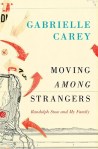
Gabrielle Carey, Moving among strangers (#BookReview)

Gabrielle Carey, Moving among strangersEmma’s guest Monday Musings post last week on Randolph Stow provided the impetus for me to finally retrieve Gabrielle Carey’s Moving among strangers: Randolph Stow and my family from my TBR pile. I’ve been wanting to read it for the longest time, but … well, those of you with big TBRs will understand.

Moving among strangers, whose title comes from a line in Stow’s novel The girl green as elderflower, is an unusual book. It’s partly a biography of Stow, and partly a memoir of Carey and her family, but Carey wouldn’t call it either. She says in her prologue:

… this book is not a biography. Neither is it a work of literary analysis or scholarly enquiry. It is more like a ‘mostly private letter’, to use Stow’s phrase, written out of curiosity, and tenderness towards a man whom I have come to think of as an almost-relative, a dear friend of my mother’s, and the ideal literary mentor.

It all started when, as her mother was dying in 2009, Carey wrote to Stow in England letting him know of her mother’s condition. It was his response, which came four days after her mother’s death, which set Carey off. She’d known there’d been a connection, of course, but she didn’t know much about it. Stow wrote that Joan’s letters from London, when he was a schoolboy and undergraduate, “were like a window on the world”. Why, Carey wondered, did her mother correspond “with a young man, an adolescent, thirteen years her junior, who wasn’t even a relation?” This question is never properly answered in the book, not because there’s something salacious to discover (in case you were wondering), but because some connections made in life don’t have explanations beyond the fact that they occur. If that makes sense.

So, as the book progresses, Carey follows a Stow trail, “like a groupie”. She interrogates his novels and other writings, and reactions to them. She reads the letters Stow wrote to members of her and his family. And she visits the places in England where Stow had lived and meets some of the people who knew him there. One of the main strands in her story concerns Stow’s unease with Australia – with his feeling rejected by Australia and/or his rejecting Australia. There is no answer to this question either, but Carey’s exploration of the issue is enlightening (particularly given all those other Australian intellectuals who left in the 1960s – some well known like Germaine Greer and Clive James, others less so like Jill Ker Conway and Ray Mathew. Each story is different but there is probably a thread that links them too?)

There are many angles, in fact, from which I could write on this engaging but slippery book. There’s Carey’s sharing of her own history – the loss of her mother, her tricky relationship with her sister, the death by suicide of her father, and so on. There’s the form of the work and how it fits into what seems to be a new breed of biography-memoirs that is popping up. And of course, there’s Stow, himself. He comes across as an elusive character, and that’s probably because he was. When she, having made connection with him, enthusiastically tries to engage him, by correspondence, in a literary discussion about his and her mutual interest in James Joyce, he shuts her down, albeit politely, explaining that he was “old and ailing” which, in fact, he was. He died the next year.

This doesn’t deter her – for which we should be grateful because although the book is not, as she forewarns us, a biography, we do, nonetheless gain insight into Stow. She paints a picture, in the end, of a man at odds with the country in which he was born though exactly why is hard to say. Did he reject Australia – with its “depressing tolerance, even worship, of the second-rate” (his words) – or did Australia reject him with its inability to understand his work. Australian critics, apparently, panned his novel Tourmaline, for example, rejecting its combination of “fable and poetry” with “realism”. A later critic, Carey says, notes that Tourmaline represented a change, a move away from “bush realism … towards something more experimental”. However, at the time, as is so often the case with innovative creators, this was not recognised and Stow’s “too truthful, too confrontational of conventional attitudes” novel was not appreciated in his own country. Stow felt the rejection.

But, Carey is wary of coming to conclusions, as she constantly reminds us. At one point, when she has questions and no answers, she tells us that given there’s no one alive to tell her “the real story”, she “can only imagine”, but a page or two later, she says

But I could be wrong. Being wrong, I realised, is how I’ve spent most of my life: misinterpreting, misunderstanding, misjudging, miscommunication. Words slip and slide, as T.S Eliot said, or as Stow put it, ‘words can’t cope’.

A strange thing for a writer to say, perhaps? And yet, perhaps not. Perhaps, it’s something only a writer could say?

You are probably getting the gist now of this unusual book – and hopefully, realising what a delightful, engrossing and stimulating read it is. It is not a long book, and is therefore not comprehensive. If you want, for example, to read about the Stow book I know best, his first Miles Franklin winner, To the islands, you won’t find it here. What you will find though is an intelligent analysis of Stow the man and of his work. You will also gain, or, at least I did, some insights into literary Australia of the mid to late twentieth century – not a list of luminaries, or even a history, but a sense of the life and times, and of how one particular writer did (or didn’t) navigate it.

Near the end, Carey returns to a theme she introduced earlier in the book, that of twinning or duality of perspectives. She concludes that, in the Essex pub where she met people who had known Stow in the latter years of his life, she found “twin versions” of him, one “content in his lifestyle, in his aloneness, who was self-sufficient and independent” and one “who was uncomfortable in his own skin, internally and perpetually in conflict over his sexuality, his nationality and his identity.”

If you are interested in Stow, in Australian literary history more broadly, and/or in Carey herself, this is a book for you.

aww2017 badgeGabrielle Carey
Moving among strangers: Randolph Stow and my family
St Lucia: UQP, 2013
232pp.
ISBN: 9780702249921