Harriet Ann Jacobs, The lover (Review)

It’s a while since I read a story from the Library of America‘s (LOA) Story of the Week program, but when I saw Harriet Ann Jacobs’ story “The lover” appear in its list of Top 10 stories from 2013 I felt it was time to rectify my tardiness – particularly with the movie, 12 Years a Slave, about to be released here. This story is, in fact, a chapter from her memoir Incidents in the life of a slave girl.

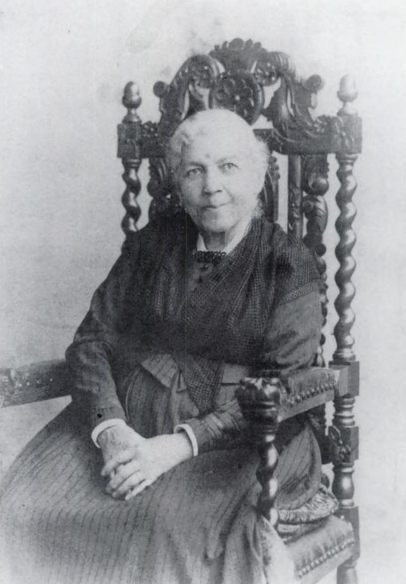
Harriet Ann Jacobs, 1894 (Presumed Public Domain, via Wikipedia)

Harriet Ann Jacobs, 1894 (Presumed Public Domain, via Wikipedia)

Last year was the bicentenary of Jacobs’ birth. Her mother died when she was 6 years old, making her an orphan-slave. Her first masters, LOA says, taught her to read and write, but that mistress died when Jacobs was 12, and she was left in the will to a 3-year-old! That brought her into “a household that introduced her to the true barbarities of slavery”. Jacobs eventually escaped to the north in 1842, when she was nearly 30 years old. Her memoir was published in 1861 by best-selling author of the time Lydia Marie Child, under the pseudonym, Linda Brent. According to LOA, the book and its author enjoyed some minor celebrity in the north at the time, but disappeared pretty quickly, probably due to its being “overwhelmed by the war and later by emancipation”.

LOA goes on to say that it was then “largely forgotten”. Most academics, they say, believed it had been written by Child, suggesting that it may have been “loosely based on Jacobs’s life but ‘too melodramatic’ … to be an actual slave narrative”. However, in 1971, historian Jean Fagan Yellin uncovered the truth of its authorship. She eventually published a biography of Jacobs in 2005, Harriet Jacobs: A life.

The chapter published by LOA as “The lover” gives us a sense of Jacobs’ feisty, resilient nature. It starts with:

Why does the slave ever love? Why allow the tendrils of the heart to twine around an object which may at any moment be wrenched away by the hand of violence? When separations come by the hand of death, the pious soul can bow in resignation, and say, “Not my will, but thine be done, O Lord?” But when the ruthless hand of man strikes the blow, regardless of the misery he causes, it is hard to be submissive. I did not reason thus when I was a young girl. Youth will be youth. I loved, and I indulged the hope that the dark clouds around me would turn out a bright thing. I forgot that in the land of my birth the shadows are too dense for light to penetrate.

I love the way this paragraph confirms that the young-in-love are the same at any time, in any place. Hopeful. Optimistic. How universal. But, how not universal was the situation Jacobs found herself in! She goes on to tell how she’d fallen in love with “a young colored carpenter; a free-born man” in her neighbourhood. She loved him “with all the ardor of a young girl’s first love”. He proposed to her and wanted to buy her from her masters.

Knowing her masters, Jacobs held out little hope for his success, but writes of how “this love-dream had been my support through many trials”. So, she enlisted a sympathetic white woman to plead her case. How nice to read that there were sympathetic white people. Of course the white woman had little to lose other than perhaps the respect and friendship of her peers. I won’t tell you the rest of the story. It’s short and is more powerful in her own words. You can read it at the link below.

A decade or so after her escape (a story in itself) to the North, and over some period of time, Jacobs wrote her book. Then, in the 1860s, she began a career as an activist newspaper journalist. She also worked as a relief worker amongst refugee slaves in Alexandria (Virginia). It was tough work – not only because of the work itself, but because Alexandria, on the border between North and South, had a largely secessionist population. The terrible conditions described by Scott Korb, associate editor of The Harriet Jacob Papers, in his articles “Harriet Jacobs’s First Assignment” and “Harriet Jacobs’s War” reminded me of Geraldine Brooks’ scenes of the Washington DC area in her novel March:

All I could notice was the blight of this place: the pigs wandering the street and dead horses bloating by the roadside … Washington is flooded by the ragged remnants of slavery, contraband cast up here to eke out what existence they may. I felt a pang for the little bootblacks, crying our for trade and going without …

So, I checked. Brooks did, it seems, draw from Jacobs’ book to create her slave character. Now I feel I should read Jacobs’ whole book.

Harriet Ann Jacobs
“The lover”
First published: As Chapter VII of her book, Incidents in the Life of a Slave Girl, 1861.
Available: Online at the Library of America

Margaret Rose Stringer, And then like my dreams (Review)

Margaret Rose Stringer, And then like my dreams

Courtesy: Fremantle Press

I was, I have to admit, predisposed to like Margaret Rose Stringer’s memoir, And then like my dreams, before I opened the cover. Fortunately, I wasn’t disappointed, but not, as it turned out, for the reason I expected. Here’s why. Margaret Rose Stringer once worked as a continuity girl in the Australian film industry and she was married to stillsman (film stills photographer), Chic (Charles) Stringer. I spent many years of my career working with film stills, and I loved it. I was therefore looking forward to hearing an insider’s story. However, the book didn’t really spend a lot of time on industry talk, but Stringer is such an engaging writer that I didn’t care because, by the time I realised it, I was fully invested in her story about the love of her life.

“The love of her life”. This could suggest something rather schmaltzy but while Stringer is totally one-eyed about CS, as she calls her late husband, this is not a schmaltzy book, not really, not despite frequent adulatory proclamations of love. Part love-story, part grief-memoir, the book works because of Stringer herself – her honesty and her writing style. I don’t make a practice of reading about grief. However, over the years I have read Isabel Allende’s Paula (1994), Joan Didion’s The year of magical thinking (2005), and Marion Halligan’s autobiographical novel, The fog garden (2001), and haven’t regretted any of them. Of course, Didion, Allende and Halligan were all established writers when they wrote about their grief, whereas Stringer was not.

But, she could have been, because this book has a fresh, lively style despite its subject matter. In fact, I did say it was only part grief-memoir: while we are told in the first chapter – one-page long and simply titled “All of it” – that she met Chic Stringer when she was 31 years old and that he died 31 years later, much of the book is about these 31 years, of which only the last couple encompassed his dying. Theirs was, it seems, the perfect love story. Stringer briefly describes her childhood, particularly her difficult relationship with her mother, then her undirected, rather wild and unsettled early adulthood in which she was dogged by anxiety, panic attacks and clinical depression. She discovered late in her much-loved father’s life that he too suffered but apparently, while he recognised that Stringer, the fourth of five daughters, was similarly afflicted, he did not have the wisdom or knowledge to effectively help her. Chic, though, did – through love, patience and tolerance. Stringer visualises their relationship as a “truth tree” with the trunk comprising the fundamental fact that:

Chic really, really wanted and needed to look after me; and I really, really wanted and needed him to do it.

My feminist self was a little taken aback by this, but it became clear that Stringer is not, as this might suggest, submissive so much as in need of love and nurturing, which Chic provides. In fact she says:

The point is that I didn’t simply go along with  everything Chic wanted, because I loved him. Nono! – I retained my behavioural traits, because they were mine and they comprised me, even if they were less than totally attractive and desirable as traits go. After all, it was me he loved – not some paragon ….

She could, she said, be stroppy and unreasonable, and he could be bossy, but they made it work. I did feel she was a little too self-deprecating, too willing to put herself down at times, but she’s so thoroughly genuine that these niggles subsided.

Most of the book is about their life together: their work, particularly in the film industry and then the video production business they established when long-sightedness forced Chic out of his career; their various homes, including the one Chic built on Dangar Island in the Hawkesbury River; and their European travels, with some lovely stories about their passion for Placido Domingo. She refers us to their site European Travels with a Spouse for further information on their trips because, as she was reminded by her advisers, she was not writing a travel diary! Chic’s dying and her subsequent grief occupies only a small proportion of the whole.

What makes this memoir especially engaging is the style. Firstly, there’s her friendly, open voice. And then there are the quirky features, one of which is the use of script form to convey key scenes. Most of the book is written in first person, as you would expect, but these script scenes are written in third person. They relieve the intensity of the book and are, in fact, a little whimsical even when the point she wants to convey is serious. It’s the reverse what of Francesca Rendle-Short did in her fictional memoir Bite your tongue which she wrote primarily in the third person, using another name for herself, but occasionally inserted some first person commentary. For her, writing in third person enabled a distancing from the emotional intensity of a story she found “hard to tell”, whereas Stringer often uses these third person scenes to make an emotional point. Or, sometimes, just to tell a funny story. Stringer also uses footnotes entertainingly; she openly discusses the advice she received about memoir writing; and she tells her story through mostly short chapters with inspired titles like “Crust (Daily)”,  “Joy”, and  the ironic “Silver Tongue” in which she discusses Chic’s dislike of her “coarse utterance”.

Stringer is, of course, particularly moving when describing her grief, from her initial denial, through the last months of caring for a terminally ill partner, to feelings of “utter confusion” and madness afterwards. Joan Didion also wrote in her memoir of the mad – aka magical – thinking that attends grief. Stringer, in her inimitable style, is more direct and writes of her “mad-soup” brain.

Late in the book, Stringer says that part of her reason for writing was “to travel all the roads and pathways and sidealleys leading to and from grief”. She has achieved that, and more, because what she has written is a sad yet humorous, and ultimately wise book about the most meaningful thing in our lives – love.

awwchallenge2014Margaret Rose Stringer
And then like my dreams: A memoir
Fremantle: Fremantle Press, 2013
323pp.
ISBN: 9781922089021

(Review copy supplied by Fremantle Press)

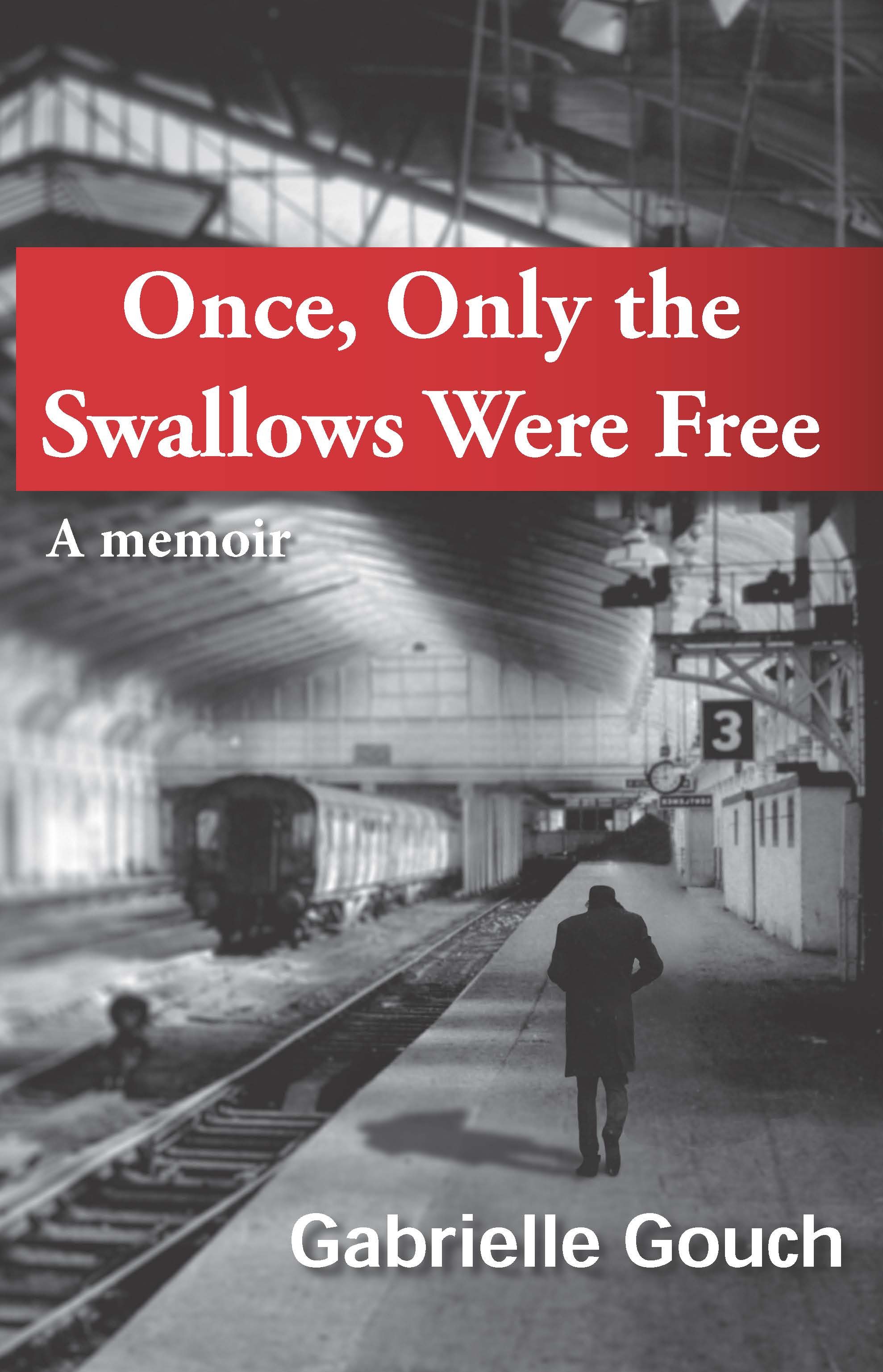
Gabrielle Gouch, Once, only the swallows were free (Review)

Gabrielle Gouch, Once, only swallows were free

Courtesy: Hybrid Publishers

Do you differentiate memoir from autobiography? I do. For me, a memoir, such as Gabrielle Gouch’s Once, only the swallows were free, deals with a specific aspect of a person’s life, such as a sportsman writing about his career when he retires from it or a person writing about her growing up, like, say, Alice Pung‘s Unpolished gem. An autobiography, on the other hand, I see as something more holistic, something written near the end of one’s life and summing up its entirety. What do you think?

Gabrielle Gouch was born in Transylvania, Romania to parents who’d both fled anti-Semitic Hungary. She moved elsewhere in Romania with her family before they emigrated to Israel, without her older half-brother, when she was around 20. A few years later, she emigrated on her own to Australia which has remained her home ever since. This is the basic chronology of her life, but Gouch is not really interested in telling us this story chronologically – and in fact, she’s not really interested in telling us the story of her life. What interests her is the brother, Tom, left behind. She wants to know about his life during and post communism in Romania. She also wants to know about the gaps in her knowledge of the family.

Gouch therefore doesn’t tell the story in a simple chronology. While she clearly signposts where you are as you read, I found it a little disconcerting to start with, until I felt familiar with the places and people she was writing about. This, however, could be due to other things going on in my life as I started this book. The memoir starts in 1990 with her first return to Transylvania after “the collapse of communism. The eternal and invincible communism”. A return that took place 25 years after she had left. As the book progresses, she visits Cluj several times, catching up with her brother, learning about her family. It’s a sad story – not surprisingly. Tom’s mother, the much beloved, vivacious Hella, died in childbirth. His – and eventually Gabrielle’s – father, Stefan, married the nanny, refugee Roza, hired in to look after the physically handicapped Tom. (As far as I can tell, his condition is hemiplegia, probably caused by the forceps birth). Roza and Stefan went on to have two children – Gabrielle and, somewhat later, Yossi – but country girl Roza was never accepted by Stefan’s well-to-do family.

The book proper starts in 1962 with the family expecting permission to migrate to Israel to arrive any minute. Of course, it doesn’t – and it is not until some 40 or so pages and three years later that they are finally able to leave. They leave without Tom, now well into his twenties, but exactly why this is so is not understood by Gouch. During the course of the book she finds out why – and she finds out what Tom’s life was like under the communist regime. It’s a very interesting story, and once you master the time shifts across the book’s seven parts, it’s a very readable one. The very short Part 2, for example, returns to the opening of the book, her return in 1990. Then Part 3 jumps to 2002 and another trip of hers “home”. From then on the focus is her time with Tom and the stories she gradually pieces together.

Gouch is a good writer. Her language is expressive, but not over-done. That is, she has some lovely turns of phrase that capture moments and people well. Here, for example, she describes her family’s reaction when her mother says something surprising:

We looked at her as if she had made her way into our home by the back door somehow, a woman we had never met before.

And I like this simple description of children:

Well, children are like shares, you never know how they will turn out.

There are two main threads in the book, one being life under communism, as experienced by Tom, and the other being the life of the emigrant, as experienced by her family. The book is enlightening for people interested in either of these topics, but I’m going to highlight the second, the emigrant’s life, because she explains it beautifully – from the tough life her parents experienced in Israel to her own experience of dislocation from culture. She writes, as she starts to reconnect with her brother:

Noone ever told me that you cannot turn physical distance into emotional one, you cannot forget your native country, you cannot give up your mother tongue. It deadens you inside.

She gives one of the best descriptions of the relationship of language to culture that I have read. She meets an old professor who had chosen to stay living under the repressive regime because, he said, “This is my native land, my language. I belong here.” She writes:

His words lingered. ‘My native land, my language.’ For most people, the sound of Hungarian is awkward; for me it is poetry and delight. When I say ‘flower’ in English I refer to a plant with petals and colours. But the word in Hungarian, virág, sounds to me melodious and joyful. Yes, you can learn to speak a language, you can even learn to think in a language but will you feel the same joy and sadness at the sound of those words? Feel the black desperation or be uplifted by hope? Will the word love evoke the same tenderness and ardour? I don’t think so.

Australian Women Writers ChallengeGouch also writes about “history”, about the impact on people of living through some of history’s trickiest times, as her family had. Her description of her father’s life – a loving father who had worked hard – is heart-rending:

A man who was a Jew but not Jewish enough, an Israeli but not quite, a Hungarian Jew among Romanians and a Jew among Hungarians. Finally he left this world with its divisive nationalisms, ideologies and religions which had marred most of his life. He was just another man on whom history had inflicted its painful and murderous pursuits: Nazism, the Second World War, the communist dictatorship, the Arab-Israeli conflict and Israeli religiosity. History had match-made him, history had controlled his life. It was over. He joined the infinite Universe.

I’ve possibly quoted too much, but Gouch’s words are powerful and worth sharing.

“Knowledge”, Gouch’s father once told her, “is your only possession”. Once, only the swallows were free is a story of discovery for Gouch, but for us, it provides a window into a particular place, time and experience that most of us know little about. The knowledge, the understanding, we gain from reading it is a precious thing.

Gabrielle Gouch
Once, only the swallows were free: A memoir
Melbourne: Hybrid Publishers, 2013
279pp.
ISBN: 9781921665998

(Review copy supplied by Hybrid Publishers)
Bill McKibben, Oil and honey (Review)

Bill McKibben, Oil and Honey

Courtesy: Black Inc

It’s coincidental, but nicely appropriate, that the World Meteorological Organisation (WMO) published its Provisional Statement on the Status of the Climate in 2013 last week, just as I was finishing US environmental activist Bill McKibben‘s latest book, Oil and honey: The education of an unlikely activist. It’s likewise coincidental that, three days before WMO’s announcement, Stefanie (of So Many Books) published a post titled Gardening for Climate Change* containing her thoughts on her garden and how climate change might affect it.

WMO’s statement says, among other things, that “During the first nine months of 2013, most of the world’s land areas had above-average temperatures, most notably in Australia, northern North America …”. As you know, I live in Australia; Bill McKibben and Stefanie live in the northern part of the USA. We are seeing (feeling) the changes, and are concerned. What I’m going to say next is pretty obvious, but I’m going to say it anyhow because I always like to start with the basics in discussions like this. There are two critical issues in the climate change debate: Is the climate changing and, if it is, Is it human-caused? It’s hard to imagine, given all the data available, that there’s anyone out there who really believes the climate is not changing, though I believe there are still some who think it’s simply a case of “climate variability”. These people think that the climate will get back to normal (some year soon, they hope). The trickier issue, however, is the causal one. Most of the deniers are not so much denying that the climate is changing, but that we are causing it. This brings me to Bill McKibben.

McKibben does not, in Oil and honey, spend time trying to prove that humans are causing climate change. For him it’s a given. Rather, he shares how he changed from being an environmentalist, who researched and wrote books, to an environmental activist who campaigns (and writes books). It’s an interesting, clearly written book about one man and his path, but can also be read as a how-to for those who want to get active.

You may now, though, be wondering about the title. Oil and honey? I’m sure there’s an ironic allusion here to the biblical “land of milk and honey” (which we are not heading towards), but there is also a literal meaning to the title. The narrative shifts pretty seamlessly between his two main passions. One is to do with bees, honey and good farming practice. The other is oil, or the fossil fuel industry, and how to stop its impact on the climate. Oil and honey, climate and farming. It’s all related.

You may also be wondering, particularly if you’re not American, who Bill McKibben is. As the blurb on the back of my edition says, he has written over a dozen books including the New York Times bestselling Eaarth and The end of nature. He also founded the environmental organisation 350.org and “was among the first to warn of the dangers of global warming”. Despite all this, he did not until recently see himself as an activist. After graduating, he worked as a journalist for The New Yorker for five years, but quit in 1987 when its long-term editor was forced out of his job. Since then he has been a freelance writer.

Oil and honey is his latest book. I’d call it part-memoir part-manifesto, because it is both the personal story of his transition to full-blown activism and the story of his passion for saving the planet. The personal aspect of the book helps make it a good read. We get to understand his thinking, we feel his anxiety about becoming not only an activist but a leader of activists, and we learn that his activist philosophy is inspired by the non-violent resistance ideas of Gandhi and Martin Luther King Jr. We see his love for nature and for working close to the land on the bee-farm he bought for his friend Kirk Webster to run. This farm functions both as respite and as a place for him to see land stewardship working.

That’s the memoir aspect. In the manifesto aspect, he shares with us the development of his ideas and strategies. We learn of various campaigns he has been involved in since 2009, including Step It Up, Keystone XL,  Do the Math. And he explains how he and his co-activists have shifted from focusing on politics and politicians – through such activities as sit-ins at the White House and lobbying politicians – to directly tackling the fossil fuel industry. He came to realise, he says, that the situation was/is becoming so dire there’s no time “for slow graceful cultural evolution”. Consequently, the last part of the book deals with the goal of encouraging educational institutions to divest their investment portfolios of fossil fuel industries. They’ve targeted educational institutions because students represent a significant percentage of climate change activists. For these students the question is simple:

are you paying for our education by investments in an industry that guarantees we won’t have a planet to make use of that learning?

I’ve only touched the surface of what this book covers. Like many books of its type, chances are that it will only be read by the converted. That’s a bit of a shame, but it’s not useless says McKibben:

You might think it’s a waste to preach to the choir, but the truth is, you need to get the choir fired up, singing loudly, all out of the same hymnal. The choir is there, but most of the time it’s just humming in the background, or singing so many tunes that no distinct harmony emerges.

So, if you’re part of the choir, this book is still for you. And if you’re not, think about joining. It could be the most important thing you do.

Bill McKibben
Oil and honey: The education of an unlikely activist
Collingwood: Black Inc, 2013
255 pp.
ISBN: 9781863956178

(Review copy supplied by Black Inc)

* Stefanie has since posted a link to a British blog called Climate Change Garden.

Dymphna Cusack, A window in the dark (Review)

Dymphna Cusack‘s A window in the dark has been glaring at me from my TBR pile for many years now. Not being able to stand it any longer, I decided to sneak it in before my next reading group book, Michelle de Kretser‘s Questions of travel. Posthumously published by the National Library of Australia, A window in the dark is Cusack’s chronicle of her teaching years, spanning 1922 to 1943.

For those who haven’t heard of her, Dymphna Cusack (1902-1981) is an Australian writer best known for her collaborative novel (with Florence James), Come in spinner (1951), and Caddie, the story of a barmaid (1953), which was made into a successful feature film in 1976. According to Debra Adelaide‘s comprehensive introduction, Cusack was not interested in writing her autobiography but, in the mid-1970s, three decades after she finished teaching, she decided to write about this part of her life. While much has changed since 1975/6 when she wrote it (let alone 1944 where the story ends), A window in the dark – “my job was opening a window in the dark for the minds entrusted me” – is an interesting read. It is not, though, a typical writer’s memoir; its focus really is teaching and education.

The book is well produced with an excellent introduction and explanation of its genesis by Debra Adelaide (though I would have loved an index). It was prepared from the version included with her papers held by the National Library of Australia. This version is probably the final draft, but Adelaide believes that Cusack would have done more work on it, had it found a publisher. Certainly, it does have some rough edges, but not enough to spoil the content nor to prevent our getting some sense of Cusack as a person, as a writer, and of course as a teacher.

Cusack tells the story of her years as a teacher chronologically, starting with university and her decision to accept a bonded Teachers College Scholarship. However, a number of themes run through the book and I’m going to frame the rest of this post through some of them.

Format: Photograph Notes: Dymphna Cusack (1902...“The sum total of my years of teaching in Broken Hill and Goulburn was the conviction that the high school curriculum was insane”

Cusack decided very early in her career that the curriculum she was required to teach was unsuitable for all but the minority who planned to go on to university. She rails, in particular, against the teaching of ancient languages (Latin) and against the focus on British history and English (as in from England) literature (both only to the end of the nineteenth century, what’s more). She criticises educational practice which relied heavily on examinations and argues against dependence on IQ assessment for identifying capable students. She is disgusted by corporal punishment. She does become a bit repetitive, as she moves from school to school, but that simply reinforces her passion for relevant education and humane methods. Being personally interested in local and contemporary history, she’s distressed that students weren’t taught about their own places. Students in Broken Hill were taught nothing about that city’s origins, nor its geology and botany. Students in Parkes learnt nothing about William Farrer and his pioneering work with wheat. And so on … Students learnt, well, I’ll let her tell you:

It was the same in every country town I lived in. An essential part of our history was ignored, whether massacres of whites by blacks or blacks by whites, while we got bogged down in the Hundred Years’ War or the Thirty Years’ War or the Seven Years’ War – all taught with no reference whatever to the basic economic causes underlying them.

She was happiest when, for various reasons, she was given non-examination classes to teach. Then she could teach what she thought was useful. A playwright herself, she was renowned for her drama classes, and the school plays she produced.

“I look so middle-class; it’s my nose”

Despite her ongoing frustrations (not to mention chronic health issues), she had, you can see from this quote, a sense of humour. Cusack belonged to that wonderful cohort of left-leaning writers in early to mid-twentieth century Australia, a cohort which included Miles Franklin (with whom she collaborated on books), Flora Eldershaw and Frank Dalby Davison.  She had a finely honed moral and social conscience, and was acutely aware of injustice. She was not above using her “middle-class” look to get a hearing on issues important to her. She was distressed that Australia, which, by the 1850s was

politically and socially the most advanced country in the world … should by the middle twenties be bogged down into a morass of social and sectarian bigotry and educational conservatism.

Cusack became convinced of the “wickedness of our economic system”, which could not fund milk for children of unemployed parents but could, somehow, find the “money for everything for war”. She abhorred the power those with money had over others. She became unpopular with the Department of Education for her outspokenness on social and economic justice issues, and was particularly critical of the treatment of “that much-maligned creature, the woman teacher”.

“What we want is the warmth, the humanity, the feeling for Newcastle that is inherent in everything you write about …”

So said BHP’s Newcastle manager Keith Butler to Cusack in 1943 as he offered to pay for a novel about Newcastle and the steelworks. Not surprisingly, Cusack would have none of it. She did, however, write her novel, titled Southern steel (1953), and it was, apparently, a positive portrayal. Cusack wrote throughout her teaching career – mostly plays, many of which were performed on the ABC but only some of which have ever been published. She tackled tricky-for-her-times issues such as racism, workers conditions’ and war. Her second novel, Jungfrau (1936), which explored young women, their sexuality and abortion, was runner-up in the Bulletin’s S. H. Prior memorial prize. It was shocking for its time.

“… I found in my teaching life teachers are sublime optimists – why, I never knew.”

And yet, she must have known, for she stuck to teaching through years of ill-health and poor treatment by those in power. She did it, partly of course to support herself, but partly too because she loved her students. She was still receiving thankyou letters from them in her last years. That surely says something.

Australian Women Writers ChallengeWhy, though, read a book written in the mid-1970s about education in the 1920s-40s? It is not, after all, a memoir, so there are gaps in the story of her life – particularly in terms of her significant relationships. And while she mentions some of the plays and novels she wrote during the time, she does this mostly in relation to something happening in her teaching life. Moreover, it’s not particularly interesting in terms of form. That is, she doesn’t play, as some writers do when writing non-fiction, with narrative style or voice or perspective. Yet, there are reasons for reading it. It works as social history and a history of education. It provides insight into the development of her political philosophy and social values. It shows off her skills as a writer, particularly her ability to evoke people and place. And, for all its seriousness, it contains many entertaining anecdotes.

I’m so glad I finally read what turned out to be a fascinating book about (and by) a compassionate, funny and feisty woman whose intelligence is displayed on every page. Would that every child had teachers like this.

Dymphna Cusack
A window in the dark
Canberra: National Library of Australia, 1991
175pp.
ISBN: 9780642105141

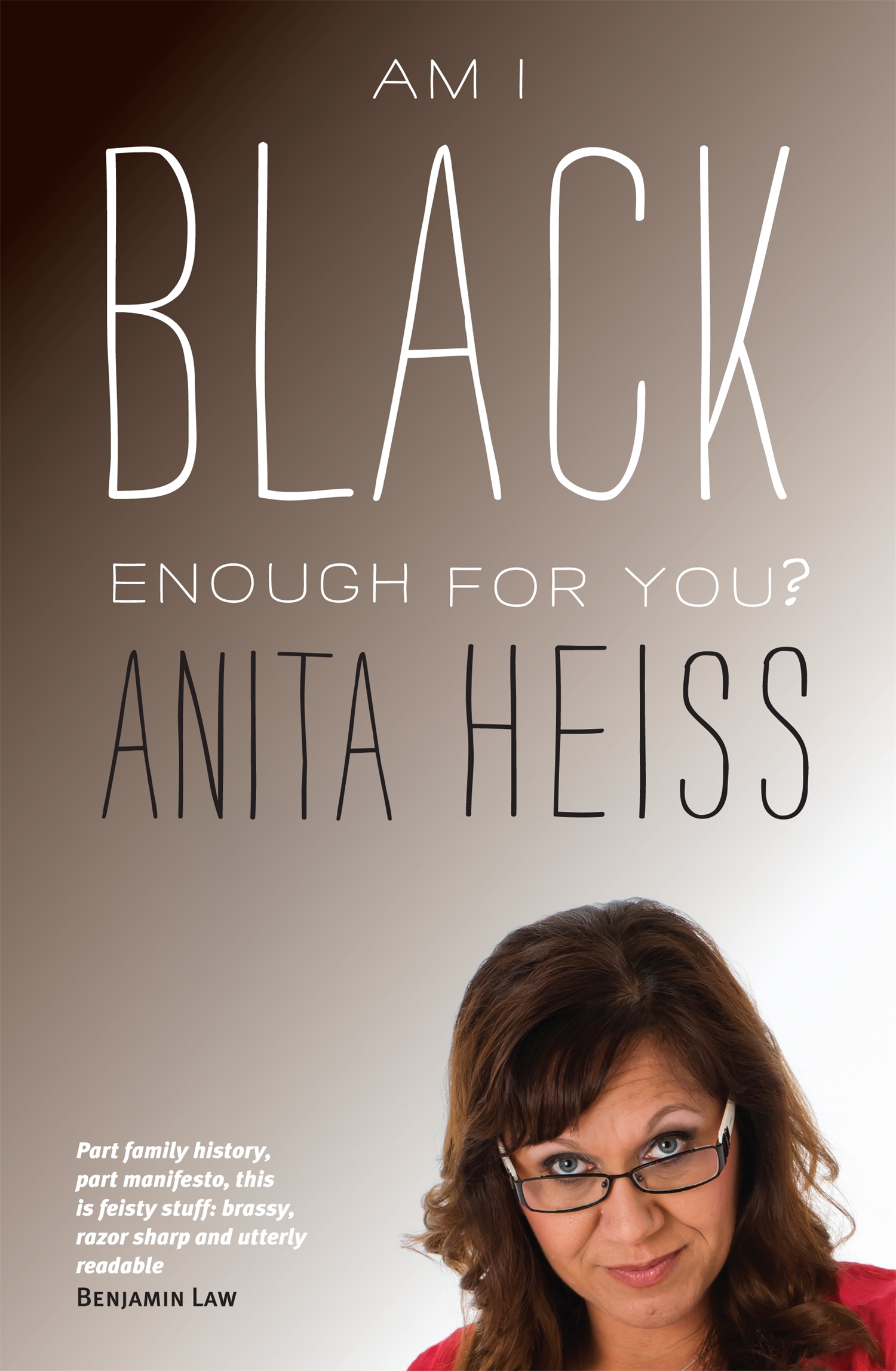
Anita Heiss, Am I black enough for you (Review)

Anita Heiss, Am I black enough for you?

Courtesy: Random House

Anita Heiss‘s Am I black enough for you? is a challenge to categorise, so I’ll start with writer Benjamin Law‘s description on the cover of my edition. He calls it “part family history, part manifesto” to which I’d add “part memoir” because “family history” does not really cover the self-description aspect of the book.

For those of you who don’t know Anita Heiss, she is a Wiradjuri woman and an activist for indigenous Australians. She has a PhD in Communication and Media, focusing on Aboriginal literature and publishing, and is a writer. (I reviewed her chicklit novel, Paris dreaming, earlier this year, and reported last year on her address to the inaugural Canberra Readers’ Festival.) She co-edited the Macquarie PEN anthology of Aboriginal literature and was the guiding force behind BlackWords (the subject of this week’s Monday Musings). And this is just the start … she has been, or is currently, on many boards and committees, particularly to do with indigenous people and communications. She is an Ambassador for the Indigenous Literacy Foundation. She is, in effect, a tall poppy … which brings me to Am I black enough for you?

You see, in 2009, one of Australia’s influential shock jocks, Andrew Bolt, wrote a post titled “It’s so hip to be black” on his blog, asking readers to accept his proposition that there is “a whole new fashion in academia, the arts and professional activism to identify as Aboriginal”. He named many people, including Anita Heiss, calling them “white” or “political” Aborigines. His facts were questionable and his language emotive – such as “madness”, “trivial inflections of race”, “comic”. His argument was that these “white” Aborigines were obtaining unfair benefits from their decision to “be black”. The result was a court case brought by Anita Heiss and eight others against Bolt and his employer, The Herald and Weekly Times, for breaching the Racial Discrimination Act. Heiss and her co-defendants won the case. They did not seek damages. It was ground-breaking stuff that brought out some good discussion about the nexus between racism and free speech, about rights and responsibilities, but it also generated a lot of vituperative commentary. You can research all this pretty easily on the ‘net.

This is the background to Am I black enough for you? which, you might now have gathered, could also be described as an “identity memoir”. On the publisher’s website, Heiss writes that “I wanted to demonstrate that we as Aboriginal people have our own forms of self-identification and self-representation”. She wanted to “challenge the stereotypes” and present “alternative realities of being Aboriginal today”. This she does very well.

Heiss opens the book with her family background, Wiradjuri mother and immigrant Austrian father. She describes herself:

I’m an urban beachside Blackfella, a concrete Koori with Westfield Dreaming, and I apologise to no-one.

This is my story: it is a story about not being from the desert, not speaking my traditional language and not wearing ochre …

In the first four chapters of the book, she tells of her background – her grandmother and mother and their experiences as indigenous women, her father and his values, and her school days. Having laid that foundation, she presents in the fifth chapter, the current working definition of an Aboriginal or Torres Strait Islander person used by the Federal Government:

An Aboriginal or Torres Strait Islander is a person of Aboriginal or Torres Strait Islander descent who identifies as an Aboriginal or Torres Strait Islander and is accepted as such by the community in which he “or she” lives.

That seems pretty tight to me, though no definition is perfect. It’s better than using “a caste system defined by blood quantum (half-caste … quadroon)”.

There are a lot of “ah-so” moments for me in the book – some confirming things I’d already believed and some raising my consciousness about how easy it is to say the wrong thing without being aware of it. Heiss chronicles many instances where (mostly, I think) well-meaning whitefellas seem to get it wrong, such as the non-indigenous academics who proclaim themselves experts in “everything Aboriginal” or the critic who argued that Aboriginal literature “must” be in traditional language otherwise it’s Australian literature. It’s good to have these ideas aired publicly. It helps us test our own conceptions.

Am I black enough for you? has, like most of Heiss’s writing, a strong political and educational purpose. She is on a mission to encourage both indigenous and non-indigenous Australians to think about indigenous identity and, further, about how we relate to each other. She therefore writes in a bright, breezy, accessible style. She’s acutely aware of the power of words and language to define and to obfuscate (though she wouldn’t use such an obfuscatory word!), and frequently discusses language in the book. She makes a particular point about this in the chapter on her academic life, “Epista-what?”, when she says that using academic language, particularly to discuss indigenous issues, served “largely to alienate the very people it was talking about.”

There is much more in this book, and I hope many Australians read it. It’s well-structured, more or less chronologically but in a way that aligns with various themes – academia, the role of literature, her writing, gender – all of which link back to affirming indigenous people’s identity. She comes across as a generous woman – in her relationships with indigenous and non-indigenous people alike. She believes that optimism, rather than negativity and anger, is more likely to get results. It is possibly this optimism which underlies my small frustration with the book: several times she hints at dark times and stresses but, being the optimist, she focuses more on her strategies for overcoming them than on how they have informed her being. I’d like to understand more of that. However, Am I black enough for you? is not a misery memoir, and that’s probably a good thing!

Australian Women Writers ChallengeRead for the Australian Women Writers’ Challenge 2013ANZLitLovers Indigenous Writers Week, and Global Women of Color. Lisa (ANZLitLovers) and Marilyn (Me, You and Books) both enjoyed the book.

Anita Heiss
Am I black enough for you?
Sydney: Bantam, 2012
346pp.
ISBN: 9781742751924

Izzeldin Abuelaish, I shall not hate (Review)

Revenge is a concept that I just don’t get. No, let me put that another way. I understand the emotions that give rise to the desire for revenge – though I’ve never, admittedly, been tested myself, not like, say, Izzeldin Abuelaish. What I don’t understand is the belief that revenge is the answer, that it will make something (whatever that thing is) better. I’ve never seen it do so. In fact, what it seems to do is make things worse. And so, I admire Abuelaish’s stance in his book, I shall not hate, because if anyone has been tested, he has.

Dr. Abuelaish & Rabbi David

Dr. Abuelaish & Rabbi David, Oct 2009 (Photo credit: achituv, using CC-BY-SA 2.0)

For those of you who don’t know his story, Abuelaish was born in the Jabalia Refugee Camp in the Gaza Strip in 1955. Through hard work and persistence, the encouragement of several teachers, and the support of his mother, he became a doctor, eventually specialising in gynaecology and obstetrics, and becoming an infertility expert. This, though, is not what the book is about. It’s about his ability to rise above horrific personal tragedy – the killing of three of his daughters by Israeli Defence Force (IDF) shells in January 2009 during a 23 day attack on Gaza* – and his decision:

I had two options to choose from: I could take the path of darkness or the path of light.

He chose the path of light, because, as he writes:

I believe in co-existence, not endless cycles of revenge and retribution. And possibly the hidden truth about Gaza can only sink in when it is conveyed by someone who does not hate.

Though making this choice – towards light – was clearly a conscious act, we readers aren’t surprised because we’ve seen him making this same choice throughout the book despite, as he says, being “tested by brutal circumstances the whole of my life, as have many people in Gaza”.

The book chronicles his life from birth to the tragedy – and then his response. He tells about his family’s leaving their farm (which was subsequently taken over by Ariel Sharon!) to join the refugees in Jabalia, and their lives in the camp. He describes the struggle to survive – under grinding poverty that’s rather reminiscent of Frank McCourt’s in Angela’s ashes. He understands how poverty and long-standing oppression lead to acts of violence. As a young boy, he saw education could provide a way out but writes of how without the encouragement of teachers he could well have given up in order to work to help support his parents and siblings. And, he describes his early experiences with Israelis, including working on an Israeli farm during a school vacation, and their joint recognition that they had more similarities than differences.

More alike than different. That’s one of the threads of his story. Another is his belief – and this, again, is a belief he has chosen – that good can come of bad. That’s how he has survived and will, presumably, always survive the setbacks that confront him. One of the lessons of the book is, I think, this one of choice – it is within us all to choose light over dark, hope over desperation. A cynical reader could see Abuelaish as naive except, and this is a big except, he has walked the talk. Not only did he experience the violent (I can’t begin to describe what he saw in his daughter’s bedroom minutes after the attack) deaths of his daughters but throughout his life he has faced immense obstacles to get where he’s got and to maintain his generous positive philosophy. Just reading his descriptions of getting in and out of Gaza – such as he did on a regular basis to work in an Israeli hospital – has made me decide that I will never again complain about being held up a few minutes at an airport for a random security check!

This is not literary fiction, but the story is so compelling it rises above the plain prose. If I had any criticism it would be that it gets a little repetitive at times – but then, I get the sense that life is pretty repetitive in Gaza! He tells his story chronologically, with the odd out-of-sequence digression to make a point. And, there is the rare use of medical imagery to convey an idea. He describes hate as a chronic disease and says:

I am a physician, and as a consequence I see things most clearly in medical terms. I am arguing that we need an immunisation program, one that injects people with respect, dignity, and equality, one that inoculates them against hatred.

It might sound like most of the book is just about talk, but Abuelaish is about more than that. He recognises that action is needed. This action can be as simple as bringing people together so they can share their experiences, find commonalities and learn to trust again. Trust in the Middle East is, he says, “gasping for air”. But, the point I really like is his argument that empowering women, changing their status and role, is a critical part of the solution. Girls need to be properly educated and women’s values need to be better “represented through leadership at all levels of society”. The impediments to achieving this are both financial and cultural, and he has established a foundation titled Daughters for Life to work towards this aim. “Investing in women and girls”, he writes, “is a way out of poverty and conflict”.

When the going gets tough, the tough get going … and Abuelaish is one tough, in the best senses of the word, guy. This is a book I won’t be forgetting in a hurry.

Izzeldin Abuelaish
I will not hate: A Gaza doctor’s journey on the road to peace and human dignity
London: Bloomsbury, 2010
237pp.
ISBN: 9781408814147

* This is not a spoiler. If you don’t come to the book already knowing the basic story, you will know it from the back page and from the foreword and opening chapters.

Francesca Rendle-Short, Bite your tongue (Review)

Francesa Rendle-Short book cover Bite your tongue

Bite your tongue Bookcover (Courtesy: Spinifex Press)

How much do you think about the first sentence of your review? Like me, you probably try to find some anchor or point of interest to lead off from, but my problem with novelist-journalist Francesca Rendle-Short‘s fiction-cum-memoir, Bite your tongue, is that I have too many angles to choose from. Which one do I use? Do I go with the unusual form of this fiction-cum-memoir? Do I talk about my old friend synchronicity and how one of my first reviews in 2011 was a (semi)autobiographical novel about an Australian childhood, Barbara Hanrahan‘s The scent of eucalyptus? Or, do I talk about how I’m sure Spinifex Press had no idea how close to my heart this book would be when they offered it for review – how I (more or less) share a late 1950s/early 60s Brisbane childhood with Rendle-Short and how the very word “spinifex” is nostalgic for me due to my mid-1960s years in the mining town of Mount Isa? There, I’ve covered them all … so now I can get on with the review!

This is a mother-daughter story. How many of those have you read? I’ve certainly read a few in the last decade or so, including straight memoirs (such as Jill Ker Conway‘s The road from Coorain) and thinly veiled fictional pieces (such as Kate JenningsSnake). These books can be challenging for daughters to write, particularly when there is significant pain involved. Rendle-Short’s solution is to (mostly) tell from a “fictional” standpoint. She creates names for the family, including MotherJoy for the mother, Glory for herself, Gracie for her nearest and youngest sister, and Onward for her father. The last-name she devises for this family is Solider, which is an anagram of “soldier”. With the father being Onward, and the family being devoutly Christian, the hymn “Onward Christian Soldiers” must surely have inspired her naming. Rendle-Short writes, in the introduction, about how she chose to tell the story:

Some stories are hard to tell, they bite back. To write this one, I’ve had to come at it obliquely, give myself over to the writing with my face half-turned; give my story to someone else to tell. My chosen hero is a girl named Glory …

Australian Literature Month Platypus logo

Reading Matters’ Australian Literature Month

Why is this story so hard to tell? Well, Glory’s (Rendle-Short’s) mother was “a morals crusader, an ‘anti-smut’ campaigner. An activist. She was on a mission from God to save the children of Queensland” (from the Prologue). This mission involved banning “lewd” and “pornographic” books (of which 100 are listed at the back of the book in “Dr Joy’s Death List: Burn a Book a Day”). Clearly Rendle-Short (aka Glory), the fifth of six children (all girls in the book, five girls and a boy in reality), had a painful childhood. It’s not that she and her siblings weren’t loved – they clearly were – but it was a hard love, a love based too much on a narrow Christian ideology and too little, it seems, on the needs of children. One of the most painful scenes in the book is when Glory visits her mother in hospital after heart surgery and wants to kiss her but can’t bring herself to do so! Can’t kiss her old mother! That shows more than words ever could the pain in this relationship.

The book pretty well covers the story from Glory’s birth to MotherJoy’s death in her 80s, though it focuses primarily on Glory’s school years. There are 100 chapters in less than 250 pages. Most of these chapters are told third person, from Glory’s point of view. What makes this book particularly interesting form-wise, though, is that 14 chapters are written in first person, memoir-style. That is, Francesca speaks of herself and her mother, Angel, using their real names. In these scattered first person chapters, Francesca writes on her research, on how she pieced together her mother’s story through, for example, research at the National Library of Australia and the National Archives of Australia. She also occasionally comments on where the “fact” diverges from the “fiction” such as:

Unlike Glory, I wasn’t in Brisbane when my mother died, I was at home in Canberra where I was living at the time – because there was a scene. There was always a scene with Angel, especially where her children were concerned, the ‘jewels in her crown’, and on her deathbed it was no different. All six children had been at her bedside while she was dying …

And then, without describing exactly what happened, she tells us that, despite all of them having made the effort to get there, including from overseas, “seven days before she took her last breath, all six of us walked out on her. We had to do it …”.

Australian Women Writers Challenge 2012 Badge

Australian Women Writers Challenge (Design: Book’dout – Shelleyrae)

Now, if you are a reader who likes closure, who wants to know exactly what happened, you are not going to get it in this book, not specifically anyhow, but you will, if you read the clues, know what life was like in that family, at least what it was like for Glory/Francesca. You will know that she loved her mother, and wanted her mother’s approval, but that she had other attitudes and other feelings that were clearly not in accord with her mother’s. We are given enough “scenes” involving her mother (directly or indirectly) to tell us all we need to know. A particularly excruciating example is when Glory is cruelly bullied by her school “peers” (one can’t say  “mates” in the context) because of her mother’s views. (Where her father, an academic in pediatrics and a creationist, stood in all this is unclear. He’s there in the book, but we see little active parenting from him.)

Oh dear, I have so much to say on this book that I could easily turn this post into an essay, so I will finish here. I thoroughly enjoyed this book … on multiple levels. The writing is good, comprising many of the things that appeal to me – wordplay, lovely rhythm, effective imagery (such as the “tongue” motif). The story is easy to follow, despite changes in voice and chronology (as we flip backwards and forwards from childhood to MotherJoy/Angel’s old age). There are universals about love and forgiveness (real and wished for) between parents and children. And, there is love for books (in all their glory!):

Books show us how to love, really love body to body between the pages. Love perhaps where we’ve never loved before. That’s what Glory hopes.

Reading changes things …

… as, I suspect for Rendle-Short, does writing!

Francesa Rendle-Short
Bite your tongue
North Melbourne: Spinifex Press, 2011
246pp.
ISBN: 9781876756963

(Review copy supplied by Spinifex Press.)

Review to count towards the Australian Women Writers 2012 Reading and Reviewing Challenge.

Alice Pung, Her father’s daughter

Pung Her Fathers Daughter Black Inc

Bookcover for Pung's Her father's daughter (Courtesy: Black Inc)

Her father’s daughter (2011) is Alice Pung‘s second memoir – if you can quite call this book a memoir. Unpolished gem (2006), her first, established Pung in the eyes of both critics and readers as a writer to watch. I agreed with them, but with some minor reservations. She certainly demonstrated the ability to write and tell stories – plenty well enough for me to be happy to read more of her – but, it was a young person’s memoir about a family that had experienced things (such as the Pol Pot regime) that most of us couldn’t imagine. And Pung, born in Australia, didn’t seem to quite have the maturity then to fully appreciate this fact in the way she wrote of her family. Five years, though, have made the difference and I would happily apply my favourite Marion Halligan quote to this book:

Read a wise book, and lay its balm on your soul.

Because, this book is the whole package.

The first thing that stands out is the voice. The book is, in a way, a hybrid, a memoir-cum-biography, and Pung has chosen to write it in third person. This decision reminded me of Kate Holden’s The romantic: Italian nights and days in which she too chose third person to tell her story. But, these are very different stories, and the reason for using third person reflects the difference rather than suggesting a similarity. The difference is that this is not just Alice’s story as Unpolished gem was, but also her father’s story. It is Alice’s attempt to understand the things that clearly frustrated her in Unpolished gem, such as the over-protectiveness of her parents. In this book, her father has a voice. In fact, the book’s chapters see-saw between those labelled “Father” and “Daughter”, so that it reads almost like a conversation.

This conversation style is one part of the narrative structure. Another is the movement in geographic setting from Alice’s time in China, to her return to Melbourne, to her father’s life in Cambodia and then her much later visit to Cambodia with her father, and finally back in Melbourne again. This geographic movement is overlaid with the third significant aspect of the structure, its chronology. The book moves back in time from the present, from when Pung’s family is well-established in Australia with a successful business, with, that is, the life Pung wrote about in her first memoir. At the beginning of this book, Pung, in her late 20s, goes overseas for the first time and her father, as is his wont, is fearful:

It panics him whenever any of his children are far away.

He can’t understand why she must go away to write. After all, she can see these other places on Google Maps, so

why couldn’t she just see the world through these satellite pictures. It was safer.

Alice, being Australian-born, doesn’t understand the full extent of his fears but, as she writes the book, she learns why her father believes that

To live a happy life … you need a healthy short-term memory, a slate that can be wiped clean every morning.

We’ve all read and/or seen about the killing fields of Cambodia so I’m not going to detail here her father’s story of survival through one of the world’s terrible genocides. I will say, though, that for someone looking from the outside (me, the reader), Pung seems to have captured her father’s story authentically and conveys it in a way that we can understand why he expresses his love for his family in the fearful and sometimes controlling way he does. The result is a greater understanding from daughter to father, and, if Pung has got it right, from father to daughter too.

There are some lovely touches in the book about the business of writing memoir. Pung refers briefly to her parents’ reactions to Unpolished gem. Her father is proud but says that if he’d seen it pre-publication “there would have been parts we wouldn’t have let her include”. Pung continues:

She waited for more reproaches, even excoriation. It seemed impossible that this would be the extent of it, but it was. She started to see her mother and father in a new light. They had a sense of humour! They knew their private lives were completely separate from the world their daughter had described in another language.

Then, on different tack, comes this one, late in the book, on the writing of Her father’s daughter:

‘Do you think [says her dad] there’s too much suffering in the Cambodian part? Maybe white people don’t want to read about too much suffering. It depresses them.’

Ouch! There are a few ways to think about this one. Anyhow, Pung’s reaction is:

She didn’t know what to say about that. She knew exactly what he meant though. Her first book had been filled with the sort of sardonic wit that came easily to a person whose sole purpose in life was to finish university and find her first graduate position, knowing she was well on the way to becoming comfortably middle-class …

She decides that the time has come to look back and confront this part of her/their identity that her father had wanted to hide but that had heavily affected his parenting … In fact, it was around this point that I started to realise that my uncertainty about Unpolished gem might be more due to her father’s desire for “dismemory”, that is, to deliberately forget, than to her youthfulness. And the astonishing thing is, through all the description of people who did unimaginable things to other people, of people who suffered horrendously, of people who’d “lost their minds and did not bother to retrieve them”, the overriding emotion she conveys is that of love:

There’s no vocabulary
For love within a family, love that’s lived in
But not looked at …
(Epilogue, quoted from TS Eliot‘s “The elder statesman”)

 This is a fine, fine book and I’d recommend it to anyone – for its story, its writing and its humanity.

Alice Pung
Her father’s daughter
Collingwood: Black Inc, 2011
238pp.
ISBN: 9781863955423

(Review copy supplied by Black Inc)

Elizabeth Jolley, Diary of a weekend farmer

Elizabeth Jolley's Diary of a weekend farmer

Bookcover (Image courtesy Fremantle Arts Centre Press)

I took 2 valium and went to bed early (Monday 12th October, 1970)

Elizabeth Jolley’s Diary of a weekend farmer is one quirky memoir (if you can call it that). And yet it is, really, exactly what you might expect from a writer who rarely wrote the expected!

It is a slim volume – illustrated with warm, shimmery paintings by West Australian artist, Evelyn Kotai. The diary entries were written by Jolley at irregular intervals from 1970 to 1974 (probably), and are accompanied by poems by Jolley, plus the occasional contribution from her husband Leonard and daughter Ruth. Some of the entries are reflective

… being on this piece of land makes me feel very much aware of the shortness of life, I mean our human life in comparison with the land and the big old trees. (from Monday 6th [September, 1971] continued)

while others are factual

Ruth and I tried to plant tomatoes ground too dry and hard. (from 10th November 1970)

As you can see, little care (or perhaps a lot of care – how are we to know?) is taken with punctuation.

Jolley’s trademark wry, or even wicked, comments are in evidence

Next door’s place has been well cleared and conquered I think the word should be … (from 11th November 1970)

There is, in fact, a tiny plot running through the book and it has to do with the “neighbour woman”. She appears regularly as a rather ambiguous presence who doesn’t respect Elizabeth and her city-slicking family, and their farming endeavours, but offers some useful advice at times. Much of this “plot” is carried though a poem (“Neighbour Woman on the Fencing Wire”) which continues in sections throughout the book:

I suppose you didn’t notice last Sunday evening
you left your rake and mattock out …
(from “Continuation from the Fencing Wire”)

This woman is a little thorn in Jolley’s side – always pointing our her failings – and yet at the end, Jolley’s underlying compassion becomes evident as she writes of the “neighbour woman’s death” and her husband’s grief:

… and I understood I was face to face with someone who really loved the neighbour woman and that he would never get over something that is brushed aside in the word bereavement. (from No date required)

But, what this little volume particularly shows is her love of the land – along with her recognition of its challenges. Here’s one example:

Is it an alien place resisting or is it retreating from all our human endeavour. And then the doves fly up glowing in the rising sun and the sound from their wings is like a tiny clapping. (from Monday 25th February, 1973).

There is a very Jolley-esque tension here between an almost mystical beauty and a power that is not always benign.

And here is a reference to gums and their widow-making capability:

The wind moves the trees great branches fall
In the wind or in the stillness
A few feet nearer and I should have been crushed
Into the greater stillness.
(from “Great Branches Fall”)

These diary entries were made before her first book, Five acre virgin, and other stories, was published in 1976, though she’d had individual short  stories published from the 1960s on. When I read memoirs by writers, I look (of course) for references to writing. There is not much here, though. Besides the mention of something her husband said as being “a very good 1st sentence”, the main reference to her writing is this:

I finished the story “Pear Tree Dance” for the BBC, an idyllic ending! The newspaper of Claremont Street contains the grim and sinister side of things. (from 19th August 1971)

She’s right about that. Newspaper is one of my favourites of hers but it is rather grim. It was not published until 1981 … and is about a woman who wanted her own piece of land. I think I’ll leave it here – and let you ponder that idea!

Elizabeth Jolley
Diary of a weekend farmer
South Fremantle: Fremantle Arts Centre Press, 1993
ISBN: 1863680438
95pp