Margaret Atwood, Negotiating with the dead: A writer on writing (#BookReview)

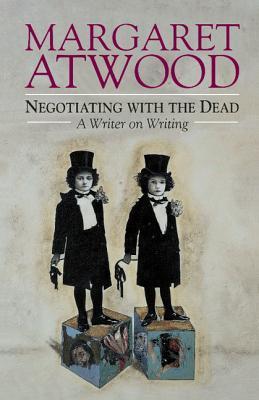
My reading for Buried in Print Marcie’s annual MARM month has been both sporadic and minimal, to say the least, but this year I finally got to read a book that has been on my TBR shelves for a long time and that I have planned to read over the last few MARMs. It’s Atwood’s treatise (or manifesto or just plain ponderings) on writing, Negotiating with the dead. Interestingly, in 2003 it won the Independent Publisher Book Award (IPPY) for Autobiography/Memoir. I hadn’t quite thought of it that way, though on reflection I can see it does have a strong element of memoir.

Its origins, however, are not in memoir but in the series of lectures she delivered at the University of Cambridge in 2000, the Empson Lectures, which commemorate literary critic, William Empson. (I recently – and sadly – downsized his most famous book, Seven types of ambiguity, out of my library). Atwood turned those lectures into this set of essays that was published by Cambridge University Press in 2002 (and that I leapt on when I saw it remaindered in 2010).

Subtitled “A writer on writing”, this book is probably not quite what most of us would expect, unless we really know Atwood. As she says in her Introduction, it is not so much about writing as about something more abstract, more existential even, about what is writing, who is the writer, and what are the writer’s relationships with writing, with the reader, with other writers, and with themself. It’s also about the relationship between writing and other art forms, like painting and composing. She says in her Introduction that “it’s about the position the writer find himself in; or herself, which is always a little different”. (Love the little gender reference here.) It’s about what exactly is the writer “up to, why and for whom?”

I rarely do this, but I’m sharing the table of contents for the flavour it gives:

  • Introduction: Into the labyrinth
  • Prologue
  • Orientation: Who do you think you are? What is “a writer,” and how did I become one?
  • Duplicity: The jekyll hand, the hyde hand, and the slippery double Why there are always two?
  • Dedication: The Great God Pen Apollo vs. Mammon: at whose altar should the writer worship?
  • Temptation: Prospero, the Wizard of Oz, Mephisto & Co. Who waves the wand, pulls the strings, or signs the Devil’s book?
  • Communion: Nobody to Nobody The eternal triangle: the writer, the reader, and the book as go-between
  • Descent: Negotiating with the dead Who makes the trip to the Underworld, and why?

There is way too much in the book for me to comment on, but I don’t want to do a general overview either, so I’m just going to share a couple of the ideas that interested me.

One of her main threads concerns “duality” and “doubleness” in writers’ lives. There’s a fundamental duality for a writer – a novelist anyhow – between “the real and the imagined”. She suggests that an inability to distinguish between the two may have had something to do with why she became a writer. This interested me, but it’s not what interested me most in this book. Rather, it was the idea of the writer’s “doubleness”, which she introduces in chapter 2, “Duplicity”, the idea that there is the person who writes and the other person who lives life (walking the dog, eating bran “as a sensible precaution”, and so on). She explains it this way:

All writers are double, for the simple reason that you can never actually meet the author of the book you have just read. Too much time has elapsed between composition and publication, and the person who wrote the book is now a different person.

It’s obvious, of course, but we don’t often think about it. Writers do, though. Take Sofie Laguna, for example. In the recent conversation I attended, she said she wished she’d kept a diary when she was writing her novel to capture the “dance” she’d had between the conscious and the subconscious as she worked through the issues she was confronting. In other words, the Sofie in front of us was not the Sofie who had written that book. In chapter 5, “Communion”, Atwood addresses this issue from a different angle when she talks about the relationship between writers and readers.

Back to the writer, though, Atwood talks about, gives examples of, how different writers handle this doubleness, the degree to which they consciously separate their two selves or don’t. This brought to my mind Brian Castro’s Chinese postman (my review) in which he regularly – consciously of course – shifts between first person and third for the same character, a character who owes much to Castro himself but is not Castro. This may be similar to the example she gives, Jorge Luis Borges’ short story “Borges and I”. It’s also something Helen Garner has often discussed, such as in her essay “I” published in Meanjin in Autumn 2002. Even in her nonfiction works, she “creates a persona”, one that “only a very naive reader would suppose … is exactly, precisely and totally identical with the Helen Garner you might see before you”. My point in saying all this is that I think Atwood is exploring something interesting here. Is it new? I don’t know, but it captures ideas I’m seeing both in statements like those of Laguna and Garner, and in recent fiction where I’m noticing an increasing self-consciousness in writers who are explicitly striving for new forms of expression.

Another double Atwood discusses – one related to but also different from the above – is that between the writer and the writing. The writer dies, for example, but the writing lives on. It brought to mind that murky issue concerning posthumous publication (which was discussed on 746 Books Cathy’s Novellas in November post about Marquez’s Until August). It’s a bit tangential, I guess, but Atwood’s separation of the writer and the writing, her sense of the doubleness of writers, puts another spin on this conundrum.

She discusses other issues too, including that of purpose, to which she gives two chapters (3 and 4), setting the art-for-art’s sake supporters against the moral purpose/social relevance proponents, and which of course touches on that grubby issue of writing to earn money!

It’s an erudite book, in that she marshals many writers, known and unknown to me, to illustrate her ideas, but the arguments are also accessible and invite engagement. I did have questions as I read, but she managed to answer most of them. A good read.

Read for Marcie’s #MARM2025

Margaret Atwood
Negotiating with the dead: A writer on writing
Cambridge: Cambridge University Press, 2002
219pp.
ISBN: 9780521662604

Wayne Bergmann and Madelaine Dickie, Some people want to shoot me (#BookReview)

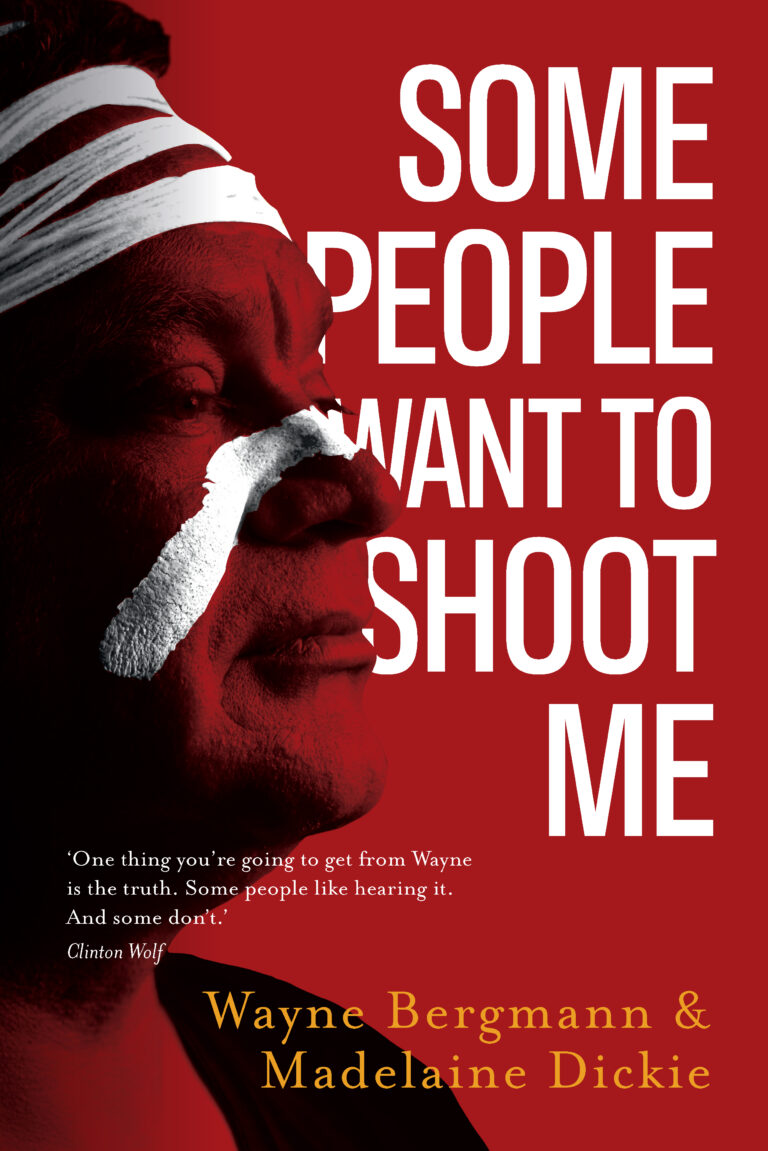
Having finally read Wayne Bergmann and Madelaine Dickie’s Some people want to shoot me, I am not surprised that it has been shortlisted in the Nonfiction category of this year’s Western Australian Premier’s Book Awards. It is moving; it is clearly written; and it is informative about big issues. Wayne Bergmann is a Nyikina* man and Madelaine Dickie a kartiya (white) woman, making this one of those collaborative novels I wrote about recently.

Before I continue, a little on its form. This is a work of nonfiction. It is essentially memoir, written in third person by Bergmann and his collaborator, Dickie. And, being a memoir, it has a specific focus. In this case, it is one underpinned by a powerful sociopolitical message concerning the right of First Nations people to survive and prosper on their own land.

“walking in two worlds”

So … Some people want to shoot me is about a man who realised he must walk in two ways – the kartiya way and the old people’s way, that is the white way and the way of his traditional culture. For his heart and soul he needed to walk the traditional ways, but in his head, seeing the suffering and the social and economic dysfunction caused by dispossession and powerlessness, he had to walk the kartiya way. The book exposes just what a tough balancing act this was – and is. It demanded (demands) strength, bravery, nous, clarity of purpose – and the support of family.

The book opens with a Prologue which sets the scene. It’s 2011 and Bergmann, who is at breaking point after years of negotiating on behalf of Kimberley Traditional Owners, walks out of a meeting with a mining company and heads, with his wife and children, back to country:

to the mighty Martuwarra, the Fitzroy River – lifeblood of Nyikina country, Wayne’s country, his children’s country – made by Woonyoomboo when the world was soft.

From here, the book starts in Chapter 1 the way memoirs usually do – at the beginning. For Bergmann, the beginning is Woonyoomboo who tasked the Nyikina people to look after country. This they did, until the arrival of white settlers in the late 19th century, when things “radically changed”. The first two chapters chronicle some of this change through the lives of Bergmann’s forbears. It depicts a world where the legacy of nuns, monks, ethnographers, pastoralists and miners “was still felt acutely”, where “frontier massacres had occurred within living memory”, and “where justice, under whitefella law, didn’t often grace Kimberly Aboriginal People”. Bergmann, who was born in 1969, saw this, felt this, and took on the pastoralists, mining companies and governments to “upend the status quo”.

Of course, such upending doesn’t come easily, and the people doing this upending aren’t always understood and appreciated, which is where we came in at the Prologue. The book details, chronologically, Bergmann’s work, from his early work with the KALACC (Kimberley Aboriginal Law and Culture Centre) and his realisation that for Aboriginal people to be empowered under Western law and able to make systemic changes, “they needed to understand the kartiyas’ law system inside out”. So, he did a law degree, and then, at the age of 33, became CEO of KLC (Kimberley Land Council) and here is where the really hard work started, and it was not pretty. It demanded every ounce of energy, intelligence and resilience, he could muster.

Bergmann had to be clear about the role, which was, as a native title representative body, “to facilitate a process and follow procedure in accordance with native law to allow Traditional Owners (TOs)” to make decisions “about their country”. This meant consulting with the TOs and ensuring they understood what they were being asked for and what was being offered. When stakes are high, emotions also run high. Some environmentalists, for example, would turn against TOs (and thus the KLC) when their views diverged, but sometimes TOs believed that some development was advantageous to their people. Then, of course, there were times TOs didn’t agreed with each other, or when there was disagreement between TOs and others in their communities. This is to be expected, of course. Do all kartiyas agree? But, it makes for very difficult times, and Bergmann was at the centre. As well as working with the relevant Kimberley TOs, Bergmann was also negotiating with the Western Australian government and, for example, the Woodside mining company, negotiating not only the actual agreements, but for money and resources to carry out consultations so that the TOs could come to the table well informed. All this is explained clearly in the book, making it well worth reading for anyone who has not followed native title cases closely. It’s both enlightening and chastening.

Bergmann made some significant deals, but it was a bruising time, so after a decade, wiser and with a clear view ahead, he moved on to establish KRED Enterprises. A charitable business, wth the tagline of “walking in two worlds”, its aim was (and is) to support cohesive Aboriginal economic development in the Kimberley, to encourage businesses run by and for Aboriginal people. The rest of the book covers Bergmann’s work – under the KRED umbrella and in other areas (including buying a newspaper, the National Indigenous Times) – all focused on the one goal, to pull his people out of poverty and disadvantage, to ensure they have the opportunities available to all Australians, and in so doing to improve their lives and outcomes. Nothing less will do.

We had to create some wealthy Aboriginal organisations, and wealthy Aboriginal people, so we could shape our own future, on our own country.

Woven through the accounts of Bergmann’s work are stories about his personal life, some good times but also the egregious attacks his wife and children faced at the height of his KLC work. We come to see the truth of Dickie’s description of him in her Introduction, as “demanding, smart, intensely political and visionary”. This is a man who puts himself on the line because he is driven to see First Nations Australians prosper.

Some people want to shoot me packs a lot into its 223 pages. That it covers so much, with great clarity and readability, is due to the writing. It’s well structured, and employs some narrative techniques, including evocative chapter titles and the occasional foreshadowing, which keep the story moving. At the end of the book is an extensive list of Works Cited and a Select Bibliography, which provide authority for what has gone before, if you need it.

Meanwhile, here are some words by another First Nations leader, Clinton Wolf:

One thing you’re going to get from Wayne is the truth. Some people like hearing it. And some don’t.

This book tells Wayne’s story, and I did like hearing it. It’s a great read about a great Australian, telling truths we all need to hear.

* First Nations cultures are orally-based, which results in inconsistent spellings when their languages are written. This post uses the spellings that Bergmann and Dickie use in their book.

Wayne Bergmann and Madelaine Dickie
Some people want to shoot me
North Fremantle: Fremantle Press, 2024
223pp.
ISBN: 9781760992378

Helen Garner, The season (#BookReview)

In 2023, The New Yorker published a piece on Helen Garner. Written by Australian journalist, Helen Sullivan, its title, “The startling candor of Helen Garner”, captures exactly what I like about Garner, as does this a little further on:

Her writing is elegant but colloquial, characterized by an impulse to say and share things others might keep private.

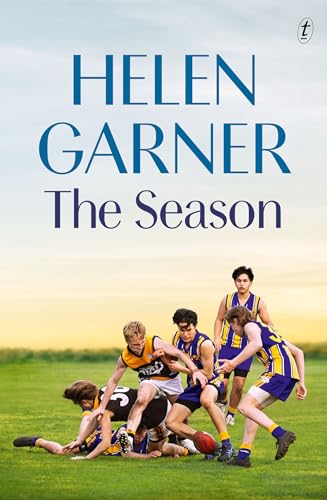
Garner’s latest book, The season, is a gentler book than most, if not all, of her previous books, but these things – the writing and the honesty – are still in play. BeeJay Silcox, in conversation with Garner about the book, described it as “a graceful book, a love letter from a grandmother to boys and men” and suggested that it’s “not very different” from Garner’s other books as some have said. As is my wont, I take a middle ground. I did find it quieter, less contentious, but it still has her openness, her often self-deprecating honesty, and her clarity about what she is and isn’t doing.

“a nanna’s book about footy”

What Garner isn’t doing in this book, and what surprised many of those she spoke to as she was writing it, is some sort of social or societal analysis of footy. “Blokes”, for example, who’d been “formed by footy”, expected “fact and stats and names and memories”, while others, particularly women, assumed she was writing “something polemical, a critical study of football culture and its place in society” (like, say, Anna Krien’s Night games. Indeed, in my review of that book, I reference Helen Garner’s writing.) These assumptions panicked Garner somewhat. She was not writing these, but “a nanna’s book about footy”, a book

about my grandson and me. About boys at dusk. A little life-hymn. A poem. A record of a season we are spending together before he turns into a man and I die.

Pure Garner: it describes what her book is, but belies the insights and observations that lie within. However, both sides are described and hinted at in the opening pages of the book, when Garner writes about her grandchildren. She understands her granddaughter she says, but

having never raised a son, I now began to learn about boys and men from a fresh angle, to see their delicacy, their fragility, what they’re obliged to do to themselves in order to live in this world, the codes of behaviour they’ve had to develop in order discipline and sublimate their drive to violence.

During Melbourne’s extended pandemic lockdowns, Garner watched more footy, and saw it in a new light. She glimpsed “what is grand and noble, and admirable and graceful about men”.

Given all this, and the fact that Amby (Ambrose) is her youngest and last grandchild, she wanted to better know him, “before it’s too late”. She wanted to “learn what’s in his head, what drives him; to see what he’s like when he’s out in the world, when he’s away from his family, which I am part of”. She decided to follow his Under-16s football team, driving him to training and attending their matches.

“It’s boys’ business. And my job is to witness it.”

The footy season starts, and there is Garner, “a silent witness” on the sidelines, with notebook in hand. She’s the quintessential invisible woman, and happy to be so, albeit she asked Amby’s and the new 21-year-old coach’s permission first. What follows is something that reads rather like a diary. In the aforementioned conversation, Garner said she initially struggled to turn her experience into a book. She started writing it in the past, but that gave it an historical feel, so she changed to present tense, and voilà, she had her story. And she was right. It feels fresh and personal.

The book, essentially a memoir, is well-paced, partly because of the chronological drive implicit in the training-playing season, but also because of the way Garner mixes gorgeous description and small snatches of dialogue, with astute reflections and self-questioning. There are times when she loses heart: it’s cold on the sidelines; is she “trespassing on men’s territory, ignorant of their concerns and full of irrelevant observations and thin-skinned responses”; who does she think she is, “intruding on his [Amby’s] privacy, feeding off his life”. But she “slog[s] on”, because writing is what she does.

What she also does – whether it be a novel about a dying friend (The spare room) or a true crime book about the trial of a man accused of killing his children (This house of grief) – is capture life in all its messiness. If you’ve read any Garner, you will know that she understands messiness and will not shy away from it. Here, it encompasses her own aging and being a grandparent who can only ever be on the periphery; an adolescent boy’s challenge in coping with school, girls, and training; and the emotional ups and downs of football, the rigours of training, the errors that let the team down, the wins and losses.

I am not into football, but I found The season compelling. I enjoyed spending time with Garner again, but I also appreciated her insights into masculinity. Throughout, Garner asks the men and boys around her – Amby in particular, but also coaches, trainers, fathers – pertinent questions, such as why have a mullet (haircut), what is good about tackling, is he proud of his battle scars. The answers are sometimes surprising, occasionally funny, but nearly always enlightening. Amby tells why he likes tackling:

“I guess it’s basically inflicting physical harm but with no actual hard feelings. It’s just aaaaapchwoooooo and then you get up and keep playing, and then at the end you shake hands, and no one remembers anything.”

Football, Garner sees, is “a world in which a certain level of violence can be dealt with by means of ritual behaviour”. I never will understand this violence and men thing, but Garner’s sharing her time with the boys and men – particularly her willingness to ask the right questions, to listen and to reflect – did continue my education (and hers).

However, it’s not all about masculinity. There are all sorts of other observations, some self-deprecatingly humorous, such as this reflection on a match where Amby’s team “verses” a bigger, stronger team:

How quiet our team’s supporters are! We stand there like inner-city intellectuals, analysing our boys, criticising their every move, using modal verbs in knuckle-rapping tenses: should have, ought to have.

This made me laugh, but it also conveys Garner’s ability to mix tone, and to flip modes, between the grittiness of football and quiet, humorous, compassionate observations.

The season is exactly what Garner intended, a warm-hearted “life-hymn” about a season spent getting to know her youngest grandson as he transitioned from boy to man. It’s an attempt to understand what makes men tick, and the role footy can play in forming young boys into men. I find it hard to buy the “warrior” stuff that goes with male sport, as Garner seems to, but I can understand where it comes from, because there can be nobility and grandeur in sport.

If, like me, you are not a football follower, don’t let that put you off. The season is not a sporting memoir full of facts, figures and rules. Instead, it’s a nanna’s story about time spent with a loved grandson, a story with footy at its centre but that is, fundamentally, about the things Garner does best, character, drama, and emotion.

Kimbofo also loved this book. It would make a good companion to Karen Viggers’ novel about youth football (soccer), Sidelines.

Helen Garner
The season
Melbourne: Text Publishing, 2024
188pp.
ISBN: 9781922790750

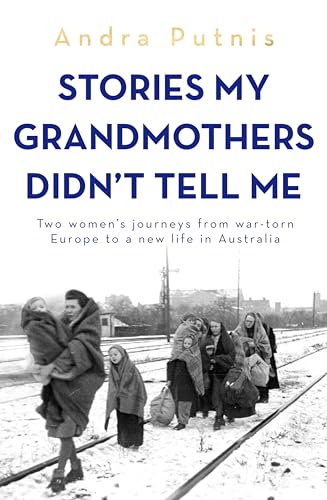
Andra Putnis, Stories my grandmothers didn’t tell me (#BookReview)

Cover

Local writer Andra Putnis’ book, Stories my grandmothers didn’t tell me: Two women’s journeys from war-torn Europe to a new life in Australia, was my reading group’s February read. Not only was it highly recommended by two members who had read it, but we were told the author would be happy to attend our meeting if we chose it. That was an offer too good to pass up, so we scheduled it.

We’ve had a few authors attend our meetings over the years, and it has always been worthwhile. Yes, it risks constraining discussion if people have any reservations about the book, but that has never really been a problem, either because there haven’t been serious reservations or because the value of having the author present has far outweighed any perceived impact on free discussion. In Putnis’ case, the story is so powerful and so well-told that it was unlikely there’d be any reservations that wouldn’t turn into questions about why or how she wrote her story.

“hidden pasts, still very much present”

Stories my grandmothers didn’t tell me is a family biography centring on the author’s two Latvian-born grandmothers, her maternal Grandma Milda (1913-1997) and paternal Nanna Aline (1924-2021). Teenage Aline was separated from her parents around 1942 to go serve in Germany’s war-time labour force. Meanwhile, in late 1944, with the war ending and the Soviet army looking set to return, 7-months pregnant Milda left Latvia with her parents and 18-month old son, enduring a tough, desperate journey. Both women ended up in UNRRA-managed Displaced Persons camps in Germany, where they experienced years of hardship before arriving in Australia in late 1949/1950. Milda, and later Aline, settled in Newcastle in the early 1950s, and met there through its tight-knit Latvian migrant community.

That’s the rough outline, but of course their stories – what they endured – are far more complicated, and Putnis wanted to understand. She told us that as a young child she had a sense of Latvia as almost an unreal fairytale place with beautiful forests, music and dancing, but she had also sensed, through family murmurs, a darker side, one that encompassed sadness and pain not only about Latvia but also about the family’s own story. She likened it to being on a boat, where you can see the surface but have no idea of what lies in the deeps below. She feared, as a granddaughter, that it wasn’t her place to go there, and worried about upsetting people. However, she did go there because she wanted to know and because Nanna Aline was willing. But, she said, she was always cognisant of just how far a granddaughter – even an older one – could, or should, go.

“moving between darkness and light”

I have read several hybrid war-related biography/memoirs written by family members, and this one is as good as any of them. This is not only because of the power of the story, and the honesty with which it is told – but also because of the structure Putnis uses. It is told chronologically, which is logical, but through the voices of Milda and Aline interspersed with those of others including, of course, Putnis’s own. I wanted to know about this and Putnis was happy to explain.

The structure was driven by Aline who told her story chronologically. She had thought deeply about and “understood the arc of her life”, said Putnis. So, with this in hand, Putnis started to piece Milda’s story – which was gathered less systematically – along the same lines. The challenge came in making the “weave” work, in getting the balance right, between them and their stories, and the wider historical, community and family framework.

Putnis worked on her book for nearly 20 years – with the occasional gap when life took over. Aline lived a long life so Putnis was able to spend a lot of time with her. Aline had also had the toughest life, particularly in terms of her personal choices and circumstances. Our hearts went out to her. Milda, on the other hand, died when Putnis was 19 years old, before she started working on her book. However, Milda had lived for nearly a decade with Putnis’s family, so Putnis had spent a lot of time talking with her, getting to know her. Putnis enhances both stories with information gleaned from conversations with other close family members, from secondary reading, and from primary research through letters, in archives, and so on.

The result is a coherent story of these two women told from more than one perspective, which has the effect of varying the intensity as we read – of mixing the light and the dark – and of enhancing authenticity, because the perspectives reinforce each other. It’s sophisticated and highly readable.

“the world is in tears” (Aline’s father)

It is a powerful and often heart-rending story, and it is to Putnis’s credit that she is able to convey both the individual personalities of her very different grandmothers and the universality of their experiences. Their experience of living under multiple invasions is both personal but, as we know too devastatingly well, political and general. Same for their experience of living in camps for years – of having your life on hold while you just survive. And for their experience of being migrants – “reffos” – in 1950s Australia. The negatives abound, with any positives achieved being hard fought. It’s a lesson in how ordinary lives are changed irrevocably by political actions way out of their control.

So, the book raises many questions – about the past and about what is happening now. Putnis also specifically raises the issue of protecting children, and I wanted to know about this too, because, given our knowledge of intergenerational trauma, how do you protect children from horror without laying them more open to ongoing trauma within? There is no easy answer, we concluded, but awareness and consideration about where to draw the line can only help.

Finally, Stories my grandmothers didn’t tell me, is fundamentally a book about the importance – and limits – of stories. Early on Putnis talks to Aline about her project, and Aline is clear about her intentions:

Alright then, I don’t remember everything. But I have my own point of view. Some old Latvian women go on about how wonderful things were before the war … You heard these stories? Well, it was not always like that. Not all the boys were good and I was not as kind to my māte [mother] as I should have been. If you want that story, you are talking to the wrong grandma.

Aline was brave, and this is a brave book about survival that doesn’t shy away from the tough and sad stories. But, more importantly, it conveys something about stories, which is that individual stories are very important, but they are not the whole story. In other words, the more stories we have the better picture we have – of history, and of the complexity of humanity that makes us who and what we are.

Putnis concludes with Aline’s funeral, and shares the words she spoke, which also encapsulate this book:

Nanna taught me nothing less than what it means to be human, to earn the grace and wisdom that come from surviving darkness and celebrating light.

I’d like to tell more stories about the book, including about Milda and the strong woman she was, but this post is long enough, so I’ll just encourage you to read the book for yourselves.

Andra Putnis
Stories my grandmothers didn’t tell me: Two women’s journeys from war-torn Europe to a new life in Australia
Crows Nest: Allen & Unwin, 2024
292pp.
ISBN: 9781761471322

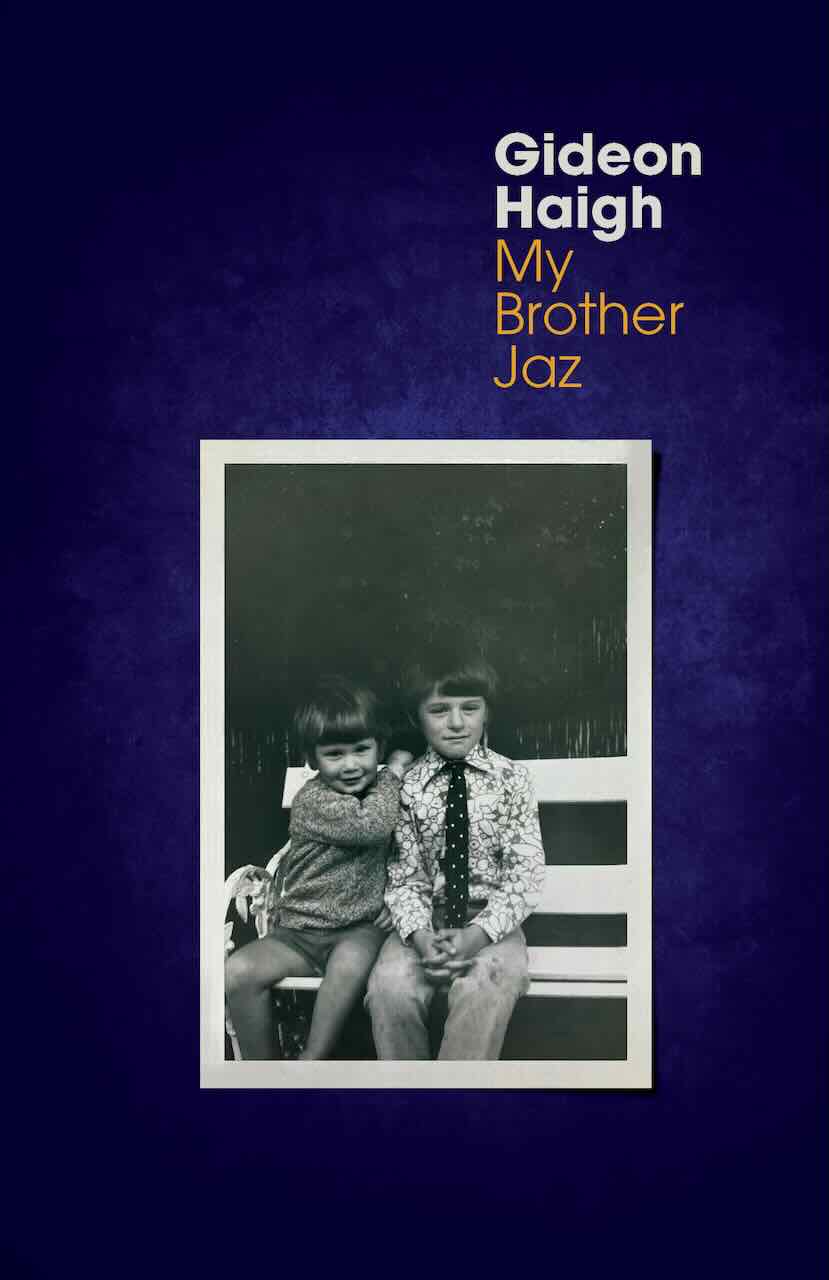
Gideon Haigh, My brother Jaz (#Review)

When I posted my first review of the year – for Marion Halligan’s Words for Lucy – I apologised for starting the year with a book about grief and loss. What I didn’t admit then was that my next review would also be for a work about grief and loss, Gideon Haigh’s extended essay, My brother Jaz. This does not herald a change in direction for me, but is just one of those little readerly coincidences – and anyhow, they are quite different books.

For a start, as is obvious from its title, Haigh’s book is about a sibling, not a child. It was also much longer in the making. Halligan’s book was published 18 years after her daughter’s death, and was something she’d been writing in some way or other all along. Words are also Haigh’s business, but he ran as far as he could from his grief, and it was only in 2024, nearly 37 years after his 17-year-old brother’s death, that Haigh finally wrote, as he says in his Afterword, “something I had always wanted to write, but had suspected I never would”.

Before I continue, I should introduce Haigh for those of you who don’t know him. Haigh (b. 1965) is an award-winning Australian journalist, best known for his sports (particularly, cricket) journalism, but also for his writing about business and a wide range of social and political issues. He has published over 50 books. I’ve not read any, but I am particularly attracted to The office: A hardworking history, which won the Douglas Stewart Nonfiction Prize in 2013. However, I digress …

Unlike Halligan who, to use modern parlance, leant into her grief in what I see as a self-healing way – as much as you can heal – Haigh did the opposite. He did everything he could to avoid it; he worked, he writes, “to flatten it into something I could roll over”. And it affected him. If he, just 21 at the time, was a workaholic then, he doubled down afterwards and work became his refuge, his life:

It was the part of me that was good; it was the only part of me I could live with, and that sense has quietly, naggingly persisted. Go on, read me; it’s all I have to offer. The rest you wouldn’t like. Trust me. You don’t want to find out.

If this sounds a bit self-pitying, don’t fear, that is not the tone of the book. It is simply a statement of fact, and is not wallowed in. It represents, however, a big turnaround from someone who admits early in the book that he was known for his “pronounced, and frankly unreasonable, aversion to autobiographical writing”. This aversion was despite the fact that, “at the same time, trauma, individual and intergenerational” was something he’d written about – and been moved by – for a long time. So, in this first part of his six-part essay, we meet someone who had experienced deep pain, but had shrunk from indulging in a certain “kind of confessional nonsense”, and yet who increasingly found himself “backing towards an effort to discharge this story” to see if it made him “feel differently”.

What changed? Time of course is part of it. Haigh shies from cliches, as he should, but grief will out. It just can’t be bottled up forever, no matter how hard he tried, and so in early 2024, during the Sydney Test Match no less, “something previously tight had loosened” and over 72 hours he wrote the bulk of this essay. A major impetus was the break up of a relationship. It was time for a “reckoning”, he writes on page 76, but much earlier, on page 47, he alludes to it:

Why did I even start this? The only reason I can think of is that it has to be done. It can’t remain unwritten, just as I could never leave Jaz unremembered. I have myself to change, and how am I to do this unless I examine this defining event in my life face on?

This idea of the examined life is something Halligan mentions too in her memoir. She writes near the end of her book that “I do believe that the unexamined life is not worth living, and that an enormous part of that is the recollected life”.

What I hope I’ve conveyed here is the way this essay is driven – underpinned – by a self-questioning tone, more than a self-absorbed one. Even as Haigh writes it, he is interrogating his reasons (and perhaps by extension anyone’s reasons) for writing about the self. That this is so is made evident by the way the narrative, though loosely chronological, is structured by the writing process rather than by the “story”:

“OK it’s getting on to dawn, and I’m going to click on ‘Jasper Haigh [inquest] Reports for the first time” (p. 29)

“It’s raining, but I’ve just returned from a walk. I often walk when I have something to turn over in my head.” (p. 33)

“I’m at the point right now where I just wonder what the hell I am doing.” (p. 47)

“I have picked this up again after putting it aside to draw breath, to consider what next … So, I’m going to stagger on, with the excuse that this is no memoir: this is less a geology of my life than a core sample.” (p. 61)

This approach helps us engage with a writer who prefers to push us away. It finds, in a way, the art in the artifice, and enables Haigh to write something that questions the memoir form while at the same time paying the respect that the best memoirs deserve. It’s a juggling act, and I think he pulls it off.

By the end, Haigh is not sure whether writing this work – this raw “reckoning” to re-find his emotional bearings – has achieved anything. It is, he believes, “too early to tell”, but I wouldn’t be so sure. He is a writer, and he has put on paper the defining event – the “core sample” – of his life. That has to mean something.

Gideon Haigh
My brother Jaz
Carlton: Melbourne University Press, 2024
87pp.
ISBN: 9780522880830

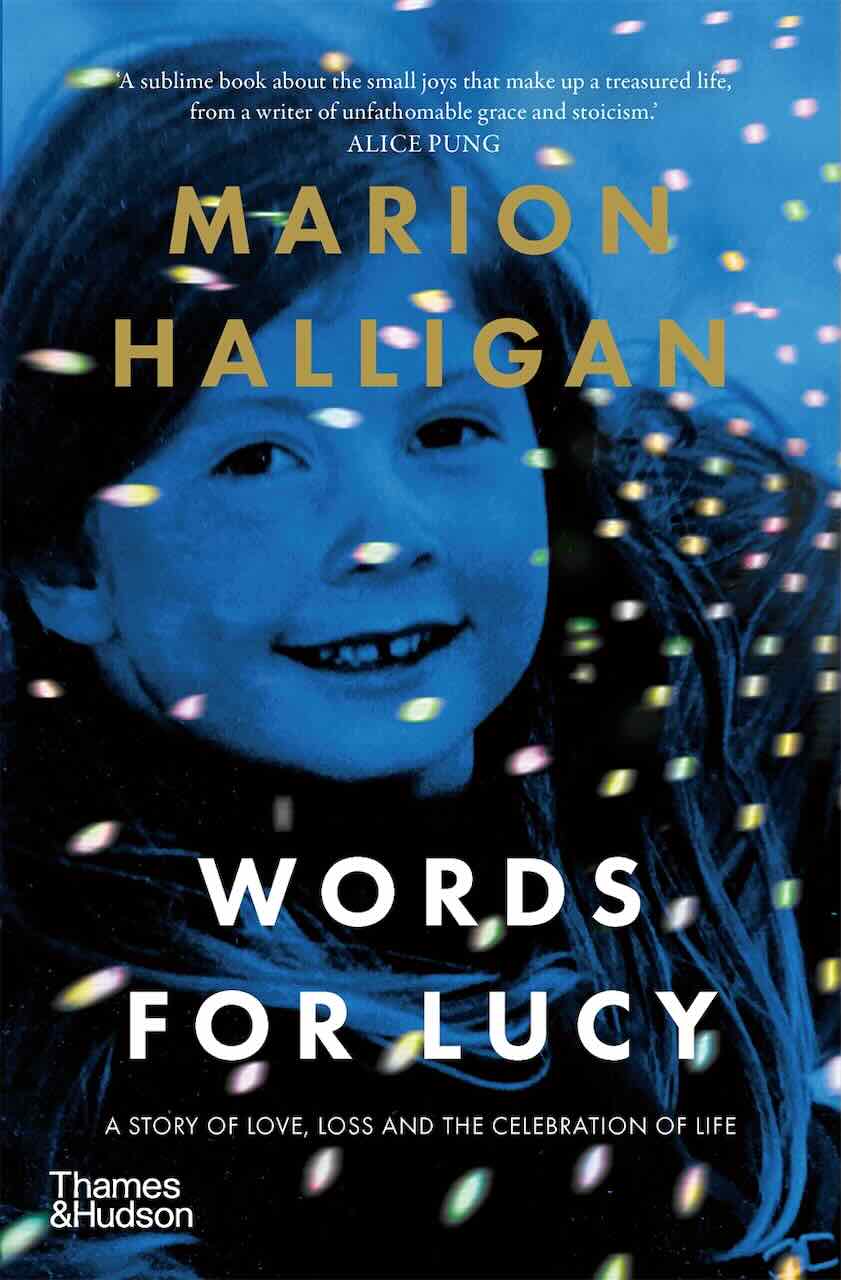
Marion Halligan, Words for Lucy (#BookReview)

For my reading group’s tribute to Marion Halligan last year, I had planned to read one of her older novels, Wishbone, which I did (my review), and her last book, the memoir Words for Lucy, which I didn’t. But, I have now. I guess a book born of a mother’s grief for a daughter who died too young doesn’t make the cheeriest start to this year’s reviews. However, such is the life of a reader so you’ll just have to bear with me!

Lucy, for those who don’t know Halligan’s biography, was born in 1966, with a congenital heart defect. She was not expected to survive more than a few days, but she did – for nearly 39 years. In the end, however, in 2004, her heart gave out. I’ve read two other memoirs written by a mother about her seriously ill daughter, Isabel Allende’s Paula and Joan Didion’s The year of magical thinking. They are very different books and in fact, in Didion’s case, her daughter did not die during the book, though she did die young (and Didion wrote a book about that, Blue nights). The reason I am sharing this is that Halligan, Allende and Didion were all published authors, and it shows. As Halligan writes in the opening to her book, “My business is words”. For these three writers, the process of writing was an important part of how they processed their feelings. Halligan’s book might have come out some 18 years after Lucy’s death, but she’d been writing all that time.

While confirming my memory concerning Allende and Didion, I came across the Wikipedia article on Blue nights. It includes a quote from Rachel Cusk’s review of the book. She says “Didion’s writing is repetitive and nonlinear, reflecting the difficult process of coping with her daughter’s death”. While I don’t know about the reason, the “repetitive and nonlinear” description could equally be applied to Words for Lucy. The book is divided into twelve parts (plus a postscript), with each part comprising many small sections. There is an overall chronological arc to the book, in that after briefly describing Lucy’s death, Halligan does start with her birth, and tells of the funeral and wake near the end. What comes in between, however, is, writes Halligan, like “box of snapshots. You find your own way through the story, from random details”. In other words, if you are looking for a traditional grief memoir in which the memoirist works chronologically through the “stages” of their grief, you won’t find it here.

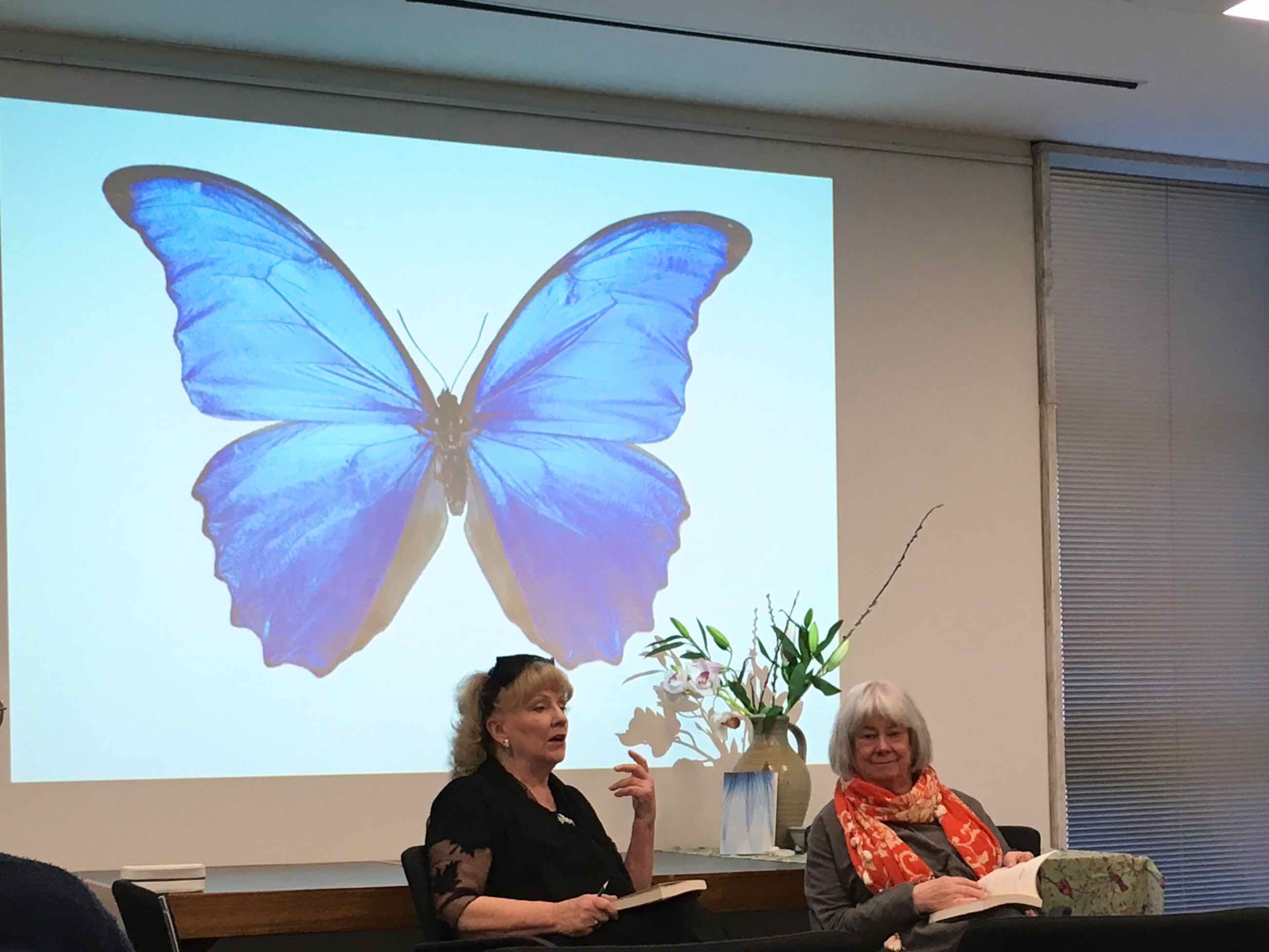
Carmel Bird and Marion Halligan
Carmel Bird and Marion Halligan, 2016

What you will find is a book about mothering and “daughtering”, about living with a chronically-ill child, about making memories and living with memories, about sadness and joy, about loss and grief (because Halligan has had more than you’d think fair), and about writing. It’s also about friendship. Having experienced my own devastating loss (of my sister in her early 30s), I know very well the value of friends. For Halligan, a great friend was the writer Carmel Bird. I was much moved by the role Carmel played in Lucy’s life, and by the love and support she clearly gave Marion.

Now, returning to Halligan’s “snapshots”, I enjoyed how, within a broad thematic structure, Halligan wanders through family life – from the lighthearted like Lucy’s love of things to the serious like her long and complex medical journey that cramped her life so much, from the family’s experience of living overseas to travelling there together later. From these, and more, so many truths emerge. For example, Halligan writes on page 2,

Love is so important to us. We so much need it. We can’t do without it. What we don’t realise at the beginning is the price it comes at.

Right there I knew I was going to like this book, because I was immediately taken back to my first pregnancy, and the fear I had that something would happen to this child I was bringing into the world. Ah well, I reassured myself, I didn’t have him (as the child turned out to be) before and I was fine, so I’d be alright! But of course, as soon as that child came into the world, my life changed and I realised things would never be the same, that if anything happened to him, I would not – indeed, could not – go back to how I was. The price of love…

The price of love isn’t all bad of course, even when the loved person dies, because there are the memories, and it is through memories that Halligan charts both Lucy’s life and her own grief. There is, though, a sort of paradox here that Halligan admits to. It’s what she calls the Janus face of grief. There’s the grief we feel for the person who has gone, for the life they are missing, the things they’ll not see or experience, and there’s that selfish grief the bereaved person feels, the loss, the misery, the wanting that person back in your life to make you happy (in effect).

It’s a complex thing grief – not linear, which Halligan knows and hence her book’s structure, and not all misery either, which Halligan also knows. Happy, joyful memories do pop up. You do laugh. Halligan describes some special memories, and then writes this beautiful thing about them:

Those are perfect memories, I can take them out whenever I like and run their cool and sparkling shapes though my fingers, look at their brilliant colours, the light refracting through them.

These memories may not be “factual”, may not be the same as those of others who experienced the same person or event, but as Halligan would tell her sisters who questioned her memory of some family event, “Write your own narratives … this is mine and I’m sticking to it”.

Throughout Words for Lucy there is the writer’s eye on what is fact and what is truth. Truths can be “different” (indeed, “many”, as Emmanuelle learns in Wishbone) while facts are “another matter”. And so, in the final pages of the book, Halligan, paying her due to “a memoir’s desire for honesty”, shares one last painful fact so that we don’t go away believing some wrong truths about her family.

Words for Lucy was Marion Halligan’s last book. It’s a memoir, and has the honesty that form demands. However, I see it as also containing her apologia, her final statement on what fiction is. For her, and she understood the slipperiness of this, it’s about truth, which is different from fact. “Fiction is always life”, she writes in this book. It means writers using life – including their own – “in all sorts of imaginative ways”. Think Jane Eyre, David Copperfield, and her own, somewhat controversial, The fog garden.

Ultimately, whether Halligan was writing fiction or nonfiction, words were her business. And these, her final ones, represent a fitting legacy for a brilliant career as well as a beautiful tribute to a beloved daughter.

Marion Halligan
Words for Lucy: A story of love, loss and the celebration of life
Port Melbourne: Thames and Hudson, 2022
218pp.
ISBN: 9781760762209

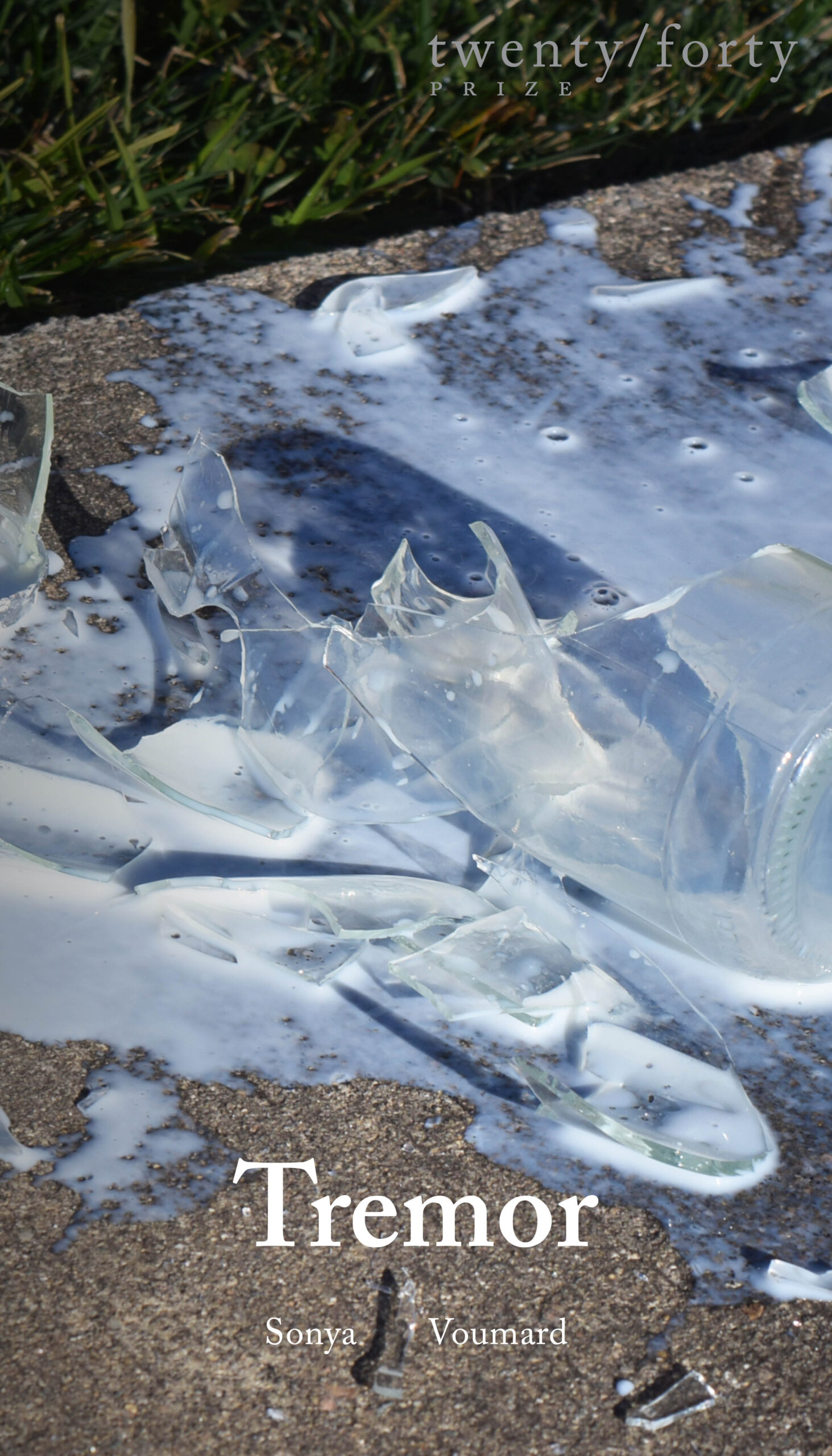
Sonya Voumard, Tremor (#BookReview)

As I’ve previously reported, Sonya Voumard’s short memoir, Tremor, is one of the two winners of this year’s Finlay Lloyd 20/40 Publishing Prize. Earlier this month, I reviewed the fiction winner, P.S. Cottier and N.G. Hartland’s novella The thirty-one legs of Vladimir Putin. Now it’s Voumard’s turn, with her book on living with a neurological movement disorder called dystonia.

While essentially a memoir, Tremor also fits within that “genre” we call creative nonfiction. The judges would agree, I think, given their comment that Tremor is “notable for its compellingly astute interweaving of the author’s personal experience with our broader societal context where people with disabilities, often far more challenging than her own, try to adapt to the implicit expectations and judgements that surround them” (back cover). The interweaving of something personal with something wider is a common feature of creative nonfiction, but what seals the deal for me is its structure. Tremor has a strong – subjective – narrative arc that propels the reader on, with more objective information providing the necessary support.

The narrative opens on December 3, 2020, the day Voumard is to undergo brain surgery for her condition. It leaves us in no doubt that what we are about to read is a very personal journey. “I am”, she writes on this first page, “a hairless head on top of a flimsy cotton gown and long compression socks”. But then, two sentences later, she opens a new paragraph with, “as I wait to be taken to the operating theatre, I channel my inner journalist. I’m on a news assignment for which I have already gathered some key facts.” And just like that, we are in journalist mode, with Voumard describing her condition and the relatively new treatment she is about to receive, followed by some facts and figures. Around 800,000 Australians, she informs us, experience tremors of the body, and about 70,000 of these have dystonia. A couple of paragraphs later we flash back to early 1960s Melbourne. Voumard is four or five years old, and her personal trajectory begins with an anecdote about dropping a bottle of milk, about being “clumsy, prone to dropping things”, but also being “a risk-taker”.

From here, the book takes us on the two journeys I’ve just intimated. There’s the mostly chronological one tracking her life with dystonia until we arrive – at the end of the book – back at the beginning with her surgery and its aftermath. And there’s her exploration of dystonia, its causes, diagnosis, and treatment. Voumard binds these two journeys together with her astute, and empathetic, reflections and analyses. She knows what it’s like to live with a disability, even if early on she didn’t recognise it as such.

So, for example, she chronicles the tactics she’d use to hide her shaking, in order to get jobs and then to demonstrate she could do them (when clearly she could). She would sit on her hands, refuse offers of drinks, self-medicate with alcohol. Whatever it took to hide her condition. She talks about navigating a medical world that is so “siloed” that diagnoses ranged from the “psychogenic” (due to “some sort of failure of womanhood, an unfulfilled yearning, a cloak for something else”) to the “purely physical” (like a sports injury or from computer use) – depending on the speciality she was dealing with – when it was something else altogether. She touches on the cost of treatment, the overall politics of medicine, the gender issues which see women’s conditions so often dismissed.

And, lest I’ve given the wrong impression, she does this not only through her own experiences, but through those of others – met personally, or found through her research – ensuring that Tremor is not a “misery memoir” but something bigger, that contributes to our understanding of how people navigate a world in which they don’t fit the norm. This navigation has a few prongs: the obvious ones relate to coping with the physical limitations, discomfort, and/or pain the condition brings; and the less visible ones concern managing your expectations and aspirations, while also dealing with how people interact with you. Voumard shares the story of a woman who had suffered for over twenty years from cervical dystonia before she got a diagnosis. While diagnosis didn’t bring a cure, “identifying her condition had helped her to live her life more calmly, to not try to do too much and to understand something of others’ suffering”.

Voumard, you’ve probably realised by now, packs a lot into the 20/40 form (that is, into 20,000 to 40,000 words). At the winners’ conversation, she said there is the assumption that to be marketable you need to write 55,000 plus words. She had the bones, and had then started filling them out, but it was just “flab”. The competition, and then Julian Davies’ editing guidance, taught her that she had a good “muscular story”. So she set about “decluttering”. The end result is interesting, because this book doesn’t have that spare feeling common to short works. Tremor feels tight – there’s little extraneous detail – but not pared back to a single core.

Voumard, in fact, covers a lot of ground. She uses the Eurydice Dixon murder case, for example, to epitomise her ongoing interest in media and reporting, particularly regarding structural disadvantage and social justice. She also contextualises the latter stages of her journey against the 2019 bushfires, the 2020-2021 pandemic and lockdowns, and the 2022 floods in NSW’s northern rivers. Why all this? The subtitle explains it. This book, this “tremor”, is not just about a movement disorder but about something bigger:

My more recent thinking about disability has strengthened my belief in the urgent need to privilege the voices of others more marginalised than mine. But I also cling to the concept of freedom of speech – not as a neoliberal, tabloid-news defender of hate speech – but as someone striving to find ways to respond to the challenges of a democratic society that is becoming more disordered.

Tremor is another beautiful, thoughtful product of the Finlay Lloyd stable. Recommended.

Read for Novellas in November, because, while not a novella, it is a short work.

Sonya Voumard
Tremor: A movement disorder in a disordered world
Braidwood: Finlay Lloyd, 2024
129pp.
ISBN: 9780645927023

Review copy courtesy Finlay Lloyd.

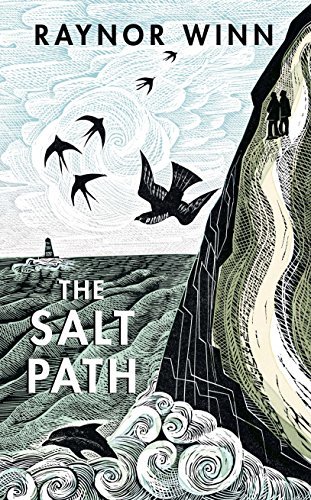
Raynor Winn, The salt path (#BookReview)

While my reading group’s main fare is fiction, we do include nonfiction in the mix. In fact, this year has been unusual as we’ve scheduled three nonfiction books – Richard Flanagan’s Question 7 (my review), Anna Funder’s Wifedom (my review), and, last month, Raynor Winn’s The salt path. I can’t recollect how The salt path came to be chosen, and nor could the 8 (of our 11) members who attended the meeting, but we weren’t about to complain.

Many of you will know this book already, given it became a bestseller after its publication in 2018. It was shortlisted for some major awards, and won the inaugural RSL Christopher Bland Prize (which I would call a “late bloomer” prize.) However, in case it escaped your notice, I will briefly summarise it. The book opens with two disasters befalling author Raynor and and her husband of 32 years, Moth. He is diagnosed with a rare, terminal degenerative disease called CBD (corticobasal degeneration) and, in an ultimately unjust court case, they lose their home which was also their livelihood. They have nothing but each other (and their two children who, fortunately, are young adults linving away from home). What do you do in a situation like this? You decide to walk England’s challenging 630-mile South West Coast Path, wild camping most of the way. That’s what.

Although it’s essentially a memoir, The salt path is better described as a road story that combines memoir, nature writing and social commentary. I would also argue that it’s a work of creative nonfiction, partly because of its strong narrative arc (albeit this is not uncommon in memoir and travel writing) but also because it includes dialogue (which, given there’s no evidence to the contrary, has presumably been recreated for the book). The result is a book which interweaves description, anecdote, personal reflection, social commentary and dialogue in a way that maintains our interest because it never bogs down in one mode or another. The balance Winn achieves is not only between these modes, but also in tone, which moves between serious and scared, melancholic and thoughtful, and light and humorous.

“you’ve felt the hand of nature … you’re salted” (woman on path)

I want to explore a little more how the combination of memoir and road story works to tell Winn’s story. Memoir, by definition, deals with a particular issue or time period in a person’s life. This gives the story a natural trajectory which conveys how that issue is handled or progresses – and/or what happens over that chosen time – until some sort of resolution or conclusion is reached. A road story has an even more obvious or natural narrative arc – the beginning of the trip, the middle with all the events and challenges met on the way, and the trip’s end (which may or may not be the originally intended one.)

So, in The salt path, the memoir, with its central issues being Moth’s illness and their homelessness, is framed by the road story, which describes the physical journey, that is, the landscape they walk through, and their experience of walking and wild camping. As in most road stories, we meet characters along the way, some positive or helpful, some amusing, and others negative or obstructive. And, as is also common in travel literature, we are introduced to issues that are relevant to the places travelled through. In this case they include conflicting ideas about heritage, conservation and the role of the National Trust in the communities and regions along the path.

There is, then, a lot to this book and while it works well as a coherent whole, some parts, of course, left a stronger impression than others. The strongest was their experience of the path, particularly given its recognised toughness combined with their impecunious state, inexpert preparation, and Moth’s ill-health. They were often hungry, wet and cold, and they walked at half the pace of Paddy Dillon whose guidebook they followed, but as time wore on Moth’s health improved. Why is a question never fully answered because they didn’t know why. Years later, he is still alive, still with the condition. Their strong interpersonal connection sustains them when little else does! And there is always the nature. This is Winn’s first book but she can clearly write. Her descriptions of the environment – the wildlife, the landscape, the vegetation, the sea – and of their feelings as they walk through it are perfect, like:

“A hidden land of weather and rock, remote and isolated. Unchanged through millennia yet constantly changed by the sea and the sky, a contradiction at the western edge. Unmoved by time or man, this ancient land was draining our strength and self-will, bending us to acceptance of the shaping elements.”

“The moon climbed into a clear sky, just past full, polishing the landscape in tones of grey and silver.”

After some time of walking the path, they start to look weathered – peeling skin, ragged clothes, and so on. It is around this time that they meet a woman who recognises the look. She tells them “you’ve felt the hand of nature … you’re salted”. Winn’s title is more than a literal description of a sea-swept path. It is also about being part of the nature, the life, they walk through.

From early in the book, however, another theme is introduced that threads through the book – homelessness. Obviously, it occupied Winn’s mind because they were suddenly homeless, but as the book progresses, she supplements their personal experience of being homeless with facts and figures. The facts are sobering, but they are made powerful by Raynor and Moth’s firsthand experience. For example, very quickly they became cautious about being honest about their circumstances, because it affected people’s attitudes to them:

“We could be homeless, having sold our home and put money in the bank, and be inspirational. Or we could be homeless, having lost our home and become penniless, and be social pariahs.” 

All sorts of other thoughts and issues arise, as you would expect on a long walk. Another is the aformentioned issue of protecting heritage and the environment, and the role of the National Trust. Locals complain about National Trust restrictions affecting their traditional jobs, but she also sees all the money coming in from the resultant tourism and senses “a strong whiff of hypocrisy”. In an area dug up for clay-mines, she discusses the various approaches taken after the mines have gone. One is creating an attraction like the Eden Project. Returning the land to its original state seems the least likely option, because “no tourist is going to pay to walk over a meadow with a leaflet that says, ‘You’d never know it, but this used to be a mine.’” By contrast, there’s the town of Tyneham that had been requisitioned during World War Two, and where

Strangely enough, limited public access, a lack of intensive farming and the occasional blasting by small-arms fire has allowed wildlife and vegetation to thrive throughout the ranges. A form of khaki conservation that no one expected to be the outcome when the villagers left their homes as part of the war effort.

Of course, insights into the land – into the many ways it has been used, modified and re-used – are common to those who walk, and land-loving Raynor Winn is no exception. Her observations are idiosyncratic to her. Readers may not always agree, but she is real and honest.

There is much more to say, but I’ll conclude on the personal, because this is ultimately a personal journey as much as a physical one. Winn starts off, somewhat angry but mostly scared (very scared about her beloved Moth dying) and deeply worried about the future and whether they are doing the right thing. Slowly though, as Moth’s symptoms seem to subside, and as time passes, she senses change in herself

I was no longer striving, fighting to change the unchangeable, not clenching in anxiety at the life we’d been unable to hold on to, or angry at an authoritarian system too bureaucratic to see the truth. A new season had crept into me, a softer season of acceptance.

I don’t think it’s a spoiler to say that The salt path is a book about reality, not miracles but not tragedy either. Its interest lies in the particular situation this couple finds themselves in, in the path itself, and in Winn’s ability to write about it all with warmth, humour and honesty.

So, how did my reading group like it? Very much overall. Depending on our own experiences and perspectives, we varied in our reaction to the different decisions they took, but as lovers of the environment we all appreciated the description of the walk, and as lovers of “stories” we enjoyed the anecdotes about the people they met. Of course, we had questions, and there were little niggles – some didn’t always like the tone, and some couldn’t believe the couple’s poor preparation and apparent lack of sunscreen! But the discussion we had was excellent. So, a good book all round.

Brona also reviewed this book (nearer its publication!)

Raynor Winn
The salt path
Penguin, 2018
273pp
ASIN: ‎ B0793GXSBL
ISBN: 9781405937528

Nell Stevens, Mrs Gaskell and me: To women, two love stories, two centuries apart (#BookReview)

It’s a bit of a stretch, I admit, to submit Nell Stevens’ strange hybrid biography-memoir, Mrs Gaskell and me, as my second contribution to Bill’s (The Australian Legend) Gen 0. But, having read Elizabeth Gaskell’s two novellas, Lizzie Leigh and Cousin Phillis, for the week, and having had Stevens’ book on my TBR for a few years, I decided it was now or never to get it off the shelf. After all, as I wrote in my Two Novellas post, Mrs (Elizabeth) Gaskell (1810-1865) is a good example of a nineteenth century independent woman because, despite being a wife and mother, she managed to forge a career for herself as a writer.

So, let’s leap in. The reason this book is a bit of a stretch for inclusion in Bill’s week is not only because it is one of those hybrid biography-memoirs or bibliomemoirs, but because of Stevens’ statement in her disclaimer at the beginning of her book:

I have changed names, scenes, details, motivations and personalities. Every word has been filtered through the distortions of my memory, bias and efforts to tell a story. This is as true of the historical material as it is of the sections about my own life: studies, letters and texts excerpted here are not always faithfully quoted. This is a work of imagination.

So, it’s a work of imagination that tells two alternating stories. In first person, we have Stevens’ own story, which goes from 2013 to 2017, and encompasses her love affair with an American and the writing of her PhD on Mrs Gaskell. This is the memoir bit. In second person is Stevens’ story of Mrs Gaskell primarily covering the years 1855 to 1865 which encompass her three-months-long trip to Rome in 1857 and its aftermath. This is the biography bit.

Now, regular readers know my attitude to the fiction versus nonfiction question. I am more interested in truths than I am in facts. Facts on their own don’t always tell us a lot, and when we are talking a person’s life, they can be limiting. Knowing when a person married, for example, is far less relevant or interesting than how they felt about their marriage and the person they married, but, it is hard to get facts about those feelings. Even if the subject wrote letters and/or diaries, how truthful were they? And, did what they wrote one day in a fit of passion (positive or negative) reflect the truth of the relationship as a whole? And so on. All this is to say that I am happy to accept Mrs Gaskell and me as an imaginative bibliomemoir, but if you’re not, this book will not appeal to you.

Because of the reason I chose to read this book now, I’m not going to write the usual sort of review. There are several out there, if you are interested. Instead, I am going to focus on how it fits into Bill’s Independent Woman thesis, which is to look at non-Australian writers “whose work influenced, predated or paralleled the first wave feminists of AWW Gen 1”. This means, to me, that we can look at the works of these women writers and at their lives, and Mrs Gaskell had an interesting life.

“all of a sudden you had a career” (Stevens)

It was also, I think, though I haven’t read a true biography of her, a divided life. There was the traditional “Mrs Gaskell”, the well-brought up and educated wife and mother, but there was also this:

“Nature intended me for a gypsy-bachelor; that I am sure of. Not an old maid, for they are particular and fidgety, and tidy, and punctual – but a gypsy-bachelor.”

Gaskell wrote this in a letter in 1854. I checked its accuracy, given Stevens’ disclaimer, and it is, I believe, a true quote. Stevens goes on to write that Gaskell “played the role of wife and mother so very well, and so lovingly, but she was a ‘gypsy bachelor’ nonetheless”. So, while she was not one of those nineteenth century adventurers, like Isabella Bird and Flora Tristan, she was nonetheless independent. In her writing, this came through her “industrial” or “social novels” or what Stevens calls her “philanthropically motivated condition-of-England novels”. In these, she identified and questioned some of the significant social and moral issues of her era: in North and South, for example, she was among the first to explore conflict between employers and workers, and in Ruth (see Bill’s review), she preached compassion for “fallen” women. (I have read both of these, but before blogging.)

However, she also exhibited a level of independence in her personal life, despite its conventional trappings – and this is something that Stevens conveys (albeit with different motivations) in her bibliomemoir. Early in the book, Stevens writes, using her second person voice,

“You were always lucky, Mrs Gaskell; you were always grateful for what you had, and yet, all the same, you were restless” [my emph].

She then briefly chronicles Gaskell’s career trajectory from writing for herself, to sending articles and then short stories to magazines, to, finally, writing her first novel, Mary Barton, in 1853. Stevens writes that it “became the sort of book that people bought and reviewed and talked about, and all of a sudden you had a career”.

This is the background, but Stevens’ focus is Gaskell’s visit to Rome in 1857, when she was 46 years old, and what it meant to her. She went to escape, says Stevens, the potential fallout (of which there was plenty) from her Charlotte Brontë biography*. She found an energising community of artists (authors, poets, sculptors, painters, musicians) and met the seventeen years younger American author and critic, Charles Eliot Norton. They saw each other constantly, and remained in contact afterwards. It was, we believe, an unconsummated relationship, and not all agree it was a romance, though Stevens argues so. Whatever it was, it was clearly intense and significant, and given the (documented) ongoing years of contact that followed, it satisfied some of Gaskell’s intellectual yearnings and fed into her subsequent writing. Beyond this, Rome was, overall, argues Stevens, “transformative for her, to meet Norton, to be in Rome, to be treated as an equal by other artists”.

The other point I’d like to make is Stevens’ story that, at the end of her life, Gaskell bought and renovated a house in Hampshire without telling her husband. Sounds independent to me.

The Nell parts of the book, which chronicle Stevens’ own love affair and her struggles to write her PhD, mostly engaged me, particularly the academic life satire, but, I’m leaving it here because Mrs Gaskell was my theme. It’s an unusual book, but I’m glad I read it. I may not remember the details, which is fine given they may not all be exact, but I will remember how Stevens successfully transformed this intriguing author from her “Mrs Gaskell” persona to a living, feeling, independent woman.

* Wikipedia reports that in 2017 The Guardian named The life of Charlotte Brontë one of the 100 best nonfiction books of all time.

Nell Stevens
Mrs Gaskell and me: Two women, two love stories, two centuries apart
[Published in the USA as The Victorian and the romantic]
London: Picador , 2018 (e-Edition, 2019)
256pp.
ISBN: 978-1-5098-6819-3

J.D. Vance, Hillbilly elegy (#BookReview)

I did something recently that I haven’t done for a long time. I picked up a book from a remainder table. It was at the National Library bookshop, and I was waiting to meet a friend for lunch. The book was J.D. Vance’s memoir Hillbilly elegy: A memoir of a family and culture in crisis, and on its front cover was a review excerpt from the Independent, which said “profound … a great insight into Trump and Brexit”. I was intrigued, and embarrassed that I had not been aware of this “international bestseller” – unlike many of you I suspect.

So, I started reading while waiting for my friend and was engaged. On the first page of his Introduction, Vance tells us that the cover of the book says memoir, but he’s only thirty-one and has accomplished nothing great, nothing that would justify a complete stranger paying money to read about him. Then comes the point, he had written the book, he said, because he had achieved something quite ordinary. He had graduated school, then gone to university and Yale Law School, something that doesn’t happen to people like him, to white people who grow up poor in an Ohio Rust Belt steel town. This is the sort of socio-cultural story that interests me.

Then I hit a little block. I wrote about it to my American friend – we always share our reading – and she filled me in on Vance (born in 1984). Anti-Trump in 2016, he has since back-flipped and is now not only not anti, but actively, and visibly, pro-Trump. He is, in fact, as of 2023, a Republican Senator and Trump supporter. Hmm … well, I kept reading, though admittedly after a little pause. I’m glad I did because I learnt quite a lot – about American white working class culture, specifically Appalachian hillbilly culture, and how it can lead to the sort of thinking that can make something like Trump happen. But, the book was published in 2016, so it doesn’t necessarily explain what is happening today.

The memoir

As a memoir, Hillbilly elegy follows a typical misery (or poor-boy-done-good) memoir trajectory. Born into a dysfunctional family with an addict mother and a procession of “father” figures, Vance was headed for a life of similar struggle and little hope. He provides a colourful and warm-hearted but also clear-eyed picture of the Kentucky-based Appalachian hillbilly culture from which he’d come, and of those from it who migrated, as his family did, to the now declining factory towns of Ohio. Of all the American books I’ve read over the years, this was not a story I knew, and I found it fascinating – in both the parts that were unique and those that were universal to disadvantaged families (in western cultures anyhow), namely the poverty, the lack of opportunity, the lack, even, of awareness of what could be striven for (let alone how to do it). This lack of awareness and know-how are, in a way, the real kickers.

As is common in this genre, Vance survives with the help of others, most notably his maternal grandparents, Mamaw and Papaw to whom he dedicates his book. He credits Mamaw’s (and his mother’s, in fact) commitment to the importance of education, along with the help of others who recognised something in him, as being what got him through. It’s a common story in one sense, but the particulars of this one – to do with the hillbilly culture and his individual circumstances – make it worth reading.

At the end of the book, Vance acknowledges the help of various people in writing this book. These include someone called Charles Tyler who forced him “to hone in on a few core themes”. Those themes are evident from the beginning, and they stem from an interrogation of his cultural background, its derailment and how it operates to hold people back. It’s a believable story, and I enjoyed reading it, partly because he brings the place and the people to life and partly for the truths he shares, because there are truths there, truths that confirm some of my own sociological studies into disadvantage back in the 1970s.

The sociology

However, it’s also in the sociological analysis that I was most challenged. Vance describes in detail the problems his culture faces – the poverty and lack of opportunity, the drug addiction, the broken families, the violence, the complicated relationship to work – but the conclusions he draws are what’s interesting.

An example is his discussion of his culture’s understanding of success, which they put down to one of two factors: the luck of being born into wealthy families, or talent. As most hillbillies don’t come from the former, they ascribe success to being smart, meaning “hard work doesn’t matter as much as raw talent”. He analyses this a little, providing some nuance, but it seems that in his mind work ethic (or lack thereof) is an issue. He raises it first in his Introduction where he describes his experience of working on the floor of a tile distribution business and seeing poor work ethic firsthand. This and similar experiences (including seeing welfare gaming in operation) drove this book, which he says is about “a culture reacting to bad circumstances in the worst way possible … a culture that increasingly encourages social decay instead of counteracting it”.

My friend wrote during our discussion by correspondence that he seems to come more from the “pull yourself up by your bootstraps” mentality than one acknowledging the role of outside help, such as from the government. Vance does talk about all the help he received – indeed he says he wouldn’t be where he is now without it – but it was from family, friends, and mentors, meaning personally-based, not from the government. The message feels confused. He clearly appreciates how difficult it is for people who grew up like he did to get ahead on their own, but his analysis of the remedy feels narrowly simplistic:

Public policy can help but there is no government that can fix these problems for us.

and

I don’t know what the answer is precisely but I know it starts when we stop blaming Obama or Bush or faceless companies and ask ourselves what we can do to make things better.

These are valid points – to a point. Change does need to come from within, but that can rarely happen independently. Serious support is needed, and it needs to be systemic, and structural, from without as much as from within. Vance understands issues like lack of opportunity and ignorance. These things can’t be easily fixed from within. It doesn’t seem like Vance sees that (or, didn’t then, anyhow).

I wasn’t far into Hillbilly elegy when I was reminded of another poor-boy-done-good memoir, Rick Morton’s One hundred years of dirt (my review). However, while Vance has gone on to join his country’s ultra-right, Morton, who was also born in the mid-1980s, has gone in a very different direction. A journalist, his expertise is social justice, and he regularly calls government to account for its failings. His understanding of opportunity and social inequity feels more nuanced to me, but that may be because I agree with his way of thinking about these issues, and how they might be addressed. I could ask why these two men who came from such poverty-stricken backgrounds are so different in their thinking, but I’d only be conjecturing (albeit with some basis in fact) so let’s just leave that thought hanging.

I’m glad I read Hillbilly elegy. Vance cares deeply about his culture, and his stories of real people who are genuinely hurting engaged my heart, but he also provided insight into a way of thinking about these issues that I little understood.

J.D. Vance
Hillbilly elegy: A memoir of a family and culture in crisis
London: William Collins, 2016
264pp.
ISBN: 9780008220563