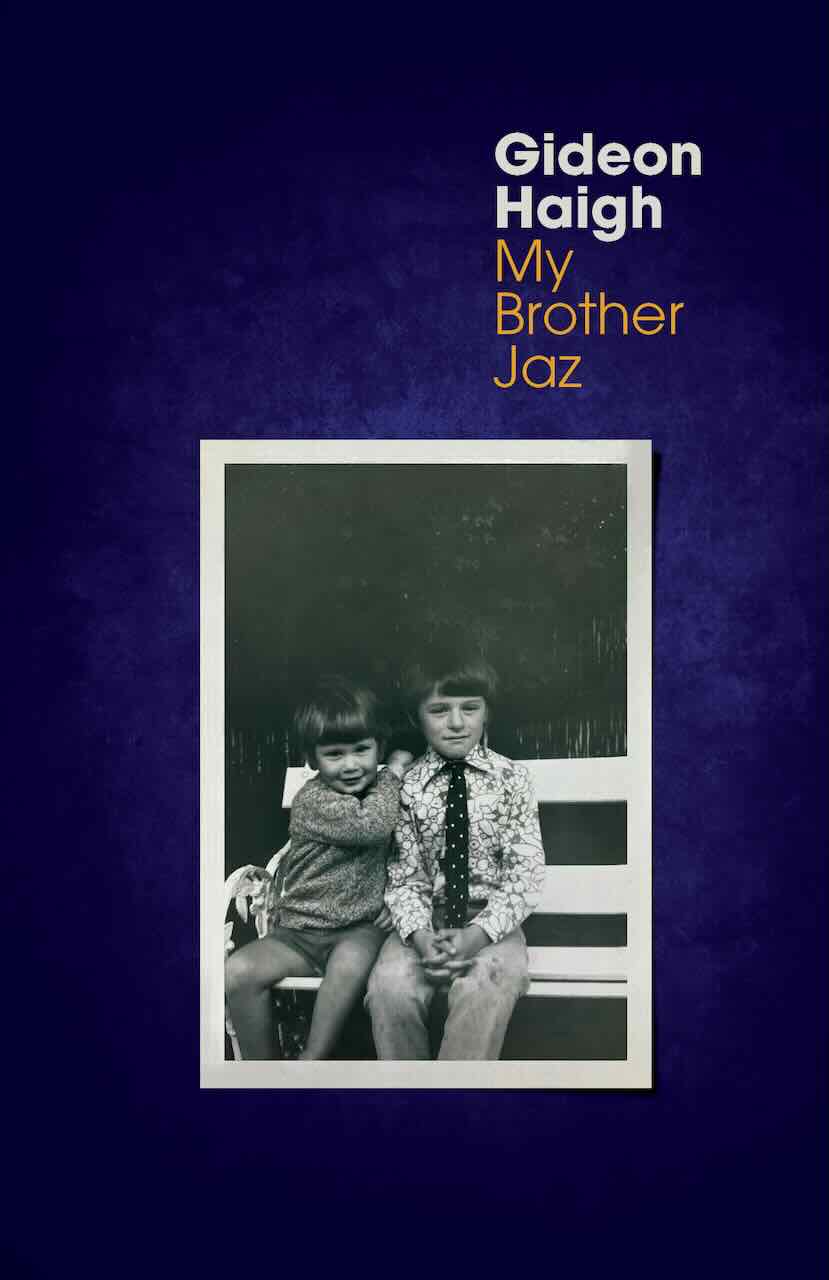
Gideon Haigh, My brother Jaz (#Review)

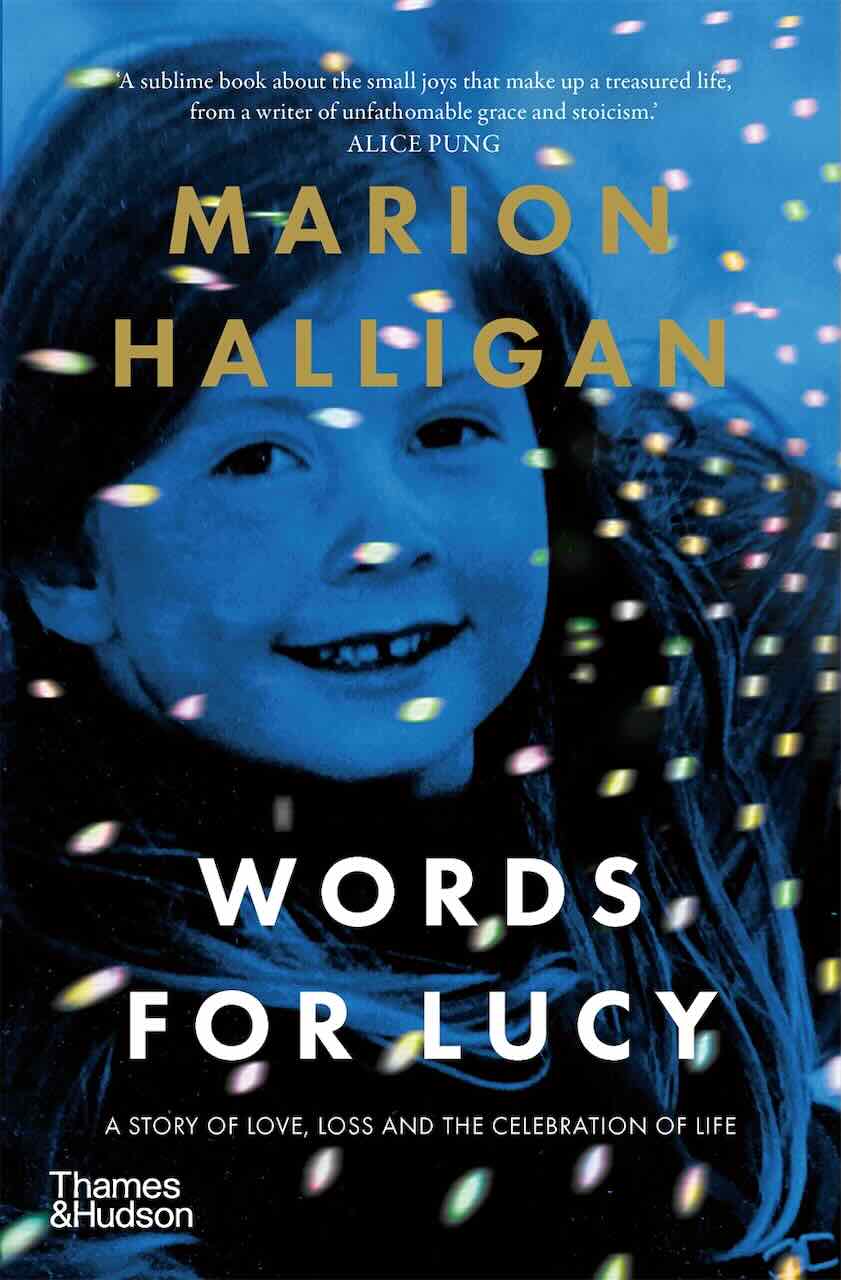
When I posted my first review of the year – for Marion Halligan’s Words for Lucy – I apologised for starting the year with a book about grief and loss. What I didn’t admit then was that my next review would also be for a work about grief and loss, Gideon Haigh’s extended essay, My brother Jaz. This does not herald a change in direction for me, but is just one of those little readerly coincidences – and anyhow, they are quite different books.

For a start, as is obvious from its title, Haigh’s book is about a sibling, not a child. It was also much longer in the making. Halligan’s book was published 18 years after her daughter’s death, and was something she’d been writing in some way or other all along. Words are also Haigh’s business, but he ran as far as he could from his grief, and it was only in 2024, nearly 37 years after his 17-year-old brother’s death, that Haigh finally wrote, as he says in his Afterword, “something I had always wanted to write, but had suspected I never would”.

Before I continue, I should introduce Haigh for those of you who don’t know him. Haigh (b. 1965) is an award-winning Australian journalist, best known for his sports (particularly, cricket) journalism, but also for his writing about business and a wide range of social and political issues. He has published over 50 books. I’ve not read any, but I am particularly attracted to The office: A hardworking history, which won the Douglas Stewart Nonfiction Prize in 2013. However, I digress …

Unlike Halligan who, to use modern parlance, leant into her grief in what I see as a self-healing way – as much as you can heal – Haigh did the opposite. He did everything he could to avoid it; he worked, he writes, “to flatten it into something I could roll over”. And it affected him. If he, just 21 at the time, was a workaholic then, he doubled down afterwards and work became his refuge, his life:

It was the part of me that was good; it was the only part of me I could live with, and that sense has quietly, naggingly persisted. Go on, read me; it’s all I have to offer. The rest you wouldn’t like. Trust me. You don’t want to find out.

If this sounds a bit self-pitying, don’t fear, that is not the tone of the book. It is simply a statement of fact, and is not wallowed in. It represents, however, a big turnaround from someone who admits early in the book that he was known for his “pronounced, and frankly unreasonable, aversion to autobiographical writing”. This aversion was despite the fact that, “at the same time, trauma, individual and intergenerational” was something he’d written about – and been moved by – for a long time. So, in this first part of his six-part essay, we meet someone who had experienced deep pain, but had shrunk from indulging in a certain “kind of confessional nonsense”, and yet who increasingly found himself “backing towards an effort to discharge this story” to see if it made him “feel differently”.

What changed? Time of course is part of it. Haigh shies from cliches, as he should, but grief will out. It just can’t be bottled up forever, no matter how hard he tried, and so in early 2024, during the Sydney Test Match no less, “something previously tight had loosened” and over 72 hours he wrote the bulk of this essay. A major impetus was the break up of a relationship. It was time for a “reckoning”, he writes on page 76, but much earlier, on page 47, he alludes to it:

Why did I even start this? The only reason I can think of is that it has to be done. It can’t remain unwritten, just as I could never leave Jaz unremembered. I have myself to change, and how am I to do this unless I examine this defining event in my life face on?

This idea of the examined life is something Halligan mentions too in her memoir. She writes near the end of her book that “I do believe that the unexamined life is not worth living, and that an enormous part of that is the recollected life”.

What I hope I’ve conveyed here is the way this essay is driven – underpinned – by a self-questioning tone, more than a self-absorbed one. Even as Haigh writes it, he is interrogating his reasons (and perhaps by extension anyone’s reasons) for writing about the self. That this is so is made evident by the way the narrative, though loosely chronological, is structured by the writing process rather than by the “story”:

“OK it’s getting on to dawn, and I’m going to click on ‘Jasper Haigh [inquest] Reports for the first time” (p. 29)

“It’s raining, but I’ve just returned from a walk. I often walk when I have something to turn over in my head.” (p. 33)

“I’m at the point right now where I just wonder what the hell I am doing.” (p. 47)

“I have picked this up again after putting it aside to draw breath, to consider what next … So, I’m going to stagger on, with the excuse that this is no memoir: this is less a geology of my life than a core sample.” (p. 61)

This approach helps us engage with a writer who prefers to push us away. It finds, in a way, the art in the artifice, and enables Haigh to write something that questions the memoir form while at the same time paying the respect that the best memoirs deserve. It’s a juggling act, and I think he pulls it off.

By the end, Haigh is not sure whether writing this work – this raw “reckoning” to re-find his emotional bearings – has achieved anything. It is, he believes, “too early to tell”, but I wouldn’t be so sure. He is a writer, and he has put on paper the defining event – the “core sample” – of his life. That has to mean something.

Gideon Haigh
My brother Jaz
Carlton: Melbourne University Press, 2024
87pp.
ISBN: 9780522880830

Marion Halligan, Words for Lucy (#BookReview)

For my reading group’s tribute to Marion Halligan last year, I had planned to read one of her older novels, Wishbone, which I did (my review), and her last book, the memoir Words for Lucy, which I didn’t. But, I have now. I guess a book born of a mother’s grief for a daughter who died too young doesn’t make the cheeriest start to this year’s reviews. However, such is the life of a reader so you’ll just have to bear with me!

Lucy, for those who don’t know Halligan’s biography, was born in 1966, with a congenital heart defect. She was not expected to survive more than a few days, but she did – for nearly 39 years. In the end, however, in 2004, her heart gave out. I’ve read two other memoirs written by a mother about her seriously ill daughter, Isabel Allende’s Paula and Joan Didion’s The year of magical thinking. They are very different books and in fact, in Didion’s case, her daughter did not die during the book, though she did die young (and Didion wrote a book about that, Blue nights). The reason I am sharing this is that Halligan, Allende and Didion were all published authors, and it shows. As Halligan writes in the opening to her book, “My business is words”. For these three writers, the process of writing was an important part of how they processed their feelings. Halligan’s book might have come out some 18 years after Lucy’s death, but she’d been writing all that time.

While confirming my memory concerning Allende and Didion, I came across the Wikipedia article on Blue nights. It includes a quote from Rachel Cusk’s review of the book. She says “Didion’s writing is repetitive and nonlinear, reflecting the difficult process of coping with her daughter’s death”. While I don’t know about the reason, the “repetitive and nonlinear” description could equally be applied to Words for Lucy. The book is divided into twelve parts (plus a postscript), with each part comprising many small sections. There is an overall chronological arc to the book, in that after briefly describing Lucy’s death, Halligan does start with her birth, and tells of the funeral and wake near the end. What comes in between, however, is, writes Halligan, like “box of snapshots. You find your own way through the story, from random details”. In other words, if you are looking for a traditional grief memoir in which the memoirist works chronologically through the “stages” of their grief, you won’t find it here.

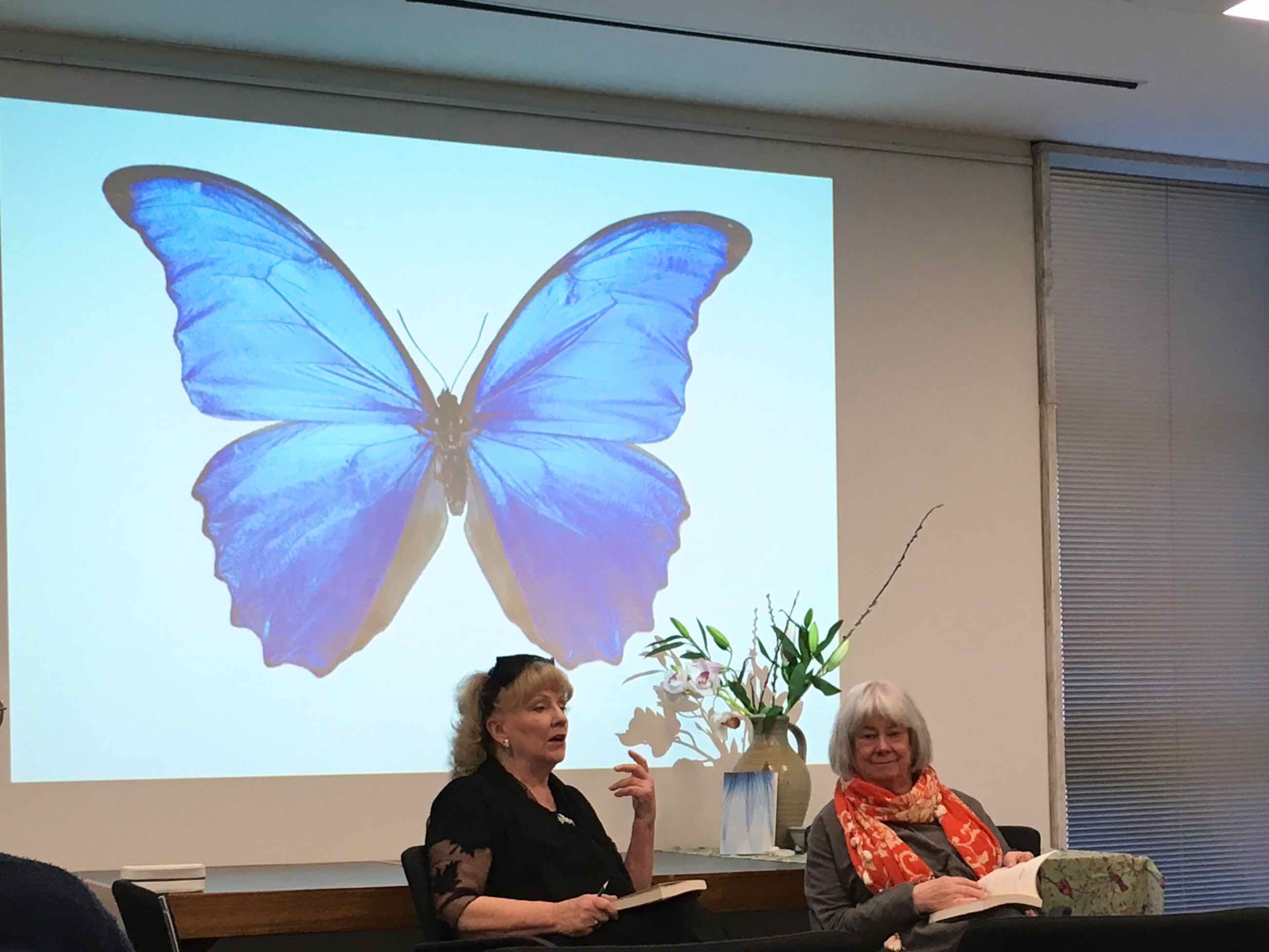
Carmel Bird and Marion Halligan
Carmel Bird and Marion Halligan, 2016

What you will find is a book about mothering and “daughtering”, about living with a chronically-ill child, about making memories and living with memories, about sadness and joy, about loss and grief (because Halligan has had more than you’d think fair), and about writing. It’s also about friendship. Having experienced my own devastating loss (of my sister in her early 30s), I know very well the value of friends. For Halligan, a great friend was the writer Carmel Bird. I was much moved by the role Carmel played in Lucy’s life, and by the love and support she clearly gave Marion.

Now, returning to Halligan’s “snapshots”, I enjoyed how, within a broad thematic structure, Halligan wanders through family life – from the lighthearted like Lucy’s love of things to the serious like her long and complex medical journey that cramped her life so much, from the family’s experience of living overseas to travelling there together later. From these, and more, so many truths emerge. For example, Halligan writes on page 2,

Love is so important to us. We so much need it. We can’t do without it. What we don’t realise at the beginning is the price it comes at.

Right there I knew I was going to like this book, because I was immediately taken back to my first pregnancy, and the fear I had that something would happen to this child I was bringing into the world. Ah well, I reassured myself, I didn’t have him (as the child turned out to be) before and I was fine, so I’d be alright! But of course, as soon as that child came into the world, my life changed and I realised things would never be the same, that if anything happened to him, I would not – indeed, could not – go back to how I was. The price of love…

The price of love isn’t all bad of course, even when the loved person dies, because there are the memories, and it is through memories that Halligan charts both Lucy’s life and her own grief. There is, though, a sort of paradox here that Halligan admits to. It’s what she calls the Janus face of grief. There’s the grief we feel for the person who has gone, for the life they are missing, the things they’ll not see or experience, and there’s that selfish grief the bereaved person feels, the loss, the misery, the wanting that person back in your life to make you happy (in effect).

It’s a complex thing grief – not linear, which Halligan knows and hence her book’s structure, and not all misery either, which Halligan also knows. Happy, joyful memories do pop up. You do laugh. Halligan describes some special memories, and then writes this beautiful thing about them:

Those are perfect memories, I can take them out whenever I like and run their cool and sparkling shapes though my fingers, look at their brilliant colours, the light refracting through them.

These memories may not be “factual”, may not be the same as those of others who experienced the same person or event, but as Halligan would tell her sisters who questioned her memory of some family event, “Write your own narratives … this is mine and I’m sticking to it”.

Throughout Words for Lucy there is the writer’s eye on what is fact and what is truth. Truths can be “different” (indeed, “many”, as Emmanuelle learns in Wishbone) while facts are “another matter”. And so, in the final pages of the book, Halligan, paying her due to “a memoir’s desire for honesty”, shares one last painful fact so that we don’t go away believing some wrong truths about her family.

Words for Lucy was Marion Halligan’s last book. It’s a memoir, and has the honesty that form demands. However, I see it as also containing her apologia, her final statement on what fiction is. For her, and she understood the slipperiness of this, it’s about truth, which is different from fact. “Fiction is always life”, she writes in this book. It means writers using life – including their own – “in all sorts of imaginative ways”. Think Jane Eyre, David Copperfield, and her own, somewhat controversial, The fog garden.

Ultimately, whether Halligan was writing fiction or nonfiction, words were her business. And these, her final ones, represent a fitting legacy for a brilliant career as well as a beautiful tribute to a beloved daughter.

Marion Halligan
Words for Lucy: A story of love, loss and the celebration of life
Port Melbourne: Thames and Hudson, 2022
218pp.
ISBN: 9781760762209

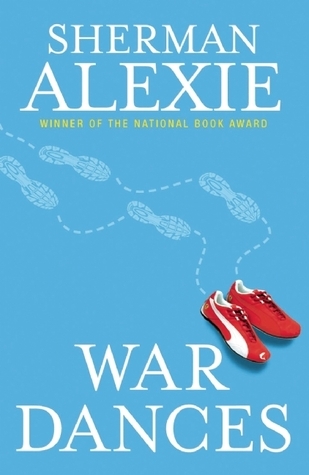
Sherman Alexie, War dances (#Review)

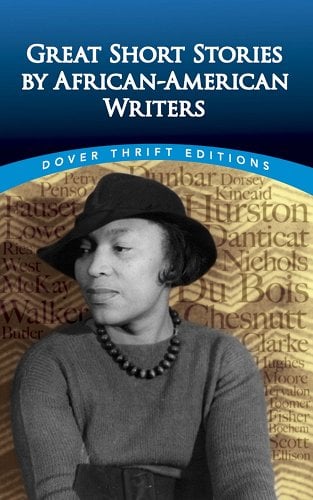
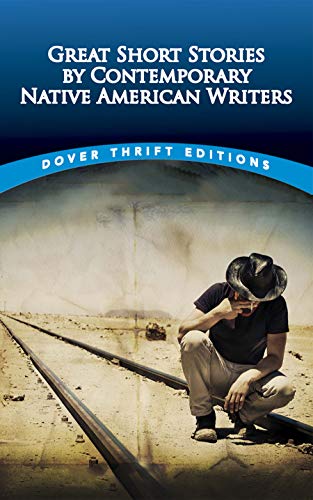
Sherman Alexie’s “War dances” is the fourteenth and last story in the anthology, Great short stories by contemporary Native American writers. It is also the longest story in the book, and the most intriguing in form.

Sherman Alexie

Anthology editor Bob Blaisdell introduces Alexie as “born in 1966, of Coeur d’Alene and Spokane heritage”, meaning he is from US’s Pacific northwest. Describing Alexie as the “most colloquial” of the writers in the anthology, Blaisdell also says that he writes “with a confessional voice that is often humorous”. Not surprisingly, given Alexie is a contemporary and award-winning author, Wikipedia provides quite a lot more, too much in fact to share here in even summary form, so click on the link if you are interested. There are personal and political controversies there, as well as several literary awards.

Essentially, though, Wikipedia describes him as “a Native American novelist, short story writer, poet, screenwriter, and filmmaker”. And, citing a couple of sources, Wikipedia says this about his themes:

Alexie’s poetry, short stories, and novels explore themes of despair, poverty, violence, and alcoholism in the lives of Native American people, both on and off the reservation. They are lightened by wit and humor. According to Sarah A. Quirk from the Dictionary of Library Biography, Alexie asks three questions across all of his works: “What does it mean to live as an Indian in this time? What does it mean to be an Indian man? Finally, what does it mean to live on an Indian reservation?” The protagonists in most of his literary works exhibit a constant struggle with themselves and their own sense of powerlessness in white American society.

“War dances”

“War dances”, as I wrote above, has an intriguing form. Blaisdell writes in his introductory Notes for the anthology that “we feel as if the writer [Alexie] is discovering the story himself and extending conventional short story boundaries as he composes it: we encounter an interview a checklist, a poem, a critique of that poem and continual jokes and revelations”.

Now, as far as I can tell, the “story” titled “War dances” comes from a book of short stories of the same name. It won the PEN/Faulkner Award for Fiction in 2010. GoodReads’ entry for the book describes it as “a virtuoso collection of tender, witty, and soulful stories that expertly capture modern relationships from the most diverse angles.” My problem is that I don’t know whether the “story” in Blaisdell’s anthology is a coherent excerpt from this book, or whether Blaisdell has selected disparate pieces to represent the work as a while. Whichever it is, I found an online version in The New Yorker. It comprises essentially the same content, with just a few differences that suggest some editing has happened between the versions. Also, in Blaisdell’s book the short pieces are numbered 1 to 16, while in The New Yorker they are not. None of this is probably germane to my comments so I’ll say no more. Consider yourselves informed!

I thoroughly enjoyed reading this piece (these pieces). The quotes I’ve shared about his work all ring true from what I read here – the mix of forms (lists, poems, interviews, and so on), the wit and humour, the “diverse angles”. It is a work that draws from Native American experience, but that encompasses wider personal and political issues.

By personal issues, I mean his dealing with significant familial relationships, and by political, I mean his recognition that Native Americans don’t exclusively suffer from the socioeconomic (including health) ramifications of racial discrimination. While the pieces seem disparate, there is an overall narrative arc concerning the narrator’s own health – he is diagnosed with a meningioma – and his father’s. There are also recurring motifs which connect many of the pieces – insects, like Kafka’s bug (or cockroach), being one. Here is a scene from the first person narrator visiting his father in hospital. You can see the pointed use of bees here:

How had this change happened? For the first sixty-seven years of his life, my father had been a large and dark man. And now he was just another pale and sick drone in a hallway of pale and sick drones. A hive, I thought, this place looks like a beehive with colony collapse disorder. (4, Blankets)

The imagery here is clear, but not laboured. Alexie doesn’t, in general, labour his points but lets humour do the talking. The second last piece comprises questions for his dying father, the first one being

True or False?: when a reservation-raised Native American dies of alcoholism it should be considered death by natural causes. (15, Exit Interview for My Father)

There are many references to race, and to its construction by other in the determination to distinguish and separate, while for our narrator, no such distinction truly exists:

And then I saw him another Native man … Well, maybe he was Asian; lots of those in Seattle. He was a small man, pale brown, with muscular arms and a soft belly. Maybe he was Mexican, which is really a kind of Indian too, but not the kind that I needed. It was hard to tell sometimes what people were. Even brown people guess the identity of other brown people. (4, Blankets)

This is followed by a self-deprecating racist joke … the reason a Mexican was not the kind of Indian our narrator needed was because he was looking for a blanket for his shivering, hospitalised father, and, well, Indians do blankets don’t they! The dialogue with the man, who is indeed Indian, is priceless.

So, these pieces build up. Entertaining to read, with their varied forms and chatty but cleverly humorous style, they convey specific truths about racism, and larger ones about identity, change and loss. In terms of this work at least, I’d say Sarah Quirk’s above-quoted three questions nail it. “War dances” – including for its very title – makes a worthy conclusion to this anthology.

(Thanks to Carolyn for this book.)

Sherman Alexie
“War dances” (orig. pub. 2009)
in Bob Blaisdell (ed.), Great short stories by contemporary Native American writers
Garden City: Dover Publications, 2014
pp. 104-127
ISBN: 9780486490953

Available online, with some differences, at The New Yorker (August 10 and 17, 2009)

Sonya Voumard, Tremor (#BookReview)

As I’ve previously reported, Sonya Voumard’s short memoir, Tremor, is one of the two winners of this year’s Finlay Lloyd 20/40 Publishing Prize. Earlier this month, I reviewed the fiction winner, P.S. Cottier and N.G. Hartland’s novella The thirty-one legs of Vladimir Putin. Now it’s Voumard’s turn, with her book on living with a neurological movement disorder called dystonia.

While essentially a memoir, Tremor also fits within that “genre” we call creative nonfiction. The judges would agree, I think, given their comment that Tremor is “notable for its compellingly astute interweaving of the author’s personal experience with our broader societal context where people with disabilities, often far more challenging than her own, try to adapt to the implicit expectations and judgements that surround them” (back cover). The interweaving of something personal with something wider is a common feature of creative nonfiction, but what seals the deal for me is its structure. Tremor has a strong – subjective – narrative arc that propels the reader on, with more objective information providing the necessary support.

The narrative opens on December 3, 2020, the day Voumard is to undergo brain surgery for her condition. It leaves us in no doubt that what we are about to read is a very personal journey. “I am”, she writes on this first page, “a hairless head on top of a flimsy cotton gown and long compression socks”. But then, two sentences later, she opens a new paragraph with, “as I wait to be taken to the operating theatre, I channel my inner journalist. I’m on a news assignment for which I have already gathered some key facts.” And just like that, we are in journalist mode, with Voumard describing her condition and the relatively new treatment she is about to receive, followed by some facts and figures. Around 800,000 Australians, she informs us, experience tremors of the body, and about 70,000 of these have dystonia. A couple of paragraphs later we flash back to early 1960s Melbourne. Voumard is four or five years old, and her personal trajectory begins with an anecdote about dropping a bottle of milk, about being “clumsy, prone to dropping things”, but also being “a risk-taker”.

From here, the book takes us on the two journeys I’ve just intimated. There’s the mostly chronological one tracking her life with dystonia until we arrive – at the end of the book – back at the beginning with her surgery and its aftermath. And there’s her exploration of dystonia, its causes, diagnosis, and treatment. Voumard binds these two journeys together with her astute, and empathetic, reflections and analyses. She knows what it’s like to live with a disability, even if early on she didn’t recognise it as such.

So, for example, she chronicles the tactics she’d use to hide her shaking, in order to get jobs and then to demonstrate she could do them (when clearly she could). She would sit on her hands, refuse offers of drinks, self-medicate with alcohol. Whatever it took to hide her condition. She talks about navigating a medical world that is so “siloed” that diagnoses ranged from the “psychogenic” (due to “some sort of failure of womanhood, an unfulfilled yearning, a cloak for something else”) to the “purely physical” (like a sports injury or from computer use) – depending on the speciality she was dealing with – when it was something else altogether. She touches on the cost of treatment, the overall politics of medicine, the gender issues which see women’s conditions so often dismissed.

And, lest I’ve given the wrong impression, she does this not only through her own experiences, but through those of others – met personally, or found through her research – ensuring that Tremor is not a “misery memoir” but something bigger, that contributes to our understanding of how people navigate a world in which they don’t fit the norm. This navigation has a few prongs: the obvious ones relate to coping with the physical limitations, discomfort, and/or pain the condition brings; and the less visible ones concern managing your expectations and aspirations, while also dealing with how people interact with you. Voumard shares the story of a woman who had suffered for over twenty years from cervical dystonia before she got a diagnosis. While diagnosis didn’t bring a cure, “identifying her condition had helped her to live her life more calmly, to not try to do too much and to understand something of others’ suffering”.

Voumard, you’ve probably realised by now, packs a lot into the 20/40 form (that is, into 20,000 to 40,000 words). At the winners’ conversation, she said there is the assumption that to be marketable you need to write 55,000 plus words. She had the bones, and had then started filling them out, but it was just “flab”. The competition, and then Julian Davies’ editing guidance, taught her that she had a good “muscular story”. So she set about “decluttering”. The end result is interesting, because this book doesn’t have that spare feeling common to short works. Tremor feels tight – there’s little extraneous detail – but not pared back to a single core.

Voumard, in fact, covers a lot of ground. She uses the Eurydice Dixon murder case, for example, to epitomise her ongoing interest in media and reporting, particularly regarding structural disadvantage and social justice. She also contextualises the latter stages of her journey against the 2019 bushfires, the 2020-2021 pandemic and lockdowns, and the 2022 floods in NSW’s northern rivers. Why all this? The subtitle explains it. This book, this “tremor”, is not just about a movement disorder but about something bigger:

My more recent thinking about disability has strengthened my belief in the urgent need to privilege the voices of others more marginalised than mine. But I also cling to the concept of freedom of speech – not as a neoliberal, tabloid-news defender of hate speech – but as someone striving to find ways to respond to the challenges of a democratic society that is becoming more disordered.

Tremor is another beautiful, thoughtful product of the Finlay Lloyd stable. Recommended.

Read for Novellas in November, because, while not a novella, it is a short work.

Sonya Voumard
Tremor: A movement disorder in a disordered world
Braidwood: Finlay Lloyd, 2024
129pp.
ISBN: 9780645927023

Review copy courtesy Finlay Lloyd.

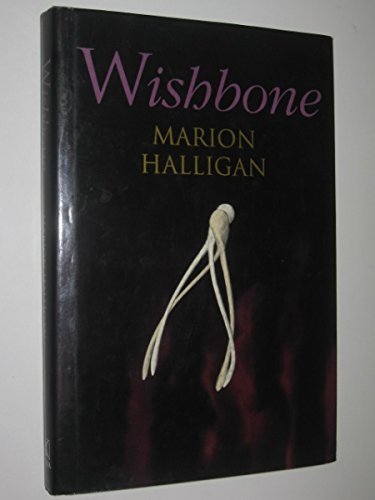
Marion Halligan, Wishbone (#BookReview)

My reading group’s last meeting of the year took the form of a tribute to Marion Halligan, who died earlier this year and who had generously attended our meeting when we discussed her Valley of grace (my review). We have done this once before with Helen Garner (albeit she hadn’t died) and it worked well. The process is that we choose something we want to read and share our thoughts with the group. I have read several of Halligan’s books, but I have a few on my TBR, so of course I chose one of those, Wishbone, her fourth novel, published in 1994.

Before I share my thoughts on that, I thought you might like to know what everyone read. Ten members attended the meeting. Some read two books, while others chose a short story or article. It is, after all, a busy time of year. The novels read were, in chronological order, Wishbone (1), The golden dress (2), The fog garden (1), Valley of grace (1), Goodbye sweetheart (2). Three people read her most recent memoir, Words for Lucy, while others read selections from Canberra tales (“Most mortal enemy”), The taste of memory (the first piece), Canberra Red (“A city of mind”), and Shooting the fox (“Shooting the fox”). In other words, we read widely across her oeuvre, resulting in an enjoyable – and occasionally excitable – meeting as we teased out some of her themes and ideas, including how much of her fiction was drawn from life!

“who knows what the hell is going on”

So now, Wishbone. It tells the story of a woman, Emmanuelle, her “motley family”, and the wishes they have for themselves. The novel starts with a young, passionate Emmanuelle having an affair with a married man, but it soon jumps some years hence when she is now married (to a man named Lance), and living in well-heeled Sydney with two children, Maud and William. The rest of the novel follows a period in the lives of these four and others in their close circle – friends, family and employees. During this time, we experience a life-threatening stroke, extra-marital affairs, mistaken assumptions, and a suspicious death, all set within perfectly rendered scenes of domesticity. Halligan can make you gasp with her audaciousness.

As I was reading this novel, a light dawned for me about why I so often use Jane Austen as a benchmark for writing I love. I do like all sorts of writing, but I am particularly drawn to writing that exposes human nature with wit, irony and a generous spirit. This is what Austen does, and this is also what Halligan does. Wishbone is a generous story about messy human lives. Halligan writes with a knowingness about those deep-down thoughts, wishes, and desires we all have, but she is also forgiving about her characters’ foibles and less admirable traits and behaviours. In Wishbone, she explores the tension between our wishes – particularly regarding love – and living with what you’ve got.

There’s something of a fatalist element, here, in the sense that we think we have choice in all this, but choice proves in fact to be elusive. Things happen that we have no control over. Late in the novel, as Emmanuelle sits around the kitchen table with her two children and au pair Mel, in what looks to be a cosy domestic scene, a question – which is both literal and existential – is suddenly proffered, “who knows what the hell is going on”. Who indeed? (And who is asking the question? Emmanuelle, surely, but there’s also an omniscient voice overlaying the characters’ perspectives. At least I believe so. Wishbone slides seamlessly between voices and perspectives in a way that never loses the reader, but that ensures we see multiple sides of things.)

This brings me to style, and how Halligan does what she does. Halligan is a born short-story writer. As I started Wishbone, I almost wondered whether I was reading a book of short stories. Every chapter is gorgeously titled and most felt like they could stand on their own as little nuggets from a life. The opening chapter, The Glade, tells of Emmanuelle’s youthful affair with her married man. It starts:

The difficulty of a love affair between a young woman and a married man may be its logistics. Where can they go? He lives with his wife. She lives with her parents.

They can’t afford hotels, and anyhow it’s too risky as the town is small, but Brian knows “a good place”, a little glade under a cliff. Whenever Brian thinks of going to the glade, he whistles Handel’s tune, “Where e’er you walk”, which “always gladdened his wife’s heart, because she knew her husband was feeling cheerful”. Halligan’s discussion of this song, Brian’s behaviour, and the wife’s response is delicious in more ways than this little irony, but I will just share Halligan’s nailing the point, with “the song told her about the walking and the sitting but what she didn’t know about was the lying”. Just think of the double meaning in that last word! This writing just makes you splutter.

From here, the plot unfolds quietly but surely. Hints are dropped but aren’t heavy-handed, so we are still surprised when certain events occur, which brings me to the title, and its reference to wishes. In the third chapter, The Man in the Train, there is a mostly mundane discussion about wishes until the chapter’s titular, and unnamed, “man” asks Emmanuelle what she would wish for. Her answer?

I would wish for the gift of making dangerous choices.

As the novel progresses, various characters express their wishes. Emmanuelle’s friend Susie idly wishes she were a widow, while au pair Mel wishes she were beautiful. Emmanuelle wants more passion from her husband, while chauffeur Stuart wants money. And so on … What these characters learn, you won’t be surprised to hear, is that their seemingly ordinary, or common, wishes often carry a danger that is not expected. You know that saying, “be careful what you wish for”. But Halligan’s book is no simple moral tale. What Emmanuelle realises near the end, in fact, is that all choices can be dangerous. Susie asks her:

Have you ever wished Lance dead?
I’ve wished him different.
And did that come true?
Not in ways that I’d have chosen.

Where does this leave us? We won’t stop wishing, and we certainly can’t stop making choices, but we can think about our choices and be realistic about the outcomes, whether they are the expected or unexpected ones. In the end, Emmanuelle probably has the answer:

being alive is like reading a book. You might think you’ve got a fair idea of the plot but you don’t actually know what’s going to happen next, you’re as much a mystery to yourself as a character in a novel. Perhaps the secret is just to keep turning the pages.

Reading Wishbone has reminded me how much I enjoy Halligan. I must get back to that TBR.

Marion Halligan
Wishbone
Port Melbourne: William Heinemann Australia, 1994
235pp.
ISBN: 0855615974

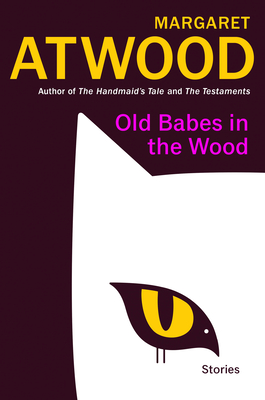
Margaret Atwood, Widows (#Review)

Marcie’s (Buried in Print) MARM (Margaret Atwood Reading Month) event is now seven years old, but this is only my second contribution. I read a reasonable amount of Atwood before blogging, and since then have let her slide somewhat, though I have reviewed a couple of books here. You can’t read it all – but, I do like her voice …

So, I decided to join in again this year, as I knew I had a collection of short stories in my TBR pile. The only problem is that my non-Australian TBRs are still in boxes somewhere. What to do? Maybe, I thought, there’s a short story online somewhere, and sure enough I found one in The Guardian. Titled “Widows” it features Nell and (the late) Tig. From Marcie’s blog I learnt that this couple first appeared in Atwood’s collection of linked stories titled Moral disorder, and appeared again in her recent collection Old babes in the wood, from which this story comes. However, I’ve not read either of these collections, and I didn’t recollect those characters or their names.

Then a strange thing happened. According to Wikipedia, Moral disorder contains eleven connected short stories, the second last one being “The Labrador fiasco”. This is the story I read for last year’s MARM, but it was in a 1996-published Bloomsbury Quid edition. I had no idea it was later included in the 2006-published Moral disorder. Oh these writers can be tricksy. Did she change it in any way – such as to name the then unnamed character – for version in the collection? Anyhow, moving on, Wikipedia tells me that the 2023-published Old babes in the wood comprises fifteen stories in three parts: “Tig & Nell” (three), “My Evil Mother” (eight), and “Nell & Tig” (four). “Widows” is the thirteenth story in the collection, so presumably the second one in that last group of four.

I won’t rehash “The Labrador fiasco”, except to say that it is a “story-within-a-story” story, and that the framing story concerns the unnamed narrator (who is apparently Nell) visiting her aging father and mother. The father, in particular, is declining, having experienced a stroke six years before the story’s opening. It is told first person by the daughter, who regularly visits her parents and is becoming aware of aging and our inevitable decline. Some years have clearly passed, and in “Widows” Nell has recently lost her husband “Tig”. It’s an epistolary story, I guess you could say, though it contains only two letters, both by Nell to a friend named Stevie.

The first, and main, letter is a delight – and pure Atwood. It’s partly in what she covers, as this short short story manages to encompass Atwood’s recurring themes – women (their position in society, and their relationships), language, aging, social conventions, and the state of the world. But it’s also in the sly way she makes her sharp little points. For example, talking about widows, she has a dig at the modern penchant for creating increasingly complicated gender-neutral descriptions:

I’m hanging out with a clutch of other widows. Some of them are widowers: we have not yet got around to a gender-neutral term for those who have lost their life partners. Maybe TWHLTLP will appear shortly, but it hasn’t yet. Some are women who have lost women or men who have lost men, but mostly they are women who have lost men.

Similarly, there is a sly reference to world politics and climate change, when she says to Stevie, who is much younger, that:

if you live another thirty years and are still enjoying it, or most of it – if anyone will be enjoying, or indeed living, considering the huge unknown wave that is already rolling toward us – I expect you will look at a picture of yourself as you are today, supposing your personal effects have survived flood, fire, famine, plague, insurrection, invasion, or whatever …

Of course, Nell talks about grief, about the forms, assumptions and cliches that surround it. She’s quietly scathing about “checking the boxes of the prescribed grief process” and eschews the well-intended offers of casseroles and suggestions that she go on a cruise.

When I read writing like this, I can’t help being reminded of Jane Austen, because both have the ability to see through our conventions and pretensions to the truths beneath, and to make us chuckle as they do so.

However, for all the cheeky barbs and social commentary, there is also something heartfelt in her discussion of grief. She speaks of how it skews one’s experience of time, how it affects one’s relationship with the person who has died, and what grieving people really talk about and deal with. Atwood knows whereof she speaks having lost her husband of 46 years in 2019.

If I thought this first letter was both clever and moving, the second letter just nailed it. In fact, if I were writing criticism and not a review, I would discuss what Atwood does here, but that would spoil the whole experience, and I don’t want to do that because you can read it yourself at the link below. Suffice it to say that, while “Widows” is a short story, it does a lot in its few words, and its ending signs off with aplomb.

Read for MARM 2024

Margaret Atwood
“Widows”
The Guardian, 25 February, 2023 (also pub. Old babes in the wood, 2023)
Available online at The Guardian, 2023

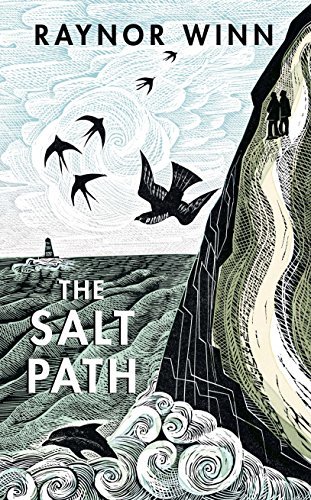
Raynor Winn, The salt path (#BookReview)

While my reading group’s main fare is fiction, we do include nonfiction in the mix. In fact, this year has been unusual as we’ve scheduled three nonfiction books – Richard Flanagan’s Question 7 (my review), Anna Funder’s Wifedom (my review), and, last month, Raynor Winn’s The salt path. I can’t recollect how The salt path came to be chosen, and nor could the 8 (of our 11) members who attended the meeting, but we weren’t about to complain.

Many of you will know this book already, given it became a bestseller after its publication in 2018. It was shortlisted for some major awards, and won the inaugural RSL Christopher Bland Prize (which I would call a “late bloomer” prize.) However, in case it escaped your notice, I will briefly summarise it. The book opens with two disasters befalling author Raynor and and her husband of 32 years, Moth. He is diagnosed with a rare, terminal degenerative disease called CBD (corticobasal degeneration) and, in an ultimately unjust court case, they lose their home which was also their livelihood. They have nothing but each other (and their two children who, fortunately, are young adults linving away from home). What do you do in a situation like this? You decide to walk England’s challenging 630-mile South West Coast Path, wild camping most of the way. That’s what.

Although it’s essentially a memoir, The salt path is better described as a road story that combines memoir, nature writing and social commentary. I would also argue that it’s a work of creative nonfiction, partly because of its strong narrative arc (albeit this is not uncommon in memoir and travel writing) but also because it includes dialogue (which, given there’s no evidence to the contrary, has presumably been recreated for the book). The result is a book which interweaves description, anecdote, personal reflection, social commentary and dialogue in a way that maintains our interest because it never bogs down in one mode or another. The balance Winn achieves is not only between these modes, but also in tone, which moves between serious and scared, melancholic and thoughtful, and light and humorous.

“you’ve felt the hand of nature … you’re salted” (woman on path)

I want to explore a little more how the combination of memoir and road story works to tell Winn’s story. Memoir, by definition, deals with a particular issue or time period in a person’s life. This gives the story a natural trajectory which conveys how that issue is handled or progresses – and/or what happens over that chosen time – until some sort of resolution or conclusion is reached. A road story has an even more obvious or natural narrative arc – the beginning of the trip, the middle with all the events and challenges met on the way, and the trip’s end (which may or may not be the originally intended one.)

So, in The salt path, the memoir, with its central issues being Moth’s illness and their homelessness, is framed by the road story, which describes the physical journey, that is, the landscape they walk through, and their experience of walking and wild camping. As in most road stories, we meet characters along the way, some positive or helpful, some amusing, and others negative or obstructive. And, as is also common in travel literature, we are introduced to issues that are relevant to the places travelled through. In this case they include conflicting ideas about heritage, conservation and the role of the National Trust in the communities and regions along the path.

There is, then, a lot to this book and while it works well as a coherent whole, some parts, of course, left a stronger impression than others. The strongest was their experience of the path, particularly given its recognised toughness combined with their impecunious state, inexpert preparation, and Moth’s ill-health. They were often hungry, wet and cold, and they walked at half the pace of Paddy Dillon whose guidebook they followed, but as time wore on Moth’s health improved. Why is a question never fully answered because they didn’t know why. Years later, he is still alive, still with the condition. Their strong interpersonal connection sustains them when little else does! And there is always the nature. This is Winn’s first book but she can clearly write. Her descriptions of the environment – the wildlife, the landscape, the vegetation, the sea – and of their feelings as they walk through it are perfect, like:

“A hidden land of weather and rock, remote and isolated. Unchanged through millennia yet constantly changed by the sea and the sky, a contradiction at the western edge. Unmoved by time or man, this ancient land was draining our strength and self-will, bending us to acceptance of the shaping elements.”

“The moon climbed into a clear sky, just past full, polishing the landscape in tones of grey and silver.”

After some time of walking the path, they start to look weathered – peeling skin, ragged clothes, and so on. It is around this time that they meet a woman who recognises the look. She tells them “you’ve felt the hand of nature … you’re salted”. Winn’s title is more than a literal description of a sea-swept path. It is also about being part of the nature, the life, they walk through.

From early in the book, however, another theme is introduced that threads through the book – homelessness. Obviously, it occupied Winn’s mind because they were suddenly homeless, but as the book progresses, she supplements their personal experience of being homeless with facts and figures. The facts are sobering, but they are made powerful by Raynor and Moth’s firsthand experience. For example, very quickly they became cautious about being honest about their circumstances, because it affected people’s attitudes to them:

“We could be homeless, having sold our home and put money in the bank, and be inspirational. Or we could be homeless, having lost our home and become penniless, and be social pariahs.” 

All sorts of other thoughts and issues arise, as you would expect on a long walk. Another is the aformentioned issue of protecting heritage and the environment, and the role of the National Trust. Locals complain about National Trust restrictions affecting their traditional jobs, but she also sees all the money coming in from the resultant tourism and senses “a strong whiff of hypocrisy”. In an area dug up for clay-mines, she discusses the various approaches taken after the mines have gone. One is creating an attraction like the Eden Project. Returning the land to its original state seems the least likely option, because “no tourist is going to pay to walk over a meadow with a leaflet that says, ‘You’d never know it, but this used to be a mine.’” By contrast, there’s the town of Tyneham that had been requisitioned during World War Two, and where

Strangely enough, limited public access, a lack of intensive farming and the occasional blasting by small-arms fire has allowed wildlife and vegetation to thrive throughout the ranges. A form of khaki conservation that no one expected to be the outcome when the villagers left their homes as part of the war effort.

Of course, insights into the land – into the many ways it has been used, modified and re-used – are common to those who walk, and land-loving Raynor Winn is no exception. Her observations are idiosyncratic to her. Readers may not always agree, but she is real and honest.

There is much more to say, but I’ll conclude on the personal, because this is ultimately a personal journey as much as a physical one. Winn starts off, somewhat angry but mostly scared (very scared about her beloved Moth dying) and deeply worried about the future and whether they are doing the right thing. Slowly though, as Moth’s symptoms seem to subside, and as time passes, she senses change in herself

I was no longer striving, fighting to change the unchangeable, not clenching in anxiety at the life we’d been unable to hold on to, or angry at an authoritarian system too bureaucratic to see the truth. A new season had crept into me, a softer season of acceptance.

I don’t think it’s a spoiler to say that The salt path is a book about reality, not miracles but not tragedy either. Its interest lies in the particular situation this couple finds themselves in, in the path itself, and in Winn’s ability to write about it all with warmth, humour and honesty.

So, how did my reading group like it? Very much overall. Depending on our own experiences and perspectives, we varied in our reaction to the different decisions they took, but as lovers of the environment we all appreciated the description of the walk, and as lovers of “stories” we enjoyed the anecdotes about the people they met. Of course, we had questions, and there were little niggles – some didn’t always like the tone, and some couldn’t believe the couple’s poor preparation and apparent lack of sunscreen! But the discussion we had was excellent. So, a good book all round.

Brona also reviewed this book (nearer its publication!)

Raynor Winn
The salt path
Penguin, 2018
273pp
ASIN: ‎ B0793GXSBL
ISBN: 9781405937528

Michael Wilding, The man of slow feeling (#Review, #1970 Club)

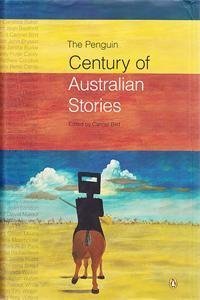
Michael Wilding’s short story, “The man of slow feeling”, is hopefully the first of two reviews I post for the 1970 Club, but we’ll see if I get the second one done. I have been making a practice of reading Australian short stories for the Year Clubs, so when the year is chosen I go to my little collection of anthologies looking for something appropriate. My favourite anthology for this purpose is The Penguin century of Australian stories, edited by Carmel Bird, because it is a large comprehensive collection and because the stories are ordered chronologically with the year of publication clearly identified. Love it!

Who is Michael Wilding?

With these later year clubs, like 1970, there’s a higher chance that the authors we read might still be alive. This, I believe, is the case with Michael Wilding. Born in England in 1942, he took up a position as lecturer at the University of Sydney from 1963 to 1967, before returning to England. However, two years later, in 1969, he returned to Australia and stayed. He was appointed Professor of English and Australian Literature at the University of Sydney in 1993, and remained in that position until he retired in 2000.

AustLit provides an excellent summary of his career. As an academic, he has, they say, had a distinguished career as a literary scholar, critic, and editor”, specialising in seventeenth and early eighteenth century English literature. Since the early 1970s, he has also “built a reputation as an important critic and scholar of Australian literature” focusing in particular on Marcus Clarke, William Lane and Christina Stead. And, he has been active as a publisher, having co-founded two presses, and at least one literary magazine.

However, he also, says AustLit, “came to prominence as creative writer in the late 1960s, when he was at the forefront of the ‘new writing’ movement which emerged in Australia in at that time”. He was part of a group of writers, editors and publishers “who were influential in promoting new and experimental writing, and in facilitating the revitalised Australian literary landscape of the late 1960s and 1970s”. AustLit doesn’t identify who was in that influential group, but I think Kerry Goldsworthy does in her introduction to Penguin’s anthology. She writes that “short fiction was the dominant literary form in Australia in the 1970s” and the most recognised practitioners were Frank Moorhouse, Peter Carey, Murray Bail and Michael Wilding. (All men, interestingly.) This writing, says Goldsworthy, was heavily influenced by European and American postmodern writing, but she doesn’t specifically reference Wilding’s story in her discussion.

Wilding has published over twenty novels and short story collections. AustLit adds that his short stories have also been published widely in anthologies, and that many have also been translated. Wikipedia provides an extensive list of his writing.

“The man with slow feeling”

“The man with slow feeling” is a third-person story about an unnamed man who, as the story opens, is in hospital after a serious accident from which he had not been expected to survive. However, he does survive. Gradually his sight and speech return, but not his sensation. That is, he can’t taste food or feel touch.

Soon though, he realises that sensation is returning, just some time after the actual experience. For example, he and his partner, Maria, make love, but he feels nothing – until some hours later. Not good! Not only is there the problem of feeling nothing, but when they are making love, he might experience some unpleasant sensation from three hours ago. Then, when he is out shopping three hours later, he experiences the orgasm. Or, regarding food, he will eat lunch but not taste it until 4pm. It is all, to say the least, disorienting. So, he sets up a system where he records his “sensate actions” so he can prepare (or “warn”) himself “after a three hours’ delay … of what he was about to feel”.

I’m sure you can see the practical problem with this. Soon, he becomes trapped in “a maze of playback and commentary and memory”, where he is trying to record the present for the future while at the same time experiencing the past. It becomes intolerable.

The tone is one of disassociation, alienation – which had me heading off down that more “modernist” path. But, the “recorder” aspect suggested that the theme involves partly, at least, exploring the conflicted role of recording versus experiencing – which is a more post-modern idea. Can you do both? Can a writer do both? Can, I remember discussing at length during my film librarian career, a documentary filmmaker record and not experience (or not affect the experience) during the act of recording? What are the bargains you make between the two?

I don’t know enough about this time in Australian literature – I haven’t read enough – to understand where Wilding’s ideas and thoughts fit into the zeitgeist. In her introduction to the anthology, Kerryn Goldsworthy says that the writing of this time incorporated “elements of fantasy, surrealism, fabulist, literary self-consciousness, and the process of storytelling itself”. She says the stories by Murray Bail and Peter Carey are concerned with “the riddles and paradoxes of representation itself”. Wilding’s story could also be read as part of this exploration.

This is a dark story in which, if I stick with my idea about the theme, Wilding suggests that the life of sensation is what it’s all about. Fair enough, but where does that leave the writer (or recorder)?

“The man with slow feeling” had me intrigued from its opening lines to its close. I’m not sure I have fully grasped all that Wilding intended by it, but this was a time of experimentation with the short fiction form and new writerly freedoms. I wish I could point you to an online version of the story.

* Read for the 1970 reading week run by Karen (Kaggsy’s Bookish Ramblings) and Simon (Stuck in a Book).

Michael Wilding
“The man with slow feeling” (orig. pub. Man: Australian Magazine for Men, July 1970)
in Carmel Bird (ed.), The Penguin century of Australian stories
Camberwell: Penguin Books, 2006 (first ed. 2000)
pp. 232-238

Stephen Orr, Shining like the sun (#BookReview)

A question that confronts many young people as they reach adulthood – in western cultures at least – is, should I go or should I stay? This is particularly so for young people in small rural towns, and is the issue at the heart of Stephen Orr’s latest novel, Shining like the sun. Wilf Healy, the oldest of three brothers, stayed in Selwyn which is now dying, while his brother Colin left for the bright lights of America, as soon as he could. Now eighty years old, the widowed Wilf is confronting the rest of his life, and he is again pondering the question, except he is not thinking of heading for the bright lights but for Louth, the island on which he grew up. The thing is, that island is empty. No-one lives there now. But this doesn’t dissuade Wilf from his dream. Meanwhile, his 17-year-old great-nephew Connor is about to lose his Mum to cancer and sees no life for himself in Selwyn.

That is the basic plot. Selwyn is a fictional wheatbelt town in South Australia – only identified because Louth Island is a real island off the coast. Selwyn has “three hundred people coming and going, dying, lost in the cracks”, plus one of those signposts pointing to far-flung places around the world. Wilf lives and works in Monk’s pub, delivers the mail (not to mention vegetables and pharmaceuticals) around the community, and drives the school bus, all because he can’t say “no” when yet another job needs doing. However, as the novel opens, he’s had enough. He wants to retire, but his plans to leave are half-hearted at best – and not just because of his sense of responsibility for his sick niece Orla and her son, the disengaged Connor. Why?

The three epigraphs provide a clue, but so of course does the story. We follow Wilf through his days, as he engages with the people of Selwyn, people whom Orr paints beautifully with a description here, a piece of dialogue there. Take young Connor, “an out-of-tune whistle that just needed a breath of air”, or Bobby, the 85-year-old vegetable grower and builder of a kit plane “who is too old to deliver vegetables, but not fly”. Take the school principal, Noah, for whom Wilf drives the school bus. He’s a weak man, who, when a certain crunch comes, cannot stand up for right. And take Wilf’s school bus passengers who are so entertainingly individuated from the opinionated Sienna to the JK Rowling-wannabe Luke, from the withdrawn Trevor to the entitled bully Darcy. The bus-rides are interspersed through the novel, providing perfectly pitched comic relief while also playing an important role in moving the narrative along. It is something that happens on the bus that triggers the novel’s main crisis.

But, Wilf and Connor provide more than two ends of the “do I leave” spectrum. Wilf’s reflections on his growing up provide a stark contrast to the lives of Connor and his peers. Wilf, of course, came from the often brutal “spare the rod, and spoil the child” era, when you did what you were told and expected little else, whilst Connor is growing up at a time when young people are not directed, but encouraged to find themselves. Orr does not judge either way, but lets his readers see and ponder how it all plays out in a life.

I opened this post on the question of staying or going, identifying it as the novel’s central issue – which it is. However, this is not the theme. Rather, it is the question which gives the theme its push. The theme, itself, is something deeper, something so fundamentally human that it could almost sound trite, except it’s not. I’m talking about the idea of community, of connection, of being where you are part of something bigger, where you can make a difference to the lives of others. This might sound schmaltzy. However, because Orr’s characters are fallibly human, and because the socio-economic challenges facing small towns (in particular) are real, connection doesn’t come easily. Shining like the sun, with its cast of authentic characters and array of specific, yet also typical situations, teases out whether this connection, this idea of community, can in fact still fly.

“the possibility of being happy” (Connor)

Orr’s intention? There is surely some political intent, some wish to convey the value and importance of these towns which are being allowed to die through neglect and poor policy (“farms flattened”, and so on). But, it is also personal in terms of exploring what sustains human beings the most – a fancy job or house? Or connections with your community? Mr Gums and I wait for the cliched “tight-knit community” which is unfailingly trotted out after whatever disaster (natural or personal) is on the day’s news. Like most cliches, however, it has an element of truth. A “real” tight-knit community is worth its weight in gold – another cliche for you. Orr knows this, so does Wilf. There is nothing romantic to this story, just real life with all its questions and toughness alongside moments of humour and mutual support in which, even Connor realises, there is “the possibility of being happy”.

Shining like the sun, then, is another special Stephen Orr novel. It is not fancy in voice or structure. That is, it is told third person – albeit a first person narrator opens the proceedings – and is told chronologically, with occasional flashbacks as Wilf remembers his past. What makes it special is the quality of the descriptive writing, the knowing characterisation, the authentic dialogue, and the serious but warm tone leavened by natural humour that comes from ordinary people going about their business.

I read this novel immediately after my return from touring outback Queensland. We saw many small country towns, most of which were variations on the theme. Orr’s story rings true to these towns. Indeed, to end on a cliche – because, why not? – Shining like the sun is a love letter to an Australia little known to its mostly urban inhabitants. It has much to offer on both political and personal levels, but, beyond that, it is just a darned good read.

Stephen Orr
Shining like the sun
Mile End: Wakefield Press, 2024
313pp.
ISBN: 9781923042278
Review copy courtesy of Wakefield Press.

Jane Caro, The mother (#BookReview)

When my reading group scheduled Jane Caro’s debut novel, The mother, I was, I admit, not exactly enthusiastic, because my sense was that it was not going to be the sort of, shall I say, subtle writing I prefer. My sense was right, but I am not sorry I read it – partly because of the engaged discussion we had and partly for Caro’s intention.

The mother, then, is not a literary award-winner – the writing is fine but not exciting or breath-taking in the way I like – but, and it is a big but, it is an accessible, fictional exposé of the main points Jess Hill makes in her Stella Prize-winning See what you made me do: Power, control and domestic violence (my review). Hill explores family and domestic violence from every angle, but the most shocking and enlightening part for me concerned children, particularly the Family Court’s inability or refusal to see the risks to children from its parent access orders, even when the children themselves express fear. This point is powerfully made by Caro in her novel*.

But, let me step back a bit. The mother tells the story of 60-something middle-class Miriam Duffy who, widowed early in the novel, is pleased – and indeed grateful – when her emotional daughter, with whom she has had a tricky relationship, marries a perfect-seeming man. Gradually, however, little niggles about this relationship become bigger until one day they are confirmed when Ally returns home with two little children in tow, having left her husband. From here the situation deteriorates as the husband Nick escalates his bullying, predatory behaviour, and Miriam and Ally realise that the law is unable to protect them. The novel is described as a thriller, so I’ll give you just one more piece of information. It opens with a Prologue in which Miriam buys a handgun.

This brings me to the structure. After this Prologue, the novel is divided into two parts. In Part 1, Ally marries and soon after, Miriam is widowed. There is also a second, older, daughter who is in a stable marriage and has two children. During this part, Caro slowly drips out many of the flags that constitute coercive control, but that on their own don’t initially look like it or can be explained away – things like isolation from family and friends, use of a (demeaning) pet-name, jealousy, charm that is turned on and off at will, and surveillance, moving into sexual violence and gaslighting. This part ends with Ally’s return home. Part 2 commences four years later, and we are reminded of the Prologue, because Miriam is researching where she can buy a gun. Miriam and Ally have been systematically intimidated by Nick, and have reported his transgressions against Ally’s AVO (Apprehended Violence Order) again and again, but

Eventually they had stopped going to the police. It wasn’t that the cops weren’t sympathetic; it was just that they could not do anything.

In this part, Caro ratchets up the sense of helplessness (and hopelessness) the two women feel as Nick finds new ways to harass and terrify them. As I read it, I couldn’t help but think about all the news stories of recent years about murdered women and children. Nor could Miriam and Ally, but they turned the TV off the minute these stories came on. They were too close to home!

Like many issue-driven books, The mother did, as many in my reading group commented, feel didactic at times, and it is somewhat predictable. Some of us also felt that it was a little laboured in places. However, offsetting this is the novel’s characterisation and understanding of human nature. Caro conveys the complex human emotions we all experience under stress. She explores the lines and balance between what is acceptable in relationships and what is not, the fears about when to speak up, the justifications we try to find when things feel awry, and the feelings of guilt (particularly in mothers).

The mother is unapologetically a novel with a cause. With its compelling storyline and believable characters, it has a chance of reaching those who do not understand what coercive control is, and who do not realise that it crosses all demographics. Nick, for example, is a vet and Ally a PhD candidate. Miriam, a successful businesswoman, lives in comfortable North Shore Sydney.

This novel is being promoted primarily as a thriller, but I’m more inclined to see it as belonging to that long tradition of social problem novels. It may not be as sophisticated as the best of them, but its intention is clear, to drive social change. I hope it succeeds. I don’t imagine Jane Caro, or Jess Hill for that matter, will let matters lie until we see real, sustained change happening – and nor should we.

* This month there has been news about changes in family law in Australia, including removing the presumption of equal shared care, putting a focus on prioritising children’s best interests, and revamping the role of independent children’s lawyers. Time will tell what difference this makes in practice.

Jane Caro
The mother
Allen & Unwin, 2022
368pp.
ISBN: 9781761063893 
ASIN: B09MQ3PN1W