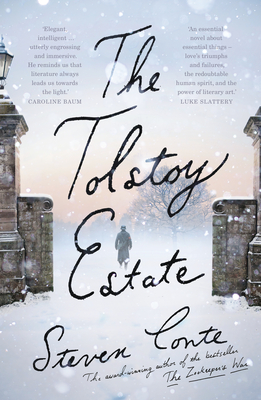
Steven Conte, The Tolstoy Estate (#BookReview)

Steven Conte burst on the scene in 2008 when he won the inaugural Prime Minister’s Literary Award with his 2007-published debut novel, The zookeeper’s war. I always intended to read it but somehow it never happened. Jump to 2020, and Conte’s second novel, The Tolstoy Estate, was published. That’s a big gap, but what he’s produced is a well-researched, carefully-crafted, thoroughly absorbing novel.

What intrigues me more than this gap, however, is that both his novels are set during World War 2, and both deal with Germany in the war. The zookeeper’s war is about how the Berlin Zoo’s owner and his Australian wife managed to keep it going through the war. I wonder what it is about war and Germany that attracts Conte? Or, is it just coincidence?

So many paths to follow

The Tolstoy Estate’s plot is not complicated. Most of the story takes place over the six week period – November-December 1941 – during which a German army medical unit established and ran a hospital in Yasnaya Polyana, Tolstoy’s estate, near Tula, south of Moscow. Arriving at the estate, the Germans, including doctor Paul Bauer, meet the site’s curator, Katerina Trubetzkaya, who is, not surprisingly, hostile. A relationship develops between Paul and Katerina, against a backdrop of deteriorating conditions both on the war-front and in the unit, as its commanding officer Metz’s behaviour becomes increasingly erratic.

Sounds straightforward enough? Yes, but as one of my reading group members said, the novel has so many paths to follow, so many ideas to think about, that it’s impossible to follow them all. I agree, so, here, I will focus on just a couple of them.

I’ll start, however, with a few comments about the style and structure. The novel is primarily told in third person through the perspective of Paul, so our understanding of what happens, our assessment of the characters and their relationships, come through his thoughts and feelings. Fortunately, he is quickly established as a humane, considered person, so we can trust him, as much as we can trust anyone.

SORT OF SPOILER (though not the ending)

Half-way through the novel we jump to 1967, and a letter from Katerina to Paul. This introduces a second chronology which covers nearly a decade from then. Most of it, until the last chapter, is conveyed though a few letters between the two, interspersed with the main wartime narrative.

Why does Conte do this? This is the question I always ask when an author plays with their narrative structure like this. My usual thought is that the author wants to de-emphasise the plot to encourage us to think about something else, but then the question is, what? I suspect that this is partly the case here, and I’ll talk about the “what” soon. Regardless of the “what”, however, the impact of revealing that Katerina and Paul have survived the war, is to slow us down. It encourages us to focus on the development of their relationship against the backdrop of this cruel war, rather than rushing to turn the pages to see what happens next.

As for the paths, the “whats”, there are many. The Tolstoy Estate is about war of course. The history part of this novel is true, in that Tolstoy’s estate was indeed occupied by the Germans for a military hospital, so there is that. And, there’s the exploration, through our two protagonists, of two unappealing regimes, Nazism and Stalinism. I could write more about the nuances of that, but I won’t. Then, there’s its evocation of how humans behave during war, of how some will and some won’t behave with humanity across the enemy divide. We see this in many war novels, so I won’t dwell on that, either, except to say that I liked Conte’s appreciation of the continuum of humanity’s behaviour from the worst to the best. One of the questions on Steven Conte’s website concerns whether we can forgive what we come to understand. I’ll leave that one with you too!

Love is an excellent motivator (Katerina)

Now, though, I want to turn to two paths that particularly interested me – love and literature. Let’s do love first. The Tolstoy Estate is a love story. Both our protagonists have lost their spouses, meaning both are currently free but have experienced love before. However, they are also, of course, technically, enemies, belonging to opposing regimes, both of which can be brutal to those who cross the line. This tests their love.

Love is not one-dimensional, as Conte knows, so he sets their love against other sorts of love, including master-race proponent Metz’s dutiful but ultimately sexless marriage because of the “physiological costs imposed by sexual congress”; the Soviet Government’s conservative, sexist attitude to romantic relationships, evidenced in its reaction to Katerina’s novel; a German officer’s homosexuality that brings about his demise; the bawdy conversations and behaviour of many soldiers. There’s also Bauer’s brief but pointed reference to the soldiers he treats:

Loves or is loved“, he thought constantly as he amputated, concerned less about the truth of the incantation than its usefulness to keeping him alert.

War and love, by definition, make strange bed-fellows. War heightens emotions of all sorts, and forces those who love to think seriously about it, as Paul and Katerina do. Paul’s bawdy but romantic colleague Molineux says that Paul and Katerina’s bond “transcends race, it transcends law”, and yet both Paul and Katerina are aware that the practicalities of love can spoil even a strong bond – which provides the perfect link to the literature path …

Writers document, great men do (Metz)

Contemplating the value and practice of literature underpins the novel, with Tolstoy’s War and peace, of course, providing the pivot. It links to the love path, because Paul and Katerina frequently consider Tolstoy’s evocation of love in the novel. In a letter to Katerina, Paul writes that War and peace reminded him

that love doesn’t always conquer but that, arguably, it’s better that way – that thwarted love is stronger, more enduring than the domesticated kind.

But, beyond love in Tolstoy, Conte’s characters also think about the value of literature. Again, here is Paul in a letter to Katerina, telling her that War and peace had restored his faith in

doing good in the world; because if, as Tolstoy argued, we are all specks in a vast world-historical drama, including those who think they’re in charge, it follows that everyone’s actions are potentially significant, that the humblest person can influence events as much as any general, emperor of tsar.

This counteracts Metz’s argument to Katerina early in the novel that

with his rifle our humblest “Landser” shapes the world in a way your Tolstoy never did.

The old “pen is mightier than the sword” discussion I suppose, but oh so engagingly told!

There are also discussions about the craft of writing – some of which reflect wryly on Conte’s interest, such as Katerina’s research focus being narratology.

But I will end with Katerina’s concern about the fading of the novel in the later 20th century:

Everything fades, I suppose, certainly everything made by human hands, and yet I can’t help feeling bereft to witness this diminution of the novel, which for all its inadequacies has trained us to see the world from others’ points of view. To borrow a Stalinist idiom, the novel is a machine, a noisy, violent thing whose product, oddly enough, is often human understanding, perhaps even a kind of love.

Love … and the novel. A good place to end my post on this compelling and intelligent novel.

Lisa (ANZLitLovers) also loved this novel.

Steven Conte
The Tolstoy Estate
Sydney: Fourth Estate, 2020
410pp.
ISBN: 9781460758823
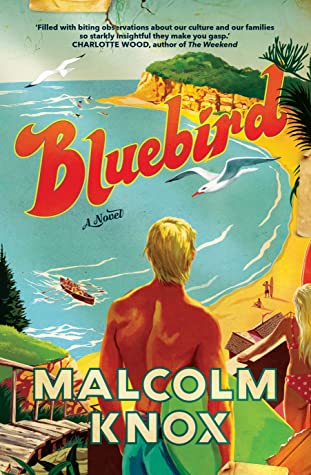
Malcolm Knox, Bluebird (#BookReview)

Malcolm Knox’s sixth novel, Bluebird, comes with some impressive endorsements. On the front cover is “Charlotte Wood, author of The weekend“, while the back features “Christos Tsiolkas, author of Damascus and The slap” and “Adam Gilchrist, former test cricketer and beach-goer”. Hang on, Adam Gilchrist? What the?

Some of you will know why, but I didn’t. However, I now know that as well as being a novelist, Knox is a respected journalist who has been a cricket correspondent, sport editor, and literary editor. Wikipedia reminded me that he was the literary editor who exposed “the fake Jordanian memoirist, Norma Khouri“. This won him and co-journalist, Carolyn Overington, a Walkley Award for Investigative Journalism.

The thing is, I knew Malcolm Knox’s name, but had read none of his novels or his many works of non-fiction. Consequently, I came to Bluebird cold. I have no idea whether it is typical of Knox’s writing, but, I did enjoy it.

Superficially, it looks like a satire on all those beach communities that pepper Australia’s coasts – the middle-aged men who prefer surfing to working, the country-club set, the councils which sell out to developers, small-town racism and gay-bashing, and so on. You can imagine it, I’m sure. Except that, in fact, it soon becomes clear that while a beach-town might be the setting, Bluebird’s satire is broader, reaching into wider aspects of contemporary Australian life – dysfunctional men and broken families, development, aged care, banking, local government, the list goes on. It’s more that given Australians’ love for the beach, such a town makes the perfect, relatable, setting for his tale.

However, satire can sometime be an intellectual exercise, engaging the mind more than the heart, but Knox achieves both, by creating flawed characters whom we recognise and can engage with, and by telling a story that is just that bit larger than life to make it exciting but not so much that it doesn’t feel real. At first, I was concerned that it was just a little bit too smart-alecky for me, that there were just a few too many biting lines, but I found myself drawn in because I cared about the seemingly hapless 50-year-old Gordon and (some of) his family and friends.

How did they get away with it?

The novel is told in four parts – First Part, Next Part, This Part and Last Part – with each introduced in an italicised section by “Bird’s eye”, a not quite disinterested truth-teller. The story concerns the recently unemployed, recently separated Gordon, and his attempts to keep Bluebird’s iconic house, The Lodge, intact. The Lodge, however, is more than a house; it’s a symbol of all that is both good and rotten in Bluebird, in Gordon’s family, in, I think we could say, Australia. It is a paradox. Bird’s eye, introducing First Part, says:

This house is not an answer but a question: absolute beachfront yet virtually inaccessible, sitting on premium real estate that is somehow not real estate at all, a historic abuse protected by custom.

And the question is, how did they get away with it, or, more pointedly, as Bird’s eye asks, what have they got away with, to, even more pointedly, will they keep getting away with it.

So, through Gordon, the novel explores how its characters (and, dare I say, Australians) have managed to maintain the good life. Gordon lives in his beloved Lodge, sharing the bunk room with his teenage son Ben, who has some sort of “Asperger-ish ADHD-sih, non-specific, nameless disorder-is Thing”, and his goddaughter Lou, who is, arguably, the most competent character in the novel. His soon-to-be ex-wife, Kelly, is also there, occupying the “queen room”. His many unemployed, or minimally employed, friends also hang around the Lodge – unless, that is, there is a surf. And, he has elderly parents, irascible father Ron, who is living, unwillingly, in aged care due to having terminal kidney failure, and mother Norma, “a model for pressing forward without an inward glance”. But, the centre of it all is Gordon, and he is floundering. He has no money, and is marooned by a secret concerning his brother’s death over 40 years ago. The problem is that he is likeable, “a good man” in fact, and people want to help him, even at risk to themselves.

And, of course, there are the bullies – including his soon-to-be ex-step-mother-in-law Leonie who pulls the family financial strings for her own purposes, Council heavy Frontal, and “big man” about town, Tony Eastaugh. None of these want to help Gordon save The Lodge, and thus Bluebird itself.

It’s a complicated story of financial skulduggery set against personal insecurities, jealousies, and just plain ineffectuality, but the novel holds together largely because of its language and humour, Knox’s ability to skewer Australian culture, and his insight into human nature. I loved for example his comment on Gordon and Kelly’s marriage:

Habit, over-familiarity, neglect and inaction killed more lives than cancer.

Change is what I’m ready for (Gordon)

Marriage, however, is not his main target. Rather, it’s Australian men and the way they are letting the side down. Bluebird’s men tend to be ambitious power-hungry bullies or ineffectual past-focused also-rans. There are few in the middle. Overall, it’s the women who are decisive, which is not to say that they are all “better” people. Knox’s attitude to most of his characters seems to be one of frustrated affection. These people, he seems to be saying, are hanging onto the past, but

The past was worn out, not as solid as it was made out to be. Past its best.

The ending, when it comes, is cataclysmic, but not hopeless. Knox wants us to believe that people – that Australia, which seems also to be wallowing in its past – can change. It’s not that the past is all bad, but it shouldn’t drive us.

Introducing the Last Part, Bird’s eye says

This is not the outsider’s story. This is the story of those who are in the middle yet on the margin, the hole in the doughnut, so close to the centre that they have fallen into the void.

The question is, can we get ourselves out? Bluebird is a warm and funny but also biting read. Recommended.

This review is featured by Twinkl in their blog about the latest must-read books. See more recommendations and get involved at Book Lovers’ Top Picks For Your 2021 TBR List.

Malcolm Knox
Bluebird
Crows Nest: Allen & Unwin, 2020
487pp.
ISBN: 9781760877422

(Review copy courtesy Allen & Unwin)

George Orwell, My country right or left (#Review)

Having recently posted on the fourth essay, “The prevention of literature“, in my book of George Orwell essays, I’ve decided to plough on and try to finish it. The next essay is the short, cleverly titled, “My country right or left”. It was first published in Autumn 1940 in Folios of new writing.

It’s a curious little essay. I’m going to introduce it by sharing the Orwell quote used by the Orwell Foundation under its banner: “What I have most wanted to do… is to make political writing into an art”. You can certainly tell from “The prevention of literature” that he sees literature as being necessarily political. That essay was written in 1946, just after World War 2 had ended. “My country right or left” was first published just one year into this war – and is politically-driven.

The essay starts with:

Contrary to popular belief, the past was not more eventful than the present. If it seems so it is because when you look backward things that happened years apart are telescoped together, and because very few of your memories come to you genuinely virgin. It is largely because of the books, films and reminiscences that have come between that the war of 1914-18 is now supposed to have had some tremendous, epic quality that the present one lacks.

I wasn’t sure at all, from this opening, where it was going. Soon, however, it’s clear that war is the driver for the essay which turns out to be about Orwell trying to rationalise, or work through, his socialist beliefs, his previously avowed pacifism, and his patriotism (and thus support for the war).

He writes about being a middle-class school boy during World War 1 and being oblivious to what was happening, particularly to “the true significance” of the big events. He writes:

The Russian Revolution, for instance, made no impression, except on the few whose parents happened to have money invested in Russia. 

I’m sure that’s not unusual! He talks about how pacifism

had set in long before the war ended. To be as slack as you dared on O.T.C. parades, and to take no interest in the war was considered a mark of enlightenment.

Interestingly, however, this pacifism, he says, gradually gave way to a certain nostalgia in those who had not experienced the war! He suggests that this was why his generation was so interested in the Spanish Civil War. He then moves onto World War 2, to the growing awareness in the mid-1930s that it was coming and – this is his main point – his realisation that he “was patriotic at heart” and “would support the war”.

Orwell’s sees this as a no-brainer. He says:

If I had to defend my reasons for supporting the war, I believe I could do so. There is no real alternative between resisting Hitler and surrendering to him, and from a Socialist point of view I should say that it is better to resist; in any case I can see no argument for surrender that does not make nonsense of the Republican resistance in Spain, the Chinese resistance to Japan, etc. etc. 

But, he admits that this support stemmed primarily from “the long drilling in patriotism which the middle classes go through”. The drilling had, he said, “done its work … once England was in a serious jam it would be impossible for me to sabotage”. This patriotism, however, in not incompatible, he argues, with his socialist view that “only revolution can save England”. That “has been obvious for years”. “To be loyal both to Chamberlain’s England and to the England of tomorrow might seem an impossibility”, he writes, but it is, in fact, a fact, because such dual loyalties were happening everyday. Revolution could not happen with Hitler in control, so, Hitler must be resisted.

His final point is to criticise the left-wing intellectuals who do not understand this, though his method is curious. He turns to the idea of “patriotism”, arguing that “patriotism” should not be equated with “conservatism”, because, unlike “conservatism”, “patriotism” can encompass change. Indeed, he proposes that “socialism” can grow out of the emotions that underpin “patriotism”, whether “the boiled rabbits of the Left” like it or not.

So, curiously argued perhaps, but I can imagine the socialist-leaning, middle-class raised, intellectually open Orwell wanting to nut out how to marry his socialist beliefs with the very real threats his imperfect Britain was facing – and coming up with something confronting, but true.

Wikipedia writes that “according to his notes to his literary executor in 1949”, this was one of three essays that he did not want reprinted after his death. I can sort of see why, and I don’t know why the executor didn’t respect this. However, I do like the insight this essay provides into how Orwell thought, and that it shows him to be an independent thinker, rather than a parroter of received truths.

Previous reviews of essays from this book: “Books v. Cigarettes“, “Bookshop memories“, “Confessions of a book reviewer“, and “The prevention of literature“.

George Orwell
“My country right or left” (orig. 1940)
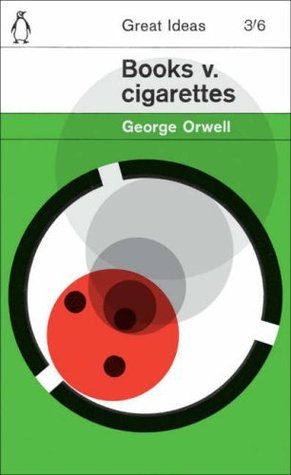
in Books v. cigarettes (Great Ideas)
London: Penguin Books, 2008
pp. 21-41
ISBN: 9780141036618

Available online at the Orwell Foundation.

George Orwell, The prevention of literature (#Review)

One of the reasons a work becomes a classic is its timelessness, its continued relevance to each period in which it is read. This is certainly why many of George Orwell’s works are seen as classics. Scarily, there is nothing more relevant now than his writing on the impact of totalitarianism – of which his 1946 essay, “The prevention of literature”, is one example.

The essay starts by responding to a PEN meeting that was held on the tercentenary of Milton’s Areopagitica. Milton defends, Orwell writes, “the freedom of the press”, and he was concerned that not one of several hundred people present “could point out that the freedom of the press, if it means anything at all, means the freedom to criticise and oppose”.

Orwell continues to say that there are two main threats to “the idea of intellectual liberty”: the theoretical enemies, or proponents of totalitarianism; and, the immediate, practical enemies, bureaucracy and monopoly. He spends little time on this latter, but I’ll mention it because it is as valid now as it was then. He sumarises it as:

the concentration of the press in the hands of a few rich men, the grip of monopoly on radio and the films, and the unwillingness of the public to spend money on books.

I’m not sure how the last of these stands now, but I believe Australians are buying books, and particularly did so during the pandemic. However, his first two points are certainly still valid concerns, eight decades later.

Orwell’s prime focus, however, was the impact of totalitarianism on intellectual freedom, and thus on literature. He spends some time discussing attacks on freedom of thought and the press. He argues that

in the foreground the controversy over freedom of speech and the press is at bottom a controversy over the desirability or otherwise of telling lies. What is really at issue is the right to report contemporary events truthfully, or as truthfully as is consistent with the bias and self deception in which every observer necessarily suffers.

I love this qualification, but I think you can see where this is going in terms of my opening paragraph. I’m not going to write a treatise on this, but Russian-American Masha Gessen wrote a response to it in The New Yorker, in 2018, which is well worth reading for their historical understanding of where Orwell was coming from as well as for their commentary on its relevance to now. Gessen wrote that:

We live in a time when intentional, systematic, destabilizing lying—totalitarian lying for the sake of lying, lying as a way to assert or capture political power—has become the dominant factor in public life in Russia, the United States, Great Britain, and many other countries in the world. When we engage with the lies—and engaging with these lies is unavoidable and even necessary—we forfeit the imagination. But the imagination is where democracy lives. We imagine the present and the past, and then we imagine the future.

What Gessen is referring to here is, first, the point that Orwell makes about totalitarianism’s “disbelief in the very existence of objective truth” – its lack of interest in “truthfulness” – and, second, its quashing of the “imagination” which is fundamental to literature.

Orwell argues that totalitarianism engenders instability, that totalitarians alter their perspectives at a moment’s notice to suit the prevailing situation. Such a society, he writes, “can never permit either the truthful recoding of facts, or the emotional sincerity, that literary creation demands”. You don’t have to be in a totalitarian state for this to happen, he adds. This problem can also occur wherever there is “an enforced orthodoxy – or even two orthodoxies”, where you cannot write sincerely. This point, I think, is worth considering in terms of “rules” about who can write what. I am certainly sympathetic to the concern about people’s stories being appropriated and, more problematically, being over-ridden, but there are many stories and “truths”, and sincere (I like this word) writing about them should be welcomed and respected. We learn about ourselves through the give-and-take, the conversation, that the arts facilitates. It is truly positive that we are now hearing more voices – this is what we must encourage and protect – but it would be dangerous if all these voices were confined to boxes.

Related to this is Orwell’s understanding of literature. He writes that “above a quite low level, literature is an attempt to influence the viewpoint of one’s contemporaries by recording experience”. For him, essentially all literature – particularly “prose literature” – is political in some sense. He says “there is no such thing as a genuinely non-political literature, and least of all in an age like our own, when fears, hatreds, and loyalties of a directly political kind are near the surface of everyone’s consciousness”. It sounds very much like our time.

Finally, after some other fascinating discussions – some of which made sense, some less so to me, such as his discussion of verse – he concludes that “a bought mind is a spoilt mind” and that “the imagination, like certain wild animals, will not breed in captivity”.

“The prevention of literature”, although written at a very particular point in world history, turned out to be more relevant than I would have hoped possible. It raises many questions about the threats we are currently facing to intellectual liberty and freedom of expression, and thus, to “truthfully” reporting, to “sincerely” questioning, what we see happening.

Previous reviews of essays from this book: “Books v. Cigarettes“, “Bookshop memories“, and “Confessions of a book reviewer“.

George Orwell
“The prevention of literature” (orig. 1946)
in Books v. cigarettes (Great Ideas)
London: Penguin Books, 2008
pp. 21-41
ISBN: 9780141036618

Available online at the Orwell Foundation.

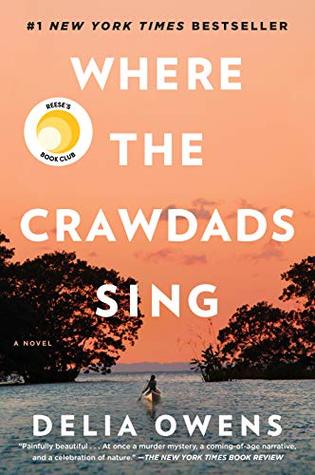
Delia Owens, Where the crawdads sing (#BookReview)

Delia Owens’ bestselling debut novel, Where the crawdads sing, is a problematical novel, as my reading group discovered – and yet, I couldn’t help being emotionally engaged. It reminded me a little of a childhood favourite, Gene Stratton Porter’s A girl of the Limberlost. My heart went out to Owen’s protagonist, Kya, the maligned, ignored, Marsh Girl, and I loved the writing about the North Carolina marshland. But, intellectually, I had to work to defend my enjoyment, which I’ll aim to share here.

“in the end, that is all you have, the connections”

I’ll start with the obvious, a summary of the plot. The main narrative runs from 1952 to 1970, and is told in two chronologies that eventually meet. The novel tells the story of Kya, who, in 1952, is six when her Mum and, soon after, her siblings leave home. Four years later, when she’s ten, her father also departs, leaving her alone, in their North Carolina marsh shack. She can’t read, has no money, and few skills. But, she’s an intelligent, resourceful little girl, and, with the help of a few kind people, she makes a life – albeit a lonely one – for herself. The novel commences, however, in 1969 with the discovery of the body of a young man, Chase Andrews, who is a local football hero. Was it an accident or was he murdered? The second chronology, then, is a crime story, following the investigation of this death through to the court case. You can probably guess where the two chronologies meet.

Owens manages this structure skilfully, drawing us into Kya’s life, and how and why she develops into the person she is in 1970, while, simultaneously, slowly building suspense by recounting the details of the investigation. The writing is lush and evocative, ensuring that we engage with Kya and her struggle to survive, her increasing loneliness and her desperation to connect with others. We see her turn to nature and wildlife to learn about life, as well as to provide herself with sustenance and give her a minimal income (by selling fish and mussels, for example).

This is nature writing at its best, with stunning descriptions of the marsh, and the birds, fish and insects that inhabit it, but it is also eco-fiction, with occasional allusions to development. Tate, a young man who befriends Kya (and provides her with a much-needed connection) tells her:

They think it’s wasteland that should be drained and developed. People don’t understand that most sea creatures—including the very ones they eat—need the marsh.”

The marsh is Kya’s family; it is what, in the absence of family, forms her:

She knew the years of isolation had altered her behavior until she was different from others, but it wasn’t her fault she’d been alone. Most of what she knew, she’d learned from the wild. Nature had nurtured, tutored, and protected her when no one else would. If consequences resulted from her behaving differently, then they too were functions of life’s fundamental core.

It is hard, as a reader, not to care about Kya. Will she find the connections she so badly wants – “Being completely alone was a feeling so vast it echoed” – and will they stick?

“it’s usually the trap that gets foxed”

However, it’s easy to pick holes in the book. Kya’s survival (given her youth) and her development into an educated young woman (given she only spent one day at school) can stretch credulity. Many of the characters feel stereotyped, from the good “colored” people, who put themselves out to help Kya, to the prejudiced townspeople, who reject and exclude her (as they do all marsh people). “Barkley Cove”, writes Owens, “served its religion hard-boiled and deep-fried”. And, if you don’t like your heartstrings being obviously pulled, you may not engage with Kya at all.

All this makes it problematical, because it’s one of those books that whether you love or hate depends largely on what sort of reader you are, what you like to read, and/or how you read this particular book. There are many ways to read Where the crawdads sing – a crime story, a romance, a coming-of-age story, historical fiction, a modern fairy-story or allegory, even, to name a few. Some of these ways demand more realism than others, and expose holes which are irrelevant to other ways. It is one of these other ways that appeals to me.

This way is to read it more like a fairy story or allegory, as a story about the triumph of the maligned, a comeuppance for the underdog. If you read it this way, the stereotyping of the minor characters, and the improbability of Kya’s survival and achievements, serve to emphasise the challenges faced by the underdog. It is hard to explain what I mean without giving away the ending, but I’ll try.

Throughout the novel, we are not only reminded of the prejudice and mistreatment of Kya (as representative of the marsh people) but are also aware of the ostracism of “colored people” as they were called then. Kya turns to nature to learn about life. Early in the novel, when the “colored” Jumpin’ warns her about Social Services looking for her, friend Tate tells her to “hide way out where the crawdads sing”:

Kya remembered Ma always encouraging her to explore the marsh: “Go as far as you can—way out yonder where the crawdads sing.”

“Just means far in the bush where critters are wild, still behaving like critters.”

One of Kya’s main challenges is to work out the differences between what she observes in nature and in human behaviour:

“In nature—out yonder where the crawdads sing—these ruthless-seeming behaviors actually increase the mother’s number of young over her lifetime, and thus her genes for abandoning offspring in times of stress are passed on to the next generation. And on and on. It happens in humans, too. Some behaviors that seem harsh to us now ensured the survival of early man in whatever swamp he was in at the time. Without them, we wouldn’t be here. We still store those instincts in our genes, and they express themselves when certain circumstances prevail. Some parts of us will always be what we were, what we had to be to survive—way back yonder.”

These two quotes – among others – hint at the novel’s underlying idea, which is that it’s not only “critters” who are “wild”, that human beings will be ruthless too. Exploring this ruthlessness in its natural and human manifestations, and how Kya navigates it, is a major theme of this book – and explains why Owens has written it the way she has. The resolution is deeply satisfying (albeit I didn’t love the device used to achieve it).

Where the crawdads sing is a thoughtful read for those who feel passionate about the maligned of this world. It is also a glorious lovesong to the marshland. I’m glad my reading group scheduled it.

Delia Owens
Where the crawdads sing
London: Corsair, 2018
379pp.
ISBN: 9781472154637 (Kindle ed.)

Irma Gold, The breaking (#BookReview)

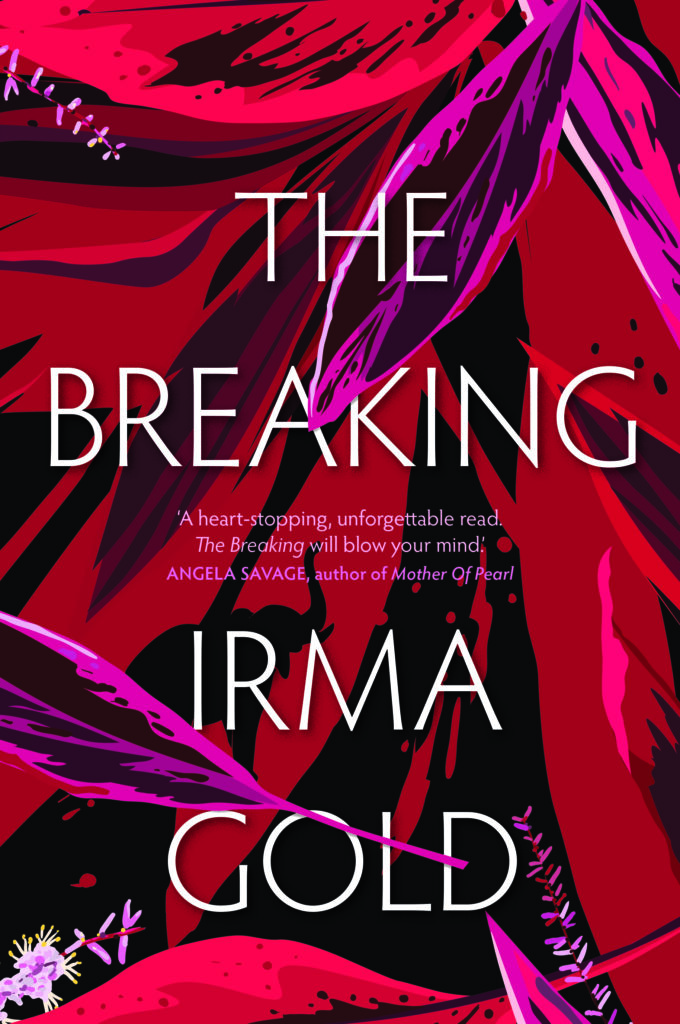
Book cover

I have broken a golden rule! That is, I am reviewing Irma Gold’s debut novel, The breaking, out of the order in which I received it for review, which is something I (almost) never do! But, I am attending an author event on this book this weekend, and I really wanted to have read it before that conversation.

The breaking is an example of a growing “genre” of literature, eco-literature. This literature encompasses cli-fi, and focuses on human activities that endanger the environment in some way. It’s a broad church, covering climate, water and the land, deforestation, animal rights, and more. Books in this genre are often inspired by their writer’s passions. They tend to have a strong plot because the author wants to engage the reader in an issue: how better to do this than with an engaging plot. However, the plot is, largely, subservient to the issue, because at heart these are political novels, often in the “personal-is-the-political” sense.

So, some examples? Heather Rose’s Bruny (my review), which is deeply concerned about the future of Tasmania, Angela Savage’s crime novel The dying beach (my review), which explores the impact of shrimp-farming on the environment, and Karen Viggers’ novels, like The orchardist’s daughter (my review) which addresses deforestation, are three. These could be called “passion project” books. Critics often find this sort of writing difficult to asses. If it sells well, if it’s popular, is it good?

I’m going to sidestep the implication of that concern, and simply say that of course something popular can be good. If it’s well-plotted, well-written, has engaging characters – and deals intelligently with something relevant or important – then it’s good.

All of this is a very long introduction to Irma Gold’s book, but relevant, I hope. So, The breaking? The title doesn’t give away its passion, though if you look carefully at the gorgeous cover you might see it. It’s the plight or exploitation of elephants in Thailand. Gold, as she explains in the Afterword – I love an Afterword – has been to Thailand, and worked with elephant rescue projects, so she knows whereof she speaks. (I hope to have more to share after the weekend!)

It’s a grim situation, as I’m sure you know, and, like many grim situations in developing nations, it’s complicated by the fight for survival. For many Thais, elephants are their bread-and-butter, both as beasts of burden and, more, for their tourist potential. Gold addresses this dilemma in her novel without being overtly didactic, by having her characters see the situation with their own eyes, discussing it with each other, and weighing up the options.

“Be brave” (Deven)

The breaking is about two young Australian women, Hannah Bird, who has just arrived in Thailand as a tourist, unsettled and insecure because she’s lost her job, and Deven, who has been living there for some time and is involved in elephant rescue projects. They meet in a hostel lobby, as tourists do, and the experienced Deven invites Hannah to go to the night markets with her. From there, a friendship – and eventually something more – develops as the somewhat naive Hannah is drawn into the more experienced and confident Deven’s passions and views of the world. It’s not long before we discover the layers in the title as Hannah is introduced to the cruel practice of phajaan.

We follow their trajectory – told in Hannah’s first person voice – as they tread an activist’s path. It starts with involvement in organised, legal rescue projects that aren’t going to change the world quickly. However, as often happens to those who stay the course, they find themselves confronted with the ultimate activist’s dilemma of “how far will you go” for the cause you believe in? Always, it is Hannah following Deven, deeper and deeper into both political and personal engagement. Deven is driven to save those elephants, while Hannah, who believes in the cause, is more cautious, but, she’s falling for Deven, so, where Deven goes … the ending is powerful, confronting us head on with what can happen if you let passion rule your brain.

“We have to change the culture” (Deven)

Throughout all this Gold takes us on a journey through Thailand, showing it through the eyes of wide-eyed oblivious tourists, like Hannah, and those of the more experienced, aware Deven, who rejects the tourist path, the ladyboy shows, the elephant rides, and so on. Gold shares the food and culture of Thailand, using local words with little attempt to translate. She addresses this in her Afterword, explaining that although it is traditional to italicise foreign words, she “made a deliberate decision not to” do so here. Italics, she says, makes it easy for readers to “skim over foreign words” but she “wanted to encourage readers to engage with Thai language in the way that the Australian characters attempt to”. Gold’s solution is deft, because we readers puzzle and feel our way along with narrator Hannah, who is guided but not spoon-fed by Deven. Deven can be tender and caring, but she doesn’t mollycoddle!

However, if I have given you the impression that Hannah is all follower and Deven all leader, then you’ll have the wrong impression. Deven, alienated from her parents, has her own demons, and Hannah is not a push-over. As the novel progresses she takes in what Deven says but processes it in her own way. She sees “it’s not that simple; it’s not that black and white”, while for Deven it is simple. The denouement suggests where Gold lies, but the question remains for each reader, where do you lie? And, beyond that, whose rights should prevail?

Irma Gold’s The breaking reminded me somewhat of Madeleine Dickie’s Troppo (my review), which also explores the experience of young Australians caught up in unfamiliar lives and cultures, and who must forge their own way, morally and ethically, in places where the usual signposts are missing. Like Troppo, The breaking is an engaging debut novel that encourages us to consider some of the critical questions of our time.

Challenge logo

Irma Gold
The breaking
Rundle Mall, MidnightSun, 2021
271pp.
ISBN: 9781925227819

(Review copy courtesy MidnightSun Publishing via Brendan Fredericks)

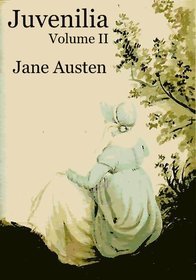
Jane Austen, Juvenilia, Volume the third (#Review)

This month my Jane Austen group completed our reading of Jane Austen’s Juvenilia. (Click the links for my thoughts on the first and second volumes.)

Volume the third is a little different to the other two, as it contains just two unfinished works:

  • Evelyn
  • Catharine, or The bower

Both were written in 1792, when she was 16 to 17 years old.

As with the other volumes, the pieces were later transcribed by her into three notebooks, but there is evidence in this volume of other handwriting. There is uncertainty about the provenance, but the thought is that they were transcribed by her nephew James Edward Austen-Leigh and his daughter Anna. Certainly, handwriting analysis suggests it is their hands, but probably not their words.

Evelyn

Evelyn is an absurd, preposterous story about the idyllic town of Evelyn. A young man comes to town and wants to live there, but every house is inhabited, due to “the sweetness of the Situation, & the purity of the Air” not to mention the fact that “neither Misery, Illhealth, or Vice are ever wafted”. Luckily for him, a family there has “a peculiar Generosity of Disposition” and, immediately on meeting him, agree to give him their house and their daughter in marriage. The laugh-out-loud ludicrousness continues from there.

This story has received very little attention, compared with most of the other juvenilia. Shawn Normandin suggests this is partly because it

seems relatively distant from feminist concerns: its protagonist is male, and its female characters lack the refreshing assertiveness that distinguishes many of the juvenilia’s heroines.

Normandin argues, however, that it is worth considering because it “attempts with extreme–and hilarious–rigour to imagine a true gift”. He discusses it in the light of Jacques Derrida’s work Given time. I’m afraid that I didn’t give this time. However, I do like the idea that Evelyn could be considered within the context of Austen’s questioning “the new Enlightenment capitalism”, as Doody suggests, because it is clear that Austen was engaged in the political ideas of her time. Anyhow, Normandin concludes that Evelyn “may be western literature’s keenest examination of the gift because, not in spite of, its absurd frivolity.”

It’s probably worth giving this article more time, but, meanwhile, one thing I did notice about Evelyn is that although the story is extreme, like the earlier juvenilia, the actual writing is a little more controlled, a little less breathless, and injected with a little more setting and description.

Catharine, or The Bower

Not only does Catharine continue – I’m assuming it was written after Evelyn – in this more controlled vein, but even more so, as it moves into the realism for which Austen’s published novels are known. Catharine, or The bower tells the story of a young woman, who, having been orphaned when very young, is being brought up lovingly but severely protectively by “a Maiden Aunt”, who fears the impact on her charge of “Young Men”. Of course, a Young Man appears!

Catharine is a little tricky to read because, while Austen had done some editing as late as 1810/11, there are confusing changes of names. Catharine is variously named Catherine and Kitty in the text, but, even trickier, is that her aunt is sometimes called Mrs Peterson and sometimes Mrs Percival!

Anyhow, for me, and for some others in our group, it contains clear hints of Northanger Abbey (which Austen first wrote around 1798/9) – of Catherine (note the name) Morland (her youthful naïveté tempered by some good sense), of Isabella Thorpe, and of the interest in young men and propriety.

Catharine also contains one of my favourite Austen quotes about reading. Catharine tells her friend Camilla:

but for my own part, if a book is well written, I always find it too short.

Some of the themes that we see in Austen’s later novels are here, including women’s education (the focus on the attainment of accomplishments versus “useful knowledge and Mental Improvement”), indulgent parenting, city versus country, the idea of women and daughters made destitute on the death of a husband/father (as happens to the Dashwoods in Sense and sensibility), thoughtless young men (like Frank Churchill in Emma). Margaret Anne Doody claims that these “early works were important companions to her during the rest of her writing career” which supports my suggestion that these works were used as sources for ideas, like writers use notebooks today.

The style, as I’ve already said, is calmer, and more formal. There is more of the sort of authorial commentary that we see in her later works. Here’s Catharine, having been easily convinced that the young man who had departed without a farewell, did really like her:

She went in high spirits to her Aunt’s apartment, without giving a Moment’s recollection on the vanity of Young Women or the unacountable conduct of Young Men.

Also, Catharine evinces, says Doody, Claudia Johnson’s argument for Austen’s engagement with politics. Certainly, our character Catharine is frustrated by Camilla’s ongoing chatter about fashion and her refusal to talk about anything else – “She found no variety in her conversation; She received no information from her but in fashions”. Catharine, on the other hand, wants to talk about books and politics.

Here is a good time to share some ideas from Doody’s Introduction to the World Classics edition of the juvenilia. She suggests that Austen, following the rejection in the 1800s of Susan (later Northanger Abbey) and First impressions (later Pride and prejudice), tamed her writing to meet the marketplace. Perhaps, but, I see Catharine as already showing some of this taming down.

Doody discusses the different ways the juvenilia can be approached, and the drawbacks to these. For example, she suggests that seeing them as pointers to later writings – which most of us do – results in our missing “their important effects”. I take her point, but only to a degree, because I’m convinced that we can see the later Austen in these early works.

However, I like that she sees the subversiveness of Austen’s early work, something that was not recognised, she says, by critics like David Cecil. GK Chesterton, on the other hand, praised the early works. In 1922, he said

she was original … naturally exuberant … she could have been a buffoon like the Wife of Bath if she chose. This is what gives an infallible force to her irony. This is what gives a stunning weight to her understatements.

Doody concludes that the mature Austen chose to write “the realistic novel of courtship”, because that was the way to publication. She “had to pretend that the world was better and its general fictions more reliable than she knew them to be”. That’s possibly true, but Austen was seen as formally innovative in her writing, which suggests that her published novels were not completely against the grain, even if they were toned down versions of what she privately felt?

References:

  • Doody, Margaret Anne. “Introduction” in Jane Austen’s Catharine and Other Writings, edited by Margaret Anne Doody and Douglas Murray. Oxford, Oxford University Press, 1998.
  • Normandin, Shawn. “Jane Austen’s “Evelyn” and the “Impossibility of the Gift”.” Criticism 60, no. 1 (2018): 27-46. (Accessed via JSTOR)

Jane Austen
“Juvenilia. Volume the third” (ed. R.W. Chapman & Brian Southam)
in The Oxford illustrated Jane Austen. Vol VI, Minor works
London: Oxford University Press, 1969 (rev. ed.)
pp. 179-242
ISBN: 19 254706 2

Jane Austen, Lesley Castle (#Review)

I mentioned in my post on the second volume of Jane Austen’s Juvenilia, that I might do a separate post on one of its longer pieces, Lesley Castle. It’s one of her three longer pieces in that volume, and is often published separately or in other compilations, so warrants some attention, methinks!

Lesley Castle

Lesley Castle is another of Austen’s epistolary pieces. According to Juliet McMaster, writing in Persuasions Online, it represented a “step forward” in epistolary novels because the writers correspond with each other, rather than to someone “off-stage”. In this piece, in fact, there are several correspondents, writing to each other, resulting in different perspectives being offered on some of the main “characters”.

Lesley Castle is essentially an unfinished collection of correspondence between various “friends” who talk mostly of marriage – and of each other. Like many of the Juvenilia pieces, it demonstrates Austen’s love of writing about wickedness. It starts with Margaret writing of her brother’s adulterous wife running off, leaving not only her husband but her 2-year-old child, and of her widowed father, “fluttering about the streets of London, gay, dissipated and thoughtless at the age of 57”. Her correspondent, Charlotte, reports back about her tragedy, the death of her sister’s fiancé from falling off his horse, but she is more interested in food than in her bereaved sister. Insensitively, she describes her distraught sister’s face being “as White as a Whipt syllabub“. Such-self-centredness is rife in Austen – and you can hear her cheeky teenage self laughing as she wrote it!

Interestingly, this story is set largely in Scotland, which Austen never visited, and rarely mentioned in her works. Why Scotland, then? One reason could be to mock the vogue at the time for things Scottish. Margaret claims that she and her sister are happy there:

But tho’ retired from almost all in the World, (for we visit no one but the M’Leods, the M’Kenzies, the M’Phersons, the M’Cartneys, the M’donalds, the M’Kinnons, the M’lellans, the M’Kays, the Macbeths and the Macduffs) we are neither dull not unhappy …

The inclusions of “the Macbeths and Macduffs” is an additional pointer to Austen’s love of nonsense. She used lists frequently in the Juvenilia, often ending them with something extra “silly” to make her point. As I said in my first Juvenilia post, subtlety was to come in her mature works!

The new Lady Lesley, the aforementioned dissipated father’s new wife, is not so taken. She is also a friend of Charlotte’s and writes to her about her new Scottish-based step-daughters:

I wish my dear Charlotte that you could but behold these Scotch giants; I am sure they would frighten you out of your wits. […] Those girls have no music, but Scotch airs, no drawings but Scotch mountains, and no books but Scotch poems–and I hate everything Scotch.

Charlotte, meanwhile, had written to Margaret about Lady Lesley whom she sees as favouring “haunts of Dissipation” (essentially, cities):

Perhaps however if she finds her health impaired by too much amusement, she may acquire fortitude sufficient to undertake a Journey to Scotland in the hope of finding it at least beneficial to her health, if not conducive to her happiness.

The piece continues in this sort of vein with the correspondents often writing at cross-purposes, and, it must be said, focusing more on self-interest than the needs of others.

Of course, Austen readers always look for hints not only of style and themes (here, self-centredness, snobbishness, sensibility, hypocrisy, country versus city, and marriage) but of characters to come. In Lesley Castle, Charlotte reminds us particularly of a few Emma characters: Mr Woodhouse and his focus on food (though his is of a very particular type), Mrs Elton and her self-centred obliviousness to the needs of others, and, even, says Heller (referenced below) of Miss Bates in her garrulousness.

Margaret is a good example of Austen’s deluded characters who see themselves one way, while showing themselves to be very different. Many of the letters open affectionately, but contain or end with cutting remarks. Margaret, for example, writes to Charlotte complaining about being admired by too “many amiable Young Men” and expressing her “Aversion to being so celebrated both in Public, in Private, in Papers, & in Printshops”. She continues:

How often have I wished that I possessed as little personal Beauty as you do; that my figure were as inelegant; my face as unlovely; and my Appearance as unpleasing as yours!

Lesley Castle is probably not for every-one. So, rather than try to convince you to read it, I’ll conclude with Zoë Heller in The Guardian. Writing about Austen’s youthful work, she says that “as always in Austen’s work, recklessness with facts and inattention to detail are the rhetorical clues to a deeper-seated, moral carelessness”. How perceptive.

Jane Austen
“Lesley Castle”
in
“Juvenilia. Volume the second” (ed. R.W. Chapman & Brian Southam)
in The Oxford illustrated Jane Austen. Vol VI, Minor works
London: Oxford University Press, 1969 (revision)
pp. 76-178
ISBN: 19 254706 2

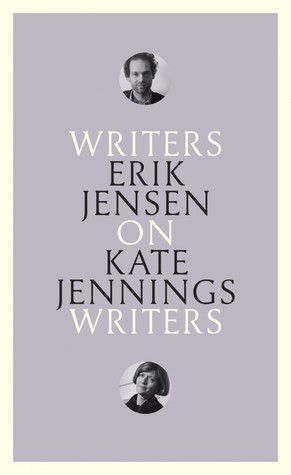
Erik Jensen, On Kate Jennings (Writers on writers) (#BookReview)

It took Kate Jennings’ death for me to finally pick up one of Black Inc’s Writers on writers books, Erik Jensen’s On Kate Jennings. The series, says Black Inc, involves leading authors reflecting “on an Australian writer who has inspired and influenced them”. It continues, “Provocative and crisp, these books start a fresh conversation between past and present, shed new light on the craft of writing, and introduce some intriguing and talented authors and their work.” Let’s see how Erik Jensen goes!

But, who is Erik Jensen? Most of the series’ writers are well-known, such as Alice Pung, Stan Grant, Michelle de Kretser and Nam Le, but a couple are less so. Jensen is a Walkley award-winning Australian journalist and author. He’s probably best known for being a founder, and still editor, of The Saturday Paper. However, in 2014, he also wrote a biography, Acute misfortune: The life and death of Adam Cullen. It won a NIB Literary Award and was shortlisted for the Victorian Literary Awards’ Nettie Palmer Prize for Non-fiction. As you’d expect for this series, then, he has some cred.

However, his writing seems to be primarily non-fiction, so why Kate Jennings? Fortunately, he answers that in the opening paragraphs:

I had looked up Kate because I was a fan of her essays – pieces about her life, mostly, ruthless in their precision.

In the next paragraph, he launches without warning into describing the opening of Snake (my review), Jennings’ autobiographical novel. You have to be familiar with Jennings and Snake to get what’s going on here, but it’s unlikely you’d be reading this, I think, if you weren’t. What follows is an introduction to Kate Jennings, realised through interweaving the content and trajectory of this novel with his interviews and communications with Jennings and, occasionally, others.

I was moved by the insights, and impressed by the richness of the portrait Jensen achieves in around 100 small-book pages. He is clearly very fond of Jennings. Indeed, he concludes his essay with

This essay is for Kate Jennings. It is a love letter to her work and to the life that produced it. As a friend and a writer, I am grateful for both. More than anything, I want to thank Kate for the generosity she has shown – in agreeing to this essay, in being so open with the material, and in how with her own work she has shown me what to do.

However, Snake is a tough book. It portrays a dysfunctional family, with a difficult and self-centred mother. Jennings tells Jensen, “I was so very lonely. And at the mercy of my mother.” To his credit, Jensen also talks to Jennings’ brother, Dare, whose perspective on the family is very different. Dare, writes Jensen, “remembers the same mother Kate does, although he remembers her differently. They had a very different relationship. It was warm, close.” Dare supports Kate, but his experience of the family was different. He was the adored son.

This brings me to that whole issue of autobiographical fiction, which is Jennings’ forte (much like her friend, Helen Garner’s.) Jensen writes that “Kate writes close to life. Not completely close, she says. She does make up things. ‘I round the corners,’ she says, ‘and make the really ghastly stuff a little better.’” She writes to work out what she thinks. She also says that “the emotions were autobiographical but not necessarily the story“. This is a significant distinction, and serves as a reminder that fiction needs to be “true” but should not be read as “factual”.

Much of this wasn’t particularly new to me, given I’ve read both Snake and her fragmented biography, Trouble. However, Jensen value adds. For example, he writes that he sees Snake as “the Great Australian novel”. He gives it to people inscribing it as such. One recipient was Ian Donaldson, a former professor of English at Cambridge and a fellow of King’s College. Jensen shares Donaldson’s reaction:

‘The great Australian novel?’ he writes the next morning. ‘Yes, I’d agree, it certainly warrants that sort of ranking, though that phrase as conventionally used conjures up a kind of laborious realism which Snake so spectacularly lacks. I loved its spareness, its brevity, its ability – like the creature it mimics – to strike without warning then vanish without trace.’

You can see why I like Snake too – its spareness! I was interested in Johnson’s comment that a GAN “conventionally … conjures up a kind of laborious realism”. Do you agree? Anyhow, Snake, “a poet’s novel” as Jensen calls it, is not that.

After spending some time on the content of the novel, Jensen also discusses its path to publication (including the rejections) and its reception. Australian reviewer Elizabeth Riddell was not particularly impressed, but in North America, Carol Shields (in The New York Times) and the Publisher’s Weekly, were highly positive. Yet, the novel was soon “lost”, or, as Jennings put it, “pretty well ignored”, largely she felt due to the feminists who “couldn’t accept the treatment she gave her mother”. Seven years later, however, it was re-released, with the Age describing it as “probably the most accomplished, realistic novel about bush life to be produced in the past decade”.

Jennings shares much of her life with Jensen, including her challenges with alcohol and depression, and her loving marriage to Bob Cato. The result is a picture of someone who was both “obstinate and fragile”, as Jensen writes in his The Saturday Paper obituary (8 May 2021), who had great successes but also faced tough challenges, and who was, above all, an uncompromising and stylish writer.

In other words, through exploring Snake, from multiple perspectives, supported by critical truths about Jennings’ life, Jensen does meet Black Inc’s stated aims. It’s intelligent and compelling. I have now bought another in the series.

Erik Jensen,
On Kate Jennings: Writers on writers
Carlton: Black Inc, 2017
112pp.
ISBN: 9781925435818

Marian Matta, Life, bound (#BookReview)

In August 2020, small independent publisher MidnightSun sent me two short story collections, Margaret Hickey’s Rural dreams (reviewed last month), and Marian Matta’s Life, bound. I enjoyed Rural dreams, as some of you may remember, for its exploration of rural lives from multiple angles and points of view. Life, bound is a very different collection. It doesn’t have a stated unifying theme but, like many short stories, it is unified by its characters being ordinary people trying to make the best of the life they have been given – or of the life that, sensibly or not, they’ve made for themselves!

The promotion accompanying the book describes it this way:

Free agents or captives of our past?

In Life, Bound, characters find themselves caught in situations not of their own making, or trapped by ingrained habits, walking in grooves carved out by past events. 

What characterises this collection, beyond this, is the varied tone, from the gothic-influenced opening story “The heart of Harvey’s Lane” to the strongly realist closing stories, “He turned up” and “A bench, a bard, a turning tide”. As with many short story collections, you never quite know what you’re going to get when you turn the page to the next story. In “The heart of Harvey’s Lane” a man becomes a famous photographer off the back of a shocking incident, but, after a while, starts to withdraw from the world, into a very strange house. As he scales down his career, he recognises that

The downward turn in my income almost exactly mirrored the upward turn in my satisfaction.

Nonetheless, the ending, when it comes is disconcerting. Covering a few decades, it’s an engrossing story about the way life can go.

Some stories are shocking, such as the second story “Climb”, about a young boy abused by his step-father, while others are cheeky, such as “Lovely apples” about a loving young couple and the suggestive “Drive my car”. In some stories, abused or overlooked characters get their own back. “Roadkill” is particularly cleverly told – with a great opening – and you have to cheer for the much-maligned Emily who’s not as stupid as they all think. But in other stories, things don’t work out, such as the devastating story about blighted hopes, “He turned up”. This title has a powerful double meaning. Titles in short stories are, I think, particularly important, because, given the form’s brevity, every word must count. Matta uses her titles well. Some are purposefully obscure, not giving anything away except perhaps the literal, as in “Climb”; others are more clearly figurative, as in “Desire lines” or “Lovely apples” or “Three-sixty”; while others are superficially descriptive but contain so much more, as in “A bench, a bard, a turning tide”.

Now, though, let’s get back to the characters “caught in situations not of their own making”. They include an abused boy, a transgender person, a woman caught in domestic violence, a homeless woman. These characters can break our hearts, but in Matta’s hands they are the characters who just might come through. I’m not naming the stories, here, because part of Matta’s skill is in slowly revealing the character’s situation, so why should I tell you here straight off?

Other characters are a mixed bunch, some “trapped by ingrained habits”, others just at a certain stage in their lives where an action has, perhaps, unintended reactions. There’s the alcoholic ex-husband who desires reconnection with his family (“Desire lines”), two sea-changers who meet in their new chosen town and become friends (“Claimed by the sea”), two people post-one-night-stand (“Summer of love”). This last one exemplifies how Matta mixes up her structure. Not all stories are simple, linear chronologies. “Summer of love” is linear, but told from the alternating points of view of the woman and the man, a perfect solution for a story about a one-night-stand.

The varied structure is one aspect of this collection that keeps the reader engaged. The above-mentioned variations in tone are another, plus, of course, the characters and stories themselves, but another is the language. Here, for example, is a character deciding that discretion is the better part of valour:

Jimmy decided not to chase that remark down to a point of clarity.

(Waterwise)

Then there are those phrases that make you laugh, such as this on entitled teenage boys being told off by their headmistress:

They shrugged, just sufficiently out of sync to appear like a music video dance troupe.

(Roadkill)

My last example is Rita – her town’s “voice of authority, the historical society’s walking catalogue” – being unusually flummoxed by a question:

A frown settles slowly on Rita’s face; her infallible memory has tripped over a corrupted file.

(Winston Mahaffey’s hat”

The stories are all, fundamentally, about humans – the things that happen to us or the messes we get into, and how, or if, we get out of them. But some of the stories also reference contemporary issues, such as climate change, domestic abuse, and homelessness.

The stories aren’t linked but this does not mean that order is not important. With a collection like this – that is, one dealing with some of life’s toughest challenges – the order in which the stories are presented, and which one is chosen for the end, can be significant. In this collection, Matta has followed the sad, bitter penultimate story with a story about homelessness in which the destitute but proud Merle slowly comes to trust the warm, generous 23-year-old Ethan. Surely this is intended to leave us with a sense that all is not lost, that there is hope if we ignore our differences and focus on our common humanities.

So, another engaging and stimulating collection of stories from Midnight Sun with – is it too shallow to end on this? – another beautiful cover.

Challenge logo

Marian Matta
Life, bound
Adelaide: MidnightSun, 2020
223pp.
ISBN: 9781925227710

(Review copy courtesy MidnightSun)