Consider Helen Garner’s Cosmo cosmolino

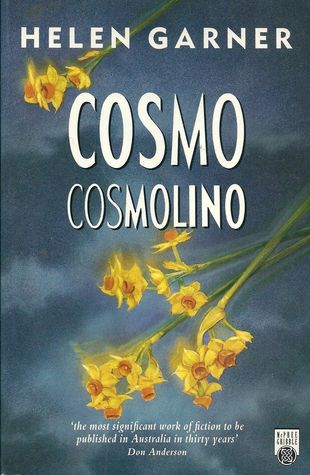
Helen Garner, Cosmo cosmolino

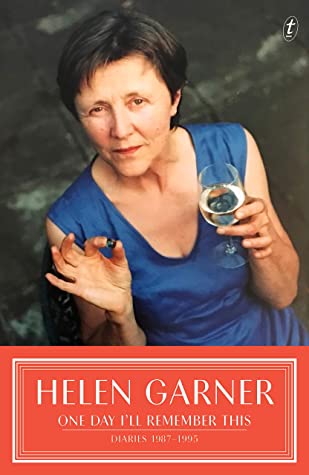
Commenting on my post on Helen Garner’s One day I’ll remember this, Bill (The Australian Legend) wrote that he’d hoped I’d mention Cosmo cosmolino (1992). It’s one of the novels Garner was writing during the period covered by these diaries, and Bill had struggled with it. I don’t blame him because, while I loved reading the novel, my own review written early in this blog is less than wonderful. Cosmo is a very different novel and I didn’t grapple at all well with its tricky themes.

Bill has, in fact, written twice about Cosmo cosmolino, his second drawing from Tegan Bennett Daylight’s essay in Reading like an Australian writer (edited by Belinda Castles). I have now read that essay too, so I am going to write a second post on Cosmo – too!

There are two main issues that are tricky with this novel, its form and its content. I’ll start with form, which derives from the fact that the book comprises three pieces/stories: “Recording angel”, “A vigil” and “Cosmo cosmolino”.

But, is it a novel?

I am forgiving (or, wishy-washy, if you prefer) when it comes to questions like this. I think form is and should be a loose thing, and that it should have room to move. Even Bill, who sometimes has strong views on things, said that “If an author, as Garner has done here, declares a collection of pieces to be a novel, then that is how I will read it. But these pieces don’t speak to each other at all. If this is a novel, then as far as I am concerned, it is a failed novel”.

So, Bill was happy, more or less, to accept it as a novel. I was certainly happy to do so because the first two pieces – “Recording angel” and “A vigil” – introduce two of the three main characters in the last story. They also introduce some of the ideas that she further develops, though I didn’t fully grasp them in my review. More on that later in this post. The point is that for me the pieces did speak to each other, albeit oddly, because, for example, the first piece is told first person in Janet’s voice, while the third is told third person with Janet as the protagonist.

Bennett Daylight discusses the form in her essay. She starts by suggesting that she would have broken down the last piece into smaller stories, and

seen the book as a whole as telling the central story through a kaleidoscope of scenes, points of view, small (and large) narratives. I’m thinking particularly of Alice Munro’s early short story collections … in which Munro builds a long narrative about her protagonists like you might a model train, adding stories like carriages until the narrative winds into the distance. The result, to my mind, can be more satisfying than the novel whose every scene is roped to a single central idea.

She then quotes Robert Dessaix who, while praising Garner as “one of our most gifted” writers, said that none of her fictional works were novels. They are “fine works of art and innovative explorations of literary approaches to nonfiction, every one of them an outstanding example of stylish reportage”. He then gets to one of the nubs, the pedestal on which novels are put. Garner writes in her diaries that she needs to free herself “from the hierarchy with the novel on top”. She needs “to devise a form that is flexible and open enough”, wants to “blow out realism while at the same time sinking deeply into what is most real”.

She also writes of “pointless struggles to work my stuff into the shape of a novel, and my determination to write only what it’s personally urgent for me to write” (p. 181). The two urges, it seems, fight each other. She says more but this gives you the gist. I love her engagement with form, though in one sense, it shouldn’t really matter – should it?

Meanwhile, Bennett Daylight is convinced that Cosmo cosmolino is a novel because “what makes a novel a novel is metaphor”, meaning that in a novel it’s “as though life looked in the mirror and saw, not just its reflection, but something behind it”.

“My strange experience”

What is this something? It’s certainly deeper than I was prepared to go in my review, because, to be honest, I was uncertain – and here is why. Bennett Daylight quotes an interview Garner had about the book with, in Garner’s words, “that hard-nosed leftie rationalist Craig McGregor”. In this interview, she was stupid enough “to blurt out my strange experience with the shadowy presence”. Afterwards, she panicked and asked him not to include that part, and while he reassured her he’d hardly mentioned it, this “mysterious visitor” is the backbone of his piece. The responses weren’t positive – “Garner’s got religion, etc”. It taught her, she told Bennett Daylight,

that in Australia you can’t write about experiences of ‘the numinous’ without opening yourself to sneering and cynical laughter. Back then, anyway.

This is the challenge I had with the book. What was the spiritual aspect about? I’ll flip to Bernadette Brennan’s book on Helen Garner, A writing life (my review). She says that the three interlinked stories all concern transformation, and are connected through recurring characters and the presence in each of various forms of angels:

The book’s structure mirrors that of a Christian pilgrimage: “Recording angel” confronts the physicality of a suffering body, “A vigil” enters the underworld to witness death head on, and “Cosmo Cosmolino” offers a sense of possible redemption, perhaps even resurrection. The structure can also be read as a meditation on the past, the present and the future.

Garner writes in her diaries that her main experience of religion is the Holy Spirit:

I don’t understand ‘God’ or even ‘Jesus’, but the Holy Spirit [the “shadowy presence”] has stood behind me on many different days, even though for a long time I was too frightened to acknowledge it or ‘call out to it’. It has visited me and comforted me and become part of me. (p. 160/161)

Bennett Daylight concludes her essay by talking about “the metaphor of belief” that underpins this novel:

Religion or belief is the attempt to impose order where there is none – and surely fiction is the same thing. In fact, from where I’m standing it’s exactly the same thing. I don’t believe in a god or gods, but I do believe in the power of fiction, the power of narrative, the power of metaphor to restore order. A great novel unsettles, then settles – it causes disorder, and then order. Order is restored in Cosmo cosmolino; the metaphor that effects this restoration is a metaphor of belief.

Let’s discuss this definition of “a great novel” another time, but it works here.

As for Garner, what does she say in the diaries? There’s quite a lot, but I’ll just choose these:

I want to write things that push down deeper roots into the archetypal. Things whose separate parts have multiple conections with their own structure. (p.140)

I got to the end of Cosmo. Where is this stuff coming from? The weird state I’m in. I have to apply my intellect but at the same time keep my instincts wide open. I need to hover between these levels. (p. 206)

and

I’m scared that with Cosmo I’ll come a cropper. (p. 217)

It would be 16 years before she wrote another novel.

For me, Cosmo cosmolino, now read so long ago, remains memorable. Janet and “Recording angel”, in particular, are still vivid. I’d willingly read it again.

Tegan Bennett Daylight
“A big sunny shack: Cosmo cosmolino by Helen Garner”
in Belinda Castles (ed), Reading like an Australian writer
Sydney: NewSouth, 2021
pp. 26-41
ISBN: 9781742236704
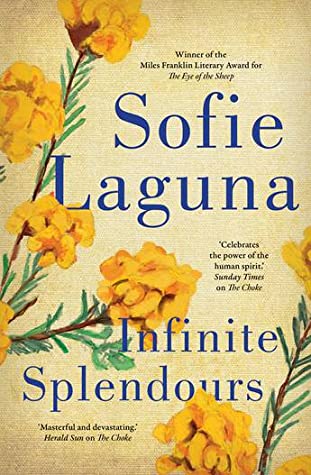
Sofie Laguna, Infinite splendours (#BookReview)

Those of you who know the subject matter of Sofie Laguna’s latest novel, Infinite splendours, will not be surprised to hear that it drew a mixed reaction from my reading group, particularly coming on the heels of recent reads like Nardi Simpson’s Song of the crocodile (my review) and Douglas Stuart’s Shuggie Bain (my review). However, if we all agreed on one thing, it was that Laguna’s writing is splendid.

Some of you though, particularly non-Australians, will not know what it’s about, so let’s get that out of the way first. The back cover blurb starts this way:

Lawrence Loman is a bright, caring, curious boy with a gift for painting. He lives at home with his mother and younger brother, and the future is laid out before him, full of promise. But when he is ten, an experience of betrayal takes it all away, and Lawrence is left to deal with the devastating aftermath.

It’s not a spoiler to say that this betrayal involves sexual abuse.

Infinite splendours, like Laguna’s previous book, The choke (my review), is set in the rural past. In this case, we are in the Grampians, west of Melbourne, and the novel starts in 1953 when Lawrence is 10. As with The choke, my question is, why set the story in the past? And my answer – though I don’t know Laguna’s – is the same: it’s set at a time when awareness of abuse and the resultant trauma were essentially non-existent. This enables Laguna to explore her theme unencumbered.

The novel is told chronologically in three parts. The first ends with the abuse, and the second takes Lawrence through to another crisis in his late twenties, with the third picking him up, a couple of decades later, in 1994. By this time, Lawrence is living alone in the isolated family home. The novel is told first person, so we spend the whole time in Lawrence’s head, seeing only his perspective. It’s intense and introspective, but not unleavened. There are moments of calm and beauty.

One part engaged, another observing. Two selves. (p. 411)

Still, it’s a tough story, as we watch this lovely, sensitive boy, whom we’ve come to love, decline. He stutters. He gives up his interests, including the art in which he’d shown such talent, and he keeps to himself. His body is a source of mental and physical anguish. From the moment of the abuse, he’s a divided person:

I felt myself dividing; there were two selves to choose from. One inside, one outside. (p. 152/153)

There are moments when he may have been helped. Soon after the abuse, his younger brother Paul asks “what did he do to you Lawrence” – but Lawrence won’t confide. At the beginning of part 2, the family’s kind neighbour, Mrs Barry, tells his mother that he reminds her of the “men back from the war”, but of course PTSD was not properly recognised nor treated back then.

After his mother dies when he is 26 years old, his brother leaves home, and a crisis occurs at his workplace. At this point, Lawrence’s self-isolation is complete. He does, however, have points of solace. His beloved mountain Wallis, a fictional mountain in the Grampians which features in the story from the beginning, provides moments of peace, hope and transcendence; a bunker on the property, in which he hides in a game of hide-and-seek at the novel’s opening, is a place he goes to for safety; and his art, to which he returns after leaving his job, provides occupation and self-expression:

This was the world for me; there was Wallis above and the bunker below, and here was I, between them with my tray of colours. (p. 267)

Lawrence also has an art book, Letters from the masters, that his uncle had given him during his “grooming”. This book becomes his “bible” – for art and life – and he returns to it again and again. He studies the paintings, and he ponders the artists’ words. Indeed, the novel’s title comes from Master Millet who wrote “I see far more in the countryside than charm, I see infinite splendours”. And so does Lawrence, particularly in his beloved Wallis. It is while standing on Wallis, before the events unfold, that he has his first intimations of “something else, greater, that was infinite–the earth’s invisible self. Wallis whispered, See this“.

It is in this context that Lawrence’s art becomes his life’s work. He describes one of his landscapes as “like a living thing … a soul contained within an object”, and sees his paintings as his family. He is as settled as he can be. But, change is inevitable, and the time comes when Mrs Barry’s long-empty house across the yard is occupied again. It discombobulates Lawrence:

I painted into the sun, layers of yellow into yellow. Immersion in light. Sun across my knees, sun in the sky, sun on my canvas. Could I not keep going, contained forever within this one emerging world of light? Must I inhabit another?

It seemed I must … Everything changes.

The new occupants are a single-parent family like his own had been, this one, though, with a mother, teen daughter, and, yes, a 10-year-old boy. The tension builds as we readers watch and desperately hope that Lawrence will not repeat history, that he will get his two selves back in sync in the best way.

I said at the beginning that my reading group praised Laguna’s writing. Her descriptions of the landscape are exquisite and her delineation of character, even minor ones, is so very good. Her warmth and empathy are palpable. I also love her ability to change pace and rhythm to evoke different emotions. However, several of us did feel it became repetitive. Further, although I was fully engaged in Lawrence’s story, and was never going to give up on him or the book, there were times that I felt overwhelmed with the multitude of motifs. As well as those I’ve mentioned, like Wallis and the bunker, there’s Robinson Crusoe, Madame Butterfly, a strawman/scarecrow, birds and the bird clock, rocking and a rocking chair, colours, and more. While none of these were gratuitous, they did sometimes become distracting, as I tried to identify whether they were adding anything critical to what I already knew and felt.

As I read this novel, with a frequent sense of foreboding, I was buoyed by my memory of Laguna’s statement that hope is important. Without giving anything away, let’s just say that, here, the hope felt a bit thin, albeit there is a real transcendence in the ending. For that I was truly grateful.

As for my reading group? Well, there’s been a request for books with a lighter touch next year, which is fine by me, as long as they have meat too!

Challenge logo

Sofie Laguna
Infinite splendours
Sydney: Allen & Unwin, 2020
435pp.
ISBN: 9781760876272

Winner of the 2021 Colin Roderick Award

Helen Garner, One day I’ll remember this: Diaries, Volume 2, 1987-1995 (#BookReview)

Helen Garner, One day I'll remember this, book cover

I loved volume 1 of Helen Garner’s diaries, Yellow notebook (my review), last year, and equally enjoyed this second volume, One day I’ll remember this. As with my first volume post, I plan to focus on a couple of threads that particularly interested me.

First though, it’s worth situating these diaries in terms of Garner’s biography. The nine years encompass the writing of her screenplay The last days of chez nous (my review), her novel Cosmo cosmolino (my review), and her non-fiction work, The first stone (read before blogging). This time also covers the beginnings of her relationship with novelist Murray Bail (“V”) and the early years of their marriage. The trajectory of this fraught relationship gave the volume a strong narrative arc, though the volume concludes not on this relationship but her hysterectomy. Read into that what you will.

Like Yellow notebook, volume 2 offers much for Garner fans. It covers similar ground to the first: observations from life around her, snippets of conversations, occasional news items (like the fall of the Berlin Wall), thoughts about other writers, and of course reflections on her own writing. We watch the tortuous development of her relationship with Bail, and the ups and downs of some close friendships. Music and religion feature again. And, there’s a search for home, for a place of her own.

“the little scenes” and “she never invents anything” (1987)

In her preface to The last days of chez nous and Two friends, Garner characterised her writing as “the same old need to shape life’s mess into a seizable story.” Those who know Garner’s writing will know that she was, on the publication of her debut novel Monkey grip (1977), criticised for not writing fiction but just publishing her diaries. This issue of what sort of writer she is, and what sort of writer she wants to be, continues to occupy her in this volume. “My work is very minor”, she worries in 1990. She is not helped by Bail who clearly thinks that her subject matter is not worthy of her writing skills:

I asked V what he ‘really thought’ of my work. He said he thought it was very good but that I should get beyond the subject matter that limited me, ‘those households, what are they called? That you always write about?’ (1992)

So it seems did Z (who, I think, is David Malouf):

V reports Z’s ‘outburst’ against ‘women’s writing’ with its ‘domestic nuances’ which he dislikes and it not interested in. V tries to get me to pick up my upper lip but without success since he doesn’t hide the fact that he agrees with Z. (1989)

It’s not surprising that among the writers whom Garner admires is Canadian Nobel Prize for Literature Winner, Alice Munro, about whom Garner writes, immediately before the above outburst:

Alice Munro is deceptively naturalistic. All that present tense, detail of clothes, household matters, then two or three pages in there’s a gear change and everything gets deeper, more wildly resonant. She doesn’t answer the questions she makes you ask. She wants you to walk away anxious. (1989)

Bail and Malouf, like many, misread Garner if they think her writing is about unimportant stuff. Garner is interested in the sorts of things she admires in writers like Jolley and John McGahern, for example. She says of McGahern that “he goes in very deep, broaching a vast reservoir of sadness, passivity, hopelessness and despair” (1993). She is not at all interested in domesticity for domesticity’s sake but in understanding the darkness in human beings, and “what people do to each other”.

As well as content, Garner talks again about the process of writing, of the frustration when it feels “false and stiff”, “ugly, clumsy”, or exhibits “anxious perfectness”, and of the exhilaration when it all goes right:

Hours passed in big bursts and I ended up with seven pages of stuff I could never have foreseen or invented … This must be how it’s done–take your foot off the brake, unpurse the lips and see where it takes you. (1990)

These volumes offer wonderful insights into the insecurities, challenges, despair and triumphs of being a writer – and for Garner, specifically, of the struggle to find “her” mode:

I need to free myself from the hierarchy with the novel on top. I need to devise a from that is flexible and open enough to contain all my details, all my small things. If only I could blow out realism while at the same time sinking deeply into what is most real. (1989)

By the end of this volume Garner has moved from “those households” into The first stone – and from there, as we know, she took on narrative non-fiction, and produced books on her own terms in her own form. In these, she finally found a way to not only explore the “darkness” and the things “people do to each other”, but to do it with an openness that is not always pretty but that I admire immensely.

“This is what life is. It’s not for saying no” (1987)

So writes Garner about her newly developing relationship with “V”. This relationship provides the diary’s backbone. It drives, mostly, where she lives, who she sees, and how and where she works. As they move from place to place – in his Sydney and her Melbourne – Virginia Woolf’s A room of one’s own comes frequently to mind, because, wherever they are, he gets to work at home while she must find somewhere else. Even when she tries to put her foot down, she ultimately backs off and, yes, finds somewhere else. This, in many ways, epitomises their relationship – he confident in the rightness of his working where he wishes, and she uncertain about whether to compromise (again), he sure that he is “blameless”, and she, self-deprecatingly, wondering if she’s “a monster”. It’s a typical man-woman story in so many ways, and for women readers the gender issues are both illuminating and infuriating.

However, it’s not all bad. There are moments of generosity and tenderness, even of fun. There are conversations about books and reading, convivial times with friends, and trips away. But, it also seems clear from the beginning that they are the proverbial chalk and cheese. Garner is emotional – “hypersensitive, says friend R – and sociable. She loves nature, music and dancing. V, on the other hand, is reserved, austere, elitist, really. He is furious when someone criticises art that he believes (knows!) is good, while Garner is interested in the discussion.

It made for painful reading at times, but fortunately, there was always this sense, this thing she says early in the volume:

Nothing can touch me. The power of work. Art and the huge, quiet power it brings. (1987)

Amen to that, eh?

Challenge logo

Helen Garner
One day I’ll remember this: Diaries, Volume 2, 1997-1995
Melbourne: Text Publishing, 2020
297pp.
ISBN: 9781922330277

(Review copy courtesy Text Publishing)

Chrystopher J. Spicer: Cyclone country: The language of place and disaster in Australian literature (#BookReview)

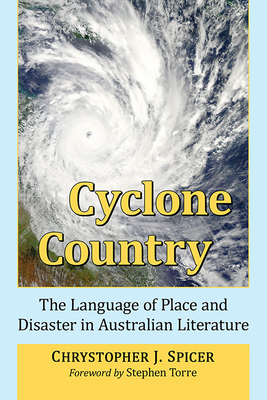
I love thinking about place in literature, so I was intrigued when Chrystopher Spicer, cultural historian and adjunct senior research fellow at North Queensland’s James Cook University, offered me his book Cyclone country: The language of place and disaster in Australian literature for review. Unfortunately, I’ve taken a while to get to it.

Place can be a contentious issue for readers, and I’ve become embroiled in many discussions over the years on the topic. However, this is not going to be one of those, not because I have nothing more to say, but because Spicer’s book looks at place from a different angle. His focus is, obviously, cyclones, and was inspired by the fact that he lives in northern Queensland, a tropical region known for its often highly destructive cyclones. Despite this, people stay. How do they incorporate their experience into their sense of place, and, more significantly, into their understanding of who they are personally and as a community? Cyclones bring chaos and destruction, but, paradoxically, they are also part of the fabric of place they destroy.

It is in this context that cyclones (and similar “nature catastrophes”) can be catalysts for literature. It specifically was for Susan Hawthorne’s eco-poetry collection Earth’s breath. Spicer wanted to explore whether such literature provides “a means by which individuals and societies can cope with and integrate these events into their lives, culture and place” and how weather catastrophes like cyclones “speak of our relationships with place and the people in it”. Concluding his introduction, he identifies his objectives as

to explore how we integrate a violent, chaotic, and destructive weather feature into our culture through the use of storytelling and structure. At the same time, I hope to convey a sense of the connectivity and commonality of people search for meaning amid the meaninglessness of chaos and catastrophe.

“in with through” (Hawthorne)

Spicer explores all this through eight chapters. The first two and the last are devoted to general discussion about cyclones, cyclones and place, and cyclones in literature. In these chapters in particular, Spicer draws on academics, critics, and other writers to provide a theoretical underpinning to his argument. The fundamental point is that stories shape the places in which we live and that in the same process people and place are mapped by those stories. He adopts the word “terroir”, traditionally used to describe wine regions, arguing that it encompasses both the tangible habitat and the spiritual sense that is imbued in that habitat from living within it. Weather, he argues, is inseparable from the physical and experiential aspects of the landscape. As poet Susan Hawthorne writes:

I am in with through the cyclone
which is inside with through me

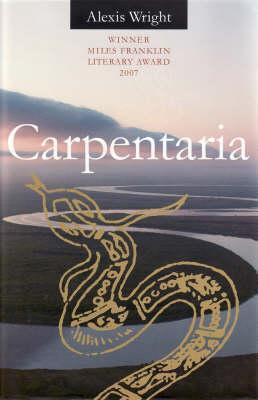
The book’s other five chapters explore his ideas through specific works set in or around Queensland and its cyclonic environment: Vance Palmer’s Cyclone (Lisa’s review), Thea Astley’s A boatload of home folk (with references to other works including The multiple effects of rainshadow which I’ve reviewed), Patrick White’s The eye of the storm (Lisa’s review), Susan Hawthorne’s Earth’s breath, and Alexis Wright’s Carpentaria (my post).

Storms and cyclones have, of course, featured in literature as long as people have been telling stories, and Spicer provides many examples. Their “propensity to be intense life-changing personal experiences” naturally leads to their use in literature, often as metaphor for “epiphany and revelatory apocalypse”. I’m sure all of us have examples from our reading. For me, Shakespeare stands out.

Alexis Wright, Carpentaria

The five authors Spicer explores use cyclones in different ways, but there are recurring ideas. Epiphany, revelation, with a corresponding opportunity to change or start afresh, underpin the stories. Serpents and similar monsters feature frequently, whether it’s Palmer’s Leviathan, or Hawthorne’s ouroboros, or Wright’s Rainbow Serpent. I’m simplifying here but, essentially, their role varies from being the monster that embodies and explains the chaos to something that is more organically part of the process of chaos and renewal. Somewhat related to this, but separate too, is a cyclical view of nature and thus life. This idea is particularly developed by Hawthorne and Wright, in whose works the apocalyptic event contains the cycle of beginning and end, of life and death and life again.

For White, the image or metaphor is a little different again, but also related, with his using the spiral and the mandala or circle. For his protagonist, it’s in the “eye” of the storm, or the “still point” of the spiralling word, that revelation is found, and epiphany achieved. Astley, too, suggests Spicer, sees us as all being “part of a swirling, spiralling, cyclonic universe”. However, instead of going into the eye, her characters try to escape the cyclone, something which Astley herself said, “is not possible”. The main Astley book that Spicer explores, A boatload of home folk, has been criticised as awful, unlikeable, but Spicer disagrees, arguing that, ultimately, Astley, like the other writers, “uses the elemental cyclone as a trope of apocalypse that is both an instrument of destruction and a catalyst of revelation.” It is what the cyclone draws out of the despair in the novel’s characters that is significant.

In the end, there are two main ideas I took from this book. One is that cyclone literature helps us to understand the event, to incorporate the resultant chaos into our lives, and thus, to “integrate nature catastrophes” into our sense of place, or terroir. While Spicer’s focus is cyclones, he also mentions “nature catastrophes”. Consequently, I’d argue that his argument holds for places which frequently experience other such catastrophes, like bushfires, tornadoes, earthquakes, and recurring long droughts. People who live in places frequented by such catastrophic events, and who choose to remain in those places, must surely “integrate” the experience in some way into their identity as a person of that place, and into their understanding of how to live in that place. Spicer’s discussion of Susan Hawthorne’s Earth’s breath addresses this idea in depth.

The other idea relates more generally to how writers use cyclones/storms to explores broader ideas. In a way, this extends beyond Spicer’s specific goals regarding place. Whether or not writers are inspired by actual cyclonic events or purely imagined ones, in real or imagined places, they can and do use cyclones to explore spiritual and/or psychological upheavals in their characters’ lives. Spicer’s selections are all Queensland-related, so place is quintessential to the stories, but his analysis shows that cyclones in literature also transcend place to encompass something more universally human.

In the final section of his book, “The Cyclone as Universal Trope”, Spicer writes that –

Such events and the stories of them can challenge previous human experience, thereby providing opportunity to move forward and rebuild, opportunity for the emergence of the new.

– with “the new” embodying both the tangible and the intangible aspects of our lives.

Spicer’s book is well-researched and thorough in its analysis, and is supported by an excellent bibliography and index. I found it fascinating. It’s not for everyone. However, it makes an excellent contribution to our understanding of the tropes of Australian literature, including reminding us that it’s not all about “the bush”.

Lisa also reviewed this book.

Chrystopher J. Spicer
Cyclone country: The language of place and disaster in Australian literature
Jefferson, NC: McFarland, 2020
202pp.
ISBN: 9781476681566

Review copy courtesy of the author

Elizabeth Jolley, Hilda’s wedding (#Review, #1976 Club )

One of Elizabeth Jolley’s biggest fans is Helen Garner, as I have said before. Garner often mentions Jolley, and my current read, the second volume of her diaries, One day I’ll remember this, is no exception. She writes:

Elizabeth Jolley’s new novel, My father’s moon [my review]. She re-uses and reworks images from her earlier work, brings forth experiences that she’s often hinted at but never fully expressed. I can learn from this. I used to think that if I said something once I could never say it again, but in her book I see how rich a simple thing can be when you turn it this way and that and show it again and again in different contexts.

This is not the only reason Garner admires Jolley, but the reasons are not my topic for today! I will add, though, because it is relevant to my topic, that another thing Garner appreciates about Jolley is that both draw closely from their own lives in their writing.

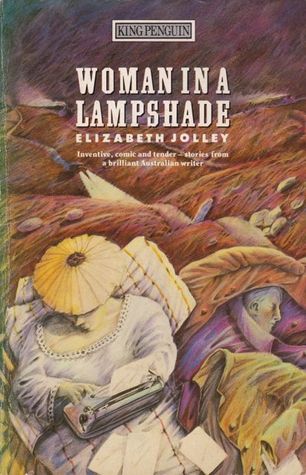
So now, “Hilda’s wedding”, which I read for the 1976 Club, hosted by Kaggsy’s Bookish Ramblings and Stuck in a Book. It’s not the short story I had planned to read, but I couldn’t find that one – also a Jolley – in my collection or online. Fortunately, during my hunting, I found this one from the same year, and it exemplifies the two points I made at the beginning. Firstly, it features a character, Night Sister Bean, who appears in other Jolley works, including the first of hers I read, the short story “Night runner”. And, being a hospital-set story, it draws on (let’s not say “from”) her own experience of nursing.

“Hilda’s wedding” is a rather bizarre or absurd story – which, again, is not a surprise from Jolley. In it, the narrator, who is a relieving night nurse – so somewhat of an outsider – organises an on-the-spot wedding for the very pregnant, apparently unmarried, kitchen maid Hilda. The various roles – husband, celebrant, parents of the bride, pages – are played by night staff including the cook, cleaners and porters. The bride is dressed, with a veil made of surgical gauze and a draw sheet as her train (which contains a hint of the Gothic that we can also find in Jolley’s writing). Immediately after the ceremony, Hilda goes into labor and gives birth in the elevator.

What does it mean? I’m not sure, but this little story about an impromptu wedding sounds like children’s play-acting. It’s a game which uses imagination and creativity, which provides a sense of fun in a grim place, and which brings a little joy to Hilda, whose “melon-coloured face shone with a big smile”. Melons, as you may know, are often associated with pregnancy and fertility. However, injected into the story at various points is the real world, one characterised by rules and impersonality. There’s also the unresolved mystery about Sister Bean and rumours about her negative impact on transfusions/drips. Is she a witch, they wonder?

Sister Bean opens and closes the story, but otherwise appears only occasionally. There are various ways we could read her. One could be people’s need to find a reason or explanation or scapegoat for the bad things that happen in a world where you have little control. In the third last paragraph, our narrator comments on the early morning, and the city waking up:

A thin trickle of tired sad people left the hospital. They were relatives unknown and unthought about. They had spent an anonymous night in various corners of the hospital waiting to be called to a bedside. They were leaving in search of that life in the shabby world which has to go on in spite of the knowledge that someone who had been there for them was not there any more.

It is against this backdrop of sadness that our nurse narrator was there for Hilda. In the next and penultimate paragraph, the narrator is standing outside, taking “deep breaths of this cool air which seemed just now to contain nothing of the weariness and the contamination and the madness of suffering”.

In this story, as is typical of Jolley, there is humour alongside sadness, comedy next to tragedy, unreality bumping up against reality, and, appropriately, no resolution at the end.

In Central mischief – a collection of Jolley articles, talks and essays compiled by her agent Carolyn Lurie – is a talk Jolley gave to graduating nurses in 1987. Before I get to my concluding point from it, I’ll just share something else she says, which is that “for me fiction is not a form of autobiography”. This is an important distinction, which I think Garner would also make. Writers like Jolley and Garner may draw on their own experiences, but what they write is something else altogether.

But now, I want to conclude on this that she tells them:

There is a connection between nursing and writing. Both require a gaze which is searching and undisturbedly compassionate and yet detached.

What a clear-eyed view – and how hard to achieve. What do you think about this?

Challenge logo

Elizabeth Jolley
“Hilda’s wedding” (first pub. 1976, in Looselicks)
in Woman in a lampshade
Ringwood, Vic: Penguin Books, 1983
pp. 139-46
ISBN: 0140084185

George Orwell, How the poor die (#Review)

“It is a sound instinct that warns people to keep out of hospitals if possible, and especially out of the public wards.” George Orwell may have written this in 1946, in his essay, “How the poor die”, but I can’t help thinking that it is still a sound instinct, something only too vividly confirmed by the experience of COVID-19, world-wide. How many people have contracted COVID-19 in hospital, for a start? How many hospitals have been so over-run that they’ve had patients in corridors, in foyers, in ambulances on ramps, in quickly erected marquee wards, not to mention people on the streets waiting to get in. This isn’t the experience of all patients in all hospitals in all countries, but as far as I can tell one or more of these things has happened in every place that COVID-19 has taken hold. It’s not pretty.

But, I digress. Back to Orwell. The essay was inspired by an experience he had in a public ward of a hospital in Paris in 1929, but why leave it to 1946 to publish? According to Wikipedia, the editor of Orwell’s Collected Works, Peter Davison, suggests that it may have been first written between 1931 and 1936, when Orwell was writing about “the unemployed, tramps and beggars”, and that he reworked it over 1940 to 1941. It was submitted to a journal around then but was rejected, “possibly because readers would have been unwilling to read about ‘how the poor die’ at such a time”. In the end, a section [which section, I wonder?] was retyped and it was published in November 1946.

Orwell’s experiences were awful. He had pneumonia, he says, and was placed in a packed ward – “a long, rather low, ill-lit room … with three rows of beds surprisingly close together” – and treated with cupping and a very painful mustard poultice. This, however, was not the worst of it. He describes the impersonal, disrespectful way in which the patients were treated by the doctors, medical students and nurses, the lack of basic cleanliness and care (with patients, not nurses, for example, often getting bedpans for those who couldn’t do it themselves). That this was going to be the sort of story he’d tell is heralded in the second paragraph where he describes having a bath on admission as “a compulsory routine for all newcomers, apparently, just as in prison or the workhouse”.

Anyhow, Orwell then moves on to death. He suggests that the lonely, ignored death of patient numéro 57, would be seen as “an example of a ‘natural’ death, one of the things you pray for in the Litany”. He considers it might be “better to die violently and not too old”, because, for all the horrors of war, he writes, death via a man-made weapon nowhere near “approaches in cruelty some of the commoner diseases”.

At this point, I was wondering about what hospital experiences Orwell had had, but he goes on to mention a Spanish hospital and an English cottage hospital, both of which he experienced in the 1930s. So, when he argues that the English cottage hospital was superior, he is speaking from experience. I wonder, though, whether a French cottage hospital might have been similarly decent? I don’t know.

Orwell next gives a brief history of hospitals through the nineteenth century, describing how they were places where medical students practised on the poor. He focuses on surgery, which, at that time, was “believed to be no more than a peculiarly gruesome form of sadism”. This apparently inspired a nineteenth century genre (though he doesn’t use that term) of horror-literature “connected with doctors and hospitals”. All you horror lovers will be familiar with this, I’m sure. Doctors in these stories had names like Slasher, Carver and Fillgrave. He also mentions Tennyson’s poem “The Children’s Hospital” (1880) as being part of this anti-surgery literature.

I found all this interesting, but wondered what his point was. A page or so before the end, I thought I found a hint, when, after referencing the improvements brought by anaesthetics and disinfectants, he says

Moreover, national health insurance has partly done away with the idea that a working-class patient is a pauper who deserves little consideration.

And yet … he concludes by saying that, despite improvements, hospitals are still not the best place to die, and that “the dread of hospitals probably still survives among the very poor”. It takes a long time, he implies, for past experiences and history to die out in the collective imagination. Not necessarily a bad thing, I think.

Wikipedia tells us that in 1948, two years after this story was published, and one year before Orwell died, Britain’s National Health Service was established “as publicly-funded medical provision for all”. The person behind it was the Minister of Health, Aneurin Bevan, who had once been Orwell’s colleague at the Tribune.

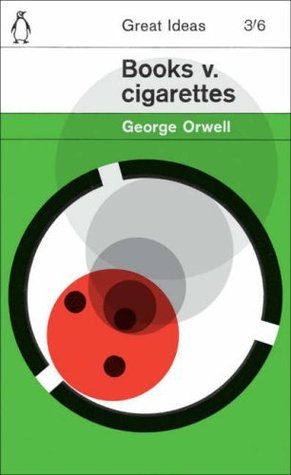
Previous reviews from this book: “Books v. Cigarettes“, “Bookshop memories“, “Confessions of a book reviewer“, “The prevention of literature” and “My country right of left“?

George Orwell
“How the poor die” (orig. 1946, in Now)
in Books v. cigarettes (Great Ideas)
London: Penguin Books, 2008
pp. 50-64
ISBN: 9780141036618

Available online at the Orwell Foundation.

Shirley Jackson, The lottery (#Review)

As a lover of short stories, I have wanted to read Shirley Jackson’s “The lottery” for some time. With Kate selecting it as October’s Six Degrees starting work, now seemed the perfect time!

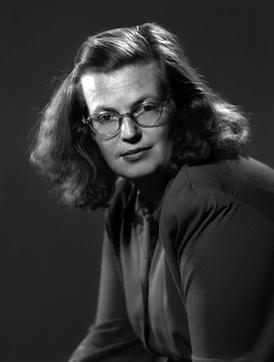
Shirley Jackson (1916-1965) pops up on blogosphere with some consistency, and is clearly well-regarded. Her career spanned two decades and, during that time, as the thorough Wikipedia article says, she wrote six novels, two memoirs, and more than 200 short stories. Her debut novel, The road through the wall, and “The lottery”, were both published in 1948, though she had had short stories published over the preceding decade.

It was “The lottery”, however, which established her reputation – particularly as a master of horror stories. Wikipedia says it resulted in over 300 letters from readers, many “outraged at its conjuring of a dark aspect of human nature”. In the San Francisco Chronicle of July 22, 1948, Jackson responded to persistent queries from her readers about her intentions:

“Explaining just what I had hoped the story to say is very difficult. I suppose I hoped, by setting a particularly brutal ancient rite in the present and in my own village, to shock the story’s readers with a graphic dramatization of the pointless violence and general inhumanity in their own lives.”

Many of you probably know the story, but, just in case, I’m not going to “spoil” it beyond that. I will, however, make a few comments.

I’ll start with Wikipedia’s succinct synopsis: it is about ‘a fictional small town which observes an annual rite known as “the lottery”, in which a member of the community is selected by chance’. It’s a great read, because the build-up is so good and the ending so powerful. If you were not forewarned, you’d have no idea you were reading a “horror” story, because there’s nothing Gothic about the setting, no eeriness, no overt build up of fear even. Instead, there’s the coming together of this village’s 300 people coming for this annual event. It’s summer, “the flowers were blossoming profusely and the grass was richly green”. Idyllic, in other words, or, so we are set up to see it is (or, could be?)

The children are described, then the men and women. It all seems benign, though there are tiny hints of something else, that you may not notice if you’re not expecting it. The emcee of “the lottery” is the ironically named Mr. Summers, who has the “time and energy to devote to civic [my emph] duties”. Many of the names in the story sound normal, but they also carry symbolic weight – Graves, Adams, Delacroix (pointedly, as it turns out, perverted to Dellacroy by the townspeople).

Anyhow, there is a long discussion of the “black box” that is used for the lottery, but, although it is “black”, it sounds quaint and unimportant. No great care is taken of it between lotteries. There’s a bit of camaraderie and joking between the townspeople; there’s confirmation of the formalities; but, slowly tension builds. Mr Summers and the first man to draw from the black box, grin at each other “humorlessly and nervously”. We are now half way through the story, and there’s nervousness among the attendees.

Then, plopped in here, is a little discussion about some villages – because this is not just this village’s tradition – having given up, or talking of giving up, the lottery. However, Old Man Warner (another interesting name), who has been through 77 lotteries, doesn’t approve of change. He sees “nothing but trouble in that”. When you know the end, you wonder what sort of person he is! Certainly not the archetypal dear old man, grandpa to everyone! Meanwhile, anxiety slowly builds, with another townsperson saying to her son, “I wish they’d hurry”.

The “winner”, when identified, doesn’t behave like a winner, which provides another dark hint, but which causes our aforementioned Old Man Warner to pronounce that “people ain’t the way they used to be”.

The final line of the story is shocking, but by then you have worked out what winning means, so it adds an extra layer to the story’s meaning (as you’d expect in a good short story).

You can find in Wikipedia, and elsewhere on the web, all sorts of critical reactions and theories about what it means, but I’d like to return to Jackson’s comment that she intended a “graphic dramatisation of the pointless violence and general inhumanity“. Why do the townspeople accept “the lottery”? What makes some villages give up the ritual and others not? Why do some in this town act with relish and others not? It recalls, for me, Christos Tsiolkas’ The slap. Yes, it’s a novel and a very different story, but I saw it as being fundamentally about the violence that seems to be be lying too near the surface of our so-called civilised society. I’ll leave it at that, but it makes me think, plus ça change.

Image credit: Shirley Jackson, New York City. 1940s. Contact: photography@magnumphotos.com. Low resolution version from Wikipedia, used under Fair Use.

Shirley Jackson
“The lottery”
First published in The New Yorker, June 26, 1948

Avalailable online at The New Yorker.

Maggie O’Farrell, Hamnet (#BookReview)

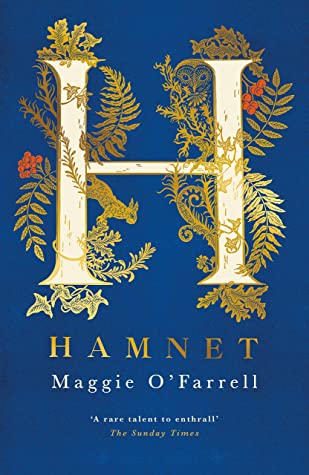
Book cover

Not unusually, I’m late to this book that was all the talk in 2020 – and, I may not have read it at all if it hadn’t been for my reading group. I’m talking, as you will have guessed from the post title, of Maggie O’Farrell’s Hamnet.

As most of you will know, Hamnet’s plot draws from the life of Shakespeare (never named in the novel) and Anne Hathaway, and the death of their son Hamnet at the age of 11. There was an older sister, Susanna, and Hamnet’s twin sister, Judith. O’Farrell explains her interest in her Author’s Note:

Lastly, it is not known why Hamnet Shakespeare died: his burial is listed but not the cause of his death. The Black Death or ‘pestilence’, as it would have been known in the late sixteenth century, is not mentioned once by Shakespeare, in any of his plays or poetry. I have always wondered about this absence and its possible significance; this novel is the result of my idle speculation.

Because this book has been well-covered already online, I’m going to take a slightly different tack with this post, and focus on a couple of questions.

“She herself might tell a different story”

With all books, but particularly with historical fiction, one of my questions is, why did the author choose to write their story. O’Farrell partly answers it in her Author’s note. However, there is also, surely, a feminist reading, because, although the novel is titled Hamnet, it is primarily about his mother Agnes (as Anne is named in Shakespeare’s will). Early in the novel, O’Farrell writes “This is the story, the myth of Agnes’s childhood. She herself might tell a different story”.

The thing is, we don’t know a lot about Agnes Hathaway which makes her ripe for historical fiction. What we do know is that women’s stories were – and too often still are – rarely told, but that that doesn’t mean their lives were unimportant. It means that importance hasn’t been placed on them. Whoever Agnes really was, O’Farrell has created a wonderful, eccentric character, who is perceptive, warm, independently-minded, a little flawed but engaged in the life of her family and community. She is fun to read about.

Besides telling a story about her, though, O’Farrell also presents, through her, a story about grief, and this, for me, was one of the strongest aspects of the novel. Agnes’ thoughts about burying her son, her astonishment that people can complain about their children, her utter discombobulation were so real:

Agnes is not the person she used to be. She is utterly changed. She can recall being someone who felt sure of life and what it would hold for her …

This person is now lost to her for ever. She is someone adrift in her life, who doesn’t recognise it. She is unmoored, at a loss. … Small things undo her. Nothing is certain any more.

So real …

Hamlet?

Warning: Spoiler of sorts

Given the novel is titled for Hamnet, rather than for its main protagonist, Agnes, it’s worth considering why, and this leads us to the play Hamlet. The novel ends with Agnes attending a performance of her husband’s play, which confirms the significance of this play to the novel. The epigraph to the novel’s second part is a quote from Hamlet (V:ii): “Thou livest;/ . . . draw thy breath in pain,/ To tell my story”. But, Hamlet could scarcely be seen to be Hamnet’s story, though I did have a little laugh at the point in the novel where Hamnet chooses to die:

They cannot both live: he sees this and she sees this. There is not enough life, enough air, enough blood for both of them. Perhaps there never was. And if either of them is to live, it must be her. He wills it. He grips the sheet, tight, in both hands. He, Hamnet, decrees it. It shall be.

Eleven-year-old Hamnet seems, here, to be far more decisive than his namesake who is known for his prevarication. This, however, is not what we are expected to take away from the novel I’m sure!

So, what else? Well, there’s the grief theme, which Hamlet can be seen to “resolve” in the novel. Agnes, devastated after her son’s death, can’t understand her husband returning to work – and writing comedies:

His company are having a great success with a new comedy. They took it to the Palace and the word was that the Queen was much diverted by it.

There is a silence. Judith looks from her mother, to her sister, to the letter. 

A comedy? her mother asks.

She is even more devastated though to learn that her husband has gone on to write a play using their son’s name – Hamnet and Hamlet being interchangeable – so she goes to London to confront him. What happens is something else. Initially, she feels eviscerated:

How could he thieve this name, then strip and flense it of all it embodies, discarding the very life it once contained? 

But then, as she sees the ghost father and living son, she starts to see something else:

He has, Agnes sees, done what any father would wish to do, to exchange his child’s suffering for his own, to take his place, to offer himself up in his child’s stead so that the boy might live.

My reading group discussed the question of the play a little, though we didn’t come to any particular conclusion, which I rather like. However, we did talk about how Shakespeare wrote his darkest, strongest plays, including the four great tragedies, after Hamnet’s death, which suggests that his son’s death had a big impact on him. A member also raised the play’s existential nature, seeing it exploring the fragility of life – “to be or not to be” – and how you go on in the face of bleakness.

Now, I could go on and talk about the style (language, use of present tense, symbolism), the decision not to name Shakespeare, and the dual storyline structure, as I normally would, but I’m sure they’ve been discussed elsewhere, so I’m leaving it this time. There were aspects of the novel that I question, but the truth is that I fell for Agnes and her story.

So, I’m going to leave you with two quotes, one from the husband, one from the wife.

It is so tenuous, so fragile, the life of the playhouses. He often thinks that, more than anything, it is like the embroidery on his father’s gloves: only the beautiful shows, only the smallest part, while underneath is a cross-hatching of labour and skill and frustration and sweat. 

Gardens don’t stand still: they are always in flux. 

These relate to their spheres of activity, but they also say something about life, don’t you think?

Maggie O’Farrell
Hamnet
London: Tinder Press, 2020
310pp.
eISBN: 9781472223814

Nancy Jin and Rosalind Moran, These strange outcrops (#BookReview)

Bagging Canberra – often used synonymously for the Federal Government – is almost a national sport, but in recent years anthologies have appeared to counter this with more complex stories about this place. The first two I’ve read – The invisible thread, edited by Irma Gold (my review) and Meanjin’s The Canberra issue (my review) – commemorated Canberra’s centenary, but last year saw the publication of the evocatively titled These strange outcrops.

This anthology is the work of two young Canberrans, Nancy Jin and Rosalind Moran, who founded Cicerone Journal. Established in 2018, it is, they say,

a Canberra-based publication that seeks to encourage an open curiosity about the world in a socio-political climate of disconnection and disenchantment. We aim to publish writing that is exploratory and thoughtful, and new and unusual.

The journal’s fifth edition will be devoted to speculative fiction, and is due soon.

So now, These strange outcrops, which is subtitled, Writing and art from Canberra. It comprises original short stories, poems, and visual art created by established and emerging Canberra writers, and has a specific goal, as the editors write in their Foreword. It “grew out of a desire to question media narratives that portray Australia’s capital city as a place of disconnection and insularity”. They note that with a population of 400,000, Canberra and the surrounding region is “home to far more stories and perspectives than are commonly depicted in the news”. They wanted, they say, to “challenge the prejudices and stereotypes” and “celebrate the varied lives and imaginings of this unique place”.

“blurry at the edges” (Owen Bullock)

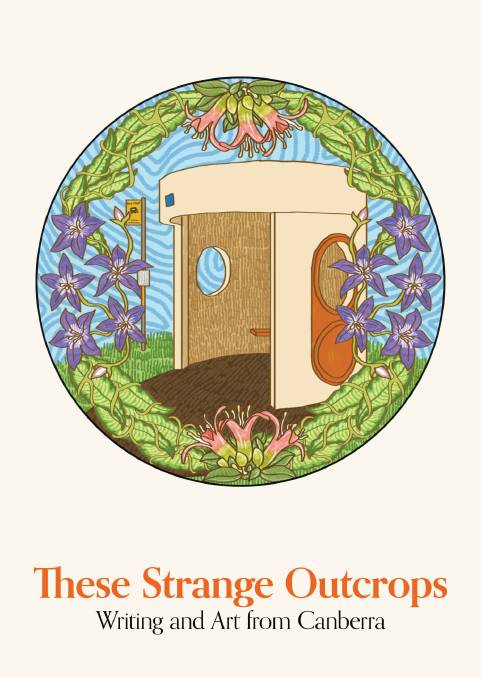
They have achieved their goal, and with style. This publication is physically gorgeous, from the cover, with its iconic Canberra bus stop framed by two Canberra floral emblems (the Royal Bluebell and Correa), through its beautiful endpapers comprising a correa blossom pattern, to the care taken with the design of the individual pieces. I can’t imagine any contributor not being thrilled with the look of their contribution.

But, the main point is, of course, the content. It more than lives up to the appearance, by which I mean, the book is not just a pretty face. An important thing with anthologies is the order, and it’s clear that the editors thought carefully about this. They start with the physical Canberra, and its natural environment, which is one of the reasons many of us love this place, and conclude with the experiences of different members of Canberra’s diverse population. In between, are various explorations of a wide range of aspects of life in Canberra, from those common to us all (like Cheryl Polonski’s poem “Wintertime in Canberra” and Penelope Layland’s poem “Showtime”) to some that speak to more specific experiences (like Daniel Ray’s prose piece about that challenging post-Year-12 time, “Queanbeyan: Quinbean: Clear water”). Some contributions are movingly personal, while others are unapologetically political. The end result is an authentic whole, that shows Canberra to be a rich and complex place, a bit “blurry at the edges” but with enough commonality at the core that makes us real, regardless of what outsiders might think.

Now, I did have some favourites, and will share a few of them over the rest of this post. The opening set of poems, “Canberra Haiku” by Owen Bullock beautifully introduces the collection, with its series of little impressions portaying Canberra’s breadth, from flowers peeking through a cracked pavement to a tattooed bus passenger and a permaculture working bee, from magpies and our mountains and lake to heatwaves and “blurry … edges”. The next few pieces explore place, often with an awareness of what was before we came, such as Janne D Graham’s poem “Crace Park” which conveys a sense of wrongness in our “calculated spaces”. A sort of antidote – or comment on this – is Helen Moran’s vibrant painting “Rainbow Serpent sleeping in Lake George”, the Rainbow Serpent being significant to many First Nations Australia peoples. It mesmerises me, because, while looking simple, it evokes complex and conflicting ideas. Set against a dark blue and black background, the bright, cheery serpent also looks ready to pounce. At least, that’s how it appears to me.

Patricia Piccinini, Sky Whale, pic: Nick-D from Wikipedia, using CC-BY-SA 3.0

Some of the pieces invoke wry humour to make their point, like Fiona McIlroy’s poem “sky whale” which uses the Patricia Piccinini’s Canberra-Centenary-commissioned hot-air balloon “The Skywhale” to reflect on attitudes to public art that challenges perceptions.

Canberra is
determined
to have a whale of a time
in the Centenary
to live it up
to lighten up
kick up our heels
yet a flying
maternal mammal
is just pushing the
envelope

The wordplay throughout the poem is delicious.

“come so far, lost so much” (Joo-Inn Chew)

Some of the strongest pieces concern migration and racism. Canberra, like much of Australia, is a multicultural place. We have Ngunnawal and other First Nations people here; we have Australian-born residents who have come from around Australia for work; and we have migrants including refugees. We have – or had, before the pandemic – an annual, vibrant and successful Multicultural Festival, which celebrates this aspect of the region, but several pieces in the anthology convey the sadness and pain that must always come with migration, regardless of its cause. Anita Patel speaks in “What are you cooking?” of the sadness of losing her mother in another part of the world, so that even those weekly phone conversations are no longer possible, while Joo-Inn Chew’s poem “A new arrival at Companion House” talks of the hope contained in the birth of a baby to people who have “come so far, lost so much”.

Others are much darker, speaking to non-acceptance, such as Michelangelo Curtotti’s ironically titled poem “The welcome”. In one of those perfect segues, this poem is followed by Stuart McMillen’s graphic short story, “I used to be a racist”.

As frequently happens when reviewing anthologies, I’ve only cursorily dipped into the treasures contained within. I apologise to all those contributors whom I don’t mention here, but know that you’ve been read and heard. The best thing would be for more to read your work in this thoughtful, considered anthology. It can be purchased from Cicerone (linked above).

Meanwhile, let’s finish on Rafiqah Fattah’s defiant poem, “Generation selfie”, about the 16 to 25 year olds who are too often ignored or passed over:

And now, there is a tremor in the air
We are here

Challenge logo

Nancy Jin and Rosalind Moran
These strange outcrops: Writing and art from Canberra
Canberra: Cicerone Journal, 2020
74pp.
ISBN: 9780646814155

Irma Gold and Susannah Crispe, Where the heart is (#BookReview)

I don’t normally review children’s books, particularly children’s picture books, but I do make exceptions, one being Irma Gold. I have multiple reasons for this. Irma Gold is local; she is one of the Ambassadors for the ACT Chief Minister’s Reading Challenge; she writes across multiple forms (including, novels, short stories and children’s books, in all of which I’ve reviewed her); and, if you click my tag for her, you will get a sense of just how active she is as a writer, editor and supporter of literary culture, particularly in the ACT. Hence this exception!

But, there is another reason too, which is that Where the heart is not only a delightful book but it slots very nicely into her growing oeuvre. Before I discuss that, though, I’ll describe this, which is her most recent book. Gold explains on its opening page that it was inspired by the true story of Dindim, a Magellanic penguin which, in 2011, was washed up on an island village outside Rio de Janeiro. The bird had been caught up in an oil spill. The fisherman who found him, Joao, cleaned and cared for him until Dindim returned to the wild. However, ever since then, Dindim has returned, annually, to Joao to spend several months of the year with him. There are questions about where he goes, but in Gold’s story it is Patagonia. Patagonia is one of the theories, because it is a major breeding ground for these penguins.

This sort of detail, however, is not critical to the story. It is fiction after all. What is critical to the story is that it tells of the potentially disastrous impact of oil spills on animals. It also tells of the importance of wild animals being free. This is what Joao believed. He brought the penguin back to health and set him free. It’s just that the penguin had other ideas. It also tells of the friendship that can develop between humans and wild animals.

What makes this a gorgeous book is the way Gold tells the story. It’s simply told but the language is not condescending, and it naturally incorporates local culture. Joao and the penguin mend nets, eat sardine sandwiches, and go shopping together, with this “shopping” being at a village market stall. It’s also warm-hearted. It encourages us to think about kindness, tenderness and loyalty, making it a feel-good read. Yet, there is also a narrative arc that encompasses a variety of emotions, including a sense of fear and drama as Dindim journeys back.

Not far from Joao’s beach, the sky swelled and lightning jagged. Dindim rode waves and wondered if he would make it. He was exhausted.

A little bit of drama makes it fun to read aloud to littlies, which I look forward to doing when lockdowns end and I’m able to see our little grandson again!

However, this is a picture book, so for it to succeed the illustrations have to be good as well. Fortunately, they are. I think this is illustrator Susannah Crispe’s first book, though she has another coming out this year. I’m not surprised she has, because she has done a beautiful job with this one. The colours are bright and inviting, but are conveyed with a warmth and softness that support the story. This is nowhere more obvious than in the two facing pages that contain only penguins. The expected intense black-and-white of the penguins is there, yet muted, and the white space surrounding Dindim visually conveys the text’s description of the “ache” in Dindim’s heart. Crispe also incorporates lovely little details from nature in her illustrations, like hummingbirds, butterflies, turtles and albatrosses. These all support the story by adding to its sense of place, but they also create interest when reading to littlies. “Can you find the turtle”, etc!

What I’m saying, in other words, is that this picture book is just the right package.

Irma Gold Craig Phillips Megumi and the bear book cover

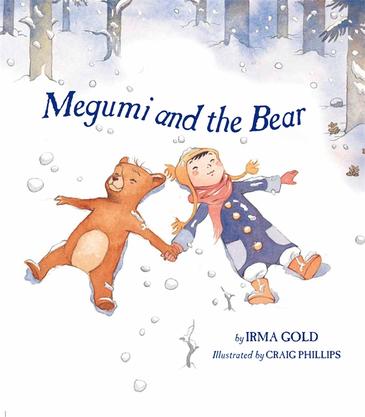
And there I’ll leave it to return to my opening comment on Gold’s oeuvre, because I am seeing a pattern. The obvious one – from her previous picture book Megumi and the bear (my review) and The breaking (my review) – is her interest in wild animals, and in the relationship between humans and animals. Closely related to this is an interest in conservation, animal rights and the environment. And then – yes, there’s more – overlaying all of this is the importance of friendship, between humans, and between animals and humans. There’s a quiet joy in this, which is something Gold said, in a recent conversation, that she wanted to convey. I believe she has, and look forward to what comes next.

Challenge logo

Irma Gold and Susannah Crispe (illus.)
Where the heart is
Chatswood: EK Books, 2021
[32pp.]
ISBN: 9781925820874