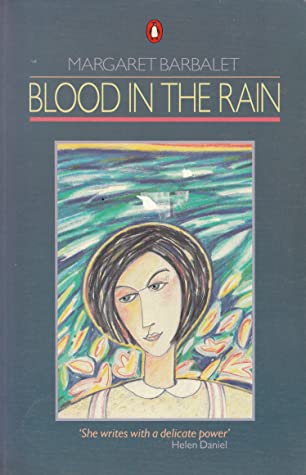
Margaret Barbalet, Blood in the rain (#BookReview)

When I thought about Bill’s AWW Gen 4 week, I knew I’d have some hard choices to make as I have many eligible novels on my TBR shelves. However, the choice wasn’t too hard because there was one author who just doesn’t seem to be talked about and I wanted to include her on my blog. Little did I know that Lisa had a similar idea, so this week you have not one but two posts on Margaret Barbalet’s Blood in the rain.

I am a bit embarrassed about it, though, because I must have bought my copy around the time it was published, as the “Aust. recommended” price sticker on my Penguin says $7.95! Indeed, I referred to this book, albeit not by title, when I wrote about Canberra’s Seven Writers of which Barbalet was a member. This is another reason I’ve been keen to read this novel.

Barbalet might have been part of the Canberra Seven, but she was born in Adelaide, grew up in Tasmania, and went to university back in Adelaide, before living in Canberra for many years. Blood in the rain is set in Adelaide and environs, and its descriptions of place reminded me at times of Barbara Hanrahan’s The scent of eucalyptus (my review), although the style is different. It might be just me, but I had a strong sense of Patrick White’s intensity in Barbalet’s book, particularly in the weight of her descriptions.

And this is probably a good time to tell you what the novel is about. The back cover tells us that it’s “about Jessie … a young girl growing up and reaching for maturity in the Australia of the Great War and the Depression, as she moves from country town to country town and eventually to Adelaide”. It also says that her life is “in may ways, ordinary” but that Barbalet “follows Jessie’s odyssey with a perception and compassion that reveals a person who is quite extraordinary”. This is accurate, but it misses a few salient points.

“she feels everything”

For example, the novel starts when Jessie, 4 years old, and her brother Stephen, 8, are living with their parents in a small coastal town. In the first chapter, their mother walks out, and we never hear from her again. Jessie adores her brother, but with their father deemed incapable of raising them – in the eyes of the local churchgoing women – the two children are taken in by different relatives. And through one of those twists of fate, Jessie is taken into a loving family, the Whaites, while Stephen goes to the home of a stern maternal uncle Theodore, and his cowed unmarried daughter. There is no affection here, and, indeed, there’s disdain from Theodore, because Stephen’s father was an Irishman – “Of course, Catholics, Irish, what can you expect”. In his opinion, Stephen “had never been checked”.

We spend a little time with Stephen – just enough to realise that his youth was miserable, and for us to see the contrast with Jessie’s life – but the book is Jessie’s. The war comes, and with the death of Mr Whaite in that war, Mrs Whaite can no longer afford to keep her, so Jessie is moved on to an unmarried relation, Miss Symes. Miss Symes doesn’t have the motherly warmth of Mrs Whaite but Jessie realises early on that she “would not be unkind”. A major theme of the book concerns, as Jessie ponders in adulthood, “what made a life good or bad”. One factor, this novel shows, is a secure, loved childhood, something Jessie had well enough, but not Stephen.

Anyhow, the story progresses from here, with Jessie going off to work as a domestic when she’s around 14 years old … and we move into the Depression. Meanwhile, Stephen, with whom she manages to stay in contact, goes to war, and returns with an injured arm, but it’s clear that Stephen’s greatest injury is emotional. The siblings reconnect after Stephen returns to Adelaide with a wife, Pamela, and baby – and some time after, Jessie moves in with them. I’ll leave the story there.

Since I read this for Bill’s week, I want to comment on how this book might or might not fit into his ideas about Gen 4. I’ll start with style, and return to my point about Patrick White. A little research into Barbalet uncovered that she was a fan of DH Lawrence. Guess who was also a fan of DH Lawrence? Yes, Patrick White. I rest my case!

Seriously though, White writes in his autobiography, Flaws in the glass, about missing Australia, and says “I could still grow drunk on visions of its landscape”. Well, you get the sense that Barbalet could too, as her descriptions of place – whether city, country, or coast – are so intensely evocative:

There was no one about but the smell of poverty remained.

The dew on the grass looks dirty, she thought, glancing through the pinched paling fence on the vacant block at the corner. Yellow light leant at corners, streaking the walls with new angles the colour of old flannel. Fingers of sun lifted new dirt in the glare.

There is also intensity in her descriptions of humanity, a Whitean (sorry!) sense of tough, hard lives that need resilience to survive. Jessie has resilience, seeking and enjoying, whenever she can, “manna in the dry waste of life”.

None of this is specifically Gen 4, but Blood in the rain does also embody its era. Barbalet, for example, plays with point of view, something that seems to start once Jessie is sentient. In other words, the novel is told third person, but at moments when Jessie’s feelings are likely to be strong we slip into second person. It begins when she is taken to live with Miss Symes, sister-in-law to her brother’s guardian. The mention of Stephen brings out feelings:

Your brother Stephen. If you skipped and walked even your feet would say the words. That dear face might suddenly slide in front of your eyes … You said the name over and over.

As does the awareness that, while Mrs Whaite had loved her, it wasn’t enough to keep her:

But, you, you, were someone who could be left.

It’s an intriguing technique, and a bit disconcerting at first, but it gives intensity to Jessie’s emotional self.

Besides style, though, is genre and subject matter. Blood in the rain is historical fiction, which was not particularly common in literary fiction, and it’s historical fiction about ordinary people, about ordinary women in fact. It’s a domestic story with little dramas, the sort of story that Gen 4 women made particularly their own.

Domestic, however, doesn’t mean trivial. This novel is about important ideas – about women’s resilience and stoicism in the face of poverty, about the raising of children, and in fact about love. Love, Jessie decides, is what makes the difference between a good life and a bad one. If that’s women’s fiction, it’s fine by me.

Margaret Barbalet
Blood in the rain
Ringwood, Vic: Penguin Books, 1986
204pp.
ISBN: 9780140089448

Janette Turner Hospital, The inside story (#Review)

Between 1985 and 1990, Janette Turner Hospital wrote four books which had one-word titles – Borderline (1985, novel), Dislocations (1986, short stories), Charades (1988, novel) and Isobars (1990, short stories). I’ve read the novels, and they imprinted on my mind Hospital’s love of metaphor. In these works, her titles clearly herald her concerns, and I love that. All this is to say that I thought I might kick off my contribution to Bill’s AWW Gen 4 week, with a short story, so I checked The Oxford book of Australian short stories. I found a few to choose from, but the writer who grabbed my attention was Janette Turner Hospital. I’ve read four of her novels, and have her latest short story collection, Forecast: Turbulence, on my TBR. I enjoy reading her.

The story is “The inside story” and it comes from the Dislocations collection, which was first published in Australia in 1986. I specify Australia because, at the time, and for many decades, Hospital was living overseas, primarily Canada and the USA, but elsewhere too. I note, however, that her website says that she returned to live permanently in Australia in 2019.

And now, the story. There is, as you’ll have realised, wordplay in the title. It is set “inside”, with the first person narrator being a teacher of a college literature course in a jail – an American one I presume, though it’s not specified. However, it is also about the “inside” of the characters, about their selves, particularly the narrator. The story involves this narrator, speaking from a later time, telling about the period she spent as a teacher in the jail, sharing her experience and some of the interactions she had with the inmates. So, she is also an outsider, coming from outside, and also an outsider in terms of not having shared experience with her students. For the first half of so of the story, her students are simply “they”, suggesting they are alike in their attitudes and reactions to her, but towards the end two, Jed and Joe, are differentiated.

For budgetary reasons, our narrator is limited in what she can teach to what’s available, so she chooses Malamud’s The fixer as a follow-up to Sozhenistsyn’s One day in the life of Ivan Denisovich which had not gone down well. She’s surprised, thinking they’d “enjoy the prisoner as hero”. Not this lot. After all, these are the people who had told her:

We can’t afford your romantic empathy … Please check your angst in at the cloakroom, before you see us.

Still, our narrator tries:

‘Kierkegaard suggested that we are all equally despairing, but unless we can write and become famous for our despair, it is not worth the trouble to despair and show it.

You people with a tragic world view, they sighed, you make like so difficult for the rest of us.

And so the story continues, with the narrator trying to understand their experience, and how they manage the brutality of prison life, while they fend off her desire to understand and “reform them with culture”. When she suggests reading Franz Fanon, they are not interested in “another tragic bloody humanist–because that would be the kind of invasion of our head space we can’t afford in here”. In other words, while she is concerned about their “moral survival”, eschewing the cynicism of her colleagues, their focus is pure survival.

She’s not the only one who started with “idealism and compassion”. Another is a guard, but he learns:

The institution could only operate in black and white, he said. Grey got it from both sides. Get out, he said, while you’re still human.

Inevitably, there is violence, and the job comes to an end.

I enjoyed the story, though my brief search of the internet suggests that it is not mentioned the way some others are from the collection. Anthology editor Michael Wilding, however, must have liked it, though he doesn’t mention it in his preface. There is a lot to think about here in terms of dislocations – the prisoners from their lives, for a start, and our narrator’s confrontation with ideal versus reality. Who is our narrator? Does she stand for liberal do-gooders that I can relate to from the 1970s and 80s. Why did she take this job, and is her closing answer completely honest?

On Hospital’s website is a link to an interview with literary editor, Steven Romei, in which she tells him that

All of my writing career is about how human beings negotiate dark matter. I am extremely interested in how people negotiate catastrophe, not because I’m morbidly interested in it but because I’m interested in the secret of resilience, that’s what I’m always exploring in the stories and the novels.

As for how this story fits into Bill’s conception of Gen 4 (see my first paragraph), I’m not sure. Hospital was an expatriate Australian writer when she wrote this, which places her at a remove from specific Australian movements, but – maybe – you could read it as occupying a transition between 196Os and 70s idealism and the cynical neoliberalism of the late 1980s. Then again, it could just be itself, and reflective of Hospital’s ongoing interest in “moral survival” and outsiderness, not to mention “dark matter”.

Janette Turner Hospital
“The inside story”
in The Oxford book of Australia short stories (ed. Michael Wilding)
Melbourne: Oxford University Press, 1994
Orig. pub. in Dislocations, 1987
pp. 288-294
ISBN: 9780195536102

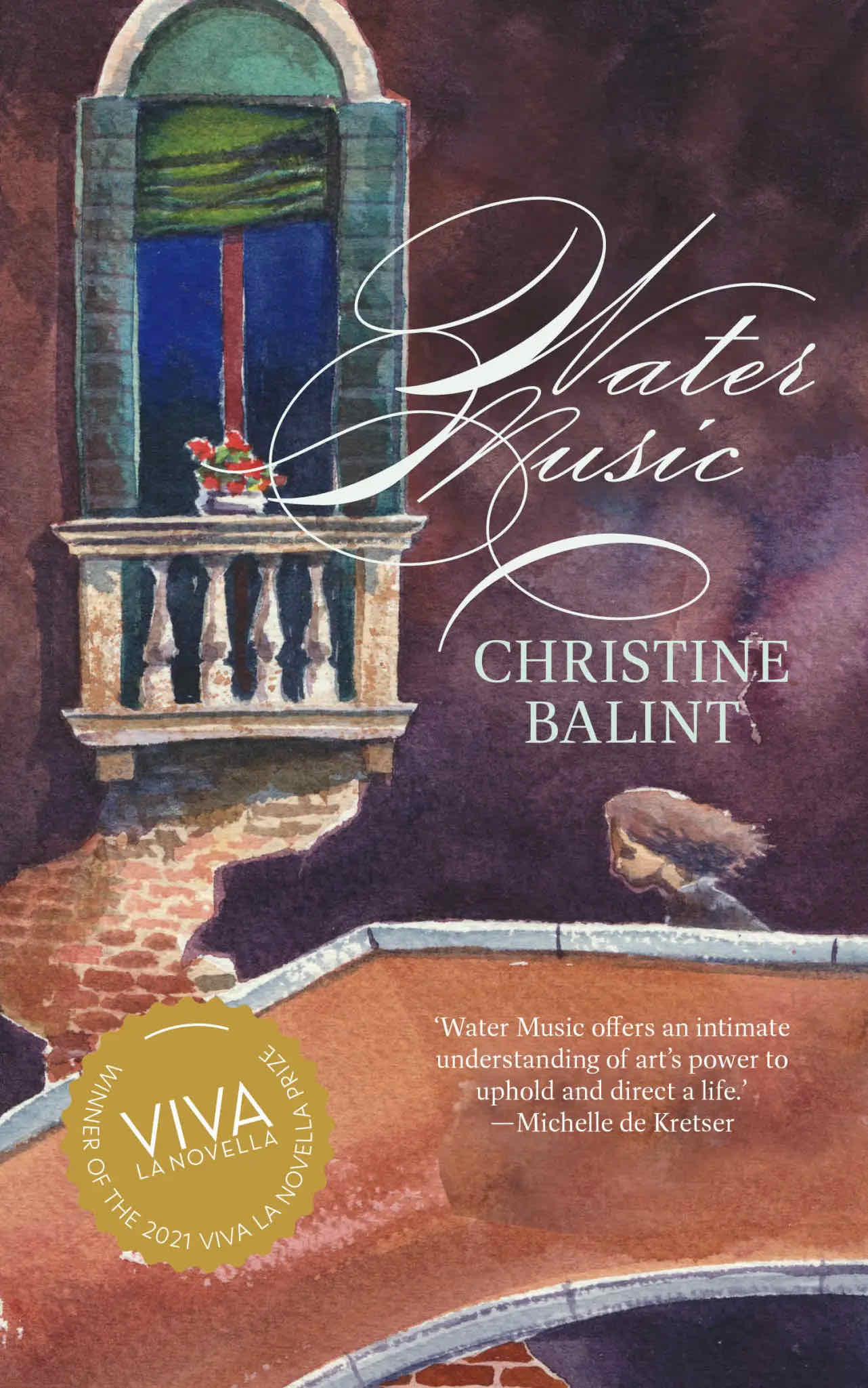
Christine Balint, Water music (#BookReview)

Christine Balint’s Water music was a joint winner of the 2021 Viva La Novella Prize with Helen Meany’s Every day is Gertie Day (my review), but they are very different books. Meany’s is contemporary, perhaps even near-future, and tackles some up-to-the-minute issues regarding fact, truth and authenticity, while Balint’s is historical fiction, a coming-of-age story, albeit a very specific one.

Set in 18th century Venice, Water music tells the story of a young orphan, Lucietta, who is raised by a fisherman’s family until she’s 16 years old when she leaves to live in Derelitti Convent, one of Venice’s many musical orphanages for girls. This interested me, because when my children were young we loved listening to an audiocassette telling the story of Vivaldi teaching in a Venetian orphanage for girls, but I’d never researched it further.

Balint explains her inspiration in the Acknowledgements and on her website. The book, she says, draws on “the unique history of the musical orphanages” in Venice, which existed from around 1400 to 1797, and were run by and for women. They took in girls of any class or background, if they passed an audition, and provided them with an opportunity to pursue a professional career when this “was rarely possible elsewhere in the world”. In particular, they gave impoverished girls an opportunity “to earn an income and establish a career or save for a dowry—enabling them to forge a fruitful life”.

The obvious question is, how could impoverished girls learn enough music to pass the audition? There must have been a way, but in our Lucietta’s case, she was born illegitimately and placed in a “foundling home”. From here she was given to a wet-nurse, the woman who became her mother, but her “real” father had left instructions and money for her musical education. This sets her on the course that leads her to auditioning for and being accepted at Derelitti.

From the beginning, it’s clear that Lucietta, who has learnt the violin, is musically talented and that her parents have been conscientious about fulfilling these instructions. Her mother, Lucietta tells us, “believed that if she followed these instructions, my musical and marital future would be assured”. Notwithstanding this, the question the novella poses is, what is her future to be? A few options are available to, or possible for, Lucietta, ranging from the future her mother doesn’t want for her, being a fisherman’s wife, to one dreamed of by the orphanage girls of being married to a nobleman from the “Golden Book“.

The story is told first person by Lucietta, so we see it all through her eyes. She’s a sensitive, intelligent young woman who has loved her fishing family, which includes a brother Lionello, so it’s not surprising that she is initially disconcerted when she leaves her family to live in the convent. However, this seems to be a kind place were the nuns and music teachers are supportive and the other girls are friendly. There’s not a lot of drama here, which is counter to your typical historical fiction. Instead, we travel along with Lucietta as she absorbs the influences, ideas and life around her, as she grows and changes, and as she meets, under the eyes of her mentors Maestra Francesca and the Convent’s priora, her suitor and potential husband, Don Leonardi.

Lucietta has decisions to make … and the good thing is that she is supported in those decisions without pressure. Well, there is a little pressure, including from one of her Convent friends, the sweet but one-armed and therefore in those times unmarriageable Regina. She had been sent to the Convent by her father who didn’t want to waste money on her. This is a world, after all, where “a girl is only as worthwhile as her marriage prospects”. Through Regina, Lucietta sees all the

Unwanted, unmarriageable girls through centuries. Here in this vast echoing building. Creating sublime music, their souls lost to time. Their music remaining.

There is a little political barb here regarding all those women who created and produced in the past – but anonymously. These convent girls may have had more opportunities than many, but they were not individually remembered. Some may see it as anachronistic when Lucietta sees value in “restoring the music, in finding the music, trying to recover their stories”, but then again, why wouldn’t someone back then have thought of doing this?

Balint’s writing is lovely. She brings the settings Lucietta experiences – her fishing home and then her convent one – to life, and creates in Lucietta an engaging, believable character.

Water music didn’t excite me quite so much as Helen Meany’s book did, perhaps because it’s a gentle book that explores a familiar story, albeit in a different and thoroughly interesting historical setting. However, because of that setting, because of its feminist underpinning, and because the writing is sure, I’d recommend it to anyone interested in a good – and not bleak – story.

Theresa also enjoyed this book.

Christine Balint
Water music
Lidcombe, NSW: Brio Books, 2021
119pp.
ISBN: 9781922267610

Cindy Solonec, Debesa: The story of Frank and Katie Rodriguez (#BookReview)

Cindy Solonec’s Debesa is one of those curious hybrid biography-memoirs that are appearing on the scene. Its subtitle describes it as The story of Frank and Katie Rodriguez, implying biography, but in fact, Frank and Katie are Solonec’s parents and so the book also incorporates some of her own story as part of the family. I’ll return to this later, but will start with the main content, the biography.

Debesa spans four generations of the family, starting in the 1880s with Solonec’s maternal great-grandparents, but it centres, as the Media Release says, “on the unlikely partnership of Cindy’s parents: Frank Rodriguez, once a Benedictine novice monk from Spain, and Katie Fraser, who had been a novitiate in a very different sort of abbey – a convent for ‘black’ women at Beagle Bay Mission” north of Broome. The Release also explains that Debesa is a rewriting of Solonec’s 2016 PhD thesis which “explored a social history in the West Kimberley based on the way her parents and extended family lived during the mid-1900s”. What Solonec does in the book, then, is to turn her thesis into a readable history and a family memoir, a combination that is becoming an increasingly acceptable approach to historical writing.

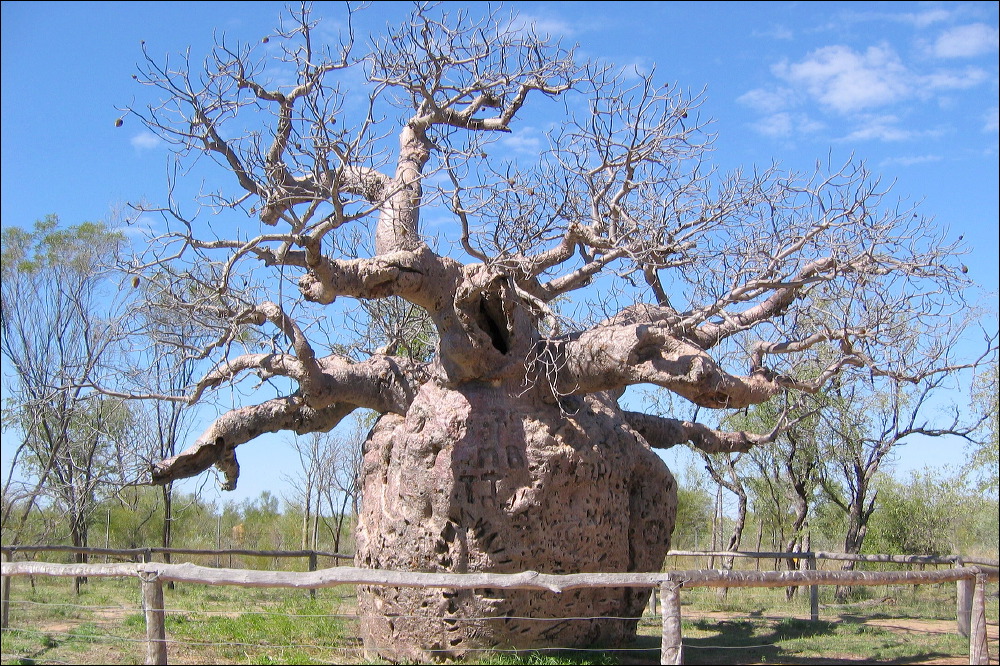
There is some contention about this tree’s prison use, but not about its cultural significance.

I was keen to read Debesa for a few reasons, not least being that I’ve been to the Kimberleys (east and west) and am intrigued by this beautiful region and its complicated history. I grew up being aware of its pastoral history, particularly regarding the Durack family and the Ord River Irrigation Scheme, and I came to understand some of its colonial past when I saw such “sights” as the Boab Prison tree in Derby during my visits there. As Solonec’s family story is contemporaneous with the mid-twentieth century Duracks and the Ord River scheme, it was enlightening to see this world from a smaller and more marginalised perspective. I say “smaller” because Frank and Katie’s property, the titular Debesa, was a small pastoral holding, and “marginalised” because Katie’s “mixed descent” Indigenous (Nigena) background meant the family was always on the outer.

Solonec sets the scene in her Introduction by providing a brief history of the Kimberley’s colonial history, one founded on “the ideology that everyone must live like white people. Speak their language. Adapt to the ways. And marry lighter skinned people …”. It’s the same story that we’ve read before – people dispossessed, country spoiled, and children stolen. In her early chapters, Solonec documents the family’s story from the time of her maternal great-grandparents, Indian immigrant Jimmy Casim/Nygumi and his Nigena wife, Muninga. Their daughter, Solonec’s grandmother Jira, was born in 1900 and stolen with her cousin in 1909. Designated as orphans and renamed Phillipena and Francesca, they were taken to Beagle Bay Mission, leaving their mothers distraught.

Alongside the stealing of children was the stealing of the land:

On stations along Mardoowarra [lower Fitzroy River], land was fundamental to Nigena existence. They knew every part of that country intimately. Their neighbours and the broader Australian post people’s concept of ‘country’, their religious attachment, their awareness of food sources, was inherent to their way of life. They knew the call, cry, track of every living creature. Everything that breathed, every hill, every creek, crevice and outcrop and night sky with its myriad of galaxies, they knew by name. The seasons dictated their movements and their care for country within pliable boundaries. No-one ever got lost.

But, the Nigena had to watch, Solonec writes, as their land was taken for pastoralism and their sacred sites destroyed and/or renamed. Her extended family, “like refugees in their own country, lived in bush camps near the homesteads” and the women were preyed upon by “lecherous, irresponsible guide menfolk”. There is nothing new here, but Solonec puts flesh on the bone by telling it through the prism of her own family.

In chapter 3, we meet Solonec’s parents, Frank, who migrated from Galicia, Spain, in 1937, and Katie, whose parents were the stolen Phillipena and Fulgentious, a Nigena man with a white stockman father. Together they forge a life, drawing on their deep and shared commitment to Catholicism. They take work where and when they can, Frank as a trusted builder and Katie a respected cook and station-worker. They raise and educate their four children, acquire their own land, and slowly build a home and establish a small pastoral business, Debesa. Theirs was a partnership in every sense of the word. Solonec makes the interesting observation that Aboriginal cultures and European peasant cultures, from which Frank had come, have much in common, including a “strong sense of kin”. And, of course, Frank as a non-English migrant, had his own experience of bigotry and prejudice.

Biography? Memoir?

There’s excellent historical research here about life in the Kimberley, with illuminating “short histories” of subjects like mustering and wage disparity, and discussion of issues like the divisive and destructive “exemptions” from the Native Administration Act. (Tony Birch addresses similar exemptions in his novel, The white girl.)

To write this book, academic Solonec drew, rightly, on a large body of secondary sources and other life-writing about the region – all of which is documented in the thorough bibliography at the end – but she also had her father’s diaries, which provided the book’s “chronological framework”, and the stories of her mother and extended family passed on through oral tradition. She writes that, fortunately:

Aboriginal peoples still uphold past events through oral histories … I was excited to find that their stories were not that hard to cross reference with the literature. Their memory vaults with stories that have been handed down served them well, confirming the reliability of Indigenous intelligence.

(I suspect she means “intelligence” in both meanings here.)

As I opened this post, though, the book is a curious mix. The first half reads like a traditional biography while the second half slips more into memoir. This is heralded in the Introduction where Solonec describes her aim as

wanting to leave a documented account for posterity about the way marginalised peoples lived in the Mardoowarra (Fitzroy River) region during the middle of the twentieth century. A social history as experienced by my families. I wanted to leave an account of ordinary people’s everyday lives that would not otherwise be recorded. An account based on my parents’ joint biography.

This is perfectly valid, and she achieves what she set out to do. Her approach does, however, raise some questions, particularly towards the end, where there’s a risk of the subjective blurring the objective, making the truth potentially hard to discern. Solonec is justly proud of her parents’ achievements, and certainly they had much to contend with, but there’s a sense that all the problems they had were external, which seems unrealistic. I don’t believe, however, that this invalidates the critical historical truths contained here. In fact, the warmth of the story makes Debesa an approachable history which, given the significance of its subject, is a good thing.

Lisa also reviewed this book, engendering some good discussion.

Cindy Solonec
Debesa: The story of Frank and Katie Rodriguez
Broome: Magabala Books, 2021
264pp.
ISBN: 9781925936001

(Review copy courtesy Magabala Books)

Alison Croggon, Monsters (#BookReview)

Alison Croggon’s Monsters: A reckoning is a demanding but exhilarating read, demanding because it expresses some tough feelings, and exhilarating because of the mind behind it, the connections it makes and the questions it asks. Coincidentally, it has some synchronicities with my recent read, Sarah Krasnostein’s The believer. Both talk about “uncertainty”, and both conclude by talking about “love”, but beyond these two ideas are very different books.

Monsters is categorised on its back-cover as narrative nonfiction/memoir. However, it could also be described as an essay collection, albeit a linked-essay collection, because each individually-titled chapter seems to take up an issue – or return to an earlier issue – and riff on it, though riff is too frivolous a word for what Croggon does.

The book has an interesting trigger and an even more interesting trajectory. The trigger is the final breakdown in what had been a very difficult relationship with her sister. The trajectory is to explore this through the lens of colonialism, the “colonial project”. It’s audacious, really, and yet it makes a lot of sense. It certainly adopts the idea that the personal is the political with a vice-grip that doesn’t let go.

I’ll start with the memoir part. Threading through the essays are references to her white middle-class family. She starts, in the first two chapters – “The curse” and “Ancestors” – with a quick expose of the family tree. It goes back to the 1100s, but she focuses mostly on the 19th century’s Great Uncle Bee who was heavily implicated in “the colonial project”. Her thesis is that “colonisation is, necessarily, a process of traumatisation for everyone who is born in the system”. Croggon does not wish to diminish its greatest impact on the colonised but her point is that the “system” damages everyone. She argues, albeit using “a small, wonky, uncertain line”, that the attitudes and values inherent in the system can (even, perhaps, must) poison personal relationships. She writes, two-thirds through the book:

I was born as part of a monstrous structure – the grotesque, hideous, ugly, ghastly, gruesome, horrible – relations of power that constituted colonial Britain. A structure that shaped me, that shapes the very language that I speak and use and love. I am the daughter of an empire declared itself the natural order of the world.

The memoir part, the family part, particularly regarding her sister, is tough and hard – and I admit that I would not want to be her sister reading this book. However, although Croggon has the pen in her hand, so of course we feel her pain at “the fracture”, she does not absolve herself of her role. Indeed, at the end – and she means personally and politically, I believe – she talks of “attempting to understand my own complicities”.

“Are we irrevocably broken by our histories?”

Here is where the essay aspect of this intriguing work illuminates, because, in different but sometimes overlapping essays/chapters, she explores issues like patriarchy, whiteness, feminism, primarily as they play out through “the colonial project”. Take, for example, her analysis of patriarchy and its impact on the relationship between women: “how it distorts and destroys relationships between women: how it creates this deadly competition…” Competiton being, of course, fundamental to colonialism.

Now, I wanted to reject this because I do not feel in competition with women – I have always loved the sisterhood – but, I can’t ignore the overarching point she is making, one that’s bigger than my little world. She continues:

For centuries, our foundational cultural texts have said, over and over again, that women are without worth.

I could easily (but naively) dispute this by pointing to my life, but I have to admit to my privilege and, whether conscious or not, to the entitlement under which I live. I am therefore willing to accept Croggon’s thesis regarding colonialism – and its impact on the personal as well as the political:

We are both [she and her sister] the product of a machine that has spent centuries concealing its violence, that pours countless resources into disguising its greed for resources and power as an exercise in human progress.

This machine is fed, as Croggon sees it, by a faith in binaries: “good/bad, men/women, white/black, right/wrong, guilty/innocent”. These binaries “profoundly infected” her relationship with her sister but, as she explores through her essays, they also underpin the colonial view of the world that permeates so much of our thinking and behaviour still today. We have not, as we know, shaken off the bonds of our colonial past, and if there’s one thing Croggon rams home, with erudition and sophistication, it’s how deeply ingrained colonial thinking is in everything we do. To put it simply, colonialist cultures are racist, sexist, hierarchical, and rely on “conquest, erasure, entitlement” to survive.

One of my favourite, one of the most clarifying essays/chapters, is “The whiteness”. In one chapter she pulls apart denotation, connotation, implication, and more. She says that “whiteness isn’t really about skin colour. Like blackness, it’s a category”. She writes that “the savagery of whiteness, its pettiness, its hypocrisy, its dishonesty, its murderousness: these are hard things to understand about oneself.” She writes of the whiteness that is able to argue its own victimhood. And, she admits to discomfort with prodding the traumas of her white family in the face of Black anguish.

It is uncomfortable being white today, with all our privileges – and it is even more uncomfortable that such a weak word as “uncomfortable” probably adequately describes our feelings and uncertainties.

You can probably see by now that this is not a simple read. It’s certainly not one you can dip into and read an “essay” at random, because the argument is entwined through memoir. It’s fragmented, and draws on a seemingly random group of thinkers and writers against which she bounces her own ideas. It requires concentration to follow the links and connections, the slipping back-and-forth between the personal and the political, but, as I flip through the book to write this post, what I see are a lot of “Yes” marks in the margin.

Some of these “yeses” relate to sharing some experiences, such as a childhood love of reading, or to seeing the world similarly, but others relate to the questions she leaves us with, because there are no answers here.

Towards the end comes the admission that “I can’t see what I can’t see”. Of course! But this is also the cry of someone who wants to see more. Also near the end, she returns to her relationship with her sister, and the role of patriarchal norms and colonialism’s assumptions in its collapse. She says “I can’t see how it can be undone”. This is the biggest – and, to be honest, most confronting – question Croggon leaves us with. Can it be done? Can we unlearn colonialism’s cruel premises and heritage, so that we can undo what we have done?

Challenge logo

Alison Croggon
Monsters: A reckoning
Melbourne: Scribe, 2021
275pp.
ISBN: 9781925713398

(Review copy courtesy Scribe)

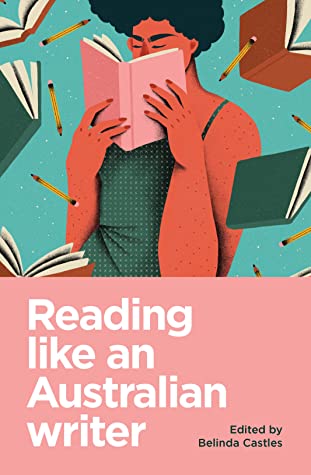
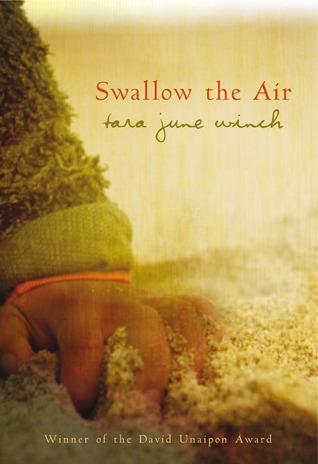
Novel-in-stories, Tara June Winch’s Swallow the air

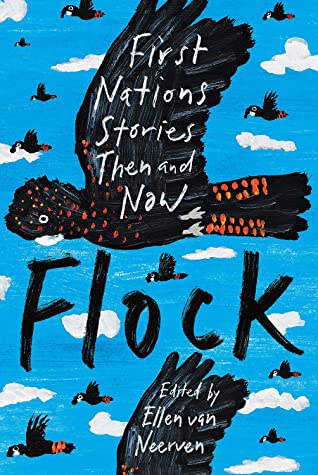
This is my third post inspired by Reading like an Australian writer, and it involves two First Nations writers, Ellen van Neerven on Tara June Winch’s award-winning debut novel Swallow the air. I chose van Neerven’s essay for my next post, because, coincidentally, I’d just read Winch’s story “Cloud busting” in Flock, an anthology, edited by van Neerven. Are you keeping up? “Cloud busting” is one of the stories in Swallow the air.

Form? What form?

Tara June Winch, Swallow the air

In my review of Swallow the air, I wrote:

The first thing to confront the reader is its form. It looks and even reads a little like a collection of short stories*, but it can be read as a novella. There is a narrative trajectory that takes us from the devastating death of narrator May Gibson’s mother, when May was around 9 years old, to when she’s around 15 years old and has made some sense of her self, her past, her people. May’s mother is Wiradjuri, her father English.

The asterisk pointed to a note at the end of my post, which stated that one story from the novel, the aforementioned “Cloud busting”, had been published separately in Best Australian stories 2006. And, in her essay, van Neerven says that she had used “Cloud busting” with students. Sounds like it could become one of Australia’s popular anthologised stories. This would be a good thing because, also in her essay, van Neerven comments on having had no introduction to “Indigenous-authored books” when she was at school (which, for 31-year-old van Neerven, was not that long ago.) Short stories are an excellent form for introducing school students to great stories and writing, and it would be a good thing to see more diverse stories added to current anthology favourites.

“Cloud busting” is a beautiful story, by the way, because it makes a point about deep loss but also conveys the warmth, trust and generosity that can exist between people.

Anyhow, back to form. Just as I wrote in my post on Swallow the air, van Neerven also comments on the book’s form, noting that “writing relational novels-in-stories” is a “very First Nations practice”. She cites Jeanine Leane’s Purple threads (my review) and Gayle Kennedy’s Me, Antman and Fleabag, as other examples. Marie Munkara’s Every secret thing (my review) fits in here somewhere too, I’d say. I hadn’t really thought about this as being particularly First Nations, as we all know novels from various writers that generate arguments about whether they are novels or short story collections. However, in my experience – and I am generalising a bit – First Nations people can be great story-tellers so it wouldn’t surprise me to find the form of “novel-in-stories” being more common among First Nations writers.

Further discussing this book, in which protagonist May goes on a journey back to Country to find her Wiradjuri origins, van Neerven makes another interesting observation, which is that May’s journey “plays into the reader’s romanticised expectations that a return to Country will bring the story a happy resolution”. But, of course, it’s not that simple. Country has often been too damaged by “past policies and institutionalisations”, as van Neerven puts it, for this to happen, but, she says, May does come to understand something important, which is that Country “lives within her” and her family “allowing her to feel strong in her identity without the shame of not living or growing up on Country”. Of course, it’s not up to me to pronounce on the validity of this way of seeing, but it makes good sense to me.

Anyhow, I’ll leave it, on these two interesting-to-me points, as I don’t want to steal the life from Castle’s book. These essays are all so different, as you’d expect, but this just makes them more worthwhile. You just never know what approach a writer is going to take when talking about another writer, but you do know that it will probably be insightful.

Ellen van Neerven
“Kinship in fiction and the genre blur of Swallow the air as novel in stories”
in Belinda Castles (ed), Reading like an Australian writer
Sydney: NewSouth, 2021
pp. 7-12
ISBN: 9781742236704

Tara June Winch
“Cloud busting”
in Ellen van Neerven (ed), Flock: First Nations stories then and now
St. Lucia: UQP, 2021
ISBN: 9780702264603 (Kindle)

Sarah Krasnostein, The believer (#BookReview)

One of the reasons I love reading fiction is to be introduced to lives and cultures I know nothing about. This is less so in nonfiction, but Sarah Krasnostein’s latest book, The believer, fits the brief. In it she explores questions concerning what people believe and why through six different people (or groups of people), all of which were foreign to me.

The six “beliefs” are eclectic, but can be divided into three categories : personal lives (a death doula and a woman who had been incarcerated for over 30 years for murdering her violent husband); religious lives (through a Creation Museum and some Mennonite families); and the unexplainable (paranormal seekers/ghostbusters and ufologists). These six “cases” all come from either the USA or Australia.

Different readers will be drawn to different ideas in the book, but in my reading group, the most popular were the two personal stories – death doula Annie, and ex-prisoner Lynn. Lynn’s story of abuse at her husband’s hands first and then the justice system’s was heart-rending. Yet Lynn had come to understand that she’d made choices, and had gone on to use her life to make things better for others. Inspiring.

The book has a disjointed three-part structure, with one of each of the three categories explored in “Below”, the remaining three in “Above”, and then some reappearing in the final “Coda: Here” section. Within these sections, the stories are told over several alternating chapters, so no one story is told in one go. One of the questions my reading group discussed was whether this structure helped or hindered our reading. We didn’t resolve this, though the overall consensus seemed to be that the alternating did keep us interested. There was probably method to the placement of the stories, but it wasn’t always clear to us, which might be more to do with the time of year and our concentration levels.

Lightbulb moments

What we did all agree on, however, was that the book had some great lightbulb moments – and for many of us, it’s the lightbulb moments that make a book special or memorable.

One refrain that ran through the book was that life isn’t easy or simple. Mennonite Becky says that “life isn’t just a bed of roses”, and ex-prisoner Lynn understands that “pain is a part of life”. Ufologist Jaimie has a more positive spin, seeing that life “is not just going to work and dying”. There are mysteries out there to explore.

However, for me, the most significant moment occurred in “Before”, in a Paranormal/Vlad chapter. It concerned the need for certainty. Krasnostein references German neurologist, Klaus Conrad, who coined the term apophenia, which essentially means that we look for meaning and coherence, and will go so far as to perceive them in unrelated events and ideas. We will, writes Krasnostein, “choose certainty over accuracy”. “We are compulsive converters of fact into meaning”.

I hope I’m not oversimplifying, but Krasnostein then cites a Science article which talks about the human desire to “combat uncertainty and maintain control” and the importance of this to psychological wellbeing and physical health. You can probably see the lightbulb here: it explained, to me, why some people have found the pandemic harder to handle than others, and why some people can become susceptible to conspiracies. People who feel out of control will look for patterns and answers. For me, living with questions is interesting – and in fact real, because I’m not sure there always are answers – but I feel I better understand now, those who do not feel this way, those who demand certainty, such as “promise there will be no more lockdowns”. I better understand why people might turn to conspiracies when authority doesn’t (indeed, sometimes can’t) provide consistent answers.

Other lightbulb moments were less applicable to my life, but were interesting nonetheless. An example was the Mennonites fear of higher education. It “contains an unacceptable risk of assimilation”, potentially causing tertiary educated members to leave the community (the Mennonite kingdom) and be assimilated into wider society. Higher education threatens their understanding of the world, their faith in the Bible as explaining the world. Krasnostein writes of one Mennonite man who had moved to New York in a mission “to make a difference in people’s lives”:

Anthony’s conflict comes from the fact that the certainties he received instead of education are poor tools for daily living.

There’s that idea of certainties again. Anthony tells Krasnostein that “Theology always scares me because it takes the things that seem simple and makes them complex”. This too returns us to the idea of certainties. Anthony sees life simply. In the Mennonites’ belief in a “loving presence”, they see (create?) “a perfect pattern embroidered into the fabric of reality”. Patterns, again.

What added to the book’s interest was that Sarah Krasnostein was, herself, searching to understand “belief”. She admits to occasionally envying Anthony and his co-believers’ “refusal to accept the absence of evidence as the evidence of absence”. She says at one point, “If I could only ask the right questions I could understand”.

This has not been one of my typical review posts, partly because this is a different sort of book, but mostly because I finished it nearly two weeks ago and am not in the brainspace for doing my usual thing. Forgive me. However, you should be grateful, because this book is jam-packed with stories – some tragic, some poignant, some inspiring and some, I have to admit, infuriating (I’m looking particularly at you Creation Museum) – and it would have been tempting to share too many of them. They weren’t, of course, all equally interesting. And occasionally, they got a bit bogged down in detail to the point that I risked losing the thread. That’s the challenge Krasnostein faced in meeting so many people and wanting to explore all their thoughts and ideas. Overall, it works. Her lyrical prose, and warm, open heart play a big role in that.

Talking about UFO sightings, ufologist Ben tells Krasnostein that “we need to find all these little stories. They build up into a big matrix of stories” which, for him, might locate the “truth” of the events. However, this is also exactly what Krasnostein did in this book and, in doing so, she found, as she writes at the end,

six different stories, six different notes in the human song of longing for the unattainable.

My reading group was a little disappointed that in the Coda, Krasnostein didn’t give us a clear summation of the sort you often find in nonfiction works. In fact, though, I think Krasnostein did find something very real, a belief that could help us accept each other’s wildly different shores a little more: it’s that we are “united in the emotions that drive us into the beliefs that divide us”. That is quite profound, and worth spending some time absorbing.

Challenge logo

Sarah Krasnostein
The believer: Encounters with love, death and faith
Melbourne: Text Publishing, 2021
351pp.
ISBN: 9781922330208

Helen Meany, Every day is Gertie Day (#BookReview)

Helen Meany’s Every day is Gertie Day is the third Viva La Novella winner that I’ve read and posted about on my blog, the other two being Julie Proudfoot’s The neighbour (my review) and Mirandi Riwoe’s The fish girl (my review). All are memorable reads, and do this award proud – and no, I am not being paid to say this.

Announcing Meany’s win, Books and Publishing quoted the prize organisers who said that “at the intersections of art, politics, identity and representation, this darkly funny novella shows us a world that is weird, disturbing and all too familiar”. Previous Viva La Novella winner, Jane Rawson, calls it “a fresh, funny and delightfully weird take on authenticity and the people who manufacture it”.

Both use the word “weird”, but if you don’t normally do “weird” please don’t let that put you off because this novella is just weird enough to jolt us into thinking about its ideas, but it’s not that far-fetched – unfortunately.

Every day is Gertie Day concerns a new small house museum in Sydney commemorating a reclusive woman called Gertrude Thrift who had died and not been found until well decomposed. She had been the subject of a series of paintings by an artist called Hettie P. Clarke. This series, formally called the Girl with Greyhound series, is popularly known as the Elf Ears paintings because Gertie is depicted in them with pointy elf-like ears. This isn’t particularly weird, but what is weird is that there are people who have adopted Gertie as their inspiration, their role-model and have had their ears modified to emulate those in the paintings. The problem is that there is no evidence in the museum that Gertie herself had such ears.

The story is told in the first person voice of Nina, a guide (or Public Education and Engagement Officer) at the Museum. That this book was going to interrogate contemporary cultural and political trends and tensions is clear early on. As a retired librarian-archivist invested in the heritage sector, I was hooked when Nina notes that

getting people through the door of any museum anywhere was enough of a challenge, and the professional consensus, though no one would publicly admit it, was that it didn’t matter how you achieved it.

Nina continues that if anyone voiced “any sort of distaste, or ethical concerns, or accusing State Heritage of cashing in on a tragedy” they were to say that the museum endeavoured “to be as respectful as possible”. Thus the stage is set for conflict between the Gerties (mainly the Truthers but also the Regular Gerties), the museum staff, and State Heritage over the authenticity – the truth – of their displays. What follows is a story about a tussle for the “truth” in which the actual “truth” seems less important than what people want to believe and why, and what State Heritage and the Government think is best to do and say about it.

While Nina’s voice is the prime one, we are also given excerpts from the artist Hettie’s diaries, which may, or may not, be the “truth”, and, as the conflict escalates, we see some transcripts of social media commentary from various Gerties and their opponents. It is all so real, and delicious to read in the wake of contemporary controversies about “truth” and our tendency, desire even, to make it suit our own purposes and world-views. Nina is as reliable a narrator as we could hope for in this environment, but she has her own needs and perspectives. Mainly, she wants a quiet life and a job to support her family.

There is an element of dystopia in all this. A parallel story concerns Nina’s husband Benj, his recyc-u-pay job and the plight of the unemployed Trolley People (Trollos). These Trollos earn a living sorting through other people’s rubbish to feed into recycling machines that may be poisoning the air. Has Benj been affected? Who is caring about the Trollos, while the Gertie business garners all the attention?

And then there’s the State Museum, where Nina had previously worked. It had closed because of the “controversial Hall of Extinction”. The truth, it appears, was unpalatable. People had stopped coming because no one wanted to be reminded of all the lost species that could now only be seen “stuffed and mounted or on large video screens”:

Dwelling on the past was no way to move forward, it only made people unnecessarily depressed and angry. At least they were the government’s main arguments for defunding the museum.

There are many angles from which to explore this book – cult, identity, and politics; who controls the narrative and what can get lost in the melee; not to mention, art, and its creation and meaning. How ever you look at it, in Every day is Gertie Day, Meany has astutely tapped into the zeitgeist in a way that extends where we are now just a little bit into “weird”, but not beyond our ability to accept its – hm – truth or, worse, its inevitability. Have we got to the point where people are simply “allowed to believe what they want” or, where authority is so distrusted that all we have is belief (with or without evidence)? The ending is perfect.

Read for Novellas in November, and AusReading Month.

Challenge logo

Helen Meany
Every day is Gertie Day
Lidcombe: Brio Books, 2021
213pp.
ISBN: 9781922267627

S-S-S Snake, Kate Jennings’ Snake, that is

I thoroughly enjoyed Tegan Bennett Daylight’s essay on Helen Garner’s Cosmo cosmolino (1992) in Reading like an Australian writer. Consequently, I plan, over time, to read and share other essays in this book – at least those discussing books I’ve reviewed here. As it happens, there is an essay by Debra Adelaide on Kate Jennings’ Snake (my review), and it’s the perfect next cab off the rank. Not only have I already posted this year on Erik Jensen’s longer essay on the book in the Writers on writers series, but Snake is a novella, so I’m using this post as a contribution to Cathy’s (746books) Novellas in November. I hope that’s not too cheeky.

I’ll start, though, by introducing Debra Adelaide. A novelist with a few books under her belt, including The women’s pages which I’ve reviewed, she first became known to me through her work on early Australian women writers, her Bibliography of Australian women’s literature, 1795-1990 (1991) and A bright and fiery troop: Australian women writers of the nineteenth century (1988). Like many writers, she also teaches creative writing, and Snake is one of the texts she regularly sets.

So Snake – for those who don’t know – draws from Jennings’ life, and tells the story of a lively, imaginative woman, Irene, who marries a decent but boring man, Rex. It cannot work, and the consequences are dire.

Jensen’s and Adelaide’s essays are very different. This is partly because Jensen’s, being in the Writers on writers series, focuses on the writer, whilst Adelaide’s in Reading like an Australian writer focuses on the reading and writing. Not surprisingly, the approach Adelaide takes is closer to mine – except that her writerly perspective is more astute, centred and expository.

The elastic novella

Early in her essay, Adelaide specifically address its form as a novella, saying that Snake demonstrates “how wonderfully elastic the novella can be”. In Snake‘s case, it is “so elastic that it can almost be prose poetry”. It is also “audaciously” abbreviated. She’s right – this is one spare novel.

Adelaide identifies three main reasons that she sets this text for her students – “its poetic brevity, its ‘experimental’ form, and its intriguing, sometimes maddening, allusions to and quotes from numerous literary and cultural references”.

It is, she says, the perfect set text, because it can be easily read in one night and remembered, but,

Brevity does not mean simplicity: its complex themes ripple out and take their time before finally landing on the muddy shores of our imagination.

This is what makes Snake such a good and memorable read.

The three s’s

Adelaide divides her essay into three main sections, those three s’s in the title: Structure; Serpents; and Scenes, sex and Serena McGarry.

I love discussions of structure, because structure can so often help inform the meaning. When a short novel like Snake has a complex structure, it is worth taking note. Adelaide talks about her own method of writing and wonders about Jennings’ approach. She doesn’t know how Jennings works, but she does say that this novel

opened up my eyes to the possibilities of writing a novel that was straightforward yet clever in structure, that was stripped back to its narrative bones, and yet at the same time managed to be multilayered, dense, poetic and unforgettable.

She discusses the novel’s four-part structure, and explains how, although the book is primarily about the mother Irene, it manages to convey the POVs of all four characters, thus “deftly” delivering a portrait of the whole family. Simultaneoulsy, with its use of second person at the beginning and end, “it offers a powerful sense of everyperson”. I love this analysis. I also enjoyed her further discussion of second person, which accords with some of my assumptions about this voice. One of the points she makes is how second person makes (can make) the reader complicit, which is one of the reasons Madeleine Dickie used it in Red can origami (my post).

Adelaide also briefly discusses an issue that fascinates her, as it does me – “the unlikable character in fiction”. Irene is “remote, ruthless and selfish”, and yet, despite Snake‘s “staccato delivery and disparate parts”, Jennings manages to maintain the focus on Irene “without alienating us from her”.

However, the section I most enjoyed is Adelaide’s discussion of Serpents. She references DH Lawrence’s poem “Snake”, which Jennings quotes from in the novella, and Henry Lawson’s short story “The drover’s wife”. She also references Jensen’s discussion of snakes, because, of course, he discussed them too. The point is that snakes are both metaphorical (the cause of the original fall of humankind, and so on) and actual (a real threat to vulnerable children, dogs and women.)

And so, the heart of Jennings’ Snake lies in, says Adelaide, “the universal fear of the serpent, that potent post-lapsarian symbol of all evil and danger”. All associations with snakes race through our minds, she says, as we read this novel. This is one of the ways a spare novel can lay down meaning on top of meaning.

In the third section, Adelaide discusses Jennings’ “scrupulous clarity”, using a few examples from the novel. One is the murder-suicide of Serena McGarry and her husband. Adelaide explores how much, in less than 100 words, Jennings conveys about Serena, and its implications for Irene. Adelaide makes the point that these “marvellously condensed” scenes “contain entire longer stories within them”. She sometimes uses them as springboards for students to develop their own stories. I would add that this sort of writing can make a book a great reading group book because it encourages readers to think about characters – who they are, why they are who they are, and why the writer has written them this way. Endless discussion can ensue!

Adelaide concludes by saying that Snake is “a novel that replays re-readings well out of proportion to its size”. I second that.

Debra Adelaide
“Structure, serpents and Serena McGarry: Kate Jennings’ Snake
in Belinda Castles (ed), Reading like an Australian writer
Sydney: NewSouth, 2021
pp. 219-232
ISBN: 9781742236704

Alf Taylor, God, the devil and me (#BookReview)

It was a complete coincidence that, as I was writing last week’s Monday Musings post on diversity and memoir, I was also reading a First Nations memoir, but such is the reading life, eh? The memoir, Alf Taylor’s God, the devil and me, is, however, both very much a memoir but also its own thing, which I’ll explain as we continue.

For those who, like me, hadn’t heard of Alf Taylor, here is a brief bio. He grew up in the Benedictine-run New Norcia Mission, Western Australia, escaping when he was fifteen years old. He then worked around Perth and Geraldton as a seasonal farm worker, before joining the Australian Army. Eventually, he “found his voice as a writer and poet”, and has had three collections of poetry and short stories published, including one also published in Spanish. He has given readings at festivals and events in Australia, England, France, India and Spain. The memoir’s Foreword describes him as the leading “Elder Nyoongar writer in Western Australia, as Kim Scott [who has appeared on my blog] is the leading younger writer”.

God, the devil and me is typical memoir in that it focuses on a particular aspect of Taylor’s life, his time at New Norcia from around 7 years old to his escape as a 15-year-old. We are talking the 1950s and 60s, which is horrifying to this 50s-60s child! As he tells it, he asked his parents, on a visit to the mission, if he could stay because his brother was there. So the die was cast, but very soon he realised it had not been a good request. Although his father and brothers, and his father’s mother had all gone “through New Norcia Mission”, and had become “good Catholic[s]”, for him it was a terrible experience. His story is one of unremitting brutality – including regular use of straps and sticks to keep the children in line, a diet that consisted primarily of “sheep’s head broth”, and inappropriate clothing – and utter rejection of the children’s Indigenous language and culture.

But, God, the devil and me, is also quite different from your usual memoir. For a start, and most significantly, it’s not told chronologically. Instead, it constantly shifts around, telling various stories ranging over his time at New Norcia. On the surface, the book looks like a bunch of, often quite short, anecdotes but, these stories are connected, not so much chronologically, as thematically, with one occasion or story usually leading organically to another. The end result is an impressionistic – if Dickensian – picture of life at New Norcia, rather than a coherent life story.

Many themes run through the memoir, the brutality, the sadness and loneliness, and alcohol, to which he is introduced through helping the priests with the altar wine. He doesn’t shy from intimating his own later problems with alcohol and he makes clear that many of his Mission friends had died early due to it. Another major thread of course is religion, and his introduction to God and the Devil, who, he is told by the priests, will always be with him. Early in the memoir, alcohol and God are intrinsically linked in his mind:

‘Taylorrr, you’rrre neverrrr going to make it in life. When you get out of herrrre, you arrrre going to get a flagon, find a shady tree and drrrink yourrrrself to death. All of you.’

Being so young, I clasped my hands in prayer and whispered, ‘Yes, Brother, I am going to do all those things when I grow up.’ I agreed with Brother Augustine because I thought that God was passing those words to the brother, who in turn, spat them at me.

Here we see one iteration of the memoir’s underlying idea, the confusion in the young Alf’s mind about religion – what it meant, who God was, how Jesus fit in, not to mention the role of the Brothers in it all. Near the end of the memoir is a surreal scene in which the sleeping Alf leaves his body and ascends to Heaven where he meets (good) Judas and (drunk) Peter. In this scene, Alf finds/creates/discerns a more charitable Christianity than he has experienced at the Mission (which, he sees as being worse than Hell could ever be).

“turn sorrow into laughter”

Alf Taylor is clearly a storyteller. He convincingly embodies his young self when writing about his childhood. The memoir is fundamentally political, but you don’t hear words like “invasion” or “dispossession”. What you hear is a mish-mash of history as young Alf understood it. White Australians are generally referred to as Captain Cook’s Australians and the government, Captain Cook Government. He describes a visit to the Mission of the “Native Affairs men and women”. When asked who founded Australia,

of course, at the top of our lungs, we all shouted in unison ‘Captain James Cook’ with such pride that even old Jimmie Cook himself would’ve risen from the grave and saluted us little Native children.

Similar, usually self-deprecating, humour recurs throughout. Taylor is one of those writers who can use humour to inject a sting in the tail. Here is another moment. Injured by a rock, he is taken to hospital in Perth, where:

I was in for the shock of my life – there were little Captain Cooks lying everywhere; there seemed to be a million of them, and not one little blackfella around.

And, what’s more, he notices that “the gawking Watjella kids all looked the same”!

However, Taylor’s experience isn’t all bad. There are bright moments. Footy is one, but best is when they can get out into the bush. It is in these moments that young Alf is happiest:

running free through the bush, watching the birds fluttering through the leaves or sitting by a stream watching a babbling brook hiss its foam at you was magic … to me, the bush was Heaven. Only Watjellas went to Heaven; we Nyoongahs, when we died came back as a bird or an animal, even as a newly formed brook to quench the thirst of other weary Nyoongah kids … I mean, to me, the bush was everything, my mother, my father; to me, in the bush, I could do no wrong; the fire of Hell did not exist.

He recognises his Ancestors as being the source of his true spirituality – and yet, there is always the overlay of “God, the devil and me”. How DID that fit in with everything else?

Early in the memoir, Taylor shares that the “best thing” he got from New Norcia was learning to read and write. These, he said, were “my weapons” and he devoted much time to them. He also talks about the love of books, and “sneaking off to the library” when others were playing: “a book was like magnetism to me and the pencil was my friend”.

I will leave it here. With its strong content and seemingly disjointed structure, God, the devil and me is not an easy read, but it pays persistence with gold, because this voice, while different from other First Nations voices, complements them and adds depth to the truths we are hearing.

Contribution for Brona’s AusReadingMonth2021.

Alf Taylor
God, the devil and me
Broome: Magabala Book, 2021
289pp.
ISBN: 9781925936391

Review copy courtesy Magabala Books