Jane Austen, Emma (Vol. 2, redux 2025)

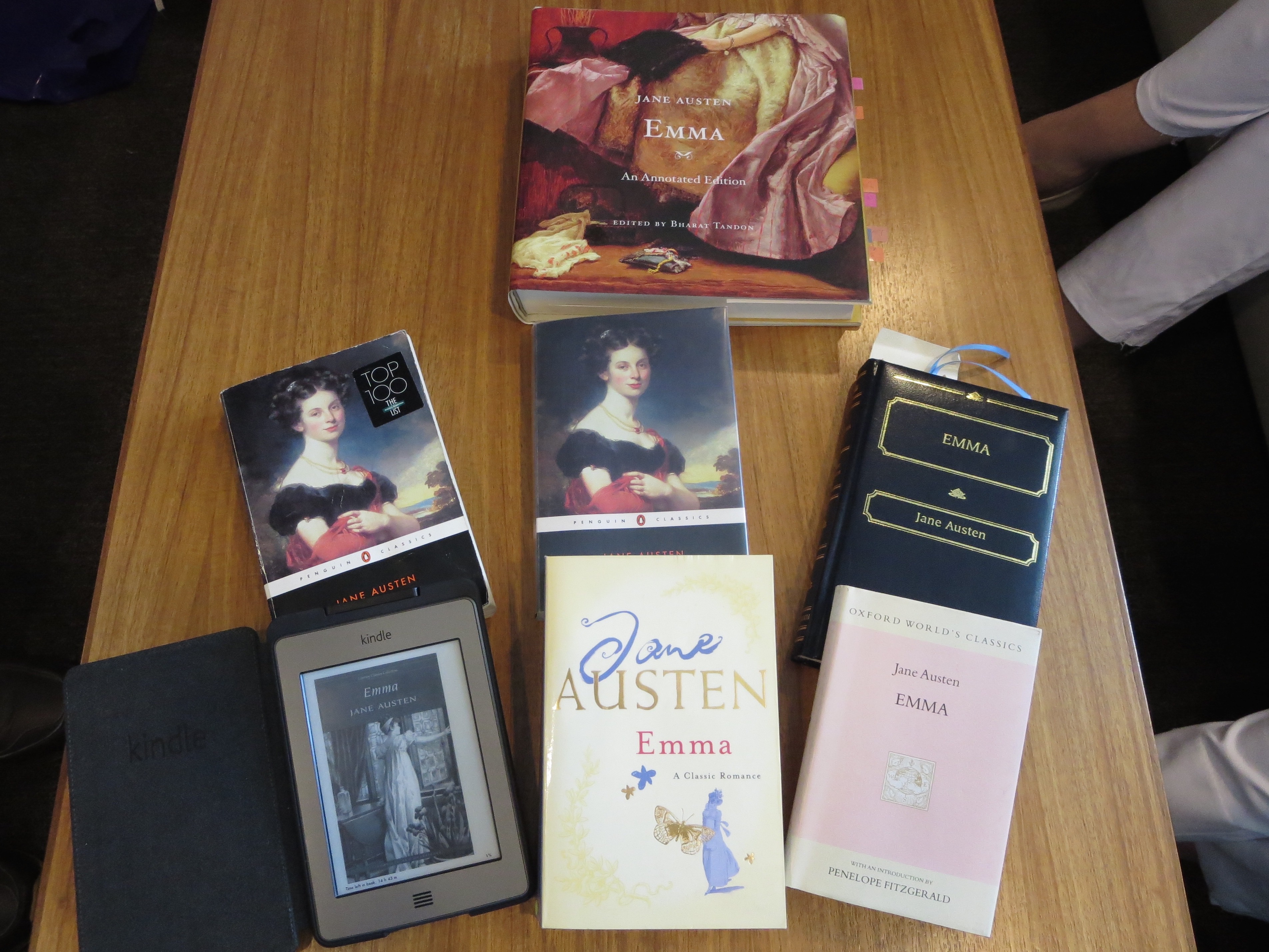
EmmaCovers

In April, I wrote a post on Volume 1 of Emma, sharing the thoughts that had come to me during my Jane Austen’s group’s current slow read of the novel. This month, I’m sharing some ideas that Volume 2 raised for me.

I wrote in my Volume 1 post that, during this read, what popped out for me was the idea of young people lacking guidance. It relates to issues like character development and to themes like parenting (which Austen regularly explores in her novels.) The question with these slow reads always is, will an idea that pops up in one Volume continue in the next? Well, in this case my answer is yes and no.
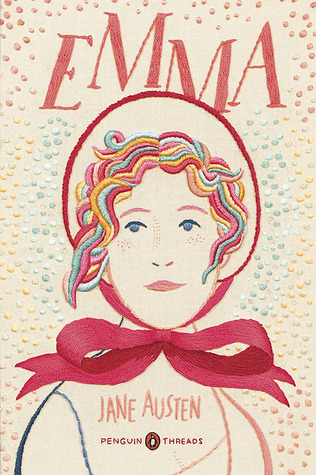
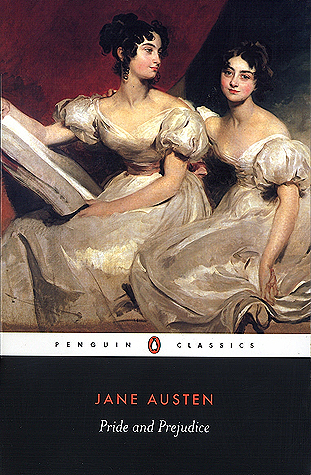
Jane Austen, Emma, Penguin

What I mean by this is that this notion expanded for me in Volume 2 to encompass the idea of “nature versus nurture”. Now, I’m not saying that Austen was specifically engaging in that debate, but that she has a lot to say about both aspects of our character. Before I continue, I will just share that I did wonder when the “nature versus nurture” debate started?

My searches, including via Wikipedia and two AI services, revealed that while ideas about innate (nature) vs. learned traits (nurture) can be traced back to ancient philosophy, the “nature versus nurture” debate, as a formal concept, began in the mid-1800s with Francis Galton, a cousin of Charles Darwin, who coined the term in his 1874 publication, “English Men of Science: Their Nature and Nurture”. In case you are interested, Chat GPT advised that philosophers like Plato and Aristotle debated discussed the role of “heredity and environment in shaping individuals” with Plato leaning towards nature (“innate knowledge”) and Aristotle towards nurture (“experience and environment”). And Wikipedia identifies Chen Seng having asked a similar question in 209 BCE. These aren’t the only people to have thought about the question, and Wikipedia’s article is useful if you are interested. But I’ll move on as the history of the debate is not my focus here.

What kept popping up for me – as I looked to see how my guidance-of-young-people theme was developing – were various comments Austen was making about nature and nurture. I’ll share just a few.

The first one to come to my attention in Volume 2, concerned Jane Fairfax, who was orphaned as a toddler and brought up, at first, by her grandmother, Mrs Bates, and aunt, Miss Bates. Austen describes her as a three-year-old

her being taught only what very limited means could command, and growing up with no advantages of connection or improvement to be engrafted on what nature had given her in a pleasing person, good understanding, and warm-hearted, well-meaning relations.” 

So, “nature had given her” a good start, and her relations had nurtured her as best they could with their “very limited means”. However, soon after, the Campbells (the family of a friend) had taken her in:

“She had fallen into good hands, known nothing but kindness from the Campbells, and been given an excellent education. Living constantly with right-minded and well-informed people, her heart and understanding had received every advantage of discipline and culture”.

And then, Austen seems to make the point that Jane Fairfax’s innate character, her disposition, was such that good nurturing had found fertile opportunity: “Her disposition and abilities were equally worthy of all that friendship could do…” Unfortunately, with no money, her destiny looked likely to be governessing, which the Campbells knew and did their best to prepare her for, but that’s another story …

As for Frank Churchill, in my last post regarding guidance, I noted that Austen suggests that, with his guardian family (his aunt and uncle at Enscombe), he had been left to his own devices with little guidance other than “his own comfort”. In this volume, Austen says more about his nature

“He seemed to have all the life and spirit, cheerful feelings, and social inclinations of his father, and nothing of the pride or reserve of Enscombe.”

It seems that at least some of the Churchills’ nature had not been nurtured into Frank. Ironically, it’s Emma’s father, Mr Woodhouse, who identifies some flaws in his behaviour, calling him “not quite the thing”, though his reasons are fussy.

And then there’s the third character whom we meet in Volume 2, Mrs Elton. These are Emma’s thoughts, and she is a snob, but nonetheless, she hones in on some points relevant to my thinking:

and the quarter of an hour quite convinced her that Mrs. Elton was a vain woman, extremely well satisfied with herself, and thinking much of her own importance; that she meant to shine and be very superior, but with manners which had been formed in a bad school, pert and familiar; that all her notions were drawn from one set of people, and one style of living; that, if not foolish, she was ignorant, and that her society would certainly do Mr. Elton no good.

We don’t know how much of this comes from Mrs Elton’s nature, but Emma does lay a much blame for her behaviour and character on her nurture.

Then there’s sweet Harriet, whom we met in Volume 1, and whom Emma considered, then, “not clever, but she had a sweet, docile, grateful disposition” and only needed to be “guided by any one she looked up to”. In Volume 2, her nature is again referenced, in terms of “the many vacancies of Harriet’s mind”! Poor Harriet. What will happen to her? Wait for Volume 3!

Finally, it’s Emma’s brother-in-law Mr John Knightley, who shows particular sense, when he provides these instructions to Emma on caring for his sons while he’s away:

” .. Do not spoil them, and do not physic* them.” 
“I rather hope to satisfy you both,” said Emma; “for I shall do all in my power to make them happy, which will be enough for Isabella; and happiness must preclude false indulgence and physic.”

[* Meaning, don’t medicate them as their mother, Emma’s sister, is wont to do.]

There’s no reference here to specific moral, or any other education, but we can infer from this, and our knowledge of the man, that he is well aware of the importance of good nurturing to his sons.

Of course, there were other issues that intrigued me in Volume 2, but these ideas are the ones I want to document this go round with Emma.

Any thoughts?

Jane Austen, Mansfield Park (Vol. 3)

Mansfield Park book covers

A year ago, my Jane Austen group did a slow read of Mansfield Park, meaning we read and discussed it, one volume at a time, over three months. I posted my thoughts on volume 1 (chapters 1 to 30), and volume 2 (chapters 19 to 31), but I missed the third meeting, and never wrote up the final volume (chapters 32 to 48). However, this year my reading group scheduled Mansfield Park for our Classic read, so I’m taking the opportunity to share my thoughts on that last volume.

But first, a brief intro. The reading group member who recommended we read Mansfield Park did so because she wanted to see whether she would better like this, her least favourite Austen, on another read. She didn’t. I understand this. Mansfield Park is regularly identified as Austen’s hardest book to like. It feels prudish to modern eyes; its protagonist Fanny isn’t exciting nor is her romance; and it is more serious and certainly less sparkling than its predecessor, Pride and prejudice. Re this latter point, Jane Austen collected opinions on the novel from friends, family and others, and reported that one Mrs Bramstone “preferred it to either of the others — but imagined that might be her want of Taste — as she does not understand Wit.”

Now, my thoughts …

Volume 3 starts the day after Fanny has rejected Henry Crawford’s proposal. As someone in my reading group said, all the novel’s action takes place in the final chapters, and I mostly agree, although significant events do take place in the previous volumes, including the visit to Sotherton and the plan to put on the play, Lovers vows.

I wrote in my first two posts that what was striking me most was the selfishness, or self-centredness, of most of the characters. It suggested to me that Austen was critiquing the selfishness/self-centredness of the well-to-do, and how this results in poor behaviour, carelessness of the needs of others, and for some, in immoral behaviour. (I think we could equate these ideas with today’s concerns about “entitlement”.) This thread continued in volume 3. Indeed, here is where it all comes home to roost, confirming my sense that Mansfield Park is fundamentally about morality.

Fanny is clearly the novel’s moral centre. She quietly observes, and reflects on, what goes on around her. As one of my reading group members said, it is through her eyes, her thoughts, that we see the novel’s world. In the first chapter of volume 3, Sir Thomas speaks to Fanny about Henry’s proposal, explaining why she should accept him. Henry is

a young man … with everything to recommend him: not merely situation in life, fortune, and character, but with more than common agreeableness, with address and conversation pleasing to everybody.

Then he adds pressure. She owes Henry gratitude for his role in obtaining advancement for her brother in the navy, and marrying Henry is her duty to her family as such a marriage can only help them. Sir Thomas is therefore perplexed and shocked at Fanny’s ongoing refusal – despite these persuasions – to consider Henry. He asks:

“Have you any reason, child, to think ill of Mr. Crawford’s temper?”
“No, sir.”
She longed to add, “But of his principles I have” …

However, she feels that to tell Sir Thomas of her observations of Henry’s unprincipled behaviour towards Julia and the engaged Maria would betray them – so, she’s caught and says nothing. She hoped Sir Thomas – “so discerning, so honourable, so good” – would accept her “dislike” as sufficient reason. Unfortunately, not only can he not accept it, but he accuses her of wilfulness and ingratitude. It’s mortifying.

To his credit, however, Sir Thomas backs off, planning to let nature take its course, and, with a little judicious encouragement from the sidelines, he believes Henry will win her round. So Henry continues to press his suit, and Fanny continues to hold steady, reflecting at one point on “his want of delicacy and regard for others”. A few chapters on, Mary Crawford also presses her brother’s suit, but Fanny – she who is called wimpy by many modern readers – pushes back, telling Mary,

I had not, Miss Crawford, been an inattentive observer of what was passing between him and some part of this family in the summer and autumn. I was quiet, but I was not blind. I could not but see that Mr. Crawford amused himself in gallantries which did mean nothing.

While Fanny is coping with this, Edmund is moving forward with his plans to win Mary Crawford’s hand, despite her rather telling hatred of his chosen profession as a clergyman. Fanny – not altogether disinterested it has to be admitted – had observed Mary’s poor values, but it takes Edmund a long time to see her for what she is, for her lack of “principle”, her “blunted delicacy and a corrupted, vitiated mind”. Edmund is convinced that Mary had been corrupted by the influence of others. He talks of “how excellent she would have been, had she fallen into good hands earlier” (instead of those poor influences she had in London. City versus country values is another thread running through this novel.)

I could expand more on this selfishness-leading-to-poor-behaviour-or-immorality theme because examples abound in the volume, but my aim here is to just share some ideas. And, I want to share another one…

I also mentioned another developing theme in my post on volume 1, the education of Sir Thomas. Interestingly, this is related to something I am observing in my current slow read of Austen’s next novel Emma, that of the quality of guidance given to young people and what happens when that guidance is faulty, misguided and/or not grounded in good moral teaching. It’s not a new theme for Austen, as you can see in Edmund’s comments above about Mary Crawford. But, it’s Sir Thomas’s learnings as one of those who does the guiding that I want to focus on.

Like many of Austen’s characters, in fact, Sir Thomas engenders a variety of reactions from readers. Some see him as harsh and uncompromising. It’s easy to argue this when you see the way his children – and niece – fear him. But others, and I am one, see him as a father trying to bring up his children as best he can, with little help from the indolent Lady Bertram. Fanny, our moral centre, talks of his “parental solicitude”. We see hints of his kindness in volumes 1 and 2, but it is in volume 3 that we see what he is really made of. He’s a man of his times, of course, but one who had his children’s best interests at heart and who realised too late that his raising of them had been misguided.

Now, before I continue, I want to make a little comment about style and structure. For most of the book, though there are departures, we are in Fanny’s head, seeing what she sees, thinking what she thinks, but in the book’s final chapter, Austen breaks the fourth wall and talks to us directly. It opens with a favourite quote:

Let other pens dwell on guilt and misery. I quit such odious subjects as soon as I can, impatient to restore everybody, not greatly in fault themselves, to tolerable comfort, and to have done with all the rest.

“I quit”, she says, drawing attention to the fact that she is telling us a story, and she continues this way:

My Fanny, indeed, at this very time, I have the satisfaction of knowing, must have been happy in spite of everything…

The rest of the chapter wraps up the novel and her characters. She devotes a few pages to “poor Sir Thomas”, telling us that he “was the longest to suffer” due to “the anguish arising from the conviction of his own errors in the education of his daughters”. He reflected on the negative impact on Maria and Julia of the “totally opposite treatment” they had lived under

where the excessive indulgence and flattery of their aunt had been continually contrasted with his own severity. […]

Here had been grievous mismanagement; but, bad as it was, he gradually grew to feel that it had not been the most direful mistake in his plan of education. Something must have been wanting within, or time would have worn away much of its ill effect. He feared that principle, active principle, had been wanting; that they had never been properly taught to govern their inclinations and tempers by that sense of duty which can alone suffice. They had been instructed theoretically in their religion, but never required to bring it into daily practice. To be distinguished for elegance and accomplishments, the authorised object of their youth, could have had no useful influence that way, no moral effect on the mind. He had meant them to be good, but his cares had been directed to the understanding and manners, not the disposition; and of the necessity of self-denial and humility, he feared they had never heard from any lips that could profit them.

Just look at those last few sentences … there, I think, is Austen’s driver for this novel. Maria and Julia had been allowed to focus on “elegance and accomplishments” with no attention paid to “the moral effect on the mind”. Mary Crawford is similarly misguided.

Jane Austen, as we know, could be witty and acerbic with the best of them, but in this most serious novel of hers she may have shared the moral and social values dearest to her heart.

Thoughts?

Jane Austen, Emma (Vol. 1, redux 2025)

EmmaCovers

As long-time readers here will know, my Jane Austen group did a slow read of Austen’s novels over several years, starting in 2011. In 2022, we decided it was time to repeat the exercise, and are again reading them chronologically, one each year, making 2025 Emma’s turn.

Our slow reads involve reading and discussing the chosen novel, a volume at a time. We “try” to read as though we don’t know what happens next, to help us focus closely on what we think Austen is doing. Of course, we can’t read like a first-time reader, but it’s a useful discipline.

We always wonder whether this time, after so many reads, we will see anything new or fresh. But, we always do. Just the march of time, with its impact on our knowledge, experience and tastes, means we see the books differently. Take Emma, for example …

Jane Austen, Emma, Penguin

A few re-reads ago, what stood out for me was its beautiful plotting. There’s barely a word or action that doesn’t imply or lead to something telling, even if we are unaware at the time. From my last major re-read, in 2015, I noticed how often the word “friend” or the notion of “friendship” was appearing. The novel starts with Emma losing her governess-then-companion Miss Taylor to marriage. They’ll remain friends but Emma is left alone with her gentle but fussy father. So, she nurtures a friendship with the 17-year-old Harriet. In my post on rereading Volume 1, I explored the idea of friendship, and then watched in Volumes 2 and 3 to see whether the idea continued. It did. This is not to say that what we might identify in a slow read will overtake previous ideas, but that these re-reads enable us to tease out more of the details, which usually results in a deeper understanding of the whole.

So, what would I find this time? I did consider choosing something to look for, like the role of letters or music in the novel, but decided to just see what played out. Sure enough, something popped up, the idea of young people lacking guidance. It relates to issues like character development and to themes like parenting. And, I found it all there in the first few chapters.

The novel begins:

Emma Woodhouse, handsome, clever, and rich, with a comfortable home and happy disposition, seemed to unite some of the best blessings of existence; and had lived nearly twenty-one years in the world with very little to distress or vex her.

This can be teased out in many ways, but, remembering that “very little to distress or vex her”, I’m focusing on where Austen goes next. As explained above, the novel opens with Emma’s governess-then-companion Miss Taylor having just married, so Emma, who lost her mother when she was very young, is left alone with her “valetudinarian” father, “a nervous man, easily depressed”. She indulges him, as only a devoted daughter can, but otherwise, she is untrammelled. Austen describes her life, to this point, in the third and fourth paragraphs:

Emma doing just what she liked; highly esteeming Miss Taylor’s judgment, but directed chiefly by her own.

The real evils indeed of Emma’s situation were the power of having rather too much of her own way, and a disposition to think a little too well of herself.

And there it is, “directed chiefly by her own [judgement]”. Neither Emma’s “nervous” father nor the mildly-tempered Miss Taylor/Mrs Weston question or guide her. However, in the same chapter, we learn that there is one who does, her brother-in-law Mr Knightley, “a sensible man about seven or eight and twenty”. Austen writes that:

Mr. Knightley, in fact, was one of the few people who could see faults in Emma Woodhouse, and the only one who ever told her of them …

We see several examples of his chiding her in Volume 1, including about her interference in Harriet’s response to a marriage proposal. We also see him discussing Emma with Mrs Weston, telling her that she had been a good companion to Emma but had also been better at submitting her will to Emma than in giving Emma the “complete education” he thinks she needed.

Now, moving on to Chapter 2, we hear of another young person, the three or four and twenty, Frank Churchill. His mother, too, had died when he was very young, and, for a number of reasons, he

was given up to the care and the wealth of the Churchills [aunt and uncle], and he had only his own comfort to seek, and his own situation to improve as he could.

The implication here is that he too had been left to his own devices with little guidance other than “his own comfort”. It occurred to me, during this reading, that he is being set up as a parallel and perhaps eventual foil to Emma. But, hold that thought, because Frank does not physically appear in Volume 1. There is, however, a telling discussion at the end of the Volume about his not coming to Highbury to meet his father’s new wife, Mrs Weston. Mr Knightley – note, it’s him again – argues that while Frank’s aunt and uncle are given as the reason:

There is one thing, Emma, which a man can always do, if he chooses, and that is, his duty.

Frank simply needed to use the “tone of decision becoming a man”, and there would have been “no opposition”.

Finally, there is a third example, the aforementioned Harriet Smith, who is introduced in Chapter 4. She

certainly was not clever, but she had a sweet, docile, grateful disposition; was totally free from conceit; and only desiring to be guided by any one she looked up to.

The natural child of an unknown person who had paid for her schooling and now for her boarding at that school, Harriet has no parent to guide her, only school teachers – and now, the flawed Emma. By the end of Volume 1, it is not going well for Harriet, who has lost one real and one imagined suitor due to Emma’s guidance.

So, as Volume 1 progresses through its 18 chapters, we see some of the fallout of Emma’s being a law unto herself and ignoring the wisdom of others. I look forward to seeing if this idea is followed through in Volume 2. Is it important to Austen’s world view? Watch this space …

Jane Austen, Mansfield Park (Vol. 2)

Mansfield Park book covers

As I wrote last month, my Jane Austen group is doing a slow read of Mansfield Park this year, meaning we are reading and discussing the novel, one volume at a time, over three months. This month was Volume 2 (that is, chapters 19 to 31). It starts with the return of the patriarch, Sir Thomas Bertram, from his plantation in Antigua, and ends with Fanny rejecting Henry Crawford’s proposal.

Last month, I said that the thing that struck me most in volume 1 was the selfishness, or self-centredness, of most of the characters. I wondered whether Austen was writing a commentary on the selfishness/self-centredness of the well-to-do, and how this results in poor behaviour, carelessness of the needs of others, and for some, in immorality (however we define that). Having now read volume 2, I’m still on this path – together with a couple of other, somewhat related ideas, education, which I also mentioned last month, and parenting.

But first, the selfishness and self-centredness continues. In this volume, Maria marries and she and Julia leave Mansfield Park, leaving Fanny the only young woman at the Park. Mary Crawford, over in the parsonage, no longer has a young female friend to entertain her, so her sister Mrs Grant thinks Fanny would suffice:

Mrs. Grant, really eager to get any change for her sister, could, by the easiest self-deceit, persuade herself that she was doing the kindest thing by Fanny, and giving her the most important opportunities of improvement in pressing her frequent calls. 

Here is one of the reasons I love Austen. She knows exactly how we justify our actions to ourselves.

Anyhow, as a result, Fanny spends more time with Mary, as a favour to others, resulting in, Austen writes,

an intimacy resulting principally from Miss Crawford’s desire of something new, and which had little reality in Fanny’s feelings.

Examples like this pepper the volume. Lady Bertram doesn’t want Fanny to accept a dinner invitation because it would affect her “evening’s comfort”. After all, as Austen writes, “Lady Bertram never thought of being useful to anybody”. Late in the volume, Lady Bertram rises to the occasion, or thinks she does. She sends her maid to help Fanny dress for her first ball, and says so during the ball when Fanny’s appearance is complimented. “Chapman helped her to dress. I sent Chapman to her.” Yes, she did, but only after she was dressed and too late to help Fanny who was already dressed! Austen adds:

Not but that she was really pleased to have Fanny admired; but she was so much more struck with her own kindness in sending Chapman to her, that she could not get it out of her head.

Mrs Grant, Mary and Lady Bertram aren’t the only selfish, self-centred people in this volume. There’s the egregious Henry Crawford who had played, in volume 1, with the feelings of Maria and Julia, and then leaves Mansfield, in volume 2, with nary a word to either of them:

Henry Crawford was gone, gone from the house, and within two hours afterwards from the parish; and so ended all the hopes his selfish vanity had raised in Maria and Julia Bertram.

That’s not the end of Henry, though, because he’s soon back, telling his sister Mary, “my plan is to make Fanny Price in love with me”. In my Jane Austen group, we discussed that as his frivolous flirtation moved to something more serious – as he started to truly see, we believe, Fanny’s value – he gives no thought to whether Fanny will love him. That’s a given! He’s a catch!

There’s more I could say on this theme – I haven’t even mentioned Mrs Norris – but there are other ideas to talk about. I started to see in volume 2 that Mansfield Park is also about parenting, and, relating to this, I’d argue that in this volume we see the beginning of the education of Sir Thomas.

However, Sir Thomas is a controversial character in my group. Some detest him, rather like Mr Yates who had never seen a father so “unintelligibly moral, so infamously tyrannical” as Sir Thomas. But, along with some others, I see Sir Thomas differently.  Sure, he’s formal, but he loves his children – and he has no support in that wife of his. When he realises how silly Maria’s fiancé is, he wants to give her an out. Unfortunately, Maria wants to escape home and its restraints, so doesn’t take it. Sir Thomas is – admittedly – relieved because it suits his wish “to secure a marriage which would bring him such an addition of respectability and influence”. An example of new money, he’s a product of his times, and a “good” marriage can only help! However, as the volume progresses, Sir Thomas looks out for Fanny, wanting to give her opportunities, despite Mrs Norris’ attempts to keep puttng Fanny down.

For me, a recurring theme in Austen’s novels, in fact, is parenting. Lady Bertram is completely hands-off, letting Mrs Norris (as I mentioned in volume 1) have too big a hand in her daughters’ upbringing, to their detriment. Sir Thomas, on the other hand, is strict and – well, let’s talk about how it all plays out in volume 3. Here, though, he is kind to Fanny and wants well for her.

I have more to say on this, but I’ll leave it here as there are two ideas I’d like to share from my group’s discussion.

One of our members talked about the Australian critic John Wiltshire’s discussion of the disempowerment of women in his book Jane Austen and the body. He argues that caring for servants and the working class is a traditional role for genteel but otherwise disempowered woman, but that “this benevolence has a Janus face” because it replicates the inferior-superior social relationships that characterise the wider society. Mrs Norris, Wiltshire argues, “punishes others for her own dependency and frustration, whilst being able to hide this from herself in the guise of generosity to the recipients and loyal service to the system”.

Similarly, all at Mansfield Park have, through their adoption of poor Fanny Price “basked in the pleasure of benevolence”. But this has let Fanny become Mrs Norris’ victim. Both Fanny and Mrs Norris, says Wiltshire, are outsiders, “fringe-dwellers”; both are single, defenceless females who are “not part of the family except by courtesy. The one lives in the small White House, on the edge of the estate, the other in the little white attic at the top of the house”. Wiltshire argues that Fanny becomes the scapegoat upon whom Mrs Norris can “exercise her frustrations and baffled energies”. By scolding and punishing Fanny, she can “appease her own sense of functionless dependency and reaffirm the strictness of the social hierarchy which gives meaning to her life”. An interesting idea which I plan to think more about. It doesn’t excuse Mrs Norris, but it might explain her!

The other idea I want to share came from a young American visitor to our meeting. While she had read Austen and other classic authors, she said that her main reading, currently, is romance and general fiction. So, as she was reading Mansfield Park, she looked for tropes common to the romance genre. And, she found two significant ones, which could cement Austen’s reputation as the mother of the romance genre! The first trope is the idea of friends (or, here, cousins) becoming lovers, and the other is the romantic heroine’s belief that she’s “not like other girls”. She’s not as pretty, not as outgoing, and so on, as her rivals. Fanny makes this sort of observation in a discussion with Edmund about how she likes hearing Sir Thomas talk about the West Indies. She says she is “graver than other people” and concludes:

… but then I am unlike other people, I dare say.

I loved this insight from a first-time reader of the novel.

So much more to say … but there will be more opportunities to talk Austen, I dare say! Meanwhile, thoughts?

Jane Austen, Mansfield Park (Vol. 1)

Mansfield Park book covers

This year my Jane Austen group is doing a slow read of Mansfield Park, which involves our reading and discussing the novel, one volume at a time, over three months. This month, we did Volume 1, which, for those of you with modern editions, encompasses chapters 1 to 18. It ends with the return of the patriarch, Sir Thomas Bertram, from his plantation in Antigua.

I’ve said this before, but I’ll say it again. Every time I re-read an Austen novel, I “see” something new, something new to me that is, because I can’t imagine there’s anything really new to discover in these much loved, much pored-over books. Sometimes my “new” thing pops up because in a slow read I see things I didn’t see before while I was focusing on plot, or character, or language, or … Other times, it might arise out of where I am in my life and what experiences have been added to my life since the previous read.

I’m not sure what is behind this read’s insights, but the thing that struck me most in the first volume this time is the selfishness, or self-centredness, of most of the characters. It’s so striking that I’m wondering whether Austen is writing a commentary on the selfishness/self-centredness of the well-to-do, and how this results in poor behaviour, carelessness of the needs of others, and for some, in immorality (however we define that.)

Mansfield Park has been analysed from so many angles. These include that it is about ordination (which Austen herself said was the subject she was going to write about); that it is a “condition of England” novel; and that it is about education. In the first chapter, in fact, Mrs Norris, the aunt we all love to hate, says

Give a girl an education, and introduce her properly into the world, and ten to one but she has the means of settling well, without farther expense to anybody.

The irony of course is that the sort of education that Mrs Norris supplies to the Bertram girls does not do them any favours. That’s not exactly where I’m going now, though we could argue that poor education – or poor upbringing – is behind much of the selfishness we see in the novel. So, maybe, I will end up talking about education by the end of the novel.

For now, however, I will share why I am thinking this way. For those of you who don’t know the plot, it centres around Fanny Price who, at the age of 10, is taken in by her wealthy relations, the Bertrams of Mansfield Park, to relieve her impoverished parents of one mouth to feed. Fanny Price is the Austen heroine people love to hate, but I’m not one of those haters. I believe that if you truly look at her character and her life, within the context of her situation and times, you will see a young girl whose good values and commonsense enable her to make the best of a very difficult situation.

That it is a difficult situation is made clear in several ways, including the fact that we are told in the opening chapter that she is to be treated as a second class citizen in the family. A “distinction” must be preserved; she is not her cousins’ equal. In the second chapter, we are told

Nobody meant to be unkind, but nobody put themselves out of their way to secure her comfort.

As the novel progresses, and the characters are introduced, they are, one by one, shown to be self-centred and/or selfish in one way or another. I won’t elucidate them all, but, for example:

  • Lady Bertram (her aunt) is, from the start, lazy and careless about the needs of others. Her own comfort, and that of her pug, supersedes all.
  • Mrs Norris (another aunt) is judgemental and parsimonious, ungenerous in mind and matter in every possible way.
  • Cousins Maria and Julia show no generosity to Fanny, unless it’s something that doesn’t materially affect them; they are “entirely deficient in … self–knowledge, generosity and humility”.
  • Cousin Tom “feels born only for expense and enjoyment”, and exudes “cheerful selfishness”.
  • Visiting neighbour, Henry Crawford, is “thoughtless and selfish from prosperity and bad example” and amuses himself by trifling with the feelings of Maria and Julia who provide “an amusement to his sated mind”.
  • Henry Crawford’s sister Mary is unapologetic about her selfishness, asking Fanny to forgive her, as “selfishness must always be forgiven…because there’s no hope of a cure”. This surely takes the cake!

And so it continues … the clergyman Dr Grant is an “indolent, selfish bon vivant”; and the self-important Mr Rushworth and the self-centred Mr Yates show no interest or awareness of the needs of others.

There are, of course, some redeeming characters. Cousin Edmund, in the first flush of love, can be thoughtless at times but it is his overall kindness that keeps Fanny going, and Mrs Grant also comes across as sensible and kind.

A couple of significant events occur in this volume – the visit to Mr Rushworth’s place at Sotherton, and preparations for staging a play, Lovers’ vows. These provide ample opportunity for the characters to parade their self-centredness. You can’t miss it. Fanny certainly doesn’t, as she watches those around her jockey for position in terms of their roles in the play:

Fanny looked on and listened, not unamused to observe the selfishness which, more or less disguised, seemed to govern them all, and wondering how it would end.

Fanny, however, also questions her own motives in refusing to take part in the play: “Was it not ill-nature, selfishness, and a fear of exposing herself?” But, in fact, she is the only one who is truly alert to the dangers within.

This “selfishness” theme is not, of course, the only issue worth discussing when thinking about Mansfield Park, as other members in my group made clear with their own discoveries. It is simply the one that stood out for me, during this re-read.

Thoughts anyone?

Slow reading: Jane Austen’s Pride and prejudice

Pride and prejudice book covers
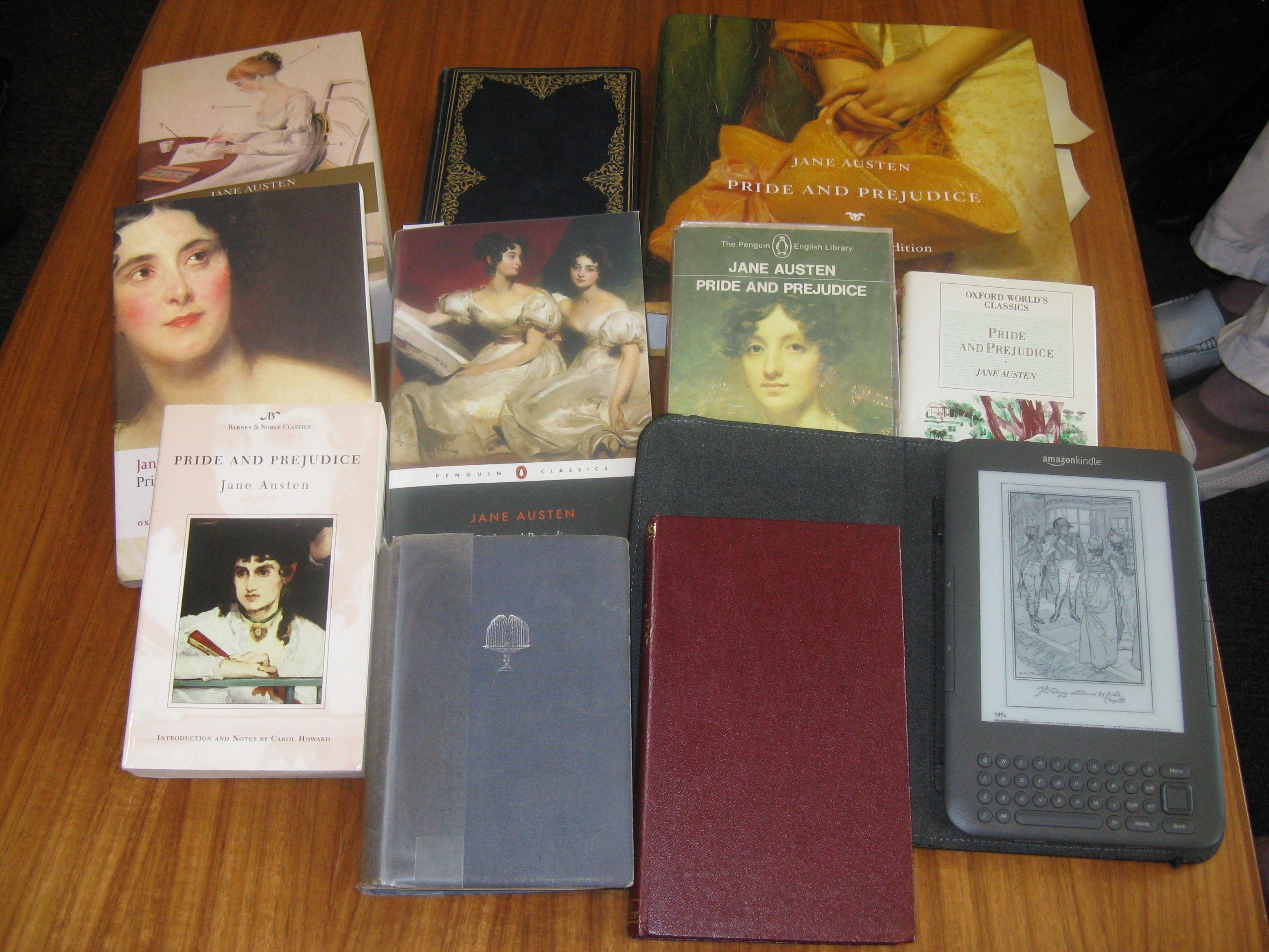
Some of the editions of Pride and Prejudice owned by my JA group

Back in the early to mid-2010s, my local Jane Austen group undertook a program of slow reading Jane Austen’s novels, coinciding with those books’ 200th anniversaries. Given that began around a decade ago, we decided last year that it was time to do another slow read program, and to stick with a chronological approach – that is, chronological in terms of publication. This meant that we did Sense and sensibility last year, and have just completed this year’s book, Pride and prejudice.

It is truly amazing just how much “new” we can find to talk about with books most of us have read not once, not twice, but multiple times, proving I suppose Italian writer Italo Calvino’s definition of a classic. Hmmm, no, not “definition” but “definitions”. He has fourteen of them, but here are the two that are most applicable to my post:

4. A classic is a book which with each rereading offers as much of a sense of discovery as the first reading.

6. A classic is a book which has never exhausted all it has to say to its readers.

These explain why slow reads can be particularly enjoyable with classics: once you know the plot, you are freed to discover how the author did it, to think about why they did it, and to notice more of the things they were telling you that you didn’t notice on the first read in your rush to find out what happens.

So, over the last three months, my group’s discussions have ranged across all of these, including finding some questions that we hadn’t thought to ask before. In Austen there are always those things she doesn’t tell us because they were known to her audience. These are the things we gradually pick up over years of Austen reading and research, such as the entail. But on this read, members raised questions regarding plot events that many of us hadn’t thought to ask before. For example, when Mr Darcy tells Elizabeth, on their meeting accidentally at Pemberley, that his sister “wishes to be known” to her, we wondered what had he told her about Elizabeth? Had he unburdened his heart to this shy young girl? Or, was it just an excuse to encourage Elizabeth to hang around a bit longer? And, when Lady Catherine visits Elizabeth because she fears there’s an engagement (or “an understanding”) between her and Darcy, where had she got this idea from?

We also found – yet again – that we had changed our minds about some of the characters, though sometimes these were diametrically opposed. For example, one remembered that when she first read the book as a schoolgirl, she felt “enormously sorry for ‘poor misunderstood Mrs Bennet’” but now she “would willingly strangle her”. For me, it’s the opposite. I had little sympathy for Mrs Bennet in my first readings, but now, understanding her worries about her daughters’ futures and Mr Bennet’s negligence in providing for them, I feel some sympathy for her – though her behaviour, all the same, is ridiculous. By contrast, in my early readings of Pride and prejudice I was far more sympathetic to Mr Bennet than I am now.

In fact, many of us in fact had little epiphanies regarding different characters that we shared with the group. Sweet Jane Bennet was thought just far too saccharine by one member, but she read some analyses that likened the angelic Jane to the sentimental 18th century heroines. Philosophers David Hume and Adam Smith argued, she told us, that feeling rather than reason provides the grounding for morality – and Jane exemplifies this. She sympathises with everyone, and behaves graciously to all. Our member wondered whether she should temper her view of Jane – though by the end she still felt Jane was just “too nice (to be real)”.

Some of these changes are due to the way slow reading exposes subtle clues that we don’t see on early reads, but some, I’m sure are due to life experiences. Austen is the perfect writer for illuminating (and then informing) our individual experiences of life.

We discussed which characters changed over the course of the novel, and, surprise, surprise, we didn’t all agree. No, let me rephrase that: we all agreed that Elizabeth and Darcy change, but some felt Mr Bennet did too, while others of us felt not – or, perhaps, only for a moment!

And then there’s the writing and the plotting. On each read we find more examples of just how beautifully, and cleverly, Austen writes. As one member said this week, as soon as he starts reading her sentences he’s drawn in – more than with any other writer. And then he shared a funny little quote from the novel that I had picked out too. It’s when Elizabeth first sees Pemberley from the outside, and takes in its beauty and grandness,

and, at that moment she felt that to be mistress of Pemberley might be something!

Book cover

Such an understatement … but of course the novel is full of statements like these, of satire and little ironies, of big and little insights. We also found interesting parallels, such as between those two ridiculous women, Mrs Bennet and Lady Catherine, who, said one member, are silly and illogical in different ways. Which brings me back to sweet Jane. Writing to Elizabeth to tell her about Lydia’s running off with Wickham, she says of her mother’s overwrought behaviour that “Could she exert herself, it would be better; but this is not to be expected.“But this is not to be expected” tells us that Jane knows her mother very well – and more, I’d argue, that Jane, while generous towards people, is not so taken in that she doesn’t see what’s what when it’s there in front of her. She just gives people the benefit of the doubt. I like that.

I fear this has been a self-indulgent ramble that hasn’t said much of substance, but it’s the best I can do right now!

Meanwhile, to those of you who do slow reads, why do you like doing them, and what you most get out of them?

Jane Austen on travel

It’s been some time since I posted on Jane Austen, but currently my local Jane Austen group is repeating the slow reads we did a decade or so ago when her novels had their 200th anniversaries. Last year, we did Sense and sensibility, and right now we are doing Pride and prejudice.

There are different ways of doing slow reads, as I know many of you are aware because you do them yourselves. Our way is to read and discuss a volume a month, based on the fact that back in Austen’s day novels tended to be published in three volumes, which makes the volume an excellent demarcation for slow reading. So, last month, we read Volume 2 of Pride and prejudice, or Chapters 24 to 42 in modern editions. This volume starts just after the Bingley retinue has moved to London, and it includes Lydia’s going to Brighton and Elizabeth’s visit to Hunsford, where she receives Darcy’s (first) proposal. The volume ends with her arrival in Derbyshire, in the company of her aunt and uncle, the Gardiners.

As those of you who engage in slow reading know, there are many pleasures to be gained from it, and the pleasures are magnified (with great books anyhow) when you slow read a book you’ve read before because, knowing the story, you can glean so much more. Most of us have read this novel many times, but we are always surprised to find something new in our next re-read. What particularly struck me about volume 2 this read was that it is really about “the education of Elizabeth“. She starts this volume being quite prejudiced. She is very sure of herself regarding Wickham’s and Darcy’s characters. She is prepared to give leeway to Wickham in the marriage stakes – that is, his marrying for money not love – but not to her friend Charlotte. But, she then sees how Charlotte has managed her life with Mr Collins, and we see what poor company her family really were anyhow! She also learns that she had misjudged Mr Darcy, and she recognises her own father’s failings. She castigates herself:

“How despicably I have acted!” she cried; “I, who have prided myself on my discernment! I, who have valued myself on my abilities! who have often disdained the generous candour of my sister, and gratified my vanity in useless or blameable mistrust! How humiliating is this discovery! Yet, how just a humiliation! Had I been in love, I could not have been more wretchedly blind! But vanity, not love, has been my folly. Pleased with the preference of one, and offended by the neglect of the other, on the very beginning of our acquaintance, I have courted prepossession and ignorance, and driven reason away, where either were concerned. Till this moment I never knew myself.” 

However, this is not the reason I chose to write this post! The reason is that I also came across a wonderful comment from Elizabeth about travel, a comment that could be as true today as it clearly was then. It comes in chapter 27, after Elizabeth had been discussing Mr Wickham’s sudden romantic interest in the heiress Miss King with her aunt Gardiner. Mrs Gardiner suggests Elizabeth accompany her and her husband on a holiday to, perhaps, the Lakes. This is Elzabeth’s delighted response:

“Adieu to disappointment and spleen. What are young men to rocks and mountains? Oh! what hours of transport we shall spend! And when we do return, it shall not be like other travellers, without being able to give one accurate idea of anything. We will know where we have gone–we will recollect what we have seen. Lakes, mountains, and rivers shall not be jumbled together in our imaginations; nor when we attempt to describe any particular scene, will we begin quarreling about its relative situation. Let our first effusions be less insupportable than those of the generality of travellers.”

I’ll leave you there, with the wisdom of our Jane!

Jane Austen, Sense and sensibility (Vol. 3, redux)

Jane Austen, Sense and sensibility

I’ve called this post “Vol. 3, redux”, although it is my first post on volume 3. The reason is that for my Jane Austen group’s 2011 slow read of Sense and sensibility, I wrote posts on volumes 1 and 2, but not on volume 3 as I missed the meeting, and never did write up my own thoughts. This slow read, I have written up volume 1 (as “redux”), but I missed volume 2’s discussion, and again didn’t write up my thoughts. However, I did get to the volume 3 meeting and am naming my thoughts “redux” to match them up with the right re-read!

Now, a quick recap … In my recent volume 1 post, I discussed various ideas that had captured my attention, such as the novel’s autobiographical aspects, “fond” mothers, and appearance. Most of these had fallen away for me by the time I got to volume 3, but one idea that I mentioned – goodness, compassion and kindness – did not…

Triumph of kindness and generosity

From the novel’s beginning, the virtues of kindness, benevolence, generosity, charity are pitted against greed and self-interest. It starts with the sisters’ brother, John Dashwood, doing essentially nothing for his sisters while a distant cousin, Sir John Middleton, offers them a home at a good rental and supports them in any way he can. The theme continues through volumes 2 and into volume 3 where even characters who had been seen, initially, as somewhat silly if not vulgar, like Mrs Jennings and Charlotte Palmer, show kindness and compassion. They show up favourably against the greed and self-interest of Fanny and John Dashwood, Lucy Steele, and Willoughby.

Colonel Brandon is one of the characters whose kindness is evident from the start. Indeed, Elinor says to her mother near the end, that “his character does not rest … on one act of kindness”. A telling moment occurs when, in volume 3, he offers Edward Ferrars “a living”, after Edward’s own mother had disinherited him. The aforementioned John Dashwood finds this behaviour “improvident” and “astonishing” – and wonders why. Elinor responds, simply, that Colonel Brandon wanted “to be of use to Mr Ferrars”. That phrase, “to be of use”, conveys a sense of humility, of not wanting anything back, in his generosity.

It’s surely ironic when a page later, John Dashwood accuses sister Elinor of “ignorance of human nature”.

Mrs Jennings, too, who is described in the opening volume as “rather vulgar”, proves herself to be thoughtful and generous to Elinor and Marianne during their stay in her home in London. And when, in volume 3, Marianne falls seriously ill en-route home, Mrs Jennings

with a kindness of heart which made Elinor really love her, declared her resolution of not during from Cleveland as long as Marianne remained ill, and of endeavouring by her own attentive care, to supply to her the place of the mother she had taken her from.

Money is the root of …?

Money is another idea that threads through the novel from beginning to end: it is the death of Mr Dashwood which results in Mrs Dashwood and her daughters finding themselves homeless and impecunious. As the novel progresses, characters are defined by their attitude to money. There are well-off characters who are avaricious, like the aforementioned John Dashwoods and Mrs Ferrars, and well-off characters who are generous, like Sir John Middleton, Colonel Brandon and Mrs Jennings.

There are many in the novel, in fact, for whom money is so important they will sacrifice values like integrity and sincerity. Willoughby, in his confession to Elinor in Volume 3, admits

My affection for Marianne, my thorough conviction of her attachment to me–it was all insufficient to outweigh that dread of poverty, or get the better of those false ideas of the necessity of riches …

Of his rich fiancee, he says, “her money was necessary to me”.

Lucy Steele is, of course, the epitome of someone who schemes and manipulates for money, with little regard for the feelings of others. In the end, despite all her protestations of love, she is not willing to settle for the secure, if not rich, life that Elinor eventually has.

But what is it really all about?

As with all of Austen’s novels, what Sense and sensibility is about has been discussed and analysed and critiqued from literary, socioeconomic, feminist, historical, you-name-it perspectives. And, really, there is no one thing it is about. That is the joy and value of Austen. What she writes about, fundamentally, is people, and how we read her changes with our own experiences of life.

So here is where I am today. When I first read Sense and sensibility in my teens, I loved it. It was so romantic. Elinor gets her man, and is happy to live the life of an honest but not particularly well-off minister’s wife. Her sweet but overly romantic, emotional sister, gets the rich man. While that never seemed quite fair to me, as happily-ever-after stories go, I accepted it because it just showed what a person of integrity Elinor truly was. Love and esteem for an honest man were what made her happy.

And yet … what is Austen saying to us? Why do some of her heroines end up with less than dashing heroes? Well, I think it is partly because she was an early, if not the first, great novelist of realism. From this, her very first novel, she provides us with a microcosm of humanity. Like her later novels, Sense and sensibility is populated with flawed characters who represent complex humanity, unlike her Gothic and Sentimental novelist predecessors who tended to present the world in more morally absolutist, black-and-white terms. Not so Austen. Mrs Jennings might be “rather vulgar”, and a bit of an interfering gossip, but her heart is large and she’s generous. Mr Palmer, who seems cold and distant when first met away from home, shows himself to be kind and generous when a crisis occurs. And so on. Even Willoughby, despite his “selfish vanity”, is redeemed a little by his confession, and Austen allows him a reasonable life after all. I now see this confession as not being “clunky” as I’d once thought, but as important to Austen’s mission of portraying life.

But, back to Marianne. There was something that I noticed on this read that I’d never noticed before, and that concerned Marianne and her marriage to Colonel Brandon. One of the reasons I have always loved Sense and sensibility is for this quote:

Marianne Dashwood was born to an extraordinary fate. She was born to discover the falsehood of her own opinions, and to counteract, by her conduct, her most favourite maxims.

I so related to this – to the idea of proclaiming opinions before experience teaches us otherwise – that I hadn’t really seen the preceding paragraph, which concerns Marianne’s mother explicitly matchmaking Marianne with Colonel Brandon:

It was now her darling object. Precious as was the company of her daughter to her, she desired nothing so much as to give up its constant enjoyment to her valued friend; and to see Marianne settled at the mansion-house was equally the wish of Edward and Elinor. They each felt his sorrows, and their own obligations, and Marianne, by general consent, was to be the reward of all.

“The reward of all”. This sounds a bit suss! Austen continues …

With such a confederacy against her–with a knowledge so intimate of his goodness–with a conviction of his fond attachment to herself, which at last, though long after it was observable to everybody else–burst on her–what could she do?

And so, Marianne does come around to loving this good, kind man as Austen makes clearer a couple of paragraphs further on:

Marianne could never love by halves; and her whole heart became, in time, as much devoted to her husband, as it had once been to Willoughby.

The point, then, is that Sense and sensibility is not Romance with a capital-R, but a story about love – Elinor’s, from the start, and Marianne’s, eventually – that is based on genuine feeling combined with appreciation of the personal values that make a person worth loving.

There is so much more to this book but I’ll leave it here because I feel that, for now, I understand what it really is about!

Jane Austen, Sense and sensibility (Vol. 1, redux)

Jane Austen, Sense and sensibility

In 2011, my Jane Austen group started a slow read of her novels in chronological order of publication, which meant that we started with the 1811-published Sense and sensibility. By slow read, we meant that each month we’d read a volume of the chosen novel, given most novels in those times were published in three volumes, and discuss just that volume to see what new ideas or insights we might have. We finished the project in 2017. Having spent the last five years looking at other works by Austen (like her Juvenilia) and exploring other topics relevant to her, we decided last year that it was time to “do” the novels again. So, once again, we’ve started with the first one.

For some of you, this will seem very dry, but for those of us who love Austen, there is much to be gained from these slow reads. If you are interested in what I wrote last time on volume one, check out the post, but here I’m sharing what thoughts popped up for me this time.

First though, I’ll repeat the caveats from 2011. I’m assuming that most readers who come to this post will know the plot. (If you don’t, Wikipedia provides a good summary.) Also, this is not a formal review but simply a sharing of some of the ideas that struck me during this slow reading.

Slow reading of Volume 1

I have always liked Sense and sensibility, while my dear Mum thought it one of her weakest. (There’s no accounting for tastes! In my group there are many who will never forget that Mum loved Northanger Abbey, which some of them don’t like much at all.)

Anyhow, here goes. It’s fascinating how each read of an Austen book focuses the mind on something different. That’s the richness of Austen, and what makes her a true classic. In my last slow read, my first-volume thoughts focused particularly on the idea of judgement, and money and income. This time, other ideas came to the fore for me, some partly affected, I think, by current concerns.

Autobiographical first novel?

But first, an idea I hadn’t fully thought through before was that it could be seen as a “typical” first novel, by which I mean, it has strong autobiographical elements. Anyone who knows Austen always think of this novel’s basic set-up of in terms of her life: the fact that Austen, her mother and sister, lost their home on the death of their husband/father, and had to wait for the kindness of relations to come to their aid, just as happens to the Dashwoods. However, on this reading, I realised there were other autobiographical elements. Others in the group had come to the same conclusion, and yet none of us had discussed this last time. Curious.

So, for example, our two sisters, the younger musical Marianne and the older artistic Elinor mirror musical Jane and her artist sister Cassandra. Moreover, Jane, we believe, was lively, like Marianne, compared with her more sober older sister. If Austen did draw on herself for Marianne, however, she’s gorgeously self-deprecating – though she does present Marianne as over-enthusiastic and excitable but fundamentally sound. There are several other elements we could point to from Austen’s biography, including her flirtation with Tom Lefroy being reflected in Marianne’s with Willoughby. They are very different men, but both men are whisked away by relations from the attractive but unsuitable, ie not-rich-enough, girl.

Appearances deceive?

Perhaps partly because I’ve been listening to ABC RN’s Face Value series, I seemed to be particularly alert to the many references to appearance. Admittedly, Austen describes appearance in all her novels, but it felt pointed here in a way that I don’t recollect seeing in later novels.

So, Edward Ferrars and Colonel Brandon are both described as not handsome, but both are appealing for their good understanding and interested attention in others. Willoughby, on the other hand, is described differently. When he appears on the scene, having rescued Marianne from her fall in the rain, Austen says that Mrs Dashwood would have would have been grateful had he been ”old, ugly, and vulgar”, but his “youth, beauty, and elegance” gave him added interest.

As for the women, Sir John Middleton and Charlotte Palmer talk of Elinor and Marianne as being pretty and therefore marriageable, while Lucy Steele is seen by the perceptive Elinor to have “beauty” but to “want … real elegance and artlessness”. And then there’s Mr Palmer who, just like Pride and prejudice’s Mr Bennet, had chosen his wife Charlotte for her beauty not her sense. Beauty, Austen seems to be saying, is something we should not give undue credit to.

Fond mothers?

Another issue which caught my attention this time around concerned mothers and mothering. Mothering (poor or lack of) features in many of Austen’s novels. Lizzie Bennet’s mother (Pride and prejudice) is silly; Emma (Emma) and Anne (Persuasion) don’t have a mother; Fanny’s (Mansfield Park) is too busy; and Catherine’s (Northanger Abbey) is away from her at a critical time. By contrast, Sense and sensibility has several active and involved, though not necessarily great, mothers, from the loving, hands-off Mrs Dashwood to the ultimate controller in Mrs Ferrars.

Very early on Mrs Dashwood’s style of mothering is described and Mrs Ferrars’ is hinted at, in relation to the apparent growing attraction between Elinor and Edward.

Some mothers might have encouraged intimacy from motives of interest, for Edward Ferrars was the eldest son of a man who died very rich; and some might have repressed it from motives of prudence, for, except for a trifling sum, the whole of his fortune depended on the will of his mother. But Mrs. Dashwood was alike uninfluenced by either consideration. It was enough for her that he appeared to be amiable, that he loved her daughter, and that Elinor returned the partiality.

Mrs Dashwood, who is probably the most present mother in Austen, is loving but not always wise. When Marianne falls into excessive despair at Willoughby’s sudden, unexplained departure, Elinor suggests she ask Marianne directly about her relationship with Willoughby. Mrs Dashwood replies that she “would not ask such a question for the world … I should never deserve her confidence again … I would not attempt to force the confidence of any one”. Elinor disagrees, seeing “this generosity overstrained, considering her sister’s youth … [but] … common sense, common care, common prudence, were all sunk in Mrs Dashwood’s romantic delicacy”.

However, Mrs Dashwood does provide good “maternal” advice to Edward, suggesting that finding some useful employment would help him be “a happier man”. She then mentions his mother:

Your mother will secure to you, in time, that independence you are so anxious for; it is her duty, and it will, it must, ere long become her happiness to prevent your whole youth from being wasted in discontent.

We haven’t met Mrs Ferrars at this point in the novel, but earlier references to her have not suggested a particularly loving or even dutiful mother. If Mrs Ferrars is one matriarch in the the novel, Mrs Jennings is another. Austen tells us that “She had only two daughters, both of whom she had lived to see respectably married, and she had now therefore nothing to do but to marry all the rest of the world”. She comes across in Volume 1, as gossipy, “vulgar”, but good-natured. Without second-guessing the next volume, let’s say that I think she warms as a motherly character then!

Her younger daughter, Charlotte Palmer is pregnant, but the older one, Lady Middleton, is the mother of three young children. She is the “fond mother” who “will swallow anything”. Her very existence depends on her role – she only comes to life when her children are around – and the shrewd Steele girls take advantage of this.

For Austen readers, the issue of mothers in Austen’s novels is a loaded one. Why are there so few sensible mothers in her novels? There is much we don’t know about Austen’s life, and one of the mysteries concerns her relationship with her mother. Some Austen researchers believe it was prickly. We’ll never know, but great mothers are rare in her novels – which may or may not tell us something .

And …

Other issues that grabbed my attention included the many references to goodness, compassion and kindness, and, not surprisingly, to sense and sensibility (which I briefly discussed in my previous volume 1 post).

Goodness appears on page 1, when we are told that Mr and Mrs Dashwood had shown “goodness of heart” to the uncle from whom they had inherited Norland, the estate that Mrs Dashwood must leave after her husband dies. As the volume progresses, Marianne talks of Edward’s “goodness and sense”; Sir John Middleton is described as being of “good heart”; and Colonel Brandon as having a “good nature”. These are not just words. Sir John’s “good heart” translates into real and practical kindness to the Dashwoods, and Edward values the “kindness” of the Dashwood family “beyond anything”.

I won’t continue because we’ll have to see how or whether these issues remain to the fore as I read on, or whether others will raise their heads. Instead, I’ll close one one of those insights that I love reading Austen for. It’s on Mrs Dashwood not being prepared to consider the tough possibilities (in this case concerning Marianne and Willoughby):

But Mrs Dashwood could find explanations whenever she wanted them, which at least satisfied herself.

How often do we justify things to ourselves that we’d be better not to? Mrs Dashwood isn’t alone I think. (Or, do I speak only for myself?)

Roll on volume 2.

Jane Austen’s Persuasion, Vol. 2

Jane Austen, Persuasion

I recently posted my thoughts on Volume 1 of Persuasion, which I read for my Jane Austen group’s slow reading of the novel. This post, obviously, is on the second (and last) volume. As before, I’ll be focusing on reflections from this read rather than writing a traditional review. And, again, just in case you need a refresher on the plot or characters, please check Wikipedia.

Persuasion

… and Self-interest

Last meeting, my Jane Austen group discussed Lady Russell’s advice to Anne. Some found it wanting while others felt she was justified in recommending that 19-year-old Anne reject Captain Wentworth’s proposal. In Volume 2, we get to question Lady Russell’s judgement again, when she sees Mr Elliot as a good suitor for Anne.

So, we have a conundrum. She’s Anne’s friend and supporter, but she’s also a member of the aristocracy, which is not presented positively in the book, and her judgement is suspect. What are we to make of her?

At the end of the novel, Lady Russell is treated well. Is this because her advice, poor though it is (in hindsight, particularly), doesn’t stem from self-interest? Here is Austen wrapping up Lady Russell at the end:

There is a quickness of perception in some, a nicety in the discernment of character, a natural penetration, in short, which no experience in others can equal, and Lady Russell had been less gifted in this part of understanding than her young friend. But she was a very good woman, and if her second object was to be sensible and well-judging, her first was to see Anne happy.

If we agree that Lady Russell is redeemed because her focus was Anne’s happiness, not self-interest, where does this leave Mrs Smith? She was prepared not to share with Anne her knowledge of Mr Elliot’s character, her reason being:

After listening to this full description of Mr. Elliot, Anne could not but express some surprise at Mrs. Smith’s having spoken of him so favourably in the beginning of their conversation. “She had seemed to recommend and praise him!” “My dear,” was Mrs. Smith’s reply, “there was nothing else to be done. I considered your marrying him as certain, though he might not yet have made the offer, and I could no more speak the truth of him, than if he had been your husband. My heart bled for you, as I talked of happiness.

But, given her hopes for Anne interceding on her behalf with Mr Elliot, is there not some self-interest in her decision not to influence Anne? Mrs Smith’s situation was dire in a way that Lady Russell’s was not, but … Anyhow, she too is treated well in the novel’s wrapping up.

What this says to me is that while Austen gently satirises groups (such as the aristocracy) or ideas (such as persuasion/influence/advice-giving), she is not black-and-white about it. She understands humanity – and would like us to, too!

… or, being persuadable

Last post I commented on Anne’s wondering whether Captain Wentworth, after Louisa’s accident at Lyme, might have realised “that a persuadable temper might sometimes be as much in favour of happiness, as a very resolute character.” Well, in the resolution, we discover that he did!

There, he had learnt to distinguish between the steadiness of principle and the obstinacy of self-will, between the darings of heedlessness and the resolution of a collected mind.

Meanwhile, Anne tells him that, despite the pain it caused, her 19-year-old self was right to listen to Lady Russell:

I must believe that I was right, much as I suffered from it, that I was perfectly right in being guided by the friend whom you will love better than you do now. To me, she was in the place of a parent. Do not mistake me, however. I am not saying that she did not err in her advice. It was, perhaps, one of those cases in which advice is good or bad only as the event decides.

This last sentence reminds me of that “good spirit” narrator in The museum of modern love (my review) who said in the opening paragraph, “It’s a human condition to admire hindsight. I always thought foresight was so much more useful”. If only Anne knew, eh, what the event would decide?

Anne Elliot, Fanny Price and Elinor

Jane Austen fans love to consider her characters, to discuss who is the worst villain or the best hero, or whether character X is like character Y, and so on. So, when my Jane Austen group discussed this volume, one member hesitatingly suggested that Anne Elliot could be seen as a mature Fanny Price (Mansfield Park). Yes, I said, I had the same thought! Not so some other members of the group, but here’s the thing. Both Anne and Fanny resist pressure or encouragement to marry people they don’t love, both have strong moral codes, both nearly lose their “love” to rivals, both are relied upon by their families to provide nurturing and support. There are differences. Anne, with her “higher” social position, has more power and agency than Fanny, the poor cousin, but a couple of could see a distinct similarity.

Another member responded that she saw a likeness to Elinor (Sense and sensibility). There is some argument for that too. Elinor is also a steady, moral character who is relied on by her family, and she too nearly loses her “love” to another. And, like Anne and Fanny, Elinor does not need to learn lessons the way Marianne (Sense and sensibility), Elizabeth (Pride and prejudice), Emma (Emma), and Catherine (Northanger Abbey) do. But she doesn’t have to contend with pressure from others the way Anne and Fanny do, which is why I’d see a closer connection between Anne and Fanny.

The Navy

Anne and Captain Wentworth, Ch 20
Anne and Captain Wentworth in front of her “formidable” family (CE Brock, Public Domain)

I said in my Volume 1 post that I’d talk about the Navy in this post, but I’ve ended up talking about other things. However, it’s worth mentioning that in Persuasion, Jane Austen, who had two Naval brothers, presents the Navy positively, as family-oriented men whose values draw more from having good relationships with their families and their “brother” officers  than from status/position. Here is Anne watching Admiral and Mrs Croft in Bath:

They brought with them their country habit of being almost always together. He was ordered to walk to keep off the gout, and Mrs. Croft seemed to go shares with him in everything, and to walk for her life to do him good. Anne saw them wherever she went. …  Knowing their feelings as she did, it was a most attractive picture of happiness to her. She always watched them as long as she could, delighted to fancy she understood what they might be talking of, as they walked along in happy independence, or equally delighted to see the Admiral’s hearty shake of the hand when he encountered an old friend, and observe their eagerness of conversation when occasionally forming into a little knot of the navy, Mrs. Croft looking as intelligent and keen as any of the officers around her.

This continues her feelings from late Volume 1 when the visiting party in Lyme had spent time with Captain Wentworth and his naval friends. She saw their hospitality, their lack of “the usual style of give-and-take invitations, and dinners of formality and display” that typified her circle. “These would have been all my friends,” she thinks, and the idea lowers her spirits. It’s surely no coincidence that in this novel Austen presents some of the worst of the aristocracy with its focus on appearance and position against the best of the Navy with, as Louisa notices, “their friendliness, their brotherliness, their openness, their uprightness”.

And then there’s the last line of the novel:

She gloried in being a sailor’s wife, but she must pay the tax of quick alarm for belonging to that profession which is, if possible, more distinguished in its domestic virtues than in its national importance.

What does this mean, besides the point that being married into the Navy means you will always have the worry of war? Many have discussed the meaning of “more distinguished in its domestic virtues than in its national importance”, with some believing that it is Austen suggesting a new world in which the professional classes, the middle class, represented here by the Navy, is gaining ascendance in English life.

What do you think?