Pat Barker, The women of Troy (#BookReview)

I shocked my reading group last week when I announced during our discussion of Pat Barker’s novel, The women of Troy, that I was tiring of feminist re-imaginings of historical women. This is not to say that I didn’t enjoy the novel, and it is definitely not to say that I am not interested in novels addressing feminist issues and concerns. It is simply to say that mining the past for the wrongs of the past, while perfectly valid, is starting to feel a bit repetitive, and consequently, also perhaps a bit reductive.

In the last couple of decades, the Classics seem to have been particularly popular for authors to revisit. I can point, in my own reading, to Margaret Atwood’s The Penelopiad (my review), and more recently to authors I haven’t read like Madeline Miller and Natalie Haynes. These authors have all re-imagined women’s roles from the Greek classics. A somewhat different, because non-feminist, re-imagining is one that relates closely to Barker’s novel, David Malouf’s Ransom (my review). In it, Malouf explores the visit Priam makes to Achilles to beg for the body of his son Hector. This event occurs before Barker’s novel starts, but it – particularly how the characters interpret it – underpins Barker’s plot.

So, let’s get to Barker’s novel. It starts with the fall of Troy but it mostly occupies the time during which the victorious Greeks, eager to return home with their spoils of war, which include the titular women of Troy, are unable to leave because they need the right weather to sail. However, it’s not coming because the gods are offended. The Trojan King Priam’s body has been brutalised and left unburied – by the now-dead-Achilles’ son Pyrrhus, who is emulating his father’s treatment of Priam’s son Hector.

Barker evokes the scene well, detailing life at the encampment along the bay, which includes the households of Greek heroes and kings – like Agamemnon and Odysseus – and the women’s quarters where the captive Trojan women are being kept. The warriors, who are fine when they are fighting, are restive, while the women are trying to survive this nightmare. Three voices carry the story, the main one being the first-person voice of Briseis, who had been Achilles’ “prize of honour” but is now married to his trusted companion Alcimus. She tells her story from 50 years hence. Her voice is occasionally interrupted by one of two third-person male voices who speak from their present, the aforementioned Pyrrhus, and the out-of-favour seer, Calchas. In fact, it is Pyrrhus who opens the novel.

“nobody would believe a girl capable of doing it” (Briseis)

Barker knows how to tell a compelling tale. She unfolds the plot at a steady pace, building up the tension in the encampment through strong imagery and tight description. I particularly loved her use of birds to both convey tone and further the themes. Chief among these were the ever-present crows who, Briseis tells us partway through the story,

were everywhere now, and they seemed so arrogant, so prosperous … Almost as if they were taking over.

Above all, though, it’s Barker’s characterisation that engaged me, her ability to invest her characters with humanity – including the brutal Pyrrhus who at 16 years old is young, unconfident and struggling to live up to the reputation of his father Achilles. Briseis, the spoil of a previous war and now carrying Achilles’ child, is more privileged than the newly captured Trojan women, but she needs all her wits if she is to keep them as safe as she’d like, particularly the independent Amina who is determined to defy Pyrrhus and give Priam the burial he deserves.

One of the ways Barker creates these relatable characters is to use contemporary and often highly colloquial language, which I admit I initially found off-putting. I don’t usually bother much about anachronism in historical fiction, so it tickled me that our reading group member who tends to be the most critical of anachronism was the main defender on this occasion. She argued that the language of The Iliad, for example, is poetic, rather than realistic, and that, given we don’t know the language of the time, Barker’s earthy approach – with its expressions like “poor cow”, “as you would”, and “fat lot of good” – is valid. Fair enough – and, in fact, I did find myself able to go with the flow, once I’d attuned myself.

There were other moments, too, though, where the language felt a bit clunky, but they were not enough to spoil what was a page-turning read about the politics of war, of enslavement and of genocide, a story in which the victors take the women for their own and aim to kill all surviving Trojan males:

They weren’t just intent on killing individual men; they meant to erase an entire people.

It’s a grim and brutal world. As Briseis tells us near the beginning, “the only thing, the only thing, that mattered in this camp was power – and that meant, ultimately, the power to kill”. 

But, there are some things that the victors, for all their swaggering physical power, overlook or can’t control. One is the greater power of the gods, and the other is the women. Barker shows how women, in being so ignored, so underestimated, so under the radar, can in fact exert some agency exactly because of this. It’s not an ideal way to be, but when needs must you do what you have in your arsenal.

You don’t need to have read the first book in the trilogy to appreciate this novel. I hadn’t. And, while the kernel of a sequel can be seen in its ending, The women of Troy has enough closure to make it work as a stand-alone novel. I wouldn’t call it a must read, but for those interested in looking at Greek myths from a different angle, there is much to “enjoy” here.

Pat Barker
The women of Troy (Troy trilogy #2)
Penguin Books, 2021 (Kindle ed.)
309pp.
ISBN: 9780241988343

Monday musings on Australian literature: Masterpieces of fiction, 1910-style

A straightforward post this week, and one shared in the spirit that readers love lists of books. This list is not Australian (despite my posting it in my Monday Musings series) but it was shared in multiple Australian newspapers in 1910 which makes it part of Australia’s literary history, don’t you think?

The list was headed in most newspapers as “A short list of masterpieces of fiction” and the explanation provided was essentially this, “An American paper offers the following as an excellent though, of course, limited list of the best books for one to read”. The papers don’t value add, so we don’t know which American paper produced the list or under what circumstances. However, I thought it was a fun one to share because it’s not just a list of recommended books, but of the “best” in different categories. Here they are:

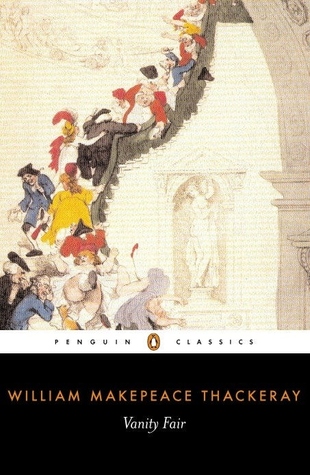
William Makepeace Thackeray, Vanity Fair
  • The best historical novel — Ivanhoe (Sir Walter Scott, Scottish) 
  • The best dramatic novel — The Count of Monte Cristo (Alexandre Dumas, French)
  • The best domestic novel — The vicar of Wakefield (Oliver Goldsmith, English)
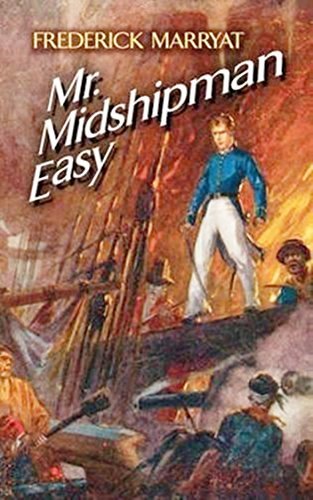
  • The best marine novel — Mr. Midshipman Easy (Frederick Marryat, English)
  • The best country life novel — Adam Bede (George Eliot, English)
  • The best military novel — Charles O’Malley (Charles Lever, Irish)
  • The best religious novel — Ben Hur (Lew Wallace, American) 
  • The best political novel — Lothair (Benjamin Disraeli, English)
  • The best novel written for a purpose — Uncle Tom’s Cabin (Harriet Beecher Stowe, American)
  • The best imaginative novel — She (H. Rider Haggard, English)
  • The best pathetic novel — The Old Curiosity Shop (Charles Dickens, English) 
  • The best humorous novel — The Pickwick Papers (Charles Dickens, English) 
  • The best Irish novel— Handy Andy (Samuel Lover, Irish) 
  • The best Scotch novel — The heart of Midlothian (Sir Walter Scott, Scottish)
  • The best English novel — Vanity Fair (William Thackeray, English)
  • The best American novel — The scarlet letter (Nathaniel Hawthorne, American)
  • The best sensational novel — The woman in white (Wilkie Collins, English) 

And:

  • The best of all — Vanity Fair (William Thackeray, English)

I was interested, and infuriated, that the authors’ names were not included in the over ten published versions I saw, so I’ve added them in parentheses. I don’t care whether readers at the time knew the names of the authors or not, the authors should be identified. It is a little soap-box issue of mine that there is often not enough recognition of the authors of the books we read. This is why I always start my review posts with the name of the author not the title of the book. It’s my little bit of literary activism!

Like all such lists, this one is interesting for what is and isn’t there. Where are Austen or the Brontes for example, while other authors like Dickens and Scott appear twice? Clearly their popularity hadn’t waned. More to the point, perhaps, why only one non-English language book? No Russians, for example? It’s also interesting to see which books have dropped off the radar. Does anyone know Mr Midshipman Easy for example? Wikipedia tells me that it’s been adapted to film twice,

The “best” categories also tell us about the interests and reading habits of the time – “best pathetic novel” anyone? Or “best religious”? Or “best novel written for a purpose”? And so on.

Anyhow, I’ll leave it there … and ask you,

Just for fun, what categories would you suggest for a similar list today?

Source: The first paper in which I saw the list was Victoria’s The Elmore Standard, 12 February 1910.

Monday musings on Australian literature: Thoughts on literature’s moral purpose

I struggled with titling this post because I don’t want it to sound like a thoroughly thought through treatise on the topic. However, I jettisoned my original plan for today’s post to respond to Angela Savage’s question on my CWF post on the Robbie Arnott interview because it seemed worth exploring.

If you haven’t read that post, the gist is that Robbie Arnott talked about why he writes fiction and what he likes to read. Responding to a question about whether fiction does something, he made clear that for him it does (or at least that he would like it to.) Fiction, he said, can expand our consciousness, can make us feel things. We come away a different person after reading it. In this way fiction shapes who we become. Later in the interview, he talked about there being a moral aspect to everything we do, which for him, includes writing. This translates into his feeling a strong responsibility, for example, to tell stories about the land in a way that improves our country. My response to this was that I loved Arnott’s absolute commitment to fiction – to its ability to change us, and to its moral (but not didactic) heft.

Enter the lovely Angela Savage, award winning novelist, former director of Writers Victoria, and current CEO of Public Libraries Victoria who comments occasionally on my blog. She commented on the post with:

Interestingly, I just read an article arguing against the premise that literature/fiction needs to be moral or change us. Would be interested in your opinion.

The article appeared in last Friday’s The Conversation, and is by Dan Dixon, Adjunct Lecturer at the University of Sydney. It’s titled “Friday essay: what do publishers’ revisions and content warnings say about the moral purpose of literature?” It was inspired by two recent issues: the controversy about the rewriting of passages from authors like Roald Dahl to remove “potentially offensive material”, and the “precautionary measure” being adopted by some publishers of adding content warnings and disclaimers to some older books.

It’s a thoughtful piece, and I recommend it to you because I only going to discuss bits of it here, the bits that relate to my answer to Angela’s question.

Dixon makes the point that the media only becomes interested in literary stories when there are “moral concerns” and that these discussions are part of a “moral battle which encourages the application of the same ethical criteria to books that might be apply to elected officials or ministers of religion.” He then suggests that writers’ festival programs demonstrate that we “struggle” to talk about books on any other terms.

Dixon looks at the economic drivers behind these controversies and how they can commodify books. He recognises that literature is affected by the marketplace but argues that it also pushes back against that. Do read his argument if you are interested. Meanwhile, I want to focus on his exploration of what literature is about.

A common question, he says, is:

is there a necessary connection between a work’s literary value and its moral quality? When we read a book do we expect a degree of moral instruction, as to how we should or should not live?

He believes this is a worthwhile question, but that it is not the only question. Literature is more than this. Indeed, he argues that limiting discussion to moral debates encourages “definitive judgements” which enables us, he says, to

avoid what Keats described as negative capability: “being in uncertainties, mysteries, doubts, without any irritable reaching after fact and reason”.

This is where I want to come in, because I am perfectly happy with what Dixon calls “the unpleasantness of irresolution” – and so, I believe, is Robbie Arnott. In Limberlost, for example, Ned’s daughters confront him with being a farmer on stolen land. Arnott believe it was important for Ned to be confronted with this fact, that to ignore the issue would not be real. But he offers no resolution, no moral closure; it just sits there, as it often does in life.

I’m not sure what Arnott meant exactly by his statements, but I think he’s right that there’s a moral aspect to everything. However, I don’t think he means, as a result, to provide the moral answers. In fact, I’m confident that he knows there aren’t necessarily any, or at least not easy ones. Rather, I understood him to mean that he is aware of the moral implications of the way we live and wants to include those in his books, because that’s real. This is subtly different from saying there must be a moral to the story (to literature, to any art).

Now, I’ll return to Dixon and some things he says about literature. First:

The best literature can be spiky, ambiguous, difficult, cruel, strange, unpredictable, hectoring and unpleasant. It is not the job of a book to ease the life of its reader. Reading a good book might mean having a terrible day, a day in which you are scared, sad, distressed. 

I can agree with this. Arnott’s point that you come away changed could work with this!

Then Dixon says:

But literature does not have an obligation to be useful; we do not have to learn anything from it. It need not produce anything except a readerly response.

I also agree with this. My belief is that, at the purest level, the only thing literature (art) needs to be is whatever its creator wants it to be. It is then up to the reader/viewer/listener (whatever the art form is) to decide whether they appreciate the art. I know this is simplistic as creators are, for a start, constrained by any mix of economic, legal, social, political and practical factors, but this is my theoretical starting point.

Returning to Dixon one more time, he says near the end of his piece that “any argument that treats literature as fundamentally therapeutic, self-improving or society-improving, risks reducing literature to self-help”. This is a bit trickier, but I think it hangs on the word “treat”. And it takes me back to my previous point. If I argue that literature doesn’t “need” to be anything, then by definition I should not “treat” it as needing to be something. I can, however, prefer literature that tries to improve or change things. A fine line perhaps but I think it’s defensible.

I therefore like Dixon’s conclusion that the best way to think about literature might be as a “conversation”. He expands this to say that conversations “can be morally nourishing or deadening … neither good nor bad”. Seeing literature this way suggests for him that “reading resembles conversation … an ongoing exchange between reader and writer”. Which brings me back to Arnott who sees novels as a two-way communication between author and reader, one in which he’d love to know whether what he feels resonates with the reader. 

I hope I’ve answered Angela’s question, and I also hope I have accurately represented Arnott in terms of the question. What do you think?

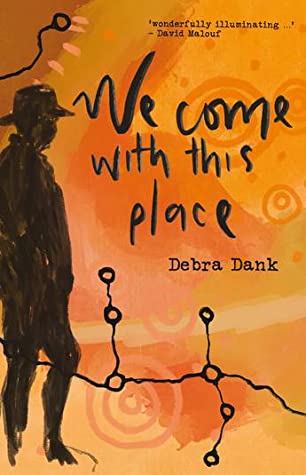
Debra Dank, We come with this place (#BookReview)

First Nations people are advised that this post contains the names of deceased people.

It has been my reading group’s tradition for some years now to read a book by a First Nations writer in July, the month in which NAIDOC Week occurs. Coincidentally, NAIDOC Week’s 2023 theme was “For our elders”, which worked beautifully with our chosen book, Debra Dank’s We come with this place, because a large part of it is about the value and importance of elders and ancestors.

This was not, however, why we chose Dank’s book from the options before us. Its subject matter intrigued us, about which more anon, but we were also influenced by the fact that, at the time we were choosing, it had just won a record number of four awards in the New South Wales Premier’s Literary Awards: the Douglas Stewart Prize for Non-Fiction, the UTS Glenda Adams Award for New Writing, the Indigenous Writers’ prize, and the overall Book of the Year. It was also shortlisted for this year’s Stella Prize, and, after we scheduled it, it won the ALS Gold Medal. These are significant awards and, for most of us, the book lived up to its advance publicity.

I mentioned the subject matter above, but We come with this place is one of those books that is tricky to categorise. It’s a sort of multigenerational memoir that is also a guide to her culture and a community history of her people, before and after colonisation. It grew out of her PhD in Narrative Theory and Semiotics. Dank describes it in her Preface as a:

strange kind of letter written to my place – a recording of events and activities that I and my family have experienced, in order to tell Garranjini that I remember, and I know. It is all based on real events. Some parts have been reimagined, because they happened outside my presence, and several names have been changed. Our relationship with our place, however, is genuine and lives in ways that not easily told in English words or western ways.

She goes on to say that she wanted to show “how story works in my community, and how it has contributed to our living with country for so long”. It also felt imperative, she says, to talk about the “voices, human and non-human, who guided the Gudanji for centuries before anyone else stepped onto this land”. This is a truly generous thing to do, and my group loved that, loved how Dank shared her story, and particularly how she helped us whitefellas “see” how First Nations people understand and relate to Country. I knew much of this from all I’ve read and heard, but this book really grew my understanding.

The other special thing about this book for me is that it is set in an area I know. I spent three formative late-childhood years in Mount Isa, close to Camooweal where Dank’s mother’s family were based. I visited Camooweal several times, and traversed parts of the Barkly Tableland which encompasses her Country. The first First Nations people I heard of were the Kalkadoons, whom Dank mentions in her book. Dank herself, though, is a Gudanji/Wakaja woman, the former through her mother and the latter, her father.

“to see the pain as it lies in the landscape”

We come with this place is a confronting book, from its perfect and defiant title to its chronicling of the atrocities that her people faced. The fear of children being taken away pervades the book. There are stories of massacres, and other appalling brutalities including a rape of her father’s mother. Lucy’s “choices were both dire – a drover’s boy or a special girl. The same, just in different clothes”. There is intergenerational trauma, which Dank exemplifies through her father, Soda. Hardworking and loving, he bears traumas, which she characterises as “newer stories … that pushed and jostled with the older stories” and sometimes “pushed their way out with a violence” that was often directed at her mother, and sometimes herself.

Dank doesn’t hold back; the way she tells it is strong, speaking her truths and segueing between past and present, between brutal history and rejuvenating story, between people and ancestors. Amongst the tough stories are warm-hearted anecdotes about family life. An example is Dank telling of being on country with her grandfather Bimbo and her surprise and joy in learning how to catch fish in arid land. The stories speaking of deep love sit alongside the hard ones, and together convey that the people, their ancestors, and Country are interconnected. This idea is mirrored in the structure.

However, I admit that I did, initially, find the structure a bit confusing, but as I read on, I started to sense an overriding arc similar to that of Bangarra Dance Theatre’s recent offering, Yuldea. Both start with origin stories, then move through colonial history, and conclude with the power of kinship and connection to Country. But it’s not as linear as this sounds. For example, starting the book, and threading through Dank’s narrative are the three Water-women who came from sea in the Gulf of Carpentaria, and travel far to create “the freshwater and hill country” of the Gudanji. They also end the book, giving it an overall cyclical structure which, I think, reflects First Nations’ understanding of life. Other cycles occur within this structure, so there is a continuous sense of moving forwards and back in time, as experiences and stories build on each other to create “Gudanji memory” – for us, and for her people to whom she is writing. This idea of building “memory” from stories, from lines between places and the things that have happened there, is strange to western ways of thinking, but Dank makes it make sense. She shows us how stories are made and passed on through Country.

I’ve been trying to decide how to end this post, and then it came to me that the best way might be with some words from Dr Tyson Yunkaporta’s Introduction to the book. He is a First Nations scholar, founder of the Indigenous Knowledge Systems Lab at Deakin University in Melbourne, and the author of Sand talk. He admits to not being able to face “the through line of history from the savagery of the frontier wars to the interventionist policies of today”. Dank, though, has. He writes:

She hurts us, digs bullets out of old wounds that never healed properly, sucks out the poison and then begins our healing with love and laughter. She does this for everybody, no matter which side of the rifle you’re on.

Dank, in other words, doesn’t pull any punches, but neither does she ram them down your gullet. Her aim is to tell the truth, proud and clear, but to do it in order for healing to take place. Isn’t that what we all want?

Kim (Reading Matters) also loved this book.

Debra Dank
We come with this place
London: Echo, 2022
252pp.
ISBN: 9781760687397

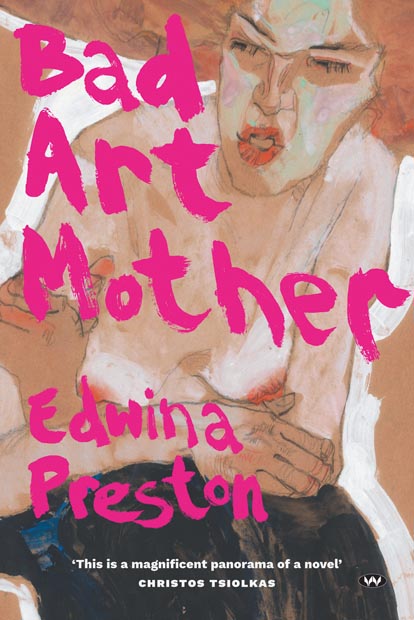
Edwina Preston, Bad art mother (#BookReview)

Edwina Preston’s Bad art mother was my reading group’s June book, replacing our previously scheduled book because we’d heard Bad art mother was to be the featured book in the Canberra Writers Festival session, Canberra’s Biggest Book Club. This suited me, as, coincidentally, I’d just started reading it!

Bad art mother has been shortlisted for two awards this year (so far), the Stella Prize, and the Christina Stead Award for Fiction (in the NSW Premier’s Literary Awards). Not a bad achievement for a book that was rejected by publishers over 20 times before being picked up by Wakefield Press.

The novel is mostly set in 1960s Melbourne, which was a time of social change. While feminism was around the corner but not there yet, the city’s life was being influenced by the postwar influx of European migrants. Preston captures this well, said our Melbourne-born members. The story draws its inspiration from various Australian arts practitioners who were active in the mid-twentieth century – the Heide Circle and the artist Mirka Mora and her husband Georges, in Melbourne, and the Tasmanian poet Gwen Harwood. Bad art mother is the third book I’ve read in recent years inspired in some way by the Heide story, the others being Emily Bitto’s novel The strays (my review) and Jane Sinclair’s memoir, Shy love smiles and acid drops (my review). Interestingly, all of them focus to some degree on the damage done to children.

I enjoyed the experience of reading Bad art mother, not only for its expressive language, but also for its intriguing, complex structure. It is told primarily from the point of view of a young boy, Owen, whose mother, Veda Grey, is struggling to make her name as a poet. However, we also get Veda’s point-of-view through letters she writes to her sister. After opening with Veda’s book launch in 1970, the novel is told in six parts, which to-and-fro in time, but it has an overall chronological trajectory, with part one telling of his parents’ meeting and his birth, and the final part being set around 2016 when Veda’s book is about to be republished in an anniversary edition. The central four parts commence with Owen as an adult in the 1980s, before returning to his childhood in the 1960s. It sounds complicated but it works. Lives, after all, are rarely simple and linear. Owen’s certainly wasn’t. Wanting to be just a kid, he had to be the grown-up more often than not.

The other thing to mention is that Owen tells his story first person, but to a specific person, “you”, whom we soon discover is Ornella, his father’s “sister”. That is, she was the daughter of the Italian family that “adopted” his father when he came to work in their restaurant at the age of 19. Throughout his childhood, Owen is passed between his parents, the rich but dysfunctional Parishes (to whom his mother entrusts him in a deal that buys her more time for her art), and Ornella. It is Ornella who saves him when all the others fail. She is the unimaginative one, the stern one, but also the stable, reliable one, the one who picked him up “on time, every time“. Owen knows that he owes his life to her, and now, as she is failing with dementia, he visits her and tells her his story, expressing what she means to him, while also working through his feelings for his mother.

“I will hang my anger out to dry” (Veda)

The book spans Owen’s life from the 1960s to the 2010s, but with its focus being the 1960s, it is, essentially, a work of historical fiction. Why did Preston choose to write about this time? I like my historical fiction to have some relevance to the time in which it is written. Fortunately, Preston’s novel does – and it concerns the challenge creative women face. There are three such women in the story. Rosa, the muralist, works in Owen’s father’s restaurant, and does it her way. She is not a tortured soul, but it takes a long time for her art to be accepted. Mrs Parish is an ikebana artist who quietly finds her own way by removing herself to Japan. And, of course, Veda, the poet – the only one who is a mother. She struggles big-time with her drive to create and her role as a mother. She writes to her sister:

How does one protect them? Sometimes I think I would throw in every hope of my own, every dream of literary prowess or success, to protect him, even for one second, from any hurt that might come to him.

But would I, Tilde? Would I?

If it came to it, I wonder how I would make such a choice. I should hope that if ever given that choice I would make the right one, but I know I would resent it for the rest of my life. I would never be happy. I would be a bloody, injured banshee who ruined everyone around her.

What sort of a mother chooses a book over a child?

Sometimes I am not sure what I am capable of at all.

The point, then, is that it is hard for women to make art and be recognised for it, and it is especially hard when the woman is also a mother. The tension for Veda is palpable through both Owen’s story and her own letters. And this brings me to the issue which triggers the novel’s crisis, anger. When Veda shows her anger at how she and her work had been treated, things go wrong and her life falls apart. Owen’s partner Julia tells him in 2016 when Veda’s poems are being re-released, that she remains relevant because, for all the progress that had been made in the interim, “it’s still hard to be angry, if you’re a woman. It’s still not allowed”. This was a major takeaway from the book for my reading group.

Bad art mother is an intelligent novel that offers no answers to the quandary it presents, but that asks the right questions. Good on Wakefield for taking it on.

Lisa also enjoyed this book.

Edwina Preston
Bad art mother
Mile End: Wakefield Press, 2022
317pp.
ISBN: 9781743059012

Review copy courtesy Wakefield Press

Monday musings on Australian literature: Trove treasures (9), Pro-novel reading, early 20th century

Last week, in my Trove Treasures series, I shared some ideas published in the 19th century arguing for reading novels. Now, I am sharing some from the first decades of the 20th century. The articles range from 1903 to 1928, with many, again, coming from London.

Diversion and instruction

Two papers – Brisbane’s The Telegraph (18 December) and Perth’s The Spectator (31 December) – reported in 1903 on the annual address given by Professor Dicey to the Working Men’s College in London. Dicey argued that the main benefit of novels was “to take a man out of himself — to afford some relief from the petty and tiresome thoughts of every-day life by substituting a world of larger and more varied interest”. (We must forgive him and the others below their gender specificity – I suppose.)

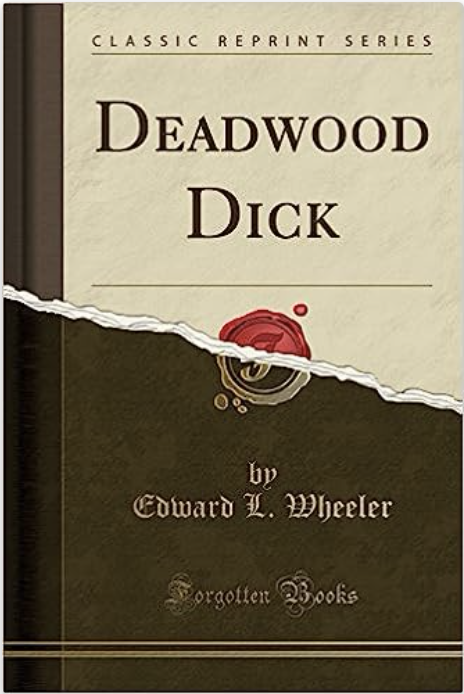
Interestingly, The Spectator says, and this seems to be its own reflection, that it’s not always “the highest class that serves this purpose best” and goes on to share a variety of novels from penny novelettes, like the Deadwood Dick novels, to Scott, Thackeray and Balzac. This idea of novels as valid – indeed useful – recreation is refreshing. The Spectator goes so far as to say that

That degree of mental absorption and excitement to be found in works of fiction, fine and trashy alike, and more often in the trashy ones, has become part and parcel of the home life.

But, this sort of reading must not be “indulged too far”. The Telegraph reports a month or so later (8 February) that Prof Dicey does comment on the issue of quality, making this recommendation:

take good care that you read novels of a good kind — each good of its kind. If you like a detective story take care you read a good detective story, and think about what you have read.

Dicey also believed – and here we are in more familiar territory – that novel reading provides “an introduction to life and thought”. This idea though, says The Spectator, is one few – including itself – “will be prepared to admit”. It fears that novels might teach readers what to expect in life but not how to meet it.

Moving to 1905, we have another Englishman’s point of view, this time Sir Richard Henn Collins*, Master of Rolls in England. The Armidale Express and New England General Advertiser (7 February) reports Sir Richard’s argument that much useful knowledge can be acquired through reading fiction. Indeed – are you listening Bill – he argued for the value of the historical novel, saying, “that he himself had won a scholarship mainly through having imbibed French history by reading Dumas’ famous Three Musketeers and other French novels of a similar class”. Even I think that might be going a bit too far – as does our newspaper. It argues that while this might be an appealing way of learning, the fact is that the public service and many professions require the passing of examinations. This means that the “the greater part of the schoolboy’s career must necessarily be occupied in the process of stuffing with dates, syntax rules, and other learned matter. The novel as an educator cannot, therefore, be recommended as an essential part of the ordinary public school curriculum”.

A year later, on 16 March 1906, The Hebrew Standard of Australasia, picks up the argument favouring the reading of novels. It suggests that “many people, especiallv men between twenty-five and forty-five, men in responsible positions, serious people engrossed by the details of a large business, consider novels simply as a kind of dross”, but this, it argues, is a “mistake”:

To read a good novel and read it with undivided attention is a means of instruction and education, which very few men below fifty can afford to entirely neglect. We have met not one, but many business men, excellent, successful and commanding our admiration in a very high degree, in whose manner of conducting business we have noticed defects, not to say faults, which most probably, would never have occurred if they had been in the habit of reading, now and then, a good novel, and had been able to extract from that reading the good which it can yield [my emph].

It then spends some time elaborating exactly what businessmen can learn from novels. It’s a thoughtful article, well worth reading.

Varying the diet

William Makepeace Thackeray, Vanity Fair

Support for novel reading continued in the 1920s, but I found some qualifications. For example, Leeton’s The Murrumbidgee Irrigator (20 March 1923), shares an argument put forward by Thackeray, half a century previously, “that all people with healthy literary tastes love novels” but “that overindulgence in them in youth spoils the taste for them in after-life, even as a schoolboy outgrows his love for pudding and jelly”. He goes on to discuss the truth of this in his era, particularly regarding those decadent modern novels which cannot hold his attention. Yet, speaking for himself and his fellow-sufferers, he admits that, regardless of having over-indulged in their youth, they can still “find a corrective in those romances which used to entrance us — ah! how many years ago”.

And in 1928, Brisbane’s Daily Standard (17 March) shared an argument from London’s Evening Standard that “the habitual novel-reader should sometimes vary his mental diet”. Indeed, the Evening Standard suggests that this is important given that the other works of literature, which preceded the novel and continue alongside it, “will no doubt be still vigorous when the novel has had its day”. Little did it know!

It then goes on to say something rather interesting:

There is no good novel which is not veiled autobiography, either from the emotional or from the intellectual standpoint; but a writer can under the protection of the veil, be franker than he could possibly be in a ‘Confession’ or ‘Apologia pro vita sus.’ There is perpetual complaint of the indecent novel; but in a sense all novels are indecent —that is, they reveal thoughts and feelings that the writer would never dream of exposing to a company of even close friends.

It says more, arguing that there is value in wide reading – hard and low-brow, fiction and nonfiction – but I’ll leave you with its closing remarks because they tickled me:

it is neither polite nor grateful to many excellent modern writers in non-fiction genres to talk as if ‘books’ were only another name for novels.

So there!

* Collins was the judge in the Wilde vs Queensberry libel case.

Monday musings on Australian literature: Trove treasures (8), Pro-novel reading, 19th century

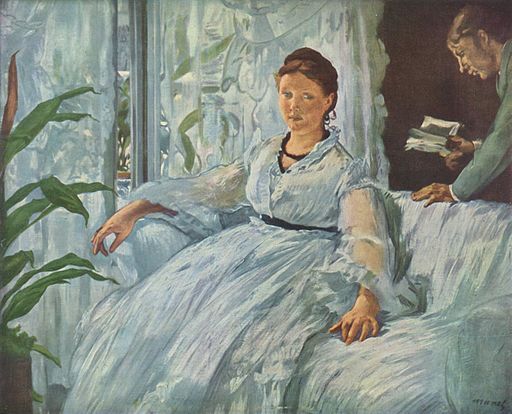
Édouard Manet, The Reading (1865-1873), Manet’s son reading in the background. Public domain, via Wikimedia Commons.

Continuing my Trove Treasures series, I am turning this week to some of the discussions I found about the value of novel-reading. Three months ago, I shared some of the arguments made against novel-reading, but in fact, in the papers I found, there seemed to be more arguments pro such reading. So much so that I’m planning two posts – one on the mid-to-late 19th century, and the other on the beginning of the 20th century.

Today’s 19th century articles range from 1867 to 1899, and they traverse the topic from some interesting angles.

Prose vs Poetry

The earliest article was published in the Geelong Advertiser, on 7 May 1867, but appears to be from London’s Saturday Review. So, not Australian-written but published here. Several of the articles I’ll discuss comment on what reading novels can teach us, but this one did surprise me. It commences:

As every novel turns upon love and matrimony, the first effect of universal novel reading must necessarily be to familiarise the young imagination with the idea of both. 

What’s this assumption that “every” novel is about love and matrimony? Was this so at the time? Well, not “every”, because then our writer offers exceptions. Regardless, the writer recognises that novels aren’t the means by which people become aware of the “matrimonial adventures to come”. Fairy tales, for example, contribute to the construction of “masculine and feminine ideals”. What is “left” for novels to do is “to train and develop an instinct which is already in existence in the germ” but, says our writer, this knowledge must “ripen gently”. Indeed,

premature cultivation tends to every species of social mischief. Nobody ever yet knew a very sentimental boy, unless indeed he came under the exceptional category of a genius, arrive at much good; and though to pass the same general censure upon sentimental girls would be hard upon the sex; it may be believed that women who go through life most happily whose capacity for sentiment has flowered late.

The language is convoluted but I think you get the gist. Basically, the article claims that sentimentality stimulates imagination at the expense of observation:

Sentimental boys and girls seldom notice nature, keenly, and with the eye of a student or an inquirer. They get into a lazy habit of liking sunsets, and deriving a number of prematurely solemn impressions from them; but they have no healthy interest in butterflies, birds nests, and fossils.

The problem, according to the article, is that this sentimentality – that comes, remember, from understanding “matrimonial adventures” too quickly – results in high sensitivity to natural phenomena but limited understanding of how it all works. For these reasons, the writer does not greatly like poets – particularly Byron. Wordsworth is acceptable, because the writer believes his “sentimentality” is that “of a middle-aged genius, not of an overgrown and morbid boy”.

Was this a common view of romantic poetry? The article then describes the value of novel-reading:

a fairly good novel presents young minds with a better and more correct notion of the relations between men and women than they would be likely to form if left to their unassisted efforts. It does away with a good deal of unnecessary mystery in which young people are inclined to clothe the idea of love. Marriage is not what it appears to be in most romances, but it is more like the literary pictures than it is like the vague and hazy conception which emanates from the youthful brain. Fiction in prose is truer to nature than fiction in verse, and novelists may be trusted more than poets. 

Take that, poets! The reason, says our writer, is that “prose fiction is generally written by less morbid people”. The article then discusses the sorts of people who write novels. Its point is that novelists (aka “literary men”) mix in the world while poets live in the closet or within garden walls. Surely a generalisation! Anyhow, then he gives a recommendation – Mr Trollope. Our writer is concerned about

flirtation with married women becoming an unnecessarily frequent ingredient in his literary conversaziones; but life is life, and it is probably difficult to produce monthly humour without a little impropriety. On the whole, the bent of his pen is to sketch love and matrimony as healthy domestic pleasures, and not to depict them in the artificial colours in which diseased imaginations dress them.

Basically, Trollope is a good example of the “better class of novel writers” and is much better for the English youth than French romance! I’ll leave you with that thought and move to the 1890s …

A practical education

The two articles from the 1890s were published in Queensland’s Darling Downs Gazette (17 December 1890) and Sydney’s Sunday Times (26 February 1899). The first article quotes two British men on the value of novel reading. The first was Sir Edward Clarke QC MP, who, opening a “free library” in London, said that reading novels “was not a mischievous but a good thing”. “Good novels”, he believed, contain “elements of history” that are more valuable and easier for readers to digest than can be found in other books.

The other was the Scottish poet, biographer and translator, Sir Theodore Martin, who was presiding at the annual meeting of another free library, this one in Wales. That year, 2,492 novels had been read versus 811 of everything else combined. This disproportion was similar in other libraries, and Sir Theodore had some qualms. He didn’t criticise “reasonable indulgence in the delights of good novels and romances” because they widen our sympathies, and, he hoped, they inculcated a taste for reading which might lead readers to more demanding studies in areas like natural history, biography, poetry, and science. (He, clearly, saw poetry as having a higher value than prose fiction!) For Sir Theodore, reading fiction does not leave the lasting impression or give the satisfaction that other reading does.

The 1899 article was titled “The reading of novels and the morals of the public” and came from Women’s World, edited by Vivienne. Vivienne’s interest is in whether reading novels is “a judicious measure of education” and whether it should be encouraged. Her response? She failed to see that such reading caused “any great harm or moral wrong”. Indeed, she argued that novel reading provided “a kind of practical education”.

Novels illustrate the mechanism of the world at large, and show the various points of the machinery of life. They tell of every-day episodes; of the romance of days gone by; and, in fact, deal with life in all its forms, from the lowest to the highest grades of society, and from the earliest ages to present times. 

Sounds right to me, but the passing comment at the end did stop me: “of course, children should not be allowed to read novels, for obvious reasons”. 

So, there you have it … there were those who viewed novel reading positively, even where they had some reservations. This is a tiny sample, but you can see some progression from the idea mid-century that novels were primarily about marriage to the end of the century when they were seen to have broader relevance to understanding the world. I’ll be interested to see if things change in the next few decades …

Monday musings on Australian literature: Trove treasures (7), What police read

Number 7 in my Trove Treasures series was inspired by a little piece that appeared in Sydney’s Daily Telegraph on 6 December 1946. It was titled, “Men join police force after reading novels”. Naturally, I was intrigued. What novels, for example?

The story’s subject was one Constable J. Simons who had just resigned the police force, after having served for 17 years. He was speaking at a Police Association meeting and he said, to quote the Telegraph, that “most men joined the police force for adventure after reading detective stories”. (The rest of the piece was about why he is was resigning, which related to pay and and conditions, particularly regarding slow promotion due to the system operating at the time.)

It made sense that detective reading might inspire young men to look to the police as a career, but I wanted to find out more. Unfortunately, this proved quite difficult because it was hard to find specific search terms to get what I was looking for. As it turned out, in the time I gave to it, I didn’t find much, but what I did find was illuminating.

What I found were articles about what policemen (as they were mostly then) read – rather than about what caused them to join the police force. One article came from New York in 1914, and another two came from Queensland in the 1930s. All indicated that policemen did not read detective stories. Neither talked about what might have inspired them into the force, but both stated very clearly what they read once in the force.

New York New York

The 1914 article appeared in Sydney’s The Sun on 4 August. It commences with:

Whatever the world at large may think of detective stories, they do not win the esteem of those whose business it is to follow up crime. The police care least of all for this line of literature — a fact discovered by reports of books most favored among those consigned by the New York Public Library for use at the police stations. 

This story, then, is about the NYPL’s providing books to police stations for police reading. The article implied that what the police read might be affected by the sorts of books selected! They’d be, the article said, “standard and classic books” chosen by the library authorities “as to what they ought to read, that being an inclination of librarians everywhere”. (Oh dear, but I think this sort of high-minded prescription was more the case then, than in modern libraries!) Nonetheless, the article does explicitly discuss detective stories:

According to report, these particular readers find little of interest and nothing of profit in the ‘detective stories’ which have such a wide sale with the ununiformed public. The policemen say that ‘real’ detective work is not done after the fashion of the sagacious heroes of Conan Doyle and his predecessors, and therefore they scorn romantic crime-hunting. This condemnation involves the assumption that the methods of ‘practical’ men cannot be bettered — an assumption wildly fallacious, but entirely natural. The police antagonism to detective novels may be due in some part to the fact that in almost every such book it is the scientific amateur who works all the miracles, while the ‘headquarters man’ is usually a comic character who laboriously follows a false clue while the other fellow gets the results.

The article goes on to defend the writers of these books, suggesting that errors in detective work “may be intentionally made by an author for the sake of attaining some higher end of emphasis or excitement”. Indeed, says the article, “all the great advances in the task of crime-detection have been made, not by policemen, but by scientists”. Lest, however, we feel that the police were being unfairly targeted, the article continues that this is true of many professions and trades, so ‘that “the force” need not be humiliated by it”. Still, the article ends with a little sting in the tail for the poor copper, which I’ll leave for you to read.

Caring for police in Queensland

We then skip a couple of decades to Queensland and the creation of a library in that state’s Police Welfare Club. I found two articles on this initiative. One appeared in Brisbane’s The Courier Mail (24 November 1937), titled “Policemen’s reading: Logic, forensic ballistics: Why thrillers are unpopular”, and the other, nearly two years later, in that city’s The Telegraph (19 June 1939), titled “Our policemen study the classics”.

The 1937 article commences with

Few of Queensland’s detectives read detective stories. They find the novelists’ supermen unreal to the point of irritation.

The article quotes the C.I.B. man who showed the writer around the Club’s “fine new library” as saying that “We don’t detect that way”. This new library, the article claims, indicates “the higher education of the modern policeman”.

Both articles describe the broad content of the library, but it’s the second one that provides more detail about its genesis, noting something that harked back to that first article I found. It says that “a policeman’s pay does not ordinarily permit him to possess as his very own a library of any consequence”. Our detective novel reading Constable from 1946 would probably agree! Anyhow, the article’s writer, a “special correspondent”, explains that Queensland’s Commissioner of Police (Mr. C. J. Carroll), who had been appointed in 1934, had immediately set about creating a club “to give his men better facilities for recreation, educational advancement, and departmental advancement”. In 1936, after fundraising had got the club going, he turned to creating a communal library for the police and their families, in Brisbane and state-wide via mail.

Both articles write about the breadth of the collection, and engage in discussion about was being read, which ranged widely from poetry and the classics to political satire and books reconstructing real crimes and trials.

Towards the end of the second article, the writer asks the wife of a detective:

“Does he go in for detective stories?” 
“No, he reads to relax” she replied. Adventure stories—the lighter the better—were first favourite with him for recreational reading. 

The earlier article says that “Wild West books are the most popular in the relaxation class of reading”, so maybe this is what her husband was reading!

Much of the second article is anecdotal so it’s impossible to say just what “real” impact the library had on the state’s policing, but I’d like to think that our “special correspondent”, who concludes by quoting Arnold Bennet on the value of reading, is right when s/he says that

… with the aid of their library the men in the police force are developing greater understanding of mankind; consequently they must surely become better policemen.

Slow reading: Jane Austen’s Pride and prejudice

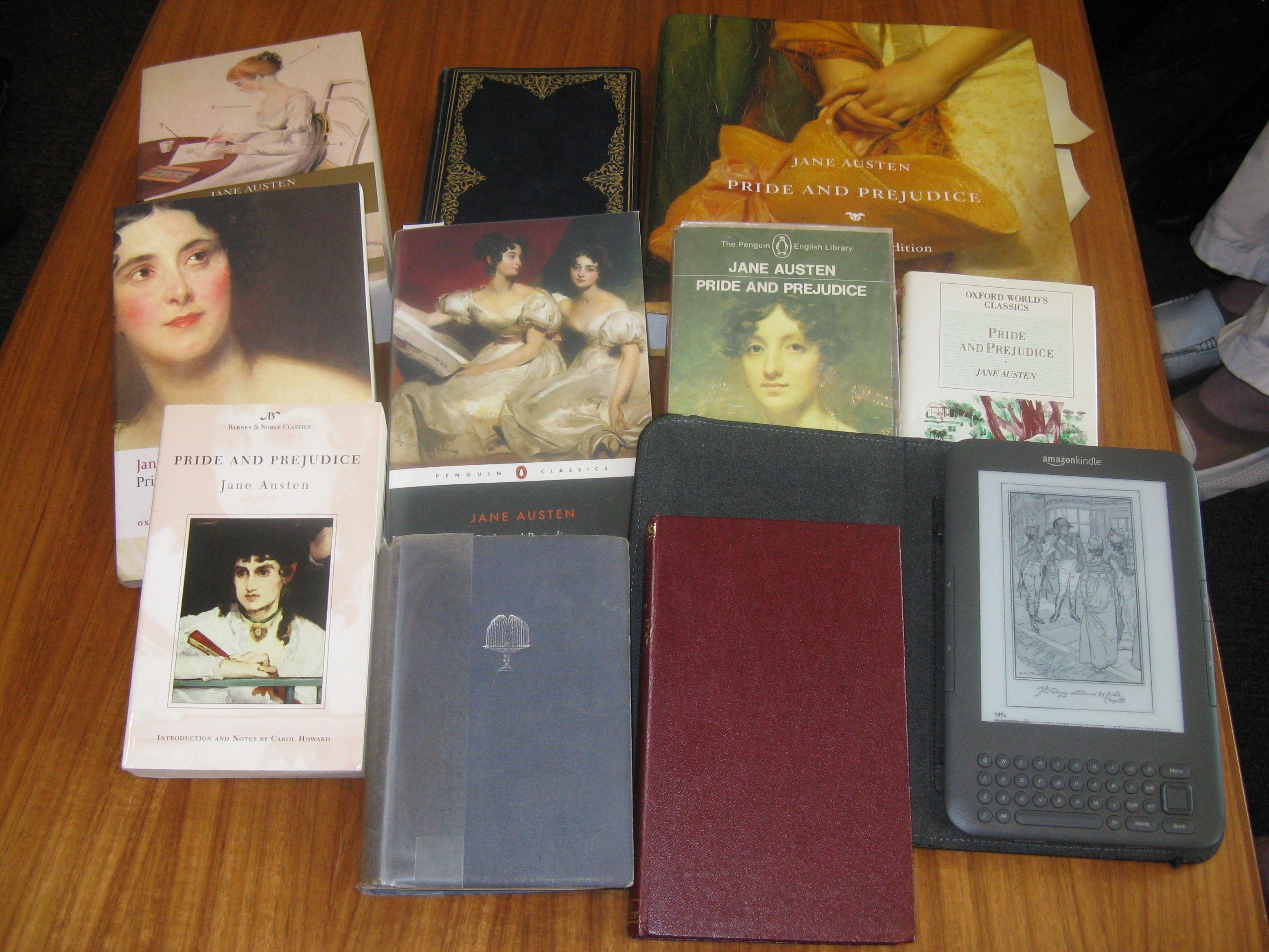
Pride and prejudice book covers
Some of the editions of Pride and Prejudice owned by my JA group

Back in the early to mid-2010s, my local Jane Austen group undertook a program of slow reading Jane Austen’s novels, coinciding with those books’ 200th anniversaries. Given that began around a decade ago, we decided last year that it was time to do another slow read program, and to stick with a chronological approach – that is, chronological in terms of publication. This meant that we did Sense and sensibility last year, and have just completed this year’s book, Pride and prejudice.

It is truly amazing just how much “new” we can find to talk about with books most of us have read not once, not twice, but multiple times, proving I suppose Italian writer Italo Calvino’s definition of a classic. Hmmm, no, not “definition” but “definitions”. He has fourteen of them, but here are the two that are most applicable to my post:

4. A classic is a book which with each rereading offers as much of a sense of discovery as the first reading.

6. A classic is a book which has never exhausted all it has to say to its readers.

These explain why slow reads can be particularly enjoyable with classics: once you know the plot, you are freed to discover how the author did it, to think about why they did it, and to notice more of the things they were telling you that you didn’t notice on the first read in your rush to find out what happens.

So, over the last three months, my group’s discussions have ranged across all of these, including finding some questions that we hadn’t thought to ask before. In Austen there are always those things she doesn’t tell us because they were known to her audience. These are the things we gradually pick up over years of Austen reading and research, such as the entail. But on this read, members raised questions regarding plot events that many of us hadn’t thought to ask before. For example, when Mr Darcy tells Elizabeth, on their meeting accidentally at Pemberley, that his sister “wishes to be known” to her, we wondered what had he told her about Elizabeth? Had he unburdened his heart to this shy young girl? Or, was it just an excuse to encourage Elizabeth to hang around a bit longer? And, when Lady Catherine visits Elizabeth because she fears there’s an engagement (or “an understanding”) between her and Darcy, where had she got this idea from?

We also found – yet again – that we had changed our minds about some of the characters, though sometimes these were diametrically opposed. For example, one remembered that when she first read the book as a schoolgirl, she felt “enormously sorry for ‘poor misunderstood Mrs Bennet’” but now she “would willingly strangle her”. For me, it’s the opposite. I had little sympathy for Mrs Bennet in my first readings, but now, understanding her worries about her daughters’ futures and Mr Bennet’s negligence in providing for them, I feel some sympathy for her – though her behaviour, all the same, is ridiculous. By contrast, in my early readings of Pride and prejudice I was far more sympathetic to Mr Bennet than I am now.

In fact, many of us in fact had little epiphanies regarding different characters that we shared with the group. Sweet Jane Bennet was thought just far too saccharine by one member, but she read some analyses that likened the angelic Jane to the sentimental 18th century heroines. Philosophers David Hume and Adam Smith argued, she told us, that feeling rather than reason provides the grounding for morality – and Jane exemplifies this. She sympathises with everyone, and behaves graciously to all. Our member wondered whether she should temper her view of Jane – though by the end she still felt Jane was just “too nice (to be real)”.

Some of these changes are due to the way slow reading exposes subtle clues that we don’t see on early reads, but some, I’m sure are due to life experiences. Austen is the perfect writer for illuminating (and then informing) our individual experiences of life.

We discussed which characters changed over the course of the novel, and, surprise, surprise, we didn’t all agree. No, let me rephrase that: we all agreed that Elizabeth and Darcy change, but some felt Mr Bennet did too, while others of us felt not – or, perhaps, only for a moment!

And then there’s the writing and the plotting. On each read we find more examples of just how beautifully, and cleverly, Austen writes. As one member said this week, as soon as he starts reading her sentences he’s drawn in – more than with any other writer. And then he shared a funny little quote from the novel that I had picked out too. It’s when Elizabeth first sees Pemberley from the outside, and takes in its beauty and grandness,

and, at that moment she felt that to be mistress of Pemberley might be something!

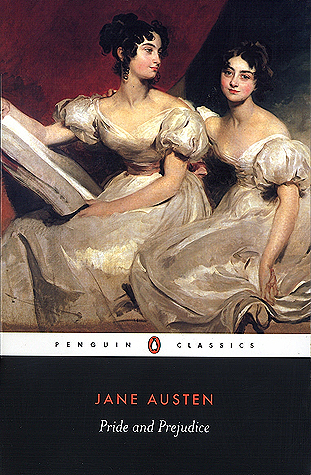
Book cover

Such an understatement … but of course the novel is full of statements like these, of satire and little ironies, of big and little insights. We also found interesting parallels, such as between those two ridiculous women, Mrs Bennet and Lady Catherine, who, said one member, are silly and illogical in different ways. Which brings me back to sweet Jane. Writing to Elizabeth to tell her about Lydia’s running off with Wickham, she says of her mother’s overwrought behaviour that “Could she exert herself, it would be better; but this is not to be expected.“But this is not to be expected” tells us that Jane knows her mother very well – and more, I’d argue, that Jane, while generous towards people, is not so taken in that she doesn’t see what’s what when it’s there in front of her. She just gives people the benefit of the doubt. I like that.

I fear this has been a self-indulgent ramble that hasn’t said much of substance, but it’s the best I can do right now!

Meanwhile, to those of you who do slow reads, why do you like doing them, and what you most get out of them?

William Trevor, The dressmaker’s child (#Review)

I knew, when Kim (Reading Matters) and Cathy (746 Books) announced their “A year with William Trevor” project, that I had a little book containing some William Trevor short stories but, could I find it? Nope. It was a little book after all. And then, voilà, just the other day while I was doing my book decluttering and packing, I came across it. It’s Pocket Penguin 22 from Penguin’s 70 Years celebration, and is called The dressmaker’s child, but it contains three short stories, so these will be my (very willing) contribution to the project. Two of the stories were chosen by the author from previous collections, but for the titular story this is its first appearance in book form.

Most of you will know of Trevor (1928-2016) but, in a nutshell, he’s an Irish writer of novels and novellas, short stories and plays. He won many literary awards in his life, and was particularly well regarded as a short story writer – making him right up my alley. In fact I have read one of his short stories before, early in this blog.

In her most recent Trevor review (of a novel titled The children of Dynmouth) kimbofo writes that it didn’t take her long to feel that she was in “familiar William Trevor turf in which he takes a seemingly ordinary character with eccentric traits and lets them loose in a confined setting”. This could apply to the short story, “The dressmaker’s child”, as it is about a young nineteen-year-old motor mechanic, Cahal, working for his father in a small town. He’s the only son in a family of girls – all of whom have left – and he is “scrawny” with a “long face usually unsmiling”. The story opens on him applying WD-40 “to the only bolt his spanner wouldn’t shift”, which sets a tone that perhaps other things are, or might be, locked up for our protagonist.

As he continues to work on the car, a young Spanish couple appears, wanting to be driven out to see the Sacred Virgin (Our Lady of Tears) who they believed – that is, they had been told so by a barman – would bless their marriage. Now Cahal knows the statue’s special spiritual status had been disproved and thus rejected by the church, but with a 50-euros job in the offing, he doesn’t actively dissuade them from their mission.

Trevor describes the trip, complete with hints of self-delusions, until on the way home Cahal’s car hits a child – the dressmaker’s child – who is known to run at cars and who, up till then at least, had never been hurt. With the Spanish couple kissing in the back of the car, and choosing avoidance over action, Cahal continues driving despite being aware of “something white lying” on the road behind him. Back in town, nothing is said about the dressmaker’s daughter for a few days, but Cahal remains uncertain. It affects his relationship with his young woman, and when the dressmaker herself starts to appear in town at his side, hinting that she knows what had happened, but is not reporting him, his fears and uncertainty increase.

This is not a thriller, but there is a plot and an ending (of course) so I will leave the story here. It’s nightmarish stuff, but very real too.

Trevor’s writing, his unfolding of story and character, is a pleasure to read. Take Cahal’s character, for example. From the stuck bolt (albeit does start to loosen, hinting at possibilities), he is depicted as rather gormless, bowling along, taking opportunities as they come without a lot of consideration – and somewhat different to his father who, during a conversation about the Swedish couple, shakes his head “as if he doubted his son, which he often did and usually with reason.”

This brings me to the point of the story which, as we are slowly brought to see, is the impact on Cahal of what he did or didn’t do – and the almost catatonic fear it engenders:

Continuing his familiar daily routine of repairs and servicing and answering the petrol bell, Cahal found himself unable to dismiss the connection between them that the dressmaker had made him aware of when she’d walked behind him in the night, and knew that the roots it came from spread and gathered strength and were nurtured, in himself, by fear. Cahal was afraid without knowing what he was afraid of, and when he tried to work this out he was bewildered. 

It changes his life – not in the way we might expect but in a way that shows with absolute clarity how avoidance and inaction can be as potent as anything else. Trevor, like my favourite short story writers, is less about drama and more about the complex realities of human interaction in which accommodations rather than simple resolutions are more often the go. I look forward to the next story.

William Trevor
“The dressmaker’s child”
in William Trevor, The dressmaker’s child
London: Penguin Books, 2005
pp. 1-20
ISBN: 9780141022536
(First published in The New Yorker magazine, October 4, 2004: available online)