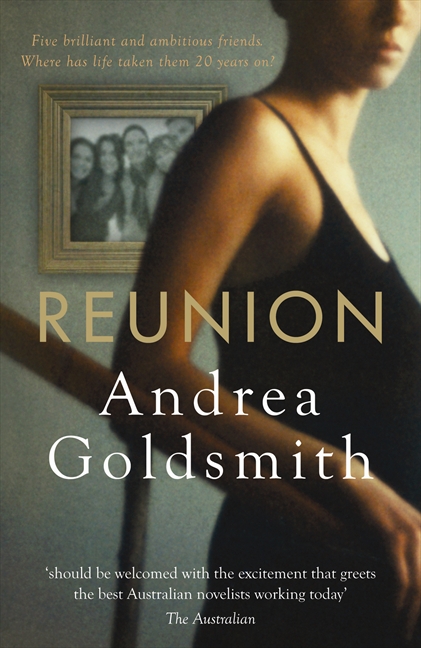
Andrea Goldsmith, Reunion

Andrea Goldsmith, Reunion bookcover
Reunion bookcover (Courtesy: HarperCollins Australia)

I wanted to love Andrea Goldsmith’s Reunion. And I expected to, as I remember enjoying the last book of hers that I read. But, somehow, I found it a bit of chore to read, though it did pick up towards the end. I think I understand why it was not listed for the 2010 Miles Franklin Award.

Friendships become swaddled in invisible protective layers and nothing short of a cataclysmic blow can break through to the inevitable stress points beneath.

The plot is fairly straightforward. Four university friends (three students, borderline baby-boomers and now in their mid-40s, and a lecturer, now around 60) find themselves all living in Melbourne again after some 20 years apart. All four had met in Melbourne, had moved together to England to continue studies and work, but had then gone their separate ways. At the beginning of the novel Jack, an academic and Islamic expert, is single and still in love with Ava; Ava, a novelist, is married to the unpopular Harry; Helen, a scientist, is a single parent; and Connie/Conrad, a philosophy lecturer, is on his third marriage but still philandering. Harry, who met them in England, is on the outer, but it is he who has engineered the reunion under the auspices of an organisation he has created, NOGA (Network of Global Australians).

The novel, then, is about this time of reunion: it explores who they are now, and the state of their relationships with each other. Sounds like the sort of thing that would interest me – Melbourne setting, characters with whom I would expect some level of identification, themes exploring love and friendship, and a writer whom I’ve enjoyed before. None of these, I should add, are essential for my reading enjoyment – I also like books set in exotic places and about very different characters – but familiarity often appeals too (doesn’t it?).

And yet, for me the book fell a little flat. It just didn’t feel quite original enough – in either ideas or language. It felt a little same-old-same-old. That said*, I found the characters interesting and convincing, although only one, Jack, changed in any significant way as the novel progressed. The narrative mode is multiple 3rd person subjective, with Jack’s perspective starting and ending it. It is told, chronologically, but with flashbacks to fill in the past. All this is well controlled and keeps the story moving nicely.

Goldsmith ranges across a lot of themes – love and friendship (of course); truth and fiction; secrets and memory; passion and obsession; modern communications; revenge and forgiveness; and science, ethics and politics. It is probably here that the novel palled most for me because many of these themes seem to go nowhere. Take the truth and fiction one. Those of you who read my blog know that I enjoy seeing this issue explored, but in this novel it’s raised, often with a nice level of irony, but is not really developed. For Ava, the novel writer, “there was no better vehicle for truth” than fiction, whereas for the scientist, Helen, “Ava’s work is only fiction – none of it is true”. Well, I thought, Goldsmith will unpack the ironies contained in these, but she doesn’t really. Perhaps that’s OK, perhaps it’s enough for us to notice them, but I wanted more.

At other times, the themes seem more like the author’s soapbox than ideas fully integrated into the story, albeit that the characters are her mouthpieces. Here, for example, is Jack expressing a rather stereotyped view of modern communication:

Whenever Jack looked back to his university experience and compared it with today’s university student life, so much seemed to have changed – even friendship itself. Without computers and mobile phones, face-to-face communication ruled the day.

The implication is that modern friendships are somehow less meaningful, but what does he really know and, further, what does the novel show us about it? Nothing really. Similarly, Helen rages about political interference in science, but the issue, while valid enough, seems a little fabricated in the context of the novel.

There are some funny set pieces, such as the young television make-up artist trying to hide Connie’s aging neck. Goldsmith does irony well – something I, as a Jane Austen aficionado, rather enjoy – and she peppers the novel with a lot of effective literary allusions – to Waugh, Wharton, James, and others. Moreover, there are some lovely descriptions, such as this one on Ava’s discomfort during her first weeks in England: “It was like being stranded on a sheet of clear glass with nothing but blackness underneath”. I’m not sure why I like this, but I do.

I’ve struggled to write this review, really, because there are things to like about this book. I decided to do a quick review of reviews out there and what I mostly found were positive reviews that each had some little reservation: “despite that minor misgiving”, “a rich and at times frustrating novel”, “despite a few stylistic glitches”, and “the novel was marred but not spoiled for me by …”. None though explored these reservations in any depth.

And so, rather than labour any more, I will close with the words of Helen’s teenage son, Luke. He says, in that simple, direct way that the young can do:

The truth can hurt. But that doesn’t make it less right.

The final irony is that Harry is hurt by a truth – but the truth he is hurt by and the real truth of the matter are two quite different things. And that, in the end, made the novel an interesting if not totally engaging read.

For a more positive perspective on this novel, check out Lisa’s at ANZLitLovers.

Andrea Goldsmith
Reunion
London: Fourth Estate, 2009
414pp.
ISBN: 9780732287832

*See my previous post on words to avoid!
And the Jane Austen bloggernaut just keeps rolling …

Late last year I created a blog for my local Jane Austen group and in the blog roll listed some of the well-known (among Austen circles anyhow) Austen blogs. Since then I have come across many bloggers like myself – such as, say, So Many Books and The Captive Reader –  who like Jane Austen but don’t focus their blogs on her. Nothing unusual about all this you might say, but then things start to get a little weird, almost as weird as the appearance of books like Pride and prejudice and zombies, because I recently came across another Austen-lover’s blog, this one a foodie. It’s called Pride and Vegudice and belongs to a vegan-lovin’ Austen fan. Now what would mutton-stew-and-roast-pork-eating Jane Austen think of that?

In the immortal words of another nineteenth century writer, it just gets curiouser and curiouser!

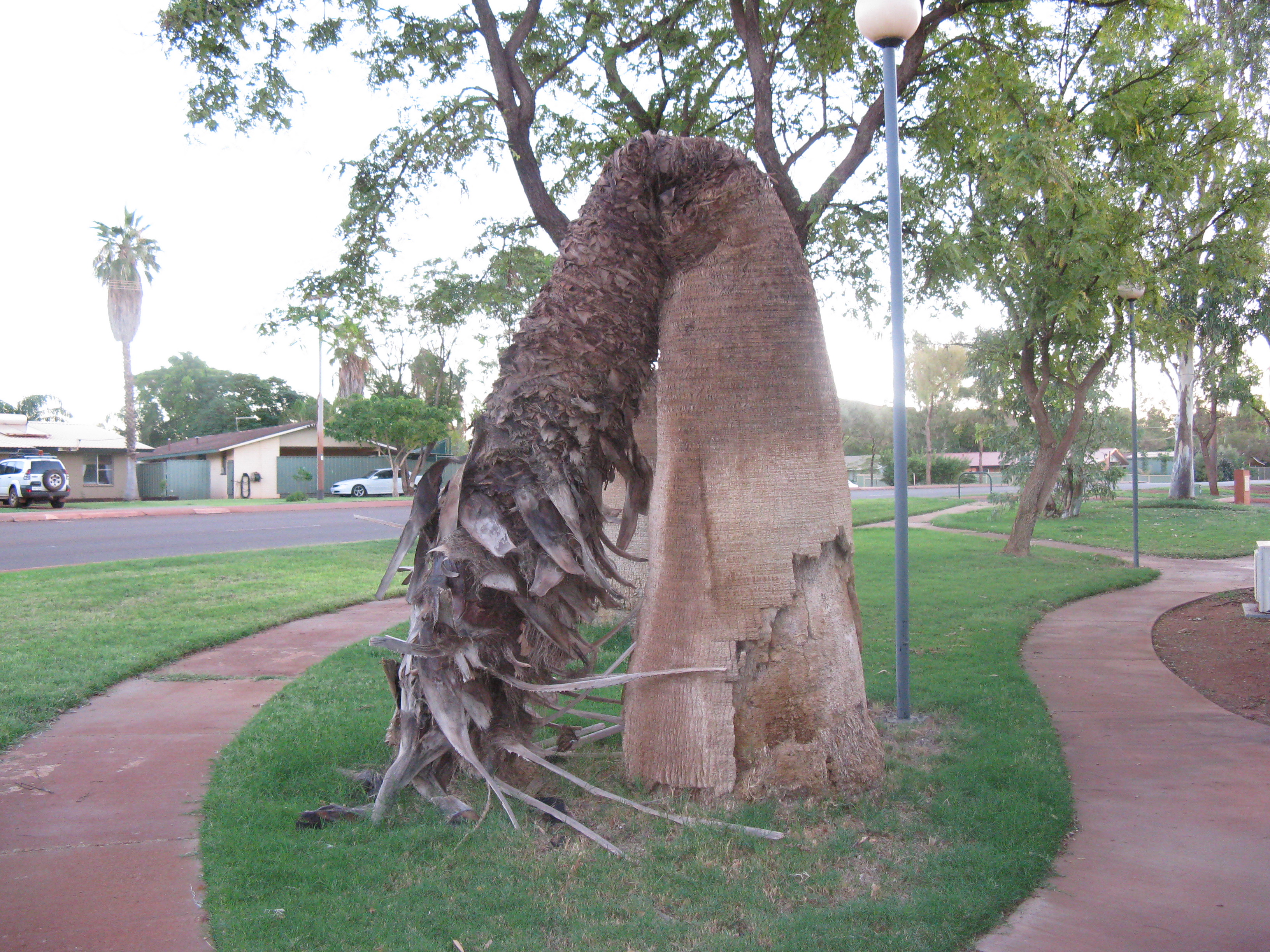
Fallen over palm

Almost as curious as this fallen over palm

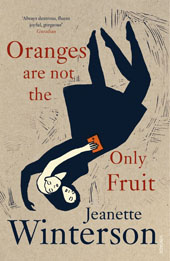
Jeanette Winterson, Oranges are not the only fruit

Winterson, Oranges are not the only fruit, book cover

Book cover: Used by permission of the Random House Group Limited

As I was reading Jeanette Winterson’s novella Oranges are not the only fruit, the question, rightly or wrongly, that was uppermost in my mind was “What is it with the oranges?” Is there something about oranges that I don’t know? Something specific that they symbolise?  I racked (wracked) my brain for something in my literary past that would give me a clue, but I came up with nothing. I guess she wanted to choose a motif to represent her mother’s limiting interactions with her and an orange seemed as good as anything? Certainly oranges are a recurring motif, and her mother regularly insists they are “the only fruit” until the end when a “pineapple” makes its appearance. I’m not sure, however, that this change heralds anything in their relationship other than compounding the paradoxes that seem to underpin this novel.

This is an intriguing book. It is a semi-autobiographical coming-of-age novel which tells the story of the first person protagonist, Jeanette, who was adopted by a religious zealot and is being brought up to be a missionary. However, around the age of 16 she discovers that her (homo)sexual leanings do not meet her mother’s (or her church’s) approval and, well, the plot is slim but perhaps I will leave it here nonetheless…

The novel exhibits some of the hallmarks of postmodernism, of which the most obvious is its metafictional elements, the way it contains stories within stories and plays around with the idea of stories in relation to “truth”. It all begins with Winterson naming the main character after herself and modeling that character’s life on much of her own, resulting in our being, from the start, teased by notions of what is “true” and “real”.

The book is divided into chapters titled appropriately, given Jeanette’s upbringing, by books of the Bible, such as Genesis, Joshua and Ruth. These titles are descriptive but also symbolic and even a little satirical; Jeanette, for example, has walls to confront just like Joshua. And the narrative, while roughly chronological, intermittently leaps from “reality” to “fantasy” as Jeanette tries to escape or make sense of her experience of life. Sometimes these stories – such as the Winnet story near the end – represent a parallel fantasy life for what is happening to her, but other times the reference point is more indirect, and draws on history and myth such as the King Arthur legend (and Sir Perceval’s search for the Holy Grail).

And this brings me to “story” and “history”. Readers of my blog will know that these notions, and the related one of “truth”, fascinate me when they are played out in fiction. I tend to enjoy reading books that deal self-consciously with them, that recognise the challenges and ambiguities inherent in them – and this is one of those books. Jeanette, the character, has some interesting things to say on these topics around the time the “truth” of her life, her sexuality, is becoming clear. She says in the short chapter titled Deuteronomy: The last book of the law:

Of course that is not the whole story , but that is the way with stories; we make them what we will. It’s a way of explaining the universe while leaving the universe unexplained … People like to separate storytelling which is not fact from history which is fact. They do this so they know what to believe and what not to believe. This is very curious …

And she goes on to discuss how history, the past, “can undergo change” because “the lens can be tinted, tilted, smashed”. She recognises that “perhaps the event had an unassailable truth” but we all see it through our own lens. Tellingly, near the end of the book, in the chapter titled Ruth, she runs into Melanie, her first lover (now married with a child):

…she [Melanie] laughed and said we probably saw what had happened differently anyhow … She laughed again and said that they way I saw it would make a good story, her version was just the history, the nothing-at-all facts.

Melanie, it seems, does not have the imagination to re-vision her “story”.

So, did I enjoy this book? Yes, pretty much. I like her attempt to make sense of what was a very particular childhood, and to try to draw from it some larger “truths” about how we might all manage the “stories” of our lives. It is not a straightforward read – and it is first novel with, perhaps, a little of the overdone in it. I’m not sure why, for example, she suddenly decides to include a little rant against Pol Pot. It usefully supports a point she is making about the uses of history, but it is odd in a story that is nowhere else political. Perhaps that’s just being post-modern!

In her introduction to my 1991 Vintage edition, Winterson claims to have written an experimental, anti-linear novel. Well, it is a bit of that I suppose, though not dramatically so. I would have called it reasonably linear – at least in the chronological sense – but perhaps the ideas in it do “spiral” (as she calls it) a bit in the way she toys, through the various narratives, with the idea of “story” and what it means to us. What it means, I think, is not always clear – we like stories but we cannot (perhaps need not) always draw conclusions from them. That is the paradox of our lives. As she says near the end

…not all dark places need light. I have to remember that.

Jeanette Winterson
Oranges are not the only fruit
London: Vintage, 1991 (orig. 1985)
171pp.
ISBN: 9780099935704

So you have a book collection…

… but how well do you care for it?

Bookcase

Too loose (Courtesy: OCAL via clker.com)

In a recent post, I reviewed (if you could call it a review) Leslie Geddes-Brown’s book titled Books do furnish a room. That book focused on the aesthetics of having a book collection, but what about how best to ensure its longevity? The April 2010 edition of goodreading includes an article by Darren Baguley on how to protect your book collection, which made me think a bit about my own book collection management. As a librarian/archivist (albeit retired), I am familiar with the issues of caring for books and paper but do I really practise what I have preached over the years? Hmmm … well, not completely.

So, what should we do?

  • Firstly, we should look out for the three enemies of paper: light, dust/pests, moisture level. Paper does not like too much light and it shouldn’t be too dry or too humid. We all know about pests, of course, but how often do you dust your books and check for bugs?
  • Secondly, what do you store your books on/in? Particle board bookcases, for example, can off-gas. Books need air circulation so should not be pushed to the  back of the shelf. Oh dear … what if you want (need) to double shelve!
  • Thirdly, how do you “stack” or “place” your books? Generally they should be stored upright but not too tightly nor too loosely. Oversize books are best laid flat because their spines cannot support them well, but they should not be stacked more than three high.

This is pretty general. If you want to know more, check:

  • The Northeast Documentation Center here
  • The Library of Congress here
  • The State Library of Victoria on packing and storing books here
  • The Institute of Conservation here

Storage, though, is only one issue. Is your collection insured? Do you know what you have? A simple spreadsheet will work well. However, I use LibraryThing: not only can I maintain an online record of my holdings – which I can mostly create by simply entering the ISBN – but I can export back to myself a csv file of my data so that if LibraryThing ever disappears I still have my data. Not all online services offer (or did when I chose LibraryThing) this functionality.

And then of course, can you find what you have? But I think I’ll leave it here. After all, you can lead a horse to water, but …

David Malouf, Ransom

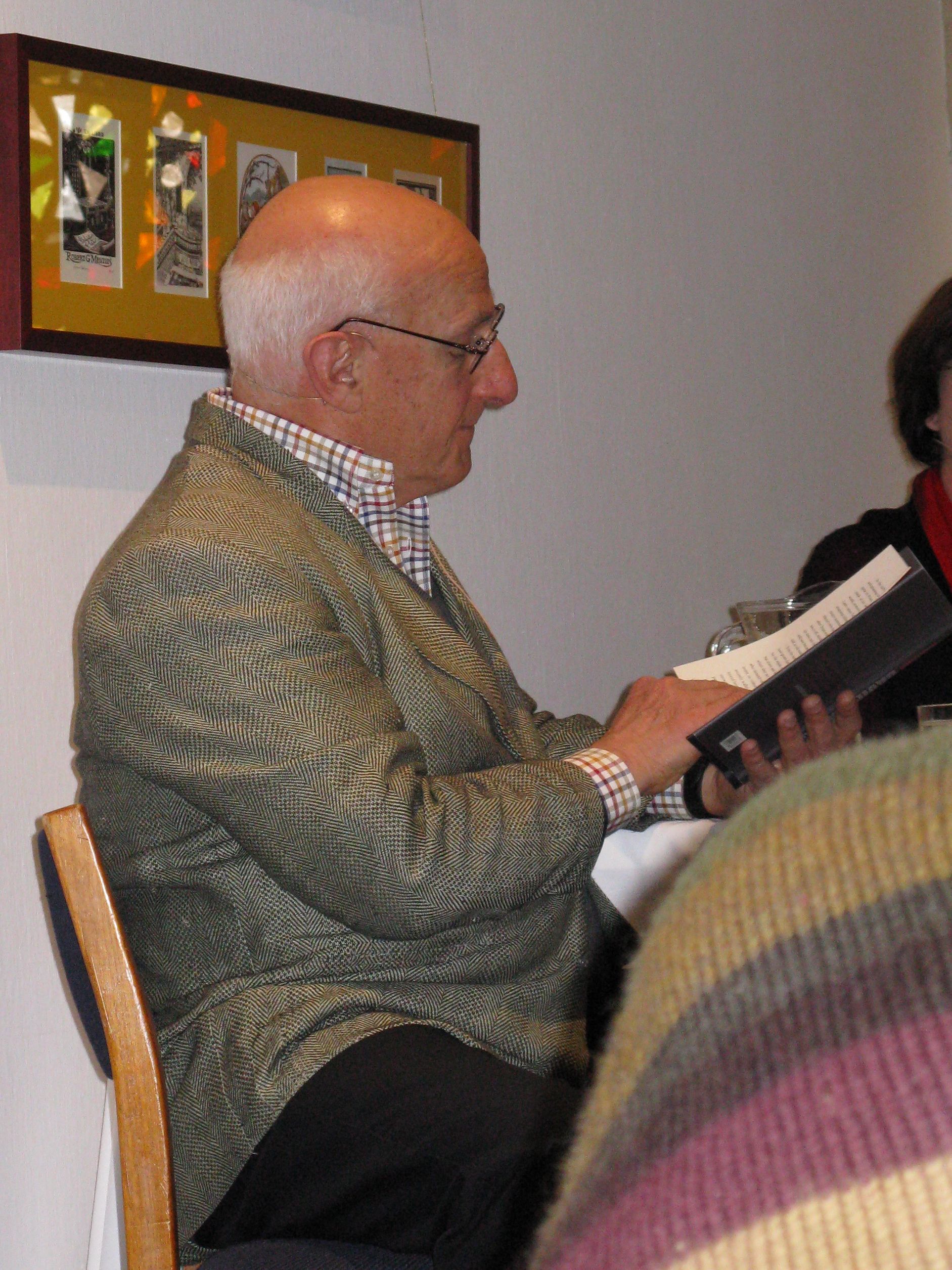
David Malouf reading Ransom

Malouf reading Ransom, National Library of Australia, August 2009

Words are powerful. They too can be the agents of what is new, of what is conceivable and can be thought and let loose on the world. (p. 61)

Is risk-taking only the province of the young? Do desperate times call for desperate measures? Or, more to the point, can the impossible be made possible? These are some of the questions that form the core of David Malouf’s most recent novel, Ransom.

WARNING: Spoiler if you don’t know the Iliad!

Ransom, as I wrote in my post last year, is Malouf’s re-visioning of the section of the Iliad (from Books 16-24) which chronicles Patroclus’ death at the hands of the Trojans, Achilles’ revenge killing of the Trojan prince Hector and his subsequent abuse of Hector’s body, and Priam’s visiting Achilles to ask for his son’s body back. Malouf says that he wanted to suggest a new kind of human, non-heroic consciousness, by re-visioning how Priam does this through deciding “do something extraordinary” (Malouf’s words). As Priam discusses with his wife Hecuba

I believe … that the thing that is needed to cut this knot we are all tied up in is something that has never before been done or thought of. Something impossible. Something new. (p. 58)

and

there might be another way of naming what we call fortune and attribute to the will, or the whim of the gods. Which offers a kind of opening. The opportunity to act for ourselves. To try something that might force events into a different course. (p. 61)

Ah, I thought, here is going to be Malouf’s vision (or recipe even) for our conflict ridden times. He wants to show, through Priam’s desire to do “something impossible. Something new” that  there is another way of managing conflict. But sadly, that is not what he is about. Sure, Priam does do something audacious – he enters Achilles’ compound as an ordinary man on a plain mule-driven cart driven by an even more ordinary man, the humble carter, Somax. But, I was disappointed, because after a lovely interval of humanity the story plays out as it always does with Achilles dying, and Priam being brutally killed by Achilles’ son. What I hoped Malouf was setting me up for wasn’t his goal at all. It was something both bigger and smaller. Smaller because he is not (really) making a political statement for our times, and bigger because he re-visions the story as one of humans rather than of heroes, and as one in which humans can be self-directed rather than at the whim of the gods. There is some irony here though because, as well as being accompanied by the humble Somax, he is for a while escorted by the god Hermes who facilitates their entry into Achilles’ compound. I did wonder about the meaning of this unlikely trio – common man, king, god – but it is in the original and so is not really part of a new message. That said, this is, as I am sure you are starting to realise, quite a complex book despite its small size – and I am only going to touch the surface here.

Some of the loveliest parts of the book are in fact the most human ones, such as the conversation Priam has with Hecuba when he reveals his idea, and Priam’s journey with Somax in which he learns to enjoy ordinary human (as against royal) pleasures. (“It had done him good, all that, body and spirit both”).

In the end after a beautifully rendered meeting with the conflicted Achilles, Priam achieves his goal and brings Hector’s body back for burial. It is a triumph of his vision, but

It is only a provisional triumph, of course; the gods are not to be trusted when they tilt the balance momentarily in your behaviour. And what sort of triumph is it to be bringing home the body of a son? But he has done something for which he will be remembered for as long as such stories are told …

Yes, he is “a man remade” because he has done a “deed that till now was never attempted”. Achilles too has been transformed (at least for a while): he is “visited by a lightness that is both new and a return”. But, and unfortunately there is a but, the story plays out as it always has…

So, what is it all about – besides, that is, the underlying themes relating to fathers and sons, grief, will versus fate, and humanity versus the gods? Perhaps it is simply this, that you can dare to try the impossible, and you can triumph. How big that triumph is, how long it lasts, is perhaps not the right question. The right question is the original one, “Dare I dream, and dare I do it?” It is also about the power of stories. Priam’s action will now be remembered “for as long as such stories are told”, while his killer, Achilles’ son, Neoptolemus, is not so lucky. The murder is a messy one and so “for him … however the story is told and elaborated, the raw shame of it will be with him now till his last breath”.

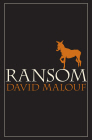
David Malouf Ransom

UK edition cover (Used by permission of the Random House Group)

In its rather ironic and paradoxical way, then, Ransom is redemptive … and is beautiful for all that. And yet, I do have this little nagging feeling that I’d have liked it to have been a little more. I did in fact want a recipe for our times, a suggestion that we can move our humanity forwards!

David Malouf
Ransom
North Sydney: Knopf, 2009
224pp.
ISBN: 9781741668377

Helen Garner, The children’s Bach

I’ve said a few times now that I rarely reread books, and then go on to write about something I’ve re-read. I must look like a liar, but the fact is that if I’ve liked a book so much that I’ve reread it it’s likely to find its way here. The funny thing is, though, that my reason for rereading The children’s Bach was not so much because I loved it first time around (though I did enjoy it) but because I read a critic who described it as one of the four best short novels – ever! It’s hard to ignore a commendation like that, isn’t it? And so I read it again …

It’s set in Melbourne, and concerns a couple, Athena and Dexter, who lead a self-sufficient life with their two sons, one of whom is severely disabled. This apparently comfortable life is disrupted by the arrival of Elizabeth, from Dexter’s past. With Elizabeth come her sister Vicki, her sometime lover Philip, and his prepubescent daughter Poppy. Through them, Athena and Dexter are drawn into a world whose ideas and values test the foundations of their relationship.*

This sounds like a pretty standard plot, but from it Garner draws something quite special, something tight and marvelously observed, and something, in the way that Garner has, that is brutally honest. This is the thing that I admire about her most – even though I don’t always agree with her: she doesn’t flinch from unpleasant “truths”. And so, in this book, she tackles the challenge of parenting a severely disabled child. While there are people who talk about the joy and meaning a disabled child brings to their lives there are others who feel quite differently. This is the shock at the centre of this book.

Garner introduces a sense of uneasiness right at the beginning with a photo of Tennyson and his family (why Tennyson, I’m not quite sure) which shows them together but not quite together and which is described simply as “the photo of a family”. The photo is old but Dexter keeps sticking it back up again. This beginning is followed by a fairly idealised image of Dexter and Athena as a loving, supportive couple – “she loved him. They loved each other” (p. 4) – and then Garner slowly reveals the cracks. Dexter’s idealisation of Athena is one cause, but the disabled child who holds Athena back, is another. The arrival of Elizabeth and her entourage – with their different and challenging ways of viewing the world – is just the catalyst.

Athena’s harsh attitude regarding Billy, her disabled son, is psychologically real, but is shocking to see in a character who is idealised as the earth-mother. Our readerly assumptions take a knock! Early in the story Athena looks at handprinted cards of places for rent:

… Athena was … scanning the window covered in handprinted cards on which people advertised rooms to let in their rented houses. Athena lived, for as long as it took to read a card, in each sunny cottage, each attractive older-style flat, spacious house, quaint old terrace, large balcony room with fireplace, collective household with thriving veggie garden. Her children dematerialised, her husband died painlessly in a fall from a mountain. What curtains she would sew, what private order she would establish and maintain, what handfuls of flowers she would stick in vegemite jars, how sweetly and deeply she would sleep, and between what fresh sheets.

This could be typical daydreaming but it’s pretty specific in detail (children dematerialised, husband dead): it’s Garner telling us that Athena feels trapped and is ready for change. Then Philip comes along and she is attracted to him; she’s not morally repulsed the way Dexter is by his behaviour: “Dexter lay rigid as a board … but Athena slept, and dreamed that she was in a garden….”.

And so, Garner writes, “The edifice crumbles”. The cracks have been there, in the edifice, but Dexter is (has been) oblivious to them. He’s a kind man but he’s pretty unaware of how other people feel; he expects them all to see life as simply, as happily as he does. But this is not the case – as he finds out …

All this is told in tight, expressive language.  Here is a delicious description of Dexter’s mother:

Like many women of her age whose opinions, when they were freshly thought and expressed, had never received the attention they deserved, Mrs Fox had slid away into a habit of monologue, a stream of mild words which concealed the bulk of thought and knowledge as babbling water hides submerged boulders. (p. 101)

Garner focuses on the gap between appearance and reality, particularly regarding the problems of idealisation (of self and/or of other). Athena is idealised but is shown to have feet of clay; Dexter is also idealised and idealises himself – until his own fall from grace: “he was in its moral universe now, and he could never go back”.

We can read this book in two – not totally exclusive – ways. One is psychological and relates to the realisation of self, particularly for Athena. The other is social and relates to role definitions, again particularly for Athena in terms of the expectations of her as wife and mother. One of the things that Garner tends to do well, in fact, is explore the point where social expectations of how we should feel meet and often clash with our real emotional selves. We see this clearly in The spare room where the character Helen shocks us with her anger at her dying friend.

I have really only touched the surface of this book – there is the music motif to consider, and the conflict of values represented by the intrusion of Elizabeth and her entourage into Dexter and Athena’s world – but I have talked about some of the issues that grabbed my attention and that, I think, will do!

* This is, essentially, the plot summary I wrote a couple of years ago for the Wikipedia article on the book.

Helen Garner
The children’s Bach
Penguin Modern Classics, 2008 (first published 1984)
180pp.
ISBN: 0869140299

Librarians as writers

It is (almost) a truism that librarians harbour a secret (or not so secret, as the case may be) desire to be writers. It is, similarly, (almost) a truism that keen readers desire to be writers. Now, I am a librarian (retired) and a keen reader but I have never really had a desire to be a writer – well, let me clarify that, I have never really had a desire to write a novel, so those of you who want to write the Great (insert your nationality) Novel need fear no competition from me. But, am I letting the side down?

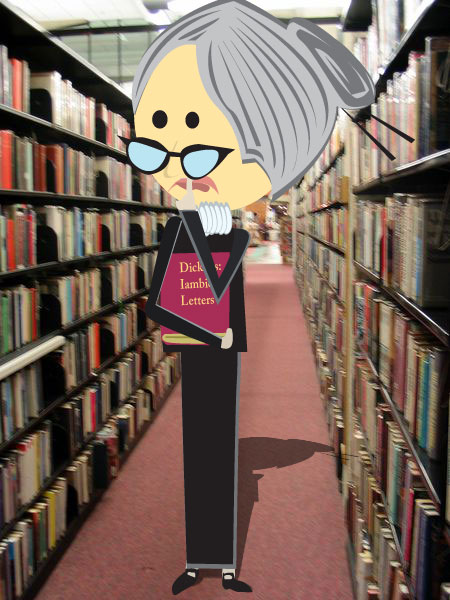
Stereotypical Librarian

Typical Librarian? Not! (Courtesy: yolaleah.wordpress.com. Hope this is part of her CC-SA content)

That said, as truisms go, many librarians have been (and still are) published authors and so I was interested when, in my inbox today, lobbed an email from Abe Books with a list of books by librarian authors. The authors are:

Admittedly, I haven’t read all of these authors, but they do make a pretty respectable bunch don’t they? Being surrounded by books clearly did them no harm. And, if Wikipedia is right, Marcel Proust, Lewis Carroll and Philip Pullman were also librarians at one stage in their careers.

Looking at this rather impressive line-up, I think it is just as well I decided to be a librarian and reader (not to mention blogger), and not an author! But don’t let me turn the rest of you off … someone has to do it.

How to write a (book) review!

If you go looking for advice on how to write a book review on the web, you won’t be looking for long. There are hundreds of sites which provide such advice or offer courses on how to do it. Reviewing 101 is alive and well out in cyberspace. Much of the advice, though, is step-by-step – first choose your book – and seems geared to students needing to write book reports. However, recently, Musica Viva published on the web some advice for people who’d like to enter their concert review competition. The advice comes from music reviewer Harriet Cunningham – and you can read it here.

It comprises useful, mostly common-sense, advice in the form of Dos and Don’ts. In summary:

The Dos are (adapted slightly for book reviewers): “Really” read the book; Listen to yourself (to your response); Tell a story; Beware of adjectives! (good advice that I should heed more); Be accurate (the author will rightly take offence and ignore all else you have to say, and nit-picking readers will love you!).

The Don’ts are: Be mean; Be obscure; Be trivial (such as, focus on the work, not your pet!); Worry.

Hmm … funny how all the “Dos” work quite well as they are without the “Do” heading, while the “Don’ts”, well, don’t? In fact, they look like more “Dos”, don’t (ha!) they?

Anyhow, I think these are pretty self-explanatory, but there are a couple of comments I’d like to make about the don’ts.

First one is: Don’t be mean.

I’ll start by quoting Harriet verbatim: “Writing a review puts you in an unusual position – you are passing judgement on a performance you could almost certainly not do yourself. It is not about pulling your punches, but do always respect the skill of the artists and the long journey they have taken to get where they are. Most importantly, if their performance disappoints, try to analyse why. It might not necessarily be wrong notes or poor ensemble. What was missing?”

Hmm… I certainly agree with not being mean, but I think I would have worded it a little differently. Something along the lines of: Be critical and honest – this means analysing what you like and don’t like, explaining why it does or doesn’t work for you, but don’t be rude or insulting.

I agree we should recognise (respect) the skill of the person whose work we are critiquing but just because we may not be able to do it ourselves doesn’t mean we should feel we can’t critique it does it? Of course, those people critiquing modern art with “even a five year old could have done that” seem to think they are well-placed to critique! There’s a happy medium in there somewhere, which I’m sure was Harriet’s point.

The second one is: Don’t be obscure.

Her message is that reviewers shouldn’t dumb down, but neither should they get into erudite discussions that will lose readers. She is, of course, pitching her advice to  lay reviewers writing for a general audience – which more or less describes most of we bloggers. However, this is an area where the ability to hyperlink helps we who review online: we can link to those more erudite points that we think might interest some of our readers but not others. Probably the best “rule” to follow here is: Know your reader, and pitch yourself at that.

This is all pretty obvious to most experienced bloggers, but you never know … Oh, and just in case, this hasn’t scared you off, the following may:

From my close observation of writers…they fall into two groups: 1) those who bleed copiously and visibly at any bad review, and 2) those who bleed copiously and secretly at any bad review. (Isaac Asimov)

A light interlude, but will Desert Book Chick approve?

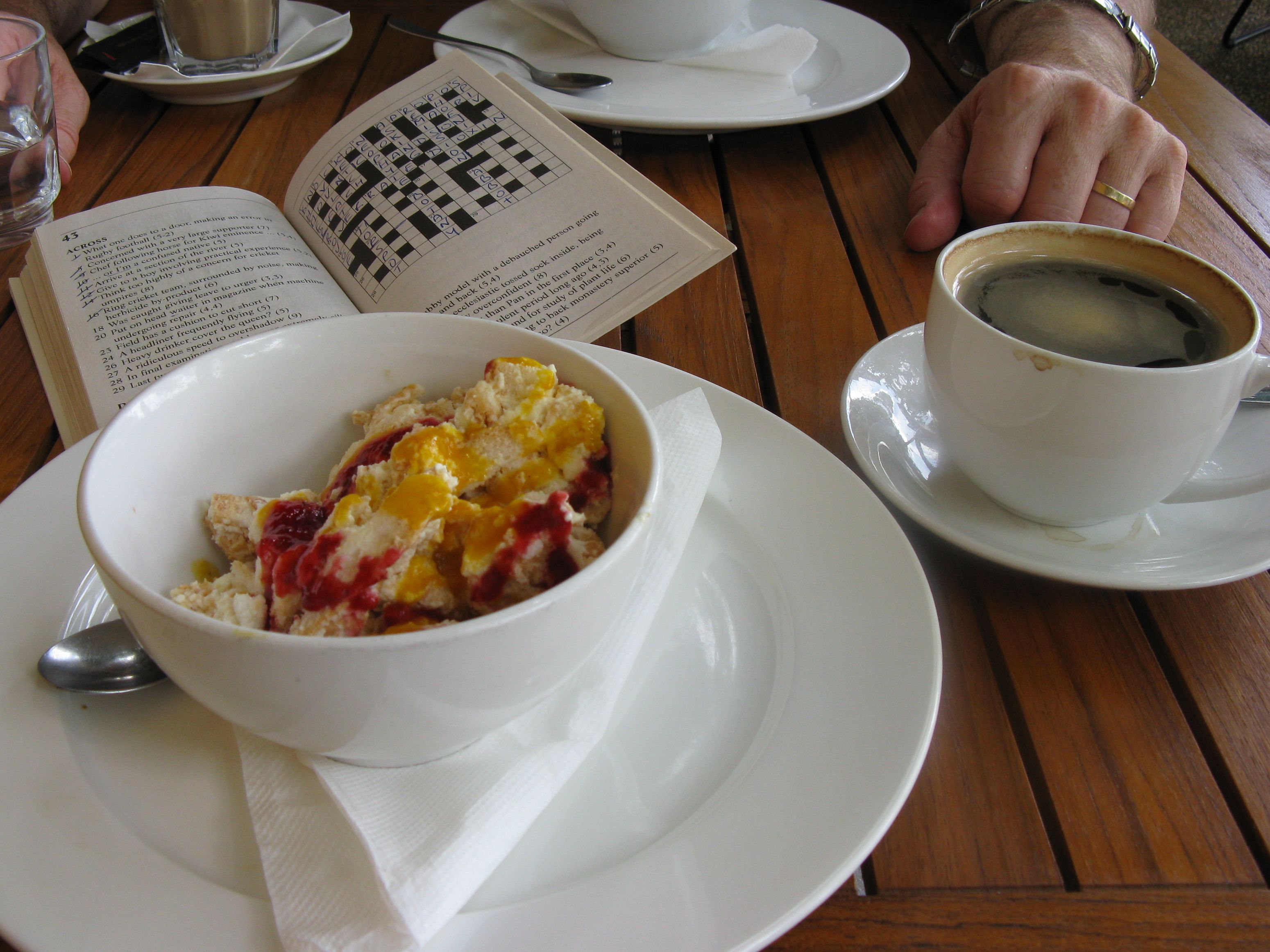
I have nearly finished my next book/s and so a review will be coming up any moment now, but in the meantime I thought I would post this photo:

Coffee, cake and crosswords at Pialligo Estate Winery

Coffee, cake and crosswords

Now, the thing is, Desert Book Chick recently wrote a post on the Five Things that turn her off (some) book blogs – and one of them is “Foodie/Book Blogs”. I rather like Desert Book Chick – even though SHE doesn’t like Jane Austen – but I wonder if I have now earned her ire forever because here is a foodie, sorta, post. Except, it’s not really.

Book bloggers, and online bookgroupies, often talk about their penchant for never being without a book, so that if they find themselves suddenly stranded on their own – say, on a train or bus, or in a cafe, or in a doctor’s waiting room – they will not be bored, and I’m no different. I ALWAYS have a book with me. But, sometimes, I’m not quite stranded. Sometimes I’m with Mr Gums*, and my mother taught me that it’s rude to read in front of another person. So, what to do? There are, after all, only so many topics you can find to talk about when you spend a lot of time together. What we do – and have done since our dating days way back in the mid 1970s – is do cryptic crosswords together. And so it was that some weeks ago we found ourselves lunching at the Pialligo Estate Winery. We’d had a good chat over lunch and consequently decided over our coffee and dessert to bring out the crossword book and voilà, the photographic evidence. Oh, and the cake, actually an interpretation of Eton Mess, was delicious, but in deference to Desert Book Chick I’ll not wax any more lyrically than that.

*Mr Gums. Since starting this blog 10 months ago, I have been struggling to find a way of referring to my “other half” or “significant other” or “DH”. (Take your pick.) Ms Textual uses The Vet, while Lisa at ANZLitLovers uses The Spouse. Both work nicely. On our daughter’s blog, Wayfaring Chocolate, Mr Gums is L. Engineer. I think I will use that from now on.

The Diagram Prize for the oddest title of the year

I know you’ve been waiting for it: the longlist for the Bookseller/Diagram Prize is out – and in fact was out in early February. You can find it in the Guardian article here. As no doubt some of you know, this prize began in 1978 as a way, says the Wikipedia article to which I’ve linked, of providing entertainment during the 1978 Frankfurt Book Fair.

What a hoot! Not surprisingly, many of the winners have been non-fiction titles. Last year’s winner for example was The 2009-2014 World Outlook for 60-milligram Containers of Fromage Frais. There was a readership for that? One of those longlisted for this year is the rather clever The origin of faeces. I wouldn’t want to give you all a bum steer (sorry folks!), but my vote’s with this one!

Right now I can’t think of any particularly odd titles that I’ve come across in recent times – but here are a few title awards that I’d like to give:

Hardest to get right

Winner: The Guernsey Literary and Potato Peel Pie Society
How many people have you heard get that one wrong? People seem to have trouble getting all of “Potato Peel Pie” in when they tell you about it.

Runner up: Extremely loud and incredibly close
I have a friend who referred to it in an email like this: “Foer’s Amazingly and Suddenly (I’m sorry I can’t keep that title straight)”. She made my day, and every time I think of Foer, I think of her and smile!

Runner up (yes, I have a tie): True history of the Kelly Gang
People will start it with “The”!

Most appealing

Winner: An artist of the floating world
I know, this is a title in translation, but every time I hear it my spirit lifts and just, well, floats…

Runner up: It’s raining in Mango
Because we (here) need rain and I love mangoes. I rest my case.

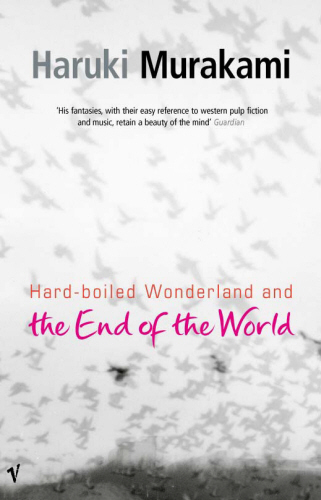
Haruki Murakami, Hardboiled wonderland and the end of the world

Cover image, used by permission of The Random House Group Ltd.

Funniest

Winner: The man who mistook his wife for a hat
A rare non-fiction entry in my list – and a very serious topic – but a worthy winner nonetheless.

Runner up: Hard-boiled wonderland and the end of the world
Not laugh out loud funny so much as bizarre. It also vies for “hardest to get right” honours too.

I could go on, making up more categories as I go but that would be too silly.

Titles are important –  though I wonder how significant they are to the success of a book, particularly for a lesser known author? Some years ago there was an article in the Sydney Morning Herald titled “What it takes to title a book”. In it Julian Barnes says:

“If I had a euro for every book title that copies the formula of Flaubert’s Parrot, I’d be a rich man,” he says, citing the examples of Pushkin’s Button and the recently published Audubon’s Elephant.

The article is fascinating, ranging over such issues as titles and commercial success, author versus publisher’s role in titling, working titles, duplicate titles, words like “midnight” that have their own “magic title buzz” – and so on.  According to the article – and many of you Fitzgerald fans will know this – F. Scott’s title for The great Gatsby was Under the red white and blue because it was about the American dream. His publisher had other ideas, and the rest as they say…  Similarly, Jane Austen afficionados are well aware that her first title for Pride and prejudice was First impressions.

What’s in a name? Plenty, it seems… Do you have any favourite titles? Or favourite title stories?