Christina Stead, Introduction: Ocean of story (Review, possibly)

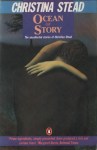
Christina Stead, Ocean of storyI am so glad Lisa (ANZLitLovers) has given me an excuse, her Christina Stead Week, to finally pick up Ocean of story: The uncollected stories of Christina Stead. I bought this book, in 1991, from a sale table for all of 98 (Australian) cents! What a bargain. I then popped it on my Australian literature TBR shelves, where it has sat, and sat, and sat – until now.

Before I get to it, though, I must confess that this post’s title is a bit of a lie. Christina Stead just called this story “Ocean of story”, but RG Geering, the editor of this “uncollected” collection, made it the Introduction to the book. I decided that I could use this to differentiate in my post title that the post is just about this introductory story. Fair enough?

Now to the overall collection. I am on record as stating that I don’t read introductions to books before I read the book itself. I would in fact prefer these “introductions” to be called “afterwords” and placed at the end. And that’s what Geering has done here except, being perverse, I’d rather that for such a “curated” collection it had been at the beginning! Consequently, I didn’t see it until I’d read the first story and, finding it a little unusual, wondered why there wasn’t some sort of editor’s introduction. So, I went looking. And there, at the end, was his Afterword!

Geering writes that the book

brings together for the first time most of the short prose writings that appeared in various places (journals, magazines and newspapers) outside the thirteen volumes of fiction published during her own life, along with other unpublished pieces found among her personal papers after her death.

And then he says that he has grouped the pieces “according to their settings and contents rather than chronologically”. In this way, they will “follow the contours of [her] somewhat wandering life.” Then, right towards the end of his Afterward, he finally describes the opening piece: it’s

a contribution to ‘The International Symposium on the Short Story’ in Kenyan Review, 1968 … [and] is a highly personal essay, rather than a conventional article.

And that is exactly what it is, a “highly personal essay”, one that, by its end, has given us a “highly personal” understanding of what stories, and particularly short stories, meant to Stead. It starts:

I love Ocean of Story, the name of an Indian treasury of story; that is the way I think of the short story and what is part of it, the sketch, anecdote, jokes cunning, philosophical, and biting, legends and fragments. Where do they come from? Who invents them? Everyone perhaps. Who remembers them so that they pass endlessly across city life? I know some of those marvellous rememberers who pass on their daily earnings in story; and then they are forgotten to become fragments, mysterious indications. Any treasury of story is a residue of the past and a record of the day.

I love the open-endedness of her conception. It’s a free-flowing one that allows stories to take all forms. She goes on to say that “what is unique about the short story is that we all can tell one, live one, even write one down.”

Then she turns autobiographical, starting with her childhood with her father. She was, she says, “born into the ocean of story, or on its shores”, the daughter of a “lively young scientist”. He

told his tales. He meant to talk me asleep. He talked me awake.

Ha, the impact of stories on an imaginative child, which Stead clearly was. He told her stories drawn from his zoological work, and “stories of the outback…and even a few historic events.” But then comes the important thing – the thing that is important to all who read – that is, what stories do for us. She writes that the thousand stories she heard between two and four and a half

formed my views – an interest in men and nature, a feeling that all were equal, the extinct monster, the coral insect, the black man and us; and another curious feeling in me, of terrestrial eternity, a sun that never set.

This feeling came via her father’s nature-related stories which taught her that while death was necessary, there was always “a frail print” left. However, the storytelling – these times that allowed her “to see the unseen” – ended when she was four and a half and her father remarried. The magic was imprinted by then though!

“the million drops of water”

Indeed, she sees stories as “magical”. You only need for someone to say, she says, “Here’s a story; it happened to me” and all will listen. We seek stories – even those “twisted, inferior, cramped, and sterile stories on TV” – because we hope to recognise and “have explained our own existence”. She’s right – on both superficial (what am I doing) and deeper, more psychological (who am I) levels – don’t you think? She continues:

It isn’t necessary that these stories should be artistic or follow formula or be like Chekhov or the last metropolitan fad, or anything. The virtue of the story is its reality and its meaning for any one person: that is its pungency.

She argues that while the “masterpiece” might be appropriate for professionals, “the essential for us is integrity and what is genuine.” She then, interestingly given she wrote this in 1968, harks back to stories of the 1930s:

not all are memorable (some are) but all record the realities of the days when America was suffering and looking for a way out and thinking about its fate; and – look at those same today – they are a vivid and irreplaceable memento. That is what is best about the short story: it is real life for everyone; and everyone can tell one.

In other words, “the story has a magic necessary to our happiness”! We seek “the powerful story rooted in all things which will explain life to us”. I love all this. It is such an argument for the importance and value of the arts.

Stead concludes by telling a story about a group near London that she once joined. All were asked to stand up and tell a story, and

everyone, those stuffy and snug people came to life, became mouths out of which bubbled stories poor and ordinary or before unheard of.

There it was, she says, “the ocean of story”. And this happens everywhere, anytime. So,

The short story can’t wither and, living, can’t be tied to a plan. It is only when the short story is written to a rigid plan, or done as an imitation, that it dies. It dies when it is pinned down, but not elsewhere. It is the million drops of water that are the looking-glasses of all our lives.

I classed this post as “(Review, possibly)” because I haven’t really written a review. Rather, I’ve described/shared Stead’s attitude to stories – and to story-making and storytellers. I love her egalitarianism, even when describing stories that are “poor and ordinary”; I love her flexible idea of what makes a story; I love her chatty, idiosyncratic style; and most of all I love her passion for the importance of stories (particularly short stories) to our lives. I look forward to reading at least some of those in this book.

AWW Logo 2016Christina Stead
“Introduction: Ocean of story”
in Ocean of story: The uncollected stories of Christina Stead
Ringwood: Penguin Books, 1986
552pp.
ISBN: 9780140100211
Bruce Pascoe, Dark emu, black seeds: Agriculture or accident? (Review)

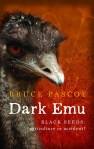
Bruce Pasco, Dark emu

Indigenous author Bruce Pascoe’s Dark emu, black seeds: Agriculture or accident? was my reading group’s October book, and a very interesting read and discussion it turned out to be. It’s not a simple book to discuss and really got us thinking, eliciting a variety of responses, though we all agreed with Pascoe’s basic premise that we Australians need to revise our understanding of, and beliefs about, Australia’s history. How could we not?

Publisher Magabala’s website says Dark emu

argues for a reconsideration of the ‘hunter-gatherer’ tag for pre-colonial Aboriginal Australians and attempts to rebut the colonial myths that have worked to justify dispossession.

Pascoe, they continue, contends that indigenous “systems of food production and land management have been blatantly understated in modern retellings of early Aboriginal history”.

A case to be argued

Dark emu is, then, a book that is determined to argue a case – and herein lies its challenge. In his Introduction, Pascoe sets out his main thesis which is that Aboriginal economy was “much more complicated … than the primitive hunter-gatherer lifestyle we had been told was the simple lot of Australia’s First People”. He asks:

Could it be that the accepted view of Indigenous Australians simply wandering from plant to plant, kangaroo to kangaroo in hapless opportunism was incorrect? (p.12)

Now, there are a couple of things here that disconcerted me. Firstly, emotive language like “hapless” doesn’t help when you want to present a logically argued case. And, anyhow, “hapless” is not a word I would ever apply to hunter-gatherer societies. Being hunter-gatherers doesn’t, to my mind, mean they don’t know their environment and don’t use this sense and knowledge in their hunting and gathering. But secondly, I didn’t comprehend his argument that the early settlers had no legitimate right to seize the land because Aboriginal Australians were practising agriculture:

In denying the existence of the economy they were denying the right of the people their land and fabricating the excuse that is at the heart of Australia’s claim to legitimacy today. (p.17)

Arguing this seemed to me to imply the corollary that if indigenous Australians did not have this economy, if they were indeed simply hunter-gatherers, then taking the land would be legitimate? But surely the fundamental truth is that, regardless of how indigenous people were living and using the land, it was their home and they had a right to be treated as the owners? Being on the path to sedentism, practising agriculture and aquaculture, didn’t, in my mind, make their ownership of the land more legitimate. Did it? I needed to understand this a bit more so, unusually for me, I set off looking for discussions of the book before completing my review, and I found the answer.

It was in a discussion of the book by Amy McQuire at NewMatilda.com. McQuire wanted to know why Australia had “so readily embraced” Dark emu, and whether it meant Australians must now “embrace the issue of sovereignty and treaty”. She quotes Professor of Law Megan Davis (from It’s our country: Indigenous arguments for meaningful constitutional recognition and reform):

“It mattered whether claiming a territory was done by settlement or whether by conquest and cession, because each had differing implications for the reception or not of British law.

“Settlement occurs when the land is desert and uncultivated and it is inhabited by backward people.

“Conquest means that it is a forcible invasion of occupied land and cession means that there is a treaty over occupied land. In the case of conquest, the laws of people conquered apply until the Crown or other foreign power laws apply, and in regard to cession, a treaty is entered into but the Crown or foreign power abrogates it.”

She writes “When lands are cultivated, then they are gained through conquest or they are ceded by a treaty”. And when lands are conquered or ceded, it still has laws of its own.

“Until the Crown asserts sovereignty and actually changes them ‘the ancient laws of the country remain’.”

Ah, so now the penny dropped. It’s all about the “law” (European law, that is), not about “reason” or “logic”. Pascoe makes reference to “Australia’s claim to legitimacy”. He discusses the way colonisers can fabricate history and be reluctant to credit colonised peoples (e.g.. p.61) for their achievements, and in so doing underrate sovereignty. But it didn’t properly click with me. I consequently didn’t see why he was arguing so forcefully for this “new” vision of pre-colonial Aboriginal Australian life. I was reading it more as an interesting, and yes very important, contribution to our understanding of Australian history, and I was seeing it as a way of correcting the historical record, and therefore of restoring the “truth” and, critically, “Aboriginal pride in the past”. But I didn’t fully grasp the import of the distinction he was making (and why, accordingly, the odd emotive word or long bow crept in.)

Convincing the doubters

However, this little niggle didn’t stop my being thoroughly engaged by the book. I loved the way Pascoe interrogates records from the past, particularly the journals of explorers such as Charles Sturt and Thomas Mitchell, to prove that Aboriginal Australians* were developing a sedentary culture based on intensification of agriculture and aquaculture. They managed the land, “manipulating the landscape” to produce crops for harvesting, corral animals for hunting, and trap fish for capturing and spearing. They irrigated, they built wells and dams, they stored food for future use. They built dwellings and lived in village groups. And they had been doing so for thousands, if not tens of thousands, of years making them among the world’s earliest, if not the first, agriculturalists (depending on whose “dating” you believe).

Pascoe, however, doesn’t stop at his argument that they practised agriculture. He also contends that they practised it sustainably, using a variety of techniques, including what archaeologist Rhys Jones called “firestick farming”. He argues that there’s much about Aboriginal practices that we could learn and use today, and that modern Australian agriculture could be more sustainable, particularly in our environmentally-uncertain-climate-changing world, if we focused our efforts on Australian plants and animals.

The depth of Pascoe’s research is mind-boggling, and is perhaps partly explained by his comment in that NewMatilda.com article that academics had criticised his previous writing, which apparently used his own words. He decided “to use an authority that they respected … the explorers and the settlers… you know the ‘heroic’ first settlers.” (Oh dear!) But he also draws on a wealth of other research from anthropologists (like WEH Stanner), archaeologists (like Rhys Jones), historians (like Gill Gammage and Rupert Gerritsen), and others. The book is heavily but not intrusively footnoted (I do like a footnote!), and contains an extensive bibliography.

While I would never have called myself a doubter needing to be convinced, it is true that, for all my interest in the subject, my knowledge of indigenous history and culture was rather out of date. Dark emu should, really, be read by all Australians, and at 156 pages of text, it is not a big ask.

Several of my blogger friends have reviewed this book, including historians Janine (Resident Judge of Port Phillip) and Yvonne (Stumbling Through the Past), as well as teacher-librarian Lisa (ANZLitLovers) and biographer Michelle (Adventures in Biography).

* Terminology, terminology! I note that Pascoe mostly uses the term Aboriginals.

Bruce Pascoe
Dark emu, black seeds: Agriculture or accident?
Broome: Magabala Books, 2014
175pp.
ISBN: 9781922142436

Anthony Doerr, All the light we cannot see (Review)

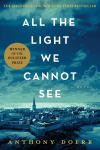
Anthony Doerr, All the light we cannot seeJust when you thought that there couldn’t possibly be another angle to writing about World War 2, up comes another book that does just that, like, for example, Anthony Doerr’s Pulitzer prize-winning All the light we cannot see. I had, of course, heard of it, but it wasn’t high on my reading agenda until it was chosen as my reading group’s September book. I wasn’t sorry we chose it, because I do, in fact, like World War 2 stories, and Doerr’s turned out to be an engaging one – warm, generous but not sentimental, and highly readable despite its alternating time-frames, locations and characters.

I’ve read several and reviewed some World War 2 novels and memoirs. Many have been about Jews and the Holocaust, such as Imre Kertesz’s Fateless, Hans Bergner’s Between sea and sky, Marcus Zusak’s The book thief, and two memoirs, Halina Rubin’s  Journeys with my mother and Anna Rosner Blay’s Sister, sister. A couple have been about the fighters, such as Alan Gould’s The lakewoman and Richard Flanagan’s The narrow road to the deep north. Some have drawn on the perspectives of children and young people – Zusak’s The book thief, Ursula Hegi’s Stones from the river and, of course, Anne Frank’s The diary of a young girl. Doerr’s book fits into this last group, but is different again. Zusak’s and Hegi’s girls are non-Jewish Germans, and Anne Frank is of course a Jewish girl in Amsterdam. These books focus on the Holocaust. Doerr’s does not. His interest is the personal experience of his young people – a blind French girl, Marie-Laure, born around 1928, and an orphan German boy, Werner, born around 1927. Their stories – Marie-Laure’s birth in Paris and flight with her father to Saint-Malo after Paris is occupied, and Werner’s childhood and youth in Germany followed by his war experience in Russia, Central Europe and France – are told in parallel until they inevitably meet.

Marie-Laure and Werner are nicely realised characters. They are ordinary young people trying to make a life for themselves in terrible times, but are extraordinary too. Marie-Laure’s childhood-onset blindness makes her initially helpless but she becomes a resourceful and imaginative young girl. Werner, the orphan, is a clever boy who develops a fascination with radios and things electrical. This leads him to a particular role in the war – tracking down partisan-resistance transmitters – that is different from most “soldier” stories.

All the light we cannot see is a big book. It has a wide, but not unwieldy, cast of characters, and a complex structure comprising two chronological sequences, within each of which the stories of our two young people alternate. This might sound difficult or confusing to read, but Doerr handles it well.

I’m not going to write a thorough review of this. Being a top-selling prize-winner, it has been reviewed widely. Instead, I’d like to share some of its themes, or ideas, because these are what interests me most. Before that though, I want to raise one issue. One review I read and some in my reading group expressed irritation at Doerr’s use of American idiom (such as people going “to the bathroom in their pants”). For some reason this sort of issue rarely worries me. Does that make me a bad reader? Perhaps. But it’s difficult, I think, to write in the language of another place and time, and when writers try to do it, it can feel forced. Some manage it (like Peter Carey’s True history of the Kelly Gang) and some compromise by relying on some well-placed words from an era. Generally, I’m happy for the author to use contemporary-to-them expression.

What you could be (Volkheimer to Werner)

What interests me most as a reader is not whether authors get these sorts of details right but questions like why is the author writing this, why has the author structured the story this way, what does the imagery mean, and so on. It is to the first of these that I’ll turn now. The novel’s overall subject matter is the obvious one – the tragedy of war, the way war destroys people’s lives – but within this are some interesting ideas.

One relates to logic and reason. Early in the novel, Marie-Laure’s locksmith father believes (or, perhaps, wants to believe) in logic:

Walk the paths of logic. Every outcome has its cause, and every predicament has its solution. Every lock its key.

This idea is reiterated in the book Marie-Laure is given by her father, Verne’s Twenty thousand leagues under the sea:

Logic, reason, pure science: these, Aronnax insists, are the proper ways to pursue a mystery. Not fables and fairy tales.

The opposing view, however, is put by Werner late in the war when he is tracking resistance transmitters:

Everybody, he is learning, likes to hear themselves talk. Hubris, like the oldest stories. They raise the antenna too high, broadcast for too many minutes, assume the world offers safety and rationality when of course it does not.

Logic and reason may work well enough in “normal” life, but during war they can stand for very little.

Somewhat related to this are the discussions about curses and luck. A major plot line concerns an ancient gem, the Sea of Flames diamond, which is said to carry a curse. It’s surely not by chance (ha-ha) that Doerr hides this stone behind the 13th door in the museum, and that his novel has 13 sections! Anyhow, here is Marie-Laure’s father on curses and luck. There are, he says:

no such things as curses. There is luck, maybe, bad or good. A slight inclination of each day toward success or failure. But no curses.

AND

Stones are just stones and rain is just rain and misfortune is just bad luck.

Later though, when her father has been arrested and Marie-Laure is scared and alone, she conducts an imaginary conversation with him:

You will survive, ma chérie.
How can you know?
Because of the diamond in your coat pocket. Because I left it here to protect you.
All it has done is put me in more danger.
Then why hasn’t the house been hit? Why hasn’t it caught fire?
It’s a rock, Papa. A pebble. There is only luck, bad or good. Chance and physics. Remember?
You are alive.

In almost every story I’ve read about war – fiction and non-fiction – luck has played a significant role. It’s one of the things that makes war so scary. You cannot expect reason to prevail.

Finally, related to these two ideas is that of choice:

Frederick [Werner’s friend at Schulpforta, the Nazi training school] said we don’t have choices, don’t own our lives, but in the end it was Werner who pretended there were no choices …

Frederick, in fact, chose to exercise his choice by refusing to follow orders and he suffered the consequences, while Werner did as he was told – at school and later in the field (“they do as they’re told”) and suffered the consequences in a different way. Late in the novel, Werner meets Marie-Laure:

He says, “You are very brave.”
She lowers the bucket. “What is your name?”
He tells her. She says, “When I lost my sight, Werner, people said I was brave. When my father left, people said I was brave. But it is not bravery; I have no choice. I wake up and live my life. Don’t you do the same?” 

These and similar discussions thread through the book. They remind us that in war survival is largely a matter of “luck”, that reason and logic will only get you so far when you confront the chaos of war, and that, perhaps paradoxically, you do have choices even if they are between two unappealing alternatives. The ultimate tragedy is that war destroys “what you could be” – all those talents, all those dreams, are subsumed into the business of survival.

This is not a perfect book. It’s a bit sprawling, trying to do a lot with imagery that I haven’t been able to completely untangle. And I wonder about the necessity of the final decades-later chapters. However, it is a page-turning read and produced a lively discussion in my bookgroup. I’m glad I read it.

Anthony Doerr
All the light we cannot see
London: Fourth Estate, 2014
531pp.
ISBN: 9780007548682 (eBook)

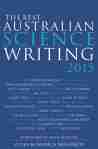
Bianca Nogrady (ed), The best Australian science writing 2015

Bianca Nogrady, The best Australian science writing 2015It was one of the more science-minded members of my reading group who tentatively suggested we add The best Australian science writing 2015 anthology to this year’s schedule. I’m not sure why she was uncertain because we’ve shown ourselves to be pretty open readers. Our main question when someone suggests a book is “Will there be something to talk about?” I can’t imagine a book like this lacking in things to talk about. And so we scheduled it.

Five editions of this anthology have been published, each with a different editor, so I was tickled to find that our edition’s editor was Bianca Nogrady whose thoughtful book about death and dying, The end, I reviewed a couple of years ago.

Now, an anthology like this can be read in different ways. You can read it sequentially, as I did because I know editors put thought into ordering their content. Nogrady did a careful job here, not butting articles on similar topics up against each other, but ordering them in a way that built on our understanding. Alternatively, you can pick and choose depending on your interests, though the titles don’t always give away their contents. What are science writers doing getting creative with their titling! Or, in this case, you could meander through the anthology by following the links to “like” articles provided at the end of each article. Presumably your perambulations would get you through them all at the end! This approach might be a fun (and enlightening) way to read it, but I was on a deadline, so …

I started at the engaging Foreword by Adam Spencer, the Australian comedian and radio presenter with a special interest in science and maths, and read on. I was quickly engaged and read it almost like a page-turner. Truly! Of course, there was the odd article that didn’t really grab me, and some grabbed me so much that I’ll not forget them in a hurry, but overall it was an enjoyable, stimulating read.

In her Introduction, Nogrady analyses the content. She says that while the 2014 anthology featured several articles “on our changing climate and its repercussions, this year there were an overwhelming number of submissions about our vanishing biodiversity, and what could be or is being done about it”. She argues that this “suggests a shift away from the big picture catastrophe of climate change – in the face of which many of us feel utterly powerless – towards a more specific and manageable concern”. She also notes that there were “a number of articles exploring the rapidly evolving field of robotics and artificial intelligence” and observes that “despite being a relatively small nation, we have long held our own in the global science and technology arena”. This is certainly borne out by the articles in the anthology. I’d add a third thread – medical issues. We probably don’t need an explanation for this one. Who is not interested in health and medicine!

Entrants for the annual Bragg UNSW Prize for Science Writing, named for the father and son who were Australia’s first Nobel laureates, form the core of the anthology. The 2015 winner was Christine Kenneally’s “The past may not make you feel better”. Excerpted from her Stella prize-winning book The Invisible History of the Human Race, it explores, from multiple angles, DNA testing and genomic counselling, using Huntington’s chorea as its reference point. The runners-up were Idan Ben-Barak’s “Why aren’t we dead yet”, a wonderfully lucid and surprisingly entertaining description of pathogens and the immune system, and Trent Dalton’s “Beating the odds” about the driven Australian man who has developed an artificial heart.

There are several reasons why I enjoyed the read, and I’ll dot point them to keep it simple:

  • subject matter: although I’m not at all scientifically inclined, I recognise the significant role science (or STEM) plays in our lives – in health, the environment, our buildings and transport, for a start. These essays, selected for their ability to communicate scientific issues well, were just what I needed to bring me up to speed, particularly in those areas I’m pretty ignorant in, such as robotics. James Mitchell Crow’s  prize-shortlisted article “Robots on a roll”, for example, introduced me to “big” robots working on the Brisbane docks and in Pilbara mines.
  • radical ideas: some articles challenged current thinking or practices. These included Brodie Smith’s “Playing God” on the idea that we should use triaging to manage the problem of vanishing species and Michael Sleaze’s also prize-shortlisted article, “Aliens versus predators: the toxic toad invasion”, which argues that this invasion, while not a good thing, is not the disaster we’ve believed it to be.
  • esoteric topics: by this I mean articles on topics I would never have known about had I not read the anthology. Lauren Fuge’s “The women who fell through the cracks of the universe” delves into late 19th to early 20th century astronomy to tell us about “Pickering’s harem“, the mostly unsung women (or “human computers”) who contributed hugely to “the first Henry Draper Catalogue, a catalogue of more than 10 000 stars classified according to spectrum, published by Pickering in 1890”. Of course, I loved that this article was as much about history as about science!
  • style: the articles varied in style and tone. There was even a poem or two. There were some written in first person, giving a personal perspective. In “How I rescued my brain”, David Roland took us on his journey of diagnosis, treatment and eventual recovery from his stroke. And there were some written with a light, humorous touch. Ian Lunt’s “Field guide to the future”, for example, provides a delightful comparison between traditional printed field-guides (I particularly love wildflower ones) and the new digital ones.

But here’s the common problem with anthologies and collections – how to do the book justice without naming every contribution. I think I’ll just share a few quotes, to give you a flavour, starting with Slezak on the toads:

The toads are spreading further and faster than anyone expected, and they do have a devastating impact when they first arrive in a region. But most animals are adapting to their presence surprisingly quickly, and some even benefit.

‘If you’re a frog, the toad is your superhero,’ says Shine. ‘You’ve got its picture up on the wall. This guy is coming in, he looks like a frog and is killing everything that attacks frogs. If you’re a green tree frog, what more could you hope for in life?’

[…] ‘I’ve gone to thinking it’s a good-news story about the resilience of ecosystem. (from “”Aliens versus predators: the toxic toad invasion”)

Here is Ian Lunt on the fact that printed field guides must use words (not audio) to describe bird calls:

With a budget for paint – one illustration per species – but none for sound, cheerful ornithologists turned to onomatopoeia: ‘Pee-pee-pee-peeooo, Wee-willy-weet-weet, It-wooa-weet-sip, Zzzt zzzt zzzt. Cher-cher-cherry-cherry, Wah-i-wah-i-wah-oo, Twitchy tweedle, Kupa-ko-ko, Lik-lik-lik’. Less cheerful colleagues followed suit: ‘Chop-chop, Four o’clock, Wide-a-wake, Walk to work. Want a whip? It’s for teacher. Tweet-your-juice, Sweet pretty creature’. (All real calls, I assure you.) (from “Field guide to the future”)

And thirdly, here is Idan Ben-Barak on the human immune system:

And so, an immune system must correctly identify a diverse array of harmful creatures and react to each one in its own special way. Oh, and you know what would be very helpful? If it could remember the pathogens it’s encountered before and store this information on file, somehow, so that it could make short work of them the next time they pop in. And it needs to be prepared for new invaders it’s never encountered before, because life is like that. And it needs to be prepared for completely new invaders nobody has ever encountered before in the history of humankind, because pathogens evolve over time. And it needs to be economical, so the body can keep it operational. And it needs to be fairly unobtrusive, so the body can keep functioning normally. And it needs to do it all very quickly, every time, or the body will be overrun, because pathogens multiply like the devil. (from “Why aren’t we dead yet”)

Hopefully by now, I’ve convinced you that this is a great read – and if I haven’t, well, you’re probably a lost cause! Either way I’ll leave it here.

awwchallenge2016Bianca Nogrady (ed)
The best Australian science writing 2015
Sydney: NewSouth Publishing, 2015
ISBN: 9781742242231 (ebook)

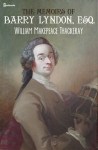
William Makepeace Thackeray, The luck of Barry Lyndon (#Review)

By the time I reached about the 30% mark (on my Kindle) of William Makepeace Thackeray’s classic novel, The luck of Barry Lyndon, I was reminded of a monologue by English comedian Cyril Fletcher which my father had on an old gramophone record. It’s about a “lunatic” (this was in less linguistically-sensitive times) who decided to write a novel. I won’t spoil the fun because you can watch Fletcher perform it himself on YouTube (it’s the first short story):

If you’ve watched it, you might see my point, because Barry Lyndon does go on and on and on, reporting adventure after adventure after adventure, with no apparent change or development in his character (except that he gets older!). I am exaggerating a bit, but …

So, why did I persevere? Firstly, it was my reading group’s June book, and I always like to do my homework; secondly, it is a classic that I haven’t read; and thirdly, I sensed satire, and was intrigued to see just where it was going. As a reading experience though it’s a challenge, one that was perhaps less so for contemporary readers in 1844 because they received it in serial form over 10 months or so. Still, I’m not sorry I read it.

What's in a name?

What’s in a name?

Anyhow, enough introductory patter. Let’s get down to it, starting with a little about the story. It’s a picaresque tale, a popular form in the 18th century in which the story is set, and spans many countries from Ireland and England to much of Europe. Its “hero”, Redmond Barry, pretends to be (believes, indeed, he is) a gentleman – he knows how to speak, dress, and duel – but, see how I enclosed “hero” in quotation marks? That’s because he is, in fact, an anti-hero – a conman and consummate rake (another great 18th century type!). Having lost the hand of his cousin, and then his money through gambling in Dublin, he ends up a soldier fighting the Prussians in the Seven Years’ War. While in Europe, he teams up with an uncle and together they manage to live the high life, gambling their way around Europe. “Luck”, of course, runs out, and he’s penniless again but he manages to essentially bully the wealthy and widowed Countess of Lyndon into marriage. However, things again go bad as Redmond Barry (now renamed Barry Lyndon) mismanages his wife’s money – and so the story continues to its inevitable conclusion.

The “luck” of Barry Lyndon?

One of the questions the book raises is that of “luck”. To what extent is Lyndon master of his own fate and to what extent does luck come into play. As one of the members of my reading group said, Lyndon is one of literature’s greatest justifiers. He can justify (excuse) just about everything he does, but he’s also the consummate unreliable narrator. He continually asserts the “truth” of his story, even though, early on, he’s told us that the “Irish gentry . . . tell more fibs than their downright neighbours across the water.”

The novel opens with:

Since the days of Adam, there has been hardly a mischief done in this world but a woman has been at the bottom of it …

And there it starts. Whatever happens to Lyndon is always someone else’s fault – nothing to do with his gambling, his inability to manage money, or his insensitivity to the needs of anyone but himself. There is a strong misogynistic thread through the novel – but this is part of the satire, which is common in picaresque novels. The targets are many, but a major one is idea of the 18th century gentleman, the sort of person Barry Lyndon proclaims throughout that he is but that he shows by his actions he is not!

The novel is, overall, a romp, albeit a rather tedious one at times, but it does have some things to tell us, besides what a “gentleman” should be. One of these, I think, is that it chronicles social change in Europe, the change from the chivalric life of aristocracy to a more bourgeois life of the middle classes. I’ll give one little example. Lyndon spends his life settling scores through the “gentleman’s” method, a duel (though to be fair he “pinks” people rather than kills them). However, late in the novel, as things close in, he is brought to account for one of his schemes. He writes:

Of course I denied the charge, I could do no otherwise, and offered to meet any one of the Tiptoffs on the field of honour, and prove him a scoundrel and a liar: as he was; though, perhaps, not in this instance. But they contented themselves by answering me by a lawyer, and declined an invitation which any man of spirit would have accepted.

We are talking late eighteenth century, you see – the time of the American War of Independence and the lead into the French Revolution. The times, they were a-changing.

Truth or fiction?

So, there’s the issue of Lyndon asserting the “truth” of his story, asking us to trust that he is the decent, good guy he says he is. His misfortunes, he says, are due to

the consequences of villainy in others, and (I confess it, for I am not above owning to my faults) my own too easy, generous, and careless nature…

Hmm … not quite the “faults” we readers would ascribe to this wife and child-beater, profligate spender, and keen duellist.

However, there’s another angle to this “truth” idea. It’s related to the idea that this is a “memoir”, not a novel. He writes:

Were these Memoirs not characterised by truth, and did I deign to utter a single word for which my own personal experience did not give me the fullest authority, I might easily make myself the hero of some strange and popular adventures, and, after the fashion of novel-writers, introduce my reader to the great characters of this remarkable time. These persons (I mean the romance-writers) …

Later, we find, in one of the occasional “footnotes”, which are part of the novel and provide the occasional corrective to Lyndon’s narrative:

[Footnote: From these curious confessions, it would appear that Mr. Lyndon maltreated his lady in every possible way; that he denied her society, bullied her into signing away her property, spent it in gambling and taverns, was openly unfaithful to her; and, when she complained, threatened to remove her children from her. Nor, indeed, is he the only husband who has done the like, and has passed for ‘nobody’s enemy but his own:’ a jovial good-natured fellow. The world contains scores of such amiable people; and, indeed, it is because justice has not been done them that we have edited this autobiography. Had it been that of a mere hero of romance one of those heroic youths who figure in the novels of Scott and James there would have been no call to introduce the reader to a personage already so often and so charmingly depicted. Mr. Barry Lyndon is not, we repeat, a hero of the common pattern; but let the reader look round, and ask himself, Do not as many rogues succeed in life as honest men? more fools than men of talent? And is it not just that the lives of this class should be described by the student of human nature as well as the actions of those fairy-tale princes, those perfect impossible heroes, whom our writers love to describe? There is something naive and simple in that time-honoured style of novel-writing by which Prince Prettyman, at the end of his adventures, is put in possession of every worldly prosperity, as he has been endowed with every mental and bodily excellence previously. The novelist thinks that he can do no more for his darling hero than make him a lord. Is it not a poor standard that, of the summum bonum? The greatest good in life is not to be a lord; perhaps not even to be happy. Poverty, illness, a humpback, may be rewards and conditions of good, as well as that bodily prosperity which all of us unconsciously set up for worship. But this is a subject for an essay, not a note; and it is best to allow Mr. Lyndon to resume the candid and ingenious narrative of his virtues and defects.] (Ch. 17)

I love the satire here of romance-adventure novels, epitomised by writers like Sir Walter Scott, and note Thackeray’s plea for what became the great social novels of the nineteenth century. (You have to wonder, though, at the idea of “Poverty, illness, a humpback” being “rewards”!)

And here I will end because many have written eloquently about this classic. All I wanted to do was to make a couple of points! Have you read Barry Lyndon, and did you enjoy it?

William Makepeace Thackeray
Barry Lyndon (orig. The luck of Barry Lyndon)
Goldfish Classics Publishing, 2012
[339pp.]

Monday musings on Australian literature: My Aussie reads of 1996

Today, I’m having a bit of fun – a little trip down memory lane, in fact. I was inspired in this by Canadian blogger Debbie (ExUrbanis) who recently wrote a post on her past reads. Ever on the lookout for ideas for Monday Musings, I leapt at this one. (I do a few ideas running around my head, but I’m going to let them gel there a little longer and go for a simple post today!)

Debbie posted about 1997, but I thought I’d go for the even two decades ago. The only trouble is that I didn’t start my reading database until 1998, so it took a little bit of sleuthing through other records to discover what I read in 1996. Consequently, my list is probably not complete, but is complete enough I think for today’s purposes. I’ll start, though, with a brief look at what books and authors were “trending” (to use current jargon) in 1996 literary Australia.

1996 in Australian literature

As I only want to provide a little context, I’m just going to look at some of the major awards. Seven books were shortlisted for the Miles Franklin Award, of which four were by women, but the winner was Christopher Koch’s Highways to a war. In other awards, Sue Woolfe won the Christina Stead Prize for Fiction with Leaning towards infinity, Thea Astley The Age Book of the Year with The multiple effects of rain shadow (my review), Richard Flanagan the Adelaide Festival Award with Death of a river guide, and Amanda Lohrey won Victoria’s Vance Palmer Prize for Fiction with Camille’s bread. 

Besides these authors, other Australian writers making their mark in the early to mid 1990s included, to name just a few, Helen Garner, Peter Carey, Roger McDonald, David Malouf, Drusilla Modjeska, and Frank Moorhouse. It’s encouraging to know that all of these particular writers are still writing and publishing twenty years later.

My 1996 Australian reading

I discovered a fascinating, though not completely surprising, thing about the Aussie books I read in 1996. They were ALL by women. Actually, there was one exception, John Marsden, but that related to my reading children’s and young adult books with my children.

This was in stark contract to my non-Australian reading where male writers far outnumbered the women. I read T Coraghessan Boyle, David Guterson, Kazuo Ishiguro, Henry James, Michael Ondaatje and Salman Rushdie. The only non-Australian women I read, besides a couple of children’s authors again, were Kate Atkinson and the Japanese writer Fumiko Enchi. Although overall this is probably fairly typical of my overall practice, it is a little unusual because I have always read Aussie males too – like, back then, Peter Carey, David Malouf, and Tim Winton.

Anyhow, here is my Aussie list for 1996 as best as I can ascertain it …

Helen Garner, Cosmo cosmolinoFiction (Adult)

  • Blanche d’Alpuget, Turtle beach
  • Helen Garner, Cosmo Comolino (shortlisted for Miles Franklin Award in 1993) (read again and reviewed for this blog in 2008)
  • Yasmine Gooneratne, Changing skies
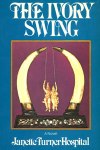
  • Janette Turner Hospital, The ivory swing
  • Sue Woolfe Leaning towards infinity (won the 1996 Christina Stead Prize for Fiction, New South Wales Premier’s Literary Awards)

Non-fiction

  • Jill Ker Conway, True north (Memoir)
  • Katie Holmes, Spaces in her day (History)
  • Pat Lovell, No picnic  (Memoir)

This is not a huge list, and is not, as I’ve already said, all that I read in 1996, but it contains most if not all of the adult Australian literature I read then. It was a time when I was working, and had two young children, so had little time and energy for reading. Even so, most of these books are still vivid in my mind.

janette Turner Hospital, The ivory swing

Janette Turner Hospital, The ivory swing

Janette Turner Hospital’s The ivory swing, published in 1982, was her first novel. I read several of her novels, before and after this, and most of them are still memorable. She’s such a powerful, evocative writer. The ivory swing, like many first novels, has a strong autobiographical element, drawing from her experience as a young wife in southern India. It won a significant Canadian award, the Seal Award for Best First Novel. Queensland-born, Janette Turner Hospital was, for several years, the Carolina Distinguished Professor of English at the University of South Carolina. Coincidentally, another writer I read in 1996, the also triple-named Jill Ker Conway, made her career primarily in the USA, where she was the first female President of Smith College.

But the book that has probably stayed with me most from this list is, surprisingly, a non-fiction work, Katie Holmes’ Spaces in her day. Subtitled Australian women’s diaries of the 1920s and 1930s, it grew out of Holmes’ PhD. I was fascinated by the stories of women’s lives – how they felt about their relationships, the way the single female relation would be expected to give up her own life when family needed help, how they managed washing day – because these were lives of my grandmothers and aunts. In my notes, still in the book, I comment that Holmes emphasises social constructs almost exclusively over other factors, particularly in her discussion on ageing where I suspect natural or biological issues are also at play, but this didn’t then, and still doesn’t, affect the power of this book, because the women’s voices are so strong and because, regardless of other factors, they were indeed constricted by the rules and expectations of their society.

Do you know what you read twenty years ago, and if so I’d love to know your standouts.

Charlotte Wood, The natural way of things (Review)

Charlotte Wood, The natural way of thingsWell, I wrote this week’s Monday musings on Australian dystopian fiction as a lead in to my review of Charlotte Wood’s award-winning The natural way of things, but I wasn’t expecting to get the perfect intro for my review! In the post’s comments, author and publisher Anna Blay pointed us to an article by Maria Popova in an online digest called Brain Pickings. The article, titled “The Power of Cautionary Questions: Neil Gaiman on Ray Bradbury’s ‘Fahrenheit 451,’ Why We Read, and How Speculative Storytelling Enlarges Our Humanity”, starts with this:

The important thing,” Ursula K. Le Guin wrote in contemplating the cultural role of speculative fiction and the task of its writer, “is not to offer any specific hope of betterment but, by offering an imagined but persuasive alternative reality, to dislodge my mind, and so the reader’s mind, from the lazy, timorous habit of thinking that the way we live now is the only way people can live.” In doing so, she argued, imaginative storytelling can intercept the inertia of oppressive institutions, perilous social mores, and other stagnations of progress that contract our scope of the possible.

I would agree that the thing is “not to offer any specific hope of betterment” but to jolt the reader into thinking about what is, what might be, if we do nothing. It’s certainly how I’d see most dystopian fiction I’ve read, including Charlotte Wood’s novel, but not being a big reader of speculative fiction I haven’t sat down before and articulated it.

So, what is it that Charlotte Wood wants to jolt our minds about? For those of you – overseas readers at least – who haven’t read or don’t know of it, the plot tells the story of 10 women plucked from their normal lives and transported to a nightmarish place in the middle of nowhere – referencing the mythology of the forbidding Australian outback? – where they are imprisoned behind an electric fence and controlled, labour-camp style, by two boorish men, bruiser Boncer and the preening Teddy. The women pass from disbelief and anger, through resignation, to a sort of acceptance and attempt to make the best of their situation. There are shades of Margaret Atwood’s The handmaid’s tale here and also, perhaps of William Golding’s Lord of the flies, but not derivatively. This is very much its own work.

But now, back to my question. Wood’s target is misogyny, and specifically the way it plays out through the scapegoating of women for their sexuality – whether for assaults that happen to them or for sexual activities they may engage in consensually (think affair with a politician or the flight attendant in a “mile-high” situation) but for which the man is let off while the woman is excoriated. Early in the novel each girl is given a “nickname” which “explains” why they are there such as “army slut”, “cabinet minister’s moll”, “airline girl”, “cruise girl” and “football girl”. You get the picture, I’m sure. The girls are also named. Wood does respect and individualise her characters, beyond just being types. There is one other woman in the picture, and that’s Nancy. She’s on the staff with Boncer and Teddy. She dresses as a rather grotesque nurse who looks after the so-called “hospital” – and represents those enabling women who often feel special but don’t realise that they too are under control.

I came to this book ready to love it. Although I’ve avoided reading reviews, I’ve not been able to help hearing all the accolades, and it sounded like a book and topic that would be right up my alley. It is, and I “enjoyed” reading it, but I’m having trouble defining and articulating my somewhat uncertain response to it. I love the heart, I love the desire to attack an issue that’s absolutely critical, I love the overall narrative concept, I was compelled to keep reading, and I thought the ending was powerful. So, why uncertain? I’ll try to tease it out a bit.

Menace?

There are a lot of characters – the ten captive women, plus Boncer, Teddy and Nancy – though Wood focuses on two young 19-year-olds in particular, Yolanda the “football girl” and Verla “the cabinet minister’s moll”. We get more into their heads. They are analytical about their situations and plan and act in ways to improve their situations. A cautious friendship develops between them. As well as being differentiated in this way from the rest of the group, they are also differentiated from each other by two facts: Yolanda wasn’t tricked like all the others into accepting the agreement that got them to this place, while Verla, who guiltily remembers “gratefully signing the fake legal papers”, believes that her “Andrew”, the cabinet-minister, still loves her. The other women are more problematic. We don’t get to know them well, but what we do see suggests that they have not cottoned on. They focus on finding ways to groom themselves, they reject Yolanda’s feral way of managing the situation, they fall on the fancy handbags at the end and willingly follow the new man who appears. They seem to have learnt little. But, perhaps that’s also the point. They have a right to be the young women they are. See, I’m talking myself into understanding this as I go …

And then there’s the men. They are scary, certainly, and brutal, particularly in the beginning:

So she didn’t see the man’s swift, balletic leap – impossibly pretty and light across the gravel – and a leather covered baton in his hand coming whack over the side of her jaw …

The man Boncer cast an aggrieved look at them, is if they were to blame for the stick in his hand …

But pretty soon we see that they, too, are, in a way, victims of the system. They’ve been fooled it seems into being there, on promises of bonuses, and are ultimately pathetic. I certainly don’t want to excuse them – they’ve made choices. However, as the supporting system seems to fail, they start to rely on the women’s ability to keep the show going. The women realise that these men don’t know what’s happening any more either. There’s an uneasy tension between captors and captives – and with that cracks start to show in the menace, albeit some menace remains.

Natural?

The writing is good. There’s even humour, such as tempeh-loving, yoga-doing but clueless Teddy. The novel is structured by the seasons, starting in Summer, moving through Autumn and ending, appropriately, in Winter. The story is told third person, mostly focusing on Yolanda and Verla. They’re engaging, though they are also pretty slippery to fully grasp. There’s a distance that we never quite penetrate. We “see” Yolanda’s strength and Verla’s self-deception, but we don’t, I think, see “into” them.

Wood uses effective recurrent imagery or motifs, particularly smells, rabbits, horses and birds. The opening line is “So there were kookaburras here”, suggesting some sort of normality. In her interview with Annette Marfording long before this book was written, Wood discusses using kites and kite-flying to suggest “flight and escape”, and then she says “I realise I have a lot of birds”, which I assumed implies that they too suggest “flight and escape”. In The natural way of things, birds also suggest the related idea of “freedom”, but when hawks appear, we see another side, that of predator and prey. All relevant to the book.

Then there’s the irony in the title, “the natural way of things”, because there’s nothing “natural” about what the book describes. The title appears in the text once in a paragraph that occupies its own page. It’s powerful:

What would people in their old lives be saying about these girls? Would they be called missing? Would some documentary program on the ABC that nobody watched , or one of those thin newspapers nobody read, somehow connect the thread to make them a story? The Lost Girls they would be called. Would it be said, they ‘disappeared’, ‘were lost? Would it be said they were abandoned or taken, the way people said a girl was attacked, a woman was raped, this femaleness always at the centre, as if womanhood itself were the cause of all these things? As if the girls somehow, through the natural way of things, did it do themselves. They lured abduction and abandonment to themselves, they marshalled themselves into this prison where they had made their beds, and now, once more, were lying in them.

The “natural” way of things! Referring back to Ursula le Guin, I’d say that Wood has presented here a “persuasive alternative reality”. Indeed, it’s not far removed from Wood’s inspiration: the Hay Institution for Girls to which “problem” teenage girls were sent in the 1960s and 1970s, and treated with great cruelty. But, who or what is the enemy? Looking at Le Guin again, this would be “perilous social mores” (and those who uphold them) – the fact that the scapegoating of women is still “allowed” to happen. There’s (a little) more awareness now, but this behaviour is not stopping, not by a long shot. All of us, I’m sure, recognise the recent inspirations for Wood’s “girls”. Anna Krein’s Night games (my review) makes an interesting companion read.

So, where do we go from here? Dystopian novels don’t have to give answers, indeed they rarely do, they “simply” shine the light. The light Wood has shone is, though, a very complex one indeed. I think I’ll be reading this one again when my reading group does it in July.

Lisa (ANZLitLovers) has also read it and has posted her comments plus links to other reviews.

awwchallenge2016Charlotte Wood
The natural way of things
Crows Nest: Allen & Unwin, 2015
315pp.
ISBN: 9781760111236

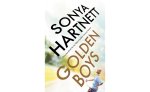
Sonya Hartnett, Golden boys (Review)

Sonya Hartnett, Golden boysAlthough Sonya Hartnett has written a large number of books, for children, young adults and adults, I’ve never read her, which is something I’ve been wanting to rectify. My opportunity came in May when my reading group scheduled her latest novel, Golden boys, for discussion. It was shortlisted for several awards last year, including the Miles Franklin Award – and has by now, I expect, been reviewed to within an inch of its life, but that’s not going to deter me!

You can tell, with Golden boys, that Hartnett is an experienced writer for young people. The book’s protagonists, the perspectives through whom the story is told, are all pre-teen. The three main voices are 12-year-old Colt, eldest son of the well-to-do Jensons, and almost 13-year-old Freya and 10-year-old Syd, children of the working class Kileys. The set up is that the Jensons have moved into a working class suburb for a reason that starts to become clear as the book progresses.

The novel opens with Colt:

With their father, there’s always a catch: the truth is enough to make Colt take a step back. There’s always some small cruelty, an unpleasant little hoop to be crawled through before what’s good may begin: here is a gift, but first you must guess its colour.

It’s a powerful beginning, and we’re right there. The scene is played out through Colt’s eyes. He’s been through these games before and he doesn’t want to play. He’s starting to realise there’s something darker behind his father’s generosity: “His father spends money not merely on making his sons envied, but on making them – and the word seems to tip the floor – enticing. His father buys bait.”

The second (unnumbered) chapter starts with Freya:

Freya Kiley has started to see things she hasn’t before. Until recently she has lived as every child must: as someone dropped on a strangers’ planet, forced to accept that these are the ways of this world.

But, on the next page we read

Now she’s older and smarter, and she’s starting to see that the world is a castle, and that a child lives in just one room of it. It’s only as you grow up that you realise the castle is vast and has countless false floors and hidden doors and underground tunnels … And as you get older, you’re forced out of the room, whether you want to go or not. Freya wants, with urgency, to go.

This lovely castle motif recurs through the novel. Anyhow, here we have two young people on the cusp of adolescence living in families which are headed (because this is the late 1970s when men still tended to “head” the family) by two problematical fathers – the superficially charming, generous but creepy Rex Jenson, and the detached, sometimes violent Joe Kiley. You have probably guessed what some of the themes are … but they are tied up with the plot, and …

I’m not going to talk about the plot because I have other issues to explore. I’ll just say that it builds slowly, inexorably, as the neighbourhood children gravitate to the well-endowed Jenson home, until we reach the climax . It’s expected – has been cleverly foreshadowed – and yet is surprising in exactly how it plays out. It’s painful, but clever too in resolving little while exposing a lot.

Adult? Young Adult?

Rather, I want to talk about voice and audience. When writers write in the voice of young people, or through the eyes of young people, there’s an immediate assumption, fear even, that the work is for young adults, but this isn’t necessarily so, though it can probably make such books cross more easily between adult and young adult readers. This is where Hartnett’s adult-marketed Golden boys sits. Its subject matter extends beyond a narrow focus on teenage experience, like first romantic relationship, first sexual experience, feelings of alienation or otherness, conflict with parents, and so on, to exploring the experience of awakening awareness to the reality of adult life. Here – this awakening – is the focus of Colt and Freya’s consciousness. How are they going to make sense of the flawed adult world they are now seeing? How are they to move through it? Will they survive their loss of innocence (and we are not talking sexuality here, but that deep shock when your view of the world, your sense of safety, is shaken to the core.) I should reiterate here that there are other youthful perspectives, including that of 10-year-old Syd who provides a neat counterbalance to Colt and Freya. At 10 he still has the self-focus of a child, not yet aware of “adult” life. What he wants for Christmas, whether he can still swim in the Jensens’ pool, and whether being a gangster would be a good career are what occupy his mind!

Hmmm, I’m not sure still that I’ve explained why this is a book that should interest adults – those adults who think, perhaps, “been there, done that”. It’s relatively easy to argue that the book, meaty though it is, would appeal to young adults, but why would a book in which all the perspectives are those of young people appeal to adults? Well, first there’s the subject matter, which addresses pedophilia and domestic violence. Just because we see these events through a young perspective doesn’t mean the exploration is superficial or irrelevant to an adult reader. Indeed, this perspective adds weight, because we see what the children see and the impact on them, how they try to process what they actually see, and how they comprehend the behaviour and responses of the various adults. When traumatic things happen in “real” life, it’s the adults we see and hear – the adults who are interviewed on the radio or television, the adults who write the memoirs or exposés. Hartnett presents the other side, the missing voices of the young – and I found her young people to be psychologically convincing. They are aware, perceptive and curious – but their understanding has limits, such as Freya’s taking the full blame for her parent’s situation because she was the reason they married. Hartnett, though, never sells them short, and neither I think should we.

And then there’s the writing. The imagery fits beautifully. There’s the castle motif for Freya, and a subtle but ominous repetition of the colour “black” from that bike in the opening scene to local bully Garrick’s fringe being described in the last scene as “blown back from his forehead like black grass on a sandy dune”. Descriptions tend to be physical. When Colt is confronted by the boys “the sun becomes an inferno, claws tigerishly at his neck”. On another occasion, one of Freya’s little sisters “skitters off like something twanged from a catapult”. The novel, in other words, is a joy to read – despite the unpleasant subject matter – for the imagery, careful plotting, characterisation, and that ending which manages to surprise despite our basic expectations being met.

Earlier, I quoted Freya as seeing the world or life as a castle. Towards the end, as things become more and more clear, she considers:

If she has spent her life rummaging through a castle of countless rooms, she thinks she must have found the vault at the castle’s core, because inside it there is nothing but her wits.

And that is the lesson, in the end, that both Freya and Colt learn. They will have to make their own decisions, rely on their wits, if they are going to survive this flawed, not always safe, world.

awwchallenge2016Sonya Hartnett
Golden boys
Hamish Hamilton, 2014
238pp.
ISBN: 9781926428611

Chinua Achebe, Things fall apart (Review)

Chinua Achebe, Things fall apart

First edition, from Heinemann (via Wikipedia)

At last I’ve read that classic of African literature, China Achebe’s Things fall apart. It all came about because this year ABC RN’s classics book club is doing Africa. As I’ve been wanting to read this book for a long time, and as my reading group has been making a practice of choosing one ABC RN bookclub book a year, I recommended Things fall apart and – woohoo – they agreed. I am so happy! OK, so I’m easily pleased, but …

The funny thing is that as I started it, I did wonder what all the acclaim was about. Yes, I was finding the writing gorgeous, and yes, I found all the detail about life in the little Igbo village of Umuofia fascinating, but were these enough for its huge reputation? Then, I got to Part 2 – this is a classic three-part book – and the arrival of white man and the missionaries in southeastern Nigeria. The plot started to thicken – but, not just the plot. The whole gorgeous structure of the novel, its complexity and its sophisticated analysis of human society and the colonial imperative started to become clear.

Here, though, is my challenge – a challenge faced by all bloggers writing about much-analysed classics – what can I add? I haven’t actually read any of the analysis, except for my edition’s introduction, so I risk either going over the same old ground, or heading off on a completely irrelevant tangent, but I’m going to try. And how I’m going to try is to talk about a few of the aspects of the book that stood out to me, which, as is my wont, will focus more on how it is written than with the story itself.

However, I will start with a brief synopsis of the story, just in case there are others out there who haven’t read it. The plot is fairly simple: it tells the story of Okonkwo. Born to an “ill-fated”, “lazy and improvident” man, he decided early in life that he would not be like his father. He becomes a powerful and respected “warrior” in his community, one known to be hardworking but who could also be cruel to his family or to anyone who showed weakness. He is determined to be a “man”, to never show a “female” side. Male-female dichotomies are, in fact, an underlying thread in the novel. Whenever things go wrong for him, his response is always aggressive: if you aren’t confronting a situation head on, you are a “woman”. This inflexibility, his unwillingness to waver from his tough-minded course, results in his downfall. He could be seen I think as a classic tragic hero, as the man who could have been great but for a tragic flaw, an inability to be flexible, an unwillingness to marry his two sides.

This idea of two parts is fundamental to how the novel is structured and how the themes are developed – and Achebe conveys it through dichotomies and parallels. There’s the male-female one, which Okonkwo battles within himself. “When did you become a shivering old woman” he asks himself regarding the distress he feels after engaging in a violent act. Later, he is surprised to hear of a husband who consulted his wife before doing anything:

 ‘I thought he was a strong man in his youth.’ ‘He was indeed,’ said Ofoedu. Okonkwo shook his head doubtfully.

But there are other dichotomies, and two, in particular, that I found interesting. One is between  Okonkwo and his friend Obierika. Both are respected men in the village, and both adhere to their traditions and conventions, but Okonkwo, who is “not a man of thought but of action” is so fearful of appearing weak he follows the “laws” rigidly. Obierika on the other hand is more thoughtful:

Obierika was a man who thought about things. When the will of the goddess had been done, he sat down in his obi and mourned his friend’s calamity. Why should a man suffer so grievously for an offence he had committed inadvertently? But although he thought for a long time he found no answer. He was merely led into greater complexities. He remembered his wife’s twin children, whom he had thrown away. What crime had they committed?

A similar dichotomy is set up between two missionaries:

Mr Brown’s successor was the Reverend James Smith, and he was a different kind of man. He condemned openly Mr Brown’s policy of compromise and accommodation. He saw things as black and white. And black was evil. He saw the world as a battlefield in which the children of light were locked in mortal conflict with the sons of darkness.

So, we have dichotomies established within the two cultures he’s describing – the African and colonial/missionary – but these two sets of dichotomies also work as parallels for each other, reflecting the differences, the conflicts in fact, that can occur within both (all) cultures.

Now I get to more uncomfortable ideas. Okonkwo’s tragedy could be seen to mirror Africa’s, but this is a tricky thing to consider. Okonkwo’s flaw we know. Did Africa, likewise, have a flaw or weakness? We criticise colonialism – and surely it is a bad thing, the subjugation of one people by another, the taking of one people’s land by another – and yet … Achebe himself benefited from the education brought by the missionaries, and in Things fall apart he tells us that some Igbo villagers saw positives:

The white man had indeed brought a lunatic religion, but he had also built a trading store and for the first time palm-oil and kernel became things of great price, and much money flowed into Umuofia.

Some even saw positives in the religion.

So, Achebe is not uncritical of either side of the colonial equation – the colonisers and the colonised – but his final point in the novel makes clear his attitude to the colonial project. In the last paragraph we learn that District Commissioner plans to write a book. Its title, “The Pacification of the Primitive Tribes of the Lower Niger”, euphemistically describes the colonisers’ mostly violent/aggressive subjugation of African people as “pacification” and demonstrates an arrogant assumption that a society not like their own is “primitive”. For Achebe, then, the overriding point of Things fall apart is not so much to present the positives and negatives within the two opposing cultures, but to expose the disdain with which the colonisers treated African people, and the way they denigrated African culture.

This is such an honest and provocative book, one that would bear multiple re-readings – like all good classics. Have you read it?

Chinua Achebe
Things fall apart
London: Penguin Classics, 2001 (orig. pub. 1958)
ISBN (e-book): 9780141393964

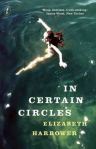
Elizabeth Harrower, In certain circles (Review)

Elizabeth Harrower, In certain circlesThere’s an interesting story behind Elizabeth Harrower’s last novel, In certain circles. It was all set for publication in 1971, following her very successful The watch tower (my review), when Harrower pulled it. Why? I wondered about this as I read it, and I have some ideas, but more on that anon. First, the story.

In certain circles chronicles the lives from youth until their forties of five people – well-to-do brother and sister Russell and Zoe Howard, orphans from an impoverished background Stephen and Anna Quayle, and Lily the teenage sweetheart and then wife of Russell. Part way through the novel, Stephen and Zoe also marry, as does Anna outside the circle. The story starts and ends with Zoe, but the perspective shifts a little along the way between the various characters. It’s a story of idealism and wasted opportunities, of the decisions we make (or don’t make) and their unintended consequences. It’s also about the way the past can drive those decisions. The setting is Sydney, not long after World War 2, though it’s never made explicit. Harrower is not interested in time and place, just people – who they are, why they do what they do, and how it impacts their deepest selves.

Commentators discussing Harrower invariably tell us that Australian literary luminaries Patrick White and Christina Stead praised her writing. You can see why – she writes with their intensity, probing deeply into the psyches of her characters to explore motive, feeling and behaviour. I’d also liken her to the recently deceased Anita Brookner, who, coincidentally, was born the same year as Harrower, 1928, and who also intensely explored the psyches of her characters.

The thing about Harrower’s writing here, though, is that while character is her focus, a strong sense of form underpins her style. The novel is, for example, presented in three clearly delineated parts, which facilitates time-jumps without the need for extensive explanation and gives it the narrative arc of a classic three-act drama.

So, Part 1 is set just after the war. Zoe is a bright, “fearless”, world-at-her-feet young seventeen-year-old, who often doesn’t mean what she says and is not known for her “social conscience”. She is, clearly, ready for a fall. A perfect Act 1 set up in other words. Big brother Russell, on the other hand, has been touched by experience, including being a prisoner-of-war, and has a more realistic perspective of the world. He sees disadvantage and he wants to right it. The opening scene is a tennis party at the Howards, to which Russell has invited the orphans and at which his fiancée Lily is also present. Our five characters are thus properly introduced to us and each other.

Part 2 starts eight years later, when Zoe is 25 years old and has just returned, upon her mother’s death, from a blossoming career in film and photography in Europe. The course of her life changes at this point, and she marries Stephen who is now in business with her brother Russell. She finds herself deeply in love with this man who, when she was 17, had both attracted and repelled her with his judgement of and opposition to her. In this part, the characters have settled into some sort of stable routine, but we readers see the cracks even if the characters themselves don’t. Take Zoe, our main character, for example:

Excessively, even for someone in love, Zoe had found a chameleon-like capacity for fitting herself to Stephen’s moods.

Hmm, we think … and this too:

From riding the crest of a wave, from taming tigers, she had turned into this new thing–a suppliant, but a suppliant with a purpose: all to be well with Stephen.

The conversations between them are chilling – because Zoe submits and submits her self to his views and ideas.

Meanwhile, Lily, for whom family is all (“it was not only a sort of pity Lily felt for anyone unrelated to her, but an involuntary antagonism”) and who has given up her career for her children, is becoming frustrated with Russell’s focus on a wider humanity. And Anna, now widowed, realises where her love truly lies – Russell.

Then comes Part 3, as it inevitably must. Zoe is nearly 40, and not happy. (We could have told her!) After 15 years of self-denial and subsuming her self to Stephen, she is a changed woman, to her detriment, and she knows it. That fall we assumed at the beginning has finally come – and not just for Zoe. The denouement is dramatic, rapid and effective in shaking up the characters’ complacencies and self-destructive compromises, just as you’d rightly expect in a narrative of this sort.

Besides this three-part structure, Harrower also employs form in her character handling. The novel starts with two sets of siblings and one outsider, Lily, but by the middle of part 2, they have re-formed into two couples and a different outsider, Anna. This rearranging of pairs-and-outsider creates parallels and counterpoints that keep the story tight and focused, exposing tensions and differences.

“wasted years”

But form, of course, is used for a purpose, which is to explore themes important to Harrower. In certain circles is not as claustrophobic or as chilling as The watch tower, but they have similar concerns, such as loneliness and a feeling of entrapment. These play out differently in In certain circles, where the focus is on wasted talents, through lack of opportunities, and wasted lives, through difficult pasts or poor decisions, but the result is the same – loneliness, desolation, and entrapment, conscious or otherwise.

Early in the novel, when she’s still 17, Zoe escapes a room of older people, “away from miserable white faces and wasted years”. Ironically, this is exactly how Zoe finds herself twenty odd years later, because Stephen has, “without the least desire to deflate or wound”, dissolved the last of her “ideas and ambitions”, leaving her trapped, demoralised, “detesting the person she had become”.

Zoe is not the only one. The other characters too find themselves having wasted at least some aspect of their lives, some because they can’t let go of (or are damaged by) the past, others because they honour decisions and commitments they’ve made.

There are many roads by which these characters come to the wasteland in their lives, and Harrower presents them with an acuity that is also generous. She doesn’t judge. Even when, at the beginning, Zoe is arrogant and self-involved, Harrower encourages us to like her because she’s lively and good-hearted rather than malicious. Stephen would be even easier for us to dislike, but his pain, his genuine love for his sister, and his obliviousness to “the damage he had done”, enable us to understand rather than hate him.

And now, here I am, way past when I should have finished this post, but having barely touched on the writing – and I should discuss it, because it is delicious. Harrower nails feelings, attitudes and motives with a pithiness that takes your breath away. Watch out for a Delicious Descriptions post!

So, returning to my opening para, why might Harrower have pulled her novel? I understand that she submitted it, pulled it and re-worked it, then submitted it again, and pulled it permanently. I can see why she may have done this: the drama that precipitates the resolution is a little far-fetched though she explains it well enough to make it work; Russell is comparatively shadowy even among the less developed characters; and occasionally the perspective feels a little clumsy or laboured, as if she hasn’t fully resolved how to bring all her personages into the frame as she desires. But, are these serious enough for the book not to have been published? I don’t think so. Neither did Text, and neither, we have to presume, did that original publisher. It is literature’s gain that this book has finally seen the light of day.

Lisa at ANZLitLovers also enjoyed the book.

awwchallenge2016Elizabeth Harrower
In certain circles
Melbourne: Text Publishing, 2014
250pp.
ISBN: 9781922182968