Monday musings on Australian literature: University of Canberra Book of the Year 2019

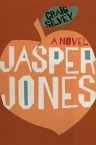
Jasper Jones, by Craig SilveyI have written about the University of Canberra’s Book of the Year initiative, twice – in 2012 when it was initiated, and again in 2014, when I checked to see whether the program was continuing. I am thrilled to say that earlier this month I heard the announcement of 2019’s book, so the program continues still. This book will be the 7th in the program.

Before I announce next year’s book, though, a quick refresher about the program. It involves the University providing a selected book, free, to all “commencing students” regardless of their subjects, as well as to all staff, academic and otherwise. The book is required reading, and teaching staff are expected to incorporate the book somewhere in their programs.
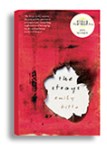
Emily BItto, The strays, book coverThe books are not always Australian, which is a shame given this is an excellent opportunity to introduce students to Australian literature. Also, and perhaps this sounds contradictory, while the genres and subject matter vary somewhat, there’s not a lot of diversity in terms of writers. No indigenous writer, no writer from a non-white/non-English language background, for example. Here is the list, to this year:

2013: Jasper Jones, by Craig Silvey (my review)
2014: Room, by Emma Donoghue
2015: The Rosie Project, by Graeme Simsion (my review)
2016: The strays, by Emily Bitto (my review)
2017: The white earth, by Andrew McGahan
2018: Do Androids dream of electric sheep? by Philip K. Dick

Professor Klomp describes the goals:

The UC Book Project is a fantastic initiative that introduces commencing students to intellectual life before their studies officially begin, encouraging early engagement with UC online resources, and informal learning and sharing among all new students.

It also promotes interaction and engagement among staff and students with a common topic to chat about around campus.

UC Book for 2019

In October, the University announced the shortlist, which are, this year, all recent Australian books. Good decision – and again some varied content, but, notwithstanding Bobis, not particularly diverse. It really is time, I think, to see some indigenous Australian writing chosen.

The announcement says that the judging panel, which comprises “Professor Klomp, the University Librarian, a Professor of Creative Writing, authors, media personalities and students”, is provided the shortlist from which to select “a book that is appealing to our wide range of students”. This year’s shortlist (including main “awards” credentials) was:

  • Merlinda Bobis’ Locust girlNew South Wales Premier’s Literary Award (Christina Stead Prize for Fiction); Juan C. Laya Philippine National Book Award (Best Novel in English)
  • Felicity Castagna’s No more boats: Miles Franklin Literary Award (Shortlist)
  • Peggy Frew’s Hope Farm: Barbara Jefferis Award (Winner); Miles Franklin Literary Award (Shortlist), Stella Prize (Shortlist)
  • Bram Presser’s The book of dirt: NSW Premier’s Literary Awards (Christina Stead Prize for Fiction); NSW Premier’s Literary Awards (UTS Glenda Adams Award for New Writing); NSW Premier’s Literary Awards (The People’s Choice Award); Voss Literary Prize (Shortlist)
  • Lucy Treloar’s Salt Creek: Dobbie Award for Best New Writer (Winner); Miles Franklin Literary Award (Shortlist); Walter Scott Prize for Historical Fiction (Shortlist)
  • Josephine Wilson’s Extinctions: Miles Franklin Literary Award (Winner); Prime Minister’s Literary Awards for Fiction (Shortlist)
  • Charlotte Wood’s The natural way of things (my review): Prime Minister’s Literary Award for Fiction (Joint Winner); Stella Prize (Winner); Miles Franklin Literary Award (Shortlist); Barbara Jefferis Award (Shortlist); Voss Literary Prize (Shortlist); plus short listing for the NSW Premier’s Literary Awards, Queensland Literary Awards and Victorian Premier’s Literary Awards.

Charlotte Wood, The natural way of thingsAnd the winner is: Charlotte Wood’s The natural way of things. A provocative and probably challenging choice for many – but one that should stimulate great discussions about all sorts of ideas, values and topics. UC’s Press Release announcing the selection says that Professor Klomp “hopes that the book with engage a wide audience with its universal themes of power, morality, judgement and friendship.” Remembering the strong and varied reactions in my reading group – about everything from style and characterisation to meaning and themes – I’d love to hear the students and staff discuss this one.

I’d love to hear you thoughts about the book choices, or the program itself?
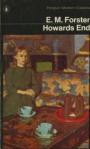
EM Forster, Howards End (#BookReview)

EM Forster, Howards EndWhere to start? Like all great classics, EM Forster’s Howards End has so much to think and write about that it’s difficult to know where to focus, not to mention what new angle I could possibly add. Perhaps I’ll just start at the beginning – with its epigraph, “only connect…” That’s a concept that’s sure to get idealists like me in!

First, though – a quick plot summary. Howards End is a place – and it was left, unbeknownst to her, to a young woman named Margaret Schlegel. The novel tells the story of how this came about and what happened after the owner died and Margaret was not told the place was intended for her. But, of course, this is Forster, so the story is not a simple inheritance plot. In fact, almost none of the central plot tensions relate to this little Wilcox family secret. Instead, the novel explores the lives and values of two – well, three, really – families: the business-capitalist-oriented Wilcoxes; the more intellectual, idealistic, arts-and-culture-focused Schlegels; and the poor, down-on-their-luck Leonard Bast and his ex-prostitute wife. You can surely see in this, where the theme of connection might play out.

The novel is described as a “condition-of-England” novel. It is set in the first decade of the twentieth century, the Edwardian period, and England was changing. Money and progress (symbolised by things like the automobile) were replacing more traditional culture and values (symbolised by things like Howards End). It was a time when socialist ideas were being discussed, and of course, it was the time of the women’s suffrage movement. It was a time when society was moving increasingly from a division between the leisured class and the (mostly agricultural) working class to one between those with “their hands on the ropes” in business and industry and the urban workers who had little control over their destiny. (At least farm workers, traditionally, had homes, for example. Not so, the urban poor.)

All this Forster explores through the relationships that develop between the Wilcoxes and the Schlegels – and the poor Basts who get caught in the middle of their complex economic and moral conflicts. This is not to say that the book is all about overt conflict. Our characters are “civilised”. There is a lot of discussion, of presenting ideas and values. But, most are set in their ways and it will, in the end, take more than discussion to shift understanding on.

Only connect …

A BIT OF A SPOILER

This is a classic, and has also been adapted to film and television, so I’m not sure how careful I should be, but it’s hard not to say that by half way through the novel Mr Wilcox (father, and widower of Mrs Wilcox who had “left” Howards End to Margaret) proposes to Margaret. Margaret’s more romantic, uncompromising sister Helen is horrified, and when some unfavourable information regarding Mr Wilcox comes out, she deserts the scene while Margaret – doing her best to “connect” in her own way – learns to accommodate this new knowledge.

Even before this crisis, however, Margaret has expressed (to herself) the “only connect” mantra:

Only connect! That was the whole of her sermon. Only connect the prose and the passion, and both will be exalted.

She wants to help Mr (Henry to her, now) Wilcox build within himself “the rainbow bridge” that will unify all the fragments of his soul, “the beast and the monk.” This is where Margaret and Helen differ. Helen has no time for the Mr Wilcoxes of the world, no time for business and industry, or for murky morals, while Margaret, who is “not a barren theorist”, makes the connections. She knows for example that Mr Wilcox had saved Howards End for Mrs Wilcox when it was all but lost, and she knows that their comfortable lives are underpinned by the industry that Helen so despises.

This difference between the siblings reminded of another writer – one whom EM Forster admired greatly – Jane Austen! Soon into the book, I felt there was a bit of Sense and sensibility going on here, a bit of sensible, practical Elinor versus romantic, idealistic, single-minded Marianne. Like Elinor, Margaret has a good heart, and deeply humane values, but she’s not blind to the world and how it works. Like Marianne, Helen sees only one way to live … and must learn something about compromise and moderation.

And so, the resolution, when it comes, sees Mr Wilcox and Helen coming to appreciate each other’s strengths, with Margaret’s more mature understanding prevailing. That said, the ending, while recognising the role of the Wilcoxes in the world, comes down firmly on the side of the importance of “the inner life”. It is only when Margaret finally makes a stand on the values most important to her – when she confronts Henry with his refusal to connect – that the rapprochements can begin.

Where to end?

I started this post by asking “Where to start”, and now I’m wondering “where to end?” Howards End is so rich – I took multiple notes and made many observations as I was reading it. I want to share them all, but that would be impractical (if not downright boring.)

So, I might just share a few things about the pleasure of reading this book. What makes a classic a classic – that is, a book that we keep re-reading – can be many things. Most important is that they have something new to say on each re-read and for each generation, that, in other words, their themes and/or understanding of humanity translate well into other times. This is certainly true of Howards End, given the philosophical and political schisms we are facing now.

But, we are, I think, only prepared to read these older books if their writing is also good – if they tell a good story, if their characters engage us, if their language and style woo us. Again, Howards End satisfies. The involving story of the Wilcoxes, Schlegels and Basts and the evocation of their individual characters get us in. These are why the book has been adapted for screen more than once. But it’s more than the story and characters that made this book such a wonderful read for me.

It’s also that it is so beautifully conceived and written. It starts with Helen’s letters from Howards End in which she describes the place and talks of Mrs Wilcox bringing in the hay, and ends with Helen, back at Howards End, but bringing in some hay herself this time. There is recurring imagery – such as frequent references to “grey” and “greyness” which convey the misery of impoverished lives, the impoverishment (of mind and spirit), and, more generally, the dullness of daily life. Here is Margaret near the end, reflecting on the importance of respecting and tolerating difference:

It is part of the battle against sameness. Differences – eternal differences, planted by God in a single family, so that there may always be colour; sorrow perhaps, but colour in the daily grey.

I also enjoyed EM Forster’s surprising, occasionally intrusive first person voice, and the sly irony that enhances, or complicates, the novel’s commentary. Some deeper analysis would be worth doing, in fact, on the narrative voice.

Howards End was my Reading Group’s classic for the year and while everyone enjoyed the writing, there were some understandable demurs, demurs which are comfortably explained or overlooked for some, but not for others. Aspects of the plot, for example, are improbable – but that’s not new in fiction. And some of the values and attitudes are problematic – particularly regarding the impoverished Basts, who seem more like pawns than real people. But, for me, these were not flaws. They marked the book as being of its time, and perhaps, of a time in Forster’s own life and thinking, but they do not destroy the integrity of the message, nor of Forster’s overall humanity.

Have you read – or re-read – Howard’s End? If so, did it speak to you?

Lisa (ANZLitLovers) posted on this back in 2016.

EM Forster
Howards End
Middlesex: Penguin Books, 1941 (1910 orig. ed.)
319pp.
ISBN: 140003118

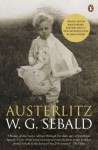
WG Sebald, Austerlitz (#BookReview)

WG Sebald, Austerlitz

For the first time in my reading group’s 30-year history, we read a book recommended by a fictional character. It happened like this: after reading and discussing Rabih Alameddine’s An unnecessary woman (my review) in January, we thought it would be interesting if we all nominated which book mentioned by the “unnecessary woman”, Aaliya Saleh, that we’d most like to read. The book that got the most votes was Austerlitz. I was thrilled, because I bought my copy back in 2010 to read with one of my online reading groups, but never did, and because I had already read and been bowled over by his The emigrants.

But now where to start? A bit left field I think – which is probably not inappropriate given Sebald’s approach to literature. The “left field” happens to be one of my (few) never-forgotten book quotes. It’s from Toni Morrison’s Beloved, and is Sethe talking about “the day’s serious work of beating back the past.” Sethe is, as most of you probably know, an American ex-slave who is living with the trauma of her past life. Austerlitz, in Sebald’s book, is a man who, as a four-year-old, had been sent from Prague to England on a Kindertransporte in 1939, never to see his parents again. Indeed, he suppresses all memory of his past life – realising later

how little practice I had in using my memory, and conversely how hard I must always have tried to recollect as little as possible, avoiding everything which related to my unknown past.

This realisation comes some 50 years later, in the early 1990s, when, one day, having become “increasingly morbid and intractable” after the death of his only true friend, he is in the Ladies Waiting Room of the Liverpool Street Station – and a memory comes back of his arrival in England. At this point, his “self-censorship”, his “constant suppression of … memories” brings about a nervous breakdown. Upon his recovery, he begins researching his past life, resulting in trips to Prague to look for his mother, and to Paris to do the same for his father. Much of this is couched in discussions of architecture – because Austerlitz is an architectural historian – forcing us to consider the role architecture plays in human history and psychology. It’s compelling, but more than that, mesmerising …

However, this book has been written about with great insight and sensitivity by reviewers at, for example, the New York Times and The Guardian, so I’m going to do something a little different, and respond to that fictional woman, Aaliya, who recommended the book to my group!

“His style, drawn-out and elongated sentences that wrap around the page and their reader …”

And I will start with the seemingly mundane, the style, because it is this that confronts us most strongly with we start the book. If you’ve never read Sebald before it could be a shock. There are almost no paragraphs – well you could say there are 5 including the beginning of the book – which means there are no real chapters. The story just continues on and on, often through very long sentences containing multiple clauses and lists. We do have a narrator, the person to whom Austerlitz is telling his story and who relates it on to us.

Strangely though, I found the writing page-turning. There is something mesmerising about the almost flat, rather melancholic, tone suffusing the narration, that you want to keep reading. At least I did – and so did most of my reading group once they’d “got into it”. The style, in other words, wraps around you.

There are motifs and images which recur through the novel, making the whole cohere, creating the tone and developing the themes. There are shadows, there’s darkness more than light, and colours are muted, mostly grey. There are star-shapes, railway stations and other monumental buildings. There are references to ghosts. Places are more often empty or deserted, than heavily populated. And there’s the mysterious operation of time and memory. All these support the narrative’s mesmerising quality.

The book also includes black-and-white photographs, encouraging us to see it as non-fiction but no, this is fiction. Austerlitz is a made-up character – but, says The New Yorker, Sebald sometimes called his work “documentary fiction”. In other words, this is a very different sort of read.

“All I am is lonely. Before I go to bed, I must put away Sebald …

… both The Emigrants and Austerlitz. I can’t read him now, not in this state. He’s much too honest. I will read something else.” 

Our “unnecessary woman”, Aaliya, who lives in Beirut, has experienced war herself, been affected by its ravages. I won’t say more here, because I think what I have said about the story and it’s tone already makes clear why she feels this. Sebald is not a writer to be read at times of distress or melancholy, but his insights into what we call “the human condition” are … well, let me put it this way: this is not a book you explain, really, but one you feel. What you feel is something that affects the way you think about human history, about where we’ve been and where, unfortunately, it looks like we’re going.

“I am proud that I finished the Austerlitz project. I consider it one of the best Holocaust novels.”

Aaliya goes on to say that “I find that when a subject has been heavily tilled, particularly something as horrifying as the Holocaust, anything new should force me to look with fresh eyes, to experience previously unexperienced feelings, to explore the hitherto unexplored.” And this is why Austerlitz is powerful. Austerlitz was a young boy in a little Welsh town while the war was on so he did not experience the Holocaust directly. But, his experience of being displaced comes back to haunt him later. So this is not about a person who directly experienced the Holocaust, nor is it, though, about the second generation. It is about someone who lived at the time, but had not experienced it first-hand because his parents, who did, had removed him. He is in a sort of limbo generation – and “limbo” is probably a good description for how he feels through much of the novel.

He writes, describing his experience of another mental/physical collapse:

It was obviously of little use that I had discovered the source of my distress and, looking back over all the past years, could now see myself with the utmost clarity as that child suddenly cast out of his familiar surroundings: reason was powerless against the sense of rejection and annihilation which I had always suppressed and was now breaking through the walls of its confinement.

This statement struck me powerfully, because not only does it reflect another experience of the Holocaust – another way of looking at its impact – but it articulates the experience of our stolen generations, and, beyond that, of any children removed, for good or bad reasons, from their homes. “Reason was powerless against the sense of rejection and annihilation”. What more is there to say?

There is so much to talk about this book, so much I haven’t touched upon, but I’m going to finish with a brief reference to his discussion of time, the past and memory which underpins the novel. Here is Austerlitz late in the novel:

It seems to me then as if all the moments of our life occupy the same space, as if future events already existed and were only waiting for us to find our way to them at last, just as when we have accepted an invitation we duly arrive in a certain house at a given time. And might it not also be, continued Austerlitz, that we also have appointments to keep in the past, in what has gone before and is for the most part extinguished, and must go there in search of places and people who have some connection with us on the far side of time, so to speak?

I love this organic way of looking at time, this suggestion of how we might experience, approach or understand the events, particularly traumas, that happen to us.

Our unnecessary woman, Aaliyah, calls Austerlitz a great Holocaust novel, but I’d go one step further and simply say it is a great novel. Full stop.

WG Sebald
Austerlitz
(Trans. by Anthea Bell)
London: Penguin, 2002
415pp.
ISBN: 9780140297997

Monday musings on Australian literature: War-time reading tastes, World War 2

Continuing last week’s brief survey of war-time reading habits…

World War 2

And then we come to the Second World War. Here’s The West Australian again, this time in July 1940, less than a year after the war had started (a bit like our 1915 World War 1 report last week.) The article is headed, “Light Reading Popular. Perth’s Wartime Tastes.” It says that:

Wartime readers prefer light humour and detective novels to political works or discussions of international affairs. This was the verdict of a Perth book-seller and librarian when asked whether the public reading taste had changed since the beginning of the war. For a long time before the war, it was stated, books on international affairs were first favourites but this was no longer so. There had been a remarkable increase among library subscribers in the demand for detective fiction.

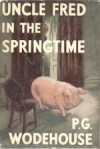
PG Wodehouse, Uncle Fred in the Dreamtime

And yet, it continues, “the unexpurgated edition of Hitler’s Mein Kampf (royalties in which go to the Red Cross) had sold well.” Did you know that about the royalties? Anyhow, it goes on to say that booksellers in the east of the country report similar interests, with A. P. Herbert’s General cargo and P. G. Wodehouse’s Uncle Fred in the springtime being best sellers, and “historical novels and light travel books dealing with countries outside the political maelstrom” also selling well.

Another July 1940 newspaper report on wartime reading tastes comes from Launceston’s Examiner. It starts by saying that people are sick of reading about Hitler, and that one male library visitor pronounced that “All he wanted to read about Hitler now was his obituary!”

The article says that most of the Launceston public library’s users “demand ‘light’ reading” but that “that does not necessarily mean fiction.” People are also interested in “non-fiction that is easy to read, such as short autobiographies and travel”, particularly for “travel books descriptive of countries affected by the war” (which counteracts somewhat the Perth report above about travel book preferences.) As for autobiographies, it says that “those about Royalty of any country are always widely read.” Interesting!

The article says that

most readers say that with the war over-shadowing most things, they seek books that will be purely a distraction from serious thoughts, necessitating the least possible concentration. For that reason, fiction is in greater demand than ever and detective stories the most popular of all the many classes of literature handled at the library to meet varied tastes.

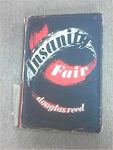
Douglas Reed, Insanity FairThere is an exception to the disinclination for “the ‘heavier’ political type of book” – Douglas Reed’s Insanity fair. It “is still one of the most sought books of all types. There is always a waiting list for it.” I had not heard of him or it, but Wikipedia says that “Insanity Fair (1938) was one of the most influential in publicising the state of Europe and the megalomania of Adolf Hitler before the Second World War.” (You can download it for free from archive.org.) Another exception, this time for books “avoided because of great length”, is Gone with the wind. Since being published in 1937, it apparently “has never rested on the library shelves.”

Also in July 1940 – were these journalists feeding off each other? – was an article in Melbourne’s The Age titled “Reading in wartime. Escape Books”, with the by-line Investigator. It’s a long article – around 1000 words. It poses a number of questions: have tastes changed; should in fact people be reading at all given the “mighty effort” being undertaken “to overcome the foe”; and, if people do continue to read “what kind of books do wise and well-balanced minds recommend to thoughtful Australians?” Don’t you love the idea of “wise and well-balanced minds”?

The article then briefly mentions the challenges faced by readers, including the reduced output from publishers, irregular supply, and “the natural indisposition to spend money on expensive books.” However, Investigator says, “literate homo sapiens must be intellectually fed.” Indeed, s/he quotes Poet Laureate John Masefield, who advised that

While we must, of necessity, be deeply interested in all that is written and broadcast concerning the war, let us keep reading some quiet book to steady our minds. In other words, to preserve our poise, our cheerfulness and sanity, have on hand some quiet, absorbingly interesting book, divorced from politics, warfare, national culture and Ideologies, east or west.

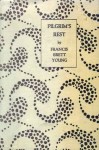
Francis Brett Young, Pilgrim's restWith this advice in mind, Investigator then gives a suggested reading list from “one experimenter.” It comprises “literature of release, diversion and escape from which the experimenter had derived real refreshment since the war began to press heavily upon heart and mind.” The list is diverse, but includes:

  • Such is life, by Tom Collins (aka Joseph Furphy), the new edition with an introduction by Vance Palmer.
  • On the Barrier Reef, by S. Elliott Napier: seems like a non-fiction book about the Barrier Reef. Napier was a banker, solicitor, journalist, and author, among other things.
  • Two of J. B. Priestley’s and Angela Thirkell’s latest novels.
  • Pastoral Symphony, by Aldyth Williams: a gentle memoir, I’m guessing, given its subtitle is “a recollection of country life”.
  • Pilgrim’s rest, by Francis Brett Young: described in GoodReads as “tale of gold lust, gentle romance and the violent industrial unrest which shook the Rand in 1913.” Clearly escapist.

Our “experimenter” also lists books of essays and sketches (one described as containing “pleasant writings”), books of Australian verse, some biographies, and “the three last numbers of the Cornhill Magazine — killed by the war in December, 1939, after 80 years of placid life.” Oh dear, poor Cornhill!

Investigator goes on to say that this list may not represent Australian readers overall, because the “experimenter” has “a sensitive mind, needing release from mental strain”. In fact, Investigator says, data from two different libraries in Melbourne shows that there is “no marked swing in the direction of the literature of escape.”

Nearly two years later, however, in February 1942, Adelaide’s The mail has an article titled “Reading tastes change under war conditions”. This article too quotes a librarian’s experience, Mr CM Reid of the Adelaide Circulating Library. He says that in times of peace Adelaide readers “prefer well reviewed novels, books on current affairs, and a moderate ration of ‘thrillers'”, but that

War time, however, brings a revival of interest in spiritualism, and all kinds of books on mediumism which have never been taken down for years, except to be dusted, are asked for at the counters.

He also notes “a much greater interest in Biblical prophecy since the war began.” The writer suggests that this interest in prophecy, astrology and the occult, “seemed to indicate that some people’s minds were troubled and confused, and that they were seeking comfort rather than information.”

These readers, though, are apparently not “the more serious readers” who, Mr Reid says,

seem to be reading both better books and lighter books since war began. On the one hand they are anxious to be well informed, and all good new books on world affairs and on other countries are sought after; but the same subscribers are also reading many more thrillers, as if for relaxation and escape from world problems.’

And finally, from Ipswich’s Queensland Times in January 1943 comes a report on “people’s tastes” from a librarian. He (it is a he) said that

reading was definitely on the increase in Ipswich, and in addition there was an increase in the demand for the better class of books. More than ever inquiries were for good travel books, biographies, and the historical novel, while anything on sociology and international affairs also was readily taken.

He did admit, though, that “the demand for light fiction remained keen.”

However, supplying this increased interest in reading was a challenge because the war was affecting the output and availability of books. Normally, he would add around 250 new books a month to his library, he said, but he was now lucky to “obtain 40 to 50”, most of which came “from abroad.”

So there we have it, a view of what Australians were reading during World War 2 – from Perth across to Adelaide, then down to Launceston, back over the seas to Melbourne and finally up to Ipswich.

Did anything interest or surprise you?

Monday musings on Australian literature: War-time reading tastes, World War 1

Rudyard Kipling, Sea warfare

First pub. 1916

For the longest time I’ve understood that during war-time people turn to lighter forms of entertainment, to musicals in film, for example, or to escapist books in their reading. However, the truth – of course – is more complex, as I discovered in Trove’s digitised newspapers. I was fascinated by how often the matter was, in fact, discussed in papers of the say – and so am sharing a very small selection of those discussions here, with you. Because …

I have, I admit, only done a brief search of Trove. There’s a lot of material there. However, I hope what I’ve found is representative of how it went … I have, at least, managed to represent the continent, reasonably well.

World War 1

During the war

In Melbourne’s The Argus in July 1915, the writer says that

Since the war begin the taste of the reading public has changed considerably and less attention is now given to works of fiction than formerly.

The evidence for this comes from “the annual report of the trustees of the Public Library, Museums, and National Gallery of Victoria”. This report said that “the demand for newspapers and periodicals dealing largely with war questions has been very great and several files of newspapers have had to be duplicated” but that there was, overall, a decrease in the number of borrowers and of books read, particularly in fiction. That puts paid to the entertainment theory doesn’t it – though this was early in the war. Perhaps things change when wars drag on?

Perhaps it did, because in February 1916, the Newcastle Morning Herald and Miners’ Advocate, reported on reading stats from Melbourne’s Athenaeum, a public institution that included a subscription library. They found a significant increase in fiction borrowing in the previous year, while borrowing in “geography, voyages, travels, and descriptive works” was nearly halved – “a rather remarkable falling off”, the paper said – and there was a similar, near-halving, in “biography, speeches, and correspondence.”

Post-war

Ten years after the war, that is in January 1928, The Brisbane Courier had a short piece titled “Literary tastes”. It referred to wartime tastes, stating that “During the tragic years of warfare there was a “run” on light and breezy books evidently to distract the mind of the reader from the sterner realities of life.” In other words, tastes did seem to change when the war wasn’t over in a year!

Anyhow, after that, they say, tastes changed, turning to “books of a philosophical character” and then a little later again, to “books on travel.” However, in the Christmas just past, with “the poignancy of war privations having to some extent become atrophied through time’s healing influence”, there was a demand for “novels with a war-time background.”

Then, the next year, in June 1929, The West Australian had an article titled “Reading Tastes”. Booksellers, it said, were noticing that the public was moving a little away from novels to “general literature”, and particularly to “biographies and works of travel”. They reported three reasons that had been “advanced” for this change, the first being increased advertising for those types of works, and the third being changed pricing policies by publishers in which, reasonably soon after publishing “a substantial work … at a substantial price”, they issued it “at a popular price”. But, the second reason was,

the huge increase, in the size of the reading public following the war. Hundreds of thousands of men in the trenches, who in prewar days had taken little or no interest in literature, had received books from home, and had read them. What was at first merely a means of relieving the monotony of trench life had developed into a definite taste for reading. The habit contracted in time of war, remained when peace had come, and it was only natural that a considerable proportion of this vastly increased reading public should have an inclination for various kinds of literature besides fiction.

No evidence is provided for this, so it’s impossible to say whether it’s anecdotal from booksellers, or based on some sort of collected data, but there’s probably some truth to it. That said, I did like the fact that some of the reports I read, including some of those above, did use library borrowing data to support their claims …

I’d love to have spent more time exploring Trove, but even retired people seem to be time poor these days!

Hmm…

I initially intended to discuss both the World Wars in this post, but it started to get rather long, so you’ll have to wait until next week’s riveting instalment to find out about readers’ behaviour in World War 2. Were they different? Come back next week to see!

Meanwhile, any thoughts – or anecdotes of your own?

Michelle de Kretser, The life to come (#BookReview)

Michelle de Kretser, The life to comeMichelle de Kretser’s Miles Franklin shortlisted novel, The life to come, makes for great reading but difficult blogging because, like her Miles Franklin Award winner, Questions of travel (my review), it is big, and covers a lot of ground. Where to start is the problem. However, I’ll give it my best shot, starting with its form.

The novel comprises five distinct, almost standalone, parts, except that one character, the Australian novelist Pippa, appears in each one, providing a continuing narrative thread for the whole. She is introduced as a rather naive student in the Part 1 (“The Fictive Self”). We then move through Part 2 (“The Ashfield Tamil”) about Ash and Cassie, Part 3 (“The museum of romantic life”) about Céleste in Paris, and Part 4 (“Pippa Passes”) about Pippa and her in-laws, to end with Part 5 (“Olly Faithful”) about Christabel and Bunty. These characters are Australian, French, British and Sri Lankan.

But something intrigued me. The title of Part 4, “Pippa Passes”, rang a bell, of Robert Browning’s poem “Pippa Passes”. I don’t recollect much about the poem, but its form, interestingly, is similar to de Kretser’s novel. “Pippa Passes” is also the origin of the famous lines “God’s in his heaven/All’s right in the world”. However, while Pippa in the poem acts as a positive force, our Pippa does not. She thinks she’s a “good person”. As Céleste says, “Pippa would always need to demonstrate her solidarity with the oppressed – Indigenous people or battery hens, it scarcely mattered.” In fact, though, she regularly tramples on others, not necessarily intentionally, causing them pain. Presumably de Kretser intended this ironic allusion to Browning’s Pippa. I also wonder whether Christabel alludes to Coleridge’s poem Christabel, which explores the relationship between two women. Hmmm … I may be drawing long bows here as I don’t think Bunty is anything like Coleridge’s Geraldine. Still …

Anyhow, moving right along, I’m going to divide my remaining comments into two main strands – the personal and the, for want of a better word, sociocultural.

The personal

The novel’s title, The life to come, comes from Samuel Beckett’s Endgame, as quoted in the epigraph. It provides a clue to the novel’s main theme. It’s the theme that most touches our hearts, because it’s about the hope for or belief in “the life to come”. It’s about the search for meaning, for transformation, for a full life.

Cassie, for example, realises that her relationship with Ash is about trying to work out “How was she to live?”. She thinks, self-centredly, that “the two Sri Lankans”, Ash and the Spice Market man, “had entered her life to change its course”. Paris-based Céleste, who is fifty-something, single, and having an affair with thirty-something Sabine, is confronting ageing. “Is this all there is?” she wonders, as she sees her future shrinking “to a single point of solitary, penny-pinching old-age.” Pippa, our ongoing character, imagines a glorious future for herself as a writer: “her future was as vast as the light beating its wings in clifftop parks.” Céleste, though, sees something quite different in Pippa; she sees “Excess so far in excess of achievement.” Finally, single, Sri Lankan immigrant Christabel, looks, from the beginning, for that moment of transformation when her real life will begin. At 34, “she had believed, briefly, that her life could be joyful.” She keeps on hoping, however, and even when she accepts, “humbly, that it might never exist for her (“I am ordinary”) … she needed to know it was there“.

De Kretser provides her characters with life’s reality check, that gap between what you imagine and what you achieve. Best to learn it sooner rather than later!

The sociocultural

While that personal strand touches our hearts, the other one provides more of the laughs, albeit rueful ones, because many of them are turned on us. The life to come, in other words, contains a healthy dose of satire, skewering our assumptions and pretentious. When I say our, I’m particularly referring to us left-oriented middle-class earnest do-gooders. Like all good satire, it makes you think …

Eva, Pippa’s mother-in-law, is a good example. She “likes rescuing things”. For example, she employs refugees from a “not-for-profit catering group” to serve food at her parties, while wearing “garments stiffened with embroidery and beads. At throat and wrists she wore silver set with gems, some the colour of butter, others the colour of blood. These tribal ornaments lit Eva’s face, and proclaimed her solidarity with the wretched of the earth.”

In another example, her osteopath Rashida, who also happens to be a Muslim Indian immigrant, dines with Eva and her family. They quiz her about her background:

‘My parents thought that India wasn’t the best place for Muslims,’ said Rashida. ‘I love these potato pancakes, Eva. Could I have the recipe?’

‘Were you persecuted for your faith?’ Eva asked, hushed and hopeful.

‘Not really.’

Keith [Eva’s husband] said, ‘So you were privileged migrants.’

Rashida said nothing. She seemed to be turning the sentence over in her mind, trying to work out its shape.

De Kretser skewers Australians’ naiveté and blindness again and again, particularly regarding the horrors experienced by others, offsetting actual history against the idea of stories. Cassie, who is “postmodernly tutored”, thinks history is “just a set of competing stories” but Ash, born of a Scottish mother and Sir Lankan father, knows the difference between history and story, and understands exactly “the historical sequence that … brought a Tamil civil servant to the counter of a shop in the west of Sydney.” Cassie, Ash sees, “clung to an idea of Australia as a place where kindness prevailed over expediency”, her face denying “the existence of evil, the possibility of despair”. Ash, however, gobsmacked by her lack of awareness, wonders

What is wrong with you Australians? You eat curries without rice, a barbarism. You fear being attacked by people you’ve killed. You stole their land for animals that you slaughter in their millions, when you don’t leave them to die by the side of the road.

Pippa is no better than Cassie. She “saw Europe, momentous and world-historical, magnifying eventless Australia”, oblivious, clearly, to the barbarism enacted on our own shores. After all, as Ash is told when taken to his friend’s country home, “there’s no actual historical [my emphasis] record of a massacre.”

There are lighter, though no less satiric touches, such as Pippa’s telling Christabel about dining out with her literary agent:

We went to this amazing new Asian place at Darling Harbour. It’s been quite controversial because they do live sashimi. But Gloria and I talked about it, the cruelty aspect, and we decided it was Japanese cultural tradition so it was OK.

Where do we draw a line on cultural relativism?

The life to come is an uncomfortable book, particularly for Australians, because it suggests we are generally naive, and blundering, in our assumptions about and behaviour towards others, no matter how hard we try to be “good”. It’s also uncomfortable for us all as humans, because it exposes the gaps between our dreams and hopes for large lives and the reality that more often than not confronts us. The result is something that’s touching but also a bit pitiful.

Is this a Miles Franklin winner? I’m not sure. It may in fact try to do too much. But, is it a great read? Absolutely. I’d recommend it to anyone.

Lisa (ANZLitLovers) also enjoyed the book. And, for a non-Australian blogger, check out Guy’s post at His futile preoccupations.

PS I read this with my reading group.

AWW Badge 2018Michelle de Kretser
The life to come
North Sydney: Allen & Unwin, 2017
375pp.
ISBN: 9781760296568

Randolph Stow, The merry-go-round in the sea (#BookReview)

Randolph Stow, The merry-go-round in the sea

Randolph Stow is a writer I’ve been meaning to read for the longest time – since, would you believe, the 1970s? Embarrassing, really, given his significance. My plan had always been to read his Miles Franklin award-winning novel To the islands first. However, the first I actually bought was The merry-go-round in the sea – back in 2009 when it was re-released as a $10 Penguin classic. It’s taken me until now to read it – and I read it with my reading group, which made it an extra special experience.

BEWARE SPOILERS, albeit this is a classic with minimal plot so, you know …

The merry-go-round in the sea was Stow’s fourth novel, published in 1965 when he was 30 years old. It has a strong autobiographical basis, but is, by definition, fiction. It is essentially a coming-of-age story about a young Western Australian boy, Rob, who, like Stow, was born in Geraldton in 1935. It covers eight years of his life from 1941, when his favourite cousin, the 21-year-old Rick, leaves to fight in World War 2, to 1949, when Rob is 14-years-old and the now-returned Rick is about to leave again, this time to live in London. The plot is not a particularly dramatic one, but rather a lot happens nonetheless.

It all starts in 1941 with Rob and his family moving (“evacuating” is the strange word his mother uses) to a family station in the country, due to fears of Japanese invasion. There Rob enjoys the life of a “bush kid” and is unhappy to find, upon his return to town, that he is really a “townie”. Meanwhile, Rick is at war, ending up a POW on the Thai-Burma railway. His experience is told in three or four brief but vivid digressions from the narrative’s main focus on Rob’s life. We are told enough to prepare us for a changed Rick on his return. In the second part of the novel, the focus is on Rob’s growing up, on his gradual loss of childish innocence, and on Rick’s struggles to come to terms with his life after his experience of war. Nothing is the same for Rick, and Rob worries about his idol.

Now, this is a 400-page novel (in my edition, anyhow) and can be discussed from multiple perspectives, so I’m going to hone in on a couple that most interested me.

One of these is heralded by the book’s structure, by the fact that, although the protagonist, the person through whom we “see” most of the book, is young Rob, the book’s two parts are named for Rick, “1 Rick Away 1941-1945”, and “2 Rick Home 1945-1949.” Superficially, this can be explained by the fact that Rick is a major focus of Rob’s interest. However, I’d argue there’s something more here, that these two characters represent conflicting forces – a duality – within Randolph Stow himself, one being his love of place, of the land and country he grew up in, and the other being his discomfort with that same place and his need to get away, which indeed he did. This duality was, as I recollect, discussed by Gabrielle Carey in her book Moving among strangers: Randolph Stow and my family (my review).

So … through Rob’s third person eyes, Stow writes gloriously, authentically, about Geraldton and the surrounding areas in which he grew up. The language is lyrical, poetic, conveying an emotional intensity in addition to pure description:

By rock pools and creeks the delicate-petalled wild hibiscus opened, and the gold-dust of the wattles floated on water. Wild duck were about, and in trees and in fox-holes by water he looked for the nests, staring in at the grey-white eggs but touching nothing. Climbing a York gum, he was startled when a grey broken-off stump suddenly opened golden eyes at him. He gazed into the angry day-dazzled eyes of the nesting frogmouth and felt he had witnessed a metamorphosis.

There’s repetition of colours, plants, and landforms, but rather than becoming tedious they convey a deep familiarity with and love of place – and make the novel sing.

However, through Rick’s eyes – albeit eyes damaged by his war experience – we see a more conflicted, and arguably more adult, understanding of this place. At the end, he explains his decision to leave to Rob:

‘Look, kid,’ Rick said, ‘I’ve outgrown you…

[…]

‘I can’t stand,’ Rick said, ‘this – ah, this arrogant, mediocrity. The shoddiness and wowserism and the smug wild-boyos in the bars. And the unspeakable bloody boredom of being in a country that keeps up a sort of chorus. Relax, mate, relax, don’t make the place too hot. Relax, you bastard, before you get clobbered.’

Stow wasn’t the only intellectual to leave Australia in the 1960s. Others include Germaine Greer, Clive Robertson, Barry Humphries and Robert Hughes.

My other issue is trickier to discuss: it concerns Stow’s references to Indigenous people in the novel. It’s complicated to tease out, and to do so properly would require a re-read, but I can’t leave the novel without saying something about it, given our heightened awareness these days. As I’ve already said, the book was written in 1965 about the 1940s. In 1957, Stow had spent three months as a storeman at the Forrest River Aboriginal mission in the Kimberleys. His biographer, Suzanne Falkiner, argued (on ABC RN Late Night Live) that this experience created some conflict for him:

‘[His family] had achieved a lot: they had been colonists in America, in the West Indies, the earliest settlers in that region of Australia,’ she says. ‘But as he grew older and as he got to know Aborigines, having worked in the Forrest River mission, I think the conflict became a real source of pain for him.’

I believe that Stow tried to convey some of this in The merry-go-round in the sea. Several times, Rob quotes his family’s racist attitudes, including here:

Rob did not mind the blackn*****s, some of the older ones he rather admired. But his mother was furious because Nan [Rob’s sister] was sitting next to a blackn****r in school. ‘They’re dirty,’ said his mother. ‘They all have bugs in their hair.’

It was funny about blackn*****s. They were Australian. They were more Australian than Rob was, and he was fifth generation. And yet somehow they were not Australian. His world was not one world.*

In other parts of the novel, he describes seeing Aboriginal art in caves, and ponders the people who made them. Not all are so sensitive or interested, however. When he’s taunted at school with having “n****r blood”, he reacts defensively, but when he’s a little older, and schoolfriends once again express racist attitudes, he responds:

‘I like them,’ the boy said, ‘There’s some nice boong kids at school.’

A poor choice of words, but at least Rob stands up for his beliefs. If we take Rob as Stow’s mouthpiece, then it’s pretty clear that Stow is conveying in this novel some disquiet about prevailing attitudes to Australia’s Indigenous people.

There is so much more to explore in this book – including the motif of the merry-go-round itself. As a young boy Rob had been shattered by the discovery of “time and change”, leading him to cling to the idea of a merry-go-round, which revolves and revolves around a solid centre, his family, never changing. By the end, however, with Rick about to leave, he realises that this too is illusion, that the world is not quite as he’d seen it. A bittersweet ending – one that must come to us all at some time!

Several bloggers have posted on this novel in the last few years, including Lisa (ANZ Litlovers) and Kim (Reading Matters), and offer additional perspectives to mine.

Randolph Stow
The merry-go-round in the sea
Camberwell: Penguin Books, 2009
400pp.
ISBN: 9780143202745

* I have blanked out this word to, hopefully, deflect the wrong sort of “hits” on this blog.

Elizabeth Jolley, The orchard thieves (#BookReview)

Elizabeth Jolley, The orchard thievesElizabeth Jolley’s twelfth novel, The orchard thieves, is a little different from most of the other Jolleys I’ve read. It’s a little less black, a little less about alienation, but it’s unmistakably Jolley in style and preoccupations.

By preoccupations, I mean her interest in family relationships and dynamics – and, related to that, her humane, but clear-eyed, understanding of human nature. The orchard thieves was written when Jolley was in her early seventies, and revolves around a grandmother contemplating the meaning of family and children. It feels very much like the meditations a woman of her age would be having – which is not to suggest that the story itself is autobiography. Still, I can see once again, why Helen Garner loves Jolley (and doesn’t love Thea Astley). Jolley and Garner both draw from their lives, albeit Garner more so, and both focus on life’s interior challenges. They also both do so in spare but loaded writing.

The orchard thieves, then, has a minimal plot, and no named characters. Told third person from the grandmother’s perspective, it concerns a family whose members are identified by their roles: the grandmother, the grandsons who belong to the youngest sister, the granddaughter who belongs to the middle sister, and the aunt (who also happens to be the eldest sister who lives with the grandmother). There is also the son-in-law (the youngest sister’s husband.) The novel (novella, really) is constructed in three parts, and the plot, such as it is, revolves around the return from London of the middle sister with her daughter.

So, what is it all about? It’s about the family at a point in time, from the grandmother’s point of view. It’s about parents and children, about love and worry, and about age and wisdom – not that the grandmother pontificates her wisdom or is even really sure that she has it. She worries about the aunt, her eldest unmarried daughter, fearing she’s lonely. She worries about the grandsons, their safety now and their future. And she worries about the middle sister’s health and happiness when she returns home – for how long? – clearly pregnant but saying nothing. It is this sister’s return that ripples the surface of the family’s finely balanced relationships.

Jolley prepares us for this “rippling” with an initially mysterious Preface, which commences

‘If you have the house,’ the middle sister said to the aunt, the eldest sister, ‘if you have the house you’ll have to pay us each one-third of the current market price. One-third each of the value of the place.’

We immediately think of course that someone has died, and then, as the book commences we realise that the owner of the house, the grandmother, has not died. We then wonder if she will die, but Jolley’s purpose is more subtle. This is not an inheritance-fight plot. Instead, the conversation tells something about the sisters’ characters. It also suggests underlying tensions, and introduces some ideas which, when they re-appear in their correct chronological sequence, become clear.

This is not a depressing book. The tensions are real, but the grandmother’s hard-won wisdom re-stabilises without offering pat solutions – and it’s all done in a quietly meditative, but by no means dry, tone. I found it absolutely delicious reading, with its Jolleyesque references to pear trees and birds, orchards and gardens, music and myths, sexuality and lesbianism; its sly humour; and, dare I say it, its relevance to my own musings. I haven’t reached my seventies yet, but am soon to join the world of grandmas and am certainly the mother of adult children. Jolley captures the concerns, the lessons learnt and still being learnt – about raising children, about relating to adult children, about being a grandmother, and above all about love – so economically but with sensitivity and insight.

Here’s a scene, early in the book:

Alone on the grey rug in the deeply shaded garden, the grandmother began to understand that it was not until she was a grandmother herself that she, because of her own love for her grandsons, realised how much she, as a small child, had been loved. And the pity was that it was too late to acknowledge this to anyone. It was no longer possible to offer, unsolicited, a kiss, a caress or a tender phrase backwards, as it were, over her shoulder. Recalling momentarily the pain of a telephone reprimand, well deserved she was sure, and only one of many, the grandmother came to a very real truth, which was that the great love which holds the mother to the child does not necessarily travel in the other direction, from the child to the mother. She understood also that she would not be the only person in the world to have discovered this.

Such spare writing. With the exception of the descriptions in the opening phrase – “grey” and “deeply shaded” – which set the melancholic, reflective tone, the language is direct and largely unadorned, and powerful as a result.

There are several references to myths and legends, which the grandmother believes “were attempts to explain happenings which were too painful and hard for human endurance.” Wanting to share these with the grandsons, she starts to tell them the story of Ceres/Demeter and her daughter Persephone/Proserpina, but it gets all too dark and boring for them, so they

simply slipped from the grandmother’s hands and disappeared with a slight rustling of dry leaves into the surrounding bushes.

You can just see it can’t you? Elsewhere, this gorgeous elegant language is subverted when the grandmother, walking with her grandsons, uses their language:

The grandmother hoped that the river paths unlike the roads and houses and the trolleys in the supermarket, were not crap. She hoped they were not crappy crap. She hoped that the aunt’s game and the secret paths, the rocks and the rock pools along the river beaches would remain uncrapped for as long as possible.

Oh, I could go on, sharing more and more. There’s so much more to say about, for example, the imagination and how it can lead you to worry and worry, about mothers’ regrets for things they could have done differently, about the time when children need to grow out of thieving orchards, about the reality that the

little rogues and thieves … would, during their lives, do something perfect and noble and wonderful and something absolutely appalling.

And appalling is pretty much how we could describe the middle sister’s behaviour when she arrives!

Helen Garner concludes her tribute to Jolley*, “To my dear Lift-rat” (which she wrote after Jolley had succumbed to dementia), with this:

But it was too late for me to say goodbye, or to thank her for the last sentence of The Orchard Thieves, where an old woman points out comfortingly to her daughter that the difference between a bad haircut and a good one is only a week.

Garner’s right. It’s somehow the perfect, grounding ending for a book which is about both the importance of “the unseen things, the real feelings and the deep needs” and the business of “push[ing] on with living.” It’s a timeless book.

Read for Lisa’s (ANZLitLovers) Elizabeth Jolley Week.

* You can read Garner’s essay on-line and in her collection Everywhere I look (my review).

AWW Badge 2018Elizabeth Jolley
The orchard thieves
Ringwood: Viking, 1995
134pp.
ISBN: 9780670865505

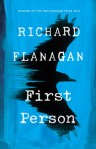
Richard Flanagan, First person (#BookReview)

Richard Flanagan, First PersonRichard Flanagan’s latest novel First person, which I did with my reading group, is a challenge to read. By this I don’t mean it’s “hard” to read but that it requires careful attention to pin down. On the surface, its subject is straightforward. It’s the story of struggling as-yet-unpublished writer, Kif Kehlmann, who accepts the job of ghost-writing a memoir for a con-man, Siegried Heidl. It’s autobiographically-based in that Richard Flanagan himself did just this for the fraudster or imposter John Friedrich, who headed the National Safety Council of Australia. However, the novel takes off in directions far removed from Flanagan’s life. At least, so I believe, though as Kif very quickly learns, how do we know what to believe! Who to trust!?

Anyhow, why write this now, 25 or more years after the events? Well, the title might give you a hint, as well as the subject matter … but, it is a tricksy book, starting from its very nature as a pseudo-memoir about a ghost-written memoir. If you know Flanagan, you’ll know he’s setting himself – and us – up for quite a ride. It’s a complicated ride, and perhaps got a little sidetracked at times, but is nonetheless fascinating …

“ceaselessly self-making”

The story describes, in Kif’s first person (ha!) voice, his experience of ghostwriting Heidl’s memoir and its aftermath. The ghostwriting task doesn’t go well, with Heidl evading Kif’s attempts to obtain the information he needs. Flanagan describes this with the wonderfully evocative language that we love reading him for. “I may as well have used a pair of scissors to pick up spilt mercury”, he writes of his early attempts to get some facts. He tries a different method: ask some direct questions, write up his understanding of the answers, and then check his version with Heidl:

The more outlandish, the less related my story was to the few, vague facts he had outlined, the more ludicrous I was, the more pleased Heidl seemed, and the more he would claim that it accorded exactly with his own memory.

After which, apparently, Heidl would contact 60 Minutes or some other program or newspaper, to line up “paid interviews about himself on the basis of such inventions.”

You can perhaps see where this is going in terms of my Why now question. It’s that Heidl (Friedrich) was continuously reinventing himself. Sound familiar? Heidl lived “in a constant state of transformation”. The end result, as Kif sees it, is that Heidl, “the great story maker … was everywhere present in his creations but nowhere visible”. He was not, as Kif tells it, “so much a self-made man as a man ceaselessly self-making”. This narcissism, this solipsistic way of being in the world, this mania for self-invention, makes this book relevant now.

“Trust is the oil that greases the machine of the world”

The other main issue relating to the Why Now question concerns trust. Heidl was a con-man, which means of course that he played on people’s trust. And my, he did it with bells on. He managed to defraud banks of $700 million by, for example, convincing them that he had a fleet of shipping containers (CIRILs) full of the technology and equipment required for responding to disasters. Heidl says, continuing the heading quote above:

Even people we hate we trust. That’s how it is. And, amazingly, mostly it works. The bankers trusted that the CIRILs were real, that ASO was real, until finally it was real. Like you trust the mechanic did service the car or that the bank is honest; like you trust that the people who run the world know what they’re doing …

Every day now, every single day it seems, we are confronted with organisations and individuals failing to live up to our trust – the churches, the banks, the police, the politicians. This is why, it’s patently obvious, Flanagan wrote this story now.

The novel, then, is about what happens when we buy into this world of make-believe. And it’s not pretty. In the book it is most vividly exposed, at the personal level anyhow, through what happens to Kif during and after his writing of the book. The more time he spends with Heidl, the more he finds himself, against his will, being drawn into Heidl’s world and starting to “think like Heidl”, until finally “all that divided him from me evaporated.” You’ll have to read the book yourself, if you haven’t already, to see how this plays out.

“The novel is dead”

The book is also an apologia for fiction. Like Flanagan, Kif was a struggling novelist when he accepted the ghost-writing job. It’s something that Heidl regularly throws back in his face, whenever Kif questions his truths. Why is a fiction writer, Heidl asks him, concerned about truth and facts when what he does in fact is lie? Hmm … I’d tell him there’s lying and there’s story, and that the former obfuscates while the latter illuminates, but he probably wouldn’t believe me!

Near the end, an entertaining (there’s much humour in the book in fact) but significant set piece occurs when, visiting New York decades later, Kif meets a young writer. She’s in her late twenties and has just published the third volume of her autobiography. The novel, she says, “as a mode of narrative“, is dead:

It’s fake, inventing stories as if they explain things … Just the thought of a fabricated character doing fabricated things in a fabricated story makes me want to gag […] Everyone wants to be the first person. Autobiography is all we have.

Kif says he doesn’t agree … and nor does Flanagan, which he demonstrates most obviously through the very act of writing this story as a novel not a memoir. Fiction, he shows, facilitates the exploration of alternatives, the asking of questions.

Overall, I loved Flanagan’s exploration of our current mania for self and of the issues surrounding truth and our desire (need, even) to trust. I also enjoyed Flanagan’s language. But when I got to the end, I couldn’t make it fully cohere. This is partly to do with the breadth of targets and topics, of which I’ve only touched the surface here. It felt at times that Flanagan had a few points to make – scores to settle even – regarding, for example, publishing and writing in Australia. These confused the main thrust a little – though maybe I have conflated Kif with his author! Finally, the second part of the novel, post Heidl’s death, could have been tighter. Kif’s life diverges significantly from that of his model, Flanagan, and is explored at some length. It’s perfectly logically developed, but the “message” started to feel a little laboured.

Nonetheless, First person is well worth reading – for its (novelistic) insight into that time in Flanagan’s life not to mention into a fascinating episode in Australia’s history; for its intelligent exploration of some critical issues that don’t seem to be going away; and for Flanagan’s marvellous prose. I should probably read it again.

Lisa (ANZLitLovers) loved this book.

Richard Flanagan
First person
North Sydney: Knopf, 2017
392pp.
ISBN: 9780143787242

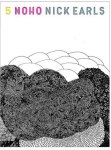
Nick Earls, NoHo (#BookReview)

Nick Earls, NoHoNick Earls is a Queensland-based writer known mostly for humorous fiction about contemporary life. While I’d heard of him, I hadn’t read any of his work when I attended a session involving him at the 2016 Canberra Writers Festival. The session was titled “Modern Masculinity” (my report). Earls was there because of the recent publication of his Wisdom Tree series of five novellas, of which NoHo is the fifth. I chose to buy it because of my familiarity with its setting, Los Angeles.

The Wisdom Tree books are beautifully designed (by Sandy Cull), and just lovely to hold. For that reason alone, I’m glad I finally decided to pick NoHo off the TBR pile and introduce myself to this writer. The books are apparently “subtly linked”, but I don’t think that means you need to read them all, or read them in any order. I certainly haven’t, and I enjoyed NoHo regardless.

The five books in the series are titled by the name of a place: 1. Gotham, 2. Venice, 3. Vancouver, 4. Juneau, and this one, 5. NoHo. NoHo refers to North Hollywood where 11-year-old Charlie is temporarily living with his mother and 12-year-old sister Cassidy who is seeking her break into the movie business. It’s not this Australian family’s first stay in Los Angeles, so Charlie knows the routine. As Cassidy and her mother do the rounds of agents and auditions, Charlie is left to himself. He chases wifi at audition venues. He goes “dumpster diving” for bottles and cans he can cash in at a recycling centre. And, in the last part of the story, he’s left at an art gallery to work on a school assignment that has been posted on the Distance Ed Blackboard site. Dropped off at 1.15pm, he is still there at gallery closing at 6pm because his sister has a “call-back” – and her needs come first. That’s the basic set up. Oh, and there is a father, but he is back in Australia, due to join the family at Christmas.

The story is told in the first person voice of Charlie. At the Canberra Writers Festival session I attended, Earls said that he used an 11 to 12-year-old boy as a protagonist because this is the age of starting to push boundaries, of wanting to be successfully independent but also being a little fearful. He wanted, he said, NoHo’s narrator to be naive about what he was seeing. That’s pretty much what he’s achieved: Charlie is starting to push boundaries – willing to be independent to a degree – but is not so confident that he isn’t a little anxious when his mum leaves him too long at the gallery. He’s lucky that a down-to-earth warm-hearted security guard, Wanda – “a tough woman who has had difficult times, I can tell” – stays with him.

Charlie isn’t, however, completely naive. He’s an intelligent boy who has some insight into the treadmill his mother and sister are on. He comments on the sorts of dream-and goal-focused mantras that his sister follows:

I’ve seen sports clothes that say, “Never, never, never give up,” but is that right? Never? Triple never? What if your dream is to win a marathon and your body with triple-never do that? It’ll finish, if you work at it, but it’ll never cross the line first and could fall apart trying. What if your dream is to be a movie star before you’re old, and it’s a million other people’s dreams as well? More than a million, actually. And some of them, lots of them, have perfect teeth and better luck than you.

Good questions, Charlie.

The second part of the novella involves Charlie choosing an art work for his art assignment. He chooses an anthropomorphic sculpture titled Family #5, which features three creatures made primarily from found objects. There’s irony or, at least, poignancy, in Charlie’s descriptions of the work:

She could have put three creatures in a row, ignoring each other, but these ones aren’t. They’re relating to each other in a way that says family. We can’t help but see it that way. It’s an instinct. So, it makes you connect with them more … It’s a good family. How a family should be, looking out for each other.

[and]

The child creature has no idea how good life is in this moment before trouble comes, however long the moment might be. It’s the care the parent creatures are showing that keeps you looking.

There’s also a lovely humorous little scene in the art gallery between the guard, Charlie, and a couple of other gallery visitors, that provides a wry little comment on art, what it is and what it means.

Anyhow, NoHo is an engaging, lightly told but not light story about family relationships. Charlie is generous, tolerant even, about his lot. He doesn’t rail about the attention his sister garners (and expects) again and again. It’s not an abusive or consciously neglectful family. The mother and sister don’t exactly ignore Charlie, nor are they intentionally cruel to him. It’s just that Cassidy is the centre of the mother’s energy and Charlie is expected to understand this. And this is, perhaps, where the naive narrator comes in. We see the family dynamics and recognise the potential pitfalls. Life is seemingly good now but trouble is very likely around the corner. Will the family unit hold?

I thoroughly enjoyed NoHo, partly for Earls’ evocation of the place – it made me laugh at times – but mainly for its delightful narrator and his insights into what makes a family. I wish him well!

Lisa (ANZLitLovers) has reviewed 1. Gotham and 2. Venice.

Nick Earls
NoHo
(Wisdom Tree 5)
Carlton South: Inkerman & Blunt, 2015
142pp.
ISBN: 9780992498573