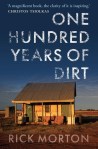
 Way back in the early 1970s when I was an undergraduate university student, I did some sociology, and one of our set books was The myth of equality by Tom Roper. It, and the courses around it, have informed ever since my understanding of how our society operates. Morton’s book One hundred years of dirt would have been perfect recommended reading for these studies. At the end of his first chapter he says this:
the single experience of my sister’s road to this point detonates the argument that equality of opportunity is stitched into our nationhood.
One hundred years of dirt, in other words, is not a simple memoir, as it might initially appear, but is, rather, a cry to Australians to see that the ideas, the myths we hold dear, are just that, myths.
But now, back to the beginning. Rick Morton, a thirty-something journalist, grew up tough. Born on a remote outback cattle station to a family of violent men, he experienced more than his share of trauma. Besides the intergenerational violence, he saw, when he was 7 years old, his older brother nearly burn to death and then, while his mother was away with that brother in hospital, saw his father carry on an affair with the governess. Not surprisingly, this caused a family breakdown, resulting in his mother leaving with her three children and no financial support. Poverty was theirs from then on. Morton speaks eloquently of the struggle to make ends meet, making it clear that families like theirs have no time to consider issues of the day, like climate change, when even a mooted $7 Medicare co-payment “could be the difference between eating or not for a person on the poverty line.”
Time, in fact, is an interesting issue – and one that resonated with me, too, as a feminist. Time is a commodity and how we choose to spend it – or are able to spend it – is political. Like hours at the hairdresser for example. (I know I am treading on sensitive toes here, but so be it.) Anyhow, as Morton says, “only some people have the time” to be “woke”. Just “living for so many people in Australia is exhausting“.
So, on the surface, One hundred years of dirt could be seen as your standard misery memoir: Boy from poor and violent background struggles against the odds to make it good as a journalist and successful author, with the help of a loving mother. It is that, superficially, but it’s much more too.
There is a general chronological movement to the story. It starts in the present, when that point quoted above about “equality of opportunity” is made. It then flashes back to the family’s origins on huge cattle properties in southwest Queensland, focusing particularly on grandfather George Morton and his hard, violent ways. From here, Morton moves more or less chronologically through his life, but each chapter is framed around a theme, so the chronology is not exact. The chapters, in fact, could be read as individual essays on their specific topic, such as drug (ice) addiction, mental health, being gay, class, and otherness or outsiderness. For some readers – as some in my bookgroup found I think – this departure from a more typical narrative flow may make the book feel disjointed. However, for me, the clear heralding in the first chapter that One hundred years of dirt was about more than one life had me engaged and ready, perhaps, for anything!
That anything turned out to be a personal exploration of how inequality plays out in contemporary Australia, supported by smatterings of socioeconomic data. Morton is, after all, a journalist, and so he brings his journalistic nose for facts to bear on his and his family’s personal experiences. In doing so, he provides example after example of how out of touch the knowledge class or “commentariat” is with the lives of those at the bottom end of the income stream. He discusses, for example, unpaid internships and the incomprehension that there are people who just can’t afford to take advantage of them. Journalism, which is rife with unpaid internships as a pathway in, has become one of “the most exclusive middle-class professions of the 21st century”. Morton describes the complete ignorance many in the middle-class have about their privilege:
There are those who have had the good fortune to never have felt other than the silkiness of privilege, their bubbles so perfect they cannot feel the gravel underneath.
He also writes:
As a nation, we have convinced ourselves that all of us has the same standing start, but this is neither true for the working class whites from broken families nor for those with black or brown skin. It’s not true for those without a proper education nor for those who were abused.
However, this book is not just bitter medicine. It has a spoonful of sugar. There are some genuinely funny moments – some of them black of course – and there are Morton’s wonderful turns of phrase which illustrate his meaning beautifully. He talks, for example, about working in a workplace surrounded by colleagues from “moderately wealthy and upper class families”:
… my colleagues [whom he did see as “dear friends”] could not fathom the life I had led. There were frequent attempts at empathy but it sounded a lot like people who were reading pre-prepared lines. Imagine a fish turning up to discover her psychologist is a Very Concerned sea eagle.
Love the fish analogy, but ouch, really, ouch! I feel I have a good understanding of inequality of opportunity and the ways in which it underpins disadvantage in Australia, but finding the right language in face-to-face encounters is not easy.
I have probably made this book sound like a sociological thesis or polemic. There is that, but it is still, at heart, a memoir. It’s simply that I have focused on what I see as the book’s main message. However, this message is wrapped up in a story about human beings, and particularly about Rick and his dearly loved mother Deb. He describes her as “the hero of this piece”, the mother who
sees boy as special, tells him he was sent here from that big night sky by beings unknown to report back on what he sees. She invented the aliens because she couldn’t see herself as the protagonist. She outsourced the explanation for her own success as a mother to the aliens out there.
Lovely Deb; thoughtful, provocative Rick. This is a powerful read.
Rick Morton
One hundred years of dirt
Carlton: Melbourne University Press, 2018
191pp.
ISBN: 9780522873153
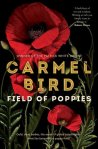 There are some writers whose personalities shine through so strongly that I have taken to characterising them in just a word or two. Jane Austen, for example, I think of as wickedly witty, and Helen Garner as heartbreakingly honest. Carmel Bird is another of these. I describe her as seriously cheeky, by which I don’t mean she is really cheeky, but that there’s seriousness beneath her surface cheekiness. The cheekiness makes me chuckle, but ruefully, suspiciously so, because I know that waiting nearby is very often a skewer of some sort. Her latest novel, Field of poppies, is no exception. Even the title is paradoxical, alluding as it does to both Monet’s pretty painting, Field of poppies in Argenteuil 1873, and the poppy fields of Flanders.
 Carmel Bird
 After reading the first few pages of Charlotte Wood’s latest novel, The weekend, I was starting to wonder how on earth these women, with “their same scratchy old ways”, could be described as “dearest friends”. They seemed so different, and so irritated or, sometimes, cowed by each other’s differences. Where was their point of connection I wondered, besides their late friend Sylvie?
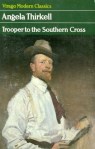 Unlike many, I think, I have not read Angela Thirkell’s Barsetshire novels which, I understand are very different to her only Australian-set novel, Trooper to the Southern Cross, which, in fact, she published under the male pseudonym of Leslie Parker. It has been on my TBR for some time, so I’m grateful that
 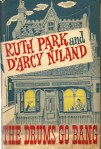 Volume 1 of Ruth Park’s autobiography, A fence around the cuckoo, covers the period of her life up to when she lands in Australia to marry D’Arcy Niland. Not being sure, perhaps, that there’d be a sequel, Park concludes with:
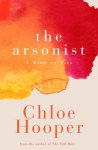 It may not have been the most sensible decision to read Chloe Hooper’s book, The arsonist, during Australia’s worst-ever bushfire week, but in fact I picked it up a few days before the crisis became evident, and once I started I couldn’t put it down. The arsonist tells the story of the man arrested and tried for one of the major fires in the




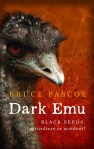 As last year, a good friend (from my library school days 45 years ago) has agreed for me to share her reading group’s schedule from this year:
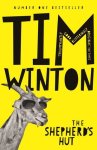 Tim Winton and Christos Tsiolkas have to be Australia’s foremost contemporary writers about men and boys, Tsiolkas doing for urban/surburban males what Winton does for small town/rural ones. Winton’s latest novel, The shepherd’s hut, continues his exploration of males in extremis. It’s strong, gritty, page-turning, and yet reflective too, which is not easy to pull-off.
 And the winner is: Anita Heiss’ Barbed wire and cherry blossoms.
 Whispering Gums