Stephen Orr, Shining like the sun (#BookReview)

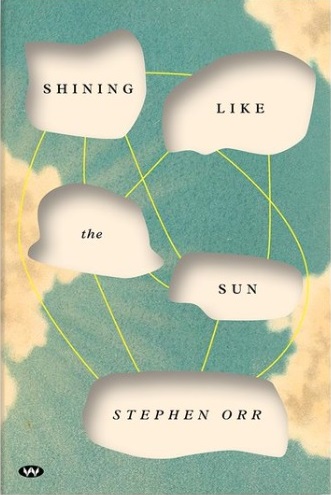
A question that confronts many young people as they reach adulthood – in western cultures at least – is, should I go or should I stay? This is particularly so for young people in small rural towns, and is the issue at the heart of Stephen Orr’s latest novel, Shining like the sun. Wilf Healy, the oldest of three brothers, stayed in Selwyn which is now dying, while his brother Colin left for the bright lights of America, as soon as he could. Now eighty years old, the widowed Wilf is confronting the rest of his life, and he is again pondering the question, except he is not thinking of heading for the bright lights but for Louth, the island on which he grew up. The thing is, that island is empty. No-one lives there now. But this doesn’t dissuade Wilf from his dream. Meanwhile, his 17-year-old great-nephew Connor is about to lose his Mum to cancer and sees no life for himself in Selwyn.

That is the basic plot. Selwyn is a fictional wheatbelt town in South Australia – only identified because Louth Island is a real island off the coast. Selwyn has “three hundred people coming and going, dying, lost in the cracks”, plus one of those signposts pointing to far-flung places around the world. Wilf lives and works in Monk’s pub, delivers the mail (not to mention vegetables and pharmaceuticals) around the community, and drives the school bus, all because he can’t say “no” when yet another job needs doing. However, as the novel opens, he’s had enough. He wants to retire, but his plans to leave are half-hearted at best – and not just because of his sense of responsibility for his sick niece Orla and her son, the disengaged Connor. Why?

The three epigraphs provide a clue, but so of course does the story. We follow Wilf through his days, as he engages with the people of Selwyn, people whom Orr paints beautifully with a description here, a piece of dialogue there. Take young Connor, “an out-of-tune whistle that just needed a breath of air”, or Bobby, the 85-year-old vegetable grower and builder of a kit plane “who is too old to deliver vegetables, but not fly”. Take the school principal, Noah, for whom Wilf drives the school bus. He’s a weak man, who, when a certain crunch comes, cannot stand up for right. And take Wilf’s school bus passengers who are so entertainingly individuated from the opinionated Sienna to the JK Rowling-wannabe Luke, from the withdrawn Trevor to the entitled bully Darcy. The bus-rides are interspersed through the novel, providing perfectly pitched comic relief while also playing an important role in moving the narrative along. It is something that happens on the bus that triggers the novel’s main crisis.

But, Wilf and Connor provide more than two ends of the “do I leave” spectrum. Wilf’s reflections on his growing up provide a stark contrast to the lives of Connor and his peers. Wilf, of course, came from the often brutal “spare the rod, and spoil the child” era, when you did what you were told and expected little else, whilst Connor is growing up at a time when young people are not directed, but encouraged to find themselves. Orr does not judge either way, but lets his readers see and ponder how it all plays out in a life.

I opened this post on the question of staying or going, identifying it as the novel’s central issue – which it is. However, this is not the theme. Rather, it is the question which gives the theme its push. The theme, itself, is something deeper, something so fundamentally human that it could almost sound trite, except it’s not. I’m talking about the idea of community, of connection, of being where you are part of something bigger, where you can make a difference to the lives of others. This might sound schmaltzy. However, because Orr’s characters are fallibly human, and because the socio-economic challenges facing small towns (in particular) are real, connection doesn’t come easily. Shining like the sun, with its cast of authentic characters and array of specific, yet also typical situations, teases out whether this connection, this idea of community, can in fact still fly.

“the possibility of being happy” (Connor)

Orr’s intention? There is surely some political intent, some wish to convey the value and importance of these towns which are being allowed to die through neglect and poor policy (“farms flattened”, and so on). But, it is also personal in terms of exploring what sustains human beings the most – a fancy job or house? Or connections with your community? Mr Gums and I wait for the cliched “tight-knit community” which is unfailingly trotted out after whatever disaster (natural or personal) is on the day’s news. Like most cliches, however, it has an element of truth. A “real” tight-knit community is worth its weight in gold – another cliche for you. Orr knows this, so does Wilf. There is nothing romantic to this story, just real life with all its questions and toughness alongside moments of humour and mutual support in which, even Connor realises, there is “the possibility of being happy”.

Shining like the sun, then, is another special Stephen Orr novel. It is not fancy in voice or structure. That is, it is told third person – albeit a first person narrator opens the proceedings – and is told chronologically, with occasional flashbacks as Wilf remembers his past. What makes it special is the quality of the descriptive writing, the knowing characterisation, the authentic dialogue, and the serious but warm tone leavened by natural humour that comes from ordinary people going about their business.

I read this novel immediately after my return from touring outback Queensland. We saw many small country towns, most of which were variations on the theme. Orr’s story rings true to these towns. Indeed, to end on a cliche – because, why not? – Shining like the sun is a love letter to an Australia little known to its mostly urban inhabitants. It has much to offer on both political and personal levels, but, beyond that, it is just a darned good read.

Stephen Orr
Shining like the sun
Mile End: Wakefield Press, 2024
313pp.
ISBN: 9781923042278
Review copy courtesy of Wakefield Press.
Jane Caro, The mother (#BookReview)

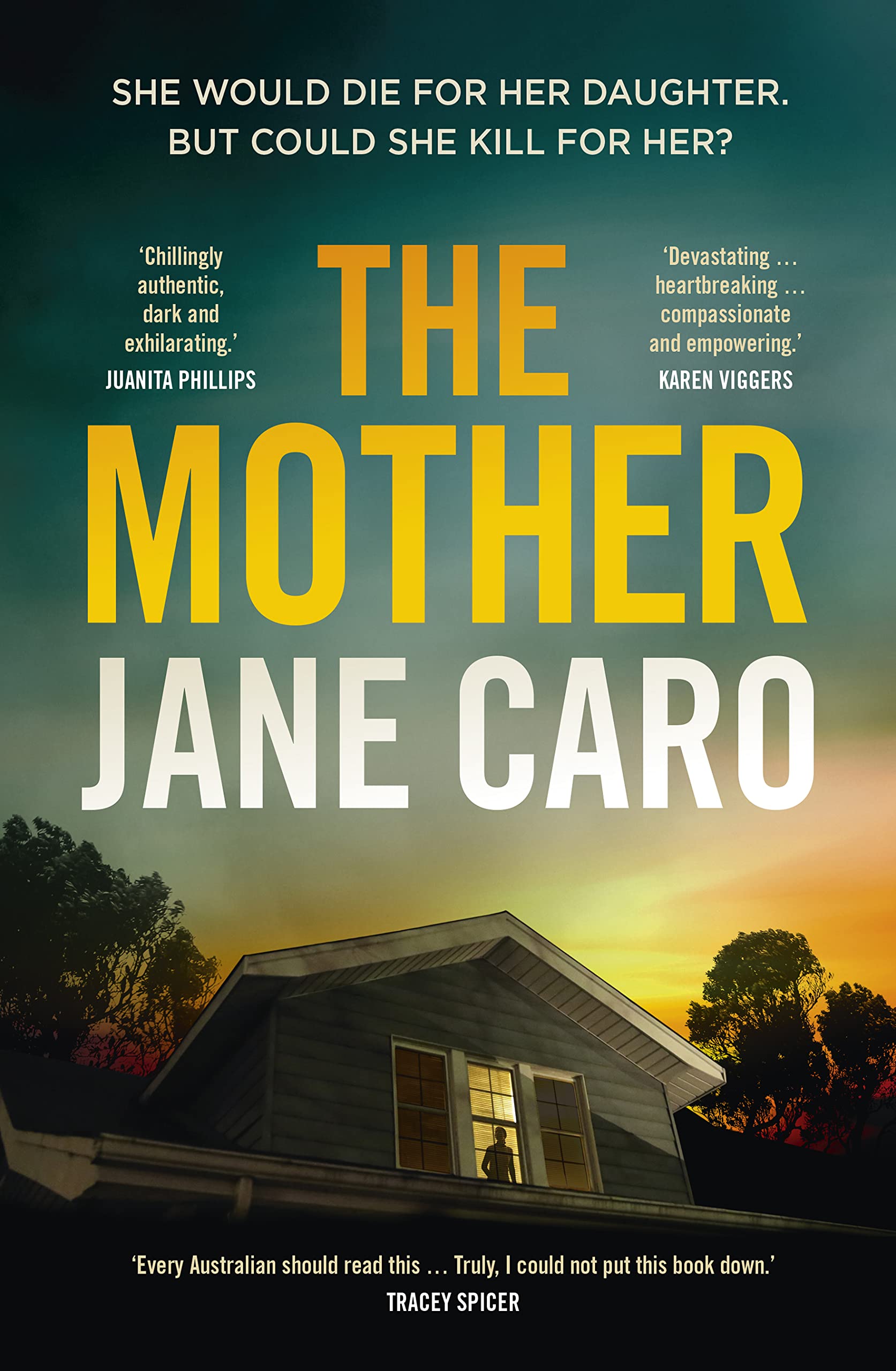
When my reading group scheduled Jane Caro’s debut novel, The mother, I was, I admit, not exactly enthusiastic, because my sense was that it was not going to be the sort of, shall I say, subtle writing I prefer. My sense was right, but I am not sorry I read it – partly because of the engaged discussion we had and partly for Caro’s intention.

The mother, then, is not a literary award-winner – the writing is fine but not exciting or breath-taking in the way I like – but, and it is a big but, it is an accessible, fictional exposé of the main points Jess Hill makes in her Stella Prize-winning See what you made me do: Power, control and domestic violence (my review). Hill explores family and domestic violence from every angle, but the most shocking and enlightening part for me concerned children, particularly the Family Court’s inability or refusal to see the risks to children from its parent access orders, even when the children themselves express fear. This point is powerfully made by Caro in her novel*.

But, let me step back a bit. The mother tells the story of 60-something middle-class Miriam Duffy who, widowed early in the novel, is pleased – and indeed grateful – when her emotional daughter, with whom she has had a tricky relationship, marries a perfect-seeming man. Gradually, however, little niggles about this relationship become bigger until one day they are confirmed when Ally returns home with two little children in tow, having left her husband. From here the situation deteriorates as the husband Nick escalates his bullying, predatory behaviour, and Miriam and Ally realise that the law is unable to protect them. The novel is described as a thriller, so I’ll give you just one more piece of information. It opens with a Prologue in which Miriam buys a handgun.

This brings me to the structure. After this Prologue, the novel is divided into two parts. In Part 1, Ally marries and soon after, Miriam is widowed. There is also a second, older, daughter who is in a stable marriage and has two children. During this part, Caro slowly drips out many of the flags that constitute coercive control, but that on their own don’t initially look like it or can be explained away – things like isolation from family and friends, use of a (demeaning) pet-name, jealousy, charm that is turned on and off at will, and surveillance, moving into sexual violence and gaslighting. This part ends with Ally’s return home. Part 2 commences four years later, and we are reminded of the Prologue, because Miriam is researching where she can buy a gun. Miriam and Ally have been systematically intimidated by Nick, and have reported his transgressions against Ally’s AVO (Apprehended Violence Order) again and again, but

Eventually they had stopped going to the police. It wasn’t that the cops weren’t sympathetic; it was just that they could not do anything.

In this part, Caro ratchets up the sense of helplessness (and hopelessness) the two women feel as Nick finds new ways to harass and terrify them. As I read it, I couldn’t help but think about all the news stories of recent years about murdered women and children. Nor could Miriam and Ally, but they turned the TV off the minute these stories came on. They were too close to home!

Like many issue-driven books, The mother did, as many in my reading group commented, feel didactic at times, and it is somewhat predictable. Some of us also felt that it was a little laboured in places. However, offsetting this is the novel’s characterisation and understanding of human nature. Caro conveys the complex human emotions we all experience under stress. She explores the lines and balance between what is acceptable in relationships and what is not, the fears about when to speak up, the justifications we try to find when things feel awry, and the feelings of guilt (particularly in mothers).

The mother is unapologetically a novel with a cause. With its compelling storyline and believable characters, it has a chance of reaching those who do not understand what coercive control is, and who do not realise that it crosses all demographics. Nick, for example, is a vet and Ally a PhD candidate. Miriam, a successful businesswoman, lives in comfortable North Shore Sydney.

This novel is being promoted primarily as a thriller, but I’m more inclined to see it as belonging to that long tradition of social problem novels. It may not be as sophisticated as the best of them, but its intention is clear, to drive social change. I hope it succeeds. I don’t imagine Jane Caro, or Jess Hill for that matter, will let matters lie until we see real, sustained change happening – and nor should we.

* This month there has been news about changes in family law in Australia, including removing the presumption of equal shared care, putting a focus on prioritising children’s best interests, and revamping the role of independent children’s lawyers. Time will tell what difference this makes in practice.

Jane Caro
The mother
Allen & Unwin, 2022
368pp.
ISBN: 9781761063893 
ASIN: B09MQ3PN1W

Beth H. Piatote, Beading lesson (#Review)

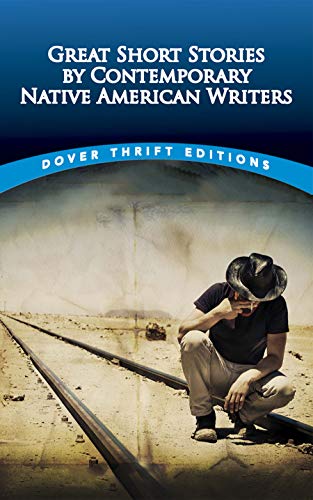
Beth Piatote’s “Beading lesson” is the thirteenth of fourteen stories in the anthology, Great short stories by contemporary Native American writers, and with it, we move from the 1990s to the 2000s.

Beth H Piatote

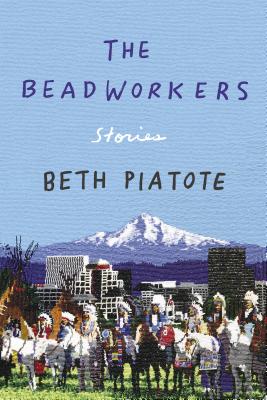
Anthology editor Bob Blaisdell provides very little information about Piatote. It simply says that she is Nez Perce and a Professor of Native American Studies at University of California, Berkeley. Wikipedia provides a little more, but not much in terms of life history. It tells us that she is a scholar and author, that she is “a member of Chief Joseph’s Tribe and the Colville Confederated Tribes”. And it expands on her academic qualifications and achievements a bit more. It seems most of her writing is academic, but she has had one short story collection published, The beadworkers, published by CounterPoint Press in 2019.

“Beading lesson”

“Beading lesson” is the shortest story in the anthology. Blaisdell gives its original date as 2002, but the source for the story is a 2008 Oxford University Press anthology, Reckonings: Contemporary short fiction by Native American women. However, I believe, from the GoodReads description of The beadworkers, that the story was also included there.

GoodReads describes The beadworkers, starting with, “A woman teaches her niece to make a pair of beaded earrings, while ruminating on a fractured relationship”. This perfectly captures the setting of “Beading lesson”, but of course there’s much more to it. Before I get onto that, however, I’ll add that the collection sounds interestingly varied, as it includes stories set in the 1960s and 1890. GoodReads concludes its description/promo with “Formally inventive, witty, and generous, the works in this singular debut collection draw on Indigenous aesthetics and forms to offer a powerful, sustaining vision of Native life in the Americas”. I haven’t read the other stories, but my guess from reading “Beading lesson” is that the collection explores the cultural, social, political and economic role and implications of beadwork, and that it also uses the idea of beadwork literally, as a practice, and symbolically, to represent the wider culture.

So now, “Beading lesson”. The fractured relationship mentioned by GoodReads is with the aunt’s sister, that is, the niece’s mother. The story is told first person by the aunt, who gently and patiently shows her niece the intricacies of beading, as they make some earrings for the mother. However, as she passes on to her niece an important cultural skill, she also shares values and information that she believes are important for her niece to know. In other words, the skill teaching is part of wider mentoring, which is what all good skill teaching is about.

What makes this story interesting is the subject of this mentoring. It’s multifold – to pass on cultural traditions, to teach the niece some life-skills, and, eventually, maybe, to lead to a repair in the broken relationship with her sister. It appears that this sister, the youngest in her family, had been spoilt. As a result, she had not learnt the skills our narrator had learnt, and has lost culture. The aunt tells her niece:

I think sometimes she wishes she learnt to bead, but she didn’t want to when she was little. She was the youngest, so I think she was a little spoiled but don’t tell her I said that. She didn’t have to do things she didn’t want to, she didn’t even have to go to boarding school. 

The boarding school reference is intriguing. Our narrator is positive about her experience, when, quite often, such schools were sites of cultural loss.

As the lesson progresses, we learn that the narrator is passing on beadskills to men in prison, which gives them skill and pride. The subtle message here of course concerns Indigenous incarceration. We also learn that her beadwork has supported her in tough times, through times of “livin’ skinny”. And, we gain some insight into the politics of, let us say, “Indigenous arts and crafts”. The aunt tells her niece that when some people

buy your beadwork, they think it should last forever. Somebody’s car breaks down, he knows he got to take it to the shop, pay someone to get it goin’ again. But not with beadwork — not with something an Indian made. No, they bring it back 10 years later and they want you to fix it for free! They think because an Indian makes it, it’s got to last forever. Just think if the Indians did that with all the things the government made for us. Hey, you got to fix it for free! 

The use of vernacular for the aunt’s story could lull readers into thinking she is a sweet but simple old lady. However, as the story builds, it becomes increasingly clear that she knows exactly what she is about. We see her to be kind, wise, and generous, where it is warranted, but not stupid. She knows the value and importance of what she does, but she also knows exploitation and is resilient in its face. She knows that maintaining cultural practice is important to her people’s continuation. This a story in which the personal is quietly, but absolutely, infused with the political. It’s clever and delightful to read.

Beth H. Piatote
“Beading lesson” (orig. pub. 2002)
in Bob Blaisdell (ed.), Great short stories by contemporary Native American writers
Garden City: Dover Publications, 2014
pp. 100-103
ISBN: 9780486490953

Available online at High Country News.

Sebastian Barry, The secret scripture

What follows here is an edited version of the first ever review post I wrote – back in December 2008 on a Blogger blog I set up for my reading group. I’ve been meaning for some time to bring it over here because I’d like to have Sebastian Barry represented on my blog! However, my review was written in a different style to the one I use now, so I’ve tried to update it a bit. This is difficult given it’s a long time since I read it! I apologise for its awkwardness.

I read The secret scripture because I’d heard great things about his previous novel, A long long way, which, like The secret scripture, was shortlisted for the Booker prize. The book is set in Ireland in contemporary times, with flashbacks to the 1930s, and is told through the voices of two characters: Roseanne, a centenarian who has lived in a mental hospital for over 50 years, and Dr Grene, a psychiatrist at the institution for 35 years. As Roseanne writes her life-story, which she hides under boards in her room, Dr Grene investigates the reasons for her being there with a view to deciding her future, because the hospital is slated for demolition. His understanding of her story and her own telling of it differ. What falls out is a tortured story of religion, family and politics at a time in Ireland when sides had to be taken, rules took precedence, and humanity was in short supply.

As he investigates Roseanne, Dr Grene, who is grieving over the death of his wife, Bet, spends a lot of time with Roseanne, and shares his own story with her.

“the assault of withering truth”

There was so much to like about the novel – the language, the characters (albeit most are loosely drawn), and the themes. I particularly liked Barry’s musings on “truth” and “history”, which is not new of course. I also liked the connection made between truth and health, that Roseanne’s “truth” was a healthy one.

Roseanne is intriguing as a narrator. I would call her reliable not because she tells us the correct facts necessarily (as it appears that she may not have) but because, as Grene says at the end, she tells us “her” truth and this truth “radiated health”. It may not hold up in a court of law but it gets to the heart of who Roseanne is. It is “vexing and worrying”, though, as Roseanne says, when different people’s truths (such as Fr Gaunt’s and Roseanne’s) cross each other. How true is (the perfectly named) Father Gaunt’s anyhow? His conveys the facts but contains no humanity, let alone empathy. He has no idea of who Roseanne is, but he does know the “law” (of the church at least).

“History, as far as I can see, is not the arrangement of what happens, but a fabulous arrangement of surmises and guesses held up as a banner against the assault of withering truth.” 

As those of you who know me might imagine, the exploration of truth was one of my favourite aspects of the book. In this novel it is so humanely nuanced, suggesting that we should look out for two truths – the facts and inner meaning – and decide which one should take precedence in any given situation. Facts, as we know only too well, are important but we should also heed the “hidden inner” truth as well. In relationships, for example, perhaps the “hidden inner” truth is equally if not more important. Why a person is saying or doing something, for example, may be more critical than what they are saying or doing.

Then there’s the language. It is beautiful, poetic. Poetic usually means two things to me, mostly in combination – language that is rich in imagery and that has a strong rhythm. Barry’s writing has wonderful rhythm, which he creates through the use of repetition, and particularly thought the careful use of punctuation, and long sentences interspersed with short sentences to give a lovely flow. This example near the opening almost reads like blank verse:

“That place where I was born was a cold town. Even the mountains stood sway. They were not sure, no more than me, of that dark spot, those same mountains.

There was a black river that flowed through the town, and if it had no grace for mortal beings, it did for swans, and many swans resorted there, and even rode the river like some kind of plunging animals, in floods.

The river also took the rubbish down to the sea, and bits of things that were once owned by people and pulled form the banks, and bodies too, if rarely, oh and poor babies, that were embarrassments, the odd time. The speed and depth of the river would have been a great friend to secrecy.

That is Sligo town I mean.”

He sets a powerful tone in these opening few paras – the rhythm is slow but with just an edge of awkwardness that catches you off guard. And the language conveys something untoward – “cold”, “dark”, “black”, “rubbish”, “secrecy”. These are not repeated but, used in combination in such a few concentrated paragraphs, they give a sense of the story to come. It’s an evocative opening and it engaged me quickly.

As for characters, Roseanne engaged me from the start; she always felt authentic. I wasn’t always so sure of Dr Grene. Did we need all the Bet stuff, albeit was moving? Perhaps, given the role of men in women’s lives, and in Roseanne’s in particular, we are meant to be on guard. However, he particularly started to lose me towards the end, when he started to more actively investigate Roseanne’s history. From a plot point of view it was logical and understandable, but the voice became more prosaic, ordinary, in some sense that seemed to lose Grene’s particularity.

My main issue with the book was, in fact, the ending. It was contrived. Maybe Dr Grene’s voice felt more forced towards the end because even Barry knew his plot resolution was a bit too neat and didn’t quite know how to do it! Fortunately, plots aren’t the main indicator for me of a good read.

Dr Grene’s choosing, in the last para, the bright and open rose rather than a uniform neat one, suggests an acceptance of being open to many truths, to the imperfections of the world, than to that tidy, dry version of the world that we get from Fr. Gaunt. This softens the neat plot conclusion somewhat – as does the fact that Barry doesn’t go in for the full cliched emotions that such a story might commonly close on. Consequently, despite some misgivings, I’d happily read more Barry because I loved the heart and openness in his exploration of truth, and his writing is so engaging.

Kimbofo also reviewed this way back when!

Sebastian Barry
The secret scripture
London: Faber and Faber, 2008
300pp.

Monday musings on Australian literature: Nettie Palmer on Australian novels

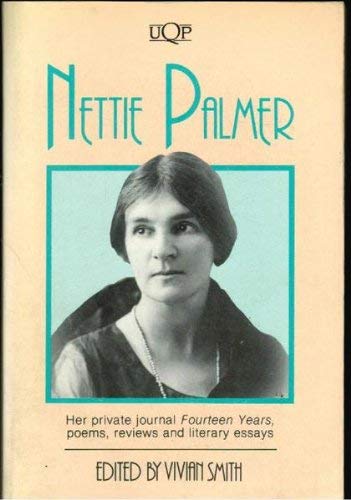
Nettie Palmer has appeared a few times before on this blog, and is likely to appear again, because she was such an active member of Australia’s early to mid-twentieth century literary community, and she was a keen supporter and promoter of Australian writing and writers. Three years ago, I wrote about an article she’d written in 1930 in which she discussed pleasing “advances” in the Australian novel. This post draws on an article she wrote for the Illustrated Tasmanian Mail, a couple of years earlier, on 15 August 1928.

The article seems to have been inspired by the novel competition the Bulletin ran that year. There were, according to Palmer, some 536 entries, which she suggests is “a matter for national astonishment”, given the effort it takes to write a novel.

While only few can win, she says, “the lift in the status of the Australian novel will be considerable”. She goes on to talk about the challenge the judges face, and suggests that, with all that reading to do, their minds are likely to be ‘attracted by what was “striking” rather than what was merely solid’. She says that Australia’s chief literary prize-winner to date had been “that rather esoteric writer, Katharine Susannah Prichard”, and identifies some of the prizes she had won – for The pioneers (1915, my review), a short story, and a play. Will she win again, Palmer wonders. She wouldn’t be surprised if she did, Palmer continues, because Prichard “has always added something fresh and original to our literary store”. As it turns out, Prichard did win this prize, for Coonardoo, but jointly with The house is built by the collaborative novelists known as M. Barnard Eldershaw.

However, I have digressed a little, as my point here is to share Palmer’s thoughts on the Australian novel. Her life’s work seems to have been, at least partly, to define the Australian novel. Anyhow, she comments that she had been “examining a great many Australian stories in magazines, journals, books and manuscripts” and one of the things that has struck her was “the immense variety of geographical angles from which Australia can be regarded”. She takes, as an example, the idea of “the north-west”. For a Victorian, this means “the Mallee country, with its acres cleared for wheat, running up to the irrigated country with Mildura and its fruits and close settlement of semi-urban, rather ‘American’ homes”, while in South Australia it means “the interior, near the transcontinental line, given up to sheep”. In Western Australia, on the other hand, it’s “the country used by H. E. Riemann in his book of short stories, Nor’-West o’ West, set in Broome and its hinterland”. And so on … This, she says, “is just to name one half-point of the compass”. She discusses this a little more, but then says the thing that I really wanted to share:

The point is … that the life and problems of various parts of Australia show immense contrasts, from pearling at Broome to legislating at Canberra. Our writers have the task of gradually revealing it all to us.

This is it, it seems to me, in a nutshell. At some fundamental level, an Australian novel – or any nationality’s novel for that matter – is one which reveals who we are, in all our richness and diversity. It is what, I think, Miles Franklin intended by endowing an award for a novel that conveys “Australian life in any of its phases”. For Palmer, and I suspect Franklin, there was an awareness of the role the arts can play in nation-building, which is understandable given their times. The thing is, we are still nation-building – maybe always will be – and so today, we have First Nations writers and migrant-background writers trying hard to reveal to us their view of Australia. For as long as society keeps changing, there is a role for writers to “reveal it all to us” – even while they also explore the universal – don’t you think?

PS: On Wednesday, Mr Gums and I start a 14-day outback Queensland tour. I may not manage to write Monday Musings on the next two Mondays, but we’ll see. Apologies in advance for this potential hiatus! Monday Musings will not be lost forever.

Kurt Vonnegut, Slaughterhouse-Five (#BookReview)

While my reading group’s main reading fare has, from the start, been contemporary fiction, we also mix it up a bit. We do non-fiction, for example, and most years we try to do a classic. Over the years we’ve done Jane Austen, Elizabeth von Arnim, Anton Chekhov, EM Forster, and Randolph Stow, to name a few. This year we turned to Kurt Vonnegut, and, because we couldn’t decide which book to do, we narrowed it to two – Cat’s cradle and Slaughterhouse-Five – and let members decide. You can tell from the post title which one I chose. This was because I have read Cat’s cradle, albeit decades ago. Most of the group, however, read Cat’s cradle, because they’d read Slaughterhouse-Five before.

So, Slaughterhouse-Five it is then – and I’m confronted by the old challenge of what to say about a classic, and a cult classic at that. This book has been analysed ad infinitum, and been found, as the decades have trundled by, to retain its relevance to new generations. However, before I say more, let me give a very brief synopsis, just in case there’s someone out there who doesn’t know the story.

“jumbled and jangled”

Ha, did I say brief synopsis? Easier said than done, but I’ll give it a try. Slaughterhouse-Five tells the story of Billy Pilgrim, from his early years, through his time as an American soldier during World War II including being in Dresden when it was bombed, to the post-war years. During his life, Billy is also abducted by flying saucer and taken to the planet of Tralfamadore, where he is displayed in a zoo. The critical issue underpinning all this is that Billy was damaged by his wartime experiences, something we now recognise as PTSD. Vonnegut conveys – and represents – Billy’s discombobulation, his trauma, through a complex non-linear, non-chronological narrative, in which Billy, who “has come unstuck in time”, travels not only back and forth through time, but also back and forth between Earth and Tralfamadore. 

Slaughterhouse-Five is, as a result, a challenging, sometimes mystifying read, but it is also an exhilarating one, because Vonnegut tells his story through satire and absurdity, both of which I love. In the first chapter, the narrator, who is Vonnegut, tells us about writing the book we are now reading. As he hands his finished book to the publisher, he says

It is so short and jumbled and jangled, Sam, because there is nothing intelligent to say about a massacre.

Alongside the occasional appearance of this first-person narrator, we have the unsuccessful science fiction writer Kilgore Trout, who can also be read as a version – caricature – of Vonnegut. His “unpopularity was deserved”, the narrator tells us. “His prose was frightful. Only his ideas were good”. But, Billy loves him. We first meet Trout when Billy is introduced to him by Rosewater, another patient in the hospital to which Billy had committed himself when he feels he is “going crazy”:

Rosewater was twice as smart as Billy, but he and Billy were dealing with similar crises in similar ways. They had both found life meaningless, partly because of what they had seen in war. Rosewater, for instance, had shot a fourteen-year-old fireman, mistaking him for a German soldier. So it goes. And Billy had seen the greatest massacre in European history, which was the fire-bombing of Dresden. So it goes.

If you’ve read the novel, you will know that “so it goes” is its over-riding refrain. Used over 100 times, at moments of murder, death, and other disasters, it functions as a motif, one that both underlines and undermines the horror, by drawing attention to it, then passing it off. The constant opposition, in the novel, of the serious with the offhand keeps the reader unsettled, which is part of the point.

The occasional self-conscious appearance of the author/Vonnegut and the references to Kilgore Trout, along with its story-within-a-story framework, its wild playing with time and place, its fragmentary approach to storytelling, and its unapologetic undermining of “reality”, make this book a postmodern work, if that interests you. By this I mean what sort of work it is doesn’t matter, really. It’s what the work says or makes you feel that really counts. However, it’s these features and techniques which enable Vonnegut to convey what he wants to say in such a powerful way. The how of it is inseparable from the meaning of it.

Slaughterhouse-Five is said to be about many things, including war and pacifism, fate and free will, our experience of time. I could discuss each of these in turn, but the academics already have. I’ll simply say that my primary takeaway is that it’s about the absurdity and incomprehensibility of life and, by example, about how our everyman Billy Pilgrim copes (or doesn’t) with such life.

Slaughterhouse-Five was published at the height of the Vietnam War and the anti-war movement. It was, it seems, the right novel at the right time. Although Vonnegut had had some success before, this was the novel that apparently established him. I can see why. With wars just keeping on coming – and being just as horrific and absurd as the ones that came before them, I can also see why this novel continues to speak to new generations of readers. I mean, how can you not laugh at Billy on display in Tralfamadore:

Then he did exercises he had learned in the Army—straddle jumps, deep knee bends, sit-ups and push-ups. Most Tralfamadorians had no way of knowing Billy’s body and face were not beautiful. They supposed that he was a splendid specimen. This had a pleasant effect on Billy, who began to enjoy his body for the first time.

And, you know what? I’m going to leave you right here, because if this doesn’t convey why this book is such a complex, funny, humane read, I don’t know what will.

Kurt Vonnegut
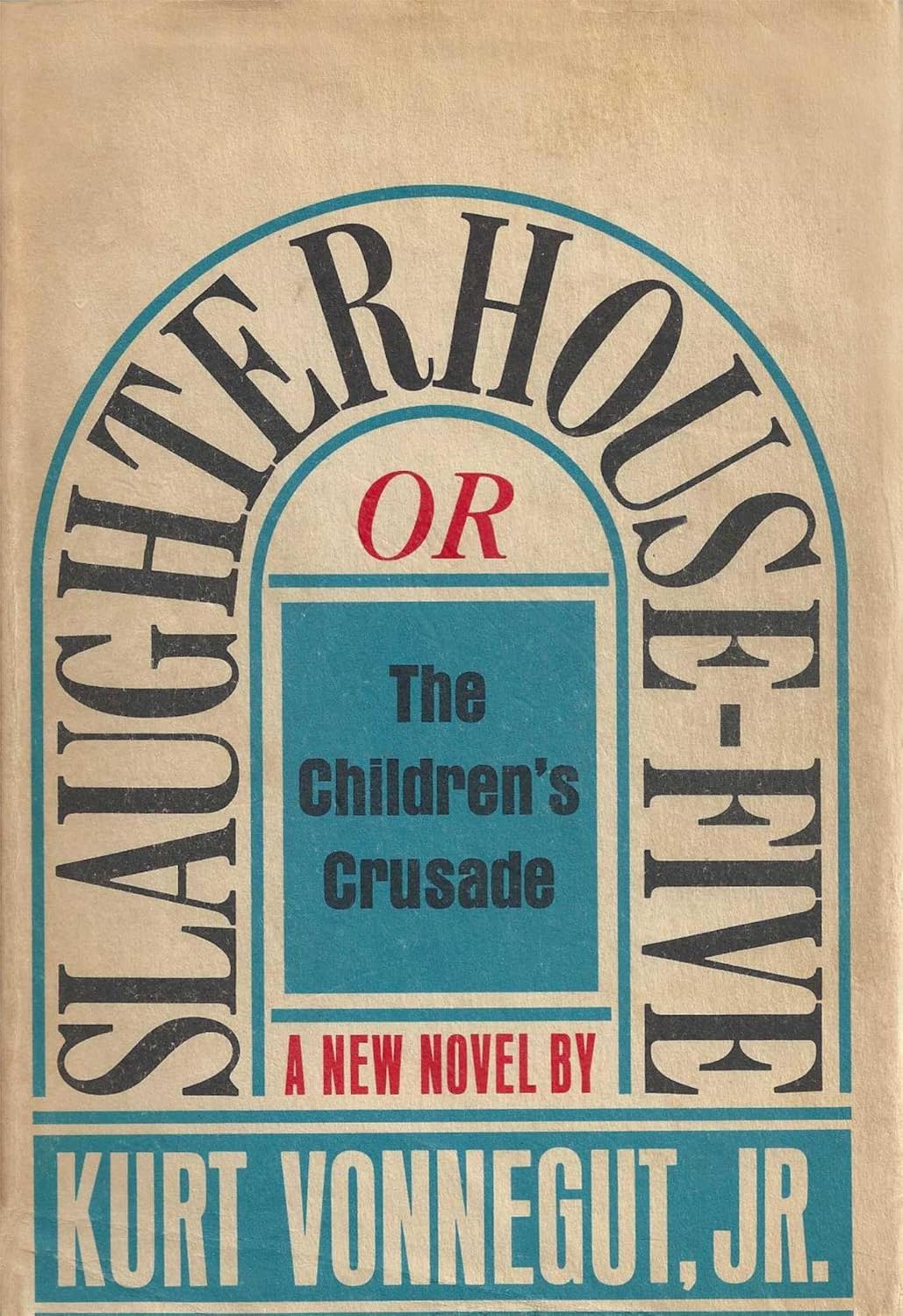
Slaughterhouse-Five, or, The children’s crusade
Horizon Ridge Publishing, 2024 (Orig. pub. 1969)
199pp.
ASIN: ‎ B0D9SKLL68

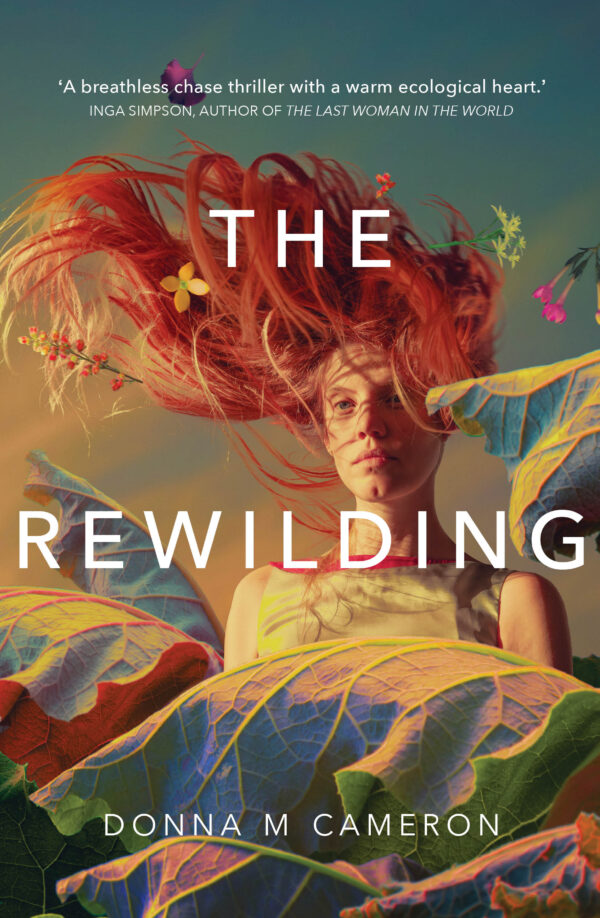
Donna M. Cameron, The rewilding (#BookReview)

Quite coincidentally, earlier this month, I read and posted on Willa Cather’s short story “The bookkeeper’s wife” which commences with a young man, Percy Bixby, sitting in his office deciding to do something in order to keep his flashy fiancée Stella. That was published in 1916. I have now just finished Donna M. Cameron’s novel, The rewilding, which was published in 2024. It commences with another young man, Jagger Eckerman, is sitting in his office deciding to do something that will lose him his flashy fiancée Lola. Both young men are caught up in fraud, Percy of his own making, Jagger unwittingly, though that doesn’t make him entirely blameless. From here the stories part company, so we will leave Percy, whose story I’ve already told, and look at 27-year-old Jagger.

Jagger has been living the high life. Caught up in his own privileged lifestyle, he’s been carelessly signing documents he shouldn’t, until finally the penny drops and he wakes “up to the fact that every aspect of his life is a farce”. So, he clicks Send on his whistle-blowing email and scarpers. The problem is that the only place he can think to scarper to is a cave in a national park south of Sydney, and when he gets there he finds someone else already holed up in the same spot, the 24-year-old “feral” eco-warrior, Nia Moretti. As the accompanying publicity sheet says, it is hatred at first sight, but they soon realise they need each other, whether they like it or not.

The rewilding starts with a bang and barely lets up for the length of its 300 pages. It’s a genre-bending work of eco-literature that combines thriller, road story and romance. The central thriller-driven plot is not my favourite type of story – I’m not much interested in watching or reading about chases, violence and suspense – but Cameron handles her material confidently, creating a book that I enjoyed reading despite myself. I just hurried through the bits that were less interesting to me. Why I was happy to read it is what I want to focus on here.

First, there’s the genre-bending aspect. Cameron balances the thriller components with more reflective and tender sections, with moments of interpersonal tension, with touches of humour, gorgeous natural descriptions, and serious themes. Second, the story is well-paced, and the writing fresh but accessible. It is primarily told third person through Jagger’s perspective, but this is occasionally interspersed with short chapters in Nia’s voice, in which she speaks to a mysterious “you”. These provide additional insights into Nia that Jagger can’t know, while also increasing the mystery. Who is this “you”? What has happened to Nia? Third, the two main characters are nicely developed. Jagger is on the run, scared and uncertain about what his future holds. Still grieving his mother’s death and the mistakes he’s made, he is fundamentally decent and an optimist. Nia, on the other hand, is an uncompromising idealist, and pessimistic, but reveals a softer side. Gradually, as is typical of the romance genre, the antagonism between them is relaxed, although not, of course, without setbacks.

“a capitalist suit” versus “the feral”

And finally, there are the themes. For me, a good story isn’t enough. I need some meat, some ideas that make the time I put into reading worthwhile, and this book has meat – personal and political. In the personal realm, Jagger is a young man who had lost his way but, when some truths become clear to him – when he realises his relationship had been built on a lie and his workplace was engaging in a waste removal scam – his better self, the one his recently dead mother had so carefully tried to engender in him, comes to the fore. In his suit and fancy shoes, he surprises Nia with his deep knowledge of and love for nature. Likewise, Nia is struggling with a personal loss. She is resentful of the “capitalist suit” who comes into her cave, and finds ways of using him – and his money – to her own ends but, despite her toughness, she has a heart. So, on the personal level, The rewilding is a novel about values, about the lines you draw, about the life you choose to live and what that means personally and …

politically, because this is also a novel about climate activism. Nia and her radical Earth Rebellion mates, the Lorax, are determined to save the planet. Their focus is a mining operation in northern Queensland which is about to proceed without permission. First, though, she has something to do in disaster-struck, flooded Brisbane, something that puts her and Jagger’s lives at risk. On the run, and being followed by hit men, he has no option but to go along with the only person who can help him. It is at this point, before the final dramatic confrontation at the mine, that Nia starts to unbend a little towards Jagger and his perspective.

“Why be scared of change?”

The rewilding is a wild, dramatic novel. It does push the boundaries of credibility at times, but probably no more than you expect in a thriller. Ultimately, through her characters and their fierce, lively conversations, and through her fast-paced plot which offers a few scenarios, Cameron explores the critical issues confronting us and asks the big questions we are asking, without resorting to overt didacticism.

Climate change novels can be bleak, but many authors, even those writing the bleakest of stories, talk at writers festivals about wanting to leave their readers with some hope. That this was Cameron’s intention is foreshadowed in the epigraph from Tolkien’s The lord of the rings, “Where there’s life, there’s hope”. So, at the end, certain rapprochements are achieved, but the conclusion is real rather than simplistic. It recognises that life is messy and change is hard but that it’s worth keeping on trying. The rewilding is a worthy addition to Australia’s eco-literature field.

Donna M. Cameron
The rewilding
Melbourne: Transit Lounge, 2024
309pp.
ISBN: 9781923023062

(Review copy courtesy Transit Lounge, via publicist Scott Eathorne of Quikmark Media)

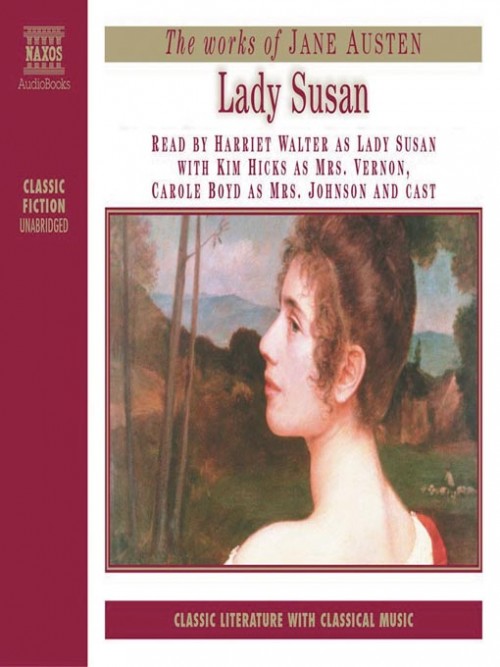
Jane Austen, Lady Susan, revisited (#BookReview)

I have read Jane Austen’s Lady Susan several times, including with my local Jane Austen group in 2014 (my review). That now being ten years ago, we decided it was time to read – and consider – it again. However, as my time was tight, I decided to try an audiobook version, and found a Naxos edition in my library. Mr Gums and I listened to it on our 650+ km drive home from Melbourne, and found it excellent.

For those of you unfamiliar with Austen’s minor works, Lady Susan is, as far as we know, the first novel (novella) that Austen completed, but it was not published during her life-time, for the simple fact that she never sent it to a publisher. Written, scholars believe, in 1793/94, when she was still a teen, it was not published until 1871, decades after her death, when her nephew James Edward Austen-Leigh included it in his memoir of her. It has since been adapted to film, television, stage and book. The best known of these is probably the 2016 film, which was titled Love & friendship, a strange decision given that is the title of another work of Austen juvenilia (my post).

I gave a brief plot summary in my previous post, but will again here. Lady Susan is a bewitching, 35-year-old widow of four months, who is already on the prowl for a new, wealthy husband. The novel opens with her needing to leave Langford, where she’d been staying with the Manwarings, because she was having an affair with the married man of the house, and had seduced his daughter’s suitor, Sir James Martin. She goes to stay with her brother-in-law Charles Vernon and his wife Catherine, whom she’d done her best to dissuade him from marrying. She’s not long there before Reginald, Catherine’s brother, arrives to check her out because, from what he’s heard,

Lady Susan possesses a degree of captivating deceit which must be pleasing to witness and detect.

After all, she is “the most accomplished coquette in England”! Of course, the inevitable happens and the artful Lady Susan captivates him. Meanwhile, Lady Susan wants her shy, 16-year-old daughter, Frederica, to marry Sir James, the man she’d seduced away from Miss Manwaring – but sweet, sensible Frederica wants none of this weak “rattle” of a man. And so it continues …

Lady Susan, then, is a fairly simple tale, containing the deceits and silliness common to its 18th century genre, but also showing restraint and innovation which hint of the novelist to come – her wit and irony, her commentary on human nature, and her themes. I wrote about this too in my last post and don’t plan to repeat it here. There are many angles from which the book can be considered, and this time I’m interested in another, its form as an epistolary novel.

The epistolary novel was common in the eighteenth century. It’s something Austen tried again with Elinor and Marianne, which she wrote around 1795 to 1797, but later rewrote in her famous third person omniscient voice. Retitled Sense and sensibility, it became her first published novel in 1811. Pride and prejudice’s precursor, First impressions, may also have started as an epistolary novel. It’s interesting, then, that although she made a “fair copy” of Lady Susan in 1805 she didn’t rewrite it too. Why she didn’t is one of the many mysteries of Austen’s life. Perhaps it was the subject matter, because this is not Austen’s usual fare. Lady Susan belongs more to the 18th century tradition of wickedness, lasciviousness and adultery, forced marriages, and moralistic resolutions. Characters tend to be types rather than complex beings, and the novels are racily written, with a broad brush rather than a fine pen. This is true of Lady Susan, but there are departures. For a start it’s a novella not one of those 18th century tomes!

I might be going out on a limb here, because, while I have read a couple of 18th century epistolary novels, including Samuel Richardson’s, my memory has faded somewhat. However, Wikipedia helps me out a bit. Its article on the epistolary form says that there are three main types: monophonic (comprising the letters of only one character); dialogic (using letters of two characters); and polyphonic (which has three or more letter-writing characters). Lady Susan is an example of the last one. The main letter writers are Lady Susan (mostly to her friend Alicia Johnson in London) and her sister-in-law Catherine Vernon (mostly to her mother Lady De Courcy), but we also see some letters back from these correspondents, making four letter writers. But wait, there’s more! There are also letters – albeit just one in two cases – from others, namely Reginald De Courcy, his father Sir Reginald De Courcy, and Lady Susan’s daughter Frederica.

So, in this short book, we have 7 letter writers. But wait, there’s even more. To conclude the novel, Austen discards the epistolary-form and writes a first person denouement, which includes commentary like this:

Whether Lady Susan was or was not happy in her second Choice — I do not see how it can ever be ascertained — for who would take her assurance of it on either side of the question? The World must judge from Probability; she had nothing against her but her Husband & her Conscience.

The thing that intrigued me most as I was “reading” Lady Susan this time was the form. Austen used it for Love and Freindship, Lady Susan, Elinor and Marianne, and perhaps First impressions. But she abandoned it for the style for which she is recognised as a significant innovator – a third person narrative characterised by free indirect discourse, meaning the narrator’s voice embodies the perspectives of the characters. As John Mullan, writing primarily about Emma, explains: “Before Austen, novelists chose between first-person narrative (letting us into the mind of a character, but limiting us to his or her understanding) and third-person narrative (allowing us a God-like view of all the characters, but making them pieces in an authorial game). Austen miraculously combined the internal and the external”.

So, my thinking is that she started by using a form with which she was familiar as a reader and which was popular with readers of the day, but whose limitations she soon started to feel. Her using a relatively large number of letter writers, enabling us to see Lady Susan in particular from different perspectives, and her turning to an over-arching first person narrator for her conclusion, suggests that she understood the limitations of writing a novel-in-letters in terms of developing complex realistic characters, of managing plot, and of incorporating narratorial commentary. The rest, as they say, is history.

Thoughts anyone?

Jane Austen
Lady Susan (Classic Literature with Classic Music)
Naxos Audiobook, 2005
Duration: 2hrs 30mins

Available in e-text.

Monday musings on Australian literature: Forgotten writers 7, Grace Ethel Martyr

The forgotten writers I have been writing about vary greatly, and most will stay forgotten because, to be honest, their time has past and not all writing remains relevant. This is not to say, however, that they are not worth revisiting. They are, after all, part of our literary culture, and they paved ways, whether we are aware of it or not. Grace Ethel Martyr is an example. She is notable enough to have entries in AustLit and Wikipedia, and was interesting enough in her time to catch the attention of Zora Cross (who wrote about her for a series she did for The Australian Women’s Mirror.)

Martyr is another writer I have posted about on the Australian Women Writers (AWW) blog, but again, I am not including here the piece written by her that I published there. Titled “The blue jar”, its subject is domestic violence, though that term would not have been used then. It’s not typical of her best-known work. However, in the light of our own times, it is worth reading. It is told from the 1920s perspective that women just need to put up with brutal husbands and manage as best they can. They didn’t have much choice. But, in this story, a bit of luck comes the wife’s way … check it out at AWW.

Grace Ethel Martyr

Grace Ethel Martyr (1888-1934) was a Victorian-born poet, short story writer and journalist. She wrote under various permutations of her name – G. E. Martyr; E. Martyr; Ethel Martyr; Grace E. Martyr; and G. Ethel Martyr.

Born in Ballarat, she was the only daughter of James Kent and Grace Flora Martyr. She grew up in Maldon in central Victoria, but spent much of her working life in Bendigo. She apparently passed the University of Melbourne matriculation examination in 1906, but I haven’t found evidence that she went on to university. AustLit and Wikipedia both say she was employed by the Bank of New South Wales, for whom her father had worked, for four and a half years, but left due to ill-health. While working at the bank, she published a collection of patriotic war poems, Afterwards and other verses (1918), but she didn’t begin to write seriously until she had left the bank. Zora Cross (writing as Bernice May in The Australian Women’s Mirror) tells how this book was given to her to by Martyr’s cousin who wanted her assessment of it, and says it was she, Cross, who encouraged Martyr to leave the bank (though the ill-health part is also true, I believe).

The Sydney Morning Herald, 18 May 1918, commented on Afterwards and other verses, describing it as “unequal” (meaning “uneven”?) but also as

characterised by sincerity, depth of feeling, and a burning patriotism which redeems many shortcomings. Her technique, though not faultless, is usually correct, and at her best Miss Martyr can reach a high level of dignified expression.

Perth’s Western Mail, 31 May 1918, offers similarly qualified praise:

War has given inspiration to Miss Martyr’s muse, and if her verse does not reach the loftiest peaks, the level of its quality is rather beyond that common to such collections.

Writing about Martyr ten years later, Cross says that

So far, Miss Martyr’s best work has been done in verse. But her true vein is the child story and child-verse. I know of no Australian writer who has so beautifully caught the spirit of the child in verse as she has. And she is that rare writer, the one who never forgets that child-verse should also be poetry.

Martyr, then, wrote children’s poetry and fiction, including several stories serialised in The Australasian, but AusLit says that her principal literary output is the poetry she published in The Bulletin and The Australian Woman’s Mirror. In addition to this writing, Martyr also worked for The Bendigo Advertiser, where she edited the women’s columns and the children’s page, and she was Bendigo’s social correspondent for several Melbourne publications.

Cross praises much about her work, saying

She shows inner melody in her verse which is often of a very high standard. Her love of music and nature comes out in her poetry. Like all Australian writers her best work has appeared in the Bulletin.

Martyr won prizes at Ballarat’s South Street Literary Awards – in 1918 for best patriotic poem and in 1919 for best original poem. In 1920 she came second to David McKee Wright, from a field of 125 entries, in the Rupert Brooke Award, which was established by the Old Collegians’ Association of Melbourne’s Presbyterian Ladies’ College.

Martyr was also a pianist, and worked with musicians Margaret Sutherland and William James on various projects. In particular, she wrote stories and verses for the 3LO children’s hour, with James setting her verse to music. (William James is best known, to me anyhow, for the 15 Australian Christmas Carols he composed with lyricist John Wheeler. I wrote about them early in my blog.)

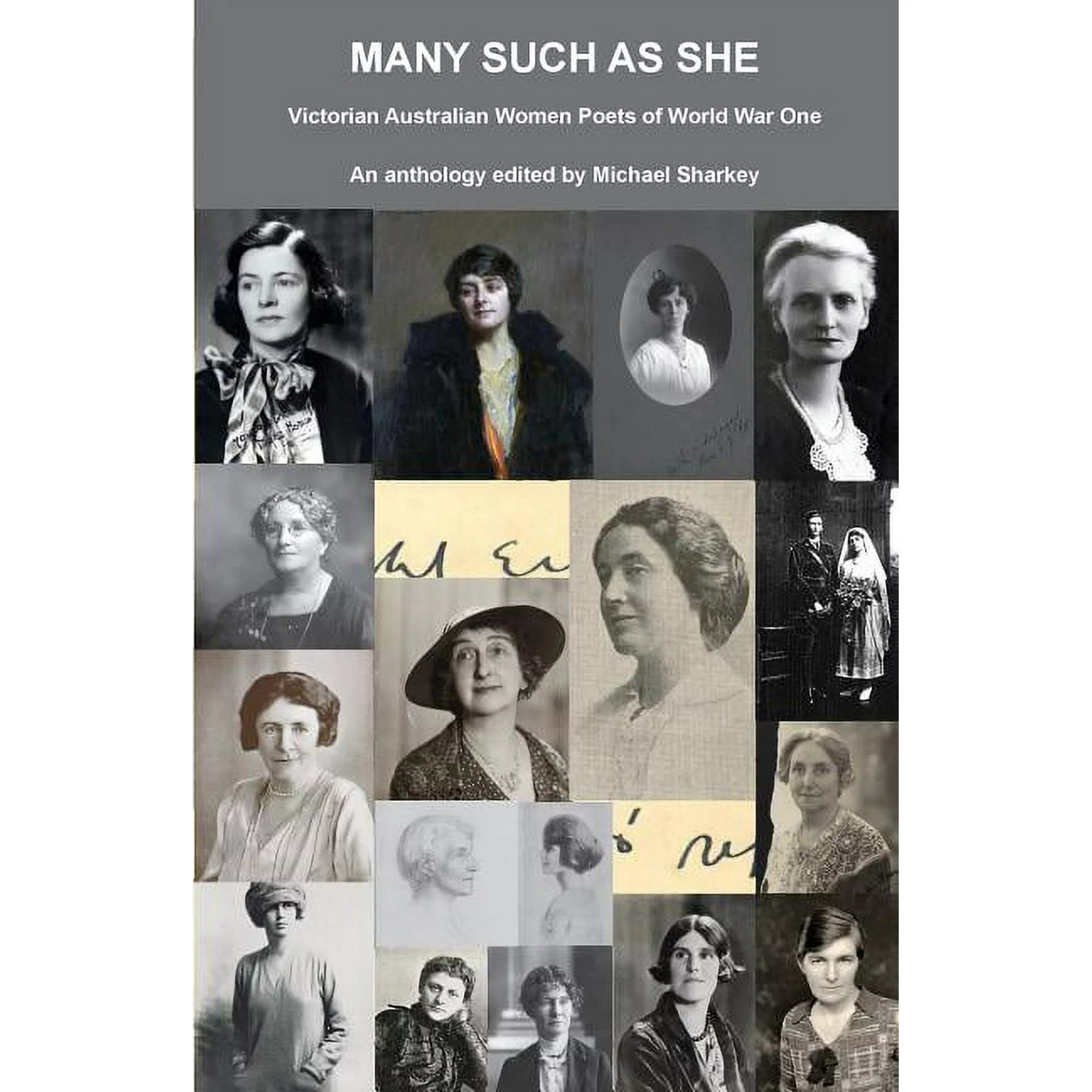
Martyr seems to be another example of a woman who managed to make a career for herself as a writer, by turning her hand to a wide variety of forms and audiences, but she also died relatively young. She was not completely forgotten, however, because five of her poems were included in Michael Sharkey’s 2018 anthology, Many such as she: Victorian women poets of World War One. An exhibition was held at Bendigo’s Soldiers Memorial Institute Military Museum in association with this book. Curator Kirsten McCay specifically mentioned Martyr, saying “Poet Grace Martyr lived locally and was a journalist for the Bendigo Advertiser. She also gave illustrated talks on famous composers at St Paul’s Cathedral, where a cross commemorates her life.”

Cross concluded her 1927 article with:

Grace Ethel Martyr’s work is always getting better, which is surely the best sign in any writer. Time, I think, will prove her to be one of the most sincere writers among us.

Six years later, at the age of 46, Martyr was dead. The report of her death, which was repeated in several Victorian newspapers, is brief but says that:

Miss Martyr’s literary gifts were apparent at an early age, and during the years that followed she established something of value to Australian literature.

I rest my case!

Sources

Willa Cather, The bookkeeper’s wife (#Review)

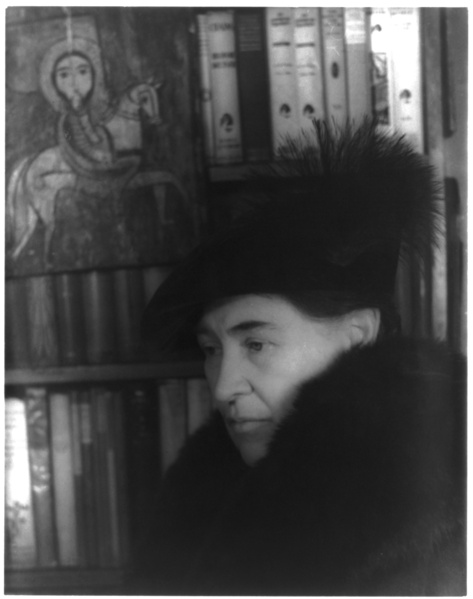
Willa Cather
Willa Cather, 1936 (Photo: Carl Van Vechten; Public domain, via Wikipedia)

It’s nearly two years since I posted on a Library of America (LOA) short story, and it’s over a year since they published Willa Cather’s “The bookkeeper’s wife” as their Story of the Week. However, this morning I had a quiet moment and decided to check over my little LOA TBR list. Willa Cather’s seemed just the ticket because, as I have written before, I like her “robust, somewhat terse and yet not unsubtle style”. I have read three novels by Cather, and a few short stories, starting with, “Peter”, which was first published in 1892. “The bookkeeper’s wife” was published much later, in 1916, after her first three novels were published, but before My Ántonia (1918). (You can check out my Cather posts here.)

One of the notable things about her stories is their variety. Not all are about the tough life of the pioneer, or even about midwestern landscapes, albeit these were among her favourite preoccupations. She did write about urban environments, and this story is one of those.

“The bookkeeper’s wife”

LOA’s usual introductory notes explain that in 1917, Willa Cather was working on a new book, a short story collection called Office wives. These stories would be published in Century magazine, and would then be published in book form. The book never eventuated, and only four stories were written, of which three were published. The fourth manuscript has, apparently, been lost.

LOA suggests that the proposed title for the series, Office wives

seems to have been a subtle act of provocation; of the five working women featured in Cather’s three stories—stenographers, typists, clerical workers—only Stella Bixby, “the bookkeeper’s wife,” is married … Cather explores the ways in which working women and their male supervisors mirror, in a distorted fashion, the domestic arrangements between wives and husbands. 

The stories offer a different look at the “New Woman” type which was the vogue in popular magazine fiction of the early twentieth century. These women were financially independent employees in warehouses, shops, and offices, but Cather – as was her wont – had a more realistic take on the situation. She understood the prevailing power structures in such work environments, and her stories, says LOA, “depict how the freedom and independence available to women in the workplace” were “still limited by their dependence on and subservience to men”.

Cather knew whereof she spoke, having worked herself in the business world. LOA says that she had worked “as an editor, columnist, and occasional business manager at Home Monthly in Pittsburgh; as the telegraph desk reporter and headline writer for the Pittsburg Leader, a daily newspaper; and, most significantly, as a staff member from 1906 to 1912 at McClure’s magazine, where she became the managing editor”.

Interestingly, despite the planned book title, the protagonist of the first story she wrote for it, “The bookkeeper’s wife”, is the man, the bookkeeper. But, his wife, Stella, as the title implies, is the story’s linchpin. Superficially, the plot set-up suggests something predictable. It starts with our bookkeeper, Percy Bixby, sitting at his desk at work. He’s the last one there and he is about to embezzle (sorry, “accept a loan from”) his company in order to marry Stella, a stenographer working for another company, and offer her the lifestyle she expects. He has won her over a flashier man, salesman Charlie Greengay, whom Stella knew “would go further in the world” but who didn’t have Percy’s “warm, clear, gray eyes”. We think we know where this will go, but, pleasingly, it only partly plays to expectation.

The story is told third person, mainly through the eyes of Percy, but we do have moments in Stella’s head, and in that of Percy’s similar-aged boss, Oliver Remsen Junior. What makes the story so enjoyable to read, besides its plotting, is Cather’s tight, spare writing. Her words carry weight. Look at the names for a start, the stolid Percy Bixby, the exciting Charlie Greengay, the aspirational Stella Brown, and the classy Oliver Remsen Junior. Description is minimal, but there’s just enough to layer meaning, like Percy and Stella’s “clock, as big as a coffin and with nothing but its two weights dangling in its hollow framework”, and their “false fireplace”. Five years in, the marriage is clearly “hollow”, “false”. It’s worth noting, however, that they have had a baby die, but we only hear this via Oliver, so how it has impacted the marriage is left to us to think about.

Of course, Percy is found out – part-way through the story – because he ‘fesses up, in fact. There are no histrionics, no high drama. Each character behaves in accordance with their nature as established by Cather. Percy, who like so many young men got caught up in the competition for a pretty girl with high expectations, is fundamentally honest and sensible, albeit rather ordinary. Charlie’s “dash and color and assurance” sees him win, even when he loses. Oliver, a new-style humane boss, was prepared to help Percy, but has to be realistic in the end, while the titular Stella – she of the “hair [that] had to be lived up to” – ultimately sees the fundamental difference between her and Percy. Needing excitement and show, she decides to go for it, but we are told enough to know that it is still a man’s world and that, for all her independence, things may not turn out the way she so confidently expects.

“The bookkeeper’s wife”, from its title to its ending, is so beautifully nuanced that, even today, one hundred years later, we might see that things are, perhaps, not as different as we might have expected.

Willa Cather
“The bookkeeper’s wife”
First published: in Century, May 1916. 
Available: Online at the Library of America