Monday musings on Australian literature: Forgotten writers 8, Jessie Urquhart

While some of the forgotten writers I have shared in this series are in the category of interesting-to- know-about-but-not-necessarily-to-read, others probably are worth checking out again. Jessie Urquhart is one of these latter, though I’ve not read any of her novels, so don’t quote me!

However, there are articles for her in Wikipedia and the AustLit database, and I have mentioned her on my blog before, so this must all count for something in her favour. My reference was in a Monday Musings on Australian women writers of the 1930s in which I discussed an article by Zora Cross. She talked about, among other things, writers who had achieved success abroad without leaving home. One of those she named was Jessie Urquhart, who, she says, “will not, I think, do her best work until, like Alice Grant Rosman, she  relinquishes journalism for fiction”. I commented at the time that this was interesting from someone who, herself, combined fiction and poetry writing with journalism. I also wondered whether Urquhart needed her journalistic work to survive. (I suspect she did.)

I also wrote earlier this year about Urquhart on the Australian Women Writers (AWW) blog, as did Elizabeth Lhuede last year. This post draws from both posts and a little extra research. In my post, I shared a 1924-published short story titled “The waiting”. It is an urban story about a very patient woman. It’s not a new story, but Urquhart writes it well. … check it out at AWW. You might also like to read the story Elizabeth posted, “Hodden Grey”, which is a rural story. Like many writers of her time, Urquhart turned her head to many ideas and forms.

Jessie Urquhart

Novelist, short story writer and journalist Jessie Urquhart (1890-1948) was born in Sydney in 1890, the younger daughter of William and Elizabeth Barsby Urquhart. Her father, who was a Comptroller-General of NSW prisons, had emigrated from Scotland in 1884. She joined the Society of Women Writers and was secretary for 1932-33. She had an older sister, Eliza (1885–1968) with whom she emigrated to England in 1934 (years after Zora Cross’s article!) There is much we don’t know about her life, though her father’s obituary does say that neither of the sisters married.

In an article titled “Women in the World” in 1932, The Australian Women’s Mirror includes a paragraph on Urquhart, because they were about the serialise her story Giving Amber her chance. They say she “started writing very young, and in her teens had a novel, Wayside, published; she is now a Sydney journalist. Short stories and articles from her pen have appeared in the Mirror, her latest contribution being “The Woman Prisoner” (W.M. 8/3/32), based on her knowledge of the Long Bay women’s reformatory.”

Elizabeth’s thorough research found that Urquhart had turned to short story writing and journalism, in the 1920s, with most work published in The Sydney Mail, but she was also published in The Sydney Morning Herald, The Australian Woman’s MirrorThe Australian Women’s Weekly, The Sun and Queensland Figaro. Elizabeth read (and enjoyed) many of her stories, and wrote that they cover “a broad range of settings and topics, giving glimpses into the lives of modern Australian urban and rural women and men, encompassing the adventures of spies, adulterers, thieves and deserters; the faithful and unfaithful alike”.

According to Elizabeth, Urquhart’s first publications actually appeared when she was in her twenties, including a series of sketches titled Gum leaves which was published in The Scottish Australasian. The Goulburn Penny Post quoted the paper’s editor, who said that:

The sketches represent her initial effort, and indicate that she has the gift of vivid description and the art of storytelling in a marked degree. All the delineations show power and a creative facility which promises well. Some are indeed gems. [The author shows] promise of a successful literary career.

Her novel Wayside appeared in 1919, and is probably based on these sketches. (She was not a teen in 1919, so I’m not sure about The Australian Women’s Mirror’s facts.)

Anyhow, according to Elizabeth, Urquhart had “a year’s study abroad” sometime in the late 1920s or early 1930s, and wrote more articles on her return. She lived in Bellevue Hill, Sydney, and continued to publish what Elizabeth nicely characterises as “her quirky short fiction”. She also wrote more novels. Giving Amber a chance, serialised in 1932 in The Australian women’s mirror, was published in book form in 1934. The Hebridean was serialised in 1933, but was not published in book form though, wrote Elizabeth, it was “arguably” the better novel. She liked “its setting and its depiction of class tensions” and believes – a propos my introduction to this post – that it deserves to be more widely read.

Another novel, Maryplace: the story of three women and three men, was published in 1934, but unlike the previous novels does not appear to have been serialised. Elizabeth found a contemporary review, which she liked for the sense it gives of the debates surrounding Australian writing at this time, including a reading public “mistrustful of its own novelists”. The author of the review writes that Maryplace is

a story which takes the art of the Australian novel to a new plane of modernity of treatment and universality of appeal.

In style, in theme, and in the power of characterisation and analysis this book is far above the work of the average of our novelists. It is deserving of the highest recommendation. Despite the fact that the scenes of Maryplace, with the exception of one period, are laid in a New South Wales country town, the story will be of equal interest to any reader of novels anywhere. That, after all, is the real art of the novel, and it is one which is not so frequently cultivated by our writers that we can afford to ignore it when we encounter it.

The reviewer believes there’s been too much self-conscious talk about “an Australian story-art”, that all literature is naturally a product of the country which produces it and the life and times in which it is produced. In other words, says R.N.C.,

All stories have their roots in the soil. They will be true of a nation and be part of a national contribution to art without ceaseless striving to label them and brand them as ‘Australian’ on every page and in every paragraph.

Urquhart’s story, R.N.C continues, has the “unselfconsciousness that gives her book a real Australian atmosphere and setting” but that also “makes it a story of absorbing human interest and power so as to be a world novel for the world”. (I like R.N.C.’s thinking.)

The novel apparently deals with the class tensions, and a changing order which sees “the local butcher or grocer” no longer willing to deliver their goods to “the back door”. This is part, says R.N.C. of “any fast changing democracy, and Miss Urquhart in her Maryplace has drawn it with pitiless detachment, giving to her theme sympathy and understanding but the touch of irony and satire which it demands”.

After she went to England in 1934, Urquhart’s stories continued to appear in the Australian press, but whether she published elsewhere is not clear. She was clearly still active in writing circles in 1941, because she was chosen as Australia’s delegate to the PEN conference in London. She and her sister survived bombing during the war, and Jessie sent regular reports about life in London to The Sydney Morning Herald.

In 1944, the Herald reported that “gossip of London theatres, the Boomerang Club, books and their authors comes from Miss Jessie Urquhart, formerly of Sydney, who went to England before the outbreak of war”. It says that “during the first great blitz, she was an A.R.P. telephone worker” but was now “a reader for Hutchinson’s Publishing firm”. She and Eliza had been “staying with novelist Henrietta Leslie in Hertfordshire for the past three months”. Wikipedia tells me that Leslie was a “British suffragette, writer and pacifist”, which makes sense when you read in the next sentence that Jessie had “just been re-elected to the committee of the Free Hungarian Club Committee” which was chaired by Hungarian writer and exile, Paul Tabori.

She is an interesting woman, and would surely be a great subject for one of Australia’s literary biographers!

Anyhow, in 1945, another Sydney Morning Herald paragraph advised that Jessie and Eliza Urquhart would “probably visit Australia” again in 1946, and that they had reported that London was “beginning to recapture its old smartness”. I suspect Jessie never did get back to Australia, as she died in a nursing home in St John’s Wood, London, in April 1948. Eliza died in 1972.

Sources

Margaret Atwood, Widows (#Review)

Marcie’s (Buried in Print) MARM (Margaret Atwood Reading Month) event is now seven years old, but this is only my second contribution. I read a reasonable amount of Atwood before blogging, and since then have let her slide somewhat, though I have reviewed a couple of books here. You can’t read it all – but, I do like her voice …

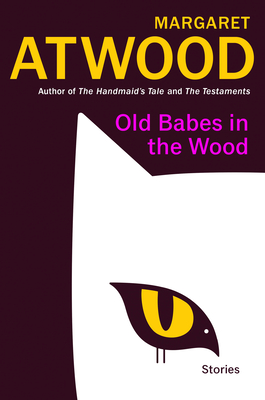
So, I decided to join in again this year, as I knew I had a collection of short stories in my TBR pile. The only problem is that my non-Australian TBRs are still in boxes somewhere. What to do? Maybe, I thought, there’s a short story online somewhere, and sure enough I found one in The Guardian. Titled “Widows” it features Nell and (the late) Tig. From Marcie’s blog I learnt that this couple first appeared in Atwood’s collection of linked stories titled Moral disorder, and appeared again in her recent collection Old babes in the wood, from which this story comes. However, I’ve not read either of these collections, and I didn’t recollect those characters or their names.

Then a strange thing happened. According to Wikipedia, Moral disorder contains eleven connected short stories, the second last one being “The Labrador fiasco”. This is the story I read for last year’s MARM, but it was in a 1996-published Bloomsbury Quid edition. I had no idea it was later included in the 2006-published Moral disorder. Oh these writers can be tricksy. Did she change it in any way – such as to name the then unnamed character – for version in the collection? Anyhow, moving on, Wikipedia tells me that the 2023-published Old babes in the wood comprises fifteen stories in three parts: “Tig & Nell” (three), “My Evil Mother” (eight), and “Nell & Tig” (four). “Widows” is the thirteenth story in the collection, so presumably the second one in that last group of four.

I won’t rehash “The Labrador fiasco”, except to say that it is a “story-within-a-story” story, and that the framing story concerns the unnamed narrator (who is apparently Nell) visiting her aging father and mother. The father, in particular, is declining, having experienced a stroke six years before the story’s opening. It is told first person by the daughter, who regularly visits her parents and is becoming aware of aging and our inevitable decline. Some years have clearly passed, and in “Widows” Nell has recently lost her husband “Tig”. It’s an epistolary story, I guess you could say, though it contains only two letters, both by Nell to a friend named Stevie.

The first, and main, letter is a delight – and pure Atwood. It’s partly in what she covers, as this short short story manages to encompass Atwood’s recurring themes – women (their position in society, and their relationships), language, aging, social conventions, and the state of the world. But it’s also in the sly way she makes her sharp little points. For example, talking about widows, she has a dig at the modern penchant for creating increasingly complicated gender-neutral descriptions:

I’m hanging out with a clutch of other widows. Some of them are widowers: we have not yet got around to a gender-neutral term for those who have lost their life partners. Maybe TWHLTLP will appear shortly, but it hasn’t yet. Some are women who have lost women or men who have lost men, but mostly they are women who have lost men.

Similarly, there is a sly reference to world politics and climate change, when she says to Stevie, who is much younger, that:

if you live another thirty years and are still enjoying it, or most of it – if anyone will be enjoying, or indeed living, considering the huge unknown wave that is already rolling toward us – I expect you will look at a picture of yourself as you are today, supposing your personal effects have survived flood, fire, famine, plague, insurrection, invasion, or whatever …

Of course, Nell talks about grief, about the forms, assumptions and cliches that surround it. She’s quietly scathing about “checking the boxes of the prescribed grief process” and eschews the well-intended offers of casseroles and suggestions that she go on a cruise.

When I read writing like this, I can’t help being reminded of Jane Austen, because both have the ability to see through our conventions and pretensions to the truths beneath, and to make us chuckle as they do so.

However, for all the cheeky barbs and social commentary, there is also something heartfelt in her discussion of grief. She speaks of how it skews one’s experience of time, how it affects one’s relationship with the person who has died, and what grieving people really talk about and deal with. Atwood knows whereof she speaks having lost her husband of 46 years in 2019.

If I thought this first letter was both clever and moving, the second letter just nailed it. In fact, if I were writing criticism and not a review, I would discuss what Atwood does here, but that would spoil the whole experience, and I don’t want to do that because you can read it yourself at the link below. Suffice it to say that, while “Widows” is a short story, it does a lot in its few words, and its ending signs off with aplomb.

Read for MARM 2024

Margaret Atwood
“Widows”
The Guardian, 25 February, 2023 (also pub. Old babes in the wood, 2023)
Available online at The Guardian, 2023

Raynor Winn, The salt path (#BookReview)

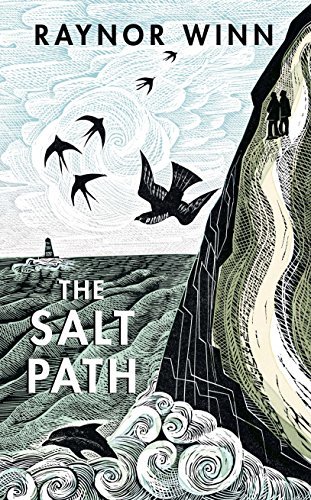
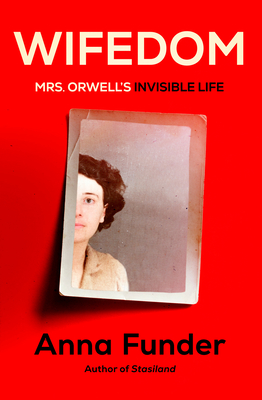
While my reading group’s main fare is fiction, we do include nonfiction in the mix. In fact, this year has been unusual as we’ve scheduled three nonfiction books – Richard Flanagan’s Question 7 (my review), Anna Funder’s Wifedom (my review), and, last month, Raynor Winn’s The salt path. I can’t recollect how The salt path came to be chosen, and nor could the 8 (of our 11) members who attended the meeting, but we weren’t about to complain.

Many of you will know this book already, given it became a bestseller after its publication in 2018. It was shortlisted for some major awards, and won the inaugural RSL Christopher Bland Prize (which I would call a “late bloomer” prize.) However, in case it escaped your notice, I will briefly summarise it. The book opens with two disasters befalling author Raynor and and her husband of 32 years, Moth. He is diagnosed with a rare, terminal degenerative disease called CBD (corticobasal degeneration) and, in an ultimately unjust court case, they lose their home which was also their livelihood. They have nothing but each other (and their two children who, fortunately, are young adults linving away from home). What do you do in a situation like this? You decide to walk England’s challenging 630-mile South West Coast Path, wild camping most of the way. That’s what.

Although it’s essentially a memoir, The salt path is better described as a road story that combines memoir, nature writing and social commentary. I would also argue that it’s a work of creative nonfiction, partly because of its strong narrative arc (albeit this is not uncommon in memoir and travel writing) but also because it includes dialogue (which, given there’s no evidence to the contrary, has presumably been recreated for the book). The result is a book which interweaves description, anecdote, personal reflection, social commentary and dialogue in a way that maintains our interest because it never bogs down in one mode or another. The balance Winn achieves is not only between these modes, but also in tone, which moves between serious and scared, melancholic and thoughtful, and light and humorous.

“you’ve felt the hand of nature … you’re salted” (woman on path)

I want to explore a little more how the combination of memoir and road story works to tell Winn’s story. Memoir, by definition, deals with a particular issue or time period in a person’s life. This gives the story a natural trajectory which conveys how that issue is handled or progresses – and/or what happens over that chosen time – until some sort of resolution or conclusion is reached. A road story has an even more obvious or natural narrative arc – the beginning of the trip, the middle with all the events and challenges met on the way, and the trip’s end (which may or may not be the originally intended one.)

So, in The salt path, the memoir, with its central issues being Moth’s illness and their homelessness, is framed by the road story, which describes the physical journey, that is, the landscape they walk through, and their experience of walking and wild camping. As in most road stories, we meet characters along the way, some positive or helpful, some amusing, and others negative or obstructive. And, as is also common in travel literature, we are introduced to issues that are relevant to the places travelled through. In this case they include conflicting ideas about heritage, conservation and the role of the National Trust in the communities and regions along the path.

There is, then, a lot to this book and while it works well as a coherent whole, some parts, of course, left a stronger impression than others. The strongest was their experience of the path, particularly given its recognised toughness combined with their impecunious state, inexpert preparation, and Moth’s ill-health. They were often hungry, wet and cold, and they walked at half the pace of Paddy Dillon whose guidebook they followed, but as time wore on Moth’s health improved. Why is a question never fully answered because they didn’t know why. Years later, he is still alive, still with the condition. Their strong interpersonal connection sustains them when little else does! And there is always the nature. This is Winn’s first book but she can clearly write. Her descriptions of the environment – the wildlife, the landscape, the vegetation, the sea – and of their feelings as they walk through it are perfect, like:

“A hidden land of weather and rock, remote and isolated. Unchanged through millennia yet constantly changed by the sea and the sky, a contradiction at the western edge. Unmoved by time or man, this ancient land was draining our strength and self-will, bending us to acceptance of the shaping elements.”

“The moon climbed into a clear sky, just past full, polishing the landscape in tones of grey and silver.”

After some time of walking the path, they start to look weathered – peeling skin, ragged clothes, and so on. It is around this time that they meet a woman who recognises the look. She tells them “you’ve felt the hand of nature … you’re salted”. Winn’s title is more than a literal description of a sea-swept path. It is also about being part of the nature, the life, they walk through.

From early in the book, however, another theme is introduced that threads through the book – homelessness. Obviously, it occupied Winn’s mind because they were suddenly homeless, but as the book progresses, she supplements their personal experience of being homeless with facts and figures. The facts are sobering, but they are made powerful by Raynor and Moth’s firsthand experience. For example, very quickly they became cautious about being honest about their circumstances, because it affected people’s attitudes to them:

“We could be homeless, having sold our home and put money in the bank, and be inspirational. Or we could be homeless, having lost our home and become penniless, and be social pariahs.” 

All sorts of other thoughts and issues arise, as you would expect on a long walk. Another is the aformentioned issue of protecting heritage and the environment, and the role of the National Trust. Locals complain about National Trust restrictions affecting their traditional jobs, but she also sees all the money coming in from the resultant tourism and senses “a strong whiff of hypocrisy”. In an area dug up for clay-mines, she discusses the various approaches taken after the mines have gone. One is creating an attraction like the Eden Project. Returning the land to its original state seems the least likely option, because “no tourist is going to pay to walk over a meadow with a leaflet that says, ‘You’d never know it, but this used to be a mine.’” By contrast, there’s the town of Tyneham that had been requisitioned during World War Two, and where

Strangely enough, limited public access, a lack of intensive farming and the occasional blasting by small-arms fire has allowed wildlife and vegetation to thrive throughout the ranges. A form of khaki conservation that no one expected to be the outcome when the villagers left their homes as part of the war effort.

Of course, insights into the land – into the many ways it has been used, modified and re-used – are common to those who walk, and land-loving Raynor Winn is no exception. Her observations are idiosyncratic to her. Readers may not always agree, but she is real and honest.

There is much more to say, but I’ll conclude on the personal, because this is ultimately a personal journey as much as a physical one. Winn starts off, somewhat angry but mostly scared (very scared about her beloved Moth dying) and deeply worried about the future and whether they are doing the right thing. Slowly though, as Moth’s symptoms seem to subside, and as time passes, she senses change in herself

I was no longer striving, fighting to change the unchangeable, not clenching in anxiety at the life we’d been unable to hold on to, or angry at an authoritarian system too bureaucratic to see the truth. A new season had crept into me, a softer season of acceptance.

I don’t think it’s a spoiler to say that The salt path is a book about reality, not miracles but not tragedy either. Its interest lies in the particular situation this couple finds themselves in, in the path itself, and in Winn’s ability to write about it all with warmth, humour and honesty.

So, how did my reading group like it? Very much overall. Depending on our own experiences and perspectives, we varied in our reaction to the different decisions they took, but as lovers of the environment we all appreciated the description of the walk, and as lovers of “stories” we enjoyed the anecdotes about the people they met. Of course, we had questions, and there were little niggles – some didn’t always like the tone, and some couldn’t believe the couple’s poor preparation and apparent lack of sunscreen! But the discussion we had was excellent. So, a good book all round.

Brona also reviewed this book (nearer its publication!)

Raynor Winn
The salt path
Penguin, 2018
273pp
ASIN: ‎ B0793GXSBL
ISBN: 9781405937528

Monday musings on Australian literature: Final thoughts on Canberra Writers Festival 2024

In 2019, I wrote a detailed wrap-up of that year’s Canberra Writers Festival, and I thought to do one this year, though I didn’t have the fascinating stats I had in 2019. However, with this year’s festival bumping up against November, which is a very busy month in the blogosphere, I’ve decided to scale down my plans and just share some ideas which caught my attention, mainly because they popped up more than once in the six sessions I attended.

Many of the ideas related to the ideas that drive the authors or that affects their writing lives.

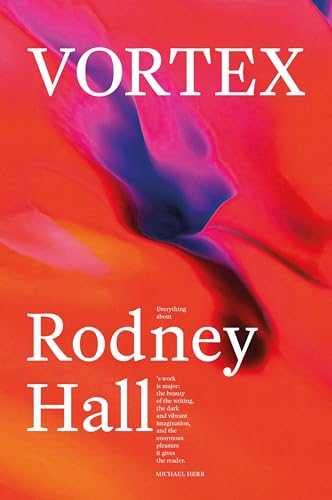
  • Who are the decisionmakers, how are things being decided: Rodney Hall and Catherine McKinnon, in slightly different ways, indicated that these questions drive much of what they write. Hall said “we don’t know when the things that affect our lives are hatched”, and that too often we react (and act) without asking “why” things have happened. Similarly, McKinnon is interested in understanding our governments and the decisions they make, in thinking about who we are trusting to make decisions. 
  • Writing about the self: While autofiction and writing about the self are a strong trend of modern writing, they don’t appeal to all writers. Not surprisingly, the self-described classicist Rodney Hall is one of these. He sees his classicism as being out of step with his peers, whom he admires but who are interested in more personalised expression, because people “want the dirt of what you are yourself”. Robbie Arnott was more forthright. He sees the modern focus on writing on the self as raising mundanity to art. (I can enjoy both – it’s all about degree!)
  • Writing to encourage feeling in readers: Robbie Arnott and Anita Heiss were both very clear about wanting to make people feel. Heiss wants readers to feel with her characters. She see this as the power of fiction. (In fact, she suggested this differentiated fiction from nonfiction, which I can’t agree with. I know I’m not the only one who has been powerfully moved by nonfiction. As a blog-reader wrote to me, what about Anne Frank’s diary, for a start?) Arnott was also vey clear about his goals in this regard. For him, the aim of fiction is not to render the world as it is but how it feels. He starts by looking for the emotion.
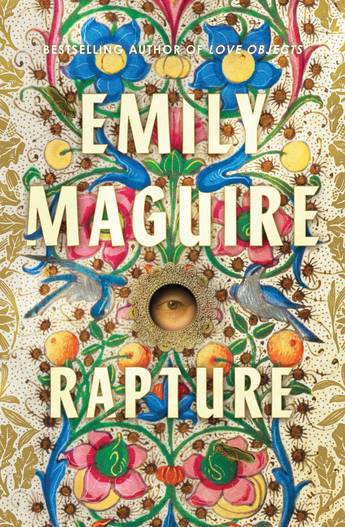
  • Historical fiction, and looking at what it is about NOW that the past can illuminate: Once upon a time I avoided historical fiction, but that time has long gone, because I’ve learnt that historical fiction can explore ideas that speak to me. Catherine McKinnon and Emily Maguire both talked about the relevance of historical fiction to now. First, there’s the issue of retrieving history that has been lost (the role played by women, for example, or queer lives), because it didn’t meet the prevailing (often patriarchal) mindset. But McKinnon also talked about how you look for the story you want to tell now – at what it is about now that you want to speak to, at what it is about humans that is interesting to us now. So, the 2005 Oppenheimer-biography, American Prometheus was, she felt, about how people could be picked up and then dropped, but she was interested in decisionmaking (and how it can be petty).
  • On living in our loud, noisy, controlling, egotistical world: Charlotte Wood and Robbie Arnott both referred to this (but would have covered it more in the session I couldn’t attend due to a clash, The power of quiet): Wood said she understands the appeal of asceticism in our “you-can-have-everything world”, bur recognises that the idea of “obedience” (versus wanting to argue) is a challenge for the ego in our egotistical world. Arnott’s quietness is based in his focus on landscape and nature. Both, at least as I heard them, see value in withdrawing (at least for a while) from the noise that can get in the way of being.

Some ideas, not surprisingly, related more to their craft.

  • The craft: What I heard was writers knowing (or learning) how much the craft of writing does the job they want, rather than focusing on plot or character, for example. A good structure, the right voice, sentences that do something – these are what makes writing come alive, what makes their stories work. Structure, for example, is fundamental to what Rodney Hall does. Arnott talked about crafting his books sentence-by-sentence. Maguire and Wood talked about “propulsion” in their narratives coming from the language, the sentences, the voice. “If the voice is strong”, said Wood, “the reader will follow along. It’s propulsive. That’s the key.”
  • Writing as a vocation, that is, as something you must do, kept coming through, and was specifically mentioned by Charlotte Wood, Emily Maguire, and Robbie Arnott. It’s their sacred place.

None of this is mind-shatteringly new, I suppose, but these ideas interested me for different reasons – usually related to the context in which they were explored, or the slant or angle they were given. I hope you find something of interest here.

So, does anything here speak to you?


Finlay Lloyd 20/40 Publishing Prize 2024 Winning Books Launch with Conversation

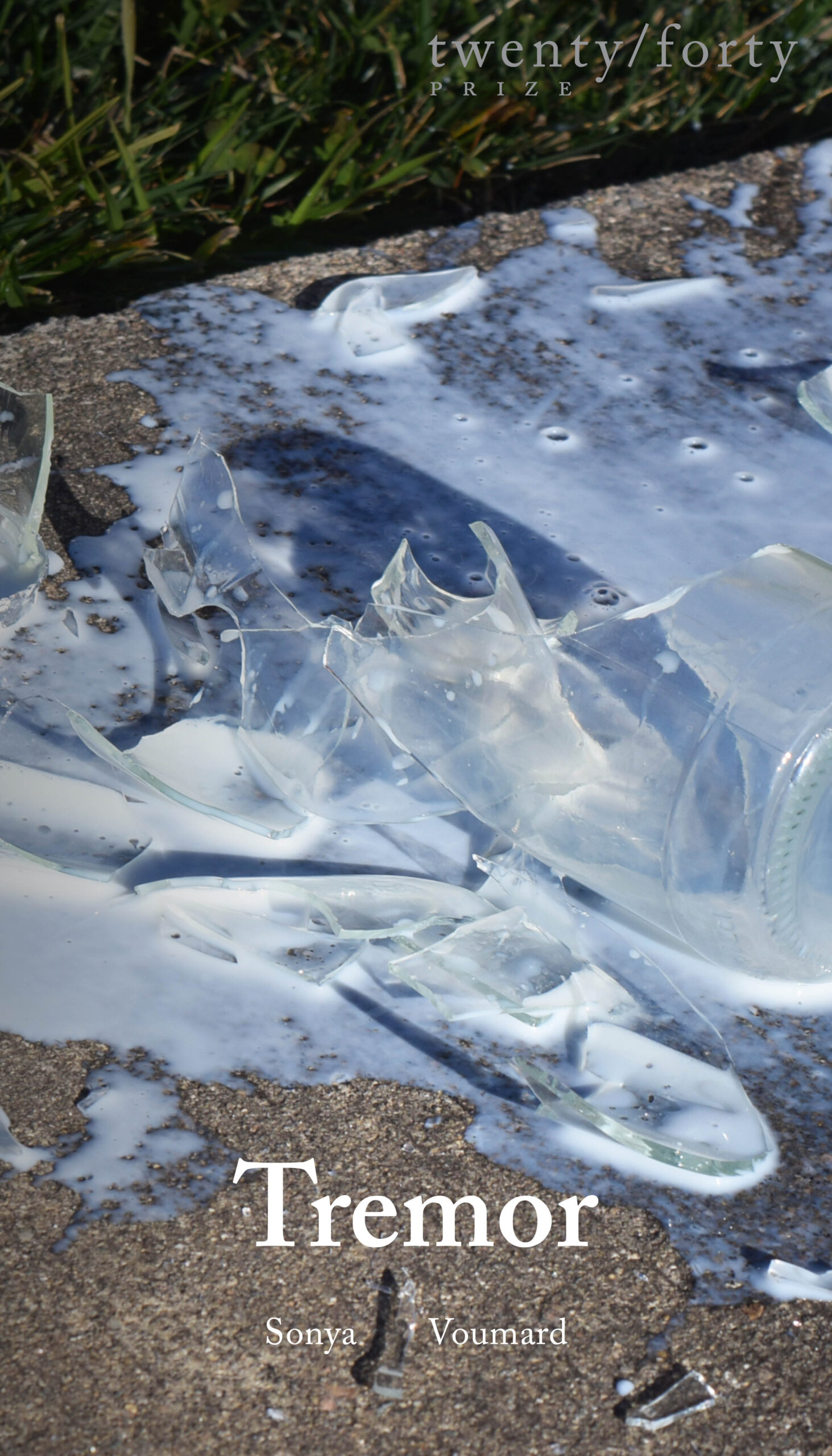
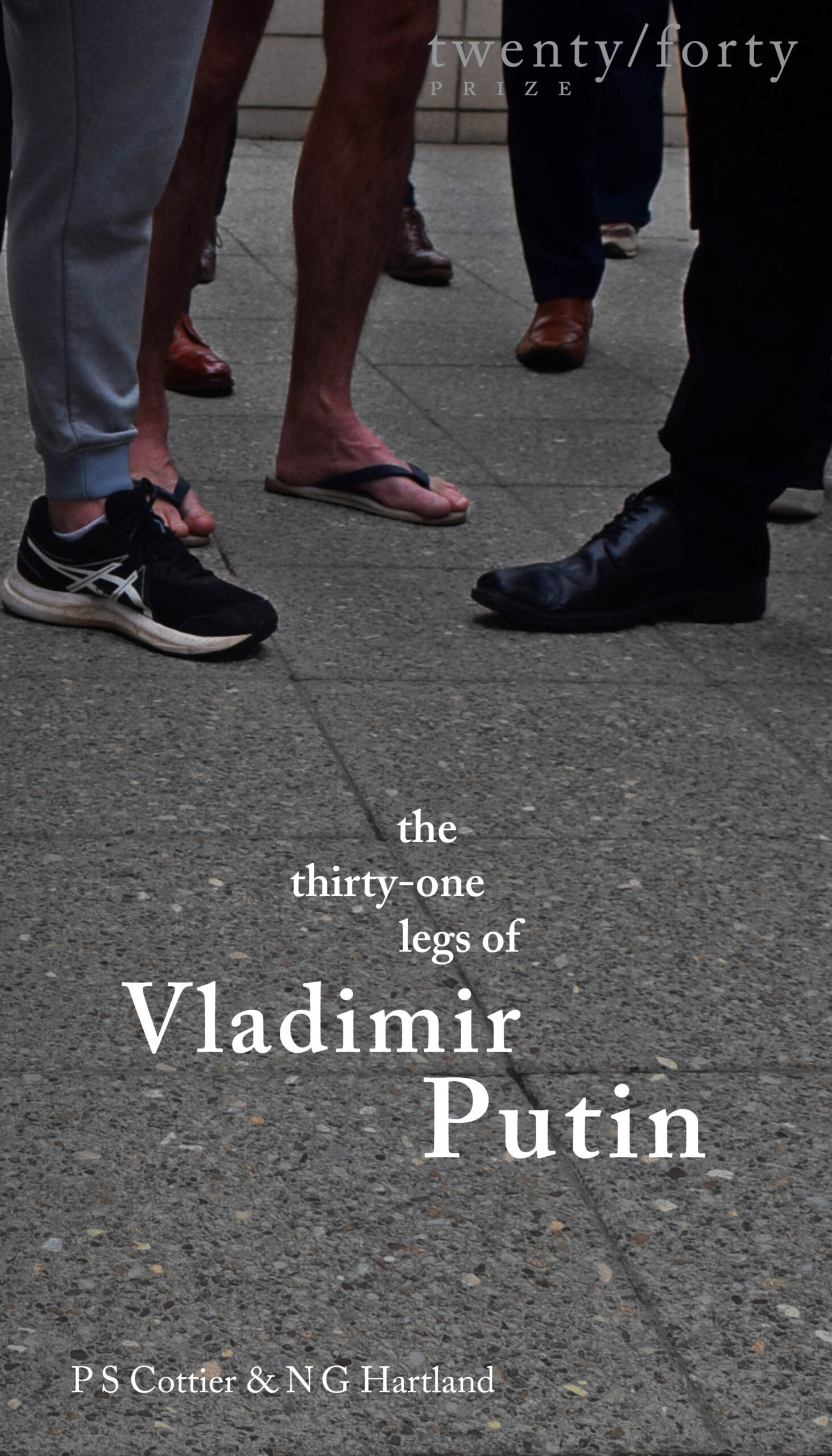
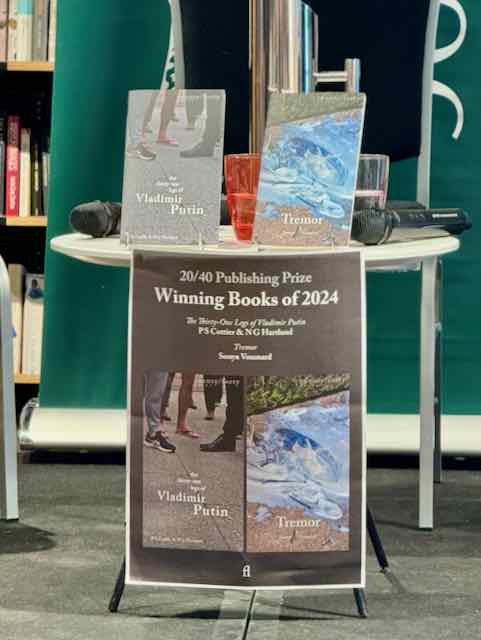
I mentioned the nonfiction winner of the 2024 Finlay Lloyd 20/40 Publishing Prize, in this week’s Monday Musings, but saved the full winner announcement until after I attended the launch at a conversation with the winning authors this weekend.

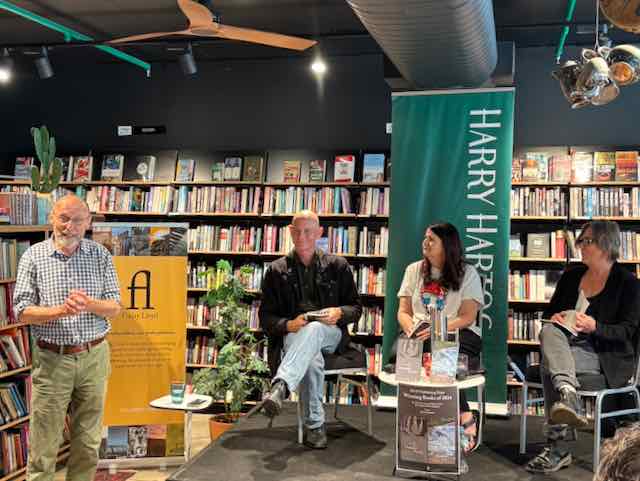
The participants

This year, as publisher Julian Davies had hoped, there was a prize for fiction and one for nonfiction. The winners were all present at the conversation, and were:

  • Sonya Voumard for Tremor, which the judges described as “notable for its compellingly astute interweaving of the author’s personal experience with our broader societal context where people with disabilities, often far more challenging than her own, try to adapt to the implicit expectations and judgements that surround them”.
  • P S Cottier & N G Hartland for The thirty-one legs of Vladimir Putin, which the judges said “welcomes us to a world where absurdity and reality are increasingly indistinguishable and where questions of identity dominate public discourse. The book spirits us off on a playful journey into the lives of a group of individuals whose physical attributes appear to matter more than who they may be.”

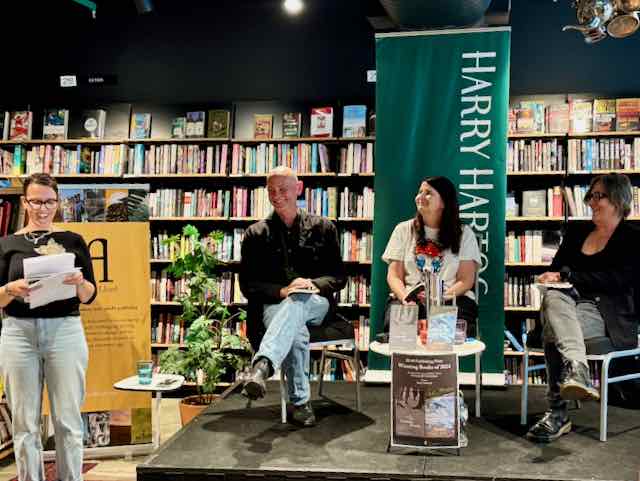
The conversation was led by Sally Pryor who has been a reporter, arts and lifestyle editor, literary editor and features editor at The Canberra Times for many years. Born in Canberra, and the daughter of a newspaper cartoonist, she has a special connection to our city and its arts world.

And of course, the publisher, Julian Davies, started the proceedings. As I wrote in last year’s launch post, he is the inspiring publisher and editor behind Finlay Lloyd, a company he runs with great heart and grace (or so it seems to me from the outside.)

The conversation

Before the conversation started proper, Julian gave some background to the prize, and managed to say something different to what he said last year. He described Finlay Lloyd as a volunteer organisation, with wonderful support from writers like John Clanchy. He reminded us that they are an independent non-profit publisher, but wryly noted that describing themselves as non-profit seems like making virtue out of something that’s inevitable! Nonetheless, he wanted to make clear that they are not a commercial publisher and aim to be “off the treadmill”. And of course he spoke of loving “concision” and the way it can inspire real focus.

As last year, the entries – all manuscripts, as this is a publishing prize – were judged blind to ensure that just the writing is judged. The judging panel, as I wrote in my shortlist post, included last year’s winners.

Then, Sally took over … and, after acknowledging country, said how much, as a journalist, she also loved concision. Short books are her thing and they are having a moment. Just look, she said, at Jessica Au’s Cold enough for snow (my review) and Claire Keegan (see my post). Their books are “exquisite”. She then briefly introduced the two books and their authors. Sonya’s Tremor is a personal history told through vignettes, but which also explores more broadly the issue of viewing differences in other. She then jokingly said that she “thinks” Nick and Penelope’s book is fiction. Seriously though, she loved the novel’s set up which concerns the lives of 16 Putin “doubles”. It’s a page-turner. The books are very different, but share some themes, including identity, one’s place in the world, and how we can be captured and defined by the systems within which we live.

On Sonya’s journey

The conversation started with Sonya talking about her journey in writing this book. She was about to have brain surgery, a stressful situation. But she’s a journalist, and what do journalists do in such situations? They get out their notebook. Her coping mechanism was to cover it as a story, one of big stories of her life.

She has had a condition called Dystonia – mainly tremor in her hands – since she was 13. She managed for many years but, as she got older, more manifestations developed, not all easily linked to the condition, and her tremor got worse. Getting it all diagnosed took some time.

Sally noted that in the book, the doctor is thrilled that he could diagnose her and have someone else to observe with this condition (which is both environmental and genetic in cause). Sonya, of course, was thrilled to have an answer.

On Nick and Penelope’s inspiration and process

It started when they were holidaying in Queensland. I’m not sure I got the exact order here, but it included Penelope’s having read about Putin doubles, and Nick having been teased about looking like Putin. Penelope said it was a delight to write in a situation where humour would not be seen as a negative. The story is about look-alikes being recruited from around the world to act as Putin doubles should they be so needed.

Sally commented that the doubles respond differently. For some, it provides purpose, while others feel they lose their identity. What’s their place in the world, what does it mean?

Putin, said Nick, is an extraordinary leader who has morphed several times through his career. They tried to capture different aspects of him, though uppermost at the moment is authoritarianism. How do we relate to that? Penelope added that it’s also about ordinary people who are caught up in politics whether we like it or not. Capitalism will monetise anything, even something genetic like your looks.

Sally wondered about whether people do use doubles. Nick and Penelope responded that it is reported that there are Putin doubles – and even if they are simply conspiracy theories, they make a good story.

Regarding their collaborative writing process, Nick started “pushing through some Putins” so Penelope wrote some too, but they edited together. Nick is better at plot, at getting a narrative arc, Penelope said.

On Sonya’s choosing short form not memoir

It was a circuitous process. There is the assumption that to be marketable you need to write 55,000 plus words. She had the bones, and then started filling it out, but it was just “flab”. The competition (and later Julian) taught her that there was a good “muscular story” in there, so she set about “decluttering”. Sally likes decluttering. The reader never knows what you left out!

“Emotional nakedness” was a challenge for her, and to some degree members of her family found it hard being exposed – even if it was positive – but they learnt things about her experience they hadn’t known. Sonya’s main wish is that her family and loved ones like what she’s written.

But, did she also have a sense of helping others? Yes! There are 800,000 Australians with some sort of movement disorder, and many like she had done, try to cover it up. (For example, she’d sit on her hands during interviews, or not accept a glass of water). Her book could be liberating for people.

Continuing this theme, Sally suggested there are two kinds of people, those who ask (often forthrightly) about someone’s obvious condition, and those who would never. She wondered how Sonya felt about the former. It varies a bit, Sonya replied, but it feels intrusive from people you don’t know well. At work it can feel like your ability is being questioned.

On Nick and Penelope’s editing process

Nick explained that their story had a natural boundary, given they had a set number of Putins. (And they didn’t kill any Putin off in the writing!) There was, however, a lot of editing in getting the voice/s right, and getting little arcs to the stories.

In terms of research, they read biographies of Putin, and researched the countries their Putins come from.

Sally wondered whether Nick and Penelope saw any legal ramifications. Not really, but they did research their Putins’ names to get them appropriate but unique, and they have a fiction disclaimer at the end (though Julian didn’t believe it necessary!)

On Sonya’s writing another book on the subject, and on negotiating with those involved

While there are leads and rabbit holes that could be followed, Sonya is done with this story (at present anyhow).

As for the family, Sonya waited until the book was finished to show them, but she also tried to avoid anything that might be hurtful or invade people’s privacy. She’s lucky to have a family which has tolerated and understood the journalistic gene. Regarding work colleagues, she did talk to those involved. It was a bit of a risk but she didn’t name those who had been negative towards her. Most people just thought her shaking was part of her, and she liked that.

Sally talked about the stress of being a daily newspaper journalist, with which Sonya agreed, and gave a little of her personal background. She started a cadetship straight out of school and was immediately thrust into accidents and court cases. It was a brutal baptism. Around the age of 30, when the tremor and other physical manifestation increased, she decided she couldn’t keep doing this work.

Were they all proud of their achievement with this format?

As a poet Penelope is comfortable with brevity, so this was an expansion (to sentences!) not a contraction. Nick was obsessed with “patterning” – with ordering, moving between light and dark, internal and external, providing an arc. Penelope added that it started with less of an arc, including no names for the Putin doubles.

Sonya paid tribute to Julian for being “such an amazing editor” who taught her about how to impose structure on chaos. Penelope added that it was an intense editing process. It was also a challenge because, being a publishing prize it’s not announced until publication so she couldn’t tell people what she was working on. But the editing process was interesting.

Q & A

There was a brief Q & A, but mostly Sally continued her questions. However, the Q&A did bring this:

Is Nick and Penelope’s book being translated into Russian and/or will it be sent to Putin: Julian said Finlay Lloyd were challenged enough getting books to Australians. Penelope, though, would love Russians having the opportunity to read it. Perhaps, said an audience member, it could be given to the Russian embassy …

Julian concluded that it had been a joy working with these authors who “put up with him”, and thanked Sally sincerely for leading the conversation.

This was a lovely warm-hearted event, which was attended by local Canberra writers (including Sara St Vincent Welch, Kaaron Warren, and John Clanchy) and readers!

These books would be great for Novellas in November. You can order them here.

The Finlay Lloyd 20/40 Publishing Prize Winning Books of 2024 Launch
Harry Hartog Booksellers, Kambri Centre, ANU
Saturday, 2 November, 12.30-1.30pm

Monday musings on Australian literature: Nonfiction awards 2024

It’s been a very busy weekend, and I have a few posts waiting to do, plus a reading group book to finish for tomorrow, so this post is a quick one. Phew, you are probably saying if you stuck with me over the weekend!

Today’s topic recognises that our litblogosphere’s annual Nonfiction November event, currently coordinated by Liz Dexter, starts today. I don’t usually write a Monday Musings for this event, but I thought it might be interesting to look at what Australian works of nonfiction won awards this year. Most of the awards are specific nonfiction awards, but some are more general awards which can be won by fiction or nonfiction (like the Stella, albeit was won by fiction this year.)

I’ll list the awards alphabetically by title of award:

  • ABIA Biography Book of the Year: Anna Funder, Wifedom: Mrs Orwell’s invisible life (biography) (my review)
  • ABIA General Non-Fiction Book of the Year: Thomas Mayo and Kerry O’Brien, The Voice to Parliament handbook (handbook)
  • ACT Literary Awards, Nonfiction: Kate Fullagar, Bennelong & Phillip: A history unravelled (history)
  • Finlay Lloyd 20/40 Prize, Nonfiction Winner: Sonya Voumard, Tremor (I’ll be reporting more on this prize and the Fiction winner next weekend) (memoir/essay)
  • Indie Awards Book of the Year Non-fiction: David Marr, Killing for country: A family story (history)(Jonathan’s post)
  • Magarey Medal for Biography: Ann-Marie Priest, My tongue is my own: A life of Gwen Harwood (biography)
  • Mark and Evette Moran Nib Literary Award: to be announced on 27 November, but 5 of the 6 shortlisted titles are nonfiction
  • National Biography Award: Lamisse Hamouda, The shape of dust (memoir)
  • NSW Premier’s History Prize, Australian History: Alecia Simmonds, Courting: An intimate history of love and the law (history)
  • NSW Premier’s Literary Awards, Douglas Stewart Prize for Non-fiction: Christine Kenneally, Ghosts of the orphanage (history) (Janine’s review)
  • Northern Territory Literary Awards, Charles Darwin University Creative Non-Fiction Award: Dave Clark, Remember (creative nonfiction about truthtelling)
  • Prime Minister’s Literary Award, Australian History: Ryan Cropp, Donald Horne: A life in the lucky country (biography) (Lisa’s review)
  • Queensland Literary Awards, The University of Queensland Non-Fiction Book Award: Abbas El-Zein, Bullet, paper, rock: A memoir of words and wars (memoir)
  • Victorian Premier’s Literary Awards, Prize for Non-fiction: Ellen van Neerven, Personal score: Sport, culture, identity (memoir and polemic)

So 14 awards here, and life writing (biography and memoir) is by far the most represented “genre”, partly because some of the awards are specifically for biography (life writing). History is second, and again, this is partly because there are specific history prizes (some of which are won by biography!) It is noteworthy, however, that other genres – nature writing and eco-nonfiction, for example – rarely get a look-in in these sorts of awards. And yet, there is some excellent writing in these genres being published (by Upswell, for example).

And a little survey

Do you write nonfiction or non-fiction? In my admittedly minimal research, I have read that Americans are more likely to drop the hyphen, and this seems to play out in American versus English dictionaries.

I note that:

  • Liz has nonfiction in her banner, which is how I first titled this post
  • the above Australian awards vary in their usage – some using the hyphen and some not, but the hyphenated form seems to be winning.

I am tending to go with not, just as during my lifetime (or is it life-time!!) we’ve dropped the hyphen from tomorrow and today. (Hmm, a little research into these revealed that Chaucer for example had “tomorrow” – in his form “tomorwe” – unhyphenated. It was then later hyphenated and later again, re-unhyphenated – and I think I really need the hyphen there! Actually, it’s not as simple as this because through much of time the two forms have coexisted!)

What do you do?

Karen Jennings, Crooked seeds (#BookReview)

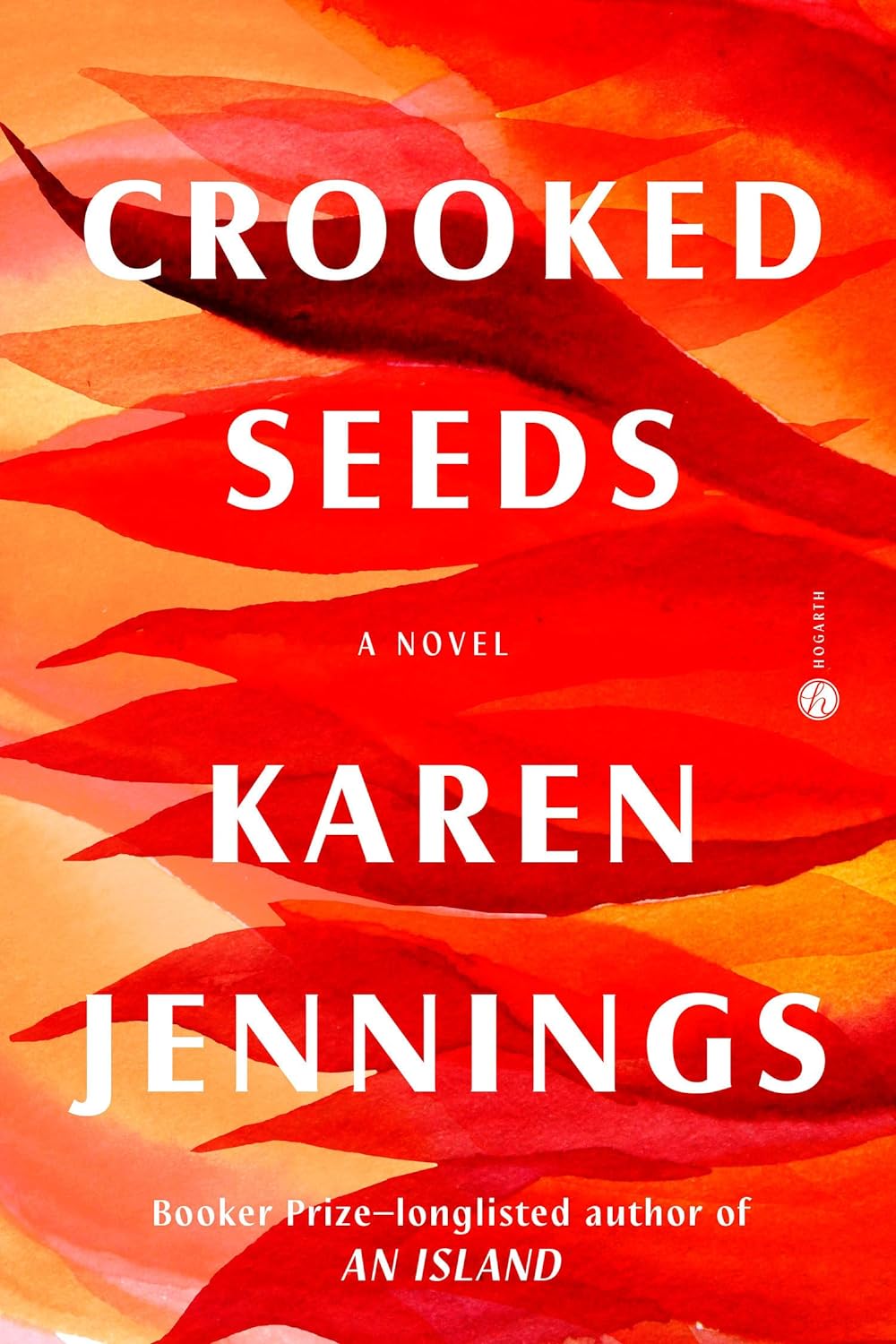
Crooked seeds is the third novel I’ve read by South African writer Karen Jennings, and she continues to intrigue and impress me, because she seems to be quietly bubbling away in her little corner of the world writing books that grapple with the difficult questions. Unfortunately, I didn’t read her Booker-longlisted novel, An island (2020), but the two I have read, Finding Soutbek (my review) and Upturned earth (my review) are historical novels with strong political underpinnings. Crooked seeds has political import too, but is set in a somewhat dystopian near-future.

I say near future because my calculation from the information we are given has Crooked seeds set in Cape Town in the late 2020s, and it certainly feels dystopian with dire water shortages, fire on the surrounding mountains and ash falling. This setting is not, in fact, farfetched. Cape Town did experience a severe water shortage problem from 2015 to 2018, and climate change is an increasing problem in South Africa. Climate change, however, is not Jennings’ prime concern here. Rather, it provides a perfect, disturbing environment against which to explore the personal problems being faced by her protagonist, 53-year-old Deidre van Deventer, and the political problems threatening to undo post-Apartheid South Africa. The near-future timing enables Jennings to imagine a setting that is hard to question, but that is close enough to feel more than plausible.

The novel opens strongly. Deidre wakes up thirsty, dirty and smelly. Her personal grooming is almost non-existent and she doesn’t seem to care. By paragraph two, we learn she has false teeth and by paragraph three that she needs crutches. It’s 5.18am, and at 6am the water truck will arrive, so she sets out to join the queue. She speaks to people she knows, mostly to cadge cigarettes or other help from them, things she never pays back. Clearly though, the sympathy card works because, as demanding as she is, people continue to help her, often at some cost to themselves. She is, I should add, white.

This is the background. An unappealing woman fighting a world that is tough and difficult for all those at the less advantaged end of the spectrum. Into this setting comes the plot, when, early in the novel, Deidre is contacted by police officer Mabombo concerning some bodies – infants’ bodies – in the yard of her old home. This is the same yard where, at the age of 18, she had lost her leg in an explosion caused by her pro-Apartheid activist brother Ross. Deidre wants none of this investigation. It’s nothing to do with her, she says, directing them to find the family that had lived there before.

“I’m the one that needs help. Me. Look at me. I’m the one!” (Deidre)

From here we follow Deidre, as Jennings drips out more and more of her story, matching flashbacks to an unhappy past where Deidre came a poor second to her mother’s beloved Ross, with a present where a highly unlikable but clearly damaged Deidre tries to survive in a desolate world. Deidre is one of those characters who can frustrate some readers. She’s a taker not a giver. She is rude to those who help her, including her kind but long-suffering Coloured neighbour Miriam, not to mention those at the perfectly-named Nine Lives Club where she wastes spends her days. She refuses to consider any advice that might make her life easier. And she certainly doesn’t think for herself about how she might improve her situation.

Meanwhile, Deidre’s estranged mother, Trudy, lives across the road in a nursing home. Suffering from dementia, she is lost in the patriarchal past, yearning for her son, but it is she who holds the key to the mystery.

Halfway through the novel, Miriam’s frustrations with Deidre’s self-centredness boil over when Deidre admits that she has never voted, because the government doesn’t care for her. Miriam, remarking that this government provides her disability grant, continues:

“You know what, Deidre, you’re really something else. Every time I think I’ve seen the worst of you, you come out with something even more terrible. Every single time, no matter what. Are you trying to be unpleasant, tell me? Is that your plan, to be unpleasant and make everyone dislike you. I really want to know?”

Deidre looked down into her lap. “No, it’s just the way I am.”

So, frustrating, yes, but Jennings had me engaged from the start. For all her faults, I cared about Deidre and about that

invisible thing that came at her from all directions … this thing that was always watching her, that never took its eyes off her. That saw what she was and punished her for it.

Also, I wanted to see where Jennings was going with her story, because, as I’ve already intimated, there is a political layer – not only the water shortages and encroaching fires, but the forced removals from homes (which Deidre and Miriam had experienced) and an overall sense that the state isn’t working.

I don’t think I’m going too much out on a limb to suggest that we could read white, damaged Deidre as representing white, privileged South Africans who see themselves as victims in the post-Apartheid world. Like Deidre in terms of those infants’ bodies, they may not have been personally responsible for the worst that happened under the regime, but they need to face the truth of what happened under their noses. Towards the end, Deidre asks Mabombo about the point of chasing it all up now, decades later. He responds:

“Miss van Deventer, this is difficult for you, of course, but you must agree that the truth has to come out. To leave the thing alone would have been to deny it and cover it up. And we must consider the other people involved. Families lost their children, and have been living with questions and pain for all these years.”

Ultimately, what Jennings shows in Crooked seeds is a society at odds with itself, and I use the word “shows” intentionally because this is such a spare, tight book. There is no telling, just a powerful story about a woman from whom everything was taken, in her mind at least, when she was 18, and who has never been able to rise above it, seeing only her own pain and loss, never recognising others’ loss or that the possibility of change lies at least partly in her hands. A personal story with a political heart. This is a stylish, clever novel, with an ending that hits just the right note.

Karen Jennings
Crooked seeds
Melbourne: Text Publishing, 2024
219pp.
ISBN: 9781922790675

(Review copy courtesy Text Publishing)

Monday musings on Australian literature: Fearless reviewing in 1970

I concluded last week’s Monday Musings by saying that I wasn’t finished with 1970. There are several posts I’m hoping to write, drawing from my 1970 research, but I’m starting with this one simply because it picks up on a comment I made last week.

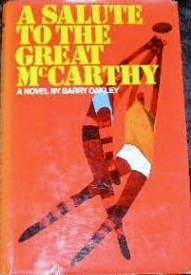
That comment referenced George Johnston, and a review by John Lleonart of Barry Oakley’s A salute to the Great McCarthy in The Canberra Times (8 August). I wrote that Lleonart had some “niggles” about the book but concluded that Oakley had “given us in McCarthy a classic figure of Australian mores to rank with George Johnston’s My brother Jack“. I didn’t, however, share those niggles. He wasn’t the only one with “niggles” about the book he was reviewing, so I thought to write a post sharing some of the criticisms reviewers expressed, because they are enlightening about what was and wasn’t liked in writing and about the art of reviewing itself.

Lleonart starts his review by saying that “it’s a pity Barry Oakley shaped up for his new novel in the cultural cringe position”, and goes on to say that

Oakley could have scored both for Australian literature and the game had he followed the elementary rule that there are no beg pardons.

Instead of striding, chest out and blast you Jack after the ball, he tends to prop, apparently listening for the footsteps of intellectual hatchetmen.

But, these are not his main “niggles” (as he calls them). They include that, while “Oakley has a lot of natural ability with words … sometimes he carelessly drops into cliches”; that some of the characters are “cardboard”; and that the novel’s “social attitudes” look back to those of Lawson. Lleonart concludes, however, on the positives, which include not only the aforementioned reference to Johnston’s novel, but that our footballer protagonist McCarthy “finds in fiercely competitive sport a means of expression and, in its best moments, even a sense of the inner poetry of life.”

Suzanne Edgar, whose poetry collection The love procession I’ve reviewed here, wrote about two recent novels in The Canberra Times (March 7). She suggested that they had “appeared in answer to Thomas Keneally’s demand for acceptable middle-brow Australian fiction”. But,

The trouble is that only people who are serious about reading are likely to pay $3 and more for a hard cover book. If you pay that you are not usually after the sort of light-weight escapist stuff that can be had for 80c from any newsagent’s shelves.

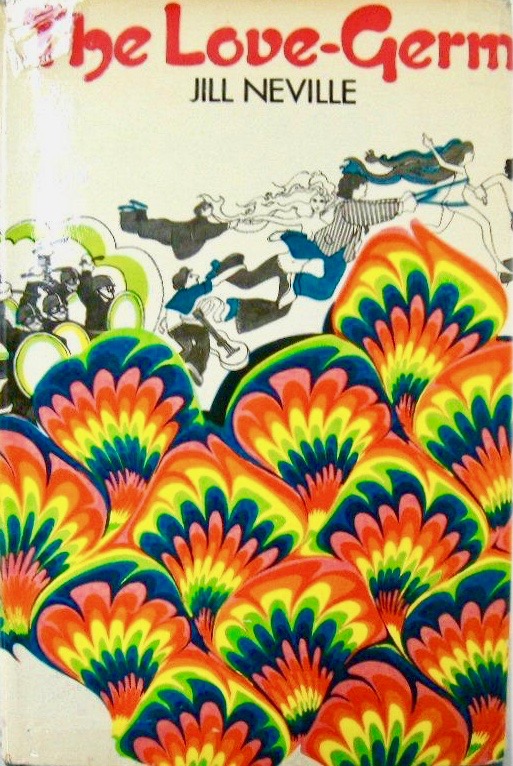
Unfortunately, Jill Neville’s The love germ and Keith Leopold’s My brow is wet are just “simple, uncomplicated bed-time stories”. Neville, Edgar continues, writes “like a slick and practised copy writer slinging words and fashionable ideas around with studied, gay abandon and not too much discretion; ‘desorified’ is one of her more flippant coinings”.

Leopold’s book, on the other hand, is “your academic’s pipe dream, the clever, but of course tongue-in-cheek crime story relieved by satiric treatment of Australian ivory towers. The sort of thing they would all like to write if they were not so busy publishing or perishing six days a week”. Edgar then goes on to say that “Mr Leopold’s unexceptional thesis is that there is dishonesty in all of us”. She gives a brief run-down of the plot – which sounds basic on the face of it – and concludes that it’s “amusing enough, but not really solid value for your money”. So, overall, entertaining enough reads but not worth buying in a $3 hardback. (That said, don’t you think that Weidenfeld and Nicolson’s 1969 hardback cover for The love germ is pretty gorgeous!)

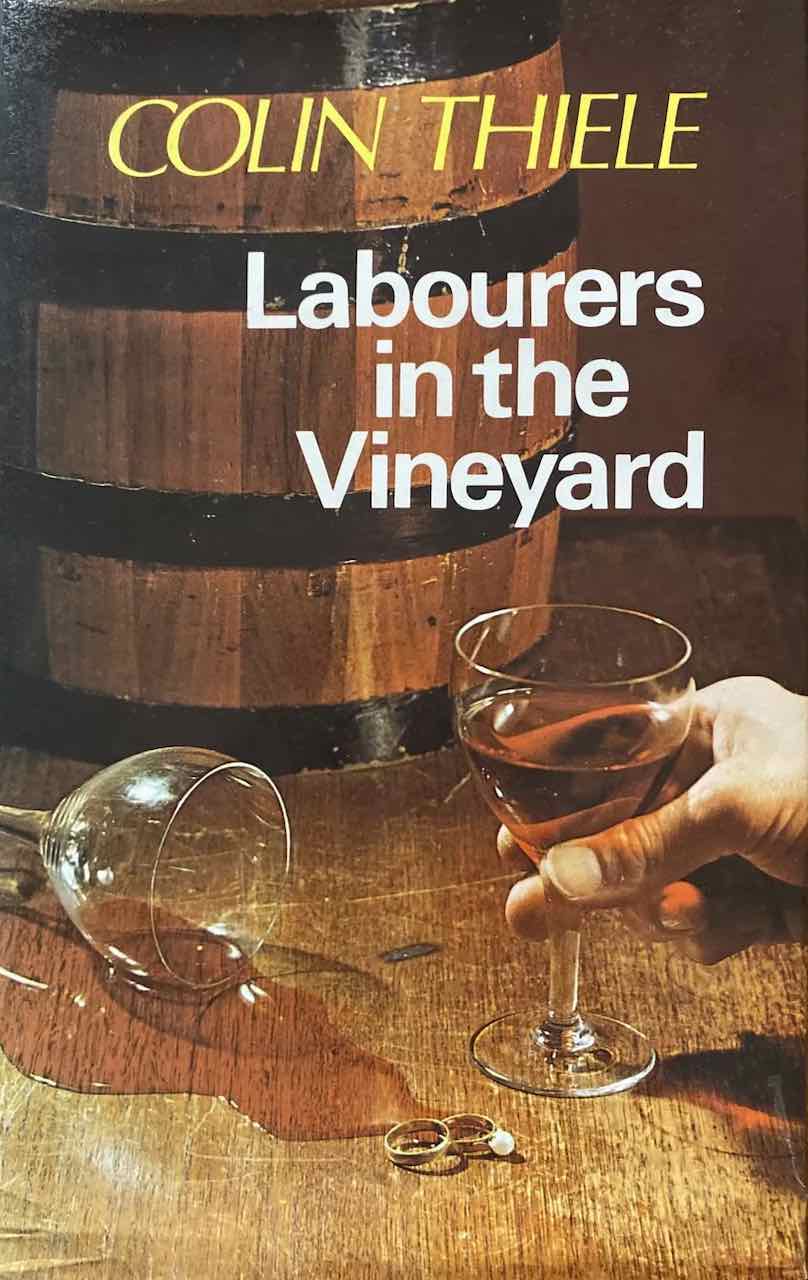
Finally, there’s Margaret Masterman, also writing in The Canberra Times (May 30). She reviews Colin Theile’s adult novel, Labourers in the vineyard. The review is headed “Novel improves as it goes along”. Masterman starts by quoting from the novel, then writes:

After encountering this rhetorical blast on page two of Colin Thiele’s latest novel nothing would have persuaded me to read the remaining 245 pages had I not, as a reviewer, been paid to do so.

But, she is being paid, so she continues:

As Mr Thiele gets a firm grip on his narrative however, it becomes clear that such assaults upon the natural resources of the English language are only the occasional excesses of an eloquent and highly inventive writer, one moreover who is directed by a positive if imperfectly sustained artistic purpose.

She tries to place the novel within a wider literary tradition. She suggests that Thiele “conceived Labourers in the vineyard on the lines of the traditional regional novel”, and says that

Focusing his story on a long-established German settlement in the Barossa Valley … he aims as I see it to invest “the valley” with something of the imaginative presence of Scott’s border country, George Eliot’s midlands, Mauriac’s sands and pine forests around Bordeaux, and above all Thomas Hardy’s Wessex.

She then compares the novel with Hardy’s Wessex novels, writing that

Into a modest 247 pages he has organised a remarkable variety of fictional material, much of which is nostalgically familiar to lovers of the Wessex novels. His plot is highly contrived and marked by melodramatic coincidences. The moods and predicaments of his characters are closely related to their rural environment and commented on by a chorus of humorous rustics.

Masterman discusses the book at some depth, pointing out its strengths but also its failings. Seasonal festivals and country trials, for example, “are vigorously and sometimes brilliantly described” but Thiele fails to “infuse the countryside with any genuine imaginative significance”. Because of his detailed knowledge of the region, he does give his story “an illusion of reality”. Her conclusion, however, is qualified. She’d clearly much rather be reading Hardy!

I enjoyed Labourers in the vineyard as a lavish and well organised entertainment which stirred memories of the people, the woodlands, the heaths and milky vales of a great novelist whose works in these days are too often neglected.

These are just three examples I found in my research, but they nicely exemplify some of the things that are important to me when I think about my reading. What is the writing like? How does the novel fit within its perceived “genre” (defined loosely)? How relevant is the novel to the concerns of its day?

What do you think?

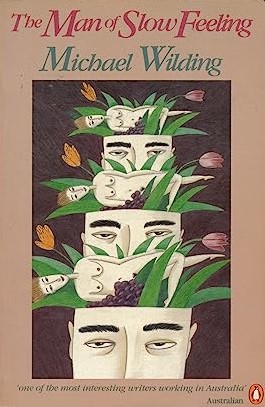
Michael Wilding, The man of slow feeling (#Review, #1970 Club)

Michael Wilding’s short story, “The man of slow feeling”, is hopefully the first of two reviews I post for the 1970 Club, but we’ll see if I get the second one done. I have been making a practice of reading Australian short stories for the Year Clubs, so when the year is chosen I go to my little collection of anthologies looking for something appropriate. My favourite anthology for this purpose is The Penguin century of Australian stories, edited by Carmel Bird, because it is a large comprehensive collection and because the stories are ordered chronologically with the year of publication clearly identified. Love it!

Who is Michael Wilding?

With these later year clubs, like 1970, there’s a higher chance that the authors we read might still be alive. This, I believe, is the case with Michael Wilding. Born in England in 1942, he took up a position as lecturer at the University of Sydney from 1963 to 1967, before returning to England. However, two years later, in 1969, he returned to Australia and stayed. He was appointed Professor of English and Australian Literature at the University of Sydney in 1993, and remained in that position until he retired in 2000.

AustLit provides an excellent summary of his career. As an academic, he has, they say, had a distinguished career as a literary scholar, critic, and editor”, specialising in seventeenth and early eighteenth century English literature. Since the early 1970s, he has also “built a reputation as an important critic and scholar of Australian literature” focusing in particular on Marcus Clarke, William Lane and Christina Stead. And, he has been active as a publisher, having co-founded two presses, and at least one literary magazine.

However, he also, says AustLit, “came to prominence as creative writer in the late 1960s, when he was at the forefront of the ‘new writing’ movement which emerged in Australia in at that time”. He was part of a group of writers, editors and publishers “who were influential in promoting new and experimental writing, and in facilitating the revitalised Australian literary landscape of the late 1960s and 1970s”. AustLit doesn’t identify who was in that influential group, but I think Kerry Goldsworthy does in her introduction to Penguin’s anthology. She writes that “short fiction was the dominant literary form in Australia in the 1970s” and the most recognised practitioners were Frank Moorhouse, Peter Carey, Murray Bail and Michael Wilding. (All men, interestingly.) This writing, says Goldsworthy, was heavily influenced by European and American postmodern writing, but she doesn’t specifically reference Wilding’s story in her discussion.

Wilding has published over twenty novels and short story collections. AustLit adds that his short stories have also been published widely in anthologies, and that many have also been translated. Wikipedia provides an extensive list of his writing.

“The man with slow feeling”

“The man with slow feeling” is a third-person story about an unnamed man who, as the story opens, is in hospital after a serious accident from which he had not been expected to survive. However, he does survive. Gradually his sight and speech return, but not his sensation. That is, he can’t taste food or feel touch.

Soon though, he realises that sensation is returning, just some time after the actual experience. For example, he and his partner, Maria, make love, but he feels nothing – until some hours later. Not good! Not only is there the problem of feeling nothing, but when they are making love, he might experience some unpleasant sensation from three hours ago. Then, when he is out shopping three hours later, he experiences the orgasm. Or, regarding food, he will eat lunch but not taste it until 4pm. It is all, to say the least, disorienting. So, he sets up a system where he records his “sensate actions” so he can prepare (or “warn”) himself “after a three hours’ delay … of what he was about to feel”.

I’m sure you can see the practical problem with this. Soon, he becomes trapped in “a maze of playback and commentary and memory”, where he is trying to record the present for the future while at the same time experiencing the past. It becomes intolerable.

The tone is one of disassociation, alienation – which had me heading off down that more “modernist” path. But, the “recorder” aspect suggested that the theme involves partly, at least, exploring the conflicted role of recording versus experiencing – which is a more post-modern idea. Can you do both? Can a writer do both? Can, I remember discussing at length during my film librarian career, a documentary filmmaker record and not experience (or not affect the experience) during the act of recording? What are the bargains you make between the two?

I don’t know enough about this time in Australian literature – I haven’t read enough – to understand where Wilding’s ideas and thoughts fit into the zeitgeist. In her introduction to the anthology, Kerryn Goldsworthy says that the writing of this time incorporated “elements of fantasy, surrealism, fabulist, literary self-consciousness, and the process of storytelling itself”. She says the stories by Murray Bail and Peter Carey are concerned with “the riddles and paradoxes of representation itself”. Wilding’s story could also be read as part of this exploration.

This is a dark story in which, if I stick with my idea about the theme, Wilding suggests that the life of sensation is what it’s all about. Fair enough, but where does that leave the writer (or recorder)?

“The man with slow feeling” had me intrigued from its opening lines to its close. I’m not sure I have fully grasped all that Wilding intended by it, but this was a time of experimentation with the short fiction form and new writerly freedoms. I wish I could point you to an online version of the story.

* Read for the 1970 reading week run by Karen (Kaggsy’s Bookish Ramblings) and Simon (Stuck in a Book).

Michael Wilding
“The man with slow feeling” (orig. pub. Man: Australian Magazine for Men, July 1970)
in Carmel Bird (ed.), The Penguin century of Australian stories
Camberwell: Penguin Books, 2006 (first ed. 2000)
pp. 232-238

Monday musings on Australian literature: 1970 in fiction

Once again it’s Karen’s (Kaggsy’s Bookish Rambling) and Simon’s (Stuck in a Book) “Year Club” week. This week, it is 1970, and it runs from today, 14th to 20th October. As for the last 6 clubs, I am devoting my Monday Musings to the week.

Despite the excitement and idealism of the 1960s, 1970 Australia was strongly conservative, politically speaking, with some notorious conservative leaders (like Joh Bjelke-Petersen, Sir Henry Bolte, and Robert Askin) being premiers of their respective states. But, there were exceptions. The socially progressive Don Dunstan became premier of South Australia during the year, and, while our Prime Minister, John Gorton, was a conservative, he was recognised as a supporter of the arts.

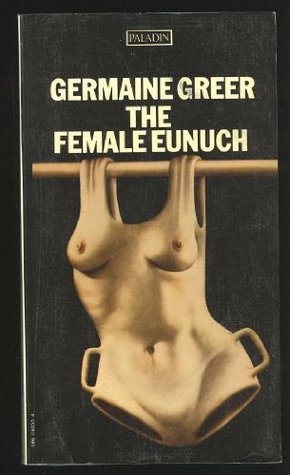
The war in Vietnam was still underway but was becoming increasingly unpopular. This was the year Australia decided to go metric for weights and measures, and, more relevant to this post, it was also the year that Germaine Greer’s The female eunuch (which I read the following year) was published.

A brief 1970 literary recap

Books were of course published across all forms, but my focus is Australian fiction, so here is a selection of novels published in 1970:

  • Jessica Anderson, The last man’s head
  • Richard Beilby, No medals for Aphrodite
  • Richard Butler, Sharkbait
  • Diane Cilento, Hybrid
  • Jon Cleary, Helga’s web
  • J.M. (John Mill) Couper, The thundering good today
  • Geoffrey Dutton, Tamara
  • Catherine Gaskin, Fiona
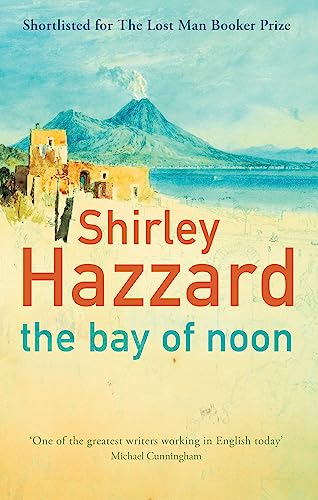
  • Shirley Hazzard, The Bay of Noon
  • Edward Lindall, A gathering of eagles
  • William Marshall, The age of death
  • Cynthia Nolan, A bride for St Thomas
  • Barry Oakley, A salute to the Great Macarthy AND Let’s hear it for Prendergast
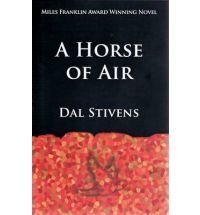
  • Dal Stivens, A horse of air
  • Colin Thiele, Labourers in the vineyard
  • Ron Tullipan, Daylight robbery
  • Barbara Vernon, Bellbird (based on the ABC television series)
  • F.B. Vickers, No man is himself
  • Patrick White, The vivisector

A few of these writers are still respected and read today; a few are known but read less frequently; while some have fallen out of public consciousness (to my knowledge, anyhow!)

Of those I didn’t know, a couple caught my attention for their subject matter. F.B. Vickers is one. Trove describes No man is himself as “A novel set in the north west of Western Australia concerning an officer in charge of Native Welfare who is sympathetic to Aborigines but involved in personal difficulties with the white community and his wife.” The other is Edward Lindall whose A gathering of eagles is also set in Western Australia, and has a First Nations character. Google Books describes it as a “thriller set in the remote barren wasteland of north western Australia; an outcast Aboriginal woman, Ilkara, assists the survivors of a murderous plot to outwit their would-be killers.” The Encyclopedia of Science Fiction says Lindall was the pseudonym used by Edward Ernest Smith (1915-1978). He is also listed at a Classic Crime Fiction site.

Writers born this year include novelists Julia Leigh and Caroline Overington, and those who died include Herz Bergner (whose Between sea and sky I’ve reviewed), children’s fiction writer Nan Chauncy, Frank Dalby Davison (who was part of “the triumvirate” with Marjorie Barnard and Flora Eldershaw), and George Johnston.

There were not many literary awards, yet, though the state awards we know were getting close. And, several of the main awards made in 1970 weren’t to fiction. The ALS Gold Medal, for example, went to historian Manning Clark, and the Colin Roderick Award to Margaret Lawrie’s Myths and legends of Torres Strait.

There were some fiction awards, however, including of course, the Miles Franklin Award, which went to Dal Stevens’ A horse of air. The trade union-supported Mary Gilmore Award (my post on this award) was made to Keith Antill for Moon in the ground. It’s an Australian science fiction story set around the secretive Pine Gap near Alice Springs. The “$1,000 Rothman’s award for the best Australian novel of 1969” was awarded in 1970 to George Johnston‘s “semi-autobiography Clean straw for nothing” (from Trove).

The state of the art

As for previous club years, I checked Trove to see what newspapers were saying about Australian fiction. This was a little trickier for 1970 because, due to copyright, many newspapers from this time have not yet been digitised. However, some papers, most notably The Canberra Times and Tribune, along with some regional ones, have made their content available to Trove. To them I am most grateful.

George Johnston

Book cover

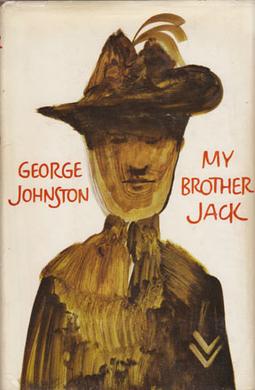
If one name loomed large in my my 1970 Trove research, it was George Johnston, and not just because he died in July. There were, of course, the obituaries, but, unrelated to his death, is his being used as a benchmark by commentators. For example, John Lleonart, reviewing Barry Oakley’s A salute to the Great McCarthy in The Canberra Times (8 August), has some “niggles” about the book but concludes that “Oakley has given us in McCarthy a classic figure of Australian mores to rank with George Johnston’s My brother Jack“.

Meanwhile, in discussions about the need for more Australian content on television, the television miniseries of My brother Jack was suggested as a benchmark for good Australian television content. Frances Kelly, writing in The Canberra Times (August 26), discusses the economic and artistic challenges to producing more “good” Australian content, and suggests one solution could be for Australia to

follow the BBC’s lead and begin work on adaptations. There are many fine Australian novels, which if we must still fly the flag, would bear dramatisation. My brother Jack was a shining example. 

The obituaries sum up Johnston’s career well – at least as it was seen at the time of his death. Maurice Dunlevy writes in The Canberra Times (23 July) that:

He had come back to his gumtree and kookaburra womb to find a new land, a people without a soul, and some uncomfortable ghosts from his past. “I would like to help Australians to find a new identity, a new soul, a new spirit”, he said on television. But to do so he had to sort out his own attitude to a country where he had left “the irrecapturable rapture of being young”. He was trying to do this in the third volume of the trilogy [A cartload of clay] during the past year.

Roger Milliss discusses Johnston at some depth in Tribune (12 August), concluding that

the important thing is the task that George Johnston recognised and set for himself — that of modernising Australian literature, of dragging it screaming into the 1970’s, of giving it a shape consistent with the world around it. That task must now be taken over by someone else — perhaps a writer who will emerge from the ranks of this new emerging generation.

These two obituaries make good reading if you are a Johnston fan.

Bookworm diggers

Meanwhile, over in South Vietnam, reported the Victor Harbour Times (May 29), Australian soldiers were well supplied with most amenities, but were running short of reading material. They had, says the report, “ample supplies of newspapers and regularly published magazines” but “novels, other books and paperbacks [were] in short supply”. Donations were being called for, and the Army would deliver them.

Australian classics

Publishers publishing classics is not new, but it’s always interesting to see “what” publishers see as those worth publishing at a particular time. In 1970, the Australian publisher Rigby published two Australian classics, Rolf Boldrewood’s Robbery under arms and Marcus Clarke’s For the term of his natural life, in $1.25 paperback editions. The Canberra Times (May 30), described them as “quite massive little tomes as paperbacks go” but said they gave readers “the opportunity of owning at a reasonable price two books that will be read and reread as long as Australian literature survives”. I love the qualification, “as long as Australian literature survives”. I wonder what the reporter thought might happen? Anyhow, these are still recognised “classics” but more have been added to the Australian classics pantheon since then.

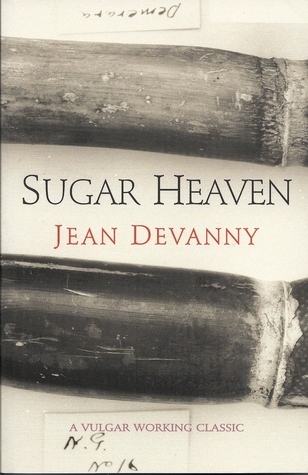
While not quite making classics status, two other authors from the past were mentioned in the year’s papers. One was Communist Party member, Jean Devanny, whose papers were donated by her daughter to the University of Townsville. (I included her in my post on women writers and politics in the 1930s.) The Tribune‘s report (January 28) says that Jean Devanny had had more than 20 books published by Australian and overseas publishers. One of her best known, Sugar heaven (1936), is a novel of class and politics on the Queensland cane fields, and was published in the Soviet Union in 1968.

The other author, Vance Palmer (1885-1959), came from the same era, and while not a Communist, was left-leaning politically. By 1970, he was seen as old-fashioned, but Professor Harry Heseltine thought he was due for a reassessment, and published his Vance Palmer in 1970. I will share more about this in another post.

Censorship and Book Bans

“Australia is still the country of interfering and sometimes ridiculous censorship, but there are signs of vitality on the cultural scene” (Paris newspaper Le Monde, The Canberra Times, December 21, 1970).

The last book banned in Australia was Philip Roth’s Portnoy’s complaint. It was banned in 1969, but after protestations by booksellers and publishers, and two trials in New South Wales which ended in hung juries, the ban was lifted in 1971. In 1970, however, it was all still happening. There’s way too much reporting for me to cover here, so I’m just to entertaining references to whet your appetite.

The University of New South Wales’ student newspaper, Tharunka (April 21), devoted a special literary supplement to the issue, asking writers to comment on censorship. One was Thomas Keneally, who commenced his piece by saying he felt “uneasy contributing to a forum on censorship because I have never achieved banmanship”. He is tongue-in-cheek about the reasons for the ban, which had to do with its being a “dirty” book. Keneally doesn’t see orgasm as “the key to the vision of man”, and argues that “there is very little of less value to the novelist than a person enjoying himself”. Fair point! Nonetheless, despite his “spinsterish views on eroticism in literature”, he thinks the ban is “an embarrassment”.

Maurice Dunlevy takes satire further in his article “The Portnoy tug-of-war” (The Canberra Times, September 5). Do read it … And, for a more recent history of the saga, check this article by Sian Cian in The Guardian (February 2, 2022). She quotes Des Cowley, of the State Library of Victoria:

“There’s been a lot written about the whole saga with Penguin and the legal case, but a little part of that story is that a small group of people got together and defended the right of literature to exist. It is such a beautiful case because, in a way, it ushers in the change Australia saw between the 1960s and 70s, with the progressive Whitlam government, and going from a literary backwater to a world stage.”

I’m not finished with 1970 … but this post is long enough. I’d love to hear any thoughts you have about the year, or about the stories I’ve shared here.

Sources

  • 1970 in Australian Literature (Wikipedia)
  • Joy Hooton and Harry Heseltine, Annals of Australian literature, 2nd ed. OUP, 1992

Previous Monday Musings for the “years”: 1929, 1936, 1937, 1954, 1940 and 1962.

Do you plan to take part in the 1970 Club – and if so how?