Stella Prize 2025 Winner announced

The 2025 Stella Prize winner was announced tonight at a special event at the Sydney Writers’ Festival, and the winner is …

Michelle de Kretser’s Theory & practice

How happy am I that a book I reviewed only last week won the award! It is a provocative and thoroughly engrossing book in all the ways. I don’t feel I did full justice to it, but I did love thinking about what she was doing. It’s playfully mind-bending, but is also very serious about the art of the novel, what it can be, and what it can say. I can’t of course say whether I would have chosen it, as I’ve only read two of the shortlisted books. However, it is a wonderful book, and, when it comes to acceptance speeches, de Kretser is up there with the best. (You can see it at the Stella site) She was compassionate and eloquent. She made a beautiful but pointed statement commemorating two groups of women: the Stella founders who rejected business as usual in the literary world, and the women and girls of Gaza who are suffering under the business-as-usual actions of Israel’s genocide in Gaza.

She also said:

“I’m still afraid. But I’ve just accepted a prize that is not about obedience. It’s not about feel-good narratives, it’s not about marketing, it’s not even about creativity – Stella is about changing the world.”

Michelle de Kretser on a screen

It was pure class.

The announcement was made at a special event at the Sydney Writers’ Festival. It involved: an introduction by Fiona Sweet, Stella’s CEO; a discussion between three of the judges (Astrid Edwards, Leah-Jing McIntosh and Rick Morton) about the shortlisted books; the awarding of the prize; Michelle de Kretser’s recorded acceptance speech (see here); and a conversation between her (in Sussex) and Rick Morton.

Just to remind you, the short list was:

  • Jumaana Abdu, Translations (fiction, kimbofo’s review)
  • Melanie Cheng, The burrow (fiction, my review)
  • Santilla Chingaipe, Black convicts: How slavery shaped Australia (non-fiction/history)
  • Michelle de Kretser, Theory & practice (fiction, my review)
  • Amy McQuire, Black witness: The power of Indigenous media (non-fiction/essays)
  • Samah Sabawi, Cactus pear for my beloved: A family story from Gaza (memoir/non-fiction)

And the judges were Gudanji/Wakaja woman, educator and author Debra Dank; teacher, interviewer/podcaster, and critic Astrid Edwards; writer and photographer Leah-Jing McIntosh; Sudanese–Australian media presenter and writer, Yassmin Abdel-Magied; and journalist and author with a special focus on social policy, Rick Morton. Astrid Edwards was the chair of the panel.

I have now read nine of the 13 winners: Carrie Tiffany’s Mateship with birds (2013, my review), Clare Wright’s The forgotten rebels of Eureka (2014, my review), Emily Bitto’s The strays (2015, my review), Charlotte Wood’s The natural way of things (2016, my review), Heather Rose’s The museum of modern love (2017, my review), Alexis Wright’s Tracker (2018), Vicki Laveau-Harvie’s The erratics (2019, my review), Jess Hill’s See what you made me do (2020, my review), Evie Wyld’s Bass Rock (2021), Evelyn Araluen’s Dropbear (2022, my review), Sarah Holland-Batt’s The jaguar (2023), Alexis Wright’s Praiseworthy (2024), and Michelle de Kretser’s Theory & practice (2025, my review).

Thoughts anyone?

Michelle de Kretser, Theory & practice (#BookReview)

Michelle de Kretser’s latest novel, Theory & practice, is a perfect example of why I should follow my own reading advice, which is that as soon as I finish a book I should go back and read the opening paragraphs, if not pages. I like to do this because there often lies clues to what the book is really about. It certainly is with Theory & practice.

Theory & practice starts like a typical novel, whatever that is. We are in Switzerland in 1957, with an unnamed 23-year-old Australian geologist who is waiting for a bus to go up the mountain. Meanwhile, back in Australia “rivers of Southern Europeans are pouring into Sydney”. The story continues, with a flashback to his living in the country with his grandmother when he was six years old. During this time he steals her precious ring, and lets her blame her “native” worker Pearlie. The story, told third person, returns to 1957 and a potential tragedy when, writes the narrator, “the novel I was writing stalled”. And, just like that, we switch to first person.

I wrote to my American friend after I finished it, that I needed to do a bit of thinking. I saw an underlying thread concerning colonialism, I wrote, but how does that tie in with the idea of “theory and practice”, and with my glimmer of something about the messiness of life and how it can be represented in art. And, to make things more complicated – in this rather slim book – the narrator is writing a thesis on Virginia Woolf’s The waves, in which Woolf attempted to play with the novel form, calling her novel a “playpoem”. In Theory & practice, de Kretser also plays with the form, but by using fiction, essay and memoir in a way that nods a little to autofiction, but that feels more intensely focused on ideas than narrative.

So, here goes … With the jump to first person, our narrator introduces us to an essay titled “Tunnel vision”, by the British-Israeli architect Eyal Weizman, that she read in the London Review of Books. In this essay Weizman discusses what de Kretser characterises as “the application of Situationist theory to colonising practice”. She kept finding herself returning to the idea of “theory and practice” and her recognition that “the smooth little word ‘and’ makes the transition from theory to practice seem effortless” when she knew was not the case. She knew all about “the messy gap between the two”. Her novel had stalled because it wasn’t what she needed to write. What she needed to write about was the “breakdowns between theory and practice”.

We then shift gear again, and flash back to when the narrator is a child and learning the piano, learning both musical theory and piano practice. The relationship between the two might have been obvious to her teacher but it wasn’t to her.

“messy human truths” (p. 38)

Are you getting the drift? I thought I was, but the novel shifted gear again to 1986 when the narrator, at the age of 24, moves from Sydney to Melbourne to undertake an MA in English. Her topic is to be Virginia Woolf and gender, drawing on feminist theory. She soon uncovers a confronting thread of racism in Woolf’s diaries – a reference to “a poor little mahogany coloured wretch”. This was E.W. Perera, a Ceylonese barrister, politician and freedom-fighter man who, according to Woolf, had only two subjects, “the character of the Government, & the sins of the Colonial Office”. He made Woolf uncomfortable, though husband Leonard sympathised. The problem for our “mahogany-coloured” narrator is that Woolf’s discomfort makes her uncomfortable, but her thesis supervisor, Paula, won’t agree to her changing direction to explore racism. Our narrator’s solution, on the advice of an artist friend, is to “write back to Woolf”, to find or create her own truth in Woolf’s story.

Throughout the novel various parallels are drawn which illuminate the theme, even if they don’t resolve the mess. In her personal life, the narrator’s “practice” – a love affair with a man attached to another woman he claims to love – keeps butting up against her understanding of feminist theory and its key idea of supporting the sisterhood. Desire and obsession, she was finding, trumps theory every time. How to reconcile this? We are thrown into academia, with its politics and jealousies, and St Kilda’s colourful bohemian life, as she reaches for answers to questions both academic and personal.

Concurrently, there is the mother-parallel, one in which regular phone calls from her mother offering practical help and advice interrupt the text and narrative flow, and contrast with the Woolfmother whose abstract presence continues to complicate our narrator’s research and understanding. On the one hand, says our narrator, Woolf said ‘”Imagine” and opened the doors to our minds’, but on the other, she was “a snob and a racist and an antisemite”. Both are as complicated – “messy”, dare I say – as any mother-daughter relationship.

All this is told in prose that is captivating with its changing rhythms from the tersely poetic – “the evening felt jumpy, spoiling for a fight” – to realistic description, and natural dialogue.

Eventually our narrator manages to squish her “ideas about Woolf’s novels into the corset of Theory”, but, perhaps recalling her earlier awareness that “theory taught us … to notice what was unimportant”, it does not fill her with pride. It does, however, fulfil the university’s requirements and she can move on.

And so does the novel, making another leap to the end of the twentieth century, and on into the 21st century. She has more to say about the ways humans abuse others – as she’d been abused as a child, as Woolf and her sister had been abused, and as Donald Friend, in an interesting late discussion in the novel, abused young Balinese boys. Such is the legacy of sexism, racism and colonialism.

Now, how does this short but invigorating novel bring all this together? By reminding us, as the novel has done all the way through, that life is messy, that neither art (including the novel) nor theory can provide the answer, though they might provide insights. This is why, I’d say, de Kretser continues to play with the novel form, to find ways to convey the reality (not the realism) of life. I will end with a Woolf quote shared by de Kretser two-thirds through the novel, because I think she would apply it to herself:

“I will go on adventuring, changing, opening my mind & my eyes, refusing to be stamped & stereotyped.”

Kimbofo also loved this book.

Michelle de Kretser
Theory & practice
Melbourne: Text Publishing, 2024
184pp.
ISBN: 9781923058149

(Review copy courtesy Text Publishing)

Jane Austen, Mansfield Park (Vol. 3)

Mansfield Park book covers

A year ago, my Jane Austen group did a slow read of Mansfield Park, meaning we read and discussed it, one volume at a time, over three months. I posted my thoughts on volume 1 (chapters 1 to 30), and volume 2 (chapters 19 to 31), but I missed the third meeting, and never wrote up the final volume (chapters 32 to 48). However, this year my reading group scheduled Mansfield Park for our Classic read, so I’m taking the opportunity to share my thoughts on that last volume.

But first, a brief intro. The reading group member who recommended we read Mansfield Park did so because she wanted to see whether she would better like this, her least favourite Austen, on another read. She didn’t. I understand this. Mansfield Park is regularly identified as Austen’s hardest book to like. It feels prudish to modern eyes; its protagonist Fanny isn’t exciting nor is her romance; and it is more serious and certainly less sparkling than its predecessor, Pride and prejudice. Re this latter point, Jane Austen collected opinions on the novel from friends, family and others, and reported that one Mrs Bramstone “preferred it to either of the others — but imagined that might be her want of Taste — as she does not understand Wit.”

Now, my thoughts …

Volume 3 starts the day after Fanny has rejected Henry Crawford’s proposal. As someone in my reading group said, all the novel’s action takes place in the final chapters, and I mostly agree, although significant events do take place in the previous volumes, including the visit to Sotherton and the plan to put on the play, Lovers vows.

I wrote in my first two posts that what was striking me most was the selfishness, or self-centredness, of most of the characters. It suggested to me that Austen was critiquing the selfishness/self-centredness of the well-to-do, and how this results in poor behaviour, carelessness of the needs of others, and for some, in immoral behaviour. (I think we could equate these ideas with today’s concerns about “entitlement”.) This thread continued in volume 3. Indeed, here is where it all comes home to roost, confirming my sense that Mansfield Park is fundamentally about morality.

Fanny is clearly the novel’s moral centre. She quietly observes, and reflects on, what goes on around her. As one of my reading group members said, it is through her eyes, her thoughts, that we see the novel’s world. In the first chapter of volume 3, Sir Thomas speaks to Fanny about Henry’s proposal, explaining why she should accept him. Henry is

a young man … with everything to recommend him: not merely situation in life, fortune, and character, but with more than common agreeableness, with address and conversation pleasing to everybody.

Then he adds pressure. She owes Henry gratitude for his role in obtaining advancement for her brother in the navy, and marrying Henry is her duty to her family as such a marriage can only help them. Sir Thomas is therefore perplexed and shocked at Fanny’s ongoing refusal – despite these persuasions – to consider Henry. He asks:

“Have you any reason, child, to think ill of Mr. Crawford’s temper?”
“No, sir.”
She longed to add, “But of his principles I have” …

However, she feels that to tell Sir Thomas of her observations of Henry’s unprincipled behaviour towards Julia and the engaged Maria would betray them – so, she’s caught and says nothing. She hoped Sir Thomas – “so discerning, so honourable, so good” – would accept her “dislike” as sufficient reason. Unfortunately, not only can he not accept it, but he accuses her of wilfulness and ingratitude. It’s mortifying.

To his credit, however, Sir Thomas backs off, planning to let nature take its course, and, with a little judicious encouragement from the sidelines, he believes Henry will win her round. So Henry continues to press his suit, and Fanny continues to hold steady, reflecting at one point on “his want of delicacy and regard for others”. A few chapters on, Mary Crawford also presses her brother’s suit, but Fanny – she who is called wimpy by many modern readers – pushes back, telling Mary,

I had not, Miss Crawford, been an inattentive observer of what was passing between him and some part of this family in the summer and autumn. I was quiet, but I was not blind. I could not but see that Mr. Crawford amused himself in gallantries which did mean nothing.

While Fanny is coping with this, Edmund is moving forward with his plans to win Mary Crawford’s hand, despite her rather telling hatred of his chosen profession as a clergyman. Fanny – not altogether disinterested it has to be admitted – had observed Mary’s poor values, but it takes Edmund a long time to see her for what she is, for her lack of “principle”, her “blunted delicacy and a corrupted, vitiated mind”. Edmund is convinced that Mary had been corrupted by the influence of others. He talks of “how excellent she would have been, had she fallen into good hands earlier” (instead of those poor influences she had in London. City versus country values is another thread running through this novel.)

I could expand more on this selfishness-leading-to-poor-behaviour-or-immorality theme because examples abound in the volume, but my aim here is to just share some ideas. And, I want to share another one…

I also mentioned another developing theme in my post on volume 1, the education of Sir Thomas. Interestingly, this is related to something I am observing in my current slow read of Austen’s next novel Emma, that of the quality of guidance given to young people and what happens when that guidance is faulty, misguided and/or not grounded in good moral teaching. It’s not a new theme for Austen, as you can see in Edmund’s comments above about Mary Crawford. But, it’s Sir Thomas’s learnings as one of those who does the guiding that I want to focus on.

Like many of Austen’s characters, in fact, Sir Thomas engenders a variety of reactions from readers. Some see him as harsh and uncompromising. It’s easy to argue this when you see the way his children – and niece – fear him. But others, and I am one, see him as a father trying to bring up his children as best he can, with little help from the indolent Lady Bertram. Fanny, our moral centre, talks of his “parental solicitude”. We see hints of his kindness in volumes 1 and 2, but it is in volume 3 that we see what he is really made of. He’s a man of his times, of course, but one who had his children’s best interests at heart and who realised too late that his raising of them had been misguided.

Now, before I continue, I want to make a little comment about style and structure. For most of the book, though there are departures, we are in Fanny’s head, seeing what she sees, thinking what she thinks, but in the book’s final chapter, Austen breaks the fourth wall and talks to us directly. It opens with a favourite quote:

Let other pens dwell on guilt and misery. I quit such odious subjects as soon as I can, impatient to restore everybody, not greatly in fault themselves, to tolerable comfort, and to have done with all the rest.

“I quit”, she says, drawing attention to the fact that she is telling us a story, and she continues this way:

My Fanny, indeed, at this very time, I have the satisfaction of knowing, must have been happy in spite of everything…

The rest of the chapter wraps up the novel and her characters. She devotes a few pages to “poor Sir Thomas”, telling us that he “was the longest to suffer” due to “the anguish arising from the conviction of his own errors in the education of his daughters”. He reflected on the negative impact on Maria and Julia of the “totally opposite treatment” they had lived under

where the excessive indulgence and flattery of their aunt had been continually contrasted with his own severity. […]

Here had been grievous mismanagement; but, bad as it was, he gradually grew to feel that it had not been the most direful mistake in his plan of education. Something must have been wanting within, or time would have worn away much of its ill effect. He feared that principle, active principle, had been wanting; that they had never been properly taught to govern their inclinations and tempers by that sense of duty which can alone suffice. They had been instructed theoretically in their religion, but never required to bring it into daily practice. To be distinguished for elegance and accomplishments, the authorised object of their youth, could have had no useful influence that way, no moral effect on the mind. He had meant them to be good, but his cares had been directed to the understanding and manners, not the disposition; and of the necessity of self-denial and humility, he feared they had never heard from any lips that could profit them.

Just look at those last few sentences … there, I think, is Austen’s driver for this novel. Maria and Julia had been allowed to focus on “elegance and accomplishments” with no attention paid to “the moral effect on the mind”. Mary Crawford is similarly misguided.

Jane Austen, as we know, could be witty and acerbic with the best of them, but in this most serious novel of hers she may have shared the moral and social values dearest to her heart.

Thoughts?

Monday musings on Australian literature: 1952 in fiction (2), a national stocktaking

I said in last week’s Monday Musing, which was dedicated to (Kaggsy’s Bookish Rambling) and Simon’s (Stuck in a Book) 1952 “Year Club”, that I wouldn’t write about the ongoing issue of journalists and academics feeling the need to defend Australian literature, because I’ve discussed it before. However, I did read an interesting article on the wider issue that I thought worth sharing. Yes, I know the week officially ended yesterday, 27 April!

Bartlett on Aussie culture

The article I’m talking about came from someone called Norman Bartlett. Born in England in 1908, he migrated to Western Australia with his parents in 1911, so he grew up Australian (albeit he did live in England again with his mother and sister between 1919 and 1924). According to the NLA’s Finding Aid for his papers, he studied journalism, obtained an Arts degree, and served with the RAAF in World War 2. In 1952, he was literary editor and leader writer for Sydney Daily Telegraph and Sunday Telegraph. The article in question was written in reflection of the 1951 Golden Jubilee of the Commonwealth of Australia.

Titled “Let’s take stock of Australian culture”, it appeared in the Daily Telegraph (5 January). Bartlett’s fundamental question was whether Australia had “grown up as a nation”. This meant, he argued, much more than things like “Dominion status, industrial development, the fighting reputation of the A.I.F., a record wool cheque, and prowess at tennis, cricket, and, with reservations, Rugby, football”. Yes, indeed! Rather, it means

maturity in art and literature; a distinct and original “way of life”; a quickened awareness of what being an Australian means; and why being an Australian is different from being an Englishman, an American, or a European. 

A national culture is much more than a cultivated minority’s appreciation of good books, pictures, music, and architecture. 

It is the way we — the majority — feel, think, act, talk, wear our clothes, play our games, and fight our wars.

When our literature, art, music, architecture, and philosophy reflect our national idioms and attitudes they become part of our national culture. Thus, a truly national culture is the expression of a particular people living in a particular place for a long time.

Of course, he doesn’t consider the nation’s original inhabitants in any of this, particularly when he says “originally, Australians were colonials. That is, slips from older stock transplanted into an initially alien soil”. I will just leave that thought, because we are talking 1952 and I think the best thing for us to do is to recognise this context in all he says.

His article aimed to analyse “whether we’ve taken root; whether we are making a collective, intelligent attempt to adjust ourselves to our environment; whether our environment reflects itself in our speech, attitudes, art, music, and literature”. He argues that by the late 19th and beginning of the 20th centuries, writers and artists were moving away from “writing and painting in the English style”. They were “beginning to wake up to the fact that Australians had grown different from the parent British stem”. Not only were writers like Henry Lawson, Joseph Furphy (“Tom Collins”), “Banjo” Paterson, A. H. Davis (“Steele Rudd”) expressing this difference in their stories and verse, but they were writing in “everyday idioms of the Australian people”, as Mark Twain had done in America.

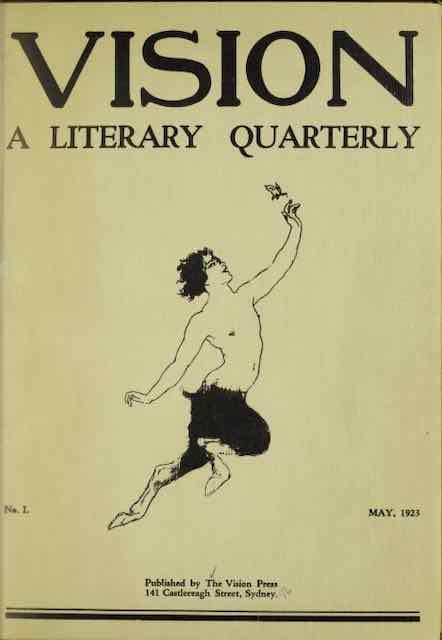
He quotes American critic, C. Hartley Grattan, who argued that a fundamental characteristic of ‘this budding Australian literature was an “aggressive insistence on the worth and unique importance of the common man”.’ But, Bartlett says, with “the growth of a more sophisticated city life, many writers began to feel that aggressive semi-socialistic nationalism [as seen in many of the above-named writers] wasn’t enough”. Writers and artists like the Lindsays and Kenneth Slessor wanted to “liberate the Australian imagination from droughts, gum trees, drovers, and the wide-open spaces”. In 1923, they created a literary magazine called Vision, but soon, says Bartlett, the Lindsays’ romanticism, with its “bookish carnivalia rosy with the fumes of canary wine and cheerful with the seductions of full-breasted wantons … blunted itself on Australian realism”. Love this!

By the Jubilee, increasingly more Australian writers were “realising that life is where you look for it”. He said writers like Kylie Tennant, Frank Dalby Davison, and Xavier Herbert showed there was ‘still plenty of kick in the Australian “bush” tradition”‘ while those like Ruth Park, Dymphna Cusack, M. Barnard Eldershaw, and Dal Stivens, were “more interested in the cities”. He separates out Eleanor Dark, who, despite setting some of her novels in country towns, had “a sophisticated interest in character rather than place”. Overall, he argued, that Australia’s contemporary fiction writers were “more analytical than exultant about the Australian way of life”.

Bartlett also wrote about poetry, visual arts, music and, briefly, dance. You can read these thoughts at the link provided above. He concludes by stating that “Australians are a reading people”, who spent significantly more on books than Americans and Canadians. This rather quantitative conclusion doesn’t answer much in terms of his framing question. However, I liked his discussion of how the bush and city strands were playing out in mid-20th century Australian literature, and his assessment of contemporary writers being more “analytical than exultant” is what I’d like from our artists of all persuasions. What do you think?

Kylie Tennant, The face of despair (#Review, #1952 Club)

Once again, as I’ve been doing for most to the Year Clubs, I am using it as an opportunity to read an Australian short story, usually from one of my anthologies. For 1952, however, the anthologies came up empty, but I did find one via AustLit, and then tracked it down in The Bulletin. The story, Kylie Tennant’s “The face of despair”, was first published in 1952, but has, I believe, been anthologised since.

Who is Kylie Tennant?

Kylie (or Kathleen) Tennant (1912-1988) was born in Manly, NSW, and grew up (says the National Portrait Gallery) in an “acrimonious household”. In 1932, she married teacher and social historian Lewis Charles Rodd, whom she had met at the University of Sydney, and they had two children. When Rodd was appointed to a teaching position in Coonabarabran in rural New South Wales, she left her studies and walked 450 kilometres to join him.

This must have worked for her because she did more firsthand research for her novels, taking “to the roads with the unemployed during the 1930s Depression, lived in Sydney slums and with Aboriginal Communities and spent a week in gaol” (NLA’s biographical note). She also worked as a book reviewer, lecturer, literary adviser, and was a member of the Commonwealth Literary Fund Advisory Board.

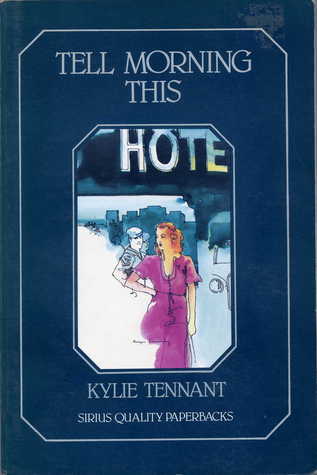
Tennant wrote around 10 novels, including Tiburon (1935); The battlers (1941); Ride on stranger (1943); Lost haven (1946); Tell morning this (1967, which I read with my reading group); and Tantavallon (1983). She also wrote nonfiction (including Speak you so gently, about life in an Aboriginal community), poetry, short stories, children’s books and plays. She won several literary awards, including the ALS Gold Medal for The battlers.

Her Australian Dictionary of Biography entry by Jane Grant says that although the early years of her marriage with Rodd “were complicated by the conflicts between Tennant’s attraction to communism and Rodd’s High Anglicanism, it proved to be an extremely successful creative partnership”. According to Grant, she was briefly a member of the Communist Party in 1935, but resigned a few months later believing the party had lost touch with working-class politics. Grant says that, like slightly older writers such as Vance Palmer and Katharine Susannah Prichard, she believed her novels could ‘educate the public about poverty and disadvantage and change what she termed “the climate of opinion”‘. In other words, she wrote more in the realist style, than the modernism of peers like Patrick White, Christina Stead and Elizabeth Harrower. However, as Grant says “the social message of her novels … was always leavened by humour” – and we also see this in my chosen short story.

“The face of despair”

“The face of despair” tells of a small fictional country town, Garrawong, which, at the story’s opening, had just survived a flood:

WHEN the waters of the first flood went down, the town of Garrawong emerged with a reputation for heroism. “Brave but encircled Garrawong holds out,” a city paper announced, and a haze of self-conscious sacrifice like a spiritual rainbow shone over everyone.

The story has a timeliness given our recent flooding frequency here in Australia. In the third paragraph we are told that “There was a feeling abroad that Garrawong had defeated the flood single-handed” but, a few more paragraphs on, “out of all reason, the rain began again”. Once again the librarians, who had just re-shelved their books, must carry them back out of harm’s way, emitting “small ladylike curses” as they did. But, others weren’t so willing:

“The police began to go round in their duck rescuing the inhabitants; but a strong resistance-movement was developing. They refused to be rescued. They had had one flood—that was enough.”

The story is timely, not only for the recurrent flood issue, but for its description of what is now recognised as “disaster fatigue”. Some residents, like the Doctor, don’t believe it will be as bad as before, that the dam won’t break this time, so they refuse to properly prepare or to accept rescue offers. Others, like the Nurse who runs a maternity home, just can’t do it again. She tells her housekeeper, “I’ll shut the place. I can’t start again, I won’t. No, not again.”

Now, when I was researching Tennant for my brief introduction to her, I found a 2021 article in the Sydney Review of Books. It was by poet and academic Julian Croft and focused on her novel Lost haven. It was published in 1946, just a few years after her best-known books, The battlers and Ride on stranger, but a few years before this story. He writes that Margaret Dick who had written a book on Tennant’s novels in 1966

saw Lost haven as a maturing step away from the ‘austerity’ of Ride on stranger towards ‘a resurgence of a poetic, instinctive response to nature and a freer handling of emotion, an unselfconscious acceptance of the existence of grief and despair’. This was a necessary step towards the maturity of what Dick considered Tennant’s best novel (and I would agree) Tell morning this.

I share this because “The face of despair”, published in 1952 – that is, after Lost haven and before 1967’s Tell morning this – feels part of this continuum. It has such a light touch – one I could call poetic, instinctive, freer – yet doesn’t deny the truth of the situation and what it means for the residents of Garrawong. Tennant uses humour, often lightly black, as she tells of the various reactions – stoic, mutinous, resigned, defeated – from householders, nurses, farmers, shopowners, not to mention the poor rescue police (who “did not seem to realise that they were now identified with the flood, were part of it, and shared the feelings it aroused”). It reads well, because it feels real – with its carefully balanced blend of adversity and absurdity.

Early in the story, the narrator writes of those who felt “mutinous”, who “refused to shift” as they had in the previous flood, adding that

… in the face of this renewed malice there was no heroism, only a grim indignation and a kind of dignity.

Towards the end, the title is referenced when Tennant decribes how “the face of despair” looks in different people as they ponder the flood’s impact. For example, “in the farmer in the thick boots it was the foam in which he had wiped his feet”, but in the poor old vagrant woman, it is “blue lips”. Tennant follows this with:

Despair does not cry out or behave itself unseemly, despair is humble. Its face does not writhe in agony. There is no pain left in it, because it is what the farmer said it was —“The stone finish.”

There is more to the story, and it’s not all grim. Rather, as Dick (quoted above) wrote, there’s “an unselfconscious acceptance of the existence of grief and despair”, and, as the last line conveys, one that encompasses a survivor spirit despite it all. A great story.

* Read for the 1952 reading week run by Karen (Kaggsy’s Bookish Ramblings) and Simon (Stuck in a Book).

Kylie Tennant
The face of despair” [Accessed: 16 April 2025]
in The Bulletin, Vol. 73 No. 3791 (8 Oct 1952)

Monday musings on Australian literature: 1952 in fiction

Once again it’s Karen’s (Kaggsy’s Bookish Rambling) and Simon’s (Stuck in a Book) “Year Club” week. This week, it is 1952, and it runs from today, 21 to 27 April. As for the last 7 clubs, I am devoting my Monday Musings to the week.

The 1950s represent the main period of the Baby Boomer generation (1945-1964), but of course, those born at this time had little to say about the literature of the period! Instead, Baby Boomers, of which I am one, are the product of times that were prosperous in the west (at least) but also overshadowed by the Cold War and its fear of a nuclear war. It was a conservative time, with men in charge, and women and other minority groups oppressed, which led to the various rights movements that appeared in the 1960s.

I wrote a post on 1954 when that was the Club’s year back in 2018, so much of what I found for that year, applies to 1952.

A brief 1952 literary recap

Books were, naturally, published across all forms, but my focus is Australian fiction, so here is a selection of novels published in 1952:

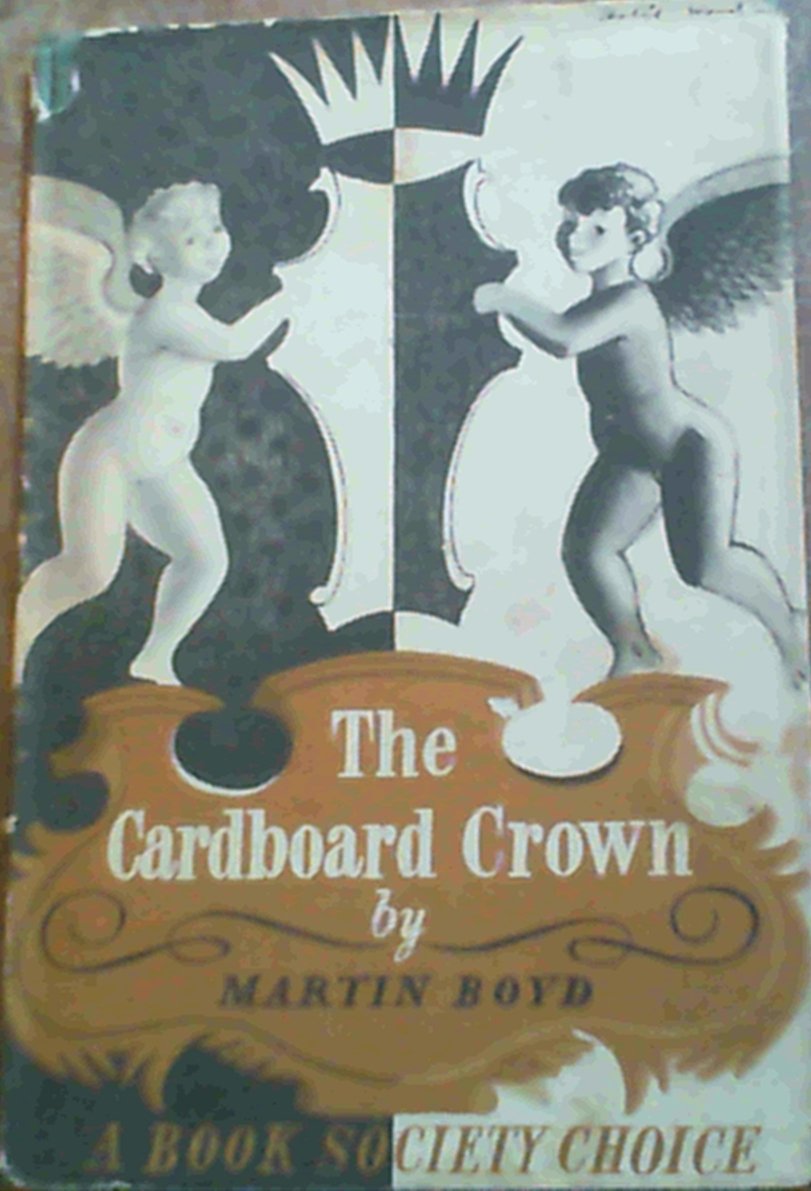
  • Martin Boyd, The cardboard crown (on my TBR)
  • Jon Cleary, The sundowners (read long before blogging)
  • Ralph de Boissière, Crown jewel
  • Helen Fowler, These shades shall not vanish
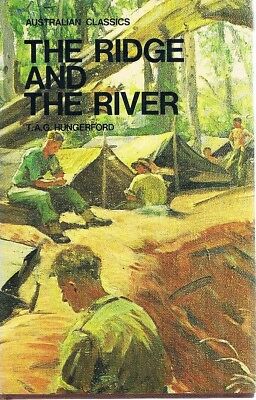
  • T.A.G. Hungerford, The ridge and the river
  • Rex Ingamells, Aranda boy AND Of us now living
  • Philip Lindsay, The merry mistress AND The shadow of the red barn
  • Colin MacInnes, June in her spring (aka Colin McInnes and Colin Thirkell; son of Angela Thirkell; primarily known as an English novelist)
  • Charles Shaw, Heaven knows, Mr Allison
  • Nevil Shute, The far country (read in my teens)
  • Colin Simpson, Come away, pearler
  • Christina Stead, The people with the dogs
  • E.V. Timms, The challenge
  • Arthur Upfield, Venom house

Two of these writers – Martin Boyd and Christina Stead – are recognised today as part of Australia’s literary heritage. Others are still remembered, and at least occasionally read, such as Jon Cleary (whose The sundowners was adapted to a film starring Robert Mitchum in the main Aussie role!), Arthur Upfield (whose novels were adapted for the Boney TV series , and Nevil Shute (who has been adapted mutilple times for film and television). T.A.G Hungerford is especially remembered in the West where there is an unpublished manuscript award in his name.

Born this year were novelists Janine Burke, Nicholas Jose, Larry Buttrose, John Embling, Suzanne Falkiner, and John Foulcher. Suzanne Falkiner edited the first book my reading group did back in 1988, an anthology of short stores by Australian women writers, Room to move.

Cover

There were not many literary awards, but the ALS Gold Medal went to T.A.G. Hungerford for his novel, The ridge and the river. Fourtriplezed who often comments here has reviewed it on GoodReads, noting that its racist language would not be acceptable today, but that it is nonetheless “a very “important and significant piece of Australian literature”. The Grace Leven Prize for Poetry went to R.D. Fitzgerald (whom I don’t know).

The state of the art

As for previous club years, I checked Trove to see what newspapers were saying about Australian fiction. There was the ongoing issue of writers/journalists/academics feeling the need to defend Australian literature, but I’ve discussed that often before, so will not focus on it here, because they essentially bring out the same arguments, including that Australia did have great writers, like Henry Handel Richardson, Christina Stead, and Xavier Herbert.

However, two issues, in particular, captured the imagination of the papers – the idea of banning “indecent” or “crude” literature for Australia’s youth, and the place of “red” or Communist literature in Australian society. These two issues in particular encapsulate much about 1950s Australia – its conservatism, and fear of Communism.

On “indecent” or “crude” literature

The main issue here seemed to be the influx of American comics and movies. It got a wide range of people excited, including First Constable Pat Loftus, Children’s Court prosecutor, and the visiting Mrs J. Kalker, a Dutch headmistress representing the International Montessori Organisation. North Queensland’s The Northern Miner (5 July) cited these two as urging parents to censor what children were reading and seeing. Mrs Kalker, for example, “was horrified to see so many Australian children going to picture matinees and reading comics” and said that “some films and comics are evil influences that contribute to sex crimes and delinquency”. She also said

Australian children were more intense, more restless, and more undisciplined than Dutch children.

Ouch!

On 9 July, in the Illawarra Daily Mercuryit was the state premiers who took up the cause. Indeed, “a magazine with a photograph of a nude woman on the cover was passed around the table at the Premiers’ Conference” during a discussion about “the undesirable comic books being imported into or published in Australia”. Tasmanian Premier, Mr. Crosgrove, wanted such books and comic magazines to “be passed by the censor before their distribution was permitted” but conservative Prime Minister Robert Menzies neatly side-stepped, saying that works published in Australia, to which Cosgrove had referred, was a State issue!

Meanwhile, in the same newspaper report we are told that Mr. Kelly, the N.S.W. Chief Secretary, had received complaints about children being “found during school hours examining indecent publications they kept hidden under their desks” and that he’d sought “legal advice whether a number of publications now circulating in N.S.W. could be regarded as indecent literature. Churchmen and others had represented to him that an evil existed through these publications”.

In August, there were reports in papers like Tasmania’s Advocate (18 August), about the Young Christian Workers’ Movement aligning itself ‘in the battle for a ban on the sale of indecent literature … especially the violent and sex-ridden U.S. “comics”.’ They were developing their own campaign, and were including in their sights an Australian nudist magazine.

The articles abounded, including another report later in the year from the Australian Council of School Organisations, but I think you get the drift.

On “red” literature

There was an earnestness about socialist literature at the time, one that led to what now seems like a narrow definition of what is “valid” literature. Joan Clarke, President Sydney Realist Writers, praised the Communist newspaper the Tribune (28 May), for “publishing so many of the winning poems and stories from the Literary Competitions run by the Youth Carnival for Peace and Friendship” but offered a criticism of two winning stories in the spirit of encouraging development. The authors of the stories aren’t named, but their stories failed in her eyes because, while they were in the approved “realist” style, one failed to identify the “larger reality” surrounding the issue at hand while the other failed to extract “the essential dramatic truth” (as, she says, Frank Hardy does in Power Without Glory).

This was the year that the Australasian Book Society, about which I wrote last month, was formed. Frank Hardy, a member of the Communist Party of Australia, was quoted by Queensland’s Maryborough Chronicle (25 October) as saying its aim was to “foster the country’s cultural literature”, and that “the best authors were people who would concentrate upon human and down-to-earth stories” – and these, the Society believed, were realist stories.

Of course, this was the 1950s and there was much anxiety about Communist influences. On 5 September, the Sydney Morning Herald reported on a little furore regarding Commonwealth Literary Fund grants. Apparently during the parliamentary Estimates debate, Liberal MP, Mr. W. C. Wentworth, and Labor MP, Mr. S. M. Keon charged that too many of the fellowships granted by the Fund had gone to Communists. The paper presented the arguments for and against, referencing past and present Prime Ministers, and identifying several writers who were accused of being said Communists, such as Judah Waten, Frank Hardy, John Morrison, Frank Dalby Davison, and Marjorie Barnard. It was a he-said-she-said type article, with no resolution, but concluded with a reply by Labor MP, Mr Haylen. The article closes on:

“There are certainly no Communists in the literary fund, whose leader is the Prime Minister himself.”

Mr. Haylen said members of the advisory committee had done an honest job. There had not been one book published under sponsorship of the committee that had the faintest tinge of Communist propaganda.

Politics never changes!

That will do for my brief introduction to 1952, unless I decide to share a little more next Monday!

Sources

  • 1952 in Australian Literature (Wikipedia)
  • Joy Hooton and Harry Heseltine, Annals of Australian literature, 2nd ed. OUP, 1992

Previous Monday Musings for the “years”: 1929, 1936, 1937, 1940, 1954, 1962 and 1970.

Do you plan to take part in the 1952 Club – and if so how?

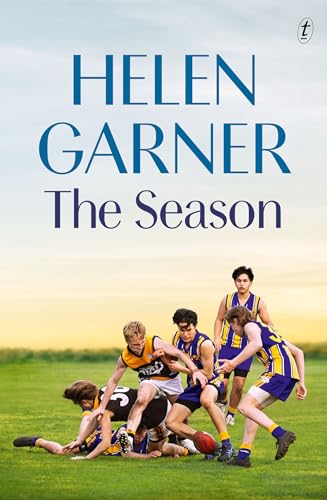
Helen Garner, The season (#BookReview)

In 2023, The New Yorker published a piece on Helen Garner. Written by Australian journalist, Helen Sullivan, its title, “The startling candor of Helen Garner”, captures exactly what I like about Garner, as does this a little further on:

Her writing is elegant but colloquial, characterized by an impulse to say and share things others might keep private.

Garner’s latest book, The season, is a gentler book than most, if not all, of her previous books, but these things – the writing and the honesty – are still in play. BeeJay Silcox, in conversation with Garner about the book, described it as “a graceful book, a love letter from a grandmother to boys and men” and suggested that it’s “not very different” from Garner’s other books as some have said. As is my wont, I take a middle ground. I did find it quieter, less contentious, but it still has her openness, her often self-deprecating honesty, and her clarity about what she is and isn’t doing.

“a nanna’s book about footy”

What Garner isn’t doing in this book, and what surprised many of those she spoke to as she was writing it, is some sort of social or societal analysis of footy. “Blokes”, for example, who’d been “formed by footy”, expected “fact and stats and names and memories”, while others, particularly women, assumed she was writing “something polemical, a critical study of football culture and its place in society” (like, say, Anna Krien’s Night games. Indeed, in my review of that book, I reference Helen Garner’s writing.) These assumptions panicked Garner somewhat. She was not writing these, but “a nanna’s book about footy”, a book

about my grandson and me. About boys at dusk. A little life-hymn. A poem. A record of a season we are spending together before he turns into a man and I die.

Pure Garner: it describes what her book is, but belies the insights and observations that lie within. However, both sides are described and hinted at in the opening pages of the book, when Garner writes about her grandchildren. She understands her granddaughter she says, but

having never raised a son, I now began to learn about boys and men from a fresh angle, to see their delicacy, their fragility, what they’re obliged to do to themselves in order to live in this world, the codes of behaviour they’ve had to develop in order discipline and sublimate their drive to violence.

During Melbourne’s extended pandemic lockdowns, Garner watched more footy, and saw it in a new light. She glimpsed “what is grand and noble, and admirable and graceful about men”.

Given all this, and the fact that Amby (Ambrose) is her youngest and last grandchild, she wanted to better know him, “before it’s too late”. She wanted to “learn what’s in his head, what drives him; to see what he’s like when he’s out in the world, when he’s away from his family, which I am part of”. She decided to follow his Under-16s football team, driving him to training and attending their matches.

“It’s boys’ business. And my job is to witness it.”

The footy season starts, and there is Garner, “a silent witness” on the sidelines, with notebook in hand. She’s the quintessential invisible woman, and happy to be so, albeit she asked Amby’s and the new 21-year-old coach’s permission first. What follows is something that reads rather like a diary. In the aforementioned conversation, Garner said she initially struggled to turn her experience into a book. She started writing it in the past, but that gave it an historical feel, so she changed to present tense, and voilà, she had her story. And she was right. It feels fresh and personal.

The book, essentially a memoir, is well-paced, partly because of the chronological drive implicit in the training-playing season, but also because of the way Garner mixes gorgeous description and small snatches of dialogue, with astute reflections and self-questioning. There are times when she loses heart: it’s cold on the sidelines; is she “trespassing on men’s territory, ignorant of their concerns and full of irrelevant observations and thin-skinned responses”; who does she think she is, “intruding on his [Amby’s] privacy, feeding off his life”. But she “slog[s] on”, because writing is what she does.

What she also does – whether it be a novel about a dying friend (The spare room) or a true crime book about the trial of a man accused of killing his children (This house of grief) – is capture life in all its messiness. If you’ve read any Garner, you will know that she understands messiness and will not shy away from it. Here, it encompasses her own aging and being a grandparent who can only ever be on the periphery; an adolescent boy’s challenge in coping with school, girls, and training; and the emotional ups and downs of football, the rigours of training, the errors that let the team down, the wins and losses.

I am not into football, but I found The season compelling. I enjoyed spending time with Garner again, but I also appreciated her insights into masculinity. Throughout, Garner asks the men and boys around her – Amby in particular, but also coaches, trainers, fathers – pertinent questions, such as why have a mullet (haircut), what is good about tackling, is he proud of his battle scars. The answers are sometimes surprising, occasionally funny, but nearly always enlightening. Amby tells why he likes tackling:

“I guess it’s basically inflicting physical harm but with no actual hard feelings. It’s just aaaaapchwoooooo and then you get up and keep playing, and then at the end you shake hands, and no one remembers anything.”

Football, Garner sees, is “a world in which a certain level of violence can be dealt with by means of ritual behaviour”. I never will understand this violence and men thing, but Garner’s sharing her time with the boys and men – particularly her willingness to ask the right questions, to listen and to reflect – did continue my education (and hers).

However, it’s not all about masculinity. There are all sorts of other observations, some self-deprecatingly humorous, such as this reflection on a match where Amby’s team “verses” a bigger, stronger team:

How quiet our team’s supporters are! We stand there like inner-city intellectuals, analysing our boys, criticising their every move, using modal verbs in knuckle-rapping tenses: should have, ought to have.

This made me laugh, but it also conveys Garner’s ability to mix tone, and to flip modes, between the grittiness of football and quiet, humorous, compassionate observations.

The season is exactly what Garner intended, a warm-hearted “life-hymn” about a season spent getting to know her youngest grandson as he transitioned from boy to man. It’s an attempt to understand what makes men tick, and the role footy can play in forming young boys into men. I find it hard to buy the “warrior” stuff that goes with male sport, as Garner seems to, but I can understand where it comes from, because there can be nobility and grandeur in sport.

If, like me, you are not a football follower, don’t let that put you off. The season is not a sporting memoir full of facts, figures and rules. Instead, it’s a nanna’s story about time spent with a loved grandson, a story with footy at its centre but that is, fundamentally, about the things Garner does best, character, drama, and emotion.

Kimbofo also loved this book. It would make a good companion to Karen Viggers’ novel about youth football (soccer), Sidelines.

Helen Garner
The season
Melbourne: Text Publishing, 2024
188pp.
ISBN: 9781922790750

Jane Austen, Emma (Vol. 1, redux 2025)

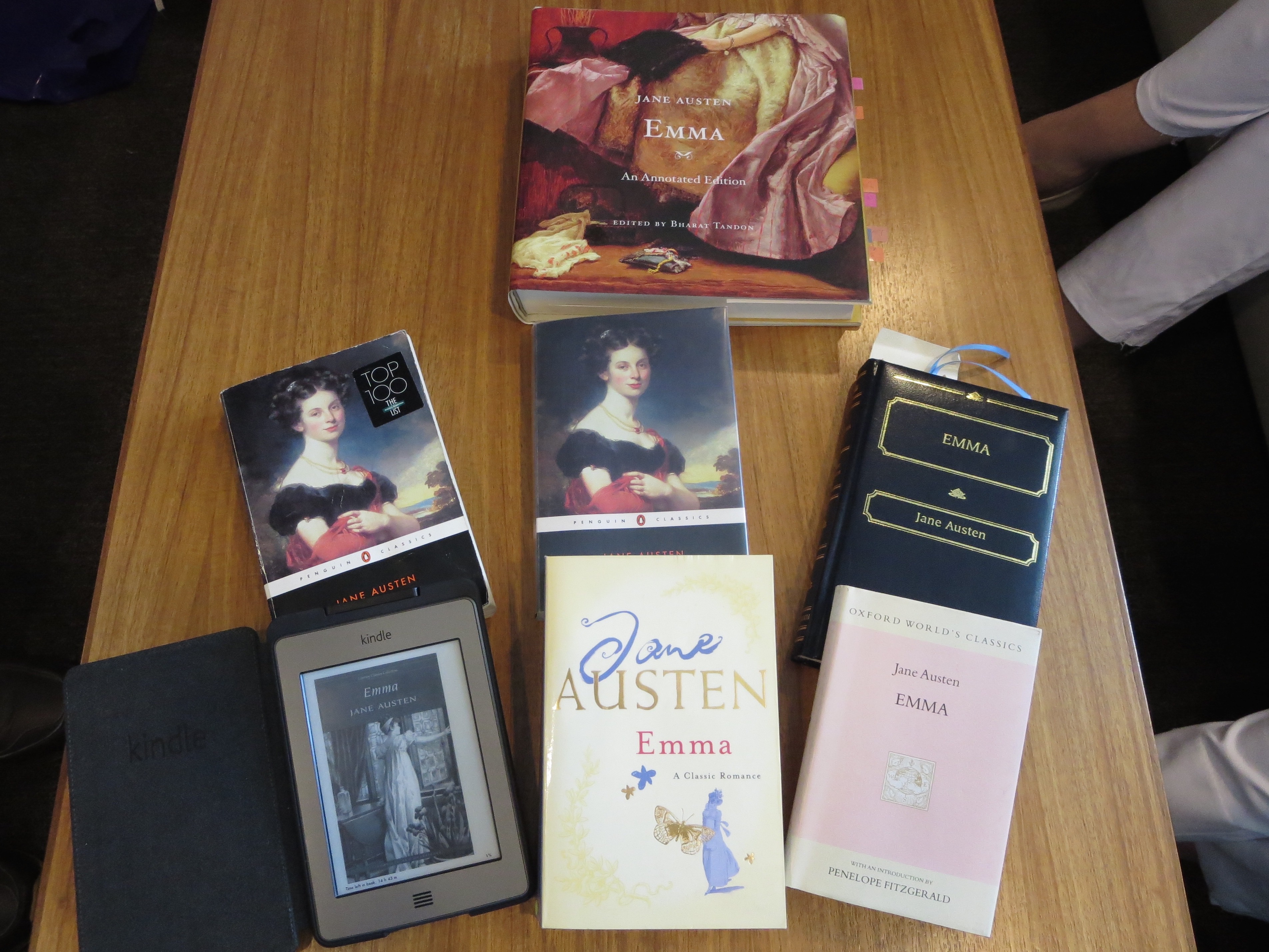
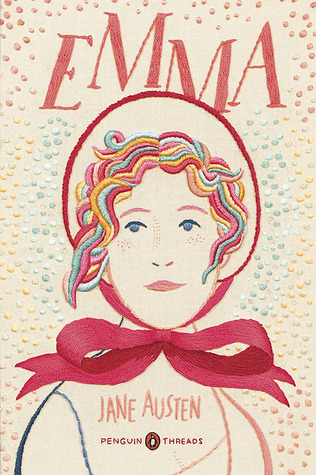
EmmaCovers

As long-time readers here will know, my Jane Austen group did a slow read of Austen’s novels over several years, starting in 2011. In 2022, we decided it was time to repeat the exercise, and are again reading them chronologically, one each year, making 2025 Emma’s turn.

Our slow reads involve reading and discussing the chosen novel, a volume at a time. We “try” to read as though we don’t know what happens next, to help us focus closely on what we think Austen is doing. Of course, we can’t read like a first-time reader, but it’s a useful discipline.

We always wonder whether this time, after so many reads, we will see anything new or fresh. But, we always do. Just the march of time, with its impact on our knowledge, experience and tastes, means we see the books differently. Take Emma, for example …

Jane Austen, Emma, Penguin

A few re-reads ago, what stood out for me was its beautiful plotting. There’s barely a word or action that doesn’t imply or lead to something telling, even if we are unaware at the time. From my last major re-read, in 2015, I noticed how often the word “friend” or the notion of “friendship” was appearing. The novel starts with Emma losing her governess-then-companion Miss Taylor to marriage. They’ll remain friends but Emma is left alone with her gentle but fussy father. So, she nurtures a friendship with the 17-year-old Harriet. In my post on rereading Volume 1, I explored the idea of friendship, and then watched in Volumes 2 and 3 to see whether the idea continued. It did. This is not to say that what we might identify in a slow read will overtake previous ideas, but that these re-reads enable us to tease out more of the details, which usually results in a deeper understanding of the whole.

So, what would I find this time? I did consider choosing something to look for, like the role of letters or music in the novel, but decided to just see what played out. Sure enough, something popped up, the idea of young people lacking guidance. It relates to issues like character development and to themes like parenting. And, I found it all there in the first few chapters.

The novel begins:

Emma Woodhouse, handsome, clever, and rich, with a comfortable home and happy disposition, seemed to unite some of the best blessings of existence; and had lived nearly twenty-one years in the world with very little to distress or vex her.

This can be teased out in many ways, but, remembering that “very little to distress or vex her”, I’m focusing on where Austen goes next. As explained above, the novel opens with Emma’s governess-then-companion Miss Taylor having just married, so Emma, who lost her mother when she was very young, is left alone with her “valetudinarian” father, “a nervous man, easily depressed”. She indulges him, as only a devoted daughter can, but otherwise, she is untrammelled. Austen describes her life, to this point, in the third and fourth paragraphs:

Emma doing just what she liked; highly esteeming Miss Taylor’s judgment, but directed chiefly by her own.

The real evils indeed of Emma’s situation were the power of having rather too much of her own way, and a disposition to think a little too well of herself.

And there it is, “directed chiefly by her own [judgement]”. Neither Emma’s “nervous” father nor the mildly-tempered Miss Taylor/Mrs Weston question or guide her. However, in the same chapter, we learn that there is one who does, her brother-in-law Mr Knightley, “a sensible man about seven or eight and twenty”. Austen writes that:

Mr. Knightley, in fact, was one of the few people who could see faults in Emma Woodhouse, and the only one who ever told her of them …

We see several examples of his chiding her in Volume 1, including about her interference in Harriet’s response to a marriage proposal. We also see him discussing Emma with Mrs Weston, telling her that she had been a good companion to Emma but had also been better at submitting her will to Emma than in giving Emma the “complete education” he thinks she needed.

Now, moving on to Chapter 2, we hear of another young person, the three or four and twenty, Frank Churchill. His mother, too, had died when he was very young, and, for a number of reasons, he

was given up to the care and the wealth of the Churchills [aunt and uncle], and he had only his own comfort to seek, and his own situation to improve as he could.

The implication here is that he too had been left to his own devices with little guidance other than “his own comfort”. It occurred to me, during this reading, that he is being set up as a parallel and perhaps eventual foil to Emma. But, hold that thought, because Frank does not physically appear in Volume 1. There is, however, a telling discussion at the end of the Volume about his not coming to Highbury to meet his father’s new wife, Mrs Weston. Mr Knightley – note, it’s him again – argues that while Frank’s aunt and uncle are given as the reason:

There is one thing, Emma, which a man can always do, if he chooses, and that is, his duty.

Frank simply needed to use the “tone of decision becoming a man”, and there would have been “no opposition”.

Finally, there is a third example, the aforementioned Harriet Smith, who is introduced in Chapter 4. She

certainly was not clever, but she had a sweet, docile, grateful disposition; was totally free from conceit; and only desiring to be guided by any one she looked up to.

The natural child of an unknown person who had paid for her schooling and now for her boarding at that school, Harriet has no parent to guide her, only school teachers – and now, the flawed Emma. By the end of Volume 1, it is not going well for Harriet, who has lost one real and one imagined suitor due to Emma’s guidance.

So, as Volume 1 progresses through its 18 chapters, we see some of the fallout of Emma’s being a law unto herself and ignoring the wisdom of others. I look forward to seeing if this idea is followed through in Volume 2. Is it important to Austen’s world view? Watch this space …

Irma Gold, Shift (#BookReview)

If Australian writer Irma Gold suffered from Second Book Syndrome while writing her second novel, it certainly doesn’t show. Her debut novel, The breaking (my review), is well-written and a great read. However, in Shift, I sense a writer who has reached another level of confidence in fusing her writing, story-telling, and the ideals and beliefs the drive her. She is passionate about her subject matter, as she was in The breaking, but in Shift she ups the ante to encompass wider themes about art. The result is a strong read that offers much for its readers to think about.

Shift is not the first novel I’ve reviewed about post-apartheid South Africa, but it is my first by an Australian author. Published, says MidnightSun (linked below), in the 70th anniversary year of the Freedom Charter, which outlined the principles of democracy and freedom in South Africa, Shift is set in Kliptown, where this charter was signed. Protagonist, Arlie, is a thirty-something art photographer who has just sold his first work to a significant gallery. It’s potentially career-changing and he should be happy, but he can’t “get his shit together”. He can’t keep girlfriends and while he gets on well with his happily established brother, his relationship with his parents is fraught. He feels his successful architect father has expectations he can’t (or doesn’t want to) meet, and his mother refuses to talk about her South African upbringing. But, Arlie wants to know.

So, after yet another relationship break-up, Arlie decides to go to South Africa, and ends up in Kliptown, in Soweto. He becomes immersed in its life, mixing with visionary choirmaster Rufaro, singer Glory and her younger brother Samson, and other locals such as his favourite photographic subject, the 80-something, “sassy as hell” Queenie. Can he create an exhibition out of his experience? Rufaro would like that …

“sold a dream”

The bulk of the novel comprises Arlie’s experiences in Kliptown, where he is the only white person. Through his eyes, we see the dire situation the people find themselves in. Early in the novel, he goes on a date with Glory to a spoken word evening at Soweto Theatre, where he hears some truths:

The people here had been sold a dream and yet more than two decades on they found themselves still in the same relentless poverty. Mandela was the broker of broken freedom.

Which is not, necessarily, to say that Mandela achieved nothing, but that life is far more complex than a “god”, as Mandela was to Arlie’s mother, can ever be. What Arlie sees, then, is poverty, drug addiction, violence and hopelessness. He sees young people, like Samson, not believing there’s any point to school. He sees a settlement without proper sewerage, electricity, or running water to their homes, not to mention with “asbestos sheeting everywhere”. However, on the flip side, he also sees community, hard work and hope.

So, back to my opening claim about Gold and her second novel. Taking the writing and the storytelling first, the writing is tight. It has the confidence of an editor, which Gold is, but mostly of one who is passionate about her material. The descriptions are fresh and vivid. We can visualise the place, with, for example, its “ramshackle tapestry of shacks constructed from discarded materials, each one rippling into the next”. The characters – who are drawn from Gold’s travels to the region (see here) – feel authentic. They are not stereotypes, but breathe life into the story with their thoughts, worries, fears and hopes. Arlie questions his actions, are they that of “a white saviour”? The colourful Glory, with her orange hair and fake orange nails, doesn’t “try to please”. She has her own views, and “plays her own game … take it or leave it”. The visionary Rufaro is passionate about the power of singing. It shows everyone, he says, who they are, that “we will be more … we are more”. Samson is a boy on the cusp of manhood, exuding bravado one moment, begging to play soccer the next.

The novel, too, is well structured. It opens with a shocking event to which we return at the end, and then follows a chronological arc from Arlie’s personal crisis and his decision to go to South Africa, through his time there, to his ultimate return home. There is drama along the way. Arlie’s father Harris visits, and Gold perfectly captures the discomfort between them alongside their unspoken love for each other. There is no simple resolution, just, perhaps, another step along the way to understanding. There is also love, violence and tragedy, but I won’t spoil those.

“make the invisible visible”

Shift is a story about a forgotten, if not betrayed, community, but one that survives all the same. It’s about a man who cannot keep a girlfriend, who is at odds with his father and distanced from his troubled mother, but who wants better relationships. It is a multi-layered love story – to a community and its people, and between Arlie and the people he cares for. But, most of all, it is a story about the power of art – or, if not that, at least about hope for art’s power. From first meeting Arlie, Rufaro has a dream that he will create “an exhibition that will show the world the truth about Kliptown”. He tells his choristers that Arlie

is going to expose what the government is doing here. That they have forgotten us. The pressure must come from outside, because our government does not listen to us.

Arlie, Gold writes later in the novel, “had always believed that art could change minds, that if enough minds were changed then the world changed” but, when it comes to it, he wonders “what could his photos possible achieve?” Can he “make the invisible visible”?

This brings me back to my opening paragraph and Gold’s wider themes. Shift is a strong, moving novel about a struggling community that has been left behind, for all the promises of freedom. However, it is also a novel that believes art can expose truths and, through that, shift our thinking and thus nudge the world towards being a better place. Gold has written her heart out in this novel to “make the invisible visible” – and to make room for hope. The next move is ours.

Irma Gold
Shift
Rundle Mall, SA: MidnightSun, 2025
269pp.
ISBN: 9781922858566

(Review copy courtesy MidnightSun Publishing)

Monday musings on Australian literature: on 1924: 2, New novels

Then as now, newspapers regularly announced new Australian novels as they are published. In these year-based series, I’ve not done a post specifically on the new releases, so have decided to do it for this year. This is not complete but contains books by authors who had some career longevity.

New novel releases

I’ve listed the books alphabetically by title, and have included some of the assessments made by the papers. I’m not including the books published by Bookstall, of course, because I listed them last week.

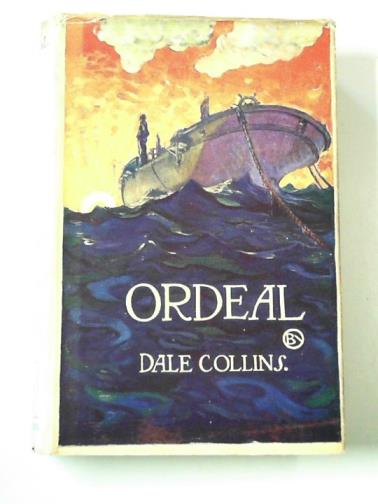
Dale Collins, Ordeal (Cornstalk Publishing): The Land (1 August) says that “it may be said without hesitation that Ordeal would be a remarkable and arresting story under any circumstances, but it is all the more remarkable for being a first essay in this class of fiction” (this class being, I think, a sea adventure). However, there are also reservations: “Occasionally the writer does not appear to be over-sure of his ground, and here and there we have lapses into excessive analyses of emotions, with a slight over emphasis of subtle suggestion, but on the whole the work is admirable. 

Zora Cross, Daughters of the Seven Mile (Hutchinson): Cross’s debut novel was praised, albeit faults were also identified by The Australasian (10 May): “It is not by any means a book without faults, but its merits are many and considerable, and most of them are to be found in the drawing of its characters. The scene is laid in Queensland, in the bush country outside a promising mining town, and the theme of the story is the difficulty of bringing two great forces into harmony, the call of the bush and the allurement of life in great cities.” The paper claims that with her first novel she has “won an important place in the ranks of Australian novelists”.

Ruby M. Doyle, The winning of Miriam Heron (Edward Dunlop): I wrote a recent Forgotten Writers post on Doyle, so I won’t say much. The Australasian (8 November) says that “its best points lie in the studies of bush life, with which the author is evidently familiar”. The plot “is slight”, but Doyle “shows a facile, kindly pen in dealing with the humorous type, and writes a straight, healthy story, that has less of morbidity than has the usual Australian bush tale”. The Advertiser (18 November) also admires her ability to write of the bush. However, The Queenslander (15 November), which also criticises the plot, concludes, interestingly, with “Miss Doyle appears to have attempted to graft something of the Ku Klux mystery into the character of the Australian bush, and so the story develops an atmosphere in places that is not Australian”.

Mabel Forrest, The wild moth (Caswell): According to The Advertiser (9 August), its strength is less its story as its descriptions of the bush. It concludes that “the vivid descriptions of the various phases of Australian life are its most enduring and attractive features”. 

Fergus Hume, The moth woman (Hutchinson): Hume is not Australian, but he did live in Australia for while, and published his detective novel The mystery of a hansom cab (my review) here, which made him of interest to Australians. The Australasian (26 January) says it is “written with a vigour and a freshness that a younger man ambitious of writing stories of the kind might envy” and that “the night life of London, the drug traffic, a mysterious murder following upon efforts to cope with the vices of the under world, provide thrills enough to satisfy the most blase reader of “shockers.” Then the little kicker: “Probabilities or possibilities matter little when one excitement follows on another, when the reader likes that sort of thing.”

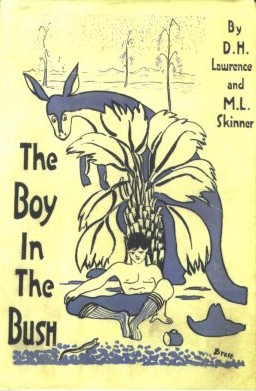
DH Lawrence, ML Skinner, The boy in the bush
First US ed., Thomas Seltzer, 1924

D.H. Lawrence and M.L. Skinner, The boy in the bush (Martin Seeker): Bill and I have both written about Lawrence and Skinner’s collaboration so I won’t repeat that here, but The Australasian (1 November) says that it’s “not easy to decide where Mr. Skinner [except it’s not Mr.] comes in, since there seems to be not a page in the book that is not unmistakably stamped with Mr. Lawrence’s peculiar genius”. Overall, the reviewer is not overly impressed, saying “an irritating mannerism is the repetition, of certain words and phrases, particularly in the description of physical peculiarities. While at times the story is vivid and almost overwhelmingly powerful, it lacks somehow the vital spark”. The Advertiser (22 November), on the other hand, is positive about its humour and insight, and calls it “readable”, but also comments that “at times Australians may be inclined to resent some of the severer criticisms of habits, dress, and customs”.

Vance Palmer, Cronulla (Cornstalk): The Australasian (13 December) gives Palmer’s book fairly short shrift, saying it “will be read with interest by reason of its Australian setting and the act of its being the work of a leading Australian writer”. For the reviewer, however, this station-life story is “built on well-worn lines, and has nothing new to offer either in plot or treatment”.

A few points about this list. First, there is the focus on bush and rural stories. Only two, it seems, are not; one is a sea story, and the other set in London. Even though our population was well urbanised, the bush was how we differentiated ourselves – both to ourselves, and in marketing ourselves to others. Then, there’s the fact that women writers are well in evidence, which confirms again what we know about Australia’s literary scene from the 1920s to 1940s. And, finally, I notice here, as I frequently notice in these earlier Trove articles, a willingness to identify faults. The comments are generally not smart-alecky or cruel, just clear about what they see as strengths and weaknesses. In some cases they recognise that the identified weaknesses are not important to the readers. In other cases, they note that it is a new author who can work on the problem areas. I wonder how the authors felt.

Thoughts?

Previous posts in the series: 1, Bookstall again