Thea Astley, An item from the late news (#BookReview)

Book coverSet in the satirically named town of Allbut, whose nearest large town is the equally satirically named Mainchance, Thea Astley’s An item from the late news is framed by the story of a man who comes to the town, fearful of “the atom bomb”, and wanting to live a quiet – sheltered, you might say – life.

Wafer is this man, and the story is narrated, from the perspective of ten years after the events, by townswoman Gabby. Introducing the story, she tells us that she was living at the coast when he arrived for “his sad little attempt at reclusion”, and goes on to say that

I reckon now, sprawled on my day-bed guilt, that … the town wasn’t really different from anyplace else except that its final actions become more redly horrible as I think about them.

This tells us much, that the story is not going to end well, that Gabby is implicated, and that Allbut is “anyplace”. It focuses our mind less on what’s going to happen, and more on how and why things go badly. This being Astley, the answers lie in small-mindedness, cowardice, brutality – and, in this story in particular, in greed. It is greed which provides the impetus for the denouement, but along the way, we see sexism, racism, and machismo running amok, all of which lay the groundwork for the behaviour that brings about the end.

Allbut is “anyplace”, one of hundreds of towns set in “landscape skinned to the bone”. It’s a “nothing” town, or, alternatively and ironically, “a clean and decent town”, “a caring town”. It has “all” the obvious things – people, farms, cemetery, pub, war memorial, police – “but” what you really need, kindness and generosity. Into this town comes the outsider, Wafer. Hippie-like in dress and behaviour, “he smiles at children, blacks, old gummy folk. He doesn’t count his change.” Indeed, Gabby tells us, he is “too friendly with the blacks. The town hates that.” He is too kind, too generous, but is also afraid. Having seen his father blown up before his eyes during the war, and having followed the Hiroshima attack, he has come to Allbut to build a bomb shelter.

Narrator Gabby, although of the town, is also an outsider, also a misfit. She has never quite fit with normal “squatting class” expectations, couldn’t be “the daughter of their Sunday social page dreams”. An artist by trade, she’d painted “the very heart of boredom”, albeit unrecognised by her buyers. After failed relationships, institutionalisation for a mental breakdown, and overseas travel, she returns to town, still bored and looking for love. She falls for Wafer, and starts painting again – well, drawing, anyhow. But, she tells us – ominously – “this whole horrible canvas will have the detail of a Brueghel and the alarm of Goya.”

Allbut is peopled with several characters: loner Moon with “the trigger-quick temper”, Sergeant Cropper, Councillor Brim, Smiler Colley and his teen daughter Emmeline, Headmaster Rider and son Timothy, the regularly mentioned but rarely seen (of course) Indigenous woman Rosie Wonga, and Doss (with “blonde hair set in jazz age waves”) and her man Stobo. Karen Lamb, in her Astley biography Inventing the weather, writes about Astley’s use of music: “A character’s mind might be full of classical music – to show an evolved intellect – but jazz was better to bring out a character’s exuberance and refusal to follow convention”. Doss, then, is one of the positive characters in the book, though she has little power to affect the outcome.

An item from the late news is a slim volume – at 200 pages in my edition – but through irony, foreshadowing, repetition, and evocative menace-laden language, Astley builds her story painstakingly but irrevocably to its conclusion. Sexual violence – first against shop dummies, then an assault on Emmeline – sets the stage, but it’s Wafer’s gemstone which captures the attention of the men in the town. It is then that the brutality really starts to build, and we know, even if we’d hoped before, that this really will not end well.

The novel is Astley’s 8th of 15, that is, it’s slap bang in the middle of her fictional oeuvre. By the time she wrote it, her broader themes were well established. These include concern about the Americanisation of Australian culture, the negative influence of television, rabid commercialisation and development (“Sunshine of the vanished sand … the high-blood pressure of the high rise”), poverty and social inequity, not to mention racism and sexism. She fears for the “nothingness” that she sees characterising people’s lives; she rails against what Wafer calls “this blinkered world”; and she exposes her ultimate truth that, as Wafer again says, “we all fail … we fail each other”.

You could also say, though, that there is a cliche at the heart of this story, that of the woman scorned, because although it’s the men of the town who are the most brutal, it’s Gabby who fails her big moment. However, she is such a complex creation that this is not how the novel reads. Instead, by having the damaged Gabby operating as both observer and actor in the events, Astley subtly subverts that trope – and encourages us to be generous.

It was in her review of An item from the late news, that Helen Garner described Astley’s writing as “heavy-handed, layered-on, inorganic, self-conscious, hectic and distracting” and wrote that “this kind of writing drives me beserk”. If you know the writing styles of these two writers, this will make sense, but I suspect Garner, who had a long relationship with Astley, came to appreciate her work. Certainly, the language could be seen as “heavy-handed, layered-on”, but I love its evocativeness and power, the richness of her allusions, the succinct yet poetic way in which Astley can convey an idea. Even the title conveys a punch. It’s thrilling to read.

An item from the late news is quintessential Astley. It offers an unflinching look into the heart of small-minded Australia, and finds much to disturb us. And that is the value of reading literature like this.

Read for ANZLL Thea Astley Week; Lisa also reviewed the book for her week.

Challenge logoThea Astley
An item from the late news
Ringwood: Viking, 1999 (Orig. ed. 1982)
200pp.
ISBN: 978014069488
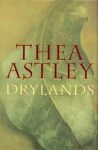
Bill curates: Thea Astley, Drylands

Bill curates is an occasional series where I delve into Sue’s vast archive, stretching back to May 2009, and choose a post for us to revisit.

I selected Drylands because a) this is ANZLL Thea Astley Week; and b) I have just reviewed it myself. Sue apologizes that she relied on “not well-formed” notes, but she came up, as usual, with a well formed and insightful review which I probably should have read before I wrote my own.

_______________________

My original post titled: “Thea Astley, Drylands (Review, of sorts)”

Thea Astley, DrylandsI read Thea Astley’s Drylands many, many years ago now, so what I’m going to share here – inspired by my post earlier this year on confronting Australian novels – are the notes I made when I read it. They are not particularly well-formed, because I wasn’t planning a review at the time, though I must admit that I did spend some time skimming it as I tried to massage my notes into some shape. Too hard not to! It’s her last novel, and it earned Astley her fourth Miles Franklin Award (shared with Kim Scott’s Benang).Drylands is subtitled “a book for the world’s last reader”. It’s one of those tricky books that looks like a collection of short stories but is, albeit perhaps loosely defined, a novel. Its structure comprises sections titled “Meanwhile” by the so-called writer of the stories, Janet, alternated with stories about inhabitants of, or visitors to, a dying town called Drylands:

a God-forgotten tree-stump of a town halfway to nowhere whose population (two hundred and seventy-four) was tucked for leisure either in the bar of the Legless Lizard or in front of television screens, videos, Internet adult movies or PlayStation games for the kiddies.

[…]

No one was reading anymore.
It’s a town “being outmanoeuvred by the weather. As simple as that. Drought. Dying stock.”

The main subject of these stories are three men (Franzi Massig, farmer Jim Randler and the indigenous Benny Shoforth) and three women (Evie the writing teacher, Lannie Cunneen, and Joss the publican’s wife). This is all quite neat, except that we are thrown somewhat by the fact that the “Janet” character may be a conceit dreamed up by Evie, who says she will “write a story … about a woman in an upstairs room above a main street in a country town, writing a story about a woman writing a story”. Since Janet is an inhabitant of Drylands while Evie is not, it makes sense that this might be Evie’s work, not Janet’s, making Evie both character and observer*. Another spanner in the narrative-voice-works is that two of the stories – those of Franzi Massig and Joss – are told first person. I might be reading too much into it, but I wonder if Astley is using this uncertainty to mirror the disorder she sees in society, if that makes sense.

Drylands explores many of the issues important to Astley. The two overriding ones are words and their importance/power, and the impoverishment of the spirit (often related to our inhumanity). Subsumed in the latter are some of Astley’s recurrent issues – gender and race, dispossession and power imbalances. She rails against the shallowness and small-mindedness that lead to poor treatment of “other” (indigenous people, women, less educated people, the ageing, etc), to “the powerlessness”, as Benny calls it, “of poverty and colour”. Here is a husband coming to drag his wife out of her writing class to get him his lunch:

He was hurling words at his shrinking wife like clods or bricks and she was not dodging but receiving them like a willing saint, enduring abuse like a terrible balm.

I wonder what Astley would have written about our treatment of asylum-seekers had she still been around, but unfortunately she died in 2004.

Thea Astley is, as you’ve probably gathered, an unsettling writer – and one with some very strong viewpoints. Besides being unimpressed by how women, indigenous people, and ‘oddballs’ (or outsiders) are treated, she’s also not too fussed about computers, television, and our sports-mad society. For these reasons I’m inclined to agree with Kerryn Goldsworthy that there’s a dystopian element to her vision. I didn’t pick it at first because I tend to see dystopian novels as being speculative or fable or allegorical, as being, in other words, about what “might be” rather than what “is”. The handmaid’s tale is a dystopian novel that is not specifically set in the future but neither is it set in a recognisable “real” world. Lord of the flies and Animal farm are dystopian views of the world that are not set in the future but, arguably, neither do they present a realistic community/society/place. Drylands, though, is recognisably our world, but a pretty grim version of it, which suggests dystopia. It’s probably worth noting here that Drylands was published in 1999, that is, at the end of the millennium.

Regardless of formal definition, though, Drylands, like dystopian novels, is pervaded by a sense of hopelessness. There are likable people – many – but life isn’t easy or happy for them. There are, however, some positive or redemptive hints, particularly for Clem and Joss. Janet, the linking character, on the other hand, can only glimmer the fact that there might be something out there:

There was something out there, but she doubted she would ever discover. The idiocy of her wasted years made her laugh even more.

There were no endings no endings no

The writing in Drylands, though sometimes colourful, is sparer, more restrained than we are used to from Astley – and just right for a bitter tale about lack of literacy, loss of reading skills, and the implications thereof. Janet’s mother tells her that “being unable to read is being crippled for life”. Janet, writing her story, worries whether she’s getting her narrative right, but decides it’s “better for readers to frolic with their own assumptions from the words spoken, the deeds done” – which is, perhaps, the ultimate irony if everyone has lost the ability to read! If you only ever read one Astley, you couldn’t go wrong with this one.

Thea Astley
Drylands
Ringwood: Viking, 1999
294pp
ISBN: 9780670884704

* There is a scene in “Stranger in town”, where Evie briefly meets the eyes of the woman (whom we know is Janet) living above the newsagency.

____________________

Bill is too modest in his introduction. He has a different perspective on this book which is well worth reading – as is the set of comments that his post engendered. Do check it out (at the link in the intro above).

Have you taken part in Lisa’s Thea Astley week? 

Desley Deacon, Judith Anderson: Australian star, First Lady of the American stage (#BookReview)

Book coverWhen historian Desley Deacon offered me her biography of Dame Judith Anderson for review, I was a little reticent because my review copies were getting out of hand. Little did I know then what was in store for me, and just how much more behind I would become. However, finally, its turn came, and here I am with my review.

First though, I must say something about the publication itself, particularly given our recent discussion here about Print on Demand books. Deacon’s Judith Anderson: Australian star, First Lady of the American stage is available as an e-Book or a PoD one. I read the PoD edition, and it is beautiful. The cover is gorgeous, and the book’s overall design is stylish, with an art deco look reflecting the style of Anderson’s early life and career. The book is big and heavy, but the binding is strong allowing the book to open well for reading. And, the icing on the cake is that it is gorgeously illustrated with quality reproductions of images from the full range of Deacon’s life. These illustrations are beautifully interspersed throughout the book, rather than concentrated, as is more common, into a couple of glossy photographic sections.

But, of course, the important thing is the content. There are, broadly, two main types of biography, those written in the narrative or creative fiction style, like, for example, Sarah Krasnostein’s The trauma cleaner (my review), and those traditional, scholarly, cradle-to-grave ones, like Philip Butterss’ An unsentimental bloke: The life and work of C. J. Dennis (my review). These latter tend to be closely referenced and well-indexed. Judith Anderson is one of these.

“she has a way with her” (critic)

So now, Judith Anderson. Like many of my generation, my first introduction to her was as the terrifying Mrs Danvers in Alfred Hitchcock’s classic 1939 (no I wasn’t alive then!) Rebecca. But, Judith Anderson had been around a long time before that. Born in Adelaide in 1897, she (as Francee Anderson) went to the USA in 1918, and this is where she both established her career and made her home for the rest of her life. It wasn’t easy – is an actor’s life ever? – but eventually Anderson began to get roles. Deacon chronicles the trajectory of her career meticulously, from these early days to her final performances when she was in her eighties. It was a long, and distinguished career which, while centred on the stage, also included film, television, radio and the college speaking circuit. Anderson, unlike some actors, was not averse to working in forms – like television, like, even, television soaps – scorned by others. Regarding this latter, Anderson is quoted as saying “there is no indignity in earning $5,000 per week”. No, indeed, particularly when you never knew where your next pay check was coming from, and when you were providing significant support to other family members.

Various themes run through this story of Anderson’s life. One is the frequency with which critics praised the brilliance of her acting but bemoaned the silliness or inappropriateness of the vehicle. Indeed, this issue was the main reason for the long time it took for her to have her breakthrough. However, Anderson, always a hardworker, kept at it, and eventually her vehicle came, the play Come of age, by Clemence Dane. It was 1934, and she’d been treading the boards in America for 16 years! English playwright Keith Winter saw the play and wrote:

There are in the English speaking world, three actors who have genius of a quite staggering order – Charles Laughton, Edith Evans, and Judith Anderson. Perhaps Laurence Olivier.

No small praise. In the end, though, besides the aforementioned Mrs Danvers, the two roles for which Anderson was most known, was as Euripides’ Medea and Shakespeare’s Lady Macbeth. Character and strong women roles did seem to be her forte.

“same old muddling” (Anderson)

While the biography’s focus is Anderson’s work life, largely because that was her life, Deacon also includes something of her personal life, including, in particular, her two short disastrous marriages. It was a sadness for Anderson that she never managed to have her own family and children. This brings me to another theme that runs through the biography: she had, as Deacon describes it, a “hectic personality” or, as Anderson herself said, “I have not myself a very serene temperament”.

Australian arts administrator, Robert Quentin, said during her 1955 tour in Australia, that she was “more than living up to her reputation as being the most troublesome actress in the world.” Deacon is not one of those biographers who psychoanalyses her subject. Her approach is more straight – that is, she presents what is on record, using the occasional “may” or “could” when some fact or other is not known. However, I’d like to suggest that, while this apparent difficult behaviour of Anderson’s was probably partly her temperament, it may also have stemmed from ongoing frustration with the acting life, with the challenge of getting work, with being messed around, with having to accept what she felt were less than ideal plays or co-players, and so on. In 1935, for example, she was being sussed out for a play, but there was the usual to-ing and fro-ing as backers, producers, and/or agents negotiated and fiddled around. She writes, “when I left Wed afternoon it was definite – but now the same old muddling.” You can feel the frustration.

“near perfection in the dramatic art” (Variety)

Judith Anderson: Australian star, First Lady of the American stage is clearly, like Deacon’s friend Jill Roe’s biography of Miles Franklin, a passion project that was years in the making. Thoroughly researched, and written in a formal but accessible style, it is a positive but non-hagiographical story of an actor who was once described by Variety as achieving “near perfection in the dramatic art”. Dame Judith Anderson is too little remembered today, but her struggle to fulfil her creative self is timeless. For this reason, if no other, her biography is well worth reading.

Challenge logoDesley Deacon
Judith Anderson: Australian star, First Lady of the American stage
Melbourne: Kerr, 2019
509pp.
ISBN: 9781875703067 (PoD)

(Review copy courtesy the author.)

Bill curates: Favourite writers: 3, Thea Astley

Bill curates is an occasional series where I delve into Sue’s vast archive, stretching back to May 2009, and choose a post for us to revisit.

Lisa’s ANZLL Thea Astley Week runs from 17 – 25 August so I thought it would be timely to skip ahead a bit as we make our way through the best of Sue’s older posts and pull out a couple of her half dozen or so Thea Astley posts (I’m going to have to go back and discover who favourite writers 1 and 2 are).
_______________________

My original post titled: “Favourite writers: 3, Thea Astley”

I love its densely woven grammar, its ingrained humour, its uncompromising politics, and its undimmed outrage at human folly, stupidity and greed (Kerryn Goldsworthy on Thea Astley’s writing)

and

Great story, great characters … Stylistically, however, this book is like a very handsome, strong and fit woman with too much makeup on … This kind of writing drives me berserk” (Helen Garner, on Astley’s “An item from the late news”)

Despite winning four Miles Franklin awards along with several other major Australian literary awards, Thea Astley(1925-2004) has to be one of Australia’s most underappreciated writers. The two quotes above, from two significant Australian literati, give us a clue why. She was uncompromising and gutsy in her subject matter and she took risks with her style. This made her a pretty controversial writer. It also makes her great for discussion by reading groups (if they’re prepared to give her a try!)

Before I continue, though, I need to be honest. Her career spanned over 40 years and some 15 or so novels, as well as countless short stories, essays and articles, but I have only read about half of the novels and a few short stories. I’ve read enough though, from her mid career A kindness cup (1974) to her last novel Drylands (1999) to know that I like her and want to read more.

Thea Astley, DrylandsTake Drylands, for example. It covers a lot of the things important to Astley. Two major ones are words and their importance/their power, and people’s cruelty to each other. Subsumed in this latter one are some recurrent issues for her – gender, race, and other power imbalances. She has several targets in this book: she’s not too fussed on computers, television, or our sports-mad society; she’s also critical about how women are treated, not to mention indigenous people and ‘oddballs’. She’s a writer with a strong social conscience – and, for example, tackled race issues head on in books like the ironically titled A kindness cup (1974) and the gorgeously titled The multiple effects of rainshadow (1996).
But it’s not her subject matter that loses her fans so much as her writing. It can be dense…though it can have a sly humour too. She once said in an interview with Candida Baker that “I can’t resist using imagistic language. I like it. I really don’t do it to annoy reviewers”! It’s how she thinks. Here, for example, are some lines describing a town and its “barbaric” Christmas from the first page of the novel, An item from the late news (1982), referred to by Helen Garner in my opening quotes:

…the beer-gut belchings and the rattle of schooner glasses that always discover the Christmas crib and soothe the infant with whack yoicks seem to me to have a muckworm style. All towns. Not just this one. Because this one is smaller, a mere speck on the world’s glassy eye, the grossness is horribly apparent.

Time usually diminishes the memory; but for me it has done nothing but magnify that swollen moment of history when Wafer had the wax on his wings melted from flying too close, not to the sun, but to the local grandees.

Astley, as you can see, is rather critical of small town Australia…and small towns are the common settings for her books. I’m not sure why I, an optimist, like her jaded view of the world. Perhaps being an optimist enables me to take on board her concerns – concerns that are hard to argue against – without being ground down by them?  Anyhow, in 2002 she won a much-deserved, I think, special award at the NSW Premier’s Literary Awards for being ‘a trailblazer’.

I hope, if you haven’t read her before, that this has whetted your appetite. I’ll say no more but end with a favourite line, with which I identify, from Drylands :

… she had never been harried by the glamour of any possessions but books.

(Note: You may notice that some of the content of this blog is also on Wikipedia. Please don’t accuse me of plagiarism: what I’ve used here is material I put there!)

____________________

Bill said in his introduction that he’ll have to suss out my first and second favourite writers. I wonder what he’ll think when he does? I haven’t written another Favourite Writers post but have considered it many times. How many favourite writers can I have, I’ve wondered? Anyhow, I do have a couple of writers in mind for 4 and 5, and may write them up one day.

Meanwhile, do you plan to take part in Lisa’s Thea Astley week, and, if so, what do you plan to read?

Bill curates: Jane Austen and the information highway

Bill curates is an occasional series where I delve into Sue’s vast archive, stretching back to May 2009, and choose a post for us to revisit.

Jane Austen comes up over and over in Sue’s posts, and as I’m as fascinated by her as Sue is, that suits me fine. Here though we are not looking at Austen’s wonderful writing but mining her for evidence of the way information was disseminated at the beginning of the nineteenth century.
_______________________

My original post titled: “The information highway, Jane Austen style”

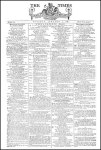
The Times 1785 (must be public domain!)

Did you know there was an information highway in Jane Austen’s day? Well, there was – and it was forged by roads and newspapers.  This is the springboard for Dr Gillian Russell‘s talk, Everything Open: Newspapers in Jane Austen’s Fiction and Letters, which she gave to the Canberra group of  Jane Austen Society of Australia this weekend. She argued that the increase in the publication and distribution of newspapers in the late eighteenth century contributed to the development of a new style of nation – and in support of this quoted Henry Tilney’s statement to Catherine Morland in Northanger Abbey:

Dear Miss Morland, consider the dreadful nature of the suspicions you have entertained. What are you judging from? … Does our education prepare us for such atrocities? … Could they be perpetrated without being known, in a country like this, where social and literary intercourse is on such a footing, where every man is surrounded by a neighbourhood of voluntary spies, and where roads and newspapers lay everything open? Dearest Miss Morland, what ideas have you been admitting?

Dr Russell argued that this provides evidence that newspapers – supported by the roads which made transport of the papers easier and faster (because this was also the era of the Turnpike trusts) – were at the centre of a new style of openness and transparency in Austen’s time.

But, to provide some context. Jane Austen was born in 1775 – and the 1770s, Russell said, was the beginning of the heyday of newspapers. In 1790, some 60 newspaper titles were published in England; by 1821 there were 135. Newspapers comprised just four pages – the first page was primarily advertisements, the second page reported political (and war) news, while the third and fourth pages contained miscellaneous news, often more domestic in nature. Formal access to these newspapers, though, was gender and class-based. Men – of the gentry or middle-class – comprised the majority of subscribers. However, she argued – pretty convincingly, using the writings of Jane Austen, William Cowperand Leigh Hunt – that once newspapers were in the home, they were readily available for women to read. She described how newspapers were passed on from those who could afford them to friends, neighbours, relations. And Austen reflects this in her novels: the Dashwood women, in Sense and sensibility, received their papers from their generous landlord, Sir John Middleton; and Mr Price, Fanny’s rather impoverished father in Mansfield Park, likewise received his papers secondhand from a neighbour, signalling his lower position in the social pecking order. The fact that the Musgrove men in Persuasion read the paper while the foppish Sir Walter Eliot didn’t conveys a lot about the sorts of men they were. Anyone who’s read Persuasion will know that Sir Walter Eliot is not the one we admire!

Russell’s argument is that, while most historians study newspapers in order to understand the politics of their times, these early newspapers epitomise what Samuel Johnson called “intelligence”, which he defined as the commerce of information – that is, the way information moved around society and the role information played in that society. Austen’s writing shows how newspapers brought people together through sharing information: they promulgated domestic/family information regarding births, deaths, marriages, elopements and such, and, during the Napoleonic wars, they published naval information of critical interest to families at home such as who was promoted to what rank, who was on what ship and where the ships were. By publishing information of mainly domestic interest, newspapers validated families’ position in society. Mrs Bennet’s concern, in Pride and prejudice, about the inadequate reporting of Lydia’s marriage, for example, indicates her recognition of the importance of such reporting to establishing (or reflecting) the family’s social standing. Through this process, Russell said, newspapers played a significant role in nation-building, particularly in establishing the middling order as a bigger “player” in the life of the nation.

And, just as we have today, there was a complex information infrastructure in place to support this “commerce of information”. Papers were read by men in clubs, taverns and coffee houses. They were moved quickly from city to country via the roads and complex networks of tradespeople (one rural subscriber for example picked up his paper from the butcher). Reading rooms were an important feature of resort towns (a bit, perhaps, like the Internet Cafes of today?)

In other words, during Austen’s time newspapers became a more central part of the daily lives of the middle classes and the gentry. Papers were major bearers of domestic news and in this way, argued Russell, mirrored what Jane Austen’s novels did – that is, they conveyed information about the way the world worked and in so doing demonstrated that all forms of information exchange (domestic and political) had a public meaning. In this new world, as Henry Tilney said, everything was laid open, transparent.  Except, and here’s the rub, men were still the gatekeepers…

____________________

Bill’s choice this time brought me up with a start. When I wrote this in 2009, newspapers were still, if I remember correctly, significant sources of news for most news-hungry people. But, the last 11 years have seen that landscape change considerably. For my parents, the newspaper was critical for keeping up with personal information like births, deaths and marriages. Reading such news would result in letters or phone calls of congratulation or condolence. What is happening to this information? Does anyone care anymore? And, what about those legally required public notices?

What would Jane make of today’s information highway? And, more to the point, what do YOU make of it? 

Emily Paull, Well-behaved women (#BookReview)

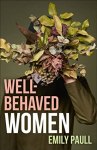
Book coverWell-behaved women is a debut collection of short stories by Western Australian writer Emily Paull. It is one of those collections that has a unique title, and what a perfect – and teasing – title it is for a collection of stories focused on women.
It has, you won’t be surprised to hear, the usual mothers, grandmothers, sisters and wives, but there are also teachers and students, writers, a step-father and step-daughter, and a vagrant woman. They span all ages. Most of the stories are told first person, with a few third person ones, and in nearly all the narrator or protagonist is, of course, female.

The collection starts with a bang, with a story described on the back page, so I’m not spoiling it, as “a world champion free-diver disappears during routine training” (“The sea also waits”). It’s the ideal opener because it’s about a woman who has chosen a dangerous sport because it’s – dangerous. She’s a woman whose “devil-may-care coastal ways” seem to disgust seemingly better behaved women with their painted nails and carefully tanned skin. It sets up the collection well as one likely to explore the nuances of women’s lives and the consequences of their decisions – oops, behaviour.

And so, from this first story on, Paull interrogates women’s lives from diverse angles. The stories read, mostly, like lovely little slices of life rather than as dramatic stories with twists. I like these sorts of stories, provided they ring true to life, because I’m curious about the choices people make. Paull has probably pored over these stories, honing them to the essential, but what we see is writing that looks easy. It flows well, and the stories show rather than tell, leaving readers to draw their conclusions. There’s nothing particularly inventive about the style or structure. Paull uses foreshadowing and flashbacks, traditionally, but judicially, to move her narratives along. The end result is a collection of accessible, well-crafted stories about relatable characters in, mostly, Western Australian settings.

The second story, “Miss Lovegrove”, has a young female drama student talking about her teacher. This teacher feels the need to tell her students the realities of life – “you will most likely never be on television at all during your careers, which will be short” – and she teaches our narrator a very cruel lesson. She is certainly not a well-behaved woman. Is she brutal? (Yes.) Is she bitter? (Probably.) Is she doing her young student a favour as she intimates? (We need to decide.) Fortunately, the next story, “Crying in public”, is gentler. It’s about the first real heart-break and a grandmother’s wisdom. Unlike “Miss Lovegrove”, Grandma wants to nurture her charge through the pain of the real world. This idea neatly links the two stories. There is, in fact, careful crafting in the order of the stories, with subtle links connecting one story to the next. I enjoyed identifying what I thought were the links!

Anyhow, other stories tell of friends found and lost, of coming out, of grief. In some, the stories could be any of us – an old high school flame returning to see if she can recover a past love (“Down south”), a sister grieving over her terminally ill sister (“Sister, madly, deeply”), a young woman discombobulated by her grandparents’ death (“Nana’s house”), a woman trying to fit the the image of the perfect wife (“The settlement”). But some are a little more dramatic, such as that about a woman whose backyard is found to hold a human skeleton (“From under the ground”), or the warm-hearted story about a vagrant woman caught in a bushfire (“The things we rescued”), or the tragic coming out story (“Picnic at Green’s Pool”).

What I most liked about the stories – even those that were more dramatic in flavour – is that the people are believable. Their emotions and reactions, in the main, are those of “normal”, flawed human beings. They make mistakes, like the young woman who leads on a colleague she’s not really interested in (“Nana’s house). They eat too much or too little, in a struggle to be themselves (“Dora”). And so on. You could see this as a feminist book. The title certainly suggests there’s an element of this in Paull’s thinking – but the book is not stridently so. The title is more wry, than barbed.

While most of the stories are average short story length, one, “Font de Gracia”, is a little longer. Its premise is a rather typical teacher-student affair, but it is well handled and resolved, without didacticism. It has some lovely writing, such as this description of mother-daughter tension:

Joana snatched up her bag without breaking eye contact with her mother. Their anger was like the pull between magnets.

It’s hard to pick favourites, but I did like the last two. “Versions of herself” is about a prickly 90-year-old in a retirement village – no, not in aged care or a nursing home, but independently living in a retirement village. It’s one of the broken-heart stories. Shirley Carruthers is not the most likeable woman around, but Paull, as she does with all her characters, encourages us to see and feel beneath the surface, to understand the whys. The point for me is that we don’t have to like everyone, but we can be kind.

The final story, “The woman at the Writers Festival”, concludes the collection beautifully, with a cheeky exploration of the writing life – particularly its challenges for women – and it does have a twist.

Well-behaved women, then, is a tight, engaging collection of stories about ordinary women, and the messiness of life. Rather than offer answers, it challenges readers to think about these messes, and consider what could be done to tidy them up a bit – next time around. Another good read from the people at Margaret River Press.

Challenge logoEmily Paull
Well-behaved women
Withcliffe: Margaret River Press, 2019
242pp.
ISBN: 9780648652113

(Review copy courtesy Margaret River Press)

Chris Flynn, Mammoth (#BookReview)

Book cover

Mammoth, by Chris Flynn (UQP $32.99)

I am not a big fan of anthropomorphism and have read very few animal-narrated books. Animal farm is one, while Watership down, so enamoured by many of my generation, is not. However, I was intrigued by Chris Flynn’s Mammoth, which is narrated by a 13,000-year-old American Mastodon fossil, and was glad when my reading group decided to schedule it.

It is an ambitious book, encompassing the story of humanity’s destructive, often brutal march through time as seen through the eyes of those we supplanted, that is, the fossils of extinct creatures. Our narrator, Mammut, is accompanied by a number of other fossils – the skull of a Tyrannosaurus bataar, a pterodactyl, a prehistoric penguin, and the severed hand of an Egyptian mummy – who have found themselves together in 2007 Manhattan, waiting to be sold at a natural history auction. This auction did take place, and was, in fact, a major inspiration for the novel.

The story is framed by Mammut’s story of his life, death, disinterment as a fossil, and subsequent “life”. As he tells this long story, he is interrupted by the other “characters” who share their own stories, albeit far more briefly than Mammut’s. Each tends to use the voice of the time when he or she was first disinterred, meaning, for example, that Mammut’s voice is the more formal “arcane” one of the early 19th century, while T. bataar’s is the hip voice of the late 20th century.

As Mammut tells his story, he takes us to selected (representative) hot-spots of human brutality such as the Irish Rebellion of 1803, the oppression of Native Americans in the early 1800s, and Nazi Germany. He also covers theories of extinction, climate change, and the equation of big animals with power in the minds of men. The novel starts with a letter written in 1800 by Thomas Jefferson seeking mammoth bones (which he does eventually acquire for the White House), and ends with male celebrities vying for our fossils at the auction. Early on, Mammut tells T. bataar:

Let me tell you, and I say this as an original American, nothing compares to this nation’s willingness to promote patently false notions about itself in order to create a myth of American potency … Who do you imagine will buy us? You said it yourself, T.bataar. We represent power, for that’s what we were: Behemoths, Colossi, Titans. (p. 15/16)

Later, Pterodactylus tells the group about being used in training Hitler Youth:

We were presented to the eager teens as proof that Germany had once been the centre of might in Europe and the origin point for life on earth. Your mastodon friend in particular was elevated as a symbol of strength … I was referred to as the Reptilian Eagle, an apex predator who dominated the skies. It would have been a compliment, had it not come from the mouths of maniacs. (p. 159/160)

Mammoth is, then, a provocative book, confronting head on the ills of humanity. It could be deeply depressing – and in a way it is – but Flynn has taken his own advice (more on this anon) and told his story with humour, mainly through repartee between his fossil characters. I must say that I initially found this humour a bit silly, a bit obvious, and I wondered whether I was going to enjoy the book. However, the more I read, the more fascinated I became by what Flynn was trying to do. I didn’t find it as “hilarious” as some blurb writers did, but Mammoth offers such an idiosyncratic journey that I’m glad I decided to go with the flow.

One of the book’s main pleasures for me, besides its commentary on humanity’s destructiveness, is the writing master class contained within its over-riding story. This started with some digs about the writing life, such as Mammut’s “no-one gets into the writing game for money these days. No-one in their right mind, at any rate”. A sentiment that is reiterated later by French writer, Bernadin de Saint-Pierre.

However, more entertaining was the discussion of writing, or storytelling, itself. As Mammut’s tale progresses, his listeners begin to question him. Sometimes, it’s the issue of disbelief, to which Mammut responds by explaining his sources, by arguing that it’s perfectly valid for his molar to be observing action in one place while his head is elsewhere, or by allowing himself a little leeway:

I know you’re technically an elephant and all, but your recall of events is a little too precise. Not to mention the verbatim dialogue. Surely, you’re making some of this up? This is my problem with the memoir genre. There’s always more fiction in it than people let on.

I possess a remarkable memory, Palaeo, though I will admit to the occasional romanticism of the narrative. For the most part, what I am recounting is true. But, as you say, I am a storyteller who enjoys indulging in a yarn. (p. 143)

There’s also discussion of tone, regarding the degree of brutality and tragedy in Mammut’s tale:

… This entire tale has been a veritable famine of LOLs. Really, Mammut, next time you tell this story, you need to inject some humour, bro.

No too much, I think, T. bataar. No comedian ever won the Pulitzer … (p. 235)

Flynn, thus, cleverly engages with some current issues in criticism while simultaneously fending off potential criticism of his own work. He crowns this early on with the pronouncement that “No story’s gold from beginning to end” (p. 66). How can you argue with that!

There’s much more to this book. I haven’t touched on the fact that almost all its hominid characters are historical personages, many findable in Wikipedia. Mammoth offers an entertaining, accessible introduction to the history of palaeontology and 19th century natural science, and provides a springboard for further research, should you be so inspired.

For now, though, I’m going to end with a poignant statement made by Mammut early in the novel. “Our world was changing”, he says, “and there was nothing we could do about it” (p. 44). I fear this is exactly how our earth is feeling right now. Flynn, I think, would like us to take note and consider what we might do to prevent avoidable extinctions under our watch. An imaginative, engaging read.

Theresa (Theresa Smith Writes) enjoyed this book too.

Chris Flynn
Mammoth
St Lucia: UQP, 2020
254pp.
ISBN: 9780702262746

(Review copy courtesy UQP and literary agent Brendan Fredericks)

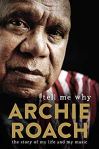
Archie Roach, Tell me why: The story of my life and my music (#BookReview)

Book coverGood things come to those who wait! At least, I hope so, because Lisa has had to wait a long time for a review from me for this year’s Indigenous Literature Week. Finally, though, I finished the main book I chose for this year’s challenge, Archie Roach’s memoir, Tell me why: The story of my life and my music.

Most Australians will know who Archie Roach is, but international readers here may not. A member of the Stolen Generations, Archie Roach is an indigenous Australian singer, songwriter, guitarist, and political activist. The story he tells in his memoir, Tell me why, is not an unusual one in terms of people of his background and generation, but that doesn’t mean it isn’t worth reading, because not everyone can tell this story in the way that Roach can. Perhaps this is because he’s a songwriter, or perhaps, more correctly, he’s a songwriter because he can tell stories.

Roach starts his story with a Prologue set in 1970. He is 14 years old, and receives a letter from one of his birth sisters telling him that his birth mother had died. This is a surprise, because his adoptive parents had been told his parents had died in a fire. He then flashes back in Chapter 1 to tell us about his life, as he knew it, up to 1970. This life involved being stolen from his parents, and being placed in two foster homes, one abusive, before being placed, in 1961, with the Melbourne-based Coxes with whom he was still living in 1970. In Chapter 2 he picks up that point in 1970 when he received the letter, and tells his story chronologically from then on, with some flashbacks to fill in his family’s early life as he learns it himself.

Although Roach had had a good life with the Coxes, who had loved him and whom he loved, the discovery that members of his birth family were still alive brought with it a desire to learn who he was, and he left home. He managed to make contact with his family, but before that he was introduced to drinking (having “a charge”) and life on the streets. Not surprisingly, his story, like those of many young indigenous people who have lost contact with their culture and thus with their bearings, involves alcoholism and related illnesses, run-ins with the police, prison, unemployment, and all-round instability. Archie would obtain work, would be appreciated as a worker, but the demons would return and down he’d plummet again. It’s a common cycle.

However, Archie had a couple of big pluses in his corner. There was Ruby Hunter, whom he met while still a teen and who became the love of his life. It’s not that her appearance resulted in a miraculous turnaround. Real life is rarely like that. But she became the supportive base to whom he would return and who, eventually, did provide the stability that enabled him to turn his life around and become the success he now is. The other plus was music, to which he was first introduced by the Coxes, particularly Dad Cox who loved to sing and who gave him his first guitar. While the stories about his drinking life were distressing to read, the story about how music “saved” him, and how he gradually came to realise that he could tell stories through music, was moving and inspiring.

This brings me back to my opening comment that “not everyone can tell this story in the way that Roach can”. The memoir is beautifully constructed, from the Prologue that vividly takes us into the classroom where Roach receives the letter about his mother, to the use of song lyrics, most of them Roach’s own, to introduce each chapter. Roach uses foreshadowing at the end of several chapters to move the story on, such as this at the end of the chapter in which he arrives in Adelaide – “This would be the last hours before finding Ruby Hunter”. And this one at the end of the chapter where Jill Shelton is recommended to him as a manager – “Jill would end up saving my life at a time when I didn’t see there was any point in saving it.”

Roach also mixes up the narrative, commencing some chapters with the next part of the story, while others he introduces with something more reflective. I particularly liked the opening to the chapter in which Ruby dies:

Some people see time as a river with a steady current. Some people say we get in and move with that current, all of us ageing uniformly. I don’t believe that’s true, though. I’ve seen people age years overnight.

It happens to a lot of our people, and it happens to an awful lot of us drinkers. It doesn’t just happen while we’re drinking, either; we could’ve been years off the stuff and then something might change. We might lose a sister or a brother, and suddenly we have age in our face and in our step.

Sometimes it happens for no reason. Someone will be living their life and all of a sudden time will heap years on their shoulders.

Of course, Roach also talks about politics, about Indigenous opposition to the 1988 Bicentenary, about John Howard’s  opposition to a national apology and his criticism of the “black armband view” of Australian history, about Aboriginal deaths in custody, about the stolen generations, and more. It’s all told through the prism of his own personal experience or through his involvement in political action. Most readers will know these issues, but the personal stamp offered by books like this helps keep the issues real and in front of us. Roach, like so many Indigenous people, amazes me by walking that fine line between anger at what has happened to his people and generosity towards the rest of us.

In the end, Roach’s message is an inclusive one. His songs, he has found, speak to non-Indigenous people too, with many telling him that “that’s what happened to me”. Consequently, his songwriting, he says, now “feels more inclusive, more universal” because “it’s about all of us – you can’t write about yourself without including everyone.”

He writes:

For so long we have been divided by ‘isms’ – racism, sexism, fundamentalism, individualism – but when we come back to the place of fire, I believe we will discover there’s far more that connects us than separates us. I believe we will be one humanity again, that we will find release, healing and true freedom.

I love the hope in this but, let’s be clear, Roach is not letting us off the hook. That is, he doesn’t believe we are there yet. He is, though, choosing an aspirational path, and for that I thank him.

ANZ LitLovers logoArchie Roach
Tell me why: The story of my life and my music
London: Simon & Schuster, 2019
378pp.
ISBN: 9781760850166

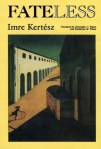
Bill curates: Imre Kertesz’s Fateless or Fatelessness

Bill curates is an occasional series where I delve into Sue’s vast archive, stretching back to May 2009, and choose a post for us to revisit.

Sue reads some striking books and writes some (many!) striking reviews, of which this is one. I’m not sure I agree with her about Holocaust fiction, but I do appreciate that people who experienced the Nazi concentration camps, or their after-effects in the case of, say, Lily Brett, must write, just as we must read to honour their tribulations, and that a fictionalised account may be the way they choose to do this. Imre Kertész is another Nobel Prize winner I was unaware of. He died in 2016.
_______________________

My original post titled: “Imre Kertesz, Fateless or Fatelessness”

[WARNING: SPOILERS, of sorts]

Let’s get the first thing clear. I like holocaust literature – not because I enjoy the subject matter but because in it I find the most elemental, universal truths about humanity. Depending on the book, this literature contains various combinations of bravery and cowardice, cruelty and kindness, love and hate, self-sacrifice, self-preservation and betrayal, resilience and resignation, and  well, all those qualities that make up humanity and its converse, inhumanity. I have by no means read all that is out there but here are some that have moved me: Anne Frank’s The diary of a young girl (of course) and Anne Holm’s I am David, from my youth, and then books like Martin Amis’ Time’s arrow, Bernhard Schlink’s The reader, Marcus Zusak’s The book thief, and Ursula Hegi’s Stones from the river. There are gaps, though, in my reading, such as Thomas Keneally’s Schindler’s ark (I did see the film), the works of Primo Levi, and Elie Wiesel’s Night. I have, however, just added Imre Kertèsz’s Fateless to my list of books read.

Kertèsz adds a new spin to the universal truths explored by these books – it’s what he describes (in my 1992 translation anyhow) as “stubbornness” which seems to me to mean “resilience” or a determination to survive, and even to have, if possible, little wins against the system.

Anyhow, first the plot. The novel takes place over the last year of the war and concerns Gyorgy Koves, a 14-year old Hungarian Jew, who, one day, is suddenly called off a bus, along with all other Jews on the bus and transported to Auschwitz, and then Buchenwald, Zeitz and back to Buchenwald, before returning home at war’s end. It chronicles his experiences, his thinking, and the impact on him of his experience. He begins as the archetypal naive narrator…but by the end, though his tone has changed little, he is no longer naive. This is rather beautifully achieved as we see his youthful application of logic being changed into something more cynical and survival focused.

Gyorgy speaks with a strange sense of detachment borne, to start with, of an apparent unawareness of what exactly washappening to him and a disbelief that anything untoward would happen. And so, in the beginning, as events unfold he describes them as “natural” because of course, when they got to Auschwitz, it was sensible to inspect each person to see who was physically fit and capable of working. He didn’t know then what would happen to those not found physically fit. The horror gradually builds as reality sets in and he goes about making it through each day – through his share of beatings, the reduced food rations, and all the other deprivations that make up concentration camp life. In the first part of the book he uses the term “naturally” to mean some sort of normal logic but by the end it comes to mean, as he explains to a journalist who asks him why he keeps using the word for things that aren’t natural, that these things were natural in a concentration camp.

Early on in his captivity he says that they approached their life (and work) “with the best of intentions” but they soon discover that these “best of intentions” do not bring about any kindness from their overseers, and so his attitude to getting on, to surviving starts to change. As he starts to physically weaken, become emaciated and develop infections, he observes that “my body was still there. I was thoroughly familiar with it, only somehow I myself no longer lived inside it”. Always dispassionate, always matter-of-fact, while describing the most heart-rending things.

Towards the end, he is placed in a hospital ward and there he is treated better and, even, with a certain amount of kindness. This in its way is as shocking to him as the cruel beatings he experienced at Zeitz. He can see no logic, “no reason for its being, nothing rational or familiar”. He can only understand kindness in terms of the giver receiving “some pleasure” from it or having some “personal need” satisfied. Never is there any sense that altruism might come into play. His view of “justice” is based very much on survival. He says, when he is spared, “everything happened according to the rules of justice … I was able to accept a situation more easily when it concerned someone else’s bad luck rather than my own … This was the lesson I learned”.

And so, in the end he returns home, and finds it hard to explain to people just what happened and how he now views life. He describes getting through his time as “taking one step after another”, focusing just on the moment. He implies that if he had known his fate he would have focused on time passing – a far more soul-destroying activity than concentrating on getting through each day “step by step”. This brings us to the fate/fateless bit. He says at the end that:

if there is a fate, there is no freedom … if, on the other hand, there is freedom, then there is no fate. That is … that is, we ourselves are fate.

I find this a little hard to grasp but he seems to be saying that we are free to make our own choices, even in a concentration camp – we are not fated but make our own fate. He was and is not prepared to accept any other approach to life. But life will not be easy:

I am here, and I know full well that I have to accept the prize of being allowed to live … I have to continue my uncontinuable life … There is no impossibility that cannot be overcome (survived?).

And yet, at the very end of the book, he says “and even back there [in the concentration camp], in the shadow of the chimneys, there was something resembling happiness”. Wow! This is an astonishing book – it charts horrors with a calmness that is quite shocking, and it is particularly shocking not because Gyorgy is unfeeling but because he can’t quite grasp what is happening to him. This is the fundamental irony of the book, and the fundamental truth of a naive narrator: we the reader know exactly how it is even as Gyorgy tries to make sense of it using logic and reason. I must read this book again – and preferably the newer more highly regarded 2004 translation by Tom Wilkinson.

Imre Kertész
Fateless
Translated by Christopher C. Wilson and Katharina M. Wilson
Northwestern University Press, 1992 (orig. ed 1975, in Hungarian)
191 pp.
ISBN: 9780810110496

____________________

I looked in my bookshelves when Bill sent through this Bill Curates post, and discovered that the edition I own is the later Tom Wilkinson one. I must have bought it with the intention of reading it, but I haven’t yet. Oh, the dreams of an everyday reader!

Bill will, I hope, explain his introductory comment regarding Holocaust fiction. We’d love to know what you think – and/or read.

Bill curates: Elizabeth Jolley’s My father’s moon

Bill curates is an occasional series where I delve into Sue’s vast archive, stretching back to May 2009, and choose a post for us to revisit.

Elizabeth Jolley is one of the greats and I am sorry that I have only read her in fits and starts. I have had, unread, Brian Dibble’s biography of her for so long now that I wonder if I should just hurry up and read all these fictionalised accounts of her life first, uncontaminated by knowing what she ‘really’ did.
_______________________

My original post titled: “Elizabeth Jolley, My father’s moon”

Book cover‘No one,’ she says, ‘can write anything till they’ve had experience. Later on perhaps. You will write later on.’ (Elizabeth Jolley, My father’s moon, 1989)

Although fiction demands imagination, it must be based on  some kind of genuine experience. (Elizabeth Jolley, “Only Connect”, essay first published in Toads, 1992)

My father’s moon is the first book in Jolley’s semi-autobiographical trilogy, the others being Cabin fever and The George’s wife. It won The Age Book of the Year Award in 1989.

I am an Elizabeth Jolley fan – and, along with Helen Garner, another Jolley fan, I enjoy the way she repeats and revisits stories and characters from one book or story to another. In this book is the chapter, “Night Runner”, which was published as a short story in Meanjin in December 1983, and again in a short story anthology, Room to move, published in 1985. The narrator of the story – and of the novel – typifies Elizabeth Jolley’s alienated protagonists and their often peculiarly self-centred and self-deluded ways of coping with their loneliness. Clearly Jolley decided that this was a character she wanted to develop further. And clearly she also drew a lot from her own experience to develop this character. Like Vera, Jolley was brought up as a Quaker, her parents sheltered refugees before and during the Second World War, and she trained as a nurse. Like Vera, Jolley probably experienced loneliness and alienation. However, this is fiction and so we need to be careful about how far we take these analogies between Vera and her creator. Much as I can empathise with Vera’s predicament, I must admit that I would hate to think she is Elizabeth Jolley.

It’s an uncomfortable novel. Vera, the first person narrator, is not a highly sympathetic character but neither is she totally disagreeable either. What she is, though, is lonely. The book has a somewhat challenging structure – and I had to concentrate to keep track of where I was. It starts with Vera, a single mother, leaving her parents’ home, with her young daughter, to live and work in a boarding school. Her hopes for a lovely life there among people “who feel and think as I do” are dashed. Such people “are not here as I thought they would be … I am by my own mistakes buried in this green-leafed corruption and I am alone”. In this first chapter are flashbacks to the past, and gradually the book moves into the past, providing us with insights into her character and how she has ended up where she is. Most of this past takes place in the hospital where she trains as a nurse during the war. The book finally returns to the beginning of the novel with Vera resolving to make a step towards alleviating her loneliness. However, we are by no means convinced she will.

The book comprises titled chapters, many if not all of which could be (and some have been) published separately as short stories. This gives it a somewhat disjointed feel – but seems appropriate for the story of a person like Vera. It is full of wonderfully drawn characters, with some very funny (if often dark) scenes and dialogue. Just think nurses and hospitals! There are many references to music – something that is common in Jolley’s works. Music is usually a comforting force for her characters, offering them respite from what is often a cruel world – and this is the case here, with Vera being drawn to characters who love and play music. There is a lot of irony, some of it subtle, some of it less so as in Magda’s comment to Vera who has fantasised about an affair with her husband: ‘You are so innocent and good … Don’t ever change’. Naive perhaps, innocent no!

So, what about the title? Funnily enough(!), it refers to Vera’s relationship with her father, a major stabilising influence in her life. He tells her throughout her childhood that wherever she is she can always look at the same moon he is looking at, ‘And because of this … you must know that I am not far away. You must never feel lonely’. A lovely concept and one to which Vera regularly returns in the book.

My father’s moon is not, I think, the easiest Jolley to read, and there are some things that might become clearer on a second reading. However, its concerns are very representative of her work – loneliness and alienation, homosexuality, parenting, memory, music and religion. While Vera is deeply lonely, while she often behaves selfishly, she can also be kind. She is also no quitter. For that I rather like her.

Elizabeth Jolley
My Father’s Moon
Melbourne: Viking, 1989
171pp.
ISBN13: 9780670822676

 ____________________

I have written several posts on Jolley over the years, including reviews of a couple of novels, a sort of memoir, and a short story, but I had hoped to have read and posted on more of her work by now. Instead, a few of her novels – along with that Brian Dibble biography Bill has – still languish on my TBR pile.

Have you read any Jolley? If so, do you have any favourites?