Hal Porter, Francis Silver (#Review, #1962 Club)

Introducing my first review for the 1962 Year Club – Shirley Hazzard’s “The picnic” – I said I had read two short stories and might post on the second one. I am doing so now but, stupidly, I left the book back in Canberra and here I am in Melbourne, so my post will be limited, and without the usual quotes to convey Porter’s writing style. But, it was this, or not at all, because by the time we return home, I will be onto other things. I am cross though, because Kerryn Goldsworthy did write a useful introduction, which, if I remember correctly, placed Porter as part of a change in short story writing from the more realist school that had held on strongly since Lawson.

Like Hazzard’s story, “Francis Silver” appears in the Carmel Bird edited anthology, The Penguin century of Australian stories.

Who was Hal Porter?
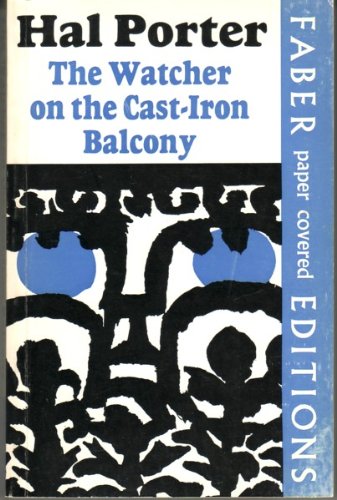
Porter (1911-1984) was an Australian novelist, playwright, poet and short story writer. His first autobiography, The watcher on the cast-iron balcony (1963), is regarded as a classic.

The Wikipedia article, linked on his name, is relatively brief, but there is a more thorough biographical entry for him in the Australian dictionary of biography (ADB). Written by literary critic and academic, Peter Pierce, it tells us that he had many occupations, including teaching (on-and-off at many schools), librarian, and shorter term jobs like window-dresser and sheep-station cook. But, cutting to the chase, it also reveals Porter as a problematic figure, because of his pederast behaviour. Peter Pierce writes, for example, that, around 1940, he had “an affair” with a male student at the school where he taught, “an indiscretion that went unpunished”. Those were the days, I suppose. This “affair” – should we grace it with that description? – is apparently fictionalised in his short story “The dream”.

Pierce also writes that, in her 1993 book, Hal Porter: Man of many parts, Porter’s biographer, Mary Lord was, “even-handed in judging an old friend and sensational in revealing Porter’s paedophilia, in particular his sexual relations with one of her sons.” Hard to understand. Moreover, Pierce says that Porter’s third autobiography, The extra (1975),

ventilated many of Porter’s prejudices — against Jews, ‘foreigners’ and Aborigines. The counterpart of Porter’s grace, charm and cultivation was an intense snobbery that, for instance, saw him elevate his father’s occupation from engine-driver to engineer. His facility at winning friends was matched by ceaseless demands on their patience.

So, a difficult man, and one I thought twice about sharing here. However, I read the story, liked it, and as it doesn’t smell of these difficult issues, I am covering it in the uncomfortable spirit of separating the work from its creator. Peter Pierce described him in his 2012 ADB entry as “one of the finest of all Australia’s authors of short stories and a pioneer of the first flowering of autobiographical writing in this country”. (This piece by the late academic Noel Rowe explores the Porter issue in depth.)

“Francis Silver”

“Francis Silver” is a first-person story in which an older man tells of fulfilling a deathbed request from his mother who had died at the age of 41 when he was 18. All through his childhood, he had heard about a man called Francis Silver, who, his mother had implied, had been not only a beau, but an alternative potential husband to the country-living man she did marry, the narrator’s seemingly long-suffering father.

Through our narrator’s childhood, his mother had shared with him an album of postcards sent to her by Francis Silver. Along with sharing this album, she had told stories about this man which suggested he was a worldly, debonair man, who loved the theatre. Her wish was for him to give the postcard album to Silver – but, on no account, was he to also give the lock of her hair that she had kept in an envelope with Francis Silver’s name on it. He was to burn that.

Francis Silver, his mother told him, had worked in a picture-framing shop, and that is where our narrator finds him – but what he finds doesn’t gel at all with the stories his mother had told. The story, then, is about memory, illusion and reality, and the boy’s recognition of the difference. In his own romantic fantasy, he had decided to ignore his mother’s second request and give Francis Silver (whose name works as a mantra in the story, hence my using it in full for each reference here) the lock of hair too. But, as he confronts reality, he changes his mind. The closing sentence vividly conveys his decision in an act that encompasses layers of meaning and feeling.

The father is a less developed figure, because the son was in his lively mother’s thrall, but the sense we get is of a man who loves his wife, and who tolerates her flights of fancy, feeling comfortable, it seems, that she chose – and remains with – him. He seems to recognise (or trust) that Francis Silver is one of those escape fantasies people have to help them cope with the tedium of life, the fantasy that, should it get too hard, there were, or perhaps even are, other options. The narrator, as a boy, doesn’t understand these nuances.

There was a strong autobiographical element, I understand, to Porter’s writing. From the little I read for this post, I am aware that there are such elements in this story. For example, Porter’s beloved mother died when he was 18 years old, as does the narrator’s mother in this story. How much else might be autobiographical though, I don’t know.

Anyhow, just to finish … in the end, the narrator resolves the differences he confronts and is generous to his father for whom Francis Silver had seemed an imagined (if not, as it turns out, real) rival. Our narrator has also learned something about the imagined, illusory past, and its relationship to present realities. A tight, neat, engrossing story.

* Read for the 1962 reading week run by Karen (Kaggsy’s Bookish Rambling) and Simon (Stuck in a Book).
Hal Porter
“Francis Silver” (orig. pub. in Hal Porter, A bachelor’s children, 1962)
in Carmel Bird (ed.), The Penguin century of Australian stories
Camberwell: Penguin Books, 2006 (first ed. 2000)
pp. 186-197

Shirley Hazzard, The picnic (#Review, #1962 Club)

As I have done for most “year” reading weeks*, I decided for 1962 to read a short story by an Australian author. I read two, in fact, and may post on the second one later.

Today’s story, though, is Shirley Hazzard’s “The picnic” which I found in an anthology edited by Carmel Bird, The Penguin century of Australian stories. It was my mother’s book, which Daughter (or Granddaughter to her) Gums gave her for Christmas 2006. I’m glad she kept it when she downsized. Shirley Hazzard is a writer I’ve loved. I have read three of her books, including the novels, Transit of Venus and The great fire, but all of this was long before blogging. I have mentioned her on the blog many times for different reasons, but an early one was in my Monday Musings on expat novelists back in 2010.

Who was Shirley Hazzard?

Hazzard (1931-2016) is difficult to pin down, and can hardly be called Australian given she left Australia in 1947 when she 16, returned here briefly, but left here for good when she was 20. Wikipedia calls her an Australian-born American novelist. As I wrote in my expat post, Hazzard didn’t like to be thought of in terms of nationality. However, she did set some of her writing in Australia, and did win the Miles Franklin Award in 2004 with her novel The great fire, against some stiff competition.

According to Wikipedia, she wrote her first short story, “Woollahra Road”, in 1960, while she was living in Italy, and it was published by The New Yorker magazine the following year. This means, of course, that “The picnic”, first published in 1962, comes from early in her writing career. Her first book, Cliffs of fall, was published in 1963. It was a collection of previously published stories, including this one. Her first novel, The evening of the holiday, was published in 1966, and her second, The bay of noon, was published in 1970, but it was her third novel, The transit of Venus, published in 1980, that established her.

She is known for the quality, particularly the clarity, of her prose, which, it has been suggested, was partly due to her love of poetry

“The picnic”

It didn’t take long for me to discover that “The picnic” is the second story of a linked pair, which were both published in The New Yorker in 1962. Together they tell of an affair between the married Clem and a younger woman, Nettie, his wife May’s cousin. The first story, “A place in the country”, concerns the end of the affair, while in “The picnic” the ex-lovers meet again, eight years later. They are left alone by May, probably deliberately thinks Clem, while she plays with their youngest son down the hillside.

This is a character-driven slice-of-life story in which not a lot happens in terms of action but which offers much insight into human nature – and into that grandest passion of all, love.

In 2020, The Guardian ran a review of Shirley Hazzard’s Collected stories, edited by Hazzard biographer Brigitta Olubas. Reviewer Stephanie Merritt writes that “Hazzard’s recurring themes here – enlarged upon in her novels – are love, self-knowledge and disappointment”. From my memory of Transit of Venus in particular, this rings true. And, it is certainly played out in “The picnic”.

So, love, albeit a failed love, is presumably played out in the first story, but in this story it is still present in its complicated messiness. The two ex-lovers look at each other uncomfortably. Self-knowledge is part of it, but it’s not easily achieved for Clem for whom self-deception has also powerful sway. There’s resignation about love – “an indignity, a reducing thing” which he sees can be a “form of insanity” – and about marriage, which involves “a sort of perseverance, and persistent understanding”. There’s also a male arrogance. He didn’t, he realises, “know much about her [Nettie’s] life these past few years – which alone showed there couldn’t be much to learn”. By the end of his reverie, he comes to some self-understanding, despite earlier denials, about his true feelings and about the decision he’d made. Whether the reader agrees or not, he feels he has “grown”.

Nettie’s reveries tread a roughly similar path. There’s not a lot of regret to start with. She sees he is nearly fifty, and with “a fretful, touchy air”. She sees his self-deceptions, and his caution, and yet her feelings, like his, are conflicted. For her, too, love is a complicated thing:

… one couldn’t cope with love. (In her experience, at any rate, it always got out of hand).

What I haven’t conveyed here, because you have to read it all to see and enjoy it, is the delicious way Hazzard conveys their internal to-ing and fro-ing, through irony and other contradictions. They say nothing to each other, but in their thoughts and observations, while they rationalise what happened and why it was right, they reveal their true feelings. Love and disappointment or disillusion live side by side, never quite resolved.

The story is told third person but from shifting perspectives. First Clem, followed by Nettie, reflect on their situation at some length. Then, in a surprise switch, the short last paragraph moves to May, whose feelings neither of them had seriously considered in all their internal ponderings. But Hazzard makes sure we see them. This technique reminded me of Kevin Brophy’s very different short story “Hillside” which does a similarly powerful switch of perspective in the last paragraph. In both cases, concluding with the perspective of someone who is both outsider but very much affected by the situation just nails it.

Not only did I enjoy this story, but I’m very glad to finally have Hazzard reviewed on my blog.

* Read for the 1962 reading week run by Karen (Kaggsy’s Bookish Rambling) and Simon (Stuck in a Book). This week’s Monday Musings was devoted to the year.

Shirley Hazzard
“The picnic” (orig. pub. The New Yorker, 16 June 1962)
in Carmel Bird (ed.), The Penguin century of Australian short stories
Camberwell: Penguin Books, 2006 (first ed. 2000)
pp. 178-185

Monday musings on Australian literature: 1962 in fiction

Once again it’s Karen’s (Kaggsy’s Bookish Rambling) and Simon’s (Stuck in a Book) “Year Club” week. This time the year is 1962, and it runs from today, 16th to 22nd October. As has become my practice, I am devoting my Monday Musings to the week.

The 1960s was an exciting decade for those of us who lived it. Change was in the air, and we truly thought we were making a fairer society. (Little did we know.) Wikipedia describes it thus:

Known as the “countercultural decade” in the United States and other Western countries, the Sixties is noted for its counterculture. There was a revolution in social norms, including clothing, music (such as the Altamont Free Concert), drugs, dress, sexuality, formalities, civil rights, precepts of military duty, and schooling.

I was in primary school in 1962, and my life was simple and stable. It wasn’t until the mid to late 60s that I became caught up in the excitement in the air. This is not only because I was a bit older, I think, but because the momentum was still building in the early part of the decade. However, there were hints of change in my 1962 research. But, let’s start with the books …

I found books published across all forms, but given my focus is fiction and I want to keep things a bit tight here, I’m just sharing a selection of 1962-published novels:

  • James Aldridge, A captive in the land
  • Thea Astley, The well dressed explorer (Lisa’s review)
  • Elizabeth Backhouse, Death of a clown
  • Martin Boyd, When blackbirds sing (Lisa’s review)
  • Patricia Carlon, Danger in the dark
  • Gavin Casey, Amid the plenty
  • Nancy Cato, But still the stream
  • Jon Cleary, The country of marriage
  • Robert S. Close, She’s my lovely
  • Frank Clune and P.R. Stephenson, The pirates of the brig Cyprus
  • Kenneth Cook, Chain of darkness
  • Dymphna Cusack, Picnic races
  • David Forrest (pseud. for David Denholm), The hollow woodheap
  • Catherine Gaskin, I know my love (Brona’s review)
  • Stuart Gore, Down the golden mile
  • Helen Heney, The leaping blaze
  • George Johnston, The far road
  • Elizabeth Kata, Someone will conquer them
  • Eric Lambert, Ballarat
  • Joan Lindsay, Time without clocks (Brona’s review)
  • David Martin, The young wife
  • John Naish, The cruel field
  • John O’Grady, Gone fishin’
  • Nancy Phelan, The river and the brook
  • Criena Rohan (pseud. for Deirdre Cash), The delinquent
  • Donald Stuart, Yaralie
  • Geoff Taylor, Dreamboat
  • Ron Tullipan, March into morning
  • George Turner, The cupboard under the stairs (Lisa’s review)
  • Arthur Upfield, The will of the tribe

Children’s literature was going strongly at the time, with books published by authors still remembered as writers of our children’s classics, such as Nan Chauncy, Ruth Park, Ivan Southall, P.L. Travers, and Patricia Wrightson.

There were very few literary awards at the time. The ALS Gold Medal went to Vincent Buckley’s Masters in Israel, and for the first time since I started taking part in the Year Club, the Miles Franklin Award was in existence. It was shared by the Thea Astley and George Turner novels listed above. There was also, though Wikipedia doesn’t list it, the ACTU Dame Mary Gilmore Award, but I plan a special post on it, so watch this space.

Writers born this year are mostly still around though I haven’t reviewed many: Matthew Condon, Alison Croggon (my post on her memoir), Luke Davies, and Craig Sherborne. Deaths included the novelist Jean Devanny and poet Mary Gilmore. The librarian Nita Kibble (for whom the Nita B Kibble Awards – now seemingly in abeyance – were named) died this year, as did the critic HM Green.

The state of the art

Of course, I checked Trove to see what newspapers were saying about Australian literature, and fiction in particular, and will just share two threads I found.

First Nations Australians

With the devastating loss of The Voice referendum here last weekend, I would like to start with some First Nations (or Aboriginal) Australians that came up in my Trove travels, which mainly involved references to writers including Aboriginal characters in their books. One was Helen Heney (1907-1990) whose father was the first Australian-born editor of the Sydney Morning Herald. Heney wrote several novels – plus social commentary, translation and a biography – but the one published in 1962 was The leaping blaze. It is set in a station in western New South Wales, which is now in the hands of the latest generation, the “spinster” Evangeline Wade. The Canberra Times’ reviewer (January 5, 1963) explains that Evangeline has been frustrated through her life, and now wants power over others. Part of her plan is to create an “aboriginal station on her property as. an experiment”, but this plan, says our reviewer, is “motivated more by a desire to gain further power than it is to further native welfare”. Unfortunately, our reviewer continues, the novel lacks a clear focus, which 

is a pity because Miss Heney is essentially a writer of ideas. She is not just telling a story. / She is obviously out to give her views on a number of sociological problems but the canvas is too large for anything more than a casual sketching of them.

The other novel I want to share is Yaralie by Donald Stuart (1913- 1982) which tells “the story of the daughter of a white father and a half-caste mother, and the people among whom they live”. The Nepean Times’ reviewer (October 11) writes:

Told with a good deal of warmth, the story is set in a native settlement in north-west Australia during the depression and deals with the ever-present problem concerning the treatment of the aborigines in a white Australia.

Donald Stuart is new to me, but seems worth following up. His work is sure to be dated now we have First Nations people telling their own stories, but he’s part of a tradition. Wikipedia says

Stuart attempts to view the world from the Aboriginal point of view, making him one of the few Australian writers, along with anthropologists such as T.G.H. StrehlowCharles Pearcy MountfordRonald Berndt and Catherine Berndt, to even attempt to come close to a personal knowledge of Aboriginal people.

Realist literature and The Australasian Book Society

The main thread I found through Trove, however, concerned communist writers and realist literature. This emphasis might be partly due to the fact that Trove’s content in this period is somewhat skewed as the Australian Communist Party’s newspaper, Tribune, has been digitised, because, like The Canberra Times, they have given permission despite still being under copyright. 

However, before I searched Trove, I had already noticed the significant number of authors in the list who were Communists – often members of the Communist  Party of Australia (CPA) – or Communist-sympathisers, so the slant may be real to some degree! Anyhow, what these writers tended to write were realist (or social realist) novels, the preferred genre for Communist writers. 

It was clear from several articles that these social realist writers felt under-appreciated at home. The Tribune regularly reported on the success of Australian social realist writers overseas. On January 17, the Tribune wrote that CPA-member Dorothy Hewett’s realist 1959 novel, Bobbin Up, about women in a spinning factory, was “becoming a novel of world repute” with translations being published, or to be published, in the German Democratic Republic, Rumania, Hungary and, very likely, the Netherlands. 

And on February 7, under the heading “Success despite critics”, the Tribune advised that another book by an Australian Communist author was garnering interest overseas ‘despite class-prejudiced criticisms by Australian daily press “experts”.’ Progressive authors like Katharine Prichard, Frank Hardy, Dorothy Hewett, and Mona Brand were being published overseas, it said, and now they’d heard Judah Waten’s Shares in murder, “a murder story that is different because of its social exposure content” was to be serialised in New Berlin Illustrated, and published in book form in Germany, Czechoslovakia, and, they expected, the Soviet Union.  

It is this very Judah Waten who, in another article, is scathing about Australia’s literary darlings of the time. On March 28, again in the Tribune, he wrote:

In Australia today the writers who are acclaimed in the daily press, win awards and prizes are those distinguished for the obscurity of their prose, their irrational characters, their dream symbolism, parallels to ancient myths, feudal attitudes and pornography.

Who are these writers? Patrick White? Hal Porter? Thea Astley too perhaps?

I also noticed that many of the books praised in the Tribune were published by the Australasian Book Society, so I went hunting, and found a seminar was held about it in 2021.  The seminar promo described the Society as

a mid-twentieth-century, book-club style, cooperative publisher with a subscription model that promised four books a year to members and distribution through unions, industry associations, education organisations and the communities of the organised left in Australia, including the communist party. It sought to find readers who did not read literature and to develop writers who did not yet write it.

Fascinating. In 1962, this Society celebrated its 10th anniversary … but, like the Dame Mary Gilmore Prize, I think it deserves its own post.

Meanwhile, just to show that not all my research ended up at the Tribune, I’ll close with a review from The Canberra Times of Ron Tullipan’s novel March into morning, which was published by the Australasian Book Society in 1962, and won the Dame Mary Gilmore prize. It tells the story of a man “who started life as a ward of the State and was hired out to a slave-driving cocky, whose only interest in him was how to exploit him”. Writing on September 29, reviewer G.C.P. says it

may sound like one of those hopeless novels whose authors are only concerned to spit into Authority’s eye and point out wickedness in high places. / Fortunately, it is not, and reads more like an honest piece of reporting.

G.C.P. assesses its strengths and weaknesses, and concludes that “it is not great literature, [but] it is a very readable book”. Judah Waten would probably see this as damning it with faint praise! 

Sources

  • 1962 in Australian Literature (Wikipedia
  • Joy Hooton and Harry Heseltine, Annals of Australian literature, 2nd ed. OUP, 1992 (with Bill’s help)

Previous Monday Musings for the “years”: 1929, 1936, 1954 and 1940.

Do you plan to take part in the 1962 Club – and if so how?

Susan Glaspell, A jury of her peers (#Review)

One of my retirement activities is to co-ordinate a little band of volunteer indexers at the National Film and Sound Archive. Not only do we do useful work for the Archive, but we get to socialise a little with our peers, meaning we talk about what we are watching, listening to, and reading. Recently, one of the team sent me a short story to read. He “raved” about it, he wrote in the accompanying email. Well, I have now read it and I’m mighty impressed too. It’s by an American writer and appeared in one of the those annual best short stories volumes, this one for 1917.

Susan Glaspell

The author of the story, as you will have worked out from the post title, is Susan Glaspell (1876-1948). I had never heard of her, but fortunately she has a decent-sized Wikipedia page which you can read, but I’ll give a brief summary here. She was a playwright, novelist, journalist and actress. Indeed, she and her husband founded America’s first modern theatre company, the Provincetown Players. Wikipedia then says, and I’ll quote because why try to paraphrase it:

First known for her short stories (fifty were published), Glaspell also wrote nine novels, fifteen plays, and a biography. Often set in her native Midwest, these semi-autobiographical tales typically explore contemporary social issues, such as gender, ethics, and dissent, while featuring deep, sympathetic characters who make principled stands. Her 1930 play Alison’s House earned her the Pulitzer Prize for Drama.

Wikipedia has much more to say but essentially, like many women writers, her star faded, partly Wikipedia says, because her “strong and independent female protagonists were less popular in the post-war era, which stressed female domesticity”. However, from the 1970s on – we all know about this revival don’t we – she started to regain traction. Now, she is recognised as a “pioneering feminist writer and America’s first important modern female playwright”.

All this might clue you in to why I so enjoyed her story.

“A jury of her peers”

Kindle ed.

“A jury of her peers” is quite a long short story, but it engrosses from the beginning because of how Glaspell slowly unfolds the story, incisively developing, as she goes, a number of ideas that still speak to us today. We readers work out fairly quickly what has likely gone on, but our fascination lies in how the two women protagonists come to their understanding of the matter, how they try to resist what they have intuitively guessed, and what they decide to do about it. Overlaying this are the assumptions made about them (and about women in general) by the men involved, which adds a social dimension to the moral one. It’s a wonderfully complex story. It’s no accident that the main action takes place in that women’s domain, the humble kitchen.

The story, according to Wikipedia again, was loosely based on the 1900 murder of a man called John Hossack which Glaspell covered while working as a journalist. She originally wrote it in 1916 as a one-act play, Trifles, for the Provincetown Players, before turning it into a short story. Later, it was adapted for an episode of that 1950s TV series, Alfred Hitchcock Presents, and into a 30-minute film by Sally Heckel in 1980.

The plot is simple. A farmer, John Wright, has been murdered, and his wife, the diminutively named Minnie, taken into custody, the day before the story’s action takes place. The story opens with Sheriff Peters and the county attorney Mr Henderson picking up the Wrights’ neighbour, farmer Mr Hale, who had called in the death the day before. Their aim is to visit the scene to look for evidence that might explain what had happened, that might provide a motive. In the buggy is the sheriff’s wife Mrs Peters who is coming along to collect some clothes for Minnie. At the last minute, Mrs Hale is asked to join them, at the request of Mrs Peters who appears to need some support in her sad task.

So, this band of five arrive at the Wrights’ “lonesome-looking place” and, while the men go in search of their evidence, the women remain in the kitchen-living area to get those items Minnie had asked for. As they do, they start to notice things around them – providing insight into Minnie’s life and state of mind – and slowly they piece together an understanding of what had happened. These two women don’t know each other well, so they are cautious with each other, sometimes moving “closer together” in solidarity, particularly when the men appear at intervals and invariably belittle women’s skills and knowledge, but other times drawing apart, uncertainly feeling each other out as they simultaneously feel out their own thoughts and feelings.

The practical farmer’s wife Mrs Hale increasingly senses what sort of life Minnie had led, and feels guilty, criminal even, about never having visited her, but she is uncertain about how the timid-seeming, law-abiding Sheriff’s wife is reacting. However, every now and then she catches in Mrs Peters “a look of seeing into things, of seeing through a thing to something else”. Eventually, they connect, “in a steady burning look in which there was no evasion, no flinching”.

It is so beautifully done, with barely a wasted word or description, with every interaction carrying weight, with perfect use of metaphor (involving birds, cages, and knots) and irony. It reminded me, just a little, of Pat Barker’s The women of Troy (my review), another story in which men underestimate women, to their detriment (though they may not always know it). And so, in this story, a number of issues are explored, including morality and natural justice versus the law; gender and men’s superior, condescending dismissal of women’s skills and knowledge; neighbourliness and guilt; and female solidarity.

“A jury of her peers” is a subversive crime story, one that wowed me, for its subject matter, particularly given the time it was written, and for its sure, unflinching writing. I’m impressed that it was chosen for an annual best anthology by a man – but perhaps that’s me being condescending now. Whatever! I would love to read more Glaspell.

Susan Glaspell
“A jury of her peers” (orig. pub. in Every Week, 5 March 1917)
in Edward J. O’Brien (ed.), The best short stories of 1917 and The yearbook of the American short story
Boston: Small, Maynard and Company, 2014
pp. 256-282
Available online at Hathitrust

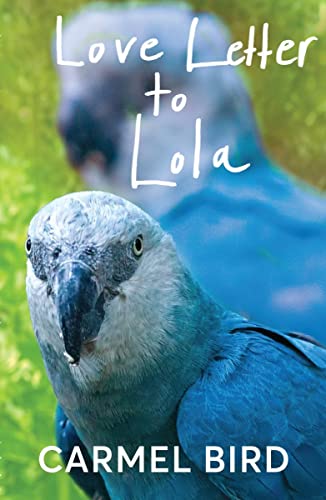
Carmel Bird, Love letter to Lola (#BookReview)

In her prose piece, “Ocean of story” (my post), Christina Stead wrote that

It is only when the short story is written to a rigid plan, or done as an imitation, that it dies. It dies when it is pinned down, but not elsewhere. It is the million drops of water that are the looking-glasses of all our lives.

The stories in Carmel Bird’s latest collection, Love letter to Lola, could never be accused of being written to a rigid plan – and if you know Carmel Bird, you would never expect them to. What I so enjoy about Bird is the subversive way she plays with form and tone, while never losing sight of the things she wants to say – but more on that later. Love letter to Lola contains eighteen short stories, the majority of which have been published elsewhere, but mostly in niche or themed journals and collections. However, “The tale of the last unicorn” appeared in The dead aviatrix (my review), as did the titular “Love letter to Lola”, except that here Spixi’s letter earns response.

This new collection is divided into two main sections – Animals, comprising twelve stories, and Human and Angels, the other six. These are followed by a Reflection in which Bird discusses the inspirations for the stories, and much more besides, including, if you read it carefully, her thoughts on stories, writing and fiction. Ignore it at your peril! She tells us, in this last piece, that while the collection has “no primary overall topic … there is a fairly consistent kind of slant on life in general, and a distinct recurrence of themes, motifs, and propositions”. That there is, and in big picture terms, it involves “peering at life and death from different angles, in varying moods”, with a particular interest in “the wild and weird things humans do to undermine the safety of the planet”.

“inklings and threads” (“Two thirds of the truth”)

So, let’s start with the first section, Animals. The twelve stores are told in the voices of different animals, reminding me a little of Chris Flynn‘s Here be leviathans (my review). The animals, their locations and habitats, and their eras vary, but the subject matter all relates in some way to death, and, in several cases to a very particular type of death – extinction. Consequently, we have stories from, or about, a Spix’s macaw (“Love letter to Lola”), a passenger pigeon (“Resurrecting Martha”); a dodo (“The comeback or a pond of dreams”); and a thylacine (“Fertile and faithful”). In these stories, Bird plays with, among other things, plans by the “scientificators” to clone and return animals to existence, but in each one there is a different spin, drawn from the facts. Overall, there is a valid incredulity about the whole business, but the way Bird writes it through her various creatures is gloriously entertaining. Just read Dodo’s story to see what I mean.

“Fertile and faithful” is a good example of Bird’s playing with form and voice. It a distinct biblical look and tone to it, but the bite and wordplay are ever-present. She writes of plans by “delirious and magical scientists” to “grow a shiny new version of the great stripy animal within the being of a tiny little browny grey Sminthopsis, known as a dunnart”:

CHAPTER 3

8. And in the almost fullness of time the scientists became gods.

At the other end of the spectrum – hmm, is it the other end? – are the pathogenic creatures capable of playing havoc with the human race, like mosquitoes (“It’s a mosquito thing”), flies (“Surveillance”) and rats (“Completing the 1080 project”), not to mention that most reviled of creepy-crawlies, the cockroach (“The affair at the Ritz”). Then, there is the sad story of a spider, “Margaret Orb-Weaver, The Interview, 19 September 1922”, inspired by the small green spider seen crawling across a white card on Queen Elizabeth II’s coffin. This story takes the form of an interview with Margaret just before she descends into the vault on the coffin. In her brief moment of fame, Margaret manages to pass on a few truths. In this and other stories, like “The cockatoo’s question”, Bird, whose imagination runs rife while simultaneously being grounded in reality, reminds us of our contemporary ills, like the spectre of fake news, or our faith in money.

The second section, Humans and Angels, picks up more of Bird’s fascinations, fascinations that won’t be new if you’ve read other work by her, and particularly if you’ve read her bibliomemoir Telltale (my review). Through her love of fantasy and magic, and of weaving fact through her imagination, she further explores and shares her thoughts about the weird and disturbing things that humans do – and with the same sophisticated wit that we experience in Animals.

I loved “Yes my darling daughter” with its cheeky, pointed playing with the idea of wolves and sharks, and the dangers confronting young women. The chatty tone, as in so many of the stories, belies the message, but if you miss it, the “helpful quotations” at the end should see you straight.

Our last speaker is Beau, the Recording Angel (“Recording Angel”) who leads us on a merry dance (or, danse macabre, perhaps) through the island of Nevermind, referencing, presumably, humans’ general apathy. As he does so, he tells various stories including those of two young historical figures, “Walter’n’Matilda”, who suffer tragic deaths but find true love in Nevermind. If, as our angel instructs, you put their two names together quickly, you might catch a hint of a popular Australian song – and thereby catch some of the workings of Carmel Bird’s mind.

The delight of reading Carmel Bird is also the challenge. The delight comes from the playful way she digresses, the way she can allude to, or reference, anything from a children’s picture book to a Greek philosopher to the latest work of scientists, or even to her own characters and works. The challenge is how many of these we pick up because Bird‘s mind is not our mind and her reading is not our reading. But it doesn’t really matter because we are sure to pick up enough of the inklings and threads woven throughout to recognise the things Bird would like us to think about – seriously but with hope in our hearts too.

But again, if you are struggling, there are the four epigraphs which provide the perfect guide to how to approach her stories and what we should expect as we read them. Pure gold.

If you haven’t realised by now, I love reading Carmel Bird. Her “endless search for meaning”, as she describes it, is wrapped in the sort of darkly entertaining writing that I can’t resist. It is the sort of writing I can happily read again and again – with the same expectation that I read Jane Austen. That is, both writers can make me laugh and squirm at the same time, which for me is just right.

(Review copy courtesy the author, but copies are available from Spineless Wonders. Yes, Carmel Bird herself sent me this book, but that is not why I loved it. It made me do that all by itself.)

Carmel Bird
Love letter to Lola
Strawberry Hills: Spineless Wonders, 2023
223pp.
ISBN: 9781925052961

Mary TallMountain, Snatched away (#Review)

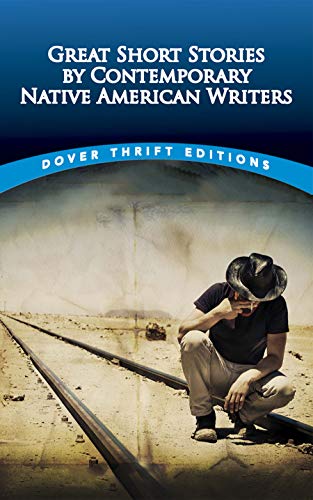
Mary TallMountain’s “Snatched away” is the ninth story of fourteen in the anthology, Great short stories by contemporary Native American writers, that I’ve been working through this year. It, like the previous three, was published in the 1980s, in 1988 in this case.

Mary TallMountain

Anthology editor Bob Blaisdell provides minimal information about her. He gives her heritage as Athabascan, Koyukan and Russian on her mother’s side, and tells us she was born Mary Demoski in Alaska in 1918, and died in 1994. Wikipedia’s article on her describes her as “a poet and storyteller of mixed Scotch-Irish and Koyukon ancestry” (Koyukon being Alaska Native Athabascan). Later in the article Wikipedia also mentions her Russian heritage.

Wikipedia provides more background, though not as much as on some of the other writers I’ve read in this anthology. She didn’t start writing until she was in her 50s, which means the 1970s , and she was part of the Native American Renaissance. However, the works listed seem to be primarily poetry, and there’s no discussion of her prose writing. It describes her main themes as being Native and Christian spirituality, including a connection to nature. It also tells us that she was given up for adoption when she was 6, by her tubercular mother, who knew “she would inevitably die” from the disease. It was not a happy experience for TallMountain. Her step-father was abusive, and she was forcefully dislocated from her culture.

TallMountain’s whole life was a challenge – from the unsurprising alcoholism, given her difficult childhood, to serious health problems, including cancer and a stroke.

“Snatched away”

“Snatched away” is told through the eyes of a white man, Clem, who has an Athabascan partner, Mary-Joe, and two children, though this is only slowly revealed. The framing story takes place over a day, in the 1920s, as Clem manoeuvres his way down the Yukon river, meeting rivermen and reflecting on his life. Through him, TallMountain tells of the culture of Athabascan river people whose survival depends on their river, fishing and hunting skills:

Quick dark silhouettes against the greens of alder and cottonwood, the Indians were part of sky, river, earth itself: they wove their dories through tumbling water, poled schools of darting salmon, strode like lumberjacks. Born rivermen, Clem thought with respect. Still, the river was a tough customer. In the seven years he’d been here, ten men and boys had downed between Nulato and Kaltag.

The river might be tough, but it is nature, and its spirit and theirs are entwined. The more problematical thing is the impact on their lives and culture of the arrival of white people, particularly with their diseases like small-pox and tuberculosis.

TallMountain doesn’t gloss over or romanticise life, before or after the arrival of the whites. Rather, she tells it as it is. Early in the story is a scene, told in flashback, in which Clem spends an afternoon on the riverbank with locals, young Andy, who had later drowned, and Little Jim. They see a bundle rolling fast down the river and, on his asking what it is, Clem is told it’s a “Baby. Throwed away”. A common practice in the “old time” for imperfect babies, with a “bum leg” maybe, or “head mashed”, it happened less now, but women will still do it, he’s told, if the baby is “too bad”.

Death pervades the story, actual or intimated – from the babies and the drownings to the aforementioned diseases – but its handling is unsentimental.

From the opening paragraph describing the Yukon as being in a “fierce, frowning mood” to the end when Clem’s “words are snatched away by the wind”, it is the river that controls the story. Its power and potential to both sustain with fish and birds and to kill, and its associated spirituality, are evoked through the people Clem interacts with on his journey – like the consumptive Floyd out hunting mallard and Willy the fisherman who “looked as if he had always been there” and who tells Clem “you got to watch that river” – and through Clem’s physical struggle to keep his boat upright and on course. The river is a living thing, and should never be underrated. Nor perhaps, should be the Woodsman, an Athabascan bad spirit about which Clem asks Willy. It’s a joking reference, but with a tinge of something else all the same, given soon after this Clem senses “something besides fish alive, out there in the river”.

There is clearly an autobiographical element to the story, with Clem’s partner, like TallMountain’s mother, contracting tuberculosis and the local doctor offering to adopt the children, just as Tallmountain had been. Clem is bothered, but philosophically believes “it will all work out in the wash”. Will it? Much is left open in this story.

Like many of the stories in the anthology, “Snatched away” is at least partly about the intersection of cultures. TallMountain, like many of the authors, is of mixed heritage, and in the little I’ve found about her on the Internet, she was comfortable with that. In fact I found an Interview with her in which she describes herself as an “inbetween”*, by which she means having “a connection between two different cultures” to which must be done justice. As Clem fights his way down the river, he thinks about his own heritage and background, as well as of the Athabascan people. As he tires, he sees the faces of his wife and children “wavering” in the mist. But, his specific pronouncement about “Indianness” just after this – “what difference now, how much the blood is mixed” – felt sudden and a bit out of the blue.

It may be that TallMountain was more poet than storywriter, but I did still enjoy the story, even if more for its gorgeous writing about the river and its people than for its narrative coherence. And it has been anthologised more than once, which says something.

* Joseph W. Bruchac III, “We are the inbetweens: An interview with Mary Tallmountain”, Studies in American Indian Literatures, Series 2, Vol. 1, No. 1 (Summer 1989), pp. 13-21

Mary TallMountain
“Snatched away” (orig. pub. 1988)
in Bob Blaisdell (ed.), Great short stories by contemporary Native American writers
Garden City: Dover Publications, 2014
pp. 65-74
ISBN: 9780486490953

Pat Barker, The women of Troy (#BookReview)

I shocked my reading group last week when I announced during our discussion of Pat Barker’s novel, The women of Troy, that I was tiring of feminist re-imaginings of historical women. This is not to say that I didn’t enjoy the novel, and it is definitely not to say that I am not interested in novels addressing feminist issues and concerns. It is simply to say that mining the past for the wrongs of the past, while perfectly valid, is starting to feel a bit repetitive, and consequently, also perhaps a bit reductive.

In the last couple of decades, the Classics seem to have been particularly popular for authors to revisit. I can point, in my own reading, to Margaret Atwood’s The Penelopiad (my review), and more recently to authors I haven’t read like Madeline Miller and Natalie Haynes. These authors have all re-imagined women’s roles from the Greek classics. A somewhat different, because non-feminist, re-imagining is one that relates closely to Barker’s novel, David Malouf’s Ransom (my review). In it, Malouf explores the visit Priam makes to Achilles to beg for the body of his son Hector. This event occurs before Barker’s novel starts, but it – particularly how the characters interpret it – underpins Barker’s plot.

So, let’s get to Barker’s novel. It starts with the fall of Troy but it mostly occupies the time during which the victorious Greeks, eager to return home with their spoils of war, which include the titular women of Troy, are unable to leave because they need the right weather to sail. However, it’s not coming because the gods are offended. The Trojan King Priam’s body has been brutalised and left unburied – by the now-dead-Achilles’ son Pyrrhus, who is emulating his father’s treatment of Priam’s son Hector.

Barker evokes the scene well, detailing life at the encampment along the bay, which includes the households of Greek heroes and kings – like Agamemnon and Odysseus – and the women’s quarters where the captive Trojan women are being kept. The warriors, who are fine when they are fighting, are restive, while the women are trying to survive this nightmare. Three voices carry the story, the main one being the first-person voice of Briseis, who had been Achilles’ “prize of honour” but is now married to his trusted companion Alcimus. She tells her story from 50 years hence. Her voice is occasionally interrupted by one of two third-person male voices who speak from their present, the aforementioned Pyrrhus, and the out-of-favour seer, Calchas. In fact, it is Pyrrhus who opens the novel.

“nobody would believe a girl capable of doing it” (Briseis)

Barker knows how to tell a compelling tale. She unfolds the plot at a steady pace, building up the tension in the encampment through strong imagery and tight description. I particularly loved her use of birds to both convey tone and further the themes. Chief among these were the ever-present crows who, Briseis tells us partway through the story,

were everywhere now, and they seemed so arrogant, so prosperous … Almost as if they were taking over.

Above all, though, it’s Barker’s characterisation that engaged me, her ability to invest her characters with humanity – including the brutal Pyrrhus who at 16 years old is young, unconfident and struggling to live up to the reputation of his father Achilles. Briseis, the spoil of a previous war and now carrying Achilles’ child, is more privileged than the newly captured Trojan women, but she needs all her wits if she is to keep them as safe as she’d like, particularly the independent Amina who is determined to defy Pyrrhus and give Priam the burial he deserves.

One of the ways Barker creates these relatable characters is to use contemporary and often highly colloquial language, which I admit I initially found off-putting. I don’t usually bother much about anachronism in historical fiction, so it tickled me that our reading group member who tends to be the most critical of anachronism was the main defender on this occasion. She argued that the language of The Iliad, for example, is poetic, rather than realistic, and that, given we don’t know the language of the time, Barker’s earthy approach – with its expressions like “poor cow”, “as you would”, and “fat lot of good” – is valid. Fair enough – and, in fact, I did find myself able to go with the flow, once I’d attuned myself.

There were other moments, too, though, where the language felt a bit clunky, but they were not enough to spoil what was a page-turning read about the politics of war, of enslavement and of genocide, a story in which the victors take the women for their own and aim to kill all surviving Trojan males:

They weren’t just intent on killing individual men; they meant to erase an entire people.

It’s a grim and brutal world. As Briseis tells us near the beginning, “the only thing, the only thing, that mattered in this camp was power – and that meant, ultimately, the power to kill”. 

But, there are some things that the victors, for all their swaggering physical power, overlook or can’t control. One is the greater power of the gods, and the other is the women. Barker shows how women, in being so ignored, so underestimated, so under the radar, can in fact exert some agency exactly because of this. It’s not an ideal way to be, but when needs must you do what you have in your arsenal.

You don’t need to have read the first book in the trilogy to appreciate this novel. I hadn’t. And, while the kernel of a sequel can be seen in its ending, The women of Troy has enough closure to make it work as a stand-alone novel. I wouldn’t call it a must read, but for those interested in looking at Greek myths from a different angle, there is much to “enjoy” here.

Pat Barker
The women of Troy (Troy trilogy #2)
Penguin Books, 2021 (Kindle ed.)
309pp.
ISBN: 9780241988343

J.D. Vance, Hillbilly elegy (#BookReview)

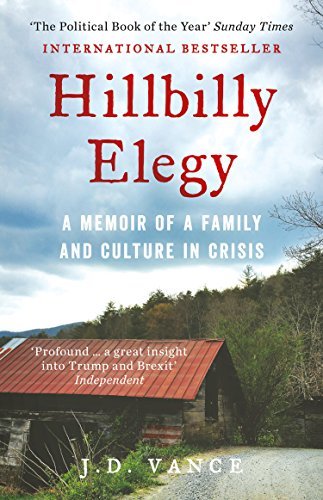
I did something recently that I haven’t done for a long time. I picked up a book from a remainder table. It was at the National Library bookshop, and I was waiting to meet a friend for lunch. The book was J.D. Vance’s memoir Hillbilly elegy: A memoir of a family and culture in crisis, and on its front cover was a review excerpt from the Independent, which said “profound … a great insight into Trump and Brexit”. I was intrigued, and embarrassed that I had not been aware of this “international bestseller” – unlike many of you I suspect.

So, I started reading while waiting for my friend and was engaged. On the first page of his Introduction, Vance tells us that the cover of the book says memoir, but he’s only thirty-one and has accomplished nothing great, nothing that would justify a complete stranger paying money to read about him. Then comes the point, he had written the book, he said, because he had achieved something quite ordinary. He had graduated school, then gone to university and Yale Law School, something that doesn’t happen to people like him, to white people who grow up poor in an Ohio Rust Belt steel town. This is the sort of socio-cultural story that interests me.

Then I hit a little block. I wrote about it to my American friend – we always share our reading – and she filled me in on Vance (born in 1984). Anti-Trump in 2016, he has since back-flipped and is now not only not anti, but actively, and visibly, pro-Trump. He is, in fact, as of 2023, a Republican Senator and Trump supporter. Hmm … well, I kept reading, though admittedly after a little pause. I’m glad I did because I learnt quite a lot – about American white working class culture, specifically Appalachian hillbilly culture, and how it can lead to the sort of thinking that can make something like Trump happen. But, the book was published in 2016, so it doesn’t necessarily explain what is happening today.

The memoir

As a memoir, Hillbilly elegy follows a typical misery (or poor-boy-done-good) memoir trajectory. Born into a dysfunctional family with an addict mother and a procession of “father” figures, Vance was headed for a life of similar struggle and little hope. He provides a colourful and warm-hearted but also clear-eyed picture of the Kentucky-based Appalachian hillbilly culture from which he’d come, and of those from it who migrated, as his family did, to the now declining factory towns of Ohio. Of all the American books I’ve read over the years, this was not a story I knew, and I found it fascinating – in both the parts that were unique and those that were universal to disadvantaged families (in western cultures anyhow), namely the poverty, the lack of opportunity, the lack, even, of awareness of what could be striven for (let alone how to do it). This lack of awareness and know-how are, in a way, the real kickers.

As is common in this genre, Vance survives with the help of others, most notably his maternal grandparents, Mamaw and Papaw to whom he dedicates his book. He credits Mamaw’s (and his mother’s, in fact) commitment to the importance of education, along with the help of others who recognised something in him, as being what got him through. It’s a common story in one sense, but the particulars of this one – to do with the hillbilly culture and his individual circumstances – make it worth reading.

At the end of the book, Vance acknowledges the help of various people in writing this book. These include someone called Charles Tyler who forced him “to hone in on a few core themes”. Those themes are evident from the beginning, and they stem from an interrogation of his cultural background, its derailment and how it operates to hold people back. It’s a believable story, and I enjoyed reading it, partly because he brings the place and the people to life and partly for the truths he shares, because there are truths there, truths that confirm some of my own sociological studies into disadvantage back in the 1970s.

The sociology

However, it’s also in the sociological analysis that I was most challenged. Vance describes in detail the problems his culture faces – the poverty and lack of opportunity, the drug addiction, the broken families, the violence, the complicated relationship to work – but the conclusions he draws are what’s interesting.

An example is his discussion of his culture’s understanding of success, which they put down to one of two factors: the luck of being born into wealthy families, or talent. As most hillbillies don’t come from the former, they ascribe success to being smart, meaning “hard work doesn’t matter as much as raw talent”. He analyses this a little, providing some nuance, but it seems that in his mind work ethic (or lack thereof) is an issue. He raises it first in his Introduction where he describes his experience of working on the floor of a tile distribution business and seeing poor work ethic firsthand. This and similar experiences (including seeing welfare gaming in operation) drove this book, which he says is about “a culture reacting to bad circumstances in the worst way possible … a culture that increasingly encourages social decay instead of counteracting it”.

My friend wrote during our discussion by correspondence that he seems to come more from the “pull yourself up by your bootstraps” mentality than one acknowledging the role of outside help, such as from the government. Vance does talk about all the help he received – indeed he says he wouldn’t be where he is now without it – but it was from family, friends, and mentors, meaning personally-based, not from the government. The message feels confused. He clearly appreciates how difficult it is for people who grew up like he did to get ahead on their own, but his analysis of the remedy feels narrowly simplistic:

Public policy can help but there is no government that can fix these problems for us.

and

I don’t know what the answer is precisely but I know it starts when we stop blaming Obama or Bush or faceless companies and ask ourselves what we can do to make things better.

These are valid points – to a point. Change does need to come from within, but that can rarely happen independently. Serious support is needed, and it needs to be systemic, and structural, from without as much as from within. Vance understands issues like lack of opportunity and ignorance. These things can’t be easily fixed from within. It doesn’t seem like Vance sees that (or, didn’t then, anyhow).

I wasn’t far into Hillbilly elegy when I was reminded of another poor-boy-done-good memoir, Rick Morton’s One hundred years of dirt (my review). However, while Vance has gone on to join his country’s ultra-right, Morton, who was also born in the mid-1980s, has gone in a very different direction. A journalist, his expertise is social justice, and he regularly calls government to account for its failings. His understanding of opportunity and social inequity feels more nuanced to me, but that may be because I agree with his way of thinking about these issues, and how they might be addressed. I could ask why these two men who came from such poverty-stricken backgrounds are so different in their thinking, but I’d only be conjecturing (albeit with some basis in fact) so let’s just leave that thought hanging.

I’m glad I read Hillbilly elegy. Vance cares deeply about his culture, and his stories of real people who are genuinely hurting engaged my heart, but he also provided insight into a way of thinking about these issues that I little understood.

J.D. Vance
Hillbilly elegy: A memoir of a family and culture in crisis
London: William Collins, 2016
264pp.
ISBN: 9780008220563

Jane Austen’s The Watsons in Trove: Finishing the unfinished

While searching Trove recently for my Monday Musings 1923 sub-series, I came across some articles on Jane Austen’s unfinished novel, The Watsons, and can’t resist sharing them with you.

I have written about unfinished books before, including on Jane Austen’s unfinished novels, The Watsons and Sanditon. Unfinished books aren’t to everyone’s taste but, if you love an author, you’ll read anything they wrote. Such is the case for me with Jane Austen.

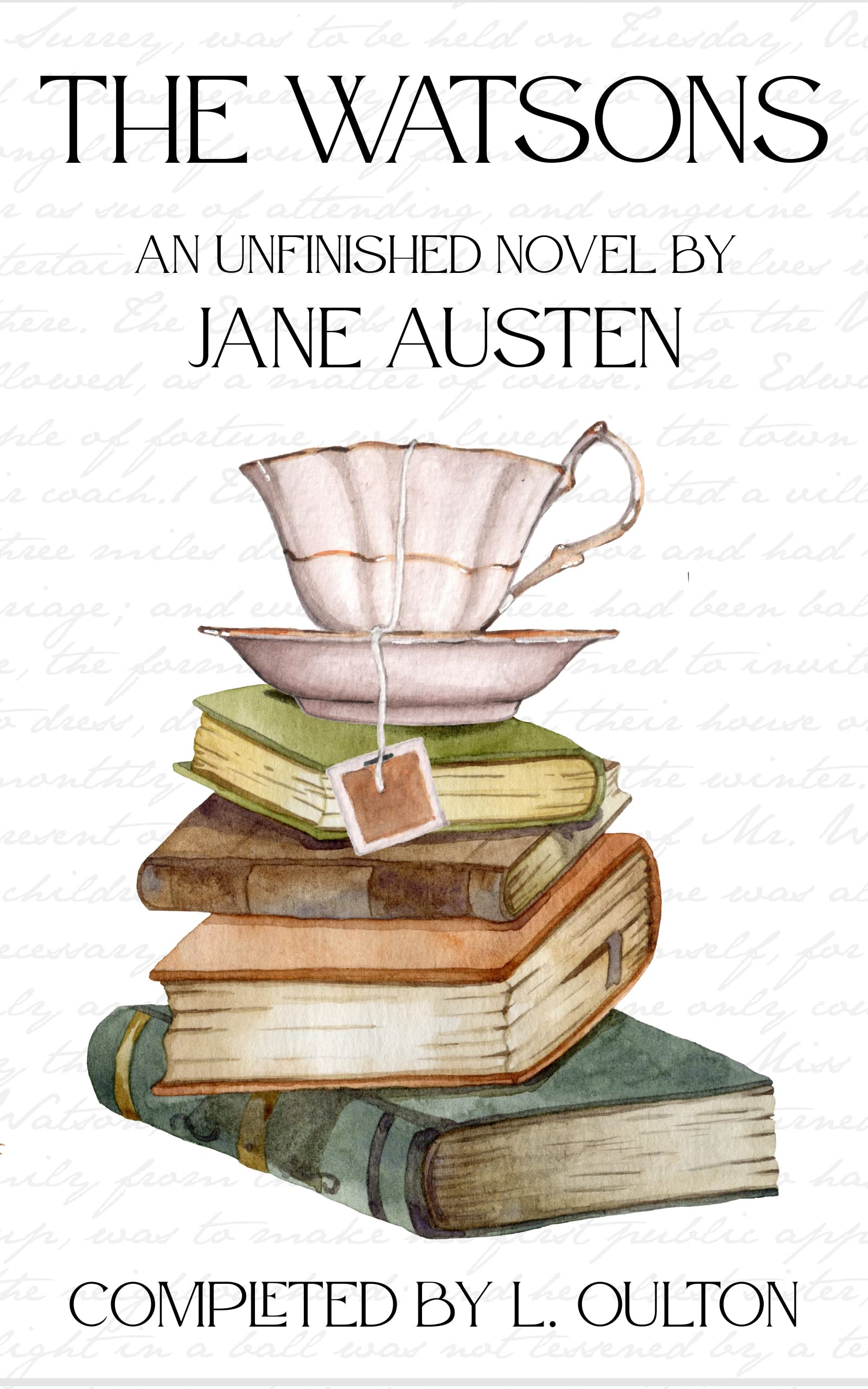
So, The Watsons. Just as writers can’t seem to stop writing sequels, prequels and multifarious other versions of Austen’s six published novels, they are also drawn to her unfinished novels. The Watsons, for example, which Austen abandoned around 1805, has been “finished” several times. The first appeared in 1850, and was not presented at the time as a continuation. Wikipedia provides a good summary, explaining that it was an “adaptation” written by Austen’s niece Catherine Hubback, who titled it The younger sister. The initial chapters were based on Austen’s writing, but Hubback did not copy her words verbatim. The first real continuation came in 1923, and was written by L. Oulton. Since then, there have been several more, including versions of Hubback’s version! And so it goes ….

You can read all about it in the Wikipedia article above. Meanwhile, I’m returning to Trove, and the two articles that inspired this post. Both appeared in May 192 – in Melbourne’s The Age (May 5) and in Sydney’s The Sun (May 13). They refer to the publication of two “editions” that year of The Watsons – an unfinished edition with, says The Age, “a pleasant and informative introduction by A. B. Walkley”, and one completed by “Miss L. Oulton”. The Sun describes these two editions:

One firm publishes this fragment with an introduction by A. B. Walkley; the other firm actually calls upon L. Oulton to finish the story! The reader is advised to read only to the place where Jane Austen threw down her pen.

Good advice, I say – but that’s because I am more interested in Austen’s writing than in what others might think were her intentions. This, however, is not why I wanted to share these pieces. What interested me were their attitudes to Austen.

The Age says:

A return to Jane Austen after a course of modern fiction is an experience. The prim dignity of her diction; her bookish, almost stilted, conversation; her expression of fine sentiments and descriptions of good manners; her special acquaintance with the somewhat narrow insular life of the well-to-do in the English provinces a century and a quarter ago; her well-bred young ladies, whose only ambition in life is to secure husbands; her shrewd insight into the human heart, and her capacity as a storyteller— the reader renews acquaintance with much pleasure.

Not surprisingly, I don’t agree with this assessment of Austen’s writing. “The prim dignity of her diction”? Good diction perhaps, but prim? Not my Jane. Her conversation does tend to be formal compared with today’s writing, but you just have to read Lydia’s slangy “Lordy” to know that Austen can capture the nuance of character through her dialogue. Further, describing her subject matter as “the somewhat narrow insular life of the well-to-do in the English provinces” is, in fact, “somewhat narrow”. Of course, I agree with “her shrewd insight into the human heart, and her capacity as a storyteller”.

It is this – “her well-bred young ladies, whose only ambition in life is to secure husbands” – that most offends. It reduces Austen’s concerns to something not worth reading, or, to something worthy only of a few hours of escapism. Her heroines do tend to be “well-bred” in terms of manners, but many are by no means “well-to-do”. Marriage is the outcome of her novels, but her themes and her heroines’ ambitions are far more complex.

The Sun was more off-handed about why we might read Austen:

The story bears all the characteristics of the author, though it does not compare with her other established works … Through this fragment, however, the modern reader may pleasantly peer at a vanished age, with a ballroom etiquette already long forgotten, sententious speeches, a slavish admiration of “the quality” in the county, love affairs that are hidden by hints and evasions, and a painful obedience to the conventions.

“Pleasantly peer at a vanished age” and “painful obedience to the conventions”? Even in the beginning of The Watsons we see Austen’s eye for superficiality versus substance in her society, and her willingness to expose it. We also see her awareness that not all women were well-to-do, as shown in this quote from the novel. In it, our not-so-well-off heroine Emma speaks to the aristocratic Lord Osborne:

‘I wonder every lady does not. – A woman never looks better than on horseback. –’
‘But every woman may not have the inclination, or the means.’
‘If they knew how much it became them, they would all have the inclination, and I fancy Miss Watson – when once they had the inclination, the means would soon follow.’
‘Your lordship thinks we always have our own way. – That is a point on which ladies and gentlemen have long disagreed. – But without pretending to decide it, I may say that there are some circumstances which even women cannot control. – Female economy will do a great deal my Lord, but it cannot turn a small income into a large one.’

Sure, Austen’s heroines were not in the poor-house, but not all were carefree either when it came to money. Indeed, several – Fanny Price and the Dashwoods, for example – rely on the kindness or generosity of others to live in reasonable comfort. And many minor characters – such as the Bateses in Emma – were identifiably poor. Marriage was a necessity not a luxury for many (Emma’s Emma notwithstanding!)

You are welcome to check my Austen posts to see my thoughts on these and other matters.

I enjoyed finding these articles, but was disappointed to find the same-old misunderstandings of Austen in vogue then as they continue to be now.

Rayna Green, High cotton (#Review)

With Rayna Green’s short story, “High cotton”, we pass the halfway mark in that anthology I’ve been posting on over the last few months, Great short stories by contemporary Native American writers. We are also getting closer to the anthology’s publication date of 2014, so these chronologically listed stories are starting to bunch up in their dates. The previous two were both published in 1983, with “High cotton” being published just a year later in 1984.

Rayna Green

Again, I’m mostly using anthology editor Bob Blaisdell’s intro and Wikipedia to introduce the author. Blaisdell’s intro is brief, as usual, but it is he who formally clarifies Green’s identity as a Native American, explaining that her “Native background, through her father, is Cherokee”. Identity, as we’ve come across already in this collection, can be problematical so I was a bit unsure when Green’s Wikipedia article didn’t explicitly provide her tribal affiliation, as I’ve found for our preceding authors. As this anthology specifically contains stories by Native American writers, I do want to identify how each writer fits into this.

Wikipedia’s article on Green (b. 1942) isn’t completely silent. It does imply her heritage, describing her as the “first American Indian to receive a Ph.D.” in Folklore and American Studies, and stating, near the end, that she was “a founding member of both the Cherokee Honor Society and the American Indian Science and Engineering Society”.

Continuing with Wikipedia, I was also surprised that, unlike for our previous writers, Green is not introduced as a writer, but as a curator and folklorist – at the Smithsonian Institution, among other organisations – and as having worked in academia. Duke University is more useful regarding her writing career. In 2008, it said that she had written or edited four books and published “many essays on American Indian representations, American Indian women, American identity, American Indian material culture, and American Indian food and foodways”. The page also says, and this was of particular interest to me, that

Several of her short stories and essays on Native women and American identity have been widely reprinted and have served as standard reading for twenty years in courses in women’s studies, American Indian studies, and American studies (e.g., “The Pocahontas Perplex: The Image of American Indian Women in American Culture,” “The Tribe Called Wannabee: Playing Indian in Europe and America,” “Magnolias Grow in Dirt: Southern Women’s Bawdy Humor,” and “High Cotton”).

This seems like a good point to move to today’s short story …

“High cotton”

“High cotton” is a tricksy story. For a start, it is framed as a story within a story, which suggests that storytelling is one of its concerns. There is also the challenge of the Oklahoman Tahlequah vernacular that is used in the telling. Finally, there are complicated relationships, and, dare I admit it – identities – to unravel. I’m not sure I completely got them all, but that I think it part of the point about identities: To what extent are they what you are born as and to what extent what you choose?

The story-within-the-story concerns Rose who, in effect, gets the better of those who have made her life hell – the Baptist Church and her abusive alcoholic white husband Will – by emulating Jesus to encourage said husband to convert to Christianity and preach the word. The story turns to almost pure farce at this point as Rose prances around the bedroom in a cloudy, white nightgown exhorting her out-of-it husband to repent his ways. She can’t believe that he doesn’t recognise her, but she does such a good job of it that he does indeed repent and go on to preach the word while, in a pointedly ironic twist, she goes on to support herself by selling the very liquor that had made her life a misery. And, she stays away from the church.

Framing this is Grandma (Rose’s sister, I think) telling the story to Ramona (a great-niece, I think). Green opens her story with:

Is everything a story? Ramona asked her.

To which Grandma replies, somewhat cryptically:

It is if a story is what you’re looking for – otherwise it’s just people telling lies and there’s no end to it.

While Grandma waits for Ramona’s response, Ramona is watching some “purple cockscombs” through the kitchen door. This ends the opening paragraph so, hmmm, what do these “purple cockscombs” signify, as they seemed too deliberately placed there to mean nothing. They are flowers, but my first thought was of the cockscomb strutting about in foolish pride. My web search retrieved several, often paradoxical meanings. Symbolsage.com provides a good description, summarising them as symbolising “love, affection, silliness, partnership, individuality, strength”. Green could be calling on some of these, and/or on that “cockscomb” image of showy emptiness.

Perhaps more relevant to focus on is the black snake that runs across another character’s foot out in the cotton fields. The snake doesn’t bite her – a Cherokee named Gahno – but the event results in pandemonium and change that involves, over time, the women working on the cotton fields leaving. This infuriates the German plantation-owner Poppa, particularly when his daughter (Ramona’s mother) marries Gahno’s son: “Betrayal was bad enough, but race mixing was worse”.

It is only after we are told all this, and after Ramona has doctored Grandma’s iced tea with some “boogered Indian” whiskey, that we hear the story of Rose and Will. Grandma is quite the storyteller:

Rose got all the church women to pray and pray over him, week after week, and they kept poor Jesus awake yelling about Will’s sinful state. The more they prayed and hollered over him, the more he cussed and drank. And that made them pray more. You know how them prissy Baptist women is, honey—wouldn’t say shit if they had a mouthful—and they like to drove everyone to the ginmills and shake dance the parlors before long. But everyone was more disgusted with Will.

By the end of the story Will has been dead some years, and Rose “had turned Indian just as sure as she’d turned away from Christians”.

To conclude, we return to the aforementioned snakes. Grandma tells Ramona that Rose “always figured, just like Gahno, that snakes were meant to warn you, and she took the warning”. As for stories? Well, they may be lies or they may be what Grandma calls them, “snakebite medicine”. “High cotton” is an intriguing story. Green evokes a lively scene, and explores with dark humour the complexities of multiracial communities where personalities and cultures clash, but I did have to read it several times to work out who was who. If anyone else has read it, I’d love to hear your thoughts.

Rayna Green
“High cotton” (orig. pub. 1984 in That’s what she said: Contemporary poetry and fiction Native American women, ed. Rayna Green)
in Bob Blaisdell (ed.), Great short stories by contemporary Native American writers
Garden City: Dover Publications, 2014
pp. 59-64
ISBN: 9780486490953