Balli Kaur Jaswal, Erotic stories for Punjabi widows (#BookReview)

Book cover

Broadly speaking, Singaporean author Balli Kaur Jaswal’s third novel, Erotic stories for Punjabi widows, reminds me of Anita Heiss’ choclit books like Paris dreaming (my review). By this I mean it presents as an escapist romcom genre novel but within it is some serious intent. In this case it relates to the oppression of women, particularly widows, and, more specifically, the problem of honour killings, in Britain’s Punjabi Sikh community.

The story concerns the “still searching for her calling” Nikki, who, twenty-two-and-a-half years old with half a law degree behind her, obtains a job teaching writing to immigrant Punjabi widows in Southall, the heart of London’s Punjabi community. Except, what she finds is that these widows do not want to learn to write:

I’ve survived all this time without reading and writing; what do I need it for now?’

What they want is to tell stories – erotic ones – to each other. What they want, really, is companionship and a safe place to be themselves, away from the oppressive eyes of a traditional community dominated by the self-appointed “morality police”, the Brothers.

And here is where some darkness comes in, because within this community, several young women have died. Officially, these deaths are recorded as accidental or suicide, but it gradually becomes apparent that all may not be as it seems and that murder and honour-killing may be involved. Widow Sheena chillingly says later in the book that “in this community I’m suspicious of accidents.” The novel, therefore, is a romcom-cum-crime mystery.

Paralleling this story of the widows and their writing class is that of Nikki and her nearly 25-year-old sister, Mindi. Born in England to Punjabi immigrant parents, they represent the other side of the cultural coin – to a degree, anyhow, because Mindi, a nurse and (still) unmarried, is considering “embracing our culture” and going the traditional arranged marriage route. This shocks the freer wheeling, English-to-a-core-she-thinks, Nikki, who tells Mindi:

This is what young women do in Britain! We move out. We become independent. This is our culture.

Even so, our modern Nikki does sometimes feel “split in two parts. British, Indian.” Fortunately, Nikki meets a man the more usual way – by serendipity – and love starts to bloom. But, this is a rom-com so, as you’d expect, the course of true love doesn’t run smooth and soon enough Nikki finds herself wondering why this man is behaving a little strangely.

As with Anita Heiss’s choclit books, what lifts Erotic stories for Punjabi women out of the straight chick lit genre, is its interrogation of social issues. Besides the above-mentioned mystery concerning a young woman’s death, two other issues are reflected in the lives of these characters, one being the challenges faced by young first generation women, and how they navigate the two cultures they find themselves straddling. By having Nikki and Mindi handle this quite differently, Jaswal reveals the complexity of what this generation faces. Then we add in Nikki’s new love, Jason. I don’t want to spoil anything, but let’s just say that his experience of being a first generation Sikh man from the USA, and the expectations placed on him, adds commentary to Nikki and Mindi’s thoughts about life, love and marriage.

The other main issue is the oppression of Punjabi Sikh women, particularly but not only widows, within their own culture and in the culture of their adopted home. Our widows are invisible in their own community. Without their husbands they are seen as and feel “irrelevant”. However, these Punjabi women overall haven’t made any inroads into the English community either, feeling the English “haven’t made their country or their customs friendly” to them. “Britain”, Nikki realises, “equalled a better life and they would have clung to this knowledge even as this life confounded and remained foreign.”

There is, then, a lot going on here, but Jaswal, whose first novel, Inheritance, earned her a Sydney Morning Herald Best Young Australian Novelist Award, knows how to construct and move along a plot. She also knows how to entertain. The erotic stories are a bit of a hoot. With our widows finding creative synonyms for certain body parts, you may never look at a cucumber the same way again. It’s laugh-out-loud funny at times, which my reading group enjoyed, and there are some lovely touches of irony. For example, the earnest Kulwinder, interviewing Nikki for the writing class, starts to sense that Nikki’s idea and her own may not be aligned:

It dawned on Kulwinder that she had advertised for something she did not understand.

The joke, though, is on Nikki too, because for all her “passion to help the women”, little did she expect just how that “passion” might play out!

My favourite books are those which touch the heart and challenge the mind. Erotic stories for Punjabi widows, for all its serious intent, primarily meets the former. It ticks all the boxes: it’s fun to read, has likeable characters, and its message is valid and relevant. For me, though, it’s a little too obvious and predictable, and the resolution is too neat to give the book the sort of gritty, punchy power I love. However, I enjoyed the read and recommend it to anyone wanting an enjoyable romp of a read with a little meat on its bones.

Lisa (ANZLitLovers) also enjoyed this book.

Balli Kaur Jaswal
Erotic stories for Punjabi widows
London: HarperCollins Publishers, 2017
ISBN: 9780008209902 (eBook)
299pp.

Carol Lefevre, Murmurations (#BookReview)

Book coverMurmurations is a beautiful, evocative word, and Carol Lefevre’s latest book, titled Murmurations, does beautiful, thoughtful justice to it. It is though an unusual book. Styled by its author as a novella, it reads on the surface like a collection of short stories, except that the stories are not only connected by the various characters who pop in and out, but by an overarching mystery concerning one of them, Erris Cleary, whose funeral occurs in the first of the eight stories.

Murumuration is, you may know, the collective noun for a flock of starlings, something I discussed in my 2016 post on Helen Macdonald’s essay “The human flock”. She says starlings flock for protection (out of fear), to signpost where they are to other starlings, and for warmth. Lefevre provides, as an epigraph for her book, an image of a murmuration and the following quote from a paper on starling flocks:

The change in the behavioural state of one animal affects and is affected by that of all other animals in the group, no matter how large the group is.

These ideas are all reflected, in some way, in Lefevre’s book. But, the book also has another idea as Lefevre explains in her acknowledgements, and that is that each story was inspired by a different Edward Hopper painting. If you know his paintings – like “Automat” which inspires the first story – you will know that although they are set in real places, they have a certain paradoxical other-worldliness, which entwines bleakness with a sort of dreamy expectation. This tone also pervades Lefevre’s book.

Murmurations starts with “After the island”. Here, young doctor’s secretary Emily considers the funeral of her employer’s wife, the 53-year-old Erris Cleary. She remembers some mysterious messages that had occasionally broken through the doctor’s patient note recordings, messages that implied Erris was in danger. The book ends with “Paper Boats”, in which two neighbours, Amanda and Magda, discuss Erris’ death, with Amanda going on to write a short story about it. Erris Cleary, then, is the link that joins the stories.

The six stories that come between these opening and closing ones are all, like the two just mentioned, told third person from different characters’ perspectives. All are women except for the titular (and penultimate) story, “Murmurations”, which features a young man. His, Arthur’s, story is the only one in which we finally “meet” Erris as a living woman. Four of the remaining five stories feature women who moved in Erris’ circle – Claire, Fiona, Jeanie and Delia – with the fifth one featuring Lizbie who had a complicated and ultimately tragic relationship with two sons from this circle. She is also the daughter of the final story’s Amanda.

Each story focuses on the dark little accommodations or disturbances in its protagonist’s life. Marriage breakdown, looming dementia, suicide and other events threaten to – and usually do – destabilise the characters. There is a sense of quiet desperation in the stories, even in those that look to be alright on the surface. Claire (“Little Buddhas everywhere”) clings to the husband who has remarried. She relies on his sense of responsibility, not to mention her faith in her inherent lovability, to keep him looking after her as well as his new family, while Jeanie (“The lives we lost”) is thrown by the fact that the man she married admits years later that he hadn’t loved her then, though he did now. Delia (“This moment is your life”) is starting to lose her mind. She appreciates her second husband but seems to have married the same sort of controlling man she had the first time. And so on.

These are, mostly, the quiet little tragedies of life, the ones that never make the newspapers but that are all around us – if we only knew what questions to ask. As one character or another appears in the story of another, we see the possibilities for impacting each other – as in a murmuration. The overarching tragedy is that for all their apparent connections, no one seems to really see what is happening to the others or to have the time, or even the desire, perhaps, to genuinely care. This is beautifully illustrated in Jeanie’s story. She moves in with her cousin but they can’t connect:

Neither cousin understands what the other is saying. Though they speak the same language, words, sentences, turn opaque when they attempt to describe their lives.

The implication seems to be that this little murmuration of women is a surface one only, with little protection or warmth afforded to the individual members.

The exception is the mysterious Erris who, in the titular story, speaks to the young Arthur, working in her garden. She offers him the chance to fly:

… and a note, addressed to him, scribbled on a page torn from a blind notebook: Fly away, Arthur. Fly far, be free. Erris.

Around the edges of the paper, cloud shapes were filled with dozens of small, dark, pencilled birds.

The book is beautifully structured to suggest complex layers of links between the stories and characters, layers that would only multiply, I suspect on multiple readings.  The first story’s Emily, for example, is a young girl from the Star of Bethlehem children’s home. Then, after five stories about women linked through neighbourhood lives to Erris, we come to the aforementioned young Arthur. He also comes from the Star of Bethlehem children’s home and was a friend of Emily’s. Will these two, despite lacking the opportunities the others have presumably had, make a better fist of their lives?

The final story adds another dimension. In converting Erris’ death and the mystery surrounding it into a short story that she submits to The New Yorker, Amanda hopes to achieve her writing goal:

to hit one true note. A note that will make sense of something, perhaps of everything, a note that will crack the obliterating silence once and for all.

Can fiction, Lefevre seems to be asking, make the difference? Can we, through fiction, see the connections that we don’t always see in the real lives around us? If it’s fiction like this, written with such clarity and heart, I believe it can.

Challenge logoCarol Lefevre
Murmurations
North Geelong: Spinifex, 2020
108pp.
ISBN: 9781925950083

(Review copy courtesy Spinifex Press)

Emuna Elon, House on endless waters (#BookReview)

Book coverI’ve said before that I’m surprised by how many takes there can be on World War II, and on the Holocaust, in particular – and once again I’m here with another such story, Emuna Elon’s House on endless waters. I hadn’t heard of Elon before but, according to Wikipedia, she’s an Israeli author, journalist, and women’s rights activist. Her first novel translated into English, If you awaken love, is about life on the West Bank, where she lived for many years.

House on endless waters, however, is historical fiction – or, at least, one of those novels which flips between the present and the past. It tells the story of successful Israeli author Yoel Blum who had been told by his late mother to never go to Amsterdam, from which they’d emigrated. However, the time comes when the middle-aged and internationally successful Blum is urged to Amsterdam by his literary agent to promote his latest Dutch-translated novel. While there, he and his wife visit the Jewish Historical Museum, and here, in a little looping video, he catches an image of his mother Sonia in Amsterdam during the war. Next to her is a man holding a little girl, his sister Nettie, but the baby she is carrying is not he! Who is this baby, and where was he?

Yoel returns to Israel, but, after obtaining the incomplete information his sister is able to provide (which is not divulged to the reader), he goes back to Amsterdam, alone, to research his past and write a novel about it. The result is one of those novels within a novel, as we follow Yoel’s journey alongside reading the story he is writing as he uncovers his family’s – and his – past. How much is “true” and how much Yoel imagines is not the point. We are carried along in the horrors of war-time Amsterdam, in stories of decent hardworking people’s disbelief that life could change so horribly so quickly, of Jewish collaborators, of the hidden children, of the most difficult choices people have to make. Elon conveys viscerally the shock felt by Jewish citizenry as one by one their rights are removed and as the foundations of their lives – something they thought immutable in such a place as Holland – crumble.

Much of this story has been told before. Anne Frank comes to mind of course, and many novels have dealt with the ways in which Jewish people were gradually ostracised and betrayed by their own society (the yellow stars, the loss of jobs, the resumption of homes, the rounding up, the transporting to concentration camps, and so on). What makes this one a little different – at least in my reading to date – is its exploration of the hidden child phenomenon, within a larger story of collaboration, betrayal, resistance and difficult choices.

The important thing, however, is less this difference than that it is a deeply absorbing read. Elon’s ability to manage her two story threads, and maintain our interest in both, speaks to a practised, skilled writer. There is no rigid chapter by chapter alternating of stories. Rather, as Yoel becomes increasingly invested in the life of his mother, Elon starts to blend the two stories, with Yoel sometimes feeling himself in both stories at once. As his sense of self becomes increasingly discombobulated, the line between past and present starts to blur:

Yoel would have liked to write about the architectural significance of Amsterdam, about the implication behind the labor invested in the rows of tiny reddish bricks, about the stylized cornices above the windows and the artistic embellishments that adorn every single building. But early the next morning, Sonia is walking along the street, and across the road the police are evicting a Jewish family from their beautiful art-nouveau-design house. The members of the banished family are trying to walk proudly to the truck that has come to take them away …

For Yoel, unlike the tourists he sees blithely enjoying the sun and culture of Amsterdam, “the past is still here” and it begins to overwhelm him.

Why a story-within-a-story?

This bring me to the question of why would Elon use the story-within-a-story-device? I can think of three reasons, the most obvious being that it draws the reader into the story, engaging us in its unravelling along with the protagonist. Secondly, in this case, it also mirrors how many children of the Holocaust generation didn’t know their parents’ stories – weren’t told them – and therefore had to work out those stories piece by piece. Finally, also in this case, it enables Elon to expose the personal development of her narrator, Yoel, who is initially revealed to be decent but emotionally remote. Very early in the novel, we learn this about him:

Perhaps the day will come when he’ll even train himself to live, a day when he will walk the earth like everyone else without being overcome by the thought that in fact it’s odd , even ridiculous to be a human being …

He is, says his wife, “scared of living”. This novel, then, is partly about identity. Yoel didn’t know his past but it’s clear that the traumas of that past had unconsciously impacted him, as we now know they do. Slowly, as he comes to understand who he is, he also starts to live, to be an engaged human being.

Jan Toorop, The Sea at Katwijk, 1887 (Public Domain)

There is much to this book, with Elon and her novelist Yoel drawing on art and music to reflect both Holland’s cultural achievements and its darker side. A motif running through the book is a stolen work of art – Jan Toorop’s The Sea at Katwijk – that had belonged to Sonia’s friends, Anouk and Martin, who are implicated in what happens. Martin suggests to Sonia that the painting is more about Toorop – “every painter evidently knows only how to depict himself” – than place. However, Sonia also sees herself in it: “there she is in black, there in red, there she is borne from wave to wave, moving in the infinite.” For Yoel, this sea “is a huge finite vessel containing infinite waters”. All this contributes to the novel’s message, one which Yoel finally realises Sonia was telling him:

Whatever was, was. Those waters have already flowed onward.

The trick is to know when to fight those waters, and when to let your “heart encounter the heart of the sea” and be at peace.

House on endless waters came to me out of the blue, but what a find. A Holocaust novel, it contains the horrors of that time but is also imbued with a generous, philosophical spirit that, without excusing atrocity, recognises the humanity of those who made selfish decisions and those who had to live with them. We need perspectives like this.

Emuna Elon
House on endless waters
Translated from Hebrew by Anthony Berris and Linda Yechiel
Sydney: Allen & Unwin, 2020 (Orig. ed. 2016)
309pp.
ISBN: 9781760877255

(Review copy courtesy Allen & Unwin)

Karen Jennings, Upturned earth (#BookReview)

Book coverIntroducing my review of South African writer Karen Jennings’ debut novel, Finding Soutbek, I noted that I don’t normally accept review copies from non-Australian publishers but that I will, very occasionally, make an exception if the writer or subject matter interests me. Upturned earth, Jenning’s fifth book, is set in a nineteenth century mining town. Given some general similarities between colonial South Africa and Australia, and my own, albeit youthful, experience of living in a mining town, I was intrigued to read it.

Upturned earth is set in 1886 in Namaqualand, the copper mining district of what was then Cape Colony. It’s an arid region crossing the South African-Nambian border, with its largest town being Springbok (Springbokfontein at the time of the novel). The novel commences with the arrival by boat from Cape Town of 28-year-old William Hull, who is due to take over as magistrate. On first appearances, Hull seems almost like an antihero:

Weak-willed, forgetful, Hull was a poor employee. He did as he was told, yet somehow was never able to fulfil the chores of the position with the same success as his colleagues did. He confused cases, misfiled documents, knocked over inkwells.

In fact, it seems that he is more interested in nature, than work. “He carried,” we’re told, “the droppings of animals folded in handkerchiefs, kept pink newborns warm in his hat”. However, on realising he had been given the job “because no other man would take it”, he resolves to “be firm. Punishments would be meted out. The law would be laid down.”

Unfortunately, life as Okiep’s Magistrate is not as he expects. Slowly, he learns that no-one in Okiep is independent, not even the Magistrate, because the town is unofficially run by the Cape Copper Mining Company. Its head is the Super, Mr Townsend, whose widowed daughter, Iris McBride, returns to Namaqualand on the same boat as Hull. Initially, despite hints to the contrary, he doesn’t realise the true situation, so settles down to a life of work and following his naturalist’s heart, which sees him going out in every spare moment to collect plant and animal specimens. He’s keen to contribute to scientific knowledge. But, the irony is that in “trying to understand the dead things around him”, he is overlooking the live ones.

The narrative is told through two parallel stories. Hull’s is one, the other is Noki’s. He’s a Xhosa mining labourer, one of many who come into Okiep to work and send money home to families in the surrounding regions. Noki, though, has an added concern. While he is away visiting family, his 17-year-old brother Anele is arrested for drunken and disruptive behaviour, and is imprisoned in the gaol attached to Hull’s Residence. This gaol is managed by gaoler-cum-Hull’s-manservant, Genricks. He dissuades Hull from inspecting the gaol. After all, he has it all in hand, and weak Hull, though making an attempt to do the right thing, lets himself be put off.

Given the novel is set in a colonial society, and one involving mines with white and indigenous workers overseen by an arrogant brutal man, you’ll have a picture of what this novel is about. Gradually, things come to a head and people’s true colours are exposed. It’s to his credit that Hull comes to his senses and finds a strength he didn’t know he had – but the calamity can’t all the righted, and the ending is an appropriate one. This is literary historical fiction, so it doesn’t all play out to form, opting for something a little more realistic. I’ll leave the plot at that.

The perfectly titled Upturned earth is Jennings’ third novel. Her writing is tight and expressive. She talks about indigenous workers being “broken down into acceptance”, and here is Hull’s perspective of the place after he suffers a disappointment:

… and he saw as though with new eyes what he had lived in and grown accustomed to these past months. The dull sky, the wearying streets and stained homes, the disgrace of the prison building.

Plain language, but it is all that’s needed.

Why?

The important question to ask about historical fiction is – why? The obvious answer is that there are many stories worth telling, stories that the majority of us have never heard, like, for example, Eleanor Limprecht’s Long Bay (my review) about abortionist Rebecca Sinclair who was gaoled in Long Bay in 1909, and Emma Ashmere’s The floating garden (my review) about the demolition of homes in the 1920s to make way for the Sydney Harbour Bridge.

Jennings explains her reason for writing this book in her Author’s Note and Acknowledgements. She was inspired John M. Smalberger’s book, Aspects of the history of copper mining in Namaqualand (1846-1931), in which she found magistrate William Charles Scully. From there she went to various other books, including Scully’s own reminiscences. This is fiction, however, so, says Jennings, her character Hull’s “weaknesses are all his own”. However, the brutality (and name) of gaoler Genricks are fact, though the events relating to him, the Super and others have been fictionalised. Then comes her main point: she sees her novel as being “a comment on the history of commercial mining in South Africa – the exploitation, conditions and corruption that began in the 1850s and continue to the present”.

The novel, then, is a plea for humanity, for kindness. Here is Hull, halfway through the novel, talking with Cornish miner Tregowning whom he has just met. Tregowning describes the mistreatment of the miners, and particularly the indigenous ones, but Hull can’t quite believe or accept what he is saying:

Tregowning turned to face the magistrate. ‘Are we not taught to vindicate the weak and fatherless, to help the afflicted and destitute, to rescue the feeble and needy? To deliver them out of the hands of the wicked?’

Hull looked around uneasily. His tongue felt thick as he spoke. ‘Some would call those revolutionary words.’

‘I thought they were biblical.’

Which way will our weak Mr Hull go is the question we confront as we read. But, the theme is clear from the start – man’s inhumanity to man (especially in these colonial environments) and what can be done about it. Pondering what has changed and what hasn’t is why we read historical fiction. I enjoyed this book.

Karen Jennings
Upturned earth
London: Holland Park Press, 2019
202pp.
ISBN: 9781907320910

(Review copy courtesy Holland Park Press)

Griffith Review 68: Getting on (#BookReview)

Book coverI love reading the Griffith Review, though have mostly only reviewed individual articles on this blog. It’s a meaty quarterly, with each edition being devoted to a particular theme. Edition 68’s theme, Getting on, seemed apposite for my reading group and so was our August selection. Although it was confronting at times, it was a universally approved choice, and our discussion was lively and engaged.

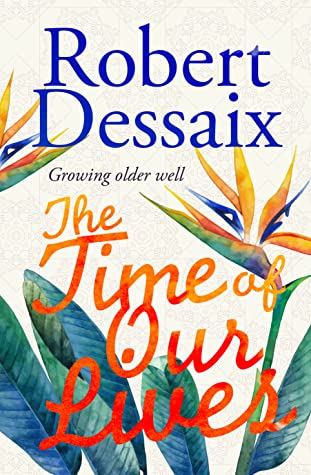
Like all Griffith Reviews, this edition contains essays, reportage, memoirs, fiction and poems, some from writers who have previously appeared on my blog (like Helen Garner, Vicki Laveau-Harvie, Kathy Marks, and Charlotte Wood); some from writers known to me but not (yet) on my blog (Melanie Cheng, Leah Kaminisky, Sam Wagan Watson among others); and some new to me. The edition opens with editor Ashley Hay’s introductory piece, “The time of our lives: Senescence, sentience and story”. She frames the volume’s overarching subject matter by saying that ageing in Australia:

has been largely framed by intersections between a Royal Commission and its revelations of institutional shortfalls and betrayals; the urgent need for reform; the conditions we place under the umbrella designation of ‘dementia’; an increasing awareness of under-reported ageism; the seemingly intractable gap in life expectancies between Indigenous and non-Indigenous Australians; the day-to-day experience of some 200,000 older Australians who live in residential-care facilities; and an emphasis on the ‘costs’ of an ageing population rather than any framing of the potential benefits of longevity.

However, while these practical and political issues underpin the volume, it also includes some more philosophical and personal reflections which provide breadth and life to the discussion. And so, the edition proper starts with established writer, 77-year-old Helen Garner (“The invisible arrow”) who provides a personal perspective on the experience of ageing, on losing hearing (necessitating hearing aids) and failing sight (requiring cataracts). It’s also about the quandary of being a writer challenged by ageing, an issue somewhat addressed, from a different angle, by Charlotte Wood (“Experiments in the art of living”).

Because my life over the last couple of decades has involved elderly people, I was particularly interested in the essays on aged care practice and policy, especially Sarah Holland-Batt’s “Magical thinking and the aged care crisis” and Beth Mohle’s “System failure”. Both these provided detailed analysis of the current failures of the system – including the multiple reviews with their multiple ignored recommendations – and offer some ideas for improvement. The problem is also taken up provocatively by Gen Xer Ingrid Burkett in “Bold rage” and more calmly but also passionately by another Gen Xer, Charlotte Wood. I did laugh, though, when Burkett suggested one of the ideas discarded by Holland-Batt as “magical thinking”, the “geriatric co-op” or, as Burkett wrote, “buying a large house or building a purpose-built dwelling where we could all live together as we age”. It’s not a new Gen X idea. My Boomer friends and I posited this idea too in our youth!

Policy discussions also take up other issues, like euthanasia and assisted dying (Andrew Stafford’s “Dying wish”) and the disturbing problem of increasing homelessness among older women (Therese Hall’s “Almost homeless”).

Then there are the pieces specifically about the science of ageing (such as Bianca Nogrady’s “Longevity, science and, about medicine and about dead” and David Sinclair’s “Live long and prosper”); about how science may help ageing and aged care in the future (Leah Kaminsky’s intriguing discussion of AI in “Killing time”); and about personal experiences of chronic illness (Mark Aarons’ “Solving my medical mystery”) and death (Gabbie Stroud on her brother’s suicide, “In an unguarded moment”). In this personal vein too is the moving poem, simply titled “Andrew”, about the family’s experience of the terminal illness and death of writer, Andrew McGahan. Niece Anna McGahan writes:

He cannot carry our projected burdens
When he still has heavy gifts
Three glorious, painful months to fill

There are, in fact, several moving pieces – some personal, some professional. Melanie Cheng writes about being an unempathetic intern and what turned her around (“The human factor”) while palliative care specialist, Frank Brennan (“Contemporary loss”), details the practice of palliation. The fiction and poems that are interspersed amongst the non-fiction pieces provide personal perspectives on the information presented. Sam Wagan Watson’s short story “The elsewheres of Charlie Bolt”, for example, powerfully illustrates the isolation and loneliness that many of the contributors identify as serious problems of ageing. The line –

The only songlines Charlie Bolt knew were in the curdling of crow gargles on the street.

– conveys the dislocation Charlie experiences from his culture, as well as from life in general.

It’s impossible to list all the pieces, so I’ll conclude by sharing a couple of my responses to this volume (besides frustration with our policy-makers’ failure to properly address aged care). One relates to the discussion of older people as elders, because this suggests a more positive understanding of ageing. It’s discussed in depth by Jane R Goodall (“Joining forces: The wrath of age meets the passion of youth”) who says “there is little or no public discussion about what it means to be an elder rather than just a senior” and teases out what being an elder might look like. It’s also part of the conversation between Ruth Ross, Jay Phillips and Mayrah Dreise about making “Acknowledgement of Country” statements more meaningful (“Listening to elders: Wisdom, knowledge, institutions and the need for change”).

My other main response concerns denial about ageing and its consequences. I’m with Ailsa Piper (“Old growth: On luck, appreciation and acceptance”) who says “I like saying I’m old”, because, as she says, many never get to. Associated with this denial are people’s claims that they won’t go into aged care, that they’ll leave their home “feet first”, that they will not give up their independence. My experience of watching people age is that the situation is less that you are forced to “give up” your independence, and more that your independence leaves you!

How we handle this situation is up to us, of course, but, as Charlotte Wood reports:

Palliative care nurses have told me people almost always die as they live. A person who has lived with acceptance and gratitude will die in gracious acceptance.

She wonders when it might be time to “change one’s default state”! She then quotes an 84-year-old aged care resident:

Ageing, writes Peter Thomson of Ivanhoe, ‘is inevitable, inexorable and interesting. AAA rating for ageing: Anticipate, Adapt, Accept’.

Now that, rather than “I won’t”, seems to me to be a better default state to take.

Getting on is informative, as you’d expect, but it is also inspirational and challenging. Recommended for adults of all ages!

Note: Links on names are to posts in this blog on those writers. Lisa (ANZLitLovers) wrote up a panel discussion on this volume at the Yarra Valley Writers Festival.

Challenge logoGriffith Review 68: Getting on
(edited by Ashley Hay)
South Brisbane, Qld. : Griffith University in conjunction with Text Publishing, 2020
287 pp.
ISBN: 9781922212498

Desley Deacon, Judith Anderson: Australian star, First Lady of the American stage (#BookReview)

Book coverWhen historian Desley Deacon offered me her biography of Dame Judith Anderson for review, I was a little reticent because my review copies were getting out of hand. Little did I know then what was in store for me, and just how much more behind I would become. However, finally, its turn came, and here I am with my review.

First though, I must say something about the publication itself, particularly given our recent discussion here about Print on Demand books. Deacon’s Judith Anderson: Australian star, First Lady of the American stage is available as an e-Book or a PoD one. I read the PoD edition, and it is beautiful. The cover is gorgeous, and the book’s overall design is stylish, with an art deco look reflecting the style of Anderson’s early life and career. The book is big and heavy, but the binding is strong allowing the book to open well for reading. And, the icing on the cake is that it is gorgeously illustrated with quality reproductions of images from the full range of Deacon’s life. These illustrations are beautifully interspersed throughout the book, rather than concentrated, as is more common, into a couple of glossy photographic sections.

But, of course, the important thing is the content. There are, broadly, two main types of biography, those written in the narrative or creative fiction style, like, for example, Sarah Krasnostein’s The trauma cleaner (my review), and those traditional, scholarly, cradle-to-grave ones, like Philip Butterss’ An unsentimental bloke: The life and work of C. J. Dennis (my review). These latter tend to be closely referenced and well-indexed. Judith Anderson is one of these.

“she has a way with her” (critic)

So now, Judith Anderson. Like many of my generation, my first introduction to her was as the terrifying Mrs Danvers in Alfred Hitchcock’s classic 1939 (no I wasn’t alive then!) Rebecca. But, Judith Anderson had been around a long time before that. Born in Adelaide in 1897, she (as Francee Anderson) went to the USA in 1918, and this is where she both established her career and made her home for the rest of her life. It wasn’t easy – is an actor’s life ever? – but eventually Anderson began to get roles. Deacon chronicles the trajectory of her career meticulously, from these early days to her final performances when she was in her eighties. It was a long, and distinguished career which, while centred on the stage, also included film, television, radio and the college speaking circuit. Anderson, unlike some actors, was not averse to working in forms – like television, like, even, television soaps – scorned by others. Regarding this latter, Anderson is quoted as saying “there is no indignity in earning $5,000 per week”. No, indeed, particularly when you never knew where your next pay check was coming from, and when you were providing significant support to other family members.

Various themes run through this story of Anderson’s life. One is the frequency with which critics praised the brilliance of her acting but bemoaned the silliness or inappropriateness of the vehicle. Indeed, this issue was the main reason for the long time it took for her to have her breakthrough. However, Anderson, always a hardworker, kept at it, and eventually her vehicle came, the play Come of age, by Clemence Dane. It was 1934, and she’d been treading the boards in America for 16 years! English playwright Keith Winter saw the play and wrote:

There are in the English speaking world, three actors who have genius of a quite staggering order – Charles Laughton, Edith Evans, and Judith Anderson. Perhaps Laurence Olivier.

No small praise. In the end, though, besides the aforementioned Mrs Danvers, the two roles for which Anderson was most known, was as Euripides’ Medea and Shakespeare’s Lady Macbeth. Character and strong women roles did seem to be her forte.

“same old muddling” (Anderson)

While the biography’s focus is Anderson’s work life, largely because that was her life, Deacon also includes something of her personal life, including, in particular, her two short disastrous marriages. It was a sadness for Anderson that she never managed to have her own family and children. This brings me to another theme that runs through the biography: she had, as Deacon describes it, a “hectic personality” or, as Anderson herself said, “I have not myself a very serene temperament”.

Australian arts administrator, Robert Quentin, said during her 1955 tour in Australia, that she was “more than living up to her reputation as being the most troublesome actress in the world.” Deacon is not one of those biographers who psychoanalyses her subject. Her approach is more straight – that is, she presents what is on record, using the occasional “may” or “could” when some fact or other is not known. However, I’d like to suggest that, while this apparent difficult behaviour of Anderson’s was probably partly her temperament, it may also have stemmed from ongoing frustration with the acting life, with the challenge of getting work, with being messed around, with having to accept what she felt were less than ideal plays or co-players, and so on. In 1935, for example, she was being sussed out for a play, but there was the usual to-ing and fro-ing as backers, producers, and/or agents negotiated and fiddled around. She writes, “when I left Wed afternoon it was definite – but now the same old muddling.” You can feel the frustration.

“near perfection in the dramatic art” (Variety)

Judith Anderson: Australian star, First Lady of the American stage is clearly, like Deacon’s friend Jill Roe’s biography of Miles Franklin, a passion project that was years in the making. Thoroughly researched, and written in a formal but accessible style, it is a positive but non-hagiographical story of an actor who was once described by Variety as achieving “near perfection in the dramatic art”. Dame Judith Anderson is too little remembered today, but her struggle to fulfil her creative self is timeless. For this reason, if no other, her biography is well worth reading.

Challenge logoDesley Deacon
Judith Anderson: Australian star, First Lady of the American stage
Melbourne: Kerr, 2019
509pp.
ISBN: 9781875703067 (PoD)

(Review copy courtesy the author.)

Emily Paull, Well-behaved women (#BookReview)

Book coverWell-behaved women is a debut collection of short stories by Western Australian writer Emily Paull. It is one of those collections that has a unique title, and what a perfect – and teasing – title it is for a collection of stories focused on women.

It has, you won’t be surprised to hear, the usual mothers, grandmothers, sisters and wives, but there are also teachers and students, writers, a step-father and step-daughter, and a vagrant woman. They span all ages. Most of the stories are told first person, with a few third person ones, and in nearly all the narrator or protagonist is, of course, female.

The collection starts with a bang, with a story described on the back page, so I’m not spoiling it, as “a world champion free-diver disappears during routine training” (“The sea also waits”). It’s the ideal opener because it’s about a woman who has chosen a dangerous sport because it’s – dangerous. She’s a woman whose “devil-may-care coastal ways” seem to disgust seemingly better behaved women with their painted nails and carefully tanned skin. It sets up the collection well as one likely to explore the nuances of women’s lives and the consequences of their decisions – oops, behaviour.

And so, from this first story on, Paull interrogates women’s lives from diverse angles. The stories read, mostly, like lovely little slices of life rather than as dramatic stories with twists. I like these sorts of stories, provided they ring true to life, because I’m curious about the choices people make. Paull has probably pored over these stories, honing them to the essential, but what we see is writing that looks easy. It flows well, and the stories show rather than tell, leaving readers to draw their conclusions. There’s nothing particularly inventive about the style or structure. Paull uses foreshadowing and flashbacks, traditionally, but judicially, to move her narratives along. The end result is a collection of accessible, well-crafted stories about relatable characters in, mostly, Western Australian settings.

The second story, “Miss Lovegrove”, has a young female drama student talking about her teacher. This teacher feels the need to tell her students the realities of life – “you will most likely never be on television at all during your careers, which will be short” – and she teaches our narrator a very cruel lesson. She is certainly not a well-behaved woman. Is she brutal? (Yes.) Is she bitter? (Probably.) Is she doing her young student a favour as she intimates? (We need to decide.) Fortunately, the next story, “Crying in public”, is gentler. It’s about the first real heart-break and a grandmother’s wisdom. Unlike “Miss Lovegrove”, Grandma wants to nurture her charge through the pain of the real world. This idea neatly links the two stories. There is, in fact, careful crafting in the order of the stories, with subtle links connecting one story to the next. I enjoyed identifying what I thought were the links!

Anyhow, other stories tell of friends found and lost, of coming out, of grief. In some, the stories could be any of us – an old high school flame returning to see if she can recover a past love (“Down south”), a sister grieving over her terminally ill sister (“Sister, madly, deeply”), a young woman discombobulated by her grandparents’ death (“Nana’s house”), a woman trying to fit the the image of the perfect wife (“The settlement”). But some are a little more dramatic, such as that about a woman whose backyard is found to hold a human skeleton (“From under the ground”), or the warm-hearted story about a vagrant woman caught in a bushfire (“The things we rescued”), or the tragic coming out story (“Picnic at Green’s Pool”).

What I most liked about the stories – even those that were more dramatic in flavour – is that the people are believable. Their emotions and reactions, in the main, are those of “normal”, flawed human beings. They make mistakes, like the young woman who leads on a colleague she’s not really interested in (“Nana’s house). They eat too much or too little, in a struggle to be themselves (“Dora”). And so on. You could see this as a feminist book. The title certainly suggests there’s an element of this in Paull’s thinking – but the book is not stridently so. The title is more wry, than barbed.

While most of the stories are average short story length, one, “Font de Gracia”, is a little longer. Its premise is a rather typical teacher-student affair, but it is well handled and resolved, without didacticism. It has some lovely writing, such as this description of mother-daughter tension:

Joana snatched up her bag without breaking eye contact with her mother. Their anger was like the pull between magnets.

It’s hard to pick favourites, but I did like the last two. “Versions of herself” is about a prickly 90-year-old in a retirement village – no, not in aged care or a nursing home, but independently living in a retirement village. It’s one of the broken-heart stories. Shirley Carruthers is not the most likeable woman around, but Paull, as she does with all her characters, encourages us to see and feel beneath the surface, to understand the whys. The point for me is that we don’t have to like everyone, but we can be kind.

The final story, “The woman at the Writers Festival”, concludes the collection beautifully, with a cheeky exploration of the writing life – particularly its challenges for women – and it does have a twist.

Well-behaved women, then, is a tight, engaging collection of stories about ordinary women, and the messiness of life. Rather than offer answers, it challenges readers to think about these messes, and consider what could be done to tidy them up a bit – next time around. Another good read from the people at Margaret River Press.

Challenge logoEmily Paull
Well-behaved women
Withcliffe: Margaret River Press, 2019
242pp.
ISBN: 9780648652113

(Review copy courtesy Margaret River Press)

Chris Flynn, Mammoth (#BookReview)

Book cover

Mammoth, by Chris Flynn (UQP $32.99)

I am not a big fan of anthropomorphism and have read very few animal-narrated books. Animal farm is one, while Watership down, so enamoured by many of my generation, is not. However, I was intrigued by Chris Flynn’s Mammoth, which is narrated by a 13,000-year-old American Mastodon fossil, and was glad when my reading group decided to schedule it.

It is an ambitious book, encompassing the story of humanity’s destructive, often brutal march through time as seen through the eyes of those we supplanted, that is, the fossils of extinct creatures. Our narrator, Mammut, is accompanied by a number of other fossils – the skull of a Tyrannosaurus bataar, a pterodactyl, a prehistoric penguin, and the severed hand of an Egyptian mummy – who have found themselves together in 2007 Manhattan, waiting to be sold at a natural history auction. This auction did take place, and was, in fact, a major inspiration for the novel.

The story is framed by Mammut’s story of his life, death, disinterment as a fossil, and subsequent “life”. As he tells this long story, he is interrupted by the other “characters” who share their own stories, albeit far more briefly than Mammut’s. Each tends to use the voice of the time when he or she was first disinterred, meaning, for example, that Mammut’s voice is the more formal “arcane” one of the early 19th century, while T. bataar’s is the hip voice of the late 20th century.

As Mammut tells his story, he takes us to selected (representative) hot-spots of human brutality such as the Irish Rebellion of 1803, the oppression of Native Americans in the early 1800s, and Nazi Germany. He also covers theories of extinction, climate change, and the equation of big animals with power in the minds of men. The novel starts with a letter written in 1800 by Thomas Jefferson seeking mammoth bones (which he does eventually acquire for the White House), and ends with male celebrities vying for our fossils at the auction. Early on, Mammut tells T. bataar:

Let me tell you, and I say this as an original American, nothing compares to this nation’s willingness to promote patently false notions about itself in order to create a myth of American potency … Who do you imagine will buy us? You said it yourself, T.bataar. We represent power, for that’s what we were: Behemoths, Colossi, Titans. (p. 15/16)

Later, Pterodactylus tells the group about being used in training Hitler Youth:

We were presented to the eager teens as proof that Germany had once been the centre of might in Europe and the origin point for life on earth. Your mastodon friend in particular was elevated as a symbol of strength … I was referred to as the Reptilian Eagle, an apex predator who dominated the skies. It would have been a compliment, had it not come from the mouths of maniacs. (p. 159/160)

Mammoth is, then, a provocative book, confronting head on the ills of humanity. It could be deeply depressing – and in a way it is – but Flynn has taken his own advice (more on this anon) and told his story with humour, mainly through repartee between his fossil characters. I must say that I initially found this humour a bit silly, a bit obvious, and I wondered whether I was going to enjoy the book. However, the more I read, the more fascinated I became by what Flynn was trying to do. I didn’t find it as “hilarious” as some blurb writers did, but Mammoth offers such an idiosyncratic journey that I’m glad I decided to go with the flow.

One of the book’s main pleasures for me, besides its commentary on humanity’s destructiveness, is the writing master class contained within its over-riding story. This started with some digs about the writing life, such as Mammut’s “no-one gets into the writing game for money these days. No-one in their right mind, at any rate”. A sentiment that is reiterated later by French writer, Bernadin de Saint-Pierre.

However, more entertaining was the discussion of writing, or storytelling, itself. As Mammut’s tale progresses, his listeners begin to question him. Sometimes, it’s the issue of disbelief, to which Mammut responds by explaining his sources, by arguing that it’s perfectly valid for his molar to be observing action in one place while his head is elsewhere, or by allowing himself a little leeway:

I know you’re technically an elephant and all, but your recall of events is a little too precise. Not to mention the verbatim dialogue. Surely, you’re making some of this up? This is my problem with the memoir genre. There’s always more fiction in it than people let on.

I possess a remarkable memory, Palaeo, though I will admit to the occasional romanticism of the narrative. For the most part, what I am recounting is true. But, as you say, I am a storyteller who enjoys indulging in a yarn. (p. 143)

There’s also discussion of tone, regarding the degree of brutality and tragedy in Mammut’s tale:

… This entire tale has been a veritable famine of LOLs. Really, Mammut, next time you tell this story, you need to inject some humour, bro.

No too much, I think, T. bataar. No comedian ever won the Pulitzer … (p. 235)

Flynn, thus, cleverly engages with some current issues in criticism while simultaneously fending off potential criticism of his own work. He crowns this early on with the pronouncement that “No story’s gold from beginning to end” (p. 66). How can you argue with that!

There’s much more to this book. I haven’t touched on the fact that almost all its hominid characters are historical personages, many findable in Wikipedia. Mammoth offers an entertaining, accessible introduction to the history of palaeontology and 19th century natural science, and provides a springboard for further research, should you be so inspired.

For now, though, I’m going to end with a poignant statement made by Mammut early in the novel. “Our world was changing”, he says, “and there was nothing we could do about it” (p. 44). I fear this is exactly how our earth is feeling right now. Flynn, I think, would like us to take note and consider what we might do to prevent avoidable extinctions under our watch. An imaginative, engaging read.

Theresa (Theresa Smith Writes) enjoyed this book too.

Chris Flynn
Mammoth
St Lucia: UQP, 2020
254pp.
ISBN: 9780702262746

(Review copy courtesy UQP and literary agent Brendan Fredericks)

Archie Roach, Tell me why: The story of my life and my music (#BookReview)

Book coverGood things come to those who wait! At least, I hope so, because Lisa has had to wait a long time for a review from me for this year’s Indigenous Literature Week. Finally, though, I finished the main book I chose for this year’s challenge, Archie Roach’s memoir, Tell me why: The story of my life and my music.

Most Australians will know who Archie Roach is, but international readers here may not. A member of the Stolen Generations, Archie Roach is an indigenous Australian singer, songwriter, guitarist, and political activist. The story he tells in his memoir, Tell me why, is not an unusual one in terms of people of his background and generation, but that doesn’t mean it isn’t worth reading, because not everyone can tell this story in the way that Roach can. Perhaps this is because he’s a songwriter, or perhaps, more correctly, he’s a songwriter because he can tell stories.

Roach starts his story with a Prologue set in 1970. He is 14 years old, and receives a letter from one of his birth sisters telling him that his birth mother had died. This is a surprise, because his adoptive parents had been told his parents had died in a fire. He then flashes back in Chapter 1 to tell us about his life, as he knew it, up to 1970. This life involved being stolen from his parents, and being placed in two foster homes, one abusive, before being placed, in 1961, with the Melbourne-based Coxes with whom he was still living in 1970. In Chapter 2 he picks up that point in 1970 when he received the letter, and tells his story chronologically from then on, with some flashbacks to fill in his family’s early life as he learns it himself.

Although Roach had had a good life with the Coxes, who had loved him and whom he loved, the discovery that members of his birth family were still alive brought with it a desire to learn who he was, and he left home. He managed to make contact with his family, but before that he was introduced to drinking (having “a charge”) and life on the streets. Not surprisingly, his story, like those of many young indigenous people who have lost contact with their culture and thus with their bearings, involves alcoholism and related illnesses, run-ins with the police, prison, unemployment, and all-round instability. Archie would obtain work, would be appreciated as a worker, but the demons would return and down he’d plummet again. It’s a common cycle.

However, Archie had a couple of big pluses in his corner. There was Ruby Hunter, whom he met while still a teen and who became the love of his life. It’s not that her appearance resulted in a miraculous turnaround. Real life is rarely like that. But she became the supportive base to whom he would return and who, eventually, did provide the stability that enabled him to turn his life around and become the success he now is. The other plus was music, to which he was first introduced by the Coxes, particularly Dad Cox who loved to sing and who gave him his first guitar. While the stories about his drinking life were distressing to read, the story about how music “saved” him, and how he gradually came to realise that he could tell stories through music, was moving and inspiring.

This brings me back to my opening comment that “not everyone can tell this story in the way that Roach can”. The memoir is beautifully constructed, from the Prologue that vividly takes us into the classroom where Roach receives the letter about his mother, to the use of song lyrics, most of them Roach’s own, to introduce each chapter. Roach uses foreshadowing at the end of several chapters to move the story on, such as this at the end of the chapter in which he arrives in Adelaide – “This would be the last hours before finding Ruby Hunter”. And this one at the end of the chapter where Jill Shelton is recommended to him as a manager – “Jill would end up saving my life at a time when I didn’t see there was any point in saving it.”

Roach also mixes up the narrative, commencing some chapters with the next part of the story, while others he introduces with something more reflective. I particularly liked the opening to the chapter in which Ruby dies:

Some people see time as a river with a steady current. Some people say we get in and move with that current, all of us ageing uniformly. I don’t believe that’s true, though. I’ve seen people age years overnight.

It happens to a lot of our people, and it happens to an awful lot of us drinkers. It doesn’t just happen while we’re drinking, either; we could’ve been years off the stuff and then something might change. We might lose a sister or a brother, and suddenly we have age in our face and in our step.

Sometimes it happens for no reason. Someone will be living their life and all of a sudden time will heap years on their shoulders.

Of course, Roach also talks about politics, about Indigenous opposition to the 1988 Bicentenary, about John Howard’s  opposition to a national apology and his criticism of the “black armband view” of Australian history, about Aboriginal deaths in custody, about the stolen generations, and more. It’s all told through the prism of his own personal experience or through his involvement in political action. Most readers will know these issues, but the personal stamp offered by books like this helps keep the issues real and in front of us. Roach, like so many Indigenous people, amazes me by walking that fine line between anger at what has happened to his people and generosity towards the rest of us.

In the end, Roach’s message is an inclusive one. His songs, he has found, speak to non-Indigenous people too, with many telling him that “that’s what happened to me”. Consequently, his songwriting, he says, now “feels more inclusive, more universal” because “it’s about all of us – you can’t write about yourself without including everyone.”

He writes:

For so long we have been divided by ‘isms’ – racism, sexism, fundamentalism, individualism – but when we come back to the place of fire, I believe we will discover there’s far more that connects us than separates us. I believe we will be one humanity again, that we will find release, healing and true freedom.

I love the hope in this but, let’s be clear, Roach is not letting us off the hook. That is, he doesn’t believe we are there yet. He is, though, choosing an aspirational path, and for that I thank him.

ANZ LitLovers logoArchie Roach
Tell me why: The story of my life and my music
London: Simon & Schuster, 2019
378pp.
ISBN: 9781760850166

Helen Garner, Yellow notebook: Diaries, Volume 1, 1978-1987 (#BookReview)

Book coverThe opening session of last November’s inaugural Broadside Festival featured Helen Garner in conversation with Sarah Krasnostein about her recently published Yellow notebook, the first volume of her edited diaries. It was an excellent, intelligent conversation. Garner came across as the forthright writer she is, one who fearlessly exposes difficult and unpleasant things, alongside joys and triumphs.

The epigraph she chose for her diaries is therefore not surprising:

We are here for this–to make mistakes and to correct ourselves, to stand the blows and hand them out. (Primo Levi, The periodic table)

Certainly, in Yellow notebook, Garner both stands some blows and hands a few out. She admits to many mistakes. She allows herself to be vulnerable. She may have cut a lot, as she told Krasnostein, but she clearly didn’t sanitise. Her aim was to select what others might find interesting. She didn’t rewrite, only changing (or adding) something if it would otherwise have been meaningless. A diary, she said, “has no voiceover, unlike a memoir”. That is, a diary contains what you did/felt at the time without the benefit of later reflection; she had to accept herself – both hurting others and being hurt – as she was at the time of writing. This gave her “fellow-feeling” with others.

She also decided not to identify people. She uses initials, such as M for her daughter, F for her husband at the time. Some of these people are, of course, easily identifiable for anyone who knows her biography, but I think there is still value in taking this approach. In this spirit, I decided not to investigate beyond what I already knew about her life.

The yellow notebook has a lot to offer Garner lovers. For what is quite a short book, its content is wide-ranging. It includes observations from life around her (as you’d expect from a writer), snippets of conversations (both overheard and her own), the occasional news item, stories from her life, thoughts about other writers, and of course reflections on her own writing. We are introduced to her love of music, and her interest in religion. We hear about her marriage break-up and her all-encompassing love of her daughter. All this reveals a messy person – someone who can be wise at times, and immature at others, who can be confident but also excruciatingly insecure, who can be unkind but also warm and generous, a person, in other words, like most of us, except most of us don’t lay the worst of ourselves quite so bare.

I could give examples of all of the above – and I should, because there’s glorious sentence after glorious sentence – but I want to focus on her writing life. For the rest, do read the book yourself.

“thinking voluptuously of the stories I’m going to write”

Part of understanding a writer is knowing who they read and admire. The writer Garner mentions most in this volume is Elizabeth Jolley. While Jolley and Garner are, in some ways, quite different writers, they have a lot in common. Both don’t shy away from some of the darker aspects of human behaviour. Sometimes Garner simply quotes Jolley – as we do when a writer reminds us of something we’re experiencing. Sometimes she shares little anecdotes about Jolley, but other times she comments on Jolley’s writing, even when referring to another writer!

‘Cod seemed a suitable dish for a rejected one and I ate it humbly without any kind of sauce or relish.’ –Barbara Pymm, Excellent women. This is Elizabeth Jolley’s tone and it made me laugh out loud.

Elizabeth Jolley makes me laugh out loud too. Garner also loves Jane Austen. She writes:

Mansfield Park. She never tells you anything about the appearance of her characters. As if they were moral forces. I love it.

You can see why I love Garner. She, Jolley and Austen all get to the heart of humans, incisively – and with wit. Garner writes about being rejected:

My short story was rejected by the Bulletin because it contained four-letter words. A letter from Geoffrey Dutton: ‘It pains me to have to knock this back … it’s you at your best.’ Thanks a lot. I suppose he’s a skilled writer of rejection letters.

Other writers Garner mentions include, randomly, Frank Moorhouse, Janet Malcolm, Joan Didion, Tim Winton, Virginia Woolf, Patrick White, DH Lawrence (who “uses the same word over and over till he makes it mean what he needs it to”), EM Forster, Katherine Mansfield, Henry James, James Joyce, Doris Lessing, Christina Stead (whom, she discovers, is “a visonary”), Randolph Stow, Rosa Capiello, and Les Murray:

The infuriating accuracy and simplicity of his images – birds that ‘trickle down through’ foliage. Of course, I think, this is what they do – why didn’t I know how to say it?

Four of Garner’s own books are published during the ten years covered by these diaries, the novels Moving out (1983) and The children’s Bach (1984) (my review), and short story collections, Honour; and Other people’s children (1980) and Postcards from Surfers (1985) (my review).

She shares many of her struggles and challenges in writing The children’s Bach, in particular:

… each morning I set out for my office weak with fear. I will never be a great writer. The best I can do is write books that are small but oblique enough to stick in people’s gullets.

AND

This flaming book is jammed again. I feel my ignorance and fear like a vast black hole.

AND

I’m scared to go into my office in case I can’t make things up.

AND

Went to work and fiddled around for half an hour, then began to properly feel it come … Delirious I ran downstairs and bought myself a pastie …

She shares her thoughts about writing, such as

About writing: meaning is in the smallest event. It doesn’t have to be put there: only revealed.

This is so Austen, too.

More broadly, she also speaks of critics, awards, and readers. It’s engaging and heart-rending all at once – and probably applicable to many writers.

Finally, she reflects on the value of art and on the creation process. Describing the experience of a painter finishing a portrait, Garner writes:

The miracle of making something that wasn’t there before. Pulling something out of thin air.

It’s that capacity that impresses someone like me. I’m sorry for the pain writers (and other creators) endure, but I’m so glad they are prepared to do it. I look forward to Volume 2, and beyond.

Challenge logoHelen Garner
Yellow notebook: Diaries, Volume 1, 1978-1987
Melbourne: Text Publishing, 2019
253pp.
ISBN: 9781922268143

(Review copy courtesy Text Publishing)