Monday musings on Australian literature: Prime Minister’s Summer Reading List

The Grattan Institute is an Australian non-aligned, public policy think tank that was established in 2008. Since 2009 it has published, at the end of the year, their Prime Minister’s Summer Reading List. This list, as they wrote on the inaugural 2009 list, comprises “books and articles that the Prime Minister, or any Australian interested in public debate, will find both stimulating and cracking good reads”.

The first two lists contained 8 titles, but since then it has been 6. A curious number, but then, any number would be arbitrary, so why not? Literary editor, Jason Steger, shared the 2022 list last week, and provided some interesting background. This included sharing Grattan’s chief executive Danielle Wood’s explanation that they “try to pick books that have something interesting, original, or thought-provoking to say on issues that are relevant to the Australian policy landscape. The books don’t have to be by local writers or about Australia … but they do have to address issues that have relevance in an Australian policy context.” 2022’s list, which will be formally launched on 8 December, has two books by Americans.

Steger says that no-one knows, usually, whether the Prime Minister reads any of the recommendations. Grattan rarely receives a thank-you letter from the PMs, which is poor. Don’t they have minders to do those things? Isn’t it good manners to thank people for gifts? One Prime Minister, though, has shown interest. Wood told Steger that:

We did hear from one. It was Malcolm [Turnbull]. He asked for the books to be couriered to his holiday home rather than the Lodge and I think he read at least some of them that year. He was probably the most receptive PM to the idea of the list.

Here is the 2022 list in their order, with a small excerpt from their reasoning:

  • Career & family: Women’s century-long journey toward equity, by Claudia Goldin (American researcher on gender economics; nonfiction): “essential reading for anyone wanting to understand the barriers to gender equality – and how we got here”.
  • We come with this place, by Debra Dank (First Nations Australian writer; memoir): “As Australia contemplates a Voice to Parliament, this book reminds us to listen. Listen when the land tells her story. Hear the voices of the traditional owners”.
  • My father and other animals, by Sam Vincent (Australian journalist/writer; memoir): “about regeneration, sustainability, and legacy… a story of how a son learns about his own family, just as much as how he learns to become a farmer”. 
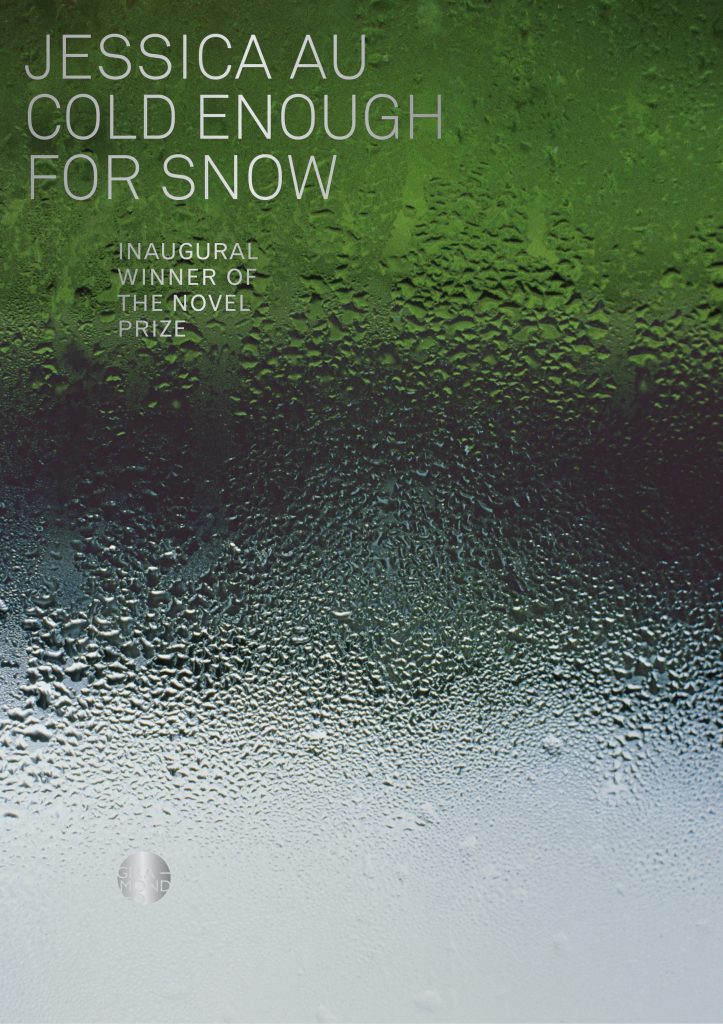
  • Cold enough for snow, by Jessica Au (Australian author; novella): “an inner journey, arriving at the realisation that some gaps can never be bridged, some people will never be fully understood, and some baggage will never fully be shed. And that whether we are ready or not, time carries us forward, forcing our roles to adjust to new circumstances”. (On my TBR; Reviews by Lisa and Brona.)
  • Buried Treasure (in Griffith Review, 77), by Jo Chandler (Australian journalist; essay): on Australia’s million-year ice core project, “a beautiful and hopeful essay about building a collaborative understanding of the rhythms of our planet”
  • Healing: Our path from mental illness to mental health, by Thomas R. Insel (American doctor; nonfiction): “offers a hopeful vision of how we can remake our mental healthcare system”.

So, one work of fiction, one essay, two memoirs and two works of nonfiction.

Here are links to all the lists, by year: 2009, 2010, 2011, 2012, 2013, 2014, 2015, 2016, 2017, 2018, 2019, 2020, 2021, 2022. There are some interesting books in there, of which I’m sharing one or two from each year, in listing year order:

  • Chloe Hooper’s The tall man (2009, creative nonfiction) 
  • David Malouf’s Ransom (2009, novella) (my review)
  • Noel Pearson’s Radical Hope: Education and Equality in Australia (Quarterly Essay 35) (2009, essay) 
  • Andrew Leigh, Disconnected (2010, nonfiction)
  • Judith Brett’s Fair share (Quarterly Essay 42) (2011, essay)
  • Frank Moorhouse’s Cold light (2011, novel) (my review)
  • Adrian Hyland’s Kinglake-350 (2012, creative nonfiction) 
  • Richard Flanagan’s The narrow road to the deep north (2013, novel) (my review)
  • Joan London’s The golden age (2014, novel) (Lisa’s review)
  • Samuel Wagan Watson’s Love poems and death threats (2015, poetry collection)
  • Stan Grant’s Talking to my country (2016, nonfiction/memoir) (my review)
  • Judith Brett’s The enigmatic Mr Deakin (2017, political biography) (Nathan’s review)
  • Michelle de Kretser’s The life to come (2017, novel) (my review)
  • Robbie Arnott’s Flames (2018, novel) (Lisa’s review)
  • Behrouz Boochani’s No friend but the mountains: Writing from Manus Prison (2018, memoir)
  • Jess Hill’s See what you made me do (2019, nonfiction) (my review)
  • Alex Miller’s Max (2020, novel) (Lisa’s review)
  • Alison Whittaker’s Fire front: First Nations poetry and power today (2020, poetry anthology) (Brona’s review)
  • Paige Clark, She is haunted (2021, short story collection)
  • Rick Morton’s On money (2021, nonfiction)
  • Henry Reynolds’ Truth-telling: History, sovereignty, and the Uluru Statement (2021, nonfiction) (Janine’s review)

I’m particularly interested in the fiction choices, because they have often gone for non-mainstream, more reflective works, and they have also, on occasion, included poetry. I like that. But, why these particular choices?

Well, for Ransom, they write “it’s a tale of transformations” and “if only government reports were written in language like this”. For Cold light, a more obvious choice, they say it’s “about power, secrecy, the mortal struggle between capitalism and communism – and urban planning” and conclude with:

Frank Moorhouse once lamented the fact that, despite all their riches of human experience, Australian novelists had disdained the realms of government and business as ciphers too corrupt and foul for their art. But writing by journalists, academics and policy wonks cannot provide a complete understanding of our society. Fiction also has a vital role; for some readers, the vital role…

For readers like us, I’d say.

The other comment I’d like to make concerns themes and subject matter. Equality – gender equality, yes, but also more broadly – features often. First Nations authors and issues appear regularly, as they should while so much remains unresolved. Books about democracy and how it is faring also keep popping up, unsurprisingly. On the other hand, climate change and the environment, while they do appear, seem to have a relatively low profile in the list by comparison.

If you had the opportunity to make one recommendation to the leader of your country, what would it be? My guess is that Bill’s would be Chelsea Watego’s Another day in the colony. Let’s see if I’m right. Meanwhile, what will Albo read?

Heather Rose in conversation with Sally Pryor

As I’ve written before, Muse Canberra, a restaurant-cum-bookshop or vice versa, offers a wonderful program of book events, year after year. I don’t get to many, but today I attended a conversation featuring Tasmanian author Heather Rose with local journalist Sally Pryor.

The participants

Heather Rose has written three children’s books and five novels, of which I’ve reviewed two, The Museum of Modern Love (my review) and Bruny (my review). Her latest book, the subject of this event, is different, a memoir, Nothing bad ever happens here: A memoir of loss and recovery.

Sally Pryor is the Features Editor of our newspaper, The Canberra Times, which is now part of Australian Community Media. Since that company changed hands in 2019, it is now publishing local reviews once again, after some years in the dark when most of the arts reviewing we got was syndicated from the big city newspapers.

The conversation

After Dan did the usual intros, Sally spoke a little more about Heather and her book, explaining that while Heather had always planned to write a memoir, she hadn’t planned to publish one, for several reasons, one of which was that she was wary of outing herself as a spiritual person and of putting her views onto others. Sally described the memoir – which Heather has indeed published – as the “least predictable and most enticing memoir” she’d read. Heather then read the book’s first chapter, “Sky”. It places herself as a 6-year-old at school, and then concludes with

I could write a memoir about travelling, the writing life, or my love of making cakes. But I’m still that girl under the tree who wants to get to the big conversations, to the heart of things. So here are some stories about life and death. About experiences that have no easy explanation, but which happened, nevertheless. The unknown, that 95% – maybe it’s an invitation for compassion. Life is a process of forgiveness for the choices we make in order to be ourselves.

On what started it all 

Sally suggested they start with the tragedy that, says the back cover blurb, set her on “a course to explore life and all its mysteries”. Heather commenced by describing her idyllic childhood in Tasmania. It was beaches, paddocks and orchards; days spent outside; a “glorious, wild childhood”. There was the family home on the edge of Hobart and a shack on the Tasman Peninsula, built by her maternal grandfather built the shack. He also taught Heather to appreciate nature, telling her, “Look Heather, that’s what beauty is”. But, just after she turned 12, her grandfather and older brother died in a boating accident. It destroyed the family, and by the time she finished year 12, she found herself alone in the family home. She decided to go overseas, to live her life “very fully” because her brother hadn’t.

On life being “a process of forgiveness for the choices we make”

Sally shared a little of that overseas trip, that “thrilling life”, which had it all, from meeting celebrities, including the Queen, to staying in a Buddhist monastery, not to mention romance, drugs and alcohol. But, asked Sally, what did she mean by life being “a process of forgiveness”?

One of the things I enjoyed about this conversation was Rose’s comments on writing memoir, and one of the places she discussed it was here. One of the most challenging things about writing a memoir, she said, is revisiting who you were in the past. Memories are tough to go back to. She was reckless, but didn’t realise then what dangers she’d put herself in. She made many mistakes, and revisiting all those things is “a hollowing out experience”. She wrote a lot, and then had to decide what to leave out to hone it to the things that shaped her. She needed to confront what she’d inflicted on herself, and to not blame others. It was her life she said, and she was going to own it, hence life being a process of forgiveness for all we’ve done. I found this moving – and something worth thinking about a bit more for myself!

On the book’s spiritual journey

Sally then turned to the spiritual journey aspect of the book, calling it a “very religious book”. She asked, in particular, about Heather’s taking part in a Native American ceremony that lasted several years. I won’t detail it here as it’s all in the book, but it was the Sun Dance. The point is that it changed her world-view entirely because after this she did not see herself as separate. She felt connected to everything (animate and inanimate), and “did not see world as a fixed reality”. She writes in the book, “everything was permeable, malleable, responsive” (p. 132).

Sally, continuing this theme, mentioned that she understands Heather always asks people if they’ve experienced anything they can’t explain, and everyone has! Most are post-death experiences – messages from the recently dead that all is ok – but others include warnings (like “don’t go that way”) that people feel have served them, sometimes to the point of saving their lives. For Heather this is reassuring, the idea that we have other senses, while Sally said she finds it frightening, which resulted in Heather teasing her ideas out a bit more.

Heather’s point is that the hardest thing is to think our lives are meaningless. She goes back to Descartes, but instead of “I think therefore I am” she sees it as “I am, therefore I feel”, “therefore I think”, etc. Life is a finite thing, she continued, and our fear is that maybe it’s all for nothing. Perhaps, she said, but we could also think that maybe it’s all for everything. Don’t we all love people, she said, who are vibrant, alive, who give of themselves?

On the book’s title

Sally suggested that the book’s title was “a way of reframing the narrative”. Heather said that in her 50s she visited the place, Lime Bay, where the tragedy had occurred and “felt nothing”, which brought her to think that “if everything just is, maybe nothing bad ever happens”. (Me: Not sure about this.) She then threw out that she “likes being un-evolved”. In my experience, the idea of being “un-evolved” is usually seen as a bad thing, but I like her understanding of the idea, her sense of never being finished, of always being curious and open.

Q & A

There was a brief Q&A, which I’ll summarise:

  • On what she wanted her children to take away from the memoir: Heather shared that her 22-year-old daughter had said that most of her readers were older, but she thought it was a good book for people HER age 22 because it will make them braver. Heather added that it’s not bad for kids to see their parents 360°.
  • On her family’s response to the book given they were not allowed to talk about the tragedy at the time: This was hard, particularly how her parents would feel about it, but she also felt that it was her story, not theirs. Her sister read various drafts, and said she felt it completed her life. Heather was most concerned about her father, who has been a great supporter of hers but whose grief had been “enormous but unvoiced”. His reaction was “I think we all needed you to write about it”. Heather also commented that writing memoir is hard, because you can’t avoid writing about people who are alive, and then quoted Hemingway’s, “writing is easy, you just sit down and bleed”! Sally commented here that most people can’t get their feelings onto a page, so she can see what it meant for Heather’s dad, at which point, Heather observed that she was relieved to be returning to the novel!
  • On whether characters get away from her: Yes, for example her The butterfly man character “didn’t tell her the truth for two and a half years”! She kept stitching up the end to give him redemption, but had to let that go because it wasn’t him, it was her, the writer. That’s what makes good writing, she said, when the writer stops trying to intervene. She also gave a Bruny example.
  • On her reluctance to wear a “spiritual tag”: This was partly because things go very badly when women put themselves out in the world. It can be a “very vicious world” if you stand up and align with a specific perspective. But, she also wants people to take on their own perspective, rather than imposing her own point-of-view. The questioner appreciated that Heather is still exploring, which she saw as the “heart of spirituality”.
  • On the process of writing, particularly re fiction vs nonfiction: With fiction there are rules, responsibilities, and voice. We know, for example, that with Murakami we will get a “distant, hapless” voice, and with Kingsolver, “heart”. There is so much you can build on in fiction. With the memoir, she had to start with nothingness to find who she was, and she found she is still that 6 year old girl looking for the big conversations. Writing the memoir was “harrowing, and hallowing” but she feels braver, and now owns all she is.
  • On returning to the novel: Heather loves writing fiction because she loves her characters, and she also enjoys the research.

Closing the session, Dan commented on the level of attention he’d observed in all our faces! I’m not surprised. It was such an engaging, different and, at times, surprising discussion – and that always gets my vote.

Brona has reviewed this book.

Heather Rose: Nothing ever happens here (with Sally Pryor)
Muse (Food Wine Books)
Saturday, 26 November 2022, 4-5pm

Elisa Shua Dusapin, Winter in Sokcho (#BookReview)

French Korean writer Elisa Shua Dusapin’s award-winning debut novella, Winter in Sokcho, was published when she was just 22 years old. As the title conveys, it is set in Sokcho, a tourist town in the Republic of Korea near the border between the two Koreas. In fact, when the Korean peninsula was divided into two countries following World War II, Sokcho was on the Northern side, but became part of the South after the 1953 Korean War armistice 1953. I suspect Sokcho was chosen as the setting partly for its “divided” history, this being in-between, neither one thing or the other,

But, more on that later. The novel’s unnamed first person narrator is a 24-year-old French Korean woman who works in a struggling guesthouse. She seems to do everything – reception, cooking, cleaning – but with little enthusiasm. The novel opens with the arrival of an unexpected guest, the 40-something French graphic novelist, Yan Kerrand. The two are drawn to each other in some way, but, at least from Kerrand’s point-of-view, it doesn’t seem to be romantically driven. For our protagonist, the situation is a little more complex. She has a boyfriend – Jun-Oh – but it’s not a satisfactory relationship from her perspective. However, her fish-market worker mother is expecting an engagement any day. The situation is ripe for something different to happen in her life, but will it – and what, anyhow, does she want? She seems betwixt and between.

Winter in Sokcho has many of the features I like in a novella, starting with spare expressive prose, a tightly contained storyline, and a confined setting. There’s also a small cast of characters, with little or no digression into backstories. All we have is what’s happening now.

And, what is happening now is that the stranger’s appearance has affected our narrator. In the second paragraph, while registering him as a guest, she says

I felt compelled for the first time since I’d started at the guest house, to make excuses for myself. I wasn’t responsible for the run-down state of the place. I’d only been working there a month.

We then move to her visiting her mother, and another thread begins to appear, that of body image. We’ve already been told that one of the guesthouse guests is “seeking refuge from the city while she recovered from plastic surgery to her face”, and now we are introduced to our narrator’s mother’s concern about her appearance. She’s too thin, her mother says. Our narrator rejects this, but soon after, in a photograph her boyfriend has taken of her, she sees “a wasteland of ribs and shoulder blades receding into the distance … her bones sticking out” and is “surprised at how much”. When she’s with her mother, she binges on the food her mother makes, only to feel “sick” and later repelled by her “misshapen body”. There is a tension between this single mother and her daughter that pervades the novel. We sense that our narrator would like to leave Sokcho. Indeed, there’s a reference early on to the “literary world” suggesting she has aspirations in that area, but she feels she cannot leave her mother. Betwixt and between.

Throughout the novella, there’s an atmosphere of things being out of kilter or not quite right. Early on, the narrator describes Sokcho’s beach:

I loved this coastline, scarred as it was by the line of electrified barbed wire fencing along the shore.

This is not your typically loveable beach view, but she herself bears a physical scar on her thigh to which she often refers. It’s unexplained but there are hints later of self-harming. Meanwhile, later in the book, Kerrand tells her that he prefers the beaches of Normandy to those in southern France, because they are

Colder, emptier. With their own scars from the war.

And so the novella progresses, in this clipped spare prose, with a sort of wary dance going on between the narrator and Kerrand. He’s there for inspiration for the last book in his series about “a globe-trotting archaeologist … A lone figure. With a striking resemblance to the author.” She is intrigued by him. She offers to show him some local sights – the border region, with its checkpoint “No Laughing” rule, and the nearby national park, with its snowy mountains and waterfalls. She watches him, surreptitiously, as he draws by night, but always the drawings are destroyed by morning, because they are imperfect.

What does Kerrand see in her, what is he looking for? This being a first person narrative, we see it all through her eyes. She is as reliable a narrator as she can be, but like any first person narrator her viewpoint is limited by her perspective.

Winter in Sokcho does not have a simple resolution, but I’ll return to that idea of Sokcho being chosen as the setting. Its divided history mirrors our narrator who is also divided – in her French Korean heritage and her torn sense of self. Further, Sokcho is described as “always waiting”, as it seems also is our narrator, though for what, even she doesn’t really know.

How much is this a personal story and how much political? Two-thirds through, as she and Kerrand discuss their scarred beaches, she tells him (and just look at this writing):

Our beaches are still waiting for the end of the war that’s been going on for so long people have stopped believing it’s real. They build hotels, put up neon signs, but it’s all fake, we’re on a knife edge, it could all give way any moment. We’re living in limbo. In winter that never ends.

There can be no neat ending to such a story, but without spoiling anything, I’ll share something she sees in Kerrand’s final drawing:

A place, but not a place. A place taking shape in a moment of conception and then dissolving. A threshold, a passage …

Does this suggest hope, albeit tenuous – for both the narrator and her Korea? I’m reading it that way. As for the closing lines … they are glorious.

Read for Novellas in November, Week 2: Novellas in Translation.

Elisa Shua Dusapin
Winter in Sokcho
Translated from the French by Aneesa Abbas-Higgins
Melbourne: Scribe, 2021 (Orig. pub. 2016)
154pp.
ISBN: 9781922585011

(Review copy courtesy Scribe)

Monday musings on Australian literature: Vietnam War fiction

Having just posted on Biff Ward’s The third chopstick, and with the 50th anniversary of Gough Whitlam’s election (which set in train our final withdrawal from the war) being imminent, I felt now seemed an appropriate time to devote a Monday MusingsAustralian fiction about the war.

Ward’s book is nonfiction, but here I want to focus on fiction because of the special role the creative or imaginative arts play in reflecting who we are. Academic Geoffrey Davis makes the point that

there is an important distinction to be drawn between writing by former active combatants, which often appeared in the immediate post-war period and was largely inspired by personal experience of the war, and fiction by non-combatants, published considerably later. Each new generation must form an image of the wars that have shaped its times and must assess the way in which those wars have impacted on their own society.

Yes!

Viet Thanh Nguyen, The sympathizer

The most recent Vietnam (American) War novel I’ve read is Viet Thanh Nguyen’s Pulitzer Prize-winning The sympathiser (my review), which satirically confronts the mess of this war through the experience of Vietnamese refugees in the USA, but I have also read a handful of Australian novels about the war.

“All wars are fought twice, the first time on the battlefield, the second time in memory”
(Viet Thanh Nguyen, Nothing ever dies: Vietnam and the memory of war, cited by Davis)

A select list

Here is a select list of novels and short story collections, with a brief note on their focus or angle:

Charles Hall, Summer's gone, Margaret River Press
  • Alison Booth, A distant land: on war-reporting and corruption
  • Charles Hall’s Summer’s gone (2014) (my review): includes conscription and draft-dodging
  • Myfany Jones’ The rainy season (2009) (Lisa’s review): on war trauma and its effect on the family
  • Adib Khan’s Homecoming (2003): on a Vietnam vet’s postwar trauma
  • Nam Le’s The boat (2008): includes short stories about Vietnamese refugees
  • Gabrielle Lord’s The sharp end (1998): on traumatic psychological effects of the war on soldiers
  • Doug McEachern’s Stardust and Golden (2018) (Lisa’s review): on conscription
  • William Nagle’s The odd angry shot (1975): a war-time story based on the author’s experiences
  • Hoa Pham’s Lady of the realm (2017) (my review): set in Vietnam itself, pre, during and post war
  • Hoa Pham’s The other shore (2014) (Lisa’s review): on the impact in Vietnam itself
  • John Rowe’s Count your dead (1968): realities of war, and American policy, drawn from author’s time there
  • Jospephine Rowe’s A loving, faithful animal (2016) (my review): on PTSD and intergenerational trauma
  • Evie Wyld’s After the fire, a still small voice (2009) (Kim’s review): on war trauma in a Vietnam War conscript and his war-veteran father

I have called this a select list, which might imply that I’ve curated a special selection but in fact, I didn’t find many books beyond those I already knew, so this list includes most of those I found. Why are there so few?

This is a question author Alison Booth also raised in a post she wrote on “Australian Fiction and the Vietnam War”. She commences:

The Vietnam War is sometimes termed a forgotten war. Neglected by Australian literature until relatively recently, it seems it was the war that most of us wanted to forget. The last and most prolonged proxy battle of the Cold War, it saw Australians become increasingly divided. Should the country be at war at all, or had it been manipulated into involvement by its political leaders? Did people have the right to take to the streets and protest about the war? And just how far was the security intelligence organization prepared to go to silence the protesters? 

These issues offer endless possibilities for writers of fiction and yet they have been little used. 

When she looked for lists of fiction, what she found (as did I) was mostly written by American males. She finds this lack “puzzling” because so much of what happened then has relevance to now. For example, 50 years after that war, we are still confronting “those trade-offs between surveillance and security on the one hand, and personal liberty on the other”; we are still involved in unwinnable wars; and protests still generate conflict. She concludes by wondering whether it will take more time “before novelists find the Vietnam War period appealing” and “before publishers do as well”. Or, maybe it’s that “too many people remember that period with distaste” and we need to wait until the next generation is interested in historical fiction featuring the Vietnam War. I have no answers, but, like Booth, I do find it curious.

However, Davis observes that some of Australia’s non-Vietnam war literature might, in fact, be a response, to it. One critic, he writes, has suggested that the authors of some of our First World War novels, such as McDonald’s 1915 (1979) and Malouf’s Fly away Peter (1982), “may have chosen the divided, angry and anguished climate of that time as their setting as a means of dealing indirectly with Australia’s part in the Vietnam War, where similar social schisms greeted Australian involvement”. An interesting explanation, though these could also have been a reaction to the increasing interest in “celebrating” war? Further, Davis says that the same source has suggested that “the Vietnam War is the hidden subject” of some novels set in Southeast Asia, like Christopher Koch’s The year of living dangerously (1978) and Blanche d’Alpuget’s Turtle Beach (1981). Another interesting point.

Finally, Davis suggests early in his paper, and reiterates it at the end, that the anti-war novel has a long tradition in Australian literature, and that “this has been influential in shaping the attitudes of subsequent generations of Australians to their country’s history”.

What say you?

Sources

Biff Ward, The third chopstick: Tracks through the Vietnam War (#BookReview)

Biff Ward’s The third chopstick was my reading group’s October selection. It’s the second book by Ward that we’ve done, the first being her memoir, In my mother’s hands (my review), about growing up with her academic father, the historian Russel Ward, and her mentally ill mother, at a time when mental illness was shameful and to be hidden. It was a moving book that engendered an engaged and wide-ranging discussion. Biff Ward, in fact, attended that meeting.

The third chopstick is another personal book, but one that’s not so easy to classify. I would describe it as hybrid memoir-creative nonfiction. Memoir, because it’s about her experience as an anti-Vietnam war protester who later chose to meet Vietnam veterans and listen to their stories. And creative nonfiction, because, although nonfiction, it uses some of the devices of fiction to engage its readers. These include hinging her story around one particular vet, Ray, whom she describes as her “muse”, her “archetypal veteran”, her conduit, perhaps, to “the missing piece”. His story, combined with his powerful presence, gives the book its compelling, narrative drive.

The implication of what I’m saying here is that while The third chopstick is historical it is not an academic history. Although Ward did the historian thing, and conducted recorded interviews with vets, she does not attempt to present an “authoritative” analysis of protesters or of vets, but a thoughtful, personal quest. It has no footnotes, although there is a selected reading list at the end, and there’s no index. This is not to say, however, that it doesn’t add to our understanding of history, because it certainly does.

The book has a logical, and more or less chronological, structure, though there is criss-crossing of timelines where appropriate. It has three main parts – Protest, Veterans, Vietnam – which are bookended by a Prologue and Epilogue. In Protest, Ward describes her life as a protester, and introduces us to her ongoing interest in Vietnam long after the war ended. In Veterans, she introduces us to the veterans she met and interviewed, shares their stories and experiences, and reflects on these. Finally, in Vietnam, she discusses post-war Vietnam, including how Vietnamese people have processed, and live with, what happened. She has visited the country many times – as a sole tourist, on war-themed tours, and as a tour leader herself. On some of those visits, she either accompanied or met vets. Through these postwar connections, she starts to bring together her central questions concerning how we Australians got caught up in this, and what it did to us – as a nation, as individuals – though, of course, there are no simple answers.

“a scrambled snarl”

A bit over halfway through the book, while interviewing Nick, an SAS veteran of the war, Ward confronts the issue of “killing”. Nick’s story causes her to think about that and, thence, her stance as a pacifist. She realises she’d never really grappled with it. She had, she writes, a ‘”natural” antipathy to killing, a generalised kind of pacifism which yearns for peace’ but she also believed that, if needed, she would strive as hard as she could to defend “me and mine”. Her pacifism was “a scrambled snarl of thoughts and feelings”. She doesn’t explore this further, as it’s not the subject of the book, but …

… I liked this expression because what her book does is explore just what “a scrambled snarl” war is, whichever way you look at it. I particularly liked her various reflections on war. She makes the point early on that it is well known that war takes years to recover from. Vet Graham tells her that medieval knights “used to go into a monastery after being on a crusade”. He himself had, after leaving the army, been ill; he’d been in hospital and at a health farm, before spending “thirteen years, mostly alone, making music, keeping quiet”. By the time Ward met him, he was working with the Federation for Vietnam veterans.

Throughout the book, then, Ward reflects on war in general, but I’ll just share a couple that captured my attention, both resulting from her reading of Ray’s journal, where he expresses the trauma he experienced. It leads Ward to suggest “that the truth of all war is only these depthless oceans of grief”. A few pages later, she discusses “moral injury”, which “refers to an injury to the soul, to morality, to what can happen when a soldier has to do something against his own sense of what is right and wrong.” The injury done to Ray is immense.

Ward may not have intended this, but her book also functions, at least a little, as a cautionary tale, because she shows how easy it is to believe you are doing the right thing when you protest for a humane cause, and be oblivious to the potential for unintended consequences. The anti-Vietnam War protesters’ beef was with the government and its policies, but the result, as we all know now, was that the soldiers who went to Vietnam were vilified – not so much by the core protesters but by others who took their ideas on without understanding the politics. Ward shares some of the facts and myths about how it played out.

Ward also discusses those other two big fall-outs from this particular war – Agent Orange and its ongoing impact on the health of both soldiers and Vietnamese people, and PTSD, which she describes as the Vietnam vets’ gift to the world.

What makes this book a particularly good read, besides all this subject matter, is the language, which mixes journalistic-style reportage with more evocative writing. There’s too much to share, but here’s one describing her experience of transcribing Ray’s journal:

As I transferred his words from the page to pixels on my screen, they sometimes spiralled off and pranced about the room like leering pixies.

(This sometimes necessitated her needing to take a break!)

Here’s an appropriate point to explain the title, because it came from Ray, as she explains in Chapter 2. While in a restaurant, he places two chopsticks in parallel lines, about two centimetres apart, across a bowl, and names the space between the two as “normal life … where people get born and grow up …” etc. Then, he takes another chopstick (“the third chopstick”), places it parallel to the others, the same distance apart, and says

The veteran lives here, alongside but separate, see? He can see this life, he pointed back to the first space. He can see what other people are doing, but he can’t join in. He doesn’t know the rules anymore. It might look like like garbage to him. It’s got no connection to what’s happening inside him, see?

The secret, Ray continues, is for the veteran to be able to handle both “his own stuff” and join in. There’s a little more to it but that’s the gist.

    Lest you be thinking so, The third chopstick is not just relevant to those who lived through the Vietnam War era. As I read this book, I couldn’t help thinking about a war that is happening right now. Near the end, Ward writes:

    So even today, for the People of the Bag*, the mountains and the rivers, the land and the water and their interconnectedness are concepts integral to the way Vietnamese conceive of themselves. And, I chucke to myself, those men in Washington and Canberra thought they could somehow beat them, that the People of the Bag would eventually give up? Really?

    Given its origins in a leftie anti-Vietnam war protester who went on to engage openly and genuinely with soldiers involved in that very war, The third chopstick is quite an astonishing book. For anyone interested in the complex experience of war, it makes excellent reading. All eleven who attended my reading group agreed.

    * The Vietnamese, from their Creation Myth

    Biff Ward
    The third chopstick: Tracks through the Vietnam War
    Penrith: IndieMosh, 2022
    313pp.
    ISBN: 9781922812025

    Telltale, Carmel Bird and me

    In my recent post on Carmel Bird’s bibliomemoir, Telltale, I hinted that there could be another post in this book. There could, indeed, be many, but I must move on, and I must not spoil the book for others. However, given many blog-readers enjoy personal posts, I’ve decided to share a few of my particular delights in the book. I found myself frequently writing “Yes” in the margins …

    “I’m glad, now, that I have always defaced books”

    … because, like Carmel Bird, I have, since I was a student, “defaced” my books. Not only that, but my defacements seem to be of a similar ilk to hers. For example, I sometimes add an old envelope, or post-it notes, inside back covers to carry more notes. Like her, I love books with several empty pages at the back to accommodate note-taking.

    Not enough blank pages at the end of Telltale!

    Carmel Bird also loves indexes – and I love the fact that Telltale has a beautiful index, because such a book should, but often doesn’t. But, what really tickled me was her comment early in the book that “I also make a rough index on the empty pages at the ends of books I read” (or, as she also writes, “pencilled lists of key elements”). Yes! Sometimes, my indexes are more like notes, but other times my notes are more like indexes. Mostly, though, I do a bit of both, with exactly what depending on the book and on my response to it. This latter point is implied in Bird’s statement that:

    In 2020, paying so much attention to books, I took particular notice of the differences in the ‘indexes’I had made at different times, how on each re-reading I had noticed different details.

    Here, she not only shares her reading practice but also comments on reader behaviour, on the fact that each time we read a book we find something new. That can be for various reasons. On subsequent readings we already know the book at some level and so are ready to see more in it; on subsequent readings the world will have changed so the things we notice can also change according to the zeitgeist; and then, of course, the biggie, on subsequent readings, we ourselves have changed so we see the world differently. I love that Bird’s indexes reflect this – and that she saw it.

    But, there’s a downside to all this “defacement”, which Bird also discusses. Writing about discarding books – the how and why – she says, “when I have annotated a book, it is not much use to anybody but myself, so selling it or giving it away are not possible solutions”. I know what she means, though I contest that hers would not be of use to anyone else. Who wouldn’t enjoy owning a book so defaced by her?

    There is, however, a point at which she and I depart. When reading an outsize paperback becomes “too difficult … to manage comfortably” she will attack it “vertically down the spine with an electric carving knife” to divide it into manageable portions. I know some travellers tear out sections of travel guides they no longer need, but librarian-me finds destruction a step too far. Sorry Carmel, I understand, but …

    “oh what a lovely word”

    Like many authors, Carmel Bird loves words. It’s on show in all her work, but in Telltale, it’s front and centre. In her opening chapter, she writes that

    Uncle Remus uses terms such as ‘lippity-clippity’. This is the kind of singing, onomatopoeic language I sometimes invent when writing.

    And, so she does, even in this nonfiction bibliomemoir. Did it come from reading Uncle Remus “all that time ago”, she ponders. Was it “embedded” in her brain, back then, without her “even realising”? Probably.

    Throughout Telltale, Bird discusses words – how they have changed over time (in meaning, for example, or in acceptability), how they look, where they come from, how they sound. As the daughter of a lexicographer, I would be interested in this. As a lover of Jane Austen whose wit and irony I adore, I would be interested in this. And, as one who loves writing that plays well in the mouth and sounds great to the ear, I would be interested in this. If you love words too, this book will be an absolute delight for you.

    Other delights

    As I said when opening this post, I really mustn’t spoil this book for others, so I’ll just add a few other delights:

    • her discussions of the many books and stories she chooses to share – those she found on her shelves that she felt illuminated her life and writing. I’ve mentioned very few of these because, really, this is the thing that most readers will want to discover and enjoy. Get to it … Meanwhile, I will name just two here. One is Dickens’ Bleak House which she writes “might” be her favourite Dickens. It might be mine too. The other is Marjorie Barnard’s “The persimmon tree” which she describes as “extraordinarily powerful”. Barnard’s “The persimmon tree and other stories” is one of the only short story collections I’ve read more than once. I concur!
    • silly little things like the fact that she loves green (as do I) and that she learnt that “lovely” word “tessellated” at the tessellated pavement at Tasmania’s Eaglehawk Neck (as did I).
    • she loves the internet and allowed herself to use it for this book. She was the first fiction writer in Australia to have a website. Like most of us, she prefers printed books, but she also sees the advantage of electronic books (including the ease of searching them – as an index-lover would!)

    Finally, early in the book, Bird discusses memory:

    As is often the case with memory, while some of physical details are clear, the principal element that has been retained is the feeling. Perhaps the feeling is the meaning.

    Yes! This makes sense to me. I can rarely remember plots or denouements, but for the books that are special to me, I can remember how they made me feel – uplifted, melancholic, inspired, distressed, excited, angry, and so on. These feelings are surely associated with what the author intended us to take away, and therefore they must reflect the meaning?

    Here, I will, reluctantly, leave Telltale, but I’ll do so on one of its three epigraphs, the one from her own character:

    ‘memory
    is the carpet-bag
    mire of quag
    filled with light-dark truth-lies
    image innation
    and butterflies’

    CARILLO MEAN,
    Remembrance of Wings Past

    How can you not love this?

    Carmel Bird, Telltale: Reading writing remembering (#BookReview)

    Finally, I have found something to thank COVID for – Carmel Bird’s Telltale. Best described as a bibliomemoir, Telltale may never have been written if Bird had not been locked down with her extensive library. What is a lively mind to do in such a situation? I can think of a few options, but what Bird decided was to revisit the books she’d read since childhood and, through them, look for patterns in her life and, because they are intertwined, in her writing practice. She would reflect on “the working of the imagination, the behaviour of the unconscious mind”.

    Telltale, in other words, is more than a simple chronological run-through of her books, because the reading and writing life is not so easily compartmentalised. She writes that it

    is composed of two different kinds of narrative.  One is warp and one is weft, and I am not sure which is really which. Will the threads hold? What patterns might I work across the surface? Will the metaphors crumble into useless dust? One thread speaks of books read and sometimes of books written. And also of things that happened in my life. The other speaks of a journey of the heart, a pilgrimage through a patchy history of the world, becoming a poetic thread that runs through the whole narrative.

    A complex book then, but one told in such a personal, confidential come-with-me voice, that it reads like a lovely long conversation with an intelligent friend. Like any intelligent conversations, though, it requires the participants to be on their toes, to be ready for twists and turns, for surprising connections and conclusions, to be both confronted and delighted. Bird heralds this in her opening sentence:

    As a child at the end of World War Two, I was introduced to the concept of the Trickster in literature.

    That trickster was Brer Rabbit, whom I also remember from my childhood, but I was of a more prosaic mind than Bird, who has proven to be a bit of a trickster herself. Yes, the dictionary uses words like “dishonest”, “cunning”, and “deceptive” to describe “trickster”, but the trickster in literature, as Wikipedia explains, “is a character in a story … who exhibits a great degree of intellect or secret knowledge and uses it to play tricks or otherwise disobey normal rules and defy conventional behavior”. This is how I see Carmel Bird as a writer. The surface can look quite simple, but underneath there is usually something else going on. You only have to check out the epigraphs to her books, which frequently include bon-mots “written” by her own character, Carillo Mean. It’s apposite, then, that she starts her book with a “trickster”. It tells us to be ready for – well, anything.

    So, Telltale. It looks like a bibliomemoir – a book about her reading and writing life – but as she explains in the excerpt above, it also encompasses “a patchy history of the world” as it has affected or appeared to her. To unite it all, she crafts her tale around a narrative heart, a loved book, Thornton Wilder’s The Bridge of San Louis Rey. She wants to write about it but can’t find it. This injects a mystery: will she find it? It also introduces a potential conflict: will she break the rule she set for herself to not buy books and only use those on her (clearly extensive) shelves. As the memoir progresses, we become party to her increasing concern about where it is and what to do.

    Why of all the books, you might be asking, The bridge of San Luis Rey? But, that might be for me to know and you to find out.

    “to move the heart and illuminate the mind”

    Late in Telltale, Bird mentions reading Katherine Mansfield’s short story “The fly” when she was fifteen. She writes:

    I suddenly saw how the surface narrative and the narratives and meanings below the surface could dance together with an electrifying elegance to move the heart and illuminate the mind. This was my first conscious lesson in style and structure.

    See! It’s a lesson Bird clearly took to heart, and which is on display in all the works of hers I’ve reviewed. (As for “move and heart and illuminate the mind” – who could want more from reading?) Earlier in the book, she refers to another aspect of her style: “the pleasure I take in moving (drifting, spinning, flicking) from one topic to another”. This pleasure, she suggests, could have come from her father’s six-volume Harmonsworth’s household encyclopedia. Again, we see this approach in Telltale. It’s one of the things I love about Bird’s writing. It can be challenging, of course, but it is exciting to be so challenged – and to thus be respected as a reader.

    Anyhow, the point is that while on the surface Bird seems to move or flick from topic to topic, her books are invariably held together by framing ideas and motifs. Here, it’s not only the search for The bridge of San Luis Rey, but two other narratives, which she draws together towards the end of the book. One concerns a childhood family picnic to Cataract Gorge in 1945, and the other, the gathering of American planes for the rarely-remembered firebombing of Tokyo in March 1945. Woven through these narratives is another, Bird’s growing awareness of the devastating dispossession of Australia’s First Nations people, starting from her acceptance, as a Tasmanian-born child, of their “extinction” in her state.

    These are the main narratives that make up the aforementioned “patchy history”, and I fear this may be sounding disjointed. In fact, however, the “threads” hold, because the relationship between this “patchy history” and the books she has read and written is strong. Not only are there the obvious and expected connections between the “history” and her reading and writing, but there are also two recurring motifs that are real, historical, and literary – bridges, which can symbolise “fragile communication and union”, and peacocks which can signify “eternal life”.

    Telltale is a delicious and revelatory read, and I’m not doing it justice. I’ve not, for example, touched on the quirky, often poetic, tapered chapter ends, or the neat segues between chapters. Nor have I said much about the writing which can turn from seriously descriptive or philosophical to whimsical or poetical in a paragraph. And nor have I shared the reflections about reading and writing, about truth and meaning, about words and language, that I specifically noted down to share, because, frankly, there are too many. There may be another post in this.

    I took some time to read this book, and I’m not sorry. To read Bird, if you haven’t realised already, is to agree to join her on a sometimes merry, sometimes macabre dance. If we do, what we find is a compassionate heart that, despite it all, believes in love and calls us to hope, as that peacock that has accompanied us throughout darts and dances across the sky.

    Lisa also enjoyed this book.

    Carmel Bird
    Telltale: Reading writing remembering
    Melbourne: Transit Lounge, 2022
    274pp.
    ISBN: 9781925760927

    (Review copy courtesy the author)

    Kim Vanessa Scott, Growing up … Katherine style (#BookReview)

    Growing up .. Katherine style is the second self-published book I have reviewed from this Katherine-based artist and writer, the first being her book about some of Katherine’s historical housing, Katherine’s tropical housing precinct 1946-1956. There are a few reasons why I have broken my no-self-published-books rule. One is that both books had some Northern Territory government sponsorship, which gives them some authority. Another is that this book speaks closely to my own experience of childhood that I couldn’t resist sharing them. Moreover, the book is being sold by established outlets like The Bookshop Darwin and the Katherine Museum. Finally, Scott used a desktop publisher/designer to ensure the book looks good – and it does.

    So, with all that out of the way, I’ll get to the content, and why it appeals to me. Scott was born in the small outback Northern Territory town of Katherine in the 1960s, while I was born in a slightly bigger but still rural country town in Queensland in the 1950s. The first 14 years of my life were spent in Queensland, and over half of those in country towns, the last three being in the outback mining town of Mount Isa. From there I went to Sydney, where, although I enjoyed my high school and university days, I never really felt home. I left as soon as I finished my studies for Australia’s “bush capital”, Canberra, which has always felt like home. However, I’m getting off-track, so back to the book.

    Growing up … Katherine style is both written and illustrated by Scott. It takes the form of a series of little illustrated vignettes from Scott’s life, each comprising an image accompanied by a short piece of text commenting or reflecting on the image. Scott’s art is delightful, bright but not garish, with strong outlines and a somewhat naive aesthetic suited to the childhood theme.

    The vignettes take us from her babyhood in 1961 to Cyclone Tracy in 1974. Ending on this event is inspired because the cyclone, which occurred in Darwin a bit north of Katherine, was life-changing for the Northern Territory – and because, coincidentally, Scott would have been entering puberty by then, making it a good time at which to end a book about her childhood. Scott told the Katherine Times, linked below, that the book was at least partly inspired by the catastrophic Katherine flood of 1998 which

    took away all our images and a lot of our family history, so I tried to think of a way to record the childhood without the images.

    In the book’s introduction, she explains further that the “objects” she chose to illustrate her childhood “had many layers of meaning”. They demonstrate, she says, the way she “interacted with them on an emotional, physical and spiritual level”. What I so enjoyed is that many of them mirror memorable times in my own life – the family’s first car and tv, the importance of the radio, her first plane ride, not to mention those horrible sanitary belts we had to wear for our periods! There are also those little events from childhood that can remind us all of our own misdemeanours and accidents. Take for example, “Mulberries”, in which she describes finding a sixpence and carrying it in her mouth while running. The only trouble is that she then climbs a mulberry tree and puts mulberries in her mouth too:

    I had my mouth full of fruit and the coin when I accidentally tipped upside down and swallowed the lot. Rather than tell Mum, I decided to just die.

    Don’t you remember times like that? Anyhow, “fortunately”, she writes, “I woke up the next morning …”

    I flagged many vignettes to share with you, like “Nursery Rhymes” in which she shares her “Little Miss Muffet” mondegreen. How many of us had those in our childhood (and, I have to admit in my case, beyond.) There’s another on “Slide nights” which tickled my fancy because last night we dined with two other couples and we had an impromptu slide night of both couples’ recent, separate holidays to the Kimberleys. The technology might have been different – thumb drives to the smart TV – but the impact was the same. Scott writes that:

    I miss this form of entertainment where we built our oral family history with images.

    There’s the reference to family history again.

    In another blast from the past for me, she writes in “My first real jewels” of the “bluebird lockets earrings” that were given to her and her sister as their first piece of “grown-up, real jewellery”. As she writes, “they were considered a charm”, and oh, how I had wanted some bluebirds too. One birthday I thought I had been given a bluebird bracelet, but when I looked more closely, the little charms were blue angels. Not the same! I was most disappointed. I could go on but you are surely getting the drift. This book offers both a lovely trip down memory-lane (for most baby-boomers) and an engaging picture of childhood in a different place and time to now.

    The book ends on Cyclone Tracy, as I’ve already said. Scott writes that “the path to self-government started on Christmas Eve, 24 December 1974. The warning sound on the radio is burnt into my psyche”.

    You can hear an interview with Kim Scott on the ABC Radio Darwin website, and read an article on the book’s publication in the Katherine Times. The Times also advises that the illustrations were put on exhibition at Katherine’s Godinymayin Yijard Rivers Arts & Culture Centre. Scott is described as a local Katherine artist who enjoys “showcasing all facets of life in the NT through visual arts, poetry and story telling.”

    I love histories told through objects. Scott has shared her childhood in a way that captures her personal experience while also speaking to the universal. Delightful.

    Kim Vanessa Scott
    Growing up … Katherine style
    Katherine: Kim Vanessa Scott, 2022 (with sponsorship by the Northern Territory Government)
    82pp.
    ISBN: 9781642045444

    (Copy received from the author via a mutual friend.)

    Tom Gauld, Goliath (#BookReview)

    It’s probably just me, but I hadn’t heard of Tom Gauld until a member of my little volunteer indexing team sent me a link to some of his “cultural” cartoons in The Guardian. I was immediately enchanted. And then, he lent me one of Gauld’s graphic novels, the above-named Goliath. Being primarily a textual person, I am not a big graphic novel reader, but our son became keen on them in his teens, so I have some familiarity and have read a handful.

    Now I’ve added Goliath to that elite bunch. It’s the sort of graphic novel I enjoy – spare, drily witty, a bit melancholic. It is also, as you will have assumed, a retelling of the biblical David and Goliath story. Like many modern retellings, Goliath is told from a different perspective, that of Goliath himself, who is seen as a pawn in the game of war. In a wry touch, Goliath is your quintessential gentle giant. When, out of the blue, he is approached to be measured for some armour, he says to the armour-maker, “Are you sure this isn’t a mistake? I mainly do admin”. As one who doesn’t mind a bit of admin, I’m with Goliath.

    Gauld has published well over 20 books, starting back in 2001, but according to Wikipedia he is best known for Goliath (first published in 2012) and Mooncop (2016). I notice that his latest, published just this year, is Revenge of the librarians. Now, that’s one I’d love to read!

    Anyhow, back to Goliath. Although he’d rather do admin work, destiny has other plans for him as we know – and so, he finds himself, under the Philistine king’s orders, waiting in a valley, armoured and armed up, issuing, morning and night, a challenge to the Israelites:

    I am Goliath of Gath,
    Champion of
    the Philistines.

    I challenge you:

    Choose a man,
    Let him come to me
    that we may fight.

    If he be able
    to kill me
    then we shall be your servants.

    But if I kill him
    then you shall be
    our servants.

    Poor Goliath. “I’m not a champion”, he says. In fact, he continues, “I’m the fifth worst swordsman in my platoon … I do paperwork. I’m a very good administrator.” But, in classic political spin, he’s told that there won’t be any fighting. He just has to “look like a champion” and “the enemy will cower”. We all know how that turned out … along came David (albeit in this version, after a very very long time of waiting for poor Goliath).

    The reviews on the back cover sum it up beautifully. The New York Times says that Gauld uses “simple, clever images to explore the larger, more complicated issues of war and heroism”, while London’s The Times says, and I particularly like this, that “Goliath is a master class in reduction … a celebration of the Christian underdog becomes a subtle meditation on the power of spin and the absurdity of war”. The rest of the back cover review excerpts are similarly spot on.

    Small reproduction, allowed for review purposes.

    So, did I enjoy it? Yes, I did. I liked the spareness of the art and the text. The first five textless pages set the scene – that is, they show Goliath going about his day quietly, peacefully, doing his paperwork, having a stretch at his desk, and trudging down the hill on which the encampment is located to get a drink. One of my challenges with graphic novels is taking in the images and the text, without letting one distract me from the other, but in Goliath the spareness of both made this easy. Making it easy to comprehend, though, is not the main reason for the spareness! It also reduces the story to its essence, encouraging us to engage with Goliath and what he is experiencing.

    I also liked the humanity of Goliath and the small boy whose job it is to support him. As they traipse to see the captain, the small boy carries Goliath’s oversize shield. “Are you OK with that?”, asks Goliath. “Sort of” replies the boy. These two, we clearly see, are pawns in the game, potential “collateral damage” as it were, though of course the Philistine leaders believe they have the winning hand.

    I also liked the subtle humour, which you have hopefully picked up already. And, of course, I appreciated the anti-war message conveyed through a twist which shows the ostensibly powerful giant as the manipulated underdog – just by changing the perspective. Something we all need to do, eh? See and feel things from another side. Recommended.

    Tom Gauld
    Goliath
    Montreal: Drawn and Quarterly, 2017 (orig. ed. 2012)
    [96]pp.
    ISBN: 978770462991

    Julian Barnes, Elizabeth Finch (#BookReview)

    Julian Barnes’ Elizabeth Finch is a curious book. It’s my fourth Julian Barnes, and the third I’ve read with my reading group. In 1995 we read A history of the world in 10 1/2 chapters, and in 2012 it was his Booker Prize winning The sense of an ending (my review). (I have also read his curious but enjoyable Pedant in the kitchen.) All have intrigued me, for different reasons.

    Elizabeth Finch tells the story of a man’s fascination with an inspirational teacher, the eponymous Elizabeth Finch, who taught an adult education class on Culture and Civilisation. This man is Neil, our first person narrator, and he maintains a friendship with EF (as he refers to her), through semi-regular lunches, until her death some two decades later. Through Neil’s memories of the class and his reading of EF’s papers that she’d bequeathed him, Barnes explores various ideas, including how we live our lives (particularly in terms of friendship and love), and the impact and thrust of history (primarily through considering the so-called last pagan emperor, Julian the Apostate). (Interestingly, the protagonist in The sense of an ending is also bequeathed personal writing.)

    The novel, while told chronologically, is quirky in form. Part One comprises Neil’s introduction to EF, up to her death; Part Two contains Neil’s “essay” on Julian the Apostate (who was significant to EF’s ideas); and Part Three returns to Neil, now focusing on trying to understand EF with a view to possibly writing a memoir/biography. Here, he also catches up with old student friend, and ex-lover, Anna, who does enliven the book. In a sense, the novel reminded me a little of J.M. Coetzee’s tricksy books, like Elizabeth Costello and Diary of a bad year (my review), because they also tread this strange fiction/nonfiction, novel/philosophy ground.

    At this point, I’m going to depart a little from my usual approach, and share some of my reading group’s discussion, because the book book engendered widely divergent reactions. They fell into three groups. One member loved it, describing it as a dense, compact novel which takes readers down interesting paths. She enjoyed thinking about Julian the Apostate, and what might have happened had he prevailed, and she enjoyed reading about the wide range of thinkers who have pondered Julian over time. A couple actively disliked it or were “very disappointed”. They felt the novel had some interesting threads but found it simplistic, repetitive, disjointed. They didn’t like the EF character, and one described the novel as “an ordinary study of a crush on an ordinary woman”. The rest of us, including me, had mixed feelings. Our reactions varied but we all found things to like (or be intrigued by) as well as dislike (or be mystified by). I won’t share all our ideas, but a couple of us felt that the book read like something that Barnes wanted to “get off his chest” at this stage in his life. (He’s 76). A couple of us particularly enjoyed the discussions of Epictetus and of history.

    The book’s narrator, Neil, was problematic for some, but I rather liked his self-deprecatory tone, the sense of bumbling along as a middle-aged British male. Neil is not Barnes, but I wondered if he reflects Barnes’ self-assessment or, at least, a recognition of how he and his peers are viewed in the current age. It is tempting, actually, to see an autobiographical element to the novel, because EF was apparently inspired by the late British novelist Anita Brookner. She had beaten Barnes in the 1984 Booker Prize, but they had subsequently become friends and had lunched semi-regularly after that. I have read (and enjoyed) several of Brookner’s novels and can imagine her being somewhat like EF, who was “high-minded, self-sufficient, European” and “whose vocabulary was drawn from the same word-box she used for both writing and general conversation”. (Brookner’s books aways send me to the dictionary!)

    What might Barnes have wanted to get off his chest? This is where I came unstuck a little. As I started reading the book, it felt like the elder Barnes wanting to work through long-pondered ideas, but what exactly were they? As the novel progressed, I felt less certain. Is Barnes – ironically perhaps – emulating EF, and throwing out seemingly random ideas for us all to consider. However, there are, actually, recurrent threads. One concerns whether the world might have been better had “history” fallen out differently. This is where Julian the Apostate comes in, because early in the novel EF poses the idea that Julian’s defeat in 363 was “the moment when European history and civilisation took a calamitous wrong turn” (p. 31), it being the moment when Christianity defeated paganism/Hellenism. I wondered if the novel was going to be an anti-Christianity treatise, but it’s not exactly. EF raises many questions – but she also draws some long bows. I think Barnes challenges us to think about this.

    Anyhow, history is one of the book’s central concerns, which is not surprising, given Barnes’ age and the ideas that have underpinned his writing to date. I have only read three of his novels but from those, I’ve gathered that he likes to interrogate, often playfully, the slipperiness of life and relationships, culture and history. So, in this novel, he explores what we believe and who we rely on, when it comes to history (and that related field, biography). In his Julian essay, which some in my group found lifeless, Neil describes how perspectives on Julian’s role and significance varied over time. He’s been either completely ignored, or seen as the cause of all ills, or held up as a model for good thinking.

    History, in other words, is “fallible”. It’s “for the long haul … not inert and comatose … [but] active, effervescent, at times volcanic”. This is not new, but worth repeating all the same.

    EF also shares with the class an idea she attributes to Ernest Renan, which is that “getting its history wrong is part of being a nation” (p. 33). Renan, she points out, does not say part of “becoming” a nation. This point was appreciated by my reading group, given where Australian “history” is right now. I’m guessing it may also reflect Barnes’ own reflections on British history.

    Another recurrent thread in the novel is EF’s interest in the Greek Stoic Epictetus‘ statement that

    Some things are up to us and some are not up to us. Our opinions are up to us, and our impulses, desires aversions – in short, whatever is our own doing. Our bodies are not up to us, nor are our possessions, our reputations, or our public offices, or, that is, whatever is not our doing. (p. 21)

    Epictetus’ point, as Anna clarifies with the often obtuse Neil in Part 3, is that learning to distinguish between the two, and understanding that we can’t do anything about what is not up to us, “leads to a proper philosophical understanding of life”. My reading group discussed this, with one member suggesting that “a proper philosophical understanding of life” means “not being neurotic”, that is, “not expending energy on the things you can’t influence”. Made sense to us!

    The novel does meander a bit, but that’s not all bad if you find the ideas you are meandering through interesting. Ultimately, I’d say that Elizabeth Finch is part homage to the people who inspire us, part a discussion of the business of living, and part an exploration of the fallibility of history and biography. It is not Barnes’ most exciting book, but I found it compelling enough all the same.

    Lisa (ANZLitLovers) also enjoyed this book, which in fact she generously sent me. Thanks so much Lisa. Her post commences with an interesting discussion of its cover.

    Julian Barnes
    Elizabeth Finch
    London: Jonathan Cape, 2022
    181 pp.
    ISBN: 9781787333932