António Lobo Antunes, The natural order of things

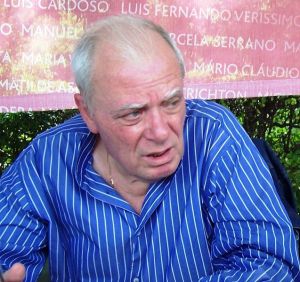
António Lobo Antunes, 1998 (Photo: Gonçalo Figueiredo Augusto, from Wikipedia, under Creative Commons Licence, CC-BY-3.0)

António Lobo Antunes, 1998 (Photo: Gonçalo Figueiredo Augusto, from Wikipedia, under Creative Commons Licence, CC-BY-3.0)

Virtuosic? Tour de force? These are such clichéd terms to use in a review – and yet, I can find no other words to better describe Portuguese writer António Lobo Antunes’ 1992 novel, The natural order of things. This is one of those beautifully written, but rather challenging, books that you know you really should read again to get all those nuances, relationships, and connections that you sense but can’t quite fully grasp. If that puts you off reading the book, so be it, but in doing so you’ll miss something quite special.

As you might expect the title is ironic – there is very little natural order here. The novel does not follow the “natural (aka chronological) order” either of fiction or of life. The characters – including a middle-aged man living with a schoolgirl, a miner who “flies” underground, a girl/woman who spends her life in an attic, an ex-secret policeman who teaches hypnotism by correspondence – do not fit the “natural order” either.

The imagery is rich, evocative and effective in building up a picture (mostly of disorder and decay) and a feeling (mostly of melancholy, if not despair). The rhythm – produced by repetition, and by run-on paragraphs that don’t begin with new sentences – compels you on. The characters are convincingly drawn despite their often mad-sounding confusions. The mixing of the surreal with the real works – as does the weaving of two scenes from different points in time in the same sentence, not to mention the telling of a story by two voices in the same sentence. Somehow he makes it work. Here is an example:

…and eleven months later I met Mr Valadas at a restaurant and liked his double chin, he wasn’t as handsome as the skin doctor who hated Verdi, but I felt sorry for him, always by himself, eating lunch all alone,

and my sister Teresa, who kept looking at you and shaking as if she’d been hit by the world’s worst tragedy, “When is the wedding Fernando?” [p. 186]

Two voices alternating in one long run-on sentence – and for some reason, you go with the flow and know who’s speaking when. But that is the thing to do with this book – go with the flow.

So, what is it about? In superficial terms it’s about, as the blurb on my back cover says, “two families and the secrets that bind them”. But really, there’s not a strong plot, though several stories are told. The novel comprises 5 books, each of which is broken into chapters told from two alternating points of view, resulting in 10 voices. The stories are set between 1950 and around 1990 and deal, in their various ways, with post-1974 Carnation Revolution Portugal and the resultant disintegration of Portuguese society (not only in Portugal but in its African and Timorese colonies). This said, the over-riding sense of the book is one of personal stories, of past, present and the way memory works, and not of politics:

Relax, don’t lose your temper, I swear I’m doing the best I can, but that’s how memory is, it has its own laws, its own rhythm, its own whims, … (p. 23)

In a bit of self-consciousness that brings us back to earth, the second last voice in the book, the dying Maria Antonia, says:

I amused myself by imagining that the redheaded girl was the sister of my neighbours at the Calçada do Tojal, I moved her to the house of the Vacuum Oil employee and the imprisoned army officer … my nephew announced with a smile , “You’re going to live forever, Aunt Antonia”, and I nodded so as not to upset him, I stuck a Tyrolean hat on his head and place him in Hyacinth Park of Alcântra, married to a diabetic girl from Mozambique or … [p.263]

because we who are from here but are not from here, who are from a here that no longer exists, have filled up these buildings with the silt of mementos and albums and letters and faded pictures from the past, and our present is occupied by these ruins of memory, not only the memory of those who preceded us, but the memory of ourselves, because we also forget, because names and images and faces get lost in a fog that makes everything equally blurry, … [p. 274] … with me will die the characters of this book that will be called a novel, which I’ve written in my head, fraught with a fear I won’t talk about, and which one of these years someone, in accord with the natural order of things, will repeat for me in the same way that Benefica will be repeated in these random streets and buildings, and I, without wrinkles or gray hair, will water my garden with the hose in the late afternoon, and the palm tree at the post office will grow again, … [p.277-8] … even if we’re not very large trees, and even if they knock us down, we’ll remain in photos, in scrapbooks, in mirrors, in the objects that prolong and remember us, … [p. 278]

And so here is made clear what should already be clear through the way the book is written and structured – though the repetition of phrases, the recurrence of bird and tree images, and the intertwining of stories and voices – and that is that the present and past intermingle and repeat each other, that the real and the unreal both have a place, that nothing really ends or begins, and that, perhaps, no matter how bad things are there is hope. What also seems to be made clear is that this has all been the fabrication of Maria Antonia – or has it? After all it is not she but the redheaded girl (Julieta) who has the last say. Read it and decide for yourself.

(Translated by Richard Zenith)

A.B. (Banjo, to most of us) Paterson

Within the next few weeks I will be reviewing the Australian Classic Library’s re-release of Paterson’s The man from Snowy River and other verses, so this post is just a teaser. It was inspired by a column in The ABC Weekly (of 22 February 1941). Paterson died on 5 February 1941 – and less than three weeks later Australian novelist and critic, Vance Palmer, wrote a short item on Paterson’s impact on him:

I very well remember the excitement that filled me when, as a boy, I came across his new book, “The Man From Snowy River”, and I know that others around me shared the excitement. Here was the life we had known, suddenly given meaning, significance, a fresh interest. … It was as if a word had been uttered that was to awaken a dumb country, giving it a language of its own, and spreading a sense of fellowship between one man and another.

They were different times then – The man from Snowy River was first published in 1890, when Vance Palmer was 5 years old. We now have a language of our own, and we are a far more urbanised society than the one Paterson wrote about, and yet, I too have a soft spot for Paterson. Like Palmer, my love for Paterson also started when I was a child – when my father would read Paterson’s ballads to us. And in fact, I shared this Paterson-love only recently in an exchange with American blogger, Waltzing Australia, after she quoted “The Man From Snowy River” poem in full on her blog. We traded some favourite poems and lines, but I have to give her the award for the best response when she quoted these lines from his poem, “An Answer to Various Bards”, in which he responds to poets such as Henry Lawson with “their dreadful, dismal stories”:

If it ain’t all “golden sunshine” where the “wattle branches wave.”
Well, it ain’t all damp and dismal, and it ain’t all “lonely grave.”
And, of course, there’s no denying that the bushman’s life is rough,
But a man can easy stand it if he’s built of sterling stuff…

Yes, I can take a lot of Banjo – and so I greatly look forward to reading the recent re-release with its new introductory comments. Watch this spot!

Kath Walker aka Oodgeroo Noonuccal

I fell in love with Kath Walker, as she was known then, in my teens and bought her book of poems, My people. I loved her passion for her people and the intensity but accessibility of her poems. Every now and then I look at them again. Today, however, my mum gave me a dear little illustrated book produced by the National Library of Australia called Little book of dogs. It contains a small selection of Australian poems on, well, dogs. One of them was also in My people, and is called “Freedom”. It’s a powerful little poem about man’s (and the implication is white man’s) desire to tame “all things wild and tameless”.

Brumbies on the run in Central Australia

Brumbies on the run in Central Australia

For copyright reasons I don’t believe I can quote the whole poem – it only has four verses – but here is the first verse:

Brumby on the wild plain
All men out to break you,
My warm fellow-feeling
Hopes they never take you!

Simple stuff really but, if you have a message you must get across to as many people as possible, simple is sometimes best.

Jim Crace, Being dead

The old “so many books, so little time” mantra means that I very rarely read a book more than once (other than my Jane Austens of course), but I have read Jim Crace’s Being dead twice. I love this book. I know some find the subject matter unappealing but I find it not only fascinating but rather beautiful.

Beach near Bermagui, New South Wales

Beach near Bermagui, New South Wales

For those who haven’t heard of this novella (really), its plot centres on a murder. Joseph and Celice, a middle aged couple (and, significantly, zoologists), are bashed to death on a secluded part of a beach at the book’s beginning and, from this point, the story moves in multiple directions to explore a number of before and after scenarios relating to this event. In fact, one of the things I like about the book is its four-part structure, and its forwards-backwards movement in time as the different strands of the story are played out. Crace moves backward from the moment of their death to the beginning of that day, and alongside this he recounts forward the story of their relationship from the point of their meeting. The third strand concerns their daughter as she reacts to the news of their disappearance, and the final strand, which is the one that turns off some readers, chronicles the decomposition of their bodies as they lie undiscovered in the dunes. It’s not for nothing he makes them zoologists!

Near the end of the book is a clue to why Crace has chosen this structure. He writes that “Earth is not a visionary and can’t be blamed for what’s ahead. It is retrospective … It is the past that shapes the world, the future can’t be found in it”. It seems to me to be a pretty fatalistic – what will be, will be – view of the world, and one I rather like. I don’t think he’s quite saying we can’t change our world but he is saying that what we do, what is now, shapes it and our lives, that there’s no future mystery out there waiting to make something of us. Right near the end is this:

Nothing could be changed or amended, except by the sentiment of those who were not dead. That’s the only Judgement Day there is. The benefits of hindsight. The dead themselves are robbed of hindsight.

So what about the characters who are the focus of all this? Crace has in fact chosen pretty ordinary, fairly unlovable (except to themselves) not-particularly-admirable characters. By doing this he makes the point that we all have our lives, that the only really important thing is love, and that there is dignity in that. As he writes: “Love songs transcend, transport, because there is such a thing as love”.

And it is all told in language that is rhythmic and oddly beautiful despite the horror of the subject matter:

The corpses were surrendered to the weather and the earth, but they were still a man and wife, quietly resting; flesh on flesh; dead, but not departed yet.

Crace is a great stylist, I think, which is why he can tell such a story in four parts but in less than 200 pages. Take the title for example: the use of the present participle “being” is very telling. Present participles imply action, continuation, ongoingness, but death is usually seen as the end. In this book there are several continuations: the world, the natural world in particular, continues, and Joseph and Celice’s love continues. Oh, and they stay dead. Great title.

So, to labour the point, his message is that we and only we make our lives:

There is no remedy for death – or birth – except to hug the spaces in between. Live loud. Live wide. Live tall.

Carpe diem I suppose – but an oh so eloquent evocation of it!

Imre Kertèsz, Fateless (or Fatelessness)

[WARNING: SPOILERS, of sorts]

Let’s get the first thing clear. I like holocaust literature – not because I enjoy the subject matter but because in it I find the most elemental, universal truths about humanity. Depending on the book, this literature contains various combinations of bravery and cowardice, cruelty and kindness, love and hate, self-sacrifice, self-preservation and betrayal, resilience and resignation, and  well, all those qualities that make up humanity and its converse, inhumanity. I have by no means read all that is out there but here are some that have moved me: Anne Frank’s The diary of a young girl (of course) and Anne Holm’s I am David, from my youth, and then books like Martin Amis’ Time’s arrow, Bernhard Schlink’s The reader, Marcus Zusak’s The book thief, and Ursula Hegi’s Stones from the river. There are gaps, though, in my reading, such as Thomas Keneally’s Schindler’s ark (I did see the film), the works of Primo Levi, and Elie Wiesel’s Night. I have, however, just added Imre Kertèsz’s Fateless to my list of books read.

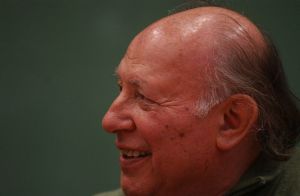
Kertèsz, 2007 (Photo by Csaba Segesvari, from Wikipedia under GNU Free Documentation License 1.2)

Kertèsz adds a new spin to the universal truths explored by these books – it’s what he describes (in my 1992 translation anyhow) as “stubbornness” which seems to me to mean “resilience” or a determination to survive, and even to have, if possible, little wins against the system.

Anyhow, first the plot. The novel takes place over the last year of the war and concerns Gyorgy Koves, a 14-year old Hungarian Jew, who, one day, is suddenly called off a bus, along with all other Jews on the bus and transported to Auschwitz, and then Buchenwald, Zeitz and back to Buchenwald, before returning home at war’s end. It chronicles his experiences, his thinking, and the impact on him of his experience. He begins as the archetypal naive narrator…but by the end, though his tone has changed little, he is no longer naive. This is rather beautifully achieved as we see his youthful application of logic being changed into something more cynical and survival focused.

Gyorgy speaks with a strange sense of detachment borne, to start with, of an apparent unawareness of what exactly was happening to him and a disbelief that anything untoward would happen. And so, in the beginning, as events unfold he describes them as “natural” because of course, when they got to Auschwitz, it was sensible to inspect each person to see who was physically fit and capable of working. He didn’t know then what would happen to those not found physically fit. The horror gradually builds as reality sets in and he goes about making it through each day – through his share of beatings, the reduced food rations, and all the other deprivations that make up concentration camp life. In the first part of the book he uses the term “naturally” to mean some sort of normal logic but by the end it comes to mean, as he explains to a journalist who asks him why he keeps using the word for things that aren’t natural, that these things were natural in a concentration camp.

Early on in his captivity he says that they approached their life (and work) “with the best of intentions” but they soon discover that these “best of intentions” do not bring about any kindness from their overseers, and so his attitude to getting on, to surviving starts to change. As he starts to physically weaken, become emaciated and develop infections, he observes that “my body was still there. I was thoroughly familiar with it, only somehow I myself no longer lived inside it”. Always dispassionate, always matter-of-fact, while describing the most heart-rending things.

Towards the end, he is placed in a hospital ward and there he is treated better and, even, with a certain amount of kindness. This in its way is as shocking to him as the cruel beatings he experienced at Zeitz. He can see no logic, “no reason for its being, nothing rational or familiar”. He can only understand kindness in terms of the giver receiving “some pleasure” from it or having some “personal need” satisfied. Never is there any sense that altruism might come into play. His view of “justice” is based very much on survival. He says, when he is spared, “everything happened according to the rules of justice … I was able to accept a situation more easily when it concerned someone else’s bad luck rather than my own … This was the lesson I learned”.

And so, in the end he returns home, and finds it hard to explain to people just what happened and how he now views life. He describes getting through his time as “taking one step after another”, focusing just on the moment. He implies that if he had known his fate he would have focused on time passing – a far more soul-destroying activity than concentrating on getting through each day “step by step”. This brings us to the fate/fateless bit. He says at the end that:

if there is a fate, there is no freedom … if, on the other hand, there is freedom, then there is no fate. That is … that is, we ourselves are fate.

I find this a little hard to grasp but he seems to be saying that we are free to make our own choices, even in a concentration camp – we are not fated but make our own fate. He was and is not prepared to accept any other approach to life. But life will not be easy:

I am here, and I know full well that I have to accept the prize of being allowed to live … I have to continue my uncontinuable life … There is no impossibility that cannot be overcome (survived?).

And yet, at the very end of the book, he says “and even back there [in the concentration camp], in the shadow of the chimneys, there was something resembling happiness”. Wow! This is an astonishing book – it charts horrors with a calmness that is quite shocking, and it is particularly shocking not because Gyorgy is unfeeling but because he can’t quite grasp what is happening to him. This is the fundamental irony of the book, and the fundamental truth of a naive narrator: we the reader know exactly how it is even as Gyorgy tries to make sense of it using logic and reason. I must read this book again – and preferably the newer more highly regarded 2004 translation by Tom Wilkinson.

(Translated by Christopher C. Wilson and Katharina M. Wilson)

More Jolley

Elizabeth Jolley (Photo: Courtesy Fremantle Press)

Elizabeth Jolley (Photo: Courtesy Fremantle Press)

A decade or so ago my local reading group, with trepidation from some, decided to try a poetry night. The idea was that we’d all bring a favourite poem or two to share. What would I bring? I have some favourite poets from my student days – poets like Gerard Manley Hopkins, T.S. Eliot and William Wordsworth – but was that all I knew about poetry? Well, it just so happened that my brother had given me a few years earlier The Penguin book of Australian women poets (1986) so I hied me thither to see whether anything inspired. And what did I find but one of my favourite writers, Elizabeth Jolley, there ensconced.

Now, fair dealing provisions of the Australian Copyright Act are not clear for poems and anthologies so I won’t reproduce the full poem, “Neighbour woman on the fencing wire”, but here is its beginning and end:

So you’ve bought this place well let me tell you
straight away your soil’s no good all salt even a
hundred and sixty feet down and up on the slopes
is outcrops of granite and dead stumps of dead
wood nothing’ll grow there we know we’ve tried

dead and then there was that pig ate a woman’s
baby right in front of her door mind you I always say –

Says it all really…how can you not laugh along with a writer who writes a poem like this. (It is also published in her book Diary of a weekend farmer, 1993).

Elizabeth Jolley, My father’s moon

‘No one,’ she says, ‘can write anything till they’ve had experience. Later on perhaps. You will write later on.’ (Elizabeth Jolley, My father’s moon, 1989)

Although fiction demands imagination, it must be based on  some kind of genuine experience. (Elizabeth Jolley, “Only Connect”, essay first published in Toads, 1992)

My father’s moon is the first book in Jolley’s semi-autobiographical trilogy, the others being Cabin fever and The George’s wife. It won The Age Book of the Year Award in 1989.

I am an Elizabeth Jolley fan – and, along with Helen Garner, another Jolley fan, I enjoy the way she repeats and revisits stories and characters from one book or story to another. In this book is the chapter, “Night Runner”, which was published as a short story in Meanjin in December 1983, and again in a short story anthology, Room to move, published in 1985. The narrator of the story – and of the novel – typifies Elizabeth Jolley’s alienated protagonists and their often peculiarly self-centred and self-deluded ways of coping with their loneliness. Clearly Jolley decided that this was a character she wanted to develop further. And clearly she also drew a lot from her own experience to develop this character. Like Vera, Jolley was brought up as a Quaker, her parents sheltered refugees before and during the Second World War, and she trained as a nurse. Like Vera, Jolley probably experienced loneliness and alienation. However, this is fiction and so we need to be careful about how far we take these analogies between Vera and her creator. Much as I can empathise with Vera’s predicament, I must admit that I would hate to think she is Elizabeth Jolley.

It’s an uncomfortable novel. Vera, the first person narrator, is not a highly sympathetic character but neither is she totally disagreeable either. What she is, though, is lonely. The book has a somewhat challenging structure – and I had to concentrate to keep track of where I was. It starts with Vera, a single mother, leaving her parents’ home, with her young daughter, to live and work in a boarding school. Her hopes for a lovely life there among people “who feel and think as I do” are dashed. Such people “are not here as I thought they would be … I am by my own mistakes buried in this green-leafed corruption and I am alone”. In this first chapter are flashbacks to the past, and gradually the book moves into the past, providing us with insights into her character and how she has ended up where she is. Most of this past takes place in the hospital where she trains as a nurse during the war. The book finally returns to the beginning of the novel with Vera resolving to make a step towards alleviating her loneliness. However, we are by no means convinced she will.

Moon, by atomicshark @ flickr, licensed under Creative Commons CC-BY 2.0

Moon, by atomicshark @ flickr, licensed under Creative Commons CC-BY 2.0

The book comprises titled chapters, many if not all of which could be (and some have been) published separately as short stories. This gives it a somewhat disjointed feel – but seems appropriate for the story of a person like Vera. It is full of wonderfully drawn characters, with some very funny (if often dark) scenes and dialogue. Just think nurses and hospitals! There are many references to music – something that is common in Jolley’s works. Music is usually a comforting force for her characters, offering them respite from what is often a cruel world – and this is the case here, with Vera being drawn to characters who love and play music. There is a lot of irony, some of it subtle, some of it less so as in Magda’s comment to Vera who has fantasised about an affair with her husband: ‘You are so innocent and good … Don’t ever change’. Naive perhaps, innocent no!

So, what about the title? Funnily enough(!), it refers to Vera’s relationship with her father, a major stabilising influence in her life. He tells her throughout her childhood that wherever she is she can always look at the same moon he is looking at, ‘And because of this … you must know that I am not far away. You must never feel lonely’. A lovely concept and one to which Vera regularly returns in the book.

My father’s moon is not, I think, the easiest Jolley to read, and there are some things that might become clearer on a second reading. However, its concerns are very representative of her work – loneliness and alienation, homosexuality, parenting, memory, music and religion. While Vera is deeply lonely, while she often behaves selfishly, she can also be kind. She is also no quitter. For that I rather like her.

Pramoedya Ananta Toer, This earth of mankind

Nationalism, in today’s western world, is pretty much a dirty word – and yet it is the idea of nationalism which underpins Indonesian writer Pramoedya Ananta Toer‘s Buru Quartet, of which I have just read the first book, This earth of mankind. Toer’s concept of nationalism was formed under colonial rule of his country by the Dutch and then under military rule by Indonesians. His notion of nationalism encompasses ideas of individual freedom and dignity, and the right of individuals and, by extension, the nations which they form, to be self-determining. None of these are well supported under colonial or military regimes.

Toer & a translator. Photo: Michael Scott Moore at radiofreemike.com

Toer & a translator. Photo: Michael Scott Moore at radiofreemike.com

Toer (1925-2006) spent quite a bit of his life as a political prisoner and, in fact, this novel was first told orally to co-inmates in 1973 when he was imprisoned on the Buru Island penal settlement. He was first imprisoned (1947-1949) by the Dutch government after an anti British and Dutch revolution, and then later by the Indonesian government, first in 1963 when he supported Chinese minorities, and then after a military coup in 1965.  On this third occasion, he was imprisoned until 1979, though after that was essentially kept under house arrest until 2002. The first two novels were published in 1979/1980, and were translated into English in 1981 by Australian diplomat in Indonesia, Max Lane, who was recalled to Australia that same year as a result. Clearly, the Indonesian government was not amused. Indeed, the books were banned by that government in 1981.


From Wikipedia, under GNU Free Documentation License

From Wikipedia, under GNU Free Documentation License

This earth of mankind is set in 1898, and provides a fascinating look at colonial life in Indonesia at that time. It tells the story of a Native, the only one to attend an elite school. Being a Native he has no formal name, and so throughout he is called several names – Sinyo or Nyo, Gus, and most commonly Minke. Early in the novel, he is introduced to a succesful concubine Nyai Ontosoroh and her beautiful daughter, Annelies, and is gradually drawn into their lives. The novel follows his – and their – fortunes as the colonial authority does its best to see that a Native does not rise above his station. Life turns out to be a paradoxical one for Minke – on the one hand his education teaches him to think and argue and believe that all things are possible while on the other hand the colonial structure, within which he lives, works to ensure that little is possible.

The novel is peopled with a wide range of characters of various ethnic backgrounds – primarily Dutch, Indo (people with Dutch and Native parentage), and Natives, but also French and Chinese. This ensures that the strictly enforced layer of colonially-decided rights is set against a wide variety of political and personal opinions and provides the reader with an excellent insight into a complex society. This is perhaps also the cause of its main flaw because it is, at heart, an ideological novel. And, like many ideological novels, characters and plots are simplified and exaggerated to make the point. So, in simple terms the story can be seen as poor clever boy meets rich powerful concubine and falls in love with her beautiful but weak daughter only to be crossed by the wicked brother. The story has a melodramatic edge and there’s not a lot of complexity – of greys – to the characters. They are there to serve a purpose.

That said, it is a rivetting read. Told, first person, in Minke’s voice, the novel immediately engages us with him and his situation. He is, in fact, a little more rounded than the others: we get a sense of his uncertainty as he makes his various decisions throughout the book. This is largely because it is also a coming-of-age novel: paralleling the ideological issues underpinning the novel is the story of Minke’s emotional, social and intellectual development. A major thread is that of education and what can (should) be expected of an educated person. Early in the novel his “mentor”, the French artist, Jean Marais, tells him:

You’re educated Minke. An educated person must learn to act justly, beginning first of all with his thoughts, then later in his deeds. That is what it means to be educated.

This advice underpins Minke’s thought and actions from that point on: at each test or decision point he tries to apply his education.  There’s bitter irony here though because it is the source of that education – Europe – that causes his major problems at the end. As Minke is fast learning, you have to be strong to survive.

There’s a lot more that can be teased out in this book – including the role played by language in controlling and enforcing power and status – but rather than ramble on, I will end with the words of Minke’s favourite teacher, Magda Peters. She says:

…without a love of literature, you’ll remain just a lot of clever animals

It is not surprising then that Minke, Toer’s alter ego in this book, becomes a writer!

(Translated by Max Lane)

Favourite writers: 2, Elizabeth Jolley

Not , unfortunately, being a time-traveller, I haven’t managed to see or hear Jane Austen in person. I am, however, far more fortunate in this regard when it comes to the subject of my next favourite writers post – Elizabeth Jolley. I did get to see and hear her at a literary lunch at the height of her career. My reaction was the same as many others – her “little old lady” appearance and voice belied her sharp wit and earthy worldliness.

Elizabeth Jolley (Photo: Courtesy Fremantle Arts Centre Press)

Elizabeth Jolley (Photo: Courtesy Fremantle Press)

It’s not surprising that she is one of my favourite writers: I call her my antipodean Jane Austen. She is witty and ironic, she is wicked (though blacker than Austen), and she tends to write about a small number of people in a confined, often domestic, situation. But here the similarity ends. While the “character” of Austen’s characters play a role in what happens to them – there’s a reason why Elizabeth not someone like Lydia “gets” Mr Darcy – Austen’s main interest is in the social and economic constraints on her characters. Jolley on the other hand focuses more on the interior. She explores loneliness and alienation. She looks at the disturbing or unsettling sides of relationships, the ‘feelings’ people have but often don’t admit to such as those for a person of the same sex or for a person for whom they should not have feelings for (due, for example, to age differences, power differences, or infidelity). She shows how difficult it is to maintain a long-term intimate or deep relationship that is equal on all levels (physical, intellectual, social, material, etc).

In the Australian and New Zealand Journal of Psychiatry (Vol. 25, No. 1, 1991), Jolley writes:

In my own writing I have been interested in the exploration of survival (perhaps emotional survival), resilience and responsibility. (I only know this now after several books are written).

How very Jolleyesque that aside is – humble but a bit sly at the same time. She continues a little later to say:

…for the most part my characters are perplexed, anxious, often frightened with perhaps one redeeming aspect in their personalities – that of optimism which might for a time, until it gets out of hand, keep them from the specialist’s doorstep.

Photo: Courtesy Fremantle Press

Photo: Courtesy Fremantle Press

The first Jolley I read was the short story, “Night runner”, in an anthology titled Room to move. It introduced me to her concept of alienation and rather black notion of survival, her particular brand of irony, her portrayal of characters who more often than not suffer from some level of self-delusion, and her dark humour. I went on to read Miss Peabody’s inheritance, The newspaper of Claremont Street, The well, The sugar mother, and An innocent gentleman, among others, and have never really been disappointed. I enjoy her use of repetition and self-referencing, the motifs and the characters, even, that reappear in different works.  She gets me in the pit of my stomach with her vulnerable but often unkind or downright cruel characters, but makes me laugh at the same time with her depictions of their attempts at survival. You just have to see Ruth Cracknell playing The woman in a lampshade to know what I mean!

I have not yet read all of Jolley’s works. Just as for a long time I kept back one Jane Austen novel because once I’d read it I’d have read them all, I am now doing the same with Jolley. Her books are so delicious they need to be savoured. I’m sure this is not the last post I’ll be writing about her.

Eve Langley, The pea-pickers

It  is hard to classify Langley’s most famous novel, The pea-pickers, which was first published in 1942. In some ways it fits into the coming-of-age genre but it is different from the more usual offerings in that genre, if only because there is no real sense at the end that the protagonist has come of age! It also has elements of the picaresque. Again, it’s not typical. The two sisters don’t travel far and wide, they don’t have many “big” adventures”, and it’s heavier in tone than the usual picaresque, but it is about two young women who set out to adventure partly to recover some of their lost history.  A modern interpretation of the picaresque perhaps?

The novel is semi-autobiographical, and is told in first-person. Given that there’s not a very strong plot nor a strong sense of character development, it’s interesting that Langley chose the novel form for it rather than autobiography. She wrote it in the early 1940s, but based it on the journals and poetry she wrote during the time period in which the novel is set, the 1920s.

So what exactly is it about?  The plot is pretty thin: two sisters dress as men and take men’s names, Steve and Blue, in order to work as agricultural labourers in Gippsland, the place their mother has told them about throughout their childhood and with which they feel they have a connection.  The book chronicles their life and work over a few seasons, and particularly describes the people they meet along the way, including a couple of “loves” for Steve, the narrator.

Stylistically it is interesting. Her language is very poetic, and there is also a lot of specific poetry in it. It is quietly humorous. It is also quite declamatory – in an old-fashioned poetic sort of way. There are a lot of allusions, particularly to things classical. There is no real plot, no sense of growth for the main characters from the beginning to the end. All this makes it quite odd – a strange mix of old-fashioned (declamatory style, classical allusions, etc) with post-modern (disregard for traditional elements of the novel such as plot and character development).

Two lovely pieces of writing early in the book are:

Down I fell, in love. And what happened? In feeling, incidents pure beyond pens, anguished beyond all telling. In fact, incidents to the point of idiocy.

and

Then the elderly party with the severe yet insane look took the violin from Blue’s hand and stood beside the door with it, looking as though he were meditating on a dry spell that had brought crows flying around the sheep and mortgages flying around the mailbox, and on that violin he played, with an absent-minded hand, such tunes as Ulysses should have retorted to the harpies.

It’s interesting in terms of social history – the cross dressing, the racism (anti Italians in particular), the depiction of agricultural life of the time. It beautifully evokes 1920s rural Victoria, portraying both the characters who populated it and the sort of small-scale agriculture that was going on.

Cross-dressing or women dressing “mannishly” was a bit of a common thread in nineteenth and early twentieth century Australia. Louisa Atkinson, back in the mid to late 1800s, was a botanist, illustrator, writer who wore trousers (particularly when she was out collecting her specimens) and shocked the locals in the Southern Highlands of NSW (Berrima/Bowral area), even though she conformed in terms of religiosity. Marie Bjelke Petersen (late 19th to mid 20th century) was described as mannish in dress when she was young – and I believe she wore pants. In addition, Marie Bjelke Petersen wrote the story “Jewelled Nights” which was turned into a film starring Louise Lovely in 1925. It is about a woman who dressed as a man. The film didn’t do wonderfully well at the box office. And then Edna Walling in Melbourne in the early 20s wore comfortable jodhpurs when she undertook the gardening and landscaping for which she was famous, leading local residents to call her ‘Trousers.”

So it seems that women did find pants more comfortable and wore them mainly for that reason. But, in this book there is also the issue of assuming a man’s guise to help them to find work. They didn’t try to completely hide their womanhood but they didn’t want to advertise it either. They used their male names in their application letter to get a hop-picking job. They also felt safer if they didn’t look obviously female when they were out and about.

In addition to the coming-of-age theme, the book also has other themes, such as love of land and dispossession from it:

Yes, I am from Gippsland, too. My family have been graziers here for many years. I should be the mother of sons who would be the princes of this province, in thought and action … But what am I? Well, you can see, A wandering pea-picker, living in a galvanised iron hut. But my forefathers were the pioneers here. And that is what is really hurting more than anything. I am nothing to Gippsland; I just wander through her, being hurt by her and used by her in menial toil.

The pea-pickers is a challenge. It seems fresh and innovative, thumbing its nose at many traditions of the time, but it also seems to go nowhere and can be self-consciously self-important. It is, nonetheless, an important part of Australia’s literary heritage and deserves wider reading.