Willa Cather, The enchanted bluff (#Review)

I’ve reviewed a few Willa Cather stories on this blog now, as well as her gorgeous novel, My Antonia, but as I love her stories, I can’t resist reviewing the latest to have been shared by the Library of America (LOA), albeit that was a couple of months ago now. The story is titled “The enchanted bluff” and was published in 1909, making it the latest of the stories I’ve reviewed to date. Between the previous latest story, “A Wagner matinee” published in 1904, and this one, Cather had moved to New York and started working for, writes LOA, “the notoriously difficult” editor, S.S. McClure, at the eponymously named McClure’s.

LOA explains that her years working there were “both rewarding and gruelling”, but that she “proved a perfect foil to her boss’s temperament and was even ghostwriter of his 1914 autobiography. McClure praised her as “the best magazine executive I know”. However, the downside was that she had little time left for her own writing. A common author-problem eh? The work you do to keep you alive takes you away from the work for which you live!

Enchanted Mesa
Enchanted Mesa, By Ethan (orig. posted to Flickr as Enchanted Mesa) using CC BY-SA 2.0, via Wikimedia Commons

She did though manage to write several short stories, of which “The enchanted bluff” is regarded the best. It appealed to me, not just because it is a Cather story and is imbued with her wonderful description of place and landscape, but because its focus is the legend of the lost tribe of the Enchanted mesa, a high sandstone butte in New Mexico. LOA tells us that “like the boys in her story, Cather had been fascinated by the legend” since childhood but had never been there (at least not by the time she wrote this story). Now, I’ve been to New Mexico and fell in love with its culture and landscape, so reading this story took me back to a most enjoyable time in my life …

“Enchanted bluff” feels a bit different from many of Cather’s stories. It has the nostalgic or melancholic tone common to many, and it has what I’ve described before as “her evocative, careful use of landscape and nature”, but it is more reflection than even a character-driven story. This however didn’t bother me because it does what I most like: it presents a bunch of ordinary people (in this case 6 boys and young men) going about their ordinary lives (in this case a last summer camping trip before they all head back to school.)

Camping trip, do I hear you say? Surely something dramatic happens there? Well, no, not really. The six boys, ranging in age from around 10 to 17, swim, cook their supper, and sit around the campfire talking. There’s an “angry” moon, and the loud “scream” of a whooping-crane, but nothing untoward happens. However, there is a point, to which I’ll come soon.

Cather starts her story by setting a rather idyllic scene. It’s Nebraska, where many of her stories are set, and the “brown and sluggish river”, contains little sand islands created during spring turbulence:

It was on such an island, in the third summer of its yellow green, that we built our watch-fire; not in the thicket of dancing willow wands, but on the level terrace of fine sand which had been added that spring; a little new bit of world, beautifully ridged with ripple marks, and strewn with the tiny skeletons of turtles and fish, all as white and dry as if they had been expertly cured. We had been careful not to mar the freshness of the place, although we often swam out to it on summer evenings and lay on the sand to rest.

You can feel the boys’ love of and joy in the place can’t you?

Anyhow, having set the scene, Cather then describes the boys – brothers Fritz and Otto, sons of the German tailor, and the youngest in the group at 10 and 12; fat Percy Pound who loved to read detective novels; hard-working Tip Smith, the “buffoon” in their games; tall 17-year-old Arthur Adams whose “fine hazel eyes … were almost too reflective and sympathetic for a boy”; and our narrator who would soon be leaving “to teach my first country school in the Norwegian district”. Quite a diverse group, but this is common perhaps in small country towns.

Having set the physical scene, and described her boys, Cather then shares their conversation. We soon realise that this is a story – as many of Cather’s are – being told about the past. Our narrator, in other words, is reminiscing about this last summer camp. And here is where the point starts to become apparent, because after general talk, including discussing the mystery of where the river goes after leaving their area, they start to talk about where they’d like to go. Tip tells them about Enchanted Bluff. They are all fascinated by its “dolorous legend” and discuss, as boys do, various possibilities. All are intrigued and would like to visit it, so agree that whoever “gets to the Bluff first” must tell the rest “exactly what he finds”. The summer ends, the following Christmas the boys catch up and renew their resolution, and then it’s twenty years later, from when the narrator is telling this story. None of them, he tells us, had climbed the Enchanted Bluff. Instead …

It’s a beautifully rendered story about the dreams of youth and the reality of adulthood. There’s a nostalgic glow, a sense of “enchanted youth”, but it’s offset by the reality of what happened to the boys. And this is supported by the language in which warmth and beauty are counterpointed by hints of other forces, not malevolent ones but ones which remind us that few things are as they seem or turn out the way we might dream. A good read.

Willa Cather
“The enchanted bluff”
First published: Harper’s Magazine, April 1909.
Available: Online at the Library of America

Monday musings on Australian literature: on Nation and people

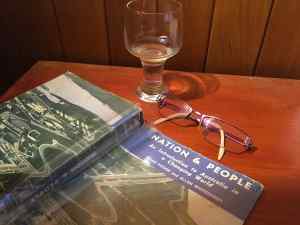
Hodge and Whitehurst, Nation and PeopleDo you keep your old textbooks? I do, though am now starting to move them on. But some I still can’t part with, one being my high school history text. Called Nation and people: An introduction to Australia in a changing world, and first published in 1967, it was written by Brian Hodge and Allen Whitehurst who were teachers at East Sydney Technical High School. I decided for today’s Monday Musings to have a little look at what my teenage self learnt from it …

I was tickled because some of what I saw, looking at it now, had connections with my future – though, of course, I didn’t know it then. First is the fact that I went to high school in Sydney, and the teachers who wrote it were in Sydney, but the front cover is an image of Canberra, the city I moved to for my first professional job after finishing university, and where I live today. The other is that the first book listed in the student’s bibliography at the back is “F. Whyte, William Morris Hughes: His life and times“. F. Whyte (actually William Farmer Whyte), a journalist, was the grandfather of the man I married. This biography was his magnum opus. I have no idea why it is listed first though. The list is not alphabetical by author or title, and Billy Hughes was not our first Prime Minister so there’s not an obvious chronological reason. The order is quite idiosyncratic to my librarian eyes!

What is history?

These, however, aren’t what I really want to share, entertaining though they are to me. I was interested, for example, in the Preface. The authors say that

students should be encouraged to look for themes. It is important … that they understand the nature of a particular topic they are studying and why they are studying it.

In other words, history is not about dates but ideas and trends. Now, my two favourite high school teachers were my history teacher (Mrs Reynolds) and the librarian (Miss Reeve). It was the late 196os, a time of increasing interest in rights for indigenous Australians, of the Civil Rights movement in the US, and when anti-Apartheid activism was becoming stronger. These two teachers – seen as “red” by more conservative parents – encouraged us to think about what we’d now call social justice. I loved them, because for them history was a living thing about themes, ideas and values.

Indigenous Australians

Of course, in looking at this book now, I particularly wanted to see what it told us about indigenous Australians, because this was an issue we felt strongly about. There are a few references to Aborigines, as indigenous Australians were called then, but there is also a 10-page section devoted to them. It starts with some quotes – from the Constitution (1901), “A Crown Lands Commissioner to Governor La Trobe in 1840”, and writer Marjorie Barnard (from her history of 1962) – followed by their introduction:

During the nineteenth century, the white settlers of Australia extended their frontiers and finally won a continent from its former black owners. The pattern was a similar one to other regions in the world where the white civilisation had made contact with coloured races which were less powerful and culturally different. Lands had been conquered, the stability of the conquered society shattered and the coloured peoples exploited.

They talk about early contact – from seventeenth century sealers to the later farmers – and their poor treatment of indigenous people. They note that “few whites made any effort to understand” cultural differences. They describe conflict between white and black people, in which killing occurred on both sides, but in their view:

Too often in Australian history in the nineteenth century good relations were destroyed by the low standard of settler and the low standard of police.

Next, they say

After the white man had won the land, his [this was before 1970s feminism!] attitude changed. The black man became regarded as a useful stockman who could perform important duties in areas of harsh environment where white labour was scarce and expensive. Thus an extensive cheap labour force was set up for the cattle stations …

They go on to discuss other aspects of black-white history in Australia: missionaries and paternalism, and then assimilation. In 1967, a referendum was passed which amended Australia’s Constitution “to allow aborigines to be included in the census”. Hodge and Whitehurst include a photo of some “Young Australians” sitting at desks. The caption reads: “Now these young Queenslanders will be counted. But will they count?” Good question.

This section ends by suggesting that “integration” is starting to be seen as a better policy than “assimilation”, but

This means, of course, that Australians would have to accept the fact that their society is multi-racial and multi-cultured, and that two cultures would live side by side with complete equality.

Those words – “would have to accept” – suggest, don’t you think, an uncertainty that Australians would indeed accept this. Around 50 years have passed since this was written, and progress has been made but “complete equality”? Nope. How very depressing it all is.

Further reading

Finally, the authors provide a list of additional reading at the end – where I found F. Whyte – but they say “the reading list in this text is recommended as a manageable one”.  They don’t think students “should or could read all the books listed, but … are thoroughly capable of looking at quite a number of them.” They tell students not “to become a slave to one or two general texts, even if they are concise and interesting” and not to “attempt to wade though volumes that are recommended as reference books”. Instead, they say:

Perhaps your most profitable course at this stage of your study of History would be to enter into the spirit of the course through biography. This plan of action  you will find very profitable in your study of Australian development. Through reading biographies you will gain a feeling for History and insight into the spirit and problems of each decade.

How sensible is that? Don’t make students read dry recitations of historical events and facts. Better to read books that will bring history alive. Those they recommend at the end include biographies and fiction, such as George Johnston’s My brother Jack, Xavier Herbert’s Capricornia and, interestingly, Alan Paton’s Cry the beloved country.

Looking at this book, I can see the origins of my ideas about what history is and what it means. Thank you Messrs Hodge and Whitehurst, and thank you too Mrs Reynolds and Miss Reeve. You have not been forgotten.

Do you have teachers and classes that have made a lasting impression on you and your way of thinking?

John Muir, Save the redwoods (Review)

Giant Sequoia, Yosemite

Giant Sequoia, in the Sierras

Any fool can destroy trees. They cannot defend themselves or run away. And few destroyers of trees ever plant any; nor can planting avail much toward restoring our grand aboriginal giants. It took more than three thousand years to make some of the oldest of the Sequoias, trees that are still standing in perfect strength and beauty, waving and singing in the mighty forests of the Sierra.

“A wind-storm in the forests” by American naturalist/environmentalist John Muir (1838-1914) was the first Library of America (LOA) story of the week that I ever reviewed here. I was consequently keen to read his short essay “Save the redwoods” when it popped up as an LOA story-of-the-week three weeks ago. It’s an interesting piece, partly because it was found amongst his papers, posthumously, so was not published during his lifetime.

As LOA’s notes say, Muir spent four decades writing articles for the national press which argued for the “protection of such natural wonders as the Petrified Forest, the Grand Canyon, and—above all—Yosemite.” Yosemite was a particular love of his. LOA tells how it was his and Robert Underwood Johnson, associate editor of The Century Magazine, alarm about the “substantial damage caused by lumbering, sheepherding, and tourism” there that eventually resulted in the creation of Yosemite National Park.

It is this issue of lumbering that Muir takes up again in “Save the redwoods”. It was apparently written around 1900 when there were concerns that the Calaveras Grove of Big Trees or Giant Redwoods (Sequoiadendron giganteum) was at risk of being sold and cut down for timber because the owner, James Sperry who had protected them, was old and no longer able to maintain it. A lumberman, Job Whiteside, planned to buy it – but there was a public outcry. This is when Muir apparently wrote his piece, arguing that the various scattered groves of redwoods not included in Sequoia National Park should be protected..

In his piece Muir, as was his style, draws on religious imagery, analogy and personification, amongst other devices, to argue his case. He discusses the destruction of a couple of Big Trees in the grove back in the 1850s:

Forty-seven years ago one of these Calaveras King Sequoias was laboriously cut down, that the stump might be had for a dancing-floor. Another, one of the finest in the grove, more than three hundred feet high, was skinned alive to a height of one hundred and sixteen feet from the ground and the bark sent to London to show how fine and big that Calaveras tree was—as sensible a scheme as skinning our great men would be to prove their greatness. This grand tree is of course dead, a ghastly disfigured ruin, but it still stands erect and holds forth its majestic arms as if alive and saying, “Forgive them; they know not what they do.”

He then comments on the new plans to mill this grove, saying

No doubt these trees would make good lumber after passing through a sawmill, as George Washington after passing through the hands of a French cook would have made good food.

That’s an analogy to get our attention! He argues that if one of these

Sequoia kings [could] come to town in all its god-like majesty so as to be strikingly seen and allowed to plead its own cause, there would never again be any lack of defenders.

He describes the proliferation of sawmills and the ongoing destruction of these big trees, and sets this activity against Mr Sperry’s protection of the sequoias in his Calaveras Grove. Muir notes that when news starts to come through of this Grove being bonded to the lumberman, there is suddenly a “righteous and lively indignation on the part of Californians”. This, he says, seems strange given “the long period of deathlike apathy, in which they have witnessed the destruction of other groves unmoved”. However, he writes, public opinion had been rapidly changing in recent years and there had always been a special interest in the  “Calaveras giants [because] they were the first discovered and are best known”.  Moreover:

  • they have a worldwide reputation;
  • they are visited and admired by “travelers from every country”; and
  • the names of great men have long been associated with them (including Washington, Humboldt, Torrey and Gray, and Sir Joseph Hooker)

He argues that “these kings of the forest, the noblest of a noble race, rightly belong to the world” but, as they are in California, Californians “cannot escape responsibility as their guardians”. Then comes some patriotism and buttering up! He writes:

Fortunately the American people are equal to this trust, or any other that may arise, as soon as they see it and understand it.

It is here that we find the excerpt I opened my post with. It’s followed by his brief description of a bill being put before congress to protect the Calaveras Grove. He argues that not only will the bill protect this particular grove of trees but the resultant/concurrent “quickening interest in forest affairs in general” will result in improved chances for other groves and forests.

The piece feels a little rushed and unfinished, which is probably why he never submitted it for publication, but the work of Muir and others did eventually result in most of the west coast’s major sequoia and coastal redwood groves being “gathered under the jurisdiction of the National Park Service”. I saw many of these trees in the 1980s and again in the 1990s. They are unforgettable.

“Any fool”, Muir wrote, “can destroy trees”. Saving them is much harder. It takes passion, patience and persistence, something Muir exemplified in his life-time. Luckily, a long succession of environmentalists – around the world – continue this tree-saving work today.

John Muir
“Saving the redwoods”
First published (posthumously): In Sierra Club Bulletin, January 1920.
Available: Online at the Library of America

Helen Garner, Everywhere I look (Review)

Helen Garner, Everywhere I lookI was very sad to come to the end of Helen Garner’s latest essay collection, Everywhere I look. It was such a joy – such a joy – to read. Garner ranges across a wide variety of subjects from a kitchen table to Russell Crowe, from some of the darkest things humans do to each other to the beauty of ballet dancers in rehearsal, and she does it in a natural, warm voice that makes you almost feel as if she’s sitting across that kitchen table from you. While it would be cheeky of me to say that I now understand her, this collection provides wonderful insight into the way she thinks, how she goes about the business of living, why she writes the things she does. We come to know her as a human being who muddles through life, making mistakes, questioning herself, confronting challenges, rather than as the literary doyenne she in fact is. In other words, as she always does, she lays herself open.

I call these essays, but some are probably better described as articles or perhaps even columns, and there are a few which read more like collections of jottings or diary entries. Form isn’t the important thing here, it’s the content. The collection comprises 33 pieces, all but three of which have been previously published. Three date back to the 1990s. Many were published in Monthly, and some others in the Age and the Sydney Morning Herald. It’s not always obvious why they were originally written, but in this collection they have been loosely grouped into six broad thematic groupings, starting with “Part One: White paint and calico”, which is all about homes and things domestic, and ending with “Part Six: In the wings”, which I’d describe as comprising reflections about life and self. The cover, designed by the award-winning WH Chong, is just gorgeous, and I found myself looking at it several times as I read, opening it out to look at the whole front-and-back panorama.

But now, that common challenge of writing about a collection: what to discuss, what to leave out. I am going to leave out one thing, and that’s her discussion of writers and writing, because I want to save that for another post. Perhaps I’ll start with some “yes” moments, not that I have to always agree with writers to appreciate them, but affirmation can be nice. There’s her jotting in “When not writing a book” in which she expresses elation over the election of Obama. What an exciting time that was, even for us antipodeans. Her statement – “To think I’m alive when this happened” – is one many of us shared. I remember popping a bottle of bubbly with my patchwork group for the occasion.

There are delightful, often humorous, anecdotes about family life, especially about her grandchildren who now live next door to her, and there are little jewels of description, such as this perfect one of Christmas mornings:

The unnerving silence of Christmas morning. No sound of traffic. Sun lies fresh on everything. Birds sing with unnatural sharpness. The air is still.

And I did love her reference to a criticism of Muriel Spark in “Funk paradise”, another diary style piece:

Apparently her letters make no reference whatsoever to current events. So?

This accusation is also levelled at Jane Austen – for both her novels and letters – the implication being that to be valid you have to be political. I contest that. Austen and Spark write compassionately but incisively about human nature. Let others do politics if they will!

However, the section that grabbed me most was “Part Four: On darkness”. Here she explores the dark sides of human nature through five stories/cases about people who have done terrible things to others. This is subject-matter that many readers shy from, and those who do this tend to make those of us who don’t feel a bit ghoulish. Garner writes in this section about some well-known cases in Australia including the rape-murder of Jill Meagher (“The city at night”) and the murder of Luke Batty by his father (“The singular Rosie”). The fifth and last piece in this section is called “On darkness” and it’s about the Robert Farquharson trial which is the subject of her book, This house of grief (my review). In her opening paragraph she writes:

When the book came out I was struck by the number of interviewers whose opening question was ‘What made you interested in this case?’ It always sounded to me like a coded reproach: was there something weird or peculiar about me, that I would spend seven years thinking about a story like this.

She continues, describing how she would try to come up with “sophisticated explanations” for her curiosity, but eventually tired of being defensive. She outlines the complexity of the case – the ordinary people who behave in ways that even they can’t understand or explain – and asks why this is not worth exploring. She says:

People seem more prepared to contemplate a book about a story as dark as this if the writer comes galloping out with all moral guns blazing. A friend of mine told me that the woman who runs his local bookshop had declared she would, under no circumstances, read my book. Surprised, he asked why. ‘Because’, she replied. ‘I know that nowhere in the book does she say that Robert Farquharson is a monster.’

If he had been a monster, I wouldn’t have been interested in writing about him. The sorts of crimes that interest me are not the ones committed by psychopaths. I’m interested in apparently ordinary people who, under life’s unbearable pressure, burst through the very fine membrane that separates our daylight selves from the secret darkness that lives in every one of us.

This is why I like Garner. She’s generous, openly questioning, tender, but fierce too. And just in case you think she has no “moral guns”, read her piece in the last section, “The insults of age”, in which she describes her reaction to a young teenage girl whom she’d seen intimidating/disrespecting some Asian people. Garner writes:

… I saw the Asian woman look up in fear, and something in me went berserk.

In two strides I was behind the schoolgirl. I reached up, seized her ponytail at the roots and gave it a sharp downward yank. Her head snapped back. In a voice I didn’t recognise I snarled, ‘Give it a rest, darling.’ She twisted to look behind her. Her eyes were bulging, her mouth agape. I let go and she bolted away to join her friends …

This is why I like Garner!

There is so much in this book, lighter stuff too, but I’ll leave those delights for you to discover.

In “My dear lift-rat”, her delightful piece on Elizabeth Jolley, Garner says that she frequently wrote about Jolley’s books “in literary magazines, trying not to go over the top”, and that Jolley would write “formal” thank you letters. “I never knew”, Garner wrote, “whether she really liked them, or if she thought I had missed the point”. If Garner can feel that way about writing reviews (or critiques), then I don’t feel so badly about having the same worries! I sure hope, though, that I haven’t missed her points in this one.

awwchallenge2016Helen Garner
Everywhere I look
Melbourne: Text Publishing, 2016
227pp.
ISBN: 9781925355369

Edith Wharton, Writing a war story (Review)

According to Keirsey, Edith Wharton may have b...

Edith Wharton (Presumed Public Domain via Wikipedia)

“Writing a war story” is quite different to the Edith Whartons I’ve read to date, and it was clear from the opening sentence – “Miss Ivy Spang of Cornwall-on-Hudson had published a little volume of verse before the war”. It was the comic tone that did it. All the previous works of hers I’ve read, several novels and novellas, plus a couple of short stories, have been serious, if not downright tragic. However, Wharton was a prolific writer, so I wasn’t completely surprised. In fact, I was rather thrilled to have come across this story via the Library of America (a few months ago now).

I haven’t yet read the highly recommended biography of Wharton by Hermione Lee, but I’ve heard enough about her life to know that she lived in France during the First World War, and that she contributed significantly to the war effort. As LOA’s notes tell us, she stayed in France when the war started while others fled. She raised money, visited the front, established refugee hostels and homes for children. She was admired widely but she, herself, apparently underplayed her role, believing, writes LOA, “that nothing she did could compare with the agonies suffered by the soldiers and their families”. Her story, “Writing a war story” satirises both this role and the idea of writing stories for soldiers, for the war effort.

The plot is simple. Ivy Spang, who had published, to minimal recognition, a book of verse, is asked to contribute a short story to a new magazine, The Man-at-Arms, aimed at convalescent soldiers. Flattered, she accepts, and, due for leave from her volunteer work of “pouring tea once a week” for soldiers in a hospital, she sets off “to a quiet corner of Brittany”, because

devoted though she was to her patients, the tea she poured for them might have suffered from her absorption in her new task.

But, the task proves harder than she’d imagined. She struggles to find “Inspiration”, her mind being full of the one serious but unfortunately pretentious and condescending review, by the editor of Zig-Zag, of her published verse collection. She tells her companion, Madsy, that “people don’t bother with plots nowadays” and that “subject’s nothing”. Eventually, in desperation, she accepts Madsy’s offer to use/collaborate on one of the “stories” Madsy had jotted down from her hospital volunteer work. They agreed that Ivy would take the basic story but add her literary “treatment”. You can probably guess the outcome, but you should read the story to see just how it comes out. There’s a photo and a famous novelist involved too. In addition to the satire on “literature” and war volunteer work, there’s also a gender dig.

One of the things I most enjoyed about the story was its satire of literary pretensions, and how easy it is for an unconfident writer to be derailed by the wrong sort of praise, as Ivy is by Mr Zig-Zag!

In the story’s conclusion, a novelist laughs at her story, before he realises she’s the author. When he realises, and she asks for feedback:

He shook his head. “No; but it’s queer—it’s puzzling. You’ve got hold of a wonderfully good subject; and that’s the main thing, of course—”
Ivy interrupted him eagerly. “The subject is the main thing?”
“Why, naturally; it’s only the people without invention who tell you it isn’t.”
“Oh,” she gasped, trying to readjust her carefully acquired theory of esthetics.

Poor Ivy! I liked the fact that Wharton’s satire is subtle, not over the top. We readers can see what’s coming but Ivy isn’t ridiculed. We feel for her aspirations but we can see that her lack of confidence has laid her open to influence. And there’s irony here because that very influence, that editor of Zig-Zag, had warned her of “not allowing one’s self to be ‘influenced'”, of the importance of “jealously guarding” her “originality”.

There’s more to this story, particularly for people interested in Edith Wharton’s biography. My point is that whatever your interest – literature, war literature, Edith Wharton herself – this story has something to offer, as well as being a good read (with a subject, or two!)

Edith Wharton
“Writing a war story”
The Library of America
Originally published in Woman’s Home Companion, 1919
Available: Online

Anna Rosner Blay, Sister, sister (Review)

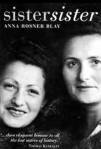
BlaySisterHaleSome of the most vivid memories of my Sydney-based late teens and early twenties relate to spending time with Jewish people, business friends of my father. We went to parties in their homes, to weddings and bar mitzvahs. These were always happy, family-oriented occasions. I had crushes on the sons. I knew that most of these people had come to Australia after the war, had suffered during the war, many in concentration camps, but I knew little more than that. The war was back then and this was now. I have no idea what those sons knew or thought about their parents’ pasts. Anna Rosner Blay’s biography-cum-family-memoir, Sister, sister, has reminded me of those days and made me wonder, yet again, about the lives whose paths I so airily crossed.

Around that time, I also started reading “Holocaust literature”. I’ve read memoirs about surviving the war, including most recently Halina Rubin’s Journeys with my mother (my review), and novels about survival, such as Imre Kertèsz’s Fateless (my review), but Anna Rosner Blay’s Sister, sister adds new ground to my reading. Not only is it about two sisters, Polish Jews, who survived the war from the early restrictions, through ghetto, concentration camps, death marches and factories, to their eventual emigration to Australia, but it also exposes the longterm effects of Holocaust experiences, particularly on the next generation. It’s a moving book.

Three voices

Blay presents the story in three voices: those of her aunt Janka and mother Hela, and her own. Janka and Hela’s voices are clearly identified interview-style, while her voice is conveyed via italics without her name being appended. An interesting decision, but it works. Blay captured the sisters’ stories via tape-recorder and notebook, and then “transcribed and rearranged” them, primarily, I’m assuming, to get them into chronological order, given the stories came out in fits and starts, late in the sisters’ lives. Towards the end of the book Blay writes:

My mother’s accounts are often disjointed, abbreviated, shreds that veer away from the painful reality. But at other times they are laid out before me, complete and pulsating with life, precious jewels that I must handle very carefully.

She has, indeed, handled them (and her aunt’s) memories very carefully to produce a story that is horrifying, horrifying as a personal story, but also because it is clearly representative of a more universal experience of the millions of Jews who suffered under the Nazi regime, which just compounds the horror.

I’ll start with the universal. A survival story, Sister, sister describes the brutality, degradation and humiliation which the Germans visited upon the Jews during the war. You’ve heard the stories before, but, oh dear, to read yet again of the utter inhumanity is appalling. I couldn’t possibly quote the most brutal, so here’s a minor example. Both women ended up separately at Auschwitz. Both were stripped, shaved, sent into showers (that were – what a relief – real showers) – and then tossed random clothing and mismatched shoes. Hela received two left clogs causing blisters, while Janka’s pair comprised “one with a high heel and the other flat. I therefore walked with a limp.”

Surviving this war was, Janka tells, “a macabre game of chance”:

We hardly ever knew what would turn out to be good for us and what should be avoided, possibly by subterfuge. Sometimes being led to a train could mean being sent to a small camp with a factory, and easy work; other times it could mean being sent to death. Sometimes you could save your life just by lingering, which was dangerous in itself. There was no way of knowing how to survive …

And this brings me to the personal, because while the sisters’ experiences are universal, they are also deeply personal. One of the things that Blay does very well is capture Janka and Hela’s individual personalities. Janka tends to be more expansive, telling more stories in more detail. She is also “braver”. She lingers (drawing her sister or friends back) when she thinks to go forward means death; she lies about her skills when she thinks that will get her a better “job” and/or keep her with people she knows; she negotiates black market deals (to swap her mismatched shoes, for example); and so on. She identifies these, and other situations she survives, as “miracles”. The younger Hela – just 18 years old when the war ends – is, by her own admission, less brave, more fearful. She relies on her sister and later, a friend, to keep herself together when times get tough. She’s lucky to end up, towards the end of the war, as a Schindlerjuden, through her musician husband. But this is not to say she’s a wuss. She’s a hard worker, a skilled seamstress, and she survived. You had to be strong as well as lucky to survive. Janka, ten years Hela’s senior, says:

When we were girls Hela was like a flower that had opened too early, its fragile petals still crumpled and sheltered from the ways of the world. But she also had the strength to persist in harsh times, and to continue to flourish even in a storm.

Through directly presenting the sisters’ personal voices, Blay brings them alive as individuals in addition to representing them as survivors in general.

But, there’s a third prong to this story, the one that apparently forms the crux of Magda Szubanski’s recent memoir Reckoning. I’m talking the impact on the next generation. This is where Anna’s voice comes in. Again Blay handles this well, with Anna’s italicised reflections appearing intermittently in response to comments by one or other sister. Her voice is mostly gentle, without histrionics, but we are left in no doubt as to the longterm impact of the experience on the sisters and the way this has transmitted to the next generation. There are losses galore – losses of people and connections, for a start. Anna describes visiting a school friend who shows some of her “treasures” – a war medal, photos, some family jewellery. Anna writes:

She asks if I like the treasures; I nod, unable to speak. The tightness grows to a hollowness, an empty feeling that can’t be filled. The threads that link Linda to her past are strong, glowing. They are made manifest by the treasures before me, and I sense that it is not the objects themselves that have so taken my breath away. It is not their beauty or value that tugs at me, but the world of significant connections that surrounds them.

So, not only are there no grandparents, but there no objects to provide a link, a sense of history. Other losses are deeper, more psychological. Hela’s fear of hunger, of death, of fear itself, are also transmitted, sometimes subtly, sometimes not so, to her daughter:

My mother is always anxious at mealtimes. She coaxes me to eat more and checks how much I am putting in my mouth.

AND

I never trust strangers.

AND

My earliest nightmare is of a narrow cobblestoned lane. Fences on both sides crowd me in. As I walk along, alone, I realise I am being followed. An old man comes behind me with a sack, and grabs me …

Anna’s comments are not chronological, because they respond more organically to the sisters’ experiences, but together they convey how experiences – even when the telling of them has been withheld until late in life – carry through to the next generation. Anna’s stories, though, never overwhelm her aunt’s and mother’s because they are the main game. Anna sums it up best late in the book:

the enormity of the injustice and of the horror defies expression … [yet] … The power of the human spirit to survive, despite everything, is limitless.

Sister, sister was shortlisted for the Age Book of the Year Award and the New South Wales Premier’s Award in 1998. It’s not hard to see why.

Lisa (ANZLitLovers) also read and admired this book.

awwchallenge2016Anna Rosner Blay
Sister, sister
Alexandria: Hale & Iremonger, 1998
264pp.
ISBN: 9780868066479

(Review copy courtesy the author)

Monday musings on Australian literature: Dystopian fiction

For some reason, I’m often drawn to dystopian fiction. In my younger days I read Nevil Shute’s On the beach (probably my first book of this ilk) and then, of course, George Orwell’s 1984, Aldous Huxley’s A brave new world, moving later on to books like Margaret Atwood’s A handmaid’s tale and Cormac McCarthy’s The road, to name a few. But when I look at this list, and think about my reading, I realise that very few are Australian. Perhaps we are indeed “the lucky country”! Hmmm …

There are, in fact, Australian dystopias. Nevil Shute’s novel is set in Australia, and my latest read (to be reviewed this week), Charlotte Wood’s The natural way of things, is also. But, in researching this topic, I was surprised to discover that by far the greatest number of dystopian novels written in Australia seem to be Young Adult (YA) novels, and that they’ve really gained in popularity since the 1980s. John Marsden’s Tomorrow, when the war began series – some of which I read and enjoyed with my children – is an example. But there are many others, such as Isabelle Carmody’s Obernewtyn series (loved by my daughter), Victor Kelleher’s Taronga, Ruth Park’s My sister Sif, and they keep coming apparently with increasing frequency. Says something surely about the current zeitgeist.

However, while YA fiction is popular and worth exploring, I want to focus here, because it’s what I read, on adult fiction. So, I did a bit more delving and came across a few books and articles, such as Roslyn Weaver’s book Apocalypse in Australian fiction and film: A critical study and Russell Smith’s article “The literary destruction of Canberra: Utopia, Apocalypse and the national Capital”. I was only able to scan the works I found but between them, they have come up with several “types” of Australian dystopias:

  • effect of white colonisation on indigenous people
  • futuristic dystopias, including post-nuclear and apocalyptic scenarios, technocratic stories, government collapses
  • ecological thrillers (including some cli-fi fiction, I’d add)
  • fear of invasion
  • fear of the outback

RawsonWrongTurnTransitFor those who just want a quick starter list, here are a few that I’ve read, know of or have come across in my research:

  • M. Barnard Eldershaw’s Tomorrow and tomorrow  (1947, a controversial novel in its time, set in the 24th century, and only published in full – as Tomorrow and tomorrow and tomorrow – in 1983)
  • Andrew McGahan’s Underground (2006, commentary on the “war on terror”)
  • Jane Rawson’s A wrong turn at the Office of Unmade Lists (2013, my review)
  • Annabel Smith’s The Ark (2014, my review)
  • Andrew Sullivan’s A sunburnt country (2003, Sullivan was – still is? – an expert in Bushfire Dynamics at the CSIRO!)
  • George Turner’s The destiny makers (1993, about overpopulation, food shortages and economic collapse)
  • Ellen van Neerven’s Heat and light (2014, my review, includes a dystopian longform story in its central section)
  • Sam Watson’s The Kadaitcha sung (1990, Roslyn Weaver writes that “Watson has reworked the notion of a dead heart [of Australia] … by populating the land with the spirits of murdered Indigenous people and also presenting the landscape, and particularly Uluru, as the sacred setting of power and restoration”)
  • Charlotte Wood’s The natural way of things (2015, review coming soon)

The two main characters in Steve Toltz’s Quicksand engaged in a lot of satirical repartee. One example I quoted in my review included the statement that:

‘You know how while we’re enjoying reading dystopian fiction, for half our population this society is dystopia?’

Toltz’s character is not talking about climate change, or terror attacks, or other apocalyptic scenarios. He’s talking about ordinary lives that are tough, lives that made the Sydney Morning Herald describe Kate Jennings’ Snake (my review) as a “domestic dystopia”. You don’t have to look hard, in other words, for dystopias!

At the 2013 Perth Writers Festival, there was a session (not that I was there) on “The Rise of the Apocalypse”. The question posed in the program was: “Is the recent increase in dystopian fiction due to our concern about what lies ahead with global warming and other environmental catastrophes or does it just make really good fiction?”

Do you read dystopian fiction, and if so, do you have favourites?

Delicious descriptions: Chinua Achebe’s people and places

Chinua Achebe, Things fall apart

First edition, from Heinemann (via Wikipedia)

In my recent post on Chinua Achebe’s classic, Things fall apart, I focused mostly on its themes and ideas, which drove the quotes I chose to share. Here I want to show more of his writing, including his wit and use of imagery.

I’ll start with this early description of the protagonist, Okonkwo, who is determined not to be like his failure of a father:

When he walked, his heels hardly touched the ground and he seemed to walk on springs, as if he was going to pounce on somebody. And he did pounce on people quite often. He had a slight stammer and whenever he was angry and could not get his words out quickly enough, he would use his fists. He had no patience with unsuccessful men. He had had no patience with his father.

At first the phrases “heels hardly touched the ground” and “walk on springs” conjured for me (anyhow) Jesus Christ walking on water, but they’re immediately followed by the very un-Christlike idea of pouncing on people, confirming that the reference is instead to powerful, predatory cats. The “slight stammer” could garner some sympathy from us. We can understand the frustration of not being able to speak fluently, but resolving it with his fists again undercuts the possibility of our sympathy. And the last two sentences! Love them. The economy – and wit – with which he makes the point. And to not respect his father? Unfortunately, for all his determination to not be like his father, to be an admirable man respected by all, he ends up with a son who doesn’t respect him. This is the sort of writing I love, writing that gives with one hand and takes away with another, that requires me to fully engage my brain as I read.

Oh, and the rhythm of this paragraph is lovely too – long sentence, short sentence, then long, followed by short, short. It just reads well.

There’s a lot of lovely imagery – mostly earth and nature related which you’d expect given the book’s setting – but I’ll just share one. It describes Okonkwo’s son Nwoye being tempted by the new (that is, Christian) religion:

But there was a young lad who had been captivated. His name was Nwoye, Okonkwo’s first son. It was not the mad logic of the Trinity that captivated him. He did not understand it. It was the poetry of the new religion, something felt in the marrow. The hymn about brothers who sat in darkness and in fear seemed to answer a vague and persistent question that haunted his young soul – the question of the twins crying in the bush and the question of Ikemefuna who was killed. He felt a relief within as the hymn poured into his parched soul. The words of the hymn were like the drops of frozen rain melting on the dry plate of the panting earth. Nwoye’s callow mind was greatly puzzled.

For an agricultural society, the image of rain on a “panting earth” provides a perfect description of Nwoye’s desperation for comfort.

Other imagery relates to aggression, violence, strength – wrestling, fire, knives – which is reflects the novel’s themes and the character of its protagonist. Again, I’ll just choose one example. It’s short and comes from Part 3 after Okonkwo has returned to his village to find the white man’s arrival has caused a breakdown in village relationships. Obierika says of the white man that:

He has put a knife on the things that held us together and we have fallen apart.

And with that, Achebe unites the novel’s title, its narrative arc, and the epigraph:

Turning and turning in the widening gyre
The falcon cannot hear the falconer;
Things fall apart; the centre cannot hold;
Mere anarchy is loosed upon the world.
(from “The second coming”, WB Yeats)

Such a beautifully conceived novel.

Chinua Achebe, Things fall apart (Review)

Chinua Achebe, Things fall apart

First edition, from Heinemann (via Wikipedia)

At last I’ve read that classic of African literature, China Achebe’s Things fall apart. It all came about because this year ABC RN’s classics book club is doing Africa. As I’ve been wanting to read this book for a long time, and as my reading group has been making a practice of choosing one ABC RN bookclub book a year, I recommended Things fall apart and – woohoo – they agreed. I am so happy! OK, so I’m easily pleased, but …

The funny thing is that as I started it, I did wonder what all the acclaim was about. Yes, I was finding the writing gorgeous, and yes, I found all the detail about life in the little Igbo village of Umuofia fascinating, but were these enough for its huge reputation? Then, I got to Part 2 – this is a classic three-part book – and the arrival of white man and the missionaries in southeastern Nigeria. The plot started to thicken – but, not just the plot. The whole gorgeous structure of the novel, its complexity and its sophisticated analysis of human society and the colonial imperative started to become clear.

Here, though, is my challenge – a challenge faced by all bloggers writing about much-analysed classics – what can I add? I haven’t actually read any of the analysis, except for my edition’s introduction, so I risk either going over the same old ground, or heading off on a completely irrelevant tangent, but I’m going to try. And how I’m going to try is to talk about a few of the aspects of the book that stood out to me, which, as is my wont, will focus more on how it is written than with the story itself.

However, I will start with a brief synopsis of the story, just in case there are others out there who haven’t read it. The plot is fairly simple: it tells the story of Okonkwo. Born to an “ill-fated”, “lazy and improvident” man, he decided early in life that he would not be like his father. He becomes a powerful and respected “warrior” in his community, one known to be hardworking but who could also be cruel to his family or to anyone who showed weakness. He is determined to be a “man”, to never show a “female” side. Male-female dichotomies are, in fact, an underlying thread in the novel. Whenever things go wrong for him, his response is always aggressive: if you aren’t confronting a situation head on, you are a “woman”. This inflexibility, his unwillingness to waver from his tough-minded course, results in his downfall. He could be seen I think as a classic tragic hero, as the man who could have been great but for a tragic flaw, an inability to be flexible, an unwillingness to marry his two sides.

This idea of two parts is fundamental to how the novel is structured and how the themes are developed – and Achebe conveys it through dichotomies and parallels. There’s the male-female one, which Okonkwo battles within himself. “When did you become a shivering old woman” he asks himself regarding the distress he feels after engaging in a violent act. Later, he is surprised to hear of a husband who consulted his wife before doing anything:

 ‘I thought he was a strong man in his youth.’ ‘He was indeed,’ said Ofoedu. Okonkwo shook his head doubtfully.

But there are other dichotomies, and two, in particular, that I found interesting. One is between  Okonkwo and his friend Obierika. Both are respected men in the village, and both adhere to their traditions and conventions, but Okonkwo, who is “not a man of thought but of action” is so fearful of appearing weak he follows the “laws” rigidly. Obierika on the other hand is more thoughtful:

Obierika was a man who thought about things. When the will of the goddess had been done, he sat down in his obi and mourned his friend’s calamity. Why should a man suffer so grievously for an offence he had committed inadvertently? But although he thought for a long time he found no answer. He was merely led into greater complexities. He remembered his wife’s twin children, whom he had thrown away. What crime had they committed?

A similar dichotomy is set up between two missionaries:

Mr Brown’s successor was the Reverend James Smith, and he was a different kind of man. He condemned openly Mr Brown’s policy of compromise and accommodation. He saw things as black and white. And black was evil. He saw the world as a battlefield in which the children of light were locked in mortal conflict with the sons of darkness.

So, we have dichotomies established within the two cultures he’s describing – the African and colonial/missionary – but these two sets of dichotomies also work as parallels for each other, reflecting the differences, the conflicts in fact, that can occur within both (all) cultures.

Now I get to more uncomfortable ideas. Okonkwo’s tragedy could be seen to mirror Africa’s, but this is a tricky thing to consider. Okonkwo’s flaw we know. Did Africa, likewise, have a flaw or weakness? We criticise colonialism – and surely it is a bad thing, the subjugation of one people by another, the taking of one people’s land by another – and yet … Achebe himself benefited from the education brought by the missionaries, and in Things fall apart he tells us that some Igbo villagers saw positives:

The white man had indeed brought a lunatic religion, but he had also built a trading store and for the first time palm-oil and kernel became things of great price, and much money flowed into Umuofia.

Some even saw positives in the religion.

So, Achebe is not uncritical of either side of the colonial equation – the colonisers and the colonised – but his final point in the novel makes clear his attitude to the colonial project. In the last paragraph we learn that District Commissioner plans to write a book. Its title, “The Pacification of the Primitive Tribes of the Lower Niger”, euphemistically describes the colonisers’ mostly violent/aggressive subjugation of African people as “pacification” and demonstrates an arrogant assumption that a society not like their own is “primitive”. For Achebe, then, the overriding point of Things fall apart is not so much to present the positives and negatives within the two opposing cultures, but to expose the disdain with which the colonisers treated African people, and the way they denigrated African culture.

This is such an honest and provocative book, one that would bear multiple re-readings – like all good classics. Have you read it?

Chinua Achebe
Things fall apart
London: Penguin Classics, 2001 (orig. pub. 1958)
ISBN (e-book): 9780141393964

Elizabeth Harrower, A few days in the country, and other stories (Review)

HarrowerCountryTextThere’s something about Elizabeth Harrower. I’ve just read her Stella Prize shortlisted short story collection A few days in the country, and other stories – and wow! Really, just wow! If you’re a regular reader here, you’ve probably noticed that I’m not one to effuse excessively about books, anymore than I’m one to pan them. I’m careful about what I choose to read, so most of what I read I enjoy. There are, after all, a lot of good and inspiring writers around. But Harrower – the more I read her, the more I see why Patrick White and Christina Stead liked her. She really is something. Her shrewd intelligence, sharp wit, and ability to penetrate the hearts of her characters in just a few words is breathtaking.

Enough though of the superlatives. They are easy to say, but can I prove they are just? I’ll give it a go. As I was reading – and enjoying – Tegan Bennett Daylight’s collection Six bedrooms (my review) I was thinking, yet again, about the current preference for writing in first person. I certainly don’t reject this narrative voice, because I do enjoy the intimacy of it, but I sometimes wonder whether it has become a little de rigueur, perhaps reflecting today’s me-focus? I don’t mean, in saying this, to criticise contemporary writers, because the self is part of the zeitgeist – and to capture that you have to use its modes. However, there’s also something to be said for standing back a little, and this is what a third person voice can do. It is, in fact, what Jane Austen is admired for – her clear-eyed ability to analytically, but wittily, comment on her society, to skewer its pretensions, entrapments and hypocrisies. Harrower exerts the same clear eye, though her focus is more the psyche to Jane Austen’s society.

Now to the collection, itself. The first thing to say is that this is a collection of twelve stories, ten of which have been published before, some as far back as the 1960s and others as recent as last year. Some have been multiply published in anthologies, and some have been reworked. Oh, and eleven are told in third person, with just one in first! There is a subtle underlying structure to the collection, with the first four being about young people – starting with ten-year-old Janet in the opening story, “The fun of the fair”, then moving on to teenagers and young women – followed by the later stories which feature married couples or single adults facing the lives they have made for themselves. The last shocking story, the titular “A few days in the county”, could only be at the end.

There is, I’d say, an overall theme to the collection, and it is best expressed by Clelia in the penultimate story, “It is Margaret”. Her mother, Margaret, has just died and Clelia is dealing with her step-father, a very controlling man reminiscent of Felix in The watch tower (my review) and Hector Shaw in this collection (“The beautiful climate”). Clelia thinks:

Here it was again–the mystery that pursued her through life in one form, in another, returning and returning, presenting itself relentlessly for her solution: how should human beings treat each other?

This is one of those chilling stories about the power people, men usually, can exert over others, and the way women, more often than not, submit to that power, as Margaret did. But Margaret – the title allluding to one of my all-time favourite poems, Gerard Manley Hopkins’ “Spring and fall” – has died, and “there was no further harm Theo could do”. We hope.

This theme, the way people treat each other, is at the heart of every story, and culminates in the final one, “A few days in the country”. What an unnamed someone did to the protagonist Sophie is not made explicit, only hinted at, but the consequences are devastating for her. An undivulged act having a dramatic impact on the protagonist is also explored in the tenth story, “English lesson”, nicely setting us up for this last story and again suggesting a careful hand in ordering the stories.

The consistent world view regarding power and manipulation in the way human beings treat each other is offset by variety in setting, character, story and tone. I was intrigued, for example, by two that read almost like little fables, “Alice”* and “The cornucopia”. Both are written third person, but with an added layer of distance. That is, they are written from a neutral position (“third person objective”), rather than by a narrator who takes us into the heads of the characters, interpreting their feelings and attitudes (“third person limited” or “subjective”). Regardless of how you describe the technique, however, the change in tone adds variety to the reading experience and forces us to look at humanity from a different, cooler, standpoint.

So, “Alice” then. She is a little girl unappreciated by a mother who prefers her sons:

Luckily for the mother, she also had two sons, younger than the girl–golden, milky boys not made entirely of wood and flames like their mother, nor of guileless life like their sister, but a mixture of both, and somehow not quite enough of either. They were extremely pretty children just the same. Like Alice, the brothers had remarkable hair and eyes, but their great triumph over her was that they were boys. She began to perceive that this, more than curls or thoughtful ways, was what pleased. The question was: could one terribly good girl ever, in her mother’s eyes, equal one boy? And the answer was no. (“Alice”)

The story goes on to chronicle Alice’s life, her struggle to be recognised and accepted in a family, then a world, where boys didn’t have to try, “they were welcome when they arrived.” Alice marries, but still wants her mother’s love. However

If Alice had a fault, dangerous to her survival, it was that she was inordinately reluctant to learn from experience. She would not. Because the lesson would be so sad.

Clelia in “It is Margaret”, by contrast, did learn lessons from her step-father, and you can see why Alice resists learning hers:

She would have known much less about good and evil without his lessons, but she had paid a good deal for them.

Lessons are another ongoing theme in the book.

You have probably realised by now that what I most love about this book is its writing. It just takes my breath away. Besides the variety already mentioned, there’s her language – the economy of her imagery, her tight pointed syntax. She can do irony. There’s not a lot that’s beautiful, for example, in “The beautiful climate”, and in “The cost of things” the real costs are more than monetary. And, yes, she can be funny – albeit mostly with biting wit – like:

The man had a lot to put up with, too, with the world not appreciating him as it should. (“Alice”)

and

Holding glasses, standing in strategic formation, the men were fascinated. Though the sum of money involved was trivial, it was, nevertheless, money, and the whole story began to symbolise some problem, to involve principles … By the instant, they grew harder. (“The cornucopia”)

It might sound from these that Harrower is only critical of men, but Julia in “The cornucopia”, with her Grades I, II and III friends will put you right on that!

You know how some writers just speak to you? Well, for me, it is writers like Jane Austen, Elizabeth Jolley, Thea Astley and now Elizabeth Harrower, writers whose sharp intellect and sly wit get to the nub of human experience and make me laugh and gasp in the one breath. Now, though, I’m stuck. I want to tell you about every story in this book, but I can’t. I’d bore you, and I need to move on. However, I hope I’ve encouraged you to try Harrower, if you haven’t already. Meanwhile, I can feel a Delicious Descriptions coming on!

awwchallenge2016Elizabeth Harrower
A few days in the country and other stories
Melbourne: Text Publishing, 2015
205pp.
ISBN: 9781925240566

* “Alice” was published in The New Yorker last year, and you can read it online. If you do, tell me if it does or doesn’t whet your appetite for more.